Tipping in Peru: Who & How Much
Peru isn't a tipping culture, but its tourism industry is - and that gap is where travellers get it wrong in both directions. Exact amounts for waiters, guides, drivers and trek crews, plus the four-day Inca Trail maths with the split shown.
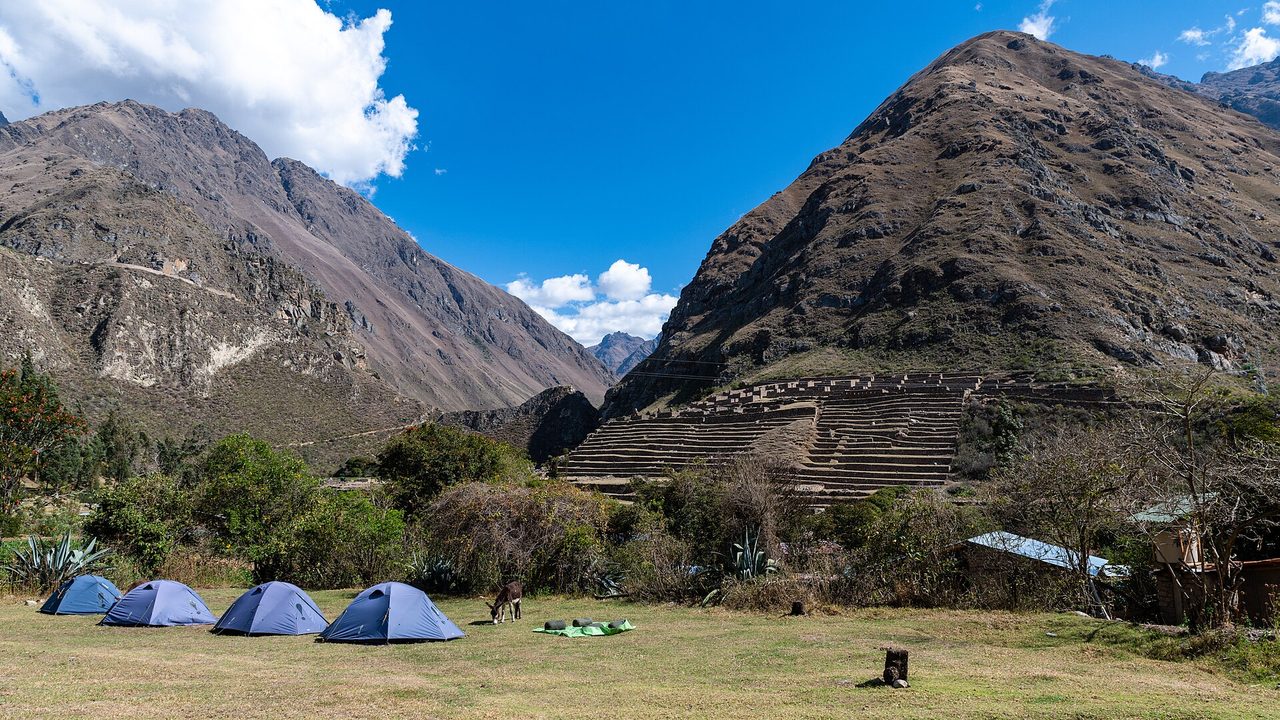
Peru is not a tipping culture. Peru’s tourism industry is. Both of those sentences are true at the same time, and the gap between them is where almost everyone gets tipping in Peru wrong — usually in both directions on the same trip. They over-tip a market vendor who did not expect anything and feels awkward about it, then under-tip a trekking crew of fifteen people who genuinely budget for that money.
Peruvians tipping other Peruvians is a modest business. Round up the taxi. Leave a couple of coins on a lunch counter. Nobody calculates 18 percent of anything. But tourism has built a parallel economy on top of that, staffed by guides, drivers, porters, cooks and hotel workers whose real annual income depends on gratuities in a way that a Lima office worker’s does not. Pretending that second economy does not exist because “Peru isn’t like the US” is not cultural sensitivity. It is just cheap.
What follows is the specific version: who, how much, in which currency, and — the part almost nobody publishes — the actual arithmetic for a four-day trek crew, with the split shown.
The short answer on tipping in Peru
Tip 10 percent in a sit-down restaurant if there is no servicio line on the bill. Tip nothing in a taxi beyond rounding up. Tip S/10–25 per person to a day-tour guide and S/5–10 to the driver. Tip S/5–10 a night for hotel housekeeping. On a four-day trek, budget S/180–280 per traveller into a pooled fund for the whole crew. Tip in soles everywhere except multi-day treks, where US dollars are normal. Do not tip in markets, on colectivos, at street-food carts or in fixed-price shops.
That covers roughly 95 percent of the situations you will face. The rest of this page is the reasoning, the edge cases and the trek maths.
Who to tip, and how much
Figures below are per person unless stated. Conversions use a rate hovering around S/3.35–3.40 to the US dollar as this was written — the sol has been unusually strong, so check the current rate before you convert anything precisely.
| Who | Typical tip | When it’s expected | When it isn’t |
|---|---|---|---|
| Restaurant waiter | 10% of the bill in cash | Sit-down service, tourist and mid-range restaurants, no servicio line | Counter service, menú del día lunch spots, when 10% servicio is already charged |
| Taxi driver | Round up S/1–3 | Long airport runs, help with heavy bags, waiting time | Any normal negotiated-fare trip — the fare was already agreed |
| Hotel housekeeping | S/5–10 per night | Mid-range and up, left daily rather than at the end | Hostel dorms, family-run guesthouses where the owner cleans |
| Porter / bellhop | S/3–5 per bag | Hotels with actual bell staff; airport trolley porters | You carried your own bag; unofficial airport “helpers” who grabbed it |
| Day-tour guide | S/15–25 (full day), S/10–15 (half day) | Small-group and private tours, any guide who did real explaining | Nothing — always tip a guide something if they were competent |
| Day-tour driver | S/5–10 | Full-day tours, mountain roads, early starts | Short city transfers already priced as a transfer |
| Multi-day trek lead guide | S/60–125 per traveller | Always, at the end of the trek, from the pooled fund | Never — this is the single most expected tip in Peruvian tourism |
| Assistant guide | S/25–40 per traveller | Any trek carrying a second guide (most groups of 8+) | Small groups that only have one guide |
| Trek cook | S/20–30 per traveller | Every catered trek | Self-catered or hut-based trips |
| Porters | S/70–100 each, from the group pool | Every Inca Trail departure and most alternatives | Treks that use mules and arrieros instead |
| Horseman / arriero | S/40–70 each for a multi-day trip | Salkantay, Lares, Ausangate, Choquequirao | Single-day horse hire at a fixed posted price |
| Spa / massage therapist | 10%, or S/10–20 | Hotel spas and tourist-district massage places | Street-corner massage touts quoting a flat S/30 |
| Hairdresser / barber | S/3–5, or round up | Neighbourhood salons | Not really expected at all — this is a bonus, not a norm |
| Market vendor | Nothing | Never | Always. Haggle, pay, say gracias, leave |
| Street-food stall | Nothing | Never | Always. Round up to avoid change if you like |
| Machu Picchu site guide | S/20–40 for a 2–3 hour tour | Guides hired at the gate or booked as a private | Nothing — gate guides work almost entirely for tips and commission |
Two rows deserve early flagging. The market and street-food rows are not filler. Over-tipping in those settings reads as odd, not generous, and it quietly inflates prices for the next traveller. And the trek rows are not per day — they are totals for a standard four-day trip, which is the format almost every competing page gets muddled.
How to read a Peruvian restaurant bill
A bill in a tourist-facing restaurant in Miraflores or around the Plaza de Armas in Cusco can carry up to four separate lines, and travellers routinely confuse three of them.
- Consumo — the food and drink you ordered. This is the number that matters.
- IGV — the general sales tax, 18 percent (16 percent IGV plus a 2 percent municipal promotion levy). By law, menu prices must already include it. If it appears as a separate line, it is a breakdown of a price you were already quoted, not an addition.
- Servicio or recargo al consumo — a service charge the venue adds. Peruvian law has permitted a consumption surcharge of up to 13 percent since the 1990s, notionally to be distributed among staff. In practice most places that use it charge 10 percent.
- Propina — a voluntary tip. If this line is blank, it is yours to fill in.
The 10 percent servicio is a charge, not a tip
This is the single most useful thing on this page for anyone eating their way through Lima and Cusco. The servicio line is a charge levied by the restaurant. It is legally supposed to be distributed to staff. Whether it reaches them varies enormously, and Peruvian consumer journalism has repeatedly picked at the legal grey area around it: there is no reliable mechanism forcing a restaurant to pass the money through, and plenty of owners treat it as general revenue or use it to cover breakages.
So “servicio is on the bill, therefore I have tipped” is technically defensible and practically shaky. My rule after a lot of meals in Peru: if servicio appears and the service was ordinary, leave it and walk. If servicio appears and the service was genuinely good, add S/10–20 in cash directly onto the table or into the server’s hand. If there is no servicio line, leave 10 percent in cash. Cash, in every case — a tip typed into a card terminal disappears into the restaurant’s accounts and may or may not come back out.
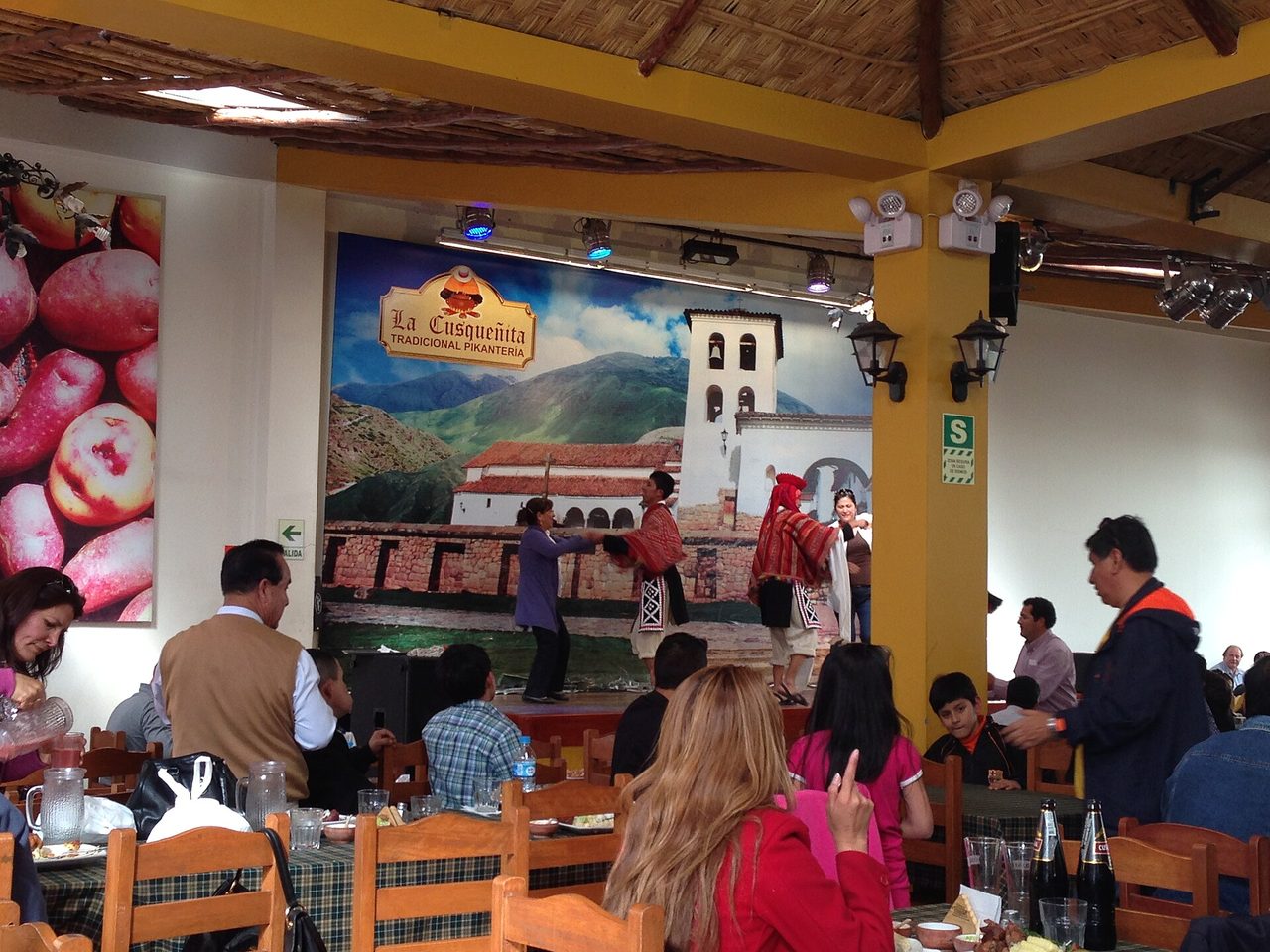
You will notice the difference by price bracket. At the high end of Lima’s tasting-menu restaurants the servicio line is close to universal and the staff are on proper salaries. In the mid-range places that make up most of the eating in Cusco it appears maybe half the time. At a neighbourhood menú where lunch costs S/12, it never appears and nobody expects a tip — leaving one is a kind gesture rather than an obligation. The same logic applies right across the range of Peruvian cooking, from ceviche counters to picanterías.
Taxis, transfers and everything on wheels
Street taxis in Peru are unmetered. You agree the fare through the window before you get in, which means the negotiation has already done the job a tip would do elsewhere. Do not tip on top of an agreed fare. Round up to avoid fumbling for coins — S/17 becomes S/20 — and that is the whole custom.
App-based rides (Uber, Cabify, InDrive, DiDi) work the same way. The app may offer a tip button. Locals largely ignore it. If a driver hauls two 20 kg bags up a flight of stairs, S/5 in cash is a decent thank-you.
Airport transfers booked through a hotel or agency are a slightly different animal, because the driver is often waiting with a name board and has absorbed a delayed flight. S/10–20 is right for the standard run into Miraflores from Jorge Chávez, more if they waited over an hour.
Long-distance buses: nobody tips the driver. Terminal porters who grab your bag off the hold will want S/1–2, which is fair enough. Train staff on the Ollantaytambo–Aguas Calientes services are salaried and the fares are already steep — if you have looked at what the tourist trains actually cost you will not feel much urge to add to it. A few soles to an attendant who was genuinely helpful with luggage is plenty. None of this changes much wherever you are in the country; the same conventions hold across Peru’s buses, flights and colectivos.
The Consettur shuttle up to Machu Picchu is a special case that gets asked about constantly. It runs a fixed published fare — US$12 per leg, US$24 return for foreign adults — on a switchback road, and drivers are salaried employees of a concession. Nobody tips them. Nobody is expected to. Save the money for your guide at the top.
Hotels
Peruvian hotel tipping is lighter than North American hotel tipping and heavier than European.
Bellhops get S/3–5 per bag, doubled if they hauled it up stairs at 3,400 m in Cusco. Housekeeping gets S/5–10 per night. Leave it daily rather than in a lump at checkout, because the person cleaning your room on Tuesday is not necessarily the person cleaning it on Friday, and a note saying gracias makes it unambiguously a tip rather than money you left lying around. Concierge staff who chase down a hard-to-get restaurant table or fix a broken transfer deserve S/20–30; a concierge who printed your boarding pass does not.
Breakfast staff are the group most often forgotten. At a mid-range hotel where the same two people bring you eggs and coffee every morning for four days, S/5 a morning in the jar is normal and appreciated. At hostels and family-run guesthouses — which covers a lot of the good-value accommodation in Cusco — the person serving breakfast is frequently the owner, and tipping the owner is not a thing.

Day tours and guides
A day-tour guide in Peru is usually a licensed professional with a tourism degree, and they are the single best-value tip you will give. S/15–25 per person for a full day, S/10–15 for a half day. The driver gets S/5–10, handed over separately at the end, not passed through the guide.
Some specifics, because the format changes the number:
- Big-bus group tours (the S/60 Sacred Valley circuits sold on the Plaza de Armas): S/10 per person to the guide is fine. These are volume operations and the guide is working a script.
- Small-group and private tours: S/25–40 per person. A private guide on a proper full-day Sacred Valley itinerary is doing something qualitatively different and should be paid for it.
- Early-start mountain day trips — Vinicunca, Humantay, Palccoyo — involve a 3am pickup and a guide managing altitude sickness in a group of thirty. S/20 per person minimum. The same goes for most of the longer day trips out of Cusco.
- Free walking tours in Lima and Cusco are not free. The guide is paid entirely by you. S/20–40 per person for a well-run two-hour walk. Handing over S/5 at the end of one of these is worse than not going.
- Machu Picchu gate guides: S/20–40 for a two-to-three-hour circuit tour, on top of the fee. If you have already paid a fixed price of S/100–150 to a guide at the entrance for a shared group, the tip can be at the lower end.
Amazon lodges run on a pooled-tip model, usually with a box at reception. Budget S/35–50 per person per day for your naturalist guide and S/15–20 per person per day for the lodge staff. If you are heading into the Peruvian Amazon for four nights, that is roughly S/200–280 per person. Lake Titicaca homestays are different again: the family is being paid by the agency, and a small useful gift — fruit, rice, school supplies bought in Puno — lands better than cash. Ask your operator what the community prefers before you visit the islands on the lake.
Trek tipping: the numbers, with the maths shown
This is the question that generates real anxiety, and it is the one where published advice is at its vaguest. “Tip what you feel is appropriate” is useless when you are standing at a campsite at 3,600 m with fifteen people lined up and no idea what the envelope should contain.
So here is a concrete, defensible structure for the standard case: a classic four-day Inca Trail departure, group of eight travellers, crew of one lead guide, one assistant guide, one cook and twelve porters.
The recommended pool, split out
Everyone in the group contributes the same amount into one fund. The group hands the fund over as a whole on the last night. Here is what S/280 per traveller produces, and where it goes:
| Recipient | Number | Each | Total from the group | Share of pool |
|---|---|---|---|---|
| Lead guide | 1 | S/500 | S/500 | 22% |
| Assistant guide | 1 | S/300 | S/300 | 13% |
| Cook | 1 | S/240 | S/240 | 11% |
| Porters | 12 | S/100 | S/1,200 | 54% |
| Total | 15 | — | S/2,240 | 100% |
S/2,240 divided by eight travellers is exactly S/280 each — roughly US$83, or about US$21 per traveller per day. That is a generous but not eccentric figure, and it is the version I would actually hand over after a well-run trek.
The lean version
If you are travelling on a tight budget, or the trek was merely fine rather than good, the same structure scales down cleanly to S/180 per traveller:
| Recipient | Number | Each | Total from the group |
|---|---|---|---|
| Lead guide | 1 | S/240 | S/240 |
| Assistant guide | 1 | S/200 | S/200 |
| Cook | 1 | S/160 | S/160 |
| Porters | 12 | S/70 | S/840 |
| Total | 15 | — | S/1,440 |
So: S/180–280 per traveller, or roughly US$55–85, is the honest working range for a four-day Inca Trail. A group of eight should collectively produce somewhere between S/1,440 and S/2,240 — call it US$430–670 across fifteen crew. That is a real line item, and it belongs in the event-cost column of your daily budget planning for Peru rather than in the baseline.
Two adjustments. If your group is smaller than eight but the crew is not proportionally smaller, the per-person number goes up — a group of four with ten porters needs to contribute more each to reach the same crew totals. And if you hired a personal porter to carry your own duffel, that person gets an extra S/70–100 directly from you, on top of the pool.
None of this is included in your trek price. When you look at what an Inca Trail permit and package actually costs, tips sit outside the quoted figure, and operators are often coy about how much to allow.
The ceremony on the last night
On most Inca Trail departures, tipping happens as a small ritual after dinner on night three, at Wiñay Wayna, before the pre-dawn start for the Sun Gate. The crew lines up, the guide introduces each porter by name and role, the group says something short, and the envelopes are handed over. Porters are usually thanked as a group with a single pooled envelope handed to the head porter, while the guide, assistant guide and cook are given individual envelopes.
Practical notes that make this go smoothly. Nominate one person in your group on day one to hold the pool and do the counting — sorting out cash by torchlight at 3,600 m after four days of walking is nobody’s idea of fun. Bring envelopes from Cusco, or ask the guide for spare paper. And write down who gets what before you leave, because you will not want to do arithmetic at that point.
Do not tip the crew individually and privately over the course of the trek. It undermines the pooled system, creates competition between porters, and the crew genuinely prefers the group format.
Bring small notes from Cusco
There is no ATM on the Inca Trail. There is no ATM at Km 82. There is no shop where anyone can break a S/200 note. Whatever cash you have when the bus leaves Cusco is the cash you have for four days.
So withdraw before you go, and specifically get small notes. Peruvian ATMs love dispensing S/100 notes, which are useless for splitting fifteen ways. Break them in Cusco — supermarkets, pharmacies and casas de cambio will do it — and aim to arrive at Km 82 with a stack of S/10 and S/20 notes plus a few S/50s. S/10 and S/20 are the working denominations for this. Counterfeit notes are a real problem in Peru, so take change from banks and established shops rather than from street changers, and check that notes feel right before you accept them. The same discipline pays off on everything else you have to carry in: nothing is buyable once you start walking.
US dollars are the one exception to the tip-in-soles rule. On multi-day treks, crisp US$20 and US$50 bills are entirely normal, widely expected, and easy for crews to change in Cusco. Damaged, torn or heavily creased dollars get refused at Peruvian exchange houses, so bring clean ones or use soles.
Salkantay, Lares and the alternatives
Alternative treks use different crew structures, so the numbers move.
- Salkantay (5 days): mules and arrieros instead of porters, which means far fewer people. Budget S/200–300 per traveller for a group of eight, split roughly 40 percent guide, 20 percent cook, 40 percent between two or three arrieros and the muleteer. The trade-offs against the classic route are laid out in more detail in the comparison between the two trails.
- Lares (3 days): smaller crews again, S/120–180 per traveller. Lares also passes through working weaving communities where you may be invited to buy textiles — that is a purchase, not a tip, and haggling gently is expected.
- Choquequirao (4–5 days): brutal terrain, small groups, heavy reliance on arrieros. S/250–350 per traveller. Crews on this route work harder for less traffic than anyone on the Inca Trail.
- The one-day Inca Trail: no camp, no porters, no cook. It is a guided day walk. S/30–50 per person to the guide covers it.
Whichever route you pick from the trekking options in Peru, the principle holds: work out the crew size first, then the per-person contribution, not the other way round.
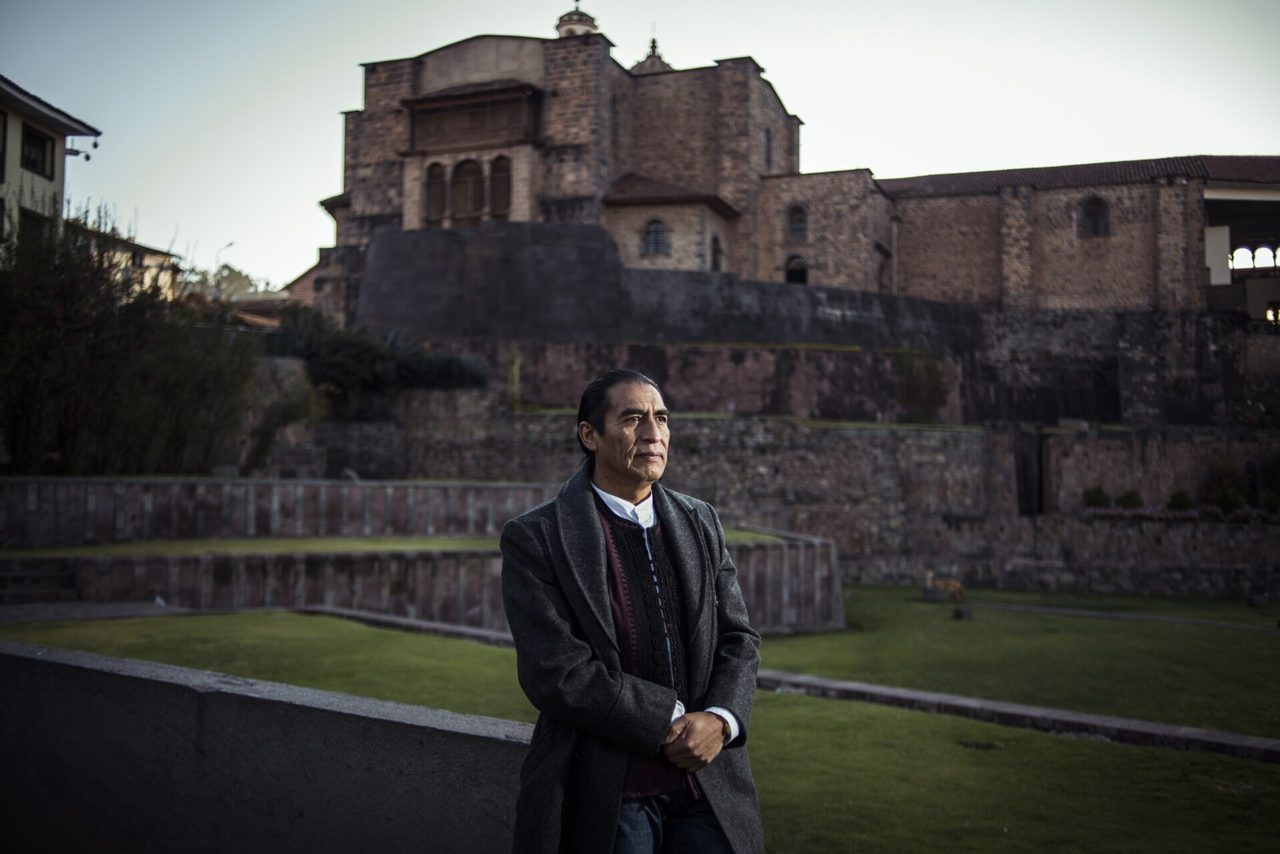
Porter welfare: what the law actually requires
Here is where most tipping advice goes soft, and where it matters most. A tip is a supplement to a legally mandated wage. It is not a substitute for one, and no amount of generosity at the end of a trek fixes a badly run company.
What the statute says
A lot of the material online still cites Ley 27607, the 2001 porter law. That statute has been repealed. The current instrument is Ley 31614, the Nueva Ley del Trabajador Porteador, published on 11 November 2022 and subsequently amended by Ley 32137 in October 2024. Its main provisions:
- A load ceiling of 20 kg for male porters and 15 kg for female porters, inclusive of the porter’s own kit.
- A minimum age of 18.
- Mandatory affiliation to ESSALUD, a pension scheme (ONP or AFP), SCTR high-risk work cover and life insurance.
- An atypical working pattern of up to 48 hours a week, with anything beyond that counted as overtime.
- A daily wage floor set as a percentage of the UIT — the Unidad Impositiva Tributaria, Peru’s indexed reference unit — specifically not less than 3 percent of one UIT per working day, with a 30 percent uplift for porters who also perform cooking duties.
Why the wage figure you found on Google is probably wrong
Because the floor is pegged to the UIT and the UIT is reset annually, the sol figure moves every January. Almost every English-language page and a good number of Spanish-language ones still quote S/138 per day. That is 3 percent of the 2023 UIT of S/4,600. It is three years stale.
The UIT for 2026 was set at S/5,500 by Supreme Decree 301-2025-EF, up from S/5,350 in 2025. Three percent of S/5,500 is S/165 per working day — about US$49 — with the cooking uplift taking it to roughly S/215. Over a four-day Inca Trail that is a statutory floor of around S/660 per porter.
Set your S/100 tip against that number and it stops being a rounding error: it is roughly 15 percent on top of four days’ legal minimum pay. It also stops being a wage. That distinction is the whole point.
One important caveat, stated plainly because too many pages skate over it: the implementing reglamento for Ley 31614 had still not been issued as of late August 2026, more than three years after the law passed. Cusco porter organisations have publicly demanded it, particularly after fatalities on the trail. Without a reglamento, enforcement is patchy and compliance varies wildly between operators. Treat the figures above as what the law requires, not as a guarantee of what every porter receives.
The choice that matters more than the tip
If you care about this — and you should — the decision with real leverage happens months before you hand anyone an envelope. It is which company you book. Weight limits, insurance, food quality for the crew, sleeping arrangements, whether porters get proper boots and jackets, whether the company pays above the floor or exactly at it: all of that is set at booking, and it varies enormously between the cheapest US$550 operators and the ones charging US$900.
Ask specific questions. What do you pay porters per day? Do porters sleep in tents or in dining tents on the ground? Is SCTR cover in place for every crew member? A company that answers precisely is telling you something; a company that answers with marketing language is telling you something else. Our rundown of Inca Trail operators worth booking goes into what separates them, and it is worth reading before you chase the lowest quote. Book early too — permits sell out months ahead, and last-minute panic bookings push people toward whichever operator still has space rather than whichever operator treats its crew properly.
Soles or dollars? Cash or card?
Tip in soles. This is the default for everything except multi-day treks. A S/20 note is immediately spendable. A US$5 bill has to be carried to a casa de cambio, exchanged at a worse rate than you would get, and possibly refused if it is creased. Handing someone dollars for a small everyday service transfers your convenience onto them.
US dollars are fine and normal on treks, where the amounts are large enough that a trip to the exchange house is worth making, and where crews are used to handling them. Clean, undamaged US$20 and US$50 notes.
Card tipping mostly does not work. Many Peruvian card terminals have no tip field at all. Where there is one, the money goes to the business, not the individual, and the pass-through is unreliable. Yape and Plin — the mobile payment apps that have taken over everyday Peruvian transactions — are ubiquitous among locals but generally require a Peruvian bank account or phone number, so they are not usually available to visitors. Carry cash. It sounds retrograde. It is also the only method where you can be sure the person who served you actually receives the money.
Small notes matter more than the total. The most useful thing you can carry is a stack of S/10 and S/20 notes. Nobody at a campsite, a hotel desk or a tour van can break S/100, and “I only have a hundred” is how people end up tipping nothing. This is a small habit that pays off across a whole trip — one of a handful of practical habits worth building before you fly.
When not to tip
This section exists because over-tipping is a real failure mode and almost nobody writes it down.
- Markets. San Pedro in Cusco, Surquillo in Lima, anywhere with stalls. You negotiate, you pay the agreed price, you leave. Adding money afterwards is confusing and slightly patronising, and it distorts prices for everyone behind you.
- Street food. Anticuchos, picarones, emolliente carts. Fixed prices, cash, no tip. Round up to skip the change if you like.
- Colectivos, combis and micros. Fixed fare, collected by the cobrador, no tip. Ever.
- Fixed-price shops. Pharmacies, supermarkets, artesanía cooperatives with marked prices. No.
- Museums and ticketed sites. The staff checking your Machu Picchu entry ticket or scanning a Boleto Turístico are public employees. Do not tip them.
- Public toilets. Not a tip — there is a posted charge, usually S/0.50–1.00, and paying it is just paying it. Carry coins.
- Anyone who demands one. Aggressive “porters” at bus terminals and airports who seize your bag uninvited are running a small hustle. A firm no, gracias before they touch anything ends it.
There is a defensible middle case: people in traditional dress who pose for photographs with llamas around the Plaza de Armas and San Blas in Cusco. That is a transaction, not a tip. S/5–10 per photo, agreed before you take it. If you do not want to pay, do not take the picture. Plenty of the best free experiences in Peru come with no such negotiation at all.
What to budget for tips on a two-week trip
Here is a full worked example: two weeks in Peru, Lima and Cusco and the Sacred Valley, one four-day trek, mid-range accommodation, two travellers. Per person.
| Item | Frequency | Rate | Total (per person) |
|---|---|---|---|
| Restaurant tips | ~14 sit-down meals | S/8–15 each | S/120–180 |
| Hotel housekeeping | 10 hotel nights | S/5–10 per night, split | S/30–50 |
| Bellhops and luggage | ~8 bag movements | S/3–5 each | S/25–40 |
| Day-tour guides | 4 tours | S/15–25 each | S/60–100 |
| Day-tour drivers | 4 tours | S/5–10 each | S/20–40 |
| Airport and hotel transfers | 3–4 | S/10–20 each | S/35–70 |
| Taxi round-ups | ~20 rides | S/1–3 each | S/25–50 |
| Machu Picchu site guide | 1 | S/20–40 | S/20–40 |
| Four-day trek pool | 1 | S/180–280 | S/180–280 |
| Total | — | — | S/515–850 (about US$155–255) |
Call it S/550–850 per person, or US$160–255, for a fortnight with one trek. Roughly half of that is the trek. If you drop the trek, the number falls to around S/335–570.
As a share of the whole trip, tips typically land between 3 and 6 percent of what a mid-range traveller spends — meaningful, but not the line item that decides your budget. Set it against the full cost of a Peru trip and it is smaller than a single internal flight. If you are counting every sol, the budget approach to Machu Picchu saves far more than trimming tips does, and it does not come out of anyone’s pay packet.
Build the tip fund into your planning from the start. On a standard two-week Peru route, that is one extra ATM withdrawal in Lima and one in Cusco, done deliberately rather than in a panic.
Small things that trip people up
Ask before you assume. ¿Incluye servicio? takes two seconds and settles the restaurant question completely.
Guides are not drivers. Tip them separately and directly. Money handed to a guide “for the driver” sometimes arrives and sometimes does not.
Group tours from Cusco often have a guide who is not your guide. On big bus tours around Pisac and the valley, the site guide who meets you at a ruin may be a different person from the tour leader on the bus. Both are tippable; the site guide usually gets less.
Do not tip children. Cash to kids selling trinkets or posing for photos keeps them out of school, and every responsible operator in Cusco asks visitors not to. Buy from the adult stall instead.
Altitude changes the calculus. A porter carrying 20 kg over the Warmiwañusca pass at 4,215 m is doing something you could not do. So is a bellhop with your suitcase in Cusco. Factor in what the altitude in Cusco does to physical work when you decide whether S/3 or S/5 is the right number.
Peak season changes nothing. Tipping norms do not rise in July and fall in February, even though prices do. Whatever time of year you travel, the rates on this page hold.
Frequently asked questions
Is tipping mandatory in Peru?
No. There is no legal obligation to tip anywhere in Peru, and no social penalty for not tipping in the everyday settings where Peruvians themselves do not tip. In the tourism sector it is a strong expectation rather than a rule — a trek crew that receives nothing will be visibly disappointed, but nobody will confront you. The only line that is genuinely non-optional is the servicio charge, and that is a charge, not a tip.
Do I have to tip if the service was bad?
No, and you should not pretend otherwise. In a restaurant, skip the tip. On a tour, tip the driver and skip the guide if the guide was the problem. On a trek, this gets more complicated, because the porters and cook are not responsible for a poor guide — reduce or drop the guide’s share and leave the crew’s share intact. If service was bad enough to be worth mentioning, tell the operator directly. In Peru’s tourism market, an honest email to the agency does more than a withheld S/50.
Can I tip with a credit card in Peru?
Usually not, and where you can, you probably should not. Many terminals lack a tip field entirely. Where one exists, the money goes to the business rather than the individual, and there is no reliable mechanism forcing a restaurant to pass it on. Cash handed directly to the person who served you is the only method with a guaranteed outcome. Carry small notes.
How much should I tip a private driver in Peru?
For a full day with a private driver — a Sacred Valley circuit, an Ollantaytambo run, an airport-to-Cusco day — S/30–50 is right. For a multi-day private driver, S/40–60 per day, handed over at the end of the whole engagement rather than daily. If the driver also acted as an informal guide, pushing that to S/60–80 a day is fair.
Do I tip the Machu Picchu shuttle bus driver?
No. The Consettur shuttle between Aguas Calientes and the citadel runs a published fixed fare of US$12 per leg (US$24 return for foreign adults), the drivers are salaried, and tipping is not part of the arrangement. This holds whether you are on a rushed day trip from Cusco or staying overnight in the town below the site. Tip your site guide instead.
Is US$1 enough?
It depends entirely on the situation, and it is often the wrong currency. One US dollar is about S/3.35, which is a reasonable tip for a single bag carried by a bellhop and an insultingly small one for a full-day guide. More to the point, small US notes are awkward for the recipient. The equivalent in soles — a S/5 coin or a S/10 note — does the same job better. If your instinct is to reach for a dollar bill, reach for a S/10 note instead.
How much cash should I carry for tips day to day?
S/50–80 per person per day in small notes covers ordinary days comfortably, with a separate, larger reserve set aside for a trek. Withdraw in Lima or Cusco where ATMs are plentiful and reliable; do not count on finding one in the smaller Sacred Valley towns at the moment you need it.
Should I tip differently in Lima than in Cusco?
Slightly. Lima’s restaurant scene is more formal, servicio lines are more common at the top end, and 10 percent is a firmer norm. Cusco is more tourism-dependent, so guides and hotel staff rely on tips more heavily, while the restaurant convention is looser. Outside those two cities — in Arequipa, on the coast, in the north — expectations drop noticeably, and a 10 percent restaurant tip is generous rather than standard.
The one thing to take away
Be specific rather than anxious. Peru does not run on tips the way the United States does, and you are not obliged to reproduce American tipping habits abroad. But tourism in Cusco does run on them, and the people who carry your tent over a 4,215 m pass are working inside a legal wage floor of about S/165 a day that is still, four years after the law passed, waiting for its implementing regulation.
Carry S/10 and S/20 notes. Read the bill before you add anything. Put S/180–280 aside per person for a four-day trek and hand it over as a group. Skip the markets, the colectivos and the street food entirely. And spend more energy choosing an operator that treats its crew properly than agonising over whether S/90 or S/100 is the right number at the end — because that choice, made months earlier, is worth far more to a porter than the envelope is.