Inca Trail Permits: How & When to Book
You cannot buy an Inca Trail permit yourself, only a licensed operator can. Here is how the 2027 release works, how many months ahead each start month needs, and what to do when the dates you want are already gone.
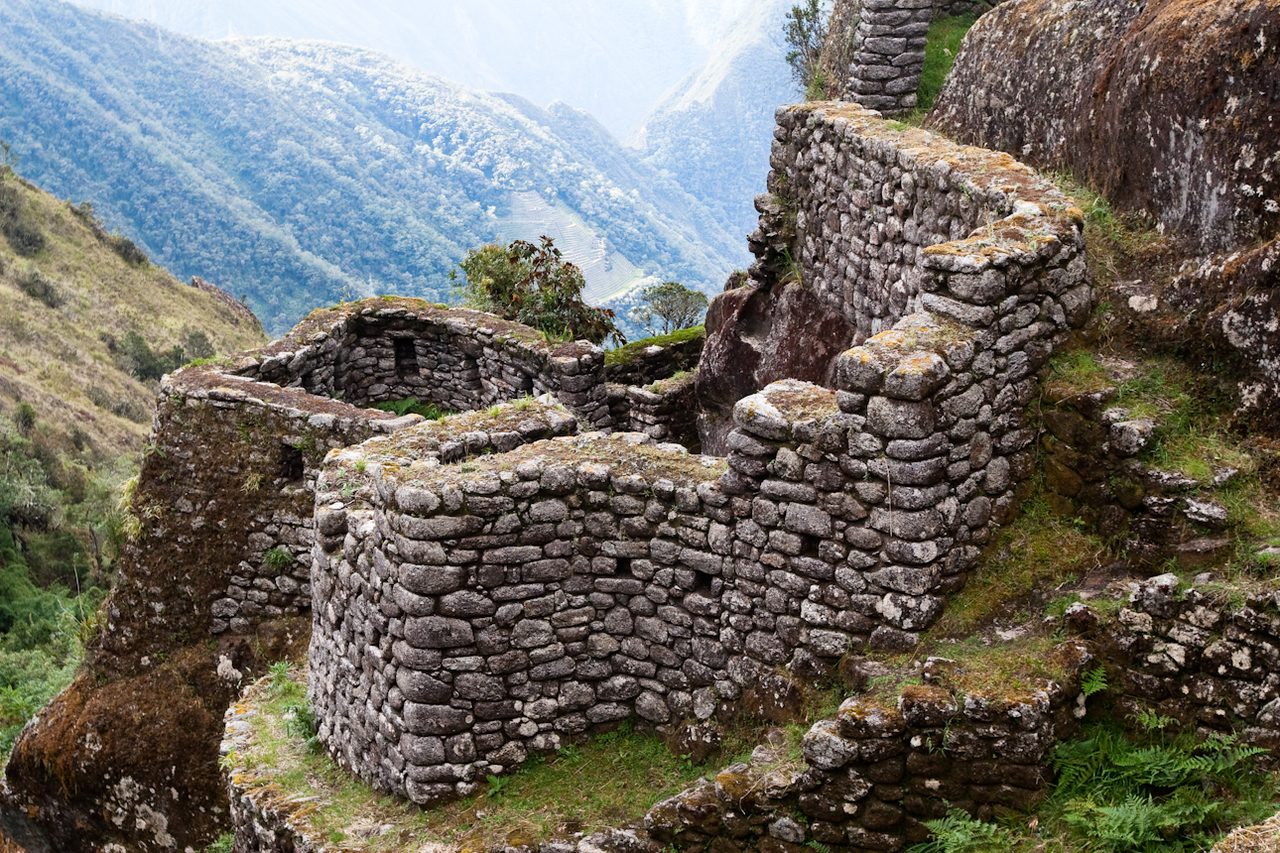
Almost everything that goes wrong with Inca Trail permits goes wrong for the same reason: people assume they can buy one. You cannot. There is no government website where a traveller types in a card number and walks away with a trail slot. The permit is applied for on your behalf by a licensed operator, using your passport details, into a Ministry of Culture booking system that only licensed operators can reach. If you take one thing from this page, take that.
The second thing worth knowing is that the rules keep moving, and most of what ranks on page one is two or three seasons stale. The release schedule changed in 2025. The porter law changed in 2022 and is now actually enforced at the Kilometre 82 checkpoint. The citadel ticket got repriced on 1 May 2026. I have tried to write down the current mechanics precisely, flag the bits that genuinely vary, and be honest about the bits nobody outside the Ministry can know yet.
What an Inca Trail permit actually is
It is a nominative entry authorisation for the Camino Inca network inside the Machu Picchu Historic Sanctuary, issued by Peru’s Ministry of Culture through its Cusco regional office. Nominative is the operative word. The permit carries your full name exactly as printed on your passport, your passport number, your nationality, your date of birth and your sex. It is tied to one specific start date and one specific route.
The practical consequences of that are worth spelling out, because they are the source of nearly every horror story:
- It cannot be resold or given away. There is no legitimate secondary market. If someone offers to sell you their permit because they had to cancel, they are either confused or lying, and you will be turned back at the checkpoint.
- It cannot be moved to another date. Not for illness, not for a missed flight, not for a strike. The date on the permit is the date you walk, or you do not walk.
- Names cannot be corrected after issue. A passport number can usually be updated. A misspelled surname generally cannot. Read the booking form twice.
- It is checked with a physical passport at Kilometre 82, and again at the Wiñay Wayna control before the final morning. A photocopy or a photo on your phone will not do it.
Every person on the trail carries one, including guides, cooks and porters. That matters more than it sounds, as the next section explains.
The daily cap, and why “500 permits” is a misleading number
The headline figure everyone quotes is 500 people per day starting the Classic four-day route. That is correct, and it is also the reason so many people misjudge how hard this is to book. The 500 includes the entire support operation. Guides, cooks and porters are counted inside it.
The split is not published as a fixed quota in the way operators sometimes imply, and it drifts with group composition, but the working figures the trade uses are consistent enough to plan around.
| Route | Total permits per day | Roughly available to trekkers | Notes |
|---|---|---|---|
| Classic Inca Trail (4 days, from Km 82) | 500 | ~180–200 | The remaining ~300 go to guides, cooks and porters. This is the scarce pool everyone competes for. |
| Short Inca Trail (2 days, from Km 104) | 250 | Roughly half, once staff are deducted | A separate pool. Far less pressure, and it survives release day by months rather than hours. |
| Salkantay, Lares, Choquequirao and other alternatives | No trail permit system | n/a | You still need a dated citadel ticket at the end, which is its own scarcity problem. |
So when a June date “sells out,” what has actually happened is that fewer than 200 trekker slots were absorbed by the several hundred operators bidding for them within a few hours. A group of twelve trekkers with two guides and sixteen porters consumes thirty of the day’s 500. Two or three big departures can visibly move the counter.
Why you cannot book Inca Trail permits yourself
This is the single most common misunderstanding, and it costs people entire trips. The Ministry of Culture’s reservation platform is closed to the public. Access is granted to tour operators who hold a current licence to work the trail, and those operators are the only route in. There is no independent-hiker exception, no self-guided option, no “I’ll just show up at Km 82” workaround. Walking the Classic Inca Trail without a licensed operator has not been legal since 2001.
What actually happens when you book looks like this:
- You pick a start date and pay a deposit to an operator, usually before permits for that date even exist.
- You send passport details. Full name as printed, passport number, nationality, date of birth, sex.
- On release day the operator’s staff sit at the system the moment the month opens and submit your details against a slot.
- If it lands, you get a confirmation with a permit number. If it does not, the operator offers you a nearby date, and you decide fast.
- The balance is normally due somewhere between 30 and 60 days out, or in cash at the Cusco office before you start.
You are, in effect, paying an operator to be fast on your behalf. That is worth understanding when you compare prices: a company with three people on three terminals at 08:00 Peru time on release morning genuinely converts better than one person on a laptop. Ask an operator what their hit rate was for the previous season. The good ones answer with a number.
A note on sites that look official. Several domains dress themselves up as the trail’s “official” booking page and show a live availability calendar. The calendars are often real, scraped from the government system, and useful for checking what is left. The booking is still an operator booking. Read the small print before you assume you are dealing with the Ministry.
When next year’s permits are released
Here is where most competitor pages are confidently wrong. For years the pattern was an October release, and plenty of pages still state that as fact. It stopped being reliable.
For the 2026 season, the Ministry opened sales on 17 November 2025, and it did not open the whole year at once. It staggered the calendar month by month over about a week:
| Release date (2025) | Months opened for 2026 |
|---|---|
| 17 November | January |
| 18 November | March |
| 19 November | April |
| 20 November | May |
| 21 November | June |
| 24 November | July |
| 25 November | August through December |
February is missing from that list because the trail is closed. More on that below.
For 2027, as I write this in the second half of 2026, the Ministry has not published a date. Operators are telling clients “October 2026” largely out of habit; the 2026 precedent points at November. Both are guesses. What is not a guess is the mechanism, and the mechanism is what you should plan around:
- The release is announced with little notice, sometimes only a couple of weeks.
- It is staggered by month, so a July date and a January date open on different days.
- The system opens at 08:00 Peru time, and the busiest months are visibly thinner by mid-morning.
- Your operator needs your passport details before release day. Sending them the week after is how people miss the window entirely.
The practical instruction: choose your operator and hand over passport details in September, whatever the release date turns out to be. Deposits are how you get into the queue, and a deposit paid two months before release is not wasted, it is the entire point.
How far ahead to book, month by month
This is the table I wanted when I was planning and could not find anywhere. It reflects how the 2025 and 2026 seasons actually behaved, not a permit count I have invented. Treat it as a planning guide rather than a promise, and understand that a single large group booking can distort any given date.
| Start month | How fast it goes after release | Book this far ahead | Chance close to departure |
|---|---|---|---|
| January | Weeks to months. Wet, and the crowd knows it. | 3–4 months | Reasonable at 6–8 weeks out |
| February | Trail closed. No permits exist. | ||
| March | Months. Still wet in the first half. | 3–4 months | Often something at 6 weeks |
| April | A few weeks. Late April tightens sharply. | 6–8 months | Occasional, mostly early April |
| May | Days to a fortnight. The first properly hard month. | 8–10 months | Rare |
| June | Days. Solstice week goes almost immediately. | 9–12 months | Effectively none |
| July | Hours to a couple of days. | 10–12 months | None. Stop hoping. |
| August | Hours to a couple of days. | 10–12 months | None |
| September | One to three weeks. Underrated and getting harder. | 7–9 months | Rare, and usually midweek |
| October | Several weeks. | 5–7 months | Sometimes, especially late October |
| November | Weeks to months. | 4–5 months | Frequently available |
| December | Weeks, but Christmas and New Year are tight. | 4–6 months | Yes, outside the holidays |
If you want the one-line version: June, July and August need close to a year. May and September need most of one. Everything else you can do inside six months. That is a very different planning problem from a normal holiday, and it is why the shoulder months are the smartest choice for most people. If you are still deciding when to come at all, the wider picture of how Peru’s seasons actually behave is worth reading before you lock a trail date, and the case for the dry season months of May to September is strong enough that it is exactly why those permits vanish.
February: the trail is closed, and it is not negotiable
The Classic Inca Trail shuts for the whole of February every year for maintenance and restoration. Bridges get rebuilt, drainage is cleared, campsites are rested, and the trail gets a month without 500 pairs of boots a day on it. It reopens on 1 March and runs through to 31 January.
Two things people get wrong about this. First, the closure applies to the Classic route and the trail network, not to Machu Picchu itself, which stays open all year; if February is your only window you can still visit the citadel, and the single-day approach from Cusco works fine. Second, the Short Inca Trail from Km 104 is also closed in February, so it is not a workaround.
February is the wettest month in the Cusco region anyway. Even in the last week of January the trail can be slick, cold and cloud-locked. I would not fight for a late-January permit unless the dates are genuinely fixed.
What it costs, and what a “permit included” quote actually covers
Operators almost never itemise the government fee, which is why you see wildly different numbers quoted. The trail entry component for a foreign adult on the four-day route is commonly quoted in the region of US$75–90, with a reduced rate roughly half that for students under 25 holding a university photo ID with an expiry date. Exchange rate movement and whether the citadel entry is bundled explain most of the spread.
What has changed recently and matters for your budget: since 2026, several operators bill the Machu Picchu citadel ticket separately rather than folding it into the trek price. The official citadel price for a foreign adult is S/163, or S/211 for the circuits that include Huayna Picchu or Machu Picchu Mountain, following the SERNANP conservation surcharge introduced on 1 May 2026. That surcharge was applied to standard citadel tickets and not to Inca Trail entries, so it did not reprice the trail permit itself. If an operator quotes you “US$65 for the Machu Picchu ticket,” understand that the government price is closer to US$44 and the rest is handling. That is not necessarily unreasonable, but you should know which is which. The full mechanics of circuits, routes and timed entry are covered in the guide to the citadel ticket system, and if you are weighing the add-on summits, the comparison of the two peaks will save you a bad purchase.
A realistic 2026 breakdown for one person on a four-day group departure:
| Item | Budget operator | Mid-range | Premium |
|---|---|---|---|
| Advertised trek price | US$650–850 | US$850–1,200 | US$1,400–2,500 |
| Group size | 14–16 | 8–12 | 2–8 |
| Citadel ticket if billed separately | US$50–65 | Usually included | Included |
| Return train, standard class | Often included | Included | Included, upgraded |
| Personal porter for your 7 kg duffel | US$90–140 extra | Often included | Included |
| Sleeping bag and mat hire | US$20–25 each | US$20–25 each | Included |
| Trekking poles | US$15–20 | US$15–20 | Included |
| Tips (customary, not obligatory) | US$60–100 | US$60–100 | US$80–150 |
| Realistic all-in | US$820–1,100 | US$950–1,350 | US$1,500–2,700 |
Set against the rest of a trip, that is a large single line item, and it is worth sanity-checking against what a full Peru trip typically costs before you commit.
Why the very cheap quotes should worry you
Peru’s porter law, in force since late 2022, caps loads at 20 kg for men and 15 kg for women, sets a minimum daily wage pegged to a percentage of the national tax unit, and requires meals, accident insurance and paid transport home. Loads are weighed at Km 82 and again at Wayllabamba on the second morning. Operators who exceed the limit are fined, and repeat offenders can lose their licence.
None of that is free. When a company advertises a four-day Classic Inca Trail at US$550 including permit, train and food, the money is coming out of somewhere, and it is usually the porters’ pay, their kit, or the number of them. I am not going to pretend I can audit an operator from a website. But the cheapest quote in Cusco is almost never a bargain, it is a transfer of cost onto the people carrying your tent up Dead Woman’s Pass at 4,215 m.
The deposit, and why permits are effectively non-refundable
Standard practice is a deposit of US$200–300 per person at the moment of booking, with the balance due 30 to 60 days out or in cash in Cusco. Some operators take the full amount up front for peak dates.
Here is the part that trips people up. The deposit is not a holding fee in the way a hotel deposit is. Once the operator uses it to buy a permit in your name, that money has left the operator’s hands and gone to the Ministry, against a document that legally cannot be refunded, transferred or rescheduled. So the honest position is:
- Before permits are issued: some operators will refund part of a deposit, some will hold it as credit. This is contract, not law. Ask, and get it in writing.
- After permits are issued: the permit portion is gone. Not partially gone. Gone. The operator may refund the unspent services portion of your payment, and better ones do, but nobody is getting the government fee back.
- If you cancel for medical reasons: the permit is still gone. Travel insurance with trip-cancellation cover is the only mechanism that gets you anything back, and it needs to be bought at the time of booking, not the month before you fly.
That asymmetry is exactly why the “book eight to twelve months ahead” advice is harder than it sounds. You are placing a non-refundable bet on your own calendar a year out.
The passport trap
This deserves a proper section rather than the single sentence competitors give it, because it is the most common way a fully paid trekker gets turned around at the checkpoint.
Your permit is issued against the passport number you booked with. The rangers at Km 82 check the physical document against the manifest. If the number does not match, you do not start.
The problem is that many people book eight to twelve months out and renew a passport in between. New passport, new number, old permit. Here is how to handle it.
If you already know your passport is expiring
Renew first, then book, if the timing allows. That removes the problem entirely. Note that Peru wants at least six months of validity on entry, and you want two blank pages for stamps.
If you must book with a passport you will replace
Book anyway. Do not miss a July permit over this. Then:
- Tell your operator the moment you apply for the new passport, not when it arrives.
- Send the new number as soon as you have it. A passport number can normally be amended on an issued permit; names cannot. Give the operator at least three to four weeks before departure, and ideally longer, because the amendment goes through the Ministry and is not instant.
- Ask for written confirmation that the amendment was accepted, and screenshot it.
- Bring both passports on the trek. The old one and the new one, physically, in your daypack. Even when the amendment has gone through, the old document resolves any mismatch instantly at the control. If your old passport was cancelled by clipping a corner, that is fine, bring it anyway.
The same logic applies to the citadel ticket and to the train, both of which are also issued nominatively against a passport number. Carrying both documents solves all three at once, and it is a genuinely small thing to pack. Read that alongside the rest of the packing decisions for the trail and the citadel, because that is where people put the passport and then forget it.
What you cannot fix
A misspelled name. If your permit says SMITH JOHN and your passport says SMYTH JOHN, that is a new permit, and on a June date there is no new permit to be had. Check the confirmation email against the passport page the day it arrives, not the week you fly.
What to do when the permits are gone
Every year a large number of people discover in April that the July dates went in November. The alternatives are genuinely good, but they substitute for different things, and operators are not always straight about which. Ranked by how closely they replace the thing you actually wanted:
1. The Short Inca Trail (2 days, from Km 104)
This is the only alternative that walks the real Inca Trail and enters Machu Picchu on foot through Inti Punku, the Sun Gate. You start at Kilometre 104 on the railway, climb past Chachabamba to Wiñay Wayna, and reach the Sun Gate in the afternoon, then sleep in the town below the ruins and visit the citadel properly the next morning. It draws on a separate 250-per-day pool that behaves nothing like the Classic one, and it is often bookable three or four months out even in high season.
What it does not give you: the passes, the three nights camping, Dead Woman’s Pass, or the sense of arriving somewhere remote. What it does give you is the arrival, which for a lot of people is the actual point.
2. Salkantay
Five days, higher, wilder, no trail permit needed, and a genuinely harder walk over a 4,600 m pass beneath the Salkantay glacier. It is the standard substitute and it is a fine trek in its own right. But it does not touch the Inca Trail, and you finish by walking or riding into Aguas Calientes and entering the citadel through the main gate like everyone else. If you care about the trekking, this is arguably the better week. If you cared about walking the Inca road, it is not the same thing.
3. Lares
Shorter, lower, easier, and the most culturally interesting of the alternatives; the route passes weaving communities and hot springs rather than ruins. Three or four days. Good for families and for anyone who found the altitude briefing alarming. Weak on archaeology, and again no Inca Trail, no Sun Gate arrival.
4. Choquequirao
The serious option. A brutal descent and re-ascent of the Apurímac canyon to reach a site that is plausibly as impressive as Machu Picchu and receives a tiny fraction of the visitors. Four to nine days depending on the version. This is not a Machu Picchu substitute at all, it is a different trip, and most people who do it add the citadel separately. Only take it if the walking is the point.
5. The train
Nothing wrong with it. The rail journey down the Urubamba is genuinely one of the better train rides anywhere, and the service from Ollantaytambo and Poroy runs at roughly US$35–60 per standard-class leg. From Aguas Calientes the Consettur shuttle up to the gate is around US$24 return, or you walk the switchbacks in a sweaty hour and a half. If your fitness, your time or your dates rule out a trek, take the train and spend the saved days in the Sacred Valley instead. The complete set of options is laid out in the guide to every route into Machu Picchu, and for the Cusco end specifically, the Cusco to Machu Picchu logistics.
If you are still weighing routes generally, the survey of Peru’s best multi-day treks covers the ones that have nothing to do with Machu Picchu at all, several of which are better walks.
Who should not book the Inca Trail
Almost nobody writes this section, and it is the most useful one. The Inca Trail is a poor fit for a specific and fairly large set of travellers.
- Anyone who cannot commit eight to twelve months ahead. If your leave is approved quarterly, if your job might move, if you are waiting on someone else’s schedule, the Classic Trail in peak season is not a realistic target. The Short Inca Trail is.
- Anyone whose dates might shift. There is no rescheduling. A date change means buying a new permit at full price, if one exists. Flexible travellers are systematically punished by this system.
- Anyone who wants to keep their itinerary open. The permit fixes one immovable date, and everything else has to bend around it. That is a real constraint on how you build the rest of a Peru route, especially if you are also trying to fit the Amazon or the south coast in.
- Anyone with an untested reaction to altitude. You camp at 3,300 m and cross 4,215 m on day two carrying at least a daypack. Cusco itself sits at 3,400 m and floors a meaningful minority of visitors; read up on what Cusco’s altitude actually does to people and build in acclimatisation before you commit money.
- Anyone booking with less than four months to go for a May to September date. Not a judgement, just arithmetic. Take the Short Trail or an alternative and enjoy it.
If you fall into any of those, you are not missing out on Machu Picchu. You are missing out on one particular four-day approach to it. The site itself, at 2,430 m with its 4,500 daily visitors on standard dates and 5,600 on peak ones, is the same site however you arrive.
A booking timeline that actually works
| When | What to do |
|---|---|
| 14–12 months out | Fix your target month. Check your passport expiry. Decide Classic vs Short honestly. |
| 12–10 months out | Shortlist three operators. Ask each for their previous season’s permit success rate and their porter policy. |
| 2–4 weeks before the release announcement | Pay the deposit and send passport details. Confirm the operator has them on file. |
| Release day | Be reachable by email for two hours after 08:00 Peru time in case they need a decision on an alternative date. |
| Within 48 hours of confirmation | Check the spelling of every name against the passport page. Buy trip-cancellation insurance. |
| 3–4 months out | Book internal flights and the Cusco hotels either side. Add acclimatisation nights. |
| 4–6 weeks out | Pay the balance. Send any new passport number now, not later. |
| 3–4 days out | Arrive in Cusco. Two nights minimum before the trek, three if you flew in from sea level. |
On that last line: how long to spend in the city beforehand is a real planning question rather than a formality, and the case for giving Cusco more days than you think is mostly an altitude argument. The seasonal picture for Cusco also differs slightly from the trail’s, since the city is fine year-round and the trail is not.
Frequently asked questions
Can I buy an Inca Trail permit directly from the government?
No. The Ministry of Culture’s reservation system is restricted to licensed operators. Any site claiming to sell you a permit directly is either an operator in disguise or a scam. This is the rule that catches the most people out.
How far in advance do I really need to book?
For June, July or August, nine to twelve months. For May or September, seven to ten. For the wet months of November to March, three to four is usually enough. If you have fixed dates in high season, book the moment the release is announced, not the week after.
Are Inca Trail permits refundable?
No. Once issued, a permit cannot be refunded, transferred, resold or moved to another date, for any reason. Your operator may refund the services portion of what you paid depending on their own policy, but the government fee is unrecoverable. Trip-cancellation insurance is the only real protection.
What happens if I renew my passport after booking?
Tell your operator immediately and send the new number as soon as you have it. A number can generally be amended on an issued permit if you give three to four weeks. Then carry both the old and new passports on the trek. The old one resolves any mismatch at the Km 82 control on the spot.
Can someone else use my permit if I cancel?
No. Permits are nominative and non-transferable. Your friend cannot walk on your permit, and you cannot sell it. Anyone offering to do either is going to lose someone a lot of money.
Is the trail really closed all of February?
Yes, the whole month, every year, for maintenance. It reopens 1 March and runs through 31 January. The Short Inca Trail from Km 104 closes too. Machu Picchu itself stays open.
Does the permit include the Machu Picchu ticket?
It includes entry to the citadel on the morning you arrive, on the route that comes in via the Sun Gate. Whether a fuller circuit is included depends on your operator, and since 2026 many bill the citadel ticket separately. Ask specifically which circuit you are getting, and check it against what the site is like at different times of year before you assume a second visit is unnecessary.
How many days should I allow around the trek?
At minimum: two nights in Cusco before, four days on the trail, one night in Cusco after. Seven days, and that is tight. Nine is comfortable. The wider question of how much time Machu Picchu deserves in an itinerary is worth settling before you book flights.
Is there a student discount on the permit?
Yes, roughly half price for under-25s, but the ID rules tightened. A university-issued photo ID showing an expiry date is what gets checked. ISIC cards are no longer accepted for the Machu Picchu student rate, so do not rely on one.
What if my operator fails to get me a permit?
Reputable operators refund the deposit in full or hold it as credit against another date, and most offer you a nearby date within hours of release. Confirm in writing before you pay that this is their policy. It is a fair question and a good operator will not flinch at it.
The short version
Inca Trail permits are a nominative, passport-locked, non-refundable, non-transferable document that only a licensed operator can obtain for you, capped at 500 people a day including staff, released for the following year in one staggered burst with little notice, and gone within hours for June through August. Everything else about the trek is negotiable. That is not.
Book early, hand over passport details before release day, insure the trip, and carry both passports if you renew. If the dates you need have already gone, take the Short Inca Trail and walk through the Sun Gate anyway, or take the train and put the saved days somewhere better. There is a lot of Peru beyond this one trail, and the full day-by-day account of the Classic route will tell you honestly whether the four-day version is the one you actually want. The broader planning guide to Machu Picchu and the collection of practical things worth knowing before you go cover the rest.