How to Get to Machu Picchu from Cusco: Every Route Compared (2026)
Every way to get to Machu Picchu in 2026 - train from Ollantaytambo, the Inca Trail and Salkantay treks, and the budget Hidroelectrica route - with real prices, timings and the mistakes to avoid.
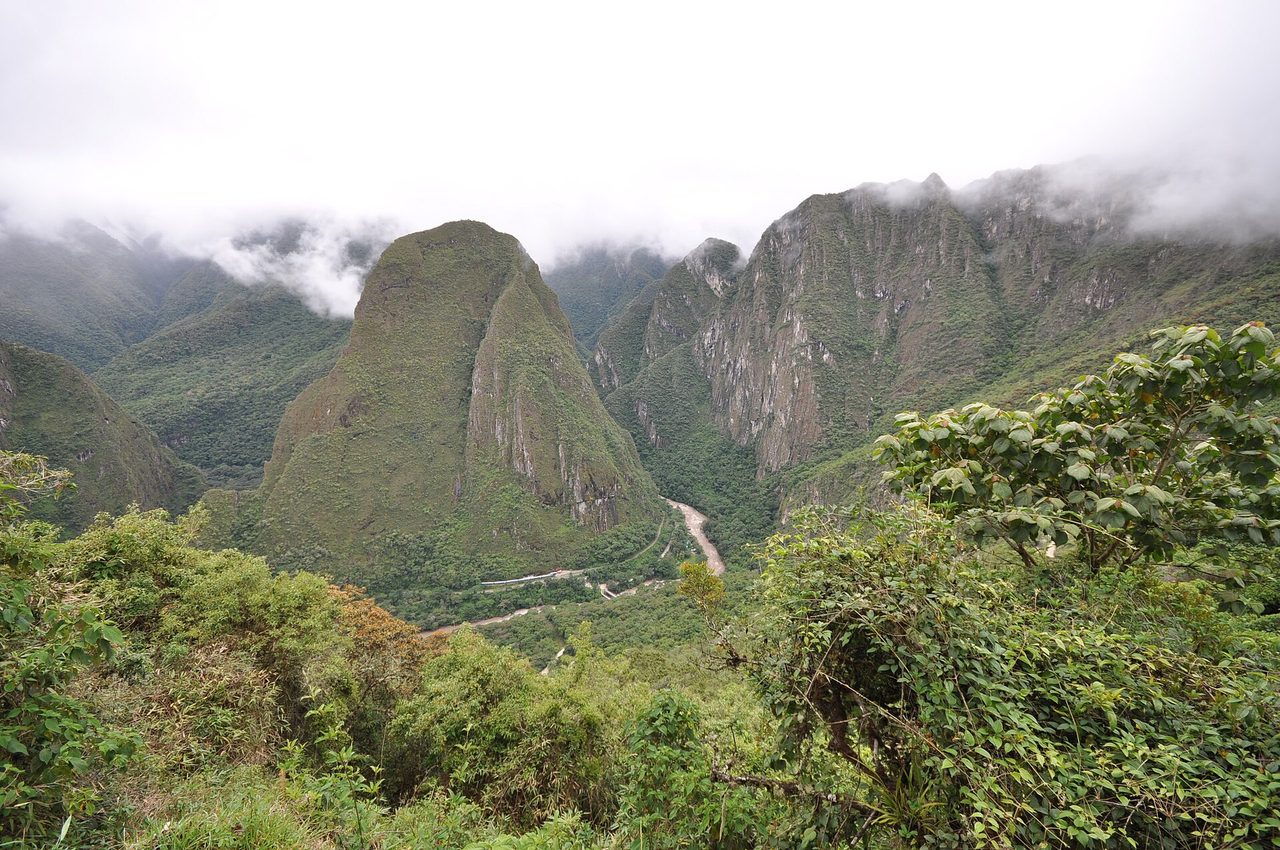
Here is the thing nobody tells you about Machu Picchu: the ruins are the easy part. The hard part — the part people get wrong, overpay for, or stress about for months — is working out how to get to Machu Picchu in the first place. There is no road to Machu Picchu. You cannot drive, and there is no direct bus. Every single visitor arrives the same way: through the little town of Aguas Calientes in the gorge below, and the only ways into that town are by train or on foot.
I’ve now done the journey five different ways — the comfortable train, the luxury train (someone else was paying), the 4-day Inca Trail, the Salkantay trek, and the infamous budget route via Hidroeléctrica with an 11 km walk along the railway tracks. Each one delivers you to the same stone gateway, and each one suits a completely different traveler. This guide walks through all of them with real 2026 prices, so you can pick yours in about ten minutes and get on with the fun part.
The short version: fly or bus to Cusco, take a train from Ollantaytambo to Aguas Calientes (about 1 hour 50 minutes, from roughly US$35–55 each way), then ride the 25-minute Consettur shuttle up to the entrance. Trekkers arrive on foot via the Inca Trail or an alternative trek. Budget travelers can skip the train entirely via Hidroeléctrica for a fraction of the cost — and about eight extra hours.
This is the transport deep-dive of our main Machu Picchu guide. Tickets are a separate puzzle (circuits, time slots, the works) and I cover those in the Machu Picchu tickets guide.
The journey, in plain English
Every trip to Machu Picchu — no matter your budget — breaks into the same three legs:
- Leg 1: Get to Cusco. The gateway city, at 3,400 m in the Andes. Almost everyone flies from Lima (about 1 hour 20 minutes) or arrives overland by bus.
- Leg 2: Get to Aguas Calientes. The town directly below the ruins, also called Machu Picchu Pueblo. By train (most people), by multi-day trek, or by the budget van-and-walk route.
- Leg 3: Get up to the gate. A 25–30 minute shuttle bus up the switchbacks, or a steep 45–90 minute walk.
Here’s how the main options for the middle leg — the one that actually matters — stack up:
| Option | Time (one way) | Cost (round trip, pp) | Best for |
|---|---|---|---|
| Train from Ollantaytambo | ~1 h 50 min (+ 2 h road from Cusco) | US$70–180 standard classes | Almost everyone |
| Train from Poroy (near Cusco) | ~3 h 20 min | US$130–200 | Skipping the road transfer (May–Dec only) |
| Luxury train (Hiram Bingham) | ~3 h 30 min | US$600+ | A once-in-a-lifetime splurge |
| Inca Trail trek | 4 days on foot | US$650–1,100 all-in | Hikers who book months ahead |
| Salkantay trek | 4–5 days on foot | US$250–450 all-in | Hikers without permits |
| Hidroeléctrica van + walk | ~6.5 h van + 3 h walk | US$25–60 | Backpackers with time |
Every realistic route from Cusco, side by side
The table above is the two-minute version. This is the one I would actually use to choose. Times are door to door from central Cusco to the turnstile. Costs are per person, round trip. For the train and van routes that is transport only, so add the entrance ticket on top (S/163 for a foreign adult, S/211 with Huayna Picchu or Machu Picchu Mountain); trek prices are all-in packages that already cover entrance, return train and food.
| Route | Door to door, Cusco to the gate | Realistic total, per person | Physical difficulty | Who it suits |
|---|---|---|---|---|
| Colectivo to Ollantaytambo + standard train | 4.5–5.5 h | US$110–160 | None | Most first-time visitors |
| Bimodal bus from Cusco + train | 5–6 h | US$150–210 | None | Anyone wanting one booking |
| Direct train from Poroy (May–Dec) | 4–4.5 h | US$180–260 | None | Skipping the road transfer |
| Private transfer + panoramic train | 4.5–5 h | US$230–330 | None | Families, real luggage |
| Hiram Bingham | ~5 h | US$1,000+ | None | One expensive, lovely day |
| Hidroeléctrica van + track walk | 9.5–11 h | US$45–80 | Moderate: 10–11 km flat, each way | Backpackers with spare days |
| Hidroeléctrica van + short train | 7.5–8.5 h | US$110–160 | None | Wet season, or bad knees |
| Short Inca Trail (KM 104) | 2 days | US$450–700 | Hard day: 6–8 h, long climb | Sun Gate without four nights out |
| Classic Inca Trail | 4 days | US$700–1,200 | Hard: 4,215 m pass on day two | People who booked months ago |
| Salkantay trek | 4–5 days | US$300–550 | Hard: 4,630 m pass, long days | Hikers who missed the permits |
| Lares trek | 3–4 days | US$350–600 | Moderate to hard, cold camps | Weaving villages over scenery |
| Inca Jungle route | 3–4 days | US$200–350 | Moderate, plus a bike descent | Adrenaline first, ruins second |
Three things in that table surprise people. The first is how little the door-to-door time varies across the train options: whether you spend US$110 or US$1,000, you reach the gate within about an hour of everyone else. Above standard class you buy comfort, not speed.
The second is the size of the gap down to Hidroeléctrica. It saves roughly US$70–100 and costs about eleven hours in each direction — a good trade with two spare days, a bad one with five nights in the country.
The third is that the treks are not transport at all. Nobody walks four days to save money on a train ticket; Salkantay costs more than standard class and takes ten times as long. You pick a trek because the walk is the holiday. If that is the version you want, our roundup of Peru’s best multi-day treks sorts them by scenery and difficulty rather than price.
One line needs explaining, because the operators do a poor job of it. The bimodal service is a train ticket that starts on a bus: you board at Wanchaq station, five minutes from the centre of Cusco, ride a coach to Ollantaytambo or Pachar, and pick up the train there. It is the journey most people assemble themselves with a colectivo, sold as one booking with somebody else responsible for the connection. From January to April, when direct departures from the city stop, every PeruRail service out of Cusco runs this way. I break the chain down leg by leg in the Cusco to Machu Picchu route guide.
Leg 1: Getting to Cusco first
There’s no way around it: Machu Picchu is planned from Cusco. If you’re starting in Lima, you have two realistic choices.
Fly (what nearly everyone should do)
Nonstop flights from Lima take about 1 hour 20 minutes, with LATAM, Sky and JetSMART running multiple departures a day. Fares start around US$60–80 one way if you book a few weeks out, before bag fees. Two pieces of hard-won advice: book a morning flight, because afternoon weather over the Andes causes a disproportionate share of delays and cancellations, and don’t plan anything ambitious for your arrival day. Flying from sea level to 3,400 m in ninety minutes is the classic recipe for altitude sickness — give yourself a gentle first day, ideally two, before your Machu Picchu slot. I go deeper on flights and buses in the getting around Peru guide.
Overland (if Machu Picchu is part of a bigger trip)
The direct Lima–Cusco bus is 22–27 hours through the mountains, and I don’t recommend it as a first choice — you see nothing and arrive wrecked. The overland option that does make sense is breaking the journey down the coast and up through Arequipa and Puno over a week or more, which doubles as gradual altitude acclimatization. If that’s your style, build it into a proper Peru itinerary rather than treating it as a transfer.
Arrival day: from the plane to the platform
A lot of these trips begin at an airport rather than a hotel lobby, and the arrival day is where the chain most often bends out of shape. Cusco’s airport sits inside the city, ten minutes from the Plaza de Armas; a taxi from the rank outside arrivals runs around S/25–35.
The question I get asked most is whether you can land in Cusco and take a train the same day. You can, in exactly one shape: a first-wave flight from Lima on the ground by about 8:30 a.m., a transfer straight to Ollantaytambo without entering the city, and an afternoon train. Agencies sell that airport run for roughly US$45–75 private, or you can find a colectivo on Calle Pavitos for about S/20. It is a good move for altitude, since you sleep at 2,040 m in the gorge instead of 3,400 m in Cusco. It is a fragile move for weather, because afternoon cloud over the Andes cancels Cusco flights routinely and a cancelled morning flight takes the train with it.
What I recommend instead: land, go straight down to the Sacred Valley, sleep at 2,800 m, and let the mountain wait a day. If you would rather base yourself in the city, choose your neighbourhood with the hills in mind — there is more on that in the guide to picking a base in Cusco, and on what acclimatization involves in the piece on coping with Cusco’s altitude. Two nights before your slot is the number I would defend; zero is how people end up seeing the world’s most photographed ruin through a migraine. For how much of the trip the city deserves, how long to spend in Cusco sets out the minimums.
Coming through Lima, budget properly for the connection: two hours is the minimum I would leave between an international arrival and a domestic departure. If your inbound lands after about 8 p.m. there is no useful onward flight, so sleep near the airport and take the first departure in the morning rather than a red-eye you will pay for at altitude. That night is not wasted — there is plenty to do in Lima.
Leg 2, option one: the train (what most people do)
The train ride to Aguas Calientes is legitimately one of the highlights of the whole trip. The tracks follow the Urubamba River into an ever-narrowing canyon, snow peaks flash past the windows, and the landscape shifts from high Andean farmland to proper cloud forest in under two hours. Even after several visits I still take the window seat and put my phone away.
Where the trains actually leave from
This is the detail that trips people up. “The train from Cusco” mostly doesn’t leave from Cusco.
- Ollantaytambo (Sacred Valley, ~1.5–2 hours from Cusco by road) is the main station, open year-round, with trains roughly hourly from about 5 a.m. to 7 p.m. You get here by colectivo (shared van, ~15 soles), taxi (~US$25–40), or as part of a Sacred Valley day with your bags.
- Poroy (~25 minutes from central Cusco) has a handful of early departures taking ~3 h 20 min — but the station typically closes January–April for the rainy season, so never assume a Cusco departure without checking.
My standing advice: sleep in Ollantaytambo the night before. It’s a gorgeous Inca town with a fortress you can visit at 4 p.m. when the tour buses have gone, it’s 600 m lower than Cusco (better sleep), and it turns a stressful 4 a.m. transfer day into a five-minute stroll to the platform.
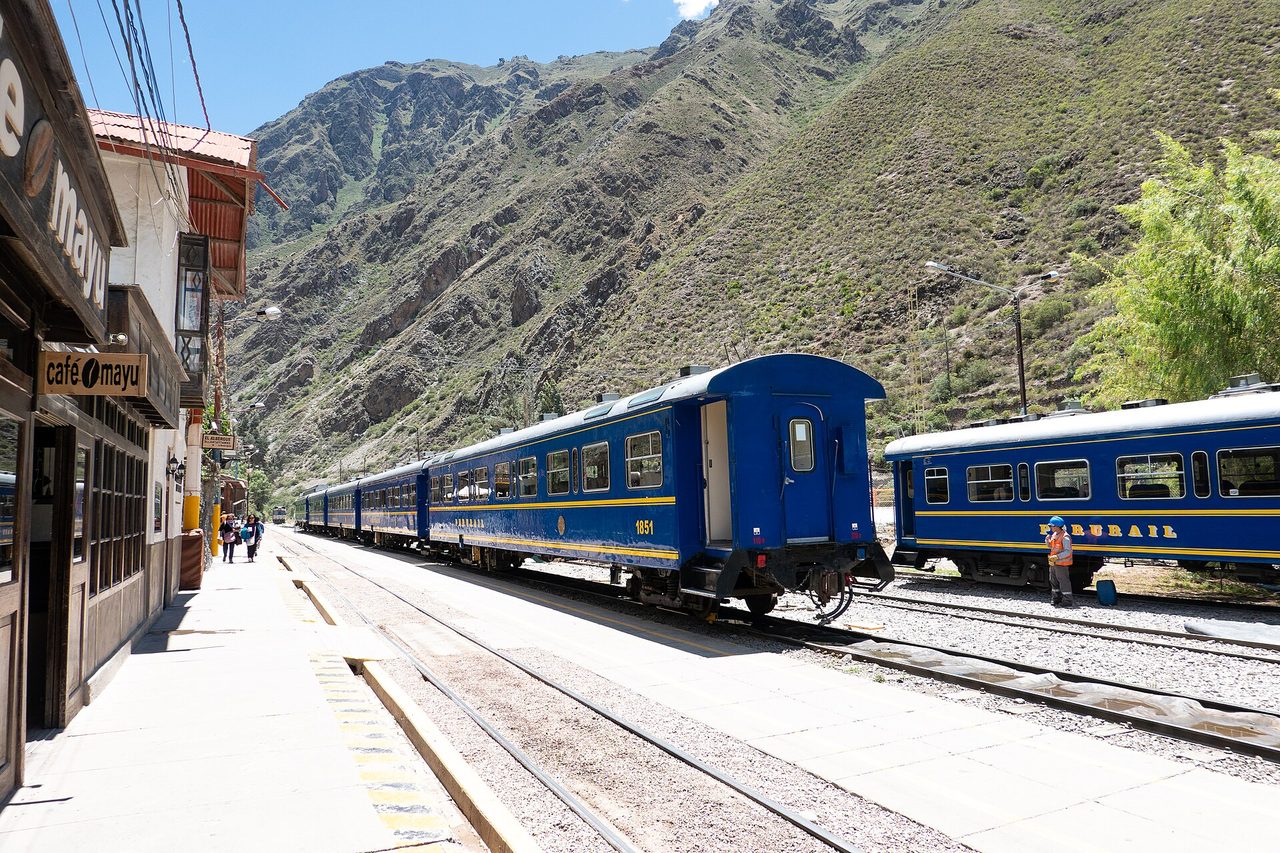
PeruRail vs Inca Rail, and what the classes mean
Two companies run the route, and honestly, for the standard classes the difference is small — pick whichever has the departure time you want. Rough 2026 one-way fares from Ollantaytambo:
- Standard (PeruRail Expedition / Inca Rail Voyager): US$35–55. Comfortable seats, big windows, a snack. Completely fine.
- Panoramic (Vistadome / The 360°): US$70–90. Glass ceiling panels, better food, a bit of a show on the return leg. Worth it one way, in my opinion, not necessarily both.
- Luxury (Belmond Hiram Bingham): US$300+ each way with gourmet dining and a bar car. Ridiculous and wonderful.
Book directly on the operators’ sites. In high season (June–August) the good departure times sell out two to four weeks ahead — and your train time has to fit your entrance slot, so buy your Machu Picchu ticket first, train second. One more rule that surprises people: luggage on board is limited to a bag of roughly 5–7 kg per person. Leave the big pack at your Cusco or Ollantaytambo hotel; every hotel on this route stores bags for free as a matter of routine. I compare schedules, stations and classes in detail in the Machu Picchu train guide.
Leg 2, option two: walk there (the treks)
Arriving at Machu Picchu on foot is a different experience in kind, not just in degree. You’ve spent days earning it, and when the citadel finally appears below you, the crowds around you are cheering strangers you now know by name.
- The classic Inca Trail (4 days, ~43 km) is the only route that walks you into the site itself, through the Sun Gate at dawn. It’s permit-limited to about 500 starters a day including crew, sells out months ahead for the dry season, closes every February, and costs roughly US$650–1,100 with a licensed operator depending on group size and service level.
- The Salkantay trek (4–5 days) is the big-mountain alternative — higher, wilder, no permit cap, around US$250–450. You finish with a night in Aguas Calientes and enter Machu Picchu the normal way.
- The Lares trek and the Inca Jungle route (biking, rafting and hiking, ~US$150–300) round out the options for culture-focused and adventure-focused travelers respectively.
Choosing between them deserves more space than I can give it here — the full Inca Trail and treks guide compares them day by day, including how to pick an operator that treats its porters properly.
Leg 2, option three: the Hidroeléctrica budget route
Now for the route the train companies would rather you didn’t know about. Colectivo vans leave Cusco every morning (around 7–8 a.m.) for Hidroeléctrica, the hydroelectric station at the end of the road on the far side of Machu Picchu mountain. It’s a long, winding 6–7 hours over a 4,300 m pass and down into the high jungle — the last hour on an unpaved cliff road that will wake you up. From Hidroeléctrica you walk the final 10–11 km into Aguas Calientes along the railway tracks: flat, pretty, about 2.5–3 hours with a daypack, with the river alongside and glimpses of the ruins impossibly high above.
Booked in Cusco as a round trip, the van costs about US$20–30; some agencies sell a “Machu Picchu by car” package with a night’s hostel bed in Aguas Calientes for US$50–90 all-in. Done independently it’s the cheapest possible way to reach Machu Picchu — I’ve met travelers who did the whole visit, entrance included, for under US$120.
The honest trade-offs: it eats a full day in each direction, the vans vary from decent to deathtrap-adjacent (pay the extra few dollars for a reputable agency with newer vans), and in the January–March rains the road is prone to landslides. Don’t book the van for the day before a non-refundable entrance slot in the wet season. If you have more time than money, though, it’s a genuine adventure — and walking beneath the citadel along the tracks is a strangely lovely arrival.
What those six hours in the van actually feel like
Here is the part the “Machu Picchu by car” listings leave out. The van climbs over the Abra Málaga pass at 4,316 m, then drops roughly three vertical kilometers in about three hours of unbroken switchbacks into the high jungle. Drivers take those bends at a speed suggesting they have done it a thousand times, which they have. Somebody is usually sick by Santa María. The last stretch through Santa Teresa is unpaved and single-track in places, with a drop on one side and a wet rock face on the other.
The shape of the day: vans leave Cusco between about 7 and 8 a.m. and reach Hidroeléctrica between 2 and 3 p.m.; you then walk the tracks and arrive in town around 5 or 6 p.m., part of it in the dark for half the year. Coming back, vans leave around 2:30 to 3 p.m. and reach Cusco between 9 and 11 p.m. Miss that departure and there is no evening service — you sleep in Santa Teresa and rebook everything behind it. It is still the cheapest way to stand in front of the citadel, and the full accounting is in our budget Machu Picchu breakdown.
When Hidroeléctrica is the wrong call
In the wet months the walk is the problem, not the road. Eleven kilometers of railway ballast with no shelter along any of it, a river running high and brown beside you, and afternoon rain in that gorge that arrives as a wall rather than a drizzle. There is nowhere to wait it out and nothing to turn back to. People do it and survive it; very few enjoy it. If you are going anyway between December and March, the advice on dressing for the site and the walk in applies double.
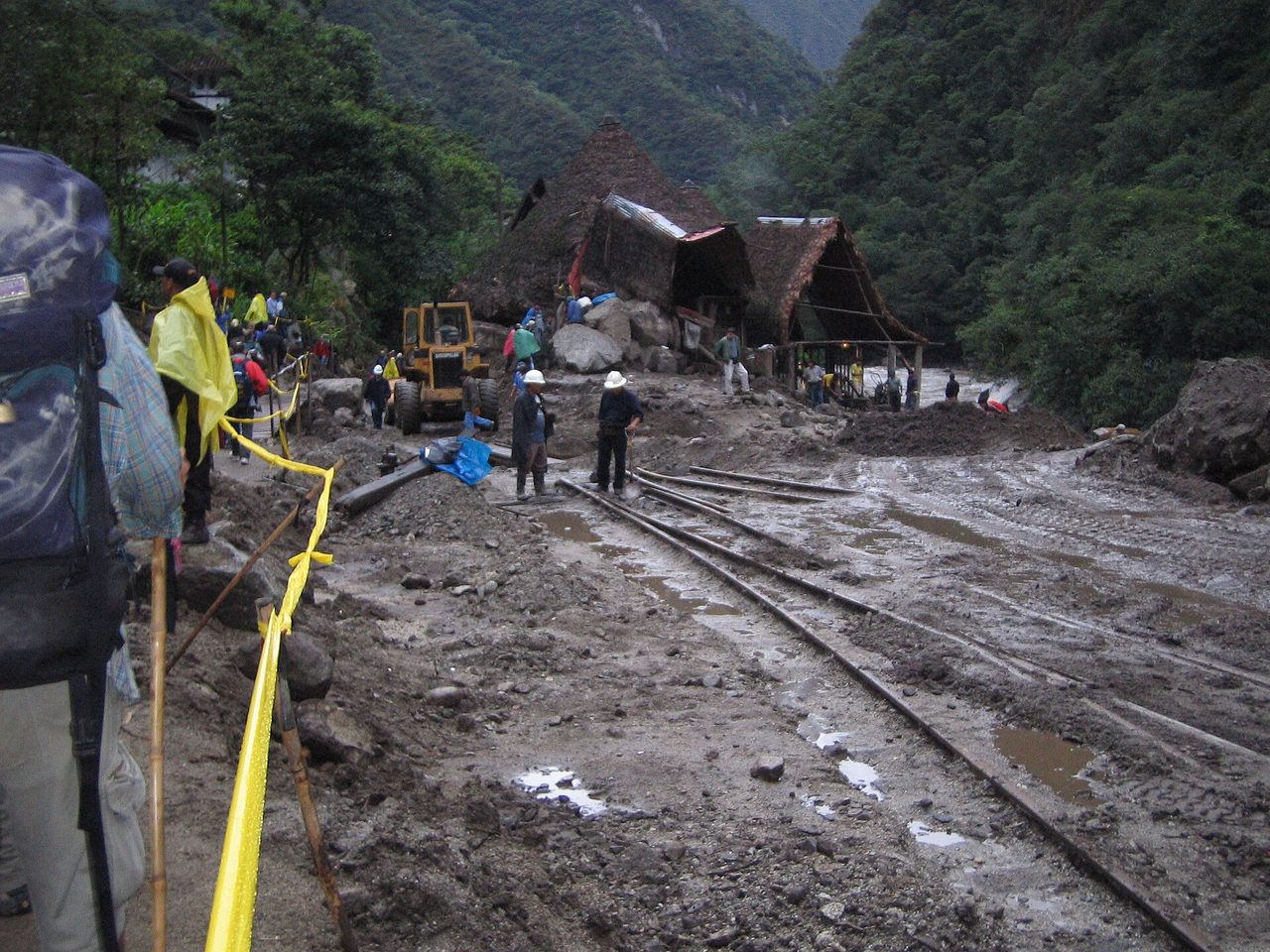
The road is the other problem, and the one you cannot manage. It is the first thing in the region to close after heavy rain, the closures are not announced in advance, and reopening takes hours or days depending on what came down. There is a partial hedge: a short rail service runs between Hidroeléctrica and Aguas Calientes a couple of times a day, roughly forty minutes for around US$34–40 one way, which lets you take the cheap van and skip the walk. It does nothing about the road. My rule is that this is a dry-season route — fine from May to October, a coin flip from November to April, and the month-by-month rundown of when to visit Machu Picchu will tell you which side of that line your dates fall on. It is wrong entirely for anyone with a bad knee, fewer than four nights in the region, or a flight home within two days.
Leg 3: Aguas Calientes up to the gate
However you arrive in Aguas Calientes, the final 400 vertical meters are the same for everyone. The Consettur shuttle buses run continuously from about 5:30 a.m. to 9:30 p.m., take 25–30 minutes up the Hiram Bingham switchbacks, and cost about US$24 round trip for foreign adults (US$12 one way). Buy tickets at the Consettur booth by the river the afternoon before — the ticket line at 5 a.m. is the one queue you can’t talk your way out of. In peak season people start lining up for the first buses before 4:30 a.m.; being on one of the first ten buses is how you get the upper terraces nearly to yourself.
The alternative is walking up: a relentless stone staircase that cuts across the road, 45–90 minutes depending on your legs and the altitude. It’s free and some people love it as a warm-up. My take after doing it once: save your knees for the ruins and walk down instead, which takes about 40 minutes and is genuinely pleasant.
The last bus down, and the queue nobody warns you about
Everyone plans the bus up. Almost nobody plans the one down. Shuttles run both ways all day, but the down queue at the site exit peaks in the half hour after closing, when several hundred people funnelled along the same one-way circuit reach the same stop together. Thirty to forty-five minutes standing in it is normal in high season.
That matters because of what sits behind it. If your return train is at 6:20 p.m. and you are still on the mountain at 5:30, the arithmetic has quietly stopped working. My rule is two hours between leaving the citadel and your departure — it sounds generous until you spend forty minutes in the queue, twenty-five on the road and fifteen walking through town. If the queue is going to cost you the train, walk instead: 40 to 60 minutes on the stone stairs, unlit and slick after rain, which needs a headtorch rather than a phone on eight percent. Note too that the buses going up stop in the mid-afternoon once the last entry slot has closed.
Working backwards from your entry time
Entry is by the hour, from 6 a.m. to 4 p.m., with a grace period of about thirty minutes around your slot. That one rule decides your whole day, because everything upstream of it has to be reverse-engineered from it. Nobody on page one does that arithmetic for you, so here it is.
The fixed quantities. Allow 60 to 75 minutes from stepping off the train to standing at the turnstile: the walk to the bus stop, the queue, the 25 to 30 minute climb and the passport check. Allow 1 h 30 min to 1 h 55 min on the train from Ollantaytambo. Allow 2 h 15 min from central Cusco to Ollantaytambo station — the two-hour drive, plus the twenty minutes a colectivo takes to fill.
| Entry slot | Off the train in Aguas Calientes by | Ollantaytambo departure | Leave central Cusco by |
|---|---|---|---|
| 06:00 or 07:00 | — | — | Not reachable from Cusco. Sleep in the gorge. |
| 08:00 | 06:55 | ~05:05, the first train | ~02:30, and I would not |
| 09:00 | 07:50 | ~06:10 | ~03:40 |
| 10:00 | 08:50 | ~07:00 | ~04:30 |
| 12:00 | 10:50 | ~09:00 | ~06:30 |
| 14:00 | 12:50 | ~11:00 | ~08:30 |
Read the top row carefully, because it is the one that quietly ruins itineraries. A 6 a.m. or 7 a.m. slot cannot be reached from Cusco on the day, at any price, by any combination of transport: the first train of the morning does not arrive in time. Those slots exist for people sleeping in town and for trekkers arriving on foot. If you have bought a 6 a.m. entrance and a morning train out of Cusco, you have bought two things that do not fit together.
Two more constraints before you pick a slot. The mountain add-ons run on their own, earlier entry windows, so a late citadel slot rules them out completely — the comparison of Huayna Picchu against Machu Picchu Mountain sets out which windows go with which. And a 2 p.m. or later slot effectively commits you to a second night, because by the time you are down the mountain and on a train you are pulling into Ollantaytambo near midnight. If this is starting to sound like more than a day out, it is, and how many days Machu Picchu really needs makes that case properly. Schedules shift seasonally, so treat the columns above as arithmetic to redo against the live timetable.
Coming from somewhere other than Cusco?
Not everyone slots Machu Picchu in from Cusco, so here are the connections I actually use:
- From Arequipa: a 1-hour flight to Cusco (usually via a cheap direct hop) or the comfortable 10-hour overnight bus. Either way you’ll want a night in Cusco or the Sacred Valley before the ruins — plan Arequipa first and Machu Picchu after, not the reverse, so your acclimatization builds in the right direction.
- From Puno / Lake Titicaca: the scenic daytime “Ruta del Sol” tourist bus to Cusco (about 10 hours with guided stops) is a genuinely good travel day, and since Titicaca sits at 3,800 m, you’ll arrive in Cusco better acclimatized than almost anyone on your train.
- From the Sacred Valley: you’re already halfway there — skip Cusco entirely and board at Ollantaytambo.
A note on strikes and rainy-season disruptions
Two things periodically snarl this route, and knowing about them in advance is most of the protection. First, regional strikes (paros) occasionally block the Cusco–Ollantaytambo road or pause the trains for a day; they’re usually announced a day or two ahead, hotels know first, and the train companies rebook affected passengers without drama. Second, the January–March rains occasionally take out a stretch of track or the Hidroeléctrica road. Neither is a reason to cancel a trip — both are reasons to avoid booking your Machu Picchu day as the last possible day before an international flight. Give the mountain a buffer day and every disruption becomes an anecdote instead of a catastrophe.
When a leg of the journey fails
This is the biggest hole in every other guide to this route, including the ones published by companies who sell it. The difference between a ruined trip and a decent story is almost entirely what you do in the first hour.
A paro closes the road
Regional strikes are the most common disruption and the most manageable, because they are nearly always flagged one to three days ahead. Hotels and agencies in Cusco know before any website does; ask at reception the evening before you travel. Roads block first and trains stop second, so a paro shutting the Cusco–Ollantaytambo highway does not automatically stop trains already down the valley. When services are formally suspended, both rail operators have rebooked or refunded affected tickets in every recent episode — September 2025, when several days of protests left around 900 visitors waiting in Aguas Calientes for evacuation trains, is the one everybody remembers — but confirm the current policy. Entrance tickets are a separate conversation: go to the Ministry of Culture office in person, the same day, before the slot lapses.
A landslide or a fire takes out the track
These are usually shorter than their headlines suggest. In August 2026 a fire near kilometer 107 brought rock down onto the line between Ollantaytambo and Aguas Calientes and trains stopped for a day; crews cleared it and services resumed the following morning. That is the typical shape. Wet-season washouts run longer, occasionally several days, and the Hidroeléctrica road is more fragile than the railway rather than less. The response is the same either way: get to the operator’s office or the station and have yourself moved onto a definite later service, because that queue grows all day.
You miss the train, or the train misses you
Standard-class tickets are tied to a name and a departure, and are not in practice transferable to the next train because you turned up late. Miss yours and you buy a new one at the counter if a seat exists, and between June and August a seat often does not. In the other direction, if the operator cancels on you they will move you — but onto the next available service, and they will not move your entrance ticket, your hotel or your onward flight. Nothing downstream re-plans itself.
All of which produces one rule worth more than the rest of this article put together: never make Machu Picchu the last thing before an international flight. Leave a buffer day in Cusco or the valley. If nothing goes wrong you spend it on one of the day trips out of Cusco; if something does, the buffer absorbs it and you never find out how bad it could have been. Insurance that genuinely covers trip interruption is the other half of that, and it belongs alongside everything else in our practical Peru travel tips.
So which way should you go?
After watching a lot of travelers make this call, here’s how I’d decide:
- First visit, normal budget, limited time: standard-class train from Ollantaytambo, overnight in Aguas Calientes, first buses up. This is the sweet spot of cost, comfort and experience, and it’s what I recommend to friends.
- Hikers who planned early: the Inca Trail, booked 4–6 months out. Nothing else replicates walking through the Sun Gate at dawn.
- Hikers who didn’t: Salkantay. Bigger scenery than the Inca Trail, a fraction of the booking stress.
- Backpackers counting soles: Hidroeléctrica, with a night in Aguas Calientes in the middle. Slow, cheap, memorable.
- Once-in-a-lifetime trip, budget flexible: Vistadome out, Hiram Bingham back, and don’t tell me what it cost.
Two timings that actually work
The relaxed overnight (my recommendation). Morning colectivo from Cusco to Ollantaytambo, wander the fortress, afternoon train to Aguas Calientes, hot springs and an early night. First buses up at 5:30 a.m., inside the gate by 6:15, guided circuit done by 9:30 while the day-trippers are still on their trains, then a leisurely lunch and an afternoon train back. Total transport cost with standard trains: roughly US$110–150 per person.
The long day trip. It’s doable: 4:30 a.m. start from Cusco, morning train, midday entrance slot, evening train, back in Cusco by 10 p.m. It’s also a 16–17 hour day where a single delay cascades through every booking. I’ve written a full honest assessment — including exact train pairings that work — in the Machu Picchu day trip guide. Short version: do the overnight if you possibly can.
What the whole journey costs
Per person, Cusco to Machu Picchu and back, excluding the entrance ticket itself (about US$45–55 — see the tickets guide) and your hotel:
| Style | Transport total | What that buys |
|---|---|---|
| Backpacker | US$35–70 | Hidroeléctrica vans both ways, walk up to the gate |
| Standard | US$120–180 | Colectivo to Ollantaytambo, Expedition-class train, shuttle both ways |
| Comfortable | US$200–300 | Private transfer, Vistadome train, shuttle both ways |
| Blowout | US$650+ | Hiram Bingham train with lunch and pisco sours |
Machu Picchu transport is the single biggest line item in most Peru budgets after international flights — if you’re costing out a whole trip, the Peru trip cost guide puts these numbers in context.
Five mistakes I keep watching people make
- Booking the train before the entrance ticket. Your entry time dictates everything. Ticket first, train second, hotel third.
- Assuming the train leaves from Cusco. Most services leave from Ollantaytambo, two hours away by road. Plan that leg or miss your train.
- Bringing the big backpack. Train luggage limits are ~5–7 kg, and large bags aren’t allowed into the site anyway. Leave it in Cusco.
- Landing in Cusco and going straight up. Altitude is real. Give yourself at least one easy day, or sleep lower in the Sacred Valley. (Machu Picchu itself, at 2,430 m, is the easy part.)
- Cutting the connections too fine in the rainy season. December–March delays are routine. Build buffer days around anything non-refundable — and check the best time to visit guide before you lock dates.
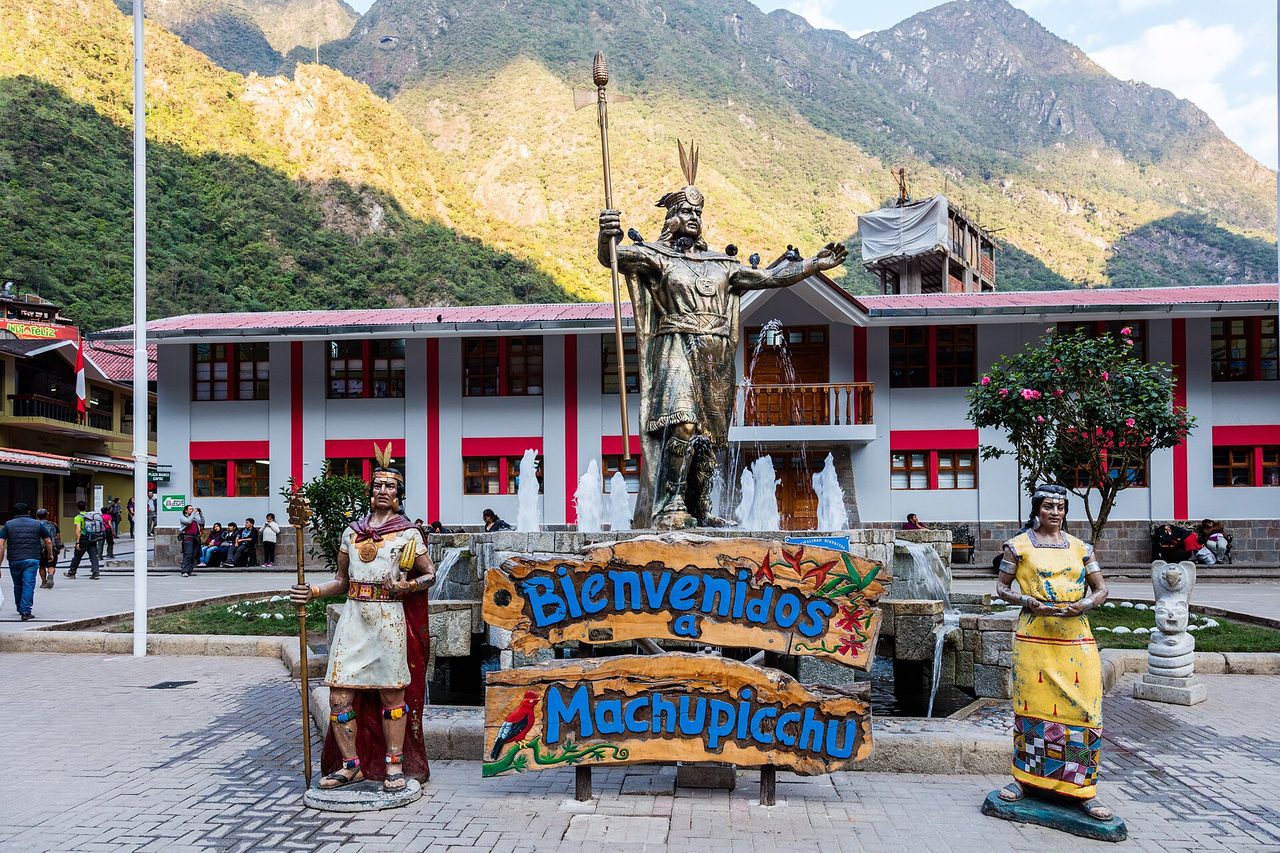
How to get to Machu Picchu: FAQ
Can you drive to Machu Picchu?
No. No road reaches Machu Picchu or Aguas Calientes. The closest you can get by road is Hidroeléctrica (then a 10–11 km walk) or Ollantaytambo (then the train). Every “Machu Picchu by car” tour you see advertised is actually the Hidroeléctrica route.
Is there a direct bus or train from Lima to Machu Picchu?
No direct anything. From Lima you must first reach Cusco — a 1 h 20 min flight or a very long bus ride — and continue from there. The whole journey from Lima takes a practical minimum of two days including sensible acclimatization.
How long does it take to get to Machu Picchu from Cusco?
Door to gate, about 4.5–5.5 hours by the standard route: ~2 hours by road to Ollantaytambo, ~1 h 50 min by train, and 25–30 minutes on the shuttle, plus connection time. The Hidroeléctrica route takes 9–10 hours; the treks take 4–5 days.
Can you visit Machu Picchu without a tour?
Yes, and it’s easier than the tour agencies make it sound: buy your entrance on the official site, book trains directly, buy the shuttle ticket in town. A licensed guide at the gate (roughly US$25–60 to join a group) is officially required and genuinely worth it, but you don’t need a packaged tour for the transport.
Do trains to Machu Picchu sell out?
In June–August, yes — the convenient morning and late-afternoon departures go two to four weeks ahead, occasionally faster. In the green season you can often book days ahead. Panoramic classes sell out before standard ones.
How do I get from the Sacred Valley to Machu Picchu?
Even easier than from Cusco: Ollantaytambo station is right in the valley, 45–60 minutes from Urubamba. Staying in the Sacred Valley the night before your visit is, for my money, the smoothest version of the whole trip.
Is the walk from Hidroeléctrica safe?
The walk itself is flat, popular and straightforward — you’ll share the tracks with a steady stream of backpackers. The van ride is the part to take seriously: choose an established agency, sit toward the front if you get motion sick, and avoid the route entirely during heavy rains.
What time should I take the bus up?
For a morning entrance slot, aim to be in the bus line by 4:45–5:00 a.m. with tickets already in hand. You’ll be inside shortly after the 6 a.m. opening, which buys you an hour of the site at its emptiest and the cloud lifting off the peaks — the best show in Peru.
Can I visit Machu Picchu on the same day I fly into Cusco?
Physically yes, sensibly no. It only works with a first-wave Lima flight, a transfer that goes straight from the airport to Ollantaytambo, and an afternoon train — and the whole thing hangs on a Cusco flight that is disproportionately likely to be delayed. If you try it, buy the entrance for the following morning and sleep in town, rather than betting a non-refundable slot on an airline.
What happens to my entrance ticket if the trains stop running?
Nothing automatic. The rail operators handle rail tickets and the Ministry of Culture handles entrance tickets, and the two do not talk to each other. If a strike or a landslide stops you reaching the site, go in person to the Ministry of Culture office the same day and ask to reschedule. Rescheduling has been granted during official closures, but it is not something you can exercise from a hotel lobby three days later.
Is it cheaper to book the transport as a package or piece by piece?
Piece by piece is almost always cheaper, usually by twenty to forty percent on the standard train route, because you cut an agency margin out of each leg. What a package buys is one phone number when something breaks. Book it yourself if your dates are flexible; buy the package if they are rigid.
Final thoughts
People agonize over this decision, so let me shrink it: if you’re not trekking, it’s the train from Ollantaytambo with a night in Aguas Calientes, and everything else is detail. The journey that seems intimidating from your kitchen table is, on the ground, a well-worn groove that tens of thousands of travelers slide along every month. Book the entrance ticket, hang the train times off it, and save your energy for the moment the bus rounds the last switchback and the terraces appear above you. That part never gets old.
Sources
- PeruRail — official schedules and fares
- Inca Rail — official schedules and fares
- Peru Ministry of Culture — official Machu Picchu tickets
- Machupicchu.gob.pe — official visitor information
- Consettur — official Aguas Calientes shuttle buses
- PeruRail — bimodal bus and train service
Photo credits
All images are used under their stated licenses; thank you to the photographers.
- Photo: Jorge Láscar from Australia / CC BY 2.0 via Wikimedia Commons — source
- Photo: PsamatheM / CC BY-SA 4.0 via Wikimedia Commons — source
- Photo: Diego Delso / CC BY-SA 4.0 via Wikimedia Commons — source
- Photo: No machine-readable author provided. Huldah assumed (based on copyright claims). / CC BY-SA 3.0 via Wikimedia Commons — source
About this guide: Written by the Peru Tourism Guide team — writers and trip-planners who have explored Peru’s Andes, coast and Amazon over many visits and put hundreds of travelers on the right train to Machu Picchu. We update this guide as routes and prices change.
Last updated: August 2026.