Where to Stay in Cusco: Best Areas & Hotels
In Cusco the street matters more than the hotel. A neighbourhood-by-neighbourhood guide with real walking times, honest noise assessments, gradients, soles and dollar price bands, and the heating and altitude questions nobody tells you to ask.
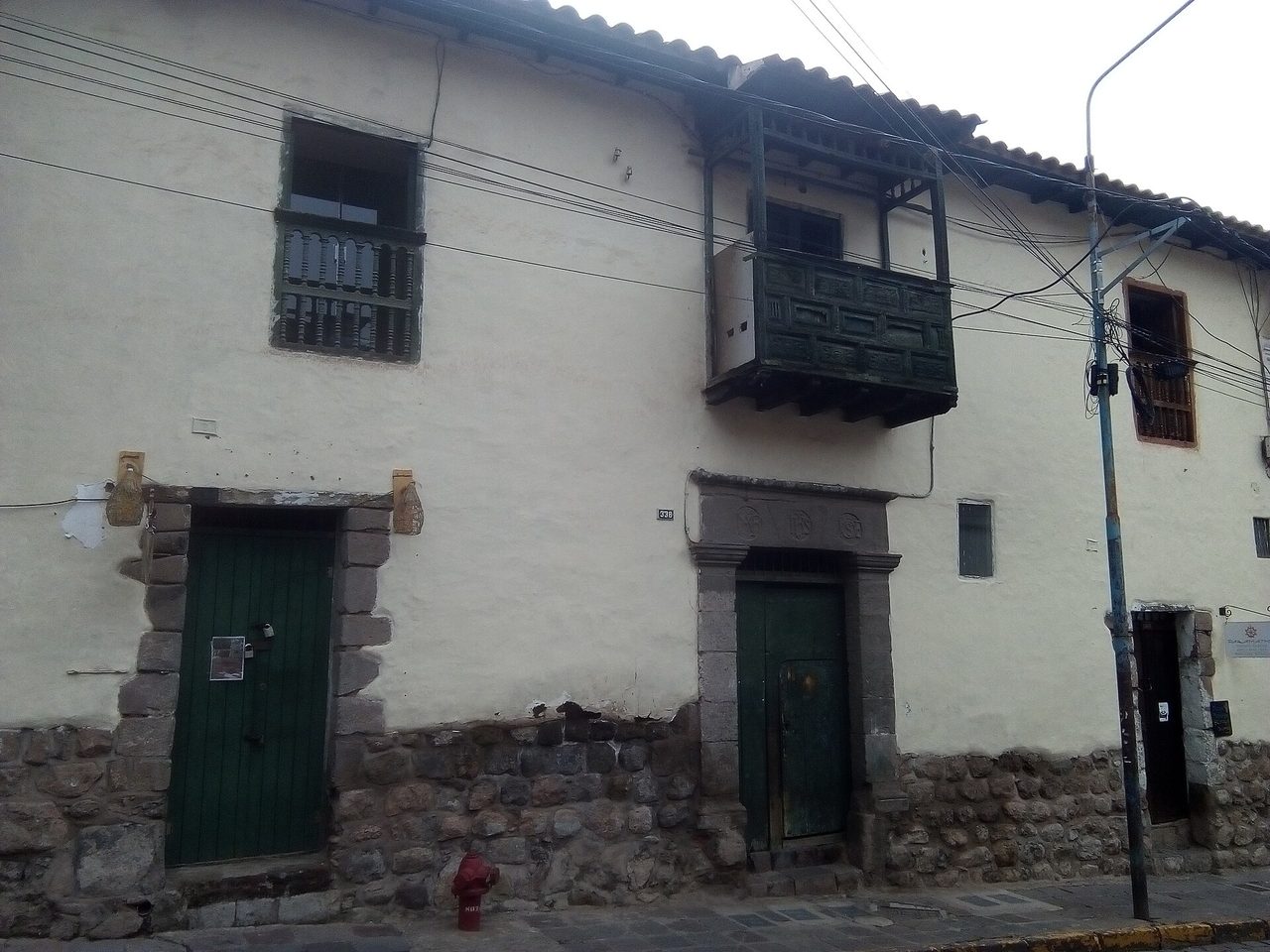
The first thing I tell anyone asking where to stay in Cusco is that the hotel matters less than the street it sits on. That sounds like a throwaway line until you have hauled a suitcase up 140 cobbled steps at 3,400 metres, forty minutes off a flight from Lima, and understood that you have made a decision your lungs will be paying for all week.
Page one of Google is a wall of affiliate lists. They recommend the same twenty properties, describe San Blas as bohemian, call the Plaza de Armas central, and stop. Almost none of them mention the two things that actually ruin stays here: noise and stairs. Cusco is a city built in a bowl, on a slope, at an altitude where a gentle incline behaves like a staircase and a staircase behaves like a workout. It also has a nightlife district sitting directly on top of its most expensive hotel zone, and clubs that run until three in the morning.
So this guide is organised around geography and physiology rather than thread count. I have laid out every area worth considering with the walk time to the Plaza de Armas, how steep the approach really is, how loud it gets after midnight, and what you actually pay in both soles and dollars. If you are still deciding how the Cusco leg fits into the rest of the trip, our country-wide breakdown of accommodation regions and price levels covers the same ground for Lima, Arequipa and the coast. And if you have not yet worked out how many nights you need here, the answer depends heavily on how much of the city and the ruins above it you plan to see.
The two things that actually ruin a stay in Cusco
Almost every complaint I have heard from travellers about their Cusco accommodation reduces to one of two problems, and neither is about the room.
Problem one is the climb. Cusco sits in a valley with hills rising on the north, east and west. The flat part is small: the Plaza de Armas, the blocks immediately around it, San Pedro to the west and the Avenida El Sol corridor running southeast. Everything picturesque is above that flat part. San Blas, San Cristóbal and Santa Ana are all hillside neighbourhoods, and the photogenic ones are the steepest. At sea level a ten-minute uphill walk is nothing. At 3,400 metres, on day one, with a 20 kg bag, it is genuinely unpleasant — and you will do it two or three times a day, every day, because everything you want to eat and see is at the bottom.
Problem two is the noise. The Plaza de Armas is ringed by second-floor bars and clubs. Mama África and Mythology, both essentially on the square, run until roughly 3am and are free to enter before 11pm, which means the crowd builds late and leaves later. Hostel bars tend to wind down around 2am under local noise rules, at which point everybody walks to the plaza. Add the Procuradores and Tecsecocha alleys a block off the square, live bands, taxi horns, church bells, and the 4.30am diesel engines of tour vans collecting people for Rainbow Mountain, and a plaza-facing room becomes an expensive way to not sleep.
There is a third, quieter problem that nobody writes about, and I have given it its own section below: most rooms in this city are not heated, and Cusco nights in the dry season drop to freezing.
How to decide where to stay in Cusco: the comparison at a glance
Read this table before you look at a single hotel photograph. The walk times are honest ones — measured going uphill, unacclimatised, at the pace you will actually manage in your first three days, not the flat-ground Google Maps estimate.
| Area | Walk to Plaza de Armas | Steepness | Night noise | Typical double, per night | Best for | Avoid if |
|---|---|---|---|---|---|---|
| Plaza de Armas & the blocks around it | 0–5 min | Flat | High to severe on the square itself | US$90–650 / S/305–2,200 | Short stays, first-timers, people who want zero logistics | You are a light sleeper or on a tight budget |
| Plazoleta Nazarenas (one block up) | 2–4 min | Gentle rise | Moderate | US$150–1,000+ / S/510–3,400+ | Splurge stays with plaza access but less racket | Budget matters at all |
| San Blas (lower) | 8–12 min uphill | Steep, cobbles | Moderate, bar noise on Carmen Alto | US$60–200 / S/205–680 | Fit travellers, short stays, atmosphere | Knees, luggage, altitude sensitivity |
| San Blas (upper, the mirador streets) | 18–25 min uphill | Very steep, staircase streets | Low | US$50–180 / S/170–610 | Acclimatised travellers on a second visit | It is your first night at altitude, full stop |
| San Cristóbal | 12–18 min uphill | Very steep, some stairs | Low | US$45–250 / S/155–850 | Views, quiet, Sacsayhuamán access | You will be out after dark on foot |
| Santa Ana / Cuesta de Santa Ana | 12–20 min uphill | Steep with stepped pavements | Low to moderate | US$25–150 / S/85–510 | Budget travellers wanting views | Heavy bags, mobility limits, late nights |
| San Pedro | 7–10 min, mostly flat | Flat to slight rise | Moderate, traffic rather than bars | US$30–190 / S/100–645 | Market cooking, cheap eats, bus connections | You are nervous walking back alone after 10pm |
| Avenida El Sol (upper, Qorikancha end) | 5–8 min, flat | Flat | Traffic only, quiet after 11pm | US$60–350 / S/205–1,190 | Altitude-sensitive travellers, mobility limits, families | You want charm from your window |
| Avenida El Sol (lower) & Wanchaq | 15–30 min, flat | Flat | Low | US$25–90 / S/85–305 | Long stays, local prices, driving | Short trip — you will waste time commuting |
| Magisterio & Larapa | Taxi, 15–30 min | Flat | Very low | US$20–70 / S/70–240 | Month-long stays, volunteers, Spanish schools | You are here for under a week |
Prices are indicative bands for a standard double in shoulder season. In late June they can double or worse; in February they can halve. More on that below.
Every Cusco neighbourhood, honestly assessed
Plaza de Armas and the historic centre
The square is the reason most people book here, and for a three-night stay it is defensible. You are inside the UNESCO zone, everything is walkable and flat, police presence is heavy, and taxis and tour pickups know exactly where to find you, with most of the city’s best restaurants within walking distance. If you have two full days in Cusco before heading to the Sacred Valley, staying within four blocks of the cathedral saves you real time.
The problems are proportional to how close you get. Rooms with a plaza view command a premium and are the loudest in the city. Touts work the perimeter aggressively — expect a massage, painting or restaurant pitch roughly every ten metres along the arcades, and more if you look lost. Restaurant prices on the square are perhaps 40 to 60 percent above what the same plate costs three streets away, which matters if you are eating out twice a day.
My working rule: stay near the plaza, not on it. One or two blocks back — the streets off Plateros, around Plaza Regocijo, or towards Plazoleta Nazarenas — you keep the flat walk and lose most of the noise. When you book, ask explicitly for a room facing an interior courtyard. Cusco colonial buildings are built around patios with thick stone walls, and a courtyard room is a genuinely different acoustic experience from a street room in the same hotel at the same price.
Plazoleta Nazarenas, one gentle block northeast, is where the top-end hotels cluster — the Belmond properties, Casa Cartagena and similar. Prices there start where most people’s budgets end, but the noise drops sharply and the square itself is one of the more pleasant corners of the centre.
San Blas: beautiful, and the most over-recommended area in the city
I want to be direct about this one, because every list puts San Blas at or near the top and most of them bury the catch in a sub-clause.
San Blas is the artisan quarter climbing east and northeast from the cathedral. It is the prettiest part of Cusco: white walls, blue doors, Inca foundation stones, a small church square, workshops, good coffee. It is also built on a slope that rises somewhere between 50 and 100 metres above the Plaza de Armas over a very short horizontal distance, on streets originally sized for two llamas to pass. Many of them are not streets at all — they are staircases with house numbers.
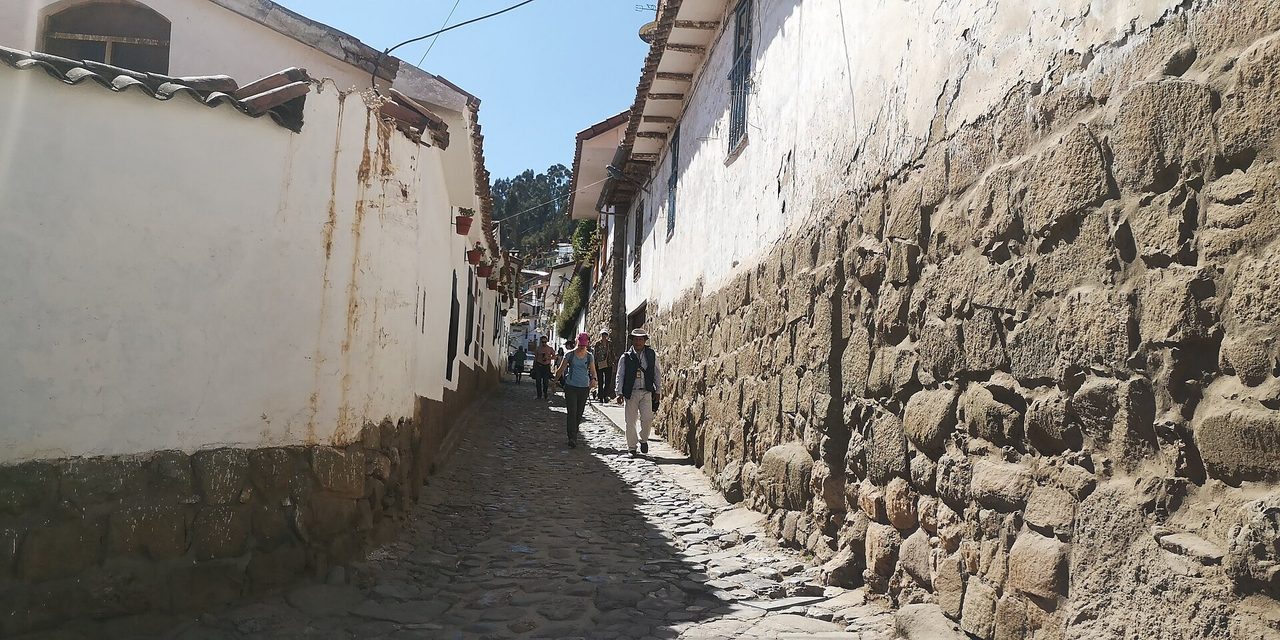
What that means in practice:
- Taxis frequently cannot reach your door. Drivers will take you to the bottom of the relevant cuesta and point. You carry your bags the rest of the way, up cobbles, in the dark, at altitude. Ask your hotel for the exact corner to be dropped at — the good ones will tell you unprompted, because they know.
- Every return trip is a climb. Cusco’s restaurants, tour offices, laundries and ATMs are almost all in the flat centre. Staying in San Blas means you finish every day with a ten- to twenty-minute uphill walk you did not plan for.
- Rooms are small. Heritage rules on remodelling historic buildings are strict, so bathrooms are cramped, ceilings are low, staircases are narrow and floors creak. That is authenticity, and it is also a real constraint if you are travelling with a large case.
Who should not stay in San Blas: anyone arriving directly from sea level for their first night; anyone over about 65 or with a heart or lung condition; anyone with a knee problem; anyone travelling with a toddler and a pushchair; anyone with a wheeled suitcase over 15 kg; and anyone staying more than four or five nights, because the novelty of the climb wears off faster than the view does.
Who should: fit travellers on a short stay who have already spent a night or two at altitude, and people on a second visit to Cusco who know what they are signing up for. If you want San Blas anyway — and it is genuinely lovely — book in lower San Blas, on or below Cuesta San Blas and Carmen Alto, rather than up on the mirador streets. The difference between the bottom and the top of the neighbourhood is about fifteen minutes of climbing and a great deal of goodwill.
San Cristóbal: the view you pay for with your calves
San Cristóbal sits directly above the centre on the road up towards Sacsayhuamán, with what is probably the best free panorama of the city from a residential street. It is quieter than San Blas, cheaper, and the roads are slightly wider — wide enough that a taxi can usually get to your door, which is a bigger advantage than it sounds.
It is also steeper. The direct route up from the plaza involves flights of stone steps, and there is no version of the walk that is not a workout. Coming back after dinner you will either pay S/8–12 for a taxi or accept a fifteen-minute climb in the cold.
The other consideration is that it empties out at night. There is no reason for a visitor to be up there after dark unless they are staying there, so the streets are quiet in a way that some people find peaceful and others find unnerving. It is not a high-crime area, but it is unlit in patches and the usual advice about not walking alone late applies with more force than it does in the centre. It is a very good base if you are keen on the ruins immediately above the city — Sacsayhuamán is a short uphill walk rather than a taxi ride, and if you are interested in the wider set of Inca sites scattered across the country, waking up beside one of the best of them has obvious appeal.
Santa Ana: cheap, steep, and the backpacker default
Santa Ana climbs northwest from the centre, centred on the Cuesta de Santa Ana — a one-way lane running down into town with stepped pavements on both sides. This is where a lot of the cheaper guesthouses and hostels sit, and where you find the best price-to-view ratio in Cusco: rooms with a full city panorama for what a windowless box costs on the plaza.
The gradient is somewhere between San Blas and San Cristóbal — genuinely steep, but the stepped pavements make it manageable on foot. What Santa Ana is not is a good place to arrive with heavy luggage or to walk home alone at 2am. The lower reaches near Avenida del Ejército get deserted after the shops close, and this is one of the few parts of central Cusco where I would take a taxi rather than walk after dark, especially alone.
Worth noting that some guides misplace Santa Ana on the map, describing it as northeast of the centre. It is not — it is west and northwest, on the opposite side of the bowl from San Blas. If a guide has that wrong, treat its other geography with suspicion.
San Pedro: flat, local, cheaper, rougher after dark
San Pedro is the area west of Plaza San Francisco around the covered market of the same name, and it is chronically underrated by English-language guides. Its great virtue is that it is flat. You can walk from a San Pedro guesthouse to the Plaza de Armas in seven to ten minutes without gaining meaningful altitude, which on night one is worth more than any view. Most of the city sights worth ranking are a flat walk from there too.
It is also where you eat well for very little. The market’s juice counters and menú stalls are the cheapest good food in the city, and the streets around it are lined with places serving a two-course lunch for S/10–18. If you want to understand what Peruvian cooking actually looks like away from the tourist menus, staying beside a working market is a shortcut. The area also connects well to the bus routes heading out towards Ollantaytambo and the valley, which is relevant if you are taking the train.
The honest downsides: the streets are narrower, there is constant traffic and horn noise during the day, and the blocks west of the market feel markedly rougher once the stalls close. Petty theft, particularly phone-snatching, is the realistic risk rather than anything worse. I would stay here without hesitation and I would still take a S/6 taxi home after 10pm rather than walk the last few blocks. The general precautions in our practical notes on safety, money and scams in Peru apply here more than in the plaza blocks.
Avenida El Sol: dull, flat, quiet, and the right answer more often than anyone admits
Avenida El Sol is the wide modern avenue running southeast from the plaza past Qorikancha towards Wanchaq. Nobody describes it as charming. It is a four-lane road with banks, pharmacies, tour agencies and mid-size hotels, and the buildings are concrete rather than colonial.
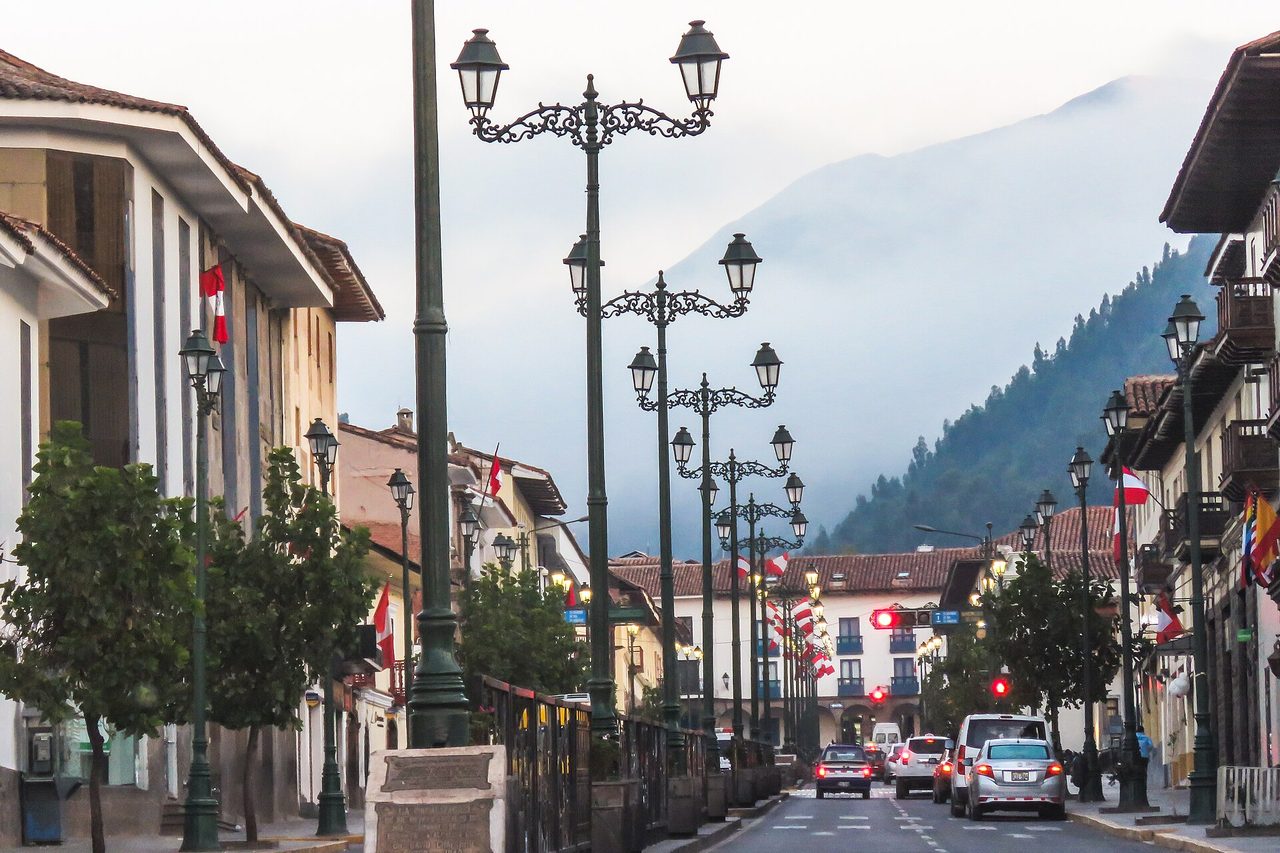
It is also, for a large group of travellers, the correct choice. The pavements are wide and paved rather than cobbled. It is dead flat. Taxis can pull up outside any hotel. It is a straight, quick run to and from the airport. Bars do not front onto it, so after about 11pm the only noise is traffic, and that thins out. Hotels here tend to be larger modern buildings, which means lifts, functioning heating, and rooms big enough for a family — three things that are hard to find in a converted colonial house.
The upper end near Qorikancha is five to eight flat minutes from the Plaza de Armas, which is closer than lower San Blas in practice even though it looks further on a map, because the map does not know about the hill. Further down towards the Wanchaq end you are 15 to 25 minutes out, which is fine if you do not mind walking on the flat and want to pay less.
If anyone in your party is over 70, uses a stick, has a heart or lung condition, is travelling with small children, or is simply anxious about the altitude, book Avenida El Sol and stop reading the San Blas listings. This is also where you find Cusco’s genuinely accessible hotels — the Wyndham Costa del Sol is the property most often named for wheelchair access, and the larger chain hotels along this corridor are the only ones in the city with reliable step-free entrances and lifts.
Wanchaq: residential, local prices, no atmosphere
Wanchaq is the flat residential district southeast of the centre, built around the old Wanchaq station and the Avenida de la Cultura. Locals live here. There are supermarkets, laundrettes, chicken restaurants, hardware shops and almost nothing aimed at visitors, which is precisely the appeal for some people and the problem for everyone else.
You will pay perhaps 40 percent less than in the centre for a comparable room, and you will spend 20 to 30 flat minutes walking in each way or S/5–8 on a taxi. For a three-night trip that trade is bad. For a two-week stay, or if you are working remotely and want a kitchen and a supermarket, it is good. It is also quiet in a way the centre never is.
Magisterio and Larapa: for long stays only
Further east again, Magisterio and Larapa are middle-class residential districts out past the airport turn towards San Jerónimo. This is where Spanish schools, volunteer placements and long-term rentals cluster, and where a month costs what a week costs in the centre. Larapa in particular is quiet, green and completely disconnected from anything a short-stay visitor wants to do.
Nobody on a one-week trip should stay out here. If you are settling in for a month or more, it is a different calculation entirely, and one worth making. As a general rule I would not look at accommodation further east than the airport.
Altitude and stairs: the section the other guides skip
This is the part that matters most and gets the least coverage, so I am going to be specific.
Cusco sits at roughly 3,400 metres (about 11,150 feet). Machu Picchu, counterintuitively, is nearly a kilometre lower at 2,430 metres, and the Sacred Valley floor around Urubamba and Ollantaytambo sits at about 2,800 metres. Cusco is the highest place most visitors sleep on a standard Peru trip, and they usually arrive there first, straight from Lima at sea level, on a 90-minute flight. Your body has no time to adjust. Oxygen partial pressure at 3,400 metres is roughly two-thirds of what it is at the coast.
How much altitude each neighbourhood adds
Within the city, the difference between the flat centre and the hillside barrios is on the order of 50 to 100 vertical metres. That is not enough to change the physiology much. What it changes is the effort: climbing 60 metres of vertical on cobbles, unacclimatised, will have you stopping to breathe. The mistake is not the altitude of the bed, it is the number of times per day you have to earn it.
Roughly, from the Plaza de Armas:
- Flat, no meaningful climb: the centre itself, San Pedro, Avenida El Sol, Wanchaq, Magisterio, Larapa.
- Noticeable but manageable rise: Plazoleta Nazarenas, the lower streets of San Blas below Cuesta San Blas, the bottom of Santa Ana.
- A genuine 12–20 minute climb, with steps: mid and upper San Blas, San Cristóbal, the upper Cuesta de Santa Ana.
Why booking a San Blas mirador for night one is a mistake
Here is the sequence that catches people out. You land at Cusco airport at 10am having left Lima at 8am. You take a taxi to the bottom of a cuesta because the driver cannot get further. You carry two bags up 100-plus steps. Your heart rate goes to 150, you get a headache within the hour, you feel sick by evening, and you spend your first full day in bed instead of at Sacsayhuamán. That is not altitude sickness caused by the neighbourhood — it is altitude sickness brought on early and hard by heavy exertion in the first hours at height, which is exactly what every piece of medical advice on acclimatisation tells you not to do.
The fix is trivial and almost nobody does it: book your first one or two nights somewhere flat — the centre, San Pedro or Avenida El Sol — and move to the pretty hillside room later in the trip if you still want it. Two separate bookings is a minor inconvenience. A wasted day is not.
The better option: sleep lower first
The genuinely smart move, if your itinerary allows it, is to skip Cusco on arrival altogether and go straight down to the Sacred Valley, where Urubamba and Ollantaytambo sit around 2,800 metres. That is 600 metres lower than Cusco, and 600 metres at this height is a meaningful difference in how you feel. Taxis and colectivos run from Cusco airport down to the valley in about 75 to 90 minutes.
Spend two or three nights in the valley doing the ruins and the markets, go to Machu Picchu from there, then come back up to Cusco at the end, acclimatised, and enjoy the city instead of enduring it. It also puts you closer to the train. This restructuring costs nothing and improves most two-week trips; it is worth thinking about when you are sketching out the shape of your route through the country. The people who most need to do it are those coming from Lima or the coast rather than from Arequipa or Puno, who arrive already partly adjusted.
If you have mobility limits
Cusco is a hard city for anyone who cannot manage uneven ground. Pavements in the historic centre are narrow, high-kerbed and cobbled; many are 60 cm wide with a 25 cm drop into traffic. Colonial hotels almost never have lifts, and a “second floor” room can mean two flights of steep wooden stairs with a low ceiling.
If this applies to you: stay on Avenida El Sol or in the flat blocks immediately around the plaza, book a modern hotel rather than a converted casona, confirm in writing that there is a lift or a ground-floor room, and budget for taxis everywhere. Do not book San Blas, San Cristóbal or Santa Ana under any circumstances, regardless of how the photographs look.
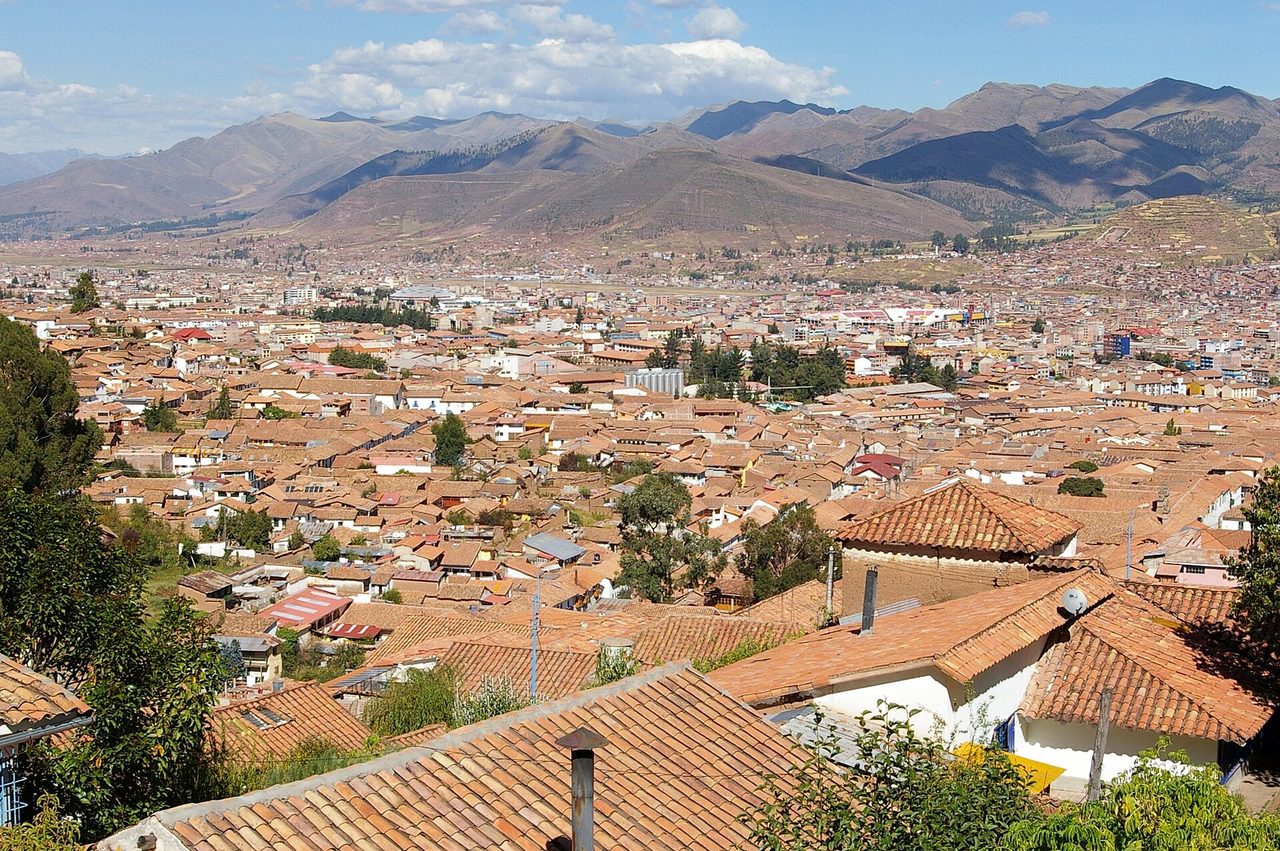
Heating and oxygen: ask about both before you pay
Most Cusco rooms have no heating at all
This is the single most common complaint I hear about Cusco accommodation, and it is almost entirely absent from the guides on page one.
Cusco has no domestic heating culture. Buildings are stone and adobe with single glazing, built to hold the day’s heat and not much else. Central heating is rare outside four- and five-star hotels. In the dry season — roughly May to September, which is also peak tourist season — daytime temperatures reach a pleasant 17–20°C and then night-time temperatures fall to around 0°C, sometimes below. July is the coldest month, with frost on the rooftops some mornings.
So you have a room with no heating, at zero degrees, in a stone building that has been cold all day. The traditional answer is blankets, and Cusqueño beds are piled with heavy alpaca blankets for exactly this reason. They work. But if you are used to a heated room you will find the first night miserable, and getting out of bed at 6am for a tour in an unheated room with a tiled floor is its own experience.
What to do about it:
- Ask before booking, in a message, and get the answer in writing. The exact question is: does the room have heating, and is it a wall unit, a portable electric heater, or central heating? “We have blankets” is a no.
- Portable heaters are often available on request but not mentioned in the listing. Many mid-range places have a handful of electric heaters they hand out to guests who ask. Ask at check-in, not at 11pm.
- Check the hot water situation too. Electric shower heads — the ones mounted on the pipe — deliver lukewarm water at low pressure and are common in budget properties. A gas boiler (“terma a gas”) is a much better sign.
- Ask about windows. Colonial buildings have small windows and thick walls, so interior rooms can be genuinely dark and damp-feeling. Courtyard-facing is quieter; street-facing is brighter. Pick your trade.
- Pack for it. The clothing you need for cold Andean nights overlaps almost entirely with what you want in your daypack for the ruins themselves — thermal base layer, fleece, hat. Wear the base layer to bed on night one and you will sleep.
What “oxygen available” actually means
A lot of Cusco hotels advertise oxygen. The phrase covers at least four different things, and they are not equivalent:
- A shared tank at reception. This is the most common version at mid-range and budget properties. There is a cylinder with a mask behind the desk, and if you feel bad they will let you use it for a few minutes. Useful in a mild emergency, not a treatment.
- Oxygen concentrators lent to the room. Better. Some mid-range hotels have one or two machines they can bring up, usually free, sometimes for a fee.
- Oxygen-enriched rooms. Genuine altitude engineering: the room’s air is enriched so it feels like sleeping several hundred metres lower. Belmond’s Cusco properties and the JW Marriott El Convento are the best-known examples, and there is a real price premium attached — either the room category costs more or the enrichment is a paid upgrade. Some travellers swear by it for the first night.
- A hyperbaric chamber on site. Rare. Antigua Casona San Blas is one of the properties documented as having one. This is for treating someone who is genuinely unwell, not for comfort.
My honest view: for most reasonably healthy travellers, oxygen enrichment is a nice-to-have that does not justify a large premium. Arriving via the Sacred Valley, taking it easy for 24 hours, drinking water, going easy on alcohol and skipping the uphill neighbourhood on night one will do more for you than piped oxygen, and costs nothing. If you have a cardiac or respiratory condition, that calculus changes, and you should be talking to a doctor before you book anything.
One thing worth asking regardless of tier: can the hotel get a doctor to the room. Cusco has 24-hour clinics used to altitude cases, and any decent hotel can call one. That is more valuable than a cylinder in the lobby.
What you actually pay: real price bands
All figures are per night for two people unless stated, at roughly S/3.4 to the US dollar. Bands are for shoulder season — April, May, September, October. Adjust up sharply for late June and August, down for January and February.
| Tier | Per night (USD) | Per night (soles) | What you actually get |
|---|---|---|---|
| Hostel dorm bed (per person) | US$8–20 | S/27–70 | 6–12 bed room, lockers, hot-ish shower, no heating, breakfast of bread and jam. Party hostels charge more and deliver less sleep. |
| Hostel private double | US$25–50 | S/85–170 | Small private room, shared or basic ensuite bathroom, thin walls, blankets not heating. |
| Budget guesthouse / hospedaje | US$30–60 | S/100–205 | Family-run, ensuite, hot water usually via electric shower head, simple breakfast, heater on request if you are lucky. Often the best value in Cusco. |
| Mid-range hotel / small boutique | US$70–150 | S/240–510 | Proper bathroom with gas hot water, decent bedding, reliable wifi, breakfast buffet, sometimes a heater. Colonial courtyard properties live here. |
| Upper mid-range / 4-star | US$150–280 | S/510–950 | Lift, central heating that works, room service, airport pickup, oxygen on request, staff who will fix your problems. |
| Luxury / 5-star | US$350–650 | S/1,190–2,200 | Restored colonial or convent buildings, heated floors, oxygen enrichment in some rooms, spa, serious restaurant. |
| Top suites | US$700–1,200+ | S/2,380–4,080+ | The Belmond and Marriott suites. Beautiful, and you are paying a large premium for the address. |
A few notes on reading those numbers. The jump from budget to mid-range buys you a functioning shower and a warmer room more than it buys you style — there are S/150 guesthouses with more charm than S/450 hotels. The jump from mid-range to 4-star buys reliability. And a mid-range room in Cusco is roughly what a mid-range room costs in Arequipa or Lima, so this city is not the place your Peru budget blows up; the tours and the train are. If you are costing out a whole trip, our breakdown of what two weeks in Peru actually costs puts accommodation in proportion against transport and entry fees, and there are specific savings to be had if you are approaching the Machu Picchu leg on a tight budget.
For context on where the money really goes: Machu Picchu entry is currently S/163 for foreign adults, or S/211 for the circuits that include Huayna Picchu or Machu Picchu Mountain, after a SERNANP conservation surcharge was added on 1 May 2026. Older guides still quoting S/152 are out of date. Check the official portal before you budget, since these figures move and the ticket system itself has changed repeatedly.
When you book matters as much as where
Cusco has the most violent seasonal pricing of any city in Peru, and the calendar is unusually spiky.
Inti Raymi and the last two weeks of June
Inti Raymi, the reconstructed Inca Festival of the Sun, falls on 24 June every year, at Sacsayhuamán directly above the city. It draws crowds from across Peru as well as international visitors, and the whole week around it — roughly 20 to 28 June — is the single hardest time of year to find a room. Central hotels sell out months ahead and the ones that remain often triple their rates. I have seen mid-range rooms that go for US$90 in May listed at US$250 for the night of the 23rd. If you are travelling for the spectacle rather than in spite of it, my guide to Peru’s major festivals covers what actually happens on the day.
If you want to be here for Inti Raymi, book accommodation three to four months out, before you book anything else. If you do not care about the festival, avoid that week entirely — you will pay a large premium for a crowded city.
June to August generally
The dry season is high season, and July and August are the peak of the peak. Expect central rooms to run 50 to 100 percent above shoulder-season rates, the better-value properties to be gone six to eight weeks ahead, and the plaza to be busy from breakfast onwards. The weather is the best of the year and so is the trekking, which is exactly why everyone comes. The trade-offs across the year are worth understanding before you fix dates — our notes on how the seasons actually play out across Peru’s regions and specifically on choosing a month for Machu Picchu lay out the compromise.
The cheap windows
January and February are the wet months. It rains most afternoons, the Inca Trail closes for the whole of February for maintenance, and Cusco hotels discount hard — 40 to 50 percent off is normal, and you can walk in and negotiate. April, May, September and October are the sweet spot: mostly dry, not yet crowded, prices 20 to 30 percent below July.
How far ahead to book
My rule of thumb: for late June through August, three to four months. For May, September and October, four to six weeks. For the wet season, book the first night and improvise the rest — you will do better on price by turning up. Everywhere in Cusco that is any good has an online presence now, but small guesthouses often quote lower on WhatsApp than on booking platforms, because they are not paying 15 to 18 percent commission. It is worth an email.
Matching the area to your actual trip
Your first night, straight off a Lima flight
Flat. Centre, San Pedro or upper Avenida El Sol. Take a taxi from the airport rather than walking anywhere, drink water, eat something light, skip the pisco sours, and do nothing strenuous for 24 hours. Move to San Blas on night three if you still want the view.
The night before an early Machu Picchu train
This one trips people up. Trains to Aguas Calientes no longer leave from Poroy just outside Cusco — that station is out of service — so departures are from Ollantaytambo or Urubamba in the Sacred Valley. From central Cusco that is a 90-minute to two-hour road transfer. A 6am train therefore means a 3.30 or 4am pickup from your hotel.
If your Machu Picchu day is booked, seriously consider spending the night before in Ollantaytambo instead of Cusco. You gain two hours of sleep, you sleep 600 metres lower, and the walk to the platform is five minutes. Our guide to the train services, classes and departure points covers the timetable in detail, and if you are staying at the other end, Aguas Calientes has its own accommodation logic worth understanding. Trying to do the whole thing as a single day trip out of Cusco is possible, but it is a 19-hour day and your hotel choice barely matters because you will not be in it.
Before and after a trek
Trekking companies pick up from central hotels, usually between 4am and 5am, and they will not walk up to a San Blas mirador to find you. Stay somewhere a van can reach. If you are doing the classic four-day Inca Trail or one of the alternatives, spend at least two nights in Cusco or the valley beforehand — the trail crosses a 4,215 m pass and arriving unacclimatised is how people end up being evacuated. Most operators will store your main luggage free while you are on the trail, which means you can book a cheap room for the nights before and something better for the night you come back. Take the better room. After four days on any of Peru’s high-altitude routes you will want a hot shower and a heated room more than you will want a view.
Arriving overland from the south
If you are coming by bus from Puno or Arequipa you arrive at the Terminal Terrestre, southeast of the centre near the Wanchaq end. Buses from Puno and the Titicaca shore get in during the afternoon; overnight buses from Arequipa arrive around dawn. Either way, you will have already spent time above 2,300 m and will handle Cusco far better than someone off a Lima flight. Take a taxi from the terminal rather than the street outside — the fare into the centre is about S/12–15, and the general points about transport and touts in our overview of moving around the country hold here.
Families with young children
Avenida El Sol or the flat blocks near the plaza. You want a lift, a room with space, reliable heating, and no cobbled climb with a pushchair. Triple and quadruple rooms are much easier to find in the modern hotels on El Sol than in colonial conversions, where “family room” often means an awkward mezzanine up a ladder.
Long stays and remote work
Wanchaq, Magisterio or lower Avenida El Sol. Monthly apartment rentals in these areas run a fraction of nightly hotel rates, fibre is decent, and you get a kitchen and a supermarket. Confirm the heating and the wifi speed with a screenshot before you commit — both are commonly overstated.
Practical things to confirm before you pay
- Exact drop-off point for a taxi. Especially in San Blas, Santa Ana and San Cristóbal. Ask for the nearest corner a car can reach and how many steps from there.
- Which floor, and is there a lift. “Second floor” in a casona means stairs.
- Heating, in writing. Wall unit, portable heater, or none.
- Courtyard or street. Request courtyard-facing if you sleep lightly, street-facing if you need daylight.
- Airport pickup. Many mid-range hotels include it. Otherwise the official taxi counter inside arrivals charges roughly S/25–35 to the centre; street taxis outside will do it for S/15–20 if you are comfortable negotiating.
- Luggage storage during a trek or a valley trip. Almost universal and almost always free, but confirm.
- Early breakfast or a packed one. If you have 4am pickups, ask whether they will leave you something. Good hotels will.
- Payment method. Small guesthouses often want cash in soles and may add 3–5 percent for cards.
The verdict, stated plainly
San Blas is the most over-recommended area in Cusco. It is not a bad place to stay — it is a lovely place to stay, for a specific and fairly narrow group of people. But it is recommended by default, at the top of nearly every list, to readers who are about to arrive from sea level with a large suitcase, and the consequences of that advice land on people’s first day at 3,400 metres.
If you are fit, travelling light, staying three nights, and already partly acclimatised, book lower San Blas and enjoy it. If any one of those is untrue, book somewhere flat.
For most first-time visitors, the sensible answer is: one to two blocks off the Plaza de Armas, in a courtyard room, with confirmed heating. Second choice, and better for anyone altitude-sensitive or travelling with family: the upper end of Avenida El Sol. Best value: San Pedro. And if your itinerary allows it, the best decision of all is not a Cusco neighbourhood at all — it is to sleep in the Sacred Valley first and come up to the city once your body has caught up.
Frequently asked questions
What is the best area to stay in Cusco for a first-time visitor?
One or two blocks back from the Plaza de Armas. You keep the flat walk to everything, the restaurants and tour offices are on your doorstep, and you avoid the worst of the plaza’s late-night noise. Ask for a courtyard-facing room. If you or anyone in your group is sensitive to altitude, choose the upper end of Avenida El Sol instead — it is duller and it is flat.
How many nights should I spend in Cusco?
Three at an absolute minimum, four or five to do it properly, and more if you are trekking. Cusco is not just a stopover before Machu Picchu — the city itself, Sacsayhuamán and the ruins on the road above it easily fill two days, and you need at least one for acclimatisation. If you are trying to work out how the Machu Picchu portion fits, our guide to how long to allow for the site and the journey sets out the realistic minimums.
Do hotels in Cusco have heating?
Most budget and many mid-range rooms have none at all. Central heating is largely confined to four- and five-star hotels. Dry-season nights fall to around 0°C, so this matters. Ask before booking, in writing, and ask specifically whether it is a wall unit, a portable heater, or nothing. Plenty of mid-range places will bring you an electric heater if you ask at check-in, but they will not offer.
Which Cusco hotels have oxygen?
Several tiers of it exist. Budget and mid-range hotels commonly keep a shared cylinder at reception; some can lend an oxygen concentrator to your room. Genuine oxygen-enriched rooms are a luxury feature — the Belmond properties and the JW Marriott El Convento are the best-documented examples, and Aranwa is often cited for piped oxygen and heated floors. Antigua Casona San Blas is documented as having a hyperbaric chamber. For most healthy travellers this is not worth a big premium; acclimatising properly is.
Is it noisy near the Plaza de Armas at night?
On the square itself, yes, and worse than most guides admit. Clubs around the plaza run until roughly 3am, hostel bars until 2am, and the crowd moves onto the square when the bars close. Add pre-dawn tour vans from about 4.30am. One or two blocks back is dramatically quieter, and a courtyard-facing room in a thick-walled colonial building is quieter again.
Is San Blas too steep to stay in?
It depends entirely on where in San Blas and how fit you are. Lower San Blas, below Cuesta San Blas, is an eight to twelve minute walk uphill from the plaza and perfectly manageable. The upper mirador streets are an 18 to 25 minute climb with staircase sections, taxis often cannot reach the door, and you will do it several times a day. Do not book the upper streets for your first night at altitude, and do not book them at all if you have a knee problem or a heavy case.
Should I stay in the Sacred Valley instead of Cusco?
For your first nights in the region, very possibly. The valley floor around Urubamba and Ollantaytambo sits at about 2,800 metres against Cusco’s 3,400 m, which makes a real difference to how you sleep and feel. It is also closer to the Machu Picchu trains. The usual pattern that works well is valley first, Machu Picchu from there, then Cusco at the end when you are acclimatised and can actually enjoy the altitude-dependent parts.
Is Cusco safe at night?
The central tourist area is heavily policed and generally fine on foot in the evening. The realistic risks are opportunistic — phone snatching, bag slashing in crowds, overcharging taxis, and problems that start with too much drink around 2am. The streets I would take a taxi in rather than walk after dark are the upper Cuesta de Santa Ana, the blocks west of San Pedro market, the quieter reaches of San Cristóbal, and anywhere near Avenida del Ejército once the shops shut. A taxi across the centre costs S/6–12, which is not a sum worth risking anything over.
How far in advance should I book a hotel in Cusco?
Three to four months for the week around Inti Raymi (24 June) and for July and August. Four to six weeks for May, September and October. For January and February you can largely turn up. The good-value mid-range places go first; the expensive and the very cheap have availability longest.
Can I stay in Cusco without walking uphill at all?
Yes, and more easily than the guides suggest. The centre itself, San Pedro, the whole Avenida El Sol corridor and Wanchaq are all effectively flat. You can build an entire Cusco stay on level ground and take taxis to the hillside viewpoints, which is exactly what I would do with an older parent in tow. You will miss nothing except the pleasure of living on a slope, which is a pleasure that fades quickly.
Is the Plaza de Armas worth the premium?
Only for very short stays where every minute of walking counts. For anything over three nights the premium buys you noise and touts alongside the convenience, and the same money spent two blocks back gets you a bigger room and a better night. If you want the address without the racket, Plazoleta Nazarenas is the compromise, at a price.