Inca Ruins in Peru Beyond Machu Picchu
Twelve Inca sites that are worth the detour, what each one is actually for, and a straight explanation of the Boleto Turistico - including the Qorikancha trap that catches almost everyone.
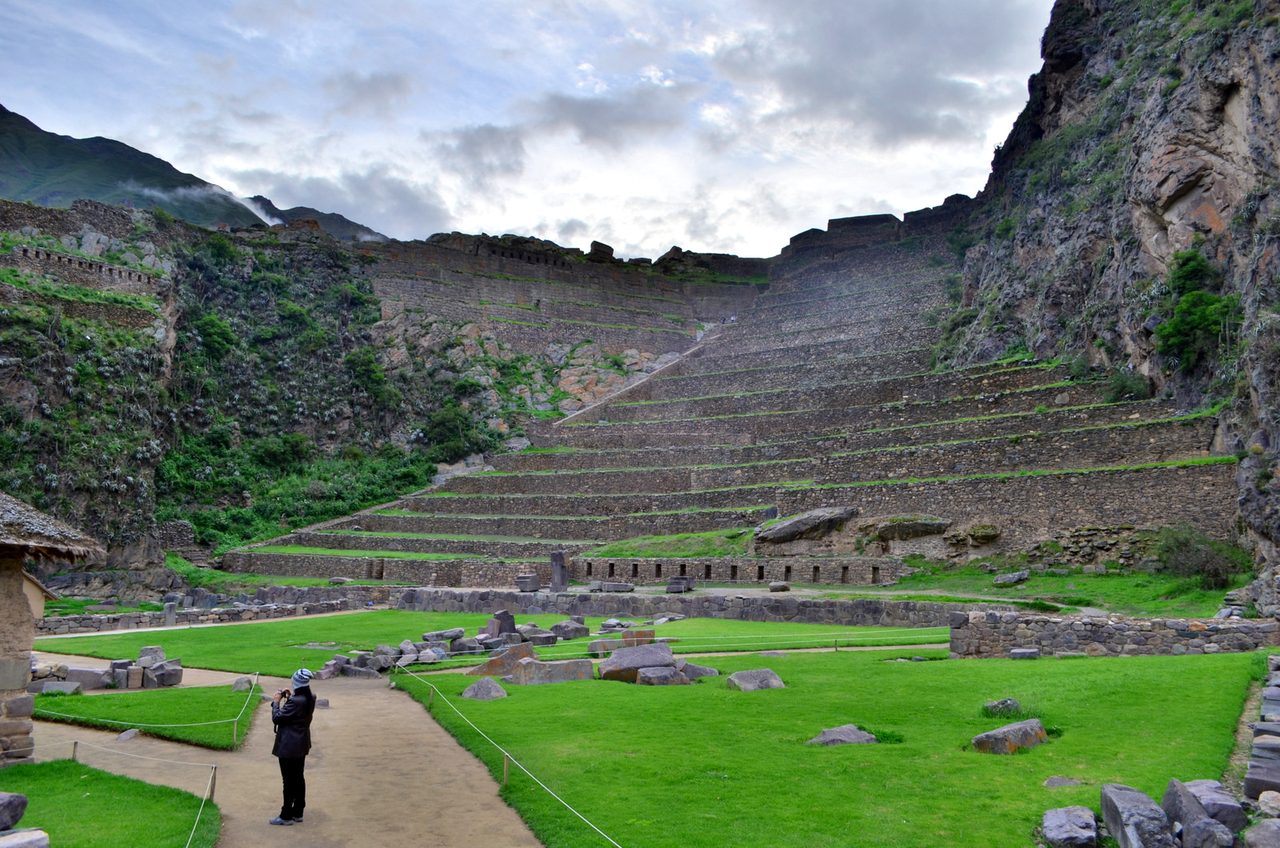
The best hour I have spent at an Inca site was not at Machu Picchu. It was on the top terrace at Ollantaytambo at about eight in the morning, looking across the valley at a mountainside scarred by a long stone ramp, and slowly working out that the ramp was a road for dragging six-tonne blocks down from a quarry six kilometres away and nine hundred metres up. Almost every list of Inca ruins in Peru treats the sites outside Machu Picchu as a warm-up act. They are not.
Machu Picchu is extraordinary and you should go. But it is one royal estate, abandoned within a century of being built, never finished, never mentioned by the Spanish. It tells you almost nothing about how the Inca state actually worked — how it moved water, stored food, fed armies, ran a road network, or held a valley. The sites below tell you that. Several of them are better preserved. A couple are more impressive as engineering. Most of them are nearly empty.
What follows is what each site is actually for, how long you genuinely need there, how to get to it without a tour, and — because this trips up more travellers than anything else in Cusco — exactly what the Boleto Turístico does and does not cover. I have also included a section on the sites everyone calls Inca that are not Inca at all, because the confusion is widespread and it changes how you plan.
The Inca ruins in Peru worth planning a trip around
Twelve sites, ranked roughly by how much I think an interested traveller gets out of them per hour spent. “How long” means time on site, not including travel.
| Site | Where | How long | How to get there | Boleto Turístico? |
|---|---|---|---|---|
| Ollantaytambo | Sacred Valley, 60 km NW of Cusco | 2–4 hours | Colectivo from Calle Pavitos, Cusco (~S/15–20, 1h45); or train stop | Yes (full or Circuit III) |
| Pisac | Sacred Valley, 33 km NE of Cusco | 2–3 hours | Colectivo from Calle Puputi (~S/7–10, 1h), then taxi to the upper gate | Yes (full or Circuit III) |
| Sacsayhuamán | 2 km above Cusco, 3,700 m | 1.5–2 hours | Walk up from the Plaza de Armas (30–45 min, steep) or taxi ~S/15 | Yes (full or Circuit I) |
| Moray | Near Maras, 50 km from Cusco | 1–1.5 hours | Colectivo to Maras junction, then shared taxi; usually paired with the salt ponds | Yes (full or Circuit III) |
| Tipón | South Valley, 25 km SE of Cusco | 1.5–2 hours | Urcos-bound colectivo, then taxi up 4 km from the main road | Yes (full or Circuit II) |
| Qorikancha | Central Cusco | 1 hour | Walk — it is two blocks below the Plaza de Armas | No — S/15 at the door (see below) |
| Choquequirao | Apurímac canyon, 3,050 m | 1–2 full days on site | 4–5 day round-trip trek from Capuliyoc/Cachora. No road, no cable car | No — ~S/60 cash at the gate |
| Huchuy Qosqo | Shelf above the Sacred Valley, 3,650 m | 1–2 hours | Day hike from Tambomachay (6–8h) or a steep 3h climb from Lamay | No — free |
| Raqchi | Cusco–Puno road, 110 km SE | 1–1.5 hours | Sicuani-bound bus, or as a stop on the tourist bus to Puno | No — ~S/10 |
| Pikillaqta | South Valley, 32 km SE of Cusco | 45–60 minutes | Same colectivo as Tipón, 20 minutes further on | Yes (full or Circuit II) |
| Wiñay Wayna | Inca Trail, day 3–4 | 1 hour | Classic Inca Trail permit only. No other legal access | No — inside the trek permit |
| Vilcabamba (Espíritu Pampa) | Cloud forest west of Cusco, ~1,450 m | Half a day | 3–4 day trek from Huancacalle, or a very long road/hike combination | No — small local fee |
If you only have a couple of days in the region, Ollantaytambo and Sacsayhuamán are the two I would not skip. If you have a week, add Moray, Tipón and Pisac and you will have a far better picture of the Inca than Machu Picchu alone gives you — and a better one than a standard first-timer’s shortlist would suggest. Our broader two-week Peru route planner shows how the Cusco block fits with the coast and the altiplano.
The Boleto Turístico, explained properly
This ticket confuses everyone, including a lot of guides who ought to know better, and most articles about it are wrong in the same three ways. Here is the actual structure, taken from COSITUC, the regional body that issues it.
The full ticket (BTCI): S/130, ten days, sixteen sites
One ticket, valid ten consecutive days from the day you buy it, covering sixteen attractions grouped into three circuits:
- Circuit I — Sacsayhuamán: Sacsayhuamán, Q’enqo, Puka Pukara, Tambomachay.
- Circuit II — City and South Valley: Museo de Sitio del Qorikancha, Museo Histórico Regional, Museo de Arte Contemporáneo, Museo de Arte Popular, Centro Qosqo de Arte Nativo, the Pachacúteq Monument, Tipón, Pikillaqta.
- Circuit III — Sacred Valley: Ollantaytambo, Pisac, Chinchero, Moray.
A student ticket at S/70 covers the same sixteen sites for ten days. It is for ages 10–17 on presentation of ID, and for 18–25 year-olds with a valid university card or an ISIC. Children under 10 generally go free. Bring your passport — you need it to buy the ticket and you may be asked for it at the gates.
The three partial tickets: S/70 each
Each partial ticket covers exactly one circuit. Circuit I is valid one day only; Circuits II and III are valid two days. They cost the same as each other, which produces the single most useful piece of arithmetic in Cusco:
Two partial tickets cost S/140. The full ticket costs S/130. If your plan involves sites from more than one circuit — and almost everyone’s does, because Sacsayhuamán is Circuit I and Ollantaytambo is Circuit III — buying the full ticket is cheaper and gives you ten days instead of one or two. The partial ticket only makes sense if you are genuinely visiting one cluster and leaving.
The Qorikancha trap
This is the mistake I see repeated everywhere. The Boleto Turístico includes the Museo de Sitio del Qorikancha. That is a small underground museum on the Avenida El Sol side of the gardens. It is not the Qorikancha itself — the Temple of the Sun and the Santo Domingo convent built on top of it — which belongs to the Dominican order rather than the state and charges its own entry of about S/15 at the door.
People turn up with a Boleto, get waved into the museum, look at a room of ceramics, and leave thinking they have seen the most important building in the Inca empire. They have not. Pay the extra S/15. It takes four minutes to buy and it is the best-value ticket in Cusco.
What the Boleto does not cover
Machu Picchu (entirely separate national system — see how the Machu Picchu ticket system works), Cusco Cathedral and the churches on the religious circuit, the Qorikancha temple, the Maras salt ponds (~S/10–15), Rainbow Mountain, Raqchi, Choquequirao, and every site outside the Cusco region. Guiding and transport are never included; the ticket is admission only.
Buying it
As of late 2025 COSITUC still sold the ticket in person only — no online sales, despite an e-ticket being announced years ago. You can buy at the main office on Avenida El Sol 103, at the DIRCETUR tourist office on Calle Mantas, or at the gate of most included sites. Validity starts on the day of purchase, so do not buy it on arrival if you plan to acclimatise for two days first. That mistake quietly wastes a fifth of your ticket.
Ollantaytambo: the one everyone rushes past
Most travellers see Ollantaytambo through a train window or from the platform with a rucksack on. That is a waste, because it is the most complete Inca settlement you can walk into. The Spanish never rebuilt the town over the top of it — the grid of canchas below the ruins is the original Inca street plan, with original walls and original water channels, and people live in them. You can stand in a doorway that has been a doorway since the 1400s.
The terraces above are the postcard, and they are steep: roughly two hundred steps to the top at 2,792 m, which is a thousand metres lower than Cusco but still enough to slow you down. At the summit sits the unfinished Temple of the Sun, six vast pink rhyolite monoliths fitted edge to edge with thin stone spacers. It was never completed. The Spanish invasion interrupted the work and the blocks were simply left.
The quarry story is the part almost nobody explains, and it is the best thing about the site. The rhyolite came from Cachiqata, across the valley and roughly nine hundred metres higher. To move blocks weighing several tonnes, the Inca built a ramp down the mountain, diverted the Urubamba river to create a crossing, and hauled them up the other side. Blocks that never made it are still lying on the route — locals call them piedras cansadas, tired stones. Once you know they are there you can pick them out from the top terrace as a line of pale dots on the far slope. That is a workflow frozen mid-task in 1536.
Ollantaytambo is also the only place the Inca beat a Spanish army in open battle. In 1537 Manco Inca held the terraces against Hernando Pizarro’s cavalry, then flooded the plain below through the irrigation channels to bog down the horses. Standing on the terrace looking down at that flat field is the closest an Inca site comes to being legible as a battlefield.
The free bit: directly opposite the main ruins, on the other side of town, the Pinkuylluna granaries climb the mountainside. Entry is free — you sign a book at the trailhead. The path is steep, loose and unfenced, and takes 45–60 minutes up, but the view back over the terraces is better than anything inside the paid site and you will likely have it to yourself.
Ollantaytambo is also where most people board the train, and I would argue it is the better base than Cusco for anyone doing the day trip out to Machu Picchu — you sleep 600 m lower, and the first trains leave from your doorstep rather than after a two-hour transfer.
Pisac: bigger than people realise, and most see a tenth of it
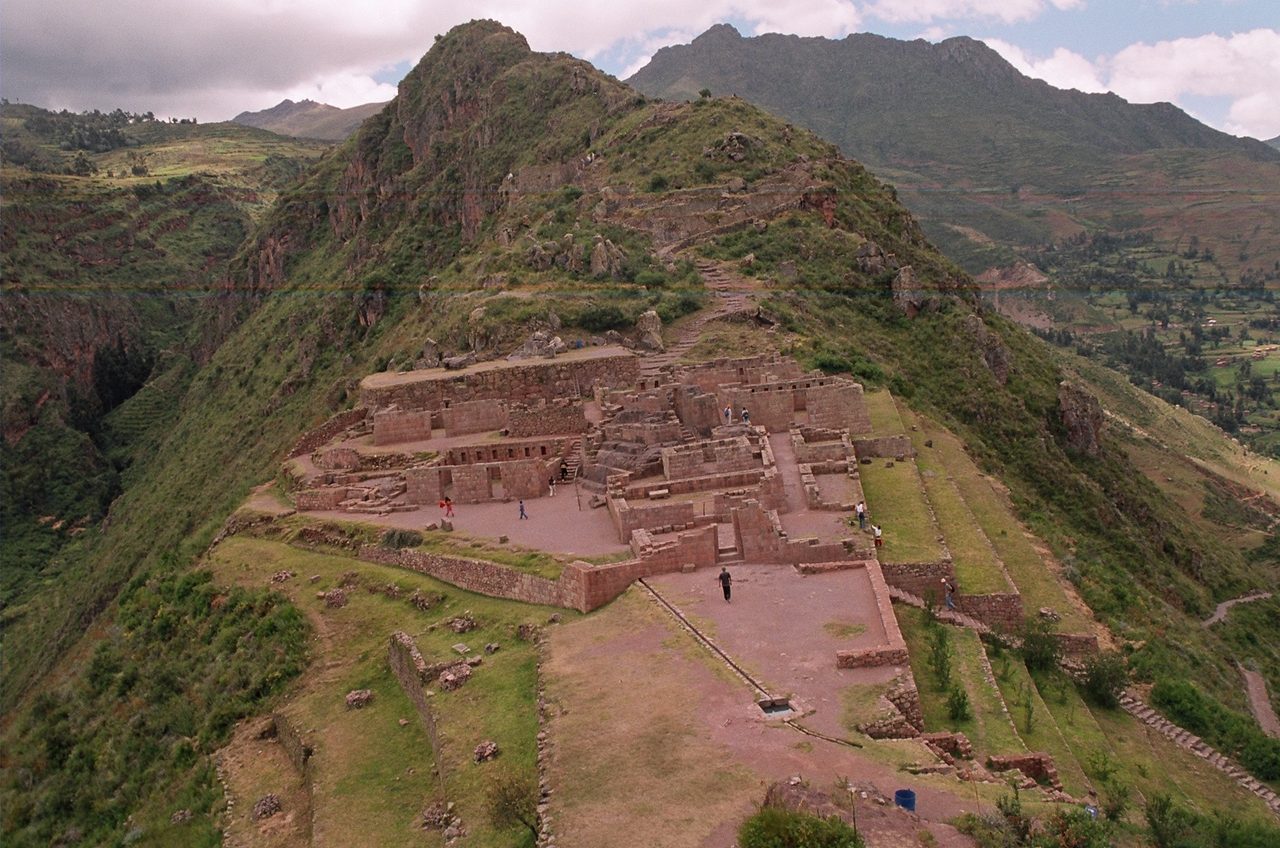
Pisac is not one ruin. It is four linked sectors strung along a ridge for well over a kilometre — the citadel at Q’allaqasa, the ceremonial core at Intihuatana with its carved sundial stone, the residential terraces at P’isaqa, and Kanchiraqay at the lower end. Coach tours drop people at the upper car park for forty minutes, which gets you the Intihuatana and nothing else.
The trick is to taxi up to the upper gate from Pisac town (about S/30–40, negotiable, twenty minutes of switchbacks) and then walk down through all four sectors and into town, which takes two to three hours and is mostly downhill. You get the whole site, you finish at the market, and you avoid the 600 m climb.
Look across the gorge on the way. The cliff face opposite is pocked with hundreds of holes — the Tianayuq cemetery, one of the largest Inca burial grounds known. It was comprehensively looted long ago and you cannot cross to it, but the scale of it visible from the path tells you more about Inca Pisac than the buildings do.
On the town: the market runs daily now and is busiest on Sunday, when tour buses arrive en masse. It is a pleasant market. It is not, in 2026, a particularly authentic one. Go for the ruins.
Sacsayhuamán and the four sites above Cusco
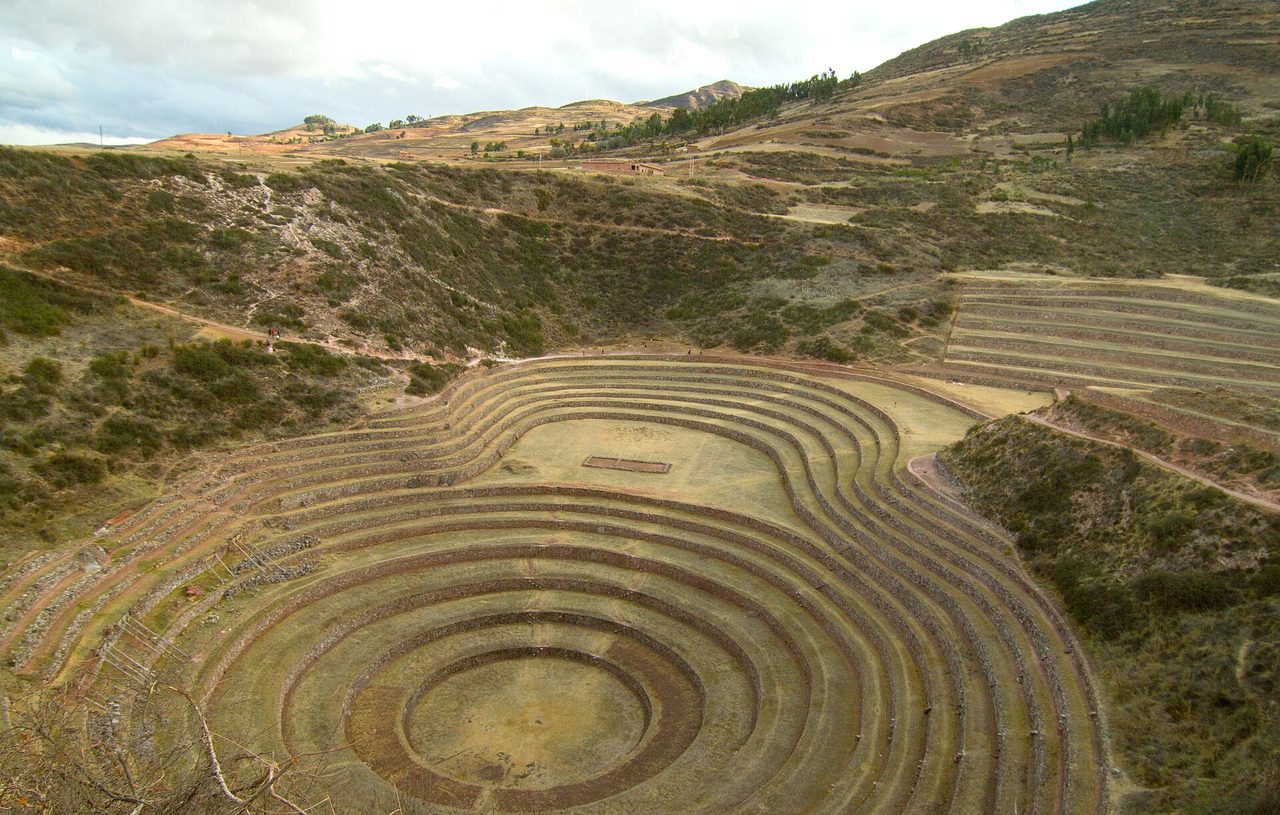
Sacsayhuamán is the one that makes people go quiet. Three tiers of zigzag wall built from limestone blocks so large that the biggest are estimated at over a hundred tonnes, cut and fitted so precisely that five centuries and several major earthquakes have not opened a gap you could slide paper into. There is no mortar. The stones are irregular polygons, each shaped to its neighbours.
What you see is a fraction of what stood. After the siege of 1536 the Spanish used Sacsayhuamán as a quarry for colonial Cusco — the towers and upper structures were carted off block by block. Only the foundations of the round tower Muyucmarca remain. The zigzag walls survived largely because the base stones were too heavy to move, which is a bleak sort of compliment.
It is a 30–45 minute walk uphill from the Plaza de Armas at 3,700 m, and I would not attempt that on your first day at altitude; take a taxi up and walk down instead. Allow ninety minutes. If you are in Cusco on 24 June, Inti Raymi is staged here, and it is genuinely worth seeing once even though it is a twentieth-century reconstruction rather than a surviving rite. The rest of what there is to do in Cusco sits within walking distance below.
The other three Circuit I sites — Q’enqo, Puka Pukara and Tambomachay — are usually sold as part of a “four ruins” half-day tour, and here I will be blunt. Q’enqo is twenty minutes. It is a carved limestone outcrop with zigzag channels and a subterranean chamber, interesting if you care about Inca ritual geography, unremarkable otherwise. Puka Pukara is fifteen minutes — a small red-stone checkpoint, and the best thing about it is the view. Tambomachay is twenty minutes, but they are a good twenty minutes: the spring-fed fountains are still running, which after five hundred years is a better argument for Inca engineering than any wall.
Together the four take about half a day including transport. That is fine. Just do not let anyone sell you a full day for it.
Qorikancha: the most important building in the empire
Qorikancha was the religious centre of Tawantinsuyu, the point from which the ceques — the sightlines organising the sacred landscape — radiated out across the empire. Its walls were sheathed in sheets of gold. Those sheets were stripped to pay Atahualpa’s ransom, and the Dominicans built a convent on top of the temple.
Go anyway, and go for the masonry. The curved outer wall on the Avenida El Sol side is the finest surviving Inca stonework anywhere — a smooth, slightly battered curve of dark andesite blocks with joints you cannot get a fingernail into. Inside, several original temple chambers survive intact under the colonial arcades, and the trapezoidal niches are aligned with a precision that is obvious the moment you sight down them.
The best detail is structural. Cusco’s earthquakes in 1650 and 1950 badly damaged the colonial building. The Inca walls beneath did not move. What you are looking at now is partly the result of restorers stripping colonial plaster back to reveal the Inca fabric that had outlasted it. For the longer story of how the Inca built and why it lasted, our piece on who built Machu Picchu and when covers the same construction period.
An hour is enough. Remember it is S/15 separately, not the Boleto.
Moray: the agricultural laboratory
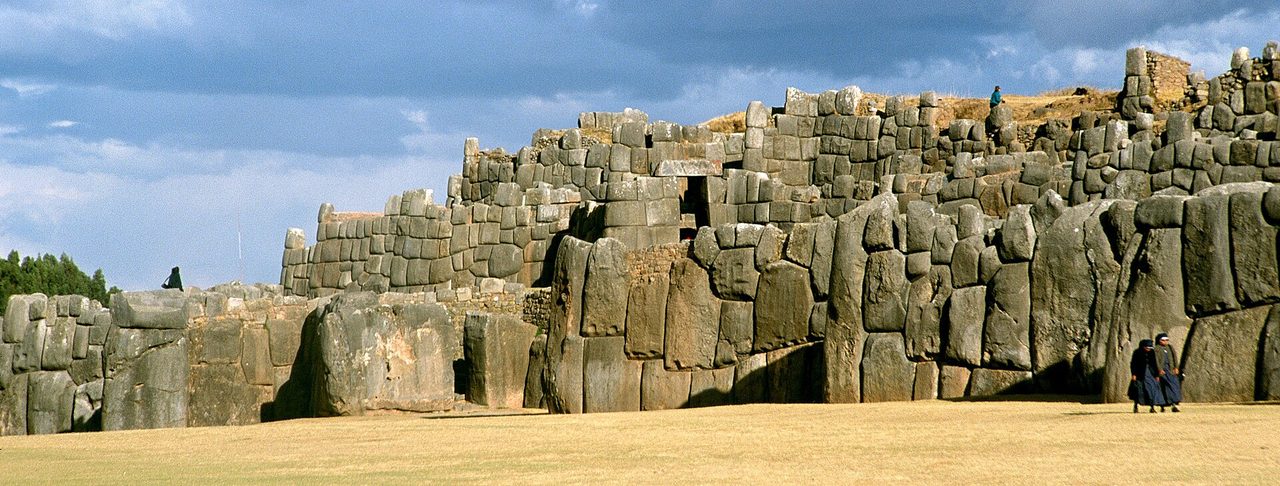
Moray is three sets of concentric circular terraces sunk into natural depressions at 3,500 m, the largest around thirty metres deep. Nothing else in the Inca world looks like it, and the leading interpretation is that it was an agricultural research station.
The evidence is decent. Temperatures between the top ring and the bottom of the main bowl differ by up to about 15°C, which is the equivalent of moving through several ecological zones without moving anywhere. Soil analysis has found earth from different regions imported into different levels. The drainage — layers of gravel and sand beneath the topsoil, feeding underground channels — is good enough that the bowl has never been recorded flooding, in a place where a natural sinkhole would fill every rainy season.
An empire that stretched from desert coast to high puna to cloud forest had a real problem: which crop variety survives where. Moray looks like the place they worked that out, adapting maize and potato strains for altitudes they had not previously farmed. Whether or not that is exactly right, it is the only Inca site that reads as a piece of scientific infrastructure rather than a temple, a fort or a palace.
You need an hour. Most people combine it with the Maras salt ponds ten minutes away — thousands of terraced evaporation pans fed by a saline spring, worked continuously since before the Inca and still worked by local families today. Note that the salt ponds are not on the Boleto and charge their own small fee.
Tipón: the most underrated site in the Cusco region
If I could send visitors to one site they have never heard of, it would be Tipón. Thirteen broad terraces stepping down a small valley at 3,560 m, fed by a spring at the head, with a system of cut-stone channels that splits the flow into precise streams, drops it down carved chutes, runs it under the terraces and delivers it to each level.
The point is not that it looks nice, though it does. The point is that it still works. The water has been running through those channels for something like five hundred years with no pumps, no valves and no maintenance regime, and the flow is still balanced between branches. The American Society of Civil Engineers designated Tipón a historic civil engineering landmark, which is a rare honour for a pre-Columbian site and tells you how seriously the hydraulics are taken.
It is also quiet. Tipón sits in the South Valley, off the Sacred Valley tour circuit, so on a weekday morning you may have long stretches of it to yourself — a genuinely different experience from the queue-and-shuffle of the headline sites. Allow ninety minutes, more if you walk up to the upper reservoir.
Practical note: the site is 4 km uphill from the main road, so a colectivo drops you at the turn-off and you take a taxi or walk the last stretch. The town of Tipón below is also the region’s cuy capital, with a strip of restaurants that do nothing but roast guinea pig. If you were ever going to try it, this is the place — our guide to what to eat in Peru gets into what to expect.
Pikillaqta: worth seeing, but not for the reason you think
Pikillaqta is on the Boleto, twenty minutes past Tipón, and it is not Inca. It is Wari, built somewhere between 550 and 1100 AD, which makes it several centuries older than the Inca empire. Roughly fifty hectares of rigid rectangular grid, hundreds of tall roofless enclosures, streets meeting at right angles. The walls were once plastered white with gypsum, floors included, so the whole city would have glared in the sun.
Honest assessment: for most travellers this is forty-five minutes of walking between similar walls. There is no dramatic masonry, no view, no obvious focal point. If you have limited time, skip it.
But if you are interested in why the Inca built the way they did, Pikillaqta is the best comparison available. The Wari planned on a grid and imposed it on the terrain. The Inca did the opposite — they read the terrain and shaped stone to it, which is why Ollantaytambo and Machu Picchu look like they grew out of their mountains. Seeing the two approaches within an hour of each other makes the Inca style legible in a way that no amount of reading does. The nearby Rumicolca gate, a Wari aqueduct that the Inca later rebuilt as a checkpoint on the road south, makes the same point in a single structure.
Choquequirao: the four-day one
Choquequirao is the site that comes closest to what people imagine Machu Picchu will feel like. It sits at 3,050 m on a ridge above the Apurímac canyon, it is estimated to be substantially larger than Machu Picchu, and only around a third has been cleared. Where Machu Picchu takes several thousand visitors a day, Choquequirao often takes fewer than fifty.
The reason is the walk in. There is no road, no train and — despite a cable car being announced repeatedly since the early 2010s, and still under procurement as of 2026 — no lift. From the trailhead at Capuliyoc you descend roughly 1,500 m to the Apurímac river, then climb roughly 1,500 m back out the other side. Then you do it again in reverse to get home. The standard round trip is four days; five is more comfortable; a traverse onward to Machu Picchu takes eight or nine.
It is hot in the canyon, dusty, and genuinely hard. It is also not a technical trek — no altitude extremes, no scrambling — so the barrier is stamina rather than skill. Entry is around S/60, cash, paid at the site; there is no online booking and no permit system, so unlike the classic Inca Trail and its permit lottery you can decide to go with a week’s notice.
The single best thing there is not the plazas. It is the llama terraces on the western flank — retaining walls with life-size llamas picked out in white quartz set into the darker stone, only cleared and identified this century. Nothing else like them survives in Inca architecture.
Who should not go: anyone on a tight schedule, anyone unsure about consecutive long descents on loose ground, and anyone who thinks “less crowded” is worth four hard days regardless of what is at the end. It is worth it, but it costs you most of a week. Factor that into what a Peru trip actually costs in days as well as soles.
Vilcabamba and Espíritu Pampa: the real lost city
Here is a piece of history worth getting straight. When Hiram Bingham reached Machu Picchu in 1911 he believed he had found Vilcabamba, the last capital of the Inca resistance. He had not. In the same season he also visited a site called Espíritu Pampa, much deeper in the cloud forest, and dismissed it as too small. Espíritu Pampa was Vilcabamba. It took until Gene Savoy’s expeditions in the 1960s for that to be established.
So the actual last Inca city — where Manco Inca and his sons held out from 1539 until Túpac Amaru I was captured in 1572, thirty-nine years after the conquest began — is not the famous one. It sits at around 1,450 m in dense forest west of Cusco, reached by a three or four day trek from Huancacalle, and it receives a handful of visitors a week. Roofless walls, plazas, Spanish-influenced roof tiles that show the holdouts were adapting European technology, and forest reclaiming everything.
On the way you pass Vitcos (Rosaspata), the palace where Manco Inca was murdered, and the Ñusta Hispana or Yurac Rumi — an enormous white granite outcrop carved with steps, channels and seats, one of the great Inca sacred rocks and almost completely unvisited.
This is a trip for people who care about the history rather than the photographs. If that is you, it is the most interesting week in Peru. If it is not, be honest with yourself: the ruins are heavily overgrown and the walk is humid and buggy, closer in character to the Amazon lowlands than to the highland treks.
Three more worth knowing about
Huchuy Qosqo
“Little Cusco”, on a shelf at 3,650 m looking down over the Sacred Valley. Its kallanka — a great hall with adobe upper walls on a fine stone base — is unusual and well preserved. Entry is free, there are no ticket booths, and there is a decent chance nobody else is there. Get to it either as a day hike from Tambomachay over a pass around 4,300 m (six to eight hours, spectacular, needs acclimatisation) or as a steep three-hour climb up from Lamay in the valley. It is the best single day hike near Cusco that does not require a permit.
Raqchi
The Temple of Wiracocha at Raqchi has the tallest standing Inca wall anywhere — roughly twelve metres of adobe on a stone base, once the spine of the largest roof the Inca ever built. Around it stand rows of circular qolqas, storehouses, well over a hundred of them, which is the clearest surviving illustration of how the Inca state fed itself: surplus taken as labour tax, stored along the road system, released when needed.
It is 110 km from Cusco on the road to Puno, entry around S/10, and the easy way to see it is on one of the tourist buses that break the Cusco–Puno drive with stops at Andahuaylillas, Raqchi and the La Raya pass. That works nicely if you are continuing to Lake Titicaca and the islands rather than doubling back.
Wiñay Wayna
Terraces curving around a spur above the Urubamba at about 2,650 m, with a descending chain of ten ritual baths fed one into the next. Many people who have hiked the classic route rate it above Machu Picchu itself, partly because you arrive on foot in the late afternoon with almost nobody around.
The honest constraint: there is no independent access. Wiñay Wayna sits inside the Inca Trail corridor and you can only reach it with a permit and a licensed operator on the four-day route. Permits are capped at 500 people a day including porters and guides, sell out four to six months ahead, and the trail closes each February for maintenance. If you want to see it, that decision has to be made early — well before you start thinking about how many days to give Machu Picchu.
Famous Peruvian ruins that are not Inca at all
This section exists because the conflation is everywhere and it genuinely affects planning. The Inca empire expanded for less than a century before the Spanish arrived — roughly the 1430s to 1533. Peru has been continuously inhabited for thousands of years. Most of its great archaeological sites belong to somebody else.
| Site | Actually built by | Roughly when | Where |
|---|---|---|---|
| Kuélap | Chachapoya | 6th–16th century | Amazonas, near Chachapoyas |
| Chan Chan | Chimú | c. 900–1470 | Coast, near Trujillo |
| Nazca Lines | Nazca (and Paracas) | c. 500 BC–500 AD | Southern desert coast |
| Caral | Norte Chico | c. 2600 BC | Supe valley, north of Lima |
| Chavín de Huántar | Chavín | c. 1200–500 BC | Ancash, near Huaraz |
| Sipán / Huaca Rajada | Moche | c. 3rd century AD | Coast, near Chiclayo |
| Sillustani | Colla / Aymara | pre-Inca, later Inca-influenced | Near Puno |
| Huaca Pucllana | Lima culture | c. 400–700 AD | Miraflores, Lima |
| Pachacamac | Lima / Wari / Ychsma, then Inca | c. 200 AD onward | South of Lima |
Two clarifications matter most. Kuélap is not the “Machu Picchu of the north” in any meaningful sense beyond marketing — it is a Chachapoya fortress with twenty-metre outer walls and hundreds of round houses, a completely different building tradition, and it predates the Inca by centuries. It is also a serious detour: reaching it means flying or busing to the far north, and the cable car from Nuevo Tingo does not run on Mondays and closes for annual maintenance. The site itself was shut for much of 2023 after a wall collapse and has since reopened with restoration completed. If you are going, plan it as its own leg of a northern Peru route, not a side trip from Cusco.
Nazca and Chan Chan are not Inca and never were. The Nazca Lines predate the Inca by more than a thousand years and belong with the rest of the southern coast route. Chan Chan is a Chimú city of adobe, a material and an aesthetic the Inca never used at that scale — the Inca conquered the Chimú around 1470 and absorbed their metalworkers, which is roughly the extent of the connection.
The one genuine crossover is Pachacamac, an hour south of Lima. It was a pilgrimage centre and oracle for well over a thousand years before the Inca arrived, and they did not destroy it — they added a Temple of the Sun and an acllawasi and kept the oracle running. It is the easiest Inca-adjacent site to reach in the country and slots neatly into a few days in Lima at the start of a trip.
How to fit these into an actual trip
The realistic shapes, assuming you are based in or near Cusco:
- Two days: Sacsayhuamán and Qorikancha on day one (both walkable from the centre, gentle on a body that has just arrived at 3,400 m); Ollantaytambo on day two. Buy Circuit I and pay Qorikancha separately, or the full ticket if day two is confirmed.
- Four days: add Pisac and the Moray–Maras pair. Full Boleto is clearly the right buy. This is the standard Sacred Valley block and pairs naturally with the wider Sacred Valley itinerary.
- A week: add Tipón and Pikillaqta in the South Valley, and Huchuy Qosqo as a hiking day. This is where the picture becomes coherent — you have seen the capital, a royal estate, a fortress town, an agricultural station, a water complex and a pre-Inca comparison.
- Ten days or more: add Choquequirao, or the Vilcabamba trek, or Raqchi as a stop on the way to Puno. Anything more than that starts competing with the rest of the country.
On timing: the dry season from May to September gives you reliable footing and clear views, and the shoulder months of April and October are the sweet spot for crowd levels. The rainy season from December to March makes the steep sites — Pisac’s upper path, Pinkuylluna, Choquequirao’s descent — genuinely slippery. Our overview of when to go to Peru breaks this down region by region, and if Machu Picchu is fixed in your plan, the best months for Machu Picchu specifically differ slightly from the rest of the highlands.
Practical things that will save you time
- Hours. Most of the archaeological parks run roughly 07:00–18:00 daily, with last entry an hour or so before closing. Qorikancha keeps shorter, church-style hours and closes earlier on Sundays. Arriving at 07:00 at Pisac or Ollantaytambo buys you ninety minutes before the first coaches.
- Cash. Gate fees for the non-Boleto sites are cash in soles. Choquequirao, Raqchi and the Maras salt ponds do not take cards.
- Altitude. Sacsayhuamán at 3,700 m and Tipón at 3,560 m are both higher than Cusco. Ollantaytambo at 2,792 m is much lower and is the standard advice for anyone struggling — drop into the valley for a night.
- Guides. None of these sites require a guide, but Sacsayhuamán, Ollantaytambo and Qorikancha are transformed by one. Expect S/60–100 for a private guide at the gate; agree the price and duration before you start.
- Transport. Colectivos to every Sacred Valley and South Valley site leave from fixed streets in Cusco, cost a few soles and go when full. They are the cheapest and often the fastest option — how transport works in Peru covers the etiquette.
- Footwear. Inca stone is polished, uneven and unforgiving in the wet. This matters more than anything in the standard Machu Picchu packing advice because these sites have fewer handrails.
- Where you sleep. Basing in Ollantaytambo or Urubamba rather than Cusco cuts hours of daily transfer and is easier on the lungs; see choosing a base in Peru.
Frequently asked questions
What is the second most important Inca site after Machu Picchu?
By scale and archaeological significance, Choquequirao. By what you can actually learn from a visit, Ollantaytambo — it is the most complete surviving Inca town, and the only place where you can see quarry, ramp, terraces, temple and living street plan in one view. Qorikancha was the more important building in Inca terms, but far less of it survives.
Is the Boleto Turístico worth it?
If you visit three or more included sites, yes, easily — Ollantaytambo and Pisac alone would cost more individually if they sold individual tickets, which they largely do not. If you are only doing the four ruins above Cusco, buy Circuit I for S/70. If you are doing anything in two different circuits, buy the full S/130 ticket, because two partials cost S/140.
Can I buy the Cusco tourist ticket online?
Not as of the most recent COSITUC guidance. An electronic ticket has been announced more than once and has not materialised. Buy in person at Avenida El Sol 103, the DIRCETUR office on Calle Mantas, or at the gate of any included site. Budget ten minutes and bring your passport, and check the official portal before you travel in case that finally changes.
Is Qorikancha included in the Boleto Turístico?
No. The Boleto includes the Qorikancha site museum, which is a separate underground space nearby. The temple and convent charge about S/15 at the door. Almost every source gets this wrong and a lot of visitors miss the actual building.
Which Inca ruins can you visit free?
Huchuy Qosqo has no ticket booth. Pinkuylluna, above Ollantaytambo, is free with a signing-in book. In Ollantaytambo town itself the original Inca street grid and canchas cost nothing to walk through, and the same is true of the Inca wall on Calle Hatunrumiyoc in Cusco with its famous twelve-angled stone.
How many days do I need for the ruins around Cusco?
Four full days covers the headline sites at a civilised pace. Two days gets you the essentials if you are efficient. A week lets you add the South Valley and a hiking day, which is when the Inca system starts to make sense rather than being a series of impressive walls.
Pisac or Ollantaytambo, if I only have time for one?
Ollantaytambo, without much hesitation. It is more complete, it is lower and therefore easier on new arrivals, the town is an Inca artefact in its own right, and it is on the train line so it costs you nothing extra in transport. Pisac has the better ridge walk and the better market, but if you are choosing one, choose Ollantaytambo.
Can I see Wiñay Wayna without hiking the Inca Trail?
No. It lies inside the Inca Trail corridor and access requires a permit and a licensed operator on the classic four-day route. The alternative treks — Salkantay, Lares, Inca Jungle — do not pass it.
Are Kuélap, Chan Chan and the Nazca Lines Inca?
None of them. Kuélap is Chachapoya, Chan Chan is Chimú, the Nazca Lines are Nazca and predate the Inca by more than a thousand years. All three are worth visiting on their own terms — they are just in completely different parts of the country and belong to different chapters of Peruvian history.
Which sites are honestly not worth a special trip?
Puka Pukara and Q’enqo are fifteen to twenty minutes each and only make sense as part of the Circuit I loop. Chinchero’s terraces are pleasant but the colonial church built on the Inca palace is the real attraction, and the weaving demonstrations are a sales pitch with a cultural framing. Pikillaqta is for the archaeologically curious. Several of the Circuit II museums are filler on the ticket rather than destinations.
Do I still need to see Machu Picchu if I visit these?
Yes, and the sites here make it better rather than redundant — you arrive understanding what you are looking at. We have argued the case both ways in our honest verdict on Machu Picchu, and the practical mechanics of getting there are in the full Machu Picchu guide. If you want the wider picture of what else the country holds beyond the ruins, start with the best things to do in Peru.