Free & Cheap Things to Do in Peru
Most free-things lists in Peru quietly count the tip-based walking tours and the ruins that need a S/70 ticket. This one separates genuinely free from cheap from marketed-as-free, city by city, with 2026 prices.
Most lists of free things to do in Peru are quietly lying to you. They count the free walking tour that runs on tips. They count the market you can only really enjoy if you buy lunch. They count Sacsayhuamán, which costs S/70 minimum. None of that makes them useless, but it does mean you arrive with a budget built on sand.
So here is the version I wish someone had written for me. It is organised by city, because that is how you will actually use it, and it is strict about the word “free”. Genuinely free means you can walk up, look, stay as long as you like and walk away without paying anyone anything. Cheap means S/5 to S/30. Everything else gets called what it is.
Peru is not a cheap country any more, whatever the backpacker forums say. But it is a country where the good stuff and the expensive stuff overlap much less than you would expect. The coastline, the markets, the plazas at dusk, the smell of anticuchos on a Lima street corner: none of it has a ticket office. Read this alongside our wider guide to the experiences worth building a Peru trip around and you can decide for yourself which paid sites earn their place.
The three-tier test I use before calling anything free
Every activity in this guide goes into one of three buckets. It sounds pedantic. It stops you overspending by S/300 in a week.
- Tier 1 – genuinely free. No ticket, no tip expectation, no obligation to buy. Plazas, beaches, clifftop paths, most churches outside service times, viewpoints, walking around markets, watching things happen.
- Tier 2 – cheap but not free. S/5 to S/30. Chan Chan, most regional museums, the Magic Water Circuit in Lima, community fees on hiking trails. Often the best value in the country.
- Tier 3 – marketed as free, isn’t. Free walking tours, first-Sunday museum schemes, “free” tastings and demonstrations, anything where the price is social rather than printed.
Prices below are in Peruvian soles. The exchange rate has hovered around S/3.7 to the US dollar through 2026, so a rough mental conversion is soles divided by four. Entry fees creep upward most years and a few of them jumped in 2026, so treat every number here as a planning figure rather than a promise, and check the official site before you count on it. Our breakdown of what a Peru trip actually costs goes deeper on the maths.
The best free things to do in Peru, city by city
Seven cities, in the order most people hit them. I have kept each list short and honest rather than padding it to sixteen items by counting every church on the plaza separately.
Lima
Lima is the strongest free city in Peru and it is not close. The coastline does most of the work.
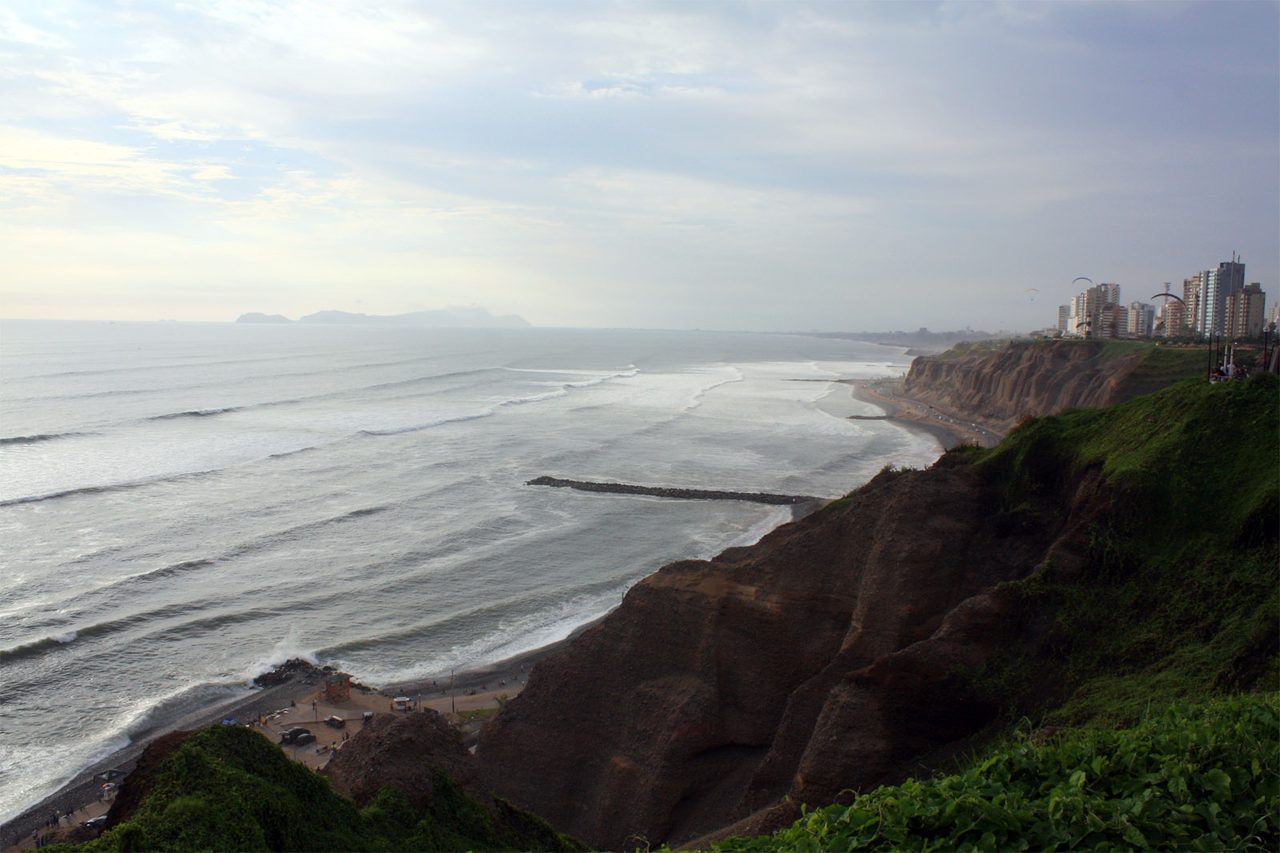
The Miraflores malecón. Roughly 10 km of clifftop parks strung along the top of the Costa Verde, from Barranco up through Miraflores and into San Isidro. It is continuous, it is well lit, it is busy with runners and dog walkers until late, and it is completely free. Walk it southbound in the late afternoon so the sun is doing the work for you. Parque del Amor, with Víctor Delfín’s El Beso sculpture and the Gaudí-ish mosaic walls, sits in the middle of it. So does the spot where the paragliders launch. Watching them is free and genuinely good; flying costs somewhere around US$100 for a ten-minute tandem, which I would skip unless flying is the point of your trip.
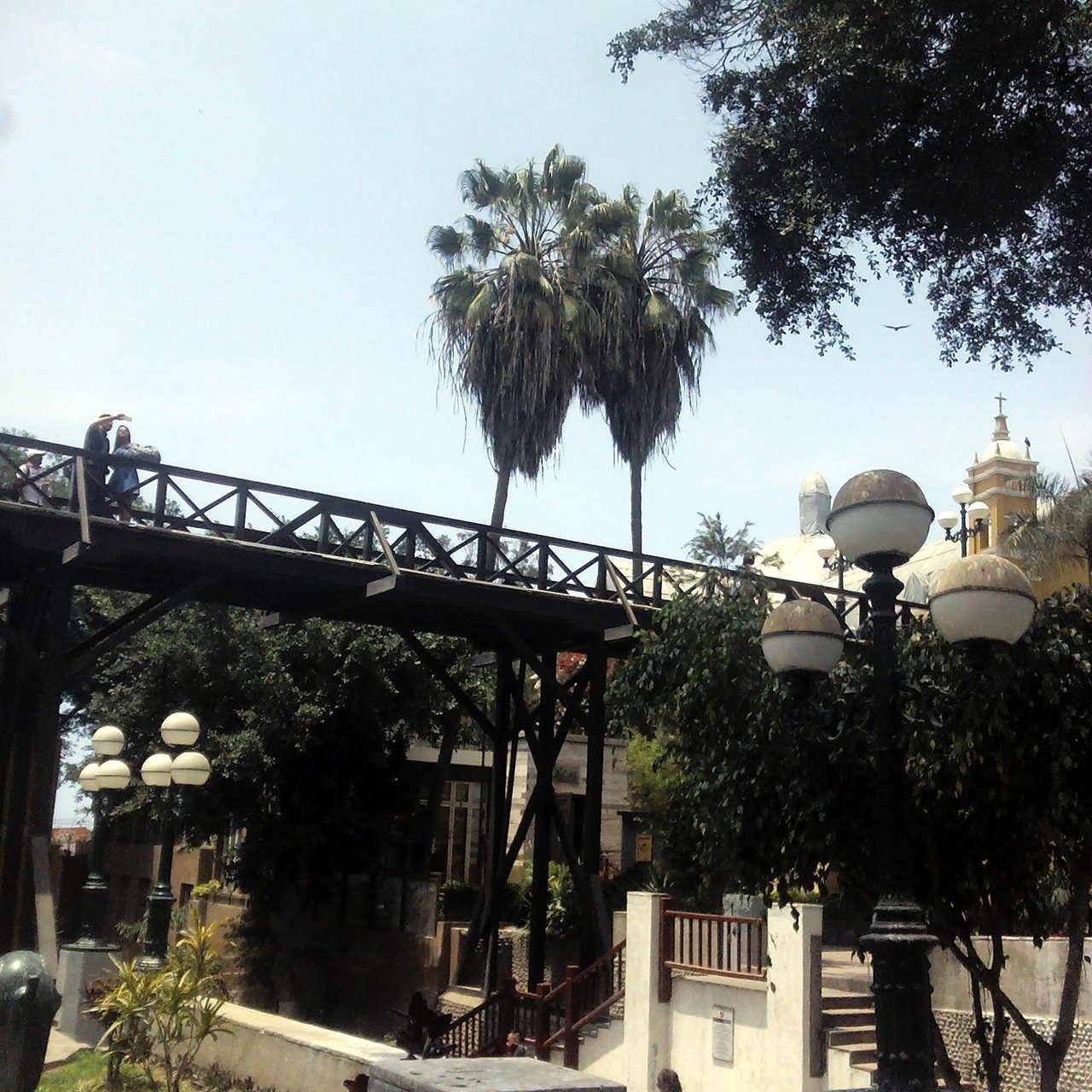
Barranco on foot. The Puente de los Suspiros, the Bajada de Baños running down to the sea, and the murals on almost every street off the main square. An hour and a half of wandering, zero soles. Go in daylight if it is your first time in the district.
Parque Kennedy. The cat park. It is a cliche and it is also the most reliable free hour in Miraflores: buskers, picarones stalls, chess players, and around a hundred well-fed stray cats. Useful as an orientation point too, since half the city’s tours meet there.
The historic centre. Plaza Mayor, Jirón de la Unión, Plaza San Martín. The changing of the guard in the Government Palace courtyard happens around midday most days, takes about half an hour and costs nothing; timings drift, so turn up at 11:45 rather than 12:00. The Cathedral and the Convento de San Francisco both charge (San Francisco’s catacombs are around S/20 and worth it). The buildings you look at from outside are free.
Genuinely free museums. MUCEN, the Central Reserve Bank’s museum on Ucayali, is free and better than it has any right to be, with a serious pre-Columbian gold and ceramics collection downstairs. Casa de la Literatura Peruana, in the old Desamparados railway station behind the Palace, is free and one of the nicest interiors in the centre. Museo de la Nación in San Borja has been free in recent years. That is three good museums for nothing, in a city where Museo Larco charges around S/50.
Our full rundown of what to do in Lima covers the paid sites in more detail, including which ones I would actually pay for.
Cusco
Cusco is the city where the free-versus-paid line gets blurriest, because the Boleto Turístico sits across almost everything. Ignore the ruins for a moment and the free list is still strong.
Plaza de Armas. Free, obviously, and better in the hour after sunset than at any other time. The Cathedral charges around S/30 as part of a religious circuit ticket. You can enter free during Mass, but going in as a sightseer during a service is the sort of thing that makes people dislike tourists. Don’t.
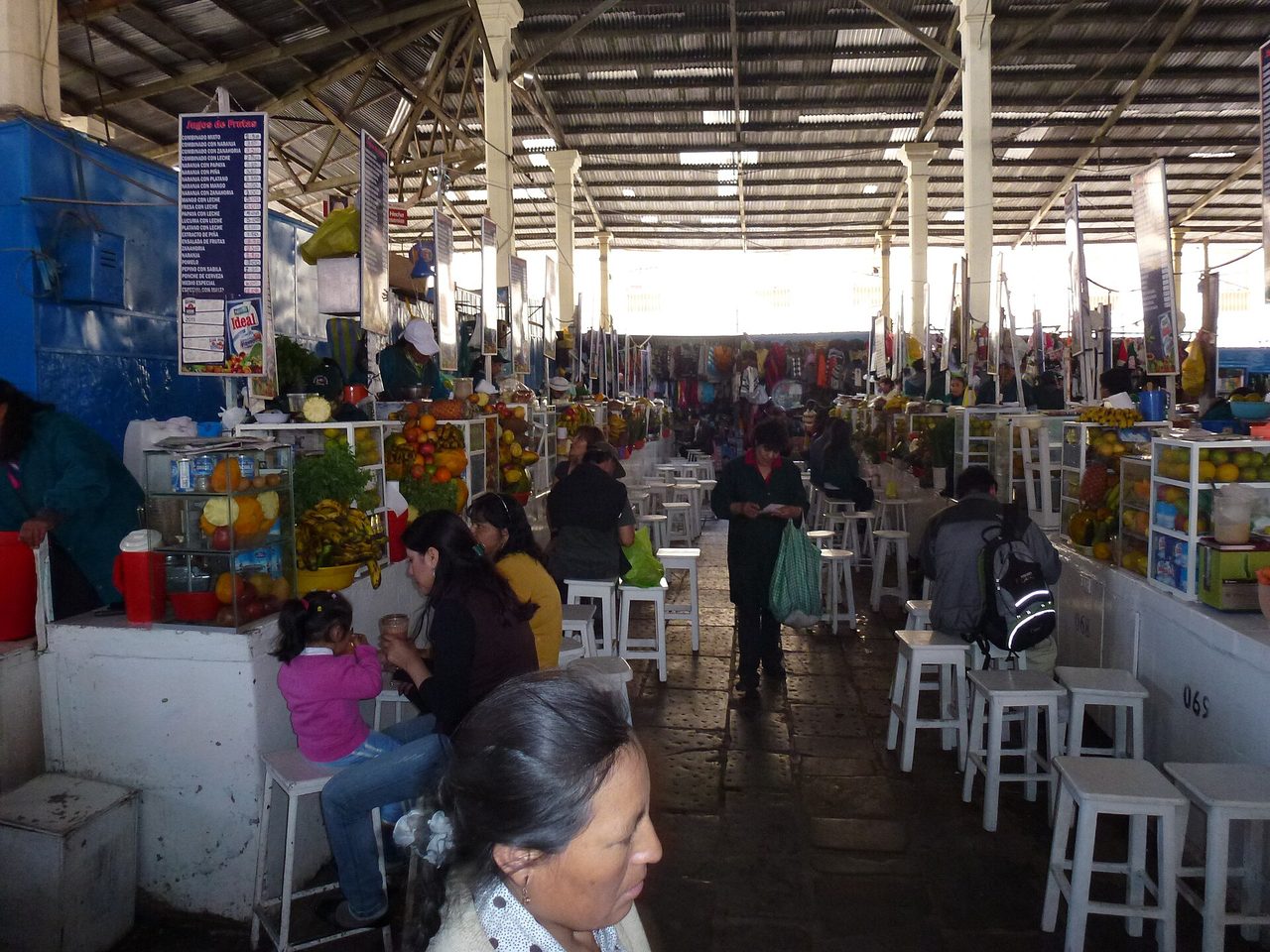
Mercado San Pedro. Free to walk through, and arguably the single best free hour in the country. Go before 10am when the juice counters are busy with locals rather than tour groups. Twenty varieties of potato, frog stalls, dried alpaca, the smell of fresh bread. You will end up spending S/6 on a juice, which is not free, but nobody is making you.
Hatunrumiyoc and the twelve-angled stone. Two minutes uphill from the plaza. Free, always mobbed, still worth thirty seconds of standing there working out how it fits.
San Blas. Steep, cobbled, full of workshops. The San Blas mirador is free. So is the Plazoleta de San Blas. Walk up in the morning, not at 3,400 m in the middle of the day on your first afternoon.
Cristo Blanco. The white Christ statue above the city is free and the view from it is the one everybody photographs. The walk up from the plaza takes 40 to 50 minutes and passes the outer edge of Sacsayhuamán, which is where people get confused: you can walk the public road and reach Cristo Blanco free, but you cannot enter the Sacsayhuamán site itself without a ticket. A taxi up is S/15 to S/20 if the altitude has flattened you.
Everything else in the historic centre worth seeing is on our guide to Cusco. The ticketing situation gets its own section below, because it is the single biggest budget decision you will make in the Andes.
Arequipa
Arequipa punches above its weight for free sightseeing because the city itself is the attraction. The white volcanic sillar stone, the light, and El Misti sitting at the end of half the streets.
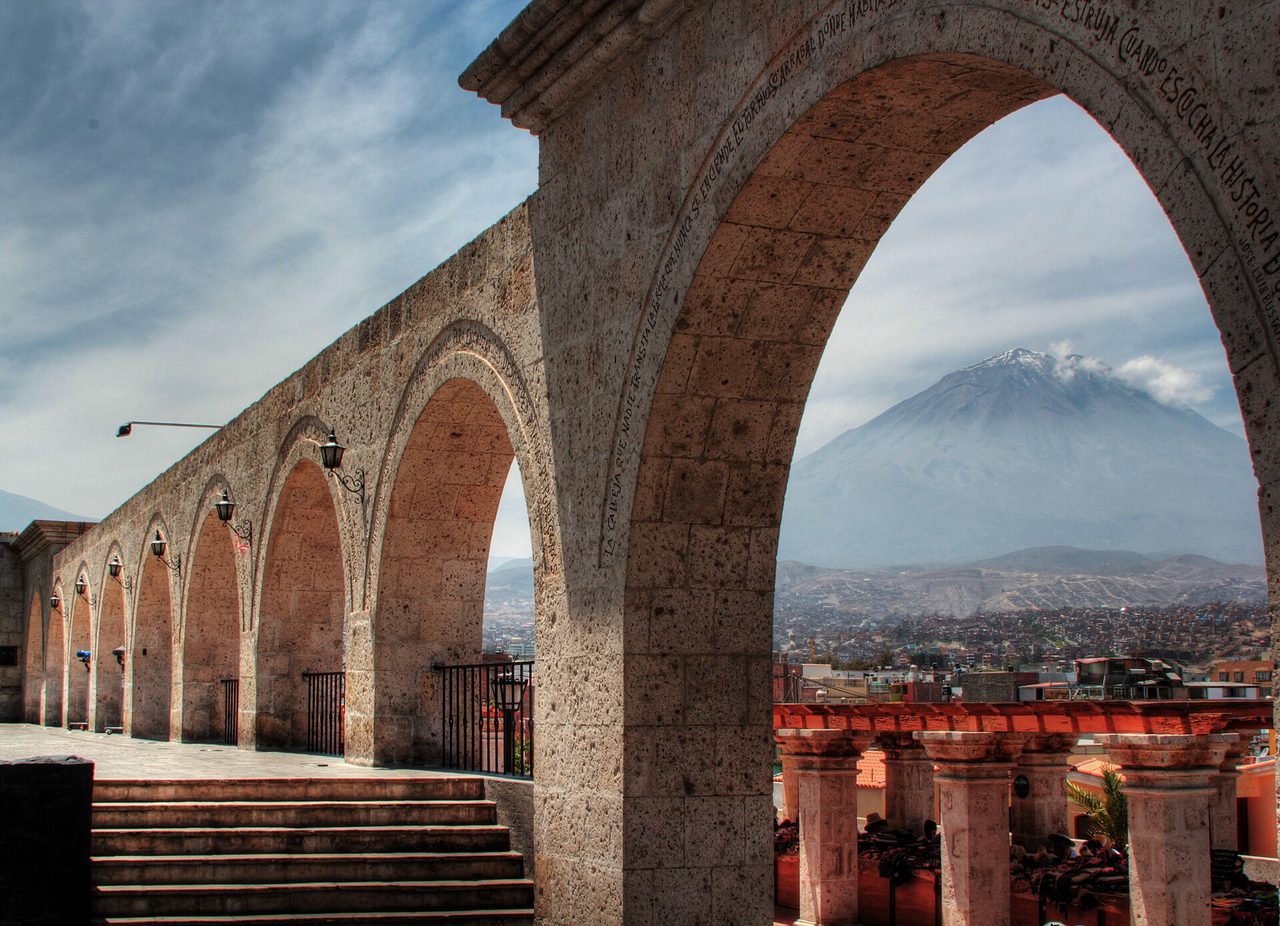
Yanahuara mirador. Free, open around the clock, twenty minutes’ walk from the Plaza de Armas across the river. A row of carved sillar arches framing the volcano. It is the postcard shot and it costs nothing.
Plaza de Armas and the Barrio de San Lázaro. Free. San Lázaro is the oldest quarter, all narrow lanes and blank white walls, and takes about half an hour to wander.
Mercado San Camilo. Free to enter, dating from the late 1930s, and the best-value lunch in the city downstairs.
The Museo de Arte Contemporáneo has run free entry in recent years and is a decent hour if the weather turns.
What is not free: Santa Catalina Monastery at around S/50, and the Museo Santuarios Andinos where the Juanita mummy is kept, at roughly S/40 including the guide you cannot opt out of. Santa Catalina is one of maybe four paid entries in Peru I would pay for twice. It is a walled city inside a city and you need two hours. Budget for it rather than trying to dodge it. More on the region in our Arequipa and Colca guide.
Puno
Puno gets slated as a grim transit town and that is unfair, though it is not a place you need three days. At 3,830 m it is higher than Cusco, so everything takes longer than you think.
There are three free viewpoints within walking distance of the main square, and doing all three in an afternoon is a genuinely good way to spend a day. Parque Huajsapata, topped by the Manco Cápac statue, is the closest and steepest. Mirador Puma Uta gives you the bay from a different angle. Mirador Kuntur Wasi, marked by the big condor with its wings spread, is the furthest and the best. All free. All uphill. Take it slowly.
The lakefront promenade and the Plaza de Armas are free. The Uros floating islands are not, and this is where budget travellers get caught: the organised half-day tours start around US$20 to US$30, while taking the public boat from the port yourself runs roughly S/30 to S/40 return plus a small island fee. Cheaper, yes. Also a much shorter, more transactional visit. Our Lake Titicaca guide is honest about which island trips are worth the money and which are a sales pitch on water.
Huaraz
Huaraz is where free stops meaning “urban sightseeing” and starts meaning “mountains”. This is the best-value region in Peru for anyone who likes walking.
Laguna Wilcacocha. No entrance fee at all. A colectivo from town to the trailhead costs one or two soles each way, then it is roughly two hours up to about 3,700 m with the whole Cordillera Blanca laid out opposite you. Everyone uses it as an acclimatisation hike. It is also just a very good walk.
Plaza de Armas and the Mercado Central. Free. The market is the best place in town to eat and the only place worth buying fruit for a trek.
Mirador de Rataquenua. Free, fifteen minutes above town, superb at sunset, and it has a robbery history. See the safety section below.
The paid tier here is still cheap. Huascarán National Park charges around S/30 for a single day and roughly S/150 for a multi-day pass, which covers Laguna 69, Laguna Parón and the Santa Cruz trek. Laguna Churup has a small community fee of around S/10. Compared with what a guided trek costs almost anywhere else in the Andes, that is close to free. If you like the sound of this but want the Cusco version, our Inca Trail guide explains why that particular walk cannot be done independently at any price.
Trujillo and the north coast
Northern Peru is the cheapest part of the country to travel and almost nobody goes.
Trujillo’s Plaza de Armas, its painted colonial mansions and its churches are free. Several of the grand casonas around the square are owned by banks and can be walked into free during weekday business hours, which is a small trick most guides miss. Huanchaco, twenty minutes away, has a free beach, a free pier walk and the caballitos de totora, the reed craft that fishermen still paddle out on. Watching them come in at the end of the morning is free and one of the more genuinely unusual things you can do on the Peruvian coast.
Chan Chan costs around S/10, and the same ticket also covers Huaca Esmeralda and Huaca Arco Iris. For the largest adobe city in the Americas, that is the best-value entry fee in the country. The Huacas del Sol y de la Luna are similar. Our northern Peru guide covers the Moche and Chimú sites properly, including the Chiclayo museums.
Iquitos and the Amazon
I will be blunt: the Amazon is the one region where “free” barely exists. You cannot walk into rainforest from Iquitos. Lodges, boats and guides cost money, and the cheap ones are cheap for reasons you find out on day two.
What is free in Iquitos itself: the Malecón Tarapacá with its rubber-boom mansions and tiled facades, the Casa de Fierro on the plaza, the Plaza de Armas, and the Belén market, which is one of the most extraordinary markets in South America. Go in the morning, go with someone, and keep your phone in your pocket. The floating neighbourhood below it is a working community rather than an attraction, and it deserves to be treated that way.
Quistococha, the lake and zoo on the edge of town, is a few soles. Everything else is a tour. Set expectations using our Peruvian Amazon guide before you assume you can do the jungle on S/50 a day.
The southern coast, if you have time
Worth flagging because it is often skipped. Paracas has free beach walks and free flamingo-spotting on the bay; the Ballestas boat trip and the national reserve entry are cheap rather than free. Huacachina’s oasis is free to look at and free to walk around, and the dune buggies are not. The full picture is in our southern coast guide.
Free versus cheap, city by city
The table below is the one thing I would print out. Left column is genuinely free. Right column is the cheapest paid thing in that city that I think is worth the money.
| City | Best genuinely free thing | Cost | Best cheap thing | Rough cost |
|---|---|---|---|---|
| Lima | Malecón walk, Miraflores to Barranco | S/0 | Magic Water Circuit (evenings only) | S/5 |
| Lima | MUCEN and Casa de la Literatura | S/0 | San Francisco catacombs | ~S/20 |
| Cusco | Mercado San Pedro before 10am | S/0 | Boleto Turístico partial circuit | ~S/70 |
| Cusco | Cristo Blanco viewpoint walk | S/0 | Qorikancha temple entry | ~S/20 |
| Arequipa | Yanahuara mirador | S/0 | Santa Catalina Monastery | ~S/50 |
| Puno | Three miradors in one afternoon | S/0 | Public boat to the Uros | S/30–40 |
| Huaraz | Laguna Wilcacocha hike | S/0 + S/4 transport | Huascarán NP day pass | ~S/30 |
| Trujillo | Huanchaco beach and reed boats | S/0 | Chan Chan (3 sites, one ticket) | ~S/10 |
| Iquitos | Malecón Tarapacá and Belén market | S/0 | Quistococha lake | ~S/5 |
Two patterns fall out of that table. The first is that the free options in Peru are almost all outdoors and almost all social: coastline, markets, plazas, hills. The second is that the paid tier is wildly inconsistent. Chan Chan is S/10 for a UNESCO site. A single Cusco circuit is S/70. Nothing about that reflects quality; it reflects who controls the ticket.
The Boleto Turístico problem, and how to plan around it
In Cusco, one municipal ticket covers sixteen sites and you cannot buy them individually. The full Boleto Turístico General runs around S/130 for foreigners and is valid ten days. Three partial circuits cost roughly S/70 each and are valid one to two days: Circuit I is Sacsayhuamán, Q’enqo, Puka Pukara and Tambomachay; Circuit II is the city museums plus Tipón and Pikillaqta; Circuit III is the Sacred Valley, meaning Pisac, Ollantaytambo, Chinchero and Moray.
You buy it in person with your passport. There is no online sale, and there is no way to pay S/20 just to see Sacsayhuamán. This trips up more budget travellers than any other single thing in Peru.
How I would handle it:
- If you are doing the Sacred Valley properly, buy the full S/130 ticket. It works out cheaper than two partials and you will use it.
- If you only want Sacsayhuamán, buy Circuit I and do it as a half day, or skip it and walk to Cristo Blanco instead. Sacsayhuamán is impressive but it is not the best S/70 in Cusco.
- If you are on a real budget, skip the Boleto entirely, spend three days on free Cusco, and put the money towards one well-chosen day in the Sacred Valley or towards Machu Picchu.
Note also that a few Cusco sites sit outside the Boleto altogether. Qorikancha’s temple and convent charges its own entry of around S/20; the Boleto only covers the separate site museum. Moray and the Maras salt pans are two different tickets. This is deliberately confusing and there is no elegant way around it.
Museums with free or reduced entry, and the catch nobody mentions
Peru does run free museum days. The detail that almost every English-language list gets wrong is who they are for.
The first-Sunday-of-the-month scheme, which covers a long list of state museums and archaeological sites, is for Peruvian nationals and foreign residents holding a carné de extranjería. If you are on a tourist visa you will be asked for ID at the desk and you will pay. I have watched several people find this out at Museo de la Nación on a Sunday morning, and it is an avoidable disappointment. If you do hold residency, the remaining 2026 dates fall on 2 August, 6 September, 4 October, 1 November and 6 December.
What genuinely is open to everyone:
- MUCEN, Lima. Free, all the time, no residency requirement. Closed Mondays.
- Casa de la Literatura Peruana, Lima. Free, all the time.
- Museo de la Nación, Lima. Free entry in recent years, though it has changed hands and remit more than once, so verify before crossing the city for it.
- MALI, Lima. Runs a free-entry day, currently Thursdays, with advance registration required. Turning up without registering does not work.
- MAC, Arequipa. Free entry.
Cultural centres attached to universities and foreign institutes — ICPNA, the Centro Cultural de la PUCP, the various Alianzas Francesas — run free exhibitions constantly and are almost never listed as attractions. On a wet Lima afternoon they are better than most paid museums.
Things sold as free that are not
This is the section that separates a realistic budget from a fantasy one.
Free walking tours. They exist in Lima, Cusco, Arequipa and a few other cities, they are usually good, and they are not free. The guide is paid entirely by you at the end, and in many cases pays the operator a fee per head just for the right to guide you. A fair tip in 2026 is S/30 to S/50 per person for a three-hour tour in Lima or Cusco. Below S/20 and the guide has probably lost money on you. If that is genuinely outside your budget, the honest move is to do the self-guided version rather than take the tour and tip S/5. Bring cash; almost none of them take cards.
“Free” tastings and demonstrations. The chocolate museum tasting, the pisco sour demo, the weaving demonstration in Chinchero. All free to attend, all followed by a shop you walk through on the way out and a fairly firm pitch. The weaving cooperatives are the most defensible of these because the money goes somewhere useful, but go in knowing you are expected to buy.
Free airport help. Anyone approaching you at Jorge Chávez offering to help with a taxi is running a business. Use the official rank or an app.
Free hotel breakfast, sometimes. Peruvian budget hostels are generally honest about this, but “breakfast included” can mean bread, jam and instant coffee. It is not a reason to pick a place. Our where to stay guide covers what you actually get at each price point.
Free entry to Machu Picchu. There is no such thing, and there never has been for foreign visitors, whatever a forum post from 2011 tells you. What you can do is strip the trip down to its cheapest legal form, which is a separate exercise in getting to the ruins for as little as possible.
The cheapest way to eat well in Peru
Food is where Peru is still spectacularly good value, provided you eat where Peruvians eat rather than where the sandwich board is in English.
The menú del día is the whole game. Almost every neighbourhood restaurant serves a fixed lunch between roughly noon and 3pm: a soup or starter, a main, and a drink, usually chicha morada or a fruit refresco. In an ordinary residential district in 2026 that costs S/10 to S/15. In the touristy centre of Cusco or Miraflores it is S/18 to S/25 and still fine. You will not see it advertised in English. Look for a handwritten board outside and a room full of people in work clothes.
Market comedores are cheaper still. Every city market has an upstairs or back section of counters serving the same food to the people who work there. San Pedro in Cusco, San Camilo in Arequipa, Mercado de Surquillo in Lima, the Mercado Central in Huaraz. Expect S/8 to S/15 for a full plate, and S/5 to S/8 for a pint glass of fresh juice, where asking for the yapa gets you the leftover half glass from the blender at no charge. Eat at the busiest counter, not the emptiest.
Street food fills the gaps. Anticuchos S/8 to S/12 a skewer, tamales and empanadas S/4 to S/6, picarones S/6 a plate, salchipapas S/8. A proper cevichería lunch is S/20 to S/35 and worth doing at least twice; ceviche is a lunch dish in Peru and anywhere serving it at 9pm is serving it to tourists.
Two practical notes. Tap water is not drinkable anywhere in Peru, so factor in about S/5 for a 2.5-litre bottle or bring a filter bottle and refill. And a rough tally: eating market breakfast, menú lunch and street dinner, you can eat properly on S/30 to S/40 a day. Our guide to Peruvian food covers what to order once you have found the right counter.
Getting between the free things without spending the savings
The fastest way to undo a frugal day in Peru is taxis. In Lima especially, three short rides can cost more than everything else you do.
City buses and combis run S/1.50 to S/2.50 almost everywhere. Lima’s Metropolitano busway is around S/3.50 with a rechargeable card and is genuinely quick along the corridor from Barranco to the centre. Ride-hailing apps beat street taxis on both price and safety, and street taxis in Lima should be negotiated before you get in rather than after. Between cities, overnight buses on the good operators cost a fraction of flights and save you a night’s accommodation, though the cheapest bus tier is not where I would economise. The comparison is laid out in our guide to getting around Peru.
One structural saving most people miss: cluster your days by neighbourhood. A Lima itinerary that goes Miraflores, centre, Barranco, centre burns two hours and S/60 in traffic. The same sights in the order Barranco, Miraflores, then a single trip to the centre costs almost nothing. Our sample Peru itineraries are built this way for exactly that reason.
The free things with a safety history, and what to actually do about it
Some of Peru’s best free viewpoints sit in or above neighbourhoods with real crime problems. Pretending otherwise does not help anyone, and neither does telling you not to go.
Cerro San Cristóbal, Lima. A 409 m hill in Rímac with the best view of the city, and a long record of tourists being robbed on the walk up. The sensible version is the small tourist bus that runs from near Plaza Mayor, or a tour, in daylight, and back down before dusk. Walking up alone is the version that goes wrong.
Mirador de Rataquenua, Huaraz. Superb at sunset, and there have been enough robberies on the path that local guides consistently tell people to go in a group or take a taxi both ways. A taxi up is S/5 to S/10. Take it.
Cusco’s upper miradors after dark. San Blas, the San Cristóbal church viewpoint and the road up towards Cristo Blanco are all fine in daylight and busy with people. After sunset they empty out fast. Come down while it is still light.
Belén market, Iquitos. Morning only, don’t bring a camera you would mind losing, and don’t wander into the floating district on your own.
The general rules that make all of the above manageable are boring and effective. Carry only the day’s cash. Keep your phone out of sight on the street, especially near traffic, where snatch-and-ride from a motorbike is the standard method. Use apps rather than street taxis at night. Wear your daypack on your front in markets. None of this is unique to Peru and none of it should stop you doing any of the free things in this guide. There is more of it in our Peru travel tips.
Machu Picchu is the one thing you cannot get for free
People search for cheap Peru and then discover the single unavoidable expense. Worth being clear about the numbers.
Entry to Machu Picchu is S/163 for foreign adults on the standard circuits in 2026, and S/211 for the circuits that include Huayna Picchu or Machu Picchu Mountain. Those figures went up on 1 May 2026 when a SERNANP conservation surcharge was added on top of an unchanged base ticket, which is why you will still see S/152 quoted all over the internet. Foreign student and minor tickets moved to roughly S/88, and Andean Community adult tickets to about S/69. The surcharge does not apply to Inca Trail entries. Prices and circuit rules at this site change more often than anywhere else in Peru, so confirm on the official portal before you book anything — our page on how Machu Picchu tickets work tracks the current position.
Where you can save real money:
- Walk up from Aguas Calientes instead of taking the shuttle bus. The bus is around US$12 each way for foreigners. The stone staircase takes roughly 60 to 90 minutes, it is steep, and it is free. Doing it uphill at 5am is punishing; walking down afterwards is easy and saves half the fare either way. Our guide to Aguas Calientes covers where the trail starts.
- Take the Hidroeléctrica route. Bus from Cusco via Santa Teresa, then a two to three hour walk along the railway line into town. It is a long, slightly grim day and it costs a fraction of the train. The alternatives are compared in our guide to getting to Machu Picchu.
- Skip the guide if you have done the reading, not if you haven’t. Guides run US$30 to US$50 and can be shared between a small group at the gate.
What I would not do is try to compress it into a rushed single day to save on accommodation. A day trip from Cusco is possible and it is the most expensive way to have the least good time.
What a genuinely cheap day in Peru costs
Putting it together, for one person, excluding long-distance transport and Machu Picchu:
| Item | Bare bones | Comfortable but frugal |
|---|---|---|
| Hostel dorm / cheap private room | S/35–50 | S/70–110 |
| Food (market breakfast, menú, street dinner) | S/30 | S/55 |
| Local transport | S/6 | S/15 |
| Activities (free day) | S/0 | S/0 |
| Activities (one cheap entry) | S/10 | S/30 |
| Water and incidentals | S/8 | S/15 |
| Daily total | S/80–105 | S/175–225 |
That is roughly US$22 to US$28 a day at the low end and US$47 to US$60 at the higher one. Cusco and Lima sit at the top of those ranges; Huaraz, Trujillo and Puno sit near the bottom. Iquitos is its own economy and costs more for everything because it arrives by boat or plane.
Timing matters too. Prices in Cusco, Aguas Calientes and Puno rise noticeably between June and August, and hostel rates in the shoulder months of April, May, September and October can be a third lower for weather that is only slightly worse. Our guide to when to visit Peru goes through the trade-offs month by month.
Who this approach is not for
Honesty cuts both ways. If you have ten days in Peru and you have flown a long way to get here, optimising hard for free things is a bad trade. The paid tier in Peru is mostly cheap by international standards, and skipping Santa Catalina to save S/50 or skipping the Sacred Valley to save S/130 is not frugality, it is a smaller trip. The free list in this guide works best as the connective tissue of a trip: the mornings, the evenings, the acclimatisation days, the afternoons when you have run out of energy for another ruin.
It also assumes you are willing to walk a lot, eat in places with no English menu, use public transport, and carry cash. If any of those are dealbreakers, your Peru will simply cost more, and that is a perfectly reasonable choice.
Frequently asked questions
Are free walking tours in Peru actually free?
No. There is no ticket price, but the guide earns nothing except tips and often pays the company a fee for each person on the tour. Budget S/30 to S/50 per person for a three-hour tour in Lima or Cusco, in cash, in soles. They are still excellent value and a good first-morning orientation; they are just not free.
What is the single best free thing to do in Peru?
Walking a market in the morning. San Pedro in Cusco, San Camilo in Arequipa, Belén in Iquitos, the Mercado Central in Huaraz. More happens per minute than at any paid site in the country, and it costs nothing. The Miraflores malecón at sunset is a close second.
Do Peru’s free museum days apply to tourists?
Mostly not. The first-Sunday-of-the-month scheme at state museums is for Peruvian nationals and foreign residents with a carné, and you will be asked for ID. Tourists should plan around the museums that are free to everyone all the time, chiefly MUCEN and Casa de la Literatura in Lima and MAC in Arequipa, plus MALI’s registered free day.
Can I visit Sacsayhuamán without buying the Boleto Turístico?
No. There is no individual ticket. The cheapest legitimate access is the S/70 partial Circuit I, which also covers Q’enqo, Puka Pukara and Tambomachay. You can walk the public road past the site and reach the free Cristo Blanco viewpoint without paying, but you cannot enter the ruins.
How much cash should I carry each day?
S/100 to S/150 covers a normal frugal day including a cheap entry fee, and it is not enough to ruin your trip if it is stolen. Leave cards and the bulk of your cash at the accommodation. Many market stalls, combis and tip-based guides are cash only, and ATMs in smaller towns charge S/15 to S/25 per withdrawal, so take out larger amounts less often.
Is Machu Picchu worth the money if I am travelling cheaply?
For most people, yes, but it is a real decision rather than an obvious one once you add entry, transport and a night in Aguas Calientes. We have argued both sides in our piece on whether Machu Picchu is worth it. If the honest answer for your budget is no, Peru still has Chan Chan at S/10, the Cordillera Blanca for the price of a park pass, and Kuelap in the north with barely anyone at it.
Which Peruvian cities are cheapest?
Huaraz, Trujillo, Chiclayo, Puno and Arequipa, roughly in that order. Cusco and Lima’s tourist districts are the most expensive, and Aguas Calientes is the most expensive place in the country for what you get. Iquitos is expensive for a different reason: everything has to be shipped or flown in.
Is it safe to do all this independently?
Yes, with the specific exceptions listed above. Peru’s risk profile is dominated by opportunistic theft rather than anything aimed at tourists personally. Daylight, groups on the known problem routes, apps instead of street taxis at night, and a phone that stays in your pocket handle almost all of it.