Lake Titicaca Peru: Puno, the Floating Islands & Homestays — My Complete Guide
Everything I know about visiting Lake Titicaca Peru: the Uros floating islands, Taquile, an Amantani homestay, Puno, tours, costs, altitude and when to go.
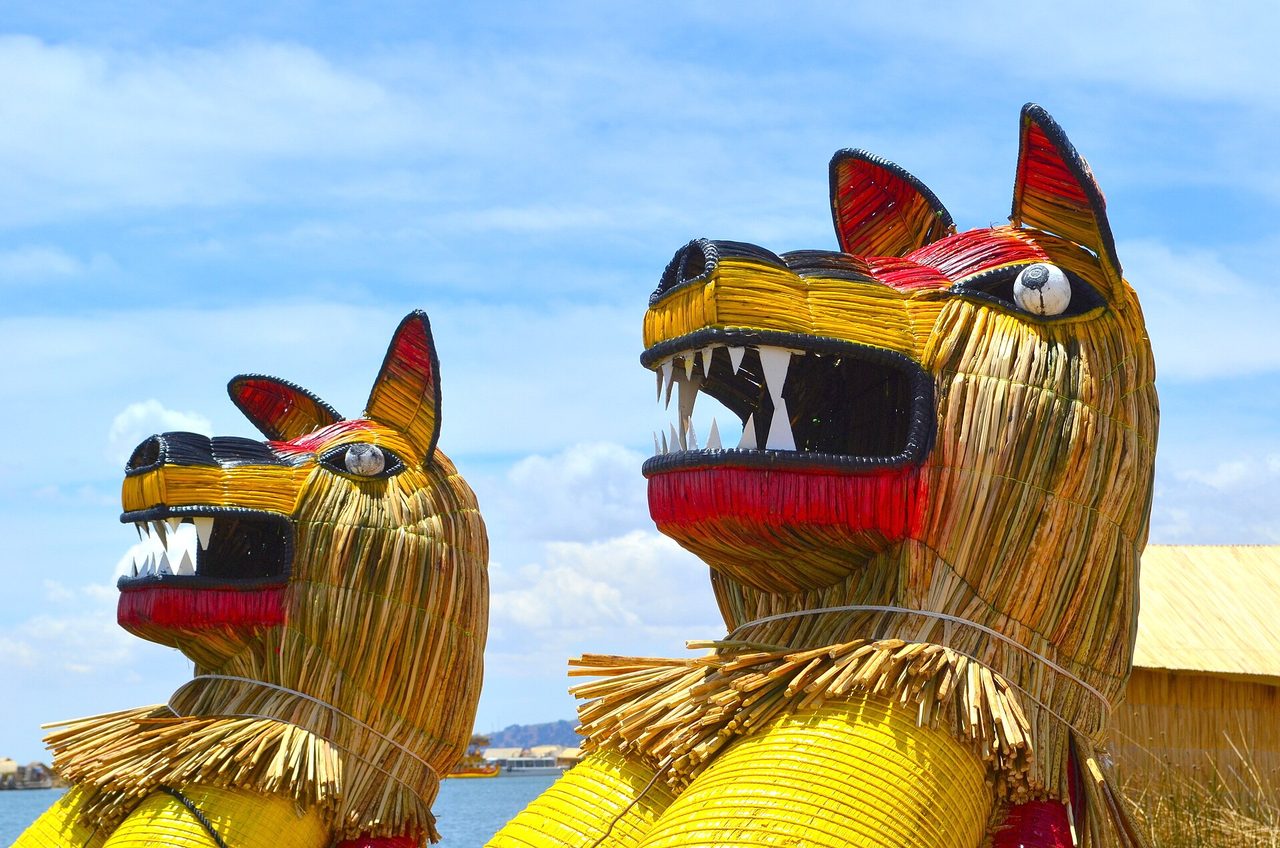
Lake Titicaca Peru sits at 3,812 meters on the Puno altiplano — the highest navigable lake in the world. Visit the Uros floating islands on a half-day boat tour, or go deeper with a Taquile day trip or an Amantaní homestay. Plan two nights in Puno, acclimatize first, and travel May–September for the clearest skies.
I’ll be honest with you: I almost skipped Lake Titicaca on my first trip to Peru. I was tired, I’d just come off the Inca Trail, and a seven-hour bus ride toward the Bolivian border to see “some reed islands” felt like a detour I could live without. A Cusqueño bartender talked me into it. He said — and I’m paraphrasing badly — that Machu Picchu is where the Incas built, but Titicaca is where they began. He was right, and the lake ended up being the part of that trip I still think about most. The light is different up there. The horizon curves like the sea, the sky stacks clouds three layers deep, and at night the cold comes down off the stars like something physical. This guide is everything I know about visiting: how to get there, what the islands are actually like (including the awkward parts nobody writes about), what it costs, and how to do it without spending your first day flattened by altitude.
Lake Titicaca at a glance
| Essentials | The numbers |
|---|---|
| Altitude | 3,812 m / 12,507 ft — the highest navigable lake on Earth |
| Size | Roughly 8,300 km² — South America’s largest lake by volume |
| Depth | Up to ~280 m at its deepest point |
| Shared between | Peru (about 60%) and Bolivia (about 40%) |
| Peruvian gateway | Puno (pop. ~140,000), 1 hour from Juliaca airport |
| Water temperature | 10–14°C year-round. Swimming is for the brave |
| Best months | May to September (dry season); February for the Candelaria festival |
| Time needed | 2 nights minimum; 3 if you want an island homestay |
| Don’t-miss | Uros floating islands, Taquile, an Amantaní homestay, Sillustani |
Why Lake Titicaca is worth the detour
Most travelers treat the lake as a question mark. It sits awkwardly on the map — six to seven hours south of Cusco, five from Arequipa, hard against Bolivia — and unlike Machu Picchu, it doesn’t sell itself with one photograph. So let me make the case.
First, the mythology is the point, not a footnote. In Andean belief, this is where the world began: the creator god Viracocha rose from the lake’s waters and called up the sun, the moon and the stars. The first Inca, Manco Cápac, and his sister-wife Mama Ocllo emerged from the lake (or from the Isla del Sol on the Bolivian side, depending on who’s telling it) and walked north to found Cusco. When Peruvians call Titicaca the birthplace of the sun, they’re describing the founding story of an empire. Standing on a hillside on Amantaní at dusk, watching the light drain off a hundred kilometers of water, you understand why this particular lake generated that particular myth.
Second, the cultures on the lake are living ones. The Uros people have been building their floating islands out of totora reed since before the Incas — they moved onto the water to get away from everyone else, and in a sense they never came back. Taquile’s men knit — UNESCO lists their textiles as Intangible Cultural Heritage — and the island still runs on a system of community labor that predates the conquest. On Amantaní there are no hotels, no cars and no dogs; you sleep in family homes under roughly a thousand blankets. None of this is a museum exhibit. It’s Tuesday.
And third — the thing the brochures undersell — the lake itself is flatly beautiful. The water is a deep, saturated blue you don’t see at sea level, because at 3,812 meters there’s less atmosphere between you and the sky. On clear mornings the Cordillera Real of Bolivia floats above the far shore like a hallucination. I’ve seen a lot of famous views in Peru, and there are maybe two I’d put above a clear sunset from the top of Amantaní.
Where is Lake Titicaca — and which side, Peru or Bolivia?
The lake straddles the Peru–Bolivia border in the southern altiplano. The Peruvian side is anchored by Puno, a working, unpretty, likeable highland city that serves as the base for everything in this guide. The Bolivian side is anchored by Copacabana, a smaller and more backpacker-ish town, with the famous Isla del Sol offshore.
People ask me which side is better and I give an unsatisfying answer: they’re different products. The Peruvian side has the floating islands, the homestay culture of Amantaní and Llachón, Taquile’s weaving communities, better transport links, and the Candelaria festival. The Bolivian side has Isla del Sol’s Inca ruins and hiking, cheaper prices, and a more laid-back, sit-by-the-water vibe. If you’re already in Peru and short on time, Puno delivers the richer cultural experience. If you’re crossing into Bolivia anyway, do both — Copacabana is only 2.5–3 hours from Puno by bus, and the border at Yunguyo is one of the easiest crossings in South America. I cover the comparison in more depth in my Peru-vs-Bolivia-side guide, but the short version: don’t agonize. The lake is enormous and generous on both shores.
How to get to Lake Titicaca Peru
There’s no airport in Puno itself. The lake plugs into the rest of Peru four ways, and I’ve used all of them. (For the bigger picture on Peruvian transport — buses, flights, trains, taxis — see my guide to getting around Peru.)
| Route | How | Time | Rough cost | My take |
|---|---|---|---|---|
| Lima → Juliaca | Fly (LATAM, Sky) | 1h45 + 1h transfer to Puno | $60–120 one-way | Fastest, but you land at 3,825 m with zero acclimatization. Brutal if you’ve come from sea level |
| Cusco → Puno | Tourist bus with stops (“Ruta del Sol”) | ~10h | $50–70 with lunch | The smart play. Stops at Andahuaylillas, Raqchi and La Raya pass (4,335 m) break up the ride |
| Cusco → Puno | Direct bus (day or overnight) | 6.5–8h | $15–30 | Cheapest. Take a day bus — the scenery deserves it and night buses get bitterly cold |
| Cusco → Puno | PeruRail Titicaca train | ~10.5h | From ~$300 | A 1920s-style Pullman with white tablecloths, a glass observation car and live music. Absurd, wonderful, expensive |
| Arequipa → Puno | Bus | 5–6h | $10–25 | Easy connection if you’re coming from Colca Canyon. Mostly paved, mostly painless |
My recommendation for most first-timers: do Titicaca after Cusco, not before. You’ll already be acclimatized from a few days at 3,400 m, which turns Puno’s altitude from a problem into a non-event, and the Ruta del Sol bus converts a travel day into a sightseeing day. If you’re building a bigger route, my two-week Peru itinerary slots the lake in exactly this position — and if you’re coming from sea-level Lima, please don’t fly straight to Juliaca and hop on a boat the same morning. I’ve watched people try.
The altitude, honestly
Puno sits at about 3,827 meters — higher than Cusco, higher than anywhere most people have ever slept. The lake surface is 3,812. At this elevation the air carries roughly 60% of the oxygen you get at sea level, and your body notices. Most visitors feel something in the first 24–48 hours: a headache, heavy legs on Puno’s steep streets, weird sleep, a pounding heart after two flights of stairs.
For most people it’s an annoyance, not an emergency, and it fades within a couple of days. Here’s what actually works, from someone who has done this badly and then done it well: arrive already acclimatized (via Cusco or Arequipa) if you can; take your first day at half-speed; drink more water than feels reasonable; eat light, especially at dinner; skip alcohol the first night, much as a cold beer feels earned; and treat coca tea as the pleasant, mildly useful ritual it is rather than a miracle cure. If you’re prone to altitude sickness, talk to your doctor about acetazolamide before your trip. And if symptoms turn serious — vomiting, confusion, breathlessness at rest — descend. Juliaca’s hospitals are an hour away and every decent hotel in Puno keeps oxygen at the front desk; ask without embarrassment, because the staff handle it daily.
One more honest note: the boat tours themselves are gentle (you sit, you look, you listen), but Taquile involves 500+ stone steps from the dock and Amantaní’s summit walk climbs to 4,150 m. Neither is hard for an acclimatized person walking slowly. Both are miserable on day one off the plane from Lima.
The islands of Lake Titicaca
This is why you came. Four distinct island experiences sit within day-trip range of Puno, and they are far less interchangeable than the tour brochures suggest.
The Uros floating islands
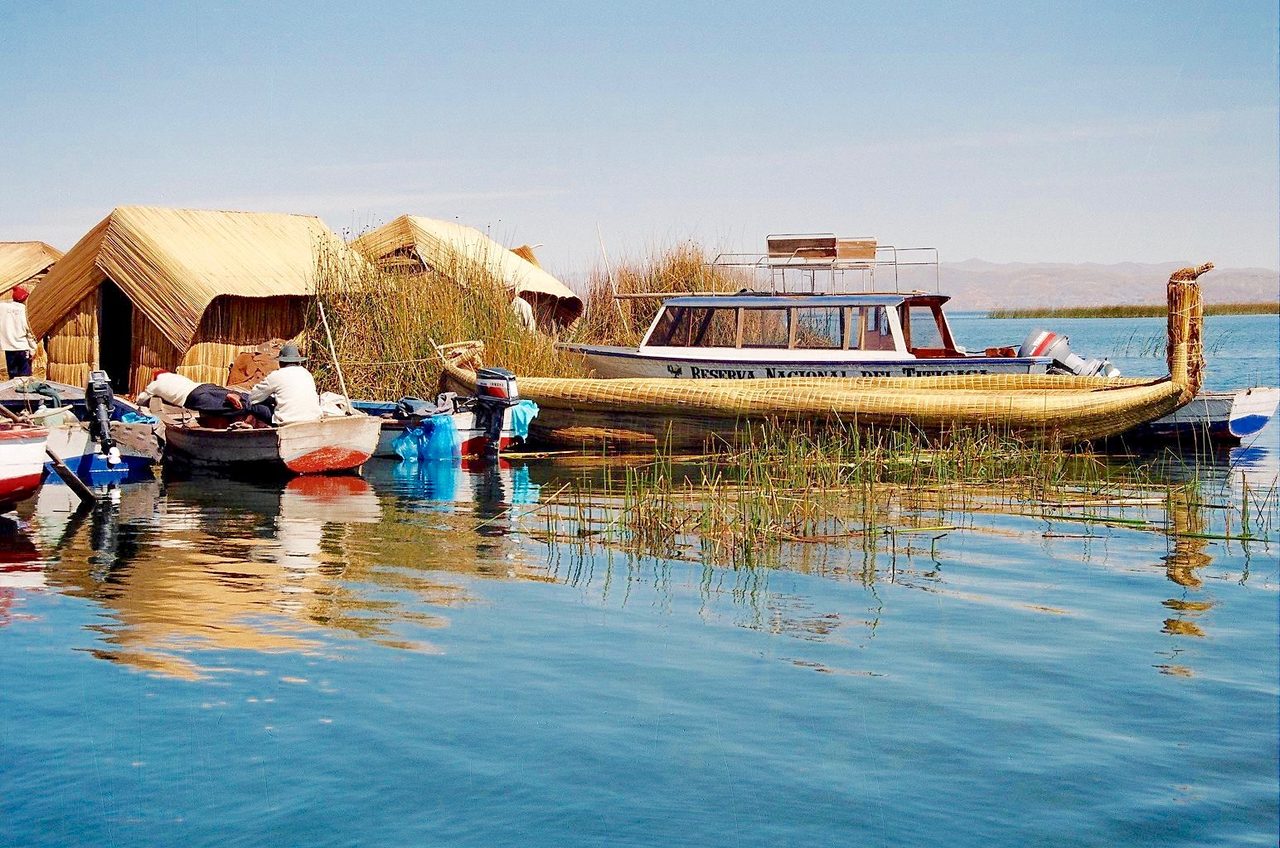
About forty minutes by slow boat from Puno’s port, the Uros archipelago is somewhere between sixty and a hundred small islands — the number shifts because the islands themselves are built, merged, split and abandoned. Each one is a floating platform of totora reed: blocks of buoyant reed root are lashed together, layers of cut reed are piled crosswise on top, and the whole thing is anchored with ropes and eucalyptus stakes. The surface is springy underfoot, like walking on a giant mattress stuffed with hay. Families add fresh reed every couple of weeks, forever, because the bottom layer is always rotting into the lake. An island lasts about thirty years; then you build another one.
The Uros predate the Incas on this water. They floated their homes to escape more powerful neighbors — first other Aymara kingdoms, later the Inca state itself — and what began as a defensive technology became, over centuries, simply who they are. Today roughly 1,200 Uros live on the islands, fishing, hunting waterbirds, cutting reed and, yes, hosting tourists, which is now the dominant island economy.
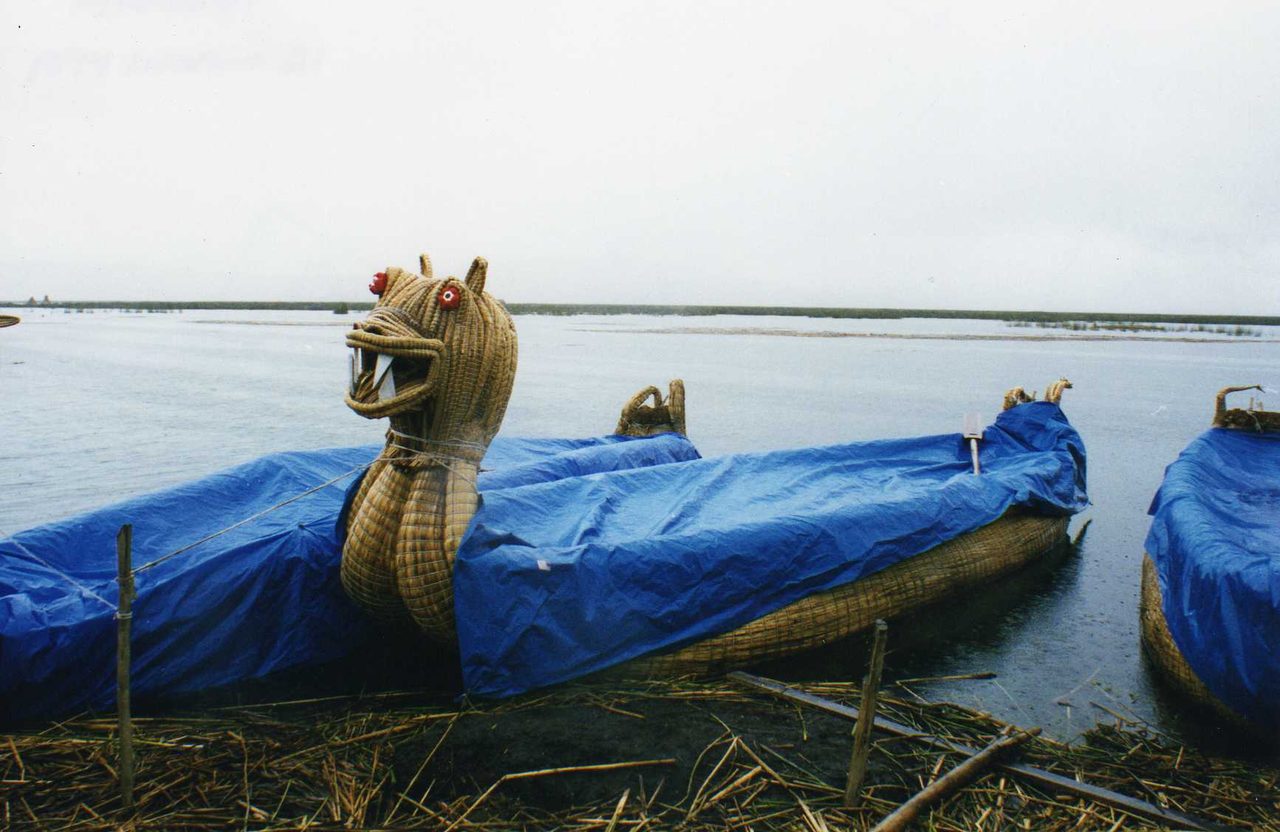
Let me be straight about the experience, because this is where Titicaca gets its only real criticism. A standard visit lasts 30–60 minutes on one or two islands. The island president explains the construction with a clever scale model; women in violently bright polleras demonstrate reed-craft; there is a song; there is a market moment where you are warmly encouraged to buy embroidered cushion covers; there is an optional ride on a totora “dragon boat” for about 10 soles. Some travelers find the whole thing staged to the point of discomfort, and parts of it undeniably are — many Uros now sleep on the mainland and commute to their islands like the rest of us commute to offices.
I’d push back on writing it off, though. The islands are real, the engineering is real and genuinely ingenious, and tourism is simply what subsistence looks like here now — the Uros have always adapted to survive, and we’re the current environment. Go with curiosity instead of a checklist, ask the president questions about anchoring and reed harvests (he will light up), buy something small if you actually like it, skip it if you don’t. And if the conveyor-belt version worries you, book a tour that visits the farther islands, or spend a night in one of the Uros guesthouses that now exist — sunset out there, after the day boats leave, is a different planet. My full Uros floating islands guide digs into the etiquette and the history properly.
Taquile Island
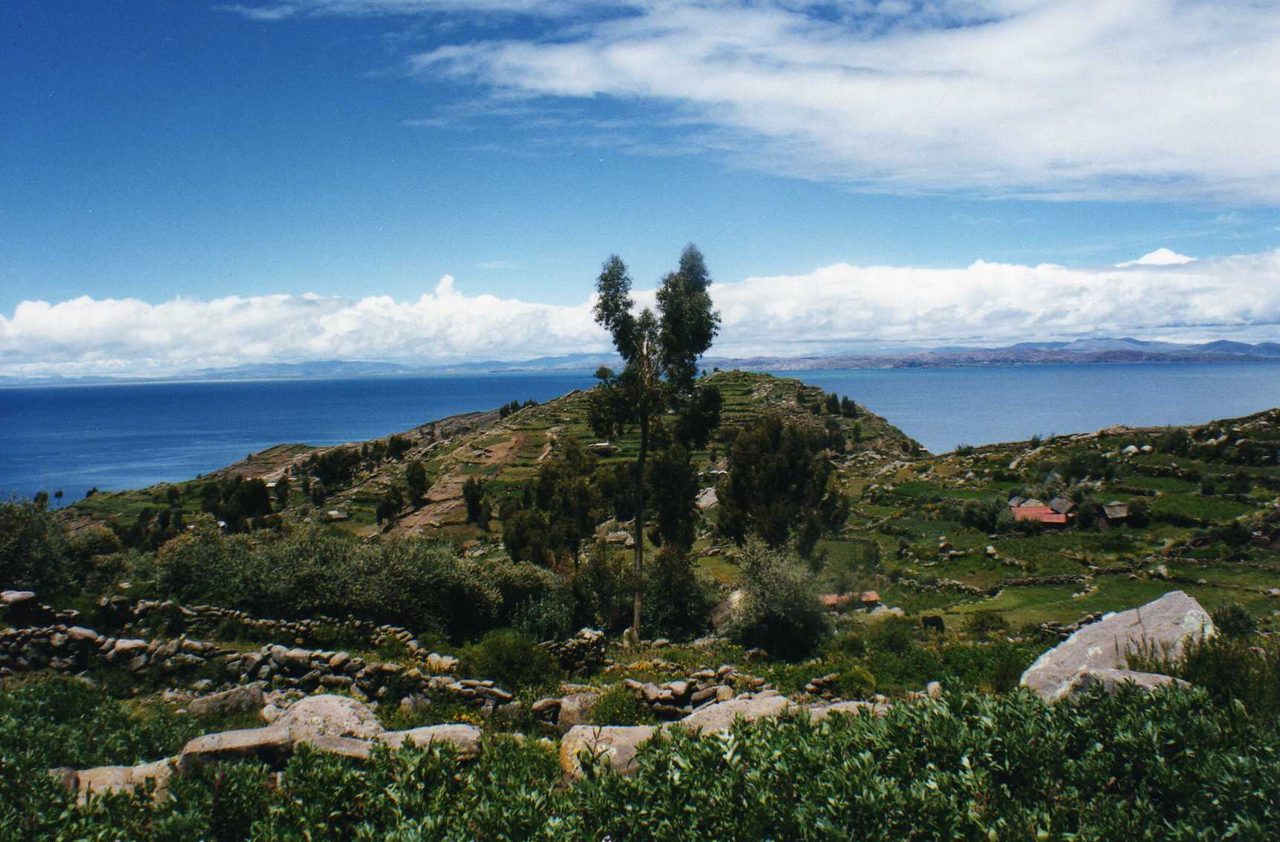
Two and a half to three hours from Puno (or 90 minutes on a fast boat), Taquile is a long, terraced ridge of an island that looks like someone dropped a piece of the Mediterranean into the Andes — dry stone walls, wheat terraces, arched gateways, eucalyptus, and that impossible blue in every gap. About 2,200 Quechua-speaking islanders live here under a community system the guides summarize with the old Inca triad: ama sua, ama llulla, ama qhella — don’t steal, don’t lie, don’t be lazy. Tourism here is collectively managed; restaurants and homestays rotate by community decision, so the money spreads.
Taquile’s claim to fame is textiles, and it’s the men who knit. Boys learn as children, and a man’s knitted chullo hat broadcasts his status — red for married, red-and-white for single, and the precision of the weave is read like a CV. The women weave the wide chumpi belts, which encode calendars and family histories. UNESCO inscribed the whole textile tradition on its Intangible Cultural Heritage list in 2005, and unlike most things with a UNESCO label, you’ll watch it being done on a doorstep, not behind glass.
A standard visit means climbing the famous stone staircase from the dock (slowly — you’re at 3,950 m), crossing the island on foot through terraces and hamlets, lunch in a community restaurant (always the same menu, always good: quinoa soup, grilled trout, muña tea), a demonstration in the weaving cooperative on the plaza, and a descent to a second dock. It’s a beautiful, gentle three hours of walking. If your tour offers “Uros + Taquile” in one day, that’s the classic full-day combination and the best single-day introduction to the lake.
Amantaní Island — the homestay
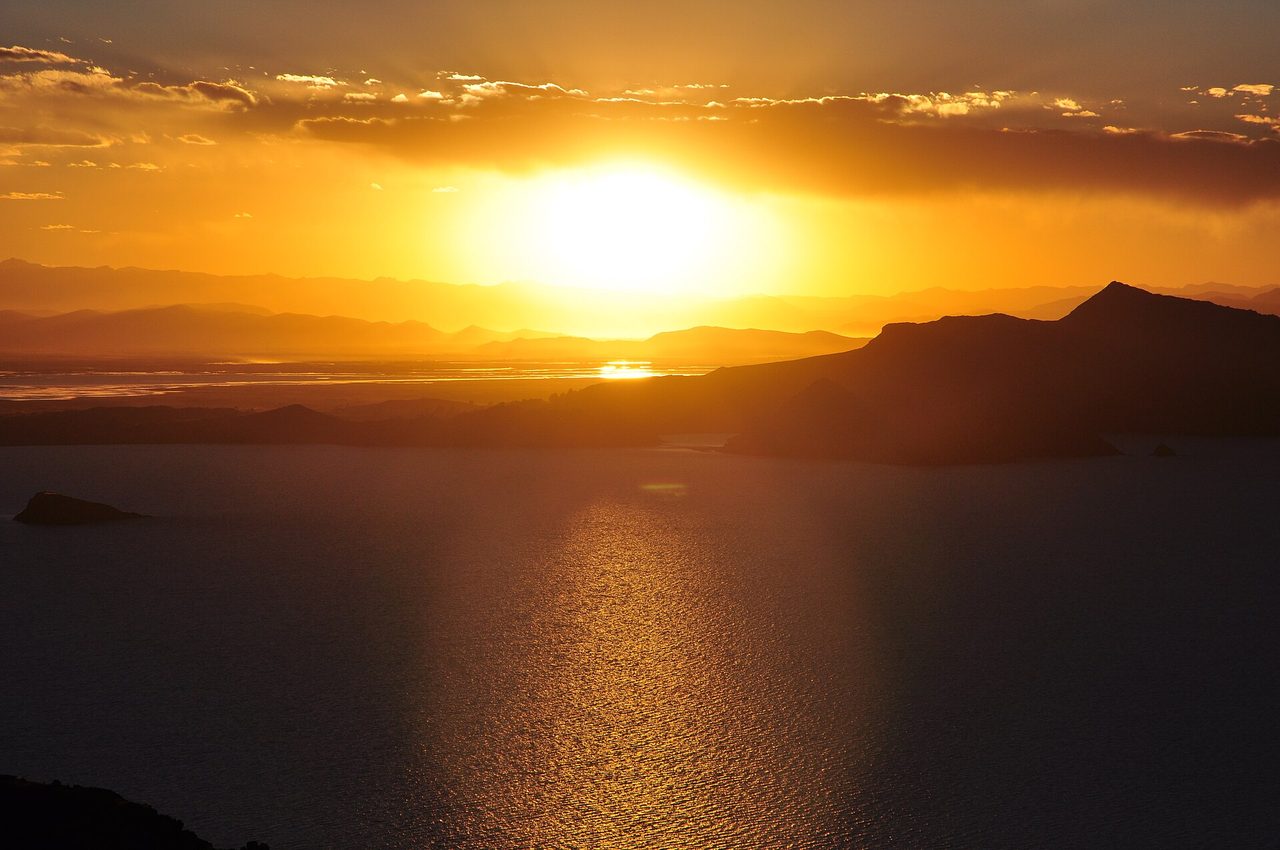
Amantaní is the experience I push on people. It’s the largest Peruvian island on the lake, an hour past Uros, home to about 3,600 people in ten communities — and it has no hotels, no restaurants to speak of, no cars, no street lights and (a strange thing you only notice on day two) no dogs. Visits work one way: you stay with a family, assigned by community rotation so every household gets its turn. You eat what they eat — soups, potatoes in five forms, fresh cheese, muña tea — help in the kitchen if you make yourself useful, and communicate in whatever pidgin of Spanish, Quechua and hand gestures you can jointly assemble.
In the late afternoon everyone climbs to the twin summits — Pachatata and Pachamama, “father earth” and “mother earth,” each crowned with a pre-Inca temple platform — for sunset at about 4,150 meters. It is, and I do not say this lightly, one of the great sunsets available to a human being in South America. Afterward there’s usually a small fiesta where host families stuff guests into traditional ponchos and polleras and everyone dances badly to a live band by lantern light. Written down, it sounds like dinner theater. In the moment — cold air, wood smoke, a wall of stars you’ve never been introduced to — it’s disarmingly lovely.
Two practical notes. Conditions are simple: thick blankets rather than heating, a basic shared bathroom, electricity that comes and goes. Bring a headlamp, sunscreen, and small gifts of useful staples (rice, sugar, school pencils — ask your tour operator) rather than candy. And book the two-day “Uros + Amantaní + Taquile” circuit rather than trying to do Amantaní as a day trip; the overnight is the entire point. My Amantaní homestay guide covers what to pack and what to expect hour by hour.
Llachón and the Capachica Peninsula
Not an island at all — Llachón is a lakeshore village on the tip of the Capachica Peninsula, 75 minutes from Puno by road, and it’s my pick for travelers who want the homestay warmth without the boat schedule. A dozen family guesthouses sit among terraced fields above small beaches (yes, Titicaca has beaches; no, you don’t want to swim long). You can kayak out toward the islands in the morning glass, eat trout straight off a wood fire, and watch Amantaní light up across the water at dusk. It’s quieter than any island and you can arrange everything directly with families, which puts every sol in local hands. Some kayak tours actually paddle from Llachón to the Uros islands, which beats arriving on a diesel boat by a wide margin.
Choosing a Lake Titicaca tour
Every agency in Puno sells the same three or four products at wildly varying quality. Here’s the honest decision table I wish someone had handed me:
| Tour | Duration | Typical price | Best for | Watch out for |
|---|---|---|---|---|
| Uros half-day | 3–4h | $10–20 | Tight schedules, cruise-ship pace | The most conveyor-belt version of the lake. Fine taster, not the main event |
| Uros + Taquile full day | 8–10h | $25–45 with lunch | Best single-day overview | Long hours on a slow boat; pay extra for a fast boat if offered |
| Uros + Amantaní + Taquile (2 days) | 2 days / 1 night | $40–70 incl. homestay + meals | The full experience — my default recommendation | Basic comforts on Amantaní; bring cash, headlamp, warm layers |
| Private/kayak/Llachón variants | flexible | $60–150+ | Avoiding crowds, slower travel | Book with established operators; quality varies most at this end |
Three buying tips from repeated experience. First, book in Puno (or at most a day ahead online) rather than from Cusco at a markup — every hotel desk sells the same circuits. Second, ask specifically whether the boat is “lancha rápida” or the standard slow boat; the difference between 90 minutes and 3 hours to Taquile matters more than any other feature. Third, confirm what the homestay families receive. The good operators state it plainly; the bad ones change the subject. For a deeper breakdown of operators and routes, see my Lake Titicaca tours comparison.
Things to do in Puno itself
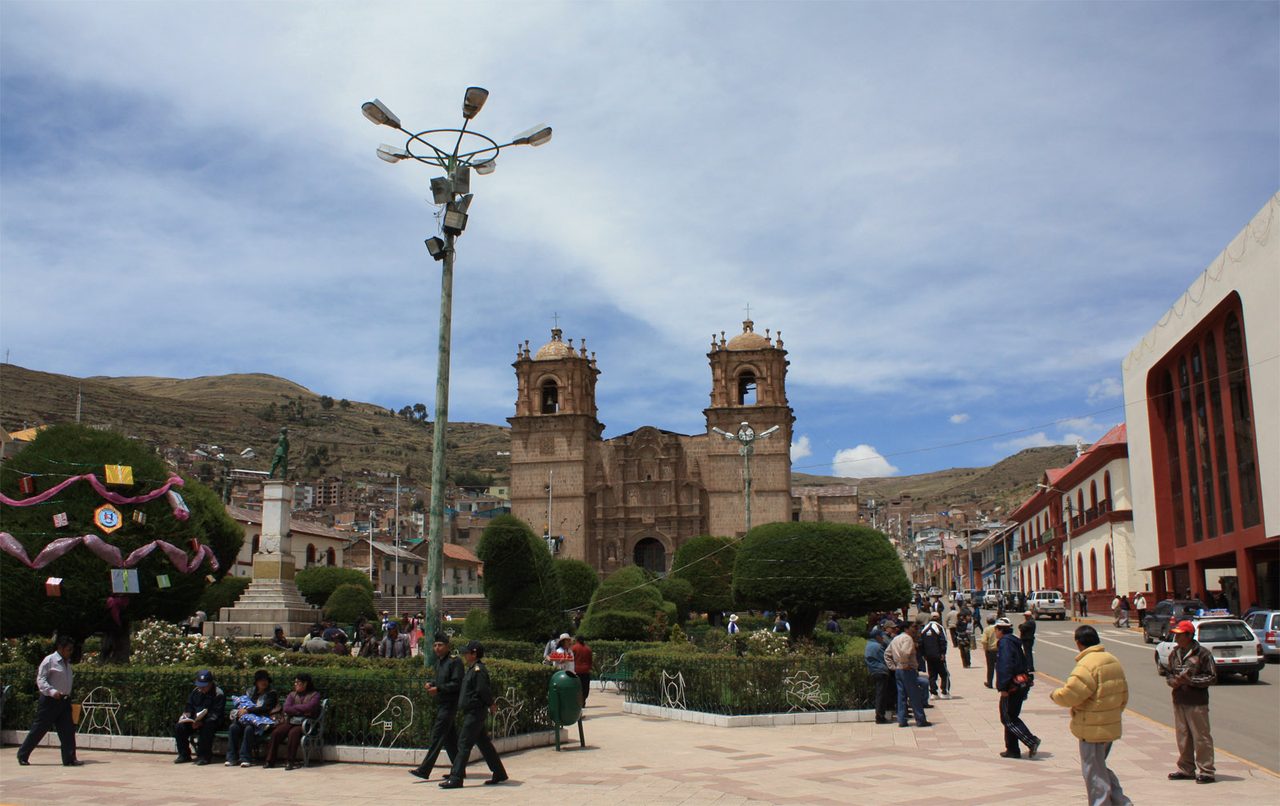
Guidebooks are rude about Puno and it’s a little unfair. Nobody would call it pretty — it’s a brick-and-rebar port city stacked up a hillside — but it’s an honest highland town with a great market, a swaggering festival culture (Puno calls itself the folkloric capital of Peru, and the numbers back the swagger: 300+ traditional dances), and the best people-watching plaza in the south. Give it half a day. Specifically:
The 18th-century Baroque cathedral on the Plaza de Armas is worth ten minutes for its carved façade, where Andean masons worked pumas and local flora in among the saints. The Casa del Corregidor nearby pours the best coffee in town in a 17th-century courtyard. Walk (slowly) up Calle Lima, the pedestrian spine, to the Coca y Costumbres museum — a small, sincere primer on coca’s 5,000-year history and the festival costumes you’ll otherwise only see in February. The Mercado Central is the real Puno: pyramid stacks of potatoes in colors you didn’t know potatoes came in, cheese wheels from Llachón, and juice ladies who will build you a jugo especial with beet, papaya and an egg if you let them. For the view, taxi (don’t climb — trust me, both for your lungs and your phone) to the Kuntur Wasi condor-statue viewpoint or the Puma Uta mirador at sunset, when the lake goes to hammered copper. And down at the port, the Yavari deserves twenty minutes: a British-built iron gunboat from 1862 that was shipped to Peru in 2,766 pieces and carried over the Andes on mules — a job that took six years — then reassembled on the lake, where it still floats as a museum ship. I keep a longer list in my things to do in Puno guide.
Beyond the lake: Sillustani and the altiplano
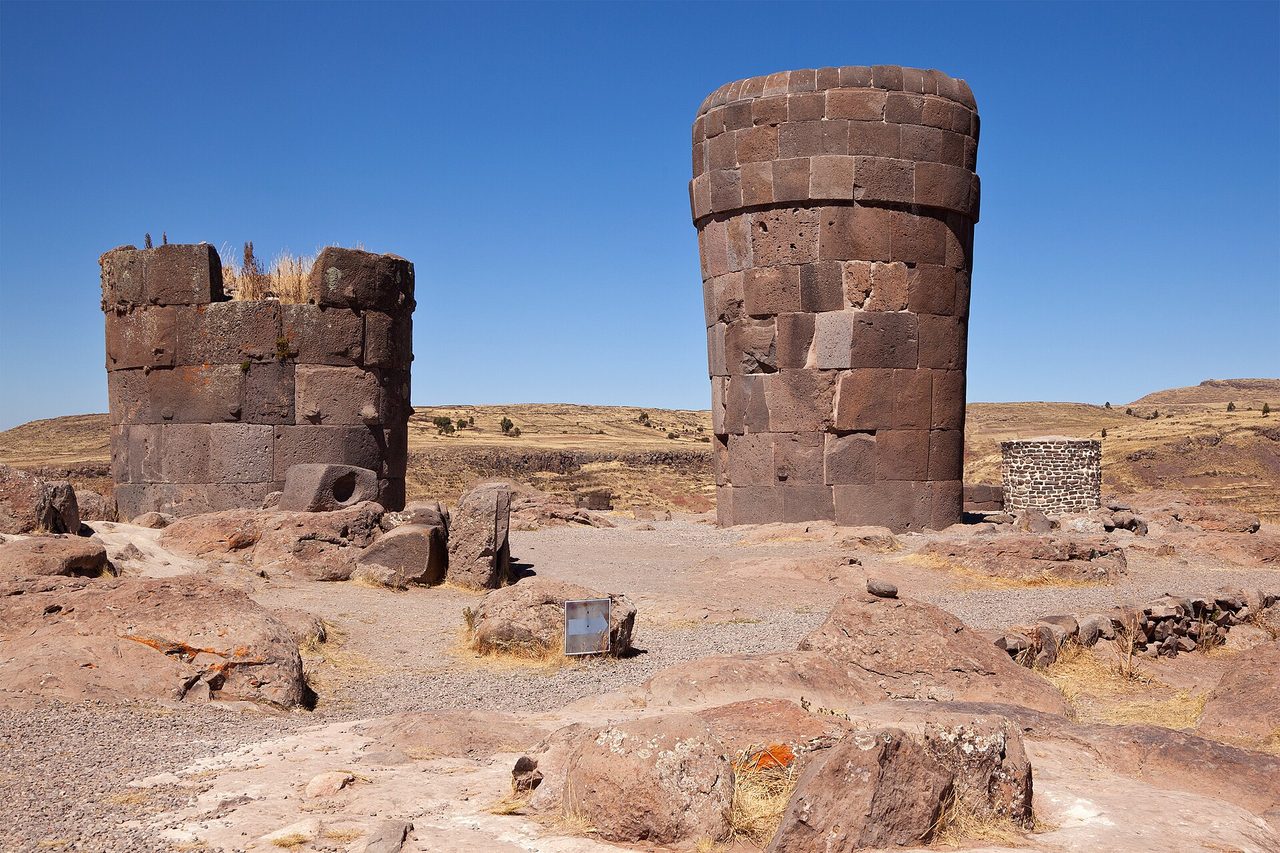
The most worthwhile half-day trip from Puno isn’t on the lake at all. Sillustani, 45 minutes northwest, is a windswept peninsula jutting into Lake Umayo where the Qolla people — the Aymara kingdom that ruled here before the Incas absorbed them — buried their nobility in chullpas: cylindrical stone funerary towers up to 12 meters tall. The later towers show Inca-quality masonry, immense fitted blocks curving in a perfect drum, because the Incas adopted and refined the form after conquest. Bodies went in through a small east-facing door, fetal position, facing the sunrise — rebirth architecture on a treeless plain. It’s haunting in the way Stonehenge is haunting, and most afternoons you’ll share it with more vizcachas (Andean chinchilla-rabbits, ridiculous and delightful) than people. Standard tours run 2 pm from Puno, about $15–20 including the site fee.
With more time: Chucuito village, 20 minutes south, has the odd Inca Uyo “fertility temple” full of carved stone mushrooms of debated authenticity and undebated photogenic value; Lampa, 90 minutes north, is a lovely pink colonial town with a Sistine-Chapel-replica dome and almost zero tourists; and the Aramu Muru “doorway” — a doorway-shaped niche carved into a rock wall an hour south, wrapped in more New Age mythology than any object in Peru — is either a portal to another dimension or an abandoned Inca quarry face, and is fun either way.
La Candelaria: Peru’s biggest festival
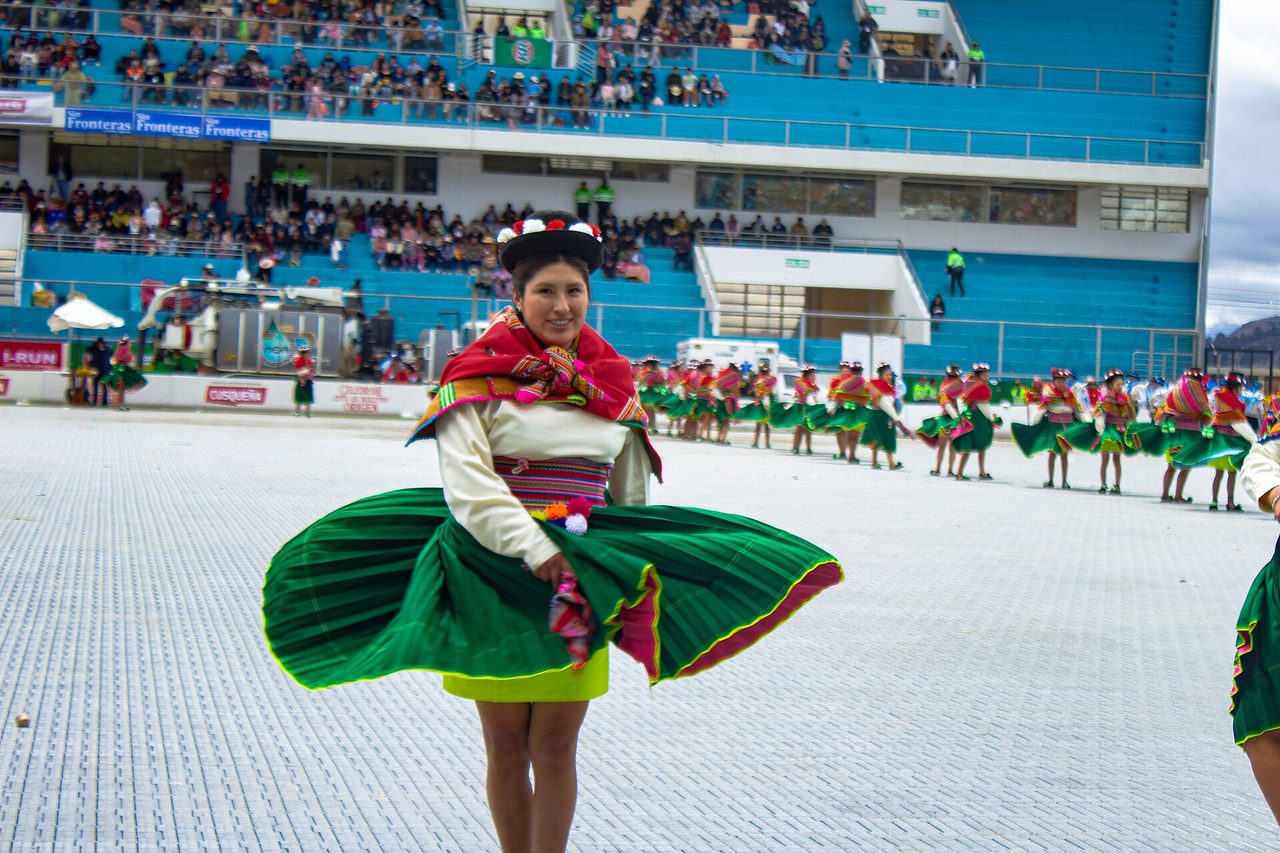
For the first two weeks of February, Puno stops being a quiet port town and becomes the largest folkloric festival in Peru and one of the largest in South America — UNESCO-listed, 40,000+ dancers and musicians, and an atmosphere somewhere between religious procession and championship final. The Festividad de la Virgen de la Candelaria honors Puno’s patron virgin with two great waves: the candle-lit processions and pandillas around February 2, and the costumed dance competition the following weekend, when troupes in sequined, mirrored, devil-masked splendor — the famous Diablada among them — pour through the streets and into the stadium for hours on end. Rooms triple in price and sell out weeks ahead, the dry-season rules don’t apply (February is peak rain), and it is absolutely worth it. If your dates are flexible and you want to see highland Peru at maximum voltage, build the trip around Candelaria; my guide to the best time to visit Peru covers how it fits the bigger weather picture.
When to visit Lake Titicaca
The altiplano has two seasons, and the choice shapes your trip more than at lower elevations.
Dry season (May–September) is the default answer: rain is rare, the sky is a hard cloudless blue, visibility across the lake runs to the Bolivian cordillera, and the boat schedule is utterly reliable. The price is cold — June and July nights regularly hit −5°C or lower, and island homestays have blankets, not heaters. Days, confusingly, are warm: 15–18°C with UV that will burn you through a shirt. Dress like an onion and you’re fine.
Wet season (November–March) means afternoon storms, dramatic skies, green terraces instead of brown, warmer nights and fewer tourists. Mornings are often clear — boats run year-round — but you’ll want flexibility in case a squall reshuffles your afternoon. February is the wildcard: statistically the wettest month and also Candelaria, when nobody in Puno cares about the rain.
If I had to pick one month, I’d say May: dry-season skies, post-rain green still on the hills, thinner crowds than July, and nights that are merely cold instead of punishing.
Where to stay
Puno’s hotel scene splits into three tiers, plus the homestays. In town, budget travelers have reliable hostels and guesthouses from $10–15 (look around Calle Lima for location), and midrange hotels from $35–70 — Casa Andina and the like, where the thing worth paying for is heating, which is not universal and which you will want. The top end mostly sits outside town on the lakeshore: the Libertador on its own island connected by causeway, the GHL Lago Titicaca, and — in its own category and price universe — Titilaka, an all-inclusive Relais & Châteaux lodge on a private peninsula 40 minutes south, the kind of place that serves alpaca carpaccio under heat lamps while flamingos commute past the floor-to-ceiling windows. It’s $500+ a night and people who pay it do not appear to regret it.
The other option — the one I’d argue for at least one night — is sleeping on the lake itself: an Amantaní family homestay (booked via the 2-day circuit, ~$40–70 all-in), a Llachón guesthouse arranged directly (~$15–25 with meals), or one of the Uros reed-island lodges, which range from simple family stays to surprisingly plush “reed villas” with private bathrooms and sunset decks ($50–150). Waking up on a floating island before the tour boats arrive is the best trick in the Titicaca playbook. Full breakdown in my where to stay in Puno guide.
What it costs
Titicaca is one of the cheaper marquee destinations in Peru. Realistic daily numbers, per person:
| Item | Budget | Midrange | Comfortable |
|---|---|---|---|
| Bed (Puno) | $10–15 hostel | $40–60 hotel with heating | $150–500+ lakeshore lodge |
| Food per day | $8–12 (menú del día, market) | $15–30 | $40+ |
| Uros + Taquile day tour | $25 | $35 with fast boat | $80+ private |
| 2-day homestay circuit | $40 | $55–70 | $150+ private version |
| Sillustani half-day | $15 | $20 | $50 private |
| Cusco → Puno transport | $15 direct bus | $60 Ruta del Sol | $300 train |
Three days done well — tours, decent hotel, all meals — runs about $120–200 midrange. Two cash notes: bring soles in small bills, because the islands take cash only and nobody can change a 100; and budget honestly for crafts, because Taquile textiles are genuinely fine work priced fairly, and the 20-sol cushion cover on Uros is part of how the lake economy functions. For where Titicaca fits in a whole-trip budget, see my Peru trip cost guide.
Suggested itineraries
One day (tight): arrive the previous evening from Cusco or Arequipa, sleep in Puno, full-day Uros + Taquile tour with a fast boat, evening walk up Calle Lima, night bus or next-morning flight out. You’ll see the headline acts and regret nothing except the pace.
Two days (the sweet spot): Day 1 — morning arrival, gentle afternoon: plaza, coca museum, Kuntur Wasi at sunset. Day 2 — full-day island tour, evening at leisure. Or compress Puno into half a day and give Day 2–3 to the homestay circuit.
Three days (the right answer): Day 1 — arrive via the Ruta del Sol bus, evening in Puno. Day 2 — depart on the 2-day circuit: Uros mid-morning, Amantaní by lunch, summit sunset, fiesta. Day 3 — Taquile in the morning, back to Puno by 4 pm, Sillustani squeezed in if you’re greedy, onward travel next morning. This is the version I send friends.
With Bolivia: add two days — bus to Copacabana (3h), boat to Isla del Sol, overnight on the island, continue to La Paz. The Titicaca chapter of a trip pairs naturally with the Amazon on the far side of an itinerary; lake-then-jungle is one of the great one-two punches in South American travel.
Practical tips I actually mean
Sun first: the UV index here lives at “extreme,” and the boat-plus-water combination doubles the dose. Sunscreen, sunglasses, brimmed hat, lip balm with SPF — every day, cloudy included. I have peeled spectacularly from a single overcast afternoon on Taquile and was mocked, correctly, by everyone.
Layers beat warmth: mornings on the water are bitter, midday is T-shirt weather, the moment the sun drops it’s winter. Three thin layers plus a windproof shell outperform any single heroic jacket. Pack swim things only if you enjoy stories that begin “so the water was 11 degrees.”
Boats and seasickness: the lake kicks up real chop in the afternoons, especially August onward when the winds rise. If you’re prone, sit at the back, outside, and take your pill before the return leg, not after it gets lively.
Money, again, because it’s the #1 complaint I hear: ATMs exist only in Puno. Carry more small cash to the islands than you think you need — entrance fees (Uros ~5 soles, Taquile ~8–10), reed-boat rides, lunch, crafts, tips for host families.
Connectivity: there’s decent 4G around Puno and patchy signal on the islands — fine for messages, hopeless for video calls. Download maps and tell people you’ll be quiet for a day. It’s part of the cure.
Food on the lake is simple and good — quinoa soup, lake trout (trucha), potatoes beyond counting — but Puno’s restaurant scene is modest, and the highland kitchen makes more sense once you understand what you’re eating; my Peruvian food guide has the full vocabulary. And if you’re sequencing a larger trip, Titicaca slots most naturally between Cusco / the Sacred Valley and Arequipa — three highland chapters at three different altitudes, which incidentally is the correct acclimatization order if you run it Arequipa → Cusco → Puno in reverse. More ideas for the wider country in my things to do in Peru roundup.
Frequently asked questions
Is Lake Titicaca worth visiting?
Yes — with the caveat that it rewards time. A rushed half-day Uros tour is the weakest version of the lake and the source of most lukewarm reviews. Give it two nights and an island overnight and it routinely ends up in travelers’ top three Peru memories, alongside Machu Picchu and the Amazon.
How many days do you need at Lake Titicaca?
Two nights minimum: one day for Puno and arrival, one full day on the islands. Three nights is the comfortable version, allowing the two-day homestay circuit plus Sillustani. Add two more days if you’re continuing to the Bolivian side.
Will I get altitude sickness in Puno?
At 3,827 m, most unacclimatized visitors feel mild symptoms — headache, breathlessness, poor sleep — for a day or two. Arriving via Cusco or Arequipa first largely prevents it. Hydrate, go slow on day one, and see my Puno altitude guide for the full protocol. Serious symptoms are rare and the fix is simple: descend.
Can you swim in Lake Titicaca?
You can; the question is whether you’ll enjoy 10–14°C water at an altitude where warming back up takes real effort. Locals mostly don’t. If you must, the beaches near Llachón on a warm dry-season afternoon are the least punishing option.
Which side is better — Peru or Bolivia?
Peru has the floating islands, homestay culture, Taquile’s textiles and better logistics; Bolivia has Isla del Sol’s ruins, hiking and lower prices. For a first visit with limited time, the Peruvian side offers more. With four or more days, do both — the border crossing is easy.
Are the Uros floating islands a tourist trap?
They’re touristy; whether they’re a trap depends on your expectations. The islands and the reed-building technology are entirely real, but visits are commercialized and you will be sold to. Treat it as a living economy rather than a pristine spectacle — or stay overnight on the islands — and it lands very differently.
What does “Titicaca” actually mean?
The most cited reading is “rock of the puma” (titi = puma in Aymara, kaka/qaqa = rock), usually tied to the sacred rock on Isla del Sol; some accounts add that the lake’s outline resembles a puma chasing a rabbit. Like most things 500 years old and translated twice, it’s contested — which is half the charm.
How do I get from Cusco to Lake Titicaca?
Four options: direct bus (6.5–8h, $15–30), the Ruta del Sol tourist bus with archaeological stops (~10h, $50–70), the luxury PeruRail Titicaca train (~10.5h, from $300), or fly Cusco–Juliaca via Lima (rarely worth it). The tourist bus is the best value-to-experience ratio for most travelers.