Unique & Offbeat Things to Do in Peru
Rainbow Mountain sees over a thousand people a day, so it is not off the beaten path. Here is where in Peru you will genuinely be alone, what each detour costs in travel days and soles, and the one I would skip.
The fastest way to spot a fake offbeat Peru list is to scan it for Rainbow Mountain. If Vinicunca is on there, presented as a secret, the writer either hasn’t been or is hoping you won’t check. Most articles about unique things to do in Peru are the standard gringo trail with the serial numbers filed off — Huacachina, Maras, the Nazca overflight, the Uros islands — relabelled as discoveries. Peru does have genuinely empty, genuinely strange corners. They are mostly not the ones being sold to you.
So this piece does two jobs. First it calibrates the famous “offbeat” entries, so you know roughly how many other people will be standing next to you when you get there. Then it hands you places where the honest answer to “how many other foreigners will I see today?” is a number you can count on one hand — with journey times, bus companies, entry fees and closure risks attached, because those are what actually decide whether a detour works.
I will also name the one I think most people should skip, and describe who has no business attempting any of this.
The “offbeat” entries that are nothing of the sort
None of these places are bad. Several are genuinely worth your time. They are simply not remote, not undiscovered, and not a way to escape anyone. If a list calls them off the beaten path, treat the rest of that list with suspicion.
| Place | What the lists imply | What it is actually like |
|---|---|---|
| Vinicunca (Rainbow Mountain) | A secret ridge you stumble onto | Cusco’s regional tourism office has reported roughly 1,000–1,500 visitors a day in season, with July and August peaks quoted as high as 3,000. Dozens of minibuses leave Cusco between 03:00 and 04:30 daily. There is a queue for the summit photo. |
| Palccoyo (the “alternative”) | The empty version of Vinicunca | Genuinely quieter and a much gentler walk, but it is a marketed day tour sold from every agency window on Plateros. Quieter is not the same as alone. Expect other groups on the ridge. |
| Huacachina | A desert oasis few people reach | A stop on essentially every backpacker bus itinerary between Lima and Arequipa. Weekends are heaving. The lagoon has been topped up with pumped water since the mid-2010s because the natural seepage failed decades ago. |
| Maras salt pans and Moray | A Sacred Valley discovery | Forty minutes from Cusco on a paved road, on the standard afternoon circuit, with a car park and a ticket booth. Coach groups arrive in waves. |
| Nazca overflight | Adventurous and obscure | An airfield with scheduled tourist departures, a boarding lounge and a fuel surcharge. Fine. Not remote. |
| Uros floating islands | Untouched living culture | The nearest islands to Puno run on a rotation system for boat arrivals and a sales pitch at the end. Operators who work in the region are increasingly blunt about the staging. |
If those are what you want, take them on their own terms and enjoy them. Our round-up of the experiences most travellers actually rate highest in Peru covers them without pretending they are undiscovered, and the wider overview of what there is to do across the country puts them in context. The rest of this article is about the other kind of trip.
The unique things to do in Peru that are actually uncrowded
My working test is simple and it has served me well. A place is genuinely off the circuit if at least two of these are true: it is more than four hours from the nearest airport with daily jet service; there is no scheduled tourist shuttle to it; and on a normal weekday in high season you can stand at the main viewpoint and count fewer than twenty other foreign visitors. By that standard almost everything on page one of Google fails and the following places pass.
Chachapoyas, Kuélap and the cloud forest north
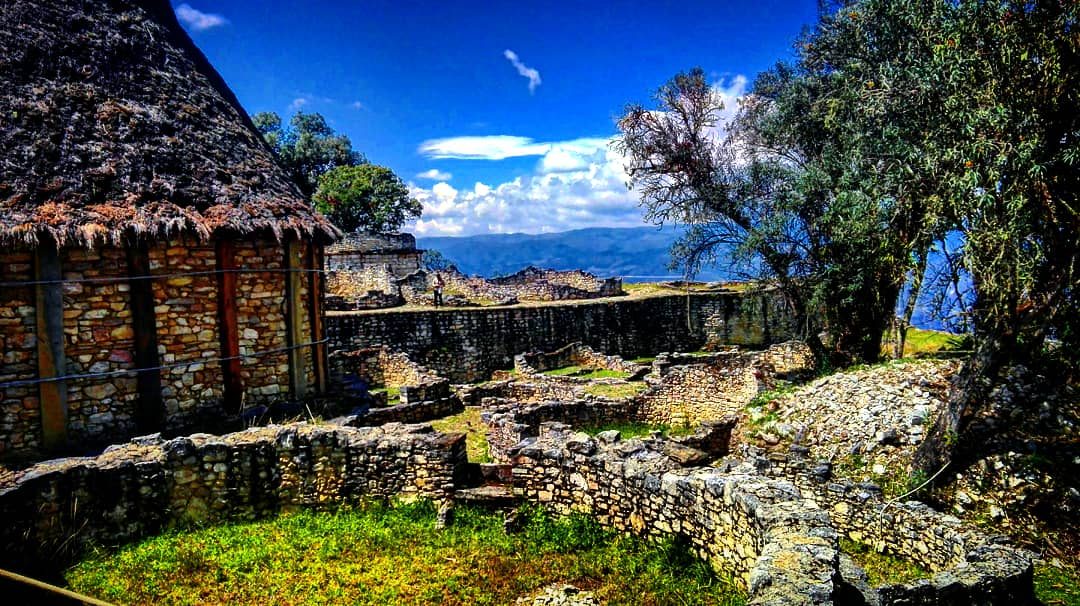
The Amazonas region in the far north is the strongest single argument that Peru is bigger than Cusco. Kuélap is a walled Chachapoya settlement at around 3,000 m, ringed by limestone walls up to about 19 m high in places, with several hundred circular house foundations inside. It predates Machu Picchu by centuries. It is also, right now, considerably more complicated to visit than the tour brochures admit.
Here is the honest history, because it matters for your planning. A cable car opened in March 2017 and cut the approach from a two-hour drive on a rough road to a roughly twenty-minute ride. In April 2022 a section of the southern wall collapsed — reported at around fifteen metres long and twelve metres high — and the site closed for about sixteen months. It reopened in August 2023, initially for Peruvian visitors, with entry to the northwestern sector opening to the public in 2024 for the first time. Access has been rationed ever since: reporting from late 2024 described a phased increase from 144 daily visitors in supervised groups up to 432, with reservations required, and a multi-year conservation programme budgeted at around six million soles.
The cable car itself is not reliable in the way a European lift is. It was suspended in January 2026 after heavy rain triggered rockslides on the road linking the stations, and it closed again from 4 to 25 May 2026 for scheduled full-system maintenance. Neither closure was announced far in advance in English. Check the operator’s own channels the day before and the morning of your visit, and build a spare day into the trip. If the cable car is down, the alternative is the old road plus a walk, which turns a half-day into a full one.
Getting to Chachapoyas is the real filter. Most people fly Lima to Jaén (about 1h45) and take a shared car or minibus onwards, roughly four to five hours. The all-bus alternative from Lima runs 20–24 hours via Chiclayo. If you are coming down from Ecuador or up the coast, the Chiclayo route makes more sense. Either way this is not a side trip from Cusco; it is a separate leg of the trip, and it wants four days minimum. It rarely makes the standard shortlist of Peruvian destinations for exactly that reason. Our regional guide to travelling in the Peruvian north goes further into the Chiclayo and Trujillo end of the same corridor.
Gocta Falls
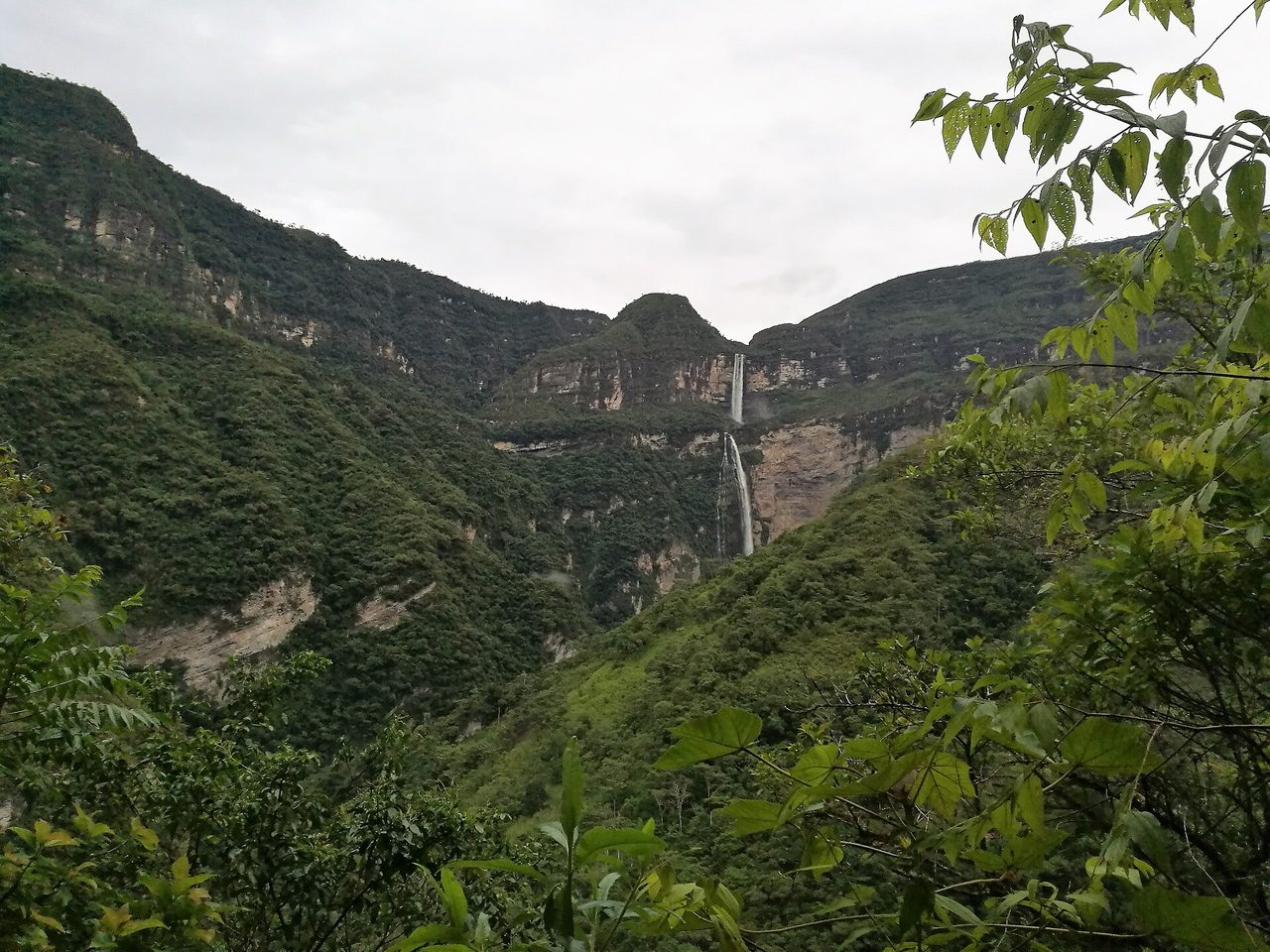
Ninety minutes from Chachapoyas, Gocta drops in two tiers down a forested wall. It was only mapped and publicised internationally in 2006, which is why every article calls it “recently discovered” — local people obviously knew it was there. The standard walk starts at the village of Cocachimba, where you sign in and pay the community fee, currently around S/10–15 in cash. The round trip is about 10–11 km and takes most people five to six hours at a steady pace, with a decent amount of mud after rain. Opening hours are roughly 07:00 to 17:30.
Two practical notes. April to June is the sweet spot — the wet season has ended so the trail is passable, but the flow is still strong. By September the fall can be thin. And there is a horse option from Cocachimba for the uphill leg if the distance worries you; negotiate before you set off.
Karajía and the Quiocta cave
The Karajía sarcophagi are the strangest thing I have seen in Peru. Six clay-and-straw funerary figures, roughly 2.5 m tall, standing in a niche on a cliff face, facing out over the valley, around 600 years old. You view them from a path below. They are usually sold as a full-day combination with the Quiocta cavern, an unlit limestone cave you walk into with a torch and rubber boots, ankle-deep in water and bat guano. Small-group day tours from Chachapoyas run around US$65–80 including transport, guide and lunch, and take about eleven hours door to door. Private and premium versions cost double for no obvious gain.
The wider region has more of this than any itinerary can hold: the Leymebamba museum with its several hundred Chachapoya mummies recovered from the Laguna de los Cóndores, cliff mausoleums at Revash, and terraces you can walk to from farm tracks. If pre-Inca architecture is what draws you, this is where it lives — and our survey of archaeological sites beyond the Cusco region makes the case that the Incas were late arrivals to a very long story.
Choquequirao: everybody romanticises it, few people do it
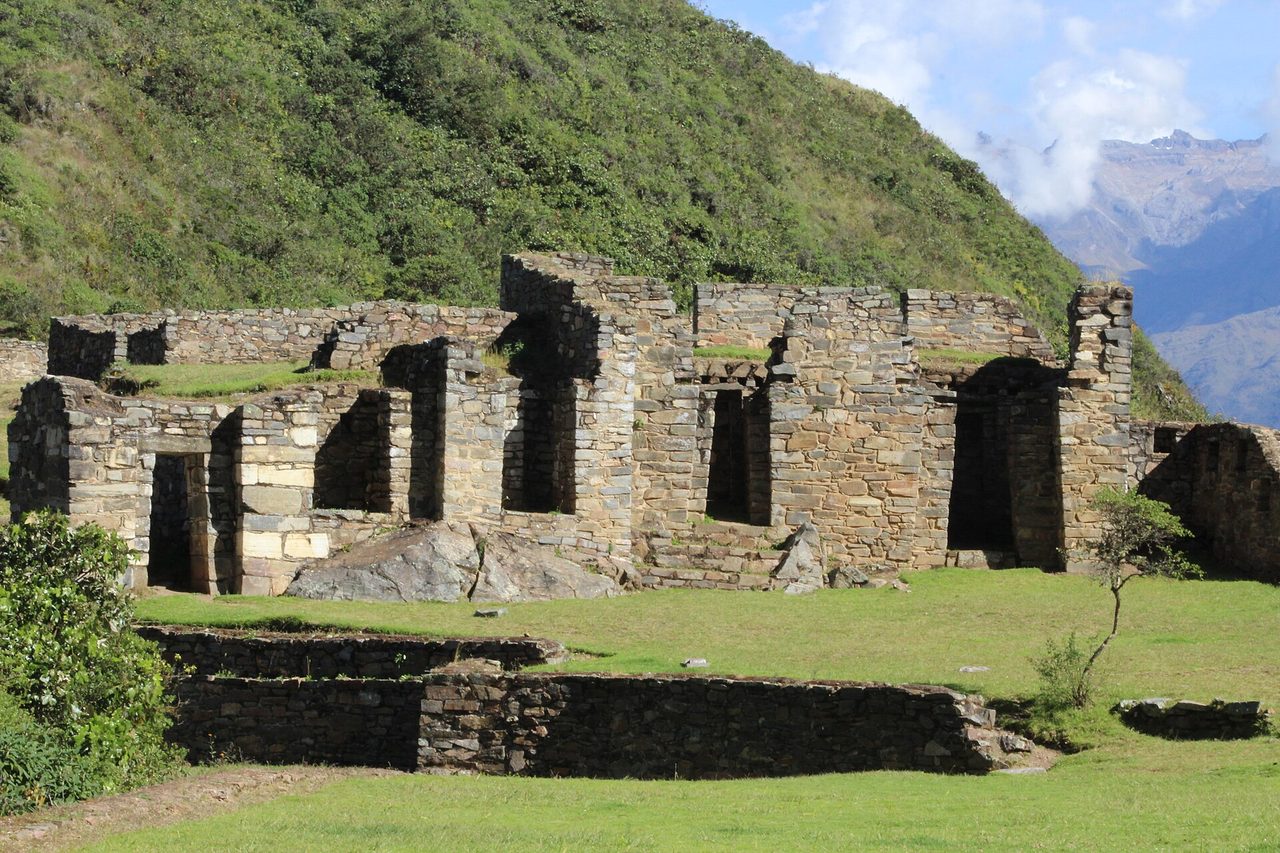
Choquequirao is the site people mean when they say “the other Machu Picchu.” It is a large Inca complex above the Apurímac canyon, still only partially cleared, and on a normal day the number of visitors is in the low dozens rather than the thousands. That is not because it is secret. It is because of what the walk does to you.
The standard route starts at Cachora, drives to the Capuliyoc viewpoint, then descends roughly 1,500 m to the Apurímac river, crosses, and climbs about the same again to the site. Then you do it in reverse. Two days in, a day at the site, two days out is the realistic shape; four-day versions exist and they hurt. The descent is the part people underestimate — it is relentless, dusty, hot at the bottom, and it destroys knees. Guided treks from Cusco typically run US$450–800 depending on group size and whether mules carry your pack. Independent trekking is entirely possible if you are experienced; the entrance fee is paid in cash at the checkpoint and foreign visitors have been charged substantially more than Peruvians, so carry more soles than you think you need and confirm the current rate locally before you commit.
The cable car deserves a paragraph of its own, because you will read about it everywhere. A teleférico to Choquequirao has been proposed since 2011, with the stated aim of taking arrivals from around ten thousand a year to over a hundred thousand and cutting the approach from two days to about twenty minutes. As of 2026 it is a public-private partnership project with an estimated investment near US$261 million, still working through the concession and evaluation stages. Nothing has been built. Plan on your legs.
One more thing nobody mentions: the route closes. The Capuliyoc–Cachora road was shut by heavy rain in early 2026 and only officially reopened in mid-April. If you are travelling January to March, have a plan B. Compared with the permit lottery and fixed departure dates of the classic four-day trail to Machu Picchu, Choquequirao is refreshingly unbureaucratic — you can decide to go next week — but the trade-off is that nobody is managing the risk for you.
The Cordillera Huayhuash, which is the best trek in Peru
I will state this plainly: the Huayhuash circuit is the finest multi-day walk in the country, and it is the one that almost nobody on a first trip does. It loops roughly 110–130 km around a compact range of six-thousand-metre peaks south of Huaraz, crossing something like eight passes, most of them between 4,600 m and 5,000 m. Siula Grande, the mountain from Touching the Void, is on it. The lakes are the colour that makes people accuse your photographs of being edited.
The logistics are unusual. The range straddles three departments and passes through the land of several campesino communities, each of which charges its own fee at its own checkpoint. Budget around S/300 total in small notes; there is no card machine at 4,500 m. Full guided trips from Huaraz with mules, cook and camping typically run US$600–900 per person for eight to ten days, which is remarkable value for what you get. May to early September is the season. Outside it, the passes are miserable and sometimes dangerous.
Be realistic about the altitude. You will sleep above 4,200 m repeatedly, days in a row, a long way from a road. That is a completely different physiological proposition from a day trip out of Cusco, and it is why the trip demands a genuine acclimatisation week in Huaraz first. If you are weighing this against the better-known routes, our comparison of Peru’s major trekking circuits lays the options side by side.
The coast everyone drives straight past
Caral, and why its emptiness is absurd
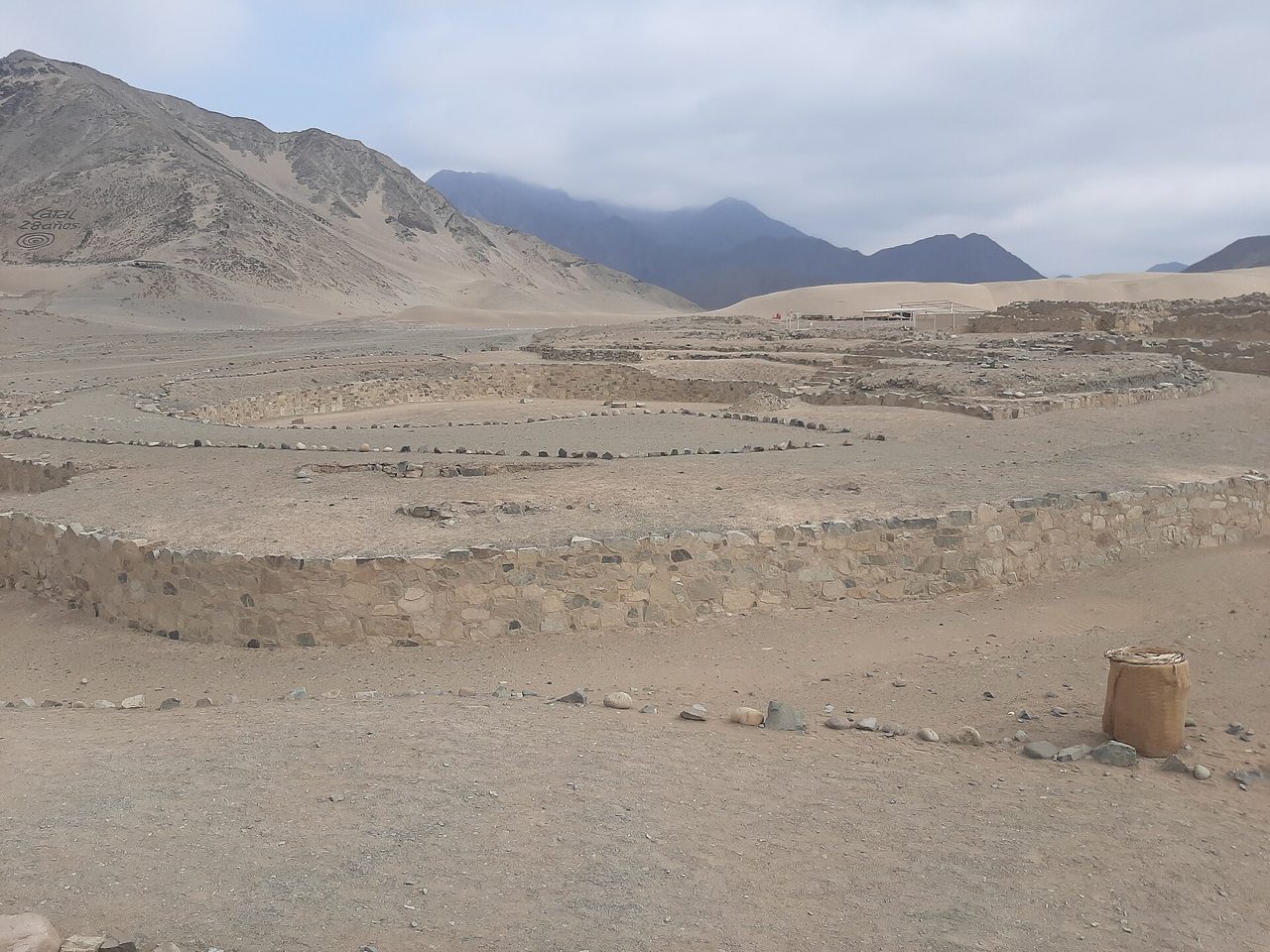
Caral is the oldest known urban centre in the Americas. The complex in the Supe valley was occupied from roughly 3000 BC, which makes it broadly contemporary with the Egyptian pyramids and about 4,000 years older than anything the Incas built. Six large platform mounds, sunken circular plazas, and no evidence of fortifications or weapons across centuries of occupation. It is a UNESCO World Heritage Site.
Entry costs about S/11 for an adult, with a small extra charge for the mandatory guided walk, which is in Spanish. It is roughly 3–4 hours from Lima — north on the Panamericana to Barranca or Supe, then a rough side road inland. Most days you will share the site with a school group and very little else. That a 5,000-year-old city on a UNESCO list, three hours from the capital, sees a fraction of the traffic that a photogenic ridge above Cusco pulls in a single morning tells you everything about how tourism actually distributes itself. It also sits oddly among the country’s World Heritage listings, most of which are far busier.
Go with a driver or on a tour unless you are comfortable improvising with combis. Take water and a hat. There is essentially no shade and the valley bakes.
The Cantalloc aqueducts at Nazca
Everyone in Nazca buys the overflight and leaves. Four kilometres from town, the Cantalloc puquios are a network of spiral stone-lined access shafts feeding underground channels that still deliver water to fields today, roughly 1,500 years after they were dug. You can walk down into the spirals. Entry is around S/7.50, open roughly 09:00–18:00, and a taxi from town costs very little. Fifteen minutes each way, thirty minutes on site, and it is more interesting than the lines.
This is also the best argument for slowing down on the Ica and Nazca stretch of the coast rather than treating it as a night bus corridor between Lima and Arequipa.
Cotahuasi: the canyon with nobody in it
Colca Canyon is four hours from Arequipa on a decent road, served by Andalucía buses and a fleet of shared vans to Chivay, with a condor viewpoint that fills with coaches by 08:30. Cotahuasi is 10–12 hours from Arequipa. Three companies run it — Reyna, Alex and Inmaculada Concepción — departing around 17:00 and arriving around 05:00 the next morning. That single fact explains the entire difference in visitor numbers.
On depth: Cotahuasi is usually given as about 3,535 m against roughly 3,270–3,400 m for Colca, and it is regularly billed as the deepest canyon on earth. Treat that superlative with mild scepticism — the ranking depends heavily on where you choose to measure the rim, and several Himalayan gorges have competing claims. The reason to go is not the record. It is that you can walk for a day past terraces, hot springs and the Sipia falls and meet nobody, in a valley that has the layered agricultural landscape people go to Colca for, without the coach park.
The cost is real, though. Two days of your holiday disappear into a bus seat. If you have ten days in Peru, this is not the trip. If you have three weeks and are based in Arequipa for a while, it changes the shape of your trip for the better.
Chavín de Huántar
Three to four hours from Huaraz over a 4,500 m pass, Chavín is a ceremonial centre that predates the Incas by roughly two thousand years and is far stranger than anything they built. The reason to go is underground: a system of stone-lined galleries and ventilation ducts, and at their centre the Lanzón, a 4.5 m carved granite monolith still standing where it was placed. The acoustics in the passages are deliberate. Researchers have argued at length about how the space was engineered to disorient people.
Entry to the monument runs in the region of S/15–30 for foreign visitors depending on which ticket combination you take, with the excellent Museo Nacional de Chavín a couple of kilometres away for a small additional fee. Full-day tours from Huaraz are cheap and abundant and, unusually, I would take one rather than the public bus — the collectivo timings are awkward and the guiding here genuinely adds something. Budget a full day.
Offbeat that is inside a city you are already visiting
Pantanos de Villa, Lima
There is a protected coastal wetland inside Lima’s city limits, in Chorrillos, and hardly any visitor goes. Around 200 bird species have been recorded across the reserve, roughly 60–80 of them resident and the rest migratory, with herons, grebes, coots and plovers on the standard circuits. Entry is around S/12–14, hours are roughly 08:30 to 16:30, and there are marked walking circuits plus a small boat option on the lagoon. Half a morning, a taxi ride from Miraflores.
It is the cheapest wildlife you will see in the country and a useful reality check on Lima, which most people write off as a two-night stop for the food. If birds are the point of your trip, our guide to where to see Peruvian wildlife and the Amazon lodge options cover the heavyweight destinations, but Pantanos costs three dollars.
Callao Monumental
Callao’s historic core was a place Limeños told you not to go. Since 2013 an urban regeneration project centred on Casa Fugaz, on Jirón Constitución, has turned several blocks into a dense concentration of large-scale murals, galleries, studios and restaurants, and the change in the area has been substantial. It is the most interesting couple of hours in greater Lima that is not a museum or a plate of food.
The honest caveat: go in daylight, go to the specific regenerated blocks rather than wandering, and take a taxi door to door. The surrounding district is still a working port neighbourhood with real problems, and the regeneration is a few streets deep, not a district-wide transformation. Treat it the way you would treat any similar project anywhere. Our roundup of what is worth doing in Lima has more on pairing it with Barranco and the coastal cliffs.
Tarapoto and Moyobamba: offbeat without the suffering
If the idea of remote Peru appeals but twelve-hour night buses do not, the San Martín region is the answer nobody gives you. Tarapoto is a 1h20 flight from Lima with several daily departures, sits at only around 350 m — no altitude at all — and is surrounded by waterfalls, the Laguna Azul, chocolate and coffee farms and the Alto Mayo protected forest. Moyobamba, two hours further, is the orchid capital and has thermal baths.
It is warm, green, cheap, and it has almost no foreign tourists despite being genuinely easy to reach. If you have a spare four days and you have already done Cusco, this beats a second Sacred Valley loop. It also pairs well with the Chachapoyas circuit — the road between them is long but scenic, and it turns two separate trips into one route.
Difficulty and payoff, side by side
Cost bands assume one person travelling reasonably frugally, excluding international flights. “Others you’ll see” is a rough weekday high-season estimate of foreign visitors at the main viewpoint, based on visitor-management figures where they exist and honest observation where they don’t.
| Place | How to get there | Days needed | Cost band | Other tourists you’ll see | Worth the detour? |
|---|---|---|---|---|---|
| Kuélap | Fly Lima–Jaén, then 4–5h road to Chachapoyas; cable car or road to site | 4–5 (as part of a northern loop) | US$250–450 | Capped at a few hundred a day site-wide; often far fewer | Yes — if you have 16+ days in Peru |
| Gocta Falls | 90 min from Chachapoyas, then 10–11 km walk | 1 (from Chachapoyas) | S/15 entry + US$25–40 transport | 10–40 on the trail | Yes |
| Karajía + Quiocta | Full-day tour from Chachapoyas | 1 | US$65–80 | Your group and maybe one other | Yes |
| Choquequirao | Bus/taxi Cusco–Cachora, then 2 days in on foot | 4–5 | US$450–800 guided; far less independent | 10–40 at the site | Only if you are a fit, experienced hiker |
| Cordillera Huayhuash | Huaraz, then road to trailhead | 8–12 plus acclimatisation | US$600–900 guided | Handful of parties per day | Yes — best trek in the country |
| Caral | 3–4h drive north of Lima | 1 | S/11 entry + US$50–90 with driver/tour | Often under 20 | Yes — extraordinary value for the effort |
| Cantalloc aqueducts | 4 km taxi from Nazca town | Half a morning | S/7.50 + taxi | Under 20 | Yes — if you are in Nazca anyway |
| Cotahuasi Canyon | 10–12h overnight bus from Arequipa (Reyna, Alex, Inmaculada Concepción) | 4–5 | US$150–300 | Single figures most days | Only if you have 3 weeks+ |
| Chavín de Huántar | 3–4h from Huaraz by tour or collectivo | 1 | US$25–45 including entry | 20–60 | Yes |
| Pantanos de Villa | Taxi from Miraflores, 30–40 min | Half a morning | Under US$15 | Almost none | Yes |
| Callao Monumental | Taxi from central Lima | Half a day | Under US$25 | Some, mostly Peruvian | Yes |
| Tarapoto / Moyobamba | 1h20 flight from Lima | 4 | US$200–350 | Very few foreigners | Yes — the easiest genuinely quiet option |
| Marcahuasi | Lima–Chosica–San Pedro de Casta, then 4 km uphill | 2 | Under US$60 | Under 20 | No — see below |
Marcahuasi: the one I would skip
Marcahuasi appears on every offbeat list and I think it is a poor use of two days. It is a granite plateau at around 4,000 m in the Huarochirí highlands, covered in eroded rock formations that a mid-century Peruvian researcher argued were carved into faces and animals by a lost civilisation. They are not. They are weathered granite, and the resemblance to a face works from one angle in one light.
The journey is the problem. From central Lima you take a Chosicano to Chosica for about S/3.50, roughly two hours in traffic. From Parque Echenique in Chosica you find the minibus to San Pedro de Casta, S/10–15 normally and more over long weekends, departing around 07:00 and 12:00, three hours on a mountain road. Then you walk 4 km uphill to the plateau, about two hours, or hire a horse for around S/20. The return bus to Chosica leaves at roughly 14:00, so unless you overnight in San Pedro de Casta you are on an impossible schedule.
So: two days, a night in a basic village at altitude, five to six hours of transport each way, for rock formations. If you live in Lima and want a weekend in the mountains, fine. If you have flown across an ocean, spend those two days on Caral and Chavín instead. I would rather be honest about this than pad a list.
What offbeat actually costs you
Every article celebrating the road less travelled skips the invoice. Here it is.
- Travel days, not travel hours. Cotahuasi costs two full days in a bus seat. Chachapoyas costs a day at each end even if you fly. On a two-week trip, adding two remote destinations can eat a third of your time in transit. This is the single biggest reason offbeat trips disappoint — people budget the destination and forget the journey. Working through a realistic budget for a Peru trip before you commit usually settles the argument.
- Roads that are genuinely bad. Unpaved switchbacks, single-lane sections with landslide scars, night driving in fog. Peruvian long-distance buses on the main corridors are excellent; the feeder routes to these places are not the same product. If you get carsick, medicate before you board, not after.
- Food gets worse and narrower. Peru’s food is one of the great reasons to visit, and in Lima, Arequipa and Cusco that reputation is deserved. In a highland village at 4,000 m your options are chicken, rice, soup and potatoes, in a room with one bulb. Vegetarians and anyone with a serious allergy should plan carefully; our guide to eating in Peru is written mostly about the places that have restaurants.
- Rescue and medical cover thin out fast. On the Huayhuash you can be two days’ walk from a road and a further four hours from a hospital that can do anything meaningful. Helicopter evacuation is not a routine service in the Peruvian Andes the way it is in the Alps. Insurance that explicitly covers trekking above 4,500 m is not optional, and read the altitude ceiling on your policy — many stop at 4,000 m, which excludes most of what is described here.
- Altitude with no infrastructure behind it. Cusco at 3,400 m has oxygen in hotels, clinics and pharmacies on every block. A Huayhuash pass at 4,900 m has none of that, and the only treatment for altitude sickness that reliably works is descent, which takes hours. Read up on the practical side of travelling in Peru and take acclimatisation seriously.
- Cash, Spanish and improvisation. Assume no card payments, no ATMs outside the regional capitals, patchy signal and no English. Community fees, entrance gates and horse hire all want small soles notes. A phrasebook is not enough; conversational Spanish changes these trips completely.
- Accommodation is basic, not boutique. Outside a handful of lodges near Gocta and in Tarapoto, expect family-run places with cold showers and thin walls. Comfortable options exist across the country — our overview of where to base yourself in Peru covers them — but they are concentrated exactly where the tourists are.
Who should not do this
Be honest with yourself about which of these you are.
First-time visitors with ten days or fewer. Do not do it. With ten days you have time for Lima, Cusco, the Sacred Valley and Machu Picchu, and that is a full, excellent trip. Bolting on Chachapoyas means seeing three places badly instead of two well. Save the north for a second trip; there will be one.
Anyone who finds logistics stressful. These trips involve buses that leave when they leave, roads that close, cable cars that stop without notice and plans that change at 06:00. If uncertainty ruins your holiday, the main circuit exists precisely because it removes it, and there is no shame in that.
People travelling with small children, or with mobility or cardiac limitations. The combination of altitude, distance from medical care and rough transport is a genuinely different risk profile from a day trip out of Cusco.
Anyone whose real goal is Machu Picchu. If the reason you booked is the photograph you have had in your head for twenty years, go and get it. Entry currently runs S/163 for a foreign adult, or S/211 for the circuits that include Huayna Picchu or Machu Picchu Mountain, and tickets are capped at 4,500 a day rising to 5,600 on peak dates — so book early through the official ticketing system and check the portal, because these figures move. Doing the famous thing properly beats doing an obscure thing resentfully. Our honest take on whether Machu Picchu lives up to it says yes, with conditions.
Two trip shapes that actually work
The 18–21 day northern loop. Lima (3 nights, including Pantanos de Villa and Callao) → fly to Jaén and cross to Chachapoyas (4 nights: Kuélap, Gocta, Karajía, Leymebamba) → overland to Tarapoto (4 nights) → fly to Lima → fly to Cusco (6 nights, standard circuit and Machu Picchu). You get a genuinely unusual first half and you still see the headline sites. This is the itinerary I would recommend to most people who tell me they want something different.
The 12-day version for people who cannot take three weeks. Lima (2 nights, one day at Caral) → Huaraz (4 nights: acclimatise, Chavín, Laguna 69 or a short Cordillera Blanca trek) → Lima → Cusco (5 nights). No flights beyond the domestic legs, real altitude experience, one of the great archaeological sites, and roughly a tenth of the crowd density of the standard route. Read up on how domestic transport works before you fix the dates, because the Lima–Huaraz leg is an eight-hour bus and worth booking on a good company.
Both assume dry season. Between January and March the northern roads and the Choquequirao approach close regularly and the Huayhuash is out of the question, so check when to go before you book anything non-refundable.
Frequently asked questions
Is Rainbow Mountain really off the beaten path?
No. Cusco’s regional tourism office has quoted daily figures in the 1,000–1,500 range during the season, with July and August peaks reported as high as 3,000. Dozens of vehicles leave Cusco before dawn every day. It can still be a good morning out — the colours are real and 5,000 m is a genuine achievement — but book it as a popular day trip, not as an escape. Palccoyo and Pallay Punchu are quieter, though also commercially sold from Cusco.
Is the Kuélap cable car working right now?
It normally runs daily, roughly 08:00 to 17:00, but it has a real closure history and I would not build a trip around it without checking. It was suspended in January 2026 after rain-driven rockslides on the inter-station road, and closed again for scheduled maintenance from 4 to 25 May 2026. During the wet season, confirm on the day. If it is down, the site is still reachable by road plus a walk, which costs you several extra hours.
Is Choquequirao worth it if there is no cable car?
For a fit, experienced hiker who wants a major Inca site almost to themselves, yes, and the absence of the cable car is precisely why it is empty. For everyone else, no. The route involves descending and re-ascending around 1,500 m twice, in heat, on dust. If you have never done a multi-day trek, this is a bad one to start with — do one of the established trekking routes into Machu Picchu first and see how your body handles it.
Where in Peru will I see the fewest other tourists?
Cotahuasi Canyon and the far side of the Huayhuash circuit, on the evidence. Caral is the biggest anomaly — a UNESCO-listed 5,000-year-old city, three or four hours from a capital of ten million people, and most days there are fewer than twenty visitors on site. Tarapoto and Moyobamba are busy with Peruvian holidaymakers but you can go days without hearing English.
Is Kuélap better than Machu Picchu?
Not better. Different, and quieter. Machu Picchu’s setting is genuinely without equal and the history behind it is remarkable. Kuélap gives you scale, older architecture, cloud forest and the ability to hear birds instead of tour groups. The honest answer is that Kuélap is a reason to visit northern Peru, not a substitute for the south.
How many days do I need to do offbeat Peru properly?
Sixteen at an absolute minimum if you also want Machu Picchu, and three weeks to do it without rushing. Below fourteen days you are choosing between the famous sites and the quiet ones, and for a first visit the famous ones usually win. Our itinerary planning guide works through the trade-offs by trip length.
Is northern Peru safe?
Chachapoyas, Tarapoto and Moyobamba are calm, small and used to visitors, and the usual Peruvian precautions apply and no more. The real risks are road conditions, altitude and distance from medical care rather than crime. Chiclayo and Trujillo warrant the same street awareness you would apply in central Lima. Take registered taxis or apps, avoid overnight road travel where you can choose, and keep cash split between two places.
Can I visit Caral as a day trip from Lima?
Yes, comfortably. It is roughly three to four hours each way, so a long day but an easy one. Organised day tours from Lima are the simplest option; a hired driver is the most flexible. Doing it by public bus to Barranca and then improvising onward transport is possible but eats the day. Entry is around S/11 and the guided walk is mandatory and in Spanish.
What about Lake Titicaca — is anything there still quiet?
Amantaní and the Capachica peninsula are markedly quieter than the near Uros islands, and a homestay on either is a real experience rather than a staged one. Taquile sits in between — less commercial than Uros, but firmly on the tour circuit. Our guide to visiting Titicaca covers which boats go where.
Do I need a guide for any of this?
For the Huayhuash, effectively yes unless you are a very experienced high-altitude trekker with your own logistics. For Choquequirao, strongly advisable but not mandatory. For Chavín, take a tour because the guiding is genuinely good. For Caral, a guide is compulsory and included. Gocta, Cantalloc, Pantanos de Villa and Callao you can do independently. And if you are basing yourself in the south, plenty of quieter things to do around Cusco need no guide at all.
The short version
Offbeat Peru is real, but it is not what page one is selling you. Rainbow Mountain, Huacachina and Maras are good days out and thoroughly on the map. The places where you will genuinely be alone are in the north, in the Huayhuash, and on the stretch of coast between Lima and Barranca that nobody stops on, and reaching them costs travel days, comfort and a degree of self-reliance.
If you have three weeks, take the northern loop and you will come home with a version of Peru almost nobody you know has seen. If you have ten days, do the famous route properly and come back. And if anyone hands you a list of unusual things to do in Peru that opens with Vinicunca, close the tab.