Best Places to Visit in Peru
Peru's highlights are scattered across a desert coast, the high Andes and the Amazon. Here is every major destination with the days it really needs, how you get there, and the two famous ones I would cut from a short trip.
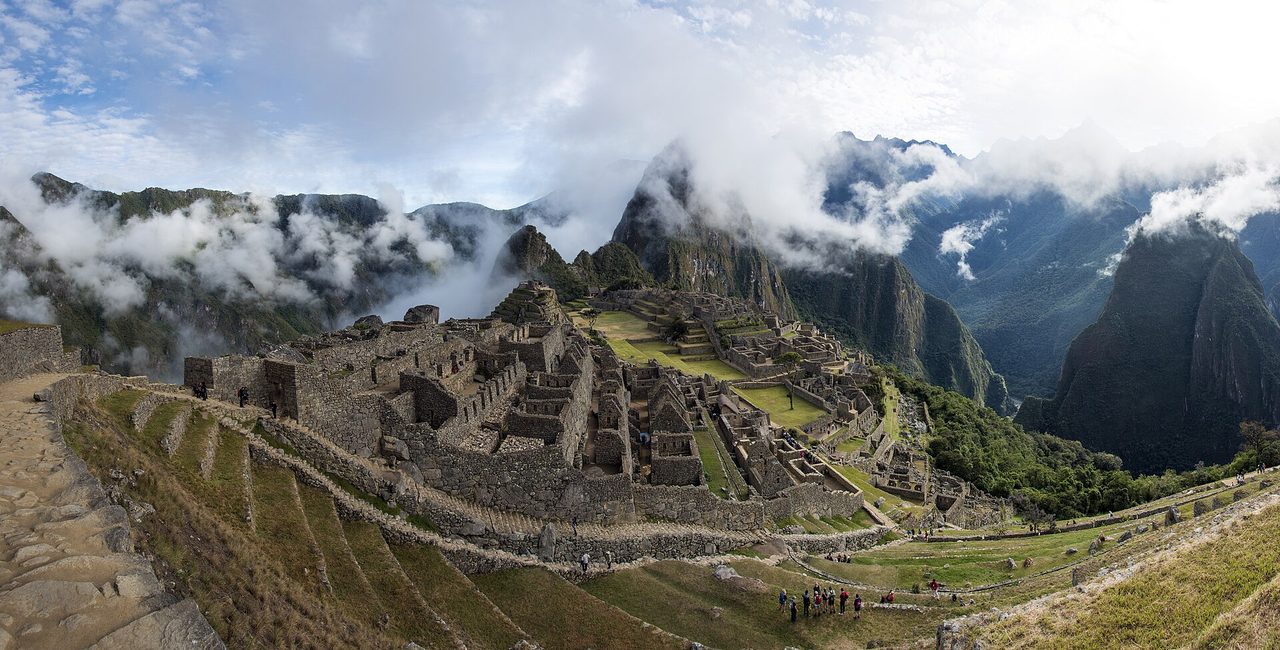
Peru is roughly the size of Alaska, folded into a coastal desert, a 6,000-metre mountain range and a stretch of rainforest bigger than Germany. The best places to visit in Peru are not hard to name — the famous ones are famous for good reason — but they are scattered across all three of those worlds, and the honest answer to “where should I go?” depends far more on your transit budget than your interests.
This guide is about places: where to point yourself on a map, how long each one actually needs, how you get there and how much of your holiday that eats. If you want the experiences rather than the geography — trekking, food, wildlife, festivals — the companion guide to the best things to do across Peru covers that side. Here I am going to be blunt about which destinations repay the journey and which two or three you can skip without losing sleep.
First, understand how Peru is shaped
Almost every planning mistake I see comes from misreading the map. Peru looks compact on a screen. On the ground, the Andes run the whole length of the country like a wall, so almost nothing goes in a straight line, and the road that looks like a two-hour hop is a seven-hour switchback.
Three bands, running north to south:
- The coast (costa) — a narrow desert strip along the Pacific. Lima sits in the middle of it. South of Lima you get Paracas, Ica, Huacachina and Nazca; far north you get Trujillo and the beaches around Máncora. Flat, dry, easy to travel, and grey for half the year.
- The Andes (sierra) — the high spine. Cusco, the Sacred Valley, Machu Picchu, Puno and Lake Titicaca, Arequipa and Colca Canyon, Huaraz. Almost everything here sits between 2,300 m and 3,900 m, which is the single biggest constraint on your itinerary.
- The Amazon (selva) — nearly two-thirds of Peru’s land area, a tiny fraction of its visitors. Two realistic entry points: Puerto Maldonado in the south, Iquitos in the north.
The practical consequence: Peru is a fly-between-hubs country, not a drive-around one. Lima to Cusco is about 80 minutes in the air and roughly 21 hours by bus. Almost everyone flies the long legs and buses or trains the short scenic ones — the mechanics of that are in the guide to moving around Peru by plane, bus and train.
The second consequence is altitude. Cusco is at 3,400 m, Puno at 3,830 m. If you fly straight from sea level into either and start hiking the next morning, you will have a miserable 48 hours. Build the acclimatisation into your route rather than hoping you are the exception.
The best places to visit in Peru, compared
Here is the whole country in one table. “Days needed” means days on the ground at the destination, not counting the travel days to reach it — which for the northern entries is the number that ruins itineraries.
| Destination | Days on the ground | Getting there | Best months | My verdict |
|---|---|---|---|---|
| Cusco | 2–3 | 80-min flight from Lima | Apr–Oct | Unskippable |
| Sacred Valley | 2–3 | 1–1.5 hr by road from Cusco | Apr–Oct | Better base than Cusco |
| Machu Picchu | 1–2 | Train from Ollantaytambo, 1.5–2 hrs | Apr–May, Sep–Oct | Lives up to it |
| Arequipa | 2 | 100-min flight from Lima | Year-round | Underrated city |
| Colca Canyon | 1–2 | 3–4 hrs by road from Arequipa | May–Nov | Worth it if you overnight |
| Lake Titicaca (Puno) | 1–2 | 7–10 hrs bus from Cusco, or fly to Juliaca | May–Sep | Overnight or don’t bother |
| Amazon (Puerto Maldonado) | 3–4 | 55-min flight from Cusco | May–Sep (drier) | The best add-on in Peru |
| Lima | 2 | You land here anyway | Dec–Apr | Stay for the food |
| Paracas & Huacachina | 2 | 4–4.5 hrs by bus from Lima | Dec–Mar | Fun, easy, worth it |
| Nazca | Half a day | 7 hrs bus from Lima; 2.5 hrs from Ica | Any (mornings calmest) | Skip unless you fly |
| Rainbow Mountain | 1 (very long) | 3–4 hrs each way from Cusco | May–Sep | Overrated for most |
| Huaraz | 3–5 | 8 hrs bus from Lima | Jun–Sep | Best value in Peru |
| Chachapoyas & Kuélap | 3–4 | Fly Lima–Jaén, then 4 hrs by road | May–Sep | Second-trip material |
| Trujillo & Huanchaco | 2 | 75-min flight or 9 hrs bus from Lima | Dec–Apr | For ruins obsessives |
| Máncora | 3+ | Fly Lima–Tumbes/Talara, then 1–2 hrs | Dec–Mar | Only if you want a beach |
If your trip is under ten days, take the top four rows and stop reading the rest of the table. Genuinely. The most common self-inflicted wound in Peru travel is bolting Titicaca and Nazca onto a nine-day trip and spending a third of it on a bus.
Cusco and the Sacred Valley: the part you cannot skip
If you only go to one region, this is it, and it is not close. Within a 60 km radius you have the Inca capital, a valley full of terraced ruins and market towns, and Machu Picchu. Four to six days here is the backbone of nearly every sensible Peru route.
Cusco
Days needed: 2–3. Getting there: 80 minutes from Lima, the most-booked domestic route in the country — book it early in July and August. Best months: April to October.
Cusco is a genuinely great city, not just a staging post. Inca foundations carry Spanish colonial walls; the Plaza de Armas is one of the handsomest squares in South America; San Blas is a steep tangle of workshops and cafes. The catch is the altitude — 3,400 m is high enough that a lot of people spend their first day flat on a hotel bed. My advice is to land, do nothing ambitious, and save the city for the end of your Cusco loop when you are acclimatised and will actually enjoy it. There is more than enough to fill two full days once you can breathe: see the rundown of what is worth your time in Cusco itself.
Who should skip it: nobody, but people with a history of altitude problems should consider starting in Arequipa and arriving in Cusco overland or after a few days at 2,300 m.
The Sacred Valley
Days needed: 2–3. Getting there: an hour to 90 minutes by road from Cusco; shared vans from Pavitos street cost a few soles. Best months: April to October.
The valley runs roughly 100 km along the Urubamba river between Pisac and Ollantaytambo, and it sits 500 to 600 m lower than Cusco, which makes it the smarter place to spend your first nights. Ollantaytambo is the highlight for me: a working Inca town where people still live inside the original street grid, with a colossal terraced temple hill above it and the Machu Picchu train leaving from the bottom of the road. Pisac has the best ruins-plus-market combination, and Maras and Moray give you salt pans cut into a hillside and the Inca agricultural terraces that look like something from a science-fiction film.
Two nights lets you see the valley properly instead of doing the standard one-day minibus loop, which is eight hours of driving with 40 minutes at each site. The full breakdown of towns, ruins and where to stay is in the Sacred Valley guide.
Who should skip it: nobody. If you are short on time, sleep here instead of Cusco rather than cutting it.
Machu Picchu
Days needed: 1 if you are efficient, 2 if you want a morning slot without a 4am start. Getting there: train from Ollantaytambo (1.5–2 hrs) to Aguas Calientes, then a 30-minute shuttle bus or a punishing 90-minute climb. Best months: April–May and September–October.
It deserves the reputation. I went in expecting the crowds to spoil it and they did not — the scale of the setting, a ridge citadel wedged between two green peaks with the Urubamba 400 m below, absorbs a lot of people. What it does not absorb is bad planning. Entry is by timed ticket on a fixed one-way circuit, tickets for the popular circuits and the mountain add-ons sell out weeks ahead in high season, and a licensed guide is required at the entrance. Standard adult foreigner entry is S/163 (roughly US$44) since the conservation surcharge added on 1 May 2026, with the Huayna Picchu and Machu Picchu Mountain permits at S/211 — but the ministry adjusts prices, circuits and daily caps regularly, so check the official portal before you commit.
Start with the overview in the complete Machu Picchu guide, then work through the specifics: how the circuits and ticket types work, the routes in from Cusco, and how many days to allow. If you are still weighing the cost against everything else on your list, the honest assessment in is Machu Picchu worth it is the one to read.
Who should skip it: almost nobody, but if you have three days in Peru total, going to Machu Picchu will consume all of them. Consider Arequipa and Colca instead and come back properly.
The Inca Trail and the alternatives
The classic four-day Inca Trail is capped at 500 permits a day including porters and guides, which means the practical number of tourist slots is closer to 200, and dates in June to August go six to eight months out. It closes every February for maintenance. If you missed the window, the Salkantay route is harder, higher and arguably more spectacular, and needs no permit.
Rainbow Mountain: the honest verdict
Vinicunca is the most photographed disappointment in Peru. Here is what the tour listing does not tell you: the pickup is between 3am and 4.30am, it is three to four hours each way in a van on rough road, the trail tops out above 5,000 m — higher than anything at Machu Picchu — and the S/30 entrance fee is usually cash-only and not included in the advertised price. Cheap tours arrive mid-morning, by which point the ridge is packed and the light has flattened the colours that made the photos famous. On a cloudy day the stripes are muted to the point of being unremarkable.
I am not saying never go. I am saying it is a full, hard, cold day at extreme altitude that a lot of people book on day two in Cusco because it is cheap, and then spend feeling awful. If you want a high-altitude day trip with a guaranteed payoff, Humantay Lake at around 4,200 m is shorter, prettier and considerably kinder. Do Vinicunca only if you are well acclimatised, you pay for an early-departure operator, and the forecast is clear.
Arequipa and Colca Canyon
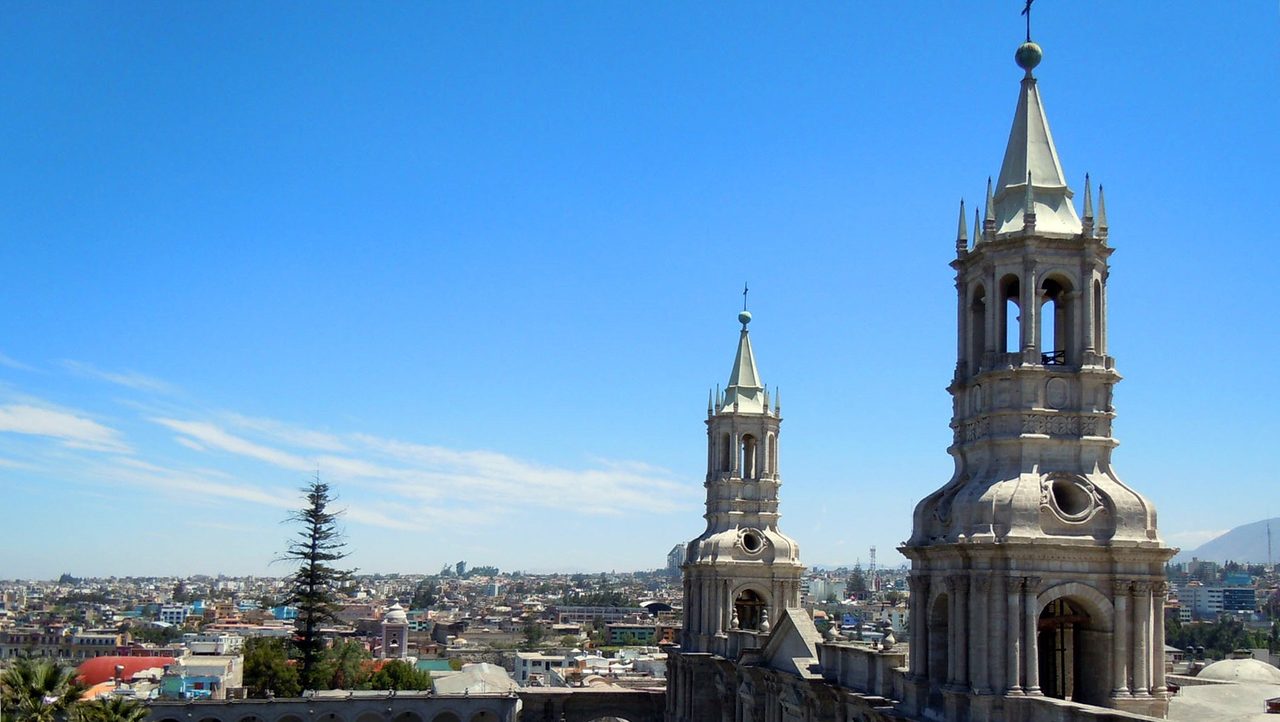
Days needed: 2 for Arequipa, 1–2 more for Colca. Getting there: 100-minute flight from Lima, or 15–16 hours by overnight bus. Best months: Arequipa is pleasant year-round; Colca is best May to November.
Arequipa is the city I would most happily go back to. It is built almost entirely from sillar, a white volcanic stone that glows in the afternoon, and it sits in a bowl beneath three volcanoes with El Misti front and centre. The Santa Catalina monastery is a walled town-within-a-town of ochre and cobalt lanes that takes two unhurried hours. The food is its own regional cuisine — rocoto relleno, chupe de camarones, adobo on Sunday mornings — and the picanterías serving it are the best-value eating in the country.
Arequipa also solves a planning problem. At 2,335 m it is high enough to start acclimatising and low enough that you will feel fine, so starting your Andean leg here rather than in Cusco is the single best altitude decision available. Full details are in the Arequipa and Colca Canyon guide.
Colca is three to four hours away by road, crossing a pass above 4,900 m on the way. The draw is the Cruz del Cóndor viewpoint, where Andean condors ride the morning thermals up the canyon wall, often at eye level and close enough that you hear the air over their wings — the most reliable wildlife sighting in Peru. That happens roughly between 8am and 10am, which is why the one-day tour from Arequipa is a 12- to 14-hour ordeal with a 3am start. Do the two-day version, sleep in Chivay, soak in the hot springs and see the canyon in daylight instead of through a van window.
Who should skip it: if you have already got Machu Picchu, Titicaca and the Amazon on a ten-day trip, adding Arequipa and Colca makes it four flights. Cut something.
Lake Titicaca and Puno
Days needed: 1 day and 1 night minimum; 2 nights if you do a homestay. Getting there: 7 hours by direct bus from Cusco, 10 on the tourist bus that stops at ruins along the way, or fly to Juliaca and drive 45 minutes. Best months: May to September.
Titicaca is 3,812 m, cold at night, blindingly bright by day, and genuinely unlike anywhere else. The Uros floating islands — built and rebuilt from layered totora reed — are the famous bit and also the most staged bit; the standard half-day trip gives you 45 minutes of reed-boat photo opportunity and a hard sell on textiles. The lake gets interesting further out. Taquile and Amantaní are real farming communities two to three hours by boat, and an overnight homestay there — a family, a meal of trout and quinoa soup, a village dance you will feel ridiculous joining — is the thing people actually remember. The options are laid out in the Lake Titicaca guide.
Who should skip it: anyone doing a day trip. If you cannot spare a night on the lake, spend those hours in the Sacred Valley instead. Puno the town is not a reason to come.
The southern desert coast: Paracas, Huacachina and Nazca
Days needed: 2 for Paracas and Huacachina together. Getting there: 3.5–4 hours by bus from Lima to Paracas, another hour to Ica. Best months: December to March, when the coast is actually sunny.
This is the easiest add-on in Peru: no flights, no altitude, comfortable buses on a good road. Paracas gives you the Ballestas Islands, a two-hour boat trip among thousands of sea lions, Humboldt penguins and enough guano-crusted seabirds to make your eyes water. You cannot land on the islands, so it is a viewing trip, not a walking one. The Paracas National Reserve next door, where red cliffs drop straight into the Pacific, is the more underrated half and most people miss it.
Huacachina, an hour further south, is a genuine palm-ringed lagoon sitting in an amphitheatre of 100-metre dunes outside Ica. It is also a small, loud, hostel-heavy tourist village, and I would not spend two nights there. One is perfect: a sunset dune-buggy and sandboarding run for around US$25, dinner, and out. The wineries and pisco bodegas around Ica are a decent morning if you like that sort of thing. Everything on this stretch is covered in the southern coast guide.
Nazca: the one I would cut
The Nazca Lines are extraordinary as an idea and mostly underwhelming as a visit. The geoglyphs only resolve from the air, and the light aircraft flights are 30 to 35 minutes of tight banking turns over the desert at around US$110 plus a mandatory airport fee of roughly S/77. A meaningful proportion of passengers are too airsick to look out of the window by the time the condor comes round. The alternative is a 13-metre roadside observation tower from which you can see parts of three figures, and that is not a reason to spend seven hours on a bus.
Go if you are a genuine archaeology enthusiast, you tolerate small aircraft, and you are already in Ica. Otherwise, this is the destination I would drop first. The travel-time-to-payoff ratio is the worst on this list.
The Peruvian Amazon
Days needed: 3 nights. Two is not enough to get anywhere; four is better. Getting there: 55-minute flight from Cusco to Puerto Maldonado, or roughly 1 hour 50 from Lima to Iquitos. Best months: May to September is drier and easier for trails; the high-water months are better for river wildlife.
This is the part of Peru people skip and then wish they had not. It is also the part that gets misrepresented most: a lodge 30 minutes from Puerto Maldonado airport is not the deep Amazon, and you will see a lot of secondary forest and not much else. The wildlife scales almost linearly with how far up the river you go.
The two entry points are genuinely different trips. Puerto Maldonado in the south is the easy one — a short hop from Cusco, lodges one to three hours by boat up the Tambopata or Madre de Dios, macaw clay licks, giant river otters at Sandoval Lake. If you are already in Cusco, this is the obvious choice. Iquitos in the north is a bigger commitment: a city of half a million with no road connection to the rest of Peru, reached only by air or a multi-day river boat, with river cruises and remote reserves like Pacaya-Samiria upstream. Iquitos rewards more time and more money; Puerto Maldonado slots neatly into a normal itinerary. The comparison is worked through properly in the Peruvian Amazon guide.
Who should skip it: anyone with fewer than nine days in Peru, and anyone who genuinely dislikes heat, humidity and insects. Three nights in the jungle when you hate all three is a long three nights.
Lima
Days needed: 2. Getting there: you land here. Best months: December to April — from roughly May to November the coast sits under the garúa, a low grey marine layer that can hang over the city for weeks.
Lima has a bad reputation among travellers that it stopped deserving about fifteen years ago. It is a big, chaotic, traffic-choked city of around ten million, and it is also home to several of the best restaurants on the planet, an extraordinary cheap-eats scene, and cliff-top neighbourhoods with genuinely lovely evenings. Miraflores is the safe, walkable, slightly sterile base; Barranco next door is where I would actually stay — and Callao’s street-art quarter, one of the more unusual things to do in Peru, is a short taxi ride from either.
Two days is right. Give one to the historic centre, the catacombs at San Francisco and the Larco museum, and one to eating: a neighbourhood cevichería at lunchtime, anticuchos from a street grill in the evening. Do not treat this as a transit stop — see what is actually worth doing in Lima and the broader guide to Peruvian food before you write it off.
Who should skip it: nobody, though if you land at 11pm and fly to Cusco at 6am, do that leg first and give Lima your last two days instead. It is a better city to end on.
Northern Peru: where almost nobody goes
Everything above is the gringo trail. North of Lima the tourist infrastructure thins fast, prices drop, and you will go whole days without hearing English. It is not for a first trip of nine days. It is excellent for a second one, and the northern Peru guide maps the routes.
Huaraz and the Cordillera Blanca
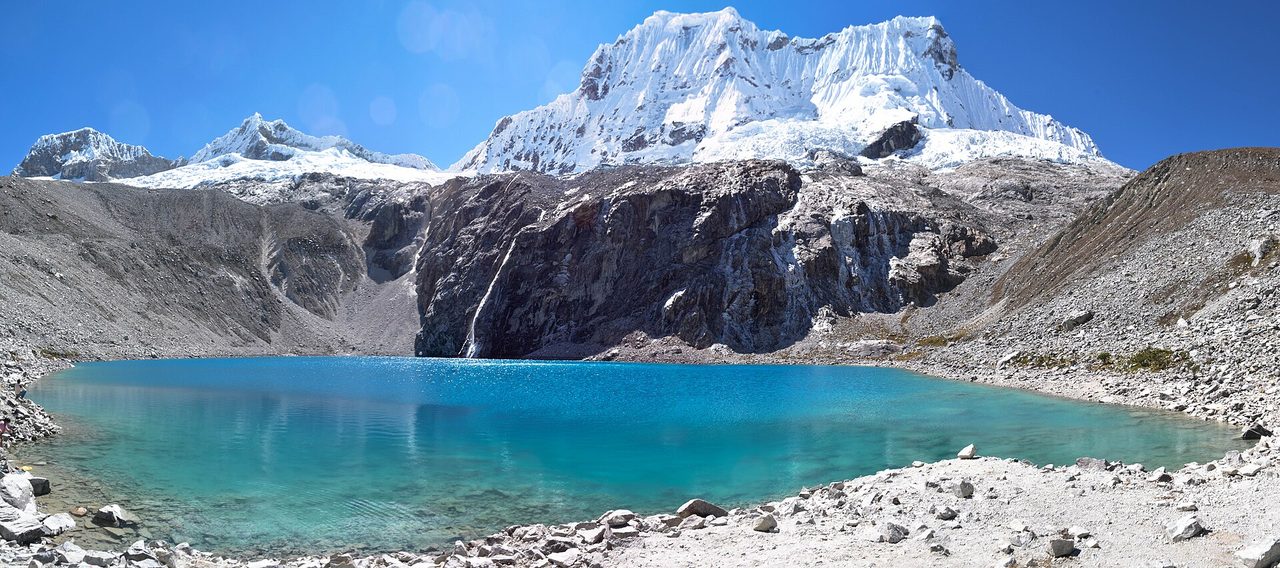
Days needed: 3–5. Getting there: 8 hours by bus from Lima, comfortably done overnight. Best months: June to September; the range is unreliable outside that.
If you like mountains, this is the best place in Peru and it is not particularly close. The Cordillera Blanca is the highest tropical mountain range on earth, with more than fifty peaks above 5,700 m and Huascárán at 6,768 m. Day-hike to Laguna 69 — about 12 km round trip topping out near 4,600 m — and you get a glacial lake the colour of antifreeze under a hanging icefall, for roughly US$40 including transport. The Santa Cruz trek is four days; Huayhuash is eight to twelve and one of the great walks anywhere.
Huaraz the town is functional rather than charming, at 3,050 m, full of trekking agencies and pizzerias. Nobody comes for the town. What makes this the best-value destination in Peru is that you get Alps-scale scenery at a fraction of Cusco’s prices and perhaps a tenth of the people.
Who should skip it: anyone who is not going to hike, and anyone travelling outside the June–September window.
Chachapoyas, Kuélap and Gocta
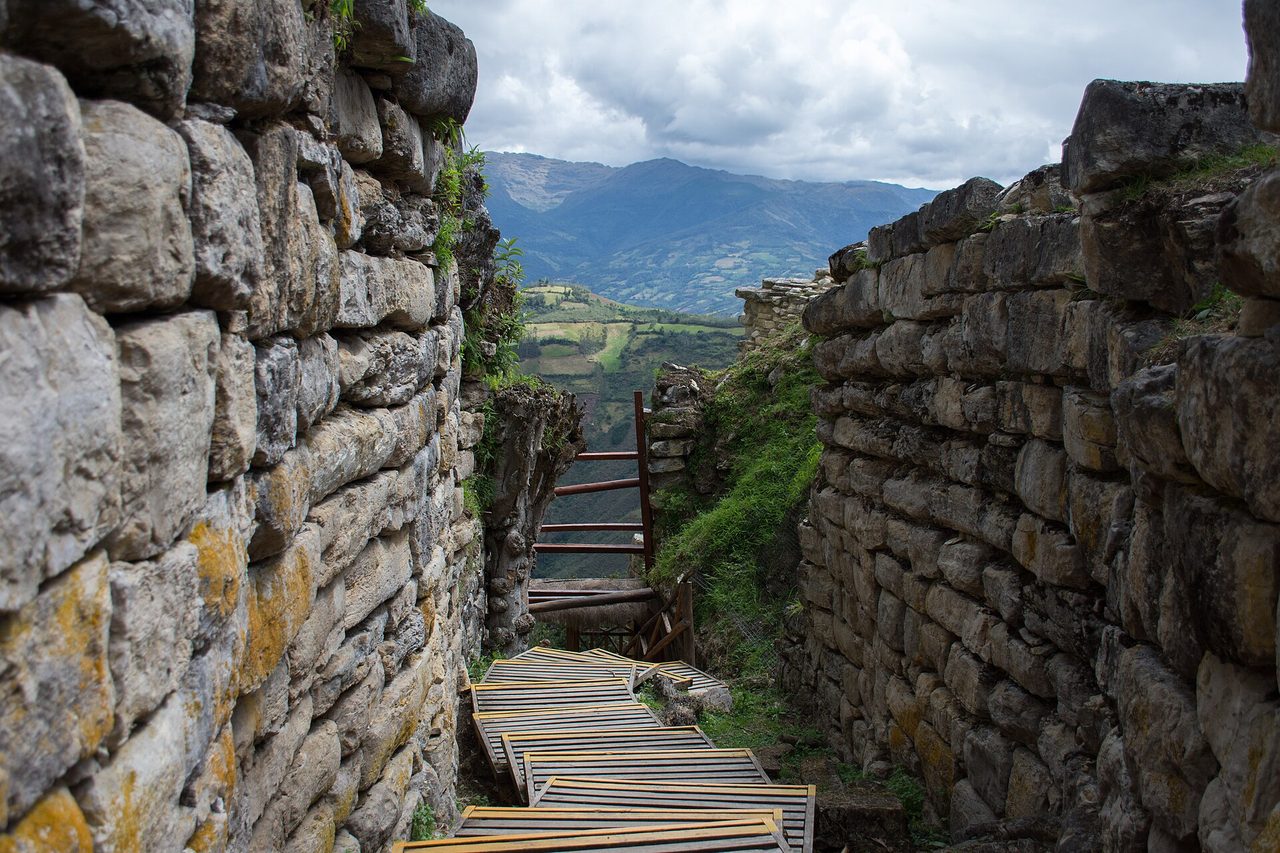
Days needed: 3–4. Getting there: fly Lima to Jaén (about 90 minutes, a couple of departures a day), then 3.5–4 hours by road. The direct bus from Lima is 20–24 hours. Best months: May to September, though this is cloud forest and it rains regardless.
Kuélap gets called the Machu Picchu of the north, which undersells how different it is. It is a Chachapoya citadel on a limestone ridge at 3,000 m, ringed by a perimeter wall up to 19 m high, holding the remains of more than 400 circular houses, and it predates Machu Picchu by several centuries. A cable car from Nuevo Tingo does the climb in about 20 minutes. Be aware that a section of the southern wall collapsed in 2022 and the site was closed for much of 2023; restoration work has since reopened it, but the cable car shuts on Mondays and takes an annual maintenance break in May, so confirm operating dates before you build a trip around it.
The region also has the Karajía sarcophagi — painted clay funerary figures standing in a cliff niche, staring out over the valley — and Gocta, a 771 m two-tiered waterfall reached on a five- to six-hour round-trip walk. You will share all of it with very few people.
Who should skip it: anyone on a first trip under two weeks. Getting here and back eats three days on its own.
Trujillo, Huanchaco and Chan Chan
Days needed: 2. Getting there: 75-minute flight or 9 hours by bus from Lima. Best months: December to April.
The north coast holds the pre-Inca heavyweights. Chan Chan is the largest adobe city ever built in the Americas, a 20 sq km sprawl of eroded mud walls of which one restored compound is open. The Huacas del Sol y de la Luna nearby preserve Moche wall paintings in colours that still look wet. Huanchaco, ten minutes from Trujillo, is a scrappy surf village where fishermen still ride reed caballitos de totora exactly as the Moche did.
Honest assessment: this is a specialist destination. If Inca and pre-Inca archaeology is the reason you are coming to Peru, it is superb. If you are here for landscapes, it will read as a lot of brown walls in a lot of heat.
Máncora
Days needed: 3 or more — there is no point going for one night. Getting there: fly Lima to Tumbes or Talara, then 1–2 hours by road. Best months: December to March.
Peru is not a beach country, with one exception: the far north, where the water is warm enough to swim without a wetsuit and the sun shows up year-round. Máncora is a strip of sand, surf schools, ceviche shacks and a fairly relentless party scene. Go if you want to end a mountain-heavy trip lying down. Do not go expecting the Caribbean, and do not go in July when the coast is cooler and the crowds are elsewhere.
Overrated, underrated, and what to do about it
Every Peru list ranks the same fifteen places in a slightly different order. More useful is knowing which ones repay the hours you spend getting to them.
| Place | Reputation | What I actually think |
|---|---|---|
| Machu Picchu | Overhyped | Wrong. It is one of the few mega-sights that delivers. |
| Rainbow Mountain | Rising star | Overrated. Eight hours in a van at 5,000 m for a photo that needs perfect light. |
| Nazca Lines | Bucket list | Overrated on the ground. Only worth it from the air, and half the plane is airsick. |
| Uros floating islands | Iconic | Staged on a half-day tour. Real if you go further out and stay the night. |
| Lima | Skippable transit stop | Underrated. Give it two days for the food alone. |
| Huaraz | Niche trekking town | Underrated. Best mountain scenery in Peru, half the price of Cusco. |
| Huacachina | Backpacker novelty | Underrated for one night. Genuinely fun, genuinely strange. |
| Kuélap | Machu Picchu of the north | Underrated, but be realistic about the three travel days it costs. |
| Arequipa | Stopover before Colca | Underrated. The most liveable city in Peru and the best regional food. |
| Colca Canyon | Condor day trip | Fairly rated if you overnight. Overrated as a 14-hour day tour. |
Routes that actually work
Places only matter in combination. Three shapes cover most trips, and detailed day-by-day versions live in the Peru itineraries hub.
- 7 days — the essentials. Lima (1 night on arrival) → fly to Cusco and transfer straight down to the Sacred Valley (2 nights) → Machu Picchu (1 night in Aguas Calientes or back to the valley) → Cusco (2 nights). Nothing else. Resist the urge.
- 10 days — add one contrast. The week above plus either 3 nights in the Amazon out of Puerto Maldonado or 2 nights on Lake Titicaca. Not both.
- 14 days — the southern circuit. Lima → fly to Arequipa (2 nights) → Colca (1 night) → Puno and Titicaca (2 nights) → overland to Cusco → Sacred Valley and Machu Picchu (4–5 nights) → back to Lima. This is the route I would pick if I had two weeks, because it acclimatises you in the right order.
- Second trip. Huaraz for a week of trekking, then north to Chachapoyas and Trujillo. Almost no crowds, roughly two-thirds the cost.
Budget roughly US$40–60 a day as a backpacker and US$100–150 for comfortable mid-range travel, with domestic flights, the Machu Picchu train and any multi-day trek sitting outside those numbers as lump sums. The cost breakdown for a Peru trip has the itemised version, and the where to stay guide sorts accommodation by city and style.
When to go, place by place
Peru does not have one season. The Andes and the coast are almost exactly out of phase with each other, which is why generic advice fails.
- Andes (Cusco, Titicaca, Arequipa, Huaraz): dry May to September, clear and cold, busiest June to August. April, May, September and October are the sweet spot — still green, mostly dry, noticeably quieter.
- Coast (Lima, Paracas, Huacachina, Máncora): the reverse. December to March is warm and sunny; May to November brings the garúa and grey skies that make Lima look like a different city.
- Amazon: hot and humid always. May to September is drier with better trail walking; December to April is high water, which means more river access and easier boat wildlife spotting.
- Fixed dates worth knowing: the Inca Trail closes every February. Inti Raymi fills Cusco on 24 June and hotel prices go with it.
If your dates are locked, work backwards from them rather than from a wishlist — the month-by-month detail is in the best time to visit Peru.
Which places to cut, and who should cut them
Cutting is the whole skill. Some specific advice:
- Under 8 days: Cusco region only, plus a night in Lima. Cut Titicaca, Nazca, the coast and the Amazon without hesitation.
- Travelling with kids under 10: cut Rainbow Mountain and Colca’s one-day tour. Keep Huacachina, the Amazon and the Sacred Valley, which children love.
- Prone to altitude sickness: cut Puno and Rainbow Mountain, keep Arequipa, Machu Picchu (a comparatively mild 2,430 m) and the coast.
- Not a hiker: cut Huaraz and the Inca Trail entirely. You can reach every major site in this guide by road, rail or boat.
- Second visit: cut the entire southern circuit and go north. That is where the country still surprises people.
Whatever you keep, allow more slack than feels necessary. Domestic flights are delayed often, road strikes are a real feature of Peruvian life, and a tight itinerary breaks on contact. The practicalities of dealing with all of that are in the Peru travel tips and safety guide.
Frequently asked questions
What is the number one place to visit in Peru?
Machu Picchu, and the margin is wide. But the more useful answer is the Cusco region as a whole — Cusco city, the Sacred Valley and Machu Picchu together — because that is where the highest concentration of things worth seeing sits within an hour or two of each other.
How many days do you need to see the best places in Peru?
Seven days covers Lima, Cusco, the Sacred Valley and Machu Picchu without rushing. Ten lets you add one contrasting region. Fourteen gets you the full southern circuit including Arequipa, Colca and Titicaca. Below seven days you will spend a third of the trip in airports.
Where should I go in Peru besides Machu Picchu?
In order of how easily they slot into a normal itinerary: the Sacred Valley, Arequipa and Colca Canyon, the Amazon out of Puerto Maldonado, Lake Titicaca, and the Paracas–Huacachina stretch of the south coast. If you have already done all of those, go to Huaraz.
What is the most underrated place in Peru?
Huaraz and the Cordillera Blanca. You get mountain scenery on a Himalayan scale, glacial lakes you can day-hike to, and prices well below Cusco, eight hours by bus from Lima. The catch is a narrow June-to-September window and the fact that you need to be willing to walk.
Is Rainbow Mountain worth visiting?
For most people on a short trip, no. It is a 3am start, six to eight hours of round-trip driving, and a hike above 5,000 m for a viewpoint that only looks like the photos in strong direct sun. If you are well acclimatised, the weather is clear and you book an early-departure operator, it is a good day. Otherwise Humantay Lake gives you a similar payoff with far less suffering.
Are the Nazca Lines worth the detour?
Only if you take the flight, and only if you are already on the south coast. The overflight runs about US$110 plus airport fees for 30 to 35 minutes of steep turns, and airsickness is common. From the roadside tower you see fragments of three figures. As a standalone trip from Lima it is seven hours each way for very little.
Which is better for the Amazon, Puerto Maldonado or Iquitos?
Puerto Maldonado if you are already in Cusco and have three or four nights — it is a 55-minute flight and the lodges up the Tambopata are excellent. Iquitos if you have more time and want a river cruise or a genuinely remote reserve, accepting that it is a separate flight from Lima and effectively its own trip.
What is the prettiest city in Peru?
Arequipa, narrowly, for the white sillar architecture and the volcanoes behind it. Cusco is more atmospheric and more interesting historically, but it is also busier and steeper. Ollantaytambo is the most beautiful small town.
Do I need to visit Lima?
You will pass through it regardless, since almost all international flights land at Jorge Chávez. Whether you stay is a separate question, and the answer is yes, for two days, mostly for the food. Schedule it at the end of the trip rather than the start, when you are not fighting jet lag.
Can you visit Peru without going to high altitude?
Yes, and it makes a decent trip: Lima, the Paracas and Huacachina desert coast, the Amazon at Puerto Maldonado or Iquitos, and the northern beaches are all at or near sea level. You will miss Cusco and Machu Picchu, which is a real loss, but nothing about that itinerary is second-rate.
What is the safest region of Peru for tourists?
The tourist corridor from Lima south through Paracas, Arequipa, Puno and Cusco is well travelled and generally trouble-free, with ordinary city-crime precautions in Lima and Cusco. The bigger practical risks for visitors are altitude, road accidents on night buses, and occasional transport strikes rather than violent crime.
Is it better to fly or take buses between destinations in Peru?
Fly the long legs. Lima to Cusco is 80 minutes in the air against roughly 21 hours by road, and domestic fares are usually modest if booked ahead. Buses win for the shorter, scenic hops: Lima to Paracas, Lima to Huaraz, Cusco to Puno, Arequipa to Colca. Peru’s long-distance coaches are far more comfortable than most first-timers expect.
The short version
Pick a region, not a wishlist. For a first trip of a week to ten days, that region is Cusco and the Sacred Valley, with Machu Picchu at the centre of it and one contrast — jungle, lake or desert — bolted on if the days allow. For a second trip, go north, where the sites are older, the mountains are bigger and you will have most of it to yourself. Everything else on this list is a question of how many travel days you are prepared to trade for it, and the honest answer for Nazca and Rainbow Mountain is probably fewer than you think.