Festivals & Events in Peru (Inti Raymi & More)
A month-by-month calendar of Peru's festivals, with Inti Raymi ticket prices, which dates move with Easter and which never do, and the two weeks you should not arrive without a booking.
Every guide to Peru festivals hands you the same unordered list: Inti Raymi, Candelaria, Carnival, something vague about Independence Day. What almost none of them tell you is that half those dates move every year, that all 4,116 ticketed seats for Inti Raymi 2026 sold out nine days before the ceremony, or that turning up in Cusco unbooked during the last week of June is one of the more expensive mistakes you can make in this country.
So this is a calendar first and a highlight reel second. Below you get the month-by-month grid, then a section that separates the fixed dates from the ones that swing with Easter, then honest write-ups of the festivals actually worth restructuring a trip around. And a warning section, because festival dates drive prices and availability more aggressively here than most people expect.
Peru festivals month by month: the full calendar
Peru runs something in the order of 3,000 fiestas a year. Most are patronal saint’s days in a single village and you will only ever stumble into one by accident, which is genuinely one of the better ways to experience the country. The table below covers the ones that are big enough to change your plans, or big enough to wreck them if you ignore them.
The right-hand column is the one competitors leave out. “Fixed” means the same calendar date every year. “Movable” means it is pinned to Easter and slides by up to a month between years.
| Month | Festival | Where | Dates | Fixed or movable |
|---|---|---|---|---|
| January | Bajada de Reyes (Epiphany) | Cusco, Ollantaytambo, nationwide | 6 January, spilling into the weekend | Fixed |
| January | Concurso Nacional de Marinera | Trujillo | Most of January; finals in the last week | Fixed window |
| January | Chiaraje ritual battle | Canas province, Cusco region | 20 January | Fixed |
| February | Virgen de la Candelaria | Puno | Roughly late January to mid-February, built around 2 February | Fixed anchor |
| February | Día del Pisco Sour | Lima, Ica, Arequipa | First Saturday of February | Rule-based |
| Feb–Mar | Carnaval | Cajamarca is the big one; also Puno, Ayacucho, Cusco | Peaks the weekend before Ash Wednesday | Movable |
| March | Festival de la Vendimia | Ica | Usually the first half of March | Fixed window |
| Mar–Apr | Semana Santa | Ayacucho above all; also Cusco, Arequipa, Tarma | Palm Sunday to Easter Sunday | Movable |
| Mar–Apr | Señor de los Temblores | Cusco | Holy Monday, procession leaves the cathedral around 2pm | Movable |
| May | Virgen de Chapi | Sanctuary 45 km from Arequipa | 1 May, pilgrims walk through the night of 30 April | Fixed |
| May | Cruz Velacuy / Fiesta de las Cruces | Cusco region, Andean highlands | 3 May | Fixed |
| May–Jun | Qoyllur Rit’i | Sinakara valley, Cusco region | Peaks 58 days after Easter Sunday | Movable |
| May–Jun | Corpus Christi | Cusco | Thursday, 60 days after Easter Sunday | Movable |
| June | Q’eswachaka bridge rebuild | Apurímac river, Canas, Cusco region | Second Sunday of June, after three days of work | Rule-based |
| June | Inti Raymi | Cusco | 24 June | Fixed |
| June | Fiesta de San Juan | Iquitos, Pucallpa, Tarapoto and the whole Amazon | 24 June | Fixed |
| July | Virgen del Carmen | Paucartambo, four hours east of Cusco | 15–18 July, main day 16 July | Fixed |
| July | Fiestas Patrias | Nationwide, parades in Lima | 28–29 July | Fixed |
| July | Yawar Fiesta | Cotabambas and other Apurímac towns | 28–29 July | Fixed |
| August | Andean New Year / pagos a la Pachamama | Highlands, especially Cusco and Puno | 1 August, offerings all month | Fixed |
| August | Santa Rosa de Lima | Lima, nationwide public holiday | 30 August | Fixed |
| September | Warachikuy | Sacsayhuaman, Cusco | Third Sunday of September | Rule-based |
| October | Señor de los Milagros | Lima | Processions on 18, 19 and 28 October; purple worn all month | Fixed |
| October | Día de la Canción Criolla | Lima and the coast | 31 October | Fixed |
| Nov | Todos los Santos | Nationwide, strongest in the highlands | 1–2 November | Fixed |
| Nov | Puno Week (Semana Jubilar) | Puno | Roughly 1–7 November, centrepiece on 5 November | Fixed anchor |
| December | Santurantikuy | Plaza de Armas, Cusco | 24 December | Fixed |
If you are building a route around any of these, the sequencing matters more than the individual dates. A sensible two-week route through Peru can absorb one major festival comfortably and two only if they are close together in both time and geography. Candelaria in Puno and Carnival in Cajamarca fall within weeks of each other and are 1,600 km apart. That is a different trip, not a bonus.
Which dates are fixed and which move (and why nobody explains this)
This is the single most useful thing on this page, so it goes near the top rather than buried at the bottom.
Peru’s festival calendar has two engines. The first is civic and Inca-revival: national holidays, city anniversaries, agricultural dates, solstices. Those are locked to the calendar and never move. Inti Raymi is 24 June whether that lands on a Tuesday or a Saturday. Fiestas Patrias is 28–29 July, always. If you are building a trip around one of these rather than slotting it in, our list of what actually justifies the flight is the better starting point.
The second engine is the Catholic liturgical calendar, which is anchored to Easter, which is itself anchored to the first full moon after the March equinox. Anything downstream of Easter swings across roughly five weeks from year to year. Carnival, Semana Santa, Corpus Christi and Qoyllur Rit’i are all in this group. This is why you will find travel pages confidently listing “Corpus Christi — June” when in some years it falls in May.
Here are the rules and what they work out to. Easter Sunday falls on 28 March in 2027 and 16 April in 2028, which is about as wide a swing as the system produces.
| Movable festival | The rule | 2027 | 2028 |
|---|---|---|---|
| Carnaval (peak days) | The Saturday to Tuesday before Ash Wednesday; Ash Wednesday is 46 days before Easter | 6–9 February | 26–29 February |
| Semana Santa | Palm Sunday (Easter minus 7) through Easter Sunday | 21–28 March | 9–16 April |
| Señor de los Temblores, Cusco | Holy Monday, the day after Palm Sunday | 22 March | 10 April |
| Qoyllur Rit’i | Pilgrimage runs Trinity Sunday to Corpus Christi Thursday; main day is 58 days after Easter | 23–27 May, main day 25 May | 11–15 June, main day 13 June |
| Corpus Christi, Cusco | Thursday, 60 days after Easter Sunday | 27 May | 15 June |
| Corpus Christi octava | The following Thursday, seven days later | 3 June | 22 June |
Two consequences worth internalising. First, in years when Easter is early, Corpus Christi and Qoyllur Rit’i land in May and are cleanly separated from Inti Raymi — you would need two trips or a very long one. In late-Easter years like 2028 they compress into the same fortnight as Cusco’s June celebrations, which is either a gift or a logistical nightmare depending on whether you booked.
Second, these are calculated dates and I would still check the official programme before committing money. City governments publish the detailed schedules a few weeks out, and start times, routes and venues change. Treat everything below as the shape of the thing rather than a timetable.
Inti Raymi, 24 June, Cusco: what actually happens and what it costs
Inti Raymi is the reason most people search for this topic, so let me be precise about it, including the parts the tour pages skip.
The three stages, in order
It is not one event in one place. It is a single scripted production performed across three sites over about seven hours, and the crowd migrates with it.
Qorikancha, from 8am. The Sapa Inca invokes the sun from a small temporary stage on the terraces of the old Temple of the Sun. Gates open around 7am. There is one ticketed grandstand here with roughly 350 seats. It is the most intimate of the three stages and the one most people skip, which is exactly why it is the best value.
Plaza de Armas, from 11am. The procession arrives in the main square for the ceremony of the sacred coca leaf. This stage is completely free and completely uncontrolled. If you want a view you need to be standing at the barriers well before 10am, or you need to have booked a balcony table at one of the restaurants ringing the plaza, which is a common package add-on and usually worth it if you dislike crowds.
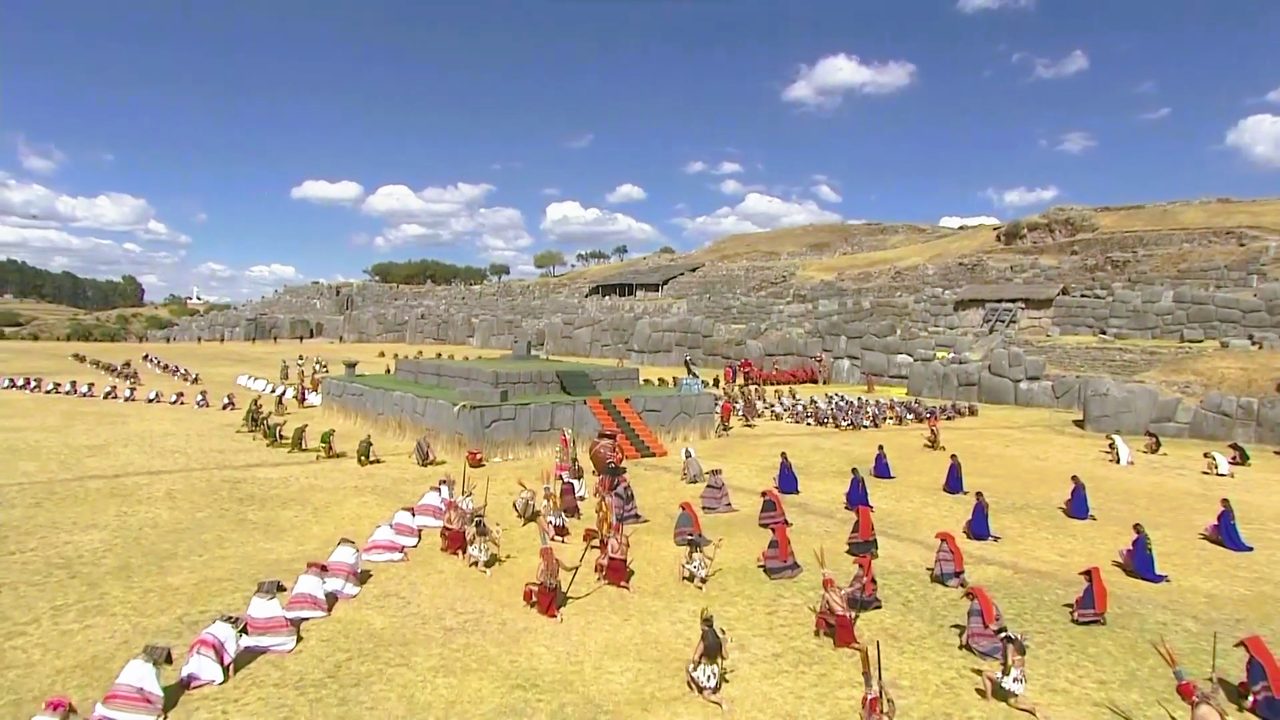
Sacsayhuaman, from 1pm. The main event, on the great grass esplanade below the zigzag walls at about 3,700 m. Over 800 actors, dancers and musicians perform the whole thing in Quechua. This is where the ticketed grandstands are and where the money goes.
Tickets, prices and how fast they go
Tickets are sold by EMUFEC, the municipal festivals company, not by tour operators — though tour operators resell them inside packages at a healthy markup. In 2026 the Sacsayhuaman esplanade held 3,766 seats across four zones (Inti Súper VIP, Chaska, Killa VIP and Illapa), priced between S/490 and S/850. Qorikancha’s single grandstand of 350 seats went for S/235. Combined tickets covering both venues ran S/690 to S/1,030.
Resold through agencies and dressed up with transport and a boxed lunch, the same seats appear at USD 180 to USD 410. At an exchange rate around S/3.4 to the dollar, that is a substantial premium over the face price. If you are comfortable buying direct and getting yourself up the hill, buy direct.
All 4,116 seats sold out more than a week before the 2026 ceremony. That is the number to remember. Tickets typically go on sale a couple of months ahead, and the good zones go first. If Inti Raymi is the reason you are coming, book it before you book anything else and build the rest of the trip around it.
Watching for free, honestly assessed
You can watch the Sacsayhuaman ceremony without a ticket from the hillsides that ring the esplanade. Thousands do. It is also, to put it plainly, a scrum.
People start claiming ground mid-morning for a 1pm start. There is no shade, no seating beyond the plastic stools that vendors rent out, and no facilities to speak of. You are sitting at 3,700 m in the strongest sun of the Peruvian year, which at that altitude will burn you through cloud in under half an hour. The view is genuinely distant — you will follow the shape of the ceremony rather than any of the detail, and the audio does not carry reliably to the slopes. Getting back down into Cusco afterwards means either a long walk or a queue for transport that takes an hour or more to clear.
My honest read: free viewing is worth it if you are on a tight budget for the trip overall and you treat it as a day out rather than a performance you need to follow. If you actually want to watch the thing, either pay for a seat or watch the free Plaza de Armas stage at 11am, which is closer, shorter, and far more legible.
Is Inti Raymi worth it?
It depends entirely on what you think you are buying. Inti Raymi was suppressed by the Spanish in the 1530s and stayed dead for four centuries. The version you will see was reconstructed in 1944 from Garcilaso de la Vega’s chronicles by a group of Cusco intellectuals. It is a scripted, rehearsed, directed theatrical production with a cast list, and the llama is not actually sacrificed. If you want to understand what was actually lost in the 1530s, the history behind the Inca sites themselves is a more reliable guide than any reenactment.
That does not make it fake. It makes it civic theatre, performed by Cusqueños for Cusqueños as much as for anyone else, and it is beautifully done. But if you are expecting an unbroken ritual line back to the Inca, you will be disappointed, and there are festivals on this page that will give you that feeling far more honestly.
The wider point about June: the whole month is Cusco’s mes jubilar, with parades, school processions and concerts most days, and the city expects north of 300,000 visitors across it. If you cannot get an Inti Raymi ticket, being in Cusco in June still gives you more than most months. There is plenty of other ground to cover in Cusco while the city is in a good mood.
Cusco in June, week by week
Nobody publishes this and it is the thing people most need. Cusco’s June is not one event, it is a month-long build, and where you slot your week determines what you pay and what you see.
- 1–10 June. The quiet start. Flags go up, school and institutional parades begin in the Plaza de Armas most mornings, and the Feria de Huancaro agricultural fair opens on the city’s southern edge. Prices are still normal. In late-Easter years Corpus Christi and Qoyllur Rit’i land in this window, which makes it the single best ten days of the Cusco calendar.
- 11–18 June. Q’eswachaka falls on the second Sunday, four hours away. Cusco itself steps up: folkloric dance in the plaza, the Corpus octava in some years, and the first noticeable tightening of hotel availability. Still bookable at a few weeks’ notice.
- 19–23 June. The ramp. Rehearsals for Inti Raymi happen in public at Sacsayhuaman and are free to watch, which is a genuinely good tip — you get the choreography, the costumes and the setting without the crowd or the ticket. Hotel rates are climbing hard by now and the Ollantaytambo trains are largely spoken for.
- 24 June. Inti Raymi, and also Cusco’s regional holiday and the Día del Campesino. Almost nothing else is worth attempting that day. Museums keep odd hours, roads around the centre close, and a day trip out to Machu Picchu and back on the 24th is a poor use of the ticket you fought for.
- 25–30 June. The comedown, and quietly one of the better windows. Crowds thin fast after the 24th while the weather is still perfect, and 29 June is San Pedro y San Pablo, a national holiday with fishing-town processions on the coast.
If you can only do one week in June, take the first. If Inti Raymi is non-negotiable, arrive on the 21st or 22nd, catch a rehearsal, and stay through to the 27th so you get the calm end of the month too.
Virgen de la Candelaria, Puno: the one that is arguably better
If you gave me one festival in Peru and no obligation to pick the famous one, I would go to Puno in February.
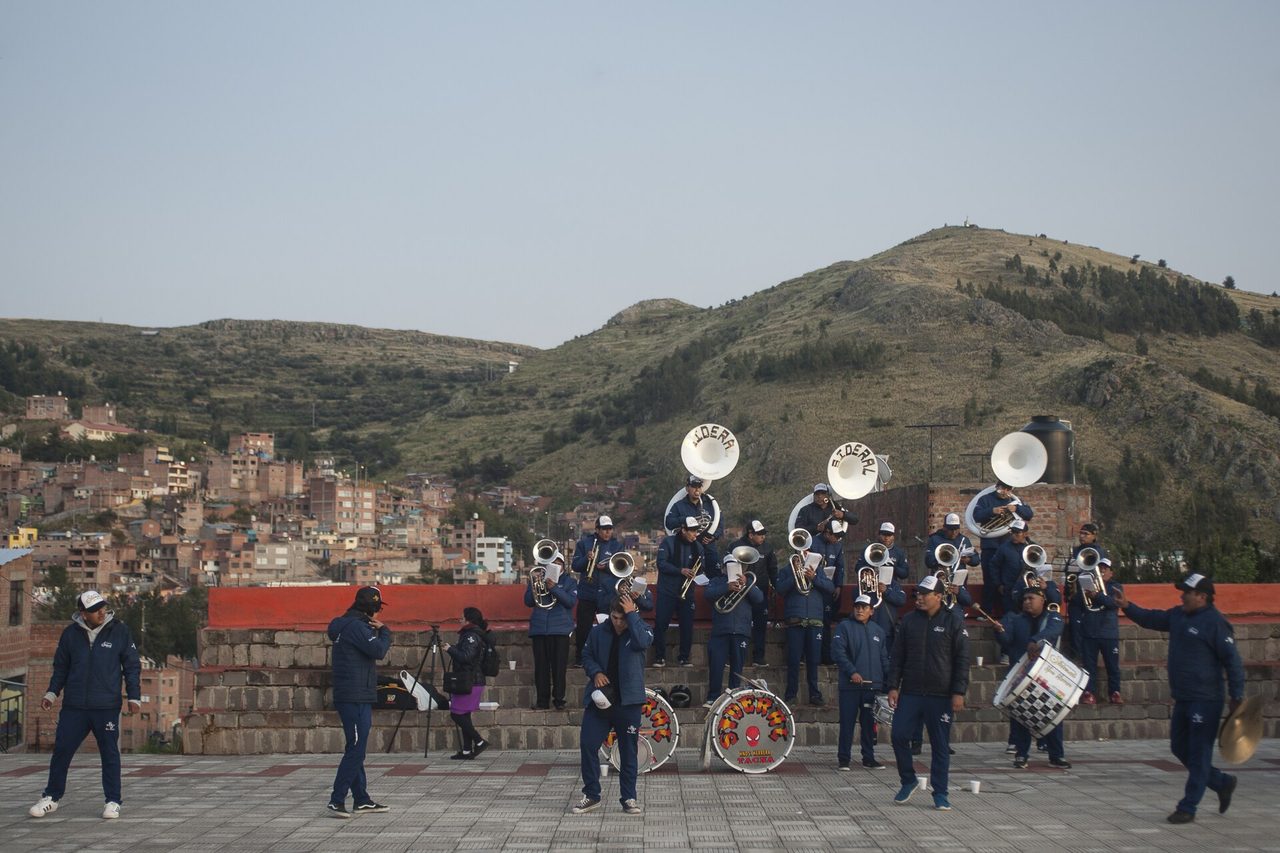
Candelaria is the largest festival in Peru and one of the largest in South America. UNESCO inscribed it on the Representative List of the Intangible Cultural Heritage of Humanity in 2014, and unlike Inti Raymi it was never interrupted — it is a continuous Aymara and Quechua tradition wearing Catholic clothes. The Virgin’s feast day is 2 February, and the festivities sprawl for roughly a fortnight either side of it.
The scale is hard to convey. Something like 40,000 people participate, not attend. There are two competition phases: the danzas autóctonas, performed in rural dress with rustic instruments, and then the trajes de luces a week later, where the costumes are the point — sequinned, mirrored, feathered, weighing enough that dancers need help getting them on. The Diablada, with its horned devil masks, is the one you have seen photographs of. Troupes fund their own costumes, often for a full year, which tells you who this is for.
What makes it better than Inti Raymi, in my view: the competitions are ticketed at the Enrique Torres Belón stadium and cheap by comparison, but the street parades are free and go on for hours, and nothing is roped off from you. Nobody is performing at you. You are just in the way, pleasantly.
Practicalities. Puno sits at about 3,830 m on the shore of Lake Titicaca, which is higher than Cusco, and February is the wet season, so expect afternoon rain and cold nights. The town’s hotel stock is modest and it fills. Book two to three months out, and if the good places are gone, Juliaca is 45 minutes away and has beds, though it is not somewhere you would otherwise choose to sleep. Come acclimatised. Arriving straight into Puno from sea level and then standing in a parade for six hours is a bad plan.
Semana Santa, and why Ayacucho is the place to be
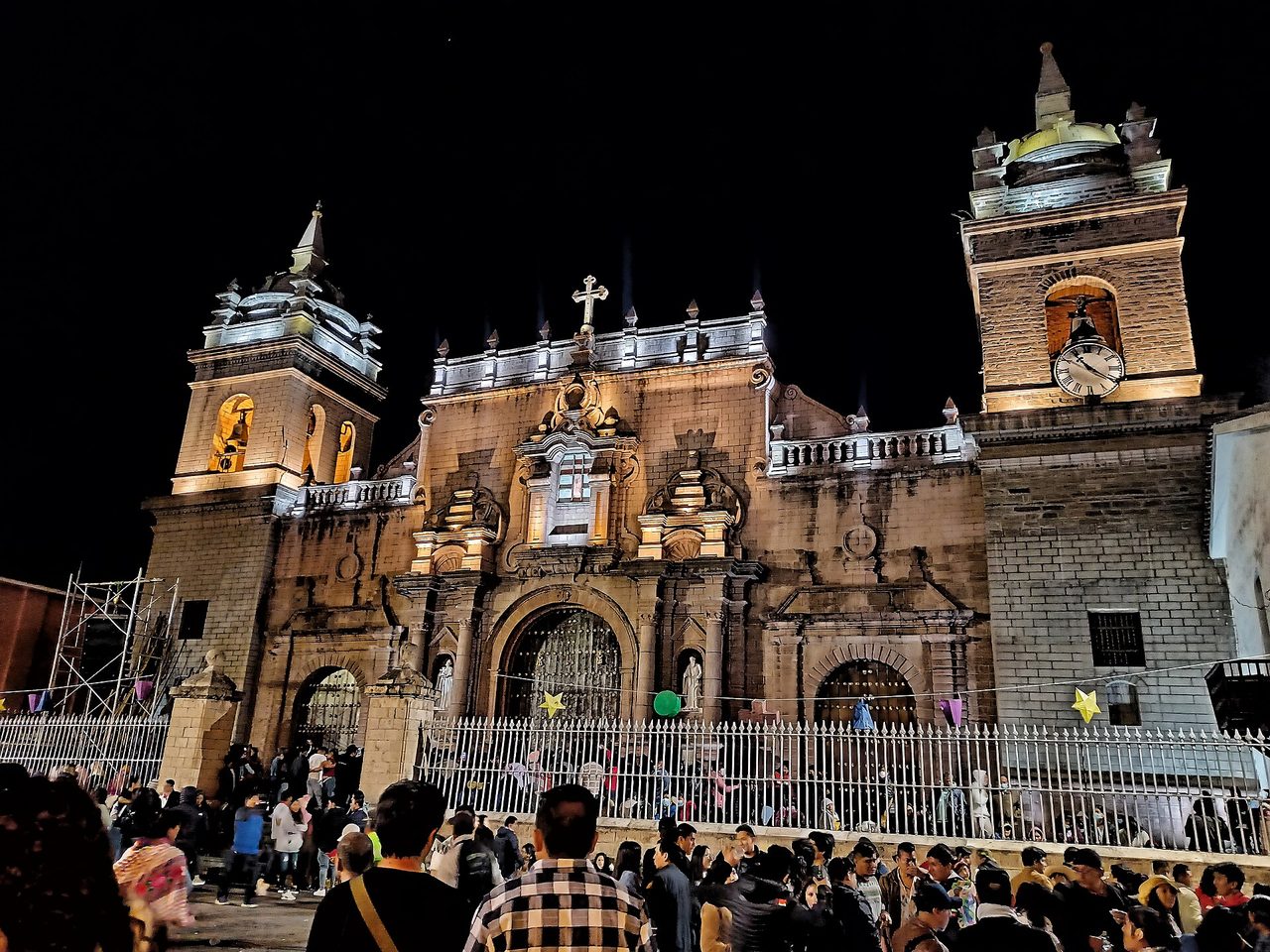
Holy Week is observed everywhere in Peru, but Ayacucho does it on a scale that outstrips the rest of the country. The city has 33 churches, the processions run for the better part of ten days, and the streets are laid with alfombras — carpets of flower petals and dyed sawdust, made overnight, walked over and destroyed by the procession the next morning.
The rhythm, in broad strokes. Palm Sunday brings the entry into Jerusalem, with a white donkey and palm fronds, in front of the cathedral in the Plaza Mayor. Wednesday is the Encuentro, when the images of Christ and the Virgin meet. Good Friday is the great silent procession of the Santo Sepulcro, with the electric street lights switched off and the whole crowd carrying candles. Easter Sunday morning brings the Resurrection, when a vast litter is carried out at dawn under a canopy of fireworks. Then the city does something entirely unliturgical and holds bullfights, horse races and a mass party for a couple more days.
Two honest caveats. Ayacucho is not easy to reach. It is roughly nine hours by road from Lima and twelve or more from Cusco, or a short flight from Lima that gets extremely expensive in Holy Week. And the city is completely booked during it — hotel rooms in Ayacucho for Semana Santa go months ahead, and families rent out spare rooms to cover the shortfall. Decide early or do it somewhere else.
The alternatives are good. Cusco’s Señor de los Temblores procession on Holy Monday is one of the more moving things I have seen anywhere in the Andes: a blackened seventeenth-century crucifix, carried out of the cathedral in the afternoon, showered with red ñucchu flowers from the balconies as it passes. Arequipa and Tarma are also strong, Tarma specifically for its flower carpets.
Qoyllur Rit’i: the one that will actually change how you think
Qoyllur Rit’i means “Star of the Snow”. It is a pilgrimage rather than a festival, held in the Sinakara valley below the Ausangate massif, and UNESCO listed it in 2011. Tens of thousands of pilgrims from eight highland “nations” converge on a sanctuary at around 4,600 m to dance, keep vigil in the cold, and pay respects to a rock face bearing an image of Christ that sits directly on top of a much older glacier cult.
You reach it by driving to Mahuayani and then walking about 8 km uphill, three to four hours, past fourteen stations of the cross, gaining altitude the whole way. There is no accommodation. Pilgrims sleep in tents or under tarpaulins in sub-zero temperatures at the sanctuary, and the dancing goes through the night. The ukukus — bear-men in shaggy costumes and knitted masks, speaking in falsetto — police the whole thing and climb to the glacier before dawn.
This is the anti-Inti Raymi. Nothing is staged, nothing is explained, there is no ticket and no schedule in English. It is also genuinely hard: high, cold, crowded and physically demanding, and you should not attempt it without proper acclimatisation and real cold-weather gear. If you have hiked the Inca Trail to Machu Picchu and found it manageable, you have roughly the right fitness, but Qoyllur Rit’i is higher and colder and there is no support infrastructure at all. Go with a Cusco operator that has actually done it before, or do not go.
Not for everyone. Not remotely. But nobody comes back from it and shrugs.
Corpus Christi in Cusco: the underrated one
Corpus Christi falls on the Thursday sixty days after Easter, so it usually lands three to five weeks before Inti Raymi. It is a much better festival and about a hundredth as famous.
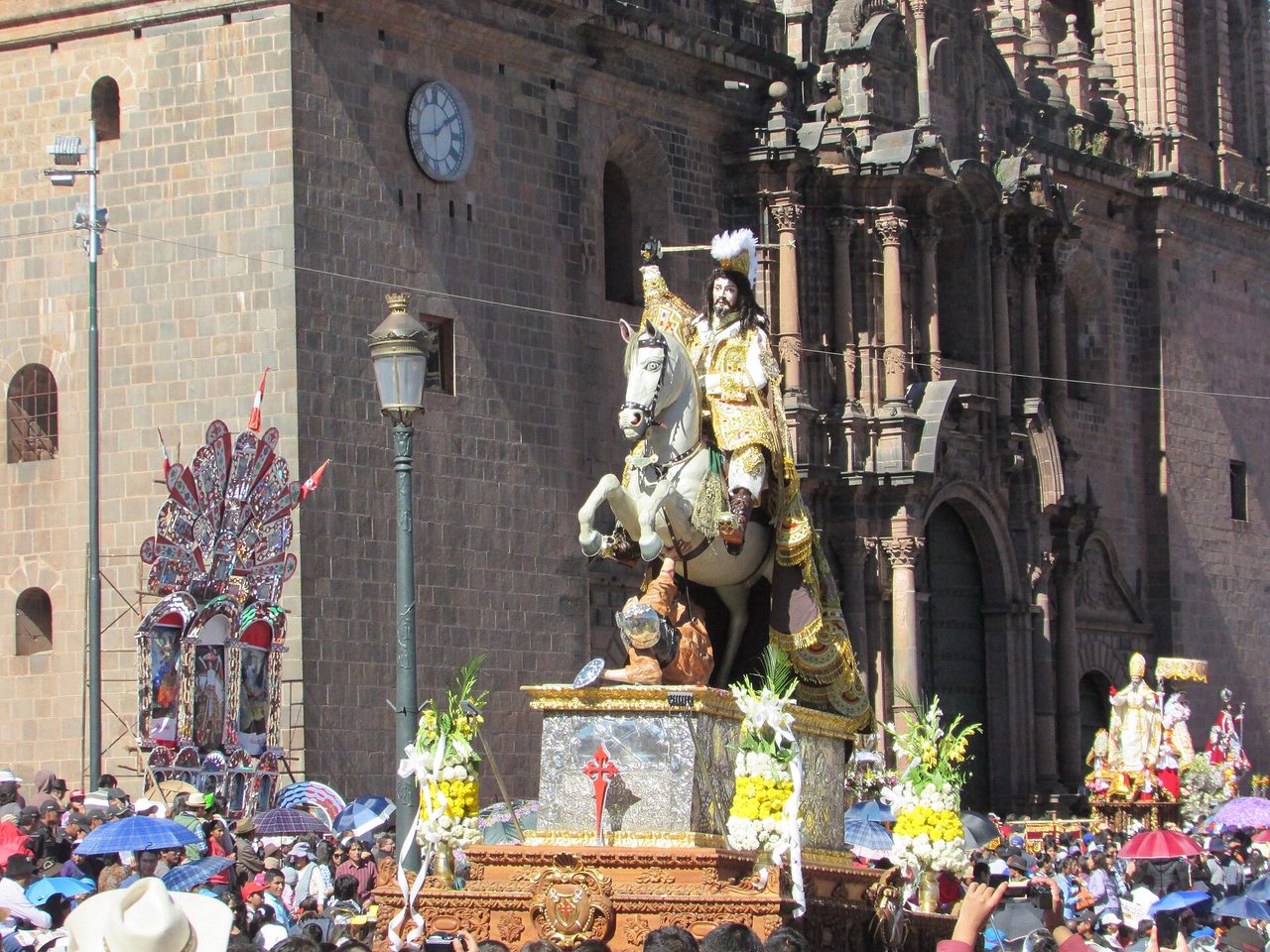
Fifteen images — ten saints and five virgins — are carried in from parish churches across the city on the Wednesday, spend the night in the cathedral, and process around the Plaza de Armas on the Thursday, each on a litter weighing hundreds of kilos and each accompanied by its own brass band. The rivalry between parishes is real and ancient. The images visit each other, bow to each other, and the crowd knows exactly which saint belongs to which neighbourhood. Eight days later they process again, on the octava, and go home.
The food is half the point. The dish of the festival is chiriuchu, which means “cold chilli” in Quechua and is a plate of cold roast guinea pig, dried meat, sausage, cheese, seaweed, fish roe, a maize pancake and a boiled egg, all served at room temperature. It is not subtle and it is not for everyone, but it is one of the more genuinely historic things in the Peruvian kitchen, and stalls sell it around the plaza for the week.
Practical note: because Corpus Christi is a Thursday and the octava is the following Thursday, you can catch both on a single ten-day stay, and in most years you will do it before the June price surge starts. That is the best-value week in Cusco’s festival year and I would take it over Inti Raymi week if I only had one.
Fiestas Patrias, 28–29 July: the week the country stops moving
Peru’s independence was declared by San Martín on 28 July 1821. Both the 28th and 29th are national public holidays. The 28th brings the presidential address and flag-raising; the 29th brings the Gran Parada Militar in Lima, a long, formal military and police parade.
Culturally it is warm and unpretentious: red-and-white flags on every balcony (technically compulsory), pachamanca cooked in earth ovens, criolla music, and a lot of families eating together. In Lima the action is around the historic centre and the Campo de Marte. Outside Lima almost every town does its own version.
The travel warning is the important part. Fiestas Patrias is the single biggest domestic travel week of the Peruvian year, bigger in its effect on internal transport than any foreign tourist season. The government routinely declares the adjacent Monday a non-working day for the public sector to stretch it into a long weekend and stimulate domestic tourism — that happened in 2026, producing a five-day break. The effect is that intercity buses, domestic flights and hotels in every popular destination sell out, and prices on the Lima–Cusco and Lima–Arequipa routes climb sharply.
If you are going to be in Peru in late July, have your internal transport locked in by May. Working out how you are moving between cities in advance matters far more that week than at any other point in the year. And if you are flexible, simply do not travel on the 27th, 28th or 29th. Sit still somewhere pleasant and let it pass.
Carnaval: water, foam, and knowing what you signed up for
Carnival in Peru is not Rio. It is a country-wide water fight with regional variations, and it peaks on the weekend before Ash Wednesday, which means it moves every year.
Cajamarca in the northern highlands calls itself the capital of Peruvian carnival and earns it: five days of float parades, masked troupes, a satirical king called Ño Carnavalón who is tried and burned at the end, and the yunza, where a tree is decorated with gifts, danced around, and chopped down. Whoever lands the felling blow hosts next year. Puno, Ayacucho and Cusco all have serious carnivals too, and the entire Cusco region does compadres and comadres Thursdays in the run-up.
The honest warning: during carnival weekend in the highlands you will get soaked, and you have very little say in the matter. Water balloons, buckets, spray foam, and in some towns coloured paint or flour. This is aimed at everyone including tourists, and it is affectionate rather than hostile, but a camera or a phone that is not in a dry bag will be destroyed. Wear clothes you do not care about, keep your passport in a waterproof pouch, and if you genuinely cannot face it, stay off the streets between about 11am and 4pm on the Sunday. February is also the wet season across the Andes, so you were probably going to be damp regardless. This is one of several reasons the wet months come with caveats when you are working out the right season for a Peru trip.
Puno Week, early November
Puno’s Semana Jubilar runs roughly 1–7 November and commemorates both the Spanish founding of the city in 1668 and, more interestingly, the Inca origin legend.
The centrepiece is on 5 November: a reenactment of Manco Cápac and Mama Ocllo emerging from Lake Titicaca and coming ashore, performed with reed boats crossing from Esteves Island to the lakefront, followed by a procession into the city. Around it there are parades, a gastronomic fair, student dance competitions and the Noche de Pandílla Puñeña, a night of mass social dancing in the streets.
It is smaller and much less internationally attended than Candelaria, and November is a far more comfortable month to be at 3,830 m than February — drier, and on the edge of the shoulder season. If Candelaria’s scale intimidates you, this is the gentler way to see Puno at full volume. It also pairs naturally with the reed and stone islands out on the water without the February rain.
The Marinera in Trujillo, January
The Concurso Nacional de Marinera has been run by Trujillo’s Club Libertad since 1960 and was formally recognised by the Peruvian state in 1986. It fills most of January, with elimination rounds building to finals in the last week of the month.
Marinera is a courtship dance: the woman barefoot with a handkerchief, the man in a wide-brimmed hat, circling each other with a great deal of restrained flirtation. Categories run from infants through to a much-loved seniors bracket, and the whole city takes it seriously. Peruvian Paso horses perform the dance too, with their riders, which is more impressive than it sounds.
This is the best reason to be in the north of the country in January, and it slots neatly alongside Chan Chan, Huanchaco and the Moche pyramids, which are all within half an hour of the city. January is also the coastal summer, so the beach towns are actually warm.
Food and drink events, including one that no longer exists
Almost every festival roundup on page one still lists Mistura as Peru’s big September food festival. It is not. Mistura ran from 2008 to 2017, peaked at over half a million visitors, and has not been held since. If a travel page is selling you a September trip to Lima built around Mistura, that page has not been checked in nearly a decade.
What exists now is Perú, Mucho Gusto, run by PromPerú as a touring series of regional fairs rather than one giant Lima event. In 2026 the editions ran in Ayacucho in late June, Tacna in late July, Piura in early August and Lima at the end of October on the Costa Verde esplanade in Magdalena, timed just before the World’s 50 Best Restaurants ceremony came to Lima. Dates and host cities are announced each year, usually in the first quarter, so check before you plan around it.
Two smaller ones worth knowing. Día del Pisco Sour falls on the first Saturday of February and is genuinely nationwide — bars in Lima and Arequipa run free tastings and competitions, and it is a cheap, fun evening. The Festival Internacional de la Vendimia in Ica, usually in the first half of March, is the grape harvest festival, with grape-treading, a queen, and the pisco bodegas open for tastings. Ica is three hours south of Lima and combines easily with the rest of the southern coast.
Ten more that are worth a detour if the dates line up
- Virgen del Carmen, Paucartambo (15–18 July). Four hours east of Cusco. Masked dance troupes take over a small town, with the saqras — demons — clambering over the rooftops and balconies. Accommodation is essentially nonexistent; most visitors sleep rough or come on an organised overnight. Combine with the Tres Cruces sunrise, 40 km further on, which produces a genuine optical distortion at dawn in June and July.
- Q’eswachaka (second Sunday of June). Communities rebuild the last Inca grass rope bridge over the Apurímac gorge, from scratch, in three days. UNESCO-listed. Nobody is performing; you are watching people work, and it is slow. Four hours from Cusco.
- Señor de los Milagros, Lima (October). The largest procession in the Americas. A two-tonne litter bearing a seventeenth-century mural painted by an Angolan slave, which survived the 1746 earthquake, is carried through the old centre over 18, 19 and 28 October. Hundreds of thousands wear purple all month. Eat turrón de Doña Pepa while you are there.
- Fiesta de San Juan (24 June). The Amazon’s biggest party, on exactly the same day as Inti Raymi. River bathing, dancing and juanes, rice and chicken steamed in bijao leaves. If you would rather be in the Peruvian Amazon than fighting for a hillside seat above Cusco, this is your alternative.
- Warachikuy (third Sunday of September). An Inca coming-of-age rite restaged at Sacsayhuaman by local school students. Much less polished than Inti Raymi, much less attended, free or nearly so.
- Virgen de Chapi (1 May). Pilgrims walk through the night from Arequipa to a desert sanctuary 45 km away. If you are in Arequipa around then, the road out of town at midnight on 30 April is a sight in itself.
- Cruz Velacuy (3 May). Communities across the highlands carry decorated crosses to hilltops. Small, local, warm, and very easy to stumble into if you are in the Sacred Valley in early May.
- Todos los Santos (1–2 November). Families spend the day in cemeteries with food, drink and music. In the highlands this is a major event, not a solemn one. Ask before photographing anything.
- Santurantikuy (24 December). Cusco’s Plaza de Armas fills with hundreds of artisans selling nativity figures. It runs all day on Christmas Eve and is one of the oldest craft markets in the Americas.
- Yawar Fiesta (28–29 July). In parts of Apurímac a condor is tied to the back of a bull, symbolising the Andes and Spain. It is authentic, it is old, and it is also legally contested on animal welfare grounds. I am including it because you should know it exists and be able to decide for yourself; I would not go.
When not to arrive unplanned: festival dates and what they do to prices
This is the section I wish someone had written for me. Peru has a handful of weeks where turning up without reservations goes from mildly inconvenient to genuinely trip-damaging.
| Period | Where it bites | Booking pressure | Book by |
|---|---|---|---|
| Inti Raymi week, ~20–26 June | Cusco, Sacred Valley, Machu Picchu trains | Extreme. Grandstand tickets sell out weeks ahead; hotel rates rise 15–30% at the top end | 3–4 months |
| Fiestas Patrias, 26 July–1 August | Nationwide domestic transport, every popular destination | Extreme for buses and domestic flights | 2–3 months |
| Candelaria, late Jan to mid-Feb | Puno, Juliaca | High. Small hotel stock, large influx | 2–3 months |
| Semana Santa | Ayacucho above all; also Cusco, Arequipa, Tarma | High. Ayacucho effectively sells out | 3 months |
| Christmas and New Year | Cusco, coastal beaches, everywhere | High, and rates stay high through early January | 3 months |
| Corpus Christi and the octava | Cusco only | Moderate. Busy but not sold out | 4–6 weeks |
| Carnaval weekend | Cajamarca especially | Moderate to high in Cajamarca, low elsewhere | 6–8 weeks |
Some specifics that follow from the above.
Trains. Late June is the tightest window of the year on the Ollantaytambo line into the town below the ruins, because Inti Raymi sits inside peak dry season. The cheaper departure times go first and you end up paying for an inconvenient slot at a premium. If your dates touch that week, sort the train to Machu Picchu the moment your entry ticket is confirmed.
Machu Picchu entry. Entry is capped and circuit-specific, and late June sells through. As of the 1 May 2026 change, foreign adults pay S/163 for standard circuits and S/211 for the circuits that add Huayna Picchu or Machu Picchu Mountain, after a SERNANP conservation surcharge was applied on top of the base ticket. Prices and circuit rules here move more often than anywhere else in the country, so confirm on the official portal rather than trusting any blog, including this one, and read up on how the ticket system works before you buy. If June is your only option, it is worth checking how the months compare at the citadel before locking anything in.
Inca Trail permits. Permits are capped daily and June is the first month to disappear, usually five to seven months out. Festival dates do not directly affect the trail, but they push the same people into the same weeks.
Flights. Lima–Cusco fares in mid-June 2026 were still available in the USD 107 to USD 180 range for a return a week out, which surprises people, so the flights are rarely the binding constraint. Beds and tickets are. Where you decide to base yourself in each city matters much more than which airline you fly.
One more thing that catches people out: Peru has around a dozen national public holidays and a great many regional ones. Banks, government offices and some museums close; restaurants, hotels and tour operators generally do not. But local transport thins out, and on 1 January and 25 December large parts of the country genuinely stop.
Real festival or tourist show? How to tell the difference
Peru has both, and the distinction is not a moral one. Both can be worth your time. But you should know which you are buying.
The test I use is simple: would this still happen, in this form, if no foreigner ever showed up?
Restaged for an audience. Inti Raymi is the clearest case — reconstructed in 1944, scripted, rehearsed, directed, ticketed, with a defined running time. Warachikuy is the same idea at a smaller scale. There is nothing dishonest about either; Cusco is quite open about what they are. But they run to a clock because there is an audience, and that is the tell.
Living traditions that tolerate visitors. Candelaria, Corpus Christi, Virgen del Carmen, Señor de los Milagros, Q’eswachaka and Qoyllur Rit’i are community events with religious or agricultural purposes that predate mass tourism and would carry on identically without it. The signs: no published start time in English, things running two hours late and nobody minding, participants who paid their own money to be there, and long stretches where nothing photogenic happens at all.
The second category demands more patience and gives more back. It also demands more manners. A few things that matter:
- Ask before photographing people in a religious procession, particularly in the highlands. A camera in someone’s face during a vigil is not a neutral act.
- If you are offered chicha or a drink from a shared cup, taking a small sip and passing it on is the polite move. Refusing outright reads badly. Pouring a little on the ground first for the Pachamama is normal and will be noticed approvingly.
- Do not stand in the path of a litter. The bearers cannot easily stop and the crowd will move you.
- Highland festivals happen at altitude and involve a lot of standing. Puno is at 3,830 m, Cusco at 3,400 m, the Qoyllur Rit’i sanctuary at around 4,600 m. Acclimatise first — there is more on this in our general practical advice for travelling in Peru.
- Sun at altitude is brutal even when it is cold. Hat, high-factor sunscreen, sunglasses, and a layer you can strip off. Rain gear if it is anywhere near the wet season.
- Pickpocketing goes up in dense festival crowds, as it does anywhere. Cross-body bag, nothing in back pockets, and leave the passport in the hotel safe.
Building a trip around a festival, sensibly
A festival is a bad organising principle for a first trip to Peru and a very good one for a second.
On a first visit you are already trying to fit in Cusco, the Sacred Valley, Machu Picchu, probably Lima and possibly the Amazon or Colca. Bolting a festival onto that means paying peak prices for the parts you were going to do anyway, and the festival tends to eat two days you did not have. If it happens to coincide, take it. Do not bend the route around it.
On a second visit, when you have already seen Machu Picchu and are not obliged to see it again, a festival is an excellent spine for a trip. You go to one place, you stay a week, you go deep instead of wide. Candelaria in Puno, Semana Santa in Ayacucho or the Marinera in Trujillo all work brilliantly this way, and all three take you somewhere the standard circuit skips.
The middle path, and the one I would recommend to most people: pick a month that suits your weather and budget requirements first, then find out what is on. There is almost always something. And for the broader question of what else fills the days around it, our overview of things to do across Peru covers the non-festival ground.
Frequently asked questions
What is the biggest festival in Peru?
By participation and scale, the Virgen de la Candelaria in Puno every February. Around 40,000 people take part as dancers and musicians, and it is UNESCO-listed. Inti Raymi in Cusco is the most internationally famous, but it is a single-day staged production with about 4,000 ticketed seats, so it is a much smaller event than its reputation suggests.
When exactly is Inti Raymi?
24 June, every year, without exception. The date is fixed to the June solstice. The ceremony runs across three venues on that day: Qorikancha from 8am, the Plaza de Armas from 11am, and Sacsayhuaman from 1pm. Cusco’s celebrations fill the whole month around it.
How much are Inti Raymi tickets and where do I buy them?
In 2026, EMUFEC sold Sacsayhuaman grandstand seats between S/490 and S/850 depending on zone, the Qorikancha grandstand at S/235, and combined tickets from S/690 to S/1,030. Agencies resell the same seats inside packages at roughly USD 180 to USD 410. Buy direct from EMUFEC if you can. Prices are reset each year, so confirm current figures before budgeting.
Do Inti Raymi tickets sell out?
Yes, reliably. All 4,116 seats across both ticketed venues were gone more than a week before the 2026 ceremony, and the premium zones go long before that. Sales usually open a couple of months ahead. If it matters to you, buy the moment they are released.
Can I watch Inti Raymi for free?
Yes, in two ways. The Plaza de Armas stage at 11am is entirely free and open, though you need to be at the barriers by mid-morning. And the hillsides around the Sacsayhuaman esplanade are free, but expect a several-hour wait in full sun at 3,700 m for a distant view with unreliable audio. It is a long day out rather than a good seat.
Why do Peruvian festival dates change every year?
Because the Catholic ones are anchored to Easter, which moves with the lunar calendar. Carnival, Semana Santa, the Señor de los Temblores procession, Qoyllur Rit’i and Corpus Christi all shift by up to five weeks between years. The civic and Inca-revival festivals — Inti Raymi, Fiestas Patrias, Santa Rosa de Lima, Puno Week — sit on fixed calendar dates and never move.
Is it a bad idea to visit Peru during a festival?
Not in itself, but the last week of June in Cusco and the Fiestas Patrias week at the end of July are the two periods where being unbooked will genuinely cost you. Both drive prices up and availability down across accommodation, trains and domestic flights. Every other festival on this page can be absorbed with a few weeks’ notice.
Does the Mistura food festival still happen?
No. Mistura ran from 2008 to 2017 and has not been held since, despite still appearing on most festival roundups. The current equivalent is Perú, Mucho Gusto, a touring series of regional fairs run by PromPerú with a Lima edition, typically in the second half of the year. Dates are published annually.
Which Peruvian festival is the most authentic?
Qoyllur Rit’i, by some distance, followed by the Q’eswachaka bridge rebuild and Corpus Christi in Cusco. None of the three is staged for visitors, none runs to a tourist-friendly schedule, and all three would happen exactly the same way if no foreigner ever attended. In exchange you get cold, altitude, waiting, and no narration.
What should I wear to a Peruvian carnival?
Clothes you are willing to throw away, and nothing electronic that is not in a waterproof pouch. Water balloons, buckets, foam and in some towns paint or flour are aimed at everyone, tourists included. It is good-natured, but it is not optional once you are on the street.
What month has the most festivals in Peru?
June, comfortably — Corpus Christi in many years, Qoyllur Rit’i, Q’eswachaka, San Juan in the Amazon and the whole of Cusco’s jubilee month culminating in Inti Raymi. February is the runner-up thanks to Candelaria, Carnival and Pisco Sour Day. June is also peak dry season, so it is the busiest and most expensive month of the year.
How far in advance should I book for Inti Raymi?
Three to four months for accommodation in Cusco, and buy the ceremony ticket the day sales open. Trains to Machu Picchu and Inca Trail permits for the same period should be handled at the same time, because they are competing for the identical pool of travellers. If you are arriving in the last week of June with nothing booked, expect to pay a large premium for whatever is left and to be staying further out than you wanted.
What is Corpus Christi in Cusco?
A Catholic feast that falls on the Thursday sixty days after Easter, so it moves between late May and late June. Fifteen saints and virgins are carried from their parish churches to the cathedral, then process around the Plaza de Armas, and repeat it eight days later on the octava. It is one of the most genuinely local events in the Cusco calendar, and the festival dish, chiriuchu, is worth trying once.
What is Puno Week?
Semana Jubilar, running roughly 1–7 November, marks the founding of Puno. The highlight is on 5 November, when the Inca origin legend is reenacted with reed boats crossing from Esteves Island and a procession into the city. It is much quieter than Candelaria and November is a drier, more comfortable month to be at that altitude.
Are Peruvian festivals safe for visitors?
Broadly yes, with normal crowd precautions. Pickpocketing rises in dense crowds, alcohol is heavily involved in most of them, and the highland ones put you at altitude for long stretches. Use a cross-body bag, leave your passport in the hotel safe, keep an eye on your drink, and do not attempt a high-altitude pilgrimage on your second day in the mountains.