Huayna Picchu vs Machu Picchu Mountain: Which Hike? (2026)
Huayna Picchu vs Machu Picchu Mountain, compared by someone who has climbed both: difficulty, exposure, views, the circuit trade-off nobody explains, and which one to book for your trip.
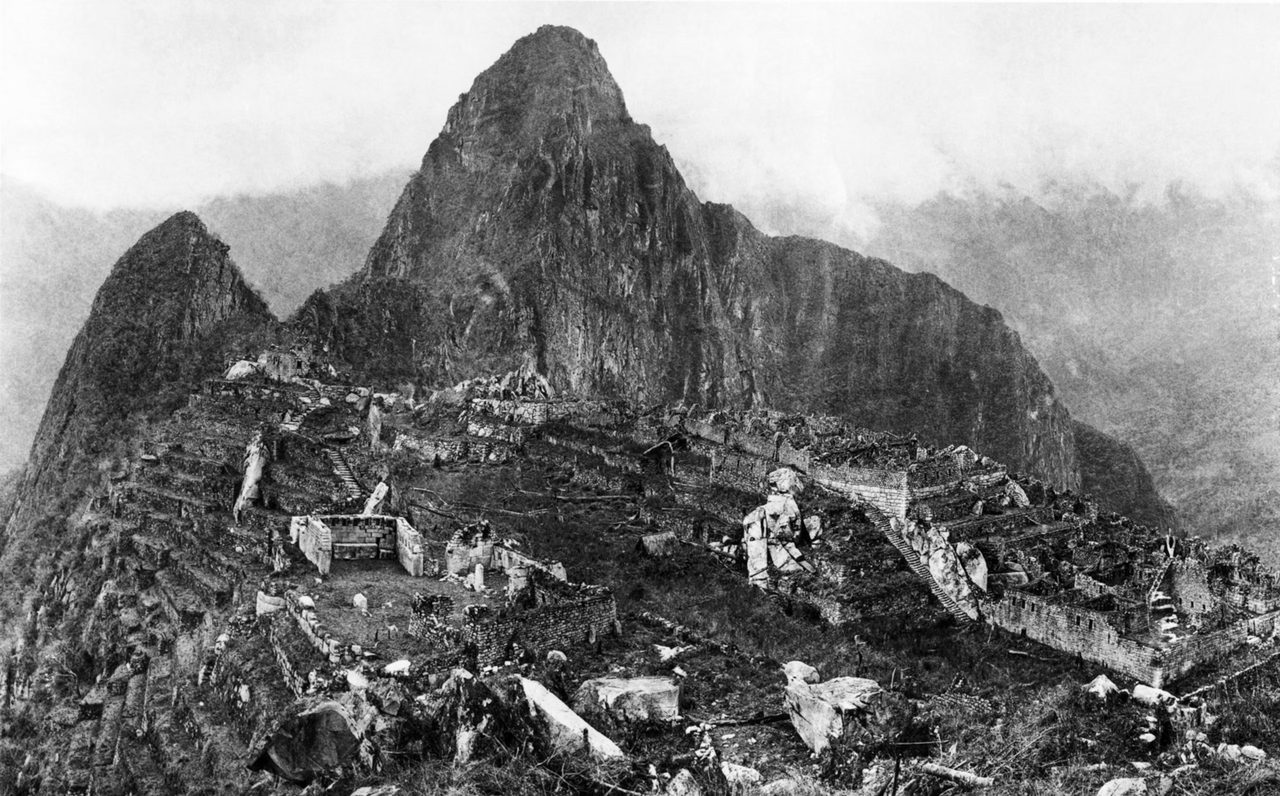
Somewhere around the third rope-assisted section of Huayna Picchu, with the citadel shrinking to a scale model six hundred vertical feet below my heels, I remember thinking: the brochure photo did not communicate this. And then, forty minutes later at the summit, looking down at Machu Picchu laid out like a map of itself: the brochure photo did not communicate this, either. In the Huayna Picchu vs Machu Picchu Mountain debate, both statements are most of the argument.
I’ve climbed both of Machu Picchu’s summit hikes — Huayna Picchu twice, Machu Picchu Mountain once — and the “which one?” question deserves a more honest answer than most of the internet gives it. They are properly different experiences: different tickets, different circuits, different fear factors, and crucially, different views of the thing you came to see. This guide compares huayna picchu vs machu picchu mountain in the detail I wish I’d had, so you book the right one the first time.
The short version: Huayna Picchu is the famous sugarloaf peak in every photo — shorter (about 2 hours round trip), steeper, more thrilling, with ancient stairs, cable-assisted sections and a cramped, spectacular summit. Machu Picchu Mountain is twice the climb (about 3 hours) on a broader, safer trail to a higher, calmer 360° summit. Vertigo or kids? Choose the Mountain. Bragging rights and ruins? Huayna Picchu — booked 3–6 months ahead.
Both hikes are add-ons to your entrance — and they’re welded to specific circuits, which changes what you see of the citadel itself. That trade-off is poorly explained everywhere, so let’s start there. (New to the circuit system? Read the Machu Picchu tickets guide first — this one builds on it.)
The trade-off nobody explains: your hike picks your circuit
You can’t add a mountain to any old ticket. Each climb comes bundled with a fixed route through the ruins:
- Huayna Picchu = Circuit 3A. You explore the lower, royal sector of the citadel — Temple of the Sun from below, Temple of the Condor, the royal residence — but you never reach the upper viewpoint where the classic postcard photo is taken.
- Machu Picchu Mountain = Circuit 1A. You get the Guardian’s House platform and the classic photo, plus the upper terraces — but you never walk down inside the citadel’s temples and plazas.
Read that again, because it reverses the intuitive choice for a lot of people. Climbing Huayna Picchu means no postcard shot from the official viewpoint (you get something arguably better from the summit, but it’s a different, higher, steeper angle). Climbing Machu Picchu Mountain means admiring the urban sector from above without entering it. There’s no ticket that gives you a summit and the full site — the only fix is two tickets on two days, which is exactly what photographers and completists do; see how many days for Machu Picchu.
Both add-on tickets cost the same: S/211 (about US$57) since the 1 May 2026 surcharge, up from S/200, versus S/163 for a standard entry.
Huayna Picchu: the famous one
Huayna Picchu (“young peak,” 2,720 m) is the dramatic green horn that rises behind the citadel in every photograph ever taken of it. The Incas, being Incas, built a trail straight up it, terraces near the top, and a small temple complex on the far side. About 400 permits a day, in morning entry waves, let you follow them.
The climb, honestly described
From the checkpoint (where you sign a logbook — more on that in the FAQ) the trail drops briefly, then commits: roughly 290 vertical meters in a little over a kilometer, almost entirely on original Inca stairs. The steps are narrow, uneven, occasionally wet, and in the famous final stretch — the “stairs of death,” a name that overstates the danger and understates the pulse rate — they pitch past 60 degrees with a fixed steel cable for your inner mountain goat. There’s a short crawl through a rock tunnel near the top. Up takes 45–60 minutes at a sane pace; the full loop, with summit time, 1.5–2.5 hours.
The summit itself is a jumble of granite blocks with no railings and not much flat ground, shared with twenty other people at any given moment. The view is the best in the entire sanctuary: the whole citadel directly below you, the Urubamba wrapping around it in a horseshoe, trains crawling along the river like toys. It is also, for anyone with real height issues, borderline unbearable. I watched a grown man descend the last section on his sit bones, one stair at a time, and I respected it.
The bonus most people skip
On the descent (or via route 3C in season) you can detour to the Temple of the Moon and the Great Cavern — ceremonial masonry built into a natural cave on the mountain’s shaded side. It adds an hour-plus of steep, quiet trail, and most days you’ll have five-hundred-year-old architecture entirely to yourself. Tired legs skip it; curious ones are rewarded.
Who Huayna Picchu is for
Reasonably fit hikers without significant fear of heights, ruins enthusiasts, and anyone for whom “the peak from the photo” exerts gravitational pull. Kids under 12 aren’t permitted; young teens must climb with parents. If you’re sure-footed but slow, you’re fine — the mountain rewards steadiness, not speed.

Machu Picchu Mountain: the underrated one
Machu Picchu Mountain (Montaña, 3,082 m) is the peak on the other side — the big shoulder the citadel actually sits against, and the mountain that gave the site its name. It’s more than 350 m higher than Huayna Picchu’s summit, and the climb is nearly twice the vertical: about 620 m of gain from the trailhead near the Guardian’s House.
The climb, honestly described
It’s a longer, steadier, far less theatrical ascent: a broad path of stone steps switchbacking up through cloud forest that opens progressively to bigger and bigger views. No cables, no tunnels, no exposure that will trouble anyone who can handle a steep staircase — just a lot of staircase. Up takes 1.5–2 hours, the round trip 2.5–3.5. At altitude, with the sun out, it’s a genuine workout; I saw more people turn around from fatigue here than from fear on Huayna Picchu.
The reward is a proper flat summit with a thatched shelter and a 360° panorama that no other point in the sanctuary offers: the citadel below with Huayna Picchu behind it — the classic composition, elevated — plus the full sweep of the Urubamba canyon, and on clear days the snows of the Salkantay range on the horizon. If Huayna Picchu’s view is intense, Montaña’s is expansive.
Who Machu Picchu Mountain is for
Anyone with vertigo, families with children (no age restriction), photographers who want the wide shot with the famous peak in it, and fit walkers who prefer effort over exposure. Also: procrastinators — its larger allocation and lower fame mean tickets survive weeks after Huayna Picchu sells out.
Head to head
| Huayna Picchu | Machu Picchu Mountain | |
|---|---|---|
| Summit altitude | 2,720 m | 3,082 m |
| Elevation gain | ~290 m | ~620 m |
| Round trip | 1.5–2.5 h | 2.5–3.5 h |
| Trail character | Steep Inca stairs, cables, tunnel | Long, broad stone staircase |
| Exposure / vertigo | High | Low–moderate |
| Summit | Cramped granite blocks | Flat, roomy, 360° |
| Ruins on the hike | Terraces, Temple of the Moon | None |
| Circuit / citadel access | 3A — lower city, no classic viewpoint | 1A — classic viewpoint, no city interior |
| Age limit | 12+ | None |
| Sells out | 3–6 months ahead (dry season) | Weeks ahead |
| Price (2026) | S/211 — same for both | |
Hard numbers: vertical, distance and how long it really takes
That table is the shape of the decision. This is the measuring tape.
Start with where the climbing begins, which is neither sea level nor the entrance gate. Huayna Picchu’s checkpoint sits at roughly 2,400 m in the lower citadel; the summit is usually given as 2,693 m, though you will also see 2,720 m quoted, the discrepancy being which lump of granite counts as the top. Either way you gain a shade under 300 m in about a kilometre — an average gradient near one in three, sustained, on stone. Machu Picchu Mountain starts near the Guardian’s House at about 2,470 m and finishes at 3,082 m: roughly 610 m over 1.6 km each way, more than twice the vertical on a far kinder surface.
| Measurement | Huayna Picchu (3A) | Machu Picchu Mountain (1A) |
|---|---|---|
| Trailhead altitude | ~2,400 m | ~2,470 m |
| Summit | 2,693 m (2,720 m on some signs) | 3,082 m |
| Vertical gain | ~300 m | ~610 m |
| Distance, return | ~2 km (nearer 4 km with the Temple of the Moon loop) | ~3.2 km |
| Up: fit hiker | 40–45 min | 60–75 min |
| Up: average fitness | 55–70 min | 90–120 min |
| Up: slow or unacclimatised | 80–90 min | 2–2.5 h |
| Down | 45–60 min, often slower than the climb | 50–70 min |
| Places per day | ~350–400 | ~350 |
| Climbing windows | two, broadly 07:00–08:00 and 10:00–11:00 | two, broadly 07:00–08:00 and 09:00–10:00 |
| Ticket | S/211 foreign adult, against S/163 for entry alone | |
Two rows deserve underlining. The first is the descent. On most mountains you halve the ascent time coming down; on Huayna Picchu you often do not, because you are reversing down uneven stone with your toes braking, at the speed of the most nervous person in the queue. Budget the same time down as up.
The second is the climbing window. Regular circuit tickets carry a 30-minute grace period; the mountain checkpoints work to a list and a clock, and arriving after your window closes means you do not climb, with no refund and no argument. Enter at your hour, walk straight to the checkpoint, treat everything else as optional.
On money: the S/48 gap between S/163 and S/211 is the smallest meaningful upgrade at Machu Picchu, roughly US$13 for two to four hours of mountain. Against a train ticket at US$35–60 each way and the US$24 shuttle, the climb is not what makes this day expensive — the wider arithmetic is in our breakdown of what a trip to Peru costs, and two entries on two days still undercuts most guided day tours, the loophole behind visiting Machu Picchu on a budget.
The exposure question, answered properly
This is the section people actually come for, and the one most pages fudge. “Not for those with a fear of heights” is not information. Here is where the exposure is, what it feels like underfoot, and who should stay off.
Where the exposure actually is on Huayna Picchu
Most of the climb is not exposed at all. The first thirty to forty minutes are a stone staircase inside cloud forest, vegetation on both sides — steep enough to make you breathe hard, enclosed enough that a slip means a bruised shin, not a fall. The trouble sits in three short places.
- The cable sections. Two or three stretches in the upper third have a fixed steel cable bolted into the rock at hand height. The steps are shallow — several under 15 cm of tread, so your whole boot does not fit — and the drop to your left is real. Each stretch lasts a couple of minutes. The cable is taut and properly anchored: a handrail, not a lifeline.
- The tunnel. A body-width slot through the rock a few minutes below the top, roughly six metres long, needing a crouch and some contortion with the pack held in front of you. Not dangerous, just undignified, and no fun with claustrophobia.
- The stairs of death. The famous bit, and the most misrepresented. Steep — past 60 degrees in places, closer to a ladder than a staircase — and 60 to 70 steps long. But wider than the photographs suggest, close to a metre in most places, with rock wall on one side rather than air on both. You go up facing in, using your hands, and come down the same way. The genuinely airy sections are elsewhere: a handful of steps near the terraces where the tread narrows to perhaps 60 cm, drop on one side, nothing to hold.
Machu Picchu Mountain is not completely tame either
Every operator page calls Montaña the safe one, and relative to Huayna Picchu it is. But it is not a promenade. Two short staircases in the upper third are steep and open, with a serious drop on the outer edge and no cable — a nasty surprise for anyone who chose this mountain to avoid exposure. They are brief and the steps wide, so hug the inside. Plainly: Montaña has two moments; Huayna Picchu has twenty minutes of them.
If you genuinely fear heights, here is the verdict
Not the hedged version. If your fear of heights is the sort that makes glass lift floors unbearable, locks your legs on an exposed staircase, or has previously needed somebody to talk you down off something — do not book Huayna Picchu. Book Machu Picchu Mountain. You are not missing out; you are swapping a view you would spend gripping a rock for one you can stand up and look at. The failure mode here is not falling, it is freezing, and freezing on those stairs with fifty people behind you is a miserable half-hour for everybody.
If your fear is the ordinary kind — a healthy dislike of edges, a bit of pulse at the top of a ladder — you will be fine, and pleased with yourself afterwards. The people who cope best climb slowly, keep three points of contact on the cables, and stop looking down until they are somewhere flat. If that reads as appealing, Huayna Picchu sits happily among Peru’s other adventure activities worth the nerves. If it reads as queasy, believe the queasiness.
So which should you book?
- You want the adrenaline story and the top-down view: Huayna Picchu. It’s the one you’ll still be describing at dinner parties in a decade.
- You want the classic photo plus a summit: Machu Picchu Mountain — it’s the only option that includes the Guardian’s House viewpoint.
- Vertigo, or kids under 12: Machu Picchu Mountain, no contest.
- You care most about the citadel itself: honestly, neither — book Circuit 2 and spend your energy inside the ruins. The summits are dessert, not dinner.
- You couldn’t get Huayna Picchu: don’t mope, and don’t overpay a reseller. Montaña’s view is objectively bigger; Huayna’s is merely more famous. Or consider little Huchuy Picchu (route 3D, June–October): a 30–45 minute mini-summit with a surprising fraction of Huayna’s view for a fraction of the effort and none of the booking panic.
- You have two days: do both properly — Circuit 2 plus Montaña one day, 3A with Huayna Picchu the next. It’s the full-fat version of this place and costs less than a nice dinner at home.
The other two answers: Huchuy Picchu, the Inca Bridge and the Sun Gate
Every comparison page online offers two doors. There are four, and the two nobody talks about suit a surprising number of people — particularly anyone who just read the exposure section and went quiet.
Huchuy Picchu (route 3D) is the small hill between the citadel and Huayna Picchu, opened to visitors in 2021 and still largely unknown. The climb is 30 to 45 minutes of ordinary stone steps, about 100 m of gain, no cables and no meaningful exposure, for an elevated three-quarter view better than the effort deserves. Two catches: it runs in high season only, broadly June to mid-October, and it has been pulled out of service for trail maintenance before, so confirm rather than assume. In return it is often still available when both big mountains have gone, and it is the only summit here that works with a seven-year-old.
The Inca Bridge (route 1D) and the Sun Gate (route 1C) are the real secret, because they need no add-on permit at all — both are Circuit 1 extensions included in the standard S/163 entry. The Inca Bridge is a fifteen-minute walk each way along a ledge cut into a cliff to a log drawbridge that once guarded the western approach; you view it from a gate rather than crossing it, and the path is level but airy. Intipunku, the Sun Gate, is a 1.5–2 hour return walk up an open Inca road to the pass where Inca Trail trekkers get their first sight of the citadel. Both are high-season routes, and both are chosen at booking, not at the gate.
| Option | Extra permit? | Effort | Season | Best for |
|---|---|---|---|---|
| Huayna Picchu (3A) | Yes, S/211 | 2–2.5 h, exposed | Year-round | Nerve, ruins, the top-down view |
| Machu Picchu Mountain (1A) | Yes, S/211 | 3–4 h, sustained | Year-round | Vertigo sufferers, panoramas, families |
| Huchuy Picchu (3D) | Yes, but usually available | 45–60 min, easy | High season only | Young children, late bookers, tired legs |
| Inca Bridge (1D) / Sun Gate (1C) | No — included in entry | 30 min / 2 h, gentle | High season only | Anyone answering “neither” |
“Neither, I just want to see the place properly” is a legitimate and often better answer — the argument is in our piece on whether Machu Picchu lives up to the hype. And if you love Inca stonework rather than summits, your money goes further at the other Inca sites across the country, several needing no timed ticket at all.
Practical notes for either climb
- Take the earliest entry wave you can. Morning slots mean cooler climbing, clearer views before the midday haze, and — on Huayna Picchu — less two-way traffic on stairs that were not designed for two-way traffic.
- Mind the weather window. In the November–March rains both trails stay open but turn slick; Huayna Picchu in particular demands real care when wet. If your dates are flexible, the dry months are kinder — see the best time to visit guide.
- Pack light and legal: water, sunscreen, repellent, a layer, and shoes with actual tread. Big packs won’t clear the entrance; metal-tipped poles aren’t allowed (rubber tips fine, and honestly you won’t want poles on Huayna’s cables anyway). Full list in what to wear to Machu Picchu.
- Budget the whole morning. Between the shuttle from Aguas Calientes, the circuit walk and the climb, either hike turns your visit into a 5–7 hour outing at altitude. Eat breakfast like you mean it.
- Altitude check: both summits sit below Cusco (3,400 m), so if you’ve acclimatized properly for the region, the thin air is a tax, not a wall. Arriving straight from sea level is the mistake — the getting there guide covers sane sequencing.
What each summit actually shows you — and whether you’ll see it
The two peaks are not two versions of the same photograph. They answer different questions about where you are standing.
From Huayna Picchu you look almost straight down. The citadel reads as a plan drawing: the split between agricultural terraces and urban core, the plazas, the switchbacks of the Hiram Bingham road, and how absurdly narrow the ridge is that the whole city was built on. It is the view that explains the engineering. What you cannot get is the famous peak in the frame — you are standing on it.
From Machu Picchu Mountain you look across, and the subject changes from a city to a landscape: the citadel with Huayna Picchu rising behind it, the composition everyone has in their head, but with the Urubamba’s full horseshoe in frame and ridge after ridge of the Vilcabamba behind. On a clear morning the snow on the Salkantay group shows on the southern horizon. It is the view that explains the geography — why the Incas put a city precisely here.
Now the part the promotional photos leave out: you may see none of it. Machu Picchu sits in cloud forest, and cloud forest makes cloud. Between roughly December and April, mist fills the valley until nine or ten, and the 07:00 climbing window can put you on a summit inside a white room. Even in June and July the first hour after opening is often the mistiest — exactly the hour everyone tells you to book. Both are true: early is best for crowds, temperature and light, and worst for the odds of a clear view.
The practical compromise, if you have a choice, is the second climbing window rather than the first, in the shoulder months of May, September and October when the valley clears fast. Montaña benefits more from waiting than Huayna Picchu does, because a long-range view needs the whole valley clear, not just the fifty metres under your feet. If the mist wins anyway, give it twenty minutes on the summit before writing the day off — the cloud moves in sheets and gaps open without warning. For month-by-month weather nationwide see our guide to timing a trip to Peru; for the citadel itself, the main Machu Picchu guide.
A note for photographers
The two summits solve different compositional problems. From Huayna Picchu, the citadel reads as an abstract — the famous switchback road, the geometry of the plazas, the whole urban plan compressed nearly vertical below you; bring a standard zoom, and go early before the haze flattens the contrast. From Machu Picchu Mountain, you get the only frame that contains the entire scene including Huayna Picchu — the postcard, elevated and widened — and it’s at its best mid-morning, when light fills the canyon and the last mist burns off the river. Neither summit allows tripods (or drones, anywhere in the sanctuary), so plan handheld. And the honest secret: the single most photogenic hour at Machu Picchu is still the first one after opening, from the ordinary Guardian’s House platform. The mountains are for a different picture — the one with scale in it.
Booking mechanics: getting the timing right
Mountain tickets pair an entrance hour with a climbing window, and getting the pairing right makes or breaks the morning. For Huayna Picchu (3A), entries run in early-morning waves — roughly 6 to 9 a.m. — and your climbing window opens shortly after you enter. The playbook: enter at your hour, walk the short stretch of Circuit 3 to the checkpoint, climb while the light is clean and the stairs are quiet, then finish the rest of your circuit on pleasantly jellied legs. Doing it backwards — lingering through the ruins first — risks arriving at the checkpoint after your window shuts.
For Machu Picchu Mountain (1A), entries are similarly morning-weighted but the mountain is more forgiving about when you start; the constraint is the site’s exit clock, since the full ticket allows up to seven hours. Either way, book the earliest wave you can stomach: it buys you cooler air on the climb, emptier trails, and slack in the schedule if anything runs long. And remember the golden sequence from the tickets guide — entrance first, then trains, then hotel. A 6 a.m. mountain slot is only realistic if you slept in Aguas Calientes.
When they close the mountain: rain, refunds and wet stone
Both summit trails close from time to time, and closures come in two sizes. The small one is same-day: rain arrives, checkpoint staff stop letting climbers through, the trail reopens an hour or two later. Normal in the wet months, nothing to plan around beyond patience. The large one is a formal suspension after storm damage — landslides, undercut steps, unstable ground — and those run for days or weeks. They are not confined to the rainy season. In mid-August 2026 the separate Inca Trail network was suspended from the 19th after days of freak rain, with damage logged at eleven points along the route. That was the trek rather than the citadel or its summit trails, but it is fair warning that “dry season” is a tendency, not a guarantee. Check the state of play close to your date.
On refunds, be pessimistic. Entrance tickets are sold non-refundable and non-transferable, and if you miss your slot, that is that. When the Ministry of Culture closes a route itself it has historically opened a formal refund or reschedule procedure through the Cusco culture directorate, but that is paperwork, not an automatic credit, and it can take weeks. Booked through an agency? Chase them. Booked direct? Keep the ticket, the payment reference and any official closure notice. Insurance covering supplier cancellation is the more reliable route to your S/211.
Then there is the everyday version, which is simply wet granite. Inca steps polished by five hundred years of feet go from grippy to genuinely slippery when wet — roughly the difference between dry pavement and a tiled bathroom floor. That matters more on Huayna Picchu, because the descent gets slick and the descent is already the harder direction. In steady rain, add half an hour to every downhill estimate, use the cables even where you would not bother when dry, and ask whether a summit with no view is worth it. Worn soles are the commonest cause of the sit-down descent.
What the Incas were doing up there
Neither peak is just scenery. Huayna Picchu’s summit is ringed with terraces and small structures that likely served astronomical and ritual purposes — the audacity of hauling worked stone up that gradient tells you how much the builders valued the high ground. On its shaded northern flank, the Temple of the Moon fits caves with some of the sanctuary’s finest niched masonry, probably a shrine and possibly an elite tomb. Machu Picchu Mountain, meanwhile, appears to have been the sacred summit the whole estate oriented itself around — the citadel literally takes its name from it (“old peak” in Quechua). Climbing either, you’re not detouring from the archaeology; you’re walking a piece of it that the day-trippers never see. For the fuller story of who built all this and why, see the history of Machu Picchu.
Altitude: lower than almost everyone fears
Much of the worry these climbs generate is misplaced, and worth defusing before the training section.
Machu Picchu sits at 2,430 m. Cusco, where you will almost certainly have spent the previous few nights, is about 3,400 m — nearly a kilometre higher. Huayna Picchu’s summit at roughly 2,693 m is still some 700 m below the streets you walked the day before yesterday, and even Machu Picchu Mountain’s 3,082 m tops out below Cusco’s cathedral square. If you acclimatised properly in the highlands, you are descending to do these climbs, and the thin air is a mild tax on your breathing rather than the wall people describe.
The corollary matters more. If you have not acclimatised — Lima to Cusco this morning, afternoon train — none of that applies and even the ordinary circuit stairs will feel unpleasant. Two nights in the highlands before your summit day is my minimum and three is better; the mechanics are in our guide to coping with Cusco’s altitude, and the case for building those nights in rather than tacking them on is in how many days to spend in Cusco. Sleeping lower, in the Sacred Valley at around 2,800 m, suits most people even better.
Training for it (two weeks is enough)
Neither climb needs mountaineering fitness; both punish the completely sedentary. If your daily life doesn’t include stairs, spend the two or three weeks before your trip doing exactly that — real stairs, twenty to forty minutes, a few times a week, ideally with the daypack you’ll carry. It’s unglamorous and it works. On the day: start slower than feels necessary (the altitude collects debts from fast starts), drink before you’re thirsty, and snack at the summit — the descent on empty legs is where people get sloppy. If you’ve spent two or three days in Cusco or the Sacred Valley first, you’ll be climbing better-acclimatized than the mountain requires.
A four-week plan, if you want something concrete
This is the block I give friends who ask what “do some stairs” means in practice. It assumes ordinary desk-job fitness and works for either mountain, because the demand is the same: repeated step-ups, then repeated step-downs, for over an hour.
- Weeks 1 and 2: three sessions a week. Two of 25–30 minutes of continuous stair climbing — a stairwell, a stadium, a steep hill, a gym stair machine, in that order of preference. One 60–90 minute walk on undulating ground. Carry nothing yet.
- Week 3: same three sessions, but put 4–5 kg in the daypack you intend to bring and wear the actual boots. This is the week that finds your blisters, which is the entire point of doing it at home.
- Week 4: one long session — 45 minutes up and down stairs with the pack, unbroken — then taper. Nothing hard in the final four days. Fitness gained in the last week is negligible; fatigue carried into the trip is not.
- Add the downhill deliberately. If every session is climbing, your quads will be undertrained for the descent, which is what actually leaves people shaking. Walk down the stairs rather than taking the lift back.
Once you are in Peru, the acclimatisation days double as training. A morning at Humantay Lake or the walk to Rainbow Mountain puts you far higher than either summit and calibrates expectations usefully; gentler options fill our list of day trips out of Cusco. If you enjoy it more than expected, the multi-day routes in Peru’s best treks are the next step — several finish at the same gate.
Huayna Picchu vs Machu Picchu Mountain: FAQ
Is Huayna Picchu dangerous?
It’s exposed and demands attention, but the fearsome reputation outruns the statistics — serious accidents are extremely rare given roughly 140,000 climbers a year. The cables are solid, the stairs are grippier than they look when dry, and the infamous logbook at the checkpoint is crowd accounting, not a waiver for likely death. Respect it when wet, keep three points of contact on the steep bits, and it’s a thrilling, manageable climb.
How hard is Machu Picchu Mountain really?
Think 90 minutes on a stair machine at 3,000 m. No technique required, just legs and lungs. Turn-around-anytime is its great mercy — even the halfway viewpoints beat most vistas in Peru.
Can you do both in one day?
No. They’re on different circuits with different tickets, and the entry windows don’t stack. Two summits means two days — which, if you can spare them, is the best version of Machu Picchu anyway.
What if Huayna Picchu is sold out?
Check route 3C/3D season options, check for released tickets 5–7 days before your date, or book Machu Picchu Mountain and lose nothing but the name. What you should not do is buy “guaranteed Huayna Picchu” tickets from pretty reseller sites at triple price without checking the official calendar first.
How far in advance do these tickets sell out?
Dry season: Huayna Picchu vanishes 3–6 months ahead (book it the day your dates firm up), Machu Picchu Mountain more like 3–8 weeks. Green season: a few weeks and a few days respectively, and February often has same-week Huayna availability — wet stairs included, free of charge.
Are there age limits or restrictions?
Huayna Picchu: no climbers under 12, and minors climb with a parent. Machu Picchu Mountain: no age restriction — I’ve passed sprightly seventy-somethings and toddlers-in-carriers alike (the latter I’d gently discourage; it’s a long, hot staircase). Neither climb has a formal fitness check; the mountain administers its own.
Which has better views?
Different, not better. Huayna Picchu looks down on the citadel — intimate, vertiginous, iconic. Montaña looks across at the whole postcard composition plus the entire canyon system. Photographers generally rate Montaña’s frame and everyone else rates Huayna’s thrill.
Do I need a guide on the climbs?
No — guides accompany you through the citadel circuit, but the mountain trails you climb alone (checkpoint staff log you in and out). It’s one of the few genuinely solo experiences left at Machu Picchu.
Is either hike worth it over just visiting the site?
If you’re fit and have the time, yes — the summits transform your sense of where you are, from “impressive ruins” to “improbable city on a knife-edge in an ocean of mountains.” If you have one day and average fitness, Circuit 2 alone is still a complete experience. Don’t let summit FOMO rush the main event.
Can I climb either mountain on a day trip from Cusco?
Machu Picchu Mountain, just about; Huayna Picchu, only with a very early train and luck. The first departure from Ollantaytambo puts you at the gate around 9 a.m. at best — after the first climbing window on both mountains, and tight for the second. Work backwards from the window, not forwards from breakfast: a 07:00 climb wants the 05:30 shuttle, which means sleeping in Aguas Calientes. The trade-offs are in our guide to the Machu Picchu day trip and the ways of getting from Cusco to Machu Picchu.
How long does the descent take, and is it harder than going up?
Roughly the same time as the ascent on Huayna Picchu, slightly less on Montaña. Different rather than harder: up is a cardiovascular problem, down is a quadriceps and concentration problem, and down is where the twisted ankles happen.
Is Huchuy Picchu actually worth doing?
For the right person, absolutely. Thirty to forty-five minutes of easy stairs for a genuinely good elevated view, packaged with the royalty circuit, and the only summit that suits small children or anyone unwilling to go near an edge. High season only, so check availability first.
What happens if there is thick cloud at the top?
You wait, or you accept it. Nobody refunds a view. Cloud here moves in sheets, so twenty or thirty minutes on the summit often produces a gap, particularly between 08:00 and 10:00 as the valley warms. The worst case is a socked-in December morning, one more argument for the drier months.
Final thoughts
Here’s my actual advice, the version I give friends: book Huayna Picchu if the photo of those stairs makes you grin instead of sweat, and Machu Picchu Mountain if it’s the other way around. There is no wrong summit here — there’s only the wrong expectation, usually about circuits. Know that your climb decides your route through the ruins, book the one that matches your nerve and your knees, and go early. From either peak, watching the morning light move across that impossible city, you will not be thinking about the ticket fine print. I promise.
One more planning nudge: if the climbs have you rethinking your schedule, they should — a summit morning pairs beautifully with an overnight in Aguas Calientes and a second, slower day in the region. Plenty of travelers fold that into a wider Peru itinerary without adding cost, and the difference in experience is enormous.
Sources
- Ministry of Culture — official tickets, routes 1A and 3A
- Machupicchu.gob.pe — official circuit maps and mountain regulations
- SERNANP — Historic Sanctuary of Machu Picchu, trail status and closures
- SENAMHI — Peruvian meteorological service, Cusco region rainfall alerts
Photo credits
All images are used under their stated licenses; thank you to the photographers.
- Photo: Hiram Bingham III (public domain) via Wikimedia Commons — source
- Photo: Hiram Bingham III (public domain) via Wikimedia Commons — source
- Photo: Christoph Strässler / CC BY-SA 2.0 via Wikimedia Commons — source
About this guide: Written by the Peru Tourism Guide team — writers and trip-planners who have explored Peru’s Andes, coast and Amazon over many visits and put hundreds of travelers on the right train to Machu Picchu. We update this guide as rules and prices change.
Last updated: August 2026.