Cusco to Machu Picchu: Every Way to Get There
There is no train from Cusco any more, so every route is a road transfer plus something else. Here are the five real options, with honest hours, prices in soles and dollars, and where each one falls apart.
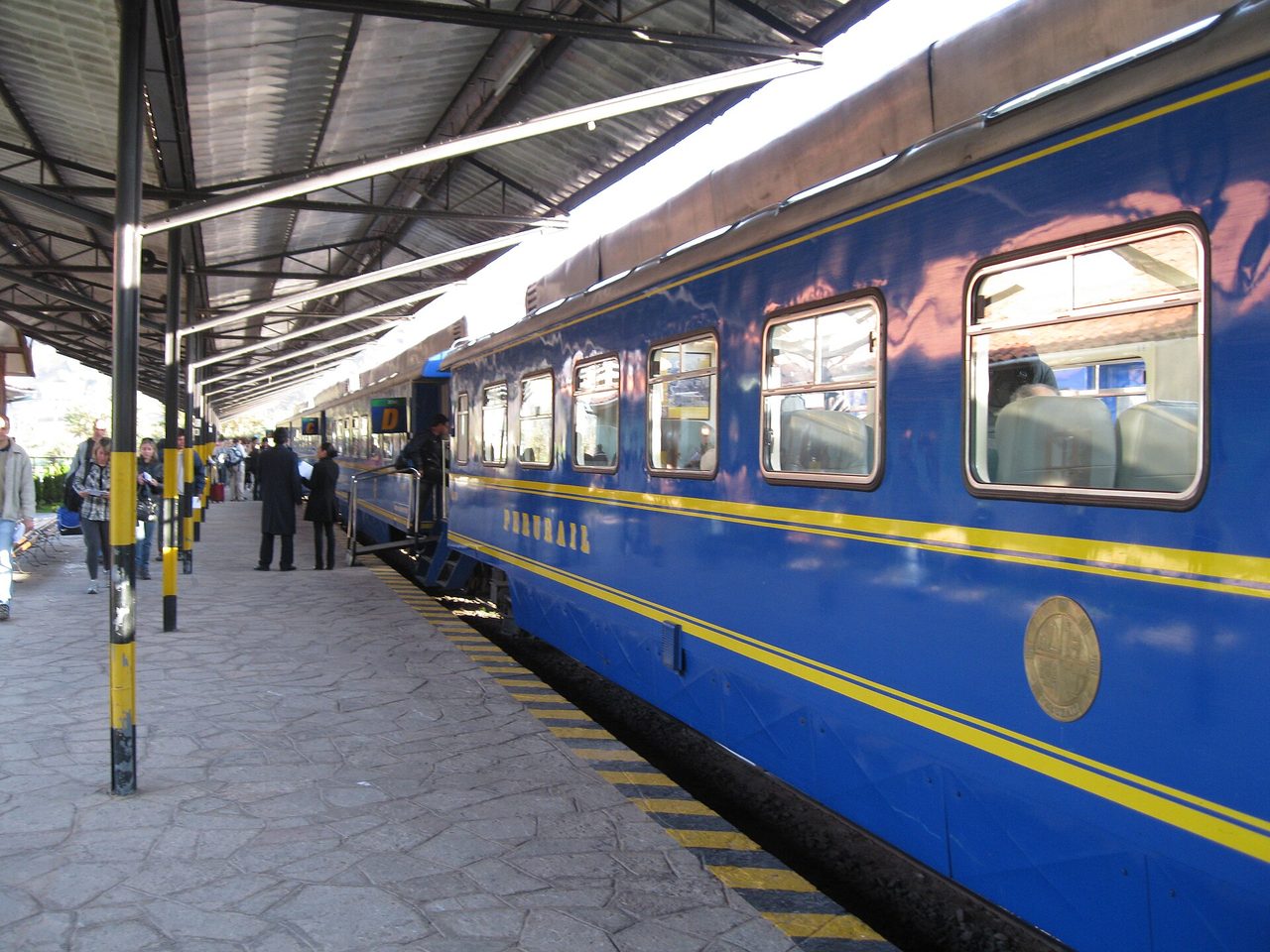
The first thing to understand about getting from Cusco to Machu Picchu is that the train you think you are booking does not exist. There is no working passenger service out of the city itself. Poroy, the little station twenty minutes up the hill that used to handle it, is out of service, so every ticket sold as a “train from Cusco” is really a road transfer to the Sacred Valley with a train bolted onto the end of it. PeruRail has a name for this arrangement — the bimodal service — and it starts with a coach at Wanchaq station, five minutes from the Plaza de Armas.
Once you accept that, the decision gets much simpler. You are not choosing between road and rail. You are choosing which combination of road and rail to buy, and how much of the road you are willing to do yourself.
The geography is unforgiving. The ruins sit roughly 75 km northwest of the city as the condor flies, but there is no road to them and there never has been in the modern era. You leave a city at 3,400 m, drop into the Urubamba valley at about 2,800 m, follow the river down into cloud forest at 2,040 m, then climb back up to the site itself at 2,430 m. Whatever route you take, you lose about 1,400 m of altitude on the way in and claw it back on the way out. Most people feel better in the town at the bottom than they did in Cusco, which is a genuine argument for going down early in a trip rather than late.
This guide is about that specific leg — from a bed in Cusco to standing at the gate. If you are still working out how to reach Cusco in the first place, the national-scale version of the whole journey from Lima or from abroad covers the flights and the long-distance buses.
The five real ways to go from Cusco to Machu Picchu
- Road to Ollantaytambo, then the train. The default. Around 4.5 to 5 hours door to gate.
- Road to Urubamba, then the train. Newer, fewer departures, useful in the wet months and if you are already staying mid-valley.
- The Hidroeléctrica route. Six to seven hours in a minivan, then a two-to-three-hour walk along the railway. The budget classic.
- On foot. Inca Trail, Salkantay, Lares. Four to five days, and the journey is the point.
- The one-day round trip. Possible. Seventeen hours or more. Read the section before you book it.
Route 1: Cusco to Ollantaytambo by road, then the train
This is what roughly four out of five visitors do, and it is the right answer for most people. The road leg runs 72 km over the Chinchero plateau and drops into the valley, taking 1 hour 45 minutes to 2 hours depending on traffic through Chinchero and Urubamba. The rail leg is 43 km and takes about 1 hour 30 minutes.
Getting to Ollantaytambo
You have three ways to cover the road, and the price gap between them is enormous.
Colectivo. Shared vans leave from Calle Pavitos, near Avenida Grau, and cost S/15 to S/20 per person — about US$4 to US$5.50 at roughly S/3.7 to the dollar. There is no timetable and no booking. A driver shouts “Ollanta, Ollanta” until fifteen seats are full, then goes. In the morning they fill in ten or fifteen minutes; at 3pm on a Tuesday you might sit for forty. You pay when you get out. This is the cheapest way to move anywhere in the region and it is completely normal, but it is not the thing to gamble a timed train on. Leave a two-hour cushion.
Private taxi. S/120 to S/180 one way (US$32 to US$48), agreed before you get in, split between up to four people. If there are three or four of you this is barely more than the colectivo per head, it collects you from your door, and it removes the single most common cause of missed trains. Any hotel will arrange one, and a central address makes the 04:00 version of this far less painful — worth weighing when you decide which part of Cusco to sleep in.
The bimodal bus included with your train ticket. PeruRail runs a coach from Wanchaq station; Inca Rail picks up centrally on Avenida El Sol. It is the least stressful option, it is priced into the fare, and it has one wrinkle worth knowing: since September 2025 PeruRail has been using Pachar station rather than Ollantaytambo as the transfer point on selected schedules, because of a local ordinance restricting heavy vehicles at Ollantaytambo station. Pachar is a few kilometres short of Ollantaytambo and has almost nothing there. If your ticket says bimodal, read the small print for the actual transfer point before you plan a lunch stop.
The train leg
Two operators run the Ollantaytambo–Aguas Calientes sector: PeruRail and Inca Rail. Between them there are something like a dozen daily departures in each direction in high season, first trains around 05:00 to 05:30, last returns leaving Aguas Calientes in the early evening. Standard-class fares run roughly US$35 to US$60 per leg when you book ahead, and climb toward US$80 or more for the most convenient morning slots booked late. Both companies sell out weeks in advance from June to August.
The ride itself is the good part. The line runs in the bottom of the Urubamba gorge, the walls close in, the vegetation changes from dusty scrub to bromeliads and tree ferns in about forty minutes, and the river gets louder the whole way. It is one of the few transfers anywhere that people are sorry to see end.
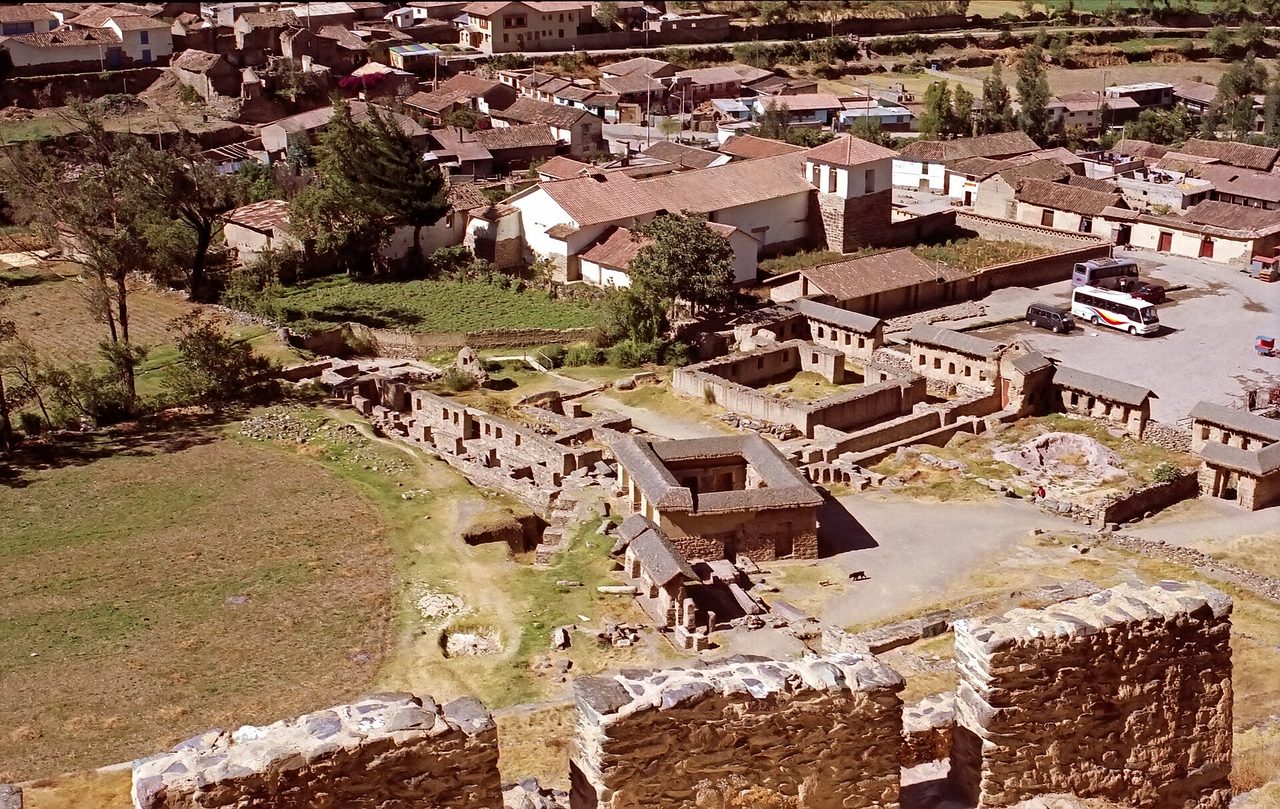
How long the day really takes
Add it up honestly. Two hours by road, twenty minutes of standing around at the station, one hour thirty on the train, ten minutes to walk from Aguas Calientes station to the bus queue, twenty to forty-five minutes queueing, thirty minutes on the shuttle. That is four and a half to five and a half hours from your Cusco doorstep to the turnstile, and it assumes nothing goes wrong. Anyone telling you three and a half hours is quoting a timetable, not a day.
Route 2: Cusco to Urubamba, then the train
Urubamba is the newer option and it is quietly useful. The road from Cusco is about 60 km and 1 hour 20 to 1 hour 40 minutes, usually via Chinchero and the Maras turn-off. The rail leg is longer — 67 km and roughly 2.5 to 3 hours — because you are joining the line further up the valley and the train stops at Ollantaytambo anyway.
Two reasons to care. The first is that departures from Urubamba stay in the schedule during January to April, when the operators shift more of the network onto buses and the timetable out of the city gets thin. The second is simple geography: if you are staying anywhere between Yucay and Huayllabamba, you are already there, and boarding at Urubamba saves you the extra 25 minutes of valley road to Ollantaytambo. The luxury Hiram Bingham service also transfers near Urubamba rather than at Ollantaytambo.
The trade-off is frequency. There are only a handful of Urubamba departures against a dozen from Ollantaytambo, which means less room to move if your day slips. Do not build a plan around one of them without checking it is still in the timetable for your date.
Route 3: the Hidroeléctrica route
This is the backpacker classic and the only way to reach Machu Picchu that does not involve buying a train ticket at tourist prices. It works. It is also long, genuinely rough in places, and misrepresented by nearly everyone who sells it.
The road
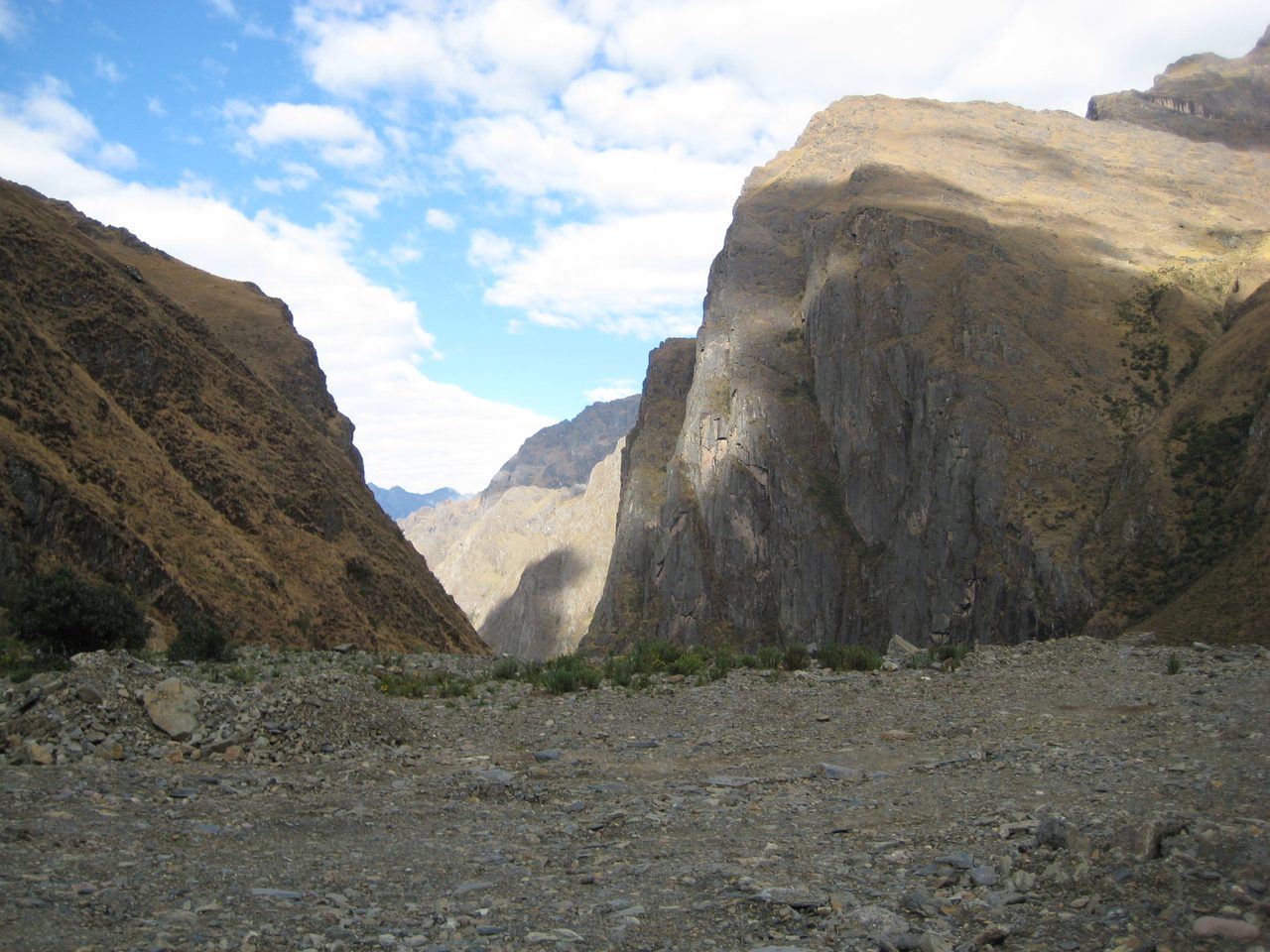
Minivans leave Cusco between about 05:00 and 08:00 from small terminals around Avenida Antonio Lorena and the Pavitos area. The route climbs out of the valley past Ollantaytambo, crosses the Abra Málaga pass at around 4,300 m, then loses more than 3,000 m of altitude in a couple of hours of switchbacks down to Santa María, follows the river through Santa Teresa, and ends at the Hidroeléctrica power station. Scheduled time is six hours. Real time is six to seven, and more if there is roadwork.
Be clear about what the last stretch is like. Beyond Santa María the road narrows, the surface deteriorates, there are long sections with a rock wall on one side and a drop on the other, and the drivers are paid by the run. It is not dangerous in the way that word usually implies, but if you are prone to motion sickness or you dislike exposure, you will not enjoy the middle three hours. Sit on the inside. Take something for nausea before you leave, not after.
In the wet season this road closes. Landslides between Santa María and Santa Teresa are routine from December to March and they can shut the route for hours or days. If you are travelling in those months, the Hidroeléctrica option needs slack in your itinerary that most people do not have — which is one of the concrete reasons the dry months from May to September are worth the crowds.
The walk
From Hidroeléctrica you walk to Aguas Calientes along the railway. It is about 10 to 11 km and takes most people 2 to 3 hours. The line follows the Urubamba, so it is flat — genuinely flat, not Andean flat — apart from a gentle rise in the final kilometre into town. You walk on the sleepers, on the ballast, sometimes on a worn path beside the rails, crossing back and forth. Trains do use this line. They are slow, they sound their horn, and everyone steps aside; it is entirely routine, but it is an active railway and not a footpath, and you should behave accordingly.
In good weather it is a lovely two and a half hours through steep green gorge with the odd glimpse of the ruins high above. In heavy rain it is miserable and the slopes above the track are the ones that fail. There is also a limited PeruRail service on the Hidroeléctrica sector if you would rather not walk; check the schedules, because it does not run to a helpful pattern and it fills up.
What it costs
Bought as separate legs, the minivan runs S/40 to S/70 one way and S/70 to S/120 return, so call it US$19 to US$32 for the round trip. Agencies in Cusco bundle both directions into a transport-only package for about US$25 to US$40, which is usually the same vans with a middleman attached and a marginally better chance of someone caring if you do not show up. The whole approach, entrance ticket aside, comes in around a quarter of the train equivalent, which is why it exists and why it fills every morning. If you are counting every sol, the wider breakdown of doing the site cheaply is worth reading alongside this.
Who should skip it
Anyone on a tight schedule, anyone travelling in February, anyone with a bad back or knees, and anyone who has to be at the gate at 06:00 the next morning after arriving in town at 8pm. The Hidroeléctrica route saves you perhaps US$120 per person and costs you a full extra day plus a hard travel day. That is a good trade at 24 and a poor one at 55 with two weeks of annual leave.
Route 4: arriving on foot
Three trekking routes end at Machu Picchu, and they are a different kind of holiday rather than a different kind of transfer.
The classic four-day Inca Trail covers about 42 km from Km 82 and finishes through the Sun Gate on the fourth morning. It requires a permit, permits are capped and released on a calendar, and popular dates in June and July go months ahead. One useful detail: the conservation surcharge added to entry tickets in May 2026 does not apply to Inca Trail entries. Salkantay is the main alternative — four to five days, around 60 km, over a 4,650 m pass, no permit lottery — and Lares is the shorter cultural option at three to four days and roughly 33 km, ending with a train from Ollantaytambo. All of them are covered properly in the roundup of the country’s best multi-day walks.
What matters for this article is the last few hours. Salkantay and Lares deliver you to Aguas Calientes, where you join the same bus queue as everyone else. Only the Inca Trail actually walks you into the site, and only on the morning of the last day.
Route 5: the one-day round trip
You can do it. I would rather you knew what you were signing up for first. A same-day return means leaving your hotel between 03:30 and 04:30, an early train, an entry slot around 10:00 or later, two to three hours on site, an afternoon train, and a road transfer that puts you back in Cusco somewhere between 21:30 and 23:30. Seventeen to nineteen hours, of which perhaps two and a half are actually spent at the ruins. That is roughly double the length of any other day trip out of Cusco.
It costs almost as much as the two-day version, because the expensive components are the entry ticket and the train, not the hotel. Aguas Calientes rooms start around S/90 for a basic double. Spending that to convert a brutal day into a civilised one is the best-value decision in the whole itinerary. If you are set on the single day anyway, the dedicated guide to squeezing it into one day from Cusco has the timings. Otherwise, the question of how many days to give the whole thing is worth five minutes of thought before you book anything.
Every route side by side
| Route | Time each way | Cost per person (one way) | Comfort | Weather risk | Best for | Avoid if |
|---|---|---|---|---|---|---|
| Road to Ollantaytambo + train | 4.5–5.5 h | US$40–70 (colectivo + standard train) | Good | Low–moderate | Almost everyone | You are counting every sol |
| Bimodal bus + train from Wanchaq | 4.5–5 h | US$55–90 | Best | Low | First-timers, families, anyone who hates logistics | You want to stop in the valley |
| Road to Urubamba + train | 4–5 h | US$50–85 | Good | Low | Staying mid-valley; January to April | You need flexible departure times |
| Hidroeléctrica minivan + walk | 9–11 h | US$10–20 | Poor | High in the wet season | Budget travellers with a spare day | Tight schedule, motion sickness, bad knees |
| Inca Trail (4 days) | 4 days | US$650–900 all in | Camping | Moderate; closed every February | Walkers who booked six months out | You decided last week |
| Salkantay or Lares | 3–5 days | US$350–600 | Camping or lodges | Moderate–high | No permit, still want the walk in | You are not acclimatised |
| One-day round trip | 17–19 h total | US$180–320 all in | Exhausting | Any delay ruins it | Nobody, honestly | You have one spare night |
The last mile: bus or stairs
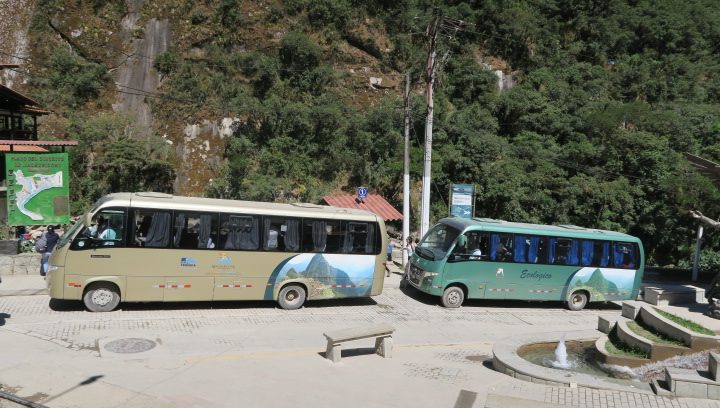
Aguas Calientes sits 8 km below the entrance by road, and about 400 vertical metres below it. Getting up is its own small problem.
The Consettur shuttle
One company, Consettur, holds the concession on the switchback road. There are no taxis, no private cars and no alternatives. Round trip for foreign adults is about US$24, which is roughly US$12 each way, and the ride takes 25 to 30 minutes on a road that spends its entire length turning back on itself.
Buy your ticket the afternoon before, at the Consettur booth on Avenida Hermanos Ayar or online. You cannot reliably buy at the stop at 5am. The first bus goes at 05:30 and buses run every ten to fifteen minutes after that, and the queue is the part nobody warns you about: it forms along the avenue rather than at the stop itself, and in June to August it can be two or three hundred people deep before the first bus moves. For a 06:00 entry in high season, be in line by 04:30. In the quiet months, 05:00 to 05:15 is plenty. Walk the route to the queue point the evening before, in daylight, so you are not navigating in the dark on four hours of sleep.
Walking up
The alternative is the footpath that cuts the switchbacks — roughly 1,700 stone steps climbing about 400 m through cloud forest. Reckon on 1 hour 15 to 1 hour 45 up if you are fit and acclimatised, and it is relentless: no flat sections, no views for most of it, and slick underfoot after rain. Going down takes 45 minutes to an hour and is much easier on the lungs and much harder on the knees.
My verdict
Ride up, walk down. The climb burns exactly the energy you want for the site itself, and you will arrive sweaty at a place where there is nowhere to change. Walking down afterwards costs you nothing, saves US$12, gets you out of the bus queue at closing time, and the light in the late afternoon on that path is the best part of the day. The only case for walking up is a morning when the queue has visibly collapsed and your entry hour is 07:00 or later — then take the stairs and be pleased with yourself.
Sequencing your route around your entry hour
This is where most plans break, and almost no competing guide spells it out. Since 1 June 2024 the site has run three circuits divided into ten routes, all one-way and enforced by rangers who will not let you walk back up a path you have come down. Entry is by the hour from 06:00 to 16:00, with a 30-minute grace period, and you get 2.5 to 4 hours inside depending on which circuit you hold. Daily capacity is 4,500, rising to 5,600 on designated peak dates (1 January, 2–5 April, 19 June to 2 November, and 30–31 December).
The hour printed on that ticket dictates your entire transport plan, not the other way round. Buy the entry ticket first, then build the trains around it. The full rundown of circuits, prices and release dates lives in the guide to booking your entry ticket, but the numbers you need here are: S/163 for a foreign adult on a standard circuit, S/211 if your route includes one of the two peak add-ons, about S/88 for foreign students and minors, and about S/69 for Andean Community adults. ISIC cards are no longer accepted for the student rate; you need a university photo ID showing an expiry date. These figures moved on 1 May 2026 when a SERNANP conservation surcharge was added, so check the official portal rather than trusting an older blog quoting S/152.
Work backwards from the hour on your ticket
Count back from your slot: 10 minutes from the bus drop-off to the turnstile, 30 minutes on the shuttle, 20 to 60 minutes in the bus queue depending on season, 10 minutes walking from the station to the queue. You want to be standing in Aguas Calientes at least two hours before your entry hour.
Which produces the rule everyone learns too late. A 06:00 or 07:00 entry is not compatible with starting the day in Cusco. The earliest train out of Ollantaytambo reaches Aguas Calientes around 06:40 at best, and you would need to be at the station by 04:30, which means leaving Cusco at 02:30. Those dawn slots belong to people who slept in Aguas Calientes. If you are coming from Cusco or the Sacred Valley on the day, book an entry between 10:00 and 12:00 and stop fighting the timetable. If you have your heart set on the site nearly empty at first light, spend the night at the bottom — that is the whole reason the town exists.
Train classes, and whether the upgrade is worth it
PeruRail sells Expedition at the bottom, Vistadome and Vistadome Observatory in the middle, and the Belmond Hiram Bingham at the top. Inca Rail sells Voyager, The 360° and First Class. The tiers map onto each other almost exactly.
Expedition and Voyager are the standard carriages: comfortable seats, tables, large side windows, a snack. They are perfectly good. Vistadome and The 360° add panels of glass in the roof, better food, an outdoor observation car on some services, and an onboard dance and textile show on the return leg. They cost roughly US$40 to US$50 more per leg. First Class and Hiram Bingham are a different proposition again at US$180 to US$250 and US$450 upwards, with proper meals, an open bar and, in the Hiram Bingham’s case, entry and the shuttle bundled in.
My honest read: the standard carriages already have windows big enough to see the gorge, and you spend a good part of the ride looking sideways at a river rather than upwards. If you are going to pay for glass, pay for it on the return leg, when the show is on and the afternoon light is better. If the choice is between upgrading the train and adding a second night in Aguas Calientes, take the night every time. And the Hiram Bingham is a very good restaurant that happens to move — a lovely day out, poor value as transport. There is a much fuller comparison in the dedicated breakdown of the rail services and what each one includes.
What goes wrong
Rain, landslides and suspended services
From December to March the valley moves. Rail operations get suspended at short notice when the line is undercut, the Hidroeléctrica road closes, and both operators publish service notices that are easy to miss if you booked through a third party. Nothing about this is unusual and the operators handle it competently, but if you have one shot at the site and a flight out the following day, the wet season is the wrong time to build a plan with no slack in it. Regional strikes also close the valley road occasionally; the local news is a better guide than any timetable.
The Ollantaytambo station approach
Ollantaytambo station is at the end of a narrow lane with nowhere near enough space for the vehicles that want to use it, which is precisely why heavy coaches have been pushed to Pachar. Colectivos and taxis stop short and you walk the last few hundred metres, often uphill, often with bags, often in a crowd of people doing the same thing thirty minutes before a train. Budget twenty minutes for what looks on the map like a three-minute drive.
Touts and colectivo pricing
At Pavitos and around the Ollantaytambo approach you will be offered rides, tours and “the last van of the day” by people who do not work for the vehicle they are pointing at. Agree the price out loud before you get in, use the numbers above as your reference, and pay at the end rather than up front. This is not dangerous, it is just commerce, and it goes better if you already know the fare. More of the same practical ground rules are collected in our general advice for travelling in Peru, and the wider picture of moving between regions is worth a skim if this is your first Andean bus.
Luggage, and where to leave the rest of it
The old figure repeated across the internet is 5 kg or 11 lb per passenger. That is out of date. PeruRail currently publishes one backpack up to 8 kg with a 115 cm linear limit, and its luggage page also lists a 12 kg carry-on for Machu Picchu services; Inca Rail publishes one hand item up to 8 kg and 118 cm. In practice staff care about whether your bag blocks the aisle rather than what it weighs, but they will stop something suitcase-shaped. PeruRail charges roughly US$15 for an extra carry-on and US$25 for a checked piece, and offers free storage at Ollantaytambo from 04:15 and at the Machu Picchu station.
Separately, the site itself bans bags larger than 40 x 35 x 20 cm at the gate, along with tripods, selfie sticks, umbrellas and drones. A 15 to 20 litre daypack clears every rule in the chain. Leave everything else at your Cusco hotel — every hotel and hostel in the city stores bags free for guests coming back, and it is a far better answer than paying to drag a suitcase down the valley. What actually belongs in the daypack is covered in the guide to dressing for the site, which matters more than people expect given you can start the day at 3,400 m and finish it in cloud forest.
How I would actually do it
Two nights, not one. Sleep in Ollantaytambo or Urubamba on the first night, which kills the pre-dawn road transfer and gives you an afternoon in the city’s churches and markets rather than an alarm at 3am. Take a mid-morning train down on day two, drop your bag at a cheap place in Aguas Calientes, and use the afternoon for the hot springs or the museum. Buy the earliest entry slot you can get for day three, queue for the 05:30 bus, walk down when you are done, and take an afternoon train back. Total: two nights, one very early morning, and about four hours on site instead of two.
That sequence costs maybe US$70 more than the punishing single day and it is the difference between seeing the site and photographing it. If you are still weighing up the whole exercise, the argument about whether it justifies the money and effort is worth reading, and it slots naturally into a two-week route around the country. For what the whole trip adds up to, our breakdown of Peru budgets puts these numbers in context.
Frequently asked questions
Is there a direct train from Cusco to Machu Picchu?
No. Poroy, the station that served the city, is out of service, so trains run from Ollantaytambo and Urubamba in the Sacred Valley. Anything sold as a train from Cusco is a bus to the valley plus a train, which PeruRail calls its bimodal service. It is a good product; it is just not a train from Cusco.
Can you drive from Cusco to Machu Picchu?
Not to the site. There is no road to the ruins and no road to Aguas Calientes. You can drive as far as Ollantaytambo and take the train, or drive the long way round to Hidroeléctrica and walk the last 10 km along the railway. Nothing gets a car closer than that, deliberately.
What is the cheapest way from Cusco to Machu Picchu?
The Hidroeléctrica route: S/40 to S/70 each way in a minivan, then walk. About US$20 to US$32 return against US$80 to US$140 for the train. It costs you an extra day and a hard nine hours of road each way.
How far in advance should I book?
Entry ticket first, and for June to August that means as soon as the calendar opens for your date — peak-hour slots for popular circuits go fast. Trains three to eight weeks out for high season, one to two weeks the rest of the year. The Consettur bus can wait until the afternoon before. The Inca Trail is a different sport: four to six months.
What happens if I miss my entry time?
There is a 30-minute grace period after the hour on your ticket. Past that you are relying on the goodwill of whoever is on the gate, which is sometimes forthcoming during a documented bus or train disruption and often is not. Re-entry is not allowed either, so once you are through, you are committed to your circuit.
Do I have to stay overnight in Aguas Calientes?
Not strictly, but you do if you want an early entry slot, and I would recommend it regardless. It converts a nineteen-hour day into a comfortable two-day trip for the price of a basic room. Prices are inflated compared with the rest of the region, which is what happens to any town with a captive market and one road in; the broader survey of where to base yourself around Peru has more on the trade-offs.
Is the Vistadome worth the extra money?
On the way down, not especially — the standard carriages have big windows and the gorge fills them. On the way back, when the onboard show runs and the light is better, it is a more defensible spend. If your budget only stretches to one upgrade in the whole day, spend it on a second night at the bottom instead.