Cusco Nightlife & Bars
At 3,400 metres one drink behaves like two and the hangover is indistinguishable from altitude sickness. An honest map of Cusco's bars by area, with real prices in soles, closing times and the drink-spiking risk nobody spells out.
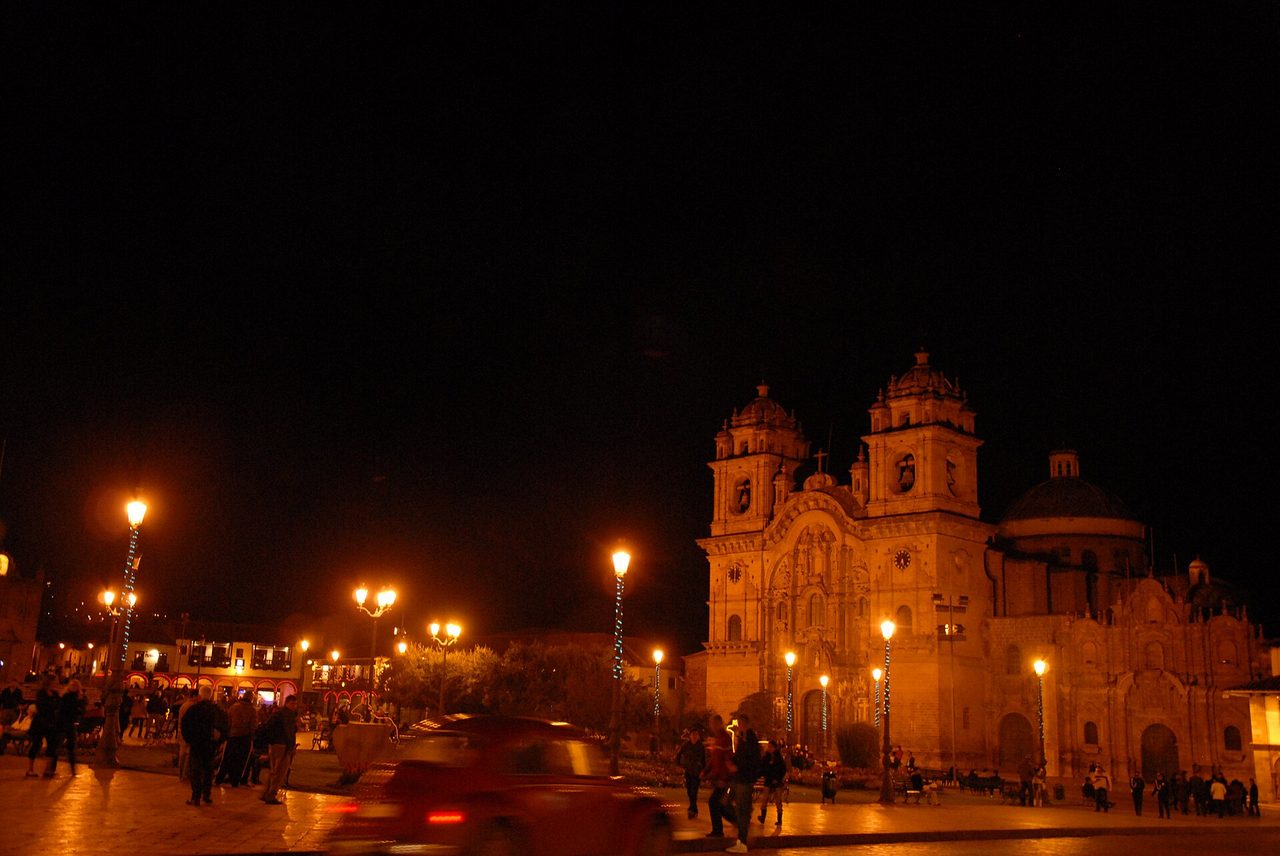
Here is the sentence nobody puts at the top of a guide to Cusco nightlife, so I will: you are drinking at 3,400 metres, and the version of you that walks out of the bar at 1am is not the version you are used to. Two beers feel like four. The hangover is worse, it lasts longer, and its symptoms — splitting head, nausea, no appetite, a heart that will not settle — are indistinguishable from altitude sickness, so you will spend the next morning unable to tell which one you have. If you have a trek briefing at 7am or a 4am pickup for Machu Picchu, that matters more than which club has the best DJ.
With that said: Cusco is a genuinely good night out. Not a great one, and not a big-city one, but a good one. Everything is within a ten-minute walk of the Plaza de Armas, the pisco is cheap and often excellent, and the live music scene punches well above the size of the city. What follows is the scene mapped by area rather than as a ranked list of bars, because bars in Cusco open and close constantly and areas do not.
Cusco nightlife starts with the altitude, not the bar list
Let me be precise about this, because the internet is full of half-truths.
What is not quite true: that alcohol puts more alcohol in your blood at altitude. Controlled studies at simulated elevation have generally not found higher blood alcohol concentrations from the same dose. The “one drink equals three” line you see repeated everywhere is folk wisdom, not pharmacology.
What is true, and it is worse than the folk wisdom in some ways:
- Impairment stacks. Mild hypoxia on its own slows reaction time and judgement. Add alcohol and you get the combined effect of both, which is why you feel further gone than the number of drinks suggests. Your blood alcohol may be normal. Your functioning is not.
- You dehydrate faster than you think. Cusco air is dry and thin. You breathe harder, you lose water through your lungs, and the standard advice at altitude is to drink three or more litres of water a day before anyone hands you a drink. Alcohol is a diuretic on top of that. So is acetazolamide (Diamox), if you are taking it for the altitude. Three diuretic pressures at once is how people end up genuinely unwell rather than just hungover.
- Alcohol suppresses your breathing while you sleep. At sea level that is a snore. At 3,400 m it means your overnight blood oxygen drops further than it otherwise would, which is exactly the mechanism behind the miserable 4am altitude headache. This is the single most under-reported reason that Cusco hangovers are so grim.
- You cannot tell a hangover from acute mountain sickness. Headache, nausea, fatigue, poor sleep, breathlessness. Identical symptom lists. If you drink hard on night two and feel terrible on day three, you have no idea whether to push on or descend, which is a bad position to be in.
The practical rule I would give anyone: do not drink at all on your first night, keep night two light, and treat night three onward as normal-ish while drinking a glass of water between rounds. If you want the full picture on how the elevation behaves in the first 48 hours, our guide to coping with Cusco’s altitude covers acclimatisation properly, and the number of nights you build in matters enough that it is worth reading how many days to give Cusco before you book.
And the specific case that catches people out: if you are starting the Inca Trail or one of the other multi-day treks out of Cusco the following morning, do not go out the night before. You will be walking uphill in thin air on four hours of sleep and no fluid. The same applies to the pre-dawn minibus departures for Rainbow Mountain and Humantay Lake, both of which collect you between 3.30am and 4.30am and then ask you to climb above 4,600 m. I have watched people vomit at the Vinicunca viewpoint who were absolutely fine the previous afternoon.
What the scene actually is — and what it is not
Set expectations honestly. Cusco is not a club city. If you have had a good night out in Lima, Medellín, Buenos Aires or Bogotá, calibrate downward.
What Cusco is not:
- Not a big-room clubbing destination. The clubs are small — think one or two rooms, a few hundred people at capacity, not a warehouse.
- Not a place with a distinctive local sound. The playlist in most tourist clubs is a safe reggaeton / Latin pop / 80s-and-90s-throwback blend engineered so that everyone from every country recognises something. You will hear the same four songs in three different venues.
- Not somewhere the “free drink” on the flyer is a real drink. It is a thimble of something sweet and blue, or a shot of the cheapest pisco in the building. Treat it as a coupon, not as value.
- Not late by South American standards. Most bars wind down between 1am and 3am. A handful of clubs go later, but the city is not still going at 8am.
What Cusco genuinely does well:
- Pisco. Good pisco is cheap here and a properly made pisco sour or chilcano in a decent bar is one of the best-value drinks in South America. This is a real culinary pleasure, in the same family as the rest of Peru’s food culture.
- Walkability. Almost everything worth going to sits inside a few blocks of the Plaza de Armas. You can bar-hop on foot, which is rarer than it sounds.
- Live music. Small rooms, decent bands, five or six nights a week, no cover most of the time. Rock, blues, jazz, Andean fusion, salsa. If you have one night and you are choosing between a club and a live band, take the band.
- Ease of meeting people. The entire centre is full of travellers who arrived alone. Solo travellers do not stay solo here unless they want to.
The scene by area
This is the useful way to think about it. Venues turn over; the character of each street does not.
| Area | Vibe | Typical drink price | Usually winds down | Suits |
|---|---|---|---|---|
| Plaza de Armas balconies | View-first, tourist-priced, mixed ages, quiet by 11pm | Beer S/15–20, pisco sour S/28–40 | 11pm–midnight | Couples, first night, anyone who wants one drink and bed |
| Calle Procuradores & Plateros (“Gringo Alley”) | Flyers, promoters, free-shot offers, loud, 20s backpacker crowd | Beer S/10–15, cocktails S/20–30, deals everywhere | 2am–3am | Groups, backpackers, people who want noise |
| Calle Tecsecocha | Bars and clubs, slightly older and less flyer-driven than Procuradores | Beer S/12–18, cocktails S/22–35 | 2am–3am (clubs later) | Live rock, dancing, a long night |
| San Blas (uphill) | Quieter, better drinks, more residents and long-stayers, live acoustic | Beer S/12–18, cocktails S/25–40 | midnight–2am | Conversation, couples, anyone over about 30 |
| Late clubs (mostly off the plaza) | Small rooms, reggaeton/pop/electronic, free entry with a flyer | Beer S/12–18, cover usually free, S/10–30 on event nights | 3am–6am on Fri/Sat | Dancing, and only dancing |
The Plaza de Armas balcony bars
The colonial arcades around the square have second-floor balconies, and sitting on one with a drink while the cathedral is floodlit below you is a genuinely lovely half hour. It is also the most expensive drinking in the city and the least interesting. You are paying a view markup of roughly 30–50 per cent over a bar two streets away, and the crowd rotates every twenty minutes as tour groups come and go.
My honest advice: do it once, early, for one drink, and then move. Go at sunset rather than at 10pm — the light on the plaza is the whole point, and by 10pm you are just paying extra for a dark window. It pairs well with dinner; see our rundown of where to eat in Cusco for the places worth booking beforehand.
Calle Procuradores and Plateros — the flyer strip
Two narrow lanes running off the north-west corner of the plaza. Procuradores has been called “Gringo Alley” for about thirty years and the nickname is accurate. Restaurants with menu-touts by day, bars and club promoters by night. You will be handed laminated flyers offering free entry and a free drink roughly every fifteen metres.
It is fun in a chaotic, sticky-floor way, and if you are 23 and travelling in a group it is exactly what you want. It is also where essentially every drink-spiking story in Cusco originates, and I will come back to that below. The economics are simple: the flyer gets you through the door, the free shot is worth about S/3, and the club makes its money on the second round.
Plateros, running parallel, is slightly more restaurant-weighted and slightly less aggressive, and is where a lot of people start the evening before drifting one street over.
Calle Tecsecocha
Uphill from the plaza and quieter on the pavement, but this short street carries a surprising density of bars and a couple of the better-known clubs. Historically it has been home to a long-running lounge bar, a rock-and-live-band venue and one of the city’s best-established discotecas — Los Perros, Rock House and Chango have all been fixtures here for years, though as with everything in this article, check before you walk over.
Tecsecocha is my pick if you want a real night rather than a novelty night. The crowd skews a few years older than Procuradores, the music is more varied, and nobody is standing in the street shouting at you.
San Blas
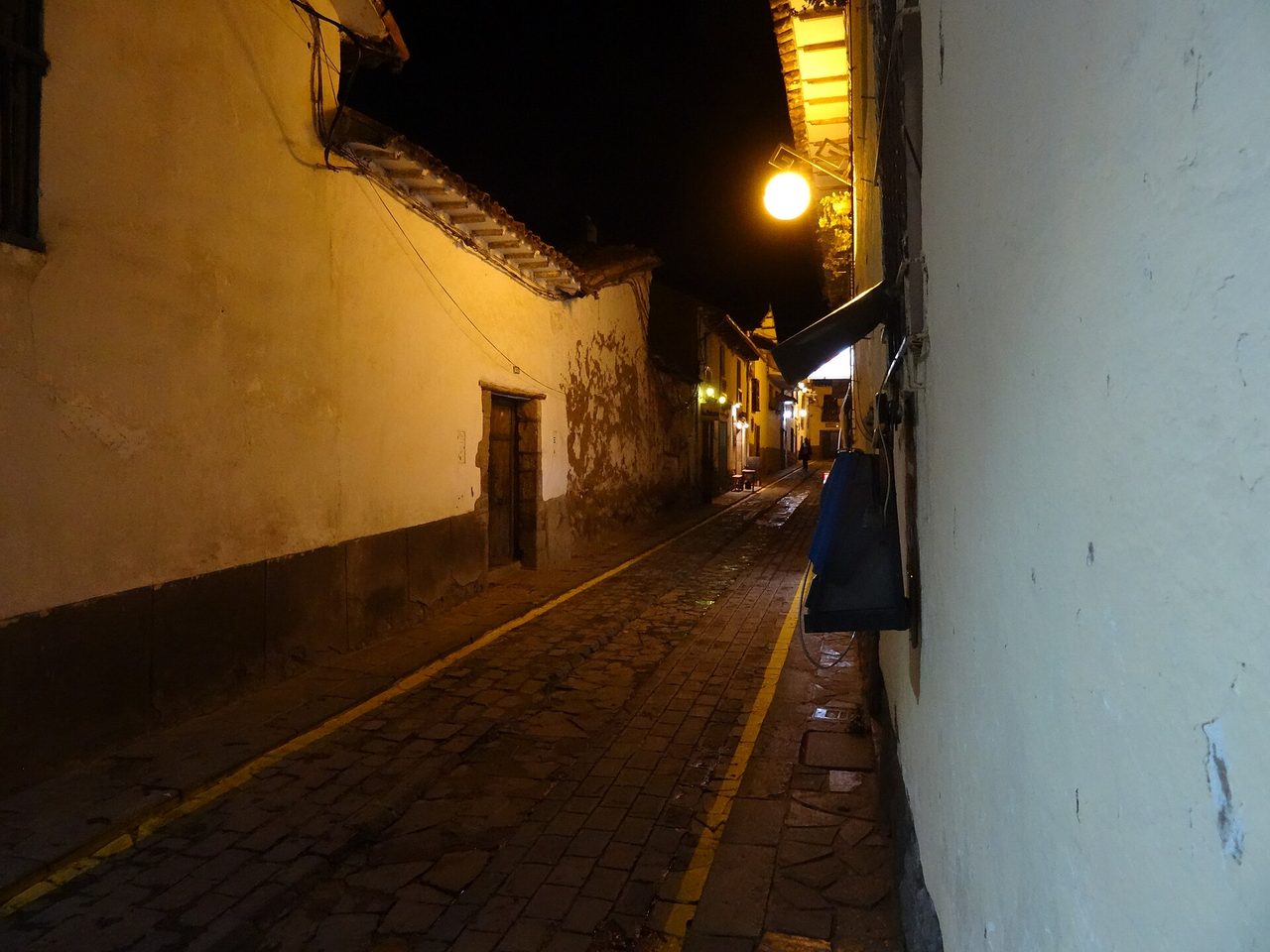
Up the hill east of the plaza, through the cobbled lanes of the artisans’ quarter. This is where I would go on a normal Tuesday. The bars are smaller, the cocktails are made rather than poured, and you can hold a conversation. There is usually acoustic or Andean-fusion music somewhere, and the terraces here have the best views in the city because you are looking down over the red roofs rather than out of a plaza window — Limbus, on Pasnapakana, has traded on exactly that for years.
Two practical points. First, the walk up is steep, and at 3,400 m a five-minute climb is not a five-minute climb; give yourself twice as long and do not be embarrassed about stopping. Second, the walk down late at night, through narrow unlit lanes, is not one to do alone at 2am. If you are staying up there, factor that in — our guide to choosing a neighbourhood in Cusco goes into which streets are a genuine slog after dark.
The clubs
There are maybe five or six venues that qualify as actual nightclubs, most of them within three minutes of the plaza. Mama Africa, Mythology, Ukuku’s and Chango have all been operating for many years and are the names you will see on every flyer; Ukuku’s in particular runs live bands before the DJ takes over, which makes it the most interesting of them if you arrive early.
They are small. On a Friday in July they are packed and sweaty and genuinely good fun; on a wet Tuesday in February they can be nine people and a fog machine. Entry is normally free with a flyer, occasionally S/10–30 for a guest DJ or a themed night. Peak hours are 11.30pm to 2am.
What things actually cost
Prices in soles, as of the 2026 season. Cusco is not a fixed-price city and the spread between a hostel bar and a plaza balcony is large, so these are bands rather than numbers.
| Drink | Hostel bar / happy hour | Standard bar | Plaza balcony or cocktail bar |
|---|---|---|---|
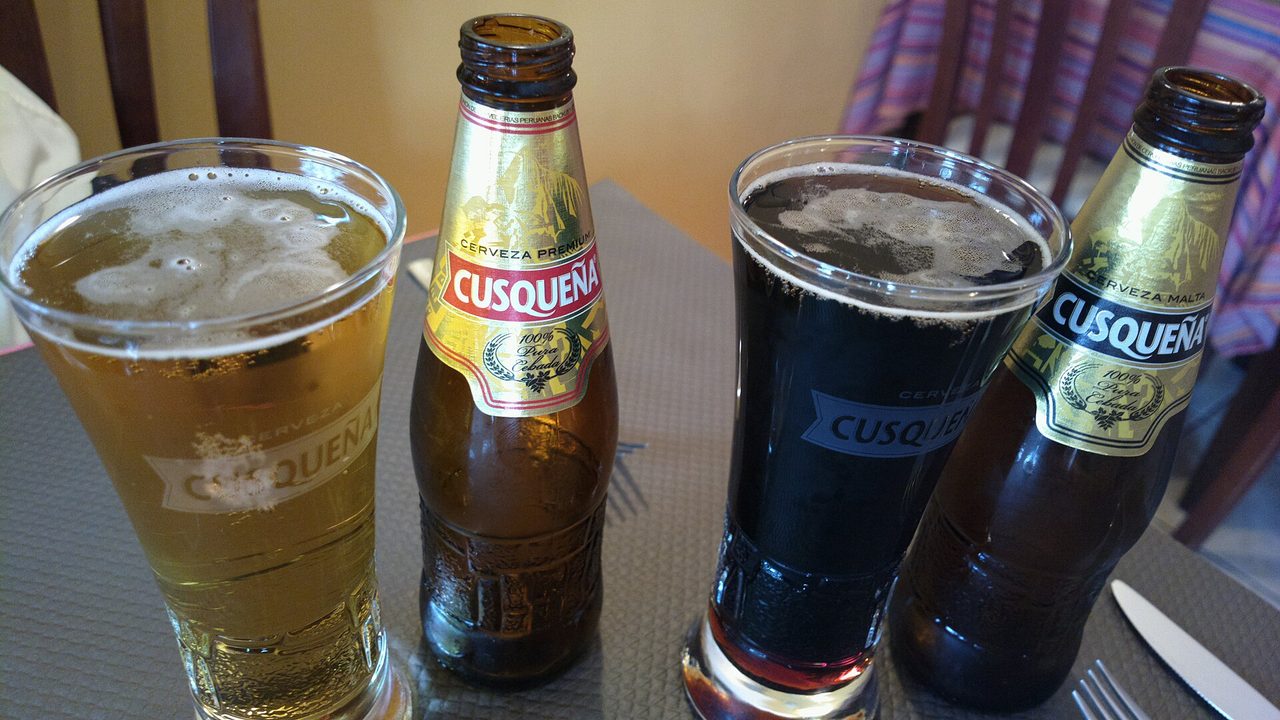
| Cusqueña, 620ml bottle | S/8–12 | S/12–18 | S/15–22 |
| Craft beer, pint or 330ml | S/14–18 | S/18–25 | S/22–30 |
| Pisco sour | 2 for S/25–35 | S/22–32 | S/30–45 |
| Chilcano (pisco, ginger ale, lime) | S/12–18 | S/18–25 | S/25–35 |
| Shot of pisco or a house shot | S/5–10 | S/10–18 | S/15–25 |
| Cocktail (non-pisco) | S/18–25 | S/25–35 | S/35–48 |
| Bottled water, 625ml | S/3–5 | S/5–8 | S/8–12 |
| Club cover | Free with flyer | Free with flyer | S/10–30 on event nights |
| Taxi across the centre, late | S/8–15 by app; street taxis quote S/10–20 to tourists | ||
For reference, a full night out — dinner, four or five drinks, one taxi — lands somewhere around S/120–200 per person if you are drinking in normal bars, and half that if you stick to hostel happy hours and beer. That is a meaningful line item over a two-week trip, and worth folding into your overall Peru budget rather than treating as incidental. Cash is still king in the smaller bars; the clubs and the better cocktail places take cards.
A note on pisco, since you are going to drink a lot of it
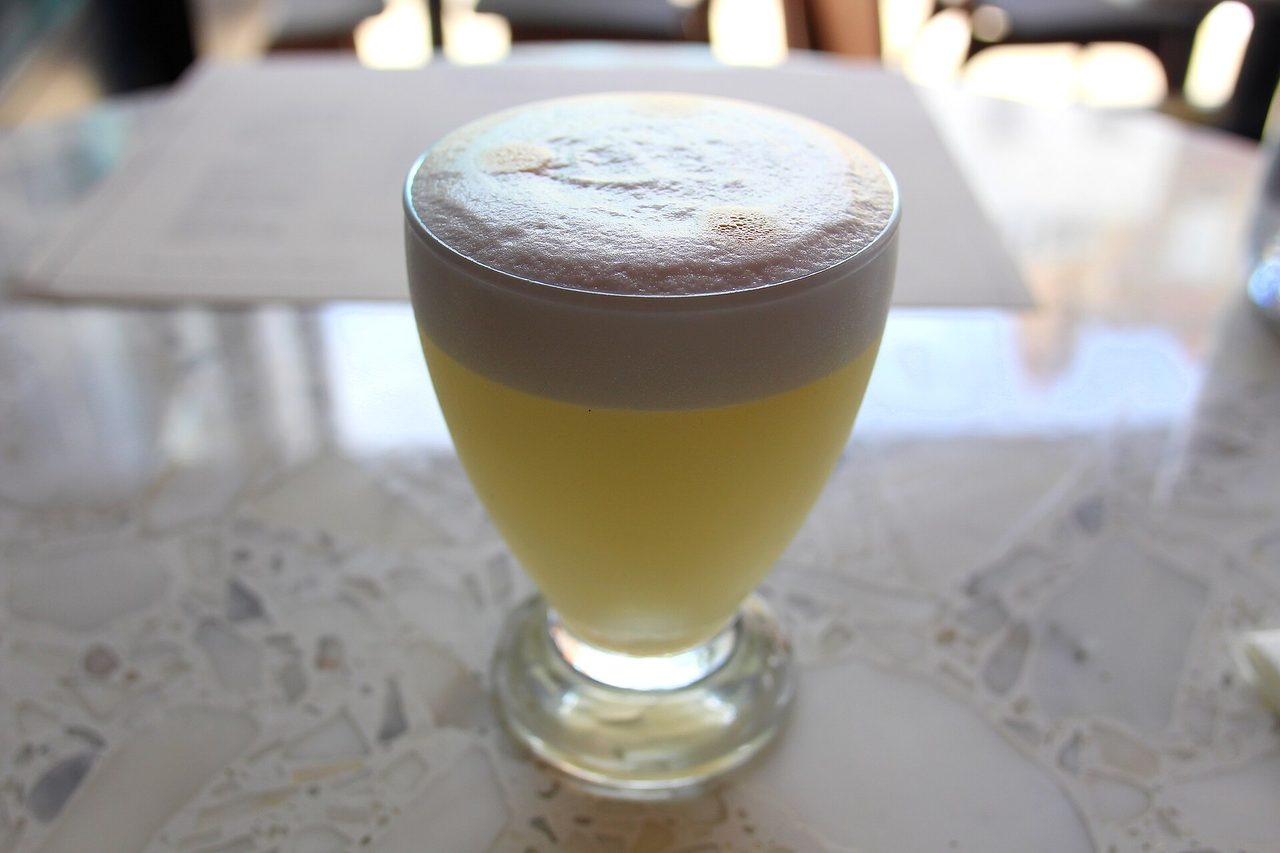
Peruvian pisco is unaged grape brandy, bottled at full strength with nothing added — no water, no colour, no barrel. That last point matters practically: it is typically 40–48 per cent ABV and it does not taste like it, because a well-made pisco sour is smooth, foamy and lemony. This is the single most common way visitors accidentally get much drunker than intended on their first night at altitude.
Worth knowing the vocabulary. Quebranta is the workhorse grape, non-aromatic, the standard base for a sour. Italia and Torontel are aromatic and floral, better for sipping or a chilcano. Acholado is a blend. Mosto verde is distilled from partially fermented must and is softer, more expensive, and the one to order if you want to know why Peruvians are so proud of this stuff. A dedicated pisco bar — the Museo del Pisco just off the plaza has been running tastings for well over a decade — will pour you a flight for less than the price of one cocktail in London.
Also on the menu almost everywhere: chicha morada, the purple corn drink, which is non-alcoholic and excellent, and chicha de jora, which is the fermented one and is generally a village-chicheria thing rather than a bar thing.
The free-drink economy, and pub crawls
Organised pub crawls run most nights in high season, sold through hostels and through touts on the plaza, typically S/40–70 including entry to three or four venues and a shot at each. If you have just arrived alone and want company, they work. If you were hoping for good drinks, they do not — the shots are the cheapest thing in the building and the pace is designed to move sixty people through four venues in three hours, which is precisely the wrong drinking pattern at this elevation.
My view: a pub crawl is a social product, not a drinks product. Buy it if you want the former. And take the same precaution you would anywhere — the pre-poured tray of shots waiting on a table is not a drink you watched being made.
Live music is the best thing about a night out here
Cusco has a real live scene, small and unpretentious. On a given week you can find rock covers, blues, jazz, funk, salsa nights with a dance class beforehand, and Andean fusion bands playing charango and quena over a rhythm section. Most of it is free to walk in, most of it starts around 9.30pm or 10pm, and the standard is much higher than the ticket price suggests.
If your reaction to reggaeton is to leave the room, this is your version of Cusco nightlife. It is also the one part of the scene where you will find actual Cusqueños out for the night rather than just tourists, particularly at the salsa nights, which run on a genuine local circuit. Pair it with the daytime side of the city — there is a lot of Cusco worth seeing that costs nothing and does not require a 6am alarm.
Safety after dark, honestly
I am not going to tell you Cusco is dangerous, because it is not. Violent crime against tourists is rare, the tourist police (POLTUR) are visible around the plaza, and thousands of people go out every night without incident. But there is one specific, well-documented problem and it is worth naming plainly.
Drink spiking in the tourist bar strip is a real and recurring issue. The pattern is consistent: a free or cheap drink accepted from a promoter or a new acquaintance, a gap in memory, and waking up hours later without a phone, a wallet or a bag. Some cases have needed hospital treatment. It is concentrated in the busiest tourist venues, because that is where the targets are.
The countermeasures are boring and they work:
- Watch your drink being poured. Sealed bottles or nothing.
- Do not accept an already-poured drink from a promoter, a stranger, or a tray.
- Do not leave a glass on a table while you dance, and do not come back to one you left.
- Go out with people who will notice if you suddenly seem very drunk very fast — that specific transition is the tell.
- Keep the walking-home cash in one pocket and everything else somewhere less convenient. Leave your passport at the hotel; a photocopy is fine.
The other risks are the ordinary ones. Pickpocketing on the crowded plaza and in the club doorways. Taxi overcharging, which is annoying rather than dangerous. Unlit side streets away from the centre, and particularly the lanes above San Blas, which are fine at 10pm and not somewhere I would walk alone at 3am. Broader groundwork on all of this is in our Peru travel tips.
Getting home
Cusco taxis do not use meters, so a street cab means negotiating a price at 3am while drunk, which is a bad combination even when the driver is honest. Use an app — InDrive has the widest coverage in Cusco, with Uber and Cabify also operating but thinner — or have the bar call one. A ride within the historic centre should be S/8–15; the airport is S/25–35. If you are heading out to a hotel in the wider city, book the ride before you leave the venue rather than standing on the pavement looking for one. This is the same advice that applies to moving around Peru generally, just with more urgency at 3am.
What is open when
| Night | What to expect |
|---|---|
| Monday–Wednesday | Quiet outside high season. Bars open, clubs thin. Live music still happens most nights. Happy hours are longer and better. |
| Thursday | The scene properly starts. Clubs busy from about 11.30pm. |
| Friday–Saturday | Peak. Everything full, clubs to 3am and later, queues on Procuradores. |
| Sunday | The quiet night. Plenty of bars open around the plaza and in San Blas, but most clubs either close or shut early, and the city feels distinctly domestic. Fine for a drink, wrong for a dance. |
| Election weekends | Ley seca — a nationwide 48-hour ban on alcohol sales around national elections. Bars, clubs, restaurants, shops, everything. It is enforced and it catches visitors out. Check the date if you are travelling in an election year. |
| Inti Raymi week (late June) | Busiest week of the year. See below. |
Closing times are set by municipal licence and vary venue to venue rather than by a single citywide last call. In practice: plaza bars and restaurants wind down around 11pm to midnight, bar-bars around 1am to 2am, and the clubs to 3am, with the biggest going later on Friday and Saturday. Do not plan on a 5am finish as a default.
Inti Raymi and festival weeks
The week around 24 June is unlike the rest of the year. Inti Raymi is preceded by days of parades, brass bands, fireworks and street drinking, and the whole centre becomes one long celebration before the ceremony itself moves up to Sacsayhuamán, where the grandstand seats are ticketed and the hillside is free. Balcony tables on the plaza get reserved days in advance and priced accordingly. Beds are gone months ahead. If you want a big night in Cusco, this is objectively the best week to have one — and the worst week to arrive without a booking. The rest of the calendar has its own moments too; Peru’s festival calendar is worth checking against your dates, and the seasonal picture across the country explains why June and July feel like a different city from February.
Also worth knowing: Cusco gets cold at night year-round, dropping to 0–5°C in the dry season, which is one of the less advertised trade-offs between visiting in June and visiting in February. Nobody warns you that the queue outside the club is the coldest part of the evening. Bring a proper jacket, and note that the same wardrobe logic applies during the day — see what to pack for Machu Picchu and the highlands.
If you were hoping to go out in Aguas Calientes: don’t
People occasionally plan a big night in Aguas Calientes, the town below the ruins, and are surprised by what they find. It is a small town of restaurants, hotels and souvenir stalls built for people who are getting up at 4am to queue for a bus. There are a couple of bars and a small club or two, live music in a handful of restaurants, and by midnight it is essentially finished. Half the town is asleep by 9pm because half the town has a sunrise entry ticket.
That is not a criticism of the place. It is just the wrong destination for a night out, and if your plan is an evening down there before an early entry, you are better off with dinner, one drink and bed — especially given that the trains back up the valley start early and the day-trip version from Cusco is brutal enough sober. Machu Picchu sits at 2,430 m, incidentally, a full kilometre lower than Cusco, so at least you will breathe more easily there.
If you only have one night
Here is what I would actually do, assuming you have been in the city at least two days and are acclimatised.
- 6.30pm. One drink on a plaza balcony while the light goes. Pay the markup, enjoy the view, do not stay.
- 7.30pm. Dinner somewhere proper. Eat well and eat enough — this is the meal that decides how the rest of the night goes.
- 9.30pm. Walk up towards San Blas or over to Tecsecocha for live music. A band, a good pisco sour, a room where you can hear each other.
- 11.30pm. If you still want it, one of the clubs off the plaza. Free entry with a flyer, and set yourself a leaving time before you go in.
- Throughout. A glass of water between every round. Not optional here.
That gives you the view, the food, the music and the dancing, all within about eight blocks, and gets you home at a time that does not destroy the next day.
Who should skip it entirely
Genuinely, some people should just sleep, and no guide ever says so:
- Anyone in their first 24–48 hours at altitude. Non-negotiable. Coca tea and an early night.
- Anyone starting a trek tomorrow. You will regret it on day one of the climb, and so will your trekking group.
- Anyone with a pre-dawn departure for the ruins, Rainbow Mountain, Humantay, or a 5am flight. A 4am pickup after a 2am finish is not a night out, it is a self-inflicted injury.
- Anyone taking acetazolamide who has not thought about the combined dehydration. Talk to a pharmacist, not to a bartender.
- Anyone who came for the archaeology. There is no shame in it. Cusco’s nightlife is good but it is not the reason to fly here, and the city’s daytime highlights and its Inca sites are on an entirely different level from its clubs.
How it compares to the rest of Peru
Lima is the country’s real nightlife city — Barranco and Miraflores have proper cocktail bars, a serious restaurant-bar crossover and clubs on a scale Cusco cannot match, and it is worth building an evening or two into your time in Lima rather than treating the capital as an airport. Arequipa has a compact, pretty and much more local scene at a gentler 2,335 m, which is a noticeably easier place to drink. Puno on Lake Titicaca is higher than Cusco at 3,830 m and correspondingly quieter, which is a mercy. And the Sacred Valley towns are early-to-bed, with the exception of a craft-brewery scene that is genuinely worth an afternoon.
Cusco’s distinctive quality is the mix. Nowhere else in the country puts that many nationalities in that small a space, and the conversation on a bar stool here is usually more interesting than the music.
Frequently asked questions
Does Cusco have good nightlife?
Yes, with caveats. It is walkable, cheap, extremely social and strong on live music. It is not a serious clubbing city, the club music is generic, and the whole scene is tourist-facing. If you want atmosphere and easy company, it delivers. If you want a world-class night out, go to Lima.
Does alcohol hit harder at altitude?
Your blood alcohol probably is not higher, but your impairment is, because hypoxia and alcohol stack. You also dehydrate much faster in the thin dry air, and alcohol lowers your overnight oxygen levels, which is why hangovers at 3,400 m are so much worse. Practically speaking, yes: drink about half what you normally would, and drink water alongside.
What time do bars and clubs close in Cusco?
Restaurants and plaza bars generally wind down by 11pm to midnight, bars by 1am to 2am, and the clubs around 3am, with the biggest going later on Friday and Saturday. There is no single citywide last call — it varies by licence.
Are bars in Cusco open on Sunday?
Bars, yes, particularly around the plaza and in San Blas. Clubs, mostly not, or only until early. Sunday is the quiet night.
How much is a pisco sour in Cusco?
Roughly S/22–32 in a standard bar, S/30–45 on a plaza balcony or in a dedicated cocktail bar, and often two for S/25–35 during happy hour. Around US$6–12 depending where you sit.
Is Cusco safe to go out at night?
Broadly yes, in the tourist centre, where the streets are busy and the tourism police are visible. The specific risk to take seriously is drink spiking in the busy bar strip around Procuradores. Watch your drink poured, never accept an open drink from a promoter, and use an app taxi rather than a street cab after midnight.
What is Gringo Alley?
Calle Procuradores, the narrow lane running off the north-west corner of the Plaza de Armas. Restaurant touts by day, bar and club promoters handing out free-drink flyers by night. Loud, young, cheap, and the epicentre of both the fun and the problems.
Do Cusco clubs charge an entry fee?
Usually not. Entry is normally free, and free with a flyer even when it is not. Expect S/10–30 only for a guest DJ, a themed night or a big holiday weekend.
Is there nightlife in Aguas Calientes?
Barely. A couple of bars, one or two small clubs, restaurants with live music, and a town that mostly goes to bed early because everyone has a sunrise ticket. Do not plan your big night there.
Can I go out the night before Machu Picchu?
You can, and plenty do, and they regret it. A 4am start, a bus queue, a steep circuit at 2,430 m and a hangover is a miserable combination on a day you have paid a lot for and can only do once. Whether it is worth the trip is a fair question; showing up wrecked answers it in the wrong direction.
What should I wear out at night in Cusco?
Casual. Jeans and trainers are fine everywhere, and nobody in the clubs is dressed up. The important item is a warm layer — nights drop to near freezing in the dry season and the walk home is cold.
Is there a gay scene in Cusco?
Small but present. Cusco is more conservative than Lima and there is no established gay district, but several central bars are relaxed and mixed, and the traveller-heavy venues around the plaza are unbothered either way. Discretion in the street is still the norm outside the tourist centre.