How Many Days in Cusco?
Everyone answers three to four days. The real constraint is altitude, not sightseeing, and it pushes the honest minimum to five nights once Machu Picchu is on the list. Night-by-night plans at 2, 3, 4, 5, 7 and 10, with what each one costs you.
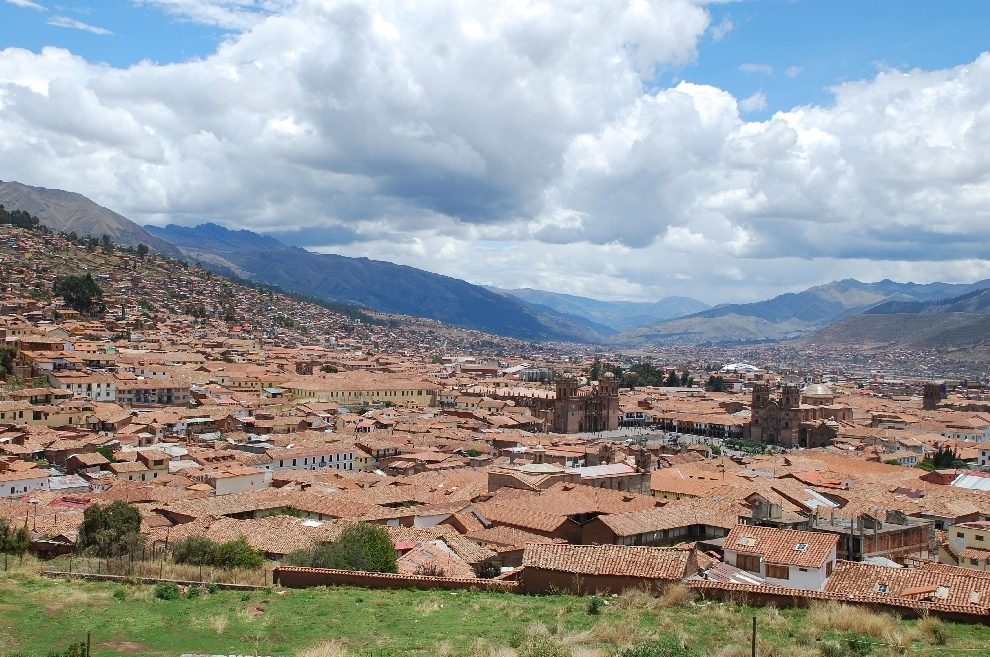
Ask how many days in Cusco you need and you will get the same answer from almost every blog, tour operator and forum thread on the internet: three to four. It is a tidy number. It is also, for most people, wrong — and it is wrong for a reason nobody bothers to explain, which is that the constraint on your trip is not how many churches and ruins you can tick off. It is how fast your body can make red blood cells at 3,400 metres. That number, not the length of the list of things to do in Cusco, is what should shape your plan.
My honest answer, after several trips built around this city: five nights minimum if Machu Picchu is on your list, three nights if it genuinely is not. Everything below is the argument for that number, the itineraries that fall out of it at two, three, four, five, seven and ten nights, and the specific things that go wrong when you shave a night off.
How many days in Cusco: the short answer
Here is the compressed version, before the reasoning.
- Two nights. Not enough for anything involving Machu Picchu or a high day trip. Fine only as a stopover on the way somewhere else.
- Three nights. Enough for Cusco city and the ruins on its rim, done at a sensible pace. No Machu Picchu.
- Four nights. Cusco plus a proper day in the Sacred Valley. Machu Picchu only in its punishing one-day form.
- Five nights. The realistic minimum that includes Machu Picchu without gambling on your body cooperating.
- Seven nights. What I would book if someone handed me the trip today. Cusco, the valley, Machu Picchu with an overnight, one high day, one slack day.
- Ten nights. Cusco the way it deserves, plus Rainbow Mountain or Humantay, plus a genuine rest day, plus room for a cancelled flight.
If you are trekking, throw all of that out. The Inca Trail and Salkantay rewrite the arithmetic completely and I have given them their own section.
The number is set by your body, not your bucket list
Cusco sits at 3,400 m. Lima sits at sea level. The flight between them takes about an hour and twenty minutes. In practical terms you take a person who has been breathing thick coastal air, put them in a pressurised tube, and deposit them a third of the way up a serious mountain before lunch. Roughly a third of arrivals feel it within the first day: a headache that paracetamol only half touches, breathlessness climbing a single flight of stairs, a night of broken sleep, sometimes nausea and no appetite at all.
That is soroche, and it is not a character flaw. Fitness does not protect you. Age does not reliably predict it. I have watched marathon runners lie flat in a hostel while their sixty-year-old mothers walked to the Plaza de Armas for a second coffee.
The single most useful principle in the whole of Andean travel is this: you acclimatise to the altitude where you sleep, not the altitude where you spend the day. A day trip to 5,000 m does almost nothing for your adaptation. Two nights sleeping at 2,870 m does a great deal. Every good decision about the length of a Cusco trip flows from that sentence — including the order you put the day trips out of Cusco in.
The altitudes you are actually dealing with:
| Place | Elevation | What it means for you |
|---|---|---|
| Lima | Sea level | Where most people fly in from, same morning |
| Cusco city | 3,400 m | The hardest night of your trip is usually the first or second here |
| Cusco airport | 3,310 m | You are at altitude the second the door opens |
| Urubamba, Sacred Valley | ~2,870 m | Over 500 m lower than Cusco. Most people sleep noticeably better |
| Ollantaytambo | ~2,790 m | Train departure town, and a kinder place to spend night one |
| Machu Picchu citadel | 2,430 m | Lower than Cusco. The altitude is not your problem here |
| Aguas Calientes | ~2,040 m | Warm, humid, almost sea-level by comparison |
| Humantay Lake | ~4,200 m | A hard day. Not before your third day at altitude |
| Salkantay Pass | ~4,630 m | Trek territory. Needs real acclimatisation |
| Rainbow Mountain (Vinicunca) | 5,036 m | Over 800 m higher than the highest point on the Inca Trail. Day three at the earliest |
Look at that table and the shape of a sensible trip draws itself. Machu Picchu is low. It is a thousand metres below the city you flew into. The reason it needs a fifth night is not the site’s altitude, it is that you have to survive Cusco first, and the journey there and back eats two days.
What a flat, slow first day actually looks like
Not a rest day in the sense of lying in a dark room. A flat day. Cusco is built on a slope and the difference between wandering the level streets around the Plaza de Armas and hauling yourself up to San Blas is the difference between a pleasant afternoon and a headache that ruins your evening.
What works: drop your bags, sleep for two hours if you flew early, eat something small and starchy, drink far more water than feels necessary, and walk slowly on the flat for an hour or two. Coca tea is offered everywhere and is mildly helpful and entirely pleasant; it is not medicine. If you want actual pharmacology, acetazolamide has to be started a day before you ascend, which means asking your doctor at home rather than a pharmacy on Avenida El Sol. Alcohol on night one is a genuinely bad idea and the one piece of advice everybody ignores.
What does not work: booking a Sacred Valley full-day tour for the morning after you land, which agencies will happily sell you, or scheduling anything that starts before dawn. The city has enough to fill a gentle day — the cathedral, Qorikancha, the twelve-angled stone, San Pedro market — and I have covered the individual sites in more depth in the guide to what there is to see and do in the city itself.
The “sleep in the Sacred Valley first” strategy: when it works, when it costs you a day
You will read this advice constantly, usually stated as though it were free. It is not free. It is a real trade with real costs, and whether it pays depends on your trip shape.
The logic is sound. Urubamba at roughly 2,870 m and Ollantaytambo at roughly 2,790 m are 530–610 m lower than Cusco. That is not a rounding error at this elevation. People who feel rough in Cusco routinely sleep fine in the valley towns strung along the Urubamba river, and since adaptation follows where you sleep, two nights down there sets you up better than two nights up top.
It is genuinely better when: you land on a morning flight and can transfer straight out (75–100 minutes to Urubamba by private car, longer by colectivo); you are travelling with children or with anyone over sixty; you have had altitude trouble before; your Machu Picchu day comes early in the trip, since you are already sitting at the train station town; or you plan to end in Cusco rather than start there, so the city gets you after you have adapted.
It costs you a day when: your total is three or four nights, because you will burn most of two half-days on transfers and arrive in Cusco needing to acclimatise anyway; when your flight lands in the late afternoon and you would be driving a mountain road in the dark for no benefit; or when you have already booked a Cusco hotel and would be paying for two bases. There is also a subtler cost. Cusco in the evening — the plaza lit, the balconies, the smell of the grills — is a large part of what people come for, and swapping it for a quiet valley hotel is a choice, not an upgrade.
My rule of thumb: at five nights or more, valley-first is usually the better sequence. At four or fewer, it is a false economy and you should just take day one slowly in the city.
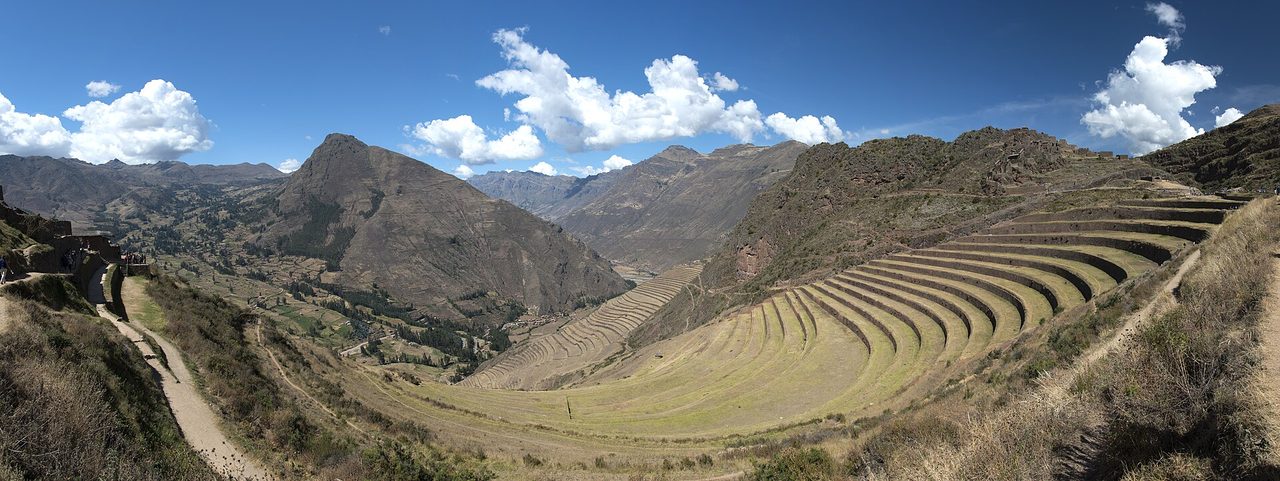
The Machu Picchu constraint: build the trip backwards from the ticket
This is the second lever on your day count, and it is more rigid than people expect. Machu Picchu is not an attraction you slot in. It is a fixed appointment in a valley four hours away, and everything else arranges itself around it.
The mechanics as they stand. Entry is by timed slot, hourly from 06:00 to 16:00, with a 30-minute grace period on your stated hour. Since 1 June 2024 the site has run on three circuits subdivided into ten routes, each one-way and enforced by rangers who will not let you double back — if you walk past the classic terrace viewpoint on Circuit 2, you do not get to return to it. Depending on the route you are inside for roughly two and a half to four hours. There is a daily cap of 4,500 visitors, lifted to 5,600 on designated peak dates: 1 January, 2–5 April, 19 June to 2 November, and 30–31 December. A portion of tickets is held back for in-person sale in Aguas Calientes and Cusco, but you should not plan around that.
Entry costs S/163 for a foreign adult, or S/211 for the circuits that include Huayna Picchu or Machu Picchu Mountain. Those figures replaced the old S/152 and S/200 on 1 May 2026, when a SERNANP conservation surcharge was added on top of an unchanged base fare; the foreign student and minor rate moved to about S/88 and the Andean Community adult rate to about S/69. At roughly S/3.4 to the US dollar that is around US$48 and US$62. Two practical notes: the surcharge does not apply to Inca Trail entries, and ISIC cards are no longer accepted for the student rate — you need a university photo ID with an expiry date printed on it. Prices and rules on this site move more often than anything else in Peru, so confirm on the official portal before you pay. The full mechanics of tiers, release dates and what actually sells out are in the guide to booking entry tickets and choosing a circuit.
Here is the part that determines your day count. In peak season your preferred date and slot will not be available on demand. Circuit 2 mornings and the two mountain add-ons go first, sometimes months ahead. So you do not choose your dates and then buy a ticket. You find out what is available, buy it, and then build the itinerary backwards: ticket first, train second, hotels third, flights last if you can bear the uncertainty. Every traveller I have met who ended up with a miserable Cusco week did it in the opposite order.
Then there is the travel itself. Trains leave from Ollantaytambo or Urubamba — Poroy, the old station closest to Cusco, is out of service, and any itinerary or blog post that still routes you through it is out of date. From Cusco it is 1 hour 45 minutes to 2 hours by road to Ollantaytambo, then about 1 hour 30 minutes to 2 hours on the rail line down the Urubamba gorge, then a 25-minute Consettur shuttle up the switchbacks from Aguas Calientes, which runs about US$24 return. Add the same in reverse.
Do that as a single day from Cusco and you are looking at a departure somewhere around 04:00 and a return to your hotel between 21:00 and 23:00. Seventeen hours, of which perhaps three are spent at the site. It is legal, it is sold everywhere, and I would only do it if I had literally no other option — there is an honest account of what compressing the whole thing into one day actually feels like. The alternative is to sleep one night in the small town below the ruins, take an early slot the next morning, and travel back at a civilised hour. That is one extra night on your total and it is the best night you will spend on this trip.
If you want the site itself examined in isolation — how long you actually need at the ruins, whether to buy two entries, how the circuits compare — that question is answered separately in the breakdown of time needed at the citadel. This page is about the wider Cusco base; that one is about the site.
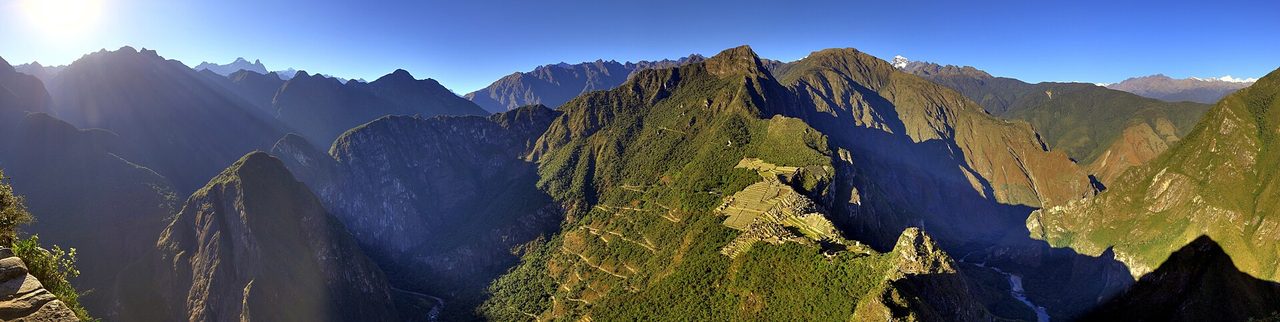
The itineraries, counted in nights
I have written these in nights rather than days, because nights are what you book and days are what you argue about. A “three-day trip” can mean anything from 50 hours to 90. Nights are honest.
Two nights: the version I would tell you not to book
Night 1: land, transfer, flat afternoon in the historic centre, early dinner, early bed.
Day 2: the ruins on the rim — Sacsayhuamán, Q’enqo, Puka Pukara, Tambomachay — on the Boleto Turístico, taken slowly, with a taxi up and a walk down rather than the reverse.
Day 3: morning flight out.
Verdict: works only as a deliberate stopover between Lima and Puno or Arequipa, where Cusco is a pause rather than a destination. What it costs you: Machu Picchu, the Sacred Valley, and any margin at all. If day two is the day the altitude lands, you have seen nothing. I would rather someone spent two nights in the white-stone city in the south at a far gentler 2,335 m and came back for Cusco properly another time.
Three nights: Cusco city, done well, with no Machu Picchu
Night 1: arrive, flat day, plaza and cathedral, an early night.
Day 2: the ruins above the city in the morning while you are fresh, San Pedro market and Qorikancha in the afternoon, a proper dinner.
Day 3: San Blas and the artisan streets, a museum, the Sacsayhuamán viewpoint at golden hour, or a half-day out to the South Valley.
Day 4: fly out.
Verdict: genuinely good, and the most underrated option on this page. Cusco is a real city with 400 years of layered building on top of Inca foundations, and treating it as a waiting room for Machu Picchu is a waste. By day three you are acclimatised and the walking gets easy. What it costs you: Machu Picchu, entirely. Do not try to squeeze it in. Who it suits: people on a longer national loop who will see Inca stonework elsewhere in the country, repeat visitors, anyone travelling on a tight budget.
Four nights: Cusco plus the Sacred Valley
Night 1: arrive, flat day in the city.
Day 2: ruins on the rim, afternoon in the centre.
Day 3: full day in the Sacred Valley — Pisac market and ruins, lunch in Urubamba, Ollantaytambo fortress. Sleep in Ollantaytambo rather than driving back.
Day 4: Maras salt pans and Moray, return to Cusco, last evening in the city.
Day 5: fly out.
Verdict: a complete, unhurried regional trip that happens not to include the famous bit. What it costs you: Machu Picchu, unless you accept the 17-hour version on day three or four, which turns a good trip into an endurance event. Risk level: low. This is the version I recommend to people who have four nights and are considering cramming.
Five nights: the honest minimum with Machu Picchu
This is the number in the headline, and here is why it is five rather than four.
Night 1: arrive Cusco, flat afternoon, early bed. Nothing booked.
Day 2: Cusco proper — ruins on the rim, the centre, on foot and slowly. This is your second night of adaptation and it is the one that matters.
Day 3: transfer to the Sacred Valley in the morning, Ollantaytambo fortress in the afternoon, sleep in Ollantaytambo at 2,790 m. Descending is restorative and you are already at the station.
Day 4: morning train to Aguas Calientes, afternoon in the town or the hot springs, sleep at 2,040 m.
Day 5: early entry slot at Machu Picchu, back down by lunchtime, afternoon train and road transfer to Cusco.
Day 6: fly out, morning flight.
Verdict: tight but sound. Every high-consequence element sits on day four or later, when you have adapted. The descent profile is deliberate — 3,400 m, 3,400 m, 2,790 m, 2,040 m, 2,430 m — and you are going down, not up, at exactly the point the trip gets demanding. What it costs you: Rainbow Mountain, Humantay, any slack day, and any tolerance for a cancelled train. Risk level: moderate. One weather day or one bad night wipes out a component.
Why not four nights? Because to fit Machu Picchu into four you must either do the 17-hour day trip on day three, or skip the valley and take a dawn train on day two — which puts your longest, most expensive, least repeatable day at exactly the moment your body is least ready. The fifth night buys you a buffer against the one outcome that would actually ruin the trip.
Seven nights: what I would book
Night 1: arrive, transfer straight to Urubamba (~2,870 m), do nothing.
Day 2: Sacred Valley at an easy pace — Pisac terraces, or Maras and Moray, both low-effort and low-altitude.
Day 3: Ollantaytambo, fortress and the granaries opposite, sleep there.
Day 4: train to Aguas Calientes, afternoon free, sleep low.
Day 5: Machu Picchu on an early slot with one of the mountain add-ons if you booked it, afternoon train back, road up to Cusco. You arrive in the city already adapted.
Day 6: Cusco — the ruins on the rim, the centre, a long lunch.
Day 7: Cusco or a high day trip if you want one; by now you have six nights at altitude behind you and Rainbow Mountain is a reasonable proposition.
Day 8: fly out.
Verdict: the best value per night on this page, and the one I would hand to a first-time visitor without hesitation. It inverts the usual sequence — valley first, city last — which solves the altitude problem and means you finish in the more interesting place rather than starting there. What it costs you: very little. Risk level: low. There is enough slack that one bad day does not cascade.
Ten nights: Cusco with room to breathe
Nights 1–3 in the Sacred Valley, spread across Urubamba and Ollantaytambo, with a slow day built in. Night 4 in Aguas Calientes, day 5 at Machu Picchu. Nights 5–10 based in Cusco, with a high day trip on day 7 or later, a full day doing nothing on day 8, and the remainder for the city, the South Valley, cooking classes, weaving cooperatives, or the ride out to Q’eswachaka if the timing lines up.
Verdict: this is where Cusco stops being a checklist. The rest day is not padding — at 3,400 m, six consecutive days of walking, early starts and thin air adds up, and the tenth day of a trip is often the one people remember worst because they were exhausted. What it costs you: money and holiday allowance. Who it suits: anyone building a broader route where Cusco is the anchor, which is most people — the wider sequencing is worked through in the country-wide route planner. Risk level: minimal. You have a spare day for a cancelled flight, which in the wet season is not a hypothetical.
The decision table
| Nights | What you get | What you miss | Who it suits | Risk |
|---|---|---|---|---|
| 2 | The historic centre and one morning of ruins | Machu Picchu, the valley, all margin | Stopover travellers between Lima and Puno | High — one bad night and you have seen nothing |
| 3 | Cusco city properly, acclimatised by the end | Machu Picchu, the Sacred Valley | Budget travellers, repeat visitors, long national loops | Low, provided you do not add Machu Picchu |
| 4 | Cusco plus a full Sacred Valley day and an overnight | Machu Picchu, unless you take the 17-hour version | People who would rather do less, well | Low |
| 5 | Cusco, the valley and Machu Picchu with one night below | Rainbow Mountain, Humantay, any rest day | Time-limited visitors who still want the citadel | Moderate — no buffer for weather or illness |
| 7 | All of the above plus a high day trip and slack | Almost nothing worth having | Most first-time visitors | Low |
| 10 | The region at a human pace, with a genuine rest day | Only the second week of your holiday | Anyone anchoring a longer Peru trip on Cusco | Minimal |
| 7–9 (trek) | Inca Trail or Salkantay plus acclimatisation and recovery | Flexibility — permits fix the date absolutely | Hikers who booked months ahead | Moderate — weather and fitness both bite |
Two nights is not enough, and here is exactly what goes wrong
I want to be specific rather than preachy, because “you will get altitude sickness” is easy to dismiss. Here is the actual failure sequence, which I have watched play out more than once.
You take the 06:00 flight from Lima at sea level, having slept badly because of the 04:00 alarm. You land at 3,310 m at about 07:30. You are dehydrated from the flight and you have had one coffee and no breakfast. You feel fine, because the first two or three hours usually feel fine — the symptoms lag. You check in, you walk uphill to San Blas because it looks nice on the map, and by mid-afternoon you have a headache. You put it down to the early start.
Night one you sleep in fragments, waking every ninety minutes with a dry mouth and shallow, fast breathing. This is normal and it is also why the second day is usually the worst rather than the first. You have a tour booked for 04:30 the next morning, because two nights forces every high thing onto day two: Rainbow Mountain at 5,036 m, Humantay at 4,200 m, or a dawn train run at Machu Picchu.
You get in the van anyway, because you have paid. At 4,600 m on the drive you feel genuinely unwell. At the trailhead you have a choice between a slow, miserable walk and sitting in the van for four hours while everyone else goes up. Either way, the one activity you flew across a continent for is now something you endured. And you fly out the following morning, so there is no second attempt.
None of that is bad luck. It is a scheduling decision made months earlier, when someone decided two nights was enough. The fix costs one hotel night. There is a broader set of altitude and preparation habits worth reading in the practical notes on travelling in Peru before you finalise anything.
If you are trekking, the maths changes completely
Trekkers routinely underestimate the wrapper around the trek. The trek length is the number the operator advertises; the number you need to book leave for is considerably larger, because you cannot arrive from sea level and start walking, and you should not fly home the morning after you finish.
| Trek | Trek length | Acclimatisation nights before | Nights after | Total nights in the region |
|---|---|---|---|---|
| Classic Inca Trail | 4 days / 3 nights camping | 2 minimum, 3 better | 1 | 6–7 |
| Short Inca Trail | 2 days / 1 night in Aguas Calientes | 2 | 1 | 4–5 |
| Salkantay | 5 days / 4 nights | 2 minimum, 3 better | 1 | 7–8 |
| Lares | 3 days / 2 nights | 2 | 1 | 5–6 |
| Choquequirao | 4–5 days | 2 | 1–2 | 7–8 |
Two things make trekking different from everything else on this page. The first is that the permit fixes your date, not your preference. Classic Inca Trail permits are capped daily and counted per person including guides and porters, so the trekker allocation is a fraction of the headline number. For May to September departures they routinely sell out four to six months ahead, and the whole route closes for maintenance every February. You book the permit, then arrange your life around it. The route itself, its four days and its pass at just over 4,200 m, is described in the guide to the classic trek; the alternatives that do not need a permit are compared in the roundup of multi-day hikes across the country.
The second is that the acclimatisation nights before a trek are non-negotiable in a way they are not for sightseeing. If you feel rough on day two of a city trip you can sit in a café. If you feel rough on day two of the Inca Trail you are at 4,215 m on Dead Woman’s Pass with no road out. Two nights at altitude before you start is the bare minimum any responsible operator will accept, and three is meaningfully kinder. Spend them low if you can — two nights in the valley followed by one in Cusco is a better profile than three in Cusco.
One quiet advantage of the Inca Trail: the SERNANP conservation surcharge does not apply to trail entries, so the ticketing arithmetic differs from a standard visit.
Rest days, the return leg, and the mistake that ends trips badly
Two things get almost no coverage anywhere and both affect your day count.
Rest days are not optional above about six nights. Cusco at 3,400 m taxes you in ways that are easy to miss because they are cumulative. Sleep quality is poorer, appetite is off, digestion is slower, and the early starts stack up. By day six of consecutive 05:00 alarms most people are running on fumes and the experience flattens out. Build in one day with nothing booked. Sleep late, eat a long lunch at one of the city’s better kitchens, sit in the plaza. If you want to fill it productively, this is the day for a cooking class or a market walk — the regional food is genuinely one of the reasons to come, and what to eat and where it comes from is worth reading before you order.
The return leg is where trips get wrecked. Three specific things.
First, the early flight. Many Lima connections leave Cusco between 05:00 and 07:00, which means a 03:30 or 04:00 taxi. That is not a travel day, that is a lost night, and if it is the morning after Machu Picchu you will be genuinely wrecked. Count it as a night you did not get.
Second, the weather pattern. Cusco’s airport sits in a bowl at 3,310 m surrounded by high ground and its operations are unusually sensitive to visibility. In the wet season, roughly November to March, cloud and thunderstorms build through the afternoon, and afternoon departures are markedly more prone to delay and cancellation than morning ones. Airlines know this, which is why the schedule is front-loaded. If you must fly out in the wet months, book the earliest departure you can stand and treat anything after about 14:00 as provisional. The seasonal picture across the whole country is set out in the guide to when to go and what the weather actually does, and the site-specific version is in the month-by-month view of conditions at the citadel.
Third, and this is the one that costs real money: do not book an international flight home on the same day you fly out of Cusco. A cancelled Cusco departure is an inconvenience if you have a night in Lima and a disaster if you have a 22:00 transatlantic connection. Give yourself a night at the coast. It also gives you an evening in a city with the best restaurants in South America, which is not a punishment — there is plenty to fill it in the rundown of how to spend time in the capital. The domestic transport options if the plane does not happen, including the long overland alternatives, are covered in the guide to moving around the country.
What each version costs
Day count and budget are the same conversation, because the difference between five nights and seven is mostly hotel nights and meals, while the difference between three and five is a large fixed cost you either pay or you do not.
Rough daily spend in Cusco, excluding the Machu Picchu package, at roughly S/3.4 to the US dollar:
| Style | Per person per day | What that buys |
|---|---|---|
| Budget | S/120–200 (US$35–60) | Dorm bed or basic double, menú del día lunch at S/15–25, street food, colectivos, walking, one shared group tour |
| Midrange | S/260–450 (US$75–130) | Good double room in the centre, a proper restaurant dinner at S/50–90, taxis, a small-group day tour with entry fees |
| Comfortable | S/650–1,150 (US$190–340) | Boutique or heritage hotel, private guide and driver, tasting menus, oxygen-enriched room if you want one |
Then the fixed costs that do not scale with how long you stay:
- Machu Picchu entry: S/163 foreign adult, S/211 with Huayna Picchu or Machu Picchu Mountain, about S/88 foreign student or minor, about S/69 Andean Community adult.
- Boleto Turístico: around S/130 for the ten-day general pass covering sixteen sites including Sacsayhuamán and the main valley ruins, or around S/70 for a partial circuit valid a day or two. Verify current pricing locally, since it is adjusted periodically.
- Train, Ollantaytambo to Aguas Calientes: the widest variable on the trip. The basic services run roughly US$120–180 return, the panoramic carriages US$180–280, and the luxury service several times that. Book early; the cheap slots go first.
- Consettur shuttle bus: about US$24 return, or walk up in 60–90 minutes of steep stone steps if you would rather not.
- Cusco to Ollantaytambo: S/15–25 in a shared colectivo, or US$40–70 for a private transfer.
The blunt version: adding the Machu Picchu component to a Cusco trip costs roughly US$250–450 per person on top of your daily spend, before hotels. That is why the three-night, city-only option is a genuinely reasonable choice rather than a consolation prize, and why it is worth reading the case for and against in the discussion of whether the citadel justifies the expense. If the answer is yes but the price is the obstacle, the cheaper routes in via Hidroeléctrica are laid out in the low-cost approach to reaching the site. Broader national budgeting sits in the country-wide cost breakdown.
Six ways people get the number wrong
- Counting travel days as full days. A flight arriving at 15:00 gives you an evening, not a day. A departure at 06:00 gives you nothing.
- Booking the high day trip early. Rainbow Mountain and Humantay are sold hard by every agency on the plaza and both are commonly done on day two. Move them to day four or later and they become enjoyable rather than survivable.
- Assuming Machu Picchu is a day trip. It is a two-day component with a one-day emergency version. Plan the two-day one.
- Booking flights before tickets. Entry slots are the scarce resource in high season, not seats to Cusco.
- Forgetting the Sacred Valley entirely. Pisac, Ollantaytambo, Maras and Moray are not filler. Several of them are more impressive at close range than anything inside the city, and the complete guide to the citadel and its context makes more sense once you have stood on the Ollantaytambo terraces.
- Not knowing which route into the site you booked. The circuits differ substantially in what you actually see, and the mountain add-ons are a separate decision with their own time cost — there is a direct comparison of the two climbable peaks above the ruins.
How many days in Cusco: frequently asked questions
Is 3 days in Cusco enough?
For the city and the ruins on its rim, yes, comfortably, and you will be properly acclimatised by the last day. For the city plus Machu Picchu, no — you would be forcing the 17-hour day trip into a window where your body has had one night at altitude. Three nights is a good Cusco trip and a bad Cusco-and-Machu-Picchu trip.
Is 2 days in Cusco enough?
Only as a stopover. Two nights gives you one usable day, no buffer against altitude, and no realistic route to Machu Picchu. If two nights is genuinely all you have, spend them in the city, take them slowly, and accept that the citadel is a separate trip.
How many days in Cusco do I need before the Inca Trail?
Two nights at altitude minimum, three if you can. Any reputable operator will insist on at least two and some build them into the package. Sleeping the first two of those in the Sacred Valley at around 2,800 m and the third in Cusco gives a better profile than three straight nights at 3,400 m.
Should I sleep in Cusco or the Sacred Valley first?
The valley, if your trip is five nights or longer and you can transfer straight from the airport. It is 500–600 m lower, most people sleep better there, and you finish in the more interesting city rather than starting there half-conscious. At four nights or fewer the transfers eat the benefit and you are better off staying put.
Can you visit Machu Picchu as a day trip from Cusco?
Yes, and it runs about 17 hours door to door with roughly three of those at the site. It is a legitimate option when your schedule leaves no alternative and a poor one otherwise. The comfortable version sleeps a night in Aguas Calientes and takes an early entry slot the following morning.
How many days do I need for Cusco and Machu Picchu together?
Five nights is the honest floor and seven is the number I would actually book. Five gets you two acclimatisation nights in Cusco, one in the valley, one in Aguas Calientes and a morning at the citadel. Seven adds a high day trip, a slack day and a margin for weather.
Is Rainbow Mountain safe on day two?
Safe is the wrong word — people do it and survive. But Vinicunca tops out at 5,036 m, which is 1,600 m above the city you have barely adapted to, and the failure rate on day two is high enough that operators are used to passengers turning back. Put it on day four or later. The same applies to Humantay at around 4,200 m.
How many days in Cusco within a two-week Peru trip?
Six to eight nights of a fourteen-night trip, which sounds like a lot until you realise it includes the Sacred Valley and Machu Picchu. That leaves room for Lima, one southern add-on such as Arequipa and Colca or the high lake on the Bolivian border, and travel days. If you want jungle instead, the Amazon lodges out of Puerto Maldonado pair naturally with Cusco because the flight is short and it is a descent to near sea level.
Do I need extra days in the wet season?
Yes, one. Between November and March, add a buffer night to the end of your Cusco stay and a night in Lima before any international flight. Trains are occasionally suspended after landslides, afternoon flights are less reliable, and the Inca Trail is closed for all of February.
Is one day in Cusco enough?
You will see the Plaza de Armas, the cathedral and possibly Qorikancha, and you will spend most of the day slightly out of breath. It is better than nothing and it is not a visit. If a single day is what your routing allows, keep it flat, keep it central, and do not book anything that starts before 08:00.
Does the day count change if I want to climb Huayna Picchu?
Not directly, but it changes your ticket and your timing. The mountain circuits carry the higher S/211 fare, the slots are limited and sell out first, and the climb adds two to three hours to your site day. That effectively rules out combining it with a same-day return to Cusco, which pushes you toward the overnight in Aguas Calientes and therefore toward five nights rather than four.
What should I pack differently for a longer stay?
Layers, because Cusco swings 20°C between midday sun and 03:00, and a warmer sleeping layer than the altitude suggests. If you are adding a citadel day at 2,430 m you are dealing with humidity and sun rather than cold, which catches people out — there is a specific list in the note on what to wear at the site itself.
What I would actually book
If you have a week, take seven nights: three in the Sacred Valley, one in Aguas Calientes, three in Cusco, in that order. It is the sequence that respects the altitude, puts the fixed appointment in the middle where it has slack on both sides, and leaves you finishing in the city rather than fleeing it at dawn.
If you have five, take the five-night plan above and accept that you are trading the high day trips for the citadel. If you have three, skip Machu Picchu without guilt and spend them in the city, which is a better decision than most people are willing to make. If you have two, come back another time.
The one number worth remembering out of all of this: the constraint is not how much there is to see, it is that you arrived 3,400 m higher than you woke up. Give your body the extra night and everything downstream of it improves. Where you sleep those nights — city, valley, or a mix — is worked through in more detail in the guide to choosing bases around the country, and the practical business of getting yourself to the citadel is a separate piece of homework worth doing before you book a thing.