Wildlife & Nature Experiences in Peru
An honest, ecosystem-by-ecosystem look at what you will actually see: realistic sighting odds for every species worth chasing, when the macaw clay licks are busy, and why the Amazon lodge four hours upriver beats the one an hour from town.
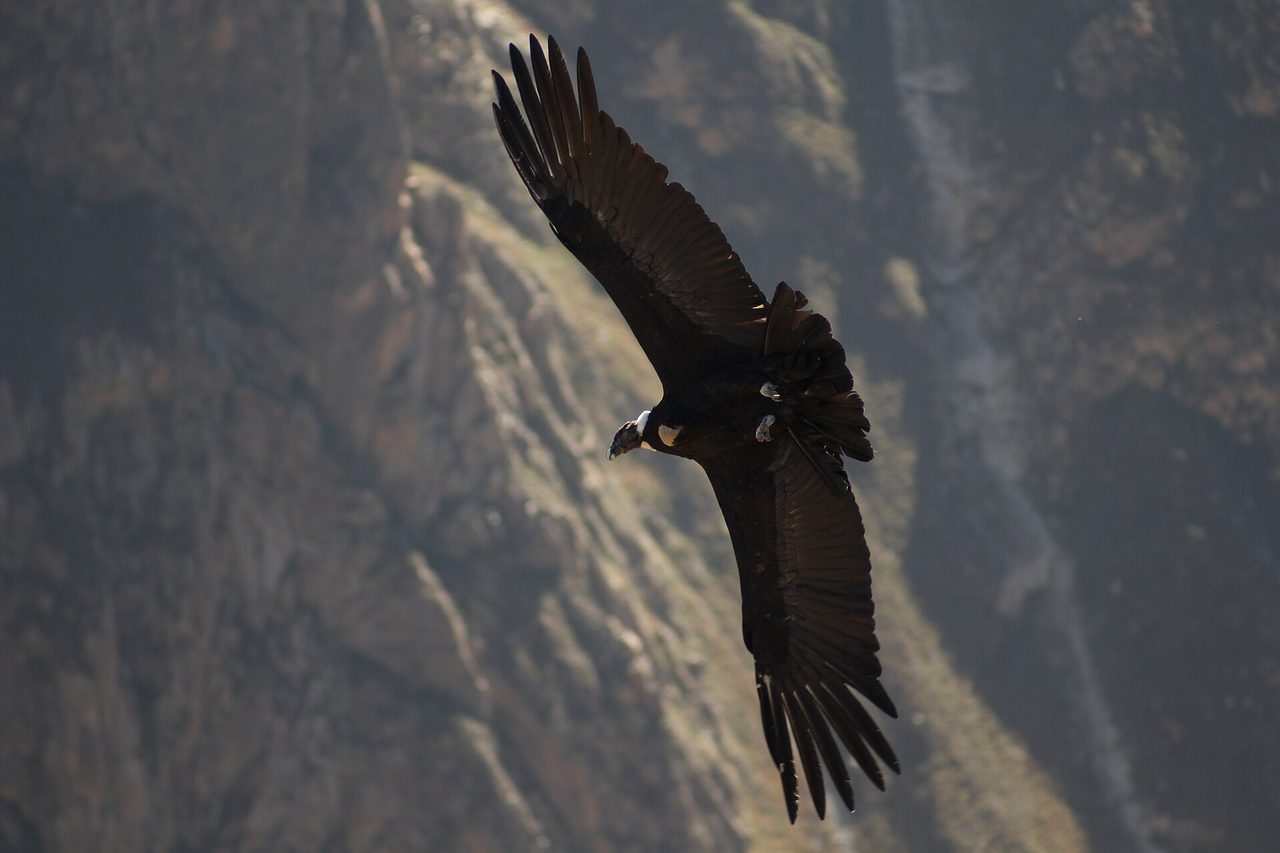
The best guides in Tambopata say the same thing on the first boat ride upriver, and they say it early: you are probably not going to see a jaguar, so stop scanning the banks for one and start looking at everything else. It is the most useful sentence anyone will tell you about Peru wildlife, and almost nobody selling a tour will say it out loud. The country holds an absurd amount of nature — 1,879 recorded bird species, second in the world only to Colombia, plus something like a fifth of the planet’s butterflies — but what you actually see in five days comes down to three things: which ecosystem you choose, how far into it you are willing to travel, and which month you arrive.
So this guide is organised by ecosystem, not by animal, because that is how sightings really work. A capybara and an Andean condor are not on the same day trip. They are not even in the same week unless you deliberately plan for it, and pretending otherwise is how people end up disappointed in a country that should have thrilled them.
How to think about Peru wildlife before you book anything
Peru is not a safari country. In East Africa you sit in a vehicle on open plain and the animals are simply there, at distance, visible. In Peru almost everything is hidden by vegetation, altitude, water, or its own good sense. Sightings are earned with early starts, patience, and a guide who knows one specific patch of forest extremely well.
The protected-area network is enormous on paper. SERNANP, the state agency, administers around 246 protected areas covering roughly 18 per cent of the national territory. But only about 15 of those carry full national park status, and of all the Peru national parks only a handful have any visitor infrastructure at all. Manu and Huascarán are the ones you can realistically plan a trip around. Most of the rest are research and conservation units with no lodges, no marked trails and no legal public access. When a tour page advertises “national park”, check whether it means the park or the buffer zone outside it — the difference is usually two days of travel and several hundred dollars.
Four ecosystems carry almost all of the wildlife tourism, and they sit far apart:
- Amazon lowlands — Tambopata and Manu in the south, Pacaya-Samiria and the Tahuayo in the north. Monkeys, macaws, caiman, otters, and the small chance of something big.
- High Andes (puna) — Colca, the Arequipa altiplano, Huascarán, Pampa Galeras. Condors, vicúna, viscacha, flamingos on cold lagoons.
- Pacific coast and the Humboldt Current — Paracas, the Ballestas, Palomino off Lima, the northern whale coast. Sea lions, Humboldt penguins, boobies, terns.
- Cloud forest — the narrow, dripping band between about 800 m and 2,800 m. Cock-of-the-rock, hummingbirds, the Andean bear, and more endemic birds per square kilometre than anywhere else on the list.
Realistically you can build two of those into one trip without the whole thing becoming a series of airport transfers. Three is possible in three weeks. All four is a specialist birding trip, not a holiday. If you are still shaping the route, the pacing notes in our two- and three-week Peru itinerary planner will save you a lot of backtracking, and it is worth reading alongside the broader survey of what there is to do across the country so wildlife slots in rather than dominating.
The honest sightings table: what you will actually see
Every competitor guide lists jaguars, pink dolphins and spectacled bears with the same enthusiasm, as if they were equally likely. They are not. Below is my honest read of the odds, assuming a guided multi-day trip in the right place at the right time of year, with a guide who is actually trying. Casual day trips knock every number down.
| Species | Where | Best months | Realistic odds |
|---|---|---|---|
| South American sea lion | Ballestas, Palomino | Year-round | Certain |
| Peruvian booby, pelican, Inca tern | Ballestas, Paracas | Year-round | Certain |
| Humboldt penguin | Ballestas, Punta San Juan | Year-round; more visible Apr–Nov | Likely, but as distant specks on rock |
| Vicúna | Salinas y Aguada Blanca, Pampa Galeras | Year-round | Near-certain if you drive the Arequipa–Colca road |
| Viscacha | Colca rim, Machu Picchu terraces, Huascarán | Year-round, dawn and dusk | Likely if you sit still for twenty minutes |
| Andean condor | Cruz del Cóndor, Colca | Jun–Aug best; year-round | High on a clear morning; never guaranteed |
| Andean flamingo species | Salinas lagoon, Titicaca, Junin | Dec–Apr | Moderate, water-level dependent |
| Howler monkey (heard) | Any Amazon lodge | Year-round, pre-dawn | Certain |
| Monkeys seen well (squirrel, capuchin, saddleback tamarin) | Any Amazon lodge | Year-round | Very likely — at least two species |
| Macaws in flight | Amazon, anywhere | Year-round, dawn | Very likely |
| Clay lick spectacle (100+ birds on the bank) | Chuncho and Colorado (Tambopata), Blanquillo (Manu) | Sept–Feb peak | Roughly half of scheduled visits; rain cancels it |
| Hoatzin | Oxbow lakes — Sandoval, Pacaya-Samiria | Year-round | Very likely |
| Caiman (white, and black at night) | Night boat, any river lodge | Year-round | Very likely |
| Capybara | River banks, Madre de Dios and Tambopata | Year-round | Likely |
| Giant river otter | Sandoval Lake, Manu oxbow lakes | Jul–Sept, low water | Good at Sandoval with a dawn canoe; moderate elsewhere |
| Pink river dolphin | Iquitos, Pacaya-Samiria, Tahuayo | Year-round; Jul–Oct concentrates them | Likely in the north; uncommon in the south |
| Sloth | Amazon canopy | Year-round | Moderate — usually a grey lump your guide finds |
| Tapir | Tapir licks in Manu and Tambopata | Year-round, night hide | Low to moderate, and only with a dedicated overnight |
| Jaguar | Manu Reserved Zone riverbanks; occasionally Tambopata | Jun–Aug, low water | Low. Plan for no; treat yes as a windfall |
| Puma, ocelot, anaconda | Anywhere and nowhere | — | Very low |
| Andean cock-of-the-rock | Manu road leks, Aguas Calientes valley | Sept–Dec display peak; year-round | High at a known lek at first light |
| Marvellous spatuletail | Huembo, near Pomacochas | Nov–Jun best | Good over a two-hour sit at the feeders |
| Spectacled (Andean) bear | Chaparrí reserve; wild in cloud forest | Year-round | Moderate at Chaparrí; very low genuinely wild |
| Humpback whale | Máncora, Los Órganos, Punta Sal | Jul–Oct, peak Aug–Sept | High in season |
| Titicaca grebe / Titicaca water frog | Lake Titicaca | Year-round | Moderate / very low |
Two things to take from that table. First, the coast delivers guaranteed sightings and the Amazon delivers uncertain ones, which is the opposite of what the marketing implies. Second, the animals people fly across the world for — jaguar, tapir, ocelot — sit at the bottom. Build the trip around the middle of the table and you will come home happy — and note how unevenly the good sightings are spread across Peru’s regions.
The Amazon lowlands: Tambopata, Manu and Pacaya-Samiria
More than half of Peru is Amazon basin, and three areas take almost all the visitors. Puerto Maldonado in the south is the easy one: a ninety-minute flight from Cusco or Lima, then straight onto a boat. Manu is reached overland from Cusco down a spectacular, slow and occasionally landslide-prone road. Iquitos in the north is a city of half a million people with no road connection to anywhere, from which boats run down to Pacaya-Samiria and the Tahuayo. Our dedicated guide to choosing between the Peruvian Amazon gateways goes into the logistics; here I want to deal with the thing that matters most for animals.
The lodge-distance trade-off nobody puts on the booking page
This is the single most useful piece of information in this article. In the southern Amazon, wildlife density correlates almost perfectly with distance from Puerto Maldonado. Near the town there is hunting pressure, farm noise, brazil-nut concession traffic and a constant drone of peque-peque boats. Four hours upriver there is none of that. The animals know the difference.
The catch is that every hour further upriver costs you both money and days, because those hours come out of your holiday twice — once going in, once coming out.
| Distance from Puerto Maldonado | Minimum sensible trip | What you get | Typical cost per person |
|---|---|---|---|
| 45 min–1 hr by boat (lower Madre de Dios, Sandoval area) | 3 days / 2 nights | Sandoval Lake, giant otters, hoatzin, caiman by night, macaws overhead. Also other boats, distant chainsaws, some light pollution. | US$250–400 |
| 2–3 hrs up the Tambopata (buffer zone) | 4 days / 3 nights | Canopy tower, an oxbow lake to yourself, a smaller clay lick, proper night walks, decent monkey diversity. | US$450–750 |
| 4–6 hrs (inside Tambopata National Reserve) | 5 days / 4 nights | Chuncho or Colorado clay lick, tapir lick, genuinely dark nights, tapir and peccary tracks on every trail. | US$800–1,300 |
| 7–8 hrs (the far upper Tambopata) | 5–7 nights | The highest wildlife density in the reserve, resident macaw research, realistic large-mammal chances. | US$1,300–2,500 |
The mistake I see constantly is people booking a 3-day/2-night trip to a lodge an hour from town, and then concluding that the Amazon is overrated. It is not overrated. They bought the wrong ticket. If you only have three days, that is a perfectly reasonable introduction to the rainforest — the smell, the sound, the scale — but set your expectations at monkeys, birds and caiman. If wildlife is the reason you came to Peru, four nights is the realistic minimum and the further upriver, the better. Add the reserve entrance fee on top of the tour price: currently around US$15–25 depending on trip length, usually collected separately.
Tambopata, Manu or Iquitos
Tambopata is the efficient choice. Fly in, be at a lodge by lunchtime, high species diversity, the two biggest macaw clay licks in the world within reach. It is also the busiest, and the first hour of river is visibly developed.
Manu is the serious one. Manu Biosphere Reserve holds a Guinness record for bird species recorded in a single protected area, and the Reserved Zone — the strictly limited inner area with the oxbow lakes — is the only place in Peru where jaguar sightings are a genuine possibility rather than a fantasy. It also costs you two travel days on the road each way from Cusco, and a Reserved Zone trip runs 6–8 days at roughly US$950–2,000 in a group. What most operators sell as “Manu” on a 3- or 4-day programme is the Cultural Zone, outside the park. That is a nice cloud-forest-plus-jungle trip. It is not the Reserved Zone, and the price difference tells you so.
Iquitos and Pacaya-Samiria is the water trip. Over 20,000 km² of seasonally flooded forest, reached by boat from Nauta. This is where pink river dolphins are routine rather than lucky, where you paddle between tree crowns in high water, and where the birdlife on the water is exceptional. It is worse for terrestrial mammals and better for everything aquatic. High water runs roughly December to May, low water June to November, and they are genuinely different trips rather than a good season and a bad one.
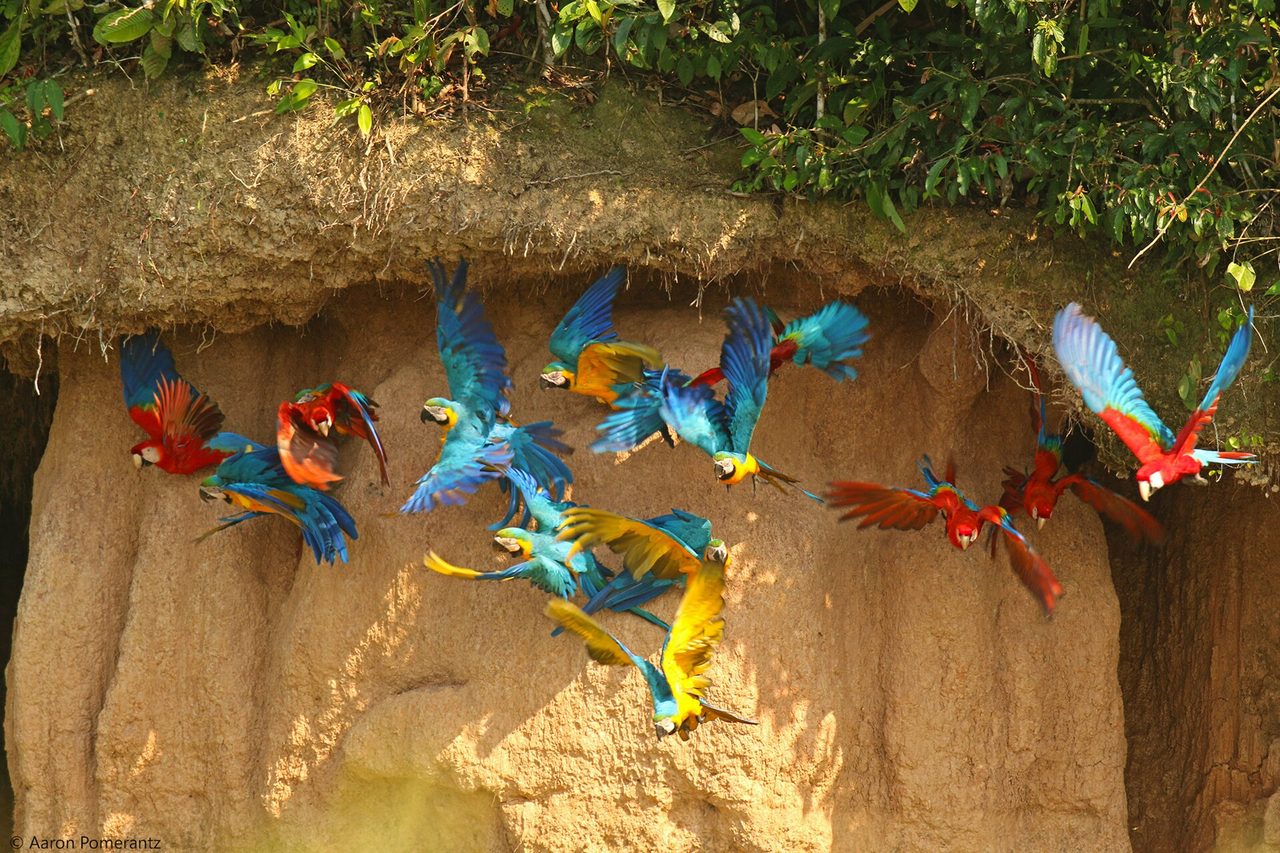
Macaw clay licks are seasonal, and weather cancels them
The clay lick, or collpa, is the postcard image of the Peruvian Amazon: a raw clay riverbank with a hundred macaws and parrots piled onto it, eating soil to buffer their diet. It is genuinely one of the great wildlife spectacles on earth when it happens. It does not always happen.
Activity peaks roughly September to February, when the birds are breeding and feeding chicks. It dips noticeably from around April to July — the exact months when most visitors turn up for the dry season. Rain shuts it down entirely; so does a raptor circling overhead, which can empty a lick in three seconds and keep it empty for an hour. You leave the lodge at 4am, sit in a blind, and sometimes you get twenty parakeets and a lot of mosquitoes.
Two practical responses. Book a lodge with its own smaller lick as well as access to a big one, so a blank morning is not the whole trip. And if the spectacle really matters to you, go in October or November rather than July, and accept a bit more rain and mud in exchange.
What a day in an Amazon lodge is actually like
Up at 4.30 or 5, because that is when animals move. A boat or a trail walk before breakfast. Back for a rest through the dead heat of midday when nothing moves and neither will you. Out again at 3.30 or 4, then a night walk after dinner looking for frogs, tarantulas and eyeshine. Two proper activity blocks a day, humidity that never drops below unpleasant, no signal, and often power for only a few hours in the evening. Temperatures sit around 24–34°C, except when a friaje — a cold front pushing up from Argentina between roughly May and September — drops daytime highs to single figures for two or three days and shuts down the insects and the reptiles with them. Pack one warm layer even for the jungle. Almost nobody does.
The high Andes: condors, vicúna and the puna
Above about 3,800 m the vegetation goes to tussock grass and everything living there is either superbly adapted or a tourist. The wildlife is easier to see than in the Amazon — open country, no canopy — but there is much less of it.
Cruz del Cóndor: get the timing right or do not bother
The Colca Canyon viewpoint is the most reliable place on the continent to see Andean condors, and it works on a very specific mechanism. The morning sun heats the canyon walls, thermals form, and birds that have roosted on the cliffs use the rising air to get airborne. That means the window is roughly 8am to 10am, and arriving before 9 gives you the best chance of several birds in the air at once. Turn up at noon and you will see a spectacular gorge and no condors.
Most people do this on a full-day tour from Arequipa that leaves around 3am, which is brutal but works. A two-day version with a night in Chivay or Yanque is far more civilised and gives you a second morning if the first is clouded. You will need the Colca tourist ticket, currently S/70 for non-Latin American adults, S/40 for Latin American visitors and S/20 for children, paid in cash at the Chivay checkpoint. Our guide to Arequipa and the Colca Canyon covers the tour options and the altitude problem in more detail — Chivay sits at 3,650 m, higher than Cusco, and people underestimate it constantly.
Condors fly year-round. Dry season, roughly May to October, gives clearer skies and more reliable thermals. Treat any operator who guarantees a sighting as an operator who will say anything.
Vicúna, viscacha and the easy wins
The drive from Arequipa to Colca crosses the Salinas y Aguada Blanca National Reserve, where around 1,800 vicúna live on the high pampa near Tambo de Cañahuas. You will see them from the bus window without doing anything. The other stronghold is Pampa Galeras in Ayacucho, which holds the densest vicúna population in the world and hosts the chaccu — the pre-Inca round-up, shear and release, usually held around 24 June.
Learn to tell the four camelids apart before you go, because you will be asked and because guides quietly judge you: llamas are big with banana-shaped ears, alpacas are smaller and woollier with straight ears, vicúna are slender, fawn-coloured, wild and protected, and guanacos are rare in Peru. Llamas and alpacas grazing the terraces are domestic livestock, not wildlife, however photogenic they look on the ruins.
Viscachas — long-tailed rodents that look like a rabbit crossed with a squirrel — live in rock scree everywhere from the Colca rim to the upper terraces at Machu Picchu itself, where they sunbathe on the stonework early and late in the day and most visitors walk straight past them. The same site has hundreds of orchid species and a handful of hummingbirds, which is why the quieter afternoon slots are better than the 6am scrum. If you are pricing that day, foreign adult entry currently runs S/163, or S/211 for the circuits that include Huayna Picchu or Machu Picchu Mountain; the figures move, so check the official portal before you book, and see our breakdown of how the circuit and ticket system works.
Elsewhere in the highlands, keep an eye out for the giant hummingbird, Andean flicker, mountain caracara and Andean goose. Around Lake Titicaca the reed beds hold the endemic and flightless Titicaca grebe and a lot of waterfowl; the famous giant Titicaca water frog is critically endangered and you are not going to see one. The Sacred Valley is a decent casual birding area, and the Abra Málaga pass above Ollantaytambo is a serious one, with polylepis woodland holding species you will find nowhere else.
The Pacific coast and the Humboldt Current
Peru’s coast is a desert that runs into one of the most productive seas on the planet. The Humboldt Current drags cold, nutrient-rich water up from the south, anchovies swarm in it, and everything else follows. This is where Peru wildlife is at its most reliable, because marine colonies do not hide.
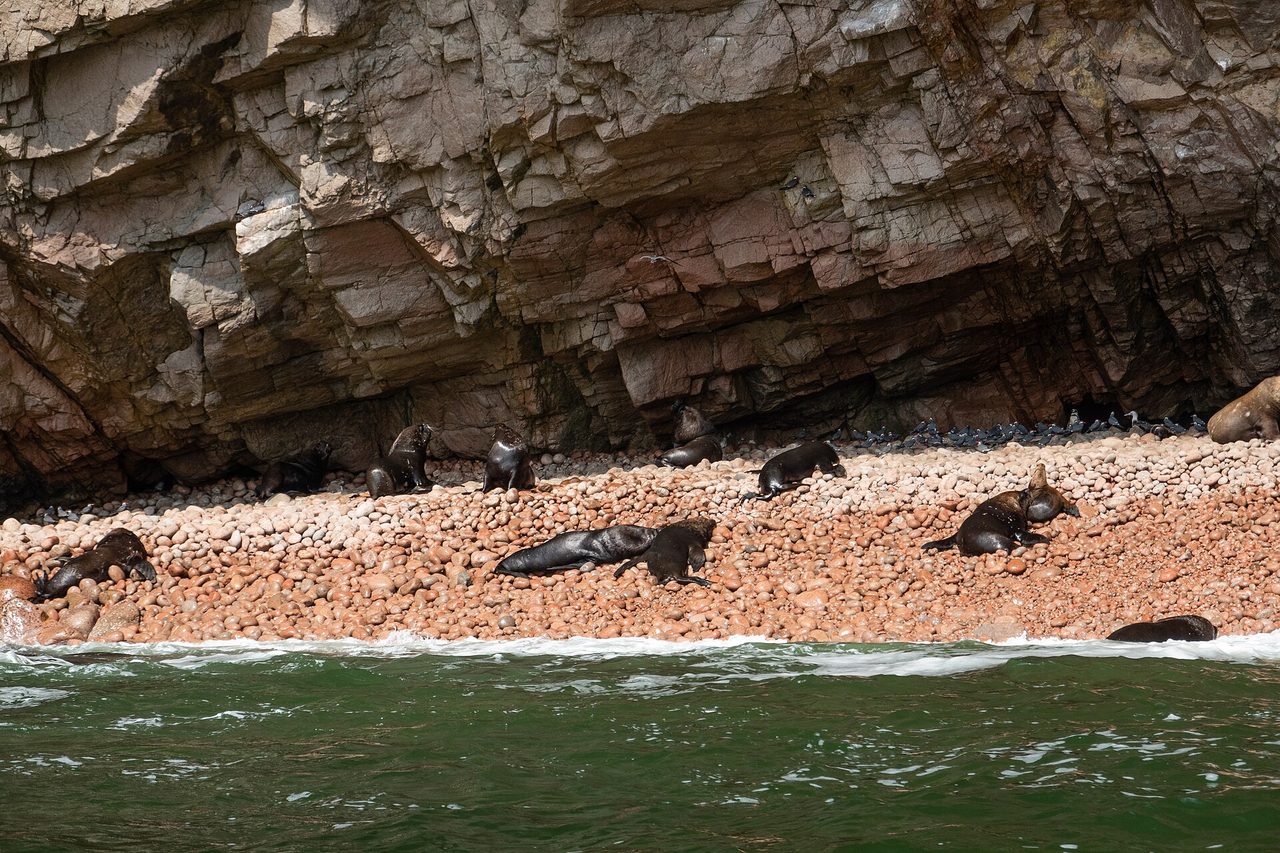
Ballestas: the boat that does not land
Let me be blunt about this one, because it is oversold everywhere. The Ballestas Islands are marketed as “the poor man’s Galápagos” and they are nothing of the kind. The islands are strictly protected, so the boat does not land. You sit in a speedboat for roughly two hours, of which perhaps forty minutes is actually beside the rocks, looking at sea lions, Humboldt penguins, boobies, cormorants and Inca terns from maybe thirty metres away. Guano dust falls on the boat. Some people are seasick. Nobody swims with anything.
Within that framing it is good value and genuinely worth doing: the density of animals is extraordinary, the Humboldt penguins are a real prize, and departures at 8am and 10am from El Chaco pier in Paracas cost around S/40–60 plus roughly S/16–17 in SERNANP and pier fees paid in cash at the dock. The 8am boat is calmer and better lit. Go with the expectation of a good marine bird-watching cruise and you will enjoy it. Go expecting the Galápagos and you will feel cheated, and you should, because someone sold you that line.
Paracas National Reserve, Palomino and the northern whales
The land side of Paracas is a separate ticket, currently about S/11 for adults, and it is a genuinely strange landscape of red-sand desert cliffs dropping into turquoise water, with flamingos on the bay in the southern summer and around 215 recorded bird species. It pairs naturally with the rest of Peru’s southern coast — Huacachina, the Nazca lines, the Ica wineries — and it is a much better use of an afternoon than most people give it.
Closer to the capital, the Palomino Islands off Callao hold a sea lion colony numbering in the thousands, and here you can get in the water with them under supervision, which is the one genuine swim-with-wildlife experience on the Peruvian coast. Boats run three to four hours and cost roughly US$50–90. The water is cold and grey; the sea lions are curious and enormous. It is one of the more surprising things you can do out of Lima in a single morning.
Far north, humpback whales migrate up from Antarctic feeding grounds to calve in the warmer water off Máncora, Los Órganos and Punta Sal, roughly July to October with August and September the peak. Trips cost around US$40–60, most boats carry a marine biologist, and sighting rates in season are high. That coast is a long way from everything else — see our overview of the northern circuit and its beaches before you commit to the detour.
The cloud forest: the band everybody drives through
Between the Amazon and the Andes there is a narrow, permanently damp band of forest between roughly 800 m and 2,800 m, hung with moss and bromeliads and hidden in cloud for much of the day. Per square kilometre it is the most biodiverse habitat in Peru and it holds a huge share of the country’s endemic birds. Most itineraries pass straight through it in a minibus at 5am.
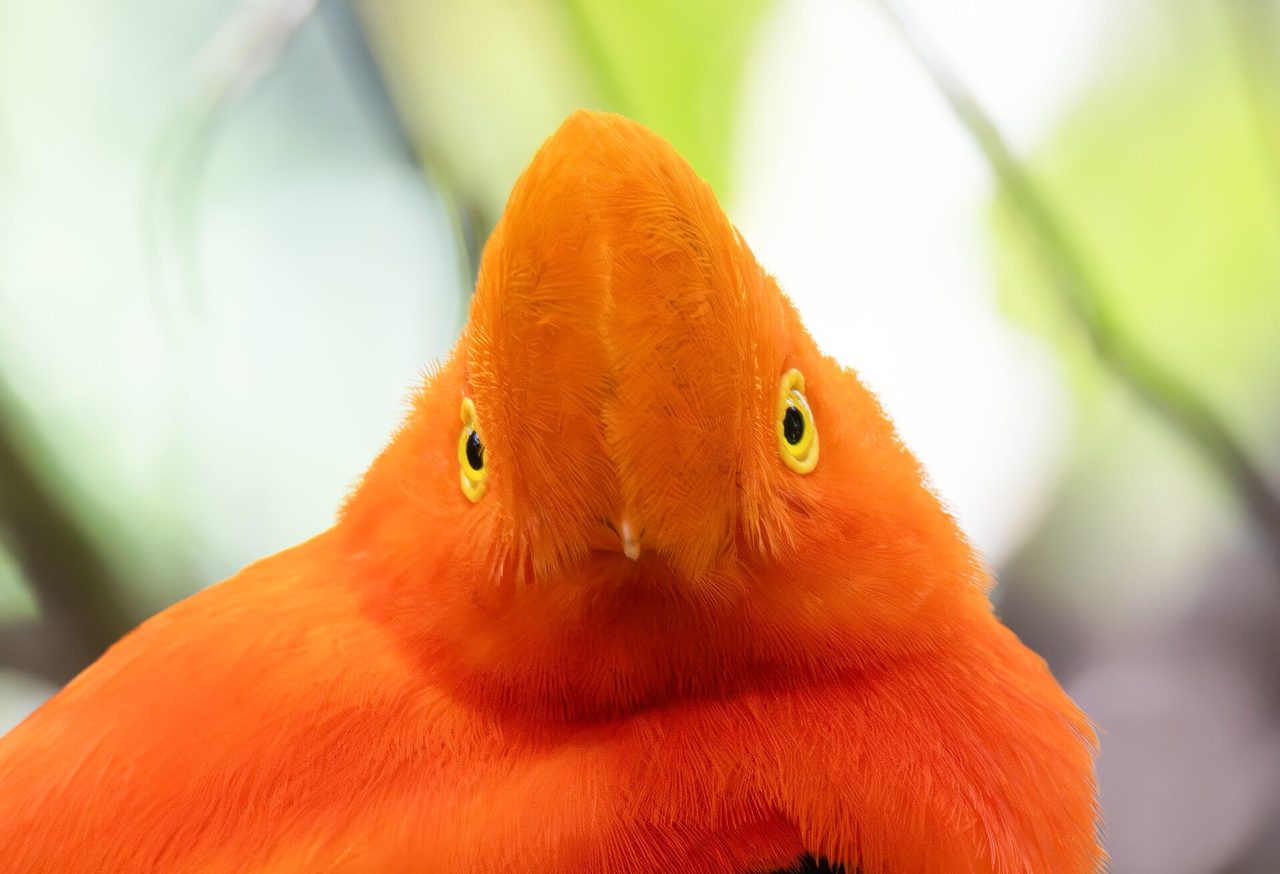
Cock-of-the-rock on the Manu road
The Andean cock-of-the-rock is Peru’s national bird: an absurd, tomato-orange creature with a disc-shaped crest over its face, which gathers at communal display grounds called leks to bounce, squawk and posture at females. The Manu road from Cusco passes several well-known leks, some within a two-minute walk of the road. The display runs at first light and again in late afternoon and often lasts only twenty minutes or so, which means the difference between a life-list moment and nothing is about a quarter of an hour of punctuality.
You do not need a full Manu expedition for this. Two- and three-day cloud forest trips run out of Cusco, and they combine well with the rest of what there is to do around the city without demanding a week. There is also a lek in the valley near Aguas Calientes, which is worth knowing if you have a spare morning before the train.
Chachapoyas and the marvellous spatuletail
Northern Peru’s Amazonas region has one of the world’s strangest birds. The marvellous spatuletail is a hummingbird with only four tail feathers, two of which end in enormous racket-shaped paddles that the male crosses and swings in front of the female while hovering. It lives only in the Utcubamba valley and nowhere else on earth.
The reliable place to see it is the Huembo reserve near Pomacochas, a community-run conservation project with feeding stations where the birds show up year-round. November to June brings more individuals and better odds of seeing the courtship display. Give it a couple of hours rather than twenty minutes; males come and go. The same region gives you Kuelap, the Gocta waterfall and some of the best cloud forest birding in the Americas, and almost nobody goes.
Spectacled bears, honestly
The spectacled or Andean bear is South America’s only bear, and the wild population is scattered, shy and nocturnal enough that genuinely wild sightings are a matter of luck rather than planning. Occasional individuals are seen in the forest below Machu Picchu and along the Inca Trail corridor, along with orchids, tanagers and hummingbirds that most trekkers walk past while concentrating on the steps.
The place people actually see bears is Chaparrí, a community-managed reserve in the dry forest inland from Chiclayo, which rehabilitates rescued and confiscated animals in large enclosures and also protects wild-living bears, foxes, guanacos and around 186 bird species. Be clear with yourself about what you are looking at: the bears you photograph there are usually in managed conditions, and that is a rehabilitation project rather than a wild encounter. It is still a good thing to support. It is just not the same as finding one on a mountainside.
Timing: what each ecosystem wants from the calendar
Peru’s seasons run opposite to the northern hemisphere and, more importantly, do not align across ecosystems. The dry Andean winter that gives you condors and clear mountain skies is exactly when the clay licks go quiet and the coast is grey.
| Ecosystem | Best window | Weakest window | Why |
|---|---|---|---|
| Amazon lowlands | Jul–Nov | Feb–Mar | Low water concentrates otters, caiman and mammals on shrinking channels; trails passable. Clay licks are the exception and favour Sept–Feb. |
| High Andes | May–Sept | Jan–Mar | Clear mornings mean reliable thermals for condors and long views; wet-season cloud can wipe out a Colca morning. |
| Pacific coast | Dec–Apr for the sea; Jul–Oct for whales | Jun–Aug for beach weather | Southern summer warms the water and clears Lima’s grey lid; humpbacks are a separate, later season in the far north. |
| Cloud forest | May–Oct for access; Sept–Dec for displays | Jan–Mar | The Manu road washes out in heavy rain; cock-of-the-rock leks peak toward the end of the year. |
If you want one window that does not fight itself, take late September through early November. The Andes are still dry enough, the Amazon water is low, the clay licks are ramping up, the leks are active, and prices have not hit the December peak. It is a compromise on every front and better than any of them individually. Our fuller month-by-month breakdown of when to visit Peru sets this against crowds and cost.
What it costs
| Experience | Typical price | Notes |
|---|---|---|
| Ballestas Islands boat | S/40–60 | Plus about S/16–17 in SERNANP and pier fees, cash at the dock |
| Paracas National Reserve entry | About S/11 adult | Separate from the boat; buy at the control post or online |
| Colca tourist ticket | S/70 foreign adult | S/40 Latin American, S/20 children; cash at Chivay |
| Colca day tour from Arequipa | US$25–60 | 3am start; two-day version US$60–140 |
| Palomino Islands sea lion swim | US$50–90 | 3–4 hours from Callao, wetsuit included |
| Máncora whale watching | US$40–60 | Jul–Oct only |
| Tambopata 3D/2N near town | US$250–400 | Introduction rather than a wildlife trip |
| Tambopata 4–5 days, deeper in | US$450–1,300 | Plus reserve entry, roughly US$15–25 |
| Manu Reserved Zone, 6–8 days | US$950–2,000 | Group rate; private costs considerably more |
| Pacaya-Samiria, 4–5 days from Iquitos | US$400–900 | Riverboat or lodge-based |
Prices move, particularly Amazon lodge rates, which track fuel costs for boat transfers more than anything else. Treat these as planning ranges, not quotes, and read them against our wider breakdown of what a Peru trip costs. Domestic flights to Puerto Maldonado and Iquitos are the other big variable — booking those early makes more difference to a wildlife budget than haggling over the lodge, and the practicalities are covered in our notes on getting around Peru by plane, bus and train.
Responsible wildlife tourism, without the sermon
Peru has a real problem with wildlife used as photo props, and travellers fund it without meaning to. Investigations by World Animal Protection and others have documented Amazon communities keeping sloths, monkeys, caimans, turtles and wild cats for tourist selfies, with individual animals handled by dozens of tourists a day. Sloths are pulled from trees by loggers and sold in Iquitos markets for the price of a pizza. A large share of the species used are CITES-listed and a significant proportion are classed as threatened.
The three situations to refuse
First, anything you can hold. A monkey placed on your shoulder, a sloth handed to you, a baby caiman passed around the boat — these animals were taken from the wild, usually by killing the mother, and they are handled to exhaustion. Second, the roadside stop between the airport and the lodge where someone appears with a parrot or an anteater and a hat for tips. It is not a rescue centre; it is a business, and it exists because tourists pay. Third, any “sanctuary” that lets you touch, feed or take selfies with the animals. Genuine rehabilitation centres restrict human contact precisely because their goal is release.
How to tell a research-linked lodge from a resort with a parrot
The signals are not subtle once you know to look:
- Ask what research is hosted on site. A real conservation lodge will name projects, partner institutions and often the researcher currently in residence. A resort will say “we are very eco”.
- Ask who owns it and who works there. Community-owned or community-partnered lodges, and lodges where the guides are local and long-tenured, are a strong signal. High guide turnover is a bad one.
- Look at the animals on the property. Free-flying macaws that come and go are fine. Clipped wings, cages, tethers, or a resident monkey that climbs on guests are not.
- Ask about group size at the clay lick and the tapir hide. Twelve people in a blind is a wildlife experience. Forty is a queue.
- Ask about baiting. Some operators put fruit out to guarantee monkey sightings. It works, and it makes the animals dependent and aggressive. Reputable places do not do it.
- Check the entry fee actually reaches the reserve. SERNANP fees are separately receipted. A lodge that folds it into a vague “taxes” line is worth a question.
- Read the drone policy. Anyone flying a drone over a clay lick or a sea lion colony is telling you exactly how much they care.
None of this requires you to be difficult. Two emailed questions before booking will separate the serious operators from the rest, and the serious ones enjoy being asked.
Gear, and the one purchase that changes everything
Buy binoculars. Not a long lens, not a better phone — binoculars, 8×42 if you can manage the size, 8×32 if weight matters. Almost every disappointing wildlife day in Peru is really a visibility problem: the animal was there, at forty metres, in shade, and you could not resolve it. A cheap pair transforms the Amazon, the Colca rim and the Ballestas boat alike, and lodges rarely have enough to lend.
Beyond that: dark, quiet, quick-drying clothing in the jungle rather than bright colours; rubber boots, which good lodges provide but rarely in large sizes; a head torch with a red setting for night walks; insect repellent with a high DEET or picaridin content and a long-sleeved layer for dusk; and a dry bag, because the boat will get you wet. In the highlands, layers and sun protection matter far more than anything technical — the equipment notes in our what-to-pack guide for the Andes apply just as well to a condor morning at 3,900 m. General preparation, from altitude to cash and connectivity, is covered in our practical Peru travel tips.
Fitting wildlife into a real trip
Three combinations work well and one does not.
Cusco plus Tambopata is the standard and it is standard for a reason: a short flight, four nights of jungle, and you are back for the train. Add the cloud forest on the Manu road if you have two spare days and want the cock-of-the-rock.
Arequipa, Colca and the southern coast gives you condors, vicúna, the Ballestas and Paracas in about five days of overland travel, and it is the easiest wildlife week in Peru to organise independently. Accommodation in Chivay and Paracas is straightforward — the regional notes in our guide to where to base yourself around the country cover both.
Northern Peru — Chachapoyas, Huembo, Chaparrí, the Máncora whale coast — is the specialist option: more driving, fewer tourists, better birds, and a genuinely different food culture that our guide to regional Peruvian cooking gets into. Give it ten days or do not bother.
What does not work is trying to bolt two nights of Amazon onto a four-day Machu Picchu trip. You will spend more time in transit than in the forest, and you will see less wildlife than you would on a two-hour boat at the Ballestas. If time is short, do the coast properly instead and save the jungle for a trip that can hold it.
Frequently asked questions
What is the best place to see wildlife in Peru?
For sheer species diversity, the Manu Reserved Zone. For the best ratio of wildlife to effort, a Tambopata lodge four or more hours upriver from Puerto Maldonado. For guaranteed sightings on a tight schedule, the Ballestas Islands and the Colca Canyon — between them, sea lions, penguins, seabirds, vicúna and condors in about four days.
Can you actually see a jaguar in Peru?
Yes, but plan on not seeing one. The realistic setting is the Manu Reserved Zone in June to August, when low water exposes riverbanks and jaguars come down to hunt caiman and capybara. Even there, a week-long trip is more likely to produce tracks than a cat. Anyone advertising jaguar sightings as a feature is selling you something they cannot deliver.
Are the Ballestas Islands worth it?
Yes, at S/40–60 for two hours, provided you understand what it is. You do not land, you do not swim, and you stay on the boat throughout. As a dense, close-range look at sea lions, Humboldt penguins and thousands of seabirds it is excellent value. As a substitute for the Galápagos, which is how it is frequently sold, it is not remotely comparable.
How many days do you need in the Amazon?
Four days and three nights is the practical minimum for a wildlife-focused trip, because the first and last days are largely travel. Three days works as an introduction to the rainforest but limits you to lodges close to town, where wildlife is thinner. Five to seven days lets you reach the interior of the reserve, where the difference is obvious within an hour of arriving.
What is a macaw clay lick, and when should I go?
A collpa is an exposed clay bank where macaws and parrots gather in the early morning to eat mineral-rich soil. Activity peaks roughly September to February and dips from April to July. Visits start before dawn, take place from a blind, and are cancelled or ruined by rain. Roughly half of scheduled visits produce the spectacle people expect.
Where can I see pink river dolphins?
Mainly in the northern Amazon around Iquitos, Pacaya-Samiria and the Tahuayo, where they are common in the main channels and lakes. They exist in the Madre de Dios system in the south too, but sightings there are much less reliable. Low water, roughly July to October, concentrates fish and makes the dolphins easier to find.
Is it ethical to hold a monkey or sloth for a photo?
No. Those animals are almost always taken from the wild, often by killing the mother, and are handled to the point of chronic stress. Refusing politely and telling your operator why is the single most useful thing an individual traveller can do about it in Peru. Photograph animals that are free to leave.
Do I need a specialist wildlife guide?
For general lodge trips, no — the resident guides are usually good and included. For serious birding, yes: a dedicated bird guide will triple your species count in the cloud forest, and it is the one place where the upgrade clearly pays for itself. Expect roughly US$80–150 a day for a private specialist.
Which national parks can I actually visit?
Manu and Huascarán are the two national parks with real visitor access, alongside national reserves such as Tambopata, Pacaya-Samiria, Paracas, Salinas y Aguada Blanca and Pampa Galeras, which are easier to enter than the parks themselves. Most protected areas in the SERNANP system are closed to general tourism.
Is Peru good for wildlife if I only have a week?
Yes, if you pick one ecosystem and commit to it. A week on the southern coast and in the Colca Canyon delivers a lot of animals with very little uncertainty. A week split between Cusco, Machu Picchu and two jungle nights delivers a photograph of a lodge. Depth beats breadth here more than anywhere else in the country.