Where to Stay in the Sacred Valley
The towns in the Sacred Valley are 10 to 40 minutes apart and genuinely different. Pick the town first and the room second, or you will lose an hour to a taxi every day.
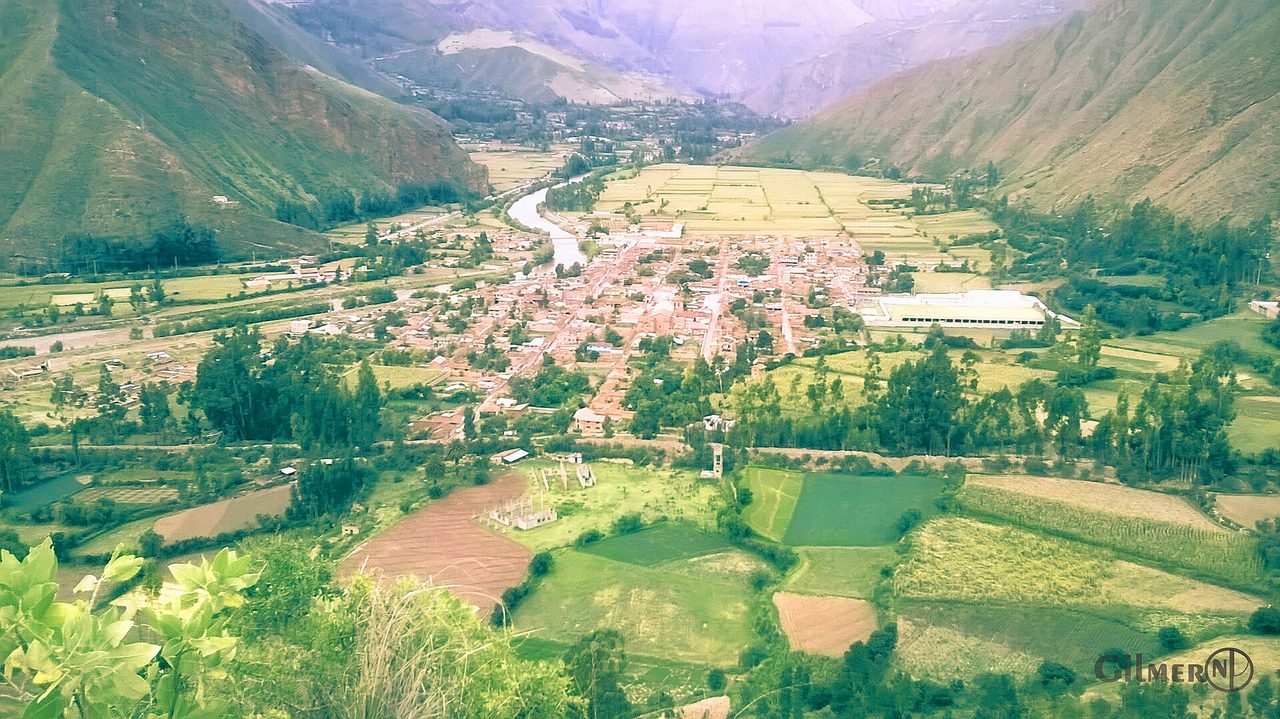
Almost everyone researching where to stay in the Sacred Valley starts by opening a booking site and sorting hotels by rating. That is the wrong first move, and it is the reason so many people end up spending an hour in a taxi every morning and another hour every evening. The valley is not a resort strip. It is a seventy-kilometre string of separate towns at different altitudes with genuinely different characters, and the gap between two of them can be forty minutes of winding two-lane road.
So pick the town first. Then pick the room. Get that order right and the rest of the decision is easy, because within any one town the choice is mostly a question of budget and how much you care about a garden.
I have based myself in four different towns in this valley across separate trips, and the difference between them was much bigger than the difference between the hotels. What follows is the town-by-town comparison I wish someone had handed me the first time, plus the practical stuff — cash, taxi fares, heating, booking lead times — that the hotel round-ups skip entirely.
Where to stay in the Sacred Valley: the towns compared
Here is the whole decision on one screen. Altitudes are the town centres, not the ruins above them. Price bands are what a clean double room typically costs in 2026 outside the July peak; add roughly a quarter to a third in high season.
| Town | Altitude | Character | Typical double | Best base for | Transport access | The honest downside |
|---|---|---|---|---|---|---|
| Ollantaytambo | ~2,792 m | Cobbled Inca street grid, compact, everything within five minutes on foot | S/90–350 | An early train, an Inca Trail start, walking everywhere | The railhead. Colectivos to Urubamba constantly | Tiny, and the plaza is genuinely noisy — tour buses from 09:00, bars until late |
| Urubamba | ~2,871 m | Working market town, spread out, unremarkable centre | S/120–600+ | Maras and Moray, families, anyone wanting a pool and a spa | The road junction of the valley — everything passes through | The town itself is not the attraction. The good hotels are outside it, so you need taxis |
| Pisac | ~2,972 m | Market town with a hippie-wellness overlay, small and walkable | S/80–280 | A first night out of Cusco, the market, yoga and retreat culture | Closest to Cusco, about an hour by colectivo | Furthest from the train. Market days swamp the centre; other days it can feel flat |
| Yucay | ~2,857 m | Village of colonial casonas and walled gardens, five minutes from Urubamba | S/150–500 | Quiet, and hacienda-style hotels at fair prices | On the main road, easy colectivo access | Almost nothing to walk to after dark. Two restaurants and a plaza |
| Calca | ~2,925 m | Proper Peruvian provincial town, very little tourism | S/60–200 | Budget travellers, hot springs at Machacancha, seeing normal life | Good — on the Cusco–Pisac–Urubamba road | Thin on tourist infrastructure. Little English, few good beds at the top end |
| Huarán / Lamay | ~2,930–2,940 m | Scattered countryside lodges along the river, no real town | S/200–900 | Stopping moving. Riverside gardens, horses, long lunches | Poor without a car or hotel transfers | You are dependent on the hotel for every meal and every trip out |
| Chinchero | ~3,760 m | Windswept high plateau village, weaving co-operatives, cold | S/90–300 | Weaving, an early Moray start, the Cusco road | On the Cusco–Urubamba highway, 45 min from Cusco | Higher than Cusco. A terrible first-night choice, and freezing at night |
If you want the one-line version: Ollantaytambo if you are catching a train, Urubamba if you want a comfortable hotel and a wide radius, Pisac if it is your first night out of the airport, Yucay or Huarán if you want to stop moving. Everything below is the detail behind that.
Why the town matters more than the hotel
The valley runs roughly northwest along the Urubamba river, and the towns sit on it like beads. Pisac is at the upstream end nearest Cusco; Ollantaytambo is at the downstream end where the road stops and the railway takes over. In between, in order, come Lamay, Calca, Huarán, Yucay and Urubamba. Chinchero is the odd one out — it sits up on the plateau above the valley on the road in from Cusco, not on the valley floor at all.
The driving times are short in isolation and brutal in aggregate:
- Cusco to Pisac: about 1 hour
- Pisac to Urubamba: about 45 minutes
- Urubamba to Ollantaytambo: about 25 minutes
- Cusco to Ollantaytambo direct via Chinchero: about 1 hour 45 minutes
- Pisac to Ollantaytambo end to end: about 1 hour 15 minutes
None of that sounds bad. But if you sleep in Pisac and your Machu Picchu train leaves Ollantaytambo at 06:10, you are getting into a taxi at 04:30 in the dark, and you are paying S/120–180 for the privilege because no colectivo runs at that hour. Do the same thing in reverse on the way back and you have spent a third of your valley time in a car. Whereas from a bed in Ollantaytambo you walk to the platform in ten minutes with a coffee.
That is the whole argument. The towns are not interchangeable, and the cost of the wrong one is measured in hours and taxi fares, not in stars.
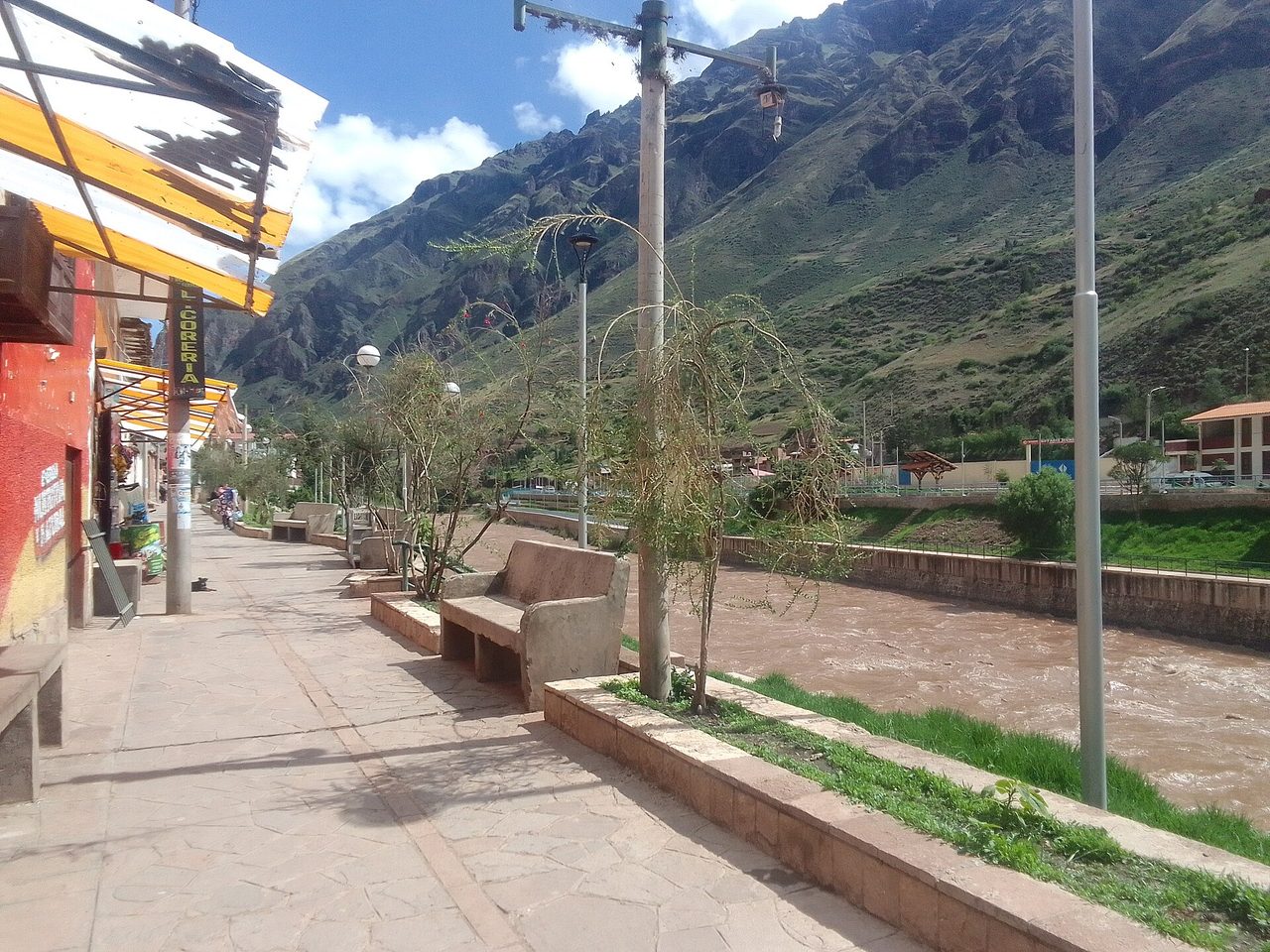
Ollantaytambo: the railhead, and the only town where the train is a walk away
Ollantaytambo is the smallest of the main towns and the only one that still runs on an Inca street plan — narrow cobbled lanes, water channels still flowing down the middle of them, doorways cut into walls that predate the Spanish by centuries. It is the prettiest place to sleep in the valley by a distance, and the fortress terraces and the Pinkuylluna granaries above the town deserve more than the ninety minutes a coach tour allows them.
It is also the end of the road. There is no drivable route onward to Machu Picchu, so everything funnels through the station here. That single fact drives most of the decision.
Stay in Ollantaytambo if: you have a train booked, particularly an early one; you are starting the Inca Trail at Kilometre 82 or Kilometre 104, both of which are reached from here; you want to walk to dinner rather than order a taxi; or you want ruins visible from your bedroom window. The Pinkuylluna granaries on the opposite hillside are free to climb and half the guesthouses in town look straight at them.
Do not stay in Ollantaytambo if: you want quiet. This is the part the guidebooks soften. Between roughly 09:00 and 16:00 the plaza fills with coaches doing the standard full-day valley loop, and the streets around it become a slow-moving crowd. In the evenings a handful of bars on and just off the plaza run late, and sound carries absurdly well between stone walls in a narrow street. If you are booking here, ask for a room off the plaza — the lanes on the Patacancha side, or anything toward the station, are noticeably calmer.
The accommodation is mostly small: guesthouses and hostales of eight to twenty rooms, a few genuinely good mid-range places converted from old houses, and one internationally famous set of glass pods bolted to a cliff face out toward Pachar, which is a novelty purchase rather than a place to stay. Book here further ahead than anywhere else in the valley, because the pool of beds is small and the demand is structural — everyone catching a morning train wants one.
Urubamba: the logistics hub that nobody visits for itself
Urubamba is the largest town in the valley and the least interesting. The centre is a functional Peruvian market town: a plaza, a covered market worth twenty minutes, a strip of chicken restaurants, a lot of mototaxis. Nobody comes to the valley to see Urubamba.
They come to stay near it, which is different. Urubamba sits at the road junction where the valley route meets the Chinchero highway, which makes it the shortest average distance to everything. Maras and Moray are a half-hour up the switchbacks. Ollantaytambo is twenty-five minutes west. Chinchero and the Cusco road are forty minutes east. If your plan is to see the whole valley over three days without a fixed itinerary, this is the base that costs you the least driving.
It also has by far the highest concentration of upscale hotels — converted haciendas, resort properties with heated pools, one Relais & Châteaux member, and the valley’s only genuinely large luxury resort, which has its own private rail siding. Almost none of them are in the town. They are strung along the road between Yanahuara and Ollantaytambo, or up side valleys, typically ten to thirty minutes out. That is a feature if you want gardens and a river view. It is a bug if you imagined strolling to a restaurant, because you will be calling a taxi for every meal you do not eat on site.
Stay in Urubamba if: you want the widest hotel choice at every price point; you are travelling with children and want space, a pool and a garden; the Maras salt pans and the Moray terraces are high on your list; or you have three or more nights and want a single base you never have to change.
Do not stay in Urubamba if: you have two nights and one of them is before a 06:00 train, or if the appeal of the valley for you is atmosphere. You will be sleeping somewhere lovely and driving past the interesting bits.
Pisac: closest to Cusco, and the best first night after you land
Pisac is an hour from Cusco, which makes it the easiest town to reach the day you arrive. If you fly into Cusco in the morning, you can be checked into a room in Pisac by early afternoon at nearly 500 metres lower than the city, which is the single most useful thing you can do for your first day at altitude. It is worth reading up on how Cusco’s 3,400 metres actually behaves before you decide, because the difference is real but often overstated.
The town has two personalities. There is the market, which spills across the plaza and the surrounding streets — Sunday is the big day, with smaller midweek markets that are less of a scrum and, in my experience, no worse for buying. Prices in Pisac tend to run a little above Cusco for the same textile, and the genuinely handwoven pieces are mixed in with a great deal of machine-made stock, so take your time.
Then there is the wellness scene, which has grown up on the hillside above town and in the neighbouring village of Cuyo Chico: yoga retreats, plant-medicine centres, vegetarian cafes, a permanent population of long-stay foreigners. Some of it is thoughtful and some of it is not, and it is worth doing more due diligence than a website provides if you are booking a multi-day retreat rather than a room.
Stay in Pisac if: it is your first or last night in the region; you want a walkable town with a good cafe scene at genuinely low prices; or the market and the terraced ruins above town are the reason you came.
Do not stay in Pisac if: the train is your priority. You are the furthest from Ollantaytambo of anywhere in the valley, and the pre-dawn transfer is the most expensive and least pleasant part of the whole trip.
Yucay, Huarán, Calca and Lamay: for people who want to stop moving
These four sit in the middle of the valley and get skipped by nearly every guide, which is a shame, because for a certain kind of trip they are the right answer.
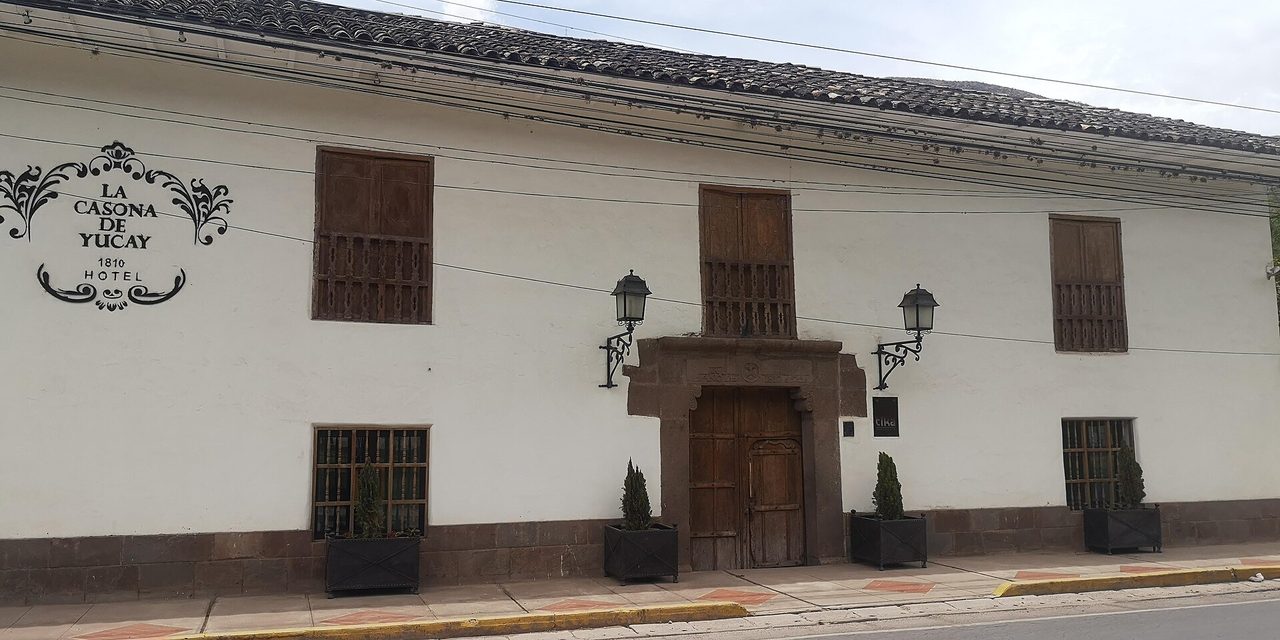
Yucay is five minutes east of Urubamba and feels a century removed from it. It was an Inca royal estate and later a colonial one, and what survives is a handful of large casonas around a pair of grassy plazas, several of which are now hotels. You get thick adobe walls, courtyards, old trees and absolute silence after about nine in the evening. The price-to-quality ratio here is the best in the valley — the same room in Urubamba proper would cost noticeably more.
Huarán is not really a town, more a stretch of riverside between Calca and Yucay where a scattering of lodges and small retreat properties have set up along the water. It is beautiful and it is isolated. Everything is a taxi ride. Book here only if the point of the stay is the property.
Calca is a working provincial capital with barely any tourism at all. It has a proper market, cheap and decent set lunches, and thermal baths up a side valley at Machacancha and Minasmoqo. Beds are basic and cheap. If you want two days of ordinary Peruvian small-town life rather than the tourist corridor, this is where to have them.
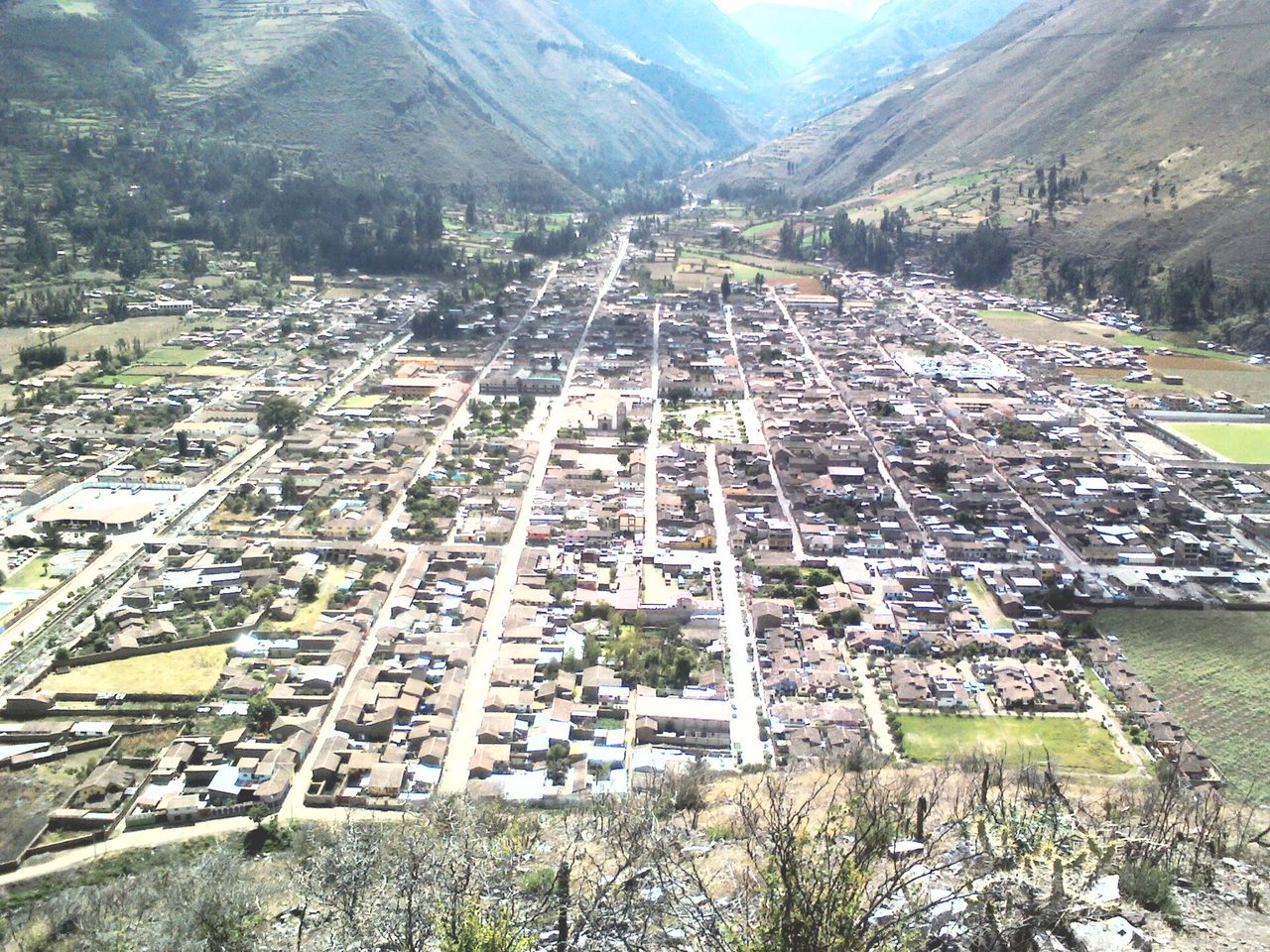
Lamay sits between Pisac and Calca and is mostly known for cuy restaurants and, increasingly, a few boutique places on the slopes above. Same logic as Huarán: lovely, but you are car-dependent.
All four share one drawback worth stating clearly: after dark there is nowhere to go. If you are the sort of traveller who likes wandering out for a beer and seeing what happens, you will be bored. If you have been moving hard for a fortnight and want to read a book in a garden, they are exactly right.
The altitude argument, done properly
You will read everywhere that the Sacred Valley is lower than Cusco and therefore better for acclimatising. That is true of the valley floor and false of the valley as a whole, and the distinction matters because plenty of people book a Chinchero hotel or a Chinchero-heavy first day on the strength of it.
| Place | Approximate altitude | Versus Cusco |
|---|---|---|
| Machu Picchu citadel | 2,430 m | ~970 m lower |
| Ollantaytambo | 2,792 m | ~610 m lower |
| Yucay | 2,857 m | ~545 m lower |
| Urubamba | 2,871 m | ~530 m lower |
| Calca | 2,925 m | ~475 m lower |
| Lamay | ~2,940 m | ~460 m lower |
| Pisac | 2,972 m | ~430 m lower |
| Cusco | 3,400 m | — |
| Moray | ~3,500 m | ~100 m higher |
| Chinchero | ~3,760 m | ~360 m higher |
So: sleeping on the valley floor on your first night is a real, physiological improvement over sleeping in Cusco. Four to six hundred metres is not trivial at this elevation, and most people notice it. But a day trip that takes in Chinchero and Moray puts you higher than Cusco for several hours, and the road from Cusco to Urubamba crosses the plateau at over 3,700 m regardless of where you sleep. “Go to the valley to acclimatise” is advice about where you spend the night, not about where you spend the day.
The other half of the argument that gets missed: the valley is warmer during the day and roughly as cold at night. You are not escaping the cold by dropping 500 metres, and in June and July the valley floor gets frost. Which brings us to heating, below.
When staying in Cusco is actually the better call
Plenty of pages will tell you the valley is always the better base. It is not. Here are the cases where I would sleep in Cusco instead, said plainly:
- You have three nights or fewer in the region. Moving hotels costs you half a day each time. With a short trip, one base in Cusco and a long day trip out beats two bases. Our breakdown of how many days Cusco really needs covers the arithmetic.
- You care about eating well. This is not close. Cusco’s restaurant scene is one of the best in South America outside Lima; the valley has perhaps six restaurants worth crossing town for, most of them attached to hotels or a long taxi ride from anywhere.
- You want anything to happen after 21:00. The valley closes. Cusco does not.
- You are doing Rainbow Mountain, Humantay or the South Valley. All of those tours leave Cusco between 03:00 and 05:00 and will not pick up from the valley. Look at the full range of day trips that run out of Cusco before committing to a valley base.
- You are on a tight budget. Cusco has far more hostel competition, so dorm and cheap-private prices are lower, and you are not paying S/60–150 in taxis every day.
- You arrive late in the evening. A 19:00 landing plus a 90-minute transfer is a miserable start. Sleep in Cusco, move to the valley the next morning.
The strongest hybrid, and what I would do with a week: one night in Cusco on arrival to drop bags and go slowly, two or three nights in the valley, then back to Cusco for the city itself. If you would rather see the whole shape of a trip first, our Cusco and Machu Picchu itinerary lays out how the nights usually fall.
What your money actually buys
Rates below are 2026 walk-up and online prices for a double room outside the July peak, at roughly 3.7–3.8 soles to the dollar. Peak season adds a quarter to a third, and the top end moves the most.
| Band | Per night | What you get | What you probably do not get |
|---|---|---|---|
| Hostel dorm | S/35–70 ($9–19) | Bunk, shared bathroom, kitchen, hot water most of the time | Heating. A reliably hot shower before 07:00 |
| Basic hospedaje double | S/80–180 ($21–48) | Private room and bathroom, breakfast, wifi, family-run and often lovely | Heating, insulation, luggage storage on request rather than as policy |
| Mid-range hotel | S/200–450 ($53–120) | Proper bed, decent breakfast, hot water that works at dawn, garden or terrace, someone who will call you a taxi | Heating in perhaps half of them. Ask before booking |
| Boutique / small luxury | S/500–900 ($130–240) | Design, a fireplace or a real heater, good food on site, transfers arranged, a spa in some | Walkability — most of these are outside towns |
| High-end resort | S/1,100–2,200+ ($290–580+) | Heated pool, full spa, multiple restaurants, guided excursions, occasionally a private rail platform | Any reason to leave, which for some people is the point and for others is the problem |
The mid-range band is where the valley is unusually good value compared with Cusco. S/300 buys a considerably better room here than it does in the historic centre, largely because land is cheap and there are gardens.
Heating is the thing that catches people out
There is no central heating tradition in the Andean highlands. Buildings are adobe or brick, built to stay cool, and rooms that are pleasant at three in the afternoon are 5°C at six in the morning. In June and July the valley floor drops to freezing or just below overnight. Yet a large share of hotels in every band below boutique have no heating at all, and many of the ones that advertise it mean a portable electric heater available on request — of which they own three, for twenty rooms.
Before you book in the dry season, send a one-line message and ask two specific questions: does the room have heating, and is there hot water at 05:00. Solar water systems are common and excellent at 16:00 and unreliable at dawn, which is exactly when you need a shower before a train. Good places answer both directly and will mention hot water bottles and extra blankets. Vague answers mean no.
If the answer is no heating, it is not a dealbreaker — a decent alpaca blanket stack handles it — but pack accordingly. The layering advice in our guide to what to wear around Machu Picchu and the highlands applies just as much to sitting in your room at night as to the ruins.
Practicalities the hotel lists never cover
Cash, cards and ATMs
Ollantaytambo, Urubamba, Pisac and Calca all have ATMs. Urubamba has the most and the most reliable; Ollantaytambo’s handful run dry on busy weekends with tedious regularity. Yucay, Huarán and Lamay have none. Withdraw in Cusco or Urubamba, not at 07:00 in Ollantaytambo on a Saturday.
Cards are accepted at mid-range hotels and up and almost nowhere else. Colectivos, taxis, market stalls, the Maras salt pans, most small restaurants and every hospedaje under about S/150 are cash. Carry small notes — a S/100 note for a S/4 fare will get you a resigned look and a hunt for change. There is more of this sort of thing in our general Peru travel tips, but the valley is more cash-dependent than most of the country.
Getting between towns without booking a tour
This is much easier than people expect, and it is the reason a valley base is workable without a car.
- Cusco to Pisac — colectivos and shared taxis from Calle Puputi, roughly S/10–15 per person, about an hour, leaving when full from early morning until evening. A private taxi is S/50–80.
- Cusco to Urubamba via Chinchero — minibuses from Pavitos, roughly S/10–15, about 1 hour 20.
- Pisac to Urubamba — S/5–8, about 45 minutes, frequent.
- Urubamba to Ollantaytambo — S/3–5, about 25 minutes, constant. This is the workhorse route.
- Anywhere within a town — mototaxi, S/2–5.
- Pre-dawn to the station — private taxi only. From Urubamba S/50–80, from Pisac S/120–180. Arrange it the night before through your hotel rather than hoping.
Colectivos run roughly 05:00 to 20:00 and then stop. That is the constraint that shapes valley evenings. For the wider picture of moving around the country, our guide to getting around Peru covers the long-distance side.
How far ahead to book
For June, July and August, book Ollantaytambo three to four months out and everywhere else six to eight weeks out. That sounds excessive and it is not: Ollantaytambo has a genuinely small bed count against a fixed daily demand from train passengers, and the good mid-range places in Urubamba and Yucay fill for the same weeks. The top-end resorts sell out earliest of all.
For the shoulder months of April, May, September and October you can usually book two to three weeks ahead and still choose. From November to March you can often walk in, and rates drop noticeably — which is one of the arguments in favour of the shoulder season if you can tolerate afternoon rain.
Book your train and your Machu Picchu entry before your valley hotel, not after. The entry ticket is the scarcest thing in the chain — currently S/163 for a foreign adult, or S/211 for the circuits including Huayna Picchu or Machu Picchu Mountain, since the conservation surcharge was added in May 2026. Check the official portal before you pay, because these move. Then book the train, then work out which town you need to be in the night before. Doing it in the other order is how people end up in Pisac with a 06:10 departure.
Will your hotel hold your luggage while you go to Machu Picchu?
Almost universally yes, and this is one of the underrated advantages of a valley base. The trains have a strict allowance — one bag of around 5–8 kg per passenger depending on the operator and service, so check your own booking — which means nearly everyone leaves a suitcase behind for the Machu Picchu leg.
Hotels and hostales in Ollantaytambo, Urubamba and Pisac all store bags free for returning guests, usually in a locked room rather than a lockable locker. Take valuables, a photo of the pile and your passport with you. PeruRail also runs a free left-luggage service at Ollantaytambo station itself, open from before the first train until late evening, which is the fallback if you are checking out and not coming back. If you want the full logistics chain, see the routes into Machu Picchu and the detail on train classes and fares, which run roughly $35–95 per standard-class leg from Ollantaytambo depending on departure time and season.
How many nights, and how to shape them
Two nights is the minimum that justifies the moving. One night in the valley means you arrive mid-afternoon, see one thing, sleep, and leave — you would have been better off seeing the valley as a long day out of Cusco.
Three nights is the sweet spot. My preferred shape:
- Night 1 — Pisac. Arrive from Cusco early afternoon, walk the town, do the ruins above it the next morning while they are empty.
- Night 2 — Urubamba or Yucay. Maras and Moray in the afternoon or the following morning. Note that Moray is on the Boleto Turístico but the Maras salt pans are not — that is a separate community-run cash entry of roughly S/10–20, so bring notes.
- Night 3 — Ollantaytambo. Arrive early enough to climb Pinkuylluna at golden hour, eat on the plaza, and be at the station in the morning without an alarm set for 04:00.
On tickets: the full Boleto Turístico del Cusco is S/130 for ten days and sixteen sites; each partial circuit is S/70, and Circuit III covers Pisac, Ollantaytambo, Chinchero and Moray over two days. Two partials cost more than the full ticket, so if you are seeing anything in Cusco as well, buy the full one. Students aged 18–25 can still get the reduced boleto rate with an ISIC card — but note that Machu Picchu itself no longer accepts ISIC and wants a university photo ID with an expiry date.
Four or more nights, and you can add a genuinely quiet stretch in Huarán or Calca, or use the valley as an acclimatisation and rest block either side of a trek. If you are hiking, the valley is where Inca Trail permits get collected and where nearly all the operators do their briefings, and both the classic route and the one-day short trail start from points reached through Ollantaytambo.
Frequently asked questions
Is it better to stay in Cusco or the Sacred Valley?
For your first night after flying in, the valley floor, because it is 430–610 m lower. For a short trip of three nights or fewer, Cusco, because you avoid a hotel move. For food, nightlife and early-start day tours, Cusco. For scenery, quiet and value in the mid-range, the valley. Most well-shaped trips use both, and the usual pattern is valley first, city second. Our neighbourhood guide to Cusco covers the city half of that decision.
Which town is the best base in the Sacred Valley?
Ollantaytambo for anyone catching a train or starting a trek; Urubamba for the widest hotel choice and the shortest average drive to everything; Pisac for a first night and the market. If you are only picking one for a three-night stay and you will be taking the train, Ollantaytambo for the last night and Urubamba or Yucay for the first two is the combination that wastes the least time.
Is the Sacred Valley really lower than Cusco?
The floor is, by 430 to 610 metres depending on the town. The valley as a whole is not. Chinchero at about 3,760 m and Moray at about 3,500 m are both higher than Cusco’s 3,400 m, and the road in from Cusco crosses the plateau higher still. Sleep low, but do not assume every valley day is a low-altitude day.
Do Sacred Valley hotels have heating?
Many do not. Below the boutique band it is the exception rather than the rule, and “heating” often means a portable heater shared between rooms. In June and July nights on the valley floor reach freezing. Ask the property directly before booking, and ask separately about hot water at dawn, since solar systems often disappoint at 05:00.
Can I get between the towns without a tour or a car?
Easily, in daylight. Colectivos and shared taxis run constantly between Cusco, Pisac, Calca, Urubamba and Ollantaytambo for S/3–15 a leg, leaving when full rather than on a timetable. They stop around 20:00. Before dawn and after dark you need a private taxi, which your hotel should arrange the night before.
How much does a decent room in the Sacred Valley cost?
A clean private double in a family hospedaje runs S/80–180 ($21–48). A good mid-range hotel with a garden and reliable hot water is S/200–450 ($53–120). Boutique properties start around S/500 and the big resorts run from about S/1,100. Add a quarter to a third in July and August. For how that fits the wider budget, see our breakdown of what a Peru trip costs.
Should I stay in Aguas Calientes instead of the valley?
Only for the night before a very early Machu Picchu entry. Aguas Calientes exists to service the ruins and is expensive and charmless by comparison, but sleeping there is the only way to be at the gate at 06:00 without a 04:00 start. The shuttle bus up the mountain runs around $24 return. For everything else, the valley is a better place to be.
When is the best time to stay in the valley?
May and September are the two best months — dry, clear, green from the rains, and without the July crowds or the July prices. The dry season proper runs roughly April to October, with June to August the peak. Our month-by-month look at when to visit the Cusco region goes into the trade-offs, and if you are locked into travelling in July, book everything unusually early.
Is one night in the Sacred Valley enough?
No. One night gets you an arrival, a sleep and a departure, and the transfers eat most of the value. Either give it two nights minimum or treat the valley as a day trip and keep your bags in Cusco. Two nights is fine, three is comfortable, and beyond four you are into the territory of properly slowing down — which, given how many people race through this region, is not a bad way to spend the time.