Urubamba, Peru: The Sacred Valley Base Town Guide
Urubamba is the least attractive town in the Sacred Valley and the most useful one to sleep in. Here is the honest case for basing here, with real colectivo fares, hotel prices by budget band and who should skip it.
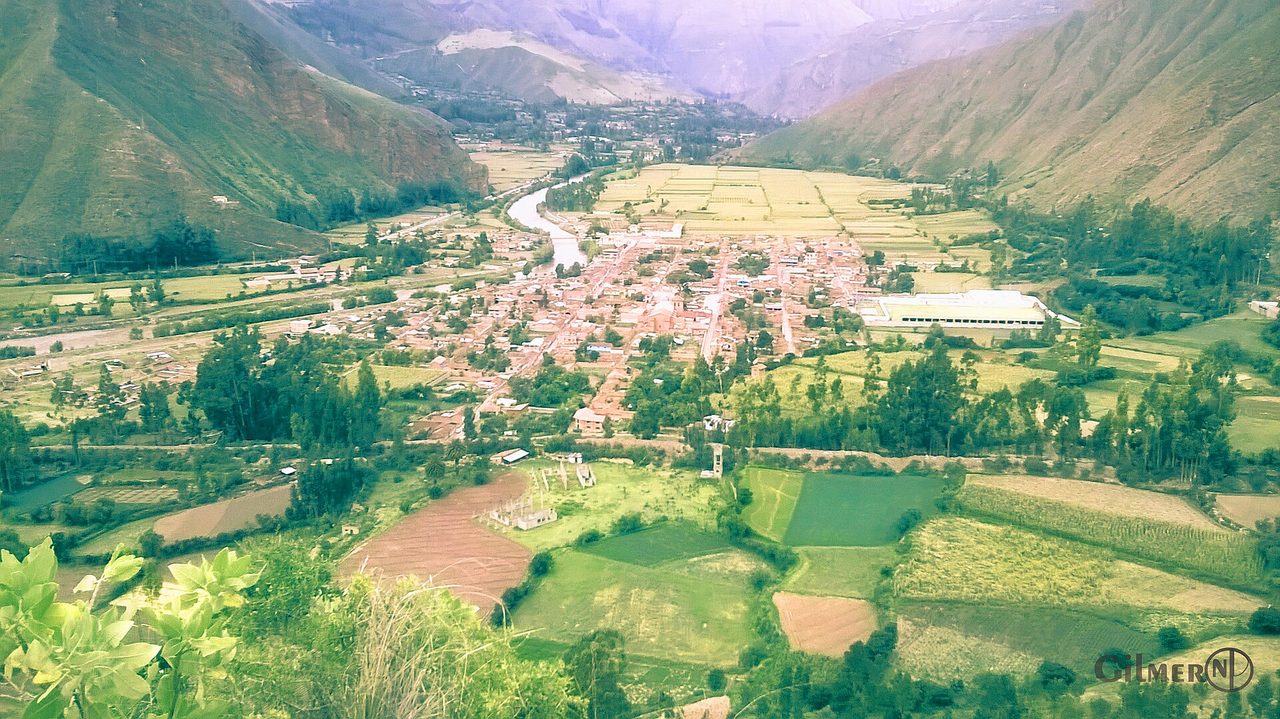
Most Urubamba Peru guides open by calling the town charming. It isn’t, particularly. Urubamba is a working market town with a bus terminal, more hardware shops than craft shops, and mototaxis that will happily nudge you off the pavement. Nobody comes here for the town. They come because it sits at 2,870 m in the middle of the valley, roughly half an hour from everything worth seeing, and because it has more good beds per square kilometre than anywhere else in the Sacred Valley.
That is the whole argument, and it is a strong one. Urubamba is where you base. It is not where you sightsee. Once you accept that, it becomes one of the most useful places to sleep in the Cusco region — and the flat, unphotogenic ordinariness of the centre stops feeling like a disappointment and starts feeling like the reason the groceries are cheap and the taxi drivers don’t quote you gringo prices.
This guide covers what Urubamba is actually for, how to get there and out of it, what is genuinely worth your time in and around town, what the beds cost across every budget band, and — the section most pages skip — who should not bother staying here at all.
The honest case for basing yourself in Urubamba
Every town in the valley is sold as a base, and behind that sits the bigger question of whether to sleep in the valley at all rather than in Cusco. Only one valley town is actually built like a town rather than a tourist attraction, and that is the one with the bus terminal, the hospital, the banks and the produce market. Five things make Urubamba worth choosing.
Position. It sits close to the middle of the inhabited valley floor. Ollantaytambo is about 25 minutes west. Maras and Moray are 15 to 40 minutes uphill. Chinchero is 35 to 45 minutes up the switchbacks toward Cusco. Pisac is roughly 50 minutes east. Nowhere else lets you reach all four in different directions without a long day. If you are trying to see the whole spread of Sacred Valley sites in two or three days rather than in one exhausting bus loop, this geography does most of the work for you.
Altitude. 2,870 m against Cusco’s 3,400 m. That 530 m difference is real and it is felt, particularly on your first two nights in Peru. More on the limits of this below, because the standard advice oversimplifies it badly.
Beds. Urubamba has the deepest and broadest accommodation stock in the valley: hostel dorms at $14, family guesthouses at $35, garden hotels at $90, and a cluster of genuinely world-class lodges out along the road toward Yucay and Huayllabamba. Ollantaytambo has charm and a shortage of mid-range rooms. Pisac has character and a lot of yoga. Urubamba has supply.
Infrastructure. There are working ATMs on and near the plaza, a large covered market where a kilo of avocados costs about S/6, pharmacies, laundries, a couple of decent bakeries and a hospital. If you have been on the road for three weeks and need to restock, this is the place in the valley where that is easy.
Price. A three-course set lunch away from the plaza runs S/10–18. In Ollantaytambo the equivalent is S/25–35 because the entire economy of that town is calibrated for people who arrived by train. Over a four-night stay the difference is not trivial.
Where Urubamba Peru sits, and the 30-minute rule
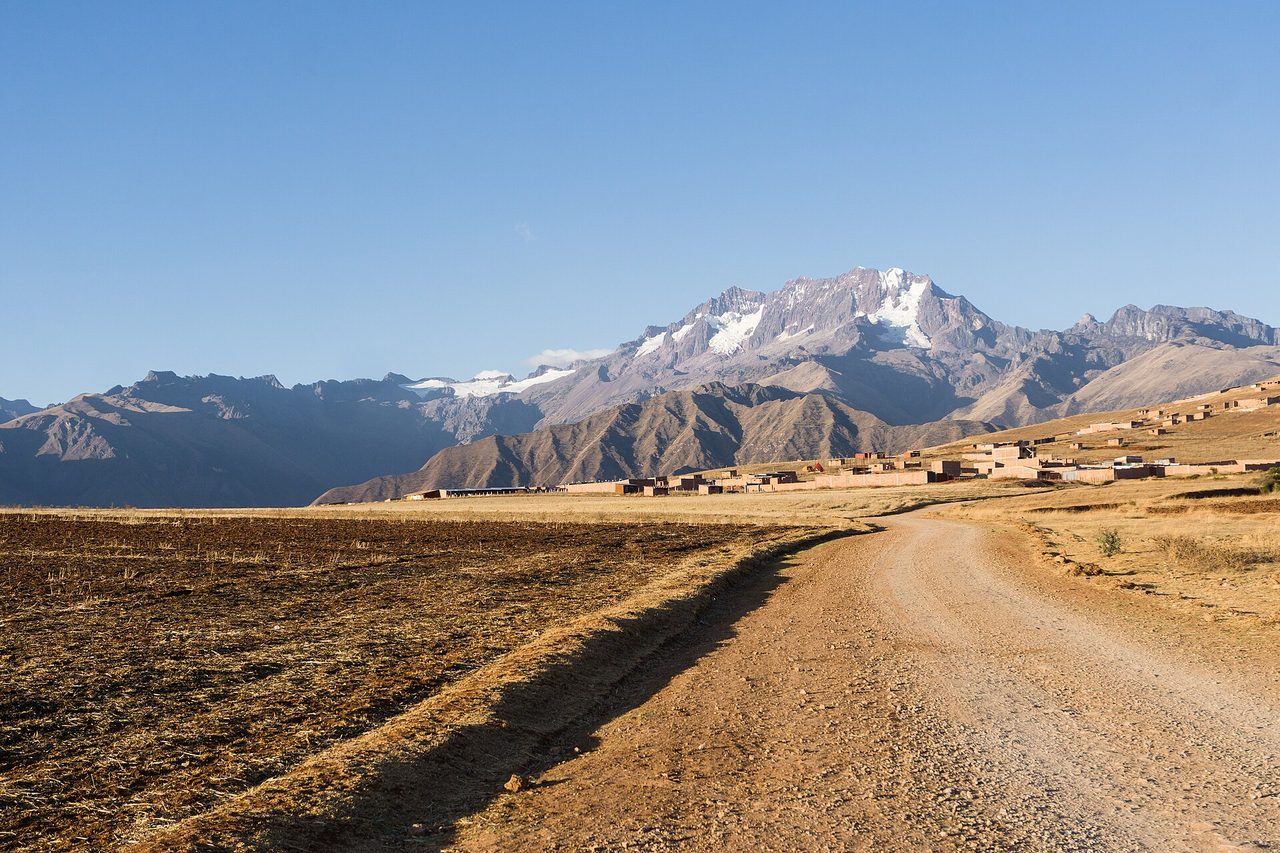
Urubamba is about 50 km from Cusco by road, but the drive is not the 50 km — it is the climb out of Cusco onto the Chinchero plateau at roughly 3,760 m and the descent off the far side into the valley. That is why an hour and a quarter is a realistic figure rather than the “one hour” the tour brochures print. The town sits on the north bank of the Urubamba River, called the Vilcanota upstream, with Nevado Chicón and its glacier at 5,530 m directly behind it.
Here is what actually matters when you are planning days out. Times are door-to-door from the Urubamba terminal in normal daytime traffic; fares are for shared colectivos and small buses, in soles, per person.
| From Urubamba to | Distance | Colectivo time | Fare (S/) | Private taxi (S/) |
|---|---|---|---|---|
| Ollantaytambo | 20 km | 25 min | 3–5 | 30–45 |
| Maras village | 13 km | 15–20 min | 3–5 | 25–35 |
| Maras salt pans (Salineras) | 10 km via Tarabamba | 20 min + 30 min walk | 3–5 | 40–60 with wait |
| Moray terraces | 25 km | 40–50 min, usually with a change | 5–8 | 60–80 with wait |
| Chinchero | 18 km | 35–45 min | 4–6 | 50–70 |
| Yucay | 4 km | 10 min | 1.50–2 | 10–15 |
| Calca | 22 km | 30–40 min | 3–5 | 40–55 |
| Pisac | 40 km | 50–60 min | 5–7 | 70–90 |
| Cusco (direct, via Chinchero) | 50 km | 1 h 20 | 10–15 | 110–150 |
| Cusco (via Pisac) | 75 km | 2 h | 12–18 in two legs | 150–180 |
| Cusco airport (CUZ) | 55 km | 1 h 30 | — | 120–160 |
Read that table and the case makes itself. Four of the valley’s five headline sites are inside 50 minutes. From Cusco, the same set costs you an extra two to three hours of driving every single day, which is why a standard one-day Sacred Valley tour feels like a coach transfer with occasional archaeology. If your plan is a string of day trips out of Cusco, you will spend a chunk of your holiday on the Chinchero switchbacks.
Altitude: the real reason to sleep here, and where the logic breaks
Urubamba is 2,870 m. Cusco is 3,400 m. Machu Picchu, for reference, is 2,430 m — lower than both, which surprises people. Sleeping 530 m lower on your first nights in the highlands is a meaningful advantage. You will sleep better, your resting heart rate will settle faster, and the headache that hits many people on their first Cusco afternoon is less likely to arrive at all. Every doctor-approved acclimatisation strategy says ascend slowly and sleep low; Urubamba lets you do that without wasting days — and two or three nights is usually the right amount, which is the case I make in the guide to how many days the Sacred Valley is worth.
The advice usually stops there, and that is where it becomes misleading.
A Urubamba base does not protect you on the days you go up. Chinchero sits at roughly 3,760 m — 360 m higher than Cusco. Moray is around 3,500 m. Both are standard valley day-trip stops, and both are places where people who thought they had “acclimatised in the valley” get an unpleasant surprise. Maras village is about 3,300 m. The salt pans themselves drop back to roughly 3,000 m as you descend the ravine.
So the correct version of the advice is: sleep low, go up gradually during the day, come back down to sleep. That is a textbook acclimatisation profile and Urubamba executes it well. What it will not do is let you skip the process entirely. If you are trying to work out how much time you actually need before a hard day out, the mechanics of altitude in and around Cusco are worth understanding properly before you book anything strenuous.
Practical version, based on what works for most people: fly into Cusco, do not linger, take a taxi or colectivo straight down to Urubamba the same afternoon, and sleep there for two nights. Do easy valley things on day one — the town, Yucay, a low walk. On day two go higher. Move to Cusco later in the trip if you want the city, by which point 3,400 m will feel like nothing.
Getting to Urubamba from Cusco
There are three ways down and they are not close in price.
Colectivo from Calle Pavitos (the direct route)
Shared minivans to Urubamba leave from the Pavitos area of Cusco, a few blocks southwest of the Plaza de Armas, near the intersection with Avenida Grau. They go when full, which in daylight means every 10 to 20 minutes. Expect to pay S/10–15 and to take about 1 hour 20 minutes. The route climbs to Chinchero and drops into the valley, so you can ask to be let out at Chinchero or at the Maras turnoff on the way if you want to combine the transfer with a stop.
Practical notes that matter. The vans are 15-seaters and drivers will sell the middle seats; if you have a large pack you may be asked to pay for a second seat or to put it on the roof. Departures dry up after about 19:00. There is no booking, no schedule and no luggage hold. Say “terminal” if you want the bus terminal, or name your hotel — they will usually drop you on the main road nearest to it for the same fare.
Colectivo via Pisac (the scenic route)
A second set of vans leaves from Puputi, near the Garcilaso roundabout, heading down the other arm of the valley to Pisac. Pisac to Cusco costs around S/5–8 and takes 45 minutes. From Pisac you flag anything heading west toward Calca and Urubamba for another S/5–7. Total is roughly two hours and S/12–18, but you get to break the journey at the Pisac market and ruins. If you are arriving from Cusco with a whole day free, this is the better route.
Taxi or private transfer
A private car from central Cusco runs S/110–150, or S/120–160 from the airport, and takes about 90 minutes. Booked through a hotel it will be more like S/180–220 with the markup. Worth it if you are three or four people with luggage, arriving late, or feeling rough from the altitude on your first afternoon. Not worth it otherwise. For a broader sense of what these transfers do to a budget, our breakdown of what a Peru trip actually costs puts ground transport in context.
Arriving from Ollantaytambo or Machu Picchu
Coming back from Aguas Calientes, get off the train at Ollantaytambo, walk down Calle Principal toward the market, and take a colectivo to Urubamba for S/3–5. It takes 25 minutes. Do not let the transfer touts sell you a S/60 “private” car to Urubamba on the station forecourt unless you genuinely want one. This is also a smarter overnight than pushing straight through to Cusco after a long day — you arrive lower, not higher.
Getting around town and onward
The town is compact enough to walk in about 20 minutes end to end, and the plaza, the covered market and the artisan shops on Avenida Berriozábal are all within a few blocks of each other. Beyond that, mototaxis are the local currency of movement: flag one anywhere, pay S/2–3 for anything inside town, S/5–8 to the outlying hotels toward Yucay or Huayllabamba. Agree the fare before you get in, though the rates are fixed enough that nobody really haggles.
The terminal terrestre sits on the eastern edge of the centre, near the big market, on the main valley road. Everything to Ollantaytambo, Calca, Chinchero and Cusco leaves from there or from the road immediately outside. There is no timetable. Vans leave when full, which for the busy routes means constantly.
The train question
Urubamba has no public train station. This trips people up, because the town is on the rail corridor and there is technically a platform. The Tambo del Inka resort has a private halt used by a very limited PeruRail service for its own guests, on restricted days and departure times. It is not a station you can turn up at and buy a ticket for, and it should not feature in your planning unless you are staying at that specific hotel and have confirmed the service directly with them.
For everybody else: you go to Ollantaytambo, 25 minutes and S/3–5 away, and board there. That is the practical rail head for the valley. Standard-class legs to Aguas Calientes run roughly $35–60 depending on service and season, and the timetable, service classes and booking traps are covered in detail in our guide to the Machu Picchu train. If you are still weighing rail against the cheaper back route through Hidroeléctrica, the full set of options for reaching Machu Picchu is worth reading before you commit.
One thing this base does well: a 25-minute hop to Ollantaytambo means you can take a 07:00 train without a 04:30 alarm and a two-hour transfer from Cusco. That alone justifies a night in the valley for a lot of people.
Things worth doing in Urubamba, ranked honestly by time
Urubamba has no headline ruin. There is no fortress on the hill, no terraced amphitheatre, no market square full of weavers posing for photos. What it has is a set of small, mostly uncommercial things that are pleasant if you are here anyway and not worth a special journey. Here is the honest triage.
| What | How long | Cost | Verdict |
|---|---|---|---|
| Seminario ceramics studio | 40–60 min | Free to browse | Worth the stop, even if you buy nothing |
| Wednesday or Sunday market | 1–2 hours | Free | Best single thing in town, if your day lines up |
| Covered central market (daily) | 30–45 min | Free | Genuinely useful, and lunch is S/8–12 |
| Chicón valley walk toward the glacier | Half day to full day | Taxi to trailhead S/25–40 | The reason to bring boots |
| Laguna Juchuycocha day hike | 7–9 hours | S/40–60 taxi + guide if hired | Serious hike, only if acclimatised |
| Saywa hilltop and the colcas | Half day / 90 min | Free | Good views, no crowds, faint trail |
| Urubamba cemetery | 20–30 min | Free | Odd, quiet, better than it sounds |
| Horseback riding | Half day | $40–70 | Worth it on the Maras plateau route |
| Ceramics or cooking workshop | 2–4 hours | $35–70 | Good rainy-afternoon insurance |
| Yucay plaza and Kuychi Rumi | 40 min | Free | A stop, not an outing |
| Plaza de Armas | 15 min | Free | Sit down, drink something, move on |
Seminario ceramics
The workshop of Pablo Seminario and Marilú Behar on Avenida Berriozábal is the one place in town that would draw visitors on its own merits. It is a working studio rather than a shop with a kiln out back: you can watch the process, look at pieces built on pre-Hispanic forms and iconography, and wander a courtyard with resident llamas and macaws that the family keeps. Open daily, roughly 08:00 to 19:00, free to enter.
Prices for pieces are not cheap — a small bowl starts around S/80 and larger work runs into the hundreds of dollars — but this is the antidote to buying the same machine-printed textile you saw in six other towns. Forty minutes, and it is a five-minute walk from the plaza. Even if you are only in Urubamba for a lunch stop on a valley tour, this is what to do with the hour.
The market, which is the best thing in town
Urubamba’s open-air market runs on Wednesday and Sunday, with a smaller Friday version. Wednesday is the big one and it includes the livestock section, which is where the town stops being picturesque and starts being real: crates of squeaking cuy, sacks of chicks, farmers who came down from mountain communities before dawn. It runs beside the bus terminal and hits full swing between roughly 10:00 and 15:00.
Separately, the covered central market two blocks east of the plaza is open every day and is the best of its kind in the valley. Ground floor is produce, cheese, herbs and thirty kinds of potato. Upper floors are food stalls and household goods. A plate of trout or a set lunch at one of the stalls is S/8–12, which is roughly a fifth of what the same trout costs at a hotel restaurant. If you want a fast education in what people in the Andes actually eat rather than what appears on Novoandino tasting menus, an hour here does more than a cooking class. Our broader guide to Peruvian food covers the dishes you will see stacked on those counters.
Walking up the Chicón valley
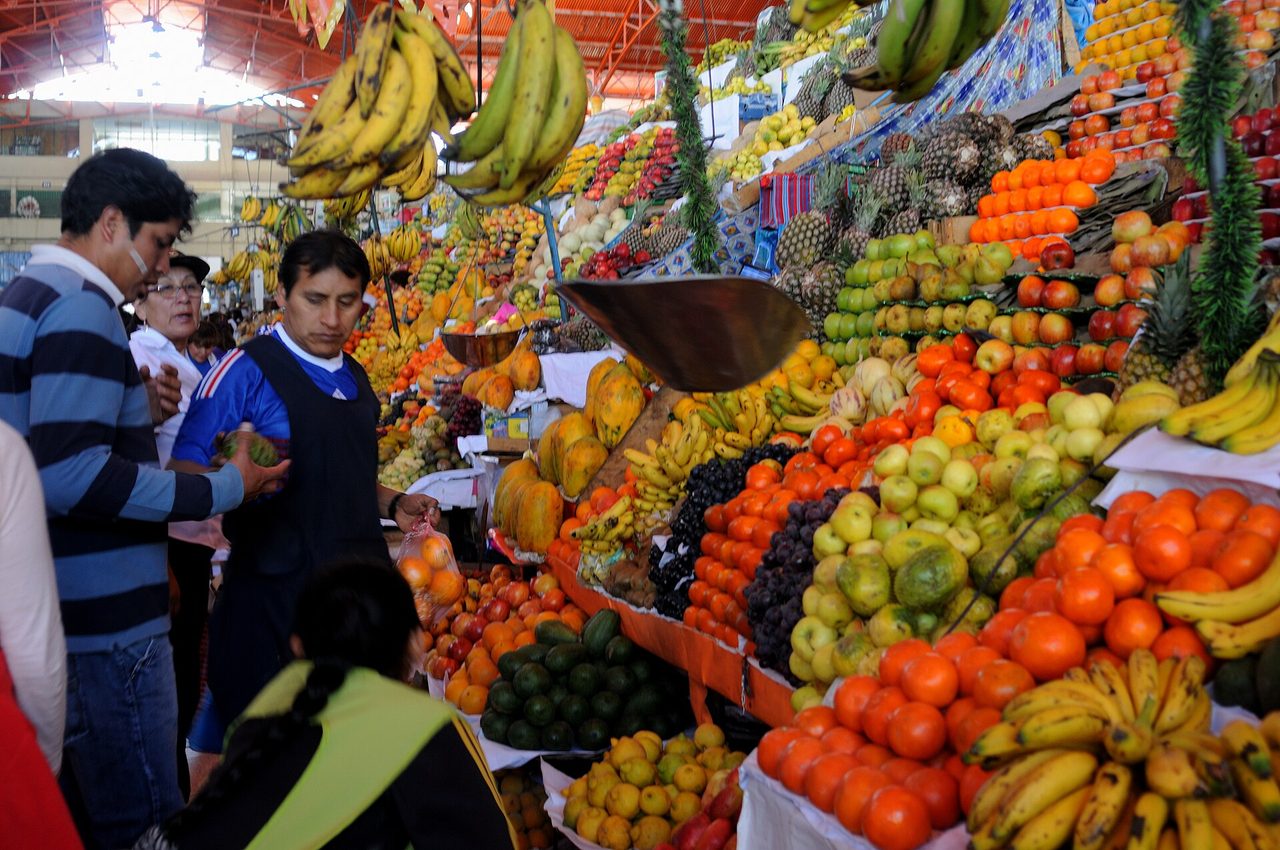
The valley running north from town toward Nevado Chicón is the best reason to bring hiking boots to Urubamba. There are two versions.
The easy version is a half day: take a mototaxi or taxi up past the cemetery toward the village of San Isidro, then walk up the valley on a farm track alongside the stream, through eucalyptus and small plots, with the glacier ahead of you. Turn around whenever you like. Three or four hours out and back gets you well into the valley with big views, no ticket, no crowd and no guide required.
The hard version continues to Laguna Juchuycocha at roughly 4,600 m. That is a 7 to 9 hour day with well over 1,000 m of climbing, on a remote trail with no facilities and no reliable phone signal. It is a superb hike and an extremely bad idea on day two in the Andes. Do it after a week at altitude, start before 07:00, and consider hiring a local guide in town for S/120–180 rather than going alone. Going any further toward the glacier itself is proper mountaineering and needs a qualified guide and equipment.
Saywa, the colcas and the cross
Three short walks straight from town, all free. The colcas — Inca storehouses — sit on the hillside above the hamlet of Moccopata; follow the road up and they are visible on the slope, about 90 minutes round trip for a view over the whole town. The cross on the smaller hilltop past the cemetery is an easier climb with the same reward at sunset. Saywa, with its two standing pillars on the ridge, is a proper half-day effort: around 5 km with more than 900 m of ascent, on a faint and sometimes overgrown trail. Take water and a downloaded map; there is nothing at the top and nobody else on it.
None of these are on any ticket, which makes them a rare thing in the Cusco region. If free, uncrowded archaeology appeals, the same logic applies across the country — plenty of the best Inca sites in Peru charge nothing at all.
The cemetery
It sounds like filler. It isn’t. Urubamba’s cemetery is built on the site of what is believed to have been a palace of Huayna Capac, the tombs are covered in fresh cut flowers most of the year, and families come to eat and drink beside them. Twenty minutes, respectful behaviour, no photographs of people without asking. It is also the trailhead for the walks above.
Riding, rafting and the adventure end
Horseback riding is the activity Urubamba does best, because the terrain suits it: half-day rides climb out of the valley onto the Maras plateau with the salt pans and the whole spine of the Urubamba range in view. Expect $40–70 for a half day through a stable or hotel, more through the high-end lodges. Rides suit beginners; Peruvian Paso horses are steady.
Rafting on the Urubamba River between town and Ollantaytambo is class II–III in the dry season and mostly a pleasant float. Be aware that this stretch of river carries untreated wastewater from valley towns; ask the operator directly about the section and the season before booking, and do not swim. Mountain biking on the Maras plateau dirt roads is better than the rafting. Zip lines exist and are fine. If adrenaline is the point of your trip, the options in adventure activities around Peru are stronger elsewhere — this is not why you come to Urubamba.
Workshops
Ceramics workshops, weaving demonstrations, chocolate-making and cooking classes all run in and around town for roughly $35–70 for a half day. Quality varies enormously. The ones attached to working studios and family operations are good; the ones sold as add-ons by tour desks are often 40 minutes of demonstration and an hour of shopping. Ask how long the hands-on portion is before paying. These are the correct move for a wet afternoon in January or February.
Yucay, Huayllabamba, Tarabamba and the side valleys
Yucay is four kilometres east, ten minutes by colectivo, and takes 40 minutes to see: two plazas, the Santiago Apóstol church, and the remains of the palace attributed to Sayri Túpac. The Kuychi Rumi area nearby has craft workshops and gardens. It is a stop on the way to somewhere, not a destination.
More interesting are the side valleys. Huayoccari, toward Calca, has a hacienda with a private pre-Columbian collection that can sometimes be visited by arrangement, and walking tracks up into the hills behind. Tarabamba, west of town, is where you cross the footbridge to walk up the ravine into the back of the Maras salt pans — the best approach to that site by a long way, arriving on foot from below instead of by bus from above. And the old Inca road from Chinchero down to Urquillos descends into the valley near Huayllabamba: about four hours, downhill, ending 20 minutes from your Urubamba bed. Get the colectivo up to Chinchero, walk down. That is one of the best days available in the valley and almost nobody does it.
Where to stay: what each budget band actually buys
This is Urubamba’s genuine advantage and the reason a lot of people end up here without meaning to. The stock runs from S/40 dorm beds to some of the most expensive hotel rooms in South America, all within about eight kilometres. Rates below are approximate 2026 figures for a double room in shoulder season, before tax; peak-season June to August adds 20–40 per cent and the top end can double.
| Band | Per night (USD) | What you get | Trade-off |
|---|---|---|---|
| Hostel dorm / basic hospedaje | $12–25 | Dorm bed or plain private, shared or basic bathroom, kitchen access, wifi that works in the common room | No heating, thin walls, hot water is electric-shower hot water. Cold at night year-round. |
| Budget guesthouse | $28–50 | Private room and bathroom, reliable hot water, breakfast, a garden, family owners who will call you a taxi | Usually a walk from the centre. Still no heating — ask for extra blankets. |
| Mid-range hotel or B&B | $55–110 | Proper bed, heater or hot water bottles, good breakfast, staff who arrange transport and can book valley tours | The valley’s sweet spot. Book ahead in June to August — this band sells out first. |
| Boutique lodge / upper mid | $120–260 | Gardens, pool or spa, a restaurant worth eating at, transfers, sometimes a shuttle into town | Most are 3–8 km out along the Yucay or Ollantaytambo road, so you are taxi-dependent. |
| Luxury resort | $350–900+ | Full spa, oxygen-enriched or heated rooms, excellent food, guides on staff, one property with its own rail halt | You could stay here or fund three weeks of everything else. Genuinely excellent, and completely sealed off from the town. |
A few things nobody mentions. Almost nothing in the valley has central heating, at any price below the top band — nights drop to 1–5°C in the dry season and rooms are built for daytime. A hotel that provides a heater or a hot water bottle is worth $20 more than one that doesn’t. Location within Urubamba matters more than the star rating: a $60 room three blocks from the plaza is more useful than a $60 room 6 km out if you plan to use colectivos. And the lodges out toward Huayllabamba and Yucay are lovely but isolating; you will eat every dinner at the hotel restaurant at hotel prices.
If you are still deciding between towns rather than between hotels, the direct comparison in our guide to choosing a base in the Sacred Valley lays out Urubamba against Ollantaytambo and Pisac properly.
Eating in Urubamba
Better than you would guess from the look of the plaza. Three tiers.
Set lunch (menú del día), S/8–18. Soup or salad, a main, a drink, sometimes dessert. Available all over town, best a few blocks off the plaza where the customers are local. This is the single best value meal in the Cusco region.
Mid-range restaurants, S/35–70 for a main. A handful of good independent kitchens do Andean-international cooking with produce from the valley — alpaca, trout, quinoa, the good corn. Several sit within a few blocks of the plaza and on Avenida Berriozábal, alongside the cafés and bakeries that have opened around the small resident foreign community. Coffee here is properly good, which is not true everywhere in the valley.
Hotel restaurants, S/70–150 for a main. The luxury properties along the valley road run kitchens that would hold their own in Lima. If you want one special dinner in the valley, this is where it is, and you will need a taxi both ways. For comparison, the same money in the city buys considerably more choice — see where to eat in Cusco if fine dining is a priority.
Two local notes. Red plastic bags or flags hanging outside a house mean a chichería is selling chicha, the fermented maize drink, by the glass for a couple of soles. And nowhere in Urubamba is a nightlife destination — kitchens close around 21:00 and the town is quiet by 22:00.
The Boleto Turístico, and what you don’t need it for
Nothing in Urubamba town requires a ticket. The plaza, the market, the cemetery, the colcas, Saywa, the Chicón valley and the Seminario studio are all free. You need the boleto only for the archaeological parks you will visit from here.
The current position, verified for 2026 but always worth re-checking on arrival:
- Full Boleto Turístico General (BTG): S/130, valid 10 days, covers 16 sites in Cusco and the valley.
- Circuit III partial: S/70, valid 2 days, covers Pisac, Ollantaytambo, Chinchero and Moray. This is the valley circuit and it is the one most Urubamba-based travellers want.
- Two partial circuits cost S/140, more than the full ticket. If you expect to see anything in Cusco city as well, buy the full BTG.
- The Maras salt pans are not on the boleto. Entry is a separate community-run cash payment, generally quoted between S/10 and S/20 — sources disagree and the figure has moved, so carry S/20 in small notes per person and expect no card machine.
- Moray is on the boleto, despite being usually sold in the same breath as Maras.
- Machu Picchu is entirely separate: S/163 for a foreign adult on a standard circuit, S/211 for circuits including Huayna Picchu or Machu Picchu Mountain, sold through the official portal. The Machu Picchu ticket system changes often enough that you should confirm before you travel rather than trusting any page, including this one.
Buy the boleto at the first site you reach or at COSITUC in Cusco. Cash only in soles at most gates. Two days is genuinely tight for Circuit III if you want to do the sites properly — plan the pair of days back to back and start early.
Three days from Urubamba, in a sensible order
Day 1 — arrive and go easy. Fly into Cusco, ride straight down. Afternoon in town: the covered market, the Seminario studio, an hour on the plaza. Sleep at 2,870 m. Nothing above 3,000 m today.
Day 2 — the west end. Colectivo to Maras and the Moray terraces in the morning, then walk down through Tarabamba to the salt pans and back to the road. Alternatively skip the sites and walk the Chicón valley. Home by mid-afternoon; the light in the valley after 16:00 is the best of the day.
Day 3 — the east end, or up. Either colectivo to Pisac for the ruins and the market, which is a long day and worth it, or take the van up to Chinchero in the morning and walk the old Inca road down to Urquillos and the valley floor. Both put you back in Urubamba for dinner.
Day 4 — the train. Colectivo to Ollantaytambo, see the fortress with the boleto you already own, board the afternoon train. This is the sequence that makes a valley base pay for itself, and it slots cleanly into most versions of a Cusco and Machu Picchu itinerary.
Four valley nights is generous and most people have less. If you are compressing, the honest minimum that still justifies the moving around is two nights. One night is not worth the logistics unless it is the night before your train.
Weather, and when this town is at its best
Urubamba is warmer and drier than Cusco because it is lower and sheltered. Daytime highs sit around 20–23°C most of the year. The difference between seasons is rain and night temperature, not daytime heat.
May to September (dry season). Clear skies, strong sun, and nights down to 1–5°C. June to August is peak: book beds ahead, expect the mid-range band to fill. Best light, best hiking, coldest mornings.
October and November, March and April (shoulder). The best compromise. Green valley, showers rather than downpours, prices 20–30 per cent below peak, sites noticeably emptier. April is the standout month — the valley is still green from the rains and the weather has usually settled.
December to February (wet). Mornings often clear, afternoons often wet. Trails get slippery and the Chicón walks are less pleasant. The Urubamba River runs high and road closures from landslides happen. Rooms are cheap and the valley is at its greenest. The trade-offs of the Peruvian rainy season are real but overstated for the valley floor, which stays comfortable. If you are pinning down dates, the month-by-month detail in our guide to the best time to visit Cusco applies here with a few degrees added to every night-time figure.
Who should skip Urubamba entirely
The most useful thing this page can tell you may be not to come. Urubamba is wrong for several kinds of trip.
If you have four nights in the Cusco region, skip it. On a short trip the moving costs more than the position saves. Sleep in Cusco, do one long valley day, and take the train from Ollantaytambo. Working out how many days Cusco really needs before you start splitting nights between towns will save you a lot of packing and unpacking.
If you want a pretty walkable old town, go to Ollantaytambo. That is the town people picture when they imagine the Sacred Valley: Inca street grid, water channels running beside the cobbles, a fortress at the end of the road. Urubamba is not that and no amount of enthusiasm will make it that.
If you want a scene, go to Pisac. Cafés, expat community, market, yoga, a distinct atmosphere. Urubamba has a version of that on one street and it is smaller.
If you want nightlife, stay in Cusco. Urubamba shuts. There is no bar street, no clubs, and the plaza is empty by 22:30.
If you are only here for Machu Picchu and nothing else, a valley base adds a transfer at each end for no benefit. Go Cusco to Ollantaytambo to Aguas Calientes and back.
If you are travelling entirely by organised tour, your operator will collect you from Cusco anyway and Urubamba will be your lunch stop. Staying here only helps independent travellers who use colectivos.
Practical notes
Money. ATMs on and near the plaza, including bank machines that accept foreign cards, though some cap withdrawals at S/400–700 per transaction and charge S/18–25. Cash is essential: colectivos, market stalls, salt-pan entry and most cheap restaurants take nothing else.
Safety. Urubamba is a calm town with normal small-city petty theft. Watch bags in the market crush, do not walk out along unlit valley roads alone at night, and use registered taxis after dark rather than flagging in the street. This is not a place that needs special precautions.
Connectivity. Claro and Movistar both work in town. Signal drops fast in the side valleys and disappears entirely on the Chicón and Saywa trails. Hotel wifi ranges from good to decorative.
Water and altitude. Tap water is not drinkable. Coca tea is offered everywhere and helps some people; it is not a substitute for taking the first day slowly. Pharmacies on the main streets stock soroche pills and rehydration salts.
Sunday. Much of the town closes on Sunday afternoon apart from the market and the restaurants. Plan errands for a weekday.
Getting anywhere else in Peru. Everything routes back through Cusco. There is no long-distance bus terminal here. If you are heading to Puno, Arequipa or Lima afterward, budget the transfer back up as part of that day — the mechanics of moving around Peru apply from Cusco, not from the valley.
Frequently asked questions
Is Urubamba Peru worth visiting?
As a base, yes — it is the most practical place to sleep in the Sacred Valley if you are moving around independently for two or more nights. As a destination in its own right, no. There is no major site in town, and a day trip to Urubamba specifically to see Urubamba would be a wasted day. Come for the position, the altitude and the beds.
What is the altitude of Urubamba?
2,870 m (9,420 ft), about 530 m lower than Cusco at 3,400 m. That makes it a better place to sleep on your first nights in the highlands. Remember that Chinchero at roughly 3,760 m and Moray at around 3,500 m are both higher than Cusco, so a low base does not shield you on those days.
How long does it take to get from Cusco to Urubamba?
About 1 hour 20 minutes by direct colectivo from the Pavitos area via Chinchero, for S/10–15. A private taxi does it in roughly 90 minutes for S/110–150. The route via Pisac takes about two hours but lets you break the journey.
Urubamba or Ollantaytambo — which should I choose?
Ollantaytambo if you want a beautiful walkable town and you are catching a train. Urubamba if you want a central position, a wider choice of accommodation at every price, cheaper food and easy colectivo access in four directions. Ollantaytambo is the nicer place to be; Urubamba is the more useful one.
Does Urubamba have a train station for Machu Picchu?
Not a public one. A single luxury resort maintains a private halt served by a very limited PeruRail schedule for its guests. Everyone else takes a 25-minute colectivo to Ollantaytambo and boards there.
What day is the Urubamba market?
The main open-air market runs on Wednesday and Sunday, with a smaller Friday version. Wednesday is the biggest and includes the livestock section. The covered central market two blocks from the plaza is open every day.
Do I need the Boleto Turístico in Urubamba?
Not for anything in the town itself. You need it for Pisac, Ollantaytambo, Chinchero and Moray — the S/70 Circuit III partial covers all four for two days, or the full S/130 BTG covers 16 sites for ten days. The Maras salt pans are not included and charge a separate cash entry of roughly S/10–20.
How many nights should I spend in Urubamba?
Two to three. Two nights lets you do one big day out and arrive or leave without rushing. Three lets you cover Maras and Moray, one of Pisac or Chinchero, and a walk from town. Beyond four nights you have run out of things that need this specific base.
Can I acclimatise in Urubamba before the Inca Trail?
You can and it helps, but not on its own. Sleeping at 2,870 m is a good start; the Inca Trail crosses a pass above 4,200 m. Combine valley nights with a couple of progressively higher day trips before the trek, and give yourself at least three full days in the region beforehand.
Is Urubamba safe for solo travellers?
Yes, with ordinary sense. It is a working town rather than a tourist strip, petty theft is the realistic risk, and the main streets are busy until mid-evening. Solo hikers should not attempt the high Chicón routes alone given the lack of signal and traffic on those trails. The general practical advice for travelling in Peru covers the rest.
Is there anything Inca to see in Urubamba town?
Small things only: the colcas above Moccopata, the Saywa pillars on the ridge, and the site under the cemetery attributed to Huayna Capac. All are free, all are minor, and none of them is why you would come. The serious archaeology is 25 to 50 minutes away in every direction, which is precisely the point of staying here.