Sacred Valley to Machu Picchu (via Ollantaytambo)
From Ollantaytambo the train is 90 minutes; from Cusco you add a 4am start and a two-hour drive. Real timetables, real fares, and which departure actually works with which Machu Picchu entry slot.
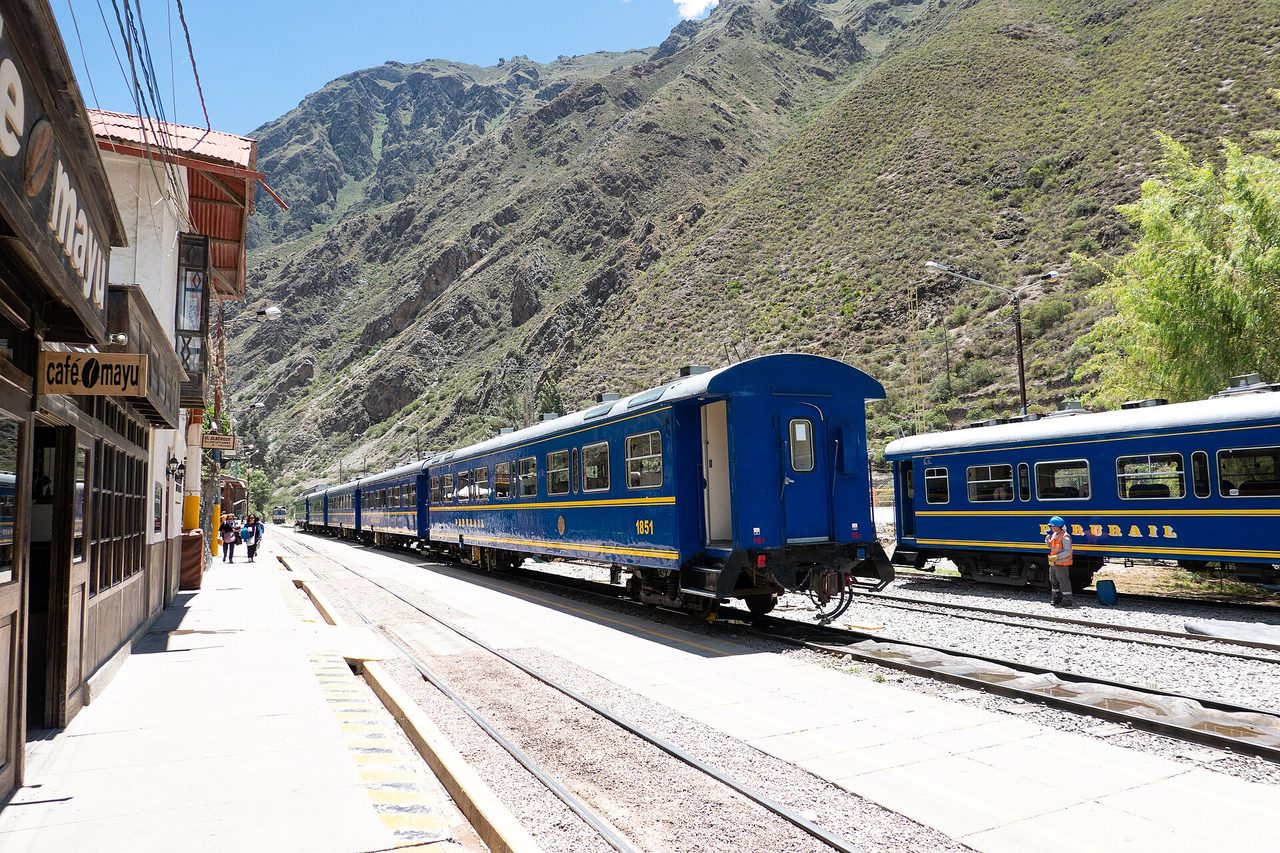
Almost every guide to getting from the Sacred Valley to the citadel skips the one thing that actually decides how your day goes: arithmetic. The Ollantaytambo to Machu Picchu run is 44 kilometres of track and roughly 1 hour 30 minutes of train, and if you sleep in the valley you can eat breakfast before you board. Do the same trip out of Cusco and your alarm goes off at 4am. That is the entire argument for basing yourself in Ollantaytambo, and it is remarkable how few pages spell it out in numbers.
I have made this journey in both directions, in high season and in February drizzle, on the cheapest carriage and on one of the panoramic ones. What follows is the version I wish someone had written for me: real departure times, real fares, the specific point at which the shuttle queue in Aguas Calientes eats your entry slot, and an honest account of which trains are compatible with which entry hours.
The numbers that make Ollantaytambo the smart departure point
Four legs stand between a bed in the Cusco region and the gate at Machu Picchu. Where you sleep determines how many of them you do before sunrise.
| Leg | From Cusco | From Urubamba | From Ollantaytambo |
|---|---|---|---|
| Road transfer to the station | ~1 h 45 (72 km) | ~25 min (20 km) | 10–15 min on foot |
| Train to Aguas Calientes | 1 h 30 (from Ollantaytambo) | 1 h 30 | 1 h 30 |
| Station to shuttle stop | 5–10 min walk | 5–10 min walk | 5–10 min walk |
| Shuttle up the mountain | 25–30 min plus queue | 25–30 min plus queue | 25–30 min plus queue |
| Realistic wake-up for an 08:00 entry | 03:45–04:15 | 05:15 | 06:00, with breakfast |
That last row is the whole point. The 05:05 train out of Ollantaytambo needs you on the platform at about 04:35. From a hotel three streets away, that is a genuinely civilised morning. From Cusco it means leaving in the dark, on a road that climbs to 3,700 m at Abra de Corao before dropping into the valley, and arriving at the platform having already spent two hours in a van. If you are still adjusting to the thin air at 3,400 metres in Cusco, that pre-dawn drive is the worst possible start.
Ollantaytambo station sits at 2,792 m. Aguas Calientes is around 2,040 m. Machu Picchu itself is 2,430 m — a thousand metres below Cusco, which is why so many people find they breathe more easily at the ruins than in the city they flew into. Sleeping in the valley before you go is the single most useful acclimatisation decision on a Peru trip, and it happens to also be the most convenient one. Our guide to choosing a base in the Sacred Valley goes into which towns suit which travellers.
Who should still leave from Cusco
Two groups. First, people on a very short trip who cannot spare a valley night — the Cusco day trip is punishing but it exists and it works. Second, anyone on a Hiram Bingham ticket, since that train departs from Poroy just outside Cusco rather than from the valley. Everyone else is better served by moving down the valley first. If you are still weighing the options, the wider comparison in our piece on the routes between Cusco and the citadel covers the bimodal bus-and-train products too.
Getting to Ollantaytambo in the first place
There is no airport, no station connection from Cusco that runs year-round, and no reason to overcomplicate it.
- Colectivo from Cusco — shared minivans leave Calle Pavitos when full, roughly every 20 minutes from around 05:00. About S/15 per person, 1 h 30 to 2 h, and the final stop is a few metres from the station forecourt. Cheap, reliable, and the vehicles are cramped.
- Private taxi from Cusco — S/60–120 depending on how you negotiate and whether you book through a hotel. Door to door in about 1 h 45. Worth it if you have a train to catch and no appetite for risk.
- From Urubamba — 25 minutes. Colectivos run constantly from the Urubamba terminal for around S/3–5, and a taxi is S/25–40. This is the shortest transfer of any valley base.
- From elsewhere in the valley — roughly 45 minutes from Chinchero, an hour from Pisac, an hour from the Maras turn-off. All of these work as a morning transfer, but only just.
- PeruRail Cusco–Ollantaytambo — a scenic service through the valley launched recently. It is a sightseeing product, not a commuter link, and it is priced accordingly. Check current frequencies before building a plan around it.
People combining the transfer with sightseeing usually take a full-day Sacred Valley tour that finishes in Ollantaytambo and then board an afternoon or evening train. That works well, but confirm the tour genuinely drops at the station and not back in Cusco — plenty of the cheap group tours do the latter.
Ollantaytambo train station: what it is actually like
The station is on Avenida Ferrocarril, on the flat ground east of the river, about 10 to 15 minutes on foot from the Plaza de Armas. A mototaxi from the plaza costs S/2–3 and takes four minutes. If you are staying in one of the hotels on the far side of town or up towards Pinkuylluna, take the mototaxi; the cobbles are unforgiving with a wheeled bag.
The approach road is lined with stalls, and the station itself is small: a covered waiting area, ticket counters for both operators, toilets, and a couple of cafés. Once you pass the boarding gate onto the platform, the food options thin out to almost nothing. Eat in town, not at the station.
The rules that actually get people turned away
- Your passport must match the name on the ticket. Not a photo of it — the physical document. Staff check at the gate and again on board. A misspelled surname on a booking made by an agency is the single most common problem at this station, and it is not fixable at 05:00.
- Arrive 30 minutes before departure. Both operators publish this. Boarding closes roughly five minutes before the scheduled time and the train leaves without you.
- One bag. PeruRail allows one backpack up to 8 kg (100 cm total of height plus length plus width) or one carry-on up to 12 kg (115 cm). Inca Rail allows one piece up to 8 kg with a 118 cm linear limit. Suitcases do not travel.
- Excess luggage is a paid extra or gets stored. PeruRail runs free storage at Ollantaytambo station from 04:15 to 21:00 and at Machu Picchu station from 05:00 to 22:00, every day. If you want an extra bag on the train instead, it is roughly $10–15 for carry-on and $15–25 for checked, paid at the station sales point rather than online.
Most people leave the big bag at their Ollantaytambo or Cusco hotel, which is free and simpler. Pack for the citadel the night before — our list of what to wear and carry at Machu Picchu is built around the 8 kg reality.
How long is the Ollantaytambo to Machu Picchu train, really?
Between 1 hour 20 and 1 hour 45 depending on the service and the day. Operators variously advertise “about 1.5 hours” and “a little under 2 hours”; both are true because the timetable genuinely varies. The published arrival on your own ticket is the number that matters, and I would plan on 1 h 35 as a working average.
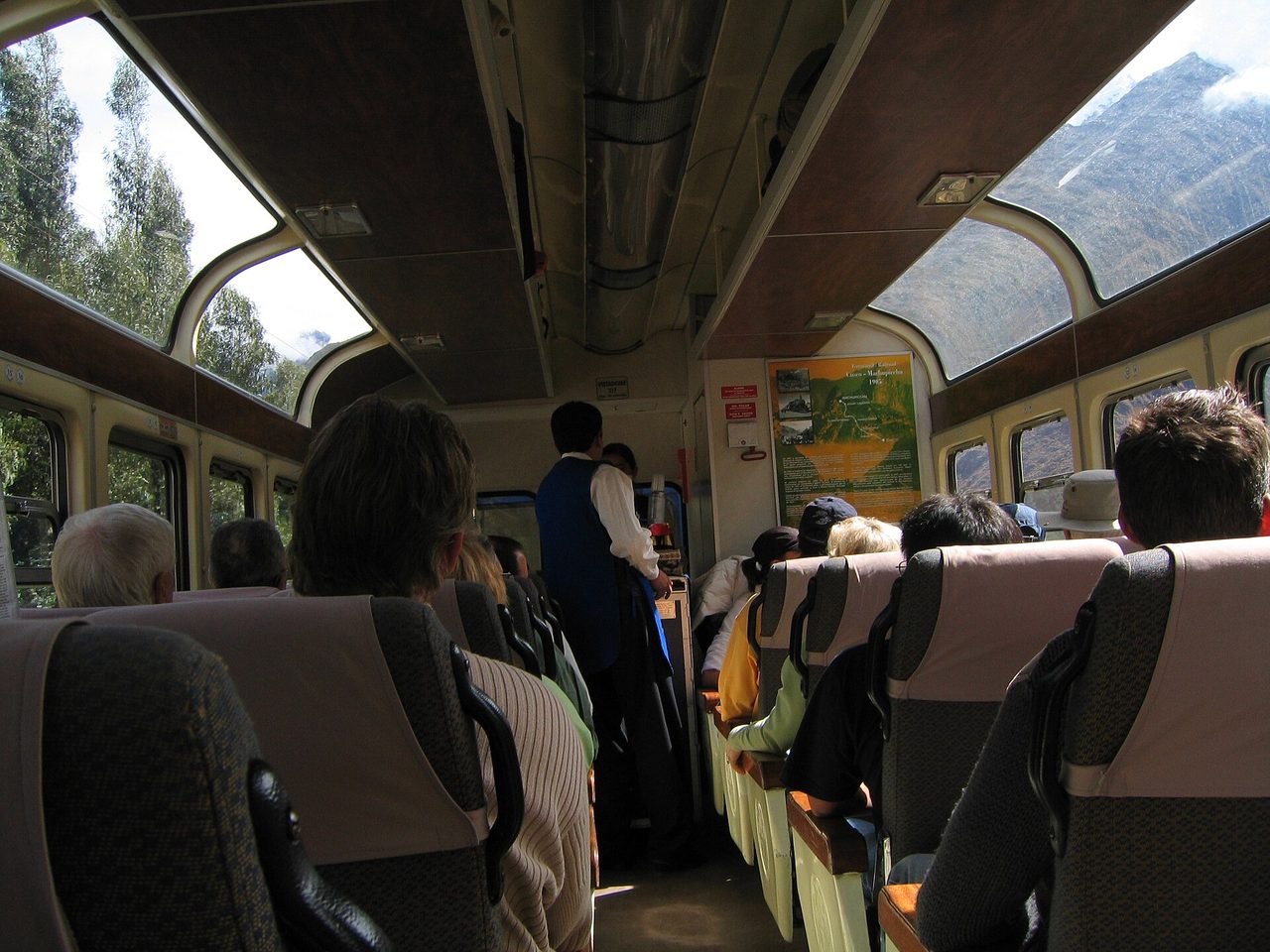
The route drops roughly 750 metres over 44 km, following the Urubamba the whole way as the landscape shifts from dry Andean scrub into cloud forest. Sit on the right-hand side heading down — that is the river side — and on the left coming back. On the panoramic services the roof glass makes the seat choice less critical, but on an Expedition or Voyager carriage it makes a real difference.
The two operators, class by class
PeruRail and Inca Rail share the same single track and the same scenery. Nobody is going faster than anybody else. What you are buying is window area, food, and how much noise there is in the carriage.
| Service | Operator | Typical one-way fare | What you actually get |
|---|---|---|---|
| Expedition | PeruRail | $65–95 | Side panoramic windows, overhead racks, a snack and a drink. Perfectly comfortable. The default choice. |
| The Voyager | Inca Rail | $60–85 | Inca Rail’s equivalent economy carriage. Slightly quieter carriages, ambient music, light snack. |
| Vistadome | PeruRail | $95–130 | Glass roof panels, more legroom, Andean snack box. Return services often include a Saqra dance and an alpaca-textile sales pitch. |
| The 360° | Inca Rail | $100–135 | Wrap-around dome glass plus an open-air observation car. The best mid-range window in my view. |
| The Prime | Inca Rail | $130–160 | Priority boarding, Andean tasting, live music. A modest step up from the 360°. |
| Vistadome Observatory | PeruRail | $120–150 | Vistadome plus a rear observation car with a bar. Good for photographers who want to stand up. |
| The First Class | Inca Rail | $250–390 | Dining car, open balcony, gourmet menu, open bar. A meal on rails. |
| The Private | Inca Rail | From ~$1,200 per carriage | Whole-carriage charter. Only operator offering this format. |
| Hiram Bingham | Belmond / PeruRail | $500–650 | 1920s Pullman styling, brunch or dinner, live band, and shuttle plus guided entry included. Departs Poroy, not Ollantaytambo. |
My honest read: the Expedition and the Voyager are fine. The scenery through a side window is the same scenery. If you are going to spend the extra, spend it on the 360° or the Vistadome Observatory for the outbound leg, when the light is good and you still care, then take the cheapest thing available on the way back when you are filthy and exhausted. Splitting classes across the two legs is allowed and costs nothing extra to arrange.
Why the fares swing so much
Both operators use dynamic pricing. The same Expedition seat can be $65 in a wet Tuesday in February and $95 on a June Saturday, and the price climbs as the departure fills. Two patterns hold reliably:
- The earliest and latest departures are the cheapest. The 05:05 and the 21:00 are consistently the lowest fares of the day because most people do not want them.
- The 07:00–09:00 block is the most expensive. Everybody wants a mid-morning entry slot, so those trains price accordingly.
Round-trip bookings usually attract a 5% discount, and both operators run promotional codes. Book 30 to 45 days out in the shoulder months and three to four months out for June to September, which is also when the weather at Machu Picchu is most reliable and every other traveller is thinking the same thing.
The resident fare you cannot use
Both railways sell a heavily discounted tier to Peruvian nationals and foreign residents holding a DNI or carné de extranjería, and there is also a genuine local train that costs a few soles. Foreign visitors cannot buy either, no matter what a forum post claims. The document is checked at the gate, and being turned away at 05:00 in Ollantaytambo with a non-refundable entry ticket for that morning is a bad way to save $40. Budget travellers looking for legitimate savings should read our breakdown of doing Machu Picchu cheaply instead.
The actual timetable
Below is the combined Ollantaytambo departure board as published for 2026, with arrival times in Aguas Calientes. Frequencies shift between the January–April and May–December timetables and individual services get added or cut, so treat this as the shape of the day rather than gospel and confirm your own date with the operator.
| Depart Ollantaytambo | Arrive Aguas Calientes | Service |
|---|---|---|
| 05:05 | 06:37 | Expedition |
| 06:10 | 07:40 | Expedition |
| 06:40 | 08:01 | Voyager / Private |
| 07:05 | 08:27 | Vistadome |
| 07:22 | 08:48 | Voyager / 360° |
| 07:45 | 09:15 | Expedition / Vistadome Observatory |
| 08:00 | 09:25 | Vistadome |
| 08:29 | 09:54 | Expedition / Vistadome Observatory |
| 08:53 | 10:29 | Vistadome |
| 09:15 | 10:52 | Expedition / Vistadome |
| 10:32 | 12:11 | Expedition / Vistadome Observatory |
| 11:15 | 12:41–12:45 | First Class / Voyager |
| 12:36 | 14:00 | Voyager / 360° |
| 12:55 | 14:25 | Expedition |
| 13:27 | 14:50 | Vistadome Observatory |
| 15:37 | 17:02 | Vistadome Observatory |
| 16:36 | 18:09 | Voyager / Private |
| 19:04 | 20:45 | Expedition / Vistadome |
| 21:00 | 22:45 | Expedition |
Note the gap. There is essentially nothing useful between 13:27 and 15:37, and after 16:36 you are travelling for the next day. That gap is why so many itineraries end up with an evening train and a hotel night in Aguas Calientes.
Arriving in Aguas Calientes: the bit that goes wrong
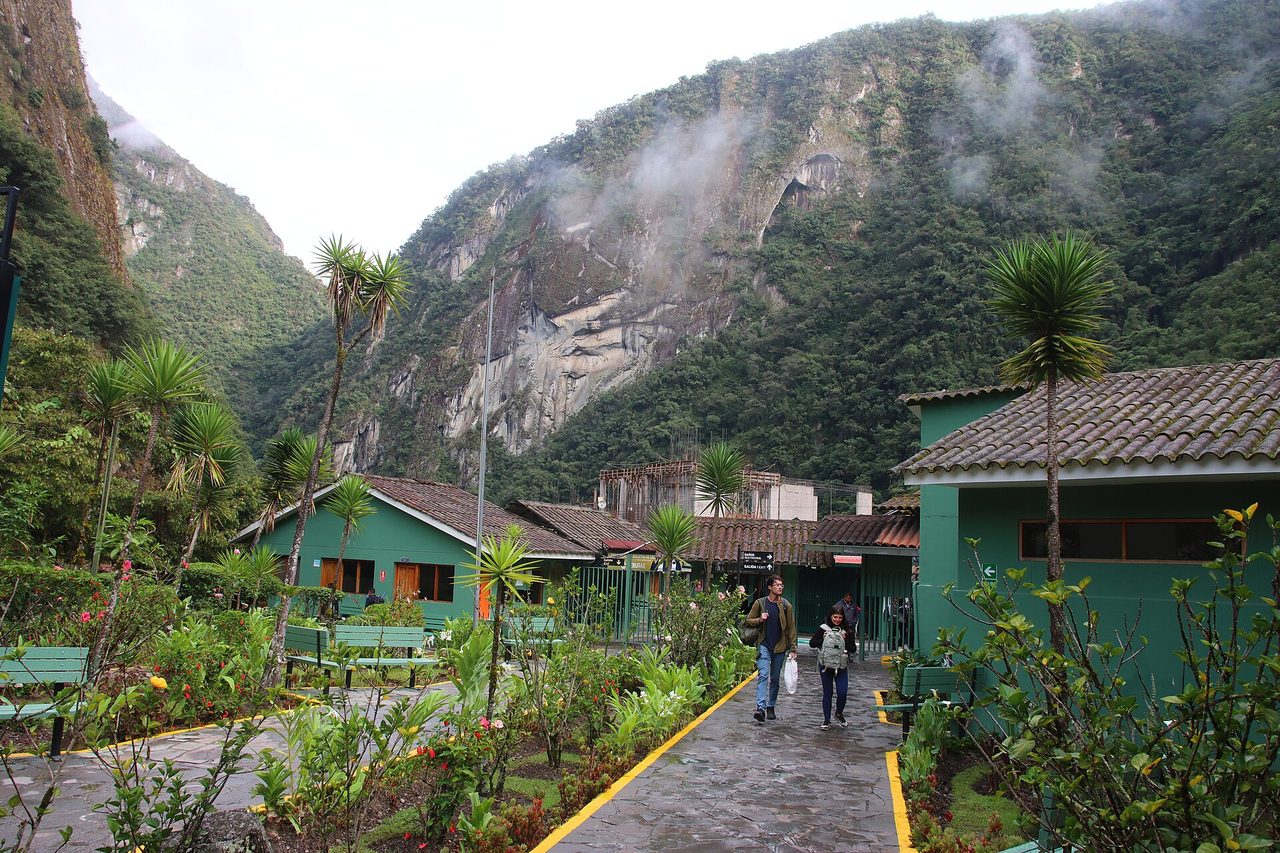
You step off the train into a station that opens directly onto the artisan market. There is one route out, it goes through the stalls, and in high season it is a slow shuffle behind two hundred people with the same idea. Five to ten minutes later you come out onto the main drag and turn towards Avenida Hermanos Ayar, where the shuttles load.
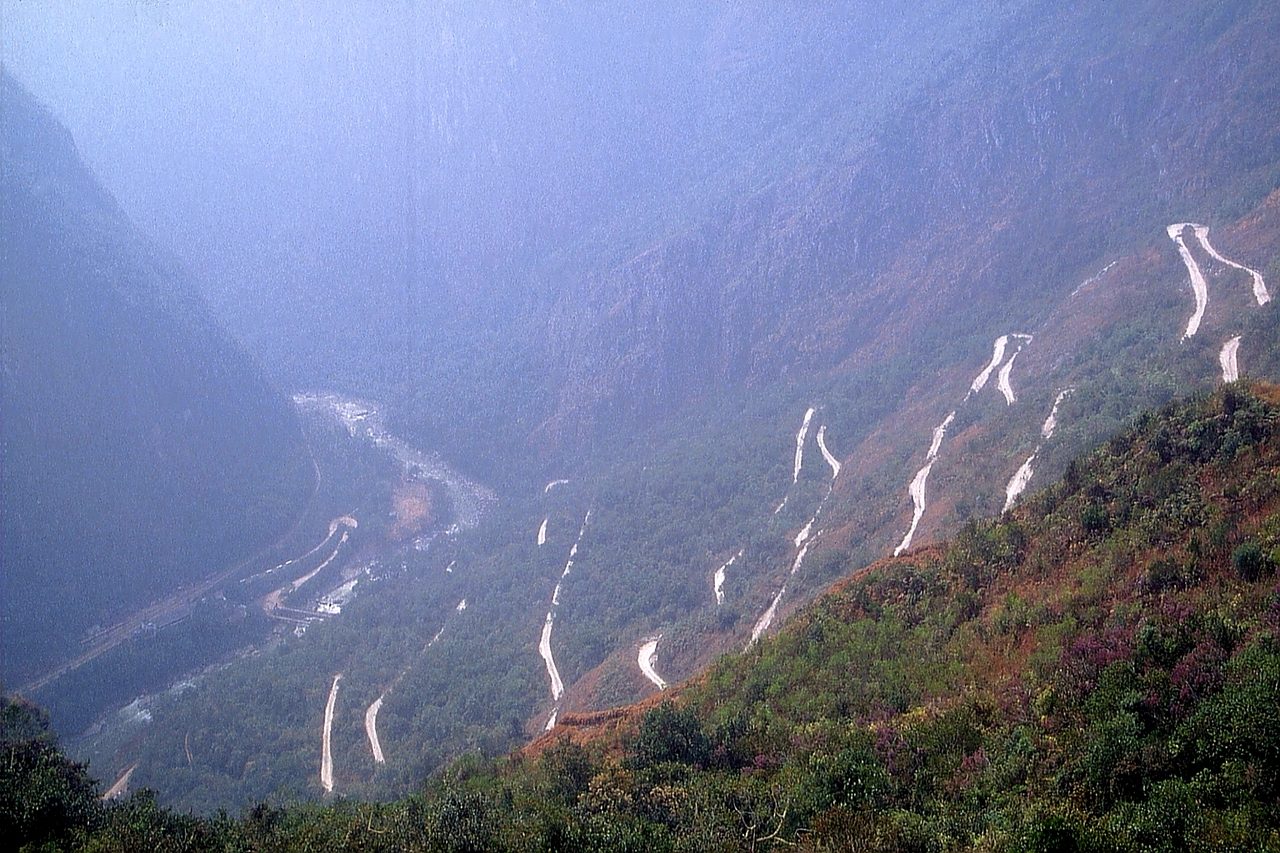
The Consettur shuttle holds the exclusive concession for the 9 km unpaved road up to the gate. Official fares for foreign adults are about $12 one way and $24 return; Peruvian residents pay roughly $15 return. Buses run uphill every 10 to 15 minutes from 05:30 until 16:00, and downhill from 07:30 until the last visitors are cleared. The ride is 25 to 30 minutes up and about 20 down. Tickets are sold online and at the office on Calle Mayta Capac — which is three blocks from where the buses actually leave, a detail that catches people out. Buy the day before if you can; the ticket office queue can run an hour on its own.
Third-party resellers charge $30–35 for the same round trip. If you have already paid that, you have not been scammed exactly, but you have paid a $10 convenience fee.
The queue is the real variable. In low season you might walk straight on. Between June and early September, and around the peak-capacity dates, the boarding queue routinely runs 30 to 45 minutes and I have seen it longer at first light. This queue — not the train, not the walk, not the market — is what makes people miss their entry slot. Our guide to Aguas Calientes covers where to eat and sleep if you are building a night into the plan.
Walking up instead
You can walk. From the Puente Ruinas bridge, about 20 minutes downstream of town, a stone stairway cuts straight up through the switchbacks of the Hiram Bingham road, crossing it repeatedly. It is roughly 400 metres of vertical gain and takes 1 h 20 to 1 h 45 for a reasonably fit person, longer in the wet, and it is genuinely steep — not a stroll.
Walking up saves $12 and costs you an hour and a half of legs you will want later, especially if your ticket includes one of the two mountain add-on climbs. Walking down after the visit is the better trade: 50 to 70 minutes, all downhill, and it saves the same $12 without ruining your morning. That is what I do now.
The timed-entry maths: which train works with which entry hour
This is where the article earns its keep. Machu Picchu has sold timed hourly entry since the circuit system was reorganised on 1 June 2024: slots run from 06:00 to 16:00 on the hour, there is a 30-minute grace period after your stamped time, and after that the gate does not care. Circuits are one-way and ranger-enforced, so you cannot loiter and re-enter. Expect 2.5 to 4 hours inside depending on which of the ten routes you hold.
The table below chains the whole sequence: train arrival, plus roughly 10 minutes to clear the platform, plus 5–10 minutes through the market, plus the shuttle queue, plus 25–30 minutes of road, plus the document check at the gate. I have modelled a 60-minute total buffer for quiet months and a 90-minute buffer for June to September, then rounded up to the next available hourly slot.
| Depart Ollantaytambo | Arrive Aguas Calientes | Earliest safe slot (low season) | Earliest safe slot (high season) |
|---|---|---|---|
| 05:05 | 06:37 | 08:00 | 09:00 |
| 06:10 | 07:40 | 09:00 | 10:00 |
| 06:40 | 08:01 | 10:00 | 10:00 |
| 07:05 | 08:27 | 10:00 | 10:00 |
| 07:22 | 08:48 | 10:00 | 11:00 |
| 07:45 | 09:15 | 11:00 | 11:00 |
| 08:00 | 09:25 | 11:00 | 11:00 |
| 08:29 | 09:54 | 11:00 | 12:00 |
| 08:53 | 10:29 | 12:00 | 12:00 |
| 09:15 | 10:52 | 12:00 | 13:00 |
| 10:32 | 12:11 | 14:00 | 14:00 |
| 11:15 | 12:45 | 14:00 | 15:00 |
| 12:36 | 14:00 | 15:00 | 16:00 |
| 12:55 | 14:25 | 16:00 | 16:00 |
| 13:27 | 14:50 | 16:00 | Next day |
| 15:37 or later | 17:02 or later | Next day | Next day |
Three things fall straight out of that table:
- A 06:00 entry slot is impossible from Ollantaytambo on the same morning. The first train lands at 06:37. If you hold a 06:00 ticket you must have slept in Aguas Calientes. Any operator selling you a same-morning 06:00 entry from the valley has made a mistake.
- The 05:05 is the only train that buys a genuinely early slot. Everything from 06:10 onwards pushes you into mid-morning, which is also when the site is busiest.
- After about 13:30 the day is gone. An afternoon departure from Ollantaytambo is a transfer, not a visit. Plan the citadel for the following morning and enjoy the town.
Book the entry ticket before the train, not the other way round. Entry sells out months ahead for popular circuits and the daily cap is 4,500 rising to 5,600 on designated peak dates, whereas train seats are comparatively flexible. Our guide to buying Machu Picchu tickets and choosing a circuit explains which routes suit which visitors, and current entry is S/163 for a foreign adult, or S/211 for the circuits that include Huayna Picchu or Machu Picchu Mountain. Prices move; check the official Ministry of Culture portal before you pay. One useful fallback: around 1,000 tickets are released daily at the Cusco Cultural Centre between 15:00 and 22:00 for the following day, on presentation of ID.
Going back the same day: when it works and when it is a mistake
A same-day return from Ollantaytambo is absolutely doable. It is also the version of this trip that goes wrong most often, because it has no slack anywhere.
Return departures from Aguas Calientes run from roughly 05:35 in the morning to about 21:50 at night across both operators, with the useful cluster in the mid-afternoon and again between about 16:20 and 18:30. Work backwards from whichever one you hold:
- Be at the Aguas Calientes station 30 minutes before your return departure.
- Allow 10 minutes to walk from the shuttle drop-off to the station.
- Allow 20 minutes for the shuttle down, plus up to 30 minutes queueing at the exit gate in high season, when several hundred people leave at once.
- Add your 2.5 to 4 hours inside, which is not negotiable once a ranger has you on a one-way circuit.
So for a 16:22 return you want to be walking out of the citadel gate by about 15:00, which means an entry slot no later than 12:00 on a standard circuit and no later than 11:00 if you have a mountain climb attached. Match that back to the entry table above and you will see the same-day round trip really only closes with a departure of 08:53 or earlier.
Same-day is fine if: you are leaving from Ollantaytambo or Urubamba, the valley’s most practical base town, on the 05:05 to 08:00 block, with a morning entry slot and a standard circuit, and you have already bought the shuttle tickets.
Same-day is a mistake if: you are starting from Cusco, or you have a mountain add-on, or you are travelling in June to August without pre-bought bus tickets, or you would be arriving after about 10:30. In those cases sleep in Aguas Calientes and go up first thing. The town is not charming, but a night there converts a frantic day into a calm one, and our piece on how many days to give Machu Picchu makes the case at more length.
Can you see the Ollantaytambo ruins on your train morning?
Only with a 14:00-or-later departure, and even then you are rushing.
The terraced fortress above the town takes 1.5 to 2 hours to do properly, and it opens at 07:00. Entry is on the Boleto Turístico del Cusco: the full ticket is S/130, valid 10 days across 16 sites, and the Circuit III partial is S/70 and valid 2 days, covering Ollantaytambo along with Pisac, Chinchero and Moray. Two partials cost more than one full ticket, which is worth knowing before you buy at the gate.
If you are on an early train, skip the fortress and do it the previous afternoon instead — the light is better after 15:00 anyway and the tour groups have gone. If you have a free hour and no boleto, climb Pinkuylluna on the opposite hillside: free, unticketed, about 30 minutes up from the plaza, and the view down onto the terraces is the one everyone photographs. The full picture of what to see in town is in our Ollantaytambo guide, and the wider valley is covered in our Sacred Valley overview.
The alternatives, honestly assessed
The Hidroeléctrica route
The budget option, and the one that reads better on a blog than it feels on a Tuesday. A minivan runs Cusco to Hidroeléctrica over the Abra Málaga pass in 6 to 7 hours for roughly $14–20 each way, and from the Hidroeléctrica station you walk 10 km along the railway line to Aguas Calientes in 2 to 3 hours. It is flat, it is pretty, and it is a long day.
Total: about 9 hours each way from Cusco. As a two-night trip it saves real money and quite a few travellers enjoy it. As a day trip it is miserable and I would not do it again. There is also a short Hidroeléctrica–Aguas Calientes train at around $37 if the walk defeats you. Anyone comparing routes end-to-end should read the full set of ways to reach Machu Picchu before committing.
Km 104 and the short Inca Trail
The most satisfying way to arrive. You board a train at Ollantaytambo, get off at kilometre 104 in the middle of the gorge, cross the river and hike up past Chachabamba and Wiñay Wayna to enter through the Sun Gate on foot. It is a single hard day of roughly 10 km with about 700 m of ascent, usually sold as a two-day package with a night in Aguas Calientes.
It needs a permit and a licensed operator, the same as the classic route, and permits for the short trail sell out later than the four-day but still sell out. Details are in our guides to the two-day Inca Trail and to how the permit system works. If you want the arrival on foot without the four-day commitment, this is the answer, and it costs a fraction of what the classic four-day trek does.
Walking the tracks from Ollantaytambo
Technically possible, roughly half a day, and almost nobody does it. It is not permitted on the active line in places and it is not a shortcut. Mentioned only because the question comes up.
Mistakes I keep seeing
- Booking the train before the entry ticket. The gate time is the fixed appointment. The train is the flexible part.
- Assuming the train goes to Machu Picchu. It goes to a town 400 vertical metres below it. There is a whole second leg after the platform.
- Treating 30 minutes at the station as generous. It is the published minimum, and it assumes you are not also storing a bag.
- Buying shuttle tickets on the morning. The office queue is separate from the boarding queue and can add an hour.
- Booking a 06:00 entry from a valley hotel. Physically impossible on the same morning, as the table above shows.
- Turning up with a suitcase. It will not board and there is no drama-free fix at the gate.
- Bringing an ISIC card for the student rate. It is no longer accepted at Machu Picchu; you need a university photo ID with an expiry date, checked at the gate. It is still fine for the Cusco Boleto Turístico.
- Planning around the rainy season without allowing for it. Landslides do close the line, usually briefly. February is the highest-risk month; see our notes on travelling Peru in the wet season.
Frequently asked questions
How much is the train from Ollantaytambo to Aguas Calientes?
Roughly $60–95 one way for a standard carriage (PeruRail Expedition or Inca Rail Voyager), $95–135 for a panoramic service, $120–160 for the premium observation classes, and $250–650 for the luxury dining trains. Fares move with season, demand and time of day, and the earliest and latest departures are consistently the cheapest.
What time is the first train from Ollantaytambo?
05:05, arriving in Aguas Calientes at 06:37. It is a PeruRail Expedition, it is usually among the cheapest fares of the day, and it is the only departure that supports an 08:00 or 09:00 entry slot the same morning.
What is the last train back from Aguas Calientes?
Late-evening departures run until roughly 21:50, arriving in Ollantaytambo around 23:20. That is a long way from a bed if you are staying in Cusco, so most people on a late return sleep in the valley. Confirm the exact last service for your date, since evening frequencies vary between the two published timetables.
Do I need my passport to board the train?
Yes, the physical document, and the name must match your ticket exactly. It is checked at the boarding gate and again by staff on board. The same passport is checked at the Machu Picchu entrance.
How long is the bus from Aguas Calientes up to the entrance?
About 25 to 30 minutes up and 20 down, on a 9 km unpaved switchback road. The ride is the predictable part. The queue is not: budget 15 minutes off-season and up to 45 minutes in high season.
Can I walk up to Machu Picchu instead of taking the shuttle?
Yes. The stone stairway from the Puente Ruinas bridge takes 1 h 20 to 1 h 45 and gains about 400 m. It saves $12. Walking down afterwards is the better version of the same idea — under an hour and a half, and you still have legs for the ruins.
Is it better to stay in Ollantaytambo or Aguas Calientes the night before?
Ollantaytambo if you want a nicer town and are happy with a mid-morning entry slot. Aguas Calientes if you want the 06:00 or 07:00 slot, which is the quietest hour on the site and cannot be reached from the valley the same morning. Ollantaytambo is much the more pleasant place to spend an evening.
How far in advance should I book?
Entry tickets: two to three months for standard circuits, four or more if you want a mountain climb or a specific early hour. Trains: 30 to 45 days in the shoulder months, three months for June to September. If you are still fixing dates, our overview of when to visit Peru covers how the seasons trade off against crowds.
Is the Vistadome worth the extra over the Expedition?
For the outbound leg in good light, yes if you care about photographs. For the return leg, no. The roof glass is genuinely better and the seats are roomier, but you are paying roughly $35 an hour for a window, and the gorge looks the same from both. Our comparison of the Machu Picchu train services goes class by class.
What happens if my train is late and I miss my entry slot?
The 30-minute grace period covers small delays. Beyond that you are relying on the goodwill of the gate staff, which is inconsistent and should not be planned around. This is exactly why the buffers in the table above are set at 60 and 90 minutes rather than the theoretical minimum.
Can I do the Sacred Valley and Machu Picchu in the same trip without rushing?
Comfortably, in four days: two in the valley, one for the train and the citadel, one back. Our Cusco and Machu Picchu itinerary lays out the sequencing, and a longer week-long Peru plan shows where it fits alongside Lima. If you only have a few days in the region, the day trips out of Cusco are where the compromises get made.
What I would actually do
Sleep in Ollantaytambo or Urubamba the night before. Buy the entry ticket first, aim for a 09:00 or 10:00 slot, and work the train backwards from it. Take the 06:10 or the 07:05, sit on the right, buy the shuttle round trip the day before, walk down after the visit and put the $12 towards lunch. Take the mid-afternoon train back if you are returning the same day, or stay a night in Aguas Calientes if anything about that sequence feels tight.
It is not a complicated journey. It is just an unforgiving one, because four separate timed things have to line up and only one of them — the train — is anybody else’s responsibility. Get the arithmetic right in advance and the day is genuinely lovely: an hour and a half beside the river with the roof glass over your head, and the ruins themselves waiting at the top of the road.