Sacred Valley vs Cusco: Where Should You Base Yourself?
The valley floor really is 500-600 m lower than Cusco, but Chinchero and Moray are higher. Here is what that means for where you sleep, what you pay, and which order to do them in.
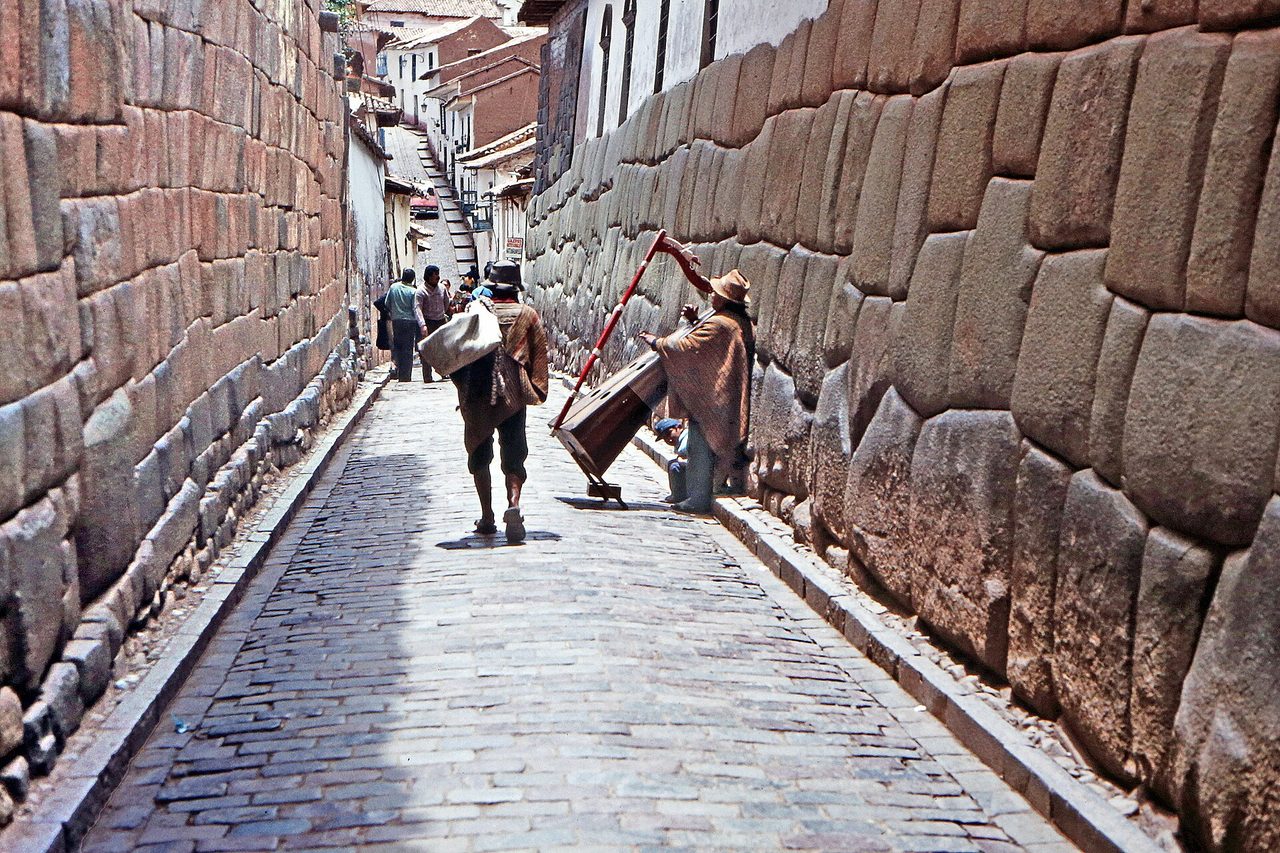
Almost every version of this question arrives phrased as a choice, and almost every honest answer is that it isn’t one. Sacred Valley vs Cusco is not really a decision about which place is better. You will end up in both, because the airport, the road and the train all run through them. The decision that actually changes your trip is which one you sleep in first, and how many nights you give each.
Get the order right and the first 48 hours in the Andes are pleasant instead of grim, and your Machu Picchu day starts at 5:40am instead of 4:15am. Get it wrong and you spend a third of a short trip in a minibus on the Chinchero road, wondering why everyone said the valley was relaxing.
The short version, before the detail
If you are flying in from Lima or sea level and you have seven days or more, sleep in the Sacred Valley first and save Cusco for the back half of the trip. If you have five days or fewer, base in Cusco and treat the valley as a long day out. If you are trekking, base in Cusco — every operator briefs there and the higher sleeping altitude is part of the preparation.
That is the whole answer. The rest of this page is why, plus the parts most comparison pages leave out: what the valley is genuinely bad at, what Cusco genuinely costs you, and the specific numbers — soles, minutes, metres — that make the difference real rather than rhetorical.
The altitude argument, told properly
This is the headline reason people choose the valley, and it is the single most garbled fact in the whole topic. Here is what the numbers actually say.
| Place | Approx. elevation | vs Cusco (3,400 m) | What it is |
|---|---|---|---|
| Cusco city centre | 3,400 m / 11,150 ft | — | Where most people sleep |
| Chinchero | 3,760 m / 12,340 ft | 360 m higher | Valley-rim town, first stop on most tours |
| Moray | ~3,400–3,500 m | Level or higher | Terraced bowls on the Maras plateau |
| Maras salt pans | ~3,300 m | Roughly level | Community-run salt terraces |
| Pisac town | 2,970 m | 430 m lower | Market town, valley floor |
| Pisac ruins (upper) | ~3,400 m | Roughly level | A stiff climb above the town |
| Urubamba | 2,870 m | 530 m lower | Valley’s practical centre |
| Ollantaytambo | 2,790 m | 610 m lower | Train town, lowest useful base |
| Aguas Calientes | 2,040 m | 1,360 m lower | Machu Picchu’s town |
| Machu Picchu citadel | 2,430 m | 970 m lower | The site itself |
Read that table twice, because the standard summary — “the Sacred Valley is lower than Cusco, so go there first” — is only half true. It is a statement about where you sleep. It is not a statement about where a valley day tour takes you.
What 500 to 600 metres lower actually buys you
Sleeping at 2,800–2,900 m instead of 3,400 m is a real physiological difference, not a marketing line. Standard high-altitude guidance is to raise your sleeping elevation gradually once you are above roughly 2,500 m, and to climb high but sleep low. Flying Lima to Cusco takes you from sea level to 3,400 m in about eighty minutes, which is precisely the jump that guidance is written to prevent.
In practice, the difference shows up on night one. At 3,400 m a lot of people sleep badly, wake with a headache, and spend their first morning moving like they are underwater. At 2,800 m most of those same people simply sleep. That single night is the strongest argument the valley has, and it is a good one. The detail worth understanding is in our breakdown of how Cusco’s altitude actually affects visitors, including what a normal adjustment feels like versus what warrants concern.
Two honest caveats. First, 2,800 m is still high — higher than any point in the Alps you can drive to easily. You are not escaping altitude, you are softening it. Second, the benefit is real for the first two or three nights and largely gone after that. If you have already spent three days in Cusco and you feel fine, moving down to the valley for its altitude is solving a problem you no longer have.
The day-tour trap nobody mentions
Here is where the standard advice quietly falls apart. The classic Sacred Valley day tour from either base goes Chinchero, Maras, Moray, Ollantaytambo — and the first three of those are at or above Cusco’s elevation. Chinchero sits at about 3,760 m, a full 360 metres above the city everyone is trying to avoid. You will stand in a weaving co-operative courtyard on your second day in Peru, breathing harder than you did in Cusco, having been told the valley is easier on you.
The same applies to the terraced bowls at Moray and the Maras salt pans, which sit on a high plateau above the river, and to the upper reaches of the Pisac ruins, which involve a serious climb from a low town. The valley floor is low. The valley’s famous sites, with the honourable exception of Ollantaytambo, are not.
Practical consequence: if you are basing in the valley for altitude reasons, do not book the full Chinchero–Maras–Moray circuit for your first full day. Walk around Ollantaytambo, sit by the river, go to a market. Save the high stuff for day three, when your body has caught up.
What the Sacred Valley genuinely lacks
Comparison pages written by tour operators tend to describe the valley as serene and Cusco as busy, and leave it there. That is not a trade-off, that is an advertisement. Here is the honest list of what you give up by sleeping in the valley.
Restaurant depth. Cusco has a genuine dining scene with range — tasting menus, decent coffee, good vegetarian food, a late-night sandwich if you need one. The list of places genuinely worth a detour is long enough to fill a whole guide to eating in Cusco. Urubamba has a handful of very good restaurants and a great deal of hotel buffet. Ollantaytambo has maybe eight places most travellers rotate through. Pisac punches above its weight for a small town but closes early. If you are staying four nights, you will notice.
Anything after dark. There is essentially no nightlife in the valley. This is a feature if you have children or an early train. It is a problem if you are travelling alone and would like to meet someone, or if you simply do not want to be in bed at 9pm. Cusco’s bars, live music and the whole Plaza scene exist, are easy to find, and are a large part of why solo travellers like the city.
Late pharmacies, clinics and ATMs. Cusco has 24-hour pharmacies, several clinics used to treating altitude and stomach complaints, and cash machines on every second corner. Urubamba and Ollantaytambo have pharmacies with normal shop hours and a small number of ATMs that are occasionally out of cash or out of order. Carry more soles than you think you need if you are basing in the valley, and do not assume you can settle a hotel bill by card in a small guesthouse.
A taxi at 11pm. In Cusco you raise a hand. In the valley, after about 8pm, you are negotiating with whoever your hotel can telephone, and inter-town runs at night are neither cheap nor fast. The road between Urubamba and Ollantaytambo is fine; the road up to Chinchero in the dark and the wet is not something to do casually.
Walkability between places. Ollantaytambo and Pisac are walkable villages. The valley is not a walkable place. It is a sixty-kilometre corridor of separate towns, and unless you are in the middle of one of them, getting to dinner means a taxi. Several of the best-known valley hotels are set on their own grounds outside town, which is lovely, and also means you eat where you sleep every night.
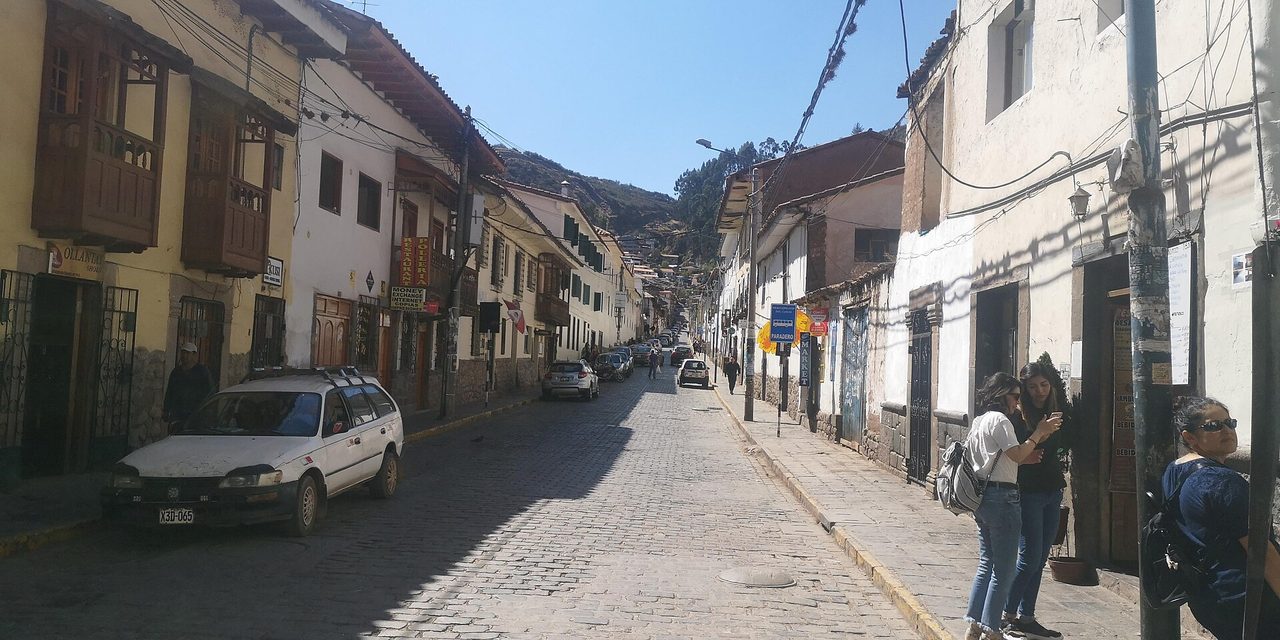
What Cusco genuinely costs you
The other direction deserves the same honesty. Cusco is not simply the convenient option.
Arrival day is punishing. The historic centre is built on a slope, and the pretty parts — San Blas, the lanes above the cathedral — are the steepest. Dragging a suitcase up a cobbled hill at 3,400 m three hours after landing is a genuinely unpleasant introduction to Peru, and it is the moment most people’s altitude headaches begin. If you do base in Cusco on arrival, pay for the taxi to your door and pick somewhere flat; the neighbourhood breakdown in our guide to choosing a Cusco base by area matters more than the star rating.
Noise. Cusco is loud in a specific way: car horns, street parades that genuinely do happen most weeks, dogs, and bars around the Plaza that do not respect your 4am train. Ask for a room off the street. If you are a light sleeper this is the single strongest argument for the valley, ahead of altitude.
The tourist-trap belt. The three or four blocks radiating from the Plaza de Armas contain a high density of restaurants with laminated photo menus, touts working the pavement, and massage flyers. It is not dangerous, it is just relentless, and the food is worse and dearer than what you find five minutes uphill. Walk further than you think you need to.
Four hours on a bus, every valley day. This is the real cost and it is rarely stated plainly. A standard Sacred Valley tour from Cusco is a 9–10 hour day of which roughly four are spent driving: an hour to Chinchero, more to Moray and Maras, then down to Ollantaytambo and the long climb back over the pass at dusk. You will see the valley through glass more than you walk in it. Booking the standard valley circuit as a day trip is perfectly reasonable if you are short on time — just do it knowing what the day involves.
Sacred Valley vs Cusco: the scorecard
One winner per row, no diplomatic ties.
| Category | Winner | Why |
|---|---|---|
| Altitude and acclimatisation | Sacred Valley | Sleeping 500–600 m lower on nights one and two is the one thing the valley does that Cusco cannot replicate. |
| Food | Cusco | Range and depth. The valley has good restaurants; Cusco has a scene, and it stays open. |
| Cost | Cusco | More hostels, more competition, cheaper set lunches, no taxi required to reach dinner. |
| Machu Picchu logistics | Sacred Valley | Ollantaytambo is the station. Sleeping there removes a pre-dawn 1h45 drive from your train day. |
| Things to do after dark | Cusco | Not close. The valley has hotel bars and stars. |
| Ruins access | Draw, honestly | Cusco has Qorikancha, Sacsayhuamán and the four ruins above town on foot or a short taxi; the valley has Pisac and Ollantaytambo on its doorstep. Neither is short of stonework. |
| Rainy-day options | Cusco | Museums, churches, cafes, cooking classes, chocolate workshops. In the valley a wet day is a wet day. |
Four–two and a draw to Cusco, which surprises people who expected the valley to sweep it. The catch is that the two categories the valley wins are the two that dominate a short first-time trip: how you feel, and how your Machu Picchu day runs. That is why the order matters more than the total.
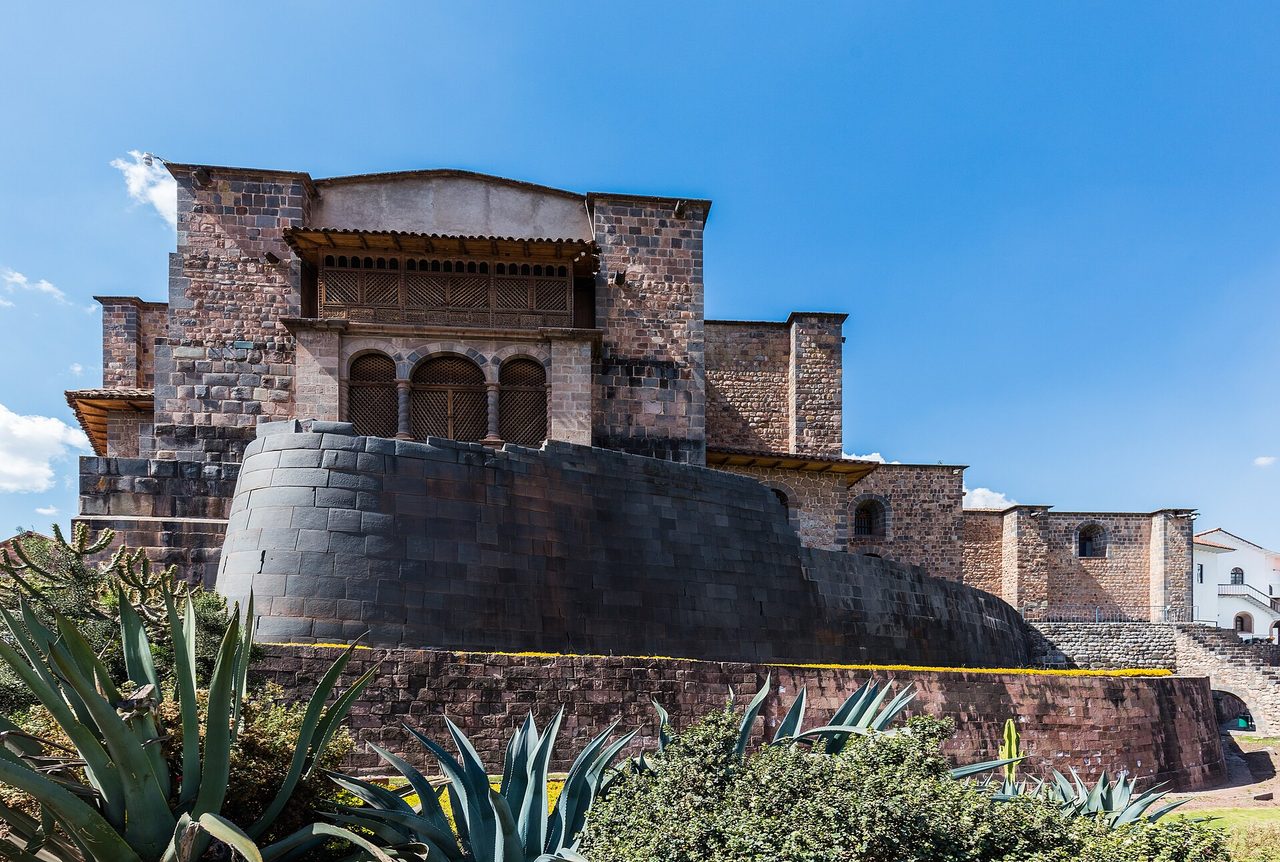
Getting between them: real prices, real times
The two are close. The transfer is not the obstacle people imagine, and knowing the actual options stops hotels selling you a S/250 private transfer as if it were the only way.
| Route | Option | Price | Time |
|---|---|---|---|
| Cusco → Ollantaytambo | Colectivo from Calle Pavitos | S/15–20 per person | ~1h45 |
| Cusco → Ollantaytambo | Private taxi | S/80–120 per car | ~1h30 |
| Cusco → Urubamba | Colectivo via Chinchero | S/10–15 per person | ~1h15 |
| Cusco → Pisac | Colectivo from Puputi | S/8–12 per person | ~1h |
| Urubamba → Ollantaytambo | Colectivo or taxi | S/3–5 / S/25–40 | ~30 min |
| Cusco airport → valley | Pre-booked transfer | S/150–250 per car | 1h30–2h |
The colectivos are shared minivans, they leave when full rather than on a timetable, and they run from early morning until roughly early evening. You pay the driver, usually on arrival. They are used by everyone, they are not a backpacker-only thing, and they are the reason the valley is far less isolating than it sounds. If you want the wider picture on shared vans, buses and when a taxi is worth it, our guide to moving around Peru without a hire car covers the same logic nationally.
Prices drift. Treat these as the shape of the market rather than a quotation, and expect drivers to round up in high season or after dark.
The Machu Picchu train-day maths
This is the argument that decides it for a lot of people, and it is arithmetic rather than opinion.
Nearly all trains to Aguas Calientes leave from Ollantaytambo. If you are sleeping in Cusco and hold a 6:10am departure, you are in a car by about 4:15am to allow for the pass, the fog and the possibility of roadworks. If you are sleeping in Ollantaytambo, you get up at 5:30, walk ten minutes with your day bag, and board. That is roughly an hour and three-quarters of pre-dawn driving deleted from the worst-timed day of your trip, and it is not recoverable elsewhere.
Operators do sell bimodal tickets that bus you from Cusco to the station as part of the fare, which removes the taxi problem without removing the early start. Check the current schedule and departure point when you book, because service patterns around Cusco have changed more than once — the practicalities are laid out in our guide to how the trains to Aguas Calientes actually work. Reckon on roughly $35–60 per person for a standard-class leg, more for the panoramic services.
Once you are there, entry to the citadel is S/163 for foreign adults, or S/211 for the circuits that include Huayna Picchu or Machu Picchu Mountain, and the shuttle bus up from Aguas Calientes is about $24 return. Daily entry is capped at 4,500, rising to 5,600 on peak dates, and tickets are sold by circuit and route with one-way movement inside the site. Book early and check the official portal before you pay, since both prices and circuit structures have moved recently; we keep the mechanics current in our explainer on buying Machu Picchu entry tickets.
One more logistical wrinkle worth knowing: if you are doing a single-day return, the case for the valley strengthens further, because the whole shape of a day trip to Machu Picchu from Cusco is dictated by that pre-dawn transfer. Sleeping in Ollantaytambo or in Aguas Calientes itself turns a brutal 19-hour day into a merely long one.
What you will pay to sleep in each
Broad brush, per double room per night, outside the July–August peak. Peak season adds 20–40 per cent and the valley’s top end adds far more.
| Level | Cusco | Sacred Valley |
|---|---|---|
| Hostel dorm bed | S/30–60 | S/35–60, far fewer options |
| Simple guesthouse double | S/100–180 | S/90–170 |
| Comfortable mid-range | $70–140 | $80–180 |
| Boutique / design | $150–300 | $200–450 |
| High end | $300–600 | $500–1,200+ |
The pattern is consistent: the valley is cheaper at the very bottom in the small towns, similar in the middle, and considerably more expensive at the top, because valley luxury means land, gardens and a spa, whereas Cusco luxury means a converted colonial house on a small footprint. If you are building a budget for the whole country, our breakdown of what a Peru trip actually costs puts these numbers in context.
The hidden cost in the valley is transport. Budget S/40–80 a day for taxis if your hotel is outside a town, or accept eating in. The hidden cost in Cusco is that a cheap room in the wrong place near the Plaza will cost you sleep.
Tickets: the boleto decides more than people expect
The Boleto Turístico is the single ticket that covers most archaeological sites around Cusco and in the valley, and which version you buy should follow from where you base.
- Full BTG — S/130. Valid 10 days, covers 16 sites across both Cusco and the valley. This is the one to buy if you are doing any serious sightseeing in both.
- Circuit III — S/70, valid 2 days. Pisac, Ollantaytambo, Chinchero and Moray. Purely a valley ticket.
- Circuit I — S/70, valid 1 day. The Cusco-adjacent ruins including Sacsayhuamán, Q’enqo, Puka Pukara and Tambomachay.
The arithmetic that catches people out: two partial circuits cost S/140, which is more than the full S/130 ticket that covers everything for ten days. If you think you might want both the valley sites and the great fortress walls at Sacsayhuamán, buy the full boleto at the first gate and stop calculating.
Two things the boleto does not do. It does not cover the Maras salt pans, which are run by the community and charge a separate cash entry of roughly S/10–20 — figures vary by source and season, so carry small notes. And it does not cover Machu Picchu, which is a separate ticket entirely.
One student-discount detail worth getting right, because half the internet has it wrong in both directions: COSITUC still accepts an ISIC card for the discounted 18–25 boleto rate. ISIC is not accepted for the Machu Picchu student rate, where you need a university photo ID showing an expiry date, and it is checked at the gate.
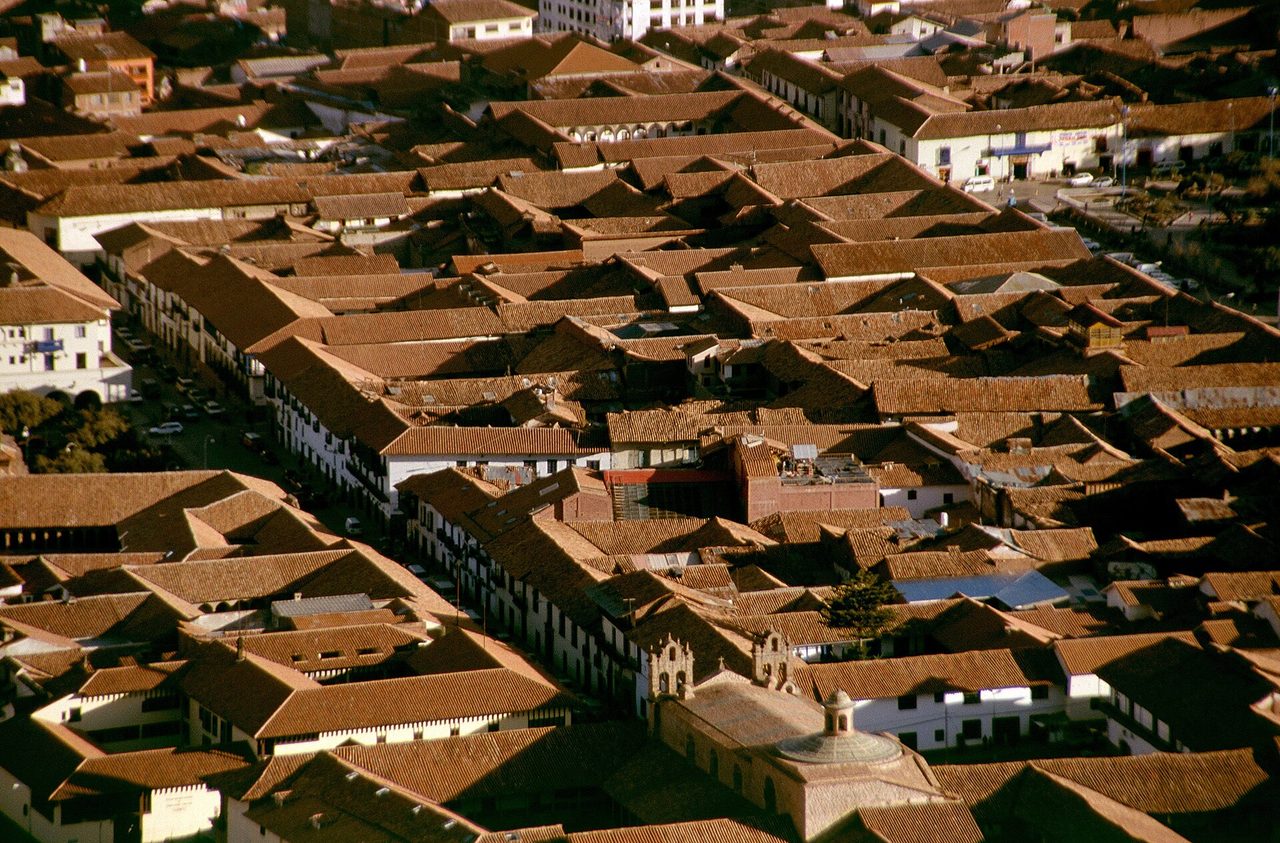
What I would actually do, by trip length
Three concrete plans. These assume you are flying into Cusco from Lima in the morning, which is what most itineraries do.
Five days in the Cusco region: base in Cusco, full stop
With five days you cannot afford two hotel changes. Base in Cusco for the whole stay, keep day one genuinely light, and accept that you will feel the altitude for 24 hours.
- Day 1 — Arrive, taxi to a flat hotel, do nothing ambitious. A slow walk, an early night, no alcohol.
- Day 2 — Cusco on foot: Qorikancha, the cathedral, San Blas, the market. Walk up to Sacsayhuamán in the afternoon if you feel fine, taxi up and walk down if you do not.
- Day 3 — Sacred Valley day tour, or better, a self-driven day: colectivo to Ollantaytambo, the ruins, lunch, back in the afternoon.
- Day 4 — Machu Picchu. Long day, early start, worth it.
- Day 5 — Whatever you missed, then fly.
The temptation with five days is to squeeze a valley night in before the train. Resist it. Two hotel changes in five days costs you the better part of a day in packing, checking out and waiting, and the acclimatisation benefit of a single valley night is marginal by day three. If this is your whole Peru trip, the pacing questions in our five-day Peru plan are worth reading before you book flights.
Eight days: valley first, Cusco second, and don’t backtrack
This is the sweet spot and the plan I would use for most first-timers.
- Day 1 — Land, transfer straight down to Urubamba or Ollantaytambo. Sleep at 2,800 m.
- Day 2 — Gentle valley day at low altitude. Ollantaytambo town and ruins, or Pisac market. Nothing above 3,200 m.
- Day 3 — The high circuit now that you have adjusted: Moray, Maras, Chinchero.
- Day 4 — Train from Ollantaytambo, night in Aguas Calientes.
- Day 5 — Machu Picchu early, train back in the afternoon, continue to Cusco.
- Days 6–8 — Cusco, properly acclimatised: the city, the ruins above it, a day trip if you want one, and the restaurants you have been missing.
The elegance of this route is that it never doubles back. You go down, along, up to the site, then up to the city, then out. Everything moves in one direction, and Cusco lands at the point in the trip when you can actually enjoy walking uphill. If you are fitting this inside a longer country loop, our seven-day Peru route and the ten-day version both use the same ordering logic.
Twelve days: three bases, no rush
With twelve days in the region you can stop optimising and start enjoying yourself.
- Days 1–4 — Sacred Valley. Split between Ollantaytambo and Urubamba or Pisac if you want two different flavours, or stay put and take day trips. Add a walk: the Perolniyoc waterfall, the Pumamarca ruins above Ollantaytambo, the terraces at Yucay.
- Days 5–6 — Machu Picchu with an overnight in Aguas Calientes, unhurried, with a second entry if you want the mountain climb.
- Days 7–12 — Cusco as a base for everything else: the city itself, the South Valley towns, Humantay or Rainbow Mountain if the weather is with you, and a proper look at the museums.
Twelve days is also enough to add a multi-day trek at the end, when you are fully acclimatised, which is the right order for it. Our guide to what is reachable from Cusco in a day covers most of what fills days seven onwards, and if you are stretching to a fortnight the two-week Peru itinerary shows what else fits.
Who should not base in the Sacred Valley
Naming this is more useful than another round of pros and cons.
Solo travellers who want company. The valley is where couples and families go to be quiet. If you are travelling alone and hoping to fall in with people, you will find them in a Cusco hostel common room and not in a Urubamba hotel dining room. This is the clearest case in the whole comparison.
Anyone on a tight one-week trip. Two hotel changes, two transfers and two mornings spent waiting for luggage will cost you the better part of a day. On a five-to-seven day trip that is 15 per cent of your holiday spent on logistics.
People who want to walk to dinner. If the idea of arranging a taxi to eat sounds tiresome, base in Cusco. The exception is staying inside Ollantaytambo or Pisac village itself, where you genuinely can walk everywhere — the trade-offs between the valley towns are unpicked in our guide to choosing a Sacred Valley base.
Anyone starting a trek in three days. Trekking operators brief in Cusco, usually the evening before, and sleeping at 3,400 m for a few nights is genuine preparation for passes above 4,000 m. Basing low then going straight onto a high trail is the wrong direction.
Budget travellers doing everything independently. You can travel the valley cheaply, but every movement costs a colectivo fare and time. Cusco concentrates the cheap options in walking distance.
Who should not base in Cusco
Anyone with a history of altitude sickness, or who has felt bad above 3,000 m before. Sleep low first. This is not a preference, it is the one medically-grounded item on either list.
Families with young children. Space, gardens, somewhere for kids to run, shorter driving days from a central valley base. The valley is straightforwardly better for this.
Light sleepers who have booked a 6am train. Ollantaytambo, and a ten-minute walk to the platform.
Anyone who has already done Cusco. On a second trip the valley is the more interesting base by a distance, and there is far more of it than the standard circuit suggests — the full picture is in our overview of the Sacred Valley of the Incas.
Seasonal wrinkle: the answer changes in the rain
From roughly November to March the valley gets wetter and greener, the afternoon storms are reliable, and the unpaved approaches to Maras and some of the walking routes turn to mud. A rained-off day in Cusco means museums, churches and cafes. A rained-off day in the valley means your hotel. That tilts a wet-season trip towards a Cusco base with valley day trips, rather than the reverse.
The flip side is that the valley is at its most beautiful in the green months, and prices soften considerably. If you are choosing dates rather than reacting to them, our notes on travelling Peru in the wet season and on the best months for Cusco specifically lay out what changes and by how much.
Common questions
Is the Sacred Valley really lower than Cusco?
The valley floor is, by 430–610 metres depending on which town. Urubamba is 2,870 m and Ollantaytambo 2,790 m against Cusco’s 3,400 m. But Chinchero at 3,760 m and Moray at around 3,400–3,500 m are level with or higher than Cusco, so “the valley is lower” describes where you sleep, not where a tour takes you.
Should I do the Sacred Valley or Cusco first?
Valley first if you have a week or more and are arriving from sea level. Cusco first if your trip is five days or shorter, if you land after about 4pm, or if you are starting a trek. Late arrivals matter more than people think: the valley road at night in the rain is not where you want to be after a travel day.
How long does it take to get from Cusco to the Sacred Valley?
About an hour to Pisac, an hour and a quarter to Urubamba via Chinchero, and an hour and three-quarters to Ollantaytambo. A shared colectivo from Calle Pavitos to Ollantaytambo runs S/15–20 per person; a private taxi is S/80–120 for the car.
Can I visit the Sacred Valley as a day trip from Cusco?
Yes, and most people do. Accept that it is a 9–10 hour day with roughly four hours of driving in it, and that you will get an hour or less at each stop. It is genuinely fine as an introduction and genuinely unsatisfying as your only exposure to the valley.
Is two nights in the Sacred Valley enough?
Two nights gives you one full valley day plus arrival, which is enough to acclimatise and see either the low sites or the high ones, not both. I break the one-, two- and three-day versions down site by site in a separate guide to how long the Sacred Valley actually needs. Three nights is the point at which the valley stops feeling like a stopover. If you are only ever going to sleep there once, make it the night before your train.
How many nights should I spend in Cusco?
Three is the realistic minimum for the city itself plus the ruins above it, and four or five if you want day trips to Humantay or Rainbow Mountain. Our breakdown of how many days Cusco actually needs goes through what each additional day buys you.
Is Cusco worth staying in at all if I am basing in the valley?
Yes, and skipping it is the most common planning mistake in the region. Cusco is the reason the valley exists in the shape it does — the imperial capital that everything else radiated from — and there is a great deal to see in it. The list of what is genuinely worth doing in Cusco runs well beyond the Plaza.
Which is cheaper overall, the valley or Cusco?
Cusco, for most travellers. Rooms are similar in the middle of the market but Cusco has far more competition at the bottom, cheaper set lunches, and no built-in taxi cost. The valley wins on price only if you stay in a small guesthouse in Ollantaytambo or Pisac and eat locally.
Can I get from the Sacred Valley to Machu Picchu without going back to Cusco?
Yes, and that is the entire logistical point. Trains run from Ollantaytambo, which is in the valley. Cusco is a detour on that journey, not a step in it. The routes and their real costs are compared in our guide to getting from Cusco to Machu Picchu.
Does the Boleto Turístico cover both areas?
The full S/130 ticket does, for ten days across 16 sites. Circuit III at S/70 covers only valley sites for two days, and Circuit I at S/70 covers the Cusco-adjacent ruins for one. Buying two partials costs more than the full ticket. The Maras salt pans are outside the system entirely and charge their own cash entry.
The one-line answer
Sleep low first, then go up. Give the valley your first two or three nights and your train morning, and give Cusco the back half of the trip when you can climb its hills without noticing. The only travellers who should genuinely pick one over the other are those with fewer than six days, who should stay in Cusco, and those with a bad altitude history, who should stay in the valley. Everyone else is choosing an order, not a destination.