10-Day Peru Itinerary: The Core Trip Plus One Big Add-On
Ten days is the first Peru trip length that gives you a real choice. Here is the shared six-day Cusco core, then three fully-costed four-day extensions — Amazon, Colca or the coast — and an honest verdict on each.
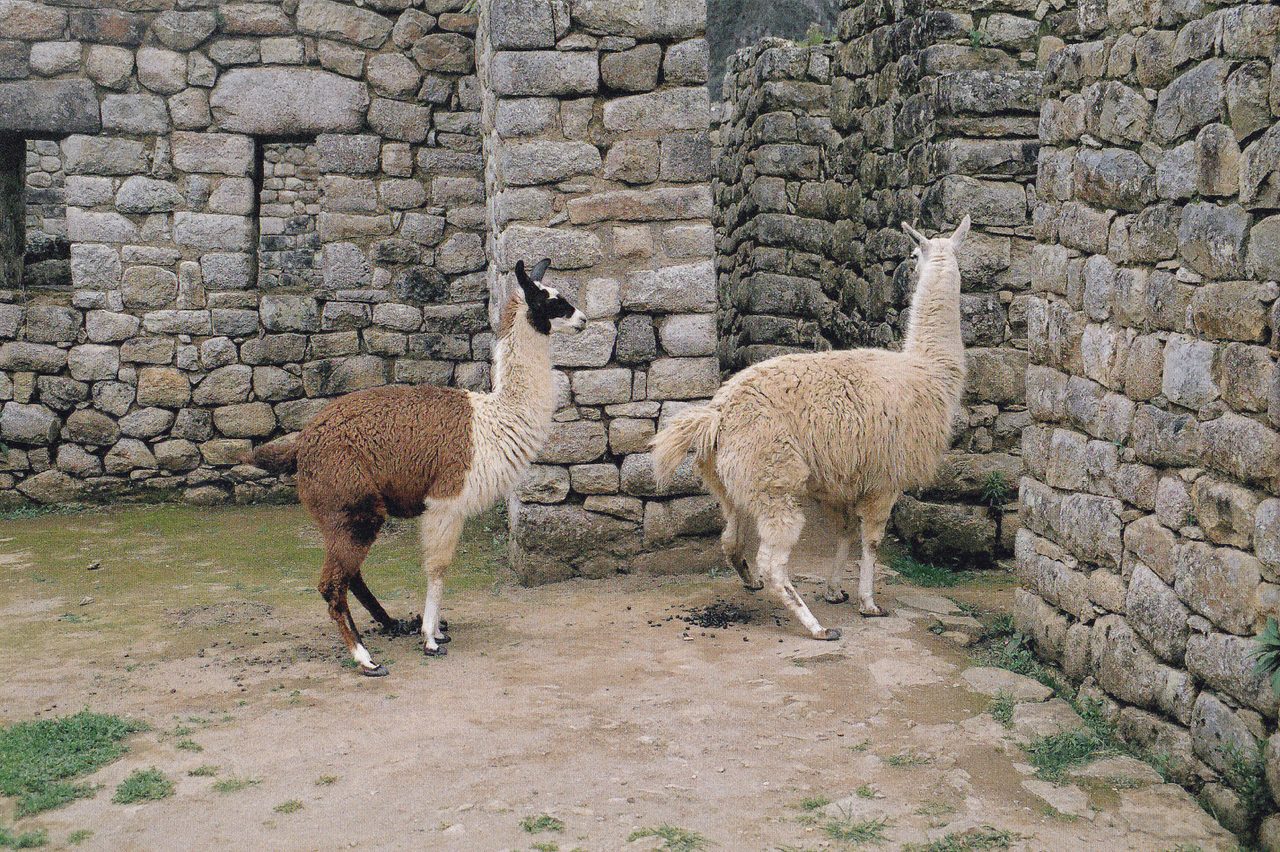
Every 10 day Peru itinerary I read before my first trip made the same quiet mistake: it handed me a list of ten days and never explained why those ten days and not some other ten. So I want to start with the thing that actually matters. Seven days in Peru buys you the Cusco core and absolutely nothing else. Fourteen days buys you the core plus two big regions. Ten days sits in between, and it is the first trip length at which you get a genuine choice — you can bolt on exactly one of the Amazon, Arequipa and Colca Canyon, or the southern coast.
Not two. One. Every itinerary that promises you the Amazon and Colca and Lake Titicaca in ten days is quietly assuming you enjoy airports, and that you don’t mind arriving at Machu Picchu having slept four hours a night for a week.
So this guide is built the way the decision actually works. First the six-day core that every version of the trip shares, sequenced properly for altitude, with real transfer times. Then the three four-day extensions, each costed out, each with an honest verdict about who it suits and who should skip it. Then a comparison table so you can see the trade-offs in one place, and a cost breakdown you can total up yourself.
What a 10 day Peru itinerary actually buys you
Peru is bigger than it looks on a map, and its three big attractions — Andes, jungle, desert coast — are separated by mountain ranges that make overland travel slow and by short flights that eat half a day each end. That geography, not laziness, is why trip lengths cluster the way they do.
| Trip length | What it realistically covers | What you give up |
|---|---|---|
| 5 days | Cusco, one Sacred Valley day, Machu Picchu. Fast and slightly reckless on altitude. | Any margin for weather, illness or a cancelled flight. |
| 7 days | The full Cusco core with a proper acclimatisation day and a day in reserve. | Everything outside the Cusco region. |
| 10 days | The Cusco core plus one four-day region: Amazon, Arequipa/Colca, or the southern coast. | The other two regions. Lake Titicaca, realistically. |
| 14 days | Core plus two regions, or core plus Titicaca plus Arequipa overland. | Northern Peru, still. |
| 21 days | All of the above plus the north, or a serious multi-day trek. | Your annual leave. |
If you want the wider view of how those lengths compare, the overview of Peru routes and trip lengths lays out the whole spectrum. This page is specifically about the ten-day version and the one decision that defines it.
One more framing point. Ten days is ten days on the ground, not ten days of annual leave. Most flights from North America and Europe arrive in Lima late at night, and most leave late at night too, so a nominal twelve-day booking usually gives you about ten usable days. If your ten days include the transatlantic legs, cut this itinerary back to the seven-day version of the Cusco core and enjoy it more.
The shared six-day Cusco core
Every route below runs on the same first six days. I have sequenced them around one rule: sleep low early, go high late. Cusco sits at 3,400 m. The Sacred Valley floor sits between 2,790 m at Ollantaytambo and about 2,870 m at Urubamba. Machu Picchu is 2,430 m, which surprises people — it is roughly a kilometre lower than Cusco. Aguas Calientes, the town below it, is lower still at around 2,040 m.
So the sensible order is Lima, then straight down into the valley, then the ruins, then Cusco last, once your body has had five days to catch up. Most itineraries do it backwards because Cusco is where the airport is, and then their authors write a paragraph about how ill they felt. The detail on how Cusco’s elevation affects arrivals is worth reading before you book anything, because it changes the shape of the whole trip.
Day 1 — Lima to the Sacred Valley, not to Cusco
Take the earliest Lima–Cusco flight you can stomach. The flight is 1h20 to 1h30. Book a morning departure: Cusco’s airport sits in a bowl surrounded by mountains and afternoon weather cancellations are routine, especially between December and March. The first flights of the day have by far the best on-time record.
Land at Cusco, do not check into a Cusco hotel, and get straight into a pre-booked transfer. Cusco airport to Urubamba is about 1h15 by road; to Ollantaytambo it is closer to 1h30, occasionally 1h45 if you hit the Chinchero roadworks. A private transfer runs about $35–60 for the car; a shared colectivo from Pavitos street in Cusco costs S/15–20 per person but requires you to get into town first.
Do nothing strenuous today. I mean that literally. The single most common way to wreck a short Peru trip is to land at 3,400 m at 9am and go straight up the Sacsayhuamán hill because the day felt wasted otherwise. Walk around your valley town, eat early, sleep. If you want a productive way to spend an hour, ask your hotel to hold your big luggage for the Machu Picchu leg — the trains only take a small bag each.
If you arrive late instead, and many people do, spend the night in Lima near the airport and fly out first thing on day 2. Losing an evening in Lima’s Miraflores and Barranco districts is a real loss, but it is smaller than arriving in the Andes exhausted.
Day 2 — A deliberately soft day in the valley
This is your acclimatisation day, and the temptation to cut it is enormous. Don’t. Do the easy version of the valley: Pisac market and the lower part of the Pisac ruins if it is a market day (Tuesday, Thursday, Sunday), or a slow morning in Ollantaytambo followed by the town’s own ruins in the afternoon. The Ollantaytambo terraces involve about 200 steps; that is enough exertion for day two and no more.
Buy the Boleto Turístico today. The full ten-day version is S/130 for foreign adults and covers sixteen sites including Pisac, Ollantaytambo, Moray, Chinchero and the four ruins above Cusco. The partial circuits are S/70 each and cover a subset for two days. If you are doing the itinerary below, the full ticket is better value, but check what your specific plan touches — a lot of people buy the S/130 and use four of the sixteen. Note that Maras salt pans and Qorikancha are not on it and are charged separately.
Drink far more water than feels reasonable, skip alcohol, and eat lightly. Coca tea is free in every hotel lobby in the valley and does something, though whether that something is pharmacological or psychological I have never worked out.
Day 3 — Moray, Maras and the rest of the valley
Now you can work. The classic loop is Moray’s concentric agricultural terraces, then the Maras salt pans about 25 minutes away, then back down for the Ollantaytambo site if you didn’t do it yesterday. A shared group tour runs $25–35 and takes about eight hours including a buffet lunch you didn’t ask for. A private driver for the day is $70–110 and is worth splitting between three or four people, because it lets you skip the lunch stop and see Maras in the late afternoon light when the tour buses have gone.
Maras costs S/20 extra and is genuinely one of the strangest things in the country: thousands of shallow evaporation pans stepped down a ravine, worked by the same families for centuries. There is a full breakdown of what else fits into this part of the trip in the guide to the Sacred Valley’s towns and ruins, including the sites most day tours skip.
Sleep in Ollantaytambo tonight regardless of where you were before. It is where the trains leave from, and a 6am train start is a very different experience when the station is a nine-minute walk away.
Day 4 — Train to Aguas Calientes
The train from Ollantaytambo to Aguas Calientes takes about 1h30 and costs roughly $35–60 per leg in standard class (PeruRail Expedition, IncaRail Voyager). The panoramic services — Vistadome, 360, First Class — run $90–250 a leg and buy you a bigger window and a snack. On a clear day the standard carriages have perfectly adequate windows. Book early: on peak dates the cheap slots vanish months out. There is more on classes, luggage rules and which station to depart from in the rundown of the rail options into the valley.
Take the early afternoon train rather than the morning one. That gives you a slow morning in Ollantaytambo, arrival in the town below Machu Picchu around 4pm, and a chance to buy your Consettur shuttle tickets the day before instead of queuing for them at 5am. The shuttle office is by the river, you need your passport, and the round trip is about $24.
Aguas Calientes gets a lot of abuse from travel writers. It is a functional tourist town wedged into a gorge, the restaurants have touts, and the prices are 40% above Cusco. It is also fine for one night, and staying there means you are not doing the day-trip version, which I’ll come back to.
Day 5 — Machu Picchu, then up to Cusco
This is the day the whole trip is built around, so a few operational facts, all of which have changed in the last two years.
- Entry is S/163 for foreign adults on the standard circuits, and S/211 for the circuits that include Huayna Picchu or Machu Picchu Mountain. Those figures took effect on 1 May 2026 when SERNANP added a conservation surcharge on top of the base ticket. If a site is still quoting S/152, it hasn’t been updated. Always confirm on the official portal before you pay, because these move.
- The daily cap is 4,500 visitors, rising to 5,600 on peak dates: 1 January, 2–5 April, 19 June to 2 November, and 30–31 December.
- Since 1 June 2024 there are three circuits split into ten routes, all strictly one-way and enforced by rangers standing at the junctions. You cannot double back. Choose your route when you buy, not on the day.
- Entry is timed hourly from 06:00 to 16:00, with a 30-minute grace period. Expect to spend 2.5 to 4 hours inside depending on which route you hold.
- Bring your passport. Names are checked against tickets at the gate.
- Student rates now require a university photo ID showing an expiry date. ISIC cards are no longer accepted.
For a first visit, the classic Circuit 2 routes give you both the postcard viewpoint and a walk through the ruins themselves, which is what most people mean when they say they want to see Machu Picchu. The full breakdown of which route does what lives in the guide to booking entry and choosing a circuit, and if you are weighing the two summit hikes, the comparison of Huayna Picchu against Machu Picchu Mountain is the thing to read before you pay the extra S/48.
Take an entry slot between 07:00 and 09:00. The 06:00 slot means queueing for the shuttle from about 04:45 and there is often cloud in the gorge until seven anyway. After the site, come down, eat, and take an afternoon train. The bimodal ticket both rail companies sell puts you on the train to Ollantaytambo and then a coach to your Cusco hotel; total journey time is around 4 hours door to door and you will arrive in Cusco between 8pm and 10pm. You are now sleeping at 3,400 m for the first time, on day five, which is exactly where you want that to happen.
People do ask whether they can compress this into a single day from Cusco. You can — the mechanics are covered in the single-day version of the Machu Picchu run — and it is a 19-hour day that starts at 4am. On a ten-day trip you have the night to spare. Spend it.
Day 6 — Cusco, properly
One full day in the city. Qorikancha in the morning (S/25, not on the Boleto), the San Pedro market for lunch, the four ruins above the city in the afternoon — Sacsayhuamán, Q’enqo, Puka Pukara, Tambomachay, all four on the Boleto and best done with a taxi or a cheap group tour because they are spread over eight kilometres of road. Finish at the San Blas viewpoint at sunset.
Cusco deserves more than a day and does not get it in this itinerary, which is one of the real costs of the ten-day structure. If your interests run to museums, churches and eating, look at what else is on offer in the city’s sights and neighbourhoods and consider trimming a day off your extension instead. Where you base yourself matters more than it does in most cities, because the historic centre is on a hill and the difference between a five-minute walk and a twenty-minute climb at altitude is not trivial — the breakdown of Cusco neighbourhoods covers that. And if you have one evening for a good meal, Cusco’s restaurant scene punches well above the city’s size.
What the shared core costs
Per person, excluding international flights, for days 1–6. Soles converted at roughly S/3.75 to the dollar.
| Item | Budget | Mid-range | Comfort |
|---|---|---|---|
| Lima–Cusco flight (one way) | $50 | $80 | $120 |
| Accommodation, 5 nights | $75 | $250 | $600 |
| Airport and valley transfers | $12 | $40 | $90 |
| Boleto Turístico + Maras | $24 (partial) | $40 | $40 |
| Sacred Valley touring | $28 (colectivos) | $32 (group tour) | $110 (private driver) |
| Train, both legs | $70 | $110 | $220 |
| Consettur shuttle, round trip | $0 (walk up) | $24 | $24 |
| Machu Picchu entry | $44 (S/163) | $44 (S/163) | $56 (S/211) |
| Qorikancha, Cusco sites, guide | $14 | $45 | $130 |
| Food and drink, 6 days | $60 | $150 | $300 |
| Core subtotal | ~$377 | ~$815 | ~$1,690 |
The budget column assumes hostel dorms, the 90-minute walk up to the site instead of the shuttle, and colectivos everywhere. It is achievable — there are more ways to shave it in the guide to doing Machu Picchu cheaply — but the walk up gains 400 m of vertical and takes 75–90 minutes, so budget it in energy as well as dollars. For the wider picture of what a Peru trip runs, including things this table ignores like insurance and vaccinations, see the full cost breakdown for a Peru trip.
Now pick exactly one extension
Days 7 to 10 are yours. Here is the honest framing: each of these three options is a four-day region, each loses you the better part of a day to transit at each end, and none of them can be halved. A two-day Amazon trip is an airport transfer with a boat ride attached. A one-night Colca trip means the 3am departure and nothing else. The southern coast squeezed into two days means Paracas or Huacachina, not both.
So the question is not “which of these can I fit in” but “which one of these do I want most”. Below, each gets a section with real costs and a verdict that includes who should skip it.
Extension 1: the Amazon (Days 7–10)
The pitch is the biggest contrast Peru offers. On day 6 you were at 3,400 m in a stone city; on day 7 you are at 183 m in wet heat, listening to howler monkeys. Nothing else on this list changes the register of the trip so completely.
Puerto Maldonado or Iquitos?
Peru has two Amazon gateways and they are not interchangeable.
Puerto Maldonado is a 55-minute flight from Cusco. That is the whole argument, and it is a strong one. You land, transfer 20 minutes to the river port, and are on a boat up the Madre de Dios or Tambopata within the hour. Lodges range from 45 minutes to about 3 hours upriver; the further ones are meaningfully better for wildlife and meaningfully worse for your schedule. The Tambopata National Reserve entrance fee is around S/30.
Iquitos is the better jungle. It is bigger, wilder, sits on the main Amazon proper, and the Pacaya-Samiria reserve has wildlife density Tambopata cannot match. It is also the wrong choice for a ten-day trip. There are no flights from Cusco; you route via Lima, which means a Cusco–Lima leg plus a Lima–Iquitos leg, and you have burned a full day before you see a river. Then the good lodges are four to eight hours downstream. Iquitos needs five days minimum and rewards eight. On this itinerary it will cost you two of your four days in transit.
For ten days, take Puerto Maldonado. Save Iquitos for the trip where you have a fortnight. The wider comparison of Peru’s Amazon regions goes into which lodges and reserves suit which trip lengths.
What you actually see in three nights
Lodge brochures show jaguars, giant otters and macaw clay licks in a single collage. Here is the realistic version for three nights in Tambopata.
Near-certain: capuchin and squirrel monkeys, caiman on a night boat ride, macaws and toucans in flight, hoatzin, leafcutter ant columns, more insects than you have a taxonomy for, and the sound of howler monkeys at dawn, which is worth the trip on its own.
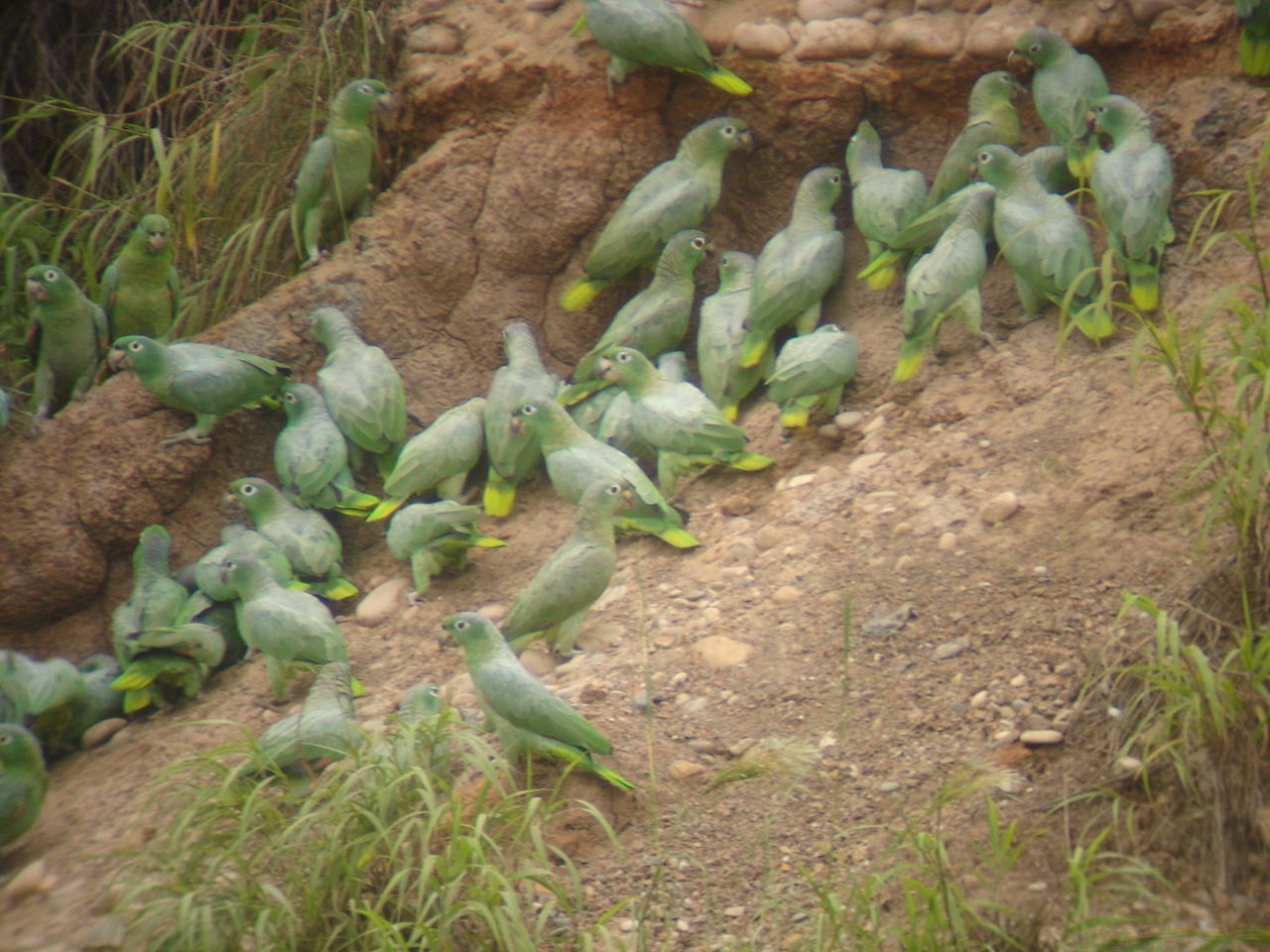
Likely with a good guide: a clay lick with a few dozen parrots and macaws (the spectacular hundreds-strong licks are further upriver and generally need the longer lodges), capybara, red howler monkeys visually rather than just audibly, a caiman up close.
Possible but do not book expecting it: giant river otters — a genuine coin-flip depending on which oxbow lake your lodge accesses. Tapir. Anaconda.
Effectively lottery tickets: jaguar and puma. The figures you see quoted for jaguar sightings come from the deep-jungle research stations six-plus hours upriver, with multi-day stays. On a three-night trip from a two-hour lodge, do not plan around it.
Also: three nights means arrival afternoon, two full days, departure morning. That is two proper days of activity, and one of them will probably start at 4:30am for the clay lick. If you want a sense of what else Peru offers on the wildlife front, the overview of Peruvian wildlife by region is worth a look, because the Andes and the coast hold species the jungle doesn’t.
What the Amazon extension costs
| Item | Budget | Mid-range | Comfort |
|---|---|---|---|
| Cusco–Puerto Maldonado flight | $60 | $80 | $110 |
| Puerto Maldonado–Lima flight | $70 | $100 | $140 |
| Lodge, 3 nights all-inclusive | $220 | $450 | $900 |
| Reserve entrance fee | $8 | $8 | $8 |
| Tips, drinks, boot hire, extras | $20 | $45 | $90 |
| Extension subtotal | ~$378 | ~$683 | ~$1,248 |
Two notes on that table. Lodge rates are almost always quoted per person in a double, so solo travellers get hit with a supplement of 30–50%. And the all-inclusive genuinely is all-inclusive at the mid and upper tiers — meals, guide, activities, transfers — but almost never includes drinks, which are marked up sharply because everything arrived by boat.
Verdict on the Amazon
Do it if the contrast is the point, you have never been in tropical rainforest, or you are travelling with teenagers who will remember the night boat ride longer than the ruins.
Skip it if you have already done Costa Rica, Borneo or the Ecuadorian Amazon and are hoping for a step up — three nights in Tambopata is not that. Skip it also if humidity and insects genuinely make you miserable, because there is no version of this where you are dry and unbitten. And skip it if your budget is tight: it is the most expensive of the three extensions in every column.
Extension 2: Arequipa and Colca Canyon (Days 7–10)
Arequipa is the best-looking city in Peru and I will argue with anyone about it. White volcanic sillar stone, a plaza framed by arcades with the Misti volcano behind it, a walled convent you can wander for two hours, and food that is regionally distinct rather than a Lima import. It sits at 2,335 m, which after Cusco feels like sea level.
The altitude problem nobody puts in the brochure
Here is the thing that catches people out, and it catches out the ones who felt fine in Cusco.
The road from Arequipa to Chivay, the town at the mouth of the Colca Canyon, climbs over the Patapampa pass at about 4,910 m. That is roughly 1,500 m higher than Cusco and higher than most people on a Peru trip will ever go. The buses stop there for photos of the apachetas — the stacked stone cairns left as offerings — and the volcanoes behind them, and you get out into thin, freezing air after three hours of climbing.
Two things go wrong. First, you have just spent two days at 2,335 m in Arequipa, which is a partial de-acclimatisation from Cusco’s 3,400 m. Second, the ascent is fast: 2,600 m of gain in about three and a half hours of driving. Fast ascent to high altitude is the classic recipe, and the Patapampa stop is where the headaches and nausea start on that road. Chivay itself is 3,635 m, still above Cusco, and that is where you sleep.
None of this is dangerous for most people, and the stop is fifteen minutes. But if altitude hit you hard in Cusco, this extension is the one to drop. If you want the mechanics of how altitude works on this trip in more depth, the practical planning notes for Peru cover acclimatisation, coca, and when to see a doctor.
The 3am start, and whether the two-day tour fixes it
Condors at the Cruz del Cóndor viewpoint ride the morning thermals, which means everyone needs to be there between roughly 8am and 10am. From Arequipa that means a hotel pickup at 3am and a five- to six-hour drive with a breakfast stop in Chivay. The one-day tour does exactly that and then drives you all the way back the same afternoon: fourteen hours of which two are the actual thing you came for. It is grim, and I would not do it again.
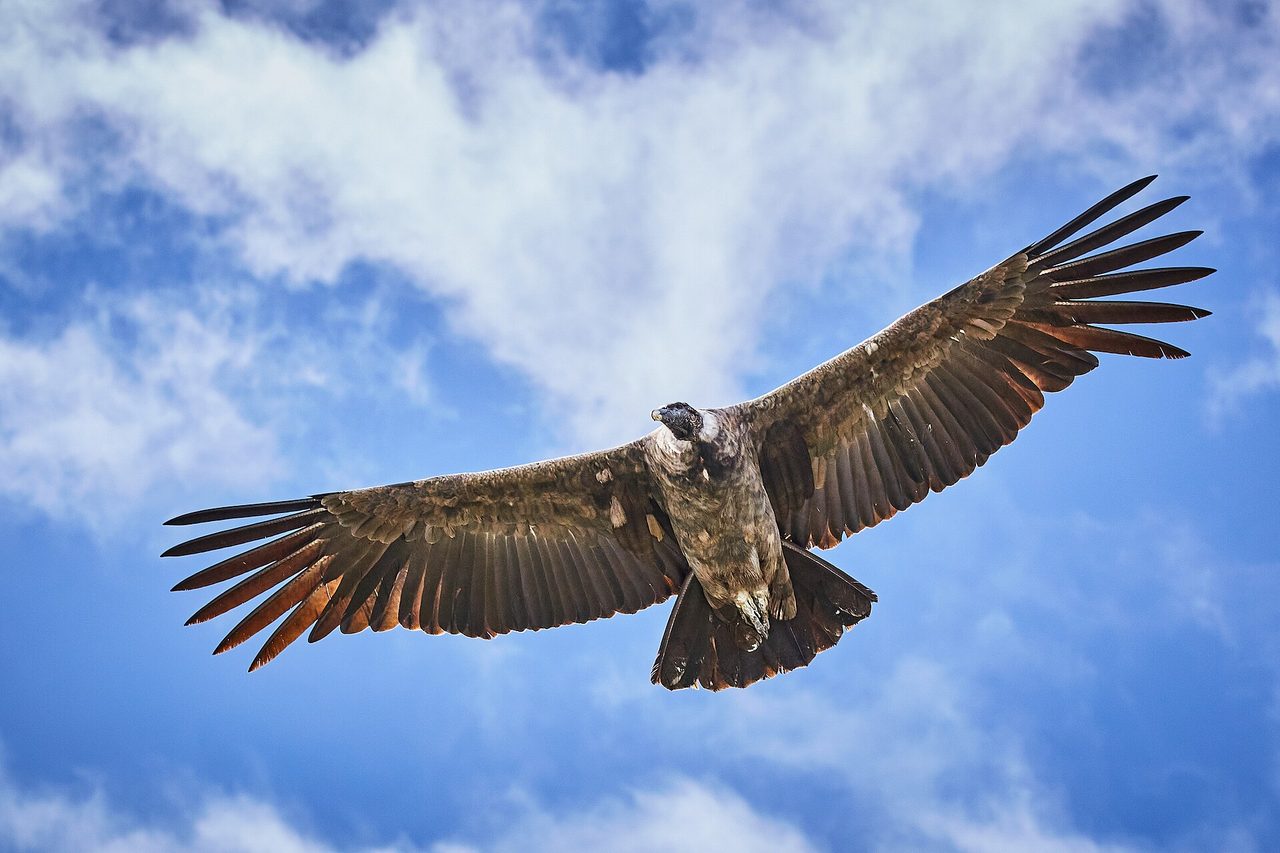
The two-day version fixes most of it. Leave Arequipa at a civilised hour on day 8, stop at Patapampa, reach Chivay by early afternoon, use the hot springs, sleep at 3,635 m, and drive the 90 minutes to Cruz del Cóndor for the morning thermals on day 9. You get two shots at the condors instead of one, which matters more than it sounds — on a bad morning you see three specks, on a good one they pass at eye level within twenty metres and the whole viewpoint goes silent.
The condors are genuinely good. That is not a hedge. Adult Andean condors have a three-metre wingspan and watching one come up the canyon wall at your altitude is one of the better wildlife moments in South America. What is oversold is everything around the condors: the “traditional village” stops are shopping stops, the pre-Inca terracing is impressive but you are seeing it through a bus window, and the Chivay hot springs are municipal pools with a view.
Structure the four days as: day 7 travel to Arequipa and see the city, day 8 Colca outbound and Chivay, day 9 condors then back to Arequipa, day 10 fly Arequipa–Lima. The city half is not filler — the Santa Catalina monastery (S/50) takes two hours minimum and the Juanita mummy at the Museo Santuarios Andinos (S/25) is one of the most affecting things I have seen in a museum. The guide to Arequipa and its surroundings covers what fits into a day and a half.
What the Arequipa and Colca extension costs
| Item | Budget | Mid-range | Comfort |
|---|---|---|---|
| Cusco–Arequipa (bus / flight) | $28 (bus) | $60 (flight) | $95 (flight) |
| Arequipa accommodation, 2 nights | $30 | $90 | $240 |
| Colca 2-day tour incl. Chivay night | $60 | $115 | $260 (private) |
| Colca tourist ticket (boleto) | $19 | $19 | $19 |
| Santa Catalina + Juanita museum | $20 | $20 | $20 |
| Arequipa–Lima flight | $50 | $85 | $150 |
| Food and drink, 4 days | $40 | $100 | $200 |
| Extension subtotal | ~$247 | ~$489 | ~$984 |
Verdict on Arequipa and Colca
Do it if you like cities as much as sites, you want the best food outside Lima, and the idea of a condor at eye level does something for you. It is also the cheapest way to add a genuinely different landscape, and Arequipa is the one place on this list where I would happily spend an extra day doing nothing.
Skip it if Cusco’s altitude gave you a bad time — Patapampa will be worse. Skip it if you cannot face a 6am start after a 5am Machu Picchu start three days earlier. And skip it if you are travelling in the deep wet season: January to March is the worst window for condor activity and the Colca road occasionally closes after landslides.
Extension 3: the southern coast — Paracas, Huacachina, Nazca (Days 7–10)
The cheapest and most accessible of the three, and the only one you can do entirely overland from Lima on a paved highway. Fly Cusco–Lima on day 7, get on a bus south, and you are in Paracas by evening.
Paracas and the Ballestas Islands
Lima to Paracas is 3h45 to 4h30 by bus. Cruz del Sur runs comfortable direct services for about $18–30; Peru Hop runs a hop-on hop-off service aimed at backpackers that costs more but includes stops at the Paracas candelabra and Huacachina and solves the luggage-and-timetable problem. The bus terminal in Lima is not somewhere to wander with a rucksack after dark; take a taxi to the door.
The Ballestas Islands boat trip leaves El Chaco at 8am, 10am and sometimes noon, costs $18–25 plus a small port fee, and lasts two hours. You will see thousands of Peruvian boobies and cormorants, a large sea lion colony, and Humboldt penguins if you are lucky. Sometimes dolphins.
Now the honest part. The Ballestas get marketed as “the poor man’s Galápagos” and that comparison does nobody any favours. You do not land on the islands — the boat circles them at a distance of thirty to a hundred metres and you never get off. The guano smell on a still day is memorable in the wrong way, and the boats are open, so between June and September you will be cold and damp. It is a good two hours and worth $20. It is not a wildlife experience on the scale of anything in Ecuador.
The Paracas National Reserve itself — red-sand beaches, desert cliffs meeting the Pacific, S/11 entry — is the underrated half of the day and most people skip it because the boat tour ends at 10am and the buses to Ica leave at 11. Hire a bike or a taxi for three hours and go.
Huacachina
Ica is 1h15 south of Paracas; Huacachina is a five-minute taxi from Ica. It is a real oasis — a natural lagoon in a bowl of 100-metre dunes, ringed with palms — and it is also completely given over to tourism, with maybe fifteen hostels and restaurants and nothing else. The lagoon water is not swimmable.
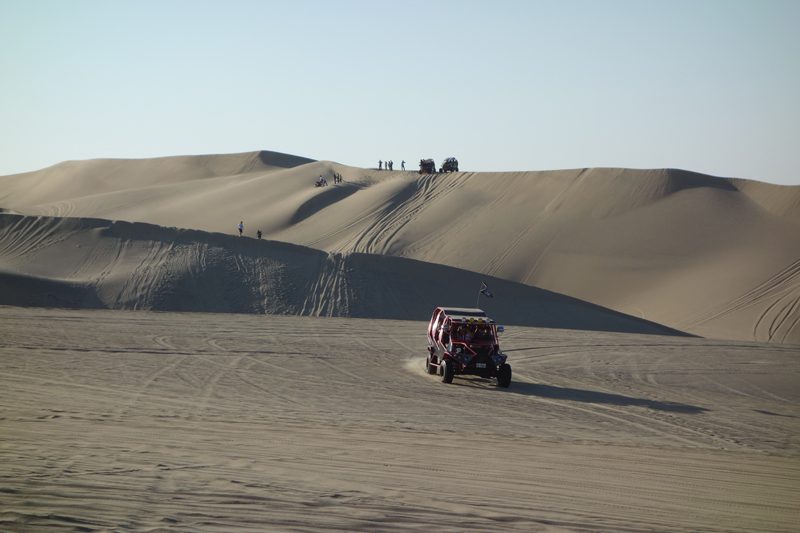
The thing to do is the dune buggy and sandboarding run, $18–30 for about two hours, usually at 4pm so it finishes at sunset. The buggies are driven like fairground rides and it is legitimately good fun. Sandboarding here means lying head-first on a waxed plank, not carving turns; nobody snowboards down these dunes. If you have a bad back or a nervous disposition, sit the buggy out and walk up the big dune instead, which takes twenty minutes and gives you the same sunset.
Ica is also Peru’s pisco country and the bodega tours are cheap and unpretentious. There is more on the whole strip in the guide to Peru’s southern coast, including the stops between Paracas and Nazca that most itineraries drive past.
The Nazca overflight, and the airsickness problem
You cannot see the Nazca Lines properly from the ground. The observation tower on the Panamericana shows you two and a half figures at a bad angle. The flight is the experience or there is no experience.
From Nazca’s Maria Reiche aerodrome, a 30-minute overflight runs about $85 plus S/30 airport tax and a S/47 tourist ticket — call it $105 all in. From Pisco, near Paracas, the same idea costs $280–380 because the plane spends 45 minutes each way getting there. If you are doing the coast on a budget, base yourself in Nazca or Ica and fly from Nazca.
The airsickness is not a joke and I want to be blunt about it. The aircraft is a six-seat Cessna. To let both sides of the plane see each figure, the pilot banks hard left over a geoglyph, then hard right over the same one, then flies to the next and repeats. Thirteen or so figures, roughly twenty-six steep banking turns in half an hour, in unpressurised air over hot desert with strong thermals. A meaningful proportion of every flight is unwell, and the sick bags are supplied for a reason. If you are prone to motion sickness: take something an hour beforehand, fly the first slot of the morning before the thermals build, do not eat a big breakfast, and pick a window seat where you can keep your eyes on the horizon.
Is it worth it? If you are interested in what the lines are and how they were made, yes — nothing else conveys the scale, and the fact that the figures only resolve from 300 m up is the entire point. If you are mildly curious and get carsick on winding roads, spend the $105 on something else and read about them instead. They sit alongside Peru’s other World Heritage listings, several of which are easier to visit.
What the southern coast extension costs
| Item | Budget | Mid-range | Comfort |
|---|---|---|---|
| Cusco–Lima flight | $50 | $80 | $130 |
| Lima–Paracas bus | $15 | $25 | $45 |
| Ballestas boat + reserve entry | $21 | $28 | $45 |
| Paracas, 1 night | $15 | $55 | $130 |
| Paracas–Ica bus | $8 | $12 | $25 |
| Dune buggy and sandboarding | $18 | $26 | $45 |
| Huacachina / Ica, 2 nights | $24 | $80 | $200 |
| Nazca overflight, all in | $0 (skipped) | $105 | $300 (from Pisco) |
| Return bus to Lima | $15 | $25 | $45 |
| Food and drink, 4 days | $40 | $90 | $180 |
| Extension subtotal | ~$206 | ~$526 | ~$1,145 |
Verdict on the southern coast
Do it if your budget is the binding constraint, if altitude has been rough and you want to spend the back half of the trip near sea level, or if you are travelling with children — sea lions, sand dunes and a buggy ride beat a fourth set of ruins by a wide margin at age nine.
Skip it if you get motion sick and the overflight was the whole appeal, because without it the coast is a nice two days stretched over four. Skip it if you are travelling June to September and were hoping for beach weather: the coastal fog, the garúa, sits over Paracas for months and it is grey and 17 °C. And skip it if you have come to Peru specifically for the Andes, because this extension takes you away from them.
Cusco to Arequipa: when the overnight bus is actually worth it
This deserves its own section because it is the single transport decision where people most often talk themselves into the wrong answer.
| Overnight bus | Flight | |
|---|---|---|
| Journey time | ~10 hours | ~1h15 in the air |
| Realistic door-to-door | 11 hours | 4–5 hours with airport time |
| Typical fare | $26–40 (Cruz del Sur, Tepsa, Peru Hop) | $55–95, occasionally under $45 on a sale |
| Daytime hours consumed | Zero, if you take the 8–10pm departure | Half a day, whichever slot you take |
| Accommodation saved | One night | None |
| Reliability | Good on this route; occasional delays | Cusco morning fog and afternoon weather cancel flights |
Do the arithmetic and the bus is often only $20–30 cheaper once you account for the hotel night you save, which is not much for ten hours of your life. But that framing misses the real variable, which is when you travel.
Take the overnight bus if you can get the 8pm or 10pm departure in a fully-reclining 160-degree seat on the top deck, and you sleep on buses. You lose no daylight and gain a night’s accommodation. On a ten-day trip that is genuinely a day saved, and the Cusco–Arequipa road is one of the better-maintained long routes in the country.
Take the flight if the only bus that fits your schedule is a daytime one. A daytime Cusco–Arequipa bus costs you an entire day out of four, which is 25% of your extension, to save $40. That is a bad trade every time. Also take the flight if you do not sleep sitting up, because arriving in Arequipa at 6am on no sleep and then facing a 3am Colca departure the next morning is how people end up spending day 9 in a hotel room.
One planning note: Cusco–Arequipa flights are frequently a single daily LATAM rotation and sell out. Book it when you book your Machu Picchu tickets, not after. General ground rules for moving around the country — bus companies, colectivos, which domestic routes are worth flying — are in the guide to Peruvian transport.
The three extensions side by side
| Amazon (Puerto Maldonado) | Arequipa & Colca | Southern coast | |
|---|---|---|---|
| Added cost, mid-range | ~$683 | ~$489 | ~$526 |
| Added cost, budget | ~$378 | ~$247 | ~$206 |
| Time lost to transit | ~1 day (2 flights, 2 boat legs) | ~1 day (bus) or ~0.5 day (flight) plus 2 long road days | ~1.5 days spread over 4 (all bus) |
| Highest altitude reached | ~200 m | 4,910 m (Patapampa pass) | ~400 m |
| Best season | May–Oct drier and easier; Nov–Apr wetter but more active wildlife | May–Nov; condors best Jun–Aug | Dec–Mar for sun; Jun–Sep grey and cool |
| Physical demand | Low, but hot and humid; 4:30am starts | Moderate; long drives, thin air, very early starts | Low |
| Suits | First-time rainforest visitors, families with teens, wildlife-curious travellers | City and food travellers, birders, anyone who wants Peru’s best architecture | Budget travellers, families with young children, anyone done with altitude |
| Skip if | You have done better rainforest, hate humidity, or money is tight | Altitude hit you in Cusco, or you are travelling Jan–Mar | You get motion sick, or you came for the Andes |
| Ends in | Lima (via PEM–LIM flight) | Lima (via AQP–LIM flight) | Lima (by road) |
All three land you back in Lima for the international flight home, which is the practical reason none of them are dead ends.
Season changes the answer more than people expect
The Andean dry season runs roughly May to September and the wet season December to March, with April and October as shoulder months. That is the framework behind the wider question of when to visit Peru, and it interacts with your extension choice in ways that are easy to miss. Cusco has its own rhythm inside that framework, and the month you pick for the highland leg moves your room rates more than anything else in this itinerary.
- June to August. Peak everything. Machu Picchu is on the 5,600 cap from 19 June, trains and tickets sell out months ahead, and Cusco is full. Best window for Colca condors. Worst window for the coast, which is under fog. The Amazon is at its driest and easiest.
- April, May, October, November. The sweet spot for this itinerary. Green landscapes, thinner crowds, Machu Picchu on the 4,500 cap outside the peak dates, and all three extensions functional. If you can pick, pick these.
- December to March. The Inca Trail closes for February. Machu Picchu itself stays open but fog is common and the mountain routes get slippery. Colca is the weakest choice now. The coast is at its best — hot, clear, actual beach weather — and the Amazon is wetter but has higher water levels, which means boats reach places they cannot in September.
The pattern: in the southern summer, lean towards the coast. In the southern winter, lean towards Colca. The Amazon works year-round with different trade-offs. There is more on how the seasons affect the site itself in the month-by-month view of Machu Picchu conditions.
Things I would not add at ten days
Lake Titicaca. Several popular itineraries slot Puno in between Cusco and Arequipa. On paper it works: the tourist bus from Cusco to Puno takes about 10 hours with five archaeological stops. In practice you spend a full day on a bus, a half day on a boat to the Uros islands, and a night at 3,830 m — higher than Cusco — and then another 6 hours to Arequipa. It is two days of transit for one afternoon of sightseeing, and the Uros floating islands have become the most heavily staged tourist experience in Peru. Titicaca is worth doing, on a fourteen-day trip, with a homestay on Amantaní. Not squeezed into ten.
The Inca Trail. The classic four-day trek plus its permit system needs the core itinerary rebuilt around it, and it uses your acclimatisation days as trekking days. There are shorter alternatives — the two-day trail, the Lares route — and the breakdown of trail options and permits covers which ones fit a compressed schedule. But if trekking is the reason you are going, look at the range of Peruvian trekking routes and build a fourteen-day trip instead of forcing a four-day trek into ten.
Rainbow Mountain on the wrong day. Vinicunca tops out at 5,036 m and the standard tour is a 3am pickup, a 3-hour drive and a 90-minute walk in very thin air. People slot it into day 2 or 3 of a Cusco trip and it is a genuinely bad idea — you are not acclimatised, and the failure rate is high. If you want it, it belongs on day 6 or later, in place of the Cusco city day. The realities of the Vinicunca trip are worth reading first, because a lot of people come back saying the photos were more saturated than the mountain.
Humantay Lake as a bonus. Same problem in milder form. It is 4,200 m and a 90-minute uphill walk, and it is a better day out than Rainbow Mountain, but the Humantay day trip is still a 4am start. It fits if you swap out the Cusco city day and you have acclimatised. It does not fit as an extra.
Northern Peru. Chachapoyas, Kuélap, the Chan Chan complex, Huaraz. All excellent, all a long way from everything in this itinerary. The northern circuit is its own two-week trip.
Do seven days well, or wait until you have fourteen
Now the contrarian bit, because I think a decent share of people reading this are planning the wrong trip.
You should do seven days instead of ten if: your ten days include the international flights; you are travelling with anyone over about seventy or under about eight; you have had altitude sickness before; or you are the kind of traveller who wants to sit in a plaza for two hours rather than tick a list. The seven-day version is the core above with a spare day, and the spare day is the difference between a good trip and a fraught one. It absorbs a cancelled Cusco flight, a bad stomach day, or a foggy morning at the ruins. On a ten-day trip with an extension, there is no spare day — every delay cascades into a missed flight.
You should wait for fourteen days if: you want the Amazon and Colca; you want to trek the Inca Trail or Salkantay; Lake Titicaca is genuinely on your list; you are going once in your life and want to see Peru rather than see Machu Picchu. Fourteen days is where the country stops being a checklist. Two extra days does not sound like much until you notice it doubles what you can add.
Ten days is right if: you have a fixed two weeks including flights, you want Machu Picchu properly rather than in a rush, and you have a clear preference among jungle, canyon and coast. That is a lot of people, and for them this structure works well. Just pick one extension and commit to it, rather than trying to compress two and enjoying neither.
Whichever version you land on, book Machu Picchu entry first and build everything else around the date you get. Everything else in Peru is flexible; that is not. And if you are still deciding whether the site justifies the logistics, the honest assessment of whether Machu Picchu lives up to it is a more useful read than another gallery of photographs.
Frequently asked questions
Is 10 days enough for Peru?
Enough for the Cusco core plus one other region, comfortably. Not enough for two other regions, whatever the tour operator brochures suggest. Ten days on the ground gives you six days for Lima, the Sacred Valley and Machu Picchu, and four days for the Amazon, Arequipa and Colca, or the southern coast. If you want two of those three, you need fourteen.
Should I fly straight to Cusco or spend a night in Lima first?
Fly onward the same day if your international flight lands before about 9am. Otherwise spend the night near Lima airport and take the first flight out. Lima is a good city and worth two days on a longer trip, but on ten days those two days come directly out of your extension, and Peruvian food is available in Cusco too — the survey of what to eat in Peru covers what is regional and what is national.
How many days do I really need in Cusco itself?
Two full days does the city and the four ruins above it without rushing. This itinerary gives you one, on the assumption you are prioritising the extension. If you would rather stay put, the argument for giving Cusco more time is a legitimate alternative use of these ten days, and a lot of the surrounding valley works as day trips from the city.
How far ahead do I need to book Machu Picchu tickets?
Three to six months for a specific date in June to August, and longer if you want a mountain circuit — Huayna Picchu slots go fastest. Outside peak season, four to six weeks is usually workable. Trains follow the same pattern: the cheap standard-class slots go first and the expensive panoramic ones linger. Buy the entry ticket first, then the train, then the hotels.
Is the Machu Picchu day trip from Cusco really that bad?
It is a 4am to 11pm day with roughly nine hours of it spent in transit, and you arrive at the site in the middle of the day when the light is flat and the crowds peak. It exists for people with genuinely no spare night. On a ten-day itinerary you have the night. The question of how long to give Machu Picchu deserves an honest answer, and the honest answer is: two days including the approach.
Which extension is cheapest?
The southern coast at the budget tier, at around $206 if you skip the Nazca overflight, because it is all buses and cheap hostels. Arequipa and Colca is cheapest at the mid-range tier once you include the overflight in the coast figure. The Amazon is the most expensive at every tier, mostly because of the two flights and the lodge structure.
Do I need to worry about altitude on all three extensions?
Only Arequipa and Colca. The Amazon and the coast are effectively at sea level and are, if anything, a relief after six days above 2,400 m. Colca takes you to 4,910 m at the Patapampa pass and has you sleeping at 3,635 m in Chivay, both higher than Cusco. If altitude was a problem for you in the first half of the trip, that is a clear signal.
Can I do this itinerary in reverse, starting on the coast or in Arequipa?
Yes, and there is a decent argument for the Arequipa-first version: you land at 2,335 m, acclimatise gently, then go to Cusco already partly adapted. The catch is that it puts Machu Picchu at the end of the trip, so a cancelled flight or a bad weather day has nowhere to go. I would rather have the immovable, expensive, pre-booked thing early and the flexible thing late.
What should I pack for a trip that covers both the Andes and the jungle or coast?
Layers, because you will go from 4 °C at dawn in the Sacred Valley to 32 °C and humid in Tambopata within a week. A rain shell year-round. Broken-in walking shoes rather than boots unless you are trekking. The specifics for the site itself, including what is actually banned at the gate, are in the packing guide for Machu Picchu.
What if I want a trip that is not built around Machu Picchu at all?
It is a more common question than you would think, and ten days is plenty for it — Arequipa, Colca, Lake Titicaca and the coast make a coherent southern loop with no ruins queue in sight. Start from the wider list of places worth going in Peru and build outward from what actually interests you rather than from the one site everyone assumes you are coming for.