Sacred Valley Tour: Itinerary & Highlights
The classic full-day coach tour is a rushed day built around a commission buffet. Here are the three real ways to do the Sacred Valley, what the Boleto Turistico actually covers, and why running the route backwards changes everything.

The standard sacred valley tour sold on every corner of Cusco’s Plaza de Armas is a twelve-hour day for about US$25, and a fair number of people who take it come back flat. Not because the valley disappoints — it doesn’t — but because the day is built backwards. You get forty minutes at Pisac, ninety at a buffet restaurant in Urubamba, a compulsory stop at a silver workshop, and you arrive at every ruin at the exact hour that thirty other minibuses arrive at the same ruin.
I have done the valley three ways: on the cheap group bus, with a hired driver, and on my own with a handful of coins and a lot of standing by the roadside. All three work. They suit completely different people, and nobody selling you a tour is going to tell you which one you are. So this is that guide.
What a standard sacred valley tour actually looks like
There are two common versions and agencies use the same name for both, which is the first thing that catches people out.
The classic route runs Pisac → Urubamba (lunch) → Ollantaytambo → Chinchero. Four stops, all covered by the tourist ticket, no extra entry fees. This is the cheap one.
The Maras–Moray route runs Chinchero → Moray → the Maras salt pans → lunch → Ollantaytambo, sometimes with Pisac tacked on at the end in the dark. It costs a little more, adds a separate salt-pan ticket, and is the version most photo-driven travellers actually want.
Here is the realistic clock for the classic route, based on what these tours actually do rather than the timings printed on the flyer.
| Time | What happens | Time on the ground |
|---|---|---|
| 06:40–07:20 | Hotel pickups, one by one, around Cusco | — |
| 08:15 | Photo stop at the Taray viewpoint above the valley | 10–15 min |
| 08:45 | Pisac market (the craft stalls, not the produce market) | 40–50 min |
| 09:45 | Pisac archaeological site — usually the lower terraces only | 50–70 min |
| 12:30 | Buffet lunch in Urubamba, often with an artisan or silver shop attached | 75–90 min |
| 14:30 | Ollantaytambo fortress | 60–80 min |
| 16:30 | Chinchero: weaving demonstration, church, ruins if there is light | 45–60 min |
| 18:30–19:30 | Back in Cusco | — |
Add it up. Twelve hours of your life, of which roughly three and a half are spent at Inca sites and an hour and a half is spent eating. The rest is a minibus.
Why the group tour disappoints people
Three structural reasons, none of which is the guide’s fault.
The lunch is a commission engine. The buffet restaurants strung along the Urubamba road exist because they pay agencies to deliver buses. The food is fine — a competent spread of quinoa soup, aji de gallina, lomo saltado, a tray of alpaca — but it is not why you flew to Peru, and it eats the best hour and a half of the afternoon. If you want to understand why Peruvian cooking has the reputation it has, the small places in Cusco and the valley towns will teach you more in forty minutes than any buffet, and our guide to the dishes worth ordering in the Andes will tell you what to look for. Note that on many cheap tours lunch is not even included — you pay S/45–60 at the door.
The shopping stops are not optional in practice. A silver or alpaca workshop is standard. You are not obliged to buy, but you are obliged to stand there.
The convoy problem. Every Cusco-based operator leaves at the same time and drives the same way. Pisac gets hit between 08:30 and 11:00, Ollantaytambo between 14:00 and 16:30. If you are on the standard bus you are, by definition, inside the convoy.
None of this makes the tour bad value. At US$25 for transport, a licensed guide and a full day, it is one of the better-value day trips out of Cusco in raw cost-per-hour terms. It just isn’t the day most people imagine when they book it.
The three real ways to do the Sacred Valley
Forget the operator marketing. There are exactly three models, and choosing correctly matters more than which agency you pick.
| Group coach tour | Private driver for the day | DIY by colectivo | |
|---|---|---|---|
| Typical cost | US$20–45 per person (as low as US$15 low season, street agency) | S/350–600 (~US$95–160) per vehicle, driver only; ~US$130–200 with a licensed English-speaking guide | S/20–30 (~US$6–8) per person in fares, all day |
| Group size | 12–20, occasionally 25+ | Your party | You, plus whoever is in the van |
| Guide | Included, licensed, English | Only if you pay for one; drivers are drivers | None — hire a site guide at the gate (S/30–60 for a small group) |
| Boleto Turístico | Almost never included | Never included | You buy it yourself |
| Lunch | Buffet, included on mid-tier tours, S/45–60 extra on cheap ones | Your choice, your money | Your choice; a menu del día in Urubamba or Pisac runs S/12–20 |
| Control of timing | None | Total, within one day | Total, but constrained by van frequency |
| Realistic sites in a day | 4 | 4–6 | 2–3 done properly |
| Best for | Solo travellers, tight budgets, first-timers who want the history explained | Families, photographers, anyone with mobility limits, groups of three or four splitting the cost | Independent travellers with time, patience and basic Spanish |
| Worst for | Anyone who hates being herded or wants unhurried time at ruins | Solo budget travellers — the maths is brutal alone | Anyone on a two-day Cusco stopover |
The group coach tour
Book it if you are travelling alone, if your Spanish is nonexistent, or if you genuinely want the Inca history narrated. A licensed guide who knows what the Pisac terraces were for, and can explain why Ollantaytambo’s six monoliths were dragged across a river from a quarry on the opposite mountainside, is worth real money. The context is the product; the transport is incidental.
Book with an office that will show you the vehicle and confirm group size in writing. The US$15 tours advertised on boards around Calle Plateros exist by cramming and by cutting the guide’s time. Paying US$35 rather than US$20 buys you a smaller van and a guide who is not on their fourth day in a row.
A private driver for the day
This is the option most people should consider and almost nobody does, because it sounds extravagant. It usually isn’t. A car and driver for the day runs roughly S/350–600 depending on the route and the season. Split four ways that is US$25–40 each — the same as the group tour, with none of the constraints.
What you buy is direction and duration. You can leave Cusco at 06:00, be at Moray before the first bus, eat where you like, and spend two hours at Ollantaytambo instead of seventy minutes. What you don’t automatically get is a guide. Drivers are not licensed guides and are not permitted to guide inside the archaeological sites. Either add a guide (expect US$50–80 on top) or hire one at the site gate.
One warning that applies across Peru: agree the exact route, the finish time and the total price before you get in, and write it down. Vague arrangements get renegotiated at 4pm in a car park. Our broader notes on moving between Peruvian towns by road, rail and air cover the same ground for longer journeys.
Doing it yourself by colectivo
Colectivos are shared minivans. They leave when full, they run constantly, and they are how the valley actually gets to work. Rough fares, which move a little but not much:
- Cusco (Calle Puputi) to Pisac: S/5–7, about 1 hour
- Pisac to Urubamba: S/3–5, about 1 hour
- Urubamba to Ollantaytambo: S/2–3, about 30 minutes
- Cusco (Av. Grau) to Urubamba via Chinchero: S/6–8, about 1 hour 15
- Urubamba to Maras village: S/3–5; then a shared taxi or a 45-minute walk down to the salt pans
The whole loop costs less than a coffee in Miraflores. The catch is Moray and Maras, which are off the main road and awkward without your own wheels — the standard fix is a taxi from Urubamba doing Moray plus Maras with waiting time for S/80–120, split among however many of you there are.
DIY is the right answer if you have three or more days around Cusco and want to do the valley properly rather than quickly. It is the wrong answer if the valley is one square on a tight Cusco and Machu Picchu run with no slack in it.
The Boleto Turístico, explained properly
This is where nearly every competing page goes vague, and where people lose money. Your tour price almost certainly does not include site entry. There is no combined Sacred Valley ticket; there is the Cusco Boleto Turístico, administered by COSITUC, and the valley’s main sites sit on it.
| Ticket | Price (foreign adult) | Valid | Covers |
|---|---|---|---|
| Boleto Turístico General (full) | S/130 | 10 days | 16 sites, including Pisac, Ollantaytambo, Chinchero, Moray, Sacsayhuamán, Q’enqo, Puka Pukara, Tambomachay, Tipón, Pikillaqta and several Cusco museums |
| Partial Circuit I | S/70 | 1 day | Sacsayhuamán, Q’enqo, Puka Pukara, Tambomachay |
| Partial Circuit II | S/70 | 2 days | Cusco museums, Monumento a Pachacútec, Tipón, Pikillaqta |
| Partial Circuit III | S/70 | 2 days | Pisac, Ollantaytambo, Chinchero, Moray — this is the Sacred Valley circuit |
| Maras salt pans (Salineras) | ~S/10–20, community-run | Single entry | Not on the boleto. Separate ticket, cash, paid at the gate |
Four things that follow from that table and that almost nobody tells you:
The Maras salt pans are not on the tourist ticket. They are managed by the Maras community, not COSITUC, and the fee goes to the families who work the pans. Bring soles. Every guide on a Maras–Moray tour will announce this in the van; if your first warning is at the ticket window you will be the person borrowing S/20 from a stranger.
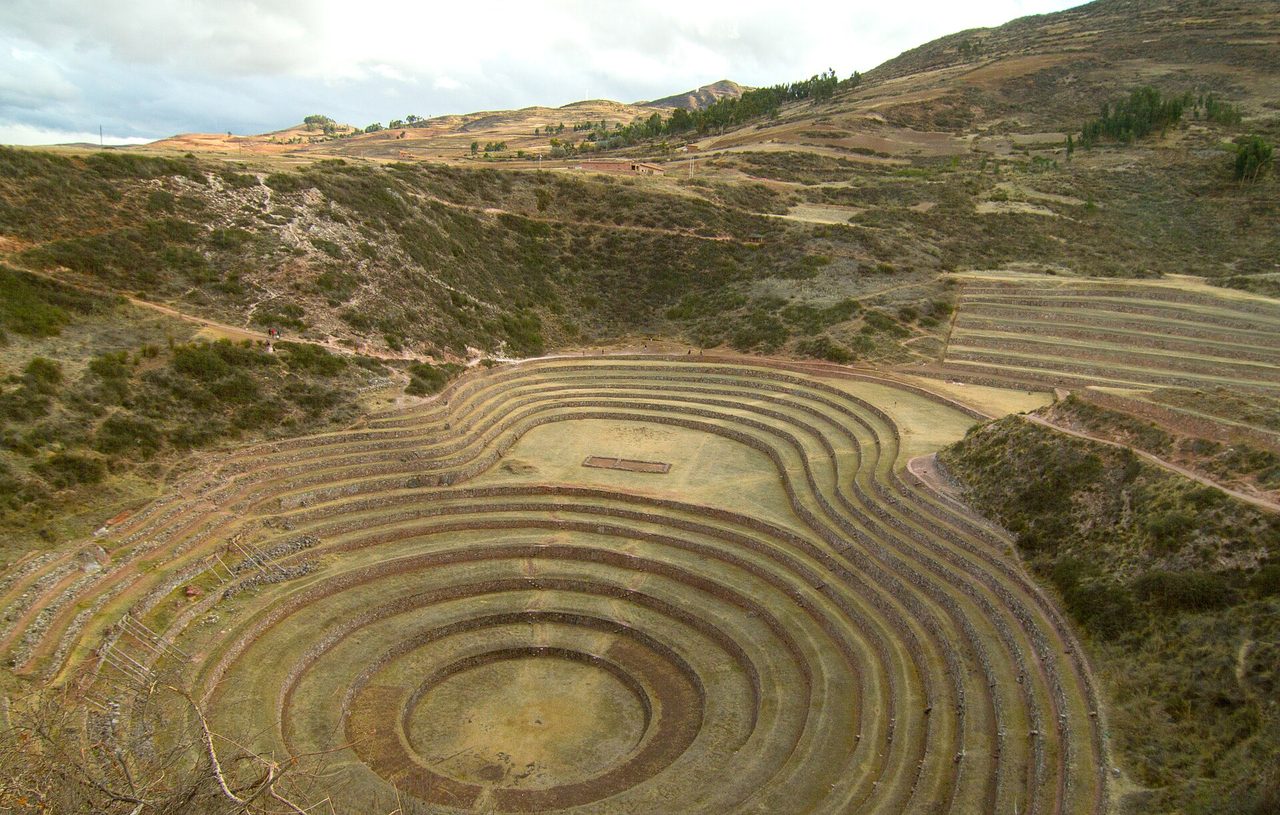
Moray and Maras are different places. Moray is the circular terracing; Maras is the salt. They are about 25 minutes apart. Moray is on the boleto, Maras is not.
The maths on full versus partial is not close, if you are staying more than a day or two. Circuit III at S/70 covers the valley for two days. But the full ticket at S/130 also covers the great fortress on the ridge above Cusco and the three ruins strung out along the road behind it, which you will almost certainly visit. Two partials cost S/140 — more than the full ticket, for fewer sites and shorter validity. If there is any chance you will do both the valley and the Cusco ruins, buy the S/130.
It is cash only, in soles, and validity starts the day you buy. There is no official online sale — COSITUC sells at Av. El Sol 103 in Cusco and at the site gates. Buying at your first valley site works fine and saves a trip. Don’t buy the ticket three days before you plan to use it.
On discounts: children under 10 go free, ages 10–17 pay a reduced rate (roughly S/70 full, S/40 partial), and university students aged 18–25 get the full ticket for S/70. COSITUC still accepts an ISIC card for that student rate. Do not assume the same holds at Machu Picchu — the citadel stopped accepting ISIC for its student rate and now wants a university photo ID with a printed expiry date, checked at the gate. Prices and rules on both tickets move, so confirm at the counter before you plan around a number; the current position on the citadel side is set out in our rundown of how the Machu Picchu ticketing system works now.
Run the sacred valley tour backwards
This is the single most useful thing in this article. The standard route exists because it is convenient for buses leaving Cusco, not because it is good. Everyone runs it in the same direction on the same clock. Reverse it and the same four sites become a different day.
| Site | Peak crowd window | When it is quiet |
|---|---|---|
| Pisac ruins | 09:00–11:30 | Before 08:30, or after 15:30 |
| Pisac craft market | 09:30–13:00 | Before 09:00; Sunday is busy all day |
| Moray | 09:30–12:00 | Opening (07:00) to 08:30 |
| Maras salt pans | 10:00–13:00 | Early morning; late afternoon light is better anyway |
| Ollantaytambo fortress | 13:30–16:30 | 07:00–09:00, or the last hour before closing |
| Chinchero | 15:30–17:30 | Mornings, except Sunday |
The reverse day, with a driver or a very early colectivo: Ollantaytambo at opening, when the terraces are empty and the sun is coming over the eastern ridge; Maras and Moray late morning; lunch in Urubamba around 13:30 when the buffets have emptied; Pisac at 15:30 as the convoy leaves; Chinchero on the way home if there is light, or skipped. You will overlap with the crowds for perhaps an hour instead of all day.
Most sites open around 07:00 and close at 17:00 or 18:00, and the gates are stricter about the closing time than the opening one. Check locally — hours shift with the season and with whatever COSITUC has decided that year.
Market days, and the “authentic market” problem
Tour copy loves the word authentic. Here is the honest version.
Pisac has a craft market that runs daily and a genuine produce and barter market that is essentially a Sunday event, with smaller versions on Tuesday and Thursday. What the tours show you is the craft market: several hundred stalls of alpaca knitwear, painted chess sets, textiles of wildly varying provenance and a great deal of machine-made product from the same wholesalers. It is a good place to buy souvenirs and a poor place to encounter Andean commerce. If you go on a Sunday and walk two blocks past the tourist stalls into the plaza, you will find the actual market.
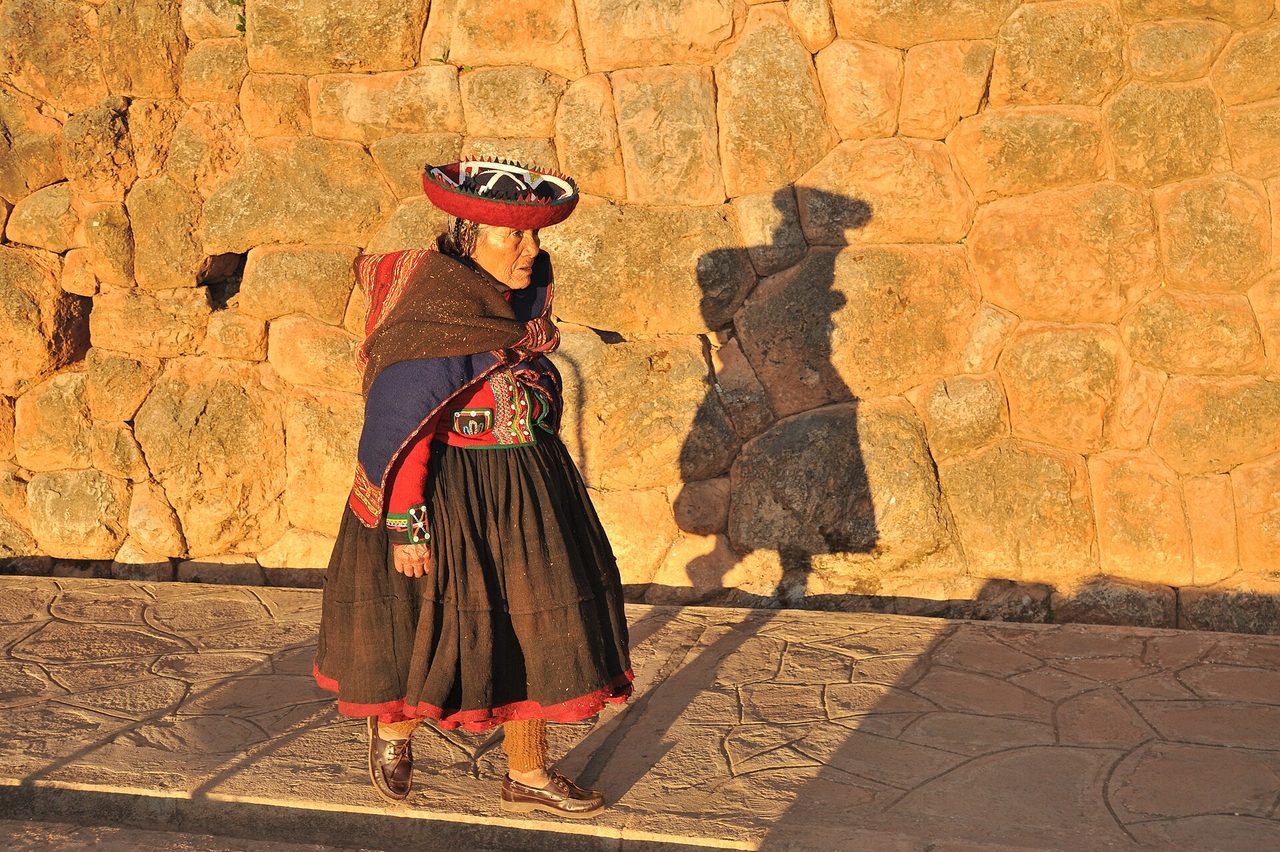
Chinchero holds market on Tuesday, Thursday and Sunday, and Sunday is the one worth timing your day around. It is smaller, higher, colder and considerably less curated than Pisac, and trueque — barter, produce for produce — still happens there. That is the closest thing to the thing tour brochures promise.
The weaving demonstrations at Chinchero and along the Urubamba road are a mixed bag. The women’s cooperatives showing natural dyeing with cochineal and plant extracts are doing real work and the technique is genuinely worth forty minutes. The demonstration is also, unavoidably, a sales floor. Buy if you want — the quality is often better and the price lower than in Cusco — but understand that the demonstration is the marketing, not an anthropological event laid on for you.
One practical point: if the market is your priority, tell the agency before you book, because plenty of Maras–Moray itineraries skip Pisac entirely.
The case for sleeping in the valley instead
Cusco sits at about 3,400 m. The Sacred Valley floor — Urubamba, Ollantaytambo, Yucay — runs roughly 2,800–2,900 m. That 500–600 m difference is not trivial. It is the difference between a first night where you sleep badly, wake with a headache and write off a morning, and a first night where you mostly feel normal.
If your flight lands in Cusco and you have any flexibility, going straight down to the valley for two nights and coming back up to the city afterwards is the better acclimatisation plan. It is what a lot of trekking operators quietly do with their clients. Our detailed piece on how Cusco’s elevation actually affects people goes into the physiology, but the short version is that the valley is a kinder place to arrive.
One caveat that the “the valley is lower” line always omits: two of the standard tour stops are higher than Cusco. Chinchero sits at about 3,760 m and Moray at roughly 3,500 m. A day tour is not a descent; it is a rollercoaster that happens to average out lower. If you are struggling with altitude, a full-day tour on day one is still a bad idea.
Staying in the valley also fixes the crowd problem for free. From a hotel in Urubamba or Ollantaytambo you are twenty minutes from three major sites instead of ninety, and you can be at a gate at opening without a 5am alarm. Rooms run from S/60 hostel beds in Ollantaytambo to serious money at the converted haciendas outside Urubamba. The trade-off is nightlife and restaurants: the valley closes early, and if you want the kind of cooking Cusco has become known for or anything happening after 10pm, you want the city. Deciding how to split your nights is the real question, and our guide to how long to give the Cusco region lays out the usual splits.
Use the tour as transport: the Ollantaytambo connection
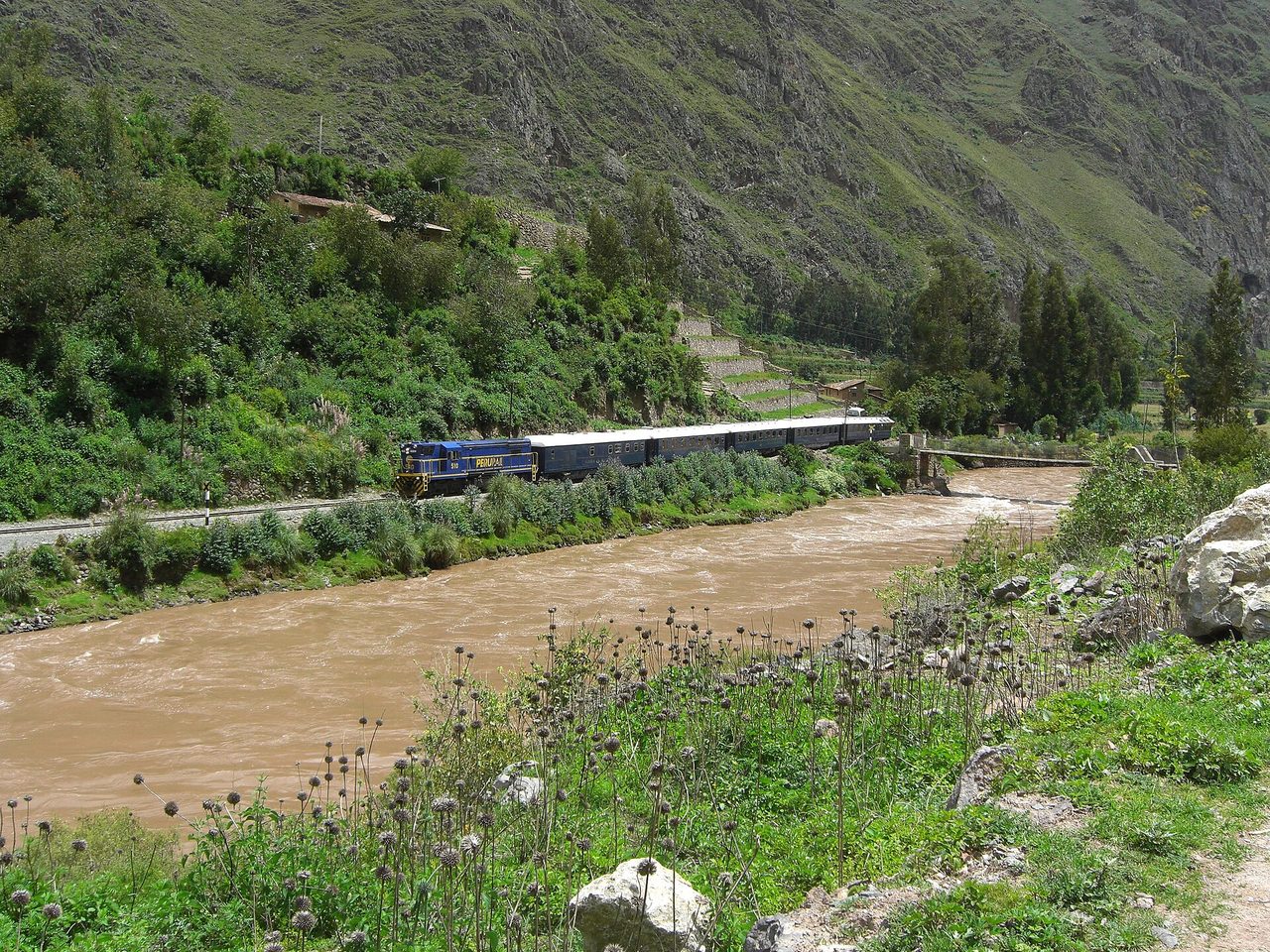
Ollantaytambo is not just a stop. It is the railhead. Every train to Aguas Calientes that matters leaves from there, and it is where the classic four-day trek starts.
Almost every Cusco operator will, if asked in advance, drop you in Ollantaytambo at the end of the tour instead of driving you back to Cusco. Some charge a small supplement, most don’t. That turns a wasted 90-minute return leg into a free transfer, and it is the single best piece of Sacred Valley logistics available.
Two ways to use it:
- Tour, sleep in Ollantaytambo, early train. You see the valley, you sleep 600 m lower, and you catch a morning train instead of leaving Cusco at 04:00. Standard-class fares run roughly US$35–60 per leg depending on service and season — the options are compared in our breakdown of the trains up the Urubamba gorge. From Aguas Calientes the Consettur shuttle bus to the gate is about US$24 return, and the citadel itself is currently S/163 for foreign adults, or S/211 for the circuits that include Huayna Picchu or Machu Picchu Mountain.
- Tour, then trek. Trekking groups meet at Ollantaytambo or at Km 82 just beyond it. If you are doing the classic four-day route to the Sun Gate, the two-day version from Km 104, or the Lares circuit through the weaving villages, spending the previous night in the valley is both easier logistically and better for your lungs. Permits for the classic route sell out months ahead — the release schedule is covered in our notes on how and when Inca Trail permits go on sale.
If you are not trekking and not staying, the various ways of getting from Cusco to the citadel mostly route through Ollantaytambo anyway, so the drop-off is worth asking about regardless.
What to skip
An honest list, in the order I would cut things.
The Urubamba buffet. If you have any control over the day, eat somewhere else. In Ollantaytambo and Pisac there are perfectly good small restaurants doing a two-course menu for S/12–20.
The silver and alpaca workshop stops. Commission stops, nothing more.
Chinchero’s archaeological site, if you are tired. The colonial church built on Inca foundations is genuinely interesting and the terracing is fine, but by 16:30 on a group tour you are cold, at 3,760 m, and have seen better terraces twice already. Nobody has ever regretted skipping late Chinchero. Sunday morning Chinchero is a different proposition entirely.
Pisac’s craft market, unless you want to shop. Forty minutes of stalls is forty minutes not spent on the upper terraces at Pisac, which are the best thing on the classic route and which most tours never reach.
Doing Pisac and Ollantaytambo and Chinchero and Moray and Maras in one day. Six stops in twelve hours is a transport exercise, not a visit. Pick four.
And one thing not to skip: the upper section of Pisac. The tour drops you at the top car park, walks you around the ceremonial sector and takes you back. The path continuing along the ridge, through the tunnel and above the cemetery cliffs, is the most impressive stretch of Inca engineering in the valley and takes about an hour. If you are on a group tour you will not have that hour, which is an argument for the other two models all by itself. It belongs on any serious list of the Inca sites in Peru worth real time.
Who should not book a tour at all
Skip the organised day entirely if any of these describe you.
You are staying in the valley. If you are already in Urubamba or Ollantaytambo, buying a Cusco-based tour means being collected at the point where the day is already half over. Use taxis and colectivos locally instead.
You have four or more days around Cusco. Split the valley over two unhurried days: Pisac and the Cusco-side ruins one day, Ollantaytambo and Moray–Maras another. Your Circuit III ticket is valid two days anyway.
You arrived from sea level yesterday. A twelve-hour day with two stops above 3,500 m, starting at 06:40, is the wrong first full day. Take a slow day in the city itself, drink water, and do the valley on day three.
You care about photography. The tour puts you at every site in flat midday light. A driver, or your own two feet, puts you there at the hours that work.
You have already booked a multi-day trek. Lares and several Salkantay variants pass through valley towns and villages, and a separate day tour beforehand is largely redundant. Compare what you would actually see on the Salkantay route before you double up.
Practicalities
Cash. Bring S/250–300 in small notes: the boleto (S/130, cash only), the Maras fee, lunch if it is not included, toilets at S/1–2 a go, and tips. Card acceptance in the valley is patchy and site gates take no cards at all.
Layers. You will be at 2,790 m in Ollantaytambo at midday and 3,760 m in Chinchero at dusk. The temperature swing is 15–20°C. Sun hat and sunscreen regardless of cloud — the UV at this altitude is punishing.
Shoes. Both Pisac and Ollantaytambo involve steep, uneven, sometimes wet Inca stairs. Trainers are the minimum. What we say about footwear and layers for the citadel applies identically here.
Season. The dry months, roughly May to September, give reliable weather and the biggest crowds. From December to March expect afternoon rain and muddy terraces — the trade-off is spelled out in our look at what travelling in the Andean wet season is really like. Shoulder months, April and October, are the sweet spot; our page on the best months for the Cusco region gets into the detail. Sunday tours are busier everywhere because of the markets.
Budget. A realistic all-in figure for a group tour day is US$25 tour plus S/130 boleto plus S/20 Maras plus S/50 lunch and extras — call it US$85. That is a meaningful line in any Peru budget, and it is why the boleto maths matters.
Frequently asked questions
Is a Sacred Valley tour worth it?
The valley is absolutely worth it. Whether the tour is worth it depends on you. If you are solo, on a budget, want the history explained and have one spare day, yes. If you are a group of three or four, a private driver costs about the same per head and gives you a far better day. If you have several days, do it yourself over two.
What does a Sacred Valley day trip cost?
Group tours run US$20–45 per person, or as little as US$15 in low season from a street agency. Add the S/130 tourist ticket, roughly S/10–20 for the Maras salt pans if your route includes them, and S/45–60 for lunch if it is not included. A private driver is S/350–600 for the vehicle. DIY by colectivo is under S/30 in fares.
Are the Maras salt pans included in the Cusco tourist ticket?
No. The Salineras are run by the Maras community and charge their own entry fee, paid in cash at the gate, around S/10–20. Moray, 25 minutes away, is on the boleto. This catches out a lot of people, partly because most tour pages never mention it.
Which tourist ticket do I need for the Sacred Valley?
Partial Circuit III (S/70, two days) covers Pisac, Ollantaytambo, Chinchero and Moray, which is everything on a standard route. But if you also plan to visit the ruins above Cusco, buy the full S/130 ticket — two partials cost more than one full ticket.
Should I stay in the Sacred Valley or in Cusco?
Both, ideally. The valley is 500–600 m lower and much better for your first nights at altitude; Cusco has the food, the nightlife and the museums. A common split for a week is two nights valley, three nights city, plus a night in the town below Machu Picchu. Our overview of neighbourhoods and bases around Cusco covers the city side.
Can I do the Sacred Valley without a tour?
Yes, easily, and it is cheaper by a factor of ten. Colectivos link Cusco, Pisac, Urubamba, Chinchero and Ollantaytambo all day for a few soles each. The only awkward pair is Moray and Maras, which need a taxi from Urubamba or Maras village. You will want basic Spanish and a relaxed attitude to timing.
What time do Sacred Valley tours get back to Cusco?
Between 18:30 and 19:30 for the classic route, later if traffic on the Chinchero road is bad. Do not book anything for that evening. If you would rather end the day in the valley, ask for a drop-off in Ollantaytambo when you book.
Which is better, Pisac or Ollantaytambo?
Ollantaytambo is the more dramatic single monument and the town below it is the best-preserved living Inca settlement anywhere. Pisac is the bigger and more varied site, with terracing that goes on for kilometres and a genuinely spectacular ridge walk that group tours never do. If you can only give one of them proper time, give it to Pisac — you will pass through Ollantaytambo anyway if you are heading for the train.
How does the Sacred Valley fit into a wider Peru trip?
It slots in as one or two days between arriving in Cusco and going to Machu Picchu, which is exactly where most versions of a standard Peru route put it. If you are building a longer trip, the fuller regional picture is in our guide to the Sacred Valley of the Incas, and there is more on pacing in our general Peru planning advice.
What I would actually do
Two nights in the valley, not one day out of Cusco. Arrive from the airport, go straight down to Urubamba or Ollantaytambo, sleep low. Hire a driver for one day and run the route backwards — Ollantaytambo at opening, Moray and Maras before eleven, a late lunch, Pisac in the afternoon light, and the top of Pisac walked properly. Chinchero on Sunday morning if the days line up, and not otherwise. Then up to Cusco, or straight onto the train.
If that is out of reach and the group tour is what fits your budget and your calendar, take it — but book the version that includes Maras and Moray, carry S/300 in cash, ask for the Ollantaytambo drop-off, and go in knowing that the buffet is the price of the transport rather than part of the experience. Expectations set correctly, it is a good day out.