Salkantay Trek Guide
The Salkantay is harder than the Inca Trail, crosses a higher pass, and does not walk you into Machu Picchu through the Sun Gate. Here is the full 5-day route with real distances, altitudes, costs and the acclimatisation you actually need.
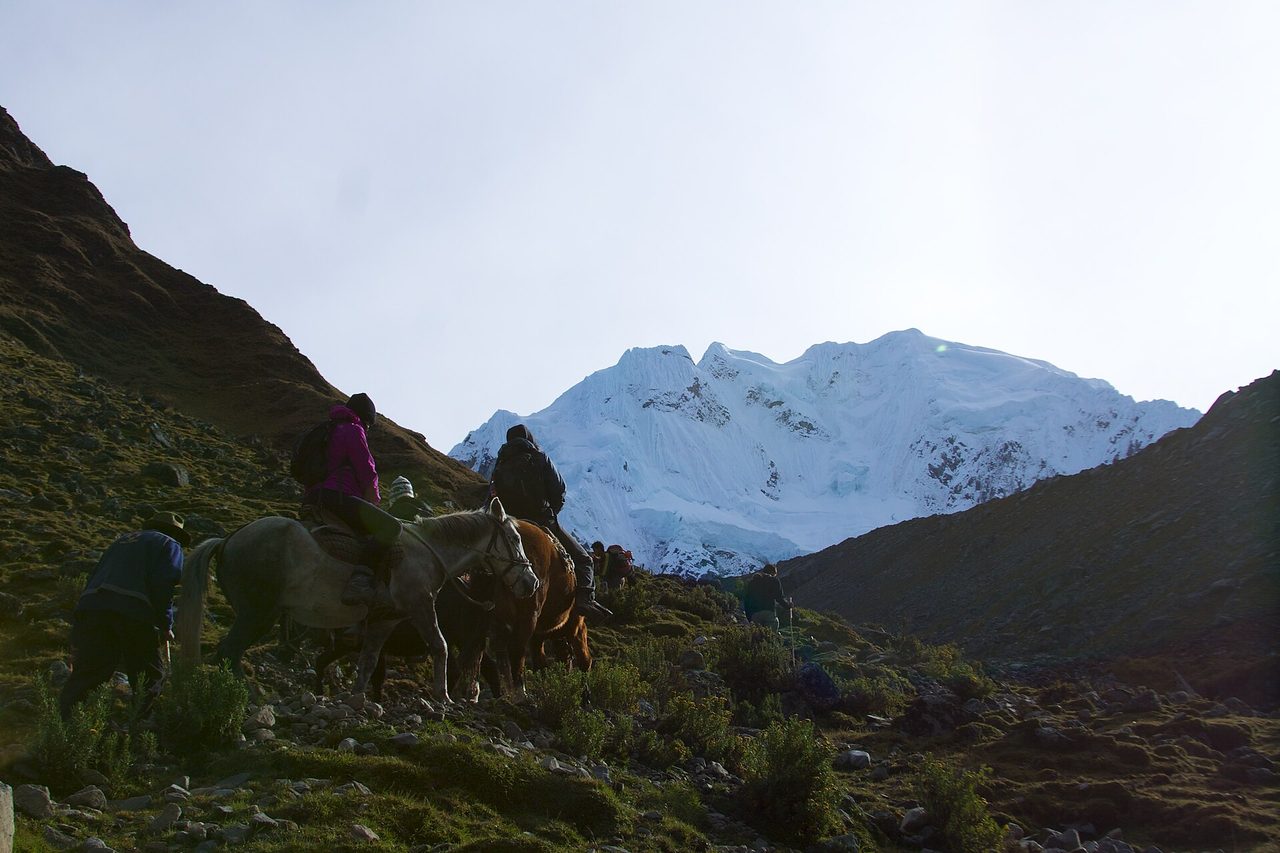
Almost every agency in Cusco sells the Salkantay trek with the same line: it’s the Inca Trail alternative, no permit needed, cheaper, quieter. All of that is technically true and all of it is misleading, because the sentence they leave out is the important one. Salkantay is the harder walk. It crosses a pass at roughly 4,630 m, about 400 m higher than Dead Woman’s Pass on the classic Inca Trail. It is roughly 74 km against the Inca Trail’s 42 km. The temperature swing on a single day can be 25 degrees. And — this is the one that ruins people’s trips — it does not arrive at Machu Picchu on foot. There is no Sun Gate moment. The standard itinerary walks you to a hydroelectric plant in a hot valley, then puts you on a train or a two-hour trudge along a railway line to a tourist town, where you sleep in a hotel and take a shuttle bus up to the ruins the next morning with everyone else.
I say all this up front because it is the single most consequential thing to know before you book, and the brochures bury it under photographs of turquoise lakes. Once you have absorbed it, Salkantay is a genuinely superb week. The landscape is more varied than anything on the Inca Trail: glacier at breakfast, orchids by dinner. But you should choose it knowing what you are buying.
The Salkantay trek at a glance
| Item | Detail |
|---|---|
| Standard length | 5 days / 4 nights (4 walking days, day 5 is Machu Picchu) |
| Total distance | ~74 km walking on the classic route; 60–75 km depending on where your operator uses vehicles |
| Highest point | Salkantay Pass, quoted between 4,600 m and 4,650 m; 4,630 m is the most common figure |
| Lowest point | Hidroelectrica, around 1,900–2,000 m |
| Highest sleep | Soraypampa, 3,850–3,900 m — higher than Cusco |
| Permit | None. Book weeks, not months, ahead |
| Typical group price 2026 | US$350 budget, US$500–700 mid-range, US$1,200+ premium |
| Arrives at Machu Picchu on foot? | No. Train or track walk from Hidroelectrica, then a bus up from Aguas Calientes |
| Best months | May to September; April and October are workable shoulders |
The part the brochures bury: you do not walk into Machu Picchu
On the Inca Trail you cross Inti Punku, the Sun Gate, on the fourth morning and look down on the citadel from above, on foot, having earned it. That moment is the entire emotional architecture of the Inca Trail and it is the reason the permits sell out.
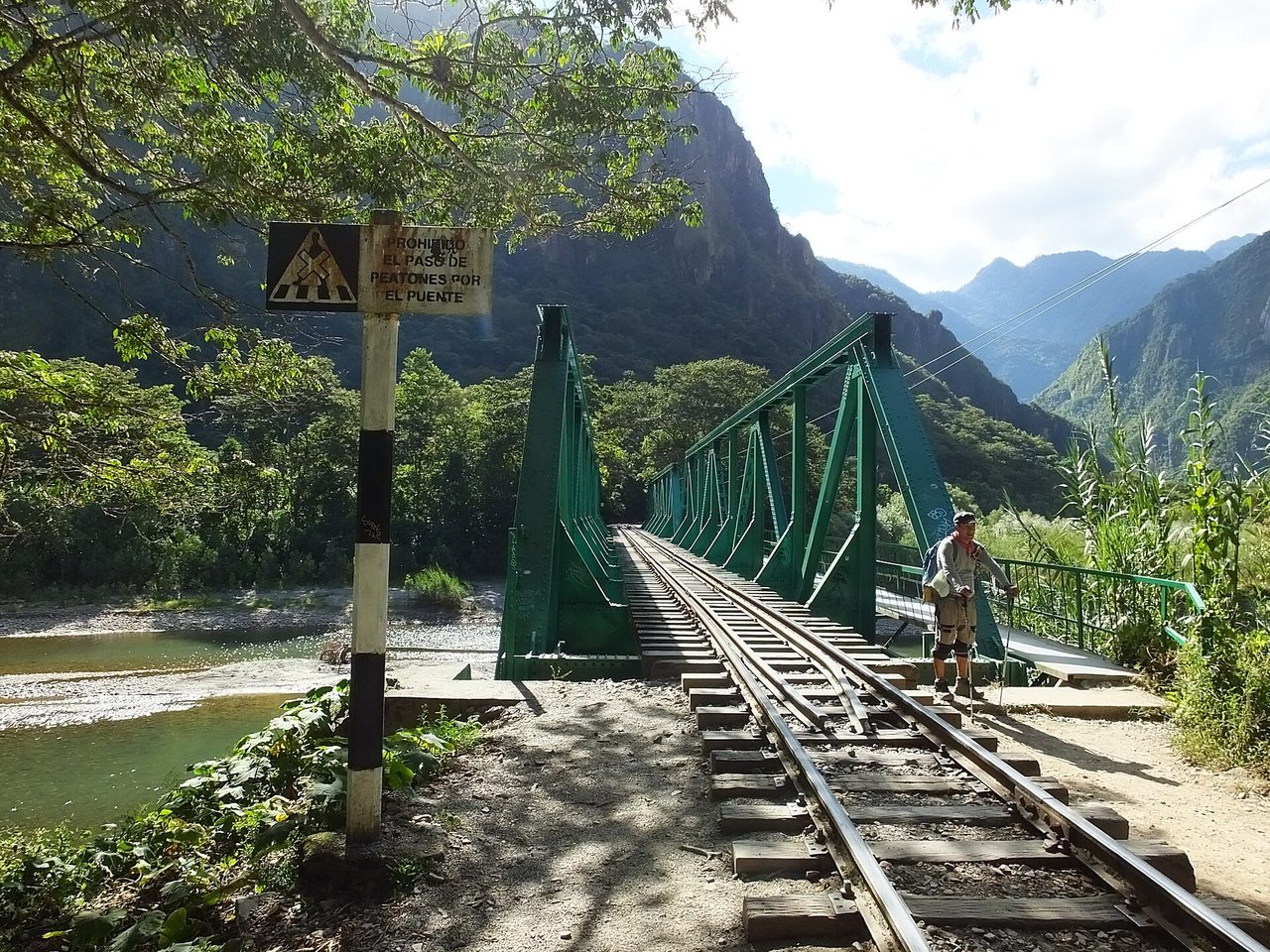
Salkantay does not do that. Your last walking day ends at Hidroelectrica, a working power station in a steamy valley at about 1,900 m. From there you either buy a train ticket for the 40-minute run into Aguas Calientes, or you walk the 10 km along the railway line, which takes two to three hours and is flat, shadeless in places and slightly tedious after a 15 km day. You sleep in a hotel. In the morning you queue for the shuttle bus like every day-tripper who came in on the train from Ollantaytambo.
There is a partial consolation, and it is a real one. On day four the 5-day itinerary climbs to Llactapata, a small Inca site on a ridge across the Aobamba valley, and from there you get your first sight of Machu Picchu — distant, side-on, with Huayna Picchu behind it. It is genuinely moving after four days of walking. It is not the Sun Gate. If arriving on foot matters to you more than the scenery does, you want the Inca Trail, and you should be watching for the annual permit release rather than reading this page.
How hard is the Salkantay trek, honestly
Harder than the Inca Trail on the single worst day, easier over the whole route. That is the fairest summary I can give, and it is the opposite of what most comparison posts say.
Day two is the hard one. You start around 3,850–3,900 m, climb roughly 700–800 m over about three hours to the pass, then lose about 1,600 m over the rest of the day. That descent is what wrecks people. It is four hours or more on loose rock and eroded trail, and knees that were fine going up will not be fine coming down. Trekking poles are not a nice-to-have on this route; rent them if you do not own them. At the pass, oxygen availability is somewhere around 55–58% of what you get at sea level. Fit people who arrived in Cusco two days ago still stop every fifty paces.
The rest of the route is long rather than steep. Day three is a sustained descent into cloud forest, warm and green and much easier on the lungs. Day four has a stiff climb to Llactapata — several hundred metres up in the first two hours, which nobody expects on what they have been told is the wind-down day — then a long drop and the railway walk.
| Salkantay | Classic Inca Trail | |
|---|---|---|
| Distance | ~74 km | ~42 km |
| Highest pass | ~4,630 m | 4,215 m (Dead Woman’s Pass) |
| Highest camp | ~3,900 m | ~3,600 m |
| Permit | None | Yes, capped, sells out months ahead |
| Arrival at Machu Picchu | By bus from Aguas Calientes | On foot through the Sun Gate |
| Inca ruins en route | Llactapata only, and it is modest | Six or more, including Wiñay Wayna |
| February | Runs, but conditions are poor | Closed for maintenance |
| Landscape variety | Glacier to subtropical valley | Highland throughout |
If you are trying to place this among Peru’s other multi-day walks: Salkantay is harder than Lares, considerably easier than Choquequirao or the Huayhuash circuit, and the pass is higher than the Rainbow Mountain viewpoint that people find brutal as a day trip.
The 5-day Salkantay trek, day by day
Distances below are the common figures used by Cusco operators. They vary by a kilometre or two depending on where the vans stop and which campsites your agency uses, and some operators quietly shorten day one by driving further up the road to Challacancha.
Day 1: Cusco to Soraypampa, with Humantay Lake
Walking: about 13 km including the lake side-trip. Up ~600 m, down ~350 m. 5–6 hours.
Pickup is brutally early — usually 4:30 to 5:00 a.m. — for the three-hour drive to Mollepata (2,900 m) for breakfast, then on up a dirt road to the trailhead at Challacancha, around 3,800 m. The walk in to Soraypampa follows an irrigation channel and is close to flat, which is the point: it is the gentlest possible introduction to this altitude.
Most itineraries then send you up to Humantay Lake at about 4,200 m as an afternoon side-trip. It is a 400 m climb in roughly 90 minutes and it is the hardest hour of the day by a wide margin. It is also busy, because the lake runs as a standalone day trip from Cusco and the buses arrive mid-morning. There is a municipal entrance fee collected by the Mollepata district, generally S/20–30 for foreigners, cash in soles; check whether your package includes it.
You sleep at Soraypampa, 3,850–3,900 m. Read that number again. It is 450–500 m higher than Cusco. This is the crux of the whole trip and I come back to it below.
Day 2: Salkantay Pass and the long drop to Chaullay or Collpapampa
Walking: about 22 km. Up ~750 m, down ~1,600 m. 8–10 hours.
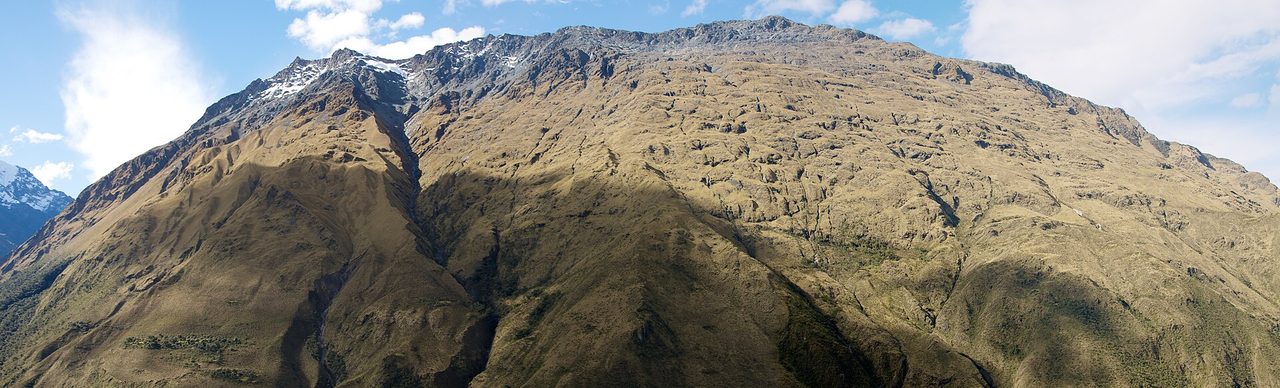
Headlamps on somewhere between 4:00 and 5:00 a.m. The climb to the pass is a steady grind up a moraine valley; groups typically cross between 8:00 and 10:00 a.m., partly for the views and partly because the weather deteriorates through the day almost every day of the year. Salkantay itself — 6,271 m, the second-highest peak in the Cusco region — sits directly above you, close enough to hear the glacier moving.
Then you descend, and keep descending. The trail drops through Wayracmachay into the head of the cloud forest and finishes at Chaullay or Collpapampa, around 2,900–3,000 m. By the time you arrive you have lost 1,600 vertical metres, the air is thick and warm, and there are hummingbirds. It is one of the more dramatic single-day transitions anywhere in the Andes, and it is also the day people injure knees and ankles.
Weather at the pass changes in minutes. I have crossed in clear sun and watched horizontal snow arrive twenty minutes later, then had it clear again on the descent. Carry your shell in the top of your pack, not in the duffel on the horse.
Day 3: cloud forest to Lucmabamba or La Playa
Walking: about 16 km. Down ~1,000 m, minor ups. 5–7 hours.
The easiest and, for a lot of people, the prettiest day. You follow the Santa Teresa river down through banana, passion fruit and coffee smallholdings. Most groups reach camp around lunchtime, which leaves an afternoon for add-ons: the Cocalmayo thermal pools near Santa Teresa (roughly S/10–20 entry, plus transport), a coffee-farm visit at Lucmabamba, or a zipline circuit that runs about US$30. The hot springs are not scaldingly hot and they get crowded at weekends, and after two days of walking nobody cares.
Note that the zipline and the springs are usually run by third parties, are almost never in your base price, and require cash. Budget an extra US$50–100 if you want all of it — and see the wider range of adventure add-ons around Cusco if you are deciding what is worth paying for.
Day 4: Llactapata, Hidroelectrica and the railway walk
Walking: 15–19 km depending on whether you walk the tracks. Up ~700 m, down ~800 m. 6–8 hours.
This is the day people underestimate. It opens with a proper climb on original Inca paving from Lucmabamba (~2,000 m) up to the Llactapata ridge at around 2,700 m — the only stretch of genuine Inca trail on the whole route. From the site you look straight across the Aobamba valley at Machu Picchu.
Then a long descent to Hidroelectrica for a late lunch, and the last decision of the trek: train or tracks. The train takes about 40 minutes and costs roughly US$31–40 for the leg, depending on service and how far ahead you book. The walk is 10 km along the railway line, two to three hours, mostly flat, and if you have any interest in seeing the valley slowly it is the better option. If your knees are finished, take the train and do not feel bad about it.
Day 5: Machu Picchu
Walking: 4 km inside the site, or add 1,700 steps if you walk up.
Shuttle buses start around 5:30 a.m. and the queue in Aguas Calientes forms before that. The Consettur return ticket is about US$24. Walking up takes 60–90 minutes on a steep stair path and saves half of that.
Foreign adult entry to the citadel is S/163 as of 2026, or S/211 for the circuits that include Huayna Picchu or Machu Picchu Mountain — the old S/152 and S/200 figures were superseded on 1 May 2026 by a conservation surcharge. Entry is by timed hourly slot from 06:00 to 16:00 with a 30-minute grace period, the daily cap is 4,500 rising to 5,600 on peak dates, and the three circuits and ten routes are one-way and enforced by rangers. Most Salkantay packages include a circuit ticket and a two-hour guided visit; confirm which circuit, because they are not interchangeable and the ticket system changes more often than anyone would like. If you want to add a peak, read up on the difference between Huayna Picchu and Machu Picchu Mountain before booking — after four days of walking, one of those is a much worse idea than the other.
Most groups are back in Aguas Calientes for lunch and on an afternoon train to Ollantaytambo, then a bus to Cusco, arriving around 9 or 10 p.m. It is a long fifth day. If you can, build in a spare night rather than flying out the next morning; the fuller picture of how the Cusco–Machu Picchu logistics fit together is worth reading before you fix your flights.
4-day, 7-day and the Inca Trail hybrid
The 4-day version
Identical for the first two and a half days, then it diverges: on day three you take a van from La Playa or Santa Teresa to Hidroelectrica and walk or train into Aguas Calientes, sleeping there. You skip Lucmabamba, Llactapata and the last stretch of Inca paving.
You are cutting the two things that make Salkantay feel like a walk to Machu Picchu rather than a walk near it. Take it if your Peru trip is genuinely short and you would otherwise not go at all. Otherwise the extra day is the best value on the whole itinerary. Prices are usually only US$40–80 lower.
The Salkantay and Inca Trail hybrid, 7 days
The most interesting option, and the least sold. You walk the Salkantay high country for the first two or three days, then cut across to join the classic Inca Trail at Wayllabamba and finish through the ruins and the Sun Gate. Total distance is around 75 km over six walking days.
The catch: the Inca Trail section requires a permit, with all the booking lead time that implies, so the “no permit” advantage of Salkantay evaporates. Horses carry the duffels on the Salkantay days; porters take over once you are on the regulated trail. This is the route for someone who wants the Salkantay landscape and the Sun Gate arrival and has six months to plan.
The lodge-to-lodge trek, 7 days
A different animal entirely. Mountain Lodges of Peru and one or two imitators run a seven-day route sleeping in permanent lodges with hot showers, wine, down bedding and outdoor jacuzzis. Prices run into the thousands of dollars per person rather than the hundreds. Days are shorter, the pace is gentler, and pack animals carry everything. If your objection to Salkantay is sleeping on the ground rather than the walking, this solves it. If your budget is the objection, it will not.
Two-day Salkantay
Worth knowing this exists: a short Soraypampa–Humantay–Salkantay Pass out-and-back with one night at altitude, no Machu Picchu. It gives you the best scenery of the route in 48 hours. It is a hiking trip, not a pilgrimage, and it is honest about that.
Where you actually sleep: camping, domes and lodges
Accommodation is the biggest real difference between operators and the thing most people fail to interrogate before booking.
| Tier | What you get | 2026 price band |
|---|---|---|
| Backpacker / budget | Shared dome tents or four-bed dorm rooms in basic shelters, groups of 14–18, generalist guide doubling as cook, simple food. Night one often has no shower | US$300–450 |
| Mid-range | Two-person tents pitched for you, groups of 8–12, dedicated cook, hot showers from night two, duffel carried by horse (7 kg limit) | US$500–700 |
| Sky domes | Geodesic glass-fronted domes at Soraypampa and sometimes lower camps, real beds, some with private bathrooms | US$650–900 as a package, or roughly US$100 as an upgrade on one night |
| Premium camping | Private tents, gourmet catering, larger support team, small groups | US$1,200+ |
| Lodge to lodge | Permanent lodges, hot water, jacuzzis, full board with wine | Several thousand US$ |
What the sky domes are really like
The domes at Soraypampa are the most photographed accommodation in Peru and the most oversold. Here is the honest version.
They are geodesic frames with a transparent front panel, set on platforms facing Salkantay and Humantay. You do get the night sky through the glass, and at 3,900 m with no light pollution that is spectacular. You get a proper bed and a duvet rather than a mat and a sleeping bag, which after a 5 a.m. start matters more than you expect.
What the marketing skips: the glass makes them cold. A transparent panel is a terrible insulator and overnight temperatures at Soraypampa sit around freezing in the dry season and can hit −5 °C in June and July. Some camps have heaters, plenty do not, and “heating” in the listing sometimes means an electric blanket for a few hours. Bathrooms vary enormously: some domes genuinely have a private ensuite, many do not and you are walking to a shared block in the dark and the cold. If condensation forms on the inside of the panel you will wake up to drips. And the glass cuts both ways — sunrise arrives through it at about 5:45 a.m. whether you are ready or not.
They are still worth it, in my view, for one night. Just ask the operator three specific questions before you pay the upgrade: is the bathroom inside my dome, is there heating and what kind, and which camp is the dome at. The answers vary by operator on the same trek.
Altitude is the real risk, not fitness
This is where Salkantay quietly punishes people, and it is entirely avoidable.
You sleep at 3,850–3,900 m on night one. Cusco is 3,400 m. Machu Picchu is 2,430 m. So the very first night of the trek is the highest you will sleep on most Peru itineraries, and it comes before your body has had any real chance to adapt. The next morning you climb another 750 m.
The pattern I have watched play out repeatedly: someone flies Lima to Cusco, spends two nights sightseeing, starts Salkantay on the third day, feels a headache at Soraypampa, sleeps badly, and either turns back on day two or crosses the pass in genuine misery. Fitness does not substitute for acclimatisation. Marathon runners get altitude sickness.
The minimum I would accept is three full nights in Cusco or the Sacred Valley before you start walking, and four is better. Arriving from sea level and starting the next day is not brave, it is just a bad plan. Two useful refinements:
- Sleep lower, walk higher. Two nights in the Sacred Valley at 2,800–2,900 m, then two in Cusco, works better than four in Cusco — you get the acclimatisation without the worst of the sleep disruption.
- Do a high day-hike first. Humantay Lake as a day trip, or Rainbow Mountain, gets you to 4,200–5,000 m and back down before the trek starts. That is a real test of how you respond.
Acetazolamide (Diamox) is widely used and widely prescribed for this route; talk to a doctor rather than a tour agency, particularly if you have any cardiac or respiratory history. Coca tea is pleasant and is not a substitute for time. If you are still working out the shape of your trip, our guide to how many days to give Cusco covers the acclimatisation maths in more detail.
When to go: month by month
The dry season runs roughly May to September and the wet season November to March. Unlike the Inca Trail, Salkantay does not close in February — which sounds like an advantage and mostly is not, because February is when the route is at its worst.
| Month | What to expect | Verdict |
|---|---|---|
| January | Heavy afternoon rain, pass often in cloud, cloud-forest sections muddy and slippery | Avoid |
| February | Wettest month. Inca Trail closed. Landslide risk on the lower valley roads. Some operators cancel | Avoid |
| March | Rain easing late in the month, everything very green, few people | Late March is defensible |
| April | Shoulder. Occasional showers, green landscape, lower prices, thin crowds | One of the best months |
| May | Dry season starts. Clear mornings, cold nights, excellent visibility | Excellent |
| June | Driest month. Coldest nights, around or below freezing at Soraypampa. Inti Raymi fills Cusco | Excellent, book early |
| July | Dry and cold, nights to −5 °C at the high camp. Peak crowds and peak prices | Reliable but busy |
| August | Dry, slightly warmer nights than July, still very busy, more wind at the pass | Reliable but busy |
| September | Dry season tailing off, crowds thinning, good value | Excellent |
| October | Shoulder. Afternoon showers begin, still very walkable | Good |
| November | Rain returning, pass frequently clouded, prices soft | Marginal |
| December | Wet, intense afternoon downpours, Christmas price spike in Aguas Calientes | Avoid unless fixed dates |
In practice: if you want the pass views you came for, go between May and September. If you want the trail to yourself and can accept a 40% chance of walking day two in cloud, April and October are the sweet spot. The wider picture of how Peru’s dry season behaves and what the rainy months actually do to travel plans is worth reading if your dates are flexible, and the best time to visit Machu Picchu itself does not perfectly overlap with the best time to trek.
What the Salkantay trek costs in 2026
Prices below are per person for a group departure, and they move with the season and the exchange rate. Treat them as bands, not quotes.
| Line item | Budget | Mid-range | Premium |
|---|---|---|---|
| 5-day group tour, base price | US$300–450 | US$500–700 | US$1,200+ |
| Machu Picchu entry | S/163 foreign adult (S/211 with Huayna Picchu or Machu Picchu Mountain). Usually included — confirm | ||
| Shuttle bus up to the citadel | ~US$24 return. Sometimes included | ||
| Return train, Aguas Calientes to Ollantaytambo | US$35–60 standard class. Usually included in 5-day packages | ||
| Hidroelectrica to Aguas Calientes | US$31–40 by train, or free if you walk the 10 km of track | ||
| Sleeping bag rental | US$25–35 for the trek | ||
| Trekking pole rental | US$12–20 for the trek | ||
| Humantay Lake municipal fee | S/20–30, cash in soles | ||
| Cocalmayo hot springs | S/10–20 plus transport | ||
| Zipline (optional, day 3) | ~US$30 | ||
| Sky dome upgrade, one night | ~US$100 | ||
| Tips | US$60–100 across the team, or about 10% of your tour price | ||
A realistic all-in figure for a mid-range 5-day trek with rentals, the optional extras and tips is US$750–900. A disciplined backpacker who rents nothing, skips the add-ons and walks the tracks can get out around US$450. That is comparable to a permitted Inca Trail departure, which runs US$700–900 for the same five days — so Salkantay is cheaper, but not dramatically, once you have added everything. It is also a useful anchor when you are building out a realistic budget for a whole Peru trip.
Tipping, properly
Tips are not optional in practice and the crews depend on them. The convention on group treks is a pooled envelope on the last evening, split between the guide, the cook, the assistant guide and the horsemen. Roughly 10% of the tour price is the norm; on a US$600 trek that is US$60. Horsemen (arrieros) are consistently under-tipped because they eat separately and you barely see them, and they are doing the hardest job on the mountain. Bring the cash in small soles notes — there is no ATM after Mollepata.
Why the cheapest tours are cheap
A US$280 Salkantay tour exists. The money comes out of somewhere: 18-person groups, a guide who is also the cook, rice and pasta twice a day, tents that leak, and crew wages that are indefensible. I am not going to tell anyone with a backpacker budget to spend more than they have, but be clear-eyed that the gap between US$300 and US$550 buys food, group size and staff pay, not marketing.
No permit does not mean no planning
The genuinely good reason to choose Salkantay is that there is no permit cap. You can decide in Cusco on a Tuesday and walk on the Thursday. Compare that with the Inca Trail, where 2026 permits opened on 17 November 2025 and popular dry-season dates went within days.
That freedom is real, but treat two to three weeks ahead as the sensible booking window in shoulder season and four to six weeks in July and August — not because you will not find a space, but because the good operators fill and the ones with space in high season have space for a reason. Booking last-minute in Cusco means accepting whoever is available.
Things to ask before you pay a deposit: group size cap, whether there is a dedicated cook, exactly which camps and what type of accommodation each night, whether the Machu Picchu ticket and circuit are included and which circuit, whether the return train is included and from which station, and what the duffel weight limit is (7 kg is standard and includes your sleeping bag). Vague answers are an answer.
Can you do it without a guide?
Yes. The route is unrestricted, there is no permit, the trail is obvious for most of its length, and there are villages selling food along the middle section. Independent trekkers typically camp at the same sites for a small fee or use basic hostels at Soraypampa, Chaullay and Lucmabamba.
Whether you should is a different question. The savings are smaller than they look once you have hired a tent, mat and bag in Cusco, paid for transport to the trailhead, bought food, paid your own entrance fees and sorted your own Machu Picchu ticket and return train. You are likely to land somewhere near a budget group price. What you lose is a support team at 4,630 m and the horse that would otherwise carry your bag over the pass, which is not a trivial loss on day two. Do it if self-sufficiency is the point of the trip for you. Do not do it purely to save US$150.
What to pack that actually matters
Your operator supplies tents, mats, meals and usually a duffel with a 7 kg limit carried by horse. You carry a 25–35 litre daypack with the day’s water, layers and shell.
- Broken-in footwear. The day-two descent will find every hotspot. New boots bought for this trek are the most common self-inflicted injury.
- Trekking poles. Two, not one. Rent them.
- A proper shell, top and bottom. Rain at the pass happens in the dry season too.
- A sleeping bag rated to −10 °C if you are camping, regardless of month.
- Sun protection that is serious. High-factor sunscreen, lip balm with SPF, a brimmed hat, wraparound sunglasses. UV at 4,600 m is punishing even when it feels cold.
- Cash in small soles. For entrance fees, springs, snacks, and tips.
- Your passport. You cannot enter Machu Picchu without it, and it is checked.
- A dry bag or bin liners inside the duffel. Horses ford rivers.
What you do not need: a second set of camp clothes, a towel bigger than a facecloth, a book you will never open, or a drone (they are prohibited at Machu Picchu). Our notes on what to wear at the citadel itself apply to day five, when you will be in whatever is least filthy.
Who should not do the Salkantay trek
Three groups, clearly:
- Anyone whose dream is walking into Machu Picchu through the Sun Gate. You will not get it. You will get a bus queue. Book the Inca Trail, or the two-day short version, or the 7-day hybrid.
- Anyone with fewer than two clear days at altitude beforehand. Night one at 3,900 m off a Lima flight is how people end up descending on a horse. If your Peru itinerary cannot accommodate three nights in Cusco or the Sacred Valley first, change the itinerary or change the trek.
- Anyone who wants short days. Four hours of walking is not on the menu. Day two is eight to ten hours; day four is six to eight. If that sounds grim rather than appealing, the Lares route or a couple of well-chosen day hikes will make you happier.
I would add a fourth, softer one: anyone travelling in January or February with fixed dates and no flexibility. The trek runs, but you are gambling a lot of money and four hard days on weather that is genuinely against you.
Frequently asked questions
Is the Salkantay trek harder than the Inca Trail?
The single hardest day on Salkantay is harder than anything on the Inca Trail — a higher pass, a longer day, a bigger descent. Over four days, the Inca Trail has more cumulative climbing on rougher stone stairs. Most people who have done both say Salkantay day two is the worst day of either and the Inca Trail is the more relentless week.
Do you need a permit for the Salkantay trek?
No. There is no cap and no permit for the Salkantay route itself. You still need a Machu Picchu entry ticket with a timed slot for the final day, and that does sell out on peak dates, so it is booked as part of your package. The 7-day Salkantay–Inca Trail hybrid does require an Inca Trail permit for its second half.
How high is the Salkantay Pass?
Sources give 4,600 m, 4,630 m and 4,650 m; 4,630 m is the most widely quoted and the discrepancies come from different GPS readings and slightly different high points on the crossing. Either way it is around 400 m higher than Dead Woman’s Pass on the Inca Trail and higher than almost anything else a visitor to Peru will walk over.
How many days should I spend in Cusco before starting?
Three nights minimum, four if you can, and more if you are coming straight from sea level. You are sleeping at 3,900 m on the first night of the trek, which is higher than the city itself. Sightseeing days in the Sacred Valley count towards this and are more comfortable than sitting at 3,400 m.
Do you actually walk to Machu Picchu on the Salkantay trek?
No. The walking ends at Hidroelectrica. From there it is a train or a 10 km walk along the railway to Aguas Calientes, a night in a hotel, and a shuttle bus up to the entrance in the morning. You do see Machu Picchu from Llactapata on day four, which is the closest the route comes to a walk-in arrival.
How much should I budget in total?
US$750–900 all-in for a mid-range 5-day trek including rentals, extras and tips; around US$450 if you go budget and skip the add-ons. Compare that against the rest of your spending using the cheaper ways to reach Machu Picchu if cost is the deciding factor.
Are the sky domes worth the upgrade?
For one night at Soraypampa, yes, if you accept that glass is cold and check whether the bathroom is inside your dome. As a full five-night package they are expensive for what is often a fairly ordinary tent-with-a-window at the lower camps.
Can I do the Salkantay trek in the rainy season?
You can, and operators run year-round, but January and February are genuinely poor: the pass is usually in cloud, the cloud-forest descent turns to mud, and landslides periodically close the Santa Teresa road. Late March and April are the honest edge of the rainy season and can be lovely.
How fit do I need to be?
Fit enough to walk 6–8 hours on consecutive days on uneven ground with a light pack. Regular hill walking for two or three months beforehand is the right preparation. But fitness is the second variable here — acclimatisation is the first, and no amount of training compensates for arriving at 3,900 m two days off a plane.
What happens if I cannot continue?
On the upper section a horse can carry you to the pass or back down, which every reputable operator has arranged for. Below Chaullay there is road access and you can be driven to Santa Teresa. Evacuation from the pass itself is slow, so mention any pre-existing condition to your guide on day one rather than day two.
So should you do it?
If you want the most dramatic four days of walking accessible from Cusco, yes, without hesitation. Glacier to cloud forest in 36 hours is a rare thing and the Salkantay trek delivers it more completely than any other route in the region. Go in May, June or September, give yourself three nights in Cusco first, pay for the middle tier rather than the cheapest, and take the 5-day itinerary so you get Llactapata.
If what you actually want is to walk into Machu Picchu the way the Incas did, this is not that trek and no amount of scenery will make it feel like it was. Know which of those two travellers you are before you pay the deposit, and the rest of the decisions get easy. If you are still weighing it against everything else on offer, our roundups of what else is worth doing around Cusco and when to visit Peru overall will help you place it in the trip.