Peru in June, July & August (Peak Season)
June to August gives you Peru's most reliable weather and its worst value. Here are the real crowd numbers, the price gaps, the booking lead times that matter and the sub-zero nights nobody mentions.
The honest summary of Peru in July is this: you are not paying for good weather, you are paying for certainty. Somebody has already worked out that the Andes barely rain between June and August, and roughly 400,000 other people have booked the same three months you are looking at. The sky over Cusco will be a hard, cloudless blue almost every day. The trains will be full, the good hotels will be gone, and the viewpoint at Machu Picchu will have a queue for the photo. Both of those things are true at once, and most guides only tell you the first one.
I have travelled Peru in the wet months and in the dry ones, and I would still choose the dry season for a first trip. But I would not pretend it is the same trip you would take in April or October — the shoulder-season windows either side of the dry months are a genuinely different proposition. This is the most expensive, most oversubscribed, coldest-at-night window in the Peruvian calendar, and it rewards people who book early and punishes people who improvise. Below is what June, July and August actually look like — separately, because they are not interchangeable — along with the booking lead times nobody puts on page one.
The trade-off, stated plainly
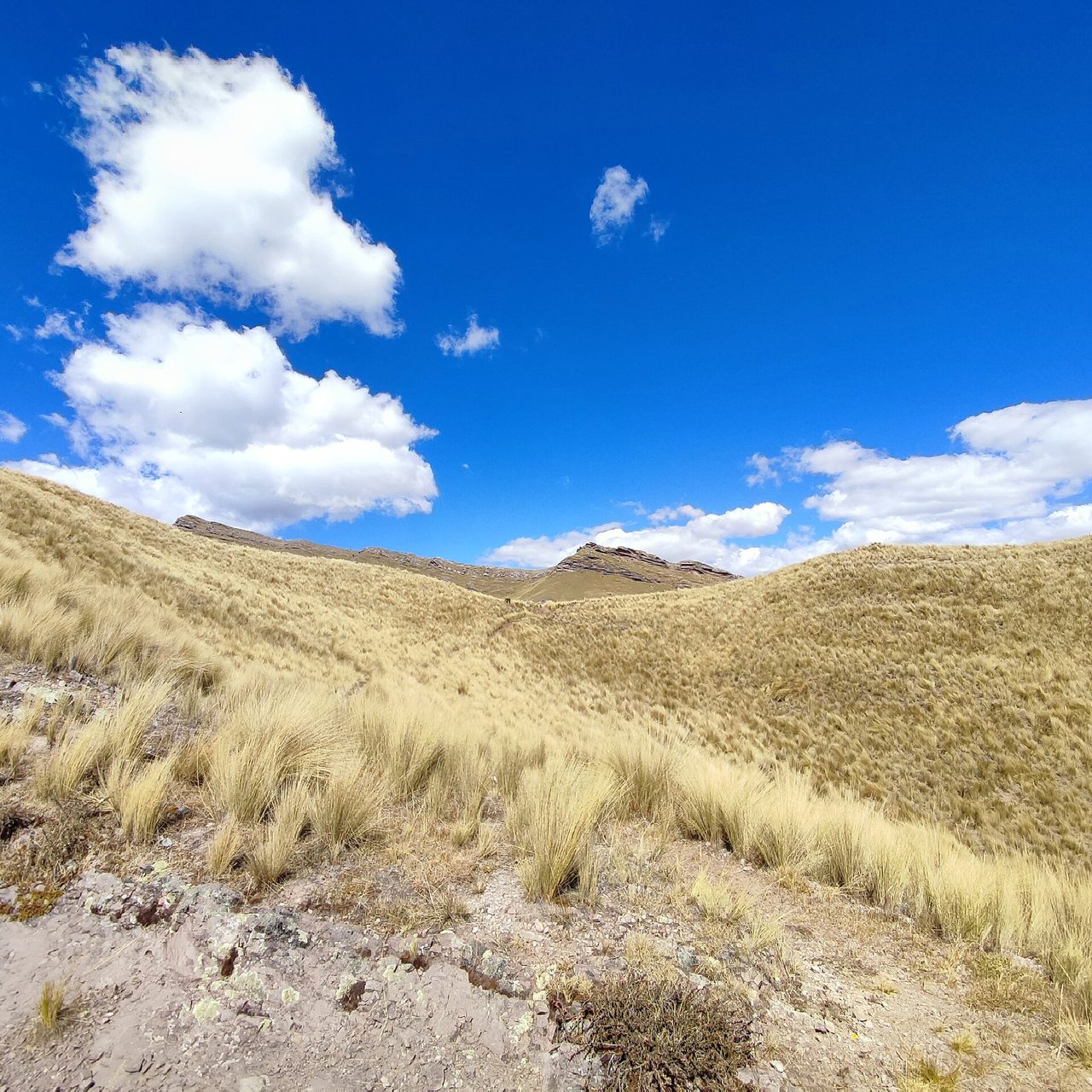
Peak season in Peru means the southern-hemisphere winter: dry, sunny, cold at night in the highlands, and heaving with visitors. It overlaps almost exactly with the northern summer holidays, which is why it is busy, and with the driest stretch of the Andean year, which is why it works. Here is the honest ledger.
| What you get | What it costs you |
|---|---|
| Rain on the Inca Trail is unlikely rather than probable. Cusco sees roughly 4–8 mm of rain across the whole of July. | Cusco hotel rates run roughly 40–60% above shoulder season and can be double the January rate. |
| Clear mountain views. Salkantay, Ausangate and the Cordillera Blanca are visible rather than in cloud. | Machu Picchu runs at its 5,600-per-day cap instead of 4,500 from 19 June onwards. |
| Every high pass and unpaved road is open. Landslide closures on the rail line are rare. | Inca Trail permits for these dates are gone within days of release, sometimes hours. |
| The Amazon is in its low-water phase — better trails, exposed beaches, easier wildlife. | Overnight lows at altitude sit at or below freezing, in hotels that mostly have no heating. |
| Festival season: Inti Raymi, Virgen del Carmen, Fiestas Patrias. | Those same festivals close offices, fill flights and double some fares. |
If that ledger reads badly to you, the fix is not to compromise inside peak season — it is to move. Late April, early May and the second half of October give you 80% of the dry weather at something like 60% of the price, which is the case I make in more detail in the guide to travelling Peru when it is cheapest. If you are locked into school holidays, read on.
Book this far ahead, or do not bother
This is the part page one skips. Everyone tells you to “book in advance”. Nobody says how far. These are the lead times I would work to for June, July and August travel, measured back from your travel date.
| What | Book this far ahead | What happens if you don’t |
|---|---|---|
| Classic 4-day Inca Trail permit | The day permits open — 8–10 months | The Ministry of Culture releases the following year’s 500 daily permits in October. June to August dates go first; popular departures can clear within days, and the best ones within hours. Only about 200 of those 500 places are trekkers — the rest are guides, cooks and porters. |
| Huayna Picchu / Machu Picchu Mountain slot | 4–6 months | The circuit with Huayna Picchu is capped far below general entry. For July and August dates it is routinely gone three to six months out, and the early-morning entry times go first. Maintenance closures happen too, so check the date is even open. |
| General Machu Picchu entry | 2–4 months | You will still get in, but not at the hour you wanted. The 06:00–08:00 slots on the popular circuits disappear long before the 13:00 ones. |
| Vistadome / Expedition train seats | 2–3 months | Ollantaytambo departures around dawn and the late-afternoon returns sell out first. Inside a month you may be left with a 05:00 departure or a bus-plus-train combination. |
| Cusco and Sacred Valley hotels | 4–6 months | The 30–60 well-reviewed mid-range properties are a small pool. Inside eight weeks you are choosing between the overpriced and the badly located. |
| Domestic flights (Lima–Cusco, Lima–Arequipa, Lima–Juliaca) | 3–5 months | Fares that sit around US$60–80 one way in a quiet month drift towards US$130 and beyond in July, and the 06:00–08:00 Cusco departures — the ones least likely to be delayed — go first. |
| Inti Raymi grandstand seat (24 June) | 3–6 months | There are only around 3,500 ticketed seats at Sacsayhuamán and they run to roughly US$300–400. The VIP sections sell out earliest. |
| Anything at all across 26–30 July | 6 months | Fiestas Patrias. See below — this is the single most underrated planning trap of the Peruvian year. |
If you are inside eight weeks and reading this with a rising sense of dread, you have not lost the trip. You have lost the classic Inca Trail, and probably Huayna Picchu. Everything else is recoverable — the Salkantay and Lares routes carry no permit cap, and the wider set of treks around Cusco exists precisely because the Inca Trail is rationed. Buy your Machu Picchu entry ticket before you buy anything else, then build the trip around the slot you got.
Why July feels busier than the numbers suggest
Here is a detail almost nobody mentions. Machu Picchu’s standard daily cap is 4,500 visitors. On designated peak dates it rises to 5,600 — and the peak window is not a weekend, it is 19 June to 2 November, plus 1 January, 2–5 April and 30–31 December. So the site you visit in July is admitting nearly a quarter more people per day than the site somebody visits in March, on the same one-way circuits, through the same gate, at the same hourly intervals from 06:00 to 16:00.
That is the mechanical reason July feels crowded rather than merely popular. The citadel took around 1.6 million visitors in 2025, and a disproportionate share of them came through in these three months. The circuits are one-way and ranger-enforced, so you cannot double back to wait out a group — if a coach party is on the terrace ahead of you, you walk with them. Understanding how the site is now structured matters more in July than in any other month.
June: the coldest, the driest, and Inti Raymi
June is the month I would pick of the three, with one caveat. The rain has been gone for six weeks, so the mud on the trails has set hard, but the landscape has not yet bleached out — the Sacred Valley in early June still has green in it. The air is at its clearest. It is also the coldest: Cusco’s overnight average bottoms out around 0–1°C in June and July, and clear skies at 3,400 m mean the heat you gained all day radiates straight back out after sunset.
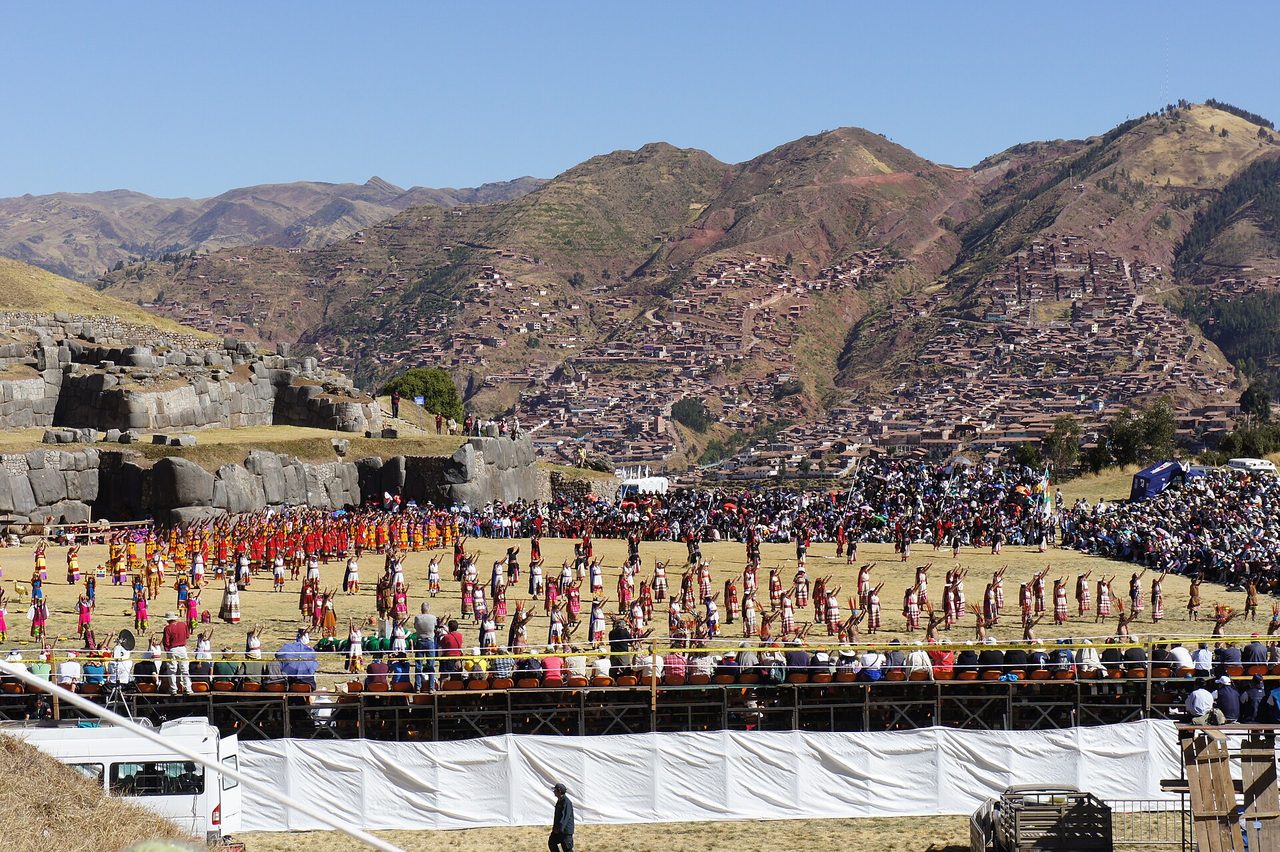
The caveat is Inti Raymi on 24 June. The Festival of the Sun is genuinely worth seeing — a staged reconstruction of the Inca winter-solstice ceremony that moves from Qorikancha in the morning to the Plaza de Armas at midday and finishes on the esplanade at Sacsayhuamán in the early afternoon. It is also the day Cusco stops functioning normally. Hotel rates spike for the week around it, the plaza is closed to traffic, and if you want a seat in the grandstands you are paying several hundred dollars for it, months ahead.
You do not have to. Thousands of people watch from the hillsides above the esplanade for nothing, and the view is distant but real — get there by mid-morning and take something to sit on, because the ground is dry, stony and cold. The whole of June in Cusco is effectively festival month, with parades most days in the run-up; the calendar of Peruvian festivals is worth checking before you fix dates, because a festival you did not plan for is either the highlight of the trip or the reason you could not get a taxi.
Peru in July: the absolute peak
July is the busiest month of the Peruvian year, and it is busy twice over. The first wave is international — North American and European summer holidays landing on Cusco all at once. The second wave is domestic, and it is the one visitors never see coming.
Fiestas Patrias, Peru’s independence holiday, falls on 28 and 29 July. Both are public holidays, they frequently bridge into a long weekend, and the country travels. Not a bit — properly. Lima empties towards Cusco, Arequipa, Paracas and Huaraz. Domestic flights that were merely expensive become scarce and expensive. Hotels that hold rooms back for last-minute bookings do not. Banks, government offices and some museums close on the 28th, and restaurants that stay open work off a fixed holiday menu. Celebrations often start on the 25th and rumble on past the 29th.
None of that is a reason to avoid late July. Fiestas Patrias in a provincial city is a good thing to be present for — military parades, flags on every balcony, and a level of civic seriousness you do not get from a tourist festival. It is a reason to book those specific dates six months out and to not plan a travel day on the 28th itself. If your trip is short and tightly scheduled, look at the seven-day framing of a Peru trip and simply place the fixed points away from that weekend.
Weather-wise July is the driest month almost everywhere in the highlands, with Cusco recording something like 4 mm of rain across the month and daytime highs of 19–21°C. The trade-off is that the greenery is going. By late July the hillsides above the Sacred Valley have turned the colour of straw, and photographs taken in July look nothing like the emerald terraces on the tour operators’ websites, which were mostly shot in February.
August: wind, dust and a falling river
August is the month locals call the month of the winds. It is not folklore — the afternoon wind in the Cusco basin genuinely picks up in August, which is why the hill above Sacsayhuamán fills with kites. On the ground this means three things: dust, cold-feeling afternoons despite similar thermometer readings, and a harder time on exposed passes.
After five months without rain, every unpaved road and trail is loose dust. The drive to Vinicunca, the approach tracks in the Sacred Valley, the last stretch to Humantay — all of them powder. Anyone with asthma or contact lenses will notice. A buff or light scarf is not an accessory in August, it is equipment. The landscape is at its most bleached: if a green Andean valley is what you came for, August is the wrong month and there is no way around that.
August also opens the strongest phase of low water in the Amazon. River levels in Madre de Dios and Loreto drop through June to October, exposing sand beaches, concentrating wildlife around the remaining water and making the forest floor walkable rather than flooded. Macaw clay licks perform best in this window. The flip side is that some narrow tributaries and oxbow lakes become hard to reach by boat, so lodges shift towards walking. If the Peruvian Amazon is a serious part of your plan rather than a two-night add-on, August is arguably the best month of the year for it — which is the one category where peak season is not simply a tax.
One thing nobody warns you about in the jungle: the friaje. Between June and August, cold air pushes north from Patagonia and over the Andes into the southern Amazon, and temperatures in Puerto Maldonado can fall from 32°C to 10–13°C for two or three days at a stretch. Wildlife goes quiet, the lodges hand out blankets, and people who packed only shorts are miserable. Take one fleece into the jungle. Two if you are going in July.
The cold nobody puts in the brochure
Dry season means clear nights, and clear nights at altitude mean the temperature falls off a cliff after sunset. This is the single most consistent complaint I hear from people who visited in June or July, and it is entirely predictable and entirely preventable.
| Place | Altitude | Typical June–Aug day | Typical night |
|---|---|---|---|
| Cusco | 3,400 m | 19–21°C | 0–2°C, frost on clear nights |
| Sacred Valley (Urubamba, Ollantaytambo) | 2,800–2,900 m | 21–23°C | 1–3°C |
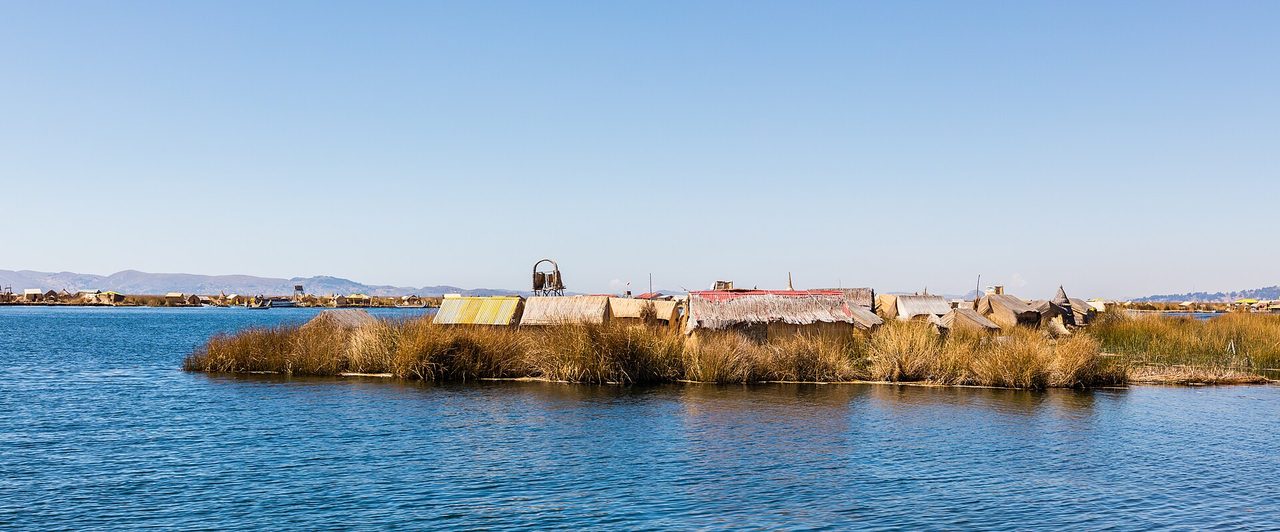
| Puno / Lake Titicaca | 3,810 m | 14–17°C | −3 to −7°C |
| Chivay / Colca rim | 3,650 m | 18–20°C | Below freezing most nights |
| Machu Picchu / Aguas Calientes | 2,040–2,430 m | 20–24°C | 8–11°C |
| Lima | Sea level | 17–19°C | 14–15°C |
| Puerto Maldonado (Amazon) | 180 m | 30–33°C, 10–15°C in a friaje | 20–22°C |
The consequence people miss: central heating is uncommon in Peruvian highland hotels, including plenty of comfortable mid-range ones. A room can be 6–8°C at 6 a.m. Heavy blankets are standard, space heaters are usually available on request and often cost extra, and the shower is the warmest place in the building. When you are choosing where to base yourself in Cusco, “heating” is a more useful filter in these months than “view”. On a homestay night at Lake Titicaca, assume none.
Pack accordingly: a proper insulated jacket rather than a fleece alone, a hat you can sleep in, thermal base layers for the night, and gloves for a 4 a.m. trek start. Then pack for 22°C and fierce UV in the same bag, because at midday you will be in a t-shirt. My longer notes on what to wear at the citadel apply doubly here. Sun at 3,400 m burns in twenty minutes even when the air is cold, and altitude does not care that you feel fine — give yourself two nights in Cusco or, better, in the lower Sacred Valley before doing anything strenuous, and read up on how the altitude actually affects people.
Lima is having a completely different season
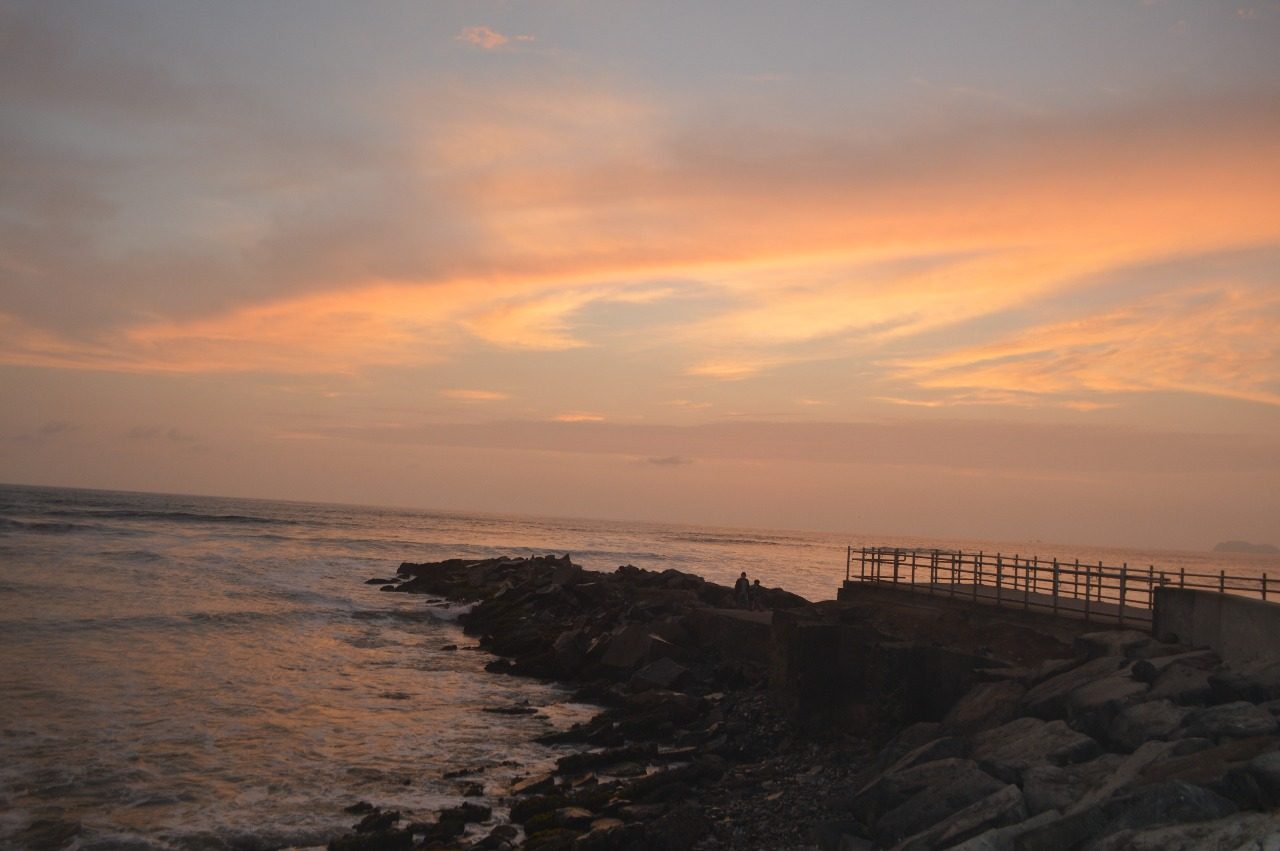
This is the mismatch that catches people out most. While Cusco is under a cloudless sky, Lima is grey. Properly grey. The coastal winter runs June to October and brings the garúa — a low blanket of fog and mist that does not quite rain but leaves everything damp, sits over the city for days on end and turns the sun into a bright patch behind a white sheet.
Temperatures hover between about 15°C at night and 19°C in the afternoon. Sunshine hours in July, August and September are famously low, sometimes under an hour a day for stretches. Nobody swims. The beaches south of the city that are packed in January are shut and shuttered. If your itinerary has “two beach days in Lima” on it, delete them.
What Lima is very good at in July is everything indoors and everything edible. The restaurant scene does not care about the weather, the museums are excellent, and the damp actually suits the colonial centre. Treat it as a city break of two or three days — my rundown of what is worth your time in Lima is built around that. If you want sun on the coast in these months you have to go a long way north, towards Máncora and Tumbes, where the coastal cloud breaks up. The southern coast around Paracas and Huacachina stays sunnier than Lima but cool, and the ocean is cold year-round anyway thanks to the Humboldt current.
The money: what peak season actually adds
Some costs in Peru are fixed all year and some triple. Knowing which is which is the difference between a peak-season trip that stings and one that hurts.
| Item | Peak-season figure | Does it change by season? |
|---|---|---|
| Machu Picchu entry, foreign adult | S/163 (about US$44) | No. S/211 for the circuits including Huayna Picchu or Machu Picchu Mountain. Prices rose on 1 May 2026 when a SERNANP conservation surcharge was added — check the official portal, they move. |
| Train, Ollantaytambo–Aguas Calientes | US$35–60 per standard leg | Barely, but availability does. The convenient departures go months ahead. |
| Consettur shuttle bus up to the site | About US$24 round trip | No, but the queue is 45 minutes rather than 10. |
| Mid-range Cusco hotel | US$80–200 a night | Heavily. The same room is US$30–70 in the wet season. |
| Lima–Cusco flight, one way | US$90–150 | Yes, and again around 28 July. |
| 4-day Inca Trail, group departure | US$700–1,000 | Modestly on price, enormously on availability. |
| Set lunch (menú) in Cusco | S/15–25 | No. Peruvian food stays cheap in every month. |
The pattern is clear enough: entry fees, transport tickets and food hold steady, while beds and seats — the finite things — are what peak season inflates. That is also why the gap between a well-planned and a badly planned peak-season trip is so wide, and why my breakdown of what a Peru trip costs lists accommodation separately from everything else. Doing Machu Picchu cheaply is still possible in July; it just requires you to make the decisions in February.
How to travel in peak season without resenting it
Assuming you are committed, these are the levers that actually work.
- Go in the afternoon at Machu Picchu. The 06:00–08:00 entries carry every early train, every day-tripper and every group guide. The 12:00–14:00 slots are meaningfully quieter and the light on the eastern terraces is better. You lose the mist; in July there is rarely any mist to lose.
- Sleep in the Sacred Valley, not in Cusco. Ollantaytambo and Urubamba are 800–600 m lower, warmer at night, cheaper, and put you at the train station rather than 90 minutes from it. This also solves altitude acclimatisation. Cusco is worth two or three nights, not seven — and the question of how long to actually spend in Cusco matters more when every night is peak-priced.
- Move your fixed points off the weekends and off 24 June and 26–30 July. Domestic demand is weekend-shaped in a way international demand is not.
- Take the first flight out of Lima. Cusco’s airport is prone to afternoon wind and cloud delays, and August is the worst month for it. A 06:30 departure gets you there; a 15:00 one is a coin flip.
- Add a region that is not on the standard loop. The Cusco–Puno–Arequipa triangle is where the crowd is. Northern Peru — Chachapoyas, Kuelap, the Moche sites near Trujillo — is in perfectly good weather in these months and sees a fraction of the traffic, as does most of the country away from the main route.
- Book the trains first if you are not trekking. The rail options to Aguas Calientes are the real bottleneck for independent travellers, not the entry ticket.
- Accept queues where they are cheap and avoid them where they are expensive. Twenty minutes for the shuttle bus is fine. Ninety minutes at the Vinicunca car park on a Saturday in July is not.
Who should not come in June, July or August
Naming this properly matters more than another list of festivals.
Budget travellers. If accommodation is the biggest line in your budget, you are paying the maximum for the same bed. The dry weather is not worth 60% more to someone counting soles.
Anyone booking inside eight weeks. You can still have a good trip, but you will be assembling it from leftovers — late entry slots, awkward trains, whichever hotel had a cancellation. Peak season punishes late decisions harder than any other window.
People who hate queues. There is a queue for the classic photo, a queue for the bus, a queue at the Sun Gate and a queue at the toilets outside the gate. The circuits are one-way, so you cannot wait it out.
Anyone whose mental image of Peru is green. By August the Sacred Valley is brown, the hillsides are straw and the streams are low. The photographs that sold you the trip were taken in the rainy months.
Anyone who feels the cold badly and will not pack for it. Sub-zero nights in unheated rooms is a specific kind of unpleasant.
If two or more of those describe you, look hard at the shoulder months instead. The full argument for each part of the year is in the guide to when to visit Peru, and the month-by-month comparison in picking the single best month makes the case that late April and October are the sweet spots for most people.
Questions people actually ask about peak season
Is June, July or August the best of the three?
June, narrowly. It is the coldest but the landscape still has some colour, the crowds have not fully arrived until the end of the month, and Inti Raymi is worth planning around if you accept the pricing that comes with it. July is the busiest and most expensive. August is the driest, dustiest and windiest, but it is the best month of the three for the Amazon.
How crowded is Machu Picchu in July, really?
Up to 5,600 people per day, spread across hourly entries from 06:00 to 16:00 and three one-way circuits. That works out at several hundred people moving through the site in your hour, on the same route as you. It is manageable, it is not solitude, and the classic viewpoint has a line for photos through the morning. The full seasonal picture is in the guide to when to visit Machu Picchu.
When do Inca Trail permits go on sale?
The Ministry of Culture releases the next calendar year’s permits in October, through licensed operators only — you cannot buy one yourself. Five hundred people a day, of whom roughly 200 are trekkers. June to August dates are the first to disappear. If you want a specific week, have an operator chosen and a deposit ready before the release date. Everything else about the route is in the Inca Trail guide.
Can I add Huayna Picchu at short notice?
Almost never in these months. The circuit including it costs S/211 rather than S/163 and sells out three to six months ahead for July and August. If you miss it, Machu Picchu Mountain is a longer but easier climb with a wider view and slightly better availability — the trade-offs are covered in the comparison of the two peaks.
Does it rain at all in Peru in July?
In the highlands, barely — a few millimetres across the month, and any rain that does fall is usually brief. Machu Picchu sits on the cloud-forest side of the range at 2,430 m, so it can be humid and occasionally showery even in the dry season. The Amazon still gets rain; it just gets less of it. The regional weather picture is more useful than any national average, because Peru does not have one climate.
Is Fiestas Patrias worth planning around or avoiding?
Both, depending on temperament. It is a genuine national celebration with parades in every town and a real sense of occasion. It also means full flights, higher fares, closed offices on 28 July and hotels booked out months ahead. If you enjoy crowds and want to see Peru being Peruvian rather than touristic, aim for it. If you want a smooth logistics week, put your travel days either side of it.
Is Lake Titicaca worth it in the cold?
Yes, but go in with your eyes open. The lake is at 3,810 m and July nights on the islands drop several degrees below freezing, in rooms with no heating and often no glass in the windows. The daytime light on the water in the dry season is the best of the year. A homestay on Amantaní is one of the more memorable nights in Peru, and one of the coldest — the practicalities are in the Lake Titicaca guide.
What about Arequipa and the Colca Canyon?
Excellent in these months. Arequipa sits at 2,335 m and is warm and sunny by day all winter, which makes it a good acclimatisation stop, and the condor viewing at Cruz del Condor is at its most reliable in the dry season. Nights on the Colca rim are below freezing. The city itself is covered in the Arequipa guide, and if you are moving between all these points, the practicalities of getting around Peru matter more in peak season than at any other time — night buses and popular flights sell out too.
Is peak season worth it for a first trip?
For most people, yes — if you book like someone who knows it is peak season. Clear skies at Machu Picchu, open passes, reliable domestic flights and every trek running is a lot to give up. Just do not expect a bargain, an empty ruin or a green valley, and do not turn up in a fleece expecting the “sunny Andean winter” the brochures promise. It is sunny. It is also, at 3 a.m. in an unheated room in Cusco, genuinely cold.