What to Pack for the Inca Trail
Your porters carry most of it, so the real question is what fits in a 7 kg duffel and what stays in your daypack. Weights, Cusco rental prices, tipping cash and the rules that get things confiscated.
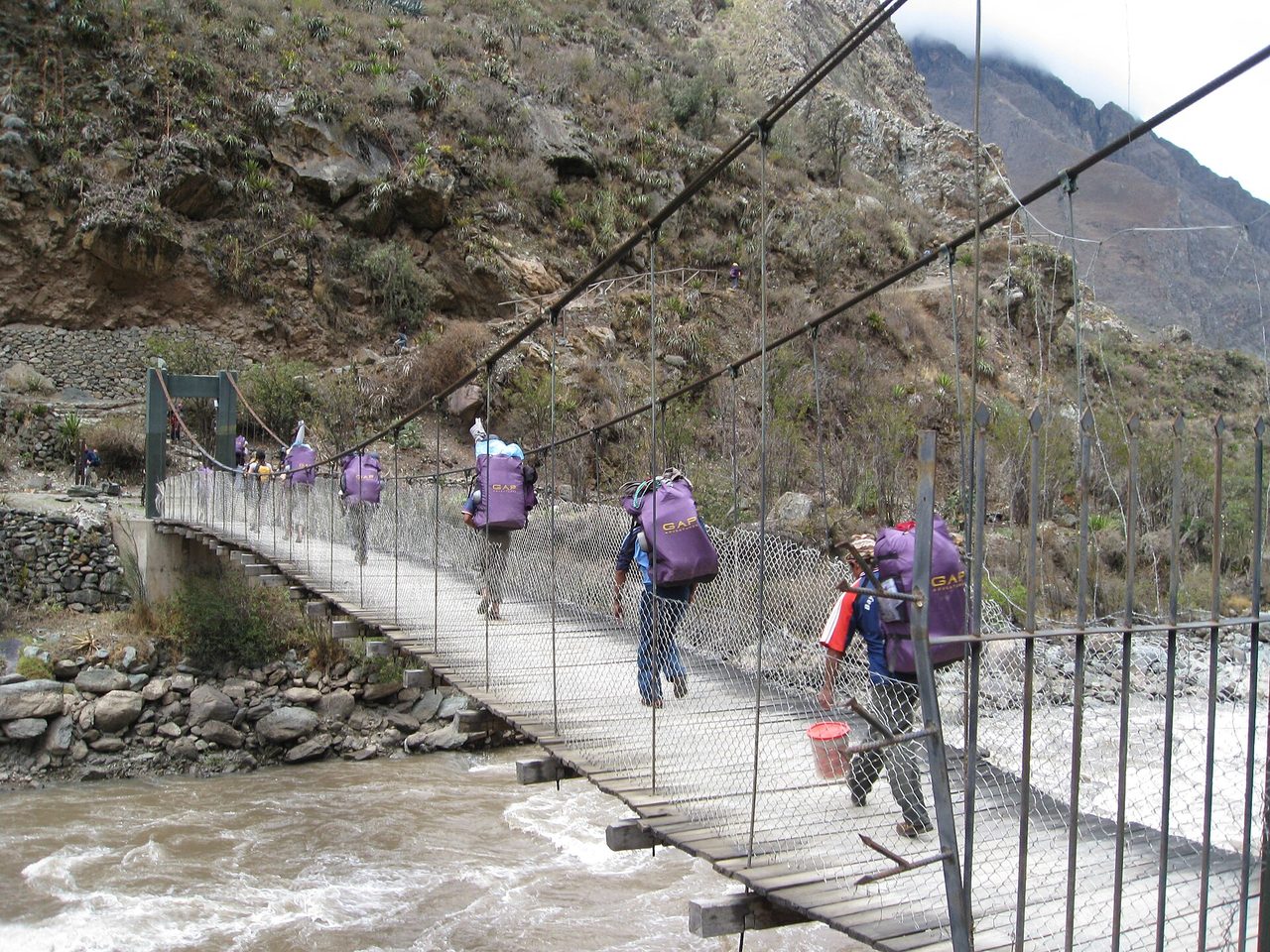
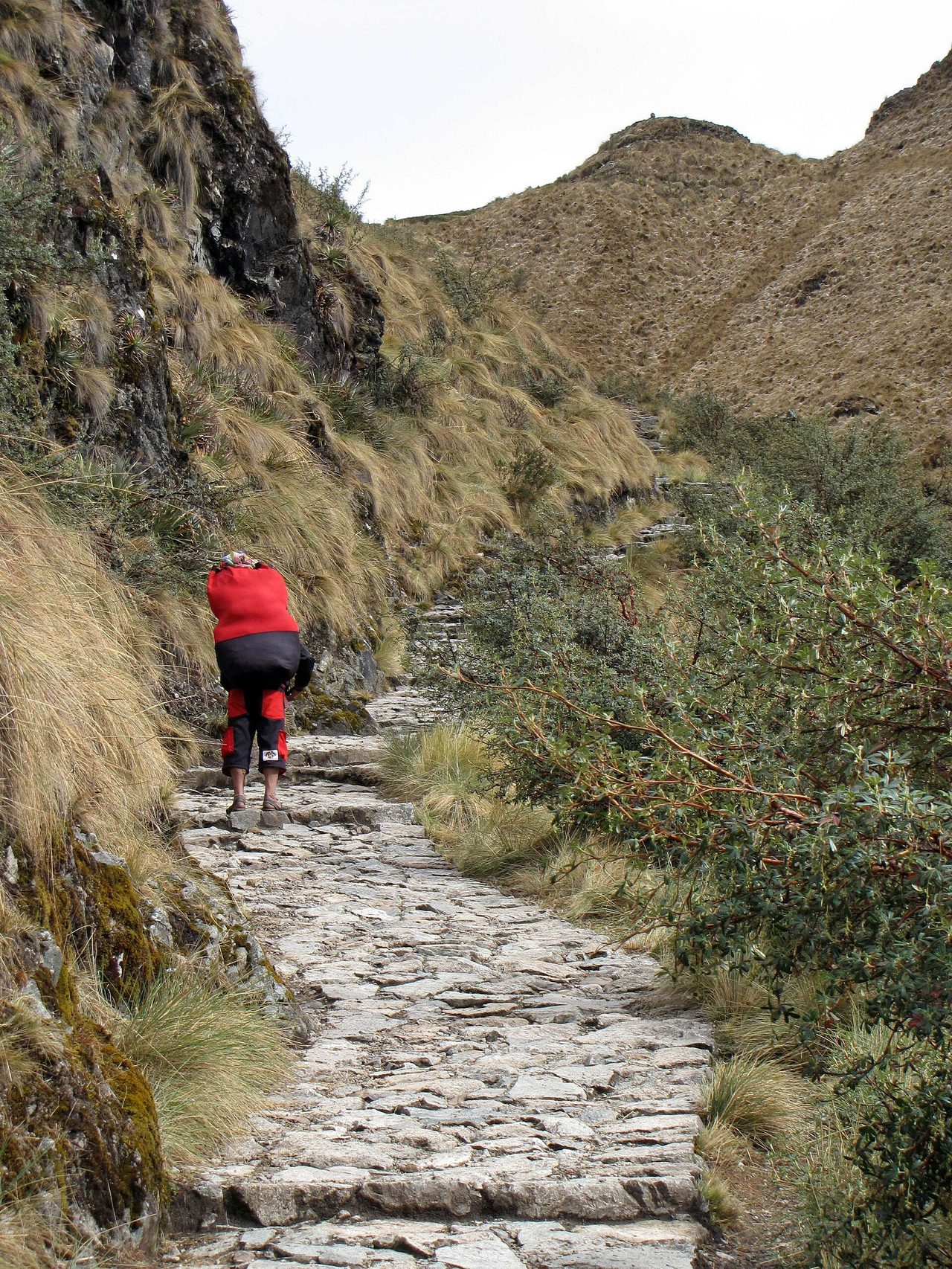
Almost every Inca trail packing list you will find online is a shopping list. Someone wants you to buy a jacket. What nobody tells you at the top of the page is the thing that actually determines what you take: you are not carrying most of it. A porter is. And the amount he is allowed to carry for you is fixed, small, and already partly used up by the sleeping bag you have not rented yet.
That single constraint reorganises the whole problem. The question is not “what should I buy for the Inca Trail”. It is “what goes in the duffel the porters carry, what goes in the daypack I carry myself, and what has to stay behind in a hotel storage room in Cusco because it does not fit inside 7 kilos”.
So this is that list. Split by bag, weighed, priced, and with a closing section on the things every other page tells you to buy that you can safely leave at home.
Start here: your operator is already carrying most of it
You cannot walk the classic route independently. Peruvian regulations require a licensed operator, a guide and a registered porter team, which is why the four-day trek to Machu Picchu costs what it costs. The upside of that rule is that a huge amount of what would normally be in a backpacking kit is not your problem.
On a standard camping trek, the following are almost always included in the price and carried for you:
- Tents, usually two people to a three-person tent
- All meals from lunch on day one to breakfast on day four, plus a cook and a kitchen tent
- Boiled drinking water at breakfast, lunch and dinner
- A dining tent, stools and tables
- A duffel bag, handed to you at the briefing the night before
- The Machu Picchu entry that is bundled into your permit
Things that are usually not included, and that operators either rent to you or expect you to bring: the sleeping bag, the inflatable mat, trekking poles, a down or synthetic jacket for the evenings, and a headlamp. Some outfits include a toilet tent; many do not. Read the inclusions line of your booking properly, because the difference between two quotes is often exactly these five items.
The briefing usually happens around 6pm the evening before at your operator’s office in Cusco. Bring your duffel already packed if you can, because that is when it gets weighed, and repacking on the floor of an office in front of eleven strangers is not how you want to spend the last hour before an early start.
The Inca Trail packing list, split by which bag it goes in
Here is the whole thing in one table. The rule of thumb is brutal but simple: if you will not need it between breakfast and the moment you reach camp, it does not go in your daypack. You will not see the duffel again until the porters have run ahead, arrived, and pitched your tent.
| Item | Daypack (you carry) | Duffel (porters carry) | Leave in Cusco |
|---|---|---|---|
| Passport | Yes, always | — | — |
| Cash for tips | Yes | — | — |
| Water (2–3 litres) | Yes | — | — |
| Rain jacket or poncho | Yes | — | — |
| Fleece or light insulated layer | Yes | — | — |
| Sun hat, sunglasses, sunscreen | Yes | — | — |
| Snacks | Yes | — | — |
| Toilet paper and a sealable bag | Yes | Spare roll | — |
| Camera / phone | Yes | — | — |
| Painkillers, blister plasters, personal meds | Yes | Bulk of kit | — |
| Sleeping bag | — | Yes (counts toward your limit) | — |
| Inflatable mat | — | Yes (counts toward your limit) | — |
| Down jacket for camp | — | Yes | — |
| Camp / sleeping clothes | — | Yes | — |
| Spare socks and underwear | — | Yes | — |
| Headlamp | Yes on day 4 | Days 1–3 | — |
| Wet wipes, toothbrush, small towel | — | Yes | — |
| Camp shoes or sandals | — | Yes, if you have room | — |
| Jeans, cotton anything, third pair of trousers | — | — | Yes |
| Laptop, hair dryer, spare shoes | — | — | Yes |
| Main suitcase | — | — | Yes |
Every operator I know of stores your main luggage free while you trek. If you have not booked accommodation yet, this is worth factoring in when you compare the different neighbourhoods to base yourself in Cusco, because most hotels will also hold a bag for four nights at no charge and it saves you a trip across town at 4am.
The 7 kg maths, done properly
The number quoted by most operators is 7 kg, and it exists because Peruvian regulations cap what a porter may carry. Loads are weighed at the KM82 checkpoint and again at control points on the trail. This is not a suggestion that gets waved through — rangers weigh the packs.
The part that catches people out is that your rented sleeping bag and mat live inside that 7 kg. Together they typically run about 3 kg. That leaves roughly 4 kg for everything else you own for four days.
| What goes in the duffel | Rough weight | Running total |
|---|---|---|
| Rented sleeping bag | ~2.0–2.5 kg | 2.5 kg |
| Rented inflatable mat | ~0.6–1.0 kg | 3.4 kg |
| Down or synthetic jacket | 0.4–0.8 kg | 4.1 kg |
| Camp/sleep clothes (thermal top, bottoms, thick socks) | 0.5 kg | 4.6 kg |
| Two spare base layers | 0.4 kg | 5.0 kg |
| Three pairs socks, four pairs underwear | 0.3 kg | 5.3 kg |
| Second pair of trekking trousers | 0.3 kg | 5.6 kg |
| Wash kit, wipes, small towel, spare toilet roll | 0.4 kg | 6.0 kg |
| Headlamp, spare batteries, power bank | 0.3 kg | 6.3 kg |
| Warm hat, gloves, buff | 0.2 kg | 6.5 kg |
| Camp shoes | 0.4 kg | 6.9 kg |
That is a full but realistic pack, and it is already at the line. Add a second fleece, a book and a pair of jeans and you are over. If you bring your own lightweight sleeping bag and mat instead of renting, you claw back perhaps a kilo, which is the strongest practical argument for carrying your own.
Two caveats worth knowing. First, the allowance is not identical everywhere: some operators quote 6 kg, some 8, and a few premium companies advertise a higher figure because they have assigned you more porter capacity. Confirm the number in writing rather than assuming 7. Second, some companies sell an “extra porter” upgrade — usually shared between two trekkers — which buys you a few more kilos. If you genuinely need it, buy it. It is a far better use of money than a new jacket.
Your own daypack is a separate matter and nobody weighs it. Aim for 20–30 litres and 5–7 kg loaded, most of which will be water. People who carry more regret it on the second morning.
Rent in Cusco or buy at home
Cusco has a dense, competitive rental market. Most of the shops cluster on Calle Plateros and Calle Procuradores just off the Plaza de Armas, and every trekking operator rents the same core items. Prices are negotiable and rarely posted, so treat the figures below as the range you should expect rather than a fixed tariff, and check on the day.
| Item | Typical rental (per day) | Four-day trek, roughly | Rent or bring? |
|---|---|---|---|
| Sleeping bag (rated to around −10°C) | USD 5–10 / S/18–38 | USD 20–35 / S/75–130 | Rent, unless you already own a warm, light one |
| Inflatable sleeping mat | USD 3–5 / S/11–19 | USD 12–20 / S/45–75 | Rent, but insist on inflatable, not foam |
| Trekking poles (pair) | USD 2–4 / S/7–15 | USD 8–16 / S/30–60 | Rent — and check the rubber tips are on |
| Down jacket | Not standardised; stock is thin | Ask, and expect to be quoted ad hoc | Bring one if you own one |
| Duffel bag | Usually free with your trek | — | Provided |
| Daypack | USD 3–6 / S/11–22 | USD 12–24 / S/45–90 | Bring your own; fit matters |
| Hiking boots | Sometimes offered | — | Never. Bring broken-in boots. |
Exchange rates move, so the sol and dollar figures above will drift; the ratio I have used is around S/3.7 to the dollar. Most rental shops will take either currency and will quote you in whichever one they think you are less likely to argue about.
My honest read on the rent-versus-buy question, item by item:
- Sleeping bag: rent. A bag warm enough for a night at 3,600 m is bulky, expensive and will spend the rest of your trip as dead weight. Renting is the single biggest space saving you can make. Do check the rating, though. A shop that says “yes yes, very warm” without giving you a number is showing you a summer bag.
- Mat: rent, but be fussy. Cheap shops hand out thin foam mats. Ask for an inflatable one, inflate it in the shop, and leave it five minutes to see if it sags. The mat matters more than the bag on a cold night, because it is the ground stealing your heat, not the air.
- Poles: rent. They are cheap to hire and a nuisance to fly with, since most airlines will not let them in the cabin. The descent from the second pass down to Pacaymayu is a long flight of uneven Inca stairs and your knees will make the argument for you.
- Boots: bring, always. Rented boots are a blister factory. This is the one item where there is no debate.
- Rain gear: bring. Cusco sells ponchos for a few soles, and they are fine as a backup, but a jacket that actually fits over your daypack is worth carrying from home.
- Down jacket: bring if you own one. Technical clothing in Cusco is thinner on the ground than camping hardware and priced closer to European levels than you would expect. Buying one there is not the bargain people assume.
One thing worth doing before you rent anything: spend a couple of days acclimatising properly. Arriving from sea level and starting the trek the next morning is how people end up miserable, and the practicalities of adjusting to 3,400 m in Cusco matter far more to your trek than the brand of your fleece. Two full days before you walk is the minimum I would accept; three is better.
Documents: the one item that can end your trek at KM82
Your permit is issued against your passport, and the two must match. Full name, passport number, nationality and date of birth are all registered when your operator books, months in advance. At the KM82 checkpoint at Piscacucho, a ranger checks the physical passport against the manifest.
What this means in practice:
- Bring the same passport you booked with. If you have renewed since booking, carry both the old and the new one. Tell your operator the moment the number changes — whether a correction is possible depends entirely on how far ahead you are and whether the government system is open for edits.
- Spelling errors are not a formality. A single wrong character has turned people away. Check the confirmation document your operator sends against your passport page, letter by letter, the day you receive it. Not the week you fly.
- Photocopies and photos on your phone are not accepted at the checkpoint. The original travels with you for four days.
- If you booked a student permit, bring the physical student card. Requirements around which cards count have been tightening — at Machu Picchu itself a university photo ID with a printed expiry date is now what gets checked — so confirm with your operator exactly what they will accept rather than assuming.
Keep the passport in a sealed plastic bag inside your daypack, not in the duffel. You will want it again on day four: there is a stamp at the Machu Picchu entrance, unofficial but universally loved, and you cannot get it if your passport is at the bottom of a bag on a porter’s back.
None of this replaces understanding how the booking works in the first place. The mechanics of securing an Inca Trail permit are unusually unforgiving: a hard cap of 500 people a day including guides, cooks and porters, which leaves roughly 200 trekker places, and permits for 2026 that opened on 17 November 2025 and were staggered across about a week. February is closed entirely for maintenance.
Cash: bring more than you think, in small notes
There are no cash machines on the trail. Everything you spend for four days has to be in your daypack from the start, and the largest single line is tipping.
Tipping on the Inca Trail is not decorative. Porter pay is low, and the tip is a real and expected part of what the crew earns. It is usually collected on the final evening at Wiñay Wayna camp, in a small ceremony where the group hands over a pooled amount and everyone thanks each other, which is more moving than it sounds and considerably more awkward if you have nothing to put in.
| Who | Guideline per trekker, four-day trek | In soles, roughly |
|---|---|---|
| Porters (pooled, divided between the team) | USD 20–30 | S/75–110 |
| Cook | USD 10–15 | S/38–55 |
| Head guide | USD 25–40 | S/95–150 |
| Assistant guide, if you have one | USD 10–15 | S/38–55 |
| Total to budget | USD 55–90 | S/205–335 |
These are ranges, not a bill. Different operators suggest different figures and some build a service charge in, so ask at the briefing what their own guidance is. What matters more than the exact number is the format: bring it in soles, in notes of S/10, S/20 and S/50. Handing a porter a USD 100 bill helps nobody, because he then has to change it in Cusco at a rate that eats the gift.
Beyond tips, budget roughly S/150–250 more for extras: bottled drinks and snacks sold by families at the first day’s stops and again near Wayllabamba, the S/2–5 you may be asked for at a couple of toilet blocks, the hot showers at Wiñay Wayna if they are running, and the bus down from Machu Picchu to Aguas Calientes if you do not fancy the ninety-minute walk. Break your notes in Cusco before you go — nobody on the trail can change a S/200. If you are still building out numbers for the wider trip, our breakdown of what two weeks in Peru actually costs puts the trek in context.
Water: what you get, and why I still carry a backup
Almost every operator boils water for you and fills bottles or bladders at breakfast, lunch and dinner. It is safe, it is free, and it means you do not need to buy or carry four days of bottled water.
What it does not mean is that you can carry a small bottle. The gaps between fills are long. Between breakfast and lunch on day two you climb roughly 1,200 metres to Dead Woman’s Pass at 4,215 m, and there is nowhere to top up. Carry capacity for 2.5 to 3 litres: a 2-litre bladder plus a 1-litre bottle is the arrangement that works best, because the bottle is what the cook can actually pour into.
I still carry purification tablets or a small UV pen, for two reasons. Occasionally a group is running late and the boiled water does not appear until camp. And on the last morning, when you leave Wiñay Wayna in the dark to queue at the final checkpoint, breakfast is very early and very quick. Chlorine dioxide tablets are sold in Cusco pharmacies and weigh nothing. The trade-off is a thirty to forty minute wait before you can drink, so they are insurance, not a plan.
Bring a hard reusable bottle rather than a disposable one. Single-use plastic bottles are restricted inside the sanctuary and confiscated at the Machu Picchu gate, where there is no storage option for banned items — they simply go in the bin.
Toilets and hygiene: the section every other list skips
There is no gentle way to write this, so here is the honest version.
After KM82 you are dealing with squat toilets. There are blocks at the trailhead, at the day-one lunch stop, and at the main campsites, and by the afternoon of a busy day they are unpleasant. Some newer facilities are better than they used to be, but do not picture anything with a flush handle and a working light.
What this means for your packing:
- Toilet paper is on you. Nobody supplies it. Take one roll in the daypack with the cardboard core removed and squashed flat, and a spare in the duffel.
- Paper is not flushed and not buried. Carry a sealable bag, put used paper in it, and hand it in at camp or drop it in the bins provided. This is standard practice across Peru and doubly so inside the sanctuary.
- Hand sanitiser, in the daypack, not the duffel. A small bottle. This is the single most useful hygiene item you will carry, and stomach trouble on the second night is the thing most likely to ruin a trek.
- Wet wipes replace showers. There is a cold shower at Wiñay Wayna on the third night, sometimes hot for a few soles, and that is the only one. A pack of wipes and a small quick-dry towel does the rest.
- A head torch for night trips. Camp toilets are a walk from the tents and pitch dark.
- Women should assume no privacy between camps. A dark-coloured buff, a small dry bag for used products, and knowing that the trail is narrow and busy is the practical summary.
Some operators include a private toilet tent that is set up at each camp and packed away in the morning. If you are choosing between two similarly priced companies, this is a genuine differentiator and worth more to most people than a slightly better sleeping bag.
Medicine, altitude and the sun at 4,200 m
Nothing about the Inca Trail is technical. What makes it hard is the altitude and the stairs, and both have packing consequences.
The high point is Dead Woman’s Pass at 4,215 m on day two. That is around 800 metres above Cusco and nearly 1,800 above Machu Picchu itself, which sits at 2,430 m. You go up and then a long way down, and the descent is where knees and toenails suffer.
Small medical kit, all in the daypack:
- Ibuprofen and paracetamol
- Blister plasters — the hydrocolloid kind, applied at the first hot spot, not after the blister forms
- Any prescription medication in its original packaging
- Rehydration salts, one or two sachets
- Anti-diarrhoeal tablets and something for nausea
- Altitude medication if your doctor has prescribed it. Acetazolamide is the usual one, taken from the day before you ascend. It is also sold over the counter in Peruvian pharmacies, but a conversation with your own doctor before you fly is the sensible route, particularly if you take other medication.
- Insect repellent with DEET for the cloud forest sections of days three and four, where the sandflies are genuinely bad
Sun is the thing people underestimate most. At over 4,000 metres, in thin dry air, close to the equator, you burn quickly even on an overcast morning. High-factor sunscreen, a brimmed hat, sunglasses and SPF lip balm are not optional, and the lip balm in particular is the item everyone forgets and then thinks about for four days. Reapply at every break, not once at breakfast.
Which brings up the season question. The trail runs year-round except February, and the difference between a dry-season and a wet-season pack is real. Anyone walking between May and September should read up on what the Andean dry season actually delivers: bright hard days, freezing clear nights, and dust. Anyone walking in November, December or March should plan around the realities of the wet months instead, which means gaiters, a genuinely waterproof pack cover, and two more pairs of socks than you think you need. If you are still choosing dates, the seasonal trade-offs at the site itself mostly mirror the trail’s.
What not to bring — including the things other lists insist on
Some of these are rules with real consequences. Some are just weight you will resent.
Things that are actually prohibited
- Drones. Banned on the Inca Trail and at Machu Picchu. Flying one inside a protected archaeological area risks confiscation and a substantial fine, and the rangers are not sympathetic. Leave it in Cusco.
- Trekking poles with exposed metal tips. Rubber tips are mandatory on the trail to protect the Inca stonework, and they are checked. Rental poles usually come with them; if yours do not, tips cost a couple of soles in any Cusco trekking shop. At Machu Picchu itself the rule is stricter still — poles are generally only permitted for elderly or mobility-impaired visitors, and then only with rubber tips.
- Single-use plastic bottles and plastic packaging inside the sanctuary. Decant snacks into a reusable container before day four.
- Large backpacks at the Machu Picchu entrance. The limit is 40 x 35 x 20 cm. Anything bigger goes in the paid lockers by the gate. Your trekking daypack may or may not squeak under this; assume it will not.
- Tripods, selfie sticks and professional filming rigs inside the citadel without a permit.
- Alcohol and glass at Machu Picchu.
Things every packing list includes that you do not need
- A water filter. The cook boils your water. Tablets as a backup weigh 20 grams; a pump filter weighs 400.
- A sleeping bag liner. Recommended everywhere, used by almost nobody. If you are worried about rental hygiene, ask the shop about their cleaning routine instead.
- A pillow. A stuff sack with tomorrow’s fleece in it does the job and weighs nothing.
- Four days of clothes. Two trekking outfits and one set of clean camp clothes is the whole system. You will be dirty either way.
- Gaiters, in the dry season. Genuinely useful in the rain, dead weight from May to September.
- A big camera body and two lenses. Only if photography is the reason you came. The stairs will change your mind by lunch on day two.
- Cotton anything. Not a weight issue, a comfort one. Cotton holds sweat, then holds cold.
- A padlock for the duffel. Bring a small one if it helps you sleep, but in years of running this route, porter theft is not the problem people fear.
- Energy gels. Your operator feeds you extremely well. Bring nuts and chocolate for the passes; leave the sports nutrition at home.
Day four is a different packing problem
The final morning does not resemble the other three. You are woken somewhere around 3.30am, the porters strike camp around you at speed so they can catch the early train down, and you queue at the Wiñay Wayna control point until it opens. Then it is roughly an hour to the Sun Gate and the first view of the site.
Two consequences for your pack. First, you hand over the duffel for the last time before dawn, so anything you want after that point must already be in your daypack — passport, cash, sunscreen, the clean shirt if you brought one. Second, you carry everything you own through the Machu Picchu entrance, and that is where the size limit and the plastics rules bite.
You also arrive early, in trekking clothes, before the day-trippers who came up on the train. That contrast is worth thinking about if you have friends meeting you there; our notes on dressing sensibly for the citadel apply to them more than to you.
A few practical points for that morning:
- Headlamp in an outside pocket. You will use it for the first two hours.
- Your permit covers entry, but not the peaks. If you want to climb one of the mountains above the site, that is a separate ticket bought in advance, and the choice between the two summits above the ruins is worth making before you book, not on the day. Note also that the conservation surcharge introduced on 1 May 2026, which took the standard foreign adult entry to S/163 and S/211 for circuits including those peaks, applies to ordinary entry tickets rather than to Inca Trail permits — trekkers’ entry is bundled into the permit. Confirm the current figures on the official portal before you pay for anything extra.
- Poles get left at the gate unless you qualify for the exemption. Plan for that before you queue.
- You will want the bus down. It runs to the town below the ruins and after four days you have earned it. Have small notes or a card ready.
If you are still deciding which trek to walk
The packing question changes depending on the route, and permits sell out far enough ahead that plenty of people end up choosing something else. Worth knowing before you finalise a kit list:
- The two-day version starting at KM104 involves one night in a hotel in Aguas Calientes rather than camping. No sleeping bag, no duffel, no 7 kg problem. A daypack is the entire kit.
- The route past Salkantay and Humantay goes higher and colder — over 4,600 m at the pass — so the warm layers matter more, and many operators there use lodges or domes, which changes what you need again. The comparison between the two headline routes is mostly about scenery versus ruins, but the kit differs too.
- The valley route through weaving communities near Lares is lower and warmer at night, though the day one pass is still serious.
- The long approach to Choquequirao is the hot one: descending into the Apurimac canyon, sun protection and water capacity matter far more than insulation.
- Our wider round-up of multi-day walks across the country covers the Cordillera Blanca options too, where the packing rules are completely different because there are no porter weight limits imposed by a government agency.
Frequently asked questions
How much does the porter actually carry for me?
Typically 7 kg of your personal belongings, including the sleeping bag and mat if you rented them. That is your share; each porter carries a combined load of company equipment and trekkers’ duffels up to the legal maximum, which is weighed at checkpoints. Some operators quote 6 kg and some 8. Get the number from your own company in writing.
What size daypack do I need?
Twenty to thirty litres. Big enough for three litres of water, a rain layer, a fleece, snacks, camera and the small stuff. Anything larger and you will fill it, and you are carrying that yourself over a 4,215 m pass. A rain cover or a dry bag liner matters more than the brand.
Is a sleeping bag included?
Rarely on standard tours. Almost every operator rents one, usually for USD 20–35 for the four days, and a few premium companies include it. Whatever you use counts against your duffel allowance, so factor roughly 2 to 2.5 kg into your maths before you pack anything else.
Can I charge my phone on the trail?
No. There is no power for four days. A 10,000 mAh power bank covers a phone comfortably; keep the phone in flight mode and the battery will surprise you. Cold nights drain batteries, so sleep with the power bank inside your sleeping bag.
Do I need hiking boots, or will trail runners do?
Both work and both have advocates. Boots give ankle support on uneven Inca stairs and keep water out in the wet season. Trail runners are lighter and dry faster. What matters is that whatever you wear is already broken in — new footwear bought for this trek is the most common self-inflicted injury on the trail.
Are drones allowed?
No. They are prohibited on the Inca Trail and at Machu Picchu, with confiscation and fines for anyone who tries. This applies inside the sanctuary generally, not only at the citadel.
Can I bring my own trekking poles?
Yes, provided they have rubber tips fitted. Metal tips are not permitted because they damage the original stonework. Tips are sold cheaply in Cusco and in Aguas Calientes. Note that most airlines require poles to be checked rather than carried in the cabin, which is one reason renting is popular.
How much cash should I carry?
Budget around S/205–335 per person for tips on a four-day trek, plus S/150–250 for drinks, toilets, the shower at Wiñay Wayna and the bus down. Bring it in small denominations from Cusco. There is no cash machine anywhere on the route, and change is scarce. Our general practical notes on money and logistics in Peru cover which ATMs to use before you leave the city.
What happens to my main luggage?
It stays in Cusco. Your operator stores it free for the duration, and most hotels will too. You collect it when you get back, usually the evening of day four or the following morning depending on which train you are on.
Is there anywhere to buy things I forget?
Up to a point. There are small shops and families selling water, soft drinks, chocolate and beer at the day-one stops and near Wayllabamba, and prices rise the further along you go, which is entirely fair given someone carried it up there. After the second camp, effectively nothing. Anything you forget past that point stays forgotten.
What do I wear on the last day?
Whatever is cleanest. You will be walking from 4am and arriving at the Sun Gate in the early morning, so the same layering applies: base layer, fleece, rain jacket in the pack. Plenty of people carry one clean shirt for the photographs. It weighs 150 grams and there is no shame in it.
How cold does it get at the campsites?
Cold enough to matter. The second night, at around 3,600 m, can drop close to freezing in the dry season, and clear skies make it colder. A bag rated to −10°C, a decent mat and a thermal set to sleep in is the combination that works. Nights are milder in the wet season and wetter, which brings its own problems.
The short version
Pack the duffel to 7 kg with the sleeping bag included and it will be tighter than you expect. Carry water, waterproofs, sun protection, passport and small notes in the daypack, because you will not see the duffel between breakfast and camp. Rent the bag, the mat and the poles in Cusco; bring your own boots, rain jacket and any down layer you already own. Leave the drone, the plastic bottles and the metal pole tips at home.
Everything else is negotiable. The walk itself — four days, three passes, a set of ruins revealing themselves one valley at a time before you finally reach the citadel on foot rather than by bus — does not require better gear than this. It mostly requires you to have carried less of it.