Best Restaurants in Lima: A Foodie’s Guide
Lima's restaurant reputation is real, but the tasting-menu tier is expensive and books out months ahead. Here are the prices, the booking windows, and the cheap places that are honestly better value.
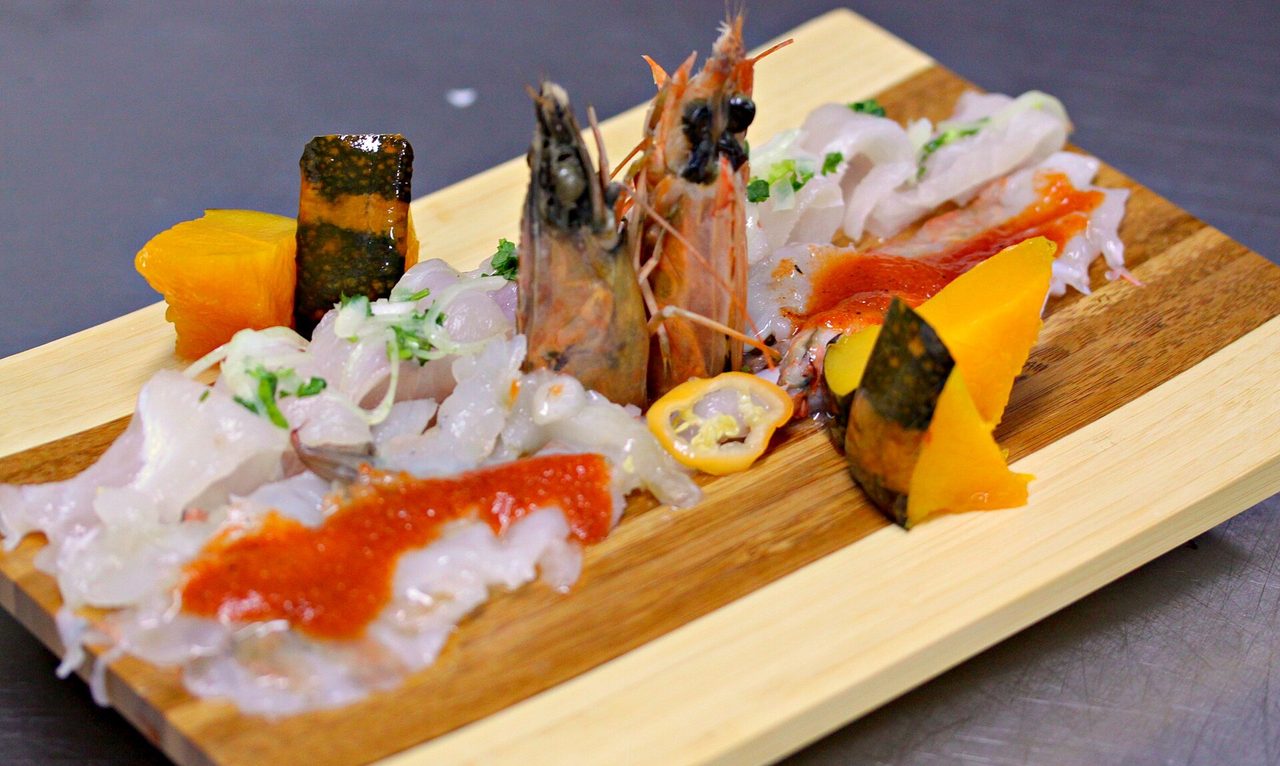
There are two Limas on the internet. One is a city of S/1,600 tasting menus and restaurants that trade the number-one spot on global lists. The other is a counter with twelve stools in Surquillo where a plate of three things costs S/30 and the queue starts before noon. Both are real. But if you only read the first kind of article, you will spend a fortune and still miss the point, because the best restaurants in Lima are not all at the top of the price list — and the gap between what a meal costs and how good it is here is wider than in any city I have eaten in.
This is a guide in three tiers: the world-ranked tasting menus, the mid-range Lima classics, and the cheap places locals actually eat at. I have put real prices on all three, in soles and dollars, and I have said plainly which tier I think gives you the best return on your money. It is the third one. That is not a budget-travel posture — it is what most Limeño food people will tell you if you ask them off the record.
How to think about the best restaurants in Lima
Lima’s food reputation was built on two things that have very little to do with each other. The first is a fine-dining scene that broke into the global rankings in the 2010s and never left. The second is a coastal city of ten million people with cold, absurdly productive Pacific water offshore, three waves of immigration baked into the cooking, and an everyday restaurant culture that is genuinely dense — not dense for South America, dense full stop.
Tourists are sold the first and mostly eat the second badly. Here is how the three tiers break down.
| Tier | What it is | Cost per person | Booking | Worth it? |
|---|---|---|---|---|
| 1. Tasting menus | Central, Maido, Kjolle, Mérito, Mayta, Astrid y Gastón | S/475–1,630 (US$125–430) before drinks | 2 weeks to 3 months ahead | One of them, once. Not three of them. |
| 2. Lima classics | Isolina, La Picantería, El Mercado, La Mar, Osso, Rafael, Cosme | S/95–380 (US$25–100) | Days ahead, or queue at opening | Yes. This is where most of your meals should be. |
| 3. Huariques and street | Al Toke Pez, Canta Rana, chifas, pollerías, sanguicherías, anticucho carts | S/12–60 (US$3–16) | None. Turn up, wait. | Best value in the city, by a distance. |
Prices in this guide are in Peruvian soles with a rough dollar conversion at about S/3.8 to US$1 in mid-2026. The rate moves and so do menus, so treat every figure as a planning number and check current pricing before you commit. Where I could not confirm a figure I have said so rather than guessing. If you want the wider context on what a trip here costs beyond food, our breakdown of what two weeks in Peru actually costs puts restaurant spend next to flights, trains and entry tickets.
Tier one: the tasting menus, and what the rankings actually say right now
This is the part of Lima that changes every year, and it is the part that guides get wrong most often. Rankings move. Chefs move. A page that tells you Central is “the number one restaurant in the world” in 2026 is repeating a 2023 headline.
Here is the current state of play, with years attached.
- The World’s 50 Best Restaurants 2025 (announced June 2025): Maido took the number-one spot, the second Lima restaurant ever to do it. Kjolle was No.9, Mérito No.26 and Mayta No.39.
- Central was The World’s Best Restaurant in 2023. It then entered 50 Best’s “Best of the Best” hall of fame, which retires a winner from the ranking permanently. So Central not appearing on a recent list is not a demotion — it is a rule. Maido’s 2025 win puts it on the same path.
- Latin America’s 50 Best Restaurants 2025 (announced 2 December 2025 in Antigua, Guatemala): El Chato in Bogotá took No.1. Kjolle was No.2 and was also named The Best Restaurant in Peru 2025 and winner of the Art of Hospitality Award. Mérito No.4, Cosme No.9, Mayta No.11, La Mar No.26, Rafael No.33, Osso No.44. On the extended 51–100 list, Shizen debuted at No.62 and Clon at No.66.
- The World’s 50 Best Restaurants 2026 ceremony will be held in Lima on 4 November 2026 — the first time the awards have been staged in South America. Anything you read about the 2026 ranking before that date is speculation, and every booking window in this article will get tighter afterwards.
That last point matters practically. If you are travelling to Lima in late 2026 or in 2027, assume the top-tier restaurants will be harder to book than the windows below suggest, and assume prices will have moved.
The booking table: prices, pairings, lead times and walk-ins
This is the table every other page-one guide leaves out. Booking logistics are the actual difficulty with tier one — not deciding which restaurant is best.
| Restaurant | Approx. per person | Pairing extra? | Reservations open | Walk-ins / counter |
|---|---|---|---|---|
| Central Barranco |
S/1,600–1,630 (US$420–430) for the full menus; shorter formats reported around S/950–1,064 (US$250–280). Tax and a 10% service charge are included. | Yes, separate. Pairings have been quoted at roughly US$95–180 (about S/360–685) depending on the flight. | Roughly 3 months ahead, and not more. Tables go in the first minutes for June–September dates. | No meaningful walk-in. Cancellations occasionally release seats a day or two out. |
| Maido Miraflores |
The Maido Experience from about S/1,295 (US$340) without pairing. Packages with pairings have been quoted at roughly S/1,985–2,525 all-in. A vegetarian tasting has been listed near S/350 (US$92). Prices include tax and service. | Yes — the pairing is the difference between the figures above, so budget S/690–1,230 for it. | Weeks to a couple of months ahead via maido.pe. Tighter since the 2025 win. | Maido also runs an à la carte offering, which is genuinely unusual at this level and is the cheapest legitimate way in. |
| Kjolle Barranco |
Tasting menu around S/950–1,000 (US$250–260). À la carte for three courses lands nearer S/170–230 (US$45–60). | Yes, separate. Confirm the current pairing price when you book. | A few weeks ahead. Lunch is markedly easier than dinner. | À la carte lunch is the single best-value seat in tier one. |
| Mérito Barranco |
Tasting reported around US$125 (roughly S/475). À la carte is cheaper again. | Yes, separate. | One to two weeks ahead is usually enough. | Small room. Early service is the easiest slot. |
| Mayta San Isidro |
Nine-course tasting around US$260 (roughly S/990). À la carte about S/190–380. | Yes — pairings have been quoted at roughly US$75–180 (S/285–685). | Two to three weeks ahead, commonly through Mesa 24/7. | À la carte available; easier midweek. |
| Astrid y Gastón San Isidro |
Tasting menu roughly US$120–150 (S/455–570). À la carte averages nearer US$70 (about S/265). | Yes, separate. | Days rather than months. The easiest famous name to get into. | Lunch is straightforward. There is a bar area. |
| La Mar Miraflores |
S/75–300 (US$20–80) depending on how many plates you order. | No pairing — it is a cevichería, not a tasting menu. | No reservations at all. | Walk-in only. Arrive by about 11:45am or accept a long wait. Lunch service only; it shuts mid-afternoon. |
Three practical rules that come out of that table. Do not book two tasting menus on consecutive days — the menus run three to four hours and you will not taste the second one properly. Check for cancellations the evening before, because they happen and the good restaurants release them. And if your hotel has a concierge worth the name, ask them a month out; Lima’s hospitality network is small and hotels hold relationships that the online booking form does not know about. If you are still deciding which neighbourhoods to base yourself in around Peru, that is one more argument for a Miraflores or Barranco hotel with a proper front desk.
Is Central worth S/1,600 a head? My honest answer
No, for most people. Yes, for a specific person.
Central is a serious restaurant. Virgilio Martínez and Pía León organise the menu by altitude — each course pinned to an ecosystem, from below sea level up through the Andes and into the Amazon — and it is supported by Mater Iniciativa, a research arm that genuinely goes and finds the ingredients. Nobody is being conned. The cooking is precise and the idea is coherent, which is more than you can say for a lot of restaurants at that price anywhere in the world.
But S/1,600 before drinks is, for two people with a pairing, comfortably S/4,000–5,000. In Lima that is roughly forty meals at a good cevichería. It is more than most travellers spend on their entire Cusco and Machu Picchu leg, trains included. And the honest thing about the tasting-menu tier is that it is an intellectual experience more than a delicious one: the format is long, the portions are small, and by course eleven you are appreciating rather than eating.
So my position is this. Book it if you are a person who reads about restaurants for fun, who would fly somewhere for a meal, who wants to see what a country’s biodiversity looks like translated onto plates. That person will get their money’s worth and remember it for years. Do not book it because it was number one in 2023 and you feel you should. If the price makes you wince, that wince is information — you will spend the meal doing arithmetic instead of paying attention, and Lima will punish you by serving you something better for S/40 two days later.
If you want one tasting menu and one only, I would take Kjolle at lunch, à la carte. Pía León’s room is lighter, the plates are the most visually alive in the city, it was named The Best Restaurant in Peru 2025 and it took the Art of Hospitality Award the same year — and you can eat three courses there for the price of a taxi to Central and back plus a starter. If you want the full theatre, take Maido over Central: the Nikkei cooking is more immediately pleasurable, the service is warmer, and the 2025 world title is the more current one.
Tier two: the Lima classics
This is the tier most visitors should be eating in most nights. These are proper restaurants with proper kitchens, and a full meal with a drink lands somewhere between S/95 and S/380 a head. No three-month booking window, no pairing decisions, no ceremony.
| Restaurant | Area | What it does | Per person | Booking |
|---|---|---|---|---|
| Isolina | Barranco | José del Castillo’s criollo taberna. Enormous shared portions of the old Lima repertoire | S/95–190 | Queues at peak; lunch often walk-in-able |
| La Picantería | Surquillo | Northern-style fish, cooked to order from what came in | S/95–150 | Lunch only, shuts around 5:30pm |
| El Mercado | Miraflores | Rafael Osterling’s open-kitchen cevichería | S/115–230 | No reservations. Queue forms before noon |
| La Mar | Miraflores | Gastón Acurio’s cevichería, No.26 in Latin America 2025 | S/75–300 | No reservations. Arrive 11:45am |
| Osso | Various | Renzo Garibaldi’s butchery-restaurant. No.44 in Latin America 2025 | S/190–380 | Days ahead |
| Rafael | Miraflores | Osterling’s flagship since 2000. No.33 in Latin America 2025 | S/190–380 | Days ahead |
| Cosme | San Isidro | James Berckemeyer. No.9 in Latin America 2025 and far easier to book than that implies | S/115–230 | One to two weeks |
| Panchita | Miraflores | Criollo cooking and some of the easiest good anticuchos to find | S/75–285 | Walk-in usually fine |
| El Pan de la Chola | Miraflores / Barranco | Bakery and all-day eating. The best breakfast in the city | S/35–80 | Walk-in |
| Huaca Pucllana | Miraflores | Dining beside a floodlit pre-Inca adobe pyramid | S/170–250 | Book ahead for a terrace table |
The one I would argue about
Huaca Pucllana. You are eating next to a 1,500-year-old adobe pyramid lit up in the middle of Miraflores, and that is a real thing, not a gimmick. But you are paying view prices for cooking that is good rather than exceptional. My honest read: go for a drink and the terrace, eat properly elsewhere, and see the huaca itself in daylight on a proper visit — it is one of the more surprising entries on any list of the things actually worth doing in Lima, and the archaeology reads better without a wine list in front of you.
Isolina, and the portion problem
Isolina serves the Lima criollo canon — the onion, garlic and ají amarillo base that underpins half of the Peruvian dishes worth learning the names of — in portions built for a family. Two people ordering two mains at Isolina have made a mistake. Order one dish between two, plus a starter, and you will still struggle. This applies across tier two: Peruvian restaurant portions are not American, they are larger.
Tier three: huariques, and why this is where the best value is
A huarique is a small, usually family-run place that does two or three things extremely well and looks like nothing from the street. Plastic chairs are common. A menu written on a whiteboard is common. Card machines are not.
This is where I would spend most of a food-focused week in Lima, and it is the tier every list-only guide skips because there is no press kit to copy from.
| Place | Area | What to know | Price band |
|---|---|---|---|
| Al Toke Pez | Surquillo, Angamos Este | Twelve stools at a counter, Tomás “Toshi” Matsufuji cooking in front of you. The combinado — rice with seafood, fried squid and a ceviche — has gone S/20, then S/25, now around S/30. Cash only. Open roughly noon to 4pm daily. Expect to wait, possibly standing | S/30–45 |
| Canta Rana | Barranco, Genova 101 | Thirty-five years in the same room. Huge ceviches, including a version with capers and avocado, plus parihuela and chupes. Long menu, generous plates, no ceremony | S/45–90 |
| La Red | Miraflores | A reliable neighbourhood cevichería and, unusually, one that serves in the evening as well as at lunch | S/50–110 |
| El Chinito | Centro and branches | Sanguichería. The pan con chicharrón is the benchmark version | S/15–30 |
| Bodega Carbone | Miraflores | Century-old Italian-Peruvian sandwich counter. Cash only | S/15–30 |
| La Lucha | Miraflores and branches | The modern sanguichería chain. Sandwiches around S/15–20, and the fries are the point | S/20–35 |
| Grimanesa Vargas | Miraflores, Ignacio Merino | Anticuchos. Skewers around S/13; plated portions have been listed around S/14–21 | S/20–45 |
Every one of these was operating at the time of writing, but huariques close, move and change hands faster than fine dining does. Check the restaurant’s own social media the week you travel — that is where Lima posts closures, not on Google.
The blunt version of the argument: a S/40 lunch at a good cevichería in Surquillo will, on most days, taste better than a S/300 seafood plate in a hotel restaurant, because the raw material is identical and the S/40 place turns it over faster. You are paying for tablecloths and air conditioning, not for fish.
Cevicherías: ceviche is a lunch dish, and the clock matters
If you take one thing from this guide, take this. In Peru, ceviche is eaten at lunch. Not as a light starter before dinner. Not at 9pm. Lunch.
The reason is unglamorous: the fish comes in from the terminal pesquero in the morning, the cevichería buys it, and it is served that day. A place with real turnover sells out and closes. Al Toke Pez runs noon to 4pm. La Picantería shuts around 5:30pm. La Mar stops serving mid-afternoon. That is not laziness — that is what a kitchen looks like when it refuses to serve yesterday’s catch.
So: a cevichería advertising ceviche at 9pm is a red flag. Not an automatic disqualification — a handful of modern places, La Red among them, do a properly sourced evening service, and the tier-one restaurants obviously serve raw fish at night from their own supply chains. But if a place on a tourist street in Miraflores has a laminated photo menu and is pushing ceviche at dinner, the fish has been sitting somewhere since morning. Eat something else there, or eat somewhere else.
What to actually order
- Ceviche clásico — white fish, lime, red onion, ají limo, with sweet potato and choclo (large-kernel corn) on the side. Order this first anywhere new. It tells you everything about the kitchen.
- Leche de tigre — the citrus-and-fish marinade served as a glass to drink, usually with bits of fish and squid in it. Peru’s hangover cure and the purest test of a cevichería’s balance.
- Tiradito — the same fish sliced sashimi-thin, dressed rather than marinated, no onion. This is the Nikkei cousin of ceviche and often the better dish.
- Arroz con mariscos — seafood rice, roughly Peru’s answer to paella. What you order when you want something hot.
- Parihuela — a dense seafood broth. Order it on a grey garúa day, which between May and November is most days.
- Chicharrón de pescado or de pota — fried fish or squid. Cheap, always good, the thing to order if raw fish makes you nervous.
Price bands for a proper cevichería lunch: S/30–60 at a huarique, S/60–120 at a well-known neighbourhood place, S/150–300 at La Mar or El Mercado once you have added plates and a beer.
Chifa and Nikkei: Peru’s two fusion traditions, properly explained
These get conflated constantly. They are separate traditions, roughly a century apart in origin, and knowing the difference will change how you order.
Chifa (Chinese-Peruvian)
Chifa came with Cantonese labourers who arrived in Peru from the mid-1800s. It is the older, deeper and far more everyday of the two. There are chifas in every district of Lima, from tiled hole-in-the-wall rooms to banquet halls, and Peruvians eat at them constantly — chifa is arguably as embedded in the national diet as ceviche is.
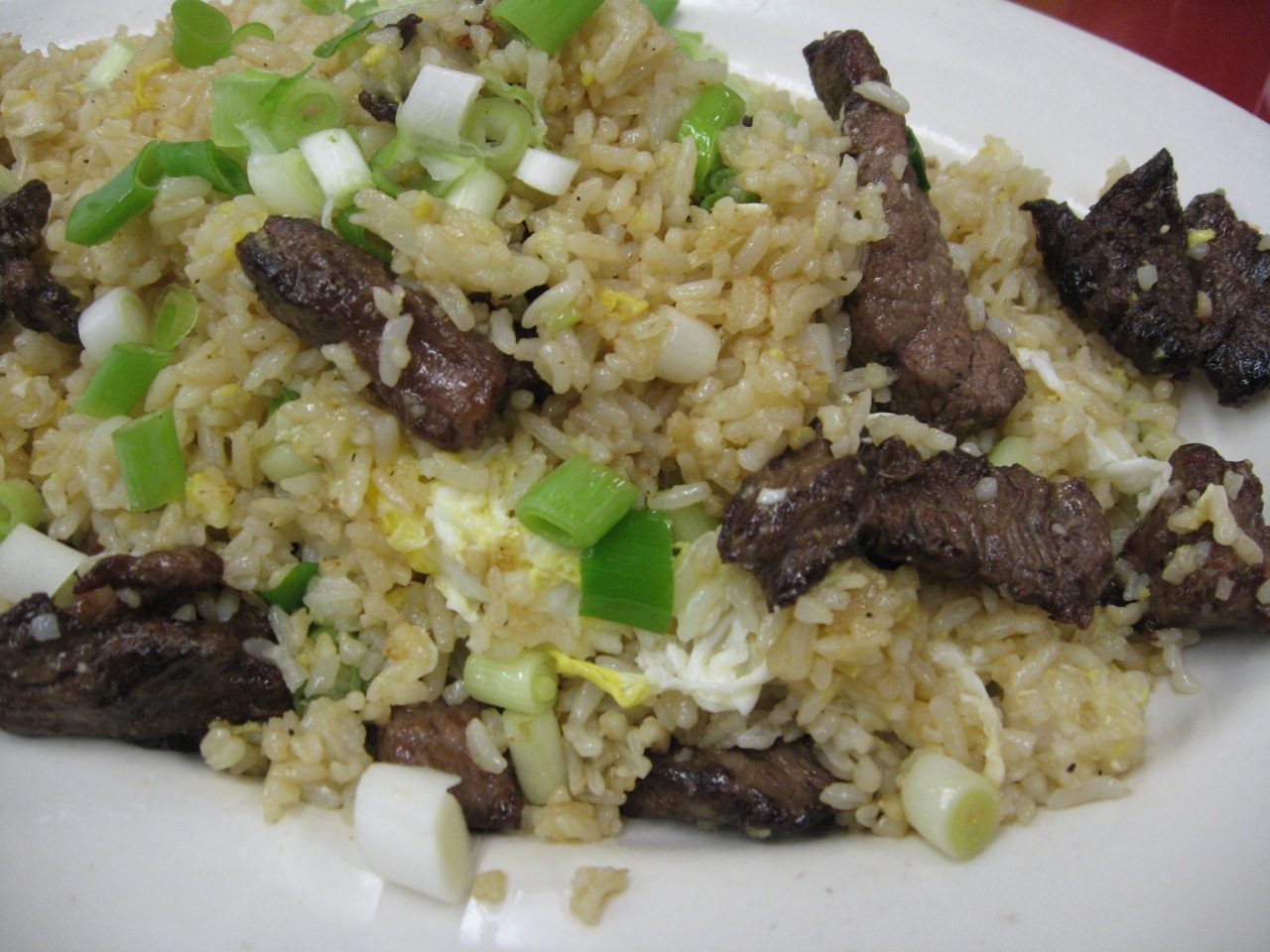
The load-bearing dishes are arroz chaufa (fried rice with soy, spring onion, egg and your choice of protein), lomo saltado (which is a chifa dish that escaped and became the national dish, beef stir-fried in a wok with onion, tomato, soy and vinegar, served with chips and rice), tallarín saltado, wantan frito and pollo chi jau kay.
Where to eat it: Barrio Chino around Calle Capón in the Centro, which is the heart of it — Salón Capón is the long-standing name there and dishes run roughly S/25–45. Chifa Titi is the classic sit-down option outside Chinatown. Madam Tusan is Gastón Acurio’s polished, tourist-friendly version — more expensive, very consistent, and a reasonable first chifa if you are nervous. A warning worth passing on: chifa versions of dishes you think you know from Chinese restaurants at home taste different. Sweeter, more vinegar, more ají. That is the point.
Nikkei (Japanese-Peruvian)
Nikkei came with Japanese migration from 1899 onwards and developed differently — less street-level, more technique-driven. It is what happens when Japanese knife work and restraint meet Peruvian citrus and chilli. Tiradito is the emblematic dish. So is anything involving ají amarillo in a Japanese format, and the maki acevichado you will see on menus everywhere.
Where to eat it: Maido is the summit and the price to match. Shizen, which debuted at No.62 on Latin America’s extended list in 2025, is a serious alternative at a fraction of the cost. And at the other end, half the good cevicherías in Lima are quietly serving Nikkei technique without labelling it — Al Toke Pez is run by a chef from a Japanese-Peruvian family, and it shows in the plating and the precision of the cuts.
Anticuchos, pollo a la brasa and sangucherías
Anticucho carts
Beef heart, marinated in ají panca, vinegar and cumin, skewered and grilled over charcoal on a cart on the street, served with a boiled potato and choclo. It is the best thing you will eat for under S/20 in this city and I say that without qualification. Do not be squeamish about the heart — it is lean, it tastes like a very good steak, and you would not identify it blind.
Carts appear in the late afternoon and evening. Grimanesa Vargas in Miraflores is the famous sit-down version, with skewers around S/13 and plated portions listed around S/14–21. Panchita does a reliable restaurant version. But the street carts are the real form: pick one with a queue, a hot grill and visible turnover.
Pollo a la brasa
Peru’s genuinely democratic dish and, on Sunday evenings, close to a national institution. Whole families go to the pollería. Charcoal-roasted chicken, marinated with soy, cumin and ají panca, served with chips, a salad and a rank of sauces — ají amarillo cream, rocoto, huacatay mayonnaise.
Current pricing runs roughly S/33 for a quarter chicken and S/49 for a half, with sides included; budget S/40–55 a head for a full meal. Primos Chicken Bar and La Panka are the reliable modern names; El Comercio’s Premios Somos guide publishes an annual ranking of Lima pollerías if you want the current local consensus rather than mine. Any neighbourhood pollería with a queue on a Sunday will do the job.
Sangucherías
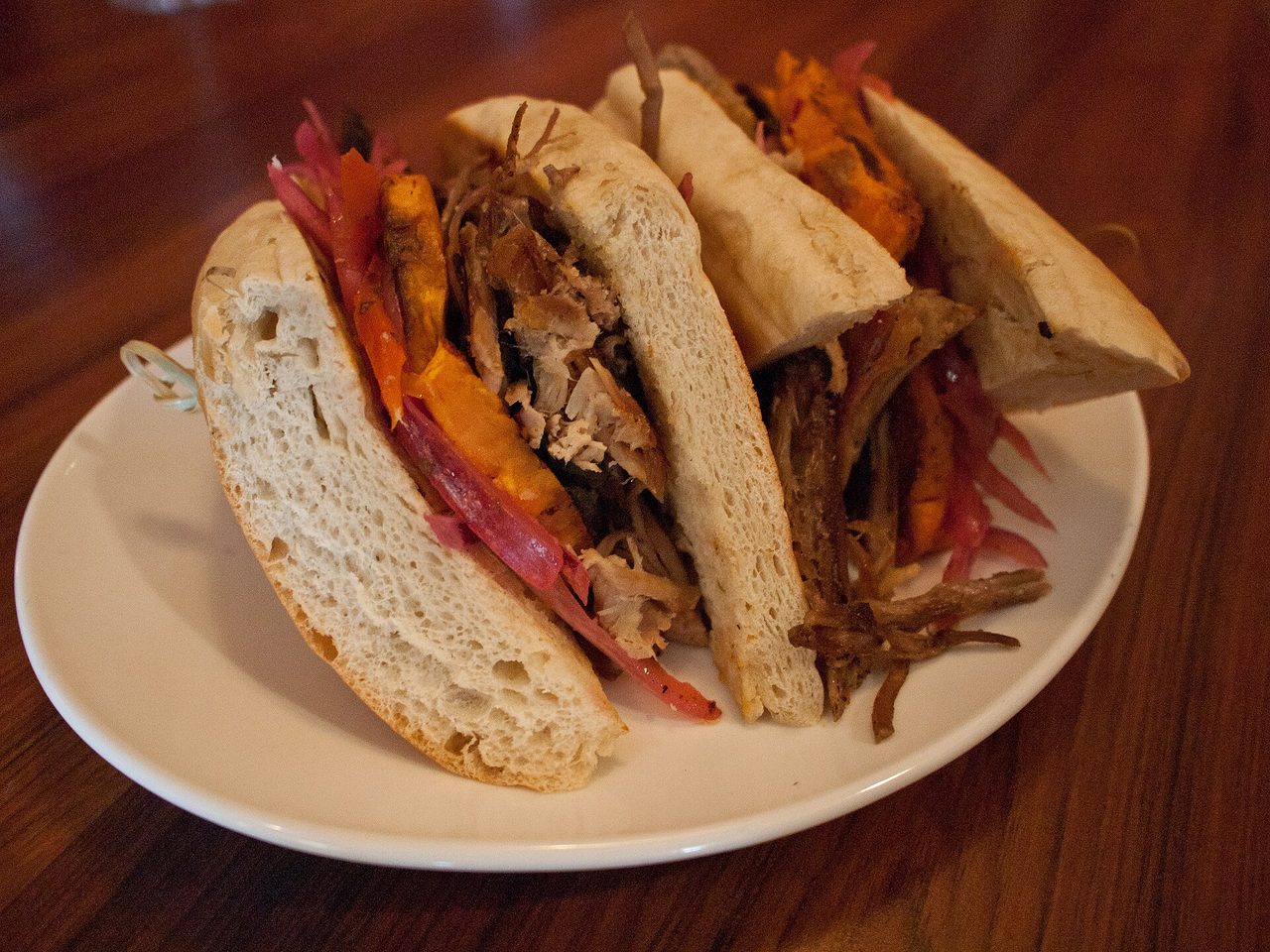
The Peruvian sandwich is a breakfast and late-night food, not a lunch. The one to order is pan con chicharrón: fried pork belly, slices of fried sweet potato and salsa criolla (red onion, lime, chilli) in a French roll. S/15–30 depending on where. El Chinito is the benchmark; Bodega Carbone is a century-old cash-only counter; La Lucha is the modern chain and perfectly good. Order it before 11am like a Limeño and you will understand why the city takes it seriously.
The menú del día, and what a day of eating actually costs
Almost no English-language guide explains this, and it is the most useful thing a budget traveller can know about Peru. At lunchtime, an enormous number of ordinary restaurants serve a fixed menú del día: a soup or starter, a main course from two or three options, and a drink (usually chicha morada or a fruit refresco), for one low price. It is what working Lima eats between about 12:30 and 3pm.
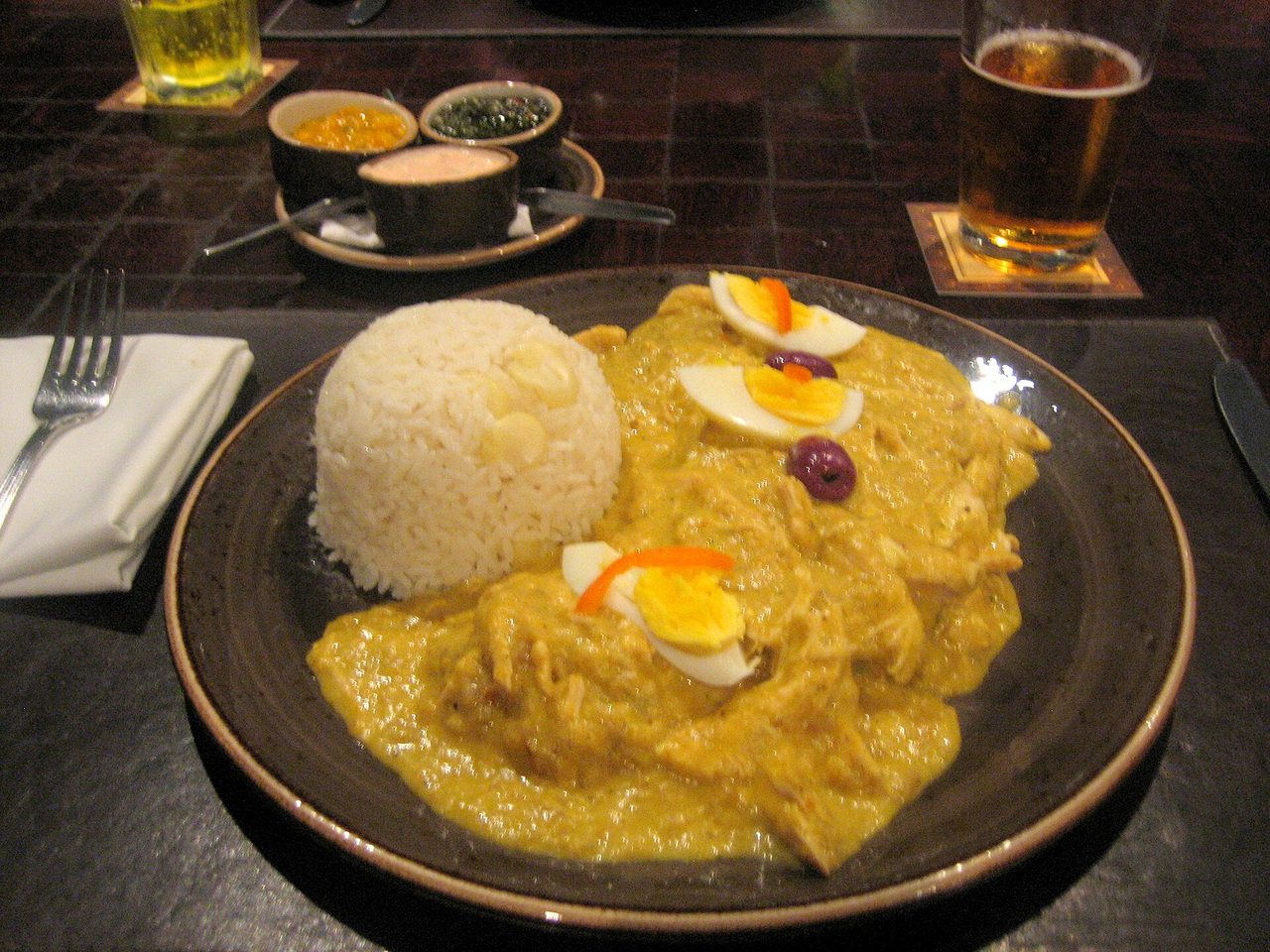
Current bands: S/12–18 in working districts and near markets, S/25–35 in Miraflores and San Isidro where rents are higher. The food is home-style rather than exciting — ají de gallina, lomo saltado, seco de res, a fish with rice — and the portions are large. Look for a chalkboard outside with two or three options written on it. If there is no board, it is not a menú place.
| Daily food budget | Breakfast | Lunch | Dinner | Total per person |
|---|---|---|---|---|
| Lean | Market fruit and bread, S/8 | Menú del día, S/15 | Anticuchos or sandwich, S/20 | ~S/43 (US$11) |
| Sensible | Café and pan con chicharrón, S/25 | Huarique cevichería, S/50 | Chifa or pollería, S/50 | ~S/125 (US$33) |
| Comfortable | Bakery breakfast, S/40 | Tier-two lunch, S/150 | Tier-two dinner with wine, S/250 | ~S/440 (US$116) |
| Tasting-menu day | Bakery, S/40 | Light, S/60 | Central or Maido with pairing, S/2,000+ | ~S/2,100 (US$550) |
Note how sharply the last row breaks from the others. One tasting-menu evening costs more than two weeks of eating well in the sensible row. That is the trade-off, stated numerically.
Practicalities nobody puts in a restaurant list
Tipping
Ten percent is normal at sit-down restaurants, and in most places service is not included. Check the bill for a line saying servicio — if a 10% service charge is already there, you do not need to add more. Central and Maido both state that tax and service are included in the menu price, which is unusual and worth knowing before you double-tip several hundred soles.
Tip in cash, in soles, where you can. Card tips do not always reach the staff. At a huarique, a menú place or a street cart, tipping is not expected at all — rounding up is plenty.
Cards and cash
Miraflores, Barranco and San Isidro restaurants take cards almost universally. Visa and Mastercard are fine; Amex is patchier. Below that tier it changes fast: Al Toke Pez is cash only, Bodega Carbone is cash only, most anticucho carts and menú places are cash only, and market stalls certainly are. Carry S/100–200 in small notes. Nobody at a cart can break a S/200 note, and being handed one is genuinely annoying for them. Peruvian consumer rules allow price differences by payment method only when they are clearly posted, so if a place quotes you a card surcharge that was not on the board, question it. More general ground rules are in our practical advice for travelling in Peru.
When Lima eats
Lunch is the main meal: 1pm to 3pm, and cevicherías start at noon. Dinner is late by northern European standards — restaurants fill from 8:30pm and a 7pm booking will feel empty. Many of the best lunch places do not open in the evening at all. Sunday is the big family lunch and the pollería night; some top restaurants close Sunday evening and Monday entirely, so check before you build a food itinerary around a weekend.
Food safety, honestly
Lima is not a difficult city for stomachs, but the failure modes are predictable. Do not drink the tap water — bottled or filtered only, and that includes when brushing teeth if you are being careful. Raw fish is safe when the turnover is high and the hour is right, which is precisely why the lunch rule exists; the risk is not ceviche, it is ceviche at the wrong time in the wrong place. For street food, choose carts that are busy, where the grill is hot and the food is cooked in front of you, and skip anything sitting lukewarm in a tray. Fruit you peel yourself is fine. Ice at a proper restaurant is fine; ice from a street cart is a coin toss. Carry rehydration salts, because the one time you need them you will not want to be looking for a farmacia.
Dietary restrictions in a city built on fish and pork
This is where I have to be blunt. Lima is one of the best eating cities in the world and one of the harder ones for vegetarians. The criollo canon runs on beef, chicken, pork and fish. Stocks and sauces are meat-based by default. “Sin carne” is often understood to exclude beef but not chicken, and asking for a vegetarian version of a classic dish will frequently produce a plate of rice and chips.
What works: chifa, which has a real vegetable repertoire and where a vegetarian chaufa or tallarín is unremarkable to order. Causa without the chicken or tuna filling. Papa a la huancaína, which is potato, cheese and ají. The specialist tier does cater properly — Central runs a vegetal-focused menu format and Maido has listed a vegetarian tasting around S/350 — but you are paying tier-one prices for it. Barranco and Miraflores have a growing number of genuinely vegetarian and vegan restaurants; that is where to look, rather than trying to bend a cevichería. Coeliacs should note that soy sauce is everywhere in chifa and Nikkei cooking, and that most kitchens will not understand cross-contamination. Shellfish allergies need a written card in Spanish; leche de tigre turns up in things you would not expect.
Where to base yourself for eating
Miraflores is the default: safe, walkable, most hotels, La Mar and El Mercado and Maido and the sanguicherías all within reach. It is also the most expensive per plate and has the highest density of mediocre tourist restaurants on the main streets. Walk two blocks off Larco before choosing anywhere.
Barranco has Central, Kjolle, Mérito, Isolina and Canta Rana inside about fifteen minutes on foot, which is the best restaurant-to-distance ratio in the city, plus the best bars. It is quieter and slightly scruffier, which most people end up preferring. If you are choosing a base on that basis, the district-by-district comparison of Lima accommodation has the rates and the noise caveats.
Surquillo is not where you sleep, it is where you eat lunch. It sits directly behind Miraflores, it has the market, and it has Al Toke Pez and La Picantería. A twenty-minute walk from a Miraflores hotel.
San Isidro is the business district: Mayta, Cosme, Astrid y Gastón, Chifa Titi. Duller streets, excellent restaurants.
Centro and Barrio Chino for chifa and for the old sanguicherías, best combined with a morning in the historic centre. Taxis and the Metropolitano both work; our guide to moving around Peru covers the apps to use rather than hailing off the street.
One practical note on timing: Lima sits at sea level, so unlike Cusco at 3,400 metres, your appetite works normally here. That sounds trivial until you have tried to enjoy a large lunch on your first day in the Andes. It is a strong argument for putting your serious eating at the Lima end of an itinerary rather than after the mountains, and for treating Lima as more than a 24-hour stopover — something a lot of tighter one-week routes through Peru get wrong.
Who this city is not for
Two groups, and I would rather say it than have you find out at the table.
Travellers on a genuinely tight budget who book the tasting-menu tier out of fear of missing out. If S/1,600 is a meaningful fraction of your trip budget, that meal will cost you three days elsewhere in the country. Lima will feed you superbly for S/45 a day. Book the huariques, put the difference into the Amazon leg or an extra night in the Sacred Valley, and you will not have missed anything you can articulate afterwards.
Vegetarians expecting the classics to flex. They mostly will not. You will eat well in Lima as a vegetarian, but you will do it in chifas, in specialist restaurants and in the fine-dining tier — not in the cevicherías and criollo tabernas that everyone will tell you to visit. Plan for that rather than discovering it on night two.
I would add a third, softer one: anyone hoping for a food scene that runs late. Lima’s best food is a lunch culture. If you sleep until eleven every day you will miss half of it.
Frequently asked questions
What is the best restaurant in Lima right now?
By ranking, Maido — The World’s Best Restaurant 2025. By the most recent regional list, Kjolle, which was No.2 in Latin America’s 50 Best 2025 and named The Best Restaurant in Peru that year. By value, none of the above: a lunch at a serious cevichería for S/50. The World’s 50 Best 2026 ceremony takes place in Lima on 4 November 2026, so this answer will change.
How far ahead do I need to book Central and Maido?
Central takes reservations about three months out and no further, and high-season dates go within minutes of release. Maido is typically weeks to a couple of months. Both release cancellations, so check the night before if you missed out. Kjolle, Mérito and Astrid y Gastón are all bookable on much shorter notice, and lunch is always easier than dinner.
Is Central worth the money?
At roughly S/1,600 a head before drinks, it is worth it if fine dining is something you actively care about and would travel for. It is not worth it as a box-ticking exercise, and it is not the best-tasting food in Lima. Kjolle at lunch gives you most of the same world at a third of the price.
What is a huarique?
A small, unpolished, usually family-run restaurant that does a few dishes exceptionally well. The word carries real affection in Peru. Plastic chairs, no reservations, frequently cash only, and often better than restaurants charging five times as much.
Why do cevicherías close in the afternoon?
Because the fish arrives in the morning and is served the same day. When it runs out, they shut. A cevichería serving at 9pm is either working from a supply chain good enough to justify it, or serving fish that has been out of the water a long time. In a tourist zone, assume the second.
How much should I budget for food per day in Lima?
About S/45 (US$12) if you eat menú del día and street food, S/125 (US$33) for a comfortable mix with one proper restaurant meal, and S/440 (US$116) if you eat in tier two twice a day. A tasting-menu evening adds S/1,300–2,500 on its own.
Do Lima restaurants take credit cards?
Restaurants in Miraflores, Barranco and San Isidro almost always do. Huariques, anticucho carts, markets and menú places frequently do not. Carry S/100–200 in small notes at all times.
Do I tip in Peru?
Ten percent at sit-down restaurants, in cash where possible. Check the bill first — some places add a 10% servicio line, and the top tasting menus include service in the headline price. Tipping is not expected at street stalls or menú del día places.
Is the street food in Lima safe?
Generally yes, with the usual filters: busy stalls, hot grills, food cooked in front of you, no tap water, no lukewarm trays. Anticucho carts in the evening are one of the safer street options because everything is charred over charcoal to order.
What is the difference between chifa and Nikkei?
Chifa is Chinese-Peruvian, arrived from the mid-1800s, and is everyday food found in every district — chaufa, saltados, wantan. Nikkei is Japanese-Peruvian, arrived from 1899, and is more technique-led and generally more expensive — tiradito, maki acevichado, and the whole of Maido.
Is Lima worth staying in, or should I fly straight to Cusco?
Stay. Two or three nights minimum if food matters to you. Lima is at sea level, which means you can eat and drink normally before the altitude of the Andes complicates both, and it has a restaurant scene the rest of the country does not match — though Cusco’s eating scene is better than most visitors expect. There is also plenty to do between meals; the museums and huacas alone justify a couple of days, as our roundup of how to fill your time in the capital sets out.
When is the best time of year to eat in Lima?
Food is good year-round, but the weather is not. Between roughly May and November the garúa sits over the city: grey, 15–19°C, almost no direct sun. Terraces and clifftop dining are wasted then, and hot food — parihuela, chupes, chifa — is what you will want. December to April is warm and bright, which is when the seafood lunch culture makes most sense. Our guide to the best time of year to visit Peru works through how that clashes with the Andean dry season, and what July actually looks like if you are travelling in the peak month.
The short version
Book one tasting menu if you want one, and make it Kjolle at lunch or Maido if the budget stretches. Eat tier two two or three times. Spend the rest of your meals in huariques, cevicherías at lunch, chifas, pollerías and at anticucho carts, and carry cash for all of them. Eat your fish before 4pm. Tip ten percent unless the bill has already done it for you.
Do that and you will eat better in Lima for S/125 a day than most visitors manage for four times as much — and you will have understood something about the city that the rankings, useful as they are, do not tell you. If you are still shaping the wider trip, our overviews of how to structure a Peru itinerary and where else in the country is worth your nights will help you decide how many of them to give the capital.