Best Things to Do in Lima
Lima is a food city with a very good historic centre attached. Here are 20 things ranked honestly, with 2026 prices in soles, plus the three that everyone recommends and I would skip.
Most lists of the best things to do in Lima are padded, and they have to be. They commit to a number in the headline — twenty, thirty — and Lima does not have thirty things worth your time. It has about eight that are genuinely good, another eight worth doing if the weather cooperates or you have a spare morning, and a long tail of entries that exist because somebody needed a twenty-seventh item and a churro shop was open.
So here is the honest version. Lima is a food city with a very good historic centre attached. That is the whole proposition. If you arrive expecting the ruins to compete with Cusco or the coastline to behave like a beach holiday, you will spend two days confused and leave saying Lima is overrated. If you arrive understanding that you are here to eat, walk two or three specific neighbourhoods, and see one world-class museum, it is one of the better city stops in South America.
This is a deeper cut than the overview in our full guide to what there is to do in Lima. Everything below is ranked, priced in soles, and includes the things I would tell you to skip.
The best things to do in Lima, ranked and priced
Prices are 2026 gate prices in Peruvian soles. At the time of writing roughly S/3.7 buys a US dollar, so divide by about 3.7 for a rough USD figure. Museum prices in Peru move without much notice, so treat these as accurate-as-of-now rather than carved in stone, and check the official page before you plan a day around one.
| # | Thing | Cost (soles) | Time needed | Best time of day | Verdict |
|---|---|---|---|---|---|
| 1 | Lunch at a proper cevichería | S/35–90 | 1.5 hrs | 12–2pm, never at night | The actual reason to come to Lima. |
| 2 | Museo Larco | S/50 | 2–3 hrs | 9am or after 5pm | The best museum in Peru. Worth the trip to Pueblo Libre. |
| 3 | Walking Barranco | Free | Half a day | Sat or Sun afternoon | The only district in Lima with an actual personality. |
| 4 | Centro Histórico on foot | Free | 3–4 hrs | 9am–4pm only | Extraordinary buildings. Empties out and changes character after dark. |
| 5 | Anticucho cart after sundown | S/10–25 | 20 mins | 7–11pm | Best cheap food in the city, by a distance. |
| 6 | Convento de San Francisco + catacombs | S/20 | 45–60 mins | Late morning | Guided only, no photos below ground. Genuinely good. |
| 7 | Malecón clifftop walk, Miraflores | Free | 1–2 hrs | Late afternoon, Dec–Apr | Superb on a clear day. Bleak and pointless in the fog. |
| 8 | Pachacámac | S/15 (S/20 guided route) | Half day | Tue–Sat morning | The only serious archaeology within reach of the city. |
| 9 | Chifa in Barrio Chino | S/25–60 | 1 hr | Lunch | Peru’s other great cuisine, and almost nobody sends you there. |
| 10 | Mercado Nº1 de Surquillo | Free to browse | 45 mins | Before 11am | Where the chefs shop. Best fruit you will eat this year. |
| 11 | MALI (Museo de Arte de Lima) | S/30 | 1.5–2 hrs | Tue–Sun | Underrated. A clean 3,000-year survey in one building. |
| 12 | Pisco sour at an old bar | S/25–45 | 1 hr | 6–8pm | Fine, as long as you avoid the hotel-lobby version. |
| 13 | Huaca Pucllana | S/15 | 1 hr | Tue–Sun, guided | An adobe pyramid wedged between apartment blocks. Odd and good. |
| 14 | Casa de Aliaga | S/35 | 1 hr | By appointment | Same family since 1535. Niche, but it is the real thing. |
| 15 | Central, Maido or Kjolle | S/1,295–1,630+ | 3–4 hrs | Book 1–3 months out | Worth it if this is your thing. Not a Lima requirement. |
| 16 | Cerro San Cristóbal viewpoint | Free + ~S/5 transport | 1.5 hrs | Clear morning only | Good view of a grey city. Pointless under fog. |
| 17 | Circuito de Playas, south of the city | S/15–150 depending on transport | Half day | Jan–Mar only | A summer thing. Do not attempt it in July. |
| 18 | Circuito Mágico del Agua | S/5 | 1 hr | After 7pm | Overrated. Cheap and harmless. Fine with children. |
| 19 | Paragliding over Miraflores | S/150–300 | 1–2 hrs with waiting | Dec–Apr, midday | Overrated as a “must”. Ten minutes of flight, frequently cancelled. |
| 20 | Larcomar | Free | — | — | Skip. It is a shopping mall built into a cliff. |
If you only have one full day, do numbers 4, 6, 1, 3 and 5, in that order, and let the rest go. That is the Centro in the morning, ceviche at lunch, Barranco in the afternoon, an anticucho on the way home. It is a better day than any nine-stop bus tour.
The eight things actually worth your time
1. Eat lunch at a cevichería — and only at lunch
This is the single best thing you can do in Lima, and it costs less than a museum ticket in most of the world. A plate of ceviche at a serious neighbourhood cevichería runs S/35–55; at a well-known one in Miraflores or Barranco expect S/50–90 and a queue.
The important part: ceviche is a lunch dish in Peru. The fish comes in that morning, the good cevicherías sell out and close around 4 or 5pm, and anywhere serving you ceviche at 9pm is serving you fish that has been sitting since the previous day. Limeños know this and behave accordingly. Tourists get seated at 8:30pm in a restaurant with an English menu, eat something mediocre, and conclude that Peruvian food is oversold. The rule is not snobbery, it is logistics. Go at 12:30. If a place is full of people speaking Spanish and shuts mid-afternoon, that is the signal you want.
Order the leche de tigre on the side if it is offered — it is the citrus, chilli and fish liquor left in the bowl, served as a small glass, and it is better than the ceviche at some places. More on the wider national menu in our guide to the dishes worth seeking out across Peru.
2. Museo Larco
S/50 for adults, S/35 over 60, S/25 for students and 9–17s. Open daily 9am to 7pm, including holidays, which makes it the reliable option on a Monday when half of Lima’s museums are shut. It sits in Pueblo Libre, about 20 minutes and S/18–28 in a ride app from Miraflores.
It is the best-presented museum in the country and it is not close. Around 45,000 catalogued pieces, a gold and silver room that does the job the Cusco museums keep failing to do, and a visible storage wing where you walk between shelves of 30,000 pots rather than looking at twelve of them in a case. The erotic pottery gallery is real and gets all the press; the Moche portrait vessels in the main galleries are the actual reason to go.
Go at opening or after 5pm. The middle of the day is when the tour buses arrive. Two hours is the honest minimum; three if you read the labels, which are bilingual and unusually well written. If you are doing the archaeology of the whole country, this is the best possible primer before you get anywhere near the Inca sites in the highlands, because it covers the thousand years of Moche, Nasca and Chimú culture that the Inca built on top of.
3. Barranco, on foot, for an entire afternoon
Every list treats Barranco as a footnote — one line about the Bridge of Sighs, one about street art, then back to Miraflores. That is backwards. Barranco is the only district in Lima that feels like somewhere rather than anywhere. Low nineteenth-century houses in fading colours, a clifftop park, half a dozen decent bars, and an art scene that is not staged for visitors.
Give it four hours and no plan. Start at the Parque Municipal, walk down to the Puente de los Suspiros, follow the Bajada de Baños path down to the sea, come back up and walk Avenida Pedro de Osma. The Museo Pedro de Osma at the end of that avenue is a colonial art collection in a mansion and is one of the quieter pleasures in the city; MATE, the Mario Testino photography space, is a few blocks north and its admission policy has changed more than once, so check the door price on the day.
Saturday and Sunday afternoons are best — the plaza fills up, there is usually music, and the bars start early. Barranco is also the answer if you want Lima’s nightlife without a Miraflores hotel bar, in the same way that the bars around the Plaza de Armas in Cusco are the answer up in the mountains, though Lima’s version is considerably less backpacker-driven.
4. The Centro Histórico — in daylight
The historic centre is a UNESCO World Heritage Site and it earns it. The Plaza Mayor, the Cathedral, the yellow-and-white Palacio de Gobierno with its noon changing of the guard, the extraordinary carved wooden balconies, Jirón de la Unión running south, the Convento de Santo Domingo, the Plaza San Martín at the far end. It is a genuinely great colonial city centre, and it is the reason Lima appears on lists of the UNESCO-listed places in Peru.
Here is what nobody tells you: the centre empties after dark. It is an administrative and commercial district, not a residential one. Offices shut, shutters come down, and by 8pm the same streets that were shoulder-to-shoulder at 2pm have almost nobody on them. This is not a warning about violent crime so much as a practical fact — there is nothing open, and opportunistic phone-snatching is more likely on an empty street than a full one. Do the centre between about 9am and 5pm, then go back to Miraflores or Barranco to eat.
The free walking tours that leave from the Plaza San Martín are decent and cost you a tip, usually S/30–50 per person if the guide was good. They are also the easiest way to get oriented on a first morning. Our broader round-up of things you can do in Peru for nothing has more in this vein.
5. The catacombs at Convento de San Francisco
S/20 for adults, S/10 for students, S/5 for children, roughly 9am to 6pm daily, and you go in a guided group of about twenty that departs every half hour. English departures are less frequent than Spanish ones — ask at the desk rather than assuming.
The convent above ground is worth it on its own for the Moorish-tiled cloister and a library of 25,000 volumes that looks exactly like you want it to. Underneath are the ossuaries, where an estimated 25,000 people were buried before the city built a proper cemetery, with femurs and skulls arranged in geometric patterns in brick-lined pits. It is low, tight and not for anyone claustrophobic. No photography below ground, which is enforced. Forty-five minutes, and one of the few Lima attractions that is exactly as good as advertised.
6. An anticucho, from a cart, at night
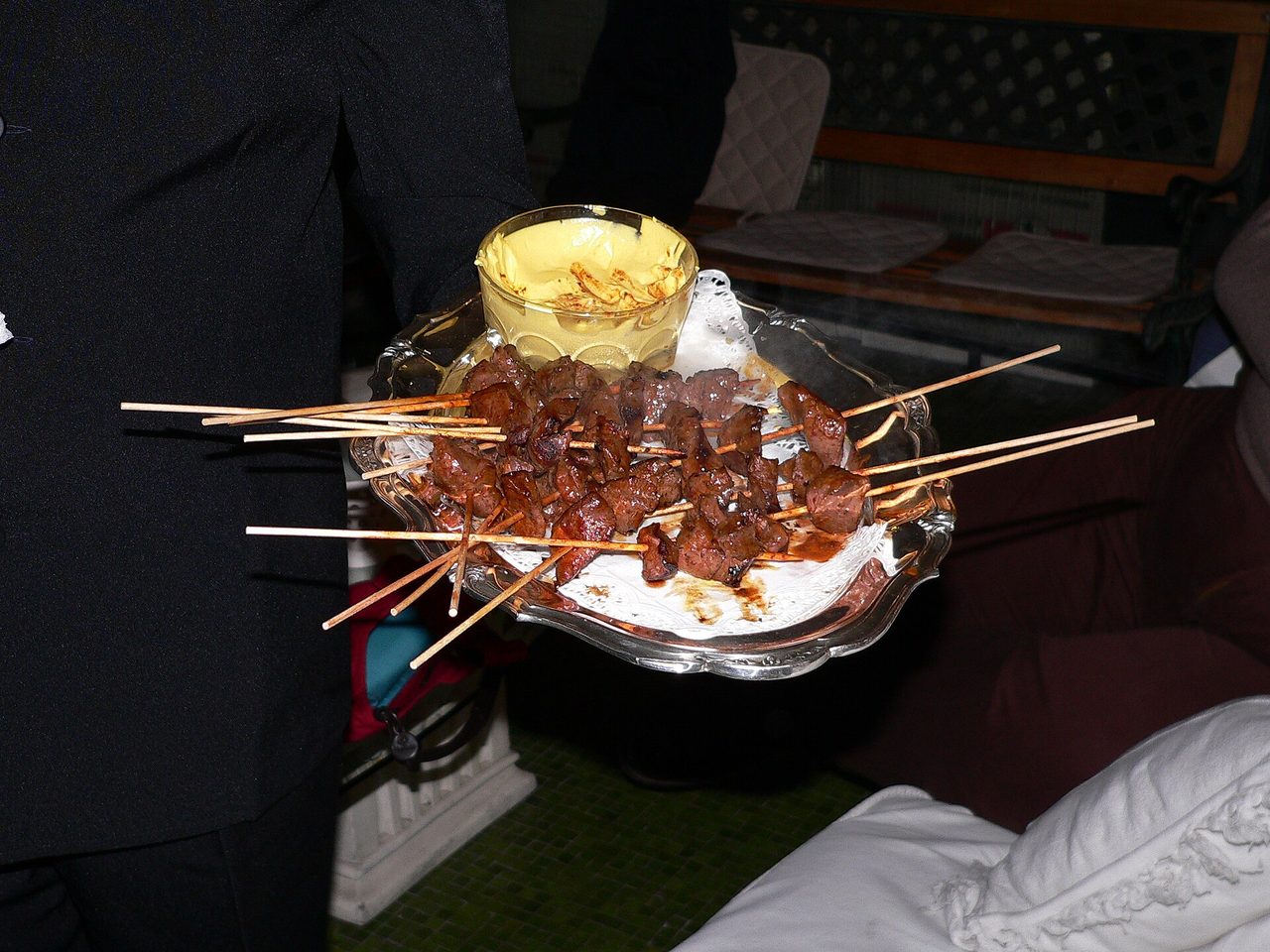
Beef heart, marinated in vinegar, cumin and ají panca, threaded onto a skewer and grilled over charcoal on a street cart, served with a boiled potato and a lump of choclo for around S/10–25. The carts come out after dark — Surquillo, Breña, the edges of the Miraflores Malecón, most residential corners. Follow the smoke.
If offal is a problem for you, ask for pollo instead and nobody minds. If it is not, this is the single best value in Peruvian eating and it is what Lima actually tastes like, far more than any tasting menu. Pair it with a picarón stall if you find one — squash-and-sweet-potato doughnut rings in chancaca syrup, about S/8 for a plate.
7. The Malecón clifftop walk — when the sky allows
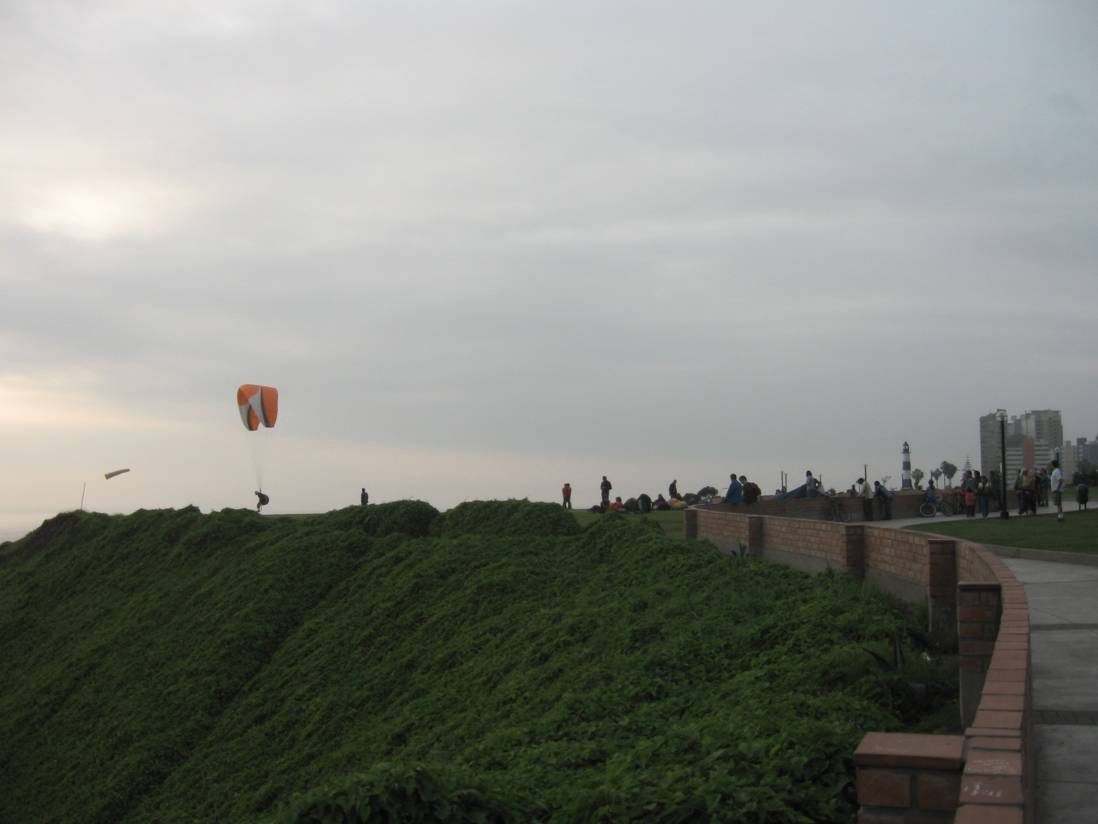
Six-plus kilometres of clifftop parkland running along the top of the Costa Verde through Miraflores and on into Barranco, about 70 metres above the Pacific. Free, open all hours, lined with joggers and paragliders and people walking small dogs. On a clear evening in February it is one of the nicer urban walks anywhere in South America.
On a Tuesday in July it is a grey ribbon above a grey sea under a grey sky, and you will not understand what the fuss is about — Lima’s coastal winter runs straight through the Andean dry season. See the weather section below, because this is the single biggest variable in whether Lima delivers for you, and it is why Lima in July turns up in any honest account of when not to visit parts of Peru.
8. Pachacámac
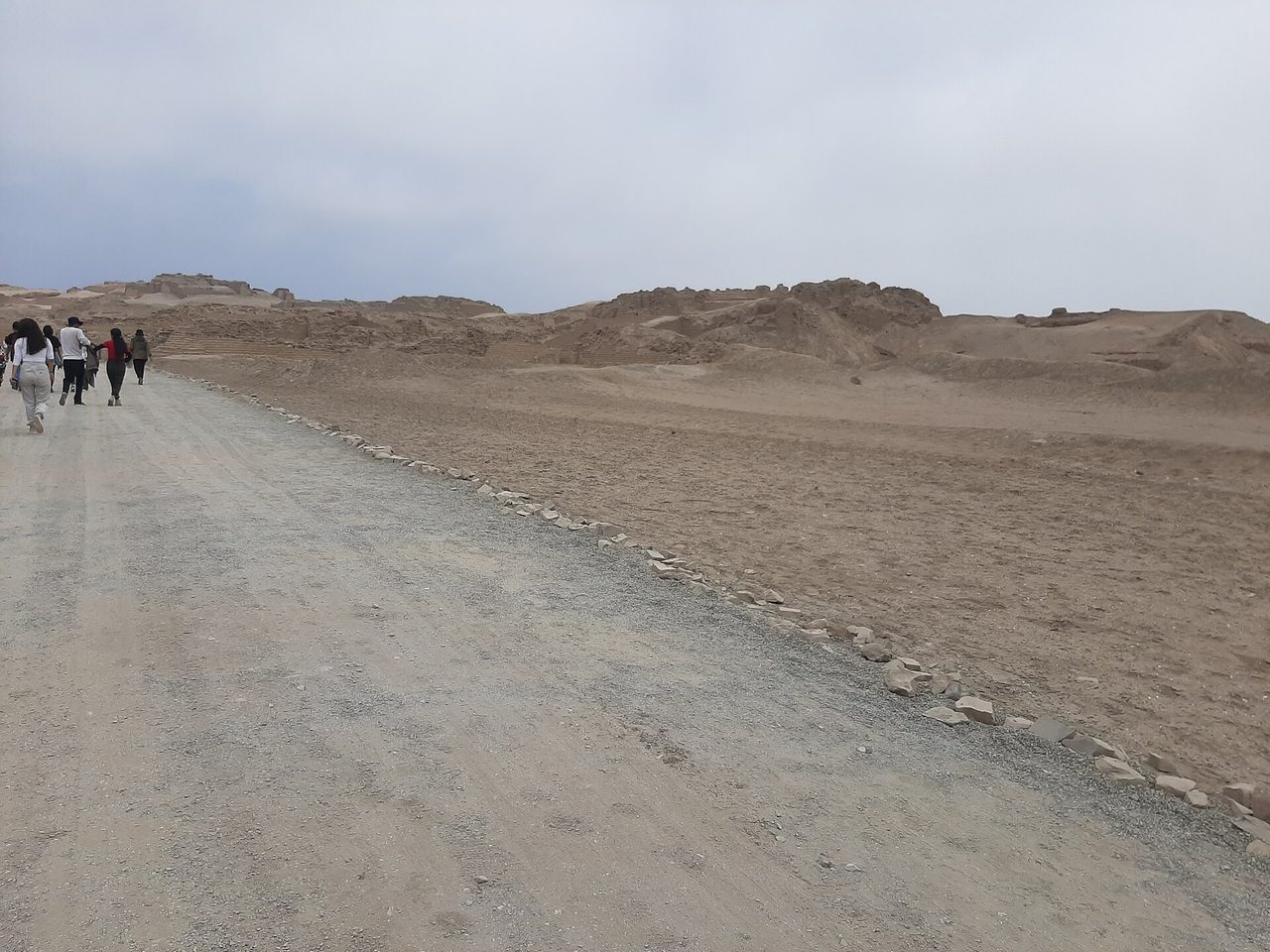
S/15 general admission, S/5 for accredited university students, S/1 for 3–17s, and S/20 for the guided “Ruta de los Peregrinos”, which is the one worth paying for. Open Tuesday to Saturday 9am to 5pm with last tickets at 4:30pm, and Sundays 9am to 4pm. Closed Mondays. It is about 32 km south of Miraflores, which is 45 minutes on a good run and well over an hour in traffic.
This was the most important pilgrimage site on the central coast for well over a thousand years, occupied from around 200 AD, absorbed by the Wari, then taken over by the Inca who built the Temple of the Sun and the Acllahuasi on top. It is a big, dusty, wind-scoured complex of adobe pyramids and plazas rather than the cut-stone precision people expect after seeing photographs of the citadel above the Urubamba, and some visitors find it underwhelming for exactly that reason. Take the guide, take a hat, and it clicks.
The site museum at the entrance is modern and good, and does the interpretive work the ruins themselves cannot. Half a day including transport. This is the one archaeological thing near Lima that stands on its own merits.
Worth doing if you have the time
Barrio Chino and chifa
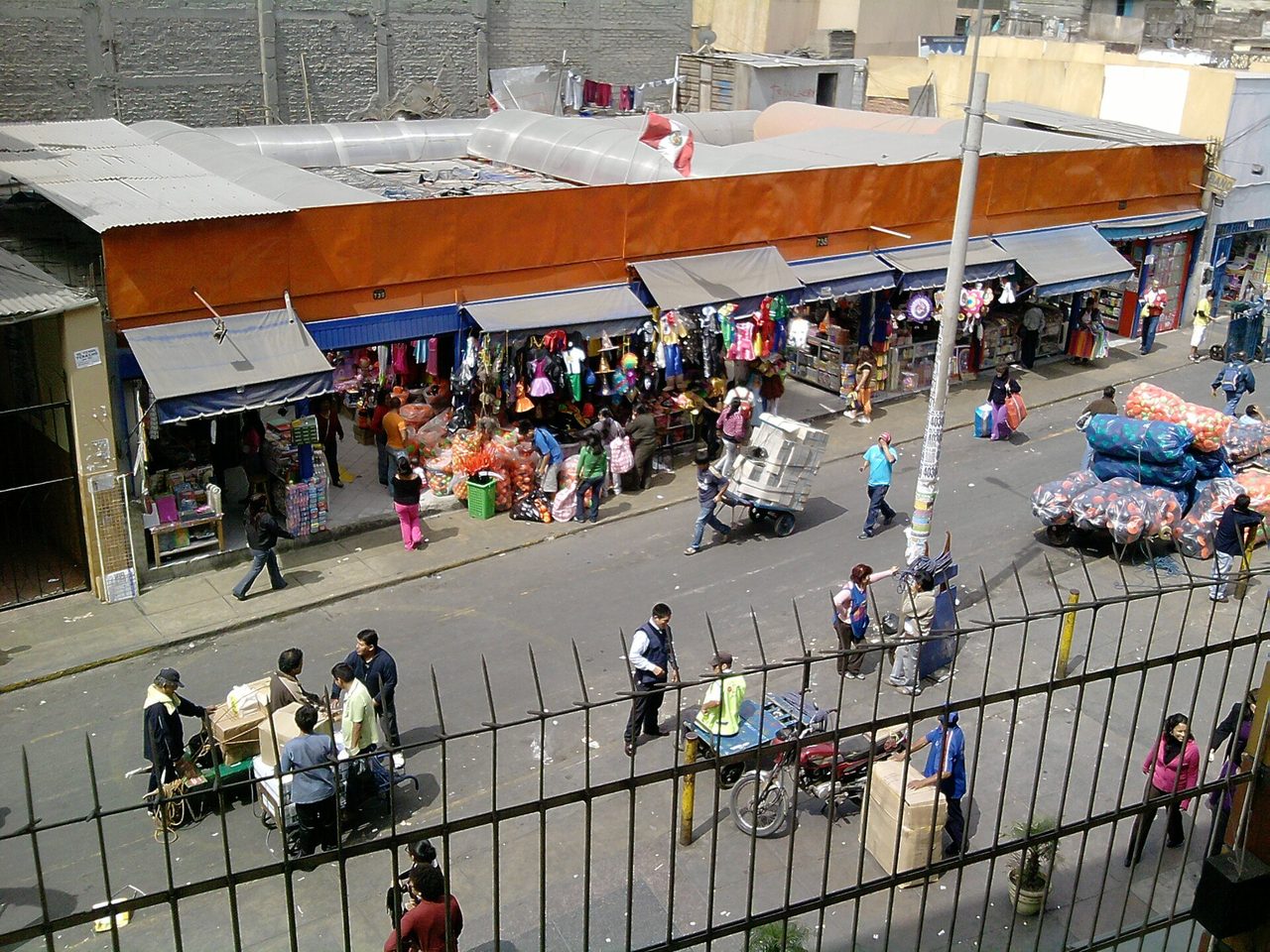
Lima has the oldest Chinatown in the Americas, centred on Calle Capón a few blocks east of the Plaza Mayor, and the Chinese-Peruvian cooking that came out of it — chifa — is one of the country’s two great fusion cuisines. Lomo saltado, the dish everybody eats without thinking about it, is a chifa dish: beef stir-fried in a wok with soy sauce and served with rice and chips.
Eat here at lunch. The restaurants along Capón and in Barrios Altos behind it are the unvarnished version — menus in Chinese as well as Spanish, local families at the tables, and a bill of S/25–60. The area also has the city’s main wet markets adjacent, which is worth ten minutes of walking even if you eat elsewhere. It is busy, loud and pickpockety in the way any dense market district is; carry nothing in a back pocket and it is fine.
MALI, the Museo de Arte de Lima
S/30 for foreign visitors, S/15 for Peruvian residents and concessions, children under 8 free. Tuesday to Sunday, roughly 10am to 6pm with an earlier close on Saturday. There are regular free and half-price windows — the days have moved around in recent years, so check the MALI site rather than trusting a blog.
It is housed in the Palacio de la Exposición on the edge of the centre and runs from pre-Columbian textiles through the colonial Cusco School through to contemporary Peruvian work, in one clean chronological sweep. If Museo Larco is the archaeology, MALI is everything after it. Ninety minutes. It is a very good rainy-season, or rather grey-season, option, and it is next to the Parque de la Exposición which is pleasant in itself.
Huaca Pucllana
S/15, Tuesday to Sunday, entry by guided tour only, roughly an hour. It is a seven-level adobe pyramid built by the Lima culture around 400–700 AD, sitting in the middle of residential Miraflores with apartment blocks on all four sides. The bricks are stacked vertically with gaps between them, a deliberate anti-seismic design that has kept it standing through fifteen centuries of earthquakes.
The oddness is the appeal: you walk out of a normal city street into a 400-metre-long ruin. It is not a substitute for real archaeology — Pachacámac is a far more serious site — but it is fifteen minutes from most Miraflores hotels and the guides are good. Evening visits under floodlight run on some nights; the schedule changes, so ring ahead rather than turning up.
Casa de Aliaga
S/35, by appointment, about an hour with a guide. It is a colonial mansion just off the Plaza Mayor that has been occupied by the same family continuously since 1535, which makes it the oldest continuously inhabited house in the Americas. You are walking through somebody’s actual home. Not for everyone, and the price is high for what it is, but if colonial interiors interest you at all it beats another church.
Mercado Nº1 de Surquillo
Free, best before 11am, ten minutes on foot from central Miraflores across the Via Expresa. This is where a good number of Lima’s restaurant kitchens buy, and the point is not to shop but to see what Peruvian ingredients actually look like: forty potato varieties, a whole aisle of dried and fresh ají, lucuma and chirimoya and granadilla stacked by the crate. Most cooking classes in Lima start here and then walk you back to a kitchen; that is a good use of S/200–350 if you want structure.
The overrated list — and who would still enjoy it
Nobody else will tell you this, because most Lima content is written to sell a tour. Here is what I would drop first.
The Circuito Mágico del Agua
S/5 to enter the Parque de la Reserva, open from mid-afternoon to about 10pm, thirteen illuminated fountains with a laser-and-music show on the largest one. It holds a Guinness record for the biggest fountain complex in a public park, which is the sort of fact that gets a thing onto lists.
It is a municipal water park with coloured lights. For five soles it is impossible to be too annoyed about, but it will consume an evening and a taxi each way, and what you get is a fountain show of the kind you would walk past without comment in Dubai or Las Vegas. Who should still go: anyone travelling with children under about twelve, who will love it unreservedly, and anyone who is in Lima for three nights and has genuinely run out of ideas after dark. Go at 7pm when the shows start, allow an hour, do not build a day around it.
Larcomar
A shopping mall terraced into the Miraflores cliff face with a sea view. It appears on nearly every “top things to do” list, which tells you something about how those lists are assembled. It contains a cinema, a Starbucks, chain restaurants and a lot of souvenir shops charging Miraflores prices for alpaca goods you will find for a third of that in Cusco.
Who should still go: if you need a pharmacy, an ATM in a secure spot, a phone repaired or a bathroom, it is convenient. The view from the terrace is the same view you get for free from the clifftop park thirty metres above it. Take the photo from the park.
Paragliding, presented as a Lima essential
S/150–300 depending on operator and whether video is included, most flights running ten to fifteen minutes with an hour of standing around either side. It is a genuinely good experience and I am not telling you not to do it. I am telling you it is not a “must”, and that the lists which place it at number two are lists whose authors were flown for free.
Two practical problems. First, it is weather-dependent in a way nobody flags: cancellations are common when the garúa sits low and when the onshore wind is wrong, and both are more likely from May to November. Second, ten minutes of flight for S/200 is a poor rate against almost everything else on this page. Who should still go: anyone who has never flown before, anyone in Lima in January or February with a clear afternoon, and anyone who wants the photograph. If you want serious airborne adrenaline in Peru, the sandboarding and dune-buggy country further down the coast and the options in our guide to adventure activities across the country give you far more per sol.
Two smaller ones
The Parque del Amor is a small clifftop park with a large statue of a couple kissing and a Gaudí-style mosaic bench. It takes four minutes, it is on the Malecón walk anyway, and it does not need its own list entry. The cats of Parque Kennedy are a genuine local curiosity — a park in central Miraflores with a large managed colony of stray cats — and are pleasant for ten minutes. Neither is a reason to allocate a morning.
Cerro San Cristóbal is a closer call. The hill rises 400-odd metres over the Rímac district with a cross on top and a panoramic view of the whole basin; entry is free and the little buses up cost around S/5. On a clear morning it is the best overview of the city you can get. Under fog you will ride twenty minutes to look at cloud. Check the sky first, and go with a tour or a booked driver rather than wandering up through Rímac on foot.
The weather nobody warns you about
This is the omission that runs through every competing list, and it matters more than any single attraction.
Lima sits in a coastal desert that gets almost no rain — single-digit millimetres a year in most of the city. But from roughly May to November a cold ocean current pushes a permanent low cloud deck over the coast, and the city disappears under it. Locals call it the garúa: a grey lid that sits at rooftop height for weeks, occasionally condensing into a fine drizzle that is not quite rain, with daytime highs of about 15–19°C and humidity in the eighties. July is the worst of it. Lima can record on the order of thirty hours of sunshine in the entire month of July. Not thirty hours a week — thirty hours.
Nothing about this is dangerous or unpleasant in itself. It is just that a great deal of what people come to Lima for is outdoor and coastal, and outdoor and coastal is diminished by six months of flat grey. The Malecón, the paragliding, the beaches, the Circuito de Playas, the sunset over the Pacific everyone photographs — all of it is a summer proposition.
| Period | Sky | Temps | What it means for you |
|---|---|---|---|
| Dec–Mar | Sunny, clear | 23–29°C | Lima at its best. Beaches, Malecón, rooftop bars all work. Also Lima’s busiest domestic-holiday period. |
| Apr & Nov/Dec | Mixed, breaking | 19–24°C | The sweet spot. Often clear, rarely crowded. |
| May–Nov | Overcast, garúa | 15–19°C | Grey daily. Museums and food are unaffected. Everything coastal is diminished. |
The awkward part is that May to November is exactly the dry season in the Andes and the Amazon, which is when most people go to Peru. So the months that are best for the mountains are the worst for Lima. That is not a reason to change your trip — the highlands should drive your dates — but it is a reason to weight your Lima days towards food and museums rather than clifftops if you are travelling in July. Our overview of how the country’s seasons work region by region lays out the full clash, and the month-by-month weather picture has the numbers.
What to do in Lima when it is grey
A specific list, because this will happen to you:
- Museo Larco — indoors, open daily including Mondays, and the gardens are lovely even under cloud.
- MALI — two hours of Peruvian art in a big cool building.
- The San Francisco catacombs — underground. The weather is irrelevant.
- A cooking class or market tour — S/200–350, three to four hours, entirely indoors after the market.
- Chifa lunch in Barrio Chino, then the colonial churches of the centre, which are all indoor stops within four blocks of each other.
- A long, unhurried tasting menu — the one context in which spending four hours at a table is the point.
- Museo de Sitio Bodega y Quadra and the Casa de la Literatura, both small, both free or near-free, both in the centre.
- Barranco anyway — the district reads well under grey skies. The peeling paint and the sea mist suit each other.
What not to do on a grey day: Cerro San Cristóbal, the Circuito de Playas, paragliding, or a beach day of any kind.
Eating in Lima: how it actually works
Lima is regularly described as the best food city in South America and for once the marketing is roughly true. But the way most guides handle it — a list of fifteen restaurant names with a star rating — is useless three months later, because the list has already turned over. What is worth knowing is the structure. Here are the categories, what they cost, and when to use them.
Cevicherías
Covered above, and it is the first thing to sort out. Lunch only. S/35–90 for a plate. The tell for a good one is a short menu, a lunchtime-only opening, and a crowd. Order the ceviche clásico before anything elaborate; if it is good, the rest will be. Tiradito is the same fish sliced sashimi-style with a creamier chilli sauce and is often the better order at a place that is a little too polished.
Anticucho and street grills
Evening only, S/10–25, cash. Beef heart on skewers over charcoal. Look for a cart with a queue and a woman working the grill who is clearly doing this every night. The health risk is far lower at a busy cart with high turnover than at a quiet one.
Chifa
Lunch, S/25–60, Barrio Chino for the authentic version and any neighbourhood in Lima for the everyday version. Every Peruvian city has chifas; Lima’s Capón street versions are the source. Ask for the Chinese-language menu if you want the dishes the local families are eating.
The pisco sour, and where the good ones are
Pisco, lime, sugar syrup, egg white, a couple of drops of Angostura, shaken hard. S/25–45 in a decent bar; more in a hotel. The bad ones are bad in a specific way: too much syrup, not enough pisco, and a foam that collapses because the shake was lazy.
Where they are good, generally: the old bars around the Plaza San Martín in the centre, where the drink has a documented history going back to the 1920s; the cocktail bars in Barranco, several of which now appear on regional best-bar lists; and any bar that stocks more than three brands of pisco and can tell you which grape each one is. Where they are bad: hotel lobbies, cruise-group restaurants and anywhere with a laminated cocktail menu featuring photographs. Try a chilcano too — pisco, ginger ale, lime, ice — which is what Peruvians actually drink at home and costs less.
The fine-dining tier — real prices, real lead times
Lima has three or four restaurants that sit near the top of the world lists, and they are genuinely expensive by any standard.
| Restaurant | Menu price (per person) | Pairings | Book ahead |
|---|---|---|---|
| Central | ~S/1,600–1,630 | +S/450–520 wine; ~S/225–350 non-alcoholic | 2–3 months; releases open in blocks |
| Maido | from ~S/1,295 | +S/690–1,230 depending on tier | 1–3 months, longer since its 2025 world number one |
| Kjolle | Below Central, nine courses | Available | Several weeks; easier than Central |
All three publish prices including tax and service, which is unusual and welcome. Reservations open on their own websites in blocks — typically a month or a quarter at a time — and the popular slots go the day they open, so the practical advice is to work out your Lima dates first and then set a reminder for the release, rather than trying to book two weeks out.
Is it worth it? If tasting menus are something you seek out anyway, yes, and Lima is one of the cheapest cities in the world to eat at this level. If they are not, spending S/1,600 here because a list told you to is a poor use of a Peru budget that could cover several days of everything else. It is a genuine cost decision, and our breakdown of what a Peru trip actually costs puts one dinner at Central in context: it is roughly four days of mid-range travel elsewhere in the country.
Two things in the middle to know about. Menú del día is the workers’ set lunch — soup, a main, a drink — for S/12–25 in any neighbourhood, and it is how the city eats on a Tuesday. And there is a large tier of very good, unstarred Peruvian restaurants at S/60–120 a head where most of the actual pleasure lives. A full restaurant list is a separate exercise; the point here is that you should budget for one lunch in each category rather than three dinners in one.
Half-day trips out of the city
Pachacámac
Covered above. Tuesday to Sunday, S/15–20, four to five hours door to door. Go in the morning, before the coastal haze burns off or fails to.
The Circuito de Playas and the southern beaches
The coast road south of Lima runs past Punta Hermosa, San Bartolo and Punta Negra to the resort strip around Asia at kilometre 97. These are real beaches with real surf — Punta Hermosa is a serious surf town, and Peru has produced world-tour surfers off this stretch.
The honest framing: this is a January-to-March activity. In summer the beach towns are packed with Limeños and the water is 20–22°C. From May to November the same places are cold, empty, grey and closed. Getting there costs S/15–25 on a bus from the Atocongo or Panamericana Sur terminals, or S/80–150 each way in a ride app depending on distance and traffic. If you want coastal Peru as a destination rather than an afternoon, the desert oases and the wildlife islands on the southern coast route below Lima are a better use of two or three days than a day trip to a beach.
Callao, Chucuito and La Punta
This one comes up constantly and deserves a straight answer. Callao is the port city adjoining Lima, and it contains three things visitors are told about: the Real Felipe fortress, the Chucuito neighbourhood with its painted houses, and the Monumental Callao arts district in old buildings on Plaza Casanave. All three are legitimately interesting, and Monumental Callao in particular has done something real with a derelict block.
It is also true that Callao has significantly higher crime rates than Miraflores or Barranco, that the interesting bits are small islands within a district that is not, and that the standard local advice is to go with a tour, a booked driver or a local, and not to wander between the sights with a camera out. La Punta, the peninsula at the end, is genuinely pleasant and calm on a weekend afternoon. The workable version is a booked half-day tour that covers Real Felipe, Chucuito and Monumental Callao and drops you back — not a self-guided walk. If you have three days in Lima, this is the thing I would cut first.
Getting around Lima without losing half your day
Lima is a city of about ten million people spread over 2,700 square kilometres with the traffic to match. Distances that look trivial on a map are not.
Ride apps
Uber, Cabify, InDrive and Didi all operate and all work. This is how you should move around, and it is also the safety answer: fares are fixed in advance, the driver and plate are logged, and you never negotiate through a car window. Typical fares:
| Route | Typical app fare | Off-peak | Rush hour |
|---|---|---|---|
| Miraflores ↔ Barranco | S/12–20 | 10–15 min | 25–30 min |
| Miraflores ↔ Centro Histórico | S/20–35 | 25–30 min | 50–70 min |
| Miraflores ↔ Museo Larco (Pueblo Libre) | S/18–28 | 20 min | 40 min |
| Miraflores ↔ airport | S/45–70 in an app | 45 min | 75–90 min |
| Miraflores ↔ Pachacámac | S/60–90 each way | 45 min | 75+ min |
Rush hour is roughly 7–10am and 5–8:30pm, and it is severe. A 25-minute trip becoming a 70-minute trip is normal, not exceptional. Plan the Centro in the morning and come back before five, or accept that you are sitting in the Vía Expresa.
The Metropolitano
The Metropolitano is a dedicated-lane bus rapid transit line running roughly north–south along the Vía Expresa, and it is the one piece of Lima public transport a visitor should use. The trunk fare is S/3.20 and payment is card-only at the turnstiles — you buy a Lima Pass card for a non-refundable S/5, top it up with cash at the station, and tap. Feeder and corridor routes run around S/2.40.
It is fast, because it does not sit in the traffic that everything else sits in. The useful stretch for visitors is Estación Bulevar or Ricardo Palma in Miraflores up to Estación Jirón de la Unión or Colmena for the historic centre — around 20 minutes for S/3.20 at a time when a taxi would take an hour. It is also crushingly full at peak times and pickpocketing on packed carriages is the one genuine petty-crime risk on it. Travel mid-morning or early afternoon with your bag in front of you.
The regular buses: don’t
Lima’s ordinary buses, combis and the minivans known as custers are a dense, unlabelled, semi-formal network where a boy hangs out of the door shouting the route. Fares are a sol or two. Locals navigate it fluently. As a visitor with luggage and no Spanish, the time you will lose working out which of four vehicles shouting “Larco Larco Larco” is the one you want will exceed anything you save. Use the Metropolitano or an app. This is the one piece of Peruvian transport I would tell you to skip outright, unlike the intercity buses in our guide to moving between cities in Peru, which are excellent.
Arriving from the airport
Jorge Chávez moved into a new terminal in 2025 and the access roads changed with it, which pushed fares up. Reckon on S/60–75 for an official airport taxi booked at the counters inside arrivals at a normal hour, S/80–95 at peak, and 45 to 75 minutes to Miraflores depending on traffic. Ride apps are usually S/45–70 but the pickup zone has moved more than once, so read the in-app instructions rather than walking out and looking around. The Airport Express coach runs hourly, has luggage space, and is the cheapest sane option.
Do not take an unbooked taxi from outside the terminal. This is the single most reliable place in Peru to be overcharged, and the arrivals hall touting is aggressive. Book at a counter or in an app, every time.
Safety, without the melodrama
Lima is a large Latin American capital with real property crime and very little violent crime against tourists. The realistic risk is that your phone gets taken, not that you get hurt. Handle it like you would in any big city and the odds are strongly in your favour.
- Taxis: apps only. Never hail from the street, never accept an offer from a driver who approaches you. This is the most important single rule and it removes most of the risk.
- Phones. Do not walk down a street holding one, and do not leave one on an outdoor cafe table. Phone snatching from motorbikes and from behind is the standard crime here. Step into a shop doorway to check a map.
- Districts. Miraflores, San Isidro, Barranco and central Surco are fine day and night with normal care. The Centro Histórico is fine in daylight and I would not linger after about 8pm. La Victoria, Rímac and much of Callao away from the specific tourist sites are places to visit with a guide or driver rather than wander, and not at night.
- ATMs. Use ones inside banks, supermarkets or malls during business hours. Not the free-standing street ones.
- Cash. Carry a working amount, not a day’s worth. Cards work almost everywhere except street carts and small markets.
- Demonstrations. Peru has periodic political protest, usually concentrated around the Plaza San Martín and government buildings. They are announced. Walk the other way.
None of this is unique to Lima and most of it applies in Cusco too. Our general practical tips for travelling in Peru covers water, tipping, SIM cards and the rest.
How many days does Lima need?
Two full days is the right answer for most people. Three if you are a serious eater or the weather is good. One if you are on a tight route and Lima is a connection.
One day, if that is all you have
Centro Histórico from 9am — Plaza Mayor, the Cathedral, changing of the guard at noon, San Francisco catacombs. Ride app to a cevichería for a late lunch around 1:30. Afternoon in Barranco on foot. Anticucho from a cart in the evening. You have seen the actual city.
Two days
Day one as above. Day two: Museo Larco at opening, back for lunch, Huaca Pucllana or MALI in the afternoon, Malecón walk at sunset if the sky is clear, dinner somewhere you booked.
Three days
Add Pachacámac as a morning, or a cooking class and Surquillo market, or the Barrio Chino chifa lunch and a proper wander through the centre’s churches. Not a beach day unless it is January.
Lima is at sea level, which is worth stating plainly because it is the one place in Peru where you can eat a heavy meal, drink two pisco sours and go for a run without consequence. Everything you have read about the 3,400-metre adjustment in Cusco is irrelevant here. A number of people deliberately spend their first two nights in Lima before flying up, which is a sound plan — it puts the food city at the start of the trip and gets you over the flight before you take on altitude. Our first-timer’s route through Peru and the one-week version both do it that way.
Who Lima is not for
Two groups should think hard before allocating days here.
Anyone with two days in Peru who cares only about ruins. Lima has Pachacámac and Huaca Pucllana, and they are adobe rather than cut stone. If your entire interest is Inca architecture, put the days into the Sacred Valley or an extra night in Cusco and treat Lima as an airport with a good lunch attached. There is no shame in it. Our list of the places in Peru most worth your days ranks accordingly.
Anyone expecting a beach city. Lima has a spectacular coastline and almost no usable beach. The Costa Verde beaches directly below the cliffs are pebbly, cold and separated from the city by a six-lane highway; the water is around 15–19°C for much of the year and the current is strong. The good beaches are an hour south and only work in summer. If you want a coastal Peru holiday, look north to Máncora rather than at Lima, or read our guide to the north of the country.
Also worth saying: if grey skies genuinely affect your mood, and you are travelling June to September, plan a shorter Lima and a longer highlands leg. There is no fixing the garúa.
Frequently asked questions
Is Lima worth visiting, or should I just transit through?
Worth visiting, for two days, if you like food and cities. Worth transiting if you have limited time and your interest is archaeology or landscape. It is not a city that rewards a week.
What is the best time of year to visit Lima?
December to April, when it is warm and clear. April and November are the sweet spot for weather without the domestic-holiday crowds. May to November is grey. This runs directly counter to the best months for the rest of Peru, which is an annoying but manageable conflict.
Miraflores or Barranco — where should I stay?
Miraflores if it is your first visit, you want restaurants and pharmacies within three blocks, and you value convenience. Barranco if you would rather stay somewhere with character and do not mind a S/15 ride to get to things. San Isidro is quieter and more residential and is the third option. Any of the three is safe; the centre is not where you want to sleep.
How much does a day in Lima cost?
On a budget: S/120–180 covers a hostel bed, market meals, the Metropolitano and one museum. Mid-range: S/350–600 with a decent hotel, two good restaurant meals and ride apps everywhere. Fine dining pushes a single day past S/2,000 on its own. Lima is the most expensive city in the country to eat in and among the cheapest to move around in, which is roughly the opposite of how accommodation costs break down elsewhere in Peru.
Do I need to worry about altitude in Lima?
No. Lima is at sea level. It is the one Peruvian destination where altitude is a non-issue, which is precisely why it makes a good first stop before flying to the mountains.
Can I see Lima on a layover?
With six hours between flights, no — the airport run alone can eat two and a half hours round trip in traffic. With eight or more, yes: take an app to Miraflores, walk the Malecón, eat lunch, go back. Do not attempt the Centro Histórico on a layover.
What are the best free things to do in Lima?
The Malecón walk, all of Barranco, the Plaza Mayor and the changing of the guard, the Parque de la Exposición, Mercado de Surquillo, the Casa de la Literatura, and the free walking tours from Plaza San Martín (tip expected). That is a full day without a ticket.
Is one museum enough?
If you only do one, do Museo Larco. If you do two, add MALI. Both together are four hours and about S/80.
How does Lima compare to Cusco for things to do?
Different products. Cusco is history, altitude, day trips and a compact walkable core — see what is actually worth doing up there. Lima is food, museums and neighbourhoods, spread over a huge distance. Most people prefer Cusco; most serious eaters prefer Lima.
Is the Circuito Mágico del Agua worth S/5?
The five soles is not the cost. The evening and the two taxi rides are. With children, yes. Without, probably not.
Should I book a city tour or do it myself?
Do the Centro and Barranco yourself — both are walkable and self-explanatory. Book a guide for Pachacámac, where interpretation makes the difference, and for Callao, where it is a safety question. Food tours are the one paid product in Lima I would genuinely recommend, because they solve the ordering problem.
The short version
Eat lunch properly, once a day, at the right hour. Do the Centro in daylight and Barranco in the afternoon. Pay for Museo Larco. Skip the mall, and treat the fountains and the paragliding as optional extras rather than headline acts. Check the sky before you commit to anything with a view. Two days, done in that order, and Lima is one of the better city stops on the continent — and one of the few that a country-wide highlights list tends to undersell.