Best Day Trips from Lima
Real door-to-door hours, honest costs and a blunt verdict on every day trip out of Lima — including the three I think you should skip or turn into an overnight.
Here is the thing nobody selling tickets will tell you: several of the most heavily advertised day trips from Lima are bad day trips. Not bad places — bad days. Paracas is four hours away in real traffic. Huacachina is further. Nazca as a day return from the capital is a twenty-hour ordeal that ends with you asleep on a bus at 1am. Meanwhile the two genuinely excellent options within reach of the city get a paragraph each on most sites, if that.
I have done most of these, some more than once, and I have wasted a whole Saturday on at least one of them. So this guide is organised around a single question: is the driving worth what you get at the other end? Every destination below gets a real one-way travel time, a realistic total day length door to door, a rough cost for a tour versus doing it yourself, and a blunt verdict. Some of them are a clear yes. Two of them I would tell a friend to skip outright.
The short answer: which day trips from Lima are actually worth it
This is the table I wish someone had shown me before I booked anything. Travel times are one-way, door to door from Miraflores, assuming you leave early enough to beat the worst of the traffic. If you leave at 9am, add ninety minutes to everything heading south.
| Destination | One-way travel | Total day | Tour cost | Independent cost | Verdict |
|---|---|---|---|---|---|
| Pachacamac | 45–75 min | 4–5 h | $45–80 | ~S/20 (bus + S/15 entry) | Do it |
| Palomino Islands | 40–60 min to Callao | 4–6 h | $50–125 | $40–55 booked at the pier | Do it |
| Caral | 3.5–4 h | 11–13 h | $60–210 | ~S/70 (bus + S/11 entry + transfer) | Do it |
| Lomas de Lachay (Jul–Oct only) | 2–2.5 h | 8–9 h | $45–75 | ~S/50 all in | Do it, in season |
| Lunahuaná / Cañete valley | 2.5–3 h | 11–13 h | $40–80 | ~S/150 with rafting | Do it |
| Antioquía & Cieneguilla | 2.5–3 h | 9–11 h | $40–70 | Hard without a car | Do it |
| Paracas + Ballestas | 3.5–4 h | 15–17 h | $100–140 | ~S/220 (bus + boat + fees) | Overnight instead |
| Huacachina + Ica | 4–4.5 h | 16–18 h | $110–150 | ~S/200 | Overnight instead |
| Marcahuasi | 4.5–5 h | Not possible in a day | 2-day tours $120+ | ~S/60 in transport | Overnight instead |
| Nazca Lines | 7–8 h | 20–22 h | $180–280 | Not sensible | Skip |
If you only read this far: Pachacamac in the morning, the Palomino Islands on a separate morning, and Caral if you have a full free day and any interest at all in what people were building here before the Inca. Everything south of Chincha belongs on a route, not on a return trip.
The three-hour rule, and why Lima breaks it
My working rule anywhere is that a day trip stops being a day trip past about three hours each way. Six hours of transit plus three hours on site is a ten-hour day before you have eaten anything, and you get home too fried to enjoy the evening. Lima makes that rule worse in two specific ways.
First, the city is enormous and the exits are choked. Getting from Miraflores to the point where the Panamericana Sur actually opens up can take fifty minutes on a weekday morning and fifteen minutes at 5:30am. That is not a rounding error; it is the difference between catching the 10:00 boat in Paracas and standing on the dock watching it leave. It is the same arithmetic that governs the transfer between Jorge Chávez and Miraflores, and it punishes a late start the same way. Second, almost every worthwhile southern destination sits on one road. If the Panamericana has an accident, a landslide near Chilca or a holiday-weekend queue, there is no alternative route. You wait.
So when a tour page says “3 hours to Paracas” it means three hours of highway between the tollbooth and the town. Add the pickup loop around four hotels, add the Lima exit, add a bathroom stop, and the honest number is four. Tours that promise Paracas and Huacachina and a winery in one day are quoting you eleven hours of movement in a sixteen-hour day. That is why my verdicts below are harsher than most.
Pachacamac: the strongest short trip, and the closest
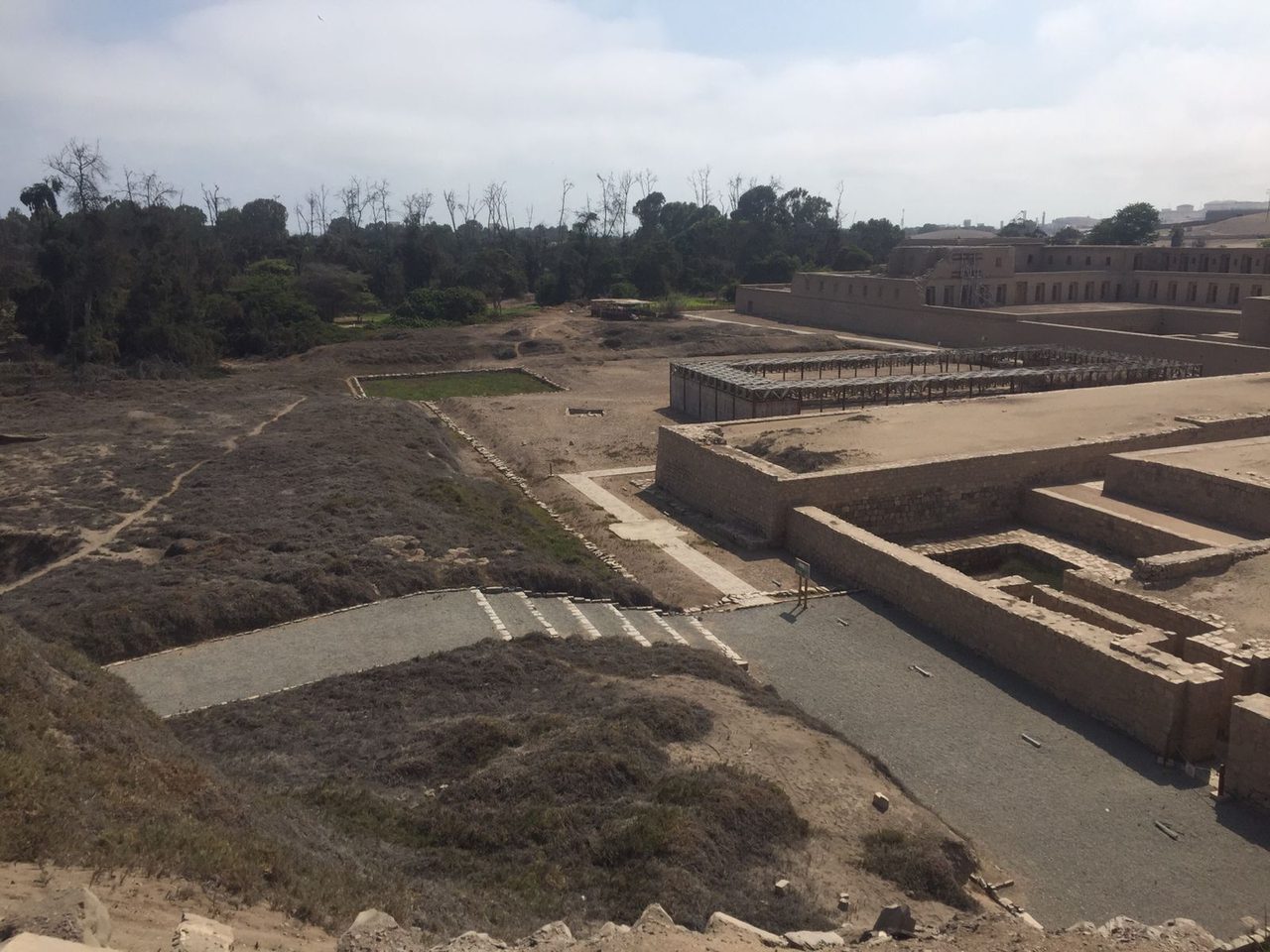
Pachacamac is about 32 km south of Miraflores in the Lurín valley, which means 45 minutes on a good morning and well over an hour if you leave at nine. It is the single best value half-day out of the city and I would put it ahead of most things people queue for downtown.
What you get: a sprawling pilgrimage sanctuary that was already ancient when the Inca arrived and absorbed it, with at least seventeen pyramid platforms, a painted temple, the Inca-built Temple of the Sun on a bluff above the Pacific, and the reconstructed Acllahuasi compound. The site museum, which opened in 2016, is genuinely good and is where you should start — the textiles and the wooden Pachacamac idol give the ruins meaning that the ruins alone do not deliver.
Practicalities: entry is around S/15 for a general adult ticket, with reduced rates for students, children and seniors. It opens Tuesday to Saturday 09:00–17:00 with last tickets around 16:30, and Sundays 09:00–16:00. It is closed Mondays, which catches people out constantly. Give yourself two to three hours; the site is spread over several hundred hectares and there is a vehicle circuit as well as a walking one. Wear a hat even in the grey months, because there is no shade at all.
One small correction to the internet: Pachacamac is not a UNESCO World Heritage Site. It has been on Peru’s tentative list since 1996 and is still being evaluated. Half the tour listings call it UNESCO-listed anyway. It does not make it less interesting, but it tells you how carefully those pages were written. If you want the real thing, look at the other World Heritage sites scattered across the country and note which ones are actually inscribed.
Doing it independently is easy and cheap. Buses toward Lurín leave from the Panamericana Sur and drop you at the entrance for a couple of soles; a taxi or ride-hail from Miraflores is around S/50–70 each way. A guided tour with hotel pickup runs $45–80 and usually bundles a Paso horse show and a buffet lunch, which is fine but is not why you came. If you are heading to the Andes afterwards, Pachacamac is a useful primer on the fact that pre-Columbian architecture in Peru is not all cut stone and mountaintops. Coastal adobe is a different tradition entirely.
Verdict: do it. It is the only entry on this list where the driving is trivial and the payoff is large.
Caral: the best day trip almost nobody takes
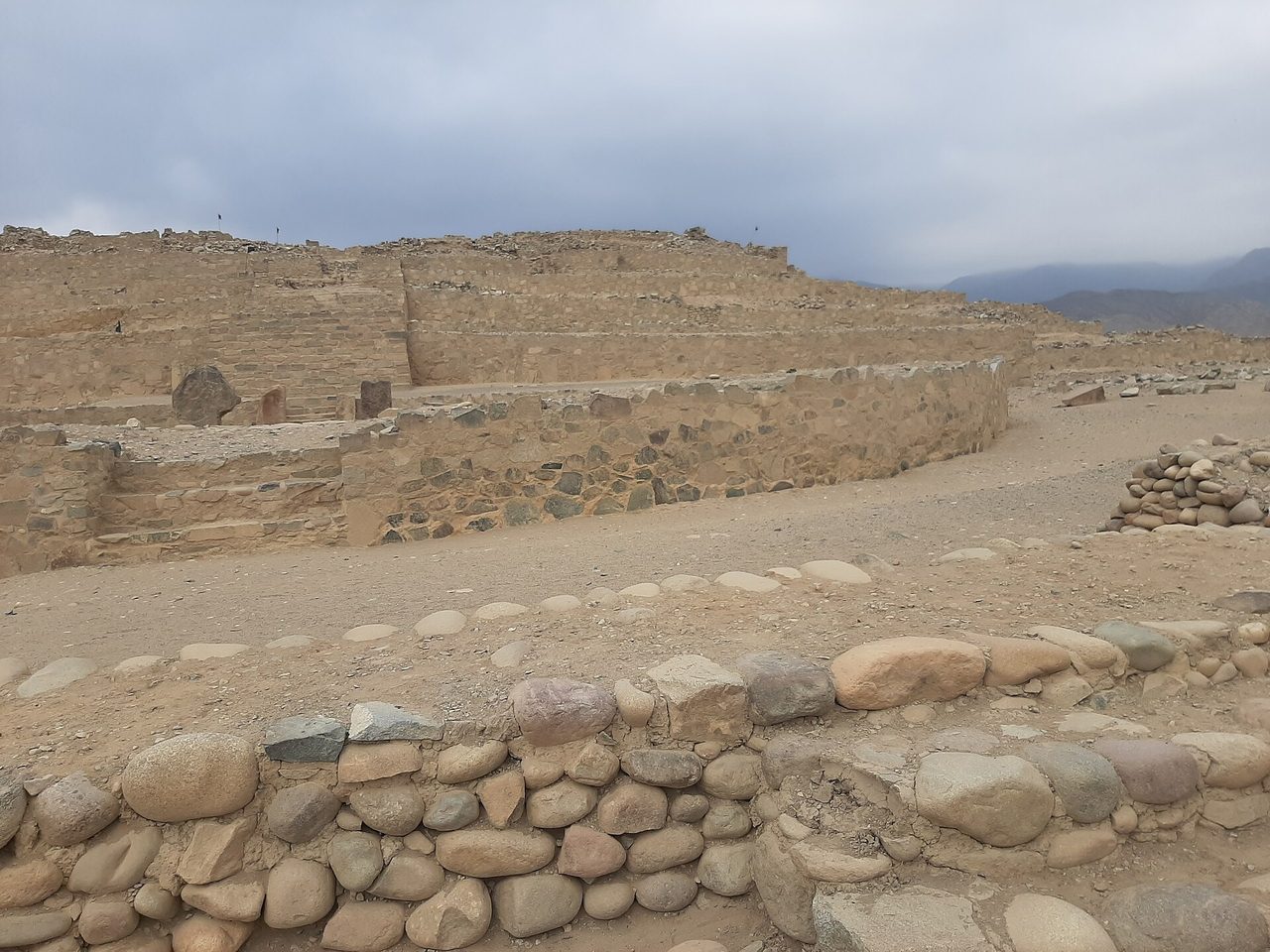
Caral is the answer I give when someone tells me they have a spare day in Lima and have already seen the obvious highlights of the city. It sits in the Supe valley in Barranca province, roughly 182 km north on the Panamericana Norte, and it is the oldest urban centre in the Americas — occupied from around 3000 BC, which makes the platform mounds broadly contemporary with the early pyramids of Egypt. There is no pottery. There is no defensive wall. There is a sunken circular plaza, six major mounds, and a set of quipu found in a context two millennia older than anyone expected them.
It was inscribed by UNESCO in 2009 and it receives a tiny fraction of the visitors Pachacamac does. On my visit there were maybe fifteen other people on the site. That is partly the drive — three and a half to four hours each way — and partly the fact that a 5,000-year-old city built of stone, reed bags and packed earth photographs badly. It is not a spectacle. It is a place you have to be told about, which is why the guided walk that comes with your ticket matters more here than anywhere else on this list.
Practicalities: entry is about S/11 for adults, S/4 for university students, S/6.50 for over-60s and S/1 for children. Open daily roughly 09:00–16:00, and the site closes firmly, so a late arrival wastes the trip. Independently: Movil Bus and Turismo Barranco run early departures from Lima — some as early as 05:30 — with return shuttles from Supe until late afternoon; expect around S/50 return, plus a colectivo or taxi for the last stretch of dirt road to the site. Organised tours from Lima run anywhere from about $60 shared to $200+ private, usually with lunch.
The honest caveat: this is an eleven-to-thirteen-hour day for two hours of walking around low earthen mounds. If ancient history does nothing for you, you will be bored and the drive will feel enormous. If it does, this is one of the more quietly astonishing places in the country, and it slots neatly into any itinerary built around the less-trafficked corners of Peru.
Verdict: do it — if you are the kind of traveller who reads the museum labels.
Palomino Islands: a half day, not a road trip
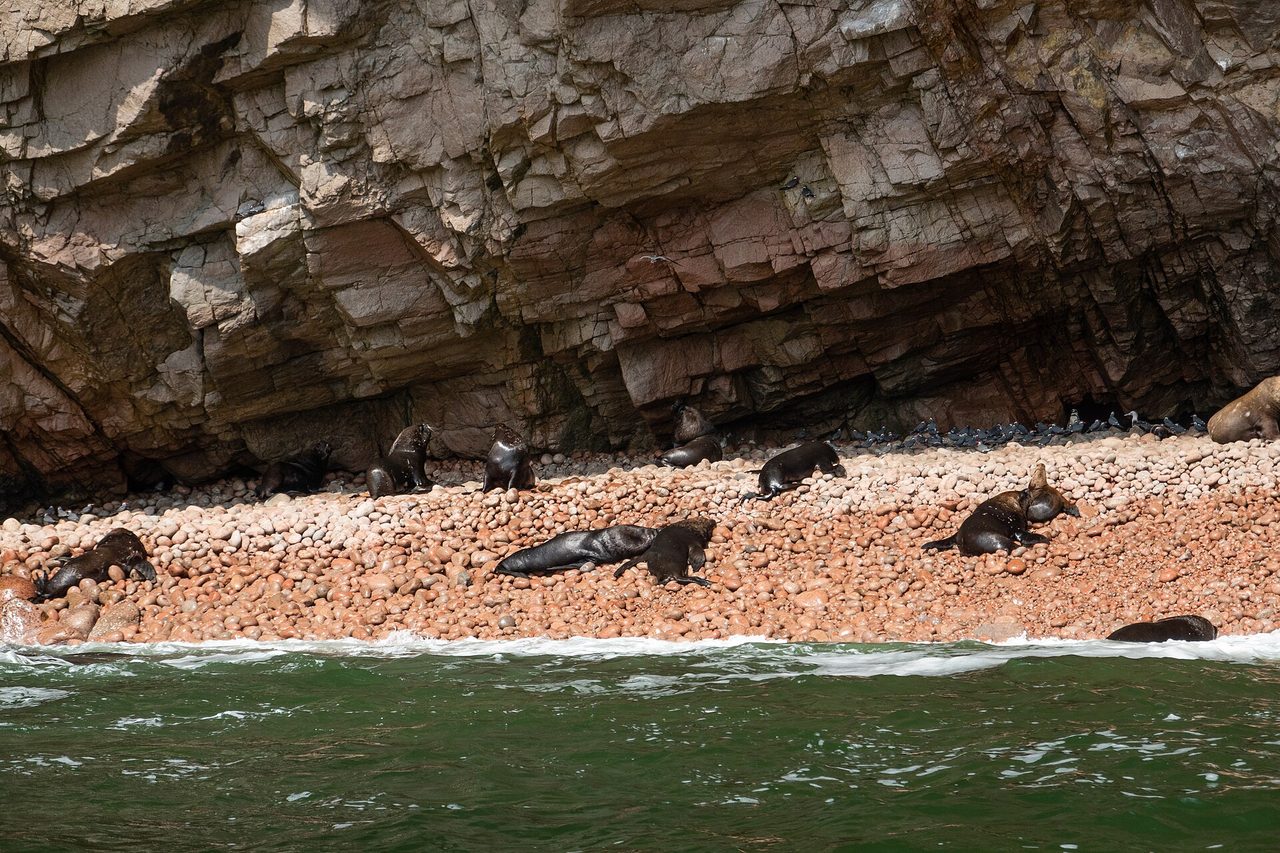
This one confuses people because it gets listed alongside Paracas, but it is a completely different proposition. You go to the port at Callao, forty minutes to an hour from Miraflores, board a boat, cruise past the islands off the coast and then get into the water with several thousand South American sea lions. Total elapsed time is four to six hours depending on the operator. You can be back for a late lunch.
The animals are wild and not fed, and they behave accordingly — curious, fast, and entirely uninterested in you until suddenly one is a metre from your face. Wetsuits and life jackets are provided, which you will want: the Humboldt Current keeps the water somewhere around 14–18°C year-round and it is a shock even in February.
Prices vary more than they should. Shared boats booked directly at the pier run roughly $40–55; the packaged versions with hotel pickup and a faster boat go from about $50 up to $125. There is also a small SERNANP conservation fee, usually around $5, which is often excluded from the headline price. Most departures leave mid-morning, around 09:30–10:00, because the swell builds later.
Two warnings. If you are prone to seasickness, take something before boarding — the crossing is short but choppy, and the slow displacement boats roll noticeably more than the speedboats. And this is a genuine wildlife encounter in open water with large animals; the operators are casual about briefings, so be sensible about distance. Anyone building a trip around Peru’s wildlife should treat this as a serious entry on the list rather than a novelty.
Verdict: do it. Best value-per-hour of anything here.
Lomas de Lachay: green for four months, brown for eight
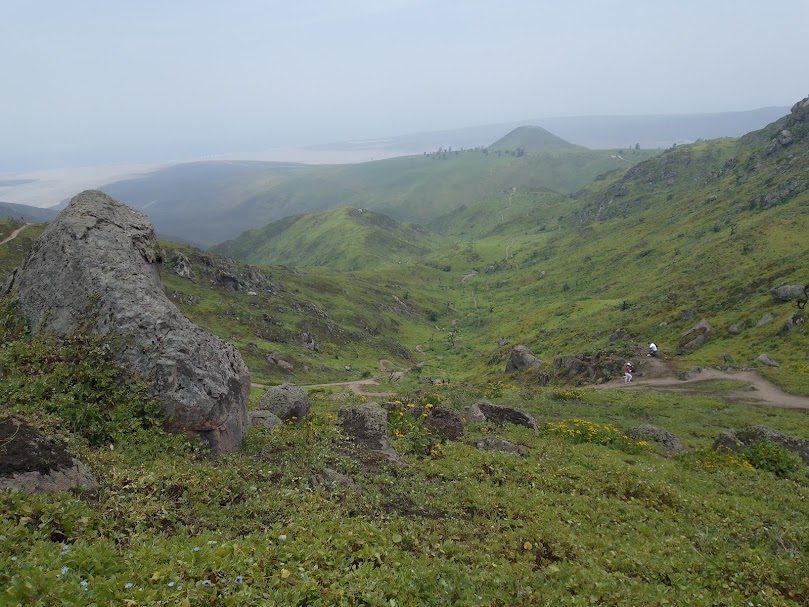
This is the trip where getting the timing right is the entire game. Lomas de Lachay is a national reserve about 105 km north of Lima, two to two and a half hours by road. For most of the year it is grey-brown desert hill. Then the winter fog rolls in off the cold ocean, condenses on the slopes, and the whole thing turns emerald — flowering, misty, full of birds, and completely unlike anything else within reach of the capital.
The window is roughly July to October, with August and September the reliable peak. By mid-October the vegetation is already dying back. In December, January or February there is nothing to see and you will have driven four hours round trip to look at dust. Every guide that lists Lachay without a date range is wasting your day.
Entry is modest — quoted figures range from around S/10 to S/30 depending on nationality and source, so carry cash and expect the sign at the gate to be the truth. There are marked circuits from the visitor centre; the main loop takes about two hours at a walking pace with a bit of climbing. Independently: take any northbound bus from Lima, ask to be let off at roughly km 105 of the Panamericana Norte, and cover the last few kilometres to the entrance on foot or by mototaxi. Organised hikes from Lima run $45–75.
Verdict: do it, in season. Outside July–October, skip it entirely.
Lunahuaná and the Cañete valley: rafting, zip lines, pisco
Lunahuaná is around 180 km south, two and a half to three hours, in a river valley that is sunny when Lima is not. That alone sells it between May and November. The Cañete river runs Class III–IV from roughly mid-December to early April, when Andean rain is feeding it; the rest of the year it drops to Class I–II, which is a pleasant float rather than an adventure. Operators will happily sell you “rafting” in August without mentioning that distinction.
Beyond the river there are zip lines across the canyon, quad tracks, a scattering of small bodegas producing pisco and semi-sweet valley wine, and the ruins of Incahuasi, an Inca administrative complex that most tours drive straight past. Day tours from Lima run $40–80 including transport and one activity, usually departing around 05:00–06:00. Independently, buses from Lima to Cañete then a colectivo up the valley will cost you a fraction of that but eat an extra hour each way.
It is a long day for what it is — eleven to thirteen hours — but it is the most reliable adventure day within reach of the capital, and unlike the coastal trips it is not ruined by grey weather.
Verdict: do it — and go in January–March if the whitewater is the point.
Antioquía and Cieneguilla: painted village, guaranteed sun
Cieneguilla sits about an hour east of Lima up the Lurín valley, high enough to be above the fog layer, which is why Limeños drive out there on grey Sundays to eat lunch in the sun. Keep going another ninety minutes on a narrow, winding, occasionally alarming road and you reach Antioquía, a village of a few hundred people whose houses were all painted — every wall, door and gate — as a rural development project in the early 2000s. Flowers, birds, saints, geometric borders. It should be twee and somehow it is not.
The route also passes the Huaycan de Cieneguilla archaeological complex and stretches of the Qhapaq Ñan, the Inca road network. Tours leave Lima around 05:30 and run $40–70. Doing it without a car is awkward — there is no clean public-transport chain to Antioquía — so this is one of the few entries where I would just take the tour.
Verdict: do it, especially in the fog months when you want to see the sun.
Paracas and the Ballestas Islands: good place, bad day trip
Paracas is genuinely worth going to. As a return trip from Lima it is a punishing sixteen hours for about four hours of value, and I would not do it again.
The arithmetic is unavoidable. Paracas is roughly 250–300 km south, about three and a half to four hours door to door. The Ballestas boats leave at 07:30 and 10:00 only, because the wind gets up later in the morning — there is essentially no afternoon sailing. So to make the 10:00 you are being picked up in Lima at 05:00–06:00. The boat is two hours, no landings permitted, all viewing from the water. Then you either do the Paracas National Reserve or push on south, and you get back to Lima somewhere between 10pm and midnight.
What you actually see is very good: sea lions in the hundreds, Humboldt penguins, guano birds in numbers that are hard to process, and the Candelabro geoglyph cut into a hillside on the way out. Humpbacks pass offshore roughly August to October; sea lion pupping is January to March. Costs if you do it yourself: the boat is around S/50–60 or $15–20 booked in Paracas, plus a Ballestas entry fee of roughly S/16–18 and a small embarkation tax; the National Reserve is around S/11–17 and the ticket is valid two days. Bundled day trips from Lima run $100–140.
The alternative is obvious and better. Take an evening or early-morning bus down, sleep in Paracas, do the 07:30 boat with calm water and no rush, spend the afternoon in the reserve, and carry on to Ica or back. One night converts a miserable day into a genuinely good two days, and it costs less than the packaged day trip once you account for what a rushed version leaves out. If you are travelling onward anyway, Paracas belongs on your route down the southern coast rather than as a return trip from the capital.
Verdict: overnight instead.
Huacachina and Ica: mostly bus
Everything I said about Paracas applies more strongly here. Huacachina is a small lagoon ringed by palms and enormous dunes, about 300 km south near Ica — four to four and a half hours each way in reality. A day trip from Lima gives you roughly two hours in a dune buggy and on a sandboard, maybe forty minutes to walk around the lagoon, and nine hours in a vehicle. That is not a day out; that is a commute with a stop.
The tours that combine Paracas, the Ballestas and Huacachina in one day are the worst offenders. Sixteen to eighteen hours, three destinations, and you will remember none of them clearly. The buggy ride is a genuine thrill — the drivers attack the dunes properly and the drops are steep enough to be frightening — and the dunes at sunset are one of the better sights on the coast. Both deserve more than a rushed hour.
Cost if you go independently: bus to Ica around S/40–70 each way depending on the company, a taxi to Huacachina for a few soles, and a buggy-and-sandboard session at roughly S/60–100 plus a small dune access fee. Packaged day trips run $110–150.
Verdict: overnight instead, or fold it into a longer route through the country. Sleeping in Huacachina, doing the sunset buggy run and a morning in an Ica bodega is a good twenty-four hours. Doing it from Lima and back is not.
The Nazca Lines: do not do this from Lima
Nazca is about 450 km south. That is seven to eight hours on the road each way. The day tours that exist depart Lima around 4am and get back after midnight — twenty to twenty-two hours, of which about thirty-five minutes is the thing you came for. The rest is a bus seat.
There is also a safety record that deserves to be stated plainly rather than buried. The Aviation Safety Network lists eight incidents at Nazca since the 1930s, five of them fatal. Five French tourists died in April 2008. Seven people died in February 2010. Four British tourists and two crew died in October 2010, after which Peru grounded all overflights and only a small fraction of the aircraft and operators were cleared to resume. Seven more died in a Cessna 207 in February 2022. And on 1 August 2026 an Aerodiana Cessna 208B Grand Caravan came down near Socos, a few kilometres from Nazca, killing all thirteen on board — eleven foreign tourists and two crew. The Ministry of Transport suspended Aerodiana’s operations the following day and the government was publicly weighing a temporary suspension of the aerodrome used by tourist flights.
I am writing this in August 2026 and the situation is unresolved. It may be fully restored by the time you read this, it may be restricted to a handful of operators, or the airfield may still be closed. Check the current status with the Ministry of Transport and your operator before you plan around a flight, and do not book a non-refundable Lima day tour that hinges on one taking off. These are small aircraft flying tight, repeated banking turns in thermally unstable desert air; even in normal operation, roughly a third of passengers are unwell by the end.
If you want to see the lines and you are heading south anyway, do it from Nazca or Pisco with a night either side. If you just want to lay eyes on a geoglyph, there is a 13-metre observation tower on the Panamericana about 20 km north of the town, entry a few soles, from which you can see the Hands, the Tree and part of the Lizard. It is not the same experience and I would not pretend otherwise, but it is honest and it costs almost nothing.
Verdict: skip it as a Lima day trip.
Marcahuasi: not a day trip, whatever the listing says
Marcahuasi is a plateau of wind-eroded rock formations above San Pedro de Casta in Huarochirí. The stone shapes are extraordinary and the place has a cult following. It is also, from Lima, not a day trip in any meaningful sense.
The chain is: Lima to Chosica by bus (around S/7 from Jirón Chota downtown), then a second bus up a rough mountain road to San Pedro de Casta (around S/15). Total four and a half to five hours if the connections align, which they frequently do not. Then you hike: the village sits at about 3,180 m and the plateau at close to 4,000 m, and the climb is roughly 5 km with several hundred metres of gain, two to three hours up. A local horse costs around S/20–30 if your legs give out.
Do the maths and a same-day return means summiting at 4,000 m having started at sea level that morning, then turning straight around. That is a recipe for a headache and a nasty afternoon, and you will be descending in the dark. Camp on the plateau or stay in the village. Two-day guided trips from Lima start around $120. If you like this kind of thing, it belongs alongside the country’s proper multi-day treks, not on a list of afternoon outings.
Verdict: overnight instead.
The half-days people forget: Barranco and Callao Monumental
A significant fraction of people asking about escaping the city do not actually need to leave it. Two half-days worth knowing about.
Barranco is a twenty-minute taxi from Miraflores and functions as a day out in its own right: republican mansions in varying states of collapse, the Pedro de Osma museum, the MATE photography space, a dense concentration of street art, and the clifftop walk down to the sea. Give it from eleven until dark, eat somewhere on Av. Pedro de Osma, and you will have had a better day than most people get on a bus to Ica.
Callao Monumental is the less obvious one. The historic core of the port — long written off as a no-go zone — has been partially rehabilitated as an arts district: painted facades, galleries in old buildings, and the Real Felipe fortress. Go in daylight, go on a guided walk if you are at all unsure, stick to the marked area, and take a taxi door to door. Done sensibly it is a genuinely interesting few hours and it pairs neatly with a morning at the Palomino Islands, since you are already in Callao.
Both are also useful if you are working through a single day in the capital and cannot justify a whole day on the highway.
The seasonality nobody explains: garua cuts both ways
From roughly May to November, Lima sits under the garúa — a low grey ceiling of coastal fog and drizzle that keeps the city damp, cool and sunless for weeks. It rarely produces measurable rain. It just sits there. Temperatures hover around 15–19°C and the light is flat.
This matters enormously and almost no guide says so. In those months the coastal trips are worse: the Ballestas boat is cold and grey, Huacachina’s dunes lose the colour that makes the photographs, and the beaches south of Lima are deserted for a reason. December to April is when the coast is warm, bright and worth the drive.
But the exact same fog is what makes Lomas de Lachay green. The lomas ecosystem exists only because of garúa condensation, so July to October — the worst months for the coast — are the only months Lachay is worth visiting at all. The same goes, in a smaller way, for Cieneguilla and the upper Lurín valley, which sit above the fog layer and are sunny precisely when the city is not.
So the seasonal split is clean: December–April for the ocean, the dunes and the beaches; July–October for the fog oasis and the inland valleys. If you are still deciding when to come at all, work it out against the rest of the country first — the coast and the Andes run on opposite calendars, which the guide on choosing your travel month covers in more detail, and the regional weather patterns are worth understanding before you lock in dates.
Practical spine: the Panamericana, buses, cars and traffic
The road. Everything south runs on the Panamericana Sur; everything north on the Panamericana Norte. There is no alternative route for either, which is worth remembering on long weekends. Tolls on the southern stretch out of Lima have been in flux since the concessionaire Rutas de Lima exited at the end of 2025 and collection was suspended at several booths pending court rulings; the first reliably charged toll heading south is around Chilca. This has flipped more than once and may have flipped again by the time you drive it, so budget S/20–40 in cash for tolls on a southern day trip and be pleased if you keep it.
Buses. Lima has no central bus station. Every company runs its own terminal, which is the single most confusing thing about moving around the country by road. For the southern coast, Cruz del Sur and Oltursa run from Javier Prado and are the comfortable option; Soyuz/PeruBus runs frequent cheap departures toward Cañete, Chincha and Ica from the Atocongo area. For Caral and the north, Movil Bus and the Barranca-bound companies leave from the northern terminals, some as early as 05:30. Peru Hop and similar tourist services cost more but collect you from your hotel, which removes a pre-dawn taxi to an unfamiliar terminal.
Rental cars. Mostly not worth it. Lima traffic is aggressive and the lane discipline is theoretical; parking at trailheads and archaeological sites is informal; and a one-day rental plus fuel plus tolls plus the stress usually costs more than a shared tour. The exceptions are Antioquía and the upper Lurín valley, where public transport is genuinely awkward, and Lomas de Lachay if you want to arrive before the tour groups. If you do drive, get out of the city before 06:00.
Traffic windows. Heading south, leave before 06:00 on a weekday or you will lose an hour. Heading north, before 05:30. Coming back on a Sunday afternoon is the worst decision available: the northbound return from the southern beaches jams solid, and in summer the municipality reverses lanes between Santa María and the Atocongo interchange between roughly 16:00 and 20:00 to cope with it. Either be back by three or wait until eight.
Money. Carry small soles. Site entries, tolls, mototaxis and dune fees are cash, and nobody at a reserve gate has change for a S/100 note. Rough per-person budgets: a Pachacamac morning under S/100 all in; Caral around S/150 independently; a Paracas day trip S/350–500 by the time you have added the boat and the fees. That maps onto the wider picture in the breakdown of what a trip to Peru actually costs.
What these trips are not good for
A short list of mistakes I have watched people make, all of them avoidable.
- Do not use a Lima day trip as your Nazca experience if you are travelling south anyway. You will spend fifteen hours on a bus to do badly what you could do properly, in daylight, with a night’s sleep, from Nazca or Pisco a week later.
- Do not book Paracas or Huacachina for the day before an early international flight. These tours get back between 10pm and midnight in the good case, and a single accident on the Panamericana turns that into 3am. Leave a clear day.
- Do not treat any of these as acclimatisation for the Andes. Lima is at sea level and so is almost everything on this list. Nothing you do here prepares your body for Cusco’s 3,400 m. Marcahuasi is the one exception and it is a two-day trip.
- Do not expect Inca stonework. Pachacamac and Caral are coastal, adobe and earthen, and Caral predates the Inca by four thousand years. If you want the mortarless masonry, that is the Sacred Valley and Machu Picchu, not Lima.
- Do not stack two of them back to back. A Paracas day followed by a Caral day is thirty hours of transit in forty-eight. You will hate the city by Wednesday.
- Do not assume tours run daily. Pachacamac is closed Mondays. Ballestas boats cancel in high wind. Lachay is pointless out of season. Confirm before you pay.
What I would actually book
One free day, first time in Peru: Pachacamac in the morning, back for a late lunch, then the Miraflores clifftops or Barranco in the afternoon. You get an ancient site, a proper meal and an evening you are awake for.
One free day, already seen the city: Caral. Long, quiet, and the sort of place you will still be thinking about later.
One free day, July to October: Lomas de Lachay. It is the only time of year the option exists.
Half a day and you want something memorable: the Palomino Islands. Nothing else on this list gives you that much for four hours.
Travelling with restless teenagers: Lunahuaná between January and March, for the whitewater. Otherwise the buggies at Huacachina, but as an overnight.
Two days spare: go to Paracas properly. Bus down in the evening, sleep there, take the 07:30 boat, spend the afternoon in the reserve, come back the following night or push on. That is the trip the day tours are a bad imitation of.
And if your Lima time is short, spend it in the city. Between the restaurants, the colonial centre and the coastal walk, what the capital itself offers is stronger than a lot of what is being sold as an escape from it. Where you base yourself matters too — the guide to choosing a Lima neighbourhood is worth reading before you book, because most tours only pick up in Miraflores and Barranco.
Frequently asked questions
What is the single best day trip from Lima?
Pachacamac, on the basis that the travel time is under an hour, the site is substantial, and you get your afternoon back. If you have a full free day and any interest in ancient history, Caral is the more remarkable place — but it costs you eleven hours.
Can you really do Paracas as a day trip?
Yes, physically. Pickup around 05:00–06:00, three and a half to four hours down, the 10:00 Ballestas boat, the reserve in the afternoon, back to Lima between 10pm and midnight. Fifteen to seventeen hours for about four hours of value. It works if you have no flexibility. If you have one spare night, use it.
Are the Nazca Lines flights safe?
The record is poor by any standard: five fatal accidents at Nazca on the Aviation Safety Network’s list, including crashes in 2008, twice in 2010, in 2022, and the Aerodiana Cessna 208B that came down on 1 August 2026 killing thirteen. Operations were suspended for that operator immediately afterwards and wider measures were under consideration. Check the current position with the Ministry of Transport and your operator, and do not build a non-refundable itinerary around a flight taking off.
How far is Huacachina from Lima?
About 300 km, four to four and a half hours each way door to door. A day return means roughly nine hours in a vehicle for two hours in the dunes.
How long does it take to get to Caral?
Three and a half to four hours each way, 182 km north on the Panamericana Norte. The site closes around 16:00, so a departure later than about 07:00 puts the visit at risk.
Do I need a rental car?
Mostly no. Buses and shared tours cover almost everything here more cheaply and with less stress. The two cases where a car genuinely helps are Antioquía and the upper Lurín valley, and beating the groups to Lomas de Lachay.
How much should I budget?
Roughly: under S/100 for Pachacamac done independently, around S/150 for Caral, S/200–350 for a coastal day trip, and $40–140 for the various packaged tours depending on distance and inclusions. Treat every price you see online as a range, not a quote — they move with season and group size.
When is Lomas de Lachay green?
Roughly July to October, peaking in August and September, driven entirely by the coastal fog. By late October the vegetation is dying back. From December to April there is nothing to see.
Can you swim with sea lions near Lima?
Yes, at the Palomino Islands off Callao. Boats leave mid-morning, the whole thing takes four to six hours, and it costs somewhere between $40 and $125 depending on the boat and whether hotel pickup is included. The water is cold year-round and a wetsuit is provided.
What is the closest archaeological site to Lima?
Inside the city, Huaca Pucllana in Miraflores and Huaca Huallamarca in San Isidro. Outside it, Pachacamac, about 32 km south — and it is on a completely different scale to either.
Are these trips worth it compared to what you can do from Cusco?
Honestly, no. The excursions available out of Cusco are stronger, closer together and more spectacular. Lima’s day trips are a useful way to fill a spare day at the start or end of a trip; they are not a reason to extend your stay. If your schedule is tight, put the days in the Andes and keep Lima for eating.
What if the weather is grey?
Between May and November it probably will be. Go inland rather than coastal: Cieneguilla and Antioquía sit above the fog, Lunahuaná is sunny most of the year, and Lomas de Lachay is at its best precisely because of the fog. Save the boats and the dunes for December to April. There is a fuller explanation of how the seasons work in the guide to practical things worth knowing before you go.