Barranco Neighborhood Guide
Barranco is Lima's best few hours and its riskiest place to book a bed. Museum prices, restaurant costs, which streets are loud until 3am, and whether it beats Miraflores as a base.
Barranco is just over three square kilometres of coastal Lima, and almost everything written about it uses the same four adjectives. I want to try something else. Most people typing barranco lima into a search box are really asking two practical questions: is this worth the trip down from Miraflores, and should I actually sleep here instead? The answers are yes and “it depends entirely on how well you sleep”. Barranco is the most interesting district in the city and it is also the one where a badly chosen hotel room will cost you a night’s rest.
I have stayed in Barranco three separate times and walked most of its streets in both the sunny half of the year and the grey half. What follows is the street-by-street version, with prices in soles, opening days, honest verdicts, and a clear statement of who should not stay here. If you want the wider city picture first, the full rundown of what there is to do in Lima covers the districts Barranco is competing with.
Barranco Lima at a glance: what you actually need to know
| Question | Short answer |
|---|---|
| Where is it | Directly south of Miraflores along the coast, roughly 4 km down the clifftop Malécon |
| Size | About 3.3 km², one of Lima’s smallest districts — the core is maybe eight walkable blocks |
| Altitude | Sea level. Zero acclimatisation issues, unlike Cusco at 3,400 m |
| Time needed as a visit | Half a day minimum, a full day if you include two museums and a long lunch |
| Time needed as a base | Two to four nights, if the noise question doesn’t apply to you |
| Uber to Miraflores | Roughly S/12–20, 10–20 minutes depending on traffic on the Circuito de Playas |
| Uber to the airport | Roughly S/45–80, 45–90 minutes. Budget 90 in the morning peak |
| Loudest nights | Friday and Saturday on and around Avenida Grau, past 3am |
| Best months for the coast | January to March. May to November is grey and 15–19°C |
The streets, honestly described
Barranco makes sense once you understand that it is built on a cliff edge with a ravine cut through it. Everything else follows from that geography.
Puente de los Suspiros and the Bajada de Baños
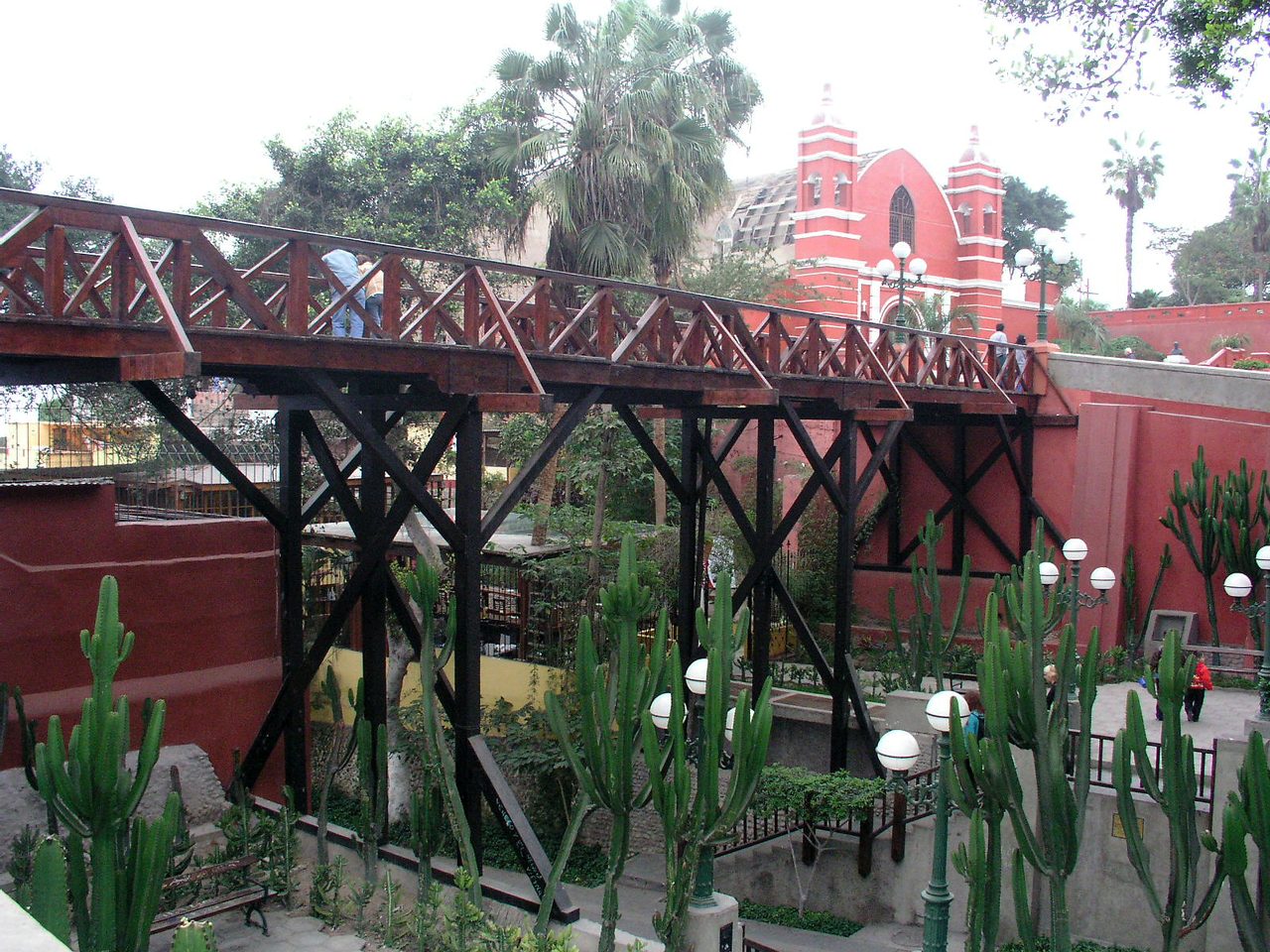
The Puente de los Suspiros is a short wooden footbridge, first built in 1876, spanning the ravine that runs down to the sea. It is about twenty metres long. That is the whole thing. It photographs beautifully and takes ninety seconds to cross, and if you arrive at 4pm on a Saturday you will queue behind a wedding shoot, two influencers with a ring light and a man selling picarones. Go at 8am and you will have it almost alone, with the light coming off the ocean and the church behind it in shadow.
The church is La Ermita, and this is the detail every guide skips: it is a shell. The roof went in the twentieth century and the building has stood unroofed and closed ever since, painted a strong red-ochre, with restoration announced and re-announced. You cannot go inside. Photograph it from the bridge and move on.
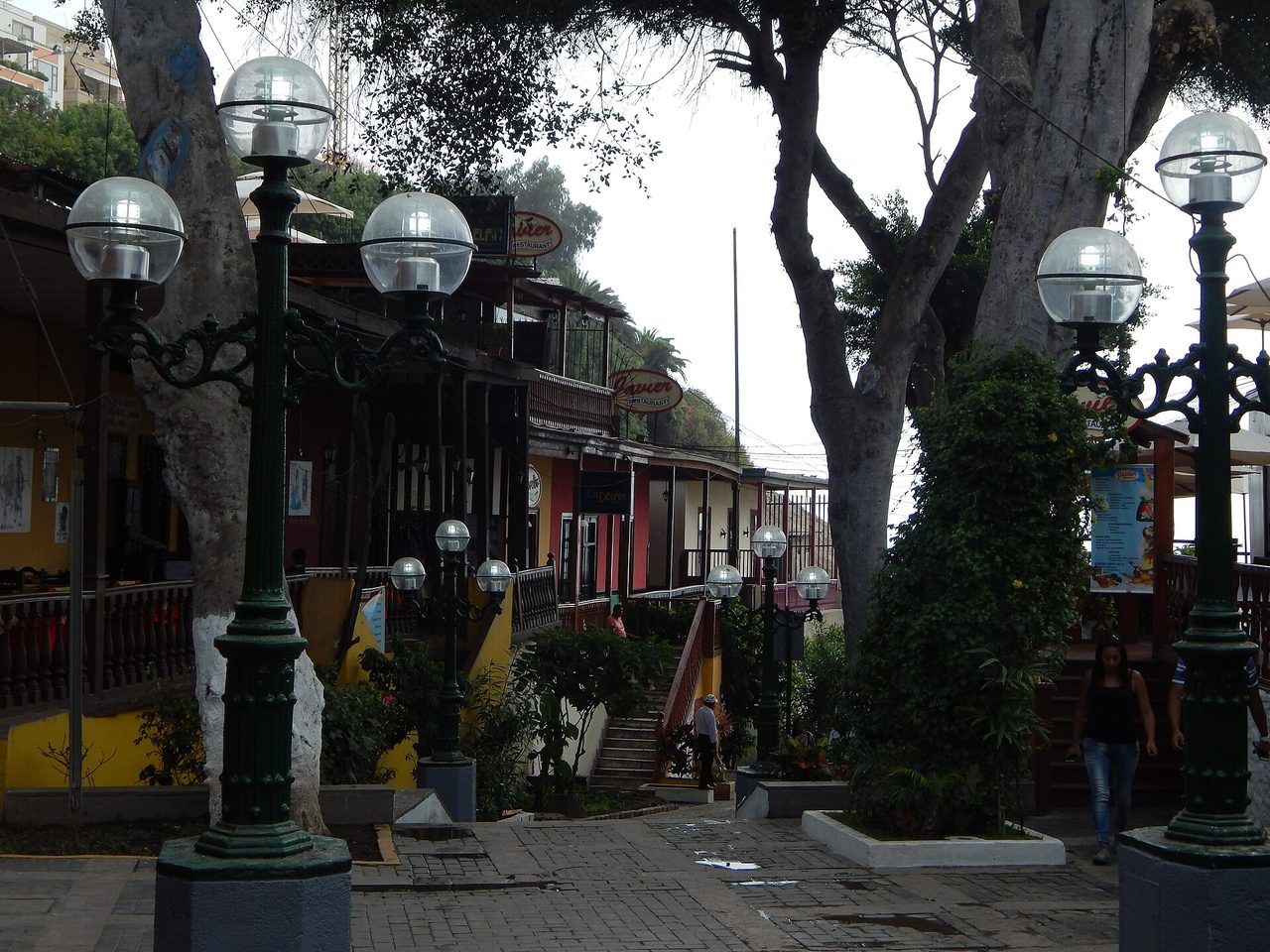
Below the bridge, the Bajada de Baños drops through the ravine toward the Pacific. It is a pedestrian ramp of maybe 500 metres, cobbled and stepped in places, lined with old timber-balconied houses that are now restaurants and bars. This is the single most attractive walk in Barranco and it takes about ten minutes downhill, fifteen back up because it is genuinely steep. At the bottom you cross under the Circuito de Playas highway to reach the pebble beach.
Be clear about that beach. It is grey stones, not sand, with a six-lane road between you and the cliff, and the current is strong enough that swimming is a bad idea for anyone who isn’t a confident surfer. Surfers do use it, all year, in wetsuits. Come for the walk down, not the swim. If beach time is what you want from Peru, you want the beaches and desert oases of the southern coast instead.
Avenida Sáenz Peña
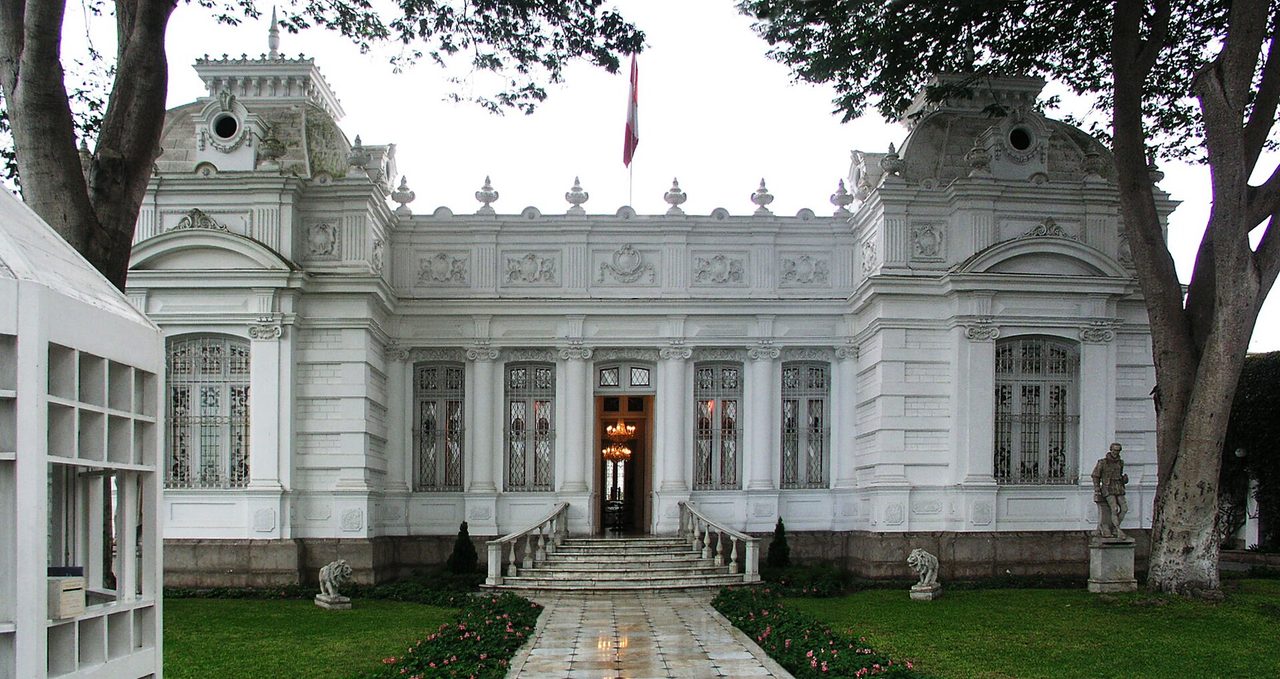
This is the street I send people to when they say Barranco disappointed them. Sáenz Peña runs inland from near the Parque Municipal and it is lined with the mansions built when this was Lima’s summer beach resort — wide facades, ironwork, palm trees, some restored to hotel standard and some quietly rotting behind their gates. It is a residential street, so it is quiet, and about a quarter of it is spectacular. Dédalo, the craft shop, is on it. So is Hotel B. Walk the length of it and you understand what Barranco was before it was a nightlife district.
Avenida Grau and the Boulevard
Avenida Almirante Miguel Grau is the district’s main commercial spine, running down through the middle, and the block-and-a-bit around the Parque Municipal is what everyone calls the Boulevard. It is bars, clubs, a couple of long-running peñas, food stalls and, at weekends, a wall of sound. On a Tuesday it is a pleasant, slightly scruffy street of restaurants. On a Friday and Saturday from about 10pm it is a crush of people and competing sound systems, and it does not stop at midnight. Two in the morning is normal. Three is common.
The Malécon and the murals
Barranco’s clifftop Malécon is a strip of park along the top of the cliff with benches, dogs, joggers and a long view over the bay. There is far less landscaping than in Miraflores and correspondingly fewer people, which is why I prefer it. The murals are concentrated inland rather than on the clifftop: Jirón 28 de Julio, Jirón Cajamarca, Avenida Pedro de Osma and Jirón 2 de Mayo are the productive streets, and the work changes constantly because a good deal of it is painted over annually. Walking them costs nothing, which puts it high on any list of things worth doing in Peru that cost no money at all.
Parque Municipal
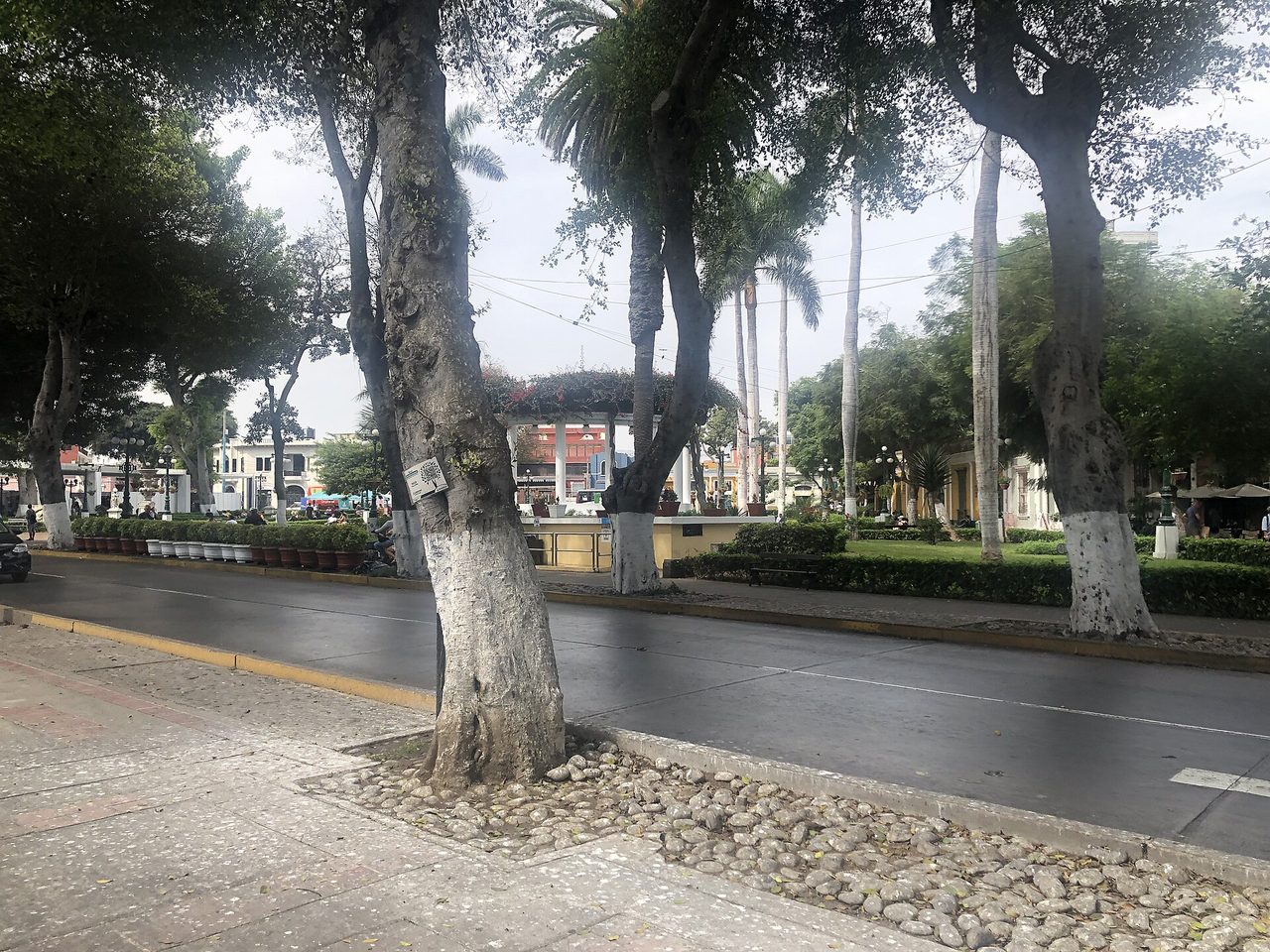
The square at the centre, with palms, a small library building and the yellow-and-white municipal architecture around it. It functions as the district’s living room by day and the staging area for the Boulevard by night. There is an important practical wrinkle here: the park is a protected monumental zone and the municipality has clamped down hard on street fairs in and around it. Several of the markets you will read about on other sites either moved or stopped. More on that below.
Things to do in Barranco, with real costs and a verdict
Prices and opening days below were checked in 2026 but Peruvian museums move both regularly. Confirm on the day before you build a morning around one.
| What | Cost | Time | My verdict |
|---|---|---|---|
| MATE — Museo Mario Testino, Av. Pedro de Osma 409 | Free at the time of writing (it used to be around S/10) | 45–60 min | Worth it, especially free. Tue–Sun, roughly 10:00–19:00. The Diana portraits are the draw; the rotating contemporary shows are hit and miss |
| Museo Pedro de Osma, Av. Pedro de Osma 421 | About S/20 general | 1.5–2 hrs | The best museum in the district by a distance. Colonial and viceregal painting, silverwork, and a superb building. Guided visits are included in the ticket — take one. Tue–Sun 10:00–18:00 |
| Casa Taller Víctor Delfín, Jr. Domeyer 368 | Around S/35 adults, about S/29.50 students and over-65s | 30–45 min guided | Book ahead by phone; it is a working artist’s house on the cliff, not a walk-in museum. Delightful if you like the sculpture, skippable if you don’t. Several flights of stairs |
| MAC Lima (contemporary art), Av. Grau 1511 | Modest ticket, grounds effectively free to wander | 1 hr | Go for the lawns as much as the art. Best non-commercial place in Barranco to sit down |
| Dédalo, Av. Sáenz Peña | Free to browse; ceramics from ~S/40, textiles and jewellery well into the hundreds | 30–45 min | The best-curated Peruvian craft shop in Lima and priced accordingly. Courtyard café at the back. Buy here rather than at the airport |
| The murals walk (28 de Julio, Cajamarca, Pedro de Osma, 2 de Mayo) | Free, or S/60–120 for a guided street-art tour | 1–1.5 hrs | Do it yourself. A guide adds context but the pieces are self-explanatory and the streets are simple to follow |
| Bajada de Baños down to the beach | Free | 45 min return | The best free half-hour in Barranco. Do it in daylight |
| Hotel B afternoon tea (lonche), Av. Sáenz Peña 204 | Paid for non-guests, expect a Miraflores-hotel price band; included for guests | 1–1.5 hrs | Served daily in the late afternoon, roughly 16:30–18:30. The house art collection runs to some 150 pieces and the curator does private tours by arrangement. Worth it if you like the building; skip if you just want cake |
| The weekend market stalls | Free to browse | 30 min | See the caveat below — the reliable one is La Feria on the first block of Jirón Unión, not the Parque Municipal |
About that Sunday antiques market
Half a dozen guides will tell you to turn up at the Parque Municipal on a Sunday for an antiques fair. Be careful with that. The municipality has restricted fairs in the park and surrounding streets because the area is a protected monumental zone, and the ecological market and general craft market that used to run in front of it were pushed out. What survives is on private land with permits: La Feria, a permanent covered market on the first block of Jirón Unión a couple of blocks off the square, which runs most of the second half of the week and all weekend, plus the ad hoc stalls that set up along the Bajada de Baños and under the bridge on Saturday and Sunday afternoons. Those stalls are craft and jewellery, not antiques. If you specifically want antiques, do not plan your Sunday around it.
Eating and drinking: this is the real reason to come
Barranco’s cultural attractions are good. Its restaurants are the actual argument for the district. Within about eight blocks you have one of the world’s most decorated tasting-menu restaurants and a cevichería where lunch costs less than a cocktail there. If you want the broader context of what you are eating, our guide to the dishes that define Peruvian cooking explains why ceviche is a lunchtime dish and not a dinner one.
The high end
Central sits on Avenida Pedro de Osma in the same complex as Kjolle. The tasting menus have run to roughly S/1,045 for the twelve-course Creatividad del Día and around S/1,250 for the fourteen-course Mundo, before drinks pairings, which add several hundred more. Reservations open months ahead and go fast. Kjolle, Pía León’s restaurant in the same building, has run around S/988 for the nine-course Entorno Máter with a pairing near S/456, and about S/760 for the seven-course menu with a pairing near S/350. Both are genuinely extraordinary and both are, in Peruvian terms, an absurd amount of money — a week’s domestic budget for two people, easily. Check current pricing on their own sites; these figures move upward.
Mérito is the one I would book first if I only had one big dinner. Venezuelan-Peruvian cooking, about ten tables, dinner Tuesday to Friday from the early evening and lunch plus dinner on Saturday. It has been near the top of the Latin America 50 Best list and the reservation list reflects that. A main-course-plus-starter dinner will land in the low hundreds of soles rather than the four figures Central asks for.
The middle and the classics
Isolina, on Avenida San Martín at the top of the district, is José del Castillo’s criollo taberna and the one I recommend to almost everyone. Starters run roughly S/23–83 — sangrecita with fried sweet potato around S/23, papa rellena around S/35. Personal-size mains sit around S/39–69: arroz chaufa de lomo near S/45, higado encebollado with tacu tacu near S/59, osobuco stew near S/69. The dishes marked for sharing are enormous and priced accordingly: cau cau near S/54, lomo saltado near S/74, costillar a la chorrillana near S/96. Two people can eat well for S/120–160 if they share one of the big plates. The catch: it is extremely popular, lunch is the main event, and the wait at peak weekend hours can be an hour or more. Arrive at noon.
Canta Rana, on Pasaje Génova near the Bajada, is the opposite in every way — a cramped, football-shrine cevichería of thirty-five-odd years with pennants covering the walls. Open Tuesday to Saturday from late morning to around 9pm, Sunday until about 6pm, Monday until about 5pm. Ceviche, tiradito, leche de tigre, arroz con mariscos. It is not cheap by huarique standards but it is a fraction of the tasting-menu world and the portions are large, which is broadly the argument for eating below the ranked tier in Lima. Cash is easiest.
Al Toke Pez is the one people constantly place in Barranco, and it is not there. It is on Avenida Angamos Este in Surquillo — a ten to fifteen minute taxi ride, around S/12–18. It is a counter with about ten stools and no reservations, plates around S/20–30, and the queue at 1pm is real. Worth the trip. Do not turn up in the evening; it is a lunch operation.
Bars
Ayahuasca occupies a restored nineteenth-century mansion off Prol. San Martín and is the standard first stop — room after room of restored and deliberately distressed interiors, and a serious pisco list. Cocktails land in the S/30–45 range. It gets loud and full after 10pm at weekends.
Juanito de Barranco, on Avenida Grau facing the square, has been open since 1937 and is the antidote to all of the above: a wood-panelled bodega bar serving chilcanos and jamón del país sandwiches, closing around 1am midweek and 2am on Friday and Saturday. Sit at the bar, order a chilcano and a sandwich, and you have understood more about Barranco than any mural tour will teach you.
One correction worth making, because the outdated recommendation is everywhere: Barranco Beer Company, the brewpub on Avenida Grau that appears in nearly every listicle, closed in 2024. There has since been a company registration at the same address, so something may reopen there, but do not plan an evening around it without checking first. Craft beer in Barranco now means the bars that stock it rather than a brewpub of its own.
Noise and safety, without the hand-wringing
This is the section other guides do not write, and it is the most useful thing I can tell you.
Noise. The Boulevard — Avenida Grau around the Parque Municipal, plus the first blocks off it — is loud on Friday and Saturday nights until roughly 3am, and it is not ambient hum. It is bass through walls, people on the street, and taxis. If your hotel room faces Grau or one of the immediately adjoining streets, and you are here on a weekend, you will hear it. Barranco’s buildings are old, the windows are often single-glazed, and the boutique hotels in converted mansions have famously thin walls. Sunday to Thursday, the district is quiet by midnight.
The practical fix is simple and nobody tells you it: when you book, ask which street the room faces and whether it is on the park side. A room on Sáenz Peña, Pedro de Osma, or on the Malécon side of the district is a different night’s sleep from a room on Grau. Bring earplugs regardless.
Safety. The core of Barranco — the square, Sáenz Peña, Pedro de Osma, the bridge, the Malécon by day — is well used and comfortable. What actually deserves care is more specific than “be careful at night”:
- The Bajada de Baños after the restaurants shut is dark, quiet and enclosed. Fine at 8pm with people about, not somewhere to wander alone at 1am.
- The beach and the Circuito de Playas underpass at night. There is no reason to be down there after dark and very few people are.
- The stretch south toward Chorrillos, past the edge of the tourist core, is an ordinary Lima district with ordinary Lima street crime. Take a car rather than walking it after dark.
- Phones. Opportunistic snatching from the hand, on the street and from outdoor tables, is the single most common thing that happens to visitors in Lima. Use your phone inside a shop or restaurant, not standing on a corner.
Use Uber, Cabify or DiDi rather than flagging a car in the street — the ride record matters more than the price. That advice holds across the country, and the rest of it is in our practical travel tips for Peru.
Getting there and getting around
| Route | How | Cost | Time |
|---|---|---|---|
| Miraflores → Barranco | Uber/Cabify/DiDi | S/12–20 | 10–20 min |
| Miraflores → Barranco | Walk the Malécon | Free | About 1 hour, roughly 4 km |
| Centro Histórico → Barranco | Uber | S/25–40 | 30–50 min, longer at rush hour |
| Centro Histórico → Barranco | Metropolitano to Bulevar station | S/2.50 plus a card | 30–40 min |
| Airport → Barranco | Uber or pre-booked car | S/45–80 by app; more for a booked transfer | 45–90 min |
The Metropolitano’s Bulevar station sits on Avenida Bolognesi at Jirón Pazos, a few minutes’ walk from the square, on Route C, running from about 5am to 11pm. You need a rechargeable card, sold at the stations. It is the cheapest way in from the Centro by a wide margin and it is a proper bus rapid transit line, not a combi. It is also crowded at peak hours and not designed for people with big luggage.
The Malécon walk from Miraflores deserves its own paragraph. From Parque del Amor in Miraflores you follow the clifftop parks south, past the paragliders, along a paved path all the way into Barranco. It is about an hour at a normal pace, mostly flat, with the ocean on your right the entire way. It is the single best thing to do in Lima that costs nothing, and it is how I would arrive in Barranco for the first time. Do it in daylight, carry water, and note that there is a short stretch where the path drops close to the road. Anyone assembling a wider list of the strongest things to do across Lima should have this on it.
Within Barranco you do not need transport at all. The entire core is walkable in twenty minutes end to end, though the ravine means a certain amount of up and down. Cobbles and uneven pavements are constant, so this is not a district for wheeled luggage or unsteady legs. If you are working out how the city fits into a wider route, our guide to moving between Peru’s regions covers the flights and buses out.
The garúa problem: Barranco from May to November
Lima sits under a cold coastal fog for roughly half the year. From about May to November the garúa settles in: a flat grey lid, damp air, temperatures between 15 and 19°C, and sometimes weeks without direct sun. It rarely rains properly. It is simply grey, and it does not lift by lunchtime the way people expect.
This matters more in Barranco than anywhere else in the city, because half of Barranco’s appeal is the cliff, the ocean view and the walk down to the sea. Under garúa the Malécon view is a white wall about 200 metres out, the beach is bleak, and pastel houses look considerably less pastel. The photographs everyone has seen of Barranco were taken in February.
The good news is that this is entirely survivable if you plan for it, and that the garúa months are also the dry season in the mountains, which is exactly when you want to be at Machu Picchu. So most people passing through Lima on a Peru trip see grey Barranco whether they like it or not. Our breakdown of how the weather works across Peru’s regions explains why the coast and the Andes run on opposite calendars, and the season-by-season overview puts numbers on it.
A grey-day Barranco
Rebuild the day indoors and it works fine:
- 10:00 — Museo Pedro de Osma, with the included guided visit. Ninety minutes, entirely indoors, and the collection is strong enough to hold you.
- 11:45 — MATE, two doors up. Another hour, free at the time of writing.
- 13:00 — Lunch at Isolina or Canta Rana. Grey weather is exactly the right weather for criollo stews.
- 15:00 — The murals. Street art is the one outdoor activity garúa does not damage, because the colours pop harder against a flat sky than they do in glare.
- 16:30 — Lonche at Hotel B, or a coffee and the courtyard at Dédalo.
- 18:30 — A chilcano at Juanito’s. There is no view to miss.
If you are choosing your travel dates and this is putting you off, January to March is the fix — hot, bright and humid on the coast, and the one time of year Lima looks like the brochure. The trade-off is that it is the wet season in the highlands. Our guide to when to visit Peru overall works through that compromise, and the shoulder-season case in April and October–November is the usual answer for people who want both halves of the country to behave.
Barranco or Miraflores: where should you actually stay?
Here is my position, stated plainly. Barranco is the better base for a second-time visitor, a couple, or anyone whose Lima days are about eating and walking. Miraflores is the better base for a first-timer on a tight schedule, a family, and anyone with an early flight. That is not a fudge; it is a genuine split.
| Barranco | Miraflores | |
|---|---|---|
| Character | Old resort district, cliffs, murals, low-rise, uneven | Modern, commercial, high-rise, tidy |
| Walkable core | Small — genuinely 20 minutes end to end | Larger and flatter, more to cover |
| Restaurants | Deeper and better at both ends of the price range | More of them, more international, more chains |
| Hotels | Boutique conversions and hostels, very little in between | Everything from S/80 hostels to five-star chains |
| Weekend noise | Significant near Grau until roughly 3am | Contained; most hotel districts are quiet |
| Airport access | Slightly further, 45–90 min | Slightly closer, 40–80 min |
| Suits | Repeat visitors, couples, eaters, people who like walking | First-timers, families, short stopovers, early departures |
The other thing to be honest about: Barranco has already been substantially gentrified, and the process is well documented rather than a matter of opinion. Average asking rents in the district are now the highest in Lima, comfortably above S/4,000 a month, and sale prices in the newer sections have pushed towards S/10,000 per square metre. Restrictions on new building in the protected zones have squeezed supply while demand climbed. The practical consequence for a visitor is a district that is beautiful, expensive, and noticeably emptier of the artists whose presence is the reason it is marketed to you. There are still working studios and there is still a genuine street-art culture. But you are visiting a neighbourhood that has been sold, not one in the middle of being discovered, and I would rather say so.
If you are still deciding how many nights Lima gets at all, our thinking on where to base yourself around the country and the standard Peru route planning both assume two to three Lima nights, usually split around the Cusco leg.
Who Barranco is not for
I would actively steer these travellers to Miraflores or San Isidro:
- Light sleepers arriving on a Friday or Saturday. This is the big one. If noise wrecks your trip, the risk here is real and the housing stock is old.
- Families with small children who need a quiet, predictable base. Barranco is short on family-sized rooms, long on stairs and cobbles, and its evening rhythm is adult.
- Anyone with an early or late flight. The extra fifteen minutes each way is not much, but combined with unpredictable traffic on the Via Expresa it makes a 5am departure less comfortable than it needs to be.
- Travellers with mobility difficulties. The ravine, the Bajada, the stairways and the state of the pavements make this a physically demanding district.
- Anyone who wants a pool, a gym and room service. The boutique conversions here trade those things for character. That is a deliberate exchange and you should make it knowingly.
Everyone else: stay two nights, book a room that does not face Grau, and eat your way through it. If you are pairing Lima with the rest of the country, the way most people do it is spelled out in our ten-day Peru plan, and the shorter version in the one-week route.
A day in Barranco that actually works
- 08:30 — Walk the Malécon south from Miraflores, or start at the Barranco clifftop if you are already here. The light is at its best and the bridge is empty.
- 09:30 — Puente de los Suspiros, La Ermita from the outside, then down the Bajada de Baños to the sea and back up.
- 10:30 — Museo Pedro de Osma with a guided visit.
- 12:15 — MATE, two doors along.
- 13:00 — Lunch. Isolina if you want criollo and can face the wait, Canta Rana if you want ceviche and a table.
- 15:00 — The murals on 28 de Julio and Cajamarca, then Sáenz Peña for the mansions and Dédalo.
- 16:30 — Lonche at Hotel B, or the MAC lawns if you want to sit outside.
- 18:00 — Sunset from the Malécon, weather permitting, between roughly December and April.
- 19:00 — A chilcano at Juanito’s, then a pisco sour at Ayahuasca.
- 21:00 — Dinner. Mérito if you booked weeks ago, one of the Bajada restaurants if you did not.
That is a full day and it is more than most visitors give the district. If you only have three hours, do the bridge, the Bajada, Pedro de Osma and lunch, and skip everything else.
Frequently asked questions
Is Barranco worth visiting?
Yes, and it is the part of Lima I would not skip. It has the city’s best small museum, several of its best restaurants, its most interesting architecture and its only genuinely charming walk. It is also small, so half a day covers the essentials. What it is not is a full day of blockbuster sights — if you measure a district by ticketed attractions, you will be underwhelmed.
Is Barranco safe at night?
The main streets and the square are busy and comfortable well into the evening. The specific places to avoid alone late are the Bajada de Baños once the restaurants close, the beach and the highway underpass, and the streets running south toward Chorrillos. Phone snatching is the realistic risk everywhere in Lima; violent crime against tourists in Barranco is not common. Take app taxis after dark and keep your phone put away on the street.
Is it better to stay in Barranco or Miraflores?
Barranco if you are a repeat visitor, a couple, or someone whose priority is food and atmosphere, and you sleep soundly. Miraflores if it is your first time in Peru, you are travelling with children, you have an early flight, or weekend noise is a dealbreaker. The two are ten to twenty minutes apart, so you will spend time in both regardless — and what Miraflores actually gives you street by street is worth reading before you decide.
How much time do you need in Barranco?
Three hours for the highlights, a full day to do it properly with two museums and a long lunch, two to three nights if you are using it as a base. It is small enough that a week here would be too much unless you are working from a laptop.
How do you get from Miraflores to Barranco?
Uber, Cabify or DiDi for S/12–20 in 10–20 minutes, or walk the clifftop Malécon in about an hour. The walk is genuinely worth doing once, in daylight. The Metropolitano’s Bulevar station is more useful for reaching the Centro Histórico than for the short Miraflores hop.
Can you swim at Barranco beach?
Not sensibly. It is a stone beach with strong currents and a highway between it and the cliff, and the water is cold year-round because of the Humboldt current. Surfers use it in wetsuits. Walk down for the view and the walk itself, not for a swim.
Is Barranco expensive?
For visitors, it is the priciest district in Lima to sleep in relative to what you get, and its restaurants span an enormous range — S/25 for a plate at a cevichería to over S/1,000 for a tasting menu. Museums are cheap or free. Our breakdown of what a Peru trip actually costs puts Lima in context against Cusco and the Sacred Valley.
What day of the week is best?
Thursday or Friday during the day. Most museums close on Mondays, weekend afternoons are crowded at the bridge, and Sunday is quiet in a way that closes several restaurants. If you want the market stalls, come on a weekend afternoon; if you want the district to yourself, come on a weekday morning.
Do I need to acclimatise before or after Barranco?
No — Lima is at sea level, so nothing here has any altitude effect at all. The adjustment comes later, when you fly to Cusco at 3,400 m. Machu Picchu itself is lower, at 2,430 m, which surprises people. Our guide to handling the altitude in Cusco explains why a couple of easy days there is a better plan than arriving and going straight up a mountain.
What else should I see in Lima if I like Barranco?
The Centro Histórico for the colonial architecture and the catacombs, Pueblo Libre for the Museo Larco, and Miraflores for Huaca Pucllana — a pre-Inca adobe pyramid sitting in the middle of a residential district, which is one of the more unexpected archaeological sites in Peru precisely because of where it is. If you have a spare day, the wider list of places worth building a trip around will tell you whether Lima deserves a third night or whether you should fly out sooner.
The short version
Barranco is a small, steep, expensive, extremely good-looking district that has been thoroughly gentrified and is still the most rewarding few hours in Lima. Go for Pedro de Osma, the Bajada down to the sea, and lunch. Stay if you sleep well and pick your street carefully. Expect grey skies for half the year and plan an indoor version of the day. And if a guide tells you the Sunday antiques market in the Parque Municipal is a fixture, or sends you to a brewpub on Grau that shut in 2024, check the date on the article before you follow it.