Miraflores Neighborhood Guide
A street-by-street guide to the district almost every visitor sleeps in: what Parque Kennedy, Avenida Larco and the Malecon are really like, real prices for Huaca Pucllana, paragliding and taxis, honest accommodation bands, and why nobody warns you about the fog.
Almost every visitor to Peru sleeps in Miraflores, and almost none of them chose it. Your hotel booking put you there, your tour pickup is there, the airport transfer quotes a price to there. So the honest question is not whether Miraflores Lima is worth staying in — you are probably staying there regardless — but what it actually gives you, what it quietly takes away, and which four blocks are worth your time versus which forty are a shopping street with a sea view at the end.
I have walked this district a lot, in sun and in the months when there is no sun at all. Here is the version I wish someone had given me: street by street, with prices, walking times and the trade-offs said out loud.
What Miraflores is, and what it is not
Miraflores is a district of roughly 100,000 residents sitting on a shelf of crumbling clifftop about 70 metres above the Pacific, at the western edge of Lima. It is the wealthiest tourist-facing part of the city, and it works: the pavements are level, the streetlights work, there is a police kiosk every few blocks, and you can drink the coffee without thinking about it.
It is also, and this is the part guides skip, the least Peruvian part of Peru you will spend a night in. The signage is bilingual. The prices are set for people paying in dollars. A ceviche that costs S/25 in a Surquillo market hall costs S/68 four blocks west. Sitting on a terrace on Avenida Larco you could be in Valencia, or Miami, or the nicer end of Santiago. Nobody has done anything wrong here. It is just that convenience and character are usually traded against each other, and Miraflores has traded hard in one direction.
What you get in exchange is real. Lima is at sea level, so you can arrive off a long-haul flight and function immediately — which matters enormously if your next stop is Cusco, where the 3,400 m altitude hits most people within hours of landing. You get walkability in a city of 10 million where almost nowhere else is walkable. You get the country’s densest concentration of good restaurants. And you get a clifftop park system that is genuinely one of the better urban walks in South America.
A street-level orientation to Miraflores Lima
Miraflores makes no sense from a map. It makes sense once you understand that it hangs off two axes: one running inland to the sea (Avenida Larco) and one running along the cliff edge (the Malecón). Everything else is infill.
Parque Kennedy: the centre of gravity
Parque Kennedy is not one park but two joined together — Parque Kennedy proper and Parque 7 de Junio — forming a long green wedge between Avenida Larco, Avenida Diagonal and Avenida Ricardo Palma. If someone in Miraflores says “meet me at the park,” this is it.
The cats are real and they are the main event. Several dozen of them live in the flowerbeds, fed and vetted by a volunteer group, and they are so habituated that they will walk across your feet without breaking stride. On the Larco side there is a permanent artisan and painters’ market, half of it genuinely handmade and half of it the same mass-printed canvases you will see in every plaza in Peru. In the evenings there are churro and picarones carts, buskers, and on weekend nights a speaker gets wheeled out and couples in their sixties dance cumbia and salsa with more competence than anyone under forty in the crowd. The church at the top of the wedge, the Parroquia La Virgen Milagrosa, dates from 1939 and is worth five minutes for the cool and the quiet.
Parque Kennedy is also where the district is at its most touristy: timeshare touts, restaurant hawkers with laminated menus, and a lot of people trying to sell you a tour. Say no and keep walking; nobody pushes.
Avenida Larco: the commercial spine you will overuse
Larco runs from Parque Kennedy down to the cliff at Larcomar, about 1 km, and it is the street every first-timer walks four times a day. It is loud. Six lanes of traffic, banks, phone shops, pharmacies, casinos, fast food, and the highest concentration of pickpocketing and phone-snatching in the district. It is useful — the ATMs and the exchange houses are here — and it is not pleasant.
The trick is to stop using it as a walking route. One block either side, on Calle Schell or Calle Alcanfores or the Bolognesi side, the noise halves and the walk is the same length.
The Malecón: the reason to be here
The Malecón is a chain of small clifftop parks strung along the edge, linked by a continuous paved path and a bike lane. The Miraflores stretch alone runs about 6 km; follow it south and the clifftop path carries on into Barranco and Chorrillos for something closer to 10 km in total. It is free, it is open all hours, and it is the single best thing about the district. Not every park in the chain is worth stopping at, though:
- Parque del Amor — the one everyone photographs. Víctor Delfín’s enormous sculpture El Beso sits in the middle of a Gaudí-ish mosaic amphitheatre, with lines of Peruvian love poetry set into the tilework. It is small, it takes ten minutes, and it earns them. Go early or late; at sunset it is a queue of couples waiting for the same photo.
- Parque Salazar — the lawn sitting directly on top of Larcomar. Best sea view in Miraflores and a lot of people know it. Good for a sit, not a destination.
- Parque María Reiche — a long, thin strip with reproductions of the Nazca lines cut into the grass. It is honestly a bit sad and half-maintained. Walk through it, do not plan around it.
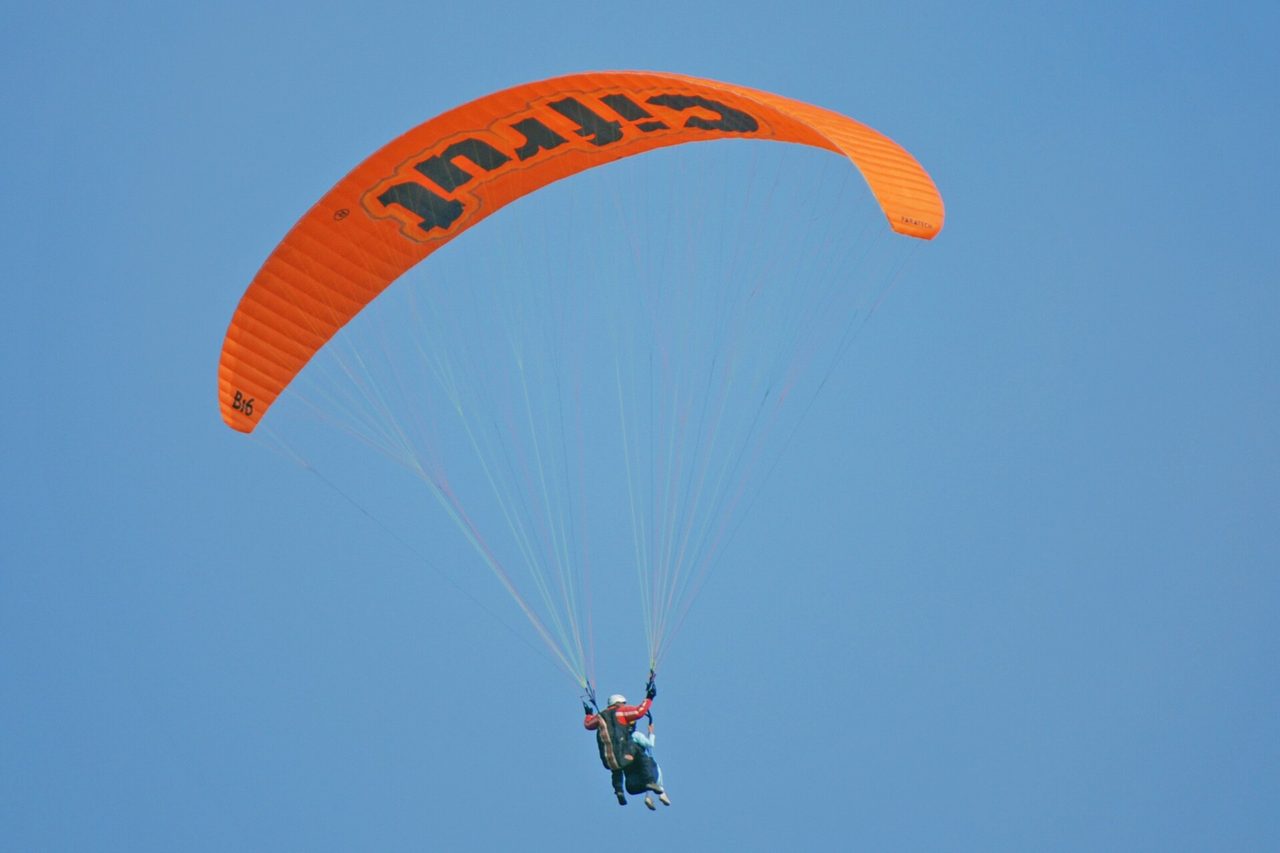
- Parque Raimondi — where the paragliders launch. Even if you are not flying, it is the most entertaining twenty minutes on the cliff.
- Faro La Marina — a small white lighthouse in Parque Antonio Raimondi’s neighbouring green. Photogenic, two minutes.
Walk it north to south if you only do it once: start near the lighthouse, finish at Parque del Amor or Larcomar. Allow an hour at a stroll.
Calle Berlín, Bolognesi and where the eating actually happens
The restaurants worth crossing town for are not on Larco. Calle Berlín, a short street running off Larco toward the north-east, has a run of small kitchens, bars and sangucherías at a fraction of the seafront prices. Avenida Bolognesi, heading south-east toward the Barranco border, is where a lot of the newer, more interesting places have opened over the last few years — wine bars, pizza, Nikkei that is not charging tasting-menu money. The blocks around Calle Manuel Bonilla and Calle San Martín sit in between. For the wider picture across all three price tiers, my ranked guide to eating in Lima covers the huariques as well as the tasting menus.
Anywhere with a person outside holding a laminated menu is a place you can skip. The rule holds across the whole country, but it is enforced most rigorously here. If you want to understand what you are ordering before you sit down, our guide to the dishes worth seeking out in Peru is a better prep than any restaurant list.
One genuinely useful trick: at lunchtime, look for a chalkboard saying menú. A two- or three-course set lunch with a drink runs S/15–30 even in Miraflores, against S/70–120 for the equivalent ordered à la carte in the evening.
Larcomar and the south end
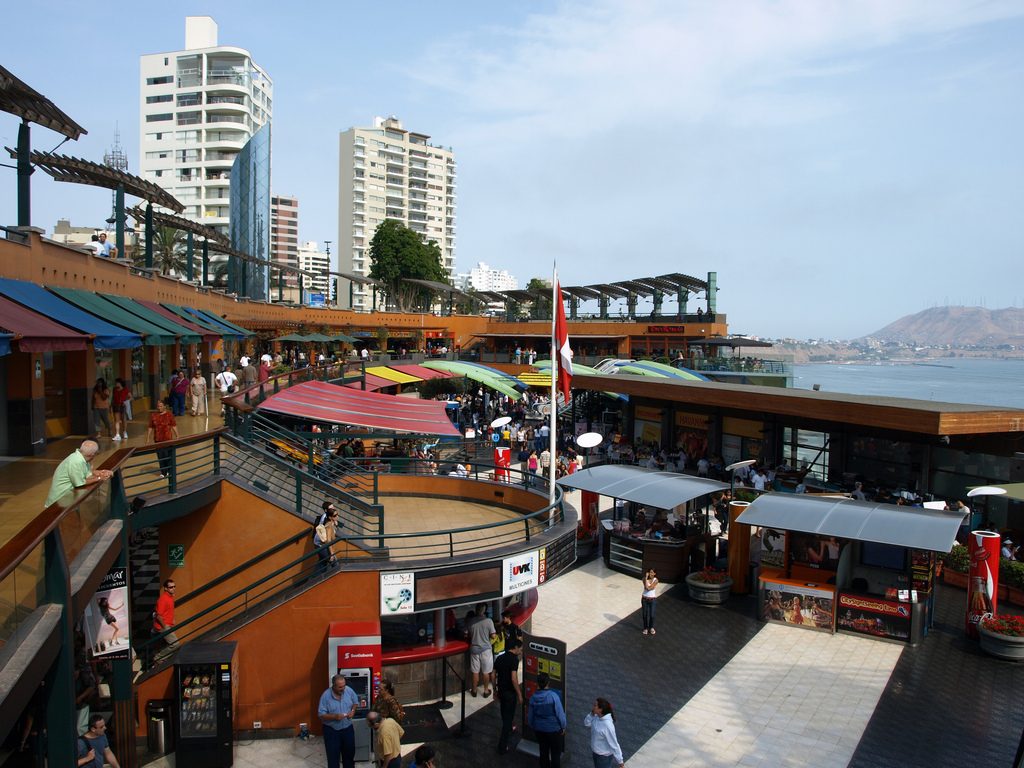
Larcomar is a shopping centre built into the face of the cliff below Parque Salazar, so that from the street you barely see it and from the sea it is a stack of terraces. Architecturally it is a clever solution to a difficult site. As a place, it is a mall: H&M, Starbucks, a cinema, a food court, and a set of restaurants charging a 40–60% view premium.
I would not send anyone here as an attraction. I would send them here for practical reasons, and there are several good ones: it has clean toilets, reliable ATMs, a decent supermarket nearby, phone and SIM shops, and two Peruvian alpaca labels (Kuna and Sol Alpaca) where the quality is genuinely better than anything in the craft markets. If an airline has lost your bag, Larcomar solves your problem in ninety minutes. That is a real function.
The quiet blocks toward San Isidro
North and east of Avenida Pardo, as Miraflores runs toward San Isidro, the district changes character. Wider streets, older houses, jacaranda and ficus, almost no tourists. Avenida Pardo itself has a planted central promenade you can walk the length of. If Miraflores is stressing you out, this is where to go, and it is also where Bosque El Olivar sits — technically over the border in San Isidro, a fifteen-minute taxi or a forty-minute walk, and worth both.
Things to do in Miraflores: the honest ranking
Miraflores does not have many sights. It has one archaeological site, one very good walk, and a set of activities. That is genuinely fine for two or three days, and it is the reason people who allocate five days to Lima end up bored. If you are still shaping your route, our overview of how to sequence a Peru trip covers how much time Lima actually deserves.
| What | Cost | Time needed | Verdict |
|---|---|---|---|
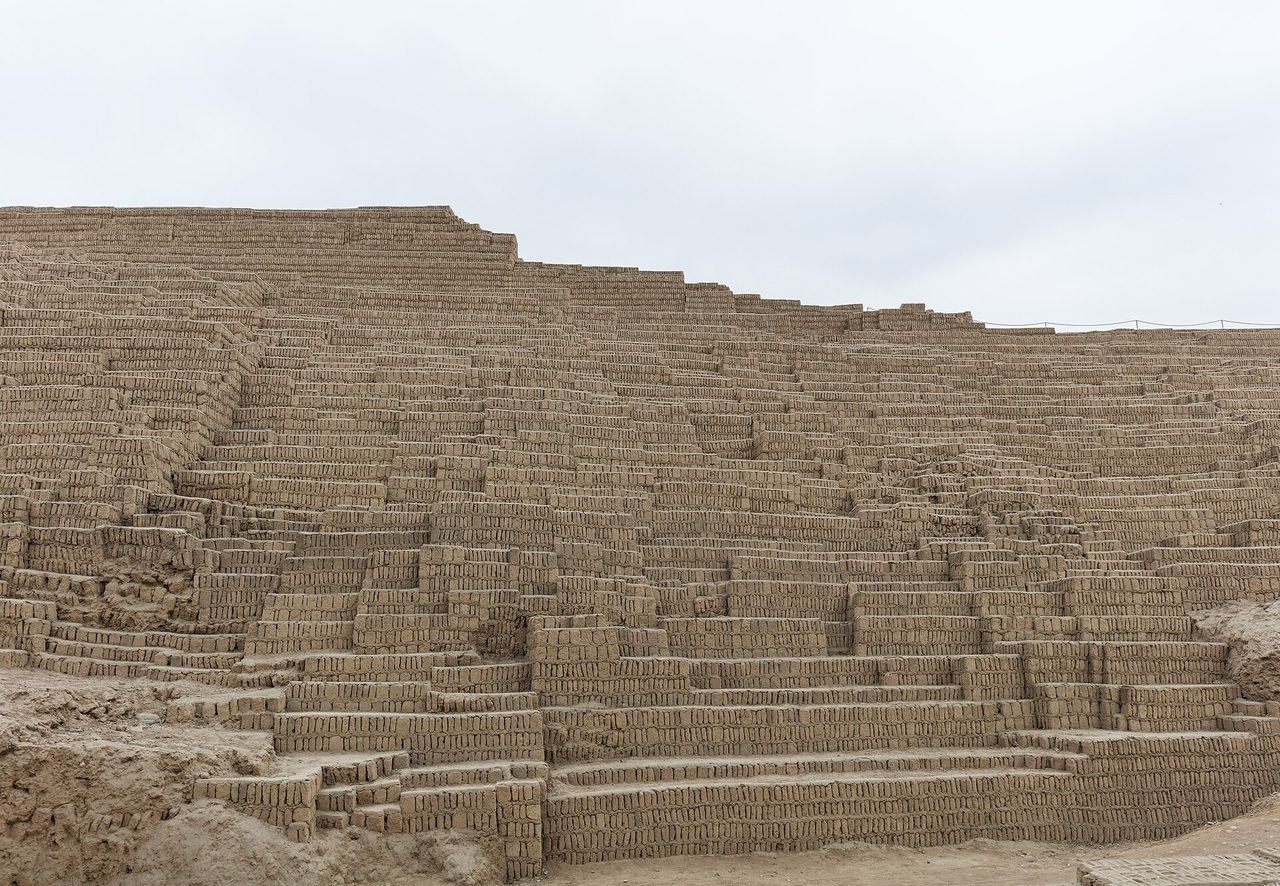
| Huaca Pucllana | ~S/15 day, ~S/17 night visit; guide included | 1–1.5 hrs | Do it. A seven-tiered adobe pyramid from around AD 400, mid-district, with tower blocks behind it. Guided-only, so you cannot wander. Closed Tuesdays; night visits run roughly Wednesday to Sunday in the evening and need booking — confirm before you turn up. |
| Malécon walk (full Miraflores stretch) | Free | 1–2 hrs | Do it, twice. Once early morning, once at sunset if you get one. The best free thing in the district by a distance. |
| Paragliding from Parque Raimondi | ~S/300 / around US$80 for ~10 minutes, video usually included | 30–60 mins including waiting | Worth it if conditions allow. Tandem, no experience needed, launches roughly 10am to sunset. Grounded often between May and November. Do not pre-book a fixed date. |
| Surfing at Makaha or Waikiki | Board and wetsuit ~S/30–50/hr; lesson ~S/60–120 for 1.5–2 hrs | 2–3 hrs with transit | Good for beginners. Small, forgiving, consistent. Water sits around 15–19°C so the wetsuit is not optional. The beach itself is grey pebbles, not sand. |
| Sunday paseo on Avenida Arequipa | Free | 1–3 hrs | Do it if you are here on a Sunday. Around 5 km of a major avenue closed to cars, roughly 7am–1pm, from central Lima down to the Óvalo de Miraflores. Bike hire nearby. Occasionally suspended for events — and the avenue has been getting new bus lanes, so check the current arrangement locally. |
| Parque Kennedy market and cats | Free | 30–45 mins | Yes, but as a pause, not a plan. Best in the early evening when the food carts and the dancing start. |
| Indian Market (Av. Petit Thouars) | Free entry; alpaca scarves from ~S/25, blankets S/60–180 | 1 hr | Mixed. Four blocks of stalls, decent for volume souvenir shopping and bargaining. Quality is below what you would find in Cusco, so if the Andes are still ahead of you, wait — the Cusco markets and workshops are better and often cheaper. |
| Bosque El Olivar (San Isidro) | Free | 1 hr plus travel | Underrated, go. A grove of roughly 1,600 olive trees planted in the 1560s, now a public park in the middle of the financial district. Fifteen minutes by taxi. The quietest green space near Miraflores. |
| Larcomar | Free | 45 mins | Useful, not interesting. Go for ATMs, alpaca, a SIM card or a sunset drink. Not for the shopping. |
What is missing from that list is the rest of Lima, and that is the point. The Centro Histórico, the Circuito Mágico del Agua, the Museo Larco and Barranco are all outside Miraflores, and all of them are better reasons to be in this city than anything inside it. Our roundup of what is actually worth doing across Lima and the deeper ranked list of Lima experiences both assume you are basing yourself here and going out.
The garúa: the thing nobody warns you about
From roughly May to November, Miraflores has no sun. Not “less sun” — a flat grey lid that sits over the coast for months, made of a coastal fog Peruvians call the garúa. Temperatures hold between about 15 and 19°C, humidity sits near 85%, it drizzles enough to make you damp but never enough to count as rain, and the sea and the sky are the same colour as the pavement.
This matters more here than in almost any other neighbourhood in Peru, because Miraflores’s entire selling proposition is a clifftop view. In August, the view is fog. The paragliders are frequently grounded. The Malécon at sunset has no sunset. Larcomar’s terrace tables face a white wall. Nobody selling you a hotel room mentions this, and it is the single biggest gap between the photographs and the reality.
It is not a reason to skip Lima. It is a reason to plan Lima differently: put your Miraflores days at the front of the trip for logistics rather than in the middle for scenery, and have indoor options ready. Our breakdown of how the weather varies across Peru’s regions explains why the coast and the highlands are in near-opposite cycles — the grey months in Lima are the clear, dry months in Cusco, which is why the Andean dry season and the Lima fog season are the same block of the calendar.
Grey-day alternatives in and near Miraflores
- Huaca Pucllana — open-air but the light is arguably better under cloud, and the site is compact.
- Museo Amano — a small, beautifully presented pre-Columbian textile collection, in Miraflores, by appointment. An hour well spent.
- A cooking class or food tour — the most reliably good indoor use of a grey Lima afternoon, and there are dozens starting from Miraflores.
- Museo Larco or MALI — both outside the district, both worth the taxi. Museo Larco’s pottery collection is one of the best museums in South America.
- The cafés — Miraflores has an unusually good third-wave coffee scene, and a grey afternoon is what it exists for.
- Larcomar cinema — unglamorous, but on day three of unbroken fog it is a legitimate answer.
If your dates are still movable, December to April is when Lima gets its actual summer: sun, 25–28°C, and a coastline that looks like the brochure. That period is also when the highlands are wettest, which is the trade-off explained in more detail in our guide to choosing the right months for a Peru trip and, from the other direction, our look at the months most travellers regret.
Where to stay in Miraflores: price bands by sub-area
“Staying in Miraflores” covers three quite different experiences, and the price gap between them is smaller than the quality-of-sleep gap. Rates below are typical doubles in shoulder season; expect 20–40% more between late December and February and around national holidays. How Miraflores compares with the other districts on price and noise is worth settling first.
| Sub-area | Hostel dorm | Mid-range double | Upper / view rooms | Noise honesty |
|---|---|---|---|---|
| Around Parque Kennedy (Diagonal, Schüll, Alcanfores) | US$12–22 | US$50–90 | US$110–160 | Loud. Bars until 2–3am, traffic from 6am, and a lot of buildings here have single glazing. Ask for an interior room and mean it. Best if you want to walk everywhere and do not mind earplugs. |
| Malécon and the cliff blocks (Malécon Cisneros, Balta, Reserva) | Rare | US$80–140 | US$180–450+ | Quietest option and the only place a sea view is real rather than a diagonal glimpse. The trade: you are 10–15 minutes’ walk from the cheap food, and the view is fog half the year. |
| Far end of Larco / near Larcomar | US$14–25 | US$60–110 | US$150–300 | Mid-loud. Traffic noise rather than nightlife noise, which some people find easier. Very convenient for tour pickups and the airport bus stop. |
| Toward San Isidro (north of Av. Pardo) | Few | US$55–95 | US$120–200 | Genuinely quiet, residential, leafy. You lose walkability to the restaurant streets and gain about seven hours of sleep a night. My pick for a second visit. |
Three things nobody tells you. First, “ocean view” in a Miraflores listing frequently means a partial view from a corner of a balcony, and you are paying US$40 a night for it. Second, a lot of the cheaper places on Larco are directly above bars. Third, Lima hotels near the cliff run cold and damp in the fog months and a surprising number have no heating at all — if you are here in July or August, check.
If you have not yet decided how Lima fits into the bigger picture, our comparison of where to base yourself around the country is the wider version of this table, and the full cost breakdown for a Peru trip puts these nightly rates in context against Cusco and Arequipa.
Getting around: real fares and walking times
Use Uber, Cabify, DiDi or inDrive. Do not hail from the street. Street taxis in Lima are unmetered, you negotiate before you get in, and the risk is not usually violence but a fare three times what the app would have charged plus a route through the traffic.
| From Miraflores to | App fare (typical) | Drive time | On foot |
|---|---|---|---|
| Jorge Chávez airport | S/45–80 (higher at peak, and surge is real) | 40–60 mins off-peak, 75–110 in rush hour | No |
| Barranco | S/10–18 | 10–20 mins | Yes — 50–65 mins along the cliff path, and it is a lovely walk |
| Centro Histórico (Plaza de Armas) | S/20–35 | 25–50 mins | No |
| San Isidro / Bosque El Olivar | S/9–16 | 10–20 mins | Yes — 35–45 mins from Parque Kennedy |
| Museo Larco (Pueblo Libre) | S/20–30 | 25–40 mins | No |
Two things about the airport run. The drive time is not the problem — the variance is. Lima traffic can double a journey with no warning, so leave three and a half hours before an international departure and accept that you will sometimes wait. And Jorge Chávez moved into a new terminal in 2025, so any pickup instructions written before that are out of date; follow the app’s designated ride-hail zone rather than the kerb outside arrivals.
The Metropolitano
Lima’s busway runs down the Vía Expresa, the sunken motorway that cuts along the eastern edge of Miraflores, and it is the cheap way into the Centro Histórico. Three stations serve the district: Ricardo Palma (closest to Parque Kennedy, about a 10–12 minute walk east), Benavides and Angamos. A ride costs a little over S/3, but you must buy a rechargeable card first — you cannot pay cash on board, which catches out a lot of visitors.
Honest verdict: it is genuinely fast and genuinely cheap, and at rush hour it is a crush that I would not put a nervous first-timer or anyone with luggage into. Between about 10am and 4pm it is a good option. For the wider picture on buses, trains and internal flights, see our guide to moving between Peru’s regions.
Safety in Miraflores, without the fearmongering
Miraflores is the safest district in Lima for a visitor, and that statement does more work in marketing copy than it should. What it means in practice is that violent crime against tourists is rare and opportunistic theft is common.
The specific pattern, repeatedly flagged by residents and by embassy advisories, is phone snatching. A phone held loosely at a pavement table, or in your hand while you navigate, gets taken by someone on a motorbike or on foot who is gone before you have registered it. Avenida Larco is where this happens most, followed by the immediate blocks around Parque Kennedy and the busier stretches of the Malécon at night.
What that translates into:
- Navigate before you walk, not while you walk. If you must check the map, step into a doorway or a shop.
- Do not put your phone on an outdoor table on Larco. Ever.
- Taxi apps over street hails, always, and check the plate before you get in.
- The Malécon is fine in daylight and in the early evening while it is busy. After about 11pm the less-lit stretches between the parks empty out and are worth avoiding on foot — take a five-sol taxi instead.
- The blocks immediately east of the Vía Expresa, around the Metropolitano stations, feel noticeably different after midnight. Not dangerous in daylight; just not somewhere to wander late.
- If you are unlucky enough to be robbed, hand it over. Nothing in your pocket is worth the alternative.
Set against that: I have walked back to a hotel near Parque Kennedy at 1am on a weekday with no anxiety at all, and solo travellers report the same. The district is well lit and well populated. Treat it like Barcelona or Naples rather than like a war zone, and you will be fine. More of this sort of thing is collected in our practical tips for travelling in Peru.
Money, pharmacies and the practical clusters
ATMs cluster in three places: along Avenida Larco between Parque Kennedy and Benavides, inside Larcomar, and around the Ricardo Palma junction. Use machines inside a bank branch or inside Larcomar where you can. BCP, Interbank, BBVA and Scotiabank all work with foreign cards; most charge a withdrawal fee of around S/18–25, and Peruvian ATMs will ask if you want soles or dollars — always take soles and always decline the machine’s own conversion.
Pharmacies are everywhere. InkaFarma and Mifarma have branches every few blocks on Larco, Benavides and Pardo, several open 24 hours. They sell far more over the counter than a European or North American pharmacy would, including altitude medication, which is worth knowing if Cusco is next.
Supermarkets: Vivanda and Wong on and around Benavides and Pardo. Metro and Plaza Vea for cheaper. A bottle of water is S/2–3 in a supermarket and S/8 on the Malécon.
Laundry: small lavanderías on the side streets charge roughly S/8–12 per kilo with same-day or next-day return. Hotels charge per item and it is four times the price.
Miraflores or Barranco? An honest answer
Barranco is more interesting. It is a smaller, older district immediately south along the same cliff, with painted colonial houses, actual street art, the Puente de los Suspiros, a proper bar scene, MATE and the Museo Pedro de Osma, and a bohemian identity that Miraflores traded away decades ago. It is roughly 15 minutes by taxi and a genuinely pleasant hour on foot along the clifftop.
| Miraflores | Barranco | |
|---|---|---|
| Character | Modern, polished, international | Older, scruffier, more distinctive |
| Accommodation choice | Enormous | Limited, fills fast |
| Food | More options at every price | Fewer but arguably better per capita |
| Nightlife | Bars and a few clubs | The real scene |
| Tour pickups | Everything starts here | Many operators will still collect you |
| Safety perception | Highest in the city | Very good on the main streets, patchier a few blocks inland |
| Walkable to the other | Yes — about an hour along the cliff, either direction | |
Stay in Miraflores if it is your first night in Peru, if you are jet-lagged and want zero friction, if you have an early flight, if you are travelling with kids or older parents, or if you have exactly one night and a lot of logistics.
Stay in Barranco if you have three or more nights in Lima, if you have been to South America before, if atmosphere matters more to you than convenience, or if the phrase “walkable to eleven chain restaurants” makes you tired. Plenty of people split it: two nights in Miraflores at the start, two in Barranco at the end.
Who Miraflores is not for
Two groups should think harder before booking here.
Travellers who want atmosphere over convenience. If your best travel memories are of getting slightly lost in a neighbourhood that was not built for you, Miraflores will feel like an airport lounge with better weather. Nothing here will surprise you. Barranco, or even Pueblo Libre or Magdalena, will give you more.
Anyone on a tight budget. Miraflores charges a location premium on everything: a coffee is S/14 instead of S/6, a set lunch is S/25 instead of S/12, a beer is S/18 instead of S/8. Over a week that is real money that would go further almost anywhere else in the country. If you are counting soles, see our roundup of things worth doing in Peru that cost nothing — and note that in Miraflores, the two best things (the Malécon and the Sunday paseo) are on that list anyway.
There is also a third group I would gently redirect: people who have allocated four or five days to Lima because it is “the capital.” Two full days is plenty for most travellers. The time is better spent in Arequipa, the Sacred Valley or on the southern coast. Our seven-day Peru itinerary shows how little of a short trip Lima should consume.
How many days in Miraflores?
One night if it is a layover: sleep, eat one good meal, walk the Malécon at whatever hour you can.
Two nights is the sweet spot for most itineraries. Day one: Huaca Pucllana, Parque Kennedy, the Malécon at sunset. Day two: out of the district entirely — Centro Histórico in the morning, Barranco in the afternoon.
Three nights if you are a serious eater, if you want the Museo Larco and a cooking class, or if you are bookending a trip and want a soft landing at each end.
Four or more only if you are working remotely, waiting on something, or genuinely here for the restaurants. Miraflores does not have four days of sights in it and pretending otherwise is how people end up disappointed in Lima. If the extra time is going spare, spend it on somewhere else in the country worth the flight.
Frequently asked questions
Is Miraflores safe at night?
On the main streets and around Parque Kennedy, yes — it is busy and well lit until late. The caveats are the unlit stretches of the Malécon between parks after about 11pm, and the blocks immediately east of the Vía Expresa. Keep your phone away, use apps rather than street taxis, and it is a comfortable district for solo travellers.
Can you swim at the beaches below Miraflores?
You can go in, and surfers do it year-round in wetsuits, but this is not a swimming beach. The shore is grey pebbles rather than sand, the water sits around 15–19°C, the current is strong, and water quality on the Costa Verde varies. For an actual beach day you need to go south toward Punta Hermosa and Asia, or north to Peru’s tropical coast.
Is Huaca Pucllana worth visiting if I am going to Machu Picchu anyway?
Yes, and for a specific reason: it is roughly a thousand years older than the Inca, built by the Lima culture in adobe rather than stone, and it resets your sense of Peruvian history before you spend a week looking at Inca masonry. It costs about S/15 and takes an hour. Our overview of the archaeological sites worth your time in Peru puts it in sequence with the rest.
How much Spanish do I need in Miraflores?
Less than anywhere else in Peru. Hotel staff, tour operators and most mid-range and upper restaurants have English. Taxi drivers, market vendors and cheaper kitchens generally do not. Learning numbers and greetings will change how you are treated, and once you leave the district it stops being optional.
Is Miraflores expensive compared to the rest of Peru?
Yes, noticeably. Reckon on paying 40–100% more here than in Cusco or Arequipa for the equivalent meal, and considerably more than in a provincial city. Accommodation is closer — Cusco’s peak-season rates can exceed Miraflores — but food, drinks and taxis are all inflated.
When is the sunset actually visible?
Realistically, December to April, when the sky clears and Lima gets its summer. In the garúa months you will get occasional clear evenings, usually after a windy afternoon, but planning a sunset dinner in July is optimistic. This is one of several ways Peru’s seasons behave the opposite of what visitors expect.
Can I walk from Miraflores to Barranco?
Yes, and you should. Follow the Malécon south past Parque del Amor and keep the sea on your right; it is about 50–65 minutes at a normal pace on a continuous paved path, with parks and viewpoints most of the way. Do it in daylight, and taxi back if you have been drinking.
Do I need to book restaurants in advance?
For the famous ones, weeks to months. For everything else, no — walk in. Lunch is easier than dinner, and the set lunch is where the value is. Bear in mind that Peruvians eat late; a restaurant that looks empty at 7pm will be full at 9.
Is Miraflores good as a base for day trips?
It is the best base in Lima for it, because essentially every operator collects from here. Pachacamac, Paracas, the Palomino Islands and the Caral ruins all run as day trips with Miraflores pickups. If you are stringing together a longer route, our first-timer’s Peru itinerary covers how Lima connects to the rest.
The short version
Miraflores is a good decision made for the wrong reasons. Stay here because it is frictionless, sits at sea level, has the food and puts every tour pickup on your doorstep — not because you expect it to feel like Peru, because it will not. Give it two nights. Walk the Malécon at both ends of the day. Do Huaca Pucllana. Eat on Berlín or Bolognesi rather than on Larco. Accept that between May and November the famous view is a wall of fog, and plan indoors accordingly. Then get out of the district, because the parts of Lima worth remembering are all somewhere else, and the parts of Peru worth remembering are further still.