Where to Stay in Lima: Miraflores, Barranco & Beyond
Miraflores is the right answer for most first-time visitors, but not for everyone. Real nightly prices, a neighbourhood comparison table, the 18% tax foreigners should not be paying, and what the 2025 airport move did to the transfer.
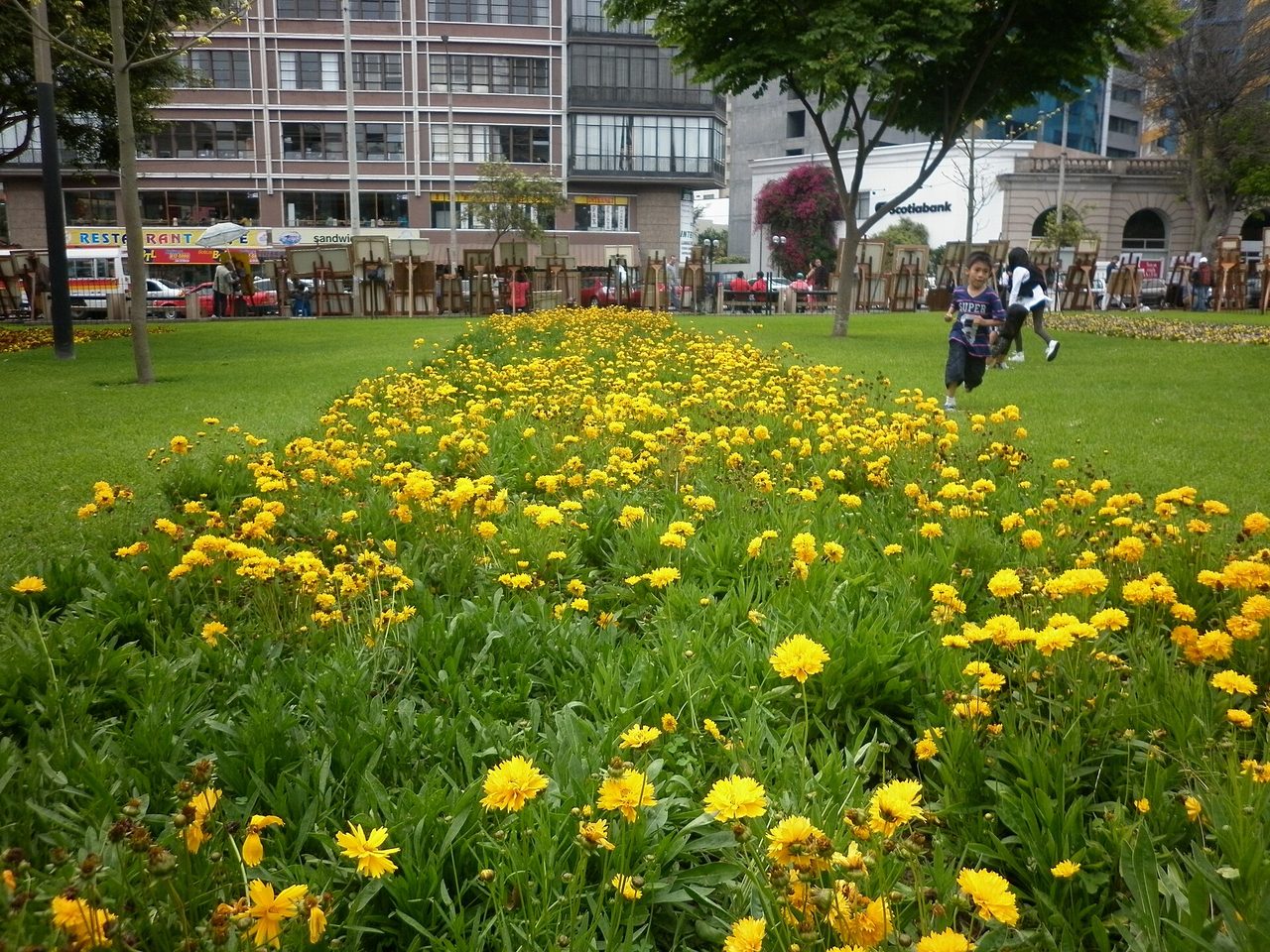
Ask around and you get one answer: Miraflores. It is the right answer for most people and I am not going to pretend otherwise. But the interesting part of deciding where to stay in Lima is not the default — it is knowing when the default is wrong. When Barranco is genuinely the better call. When San Isidro earns the extra $60 a night. When the Centro Histórico turns into a mistake you regret at 11pm. And when the correct move is to skip the city entirely and sleep 400 metres from the airport terminal.
Lima holds roughly 10 million people across 2,600 square kilometres, and the gap between a good base and a bad one is measured in hours of traffic, not blocks. So here is the rule first, before the scenery.
The 60-second rule for where to stay in Lima
- First trip, two or three nights, you want to walk to dinner: Miraflores, in the wedge between Parque Kennedy and the malécon. Stop reading and book it.
- You have been to Lima before, or you care more about bars, food and old houses than convenience, and you do not go to bed at 10pm: Barranco.
- You are travelling with young kids or older parents, you want quiet, and you do not mind taking a car to every meal: San Isidro.
- Your flight leaves before 07:00 or lands after 23:00: an airport hotel in Callao for that one night, and only that night.
- You are staying two weeks or more, or working remotely, and $40 a night matters: Surco, San Borja or Pueblo Libre.
- Centro Histórico: visit in daylight, sleep elsewhere. The single exception is at the bottom of this article and it is narrow.
Everything below is the reasoning, the actual prices, and the parts nobody writes down — which streets inside Miraflores are worth paying for, how the 2025 airport move changed the transfer, and the 18% tax you are legally not supposed to be paying.
Lima neighbourhood comparison table
Rates are per night for a double room, in US dollars, from mid-2026 booking data. I have used roughly S/3.7 to the dollar; check the rate before you budget, because the sol moves. “High” means the genuinely good hotels in that area, not the single most expensive suite.
| Area | Budget | Mid | High | Walkability | At night | Airport | Stay here if |
|---|---|---|---|---|---|---|---|
| Miraflores | $12–20 dorm / $35–60 double | $70–130 | $180–700 | Excellent — flat, gridded, lit | Comfortable on main streets; watch your phone on Larco | 21 km, 45–75 min, S/45–70 Uber | It is your first trip and you have two or three nights |
| Barranco | $11–18 dorm / $30–50 double | $60–115 | $200–380 | Very good but hilly and small | Fine on the main axes; rowdy behind the Boulevard Thu–Sat | 25 km, 55–85 min, S/55–85 Uber | You want atmosphere over convenience and sleep late |
| San Isidro | Almost none | $90–160 | $200–450 | Moderate — long blocks, you will take cars | The quietest and safest-feeling district in the city | 19 km, 40–70 min, S/45–65 Uber | You value quiet, space and a business-grade room |
| Centro Histórico | $8–15 dorm / $25–45 double | $45–85 | $120–190 | Good by day, dense and loud | Deteriorates quickly after dark, block by block | 13 km, 30–50 min, S/35–50 Uber | You are here for colonial architecture and inside by 8pm |
| Callao / airport | $25–45 | $80–140 | $160–230 | None — there is nowhere to walk to | Stay inside the hotel | 0–10 min, some within walking distance | You fly before 07:00 or land after 23:00 |
| Surco / San Borja | $18–35 | $50–95 | $120–180 | Patchy — residential, car-dependent | Calm, ordinary, residential | 24 km, 50–80 min, S/55–80 Uber | You are here a fortnight and want a kitchen and a supermarket |
| Pueblo Libre | $10–16 dorm / $22–40 double | $40–75 | $90–130 | Decent within its small core | Quiet, low-key, few tourists | 15 km, 35–60 min, S/40–60 Uber | You are on a tight budget and want a real neighbourhood |
Two things that table will not tell you. First, the airport times are honest ranges, not the 21 minutes that route planners quote — at 6pm on a Friday the Miraflores run can hit 90 minutes. Second, the price gap between Miraflores and Barranco is real but smaller than the internet claims: about 15% on equivalent quality, not half.
Miraflores: the default, and which part of it to book
Miraflores is the default for good reasons. It is flat, it is gridded, it is lit, it has the highest concentration of restaurants, pharmacies, ATMs and laundries in the city, and you can cross it end to end on foot in 35 minutes. Almost everything on a shortlist of things worth doing in the city is either inside Miraflores or a 20-minute ride from it. If you have two nights in Lima before flying to Cusco, this is not a decision worth agonising over.
What almost nobody explains is that Miraflores is nine square kilometres and the sub-areas are not interchangeable. Where you book inside it changes your trip more than which district you pick.
Parque Kennedy and the streets off Diagonal
This is the centre of gravity: two joined parks, painters selling canvases from easels along the edge, a famous colony of resident cats, and the church of La Virgen Milagrosa on one side. Book within four or five blocks of here and you will walk to everything — dinner, the malécon, the Metropolitano stop on Ricardo Palma, the airport bus. It is also the noisiest pocket. Calle Berlín, Calle Manuel Bonilla and the alleys off Avenida Diagonal carry bar noise until around 2am on Friday and Saturday. If you are a light sleeper, book here but ask for a habitación interior — an interior room off the courtyard rather than facing the street.
The malécon and the clifftop
The clifftop strip — Malécon Cisneros, Malécon de la Reserva, Malécon Balta — is where the ocean-view hotels sit, and it is a genuinely lovely place to run or walk at sunset. It is also quieter, greener and further from dinner. From the malécon to Parque Kennedy is 10 to 15 minutes on foot, which is nothing on a good evening and a chore in drizzle. Read the section on the garúa below before you pay a premium for the view, because for half the year you are buying grey.
Avenida Larco
Larco is the spine: the road that runs from Parque Kennedy down to Larcomar, the clifftop mall. It is convenient, it is well lit, and the shopfronts continue late. It is also four lanes of buses, taxis and drivers who use the horn as punctuation. Hotels on Larco are frequently the cheapest good-location option in Miraflores precisely because of this. Take the deal, take an interior room, and do not take the room on the second floor above the intersection.
Reducto, Benavides and Miraflores alto
East of Avenida Paseo de la República, around Avenida Benavides and Parque Reducto, prices drop 20 to 30% for the same standard of room. You are 15 to 20 minutes from Parque Kennedy on foot, which is fine if you plan on Ubers anyway. This is where I would look if a Miraflores address matters to you but the price does not work.
Santa Cruz and the Huaca Pucllana pocket
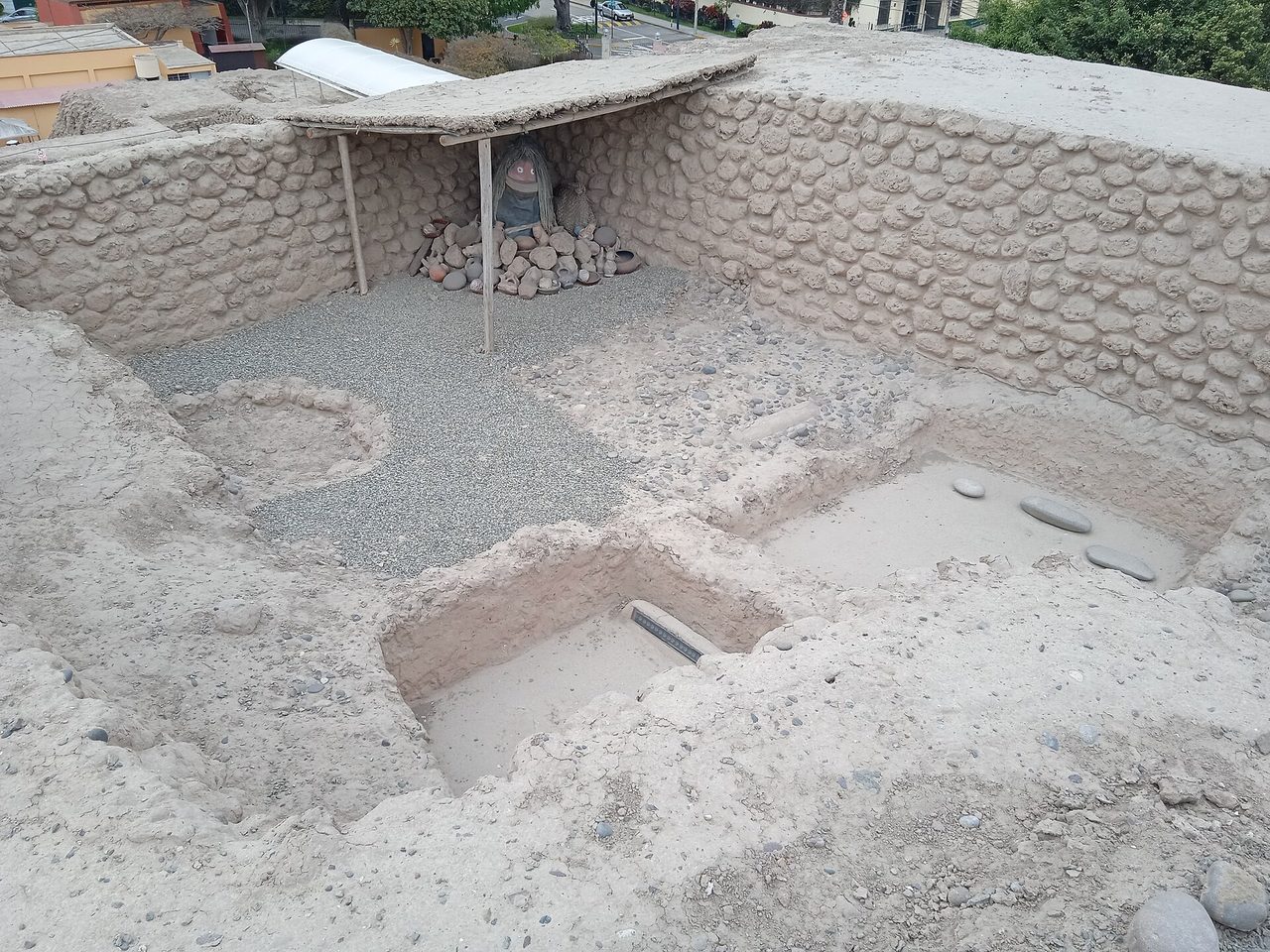
The north-west corner, near the adobe pyramid of Huaca Pucllana and the border with San Isidro, is quiet and residential with an excellent cluster of restaurants. It is a very good compromise if the party noise is what worries you. The huaca itself, lit at night with a restaurant looking straight at it, is one of the strangest and best pieces of urban archaeology in South America and a useful reminder that Peru’s pre-Hispanic sites are not all in the Andes.
Miraflores is not for anyone who finds chain hotels and English menus depressing. Parts of it — Larcomar, the blocks around the Marriott — feel like an airport lounge with a sea view. If that is what you are escaping, go to Barranco.
Barranco: better than Miraflores, for the right person
Barranco is the old seaside resort of Lima, a square kilometre or so of republican-era houses in ochre, red and turquoise, dropped down a cliff to the Pacific. It has the best small restaurants, the best bars, the best independent hotels and the highest concentration of art in the city. It is also the answer for a second visit far more often than for a first.
The trade-off is real. Barranco has maybe a tenth of the room inventory of Miraflores, so the good places sell out and the bad places know it. You are another 10 to 15 minutes further from the airport in every direction. And on Thursday, Friday and Saturday nights the streets around the Boulevard are loud until 3 or 4am, in a way that no amount of double glazing on a 120-year-old house will fix.
The four Barrancos
- The Boulevard and Parque Municipal. Avenida Grau and the pedestrian stretch beside the park are the nightlife core. Great to walk through at 10pm, difficult to sleep beside at 2am. Book here only if you intend to be part of the noise.
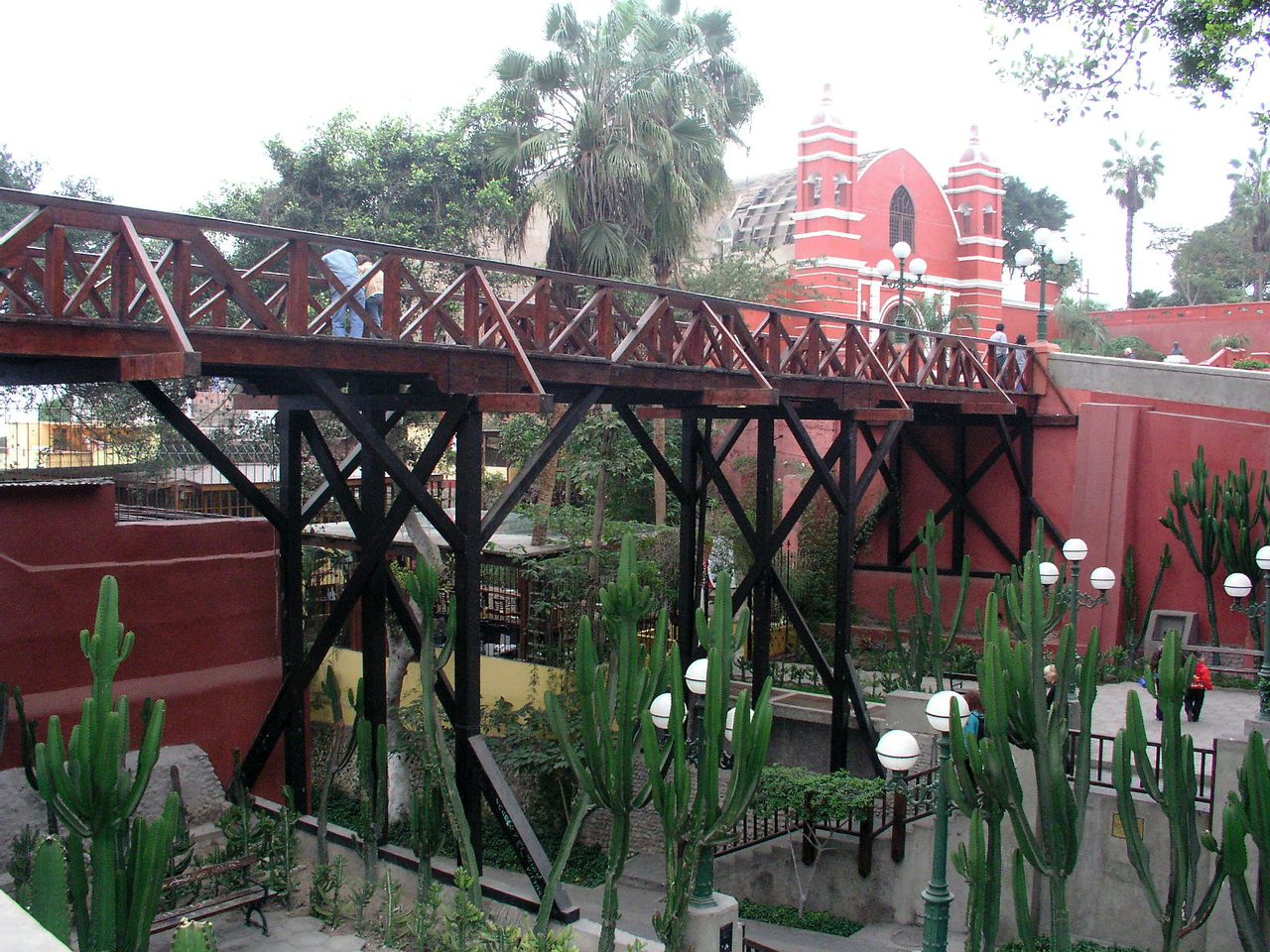
- Bajada de Baños. The ravine road running from the Puente de los Suspiros down to the sea, lined with old houses and small bars. It is the prettiest address in Lima and it is genuinely steep. Wheeling a suitcase back up it is a workout, and if anyone in your party has knees that complain, look elsewhere.
- Pedro de Osma, south of the park. Wide, quieter, grand old mansions, the Museo Pedro de Osma at the end. Ten minutes’ walk from the bars, which is exactly the right distance.
- Sáenz Peña and the streets inland. Leafy, residential, no noise, still walkable to everything. This is where I would book.
Barranco connects to Miraflores along the clifftop by the Puente de la Paz footbridge, so “I am too far from things” is mostly a myth — the two districts are a 25-minute walk or a S/10–15 ride apart. Prices sit around 15% under Miraflores for the same standard, and dorm beds start around $11.
Barranco is not for early sleepers on a weekend, anyone arriving with heavy luggage who has booked a house on the bajada, or travellers who want a lobby, a concierge and a bellhop. It is also not for people who want a large modern gym and a pool, because outside Hotel B there is barely one.
San Isidro: quiet, expensive, and you will take a car to dinner
San Isidro is Lima’s financial district, its embassy district and its wealthiest residential zone all in one. It is calm and green in a way no other central area manages, and the centrepiece is El Olivar — a park of several hundred olive trees originally planted in the sixteenth century, now surrounded by apartment towers. Sitting in it on a weekday morning is one of the more civilised things you can do in Lima.
It also has Huaca Huallamarca, a restored adobe pyramid squeezed between apartment blocks, where entry runs a few soles and you can usually walk the ramp without a guided group herding you. Pucllana in Miraflores gets the crowds; Huallamarca gets the silence.
The honest case for San Isidro is this: if you want a large, quiet, properly maintained room with a working gym and reliable air conditioning, San Isidro delivers it more consistently than Miraflores at the same price. The Country Club Lima Hotel, a 1927 property with a serious Peruvian art collection on the walls and one of the best bars in the city, sits around $240–300 a night, which for what it is undercuts the equivalent in most capital cities.
The honest case against is that San Isidro was built around cars. Blocks are long, the good restaurants are scattered across a kilometre of Avenida Conquistadores and Pardo y Aliaga, and at 9pm the office blocks are dead. On a Sunday it can feel closed.
San Isidro is not for people who want to leave the hotel and choose between thirty dinner options within four blocks. You will be calling a car, most nights, and adding S/12–20 each way. It is also not for a two-night first visit, where every minute in traffic is a minute you did not spend outside.
Centro Histórico: go for the day, do not sleep there
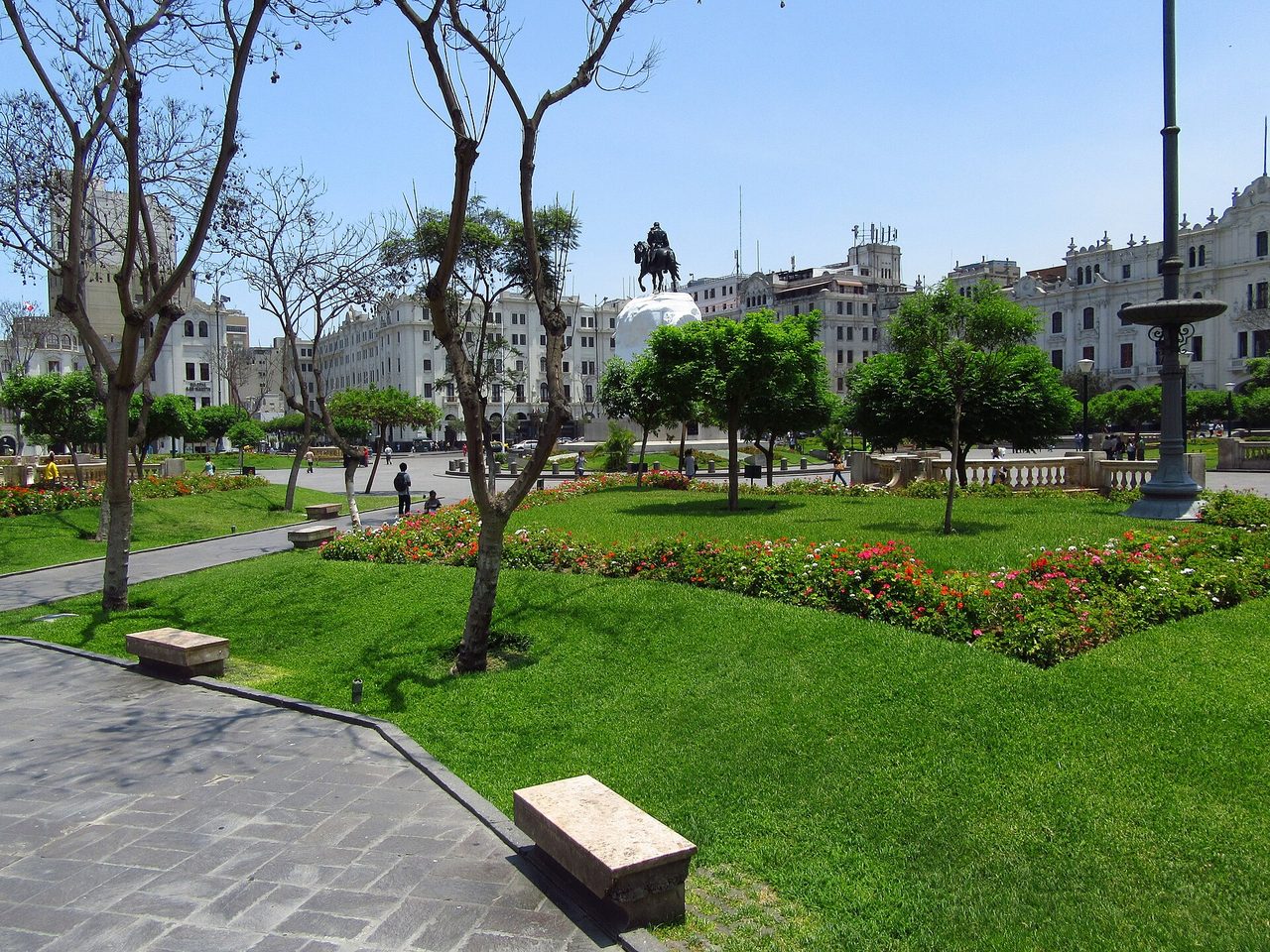
Lima’s colonial core is a UNESCO World Heritage Site and it is not a formality — the Plaza Mayor, the yellow cathedral, the catacombs beneath San Francisco with their arranged femurs and skulls, the tiled patios of the Casa de la Literatura, the stained glass of the Gran Hotel Bolívar. It belongs on any list of what is actually worth seeing in Lima, and it is a couple of hours of your day, not a base.
The problem is time-of-day, and it is not binary. Around the Plaza Mayor, Jirón de la Unión and Plaza San Martín, daytime is busy, policed and fine — you will see families, school groups and street photographers. After about 8pm the same streets thin out, the shutters come down, and by 10pm the atmosphere on the blocks east toward Barrios Altos or north across the Rímac river changes completely. This is not a rumour; it is what the tourist police themselves will tell you.
Hotel stock reflects it. There is one big international property, the Sheraton opposite the Palace of Justice, a handful of decent restored boutiques on Jirón Áncash and around San Francisco, and then a long tail of cheap places that trade on the location. You save maybe $30 a night against Miraflores and you spend it back on taxis you would rather not walk instead of.
The Centro Histórico is not for anyone arriving on a late flight, anyone travelling alone who is not comfortable reading a street, or anyone who wants to walk out for dinner at 9pm. The narrow exception: a single night, arriving in daylight, if your entire interest in Lima is colonial architecture and museums and you plan to be back in your room by dark. Even then, book a place with a doorman.
The airport question, and what changed in 2025
This is the part of Lima planning that most page-one content still gets wrong, because it describes an airport that no longer operates. Jorge Chávez moved to a completely new terminal on 1 June 2025 — a building around three times the size of the old one, on a different part of the site, with new access roads. The old terminal is closed. If a guide tells you the arrivals hall layout or names the taxi desks, check the publication date.
Getting from the new terminal to the city
Miraflores is about 21 km away. The route planners say 21 minutes. Ignore them. Realistic door-to-door times:
- 05:00–06:30: 30–40 minutes. The one time the road is genuinely empty.
- Most of the day: 45–60 minutes.
- 07:30–09:30 and 17:00–20:00, especially Friday: 70–90 minutes. Build this into your flight timing, not your optimism.
Your options, with mid-2026 prices:
- Uber / Cabify / inDrive: S/45–70 to Miraflores (roughly $12–19), more with surge and more again at 6am. There is a designated ride-hailing pickup zone at the new terminal; follow the signs rather than the first person who offers you a car.
- Official airport taxis (Taxi Green, Taxi Direct and similar, booked at counters inside): S/60–95. You pay maybe $8 more for a fixed price, a counter to complain to, and no phone-signal problem on arrival. On a first landing, at night, with luggage, that is money well spent.
- Airport Express Lima bus: around S/15–25, roughly every 30 minutes, direct to Miraflores with luggage racks and wifi. It takes 60–75 minutes and drops at a handful of stops. Excellent value if you are travelling light and not arriving at 1am.
- Street taxis flagged outside arrivals: no. This is the one hard rule. It is where the genuinely bad stories come from.
If you are moving on around the country afterwards, the same lesson applies to buses and domestic flights — our guide to getting between Peruvian cities covers which routes are worth flying and which are better overland.
When an airport hotel actually makes sense
Four situations, and only four:
- Your international flight departs before 07:00. Getting from Miraflores to the terminal at 04:00 is doable but joyless.
- You land after 23:00 and have a domestic connection to Cusco or Arequipa the next morning.
- You have a layover of roughly 8 to 14 hours — too long to sit, too short to make the round trip into the city worth it.
- You are travelling with small children and the idea of a 70-minute transfer at midnight is worse than the idea of a bland room.
The options: the newer Wyndham Grand Costa del Sol Lima Airport sits directly across from the new terminal, under 400 metres, walkable with a bag. The original Costa del Sol property, which used to be attached to the old terminal, now runs a free 24/7 shuttle every half hour. There is also a Holiday Inn on the airport road. Expect $80–200 depending on property and date, which is a poor value-per-square-metre and an excellent value-per-hour-of-sleep.
Why Callao is otherwise not a base. Outside the hotel compounds there is nothing to walk to, the surrounding districts are genuinely rough at night, and you would commute an hour each way to see anything. Callao Monumental, the painted port quarter near La Punta, is a worthwhile daytime visit with a guide or a group. It is not a place to leave your suitcase for four days.
What Lima accommodation actually costs
Every competing guide lists hotels without prices, which is the least useful thing you can do to a person planning a budget. Here are the real bands, mid-2026, per night for two people unless stated.
Hostels and budget
- Dorm bed, Miraflores or Barranco: $11–20. The big social hostels — Pariwana on Parque Kennedy, Viajero in a colonial house in Barranco, Kokopelli — sit at the upper end and include breakfast. Under $10 exists in Centro and Pueblo Libre.
- Private room in a hostel: $28–55. This is the single best value bracket in Lima. You get a lockable double with a private bathroom in a good district for less than a mediocre hotel, and you keep the hostel bar and the tour desk.
- Budget hotel, Miraflores: $35–60. Expect small, clean, no view, possibly no lift.
Mid-range
- Three-star chains and good independents, Miraflores: $70–130 with breakfast. This bracket is crowded and competitive, which is good for you.
- Boutique, Barranco: $60–115. Restored houses, six to fifteen rooms, patchy air conditioning, excellent breakfast.
- San Isidro business hotels: $90–160. Cheapest on Friday and Saturday nights, when the corporate demand vanishes. This is a real and underused arbitrage.
The top tier
- Belmond Miraflores Park: roughly $550–900 a night depending on season, cheapest around February, dearest in August. Clifftop, rooftop pool, the best sea view of any hotel in the city — with the garúa caveat below.
- Country Club Lima Hotel, San Isidro: around $240–300. Built in 1927, colonial-revival, museum-loaned paintings in the corridors, and the Bar Inglés. Per dollar, the most interesting luxury room in Lima.
- Hotel B, Barranco: around $330–400. A restored 1914 belle-époque mansion with a contemporary art collection, seventeen rooms, and an afternoon tea that locals book. Small, so it sells out.
- The international five-stars — JW Marriott, Hilton, Westin, Pullman — run $180–350 and are exactly what you expect.
For context on where accommodation sits within a wider budget, our breakdown of what a Peru trip costs end to end puts these numbers against flights, trains and entry tickets. Lima is not where your money goes in Peru; the Cusco leg is.
The 18% IGV exemption: an easy saving nobody explains
This is the single most valuable paragraph in this article. Non-resident foreign visitors staying in Peru for fewer than 60 days are exempt from IGV, the 18% Peruvian sales tax, on hotel accommodation — and in many hotels on food and drink billed to the room. It is not a discount the hotel is offering out of kindness. It is treated in law as an export of services, and registered hotels apply it.
On a $110 room for three nights, that is about $59 back. Over a two-week trip it can be a couple of hundred dollars. Most English-language guides never mention it exists.
How to actually get it
- Bring your passport to check-in and hand it over. The hotel needs to see the entry stamp and record your immigration entry.
- Know about the TAM. The Tarjeta Andina de Migración is now electronic — you probably will not be handed a paper card at the border. Most hotels look your entry up in the Migraciones system. Some still ask for a printout, which you can generate free from the Migraciones website using your passport number. Do it before check-in if you want zero friction.
- Ask the question in Spanish if the front desk hesitates: ¿La tarifa para extranjeros está exonerada del IGV?
- Take a boleta, not a factura. If you ask for a business invoice (factura) with a Peruvian tax ID, you have moved yourself into the taxed category.
Where it goes wrong
- Prepaid OTA bookings. If you paid Booking.com or Expedia in advance at a tax-inclusive rate, the exemption is frequently baked in already at the better hotels, and effectively unrecoverable at the worse ones. Booking direct, or paying at the property, gives you the cleanest shot at it.
- Comparing quoted rates. Peruvian hotel websites often quote rates plus 18% for residents and net for foreigners. A rate that looks $20 higher may be the same rate. Check whether the page says más IGV or IGV incluido.
- Airbnb and informal rentals. Individual hosts do not operate the exemption. This narrows the apparent price advantage of apartments considerably.
- Staying 60 days or more. The exemption stops.
- Service charges. Many mid and upper hotels add around 10% servicio on top, which is separate and does not go away. Read the rate breakdown, not the headline.
Rules like this get amended, so confirm at booking. It is one of a handful of practical things worth knowing before you land in Peru that pay for themselves within a day.
What the garúa does to your ocean-view room
From roughly May to November, Lima sits under the garúa: a low marine fog and drizzle that produces a flat grey lid over the city, temperatures of 15–19°C, humidity in the eighties, and very little direct sun for weeks at a time. It does not really rain. It just never brightens, and booking a July beach stop here is one of the most common seasonal mistakes people make in Peru.
What that means for booking: an ocean-view room between May and November is an expensive grey wall. On a July morning on the Miraflores clifftop you often cannot see the water at all, only the sound of it. If you are travelling in that window, spend the premium on quiet, on location, on a better bed — anything except the view.
Between December and April the reverse is true. The sky opens, it reaches 26–29°C, the beaches below the cliffs fill on weekends, and a clifftop room is genuinely worth the money. If you are choosing dates, the regional weather patterns across Peru pull in opposite directions — the coast is bright when the Andes are wet, which is why the seasonal split between coast, mountains and jungle catches people out.
Two practical consequences almost nobody warns you about:
- Lima hotels frequently have no heating. Buildings are designed for a climate that never freezes and never bakes, so a July room at 16°C and 85% humidity feels colder and damper than the number suggests. Ask about calefacción and pack a fleece. This surprises people who have only read that Lima is a desert.
- Nor do many have air conditioning. In January that matters. In Barranco’s restored houses especially, check.
If you are still fixing dates, the garúa is one argument among several in our comparison of when to go to Peru, and it is why a July trip looks so different on the coast than it does in Cusco.
Surco, San Borja and Pueblo Libre: the districts nobody writes about
These three come up if you are staying longer than a week, or if the Miraflores price is simply out of reach.
Santiago de Surco is large, green, middle-class and residential, with good supermarkets and a serviced-apartment market aimed at expats. Rooms and apartments run 30–40% under Miraflores. You will use cars constantly.
San Borja is quieter still and has the Museo de la Nación and the Pentagonito park. It is where Limeños live, not where they go out. Good for a month, wasted on three days.
Pueblo Libre is the interesting one. Small, old, central-ish, home to the Museo Larco — the pre-Columbian ceramics collection in a whitewashed eighteenth-century mansion, which is the single best museum in Peru — and the Museo Nacional de Arqueología. It also has the antigua taberna Queirolo, a century-old bar where the pisco is cheap and the tiles are original. Doubles at $40–75, dorms from $10, and roughly 20 minutes to Miraflores off-peak. The catch: few restaurants after 10pm, and you are not walking anywhere at night.
Matching the district to the trip
The right base changes with what the Lima leg is doing inside your wider route.
- Two nights bolted onto a Cusco trip. Miraflores, near Parque Kennedy. Do not overthink it. Most versions of a first-time route around Peru give Lima the bookends, and proximity beats character when you only have 36 waking hours.
- Lima as a food trip. Barranco or the Miraflores–San Isidro border. The best tables are spread across Barranco, Miraflores and San Isidro, and the food alone justifies more nights than most people give it — the range of regional Peruvian cooking is easier to sample here than anywhere else in the country.
- Arriving late, flying to Cusco early. Airport hotel, one night, no guilt. Remember Lima is at sea level and does nothing for acclimatisation — the 3,400 m adjustment in Cusco starts the moment you land there, not before.
- Lima plus a run down the coast. Miraflores or Barranco — the Paracas and Huacachina buses leave from central terminals and most operators pick up nearby, which makes the southern coast route straightforward from either.
- A month in Peru. Split it: a few nights in Miraflores at the start, a few in Barranco at the end, and something cheap in between. If you are working out how the days divide, our take on how long a Peru trip needs is a better starting point than a fixed template.
Lima is also the one city where accommodation logic differs sharply from the rest of the country. Compare it against choosing a Cusco neighbourhood, where altitude and the walk uphill to San Blas matter more than traffic, or the broader country-wide accommodation overview if you are booking several stops at once.
Booking tactics that save money or sleep
- Ask for an interior room. Lima drivers use the horn constantly. On any main avenue — Larco, Benavides, Arequipa, Grau — a street-facing room will cost you an hour of sleep a night.
- Book San Isidro on weekends. Corporate rates collapse Friday to Sunday. A $150 Tuesday room can be $95 on Saturday.
- Do not book Barranco on a Friday if you sleep before midnight. Or if you must, book Sáenz Peña, not the Boulevard.
- Check for a lift. Restored houses in Barranco and older buildings in Miraflores often have none, and Peruvian ground floors can be a half-flight up.
- Lead time. Two to four weeks is enough for most of the year. Late July around the Fiestas Patrias national holidays and the last week of December are the exceptions, when Miraflores fills and prices jump.
- Carry small soles. Hotels take cards without issue; taxis, the corner cevichería and the bus do not always.
- Check where the Metropolitano stops. The BRT line runs from the Centro down to Barranco. The Ricardo Palma and Bulevar stations are genuinely useful, and Lima’s metro does not serve Miraflores at all.
- If it is your first night in the country, pay for the pre-booked transfer rather than working out a bus at midnight. It is a one-off $10 premium against a bad first impression, and there is enough ground to cover across the country without starting tired.
Frequently asked questions
Is Miraflores or Barranco better?
Miraflores for a first visit, convenience, choice and an early night. Barranco for atmosphere, food, design and a later one. If you have four nights or more, do two in each — they are 25 minutes apart on foot along the clifftop.
How many nights do I need in Lima?
Two or three is right for most people, and two of those days should be full ones. One night is a transit stop, not a visit. A week is defensible if you are eating your way through the city or using it as a base for coastal day trips, but Peru’s better days are elsewhere. Our itinerary planning guide assumes Lima at the start and end for exactly this reason.
Is it safe to walk in Miraflores at night?
On the main lit streets — Larco, Diagonal, Schell, the malécon until around 11pm — yes, and thousands of people do every evening. Treat it as any large city: phone in your pocket rather than your hand, no visible camera strap over the shoulder, take a car after midnight rather than walking twelve quiet blocks. Phone snatching from moving mopeds is the realistic risk, not violence.
Do foreigners really not pay the 18% tax on Peruvian hotels?
Correct, for non-residents staying under 60 days, at registered hotels, on presentation of a passport and your immigration entry record. Ask about it when you book rather than at checkout, and check whether an advertised rate is quoted with or without IGV. Confirm the current rules at booking, since tax rules move.
Should I pay extra for an ocean-view room in Lima?
Between December and April, yes. Between May and November, no — the garúa means you are paying for fog. The exception is if you specifically like heavy grey coastal weather, which some people genuinely do.
How far is Lima airport from Miraflores?
About 21 km, and 45 to 75 minutes in normal conditions from the new terminal that opened in June 2025. Allow 90 minutes if you are travelling during a weekday rush hour or on a Friday evening. Uber runs S/45–70; official counter taxis S/60–95; the Airport Express bus from around S/15.
Is it worth staying near Lima airport?
Only for a flight before 07:00, an arrival after 23:00, or a layover of 8 to 14 hours. The area has nothing to offer beyond the hotel doors, and a two-way transfer for a normal stay wastes two hours of a short visit.
Which is the cheapest area to stay in Lima?
The Centro Histórico is cheapest and I do not recommend it for the reasons above. Pueblo Libre is the best cheap option that is also pleasant: doubles from around $40, dorms from $10, a proper neighbourhood, and the Museo Larco on your doorstep. There is also plenty in the city that costs nothing at all, which stretches a budget further than shaving $15 off a room.
Is San Isidro worth the extra money?
If quiet, space and room quality matter more to you than walking to dinner, yes — you get a better room per dollar than in Miraflores. If you are here for three nights and want to be in the middle of things, no.
Do I need to book Lima accommodation in advance?
Two to four weeks is comfortable outside late July and the Christmas–New Year window. Small Barranco boutiques and the best-value hostel private rooms are the exception — they have very few rooms and sell out much earlier.
The short version
Book Miraflores between Parque Kennedy and the malécon, on an interior room, and you will not regret it. Book Barranco if you would rather have character than convenience and you are not asleep by ten. Pay for San Isidro if silence is worth a taxi fare to you. Visit the Centro in daylight and leave before dark. Sleep in Callao only when the clock forces it. Ask for the IGV exemption at every check-in. And do not buy the ocean view between May and November — you are paying for a grey wall, and the money is better spent on a table at dinner.