How Many Days Do You Need in Peru?
Seven days is the realistic minimum, ten to fourteen is the sweet spot, and under five is a Machu Picchu trip rather than a Peru trip. Here is the arithmetic behind that, including how much of a short trip disappears into flights and altitude.
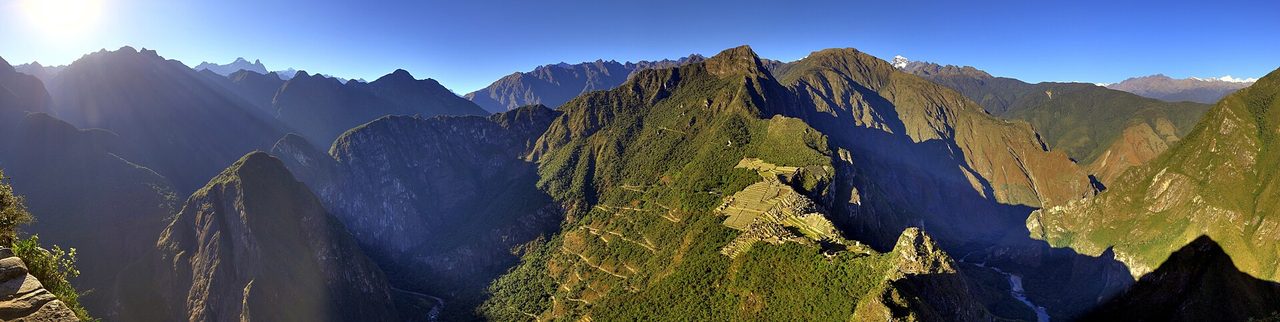
The honest answer to how many days in Peru you need is seven, and seven is the floor rather than the target. Ten to fourteen days is the sweet spot, where the country finally gives back more than it costs you to get there. Anything under five days is not a Peru trip. It is a Machu Picchu trip that happens to take place inside Peru’s borders, and I would rather you knew that before you booked than after.
That is the whole answer. The rest of this article is me showing my working, because the reason short trips to Peru go wrong is not the one people expect. It is not distance and it is not the mountains. It is that every Peru trip, regardless of length, pays exactly the same entry tax in time — and if your trip is short, that tax eats it alive.
How many days in Peru: the short answer by traveller type
Before the arithmetic, here is the summary I would give a friend over a drink.
| Days on the ground | What it realistically buys you | Who it suits |
|---|---|---|
| 3–4 | Machu Picchu and a rushed half-day in Cusco. High risk of altitude ruining the one thing you came for. | Nobody flying long-haul. Fine only if you are already in South America. |
| 5 | Cusco, one Sacred Valley day, Machu Picchu. No slack for weather, strikes or a bad altitude night. | People with a hard leave limit who accept the risk. |
| 7 | The above, done properly, plus Lima or one extra day trip. The realistic minimum. | Most first-timers with one week of annual leave. |
| 10 | Cusco region done well, plus one of: Lake Titicaca, Arequipa and Colca, the Amazon, or a trek. | The best value-per-day trip most people can take. |
| 14 | The full southern circuit at a human pace, with two genuine rest days built in. | First-timers who want to feel like they saw the country. |
| 21+ | Southern circuit plus the Amazon, or plus the north, or a serious multi-day trek. | Repeat visitors, trekkers, career-break travellers. |
If you read nothing else, read that table. Ten days is the length I recommend most often, and it is not a coincidence that it is also where the maths turns in your favour. If you are still deciding which places belong on the list in the first place, our roundup of the places in Peru worth spending your days on is the better starting point, and this article will tell you what each of them costs you.
The fixed overhead: every Peru trip pays the same entry tax
Here is the mechanism nobody explains, and it is the single most useful thing on this page.
Getting from a long-haul airport to a place in Peru where you can actually do something costs roughly two days. Not two hours. Two days. And that cost is almost identical whether you have booked five days or twenty-one.
Break it down:
- The international arrival day. Flights into Lima from Europe and North America overwhelmingly land in the evening or late at night. You clear immigration, you get to a hotel in Miraflores or a room near the airport, you sleep. Call it 0.2 of a usable day, and be generous doing so.
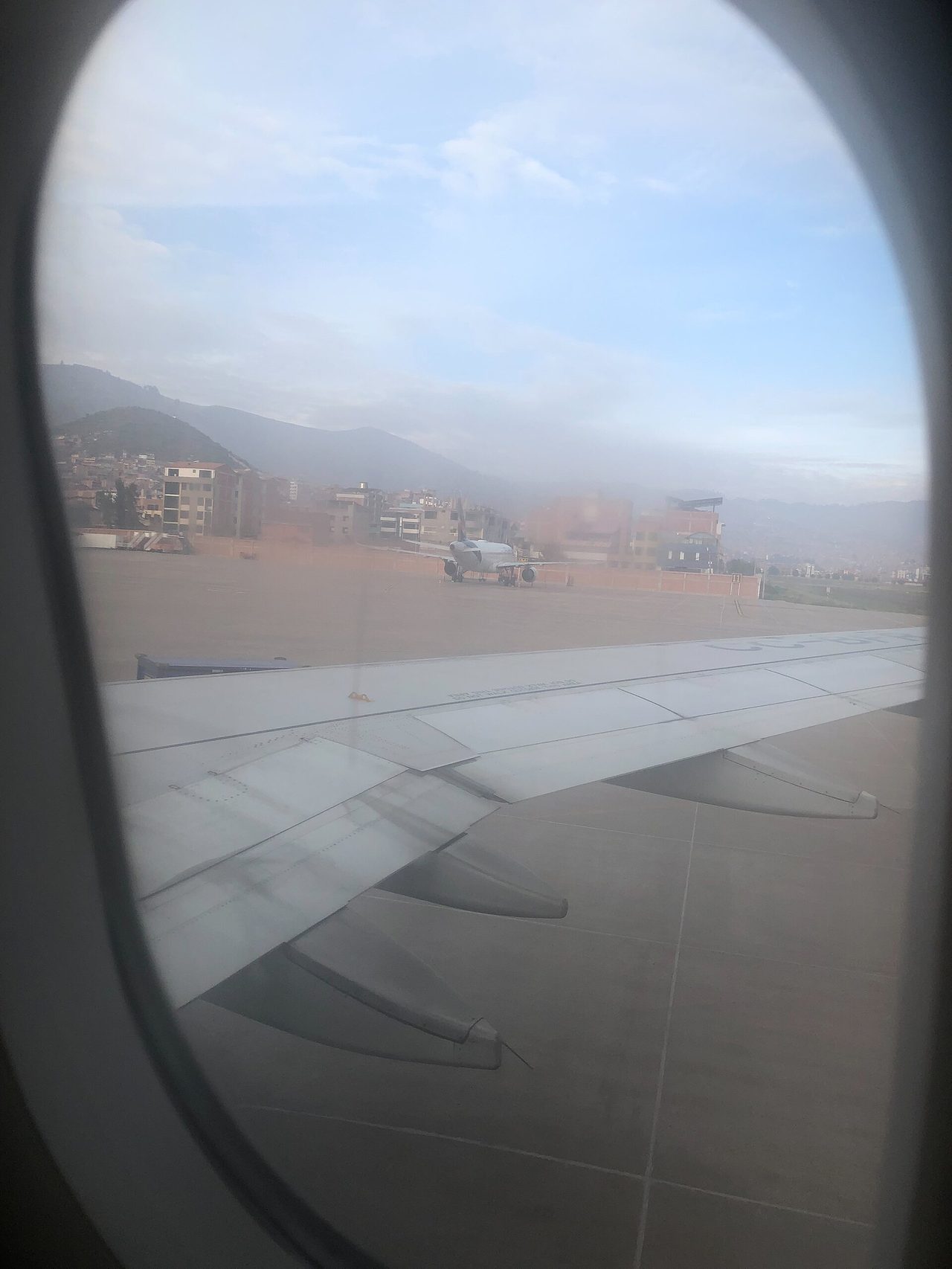
- The domestic hop to Cusco. Lima to Cusco is only 1 hour 20 minutes in the air, but with the airport buffer, the taxi at both ends and check-in, half your day is gone. Most people take a morning flight and reach their Cusco hotel between 09:00 and 11:00.
- The first afternoon at 3,400 m. This is the part people refuse to accept. You have just gone from sea level to higher than most European ski resorts in ninety minutes. The correct thing to do on that first afternoon is very little. Half a day, gone, and if you spend it instead you frequently lose the next day to a headache.
- The departure day. If you fly Cusco to Lima to connect internationally, you are at the airport early and you spend the day in transit. Call it 0.3 of a usable day.
Add it up and the fixed overhead of a Peru trip is about two full days, before you have moved anywhere else within the country. On top of that sits movement overhead: roughly half a day for every additional internal flight or long bus leg you add.
| Calendar days in Peru | Fixed overhead (days) | Movement overhead (days) | Usable days | Usable share |
|---|---|---|---|---|
| 5 | 2.0 | 0.5 | 2.5 | 50% |
| 7 | 2.0 | 0.5 | 4.5 | 64% |
| 10 | 2.0 | 1.0 | 7.0 | 70% |
| 14 | 2.0 | 1.5 | 10.5 | 75% |
| 21 | 2.0 | 2.5 | 16.5 | 79% |
A “usable day” here means a day with at least six waking hours available at the place you came to see, at an altitude your body has adjusted to. That is a deliberately soft definition and you can argue with the exact decimals. The shape of the curve is what matters, and the shape is brutal.
At five days you spend half your trip in transit and adjustment. At seven you get roughly four and a half working days. At ten you get seven, which is nearly three times what five days gives you for only twice the leave. That is the entire argument for ten days in one sentence.
Notice too where the curve flattens. You never get much above about three-quarters efficiency, because long trips buy more destinations and more destinations mean more flights. Going from fourteen days to twenty-one days lifts efficiency by four percentage points but adds six usable days. Length stops being about efficiency at that point and starts being about scope.
The same overhead, in money
The time argument has a financial twin, and it is even less flattering to short trips.
A big slice of your Peru budget is fixed. The international flight does not get cheaper because you stayed five days. Neither does the Lima–Cusco return, the Machu Picchu ticket, the train, or the shuttle bus up from Aguas Calientes. Those costs land whether your trip is short or long, so a short trip amortises them over almost nothing.
Here is a worked model. I have used mid-range assumptions: about $900 for a long-haul return, $120 for a Lima–Cusco return, and roughly $210 for the Machu Picchu day itself (entry at S/163 for a foreign adult, a standard-class train at $35–60 each way, and the Consettur shuttle at around $24 round trip). On-the-ground spend is set at $110 a day for a mid-range traveller — a decent private room, three meals, entries and local transport. Backpackers run this at $55–65; comfort travellers at $220 and upwards.
| Trip length | Fixed costs | Daily spend | Total (per person) | Usable days | Cost per usable day |
|---|---|---|---|---|---|
| 5 days | $1,230 | $550 | $1,780 | 2.5 | $712 |
| 7 days | $1,230 | $770 | $2,000 | 4.5 | $444 |
| 10 days | $1,340 | $1,100 | $2,440 | 7.0 | $349 |
| 14 days | $1,530 | $1,540 | $3,070 | 10.5 | $292 |
| 21 days | $1,990 | $2,310 | $4,300 | 16.5 | $261 |
The fixed-cost column rises with trip length because longer trips add domestic flights, a Colca tour, an Amazon lodge. Even so, cost per usable day falls by nearly two-thirds between five days and three weeks.
Read it the other way round and it is starker. On a five-day trip, each day you actually get to use costs you north of $700. Extend from seven days to ten and the marginal cost of each extra usable day drops to about $175. Those three extra days are the cheapest days of your entire trip, and they are the ones people cut first. Our breakdown of what a Peru trip actually costs by budget tier goes further into the line items; treat the numbers above as a model rather than a quote, because flight prices and the sol move.
One caveat in the other direction: Machu Picchu entry moved on 1 May 2026, when a SERNANP conservation surcharge was added on top of the base ticket. Foreign adults now pay S/163, or S/211 for the circuits that include Huayna Picchu or Machu Picchu Mountain. You will still find S/152 quoted all over the internet. Check the official portal or our current guide to how Machu Picchu tickets and circuits work before you budget, because these figures move without much warning.
Work backwards from what you want to see
Nobody actually decides trip length in the abstract. They decide it by looking at a list of places and asking whether it fits. So here is the list, with an honest minimum and a comfortable figure for each.
A warning about the minimum column. Those are the numbers where the thing is possible and nothing goes wrong. A landslide on the Ollantaytambo road, a cancelled morning flight out of Cusco because of cloud, a regional strike, one bad night of altitude sickness — any of these turns a minimum-length plan into a missed booking. Tour brochures quote the minimum column. I would plan on the comfortable one.
| What you want to see | Honest minimum | Comfortable | The catch |
|---|---|---|---|
| Machu Picchu alone, from Cusco | 1 very long day | 2 days, sleeping in Aguas Calientes | The day trip runs 12–14 hours door to door and you enter at the hottest, busiest hour. |
| Cusco city itself | 2 days | 3–4 days | One of those days is an acclimatisation day whether you plan it or not. |
| Sacred Valley | 1 day | 2–3 days, sleeping in the valley | Pisac and Ollantaytambo in one day is a coach-tour blur. |
| Cusco + Sacred Valley + Machu Picchu as a block | 5 days | 7 days | This block is the irreducible core of a Peru trip. |
| Classic Inca Trail | 6 days (4 trekking, 1 before, 1 after) | 8 days | Permits sell out months ahead and the trail closes for all of February. |
| Lake Titicaca (Puno) | 2 days | 3 days with an island homestay | Puno sits at 3,827 m — higher than Cusco. Do not make it your first stop. |
| Arequipa | 2 days | 3 days | At 2,335 m it is the best acclimatisation stop in the south, and people skip it. |
| Colca Canyon | 2 days from Arequipa | 3 days, or 3 nights to trek to the floor | The condor viewpoint at Cruz del Condor wants an early start from Chivay. |
| Southern coast (Paracas, Huacachina, Nazca) | 2 days | 4 days | Long drives, and the Nazca overflight is 30 minutes of turbulence. |
| Amazon — Puerto Maldonado | 3 days / 2 nights | 4 days / 3 nights | Short hop from Cusco, but two nights is barely past the lodge’s front porch. |
| Amazon — Iquitos | 4 days / 3 nights | 5–6 days | No road access at all, and you must route via Lima, which costs you a day each way. |
| Huaraz and the Cordillera Blanca | 4 days | 6–7 days for the Santa Cruz trek | Two of those four days go to acclimatising at 3,050 m before any lake hike. |
| Northern Peru (Kuelap, Trujillo, Chiclayo) | 6 days | 8–10 days | Thin flight network and long bus legs. It does not bolt on to a southern trip. |
| Lima | 1 day | 2 days | Worth more than its reputation, mostly because of the food. |
The Amazon is two completely different decisions
People write “the Amazon” on their list as if it were one place with one time cost. It is not, and the difference between the two gateways is the single most common planning error I see.
Puerto Maldonado is a 55-minute flight from Cusco. You land at around 200 m, which is a relief after a week in the mountains, and you are on a boat within an hour or two. A three-day, two-night lodge stay slots into a ten-day trip without wrecking it. What you get is secondary forest, a decent chance of caiman, macaws at a clay lick if you have the right lodge, and monkeys.
Iquitos is a different proposition. It is the largest city on earth with no road connection, and from Cusco you have to fly back to Lima and out again. That routing alone costs you the best part of two days. In exchange the river is enormous, the wildlife is better, and the pink river dolphins are real. But it needs four days minimum and it does not belong on a trip shorter than a fortnight. Our guide to choosing between the Peruvian Amazon’s two gateways goes into which lodges justify the extra nights.
The Inca Trail is a six-day commitment, not a four-day one
The classic trail is four days and three nights over 43 km. But you cannot fly into Cusco and start walking the next morning at 3,400 m rising to a 4,215 m pass. You need two nights in Cusco or the Sacred Valley first, and you want a recovery day afterwards before you sit on a long-haul flight. That is six days minimum for the trek alone, eight if you want to enjoy it, which is why the classic Inca Trail essentially dictates a fortnight if you also want to see anything else.
Permits are capped and released well in advance, and they routinely sell out for peak months. The trail also shuts completely for the whole of February for maintenance. If your dates are fixed and the permits are gone, the alternatives on our roundup of Peru’s best multi-day treks have their own day costs — Salkantay is five days, Lares is three.
Acclimatisation is a budget line, not a vibe
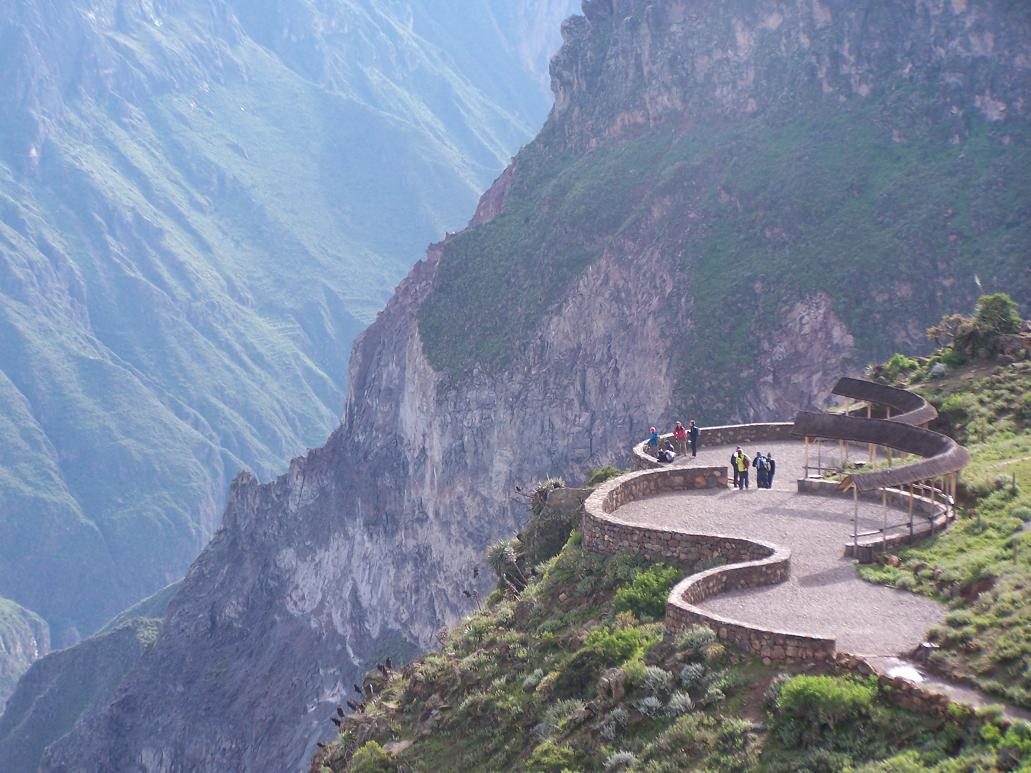
This is why Peru cannot be compressed the way a European city break can. You can do Rome in a long weekend because Rome is at 21 m and your body does not care. Cusco is at 3,400 m and your body cares a great deal.
The altitudes that matter:
| Place | Altitude | What it means for your schedule |
|---|---|---|
| Lima | 0–150 m | No adjustment needed. A free day, in altitude terms. |
| Arequipa | 2,335 m | Mild. An ideal first night at height. |
| Aguas Calientes | 2,040 m | Lower than Cusco. You sleep better here than up top. |
| Machu Picchu | 2,430 m | Nearly a kilometre lower than Cusco. Not the hard part. |
| Ollantaytambo | 2,792 m | The smart place to sleep on night one in the Cusco region. |
| Urubamba | 2,870 m | Same logic. 500 m lower than the city. |
| Cusco | 3,400 m | The chokepoint. Most people’s worst night is their first here. |
| Puno / Lake Titicaca | 3,827 m | Higher than Cusco. Frequently underestimated. |
| Huaraz | 3,052 m | Base for hikes that top out above 4,500 m. |
| Rainbow Mountain | 5,036 m | Only after several days at altitude, and even then it is hard. |
Read that table carefully and you will spot the thing most itineraries get wrong. Machu Picchu is lower than Cusco. At 2,430 m it is not the altitude challenge of your trip; the city you fly into is. People spend weeks worrying about being short of breath at the ruins and then get flattened on their first night in a hotel in San Blas.
Sequencing buys days back for free
Here is the practical payoff. If you fly Lima to Cusco and stay in Cusco that first night, you will probably lose most of a day and possibly two. If you fly Lima to Cusco and transfer straight down to Ollantaytambo or Urubamba at around 2,800 m, sleeping 500–600 m lower, most people feel noticeably better and lose far less time. You then do the Sacred Valley and Machu Picchu first and come back up to Cusco later in the trip, by which point you are adjusted and the city is a pleasure instead of an ordeal.
That single reordering typically converts one lost day into half a lost day, on a trip where days are the scarce resource. It costs nothing. On a longer southern-circuit route, the equivalent trick is going Lima to Arequipa at 2,335 m first, then Puno, then Cusco, letting your sleeping altitude step up rather than jump. Our page on coping with Cusco’s altitude covers the symptoms and the medication question properly, and where you sleep in and around Cusco matters more than most people realise, because parts of the city sit a hundred metres above the plaza and everything is uphill.
The opposite approach — flying straight into Cusco and starting at pace on day one because you are short of time — is the false economy of Peru travel. It costs you more days than it saves, roughly every time.
What each trip length is actually good for, and what it is not
Five days
Good for: seeing Machu Picchu and getting a real taste of Cusco. Not good for: anything else, at all. Five days is Cusco, one valley day and the ruins, and that is the entire trip. There is no slack in it, so a single cancelled flight breaks the plan. If your leave is genuinely capped at five days I would still go, but go in dry season, book the earliest Machu Picchu date you can rather than the last, and read our five-day Peru plan for the version that actually works rather than the version tour companies sell.
Seven days
Good for: the Cusco region done at a sane pace, plus a day in Lima or one extra excursion such as Humantay Lake. Not good for: Lake Titicaca, Arequipa, the Amazon, or any multi-day trek. Seven days is the point at which a Peru trip stops feeling like a raid and starts feeling like a holiday. It is also where the largest number of readers land, which is why the week-long itinerary is the one I send people most often. Adding the turquoise lake at Humantay is the classic seven-day upgrade, though be aware it involves a pre-dawn start and a climb to 4,200 m.
Ten days
Good for: the Cusco core plus exactly one second region. Not good for: two second regions. This is the length people most often overreach on, trying to squeeze Titicaca and the Amazon into the same ten days and spending four of them in airports. Pick one. The ten-day route shows both branches so you can compare them side by side, and in efficiency terms it is the best trip on this page.
Fourteen days
Good for: the full southern circuit — Lima, Cusco, the Sacred Valley, Machu Picchu, Puno and Titicaca, Arequipa and Colca — without sprinting. Not good for: adding the north or Huaraz on top. Fourteen days is the first length where you can put two deliberate rest days in and still see everything, and rest days are what stop the second week feeling like homework. The two-week itinerary is built around that principle.
Three weeks and beyond
Good for: the southern circuit plus the Amazon, or a serious trek, or the northern route through Chachapoyas and the coast. Not good for: people who need structure, because at this length the trip becomes a set of choices rather than a sequence. Our three-week route lays out the version that makes geographic sense, and the wider Peru itinerary hub compares all the standard routes if you want to see them in one place.
If you have exactly one week of annual leave
This is the most common real constraint, so let me be specific rather than encouraging.
Seven calendar days in Peru usually means nine days away from home once you count the flights, and that is the first thing to check with your employer. If you can take nine days you have a proper trip. If seven days away is the hard limit, you land with five on the ground and you are in the difficult column of the table above.
Two things make a one-week trip work. First, fly into Cusco on your first morning and go straight down to the Sacred Valley, as above. Second, book Machu Picchu for the middle of your trip rather than the end, so a cancelled train or a bad altitude night still leaves you a spare day to use the rebooked ticket. People instinctively put the highlight last. On a short trip that is the wrong instinct.
What you should not do is add Lake Titicaca or the Amazon. Both are genuinely worth going to; neither is worth what it costs you at this length. If you want a second location inside a week, make it a day trip from Cusco rather than a second base. Our list of day trips you can do out of Cusco is the right place to shop, and how long to give Cusco itself is the companion question to this one.
If Peru is one leg of a longer South America trip
Everything above assumes you are flying in from another continent. If you are arriving overland from Bolivia, or by a short hop from Santiago or Bogotá, the arithmetic changes in your favour and it changes a lot.
Two of the fixed overhead days disappear. You are not jet-lagged, you are not landing at midnight, and if you have come from La Paz at 3,640 m or Uyuni you are already acclimatised — which is worth another day on its own. Someone crossing at Copacabana and coming up through Puno can do a genuinely satisfying Peru leg in eight or nine days, where a Londoner would need twelve for the same list.
The sensible route in that case is to enter at Titicaca, work north through Cusco and the Sacred Valley, and fly out of Lima. That way you arrive already high and descend, which is the easy direction. Read the Titicaca guide alongside how buses, trains and domestic flights actually work in Peru, because the long-distance bus network is far better than most first-timers expect and it saves you the half-day airport tax on shorter legs.
Travelling with children
Add days. Not because children are slow, but because the recovery margin has to be bigger.
Altitude affects children in the same way it affects adults, and small children are much worse at telling you what is wrong. A headache and a refusal to eat can be a five-year-old being five or the start of altitude sickness, and you cannot tell from the outside. That uncertainty means you want a schedule where losing a day does not cost you a booked ticket.
Practically: a family trip that would be seven days for two adults should be nine or ten. Sleep in the Sacred Valley rather than Cusco. Skip Rainbow Mountain entirely. Give Machu Picchu two days rather than one so that the entry itself is a short morning and not the end of a fourteen-hour day, and take the train rather than any of the cheaper multi-leg alternatives — our guide to the trains to Aguas Calientes covers what the classes actually differ on. The Cusco day trip version is the one to avoid with young children; it is a long, long day.
Over 60, or with any cardiovascular history
I am not going to give you medical advice, and you should talk to your own doctor about altitude medication well before you fly. But there is a planning point that is not medical, and it matters.
Altitude tolerance is not well predicted by fitness. Marathon runners get sick and sedentary people sail through, and the best predictor anyone has is how you did last time you were high. If you have never been above 2,500 m, you do not know, and a trip designed with no slack is a trip designed on the assumption that you will be fine.
If you are over 60, or have any history involving heart or lungs, plan the slower version. Sleep low. Route through Arequipa if you can, so your first high night is 2,335 m instead of 3,400 m. Give yourself two nights before any activity that involves walking uphill, and treat 4,000 m-plus excursions as optional extras that you decide on when you get there rather than things you have prepaid. In practice that means adding two to three days to whatever the standard recommendation is: a fortnight rather than ten days, ten days rather than a week. Our general practical tips for travelling in Peru cover the boring logistics that make a slower trip comfortable.
Season changes the answer more than people think
The same itinerary needs different amounts of slack depending on when you go.
Dry season runs roughly May to September in the highlands, and that is when the calculations above hold. In the wet months from November to March, and especially in January and February, you need to build in more buffer: afternoon flights out of Cusco are more likely to be delayed, the Sacred Valley roads occasionally close, and a washed-out afternoon at Machu Picchu is a real possibility. If you are going in February, add a day to whatever you had planned, and remember the Inca Trail is shut for the entire month.
The flip side is crowds. Machu Picchu operates a daily cap of 4,500 visitors, rising to 5,600 on peak dates including 1 January, 2–5 April, the long stretch from 19 June to 2 November, and 30–31 December. Entry is by timed hourly slot between 06:00 and 16:00 with a thirty-minute grace period, and since June 2024 the site runs on three circuits and ten one-way routes that rangers genuinely enforce. You are inside for between two and a half and four hours depending on your circuit. What that means for trip length is simple: in peak months you cannot rely on getting the date or circuit you want at short notice, so a plan with only one possible Machu Picchu day is a fragile plan. The seasonal detail is in our guides to when to visit Peru and the best months for Machu Picchu specifically.
One small correction while we are on tickets: the ISIC card is no longer accepted for the Machu Picchu student rate. You need a university photo ID with an expiry date on it, and they check at the gate. ISIC is still fine for the Cusco Boleto Turístico, which is a separate scheme run by a different body, so do not conflate the two.
The advice nobody wants: shorten the list, not the trip
Most people arrive at this question the wrong way round. They have a list of places and they are trying to work out how many days it takes. The better move, almost always, is to keep the days you have and cut the list.
Here are the three things I would cut first from a typical first-timer’s plan.
One: Rainbow Mountain. It costs a full day, involves a start somewhere between 03:00 and 04:00, and finishes with a walk at 5,036 m that is genuinely unpleasant if you are not well adjusted. The colours depend on light and recent snow, and a fair number of people arrive to find a brown hill under cloud. It is the most commonly regretted day in the Cusco region by a wide margin. If you have fourteen days and you are curious, fine — read the honest assessment of Vinicunca first. On a seven-day trip it is the wrong use of a seventh of your holiday.
Two: the Amazon, on any trip under ten days. Two nights in a Puerto Maldonado lodge sounds like a manageable add-on. In practice it consumes three of your days, two of them substantially travel, for one full day in the forest. The jungle rewards time more steeply than almost anywhere else in Peru; two nights gives you the version you will describe as “nice” and forget. Save it for a trip where you can give it four days.
Three: the southern coast, if you are also doing Cusco and Titicaca. Paracas, Huacachina and the Nazca Lines are a fine three or four days on their own, and our southern coast guide makes the case for them. But bolting them onto a highland trip means long drives in the wrong direction and a thirty-minute overflight that a lot of people spend feeling sick. Do the coast as its own trip, or on a three-week route where it flows naturally.
An honourable fourth: the second Machu Picchu entry. Buying two tickets on consecutive days is a popular upgrade and, for most visitors, one well-chosen circuit is enough. If you do want the extra climb, the comparison of Huayna Picchu against Machu Picchu Mountain will tell you which one suits you, and either way that is the S/211 ticket rather than the S/163 one.
What I would add with the days you free up: another night in the Sacred Valley, and a proper day in Lima for the food. Two of the best restaurants in the world are in Miraflores, the ceviche in a ten-sol market stall is better than most of what you will eat at home, and Lima has more to it than its reputation as an airport with a city attached. If you would rather spend the time up high, Cusco itself rewards a slower pace more than any other city in the country.
Frequently asked questions
Is 5 days in Peru enough?
Enough for Machu Picchu and Cusco, and nothing else. You will get roughly two and a half usable days out of it, and there is no slack for a delay. It works if you are already in South America. From Europe or North America it is an expensive way to see one ruin.
Is one week in Peru enough?
Yes, for a first trip focused on Cusco, the Sacred Valley and Machu Picchu, with perhaps one day in Lima. It is not enough for Titicaca, Arequipa, the Amazon or a multi-day trek. Seven days is the point where a Peru trip becomes worth the flight.
Is 10 days in Peru enough?
Ten days is the best trip most people can realistically take. It gives you the Cusco region properly plus one second region — Titicaca, or Arequipa and Colca, or the Amazon. It is not enough for two of those, whatever an operator’s brochure suggests.
Are two weeks too long in Peru?
No. Fourteen days is the first length at which you can build in real rest days and still complete the southern circuit. If anything the risk at two weeks is the opposite: people fill the slack with excursions and end up as tired as they would have been on ten days.
How many days do you need for Machu Picchu alone?
One very long day from Cusco, or two days with a night in Aguas Calientes, which is far more pleasant and puts you at the gate before the day-trippers arrive. Neither includes the acclimatisation days you need beforehand. We break the options down in our guide to how many days Machu Picchu really needs.
Can I do Machu Picchu and the Amazon in 10 days?
Yes, via Puerto Maldonado, and it is a common ten-day shape. Via Iquitos, no — the Lima routing makes it a fortnight. Be honest with yourself that two nights in a lodge is a taste rather than a jungle trip.
How many days should I spend in Cusco before hiking?
Two nights at altitude before anything strenuous, and that is a minimum rather than a comfort figure. For the Inca Trail, Salkantay or anything above 4,500 m, three nights is better, and sleeping the first of them in the Sacred Valley rather than Cusco makes those nights work harder.
Do I need a day in Lima?
Not for the sights, no. For the food, yes, and it is the one argument that changes my mind on short trips. If you are at seven days or fewer, treat Lima as a stopover on the way out rather than the way in, so the day does not come out of your acclimatisation budget.
What is the shortest realistic trip that includes the Inca Trail?
Ten days from Europe or North America. The trek is four days, you need two nights before it and a recovery day after, and you still have the international flights either side. Anyone quoting you seven days for a trip including the classic trail is quoting you a trip with no margin at all.
Does the rainy season change how many days I need?
Yes. Between November and March, and particularly in January and February, add a day of buffer to whatever the dry-season plan says. Flight delays out of Cusco and occasional road closures in the Sacred Valley are normal rather than exceptional in those months.
Should I book a tour or plan it myself to save days?
A tour saves you planning time, not travel time. The overhead in this article is physical — flights, transfers, altitude — and no operator can make Lima to Cusco take less than half a day. What a good operator does buy you is protection when something goes wrong, which matters most on exactly the short trips where I would otherwise tell you to add days.
So, how many days
Seven if you must, ten if you can, fourteen if you want to come home feeling like you saw Peru rather than photographed it. Under five days, be honest with yourself that you are going to see Machu Picchu, and plan a trip that does that one thing extremely well instead of a trip that does four things badly.
And if the number you have is fixed and it is smaller than you would like, remember the direction the maths runs. You cannot reduce the overhead. You can only decide how much you are asking your remaining days to carry. Cut the list. The trip gets better, not worse.