Lima Airport to the City: Transport Guide
Jorge Chavez moved to a new terminal in June 2025, and most advice about the taxi desks, the bus stop and the Uber pickup is now describing a building you will never see. Here is what the arrivals hall looks like today, what each option really costs, and who each one is wrong for.
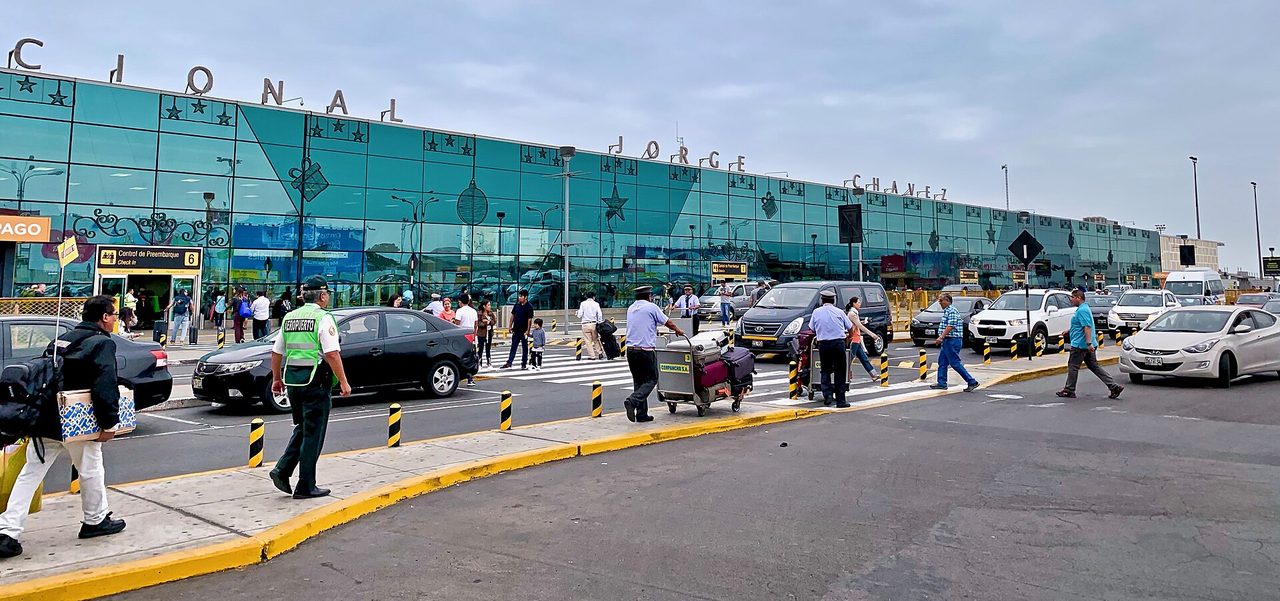
The trip from Lima airport to Miraflores is about 13 kilometres and it can take 30 minutes or 100 minutes, and almost nothing you do in advance changes that. What you can control is which vehicle you get into, what you pay, and how long you stand in a crowded hall at 2am wondering whether the man with the laminated badge is legitimate. That is what this guide is for.
There is one thing you need to know before anything else, and it is the reason most of the advice you will find on this route is now wrong: Jorge Chávez moved. On 1 June 2025 the whole airport shifted into a brand-new passenger terminal on the far side of the airfield, roughly 1.5 km from the building everyone had used since the 1960s. The old terminal is closed to passengers. Every description of “the arrivals hall”, “the taxi desk on the left as you come out” and “the bus stop across the car park” written before mid-2025 describes a building you will never see. A surprising number of pages still on page one of Google have not been rewritten.
The terminal moved, and most advice about it did not
Here is what actually changed, in the terms that matter to someone with a suitcase.
The new terminal sits on the north side of the runways, still inside Callao, and it is roughly three times the size of the old one. Capacity went from a building designed for about 15 million passengers a year to one being scaled toward 30 and eventually 40 million. There is a second runway and a new control tower. Inside, it is genuinely a modern hub: CT scanners at security where you usually keep liquids and laptops in the bag, six baggage carousels, sleep pods, more lounges, better signage.
The frictions are all outside the building. Vehicle access was rerouted through Avenida Morales Duárez and a set of modular bridges over the Río Rímac. That is essentially one road in and one road out. When it jams, everybody jams, including your pre-booked private car that is now 25 minutes late and cannot tell you why. There is no safe pedestrian access at all: the bridges were built for vehicles, and the walk from the nearest public road to the terminal doors is over a kilometre through an area you do not want to be walking through with luggage.
Two more things worth knowing. Metro Line 2, still under construction, has a future station called “Aeropuerto” — it is next to the old terminal, not the new one, so do not build a plan around it. And a transfer TUUA of roughly US$12 now applies to international passengers connecting through Lima. It is normally baked into your ticket price rather than collected at a desk, and it does not apply to you if Lima is your destination.
Immigration is the part nobody budgets for
All arrivals land on Level 3 and walk down to Level 1 for baggage claim. It is a long walk. Then you queue for immigration, which now uses biometric capture: a photo and fingerprints for every arriving passenger. That has made the line meaningfully slower than it was in the old building. Drivers who work the terminal daily put the average from wheels-down to standing in the arrivals hall at somewhere close to an hour on international flights, and the 05:00–09:00 arrival wave is the worst of it.
Plan for that. If someone is meeting you, tell them 75 minutes after landing, not 40. If you have a connecting domestic flight to Cusco, read the section near the end of this guide before you book it.
What the arrivals hall actually looks like now
Once you clear customs you walk out into the public arrivals area on Level 1. It is bright, it is well staffed, and at peak hours it is tighter than the size of the new terminal would lead you to expect. The pick-up zone did not scale with the rest of the building.
Facing outward, this is roughly where things sit:
- Official taxi counters — inside the hall, landside but before the exit doors, in the stretch between Exits 1 and 2. Taxi Green, Taxi 365, Taxi Directo and the VIP operator CMV all have staffed desks. You can buy a fare without stepping outside, which is the entire point of them.
- Airport Express Lima counter — outside the doors, between Exits 2 and 3. The coach itself boards just beyond Door 3 and is visible from inside the hall.
- Hotel shuttle stand — also at Door 3. This is where the free Costa del Sol Wyndham shuttle picks up, running around the clock roughly every 30 minutes over to the hotel by the old terminal.
- App pick-up — not at the kerb. Uber, Cabify, InDrive and DiDi collect from a designated parking area, which Cabify identifies as Parking E1 near the Costa del Sol hotel. You go up to Level 2, cross a boulevard and follow signage. More on this below, because it is the single most misunderstood part of arriving here.
- ATMs, exchange, SIM kiosks, luggage storage — all on Level 1 near arrivals. Sort them out before you walk out, not after.
The practical rule: everything official is either inside the hall or immediately outside Door 3. Nothing legitimate requires you to follow someone across a car park.
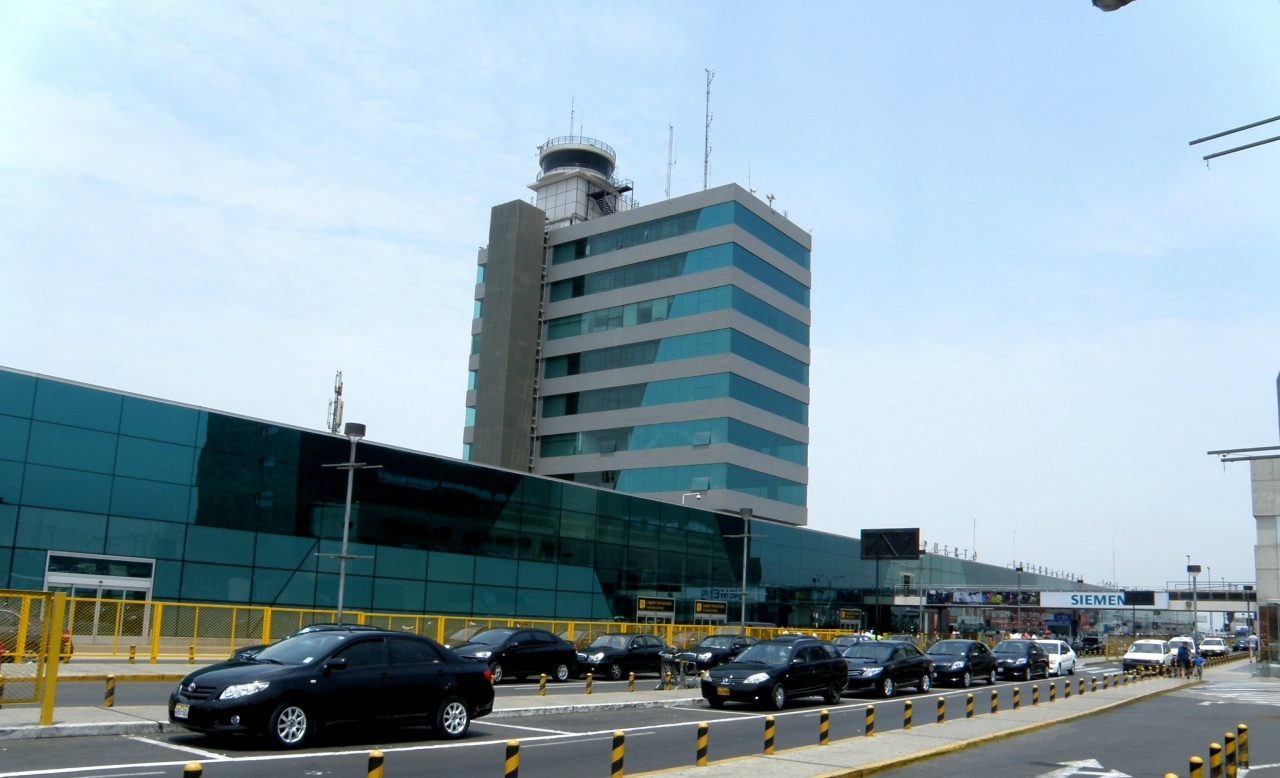
That photograph is the old terminal, control tower and taxi rank included. I have left it in deliberately, because that is the building described in most of the guides you will read, and recognising it is a fast way to date advice you are being given. If a page tells you to exit and turn left past the Costa del Sol, or shows a kerb that looks like this, it was written before June 2025.
Lima airport to Miraflores: the four real options compared
Prices below are 2026 ranges gathered from operator pages, airport-authority guidance and current traveller reporting. Soles-to-dollar conversions assume roughly S/3.75 to US$1, which is where the rate has been sitting; check it on the day. These are ranges, not quotes, because Lima fares move with time of day and demand.
| Option | Cost to Miraflores | 3am journey | 8am rush | Where you meet it | Wrong for |
|---|---|---|---|---|---|
| Official taxi desk (Taxi Green, Taxi 365, Taxi Directo, CMV) |
S/60–75 off-peak, S/80–95 at peaks (about US$16–25) |
30–40 min | 60–90 min | Staffed counter inside arrivals, between Exits 1 and 2; escorted to a secure bay | Solo budget travellers — you are paying four to five times the bus for the same road |
| App ride (Uber, Cabify, InDrive, DiDi) |
S/40–70 off-peak, plus airport supplement (Cabify: S/10–20) and a parking fee around S/6.30; surge can exceed the taxi desk | 30–40 min | 60–90 min | Designated pick-up zone, Parking E1 — up to Level 2, across the boulevard, follow signs | Anyone landing without a working data connection, or with more bags than they can wheel across a car park |
| Airport Express Lima | From S/15, typically S/15–25 per person (about US$4–7) | Not running — last departure around 22:00 | 60–80 min | Counter outside between Exits 2 and 3; coach boards at Door 3 | Anyone not staying near its four Miraflores stops; families juggling toddlers and three suitcases |
| Pre-booked transfer / hotel car | US$20–30 typical for a sedan; shared shuttles (QuickLlama and similar) from about US$6 per person | 30–40 min | 60–90 min | Driver with a name board in arrivals, or a hotel desk arrangement | Flexible travellers — you pay a premium for certainty and lose the ability to change your mind |
| AeroDirecto public bus | S/2–5 (about US$0.50–1.35) | Quilca route only, 23:00–05:00 | Slow and standing | ATU-signed stops outside the terminal | First-timers, anyone with a big case, anyone who does not read Spanish |
If you want the short answer: land in daylight with normal luggage and a Miraflores hotel, take the bus. Land at 1am, or with a family, or heading to San Isidro or Barranco, take the official taxi desk. Use an app if you are comfortable with the walk to E1 and the price is genuinely better on the day. Everything else is a variation on those three.
The official taxi desks, and what “prepaid” actually buys you
The counters inside arrivals sell you a fixed fare by district. Staff escort you out to a controlled bay inside the airport precinct. Most desks take cards as well as cash.
Be clear about what you are purchasing, because the word “prepaid” does a lot of work in airport marketing. You are buying three things: a price that cannot be renegotiated mid-journey, a vehicle that is on the airport’s authorised list, and a staff member who watches you get into it. You are not buying a faster car, a nicer car, or any protection against traffic. You are buying the removal of a negotiation at the exact moment you are least equipped to have one.
That is worth real money after an overnight flight. It is not worth S/95 at 11am on a Tuesday when an app is showing S/45 and you have a working phone.
One phrase to have ready at the desk: “¿Cuánto es a Miraflores, todo incluido — estacionamiento y peajes?” Get the parking and tolls confirmed as included and keep the printed slip. Fares by district in 2026 run roughly S/60–75 to the Historic Centre, S/65–85 to San Isidro, S/60–80 to Barranco and S/90–110 or more out to Surco or La Molina, with peak-hour pricing 20–30 per cent above the base.
Apps at Jorge Chávez: the honest version
Uber, Cabify, InDrive and DiDi all operate at the new terminal. The transport authority permits app vehicles to enter provided they meet the formal requirements. So yes, it works. It is not frictionless, and pretending otherwise sets you up for a bad first hour in Peru.
Here is what actually happens. You request the ride and the app does not send the driver to the kerb outside arrivals. It sends you to a designated pick-up zone in the parking structure — Parking E1, over near the Costa del Sol hotel. Getting there means going up to Level 2, crossing a boulevard and following signage that is adequate but not obvious when you are tired and pushing a trolley. Budget eight to twelve minutes for that walk, and more with children.
Then there is the pricing. Both Cabify and the other apps add an airport supplement plus a parking component on top of the base fare, which is why an app quote that looked like S/45 on the plane can settle at S/65 by the time you pay. At peak arrival waves, surge can push app prices above the fixed counter fare entirely. Check both before committing; you are standing thirty metres from a desk that will quote you a number.
And the part nobody wants to write down: cancellations happen. A driver who accepts a Jorge Chávez pickup, then realises the queue into E1 is long or that the fare does not cover the parking hassle, will sometimes just cancel. Occasionally a driver will message asking you to walk out to a different spot, or to pay cash and take the trip off-app. Both are worth declining. Off-app means no trip record, no plate on file and no recourse, which is precisely the protection you were buying. If someone cancels, request again. It is annoying, not dangerous.
Two practical prerequisites. You need data the moment you land, which means an eSIM activated before you fly or a working roaming plan — the airport wifi will get you through a booking but is not reliable enough to manage a live pickup across a car park. And you need to wait inside the terminal until the plate shows in the app, then walk out and match it. This is the same discipline that keeps you fine everywhere else in the country, and it is worth building the habit on day one along with the rest of the practical groundwork that makes a first trip to Peru go smoothly.
Airport Express Lima: the bus, honestly assessed
This is the official airport coach to Miraflores and, for a large share of arriving travellers, it is the correct answer. Fares start from S/15 and typically land in the S/15–25 range per person, which is roughly US$4–7. Coaches run about hourly, broadly 07:00 to 22:00 from the airport and 07:00 to 21:00 in the other direction. Journey time is normally 50 to 70 minutes.
You get a proper luggage hold with no weight limit, wifi, USB charging, air conditioning, GPS tracking and onboard cameras. Staff are used to non-Spanish speakers and will tell you which stop is closest to your hotel. Tickets bought online stay valid for months, and if you miss your booked coach because immigration ate an hour, you take the next one.
There are four stops, all central Miraflores: Marriott/Larcomar, the tourist information centre on Avenida Larco, Parque Kennedy, and Hotel Boulevard on Avenida José Pardo. Most Miraflores hotels are a five to ten minute walk from one of them.
Now the honest part, because most write-ups stop at the brochure. The bus is wrong for you if your accommodation is not in central Miraflores. It does not stop in Barranco, the old seaside district south along the coast, it does not serve San Isidro, and it does not go to the Historic Centre. If you have booked in one of those, the bus plus a second taxi at the far end usually costs more in time and stress than going direct. It is worth knowing which district you are actually heading to before you land, and if you have not decided yet, our breakdown of which Lima neighbourhood suits which kind of trip is the place to start.
It is also wrong for you at 22:30. And it is wrong for a family of four with three large cases and a tired toddler, not because the bus cannot carry the bags but because the five-minute walk from Parque Kennedy to your hotel with all of it, in the dark, is the part that breaks people. Two adults splitting a S/70 taxi are paying S/35 each against S/15–25 on the coach, and that gap buys door-to-door.
AeroDirecto: the cheap option almost nobody mentions
Lima’s transport authority runs public bus routes branded AeroDirecto that serve the new terminal. Fares are S/2 to S/5. Most routes run roughly 05:00 to 23:00, and the Quilca route covers the overnight window from 23:00 to 05:00, which gives the terminal something close to round-the-clock public transport for the price of a coffee.
There is also a Terminal Norte route at S/5 running 24/7 between the airport and the Plaza Norte intercity bus hub. If you are landing and then immediately taking a long-distance bus south along the coast toward Paracas and Ica, that one is genuinely useful and saves a large taxi fare.
For a first arrival with luggage, I would not. It is a normal city bus: standing room at peaks, no luggage hold, Spanish signage, and stops that put you somewhere in Lima rather than at your hotel door. It suits a returning visitor with a backpack and some Spanish. If you want a fuller picture of how the city’s buses, Metropolitano corridor and metro fit together once you are settled, that is covered in our guide to moving around Peru by bus, plane and rail.
How long it really takes
Lima traffic makes averages close to meaningless, so here are ranges by district and time of day rather than a single number. Distances are road distances from the new terminal.
| Destination | Distance | 02:00–05:00 | Midday | 07:00–09:30 and 17:00–20:00 |
|---|---|---|---|---|
| Historic Centre | ~10 km | 20–30 min | 35–60 min | 50–80 min |
| San Isidro | ~11 km | 25–35 min | 40–65 min | 60–90 min |
| Miraflores | ~13 km | 30–40 min | 45–70 min | 60–100 min |
| Barranco | ~16 km | 35–45 min | 55–85 min | 75–110 min |
Two caveats. Those upper figures assume ordinary congestion, not an incident. Morales Duárez is the only real way in and out; when something closes it, the numbers stop applying and there is no alternative route to take. Second, whatever your mapping app says when you check it from the baggage hall, add 20 to 30 minutes before you make a promise to anyone.
Landing at 2am
Plenty of long-haul routes into Lima arrive between midnight and 4am, which raises the obvious question: do you go into the city in the dark, or sit it out until light?
Go. Waiting until 6am to reach a hotel you have already paid for is a poor trade. What you should do is remove the improvisation from the trip. At that hour the bus is not running, so the choice is an official counter taxi, a pre-booked transfer with a driver holding a board, or an app ride if you are comfortable with the E1 walk. All three are fine. Counter taxis operate 24 hours and expect S/60–80 to Miraflores at that time, and the roads are empty enough that you will be at your hotel in a little over half an hour.
If you would genuinely rather not move until morning, the terminal is a reasonable place to wait. There is a permanent airport police presence around the clock, the arrivals area is bright and staffed, and there are charging points and 24-hour food. There is also a sleep-and-fly facility with hourly pods and larger suites if you want a shower and four hours horizontal. The Wyndham Grand is attached to departures by a covered upper-level walkway, so you can reach a bed without stepping outside at all, and the original Costa del Sol over by the old terminal runs its free shuttle from Door 3 every half hour, all night.
What you should not do is wander outside to compare prices. Stay inside the building until your ride is confirmed.
The touts, handled factually
People will approach you in and around arrivals offering rides. Some are freelance drivers who are simply unauthorised. The UK government’s travel advice specifically warns about criminals posing as taxi drivers at Jorge Chávez, and Peruvian authorities run regular enforcement operations at the airport with fines above S/5,000 for drivers and S/10,000 for vehicle owners caught touting.
The standard advice is to never accept a ride from someone who approaches you, and it is correct, but the reasoning matters more than the rule. It is not that every tout is dangerous. It is that a ride arranged by approach has no record: no plate logged, no fare agreed at a counter, no trip visible to anyone else. If it goes wrong there is nothing to trace. That is the whole problem, and it applies equally to a driver who seems perfectly nice.
So: laminated badges mean nothing, only the staffed counters inside the hall are official, and a driver who messages you to move to an unofficial spot is asking you to give up the only protection you had. Decline politely and keep walking. Nobody will make a scene about it. Beyond the airport, Lima behaves like any large city — sensible about bags and phones in crowds, unremarkable the rest of the time, and easy to enjoy once you are out among the museums, huacas and clifftop parks that fill a proper Lima itinerary.
Cash, cards and a SIM before you leave the building
Sort your connectivity and money on Level 1 while you are still inside. Walking around the pick-up zone hunting for signal is the wrong way to start.
Cash. There are ATMs from BCP, BBVA, Interbank and Scotiabank in the terminal, and 24-hour Global Exchange counters. Airport exchange rates are poor, as they are everywhere. Take enough soles for the ride and a day of incidentals — S/150 to S/200 is plenty — and change the rest in Miraflores or San Isidro where the rates are better. Ask for small notes. A S/200 note is close to useless for a S/15 bus fare, and drivers genuinely may not have change.
Cards. Official taxi desks and the app platforms take cards. AeroDirecto and most street taxis do not. Airport Express can be paid online in advance. Peru is broadly card-friendly in tourist districts and cash-only in a lot of the places worth eating at, which is a tension you will meet again the first time you go looking for the ceviche and anticuchos Lima is genuinely famous for.
SIM and eSIM. There is a Claro kiosk and a PeruSIM counter in the public arrivals area, and a be! smart shop upstairs in departures selling Bitel. Airport pricing is not kind: reported early-2026 snapshots put a Claro arrivals bundle of 14 GB for a week at around US$59, and PeruSIM packages between roughly US$21 and US$37.50 for 5–30 GB. A travel eSIM bought before you fly is usually cheaper than any of them and, more importantly, is already working when the wheels touch down, which is exactly when you need it to summon a car. If you prefer a local physical SIM for a long trip, buy it in the city rather than at the airport.
Luggage storage. There is a storage service on Level 1 that operates 24 hours and takes cards. It is the thing to use if you have a long layover and want to go into the city unencumbered, or if you are coming back through Lima between domestic legs and would rather not drag a full case to Cusco and back.
Going the other way: leaving Miraflores for your flight
The return trip is where people get caught, because it is the direction with a hard deadline.
For an international departure, aim to be at the terminal three hours before your flight. Airlines want three hours, immigration queues are real, and the airport is big enough now that walking from the door to your gate is not a five-minute affair. Work backwards from there using the honest journey times above and add a buffer on top.
In practice that means:
- Early-morning flight, say 07:00. Be at the terminal by 04:00, leave Miraflores by 03:15. Roads are clear at that hour and the ride is genuinely 30 to 40 minutes, so you can be tighter than you would in daylight. Book the car the night before rather than trusting an app at 3am.
- Midday flight, say 13:00. Terminal by 10:00, leave Miraflores by 08:45. That crosses the tail of rush hour, which is why the buffer is bigger.
- Evening flight, say 20:00. Terminal by 17:00, leave Miraflores by 15:15. Leaving at 16:00 puts you in the worst traffic of the day and I would not do it.
Airport Express runs the reverse route from roughly 07:00 to 21:00 with the same four stops, and it is a fine way back if your timings suit it — but take the coach one departure earlier than you think you need. Missing a bus costs you an hour; being early at the airport costs you nothing but a coffee.
For a domestic departure to Cusco or Arequipa, two hours at the terminal is normally adequate, though the same traffic maths applies to getting there. If Cusco is next, spend the flight reading about how hard the altitude hits on arrival, because 3,400 metres after a night at sea level is a real adjustment and the first afternoon is not the time for an ambitious plan.
What this route is not good for
Some things this transfer simply does not support, and it is better to hear it now than to discover it with a boarding pass in your hand.
A tight domestic connection that involves leaving the airport. If you land internationally in the morning and have a Cusco flight in the afternoon, stay airside or stay in the terminal. Do not plan lunch in Miraflores in between. Immigration alone can take an hour, the round trip is two to three hours of driving in daylight, and one incident on Morales Duárez turns a comfortable margin into a missed flight. There is no clever routing that fixes this.
A same-day arrival and onward domestic flight with a short gap. Even without leaving the building, allow three hours between an international arrival and a domestic departure. Two is optimistic given current immigration and baggage times.
The bus with a family and full luggage. Three suitcases, a pushchair and a toddler do not fit the Airport Express experience, whatever the luggage-hold policy says. The bags are the easy part; the walk from the stop and the wait for the coach are not.
Walking, cycling or being dropped at a public road. There is no pedestrian access. Do not let anyone drop you “near” the airport.
Squeezing Machu Picchu into a Lima arrival day. People do try. Between the flight to Cusco, the acclimatisation you actually need and the timed-entry system at the site, it does not compress, and understanding how the Cusco to Machu Picchu journey actually strings together before you book flights will save you money as well as a bad day.
Being your only budget line for Lima. The transfer is a rounding error against a fortnight in Peru. If you are costing a trip properly, the airport ride matters far less than internal flights and entry fees, both of which are laid out in our realistic breakdown of what a Peru trip costs.
My actual recommendation
If you are landing between about 08:00 and 20:00, staying in central Miraflores, and travelling with luggage you can wheel yourself: take Airport Express. It is cheap, the staff speak English, the luggage hold is generous and it deposits you in the middle of the district. There is no cleverer answer.
If you are landing at night, travelling as a family or a group of three or more, or staying anywhere that is not Miraflores: use the official taxi counter inside arrivals. Pay the S/60–95. The fixed price and the escort to the car are worth it at the end of a long flight, and split between three people it is not much more than the bus anyway.
Use an app when you have working data, reasonable luggage, no children, and the quote including the airport supplement genuinely beats the counter. That is a real set of conditions rather than a default.
Pre-book a private transfer if the certainty is worth US$25 to you, or if you are arriving with something you would rather not manage alone — camera gear, a musical instrument, a nervous first-time traveller.
Whichever you pick, you land in a district that rewards a slow first day: the coastal parks, the walk down to the cliffs and Malecón that define Miraflores, and a long lunch to reset your body clock. If you only have 24 hours before flying onward, our plan for a single day in Lima is built for exactly that, and the city’s restaurant scene is worth planning around rather than stumbling into.
Frequently asked questions
Is there still an old terminal I might accidentally go to?
No passengers use it. All flights moved to the new terminal on 1 June 2025 and the old building on the south side of the airfield is closed to passengers, though the original Costa del Sol hotel still sits beside it and runs a shuttle across. The risk is not that you go to the wrong building; it is that you follow directions written for the wrong building.
How much should I pay for a taxi from Lima airport to Miraflores?
From an official counter inside arrivals, roughly S/60–75 off-peak and S/80–95 at busy times, which is about US$16–25. Apps often quote S/40–70 off-peak before the airport supplement and parking fee are added, and can exceed the counter price under surge. Anything much above S/100 to Miraflores is worth questioning.
Can I use Uber at Jorge Chávez, and where do I meet the driver?
Yes. Apps are permitted to enter the new terminal provided the vehicle meets the transport authority’s requirements. Pickup is not at the arrivals kerb: you follow in-app directions to the designated zone in Parking E1 near the Costa del Sol hotel, which means going up to Level 2, crossing the boulevard and walking through the car park. Wait inside until the plate appears in the app, then walk out.
What time does the last Airport Express bus leave?
Airport departures generally finish around 22:00, with the reverse direction from Miraflores winding up around 21:00. Timetables have shifted more than once since the terminal move, so check the operator’s current schedule the week you fly rather than relying on any figure printed in a guide.
Is it safe to arrive at Lima airport in the middle of the night?
Inside the terminal, yes. There is round-the-clock police presence, the arrivals area is bright and staffed, and there are 24-hour food, charging and luggage-storage options plus sleep pods. The caution applies to the area outside and to unofficial rides, not to the building. Use a counter taxi, a pre-booked transfer or a confirmed app ride, and do not stand around on the kerb.
How long should I allow to get to the airport for an international flight?
Be at the terminal three hours before departure. From Miraflores that means leaving about 3 hours 45 minutes before the flight at quiet hours, and 4 hours 15 minutes or more if your journey crosses the 07:00–09:30 or 17:00–20:00 congestion windows. Lima traffic is unpredictable enough that the buffer is not paranoia.
Can I get from the airport to Barranco or San Isidro directly?
By taxi, app or private transfer, yes — Barranco is around S/60–80 and San Isidro S/65–85 from the counters. Airport Express does not serve either; it only stops in Miraflores. If you are staying in Barranco, going direct is usually worth it, because the bus plus a second ride at the far end costs more time than the saving justifies.
Is there a metro or train from the airport?
Not yet, and not soon. Metro Line 2 is under construction and its planned “Aeropuerto” station is located by the old terminal, which is not connected to the new one. Your public-transport option is the AeroDirecto bus network at S/2–5, including a 24-hour link to the Plaza Norte bus hub.
Should I buy a SIM card at the airport?
Only if you have not organised anything else. Airport bundles are expensive relative to what the same data costs in the city, and an eSIM activated before departure is both cheaper and already working when you land, which matters if you plan to order an app ride. Buy a local physical SIM in Miraflores if you want one for a longer trip.
What if my flight lands during immigration’s worst hours?
The 05:00–09:00 arrival wave is the slowest, with biometric processing pushing waits past 45 minutes and total landing-to-arrivals-hall times close to an hour. There is nothing you can do about it except not book a tight onward connection and tell whoever is meeting you to expect 75 minutes rather than 40.
Where this fits in the rest of your trip
Getting from the terminal into the city is the least interesting hour of a Peru trip and the one most likely to sour the first day, which is why it is worth ten minutes of planning before you fly rather than ten minutes of negotiation after you land. Decide your option on the plane. Have the fare in soles or the app installed. Know which door you are walking out of.
After that the real decisions start: how many days to give Lima before flying south, whether to fold the coastal route into the itinerary, and how to sequence altitude. Most first trips work best with a couple of days at sea level before heading up, which is the logic behind our suggested route for a first visit to Peru and the reason the tighter one-week version spends less time in the capital than people expect. If you have longer, the southern coast between Lima and Arequipa absorbs the extra days well, and it is worth checking how the seasons differ between the coast, the Andes and the jungle before you fix your dates — Lima’s grey winter and Cusco’s dry season do not line up the way most people assume.
One last thing worth knowing while you are still in planning mode: Machu Picchu entry now costs S/163 for a foreign adult, or S/211 for the circuits that include Huayna Picchu or Machu Picchu Mountain, following the conservation surcharge added on 1 May 2026. Entry is timed and one-way, and tickets for the popular slots go early, so book those before you book anything else. The current figures and release patterns are covered in our guide to buying Machu Picchu tickets without getting caught out.