Is Peru Expensive? An Honest Answer
Peru is cheap to live in and expensive to tick off, and the gap between the two is wider than almost anywhere in South America. Real 2026 prices, a two-column table, and three daily numbers.
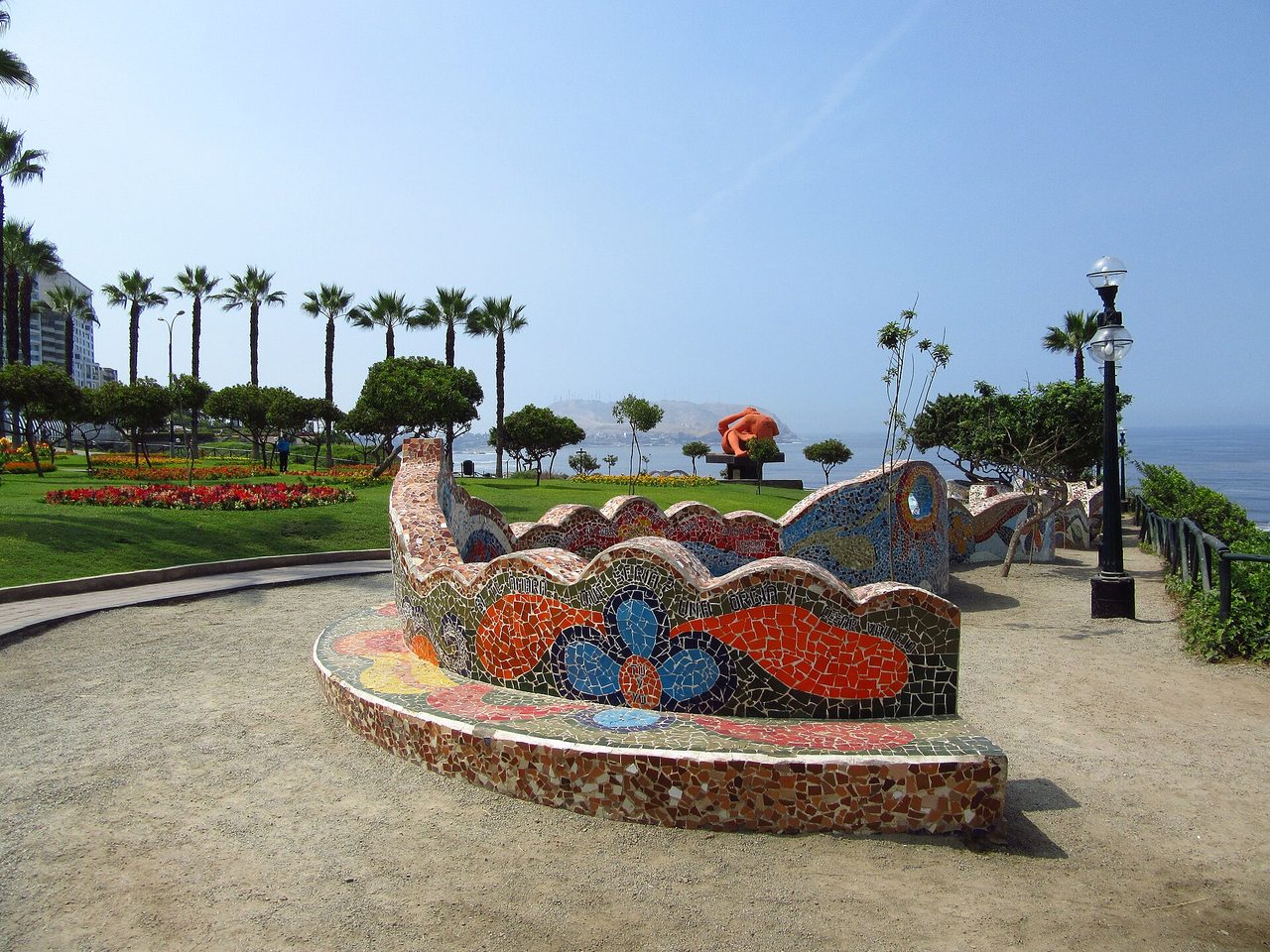
I once paid S/15 for lunch in Cusco — soup, a plate of chicken and rice, a glass of chicha morada — and the following morning handed over S/163 to walk through a gate. That is the honest answer to is peru expensive compressed into eighteen hours. The country you live in day to day is cheap. The country you came to see is not.
Most pages on this question dodge it. They average a backpacker eating in San Pedro market with someone on a private transfer to a boutique hotel, produce a number like “$90 a day”, and describe nobody. Peru does not have a single price level. It has two, and the gap between them is wider than in almost any other country in South America.
Here is the argument, up front: daily living in Peru is genuinely inexpensive — among the cheapest on the continent for food and local transport — while the headline attractions are priced for an international market, and several of them cost what they would cost in Western Europe. Whether Peru feels expensive to you depends almost entirely on how many of the headline attractions you buy.
So, is Peru expensive? The two-column answer
The clearest way to see the split is to put the cheap things and the expensive things side by side. These are real 2026 prices, in soles where locals quote soles and dollars where the industry quotes dollars — which is itself a tell. Anything priced in USD is aimed at you.
| Genuinely cheap in Peru | Not cheap in Peru |
|---|---|
| Menú del día (soup + main + drink): S/12–20 in most cities, S/20–28 in tourist-facing Cusco | Machu Picchu entry: S/163 foreign adult, S/211 for the circuits including Huayna Picchu or Machu Picchu Mountain |
| Taxi across central Cusco: S/8–12, agreed before you get in | The train to Aguas Calientes: roughly $60–95 per leg on Expedition or Voyager under dynamic pricing, more in July |
| Colectivo Cusco–Pisac S/6, Cusco–Ollantaytambo S/10–15 | Classic four-day Inca Trail: about $700–950 with a reputable operator, and it is not negotiable downwards without cutting someone’s pay |
| 620 ml Cusqueña: S/8–12 in a normal bar; S/6 from a shop | Amazon lodges: $150–350 per person per night all-inclusive, plus the flight to Puerto Maldonado or Iquitos |
| Hostel dorm bed: S/35–55 ($10–16) in Cusco, Arequipa, Lima, Puno | Colca and Rainbow Mountain day tours: S/80–150 for the cheap ones, and you pay in bus hours as well as soles |
| Long-distance bus: Cusco–Puno around S/60–90; Lima–Cusco in a 160° cama seat S/120–200 | Domestic flights in peak season: Lima–Cusco can be $45 in February and $150–plus for the same seat in late July |
| Museum entries: S/10–35 almost everywhere, including some genuinely world-class collections | Lima fine dining: tasting menus at the famous kitchens run $150–250 a head with pairings, which is Copenhagen money |
| Laundry: S/5–8 per kilo, washed, dried and folded, usually same day | The Consettur shuttle bus up to the Machu Picchu gate: $12 a leg, $24 return, for a 25-minute drive |
Read the two columns again. The left-hand side is your life. The right-hand side is your itinerary. If you spend fourteen days in Peru and buy three things from the right-hand column, the trip is cheap. If you buy nine, it is not, and no amount of eating in markets will fix that. This is why the honest version of what a Peru trip actually costs starts with the attraction list rather than the daily budget.
What a sol is worth right now, and why the number keeps moving
As of 2 September 2026 the US dollar buys about S/3.39. Over the course of 2026 the rate has moved between roughly S/3.34 and S/3.53, averaging around S/3.41 — a narrow band by South American standards. The sol is one of the more stable currencies on the continent, which is worth something on its own: you can budget in soles in January and still recognise your budget in August.
Inflation is the part travellers miss. Lima’s annual inflation rate reached 4.4% in August 2026, the fastest in nearly three years and above the central bank’s 1–3% target range, driven by fuel, weather-hit crops and a domestic gas problem. Transport costs in particular were running well into double digits year on year. Practically, that means any price you read on a blog from 2023 — and there are a great many of those still ranking on page one — is low by something in the order of 15–20% before you account for tourism-specific increases like the Machu Picchu surcharge.
Two habits follow from this. Treat every published price, including the ones on this page, as a checkpoint rather than a quote. And carry soles: card acceptance has improved a lot in Lima and central Cusco, but the cheap half of the country — markets, colectivos, small comedores, community-run sites — still runs on cash, and the cheap half is where your money goes furthest.
How Peru compares with its neighbours
“Expensive” is a comparison, so here is the comparison. These are rough all-in daily figures for an independent traveller staying in private budget rooms, eating mostly local, and doing a normal amount of sightseeing — not shoestring, not comfortable.
| Country | Typical independent daily spend | How it feels next to Peru |
|---|---|---|
| Bolivia | $30–45 | Clearly cheaper, and not marginally. Dorms from $8, set lunches at $2–4, cross-country buses for $15–30. The trade-off is thinner infrastructure and fewer safe operators. |
| Peru | $50–75 | The baseline for this comparison. |
| Ecuador | $45–70 | Broadly similar. Dollarised, which removes exchange-rate anxiety but also puts a floor under prices — things rarely get as cheap as a Peruvian market lunch. |
| Colombia | $45–70 | Similar or slightly cheaper depending on the peso, with cheaper domestic flights and a notably cheaper coffee-and-nightlife economy. |
| Chile | $75–120 | Meaningfully more expensive across the board. Chilean supermarket prices come as a shock after Peruvian markets. |
| Argentina | Volatile | Genuinely unpredictable. Argentina has swung from absurdly cheap to more expensive than Peru and back inside eighteen months. Do not pin a number to it — check the month you travel. |
Peru sits in the middle band. Cheaper than Chile, comfortably cheaper than Brazil’s big cities, more expensive than Bolivia, roughly level with Ecuador and Colombia. What distorts the comparison is that Peru has the continent’s single most expensive must-see attraction, and almost everyone who visits buys it. Nobody crosses Bolivia and spends $400 on one morning. In Peru, a huge share of travellers do. If you are combining the two — and a two-country route through Puno and Copacabana is one of the easiest border crossings in South America — expect your daily spend to drop noticeably the moment you cross.
Expensive for whom? Two different travellers, same country
The reason this question generates such contradictory answers online is that the people answering arrived from opposite directions.
The backpacker coming north from Bolivia thinks Peru is expensive, and is right within their frame of reference. They have been paying $8 for a dorm and $3 for lunch, and Cusco wants $14 and $6. Every tour costs more. Every entry fee costs more. The Boleto Turístico alone is S/130 — a full day’s budget in La Paz. These are the travellers who post that Peru is overrated on price, and their complaint is coherent.
The traveller flying in from London, Berlin or Chicago thinks Peru is astonishingly cheap, and is also right. They are comparing a S/18 lunch with a £16 sandwich-and-coffee. They can eat extremely well for the price of a mediocre pub meal at home, take an eight-hour bus in a seat that fully reclines for less than a Manchester–London train fare, and hire a private guide for a day for the cost of two cinema tickets and a drink.
Both are describing the same prices. The disagreement is about the reference point, not about Peru. If you are trying to decide whether your own budget will hold, the useful question is not “is Peru cheap” but “cheap compared to where I was last”.
The two-tier pricing question, treated fairly
The sharpest version of the complaint is not about the absolute price but about the gap: foreigners pay several times what Peruvians pay at the same gate. This is real and worth explaining properly rather than treating as a scandal.
At Machu Picchu, a foreign adult pays S/163. A Peruvian national pays roughly S/69 after the same May 2026 conservation surcharge was applied at S/5 rather than S/11. Citizens and residents of the Andean Community — Bolivia, Colombia and Ecuador — pay the national rate on production of a DNI, and in practice several other South American nationalities are admitted at reduced rates. Foreign students and minors pay around S/88. The ticket is the small part in any case — the full cost of getting to Machu Picchu and back runs several times the entry fee. The same structure exists at many regional sites and museums, and the Cusco Boleto Turístico has its own reduced band for 18–25s.
Two honest observations. First, differential pricing at heritage sites is common worldwide and is a deliberate policy: it keeps national monuments accessible to the population whose heritage they are, on Peruvian wages. The minimum monthly wage in Peru is a fraction of what a European visitor spends on the train alone. A universal S/163 would effectively price Peruvians out of Machu Picchu. Second, it does mean that the foreign visitor is cross-subsidising access, and pretending otherwise is silly — you are paying a premium, on purpose, and the money is earmarked for conservation of the sanctuary. Whether that feels fair is your call, but it is not a scam, and the rates are published rather than improvised at the window.
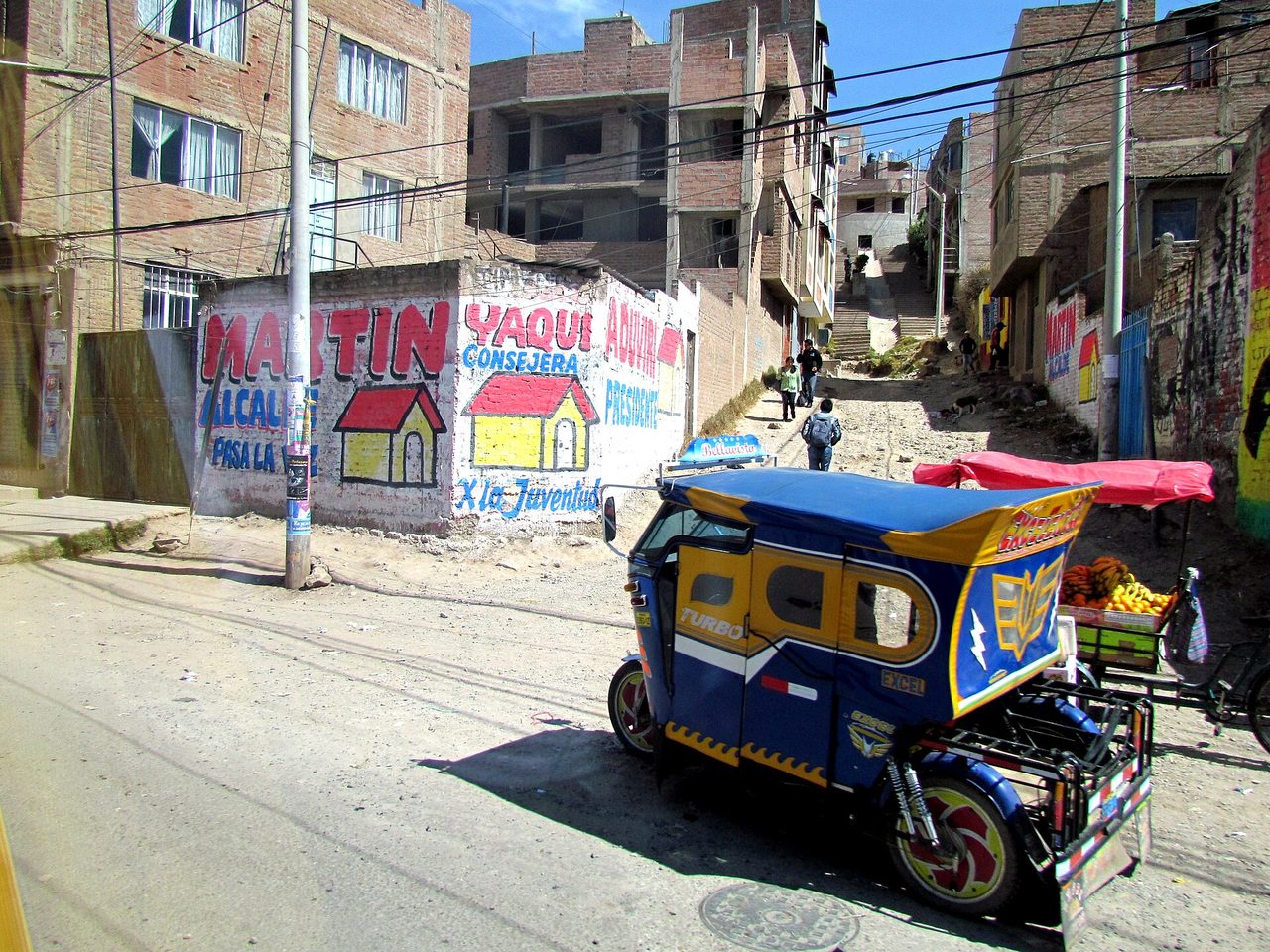
Where the two-tier reality does become a genuine irritation is in the informal market: tour touts, some taxi drivers, and market stalls without marked prices. That is not policy, it is bargaining, and the fix is knowing the going rate. Ask your accommodation what a taxi to the bus terminal should cost before you flag one down.
Where Peru is worse value than people expect
This is the section most guides skip because they are selling something. These are the places where the price and the experience have come apart.
Aguas Calientes food and hotels. The town below Machu Picchu is a captive market and behaves like one. A lunch that costs S/25 in Cusco costs S/50–70 here, often at lower quality, with a host outside every restaurant trying to steer you in. A mid-range room that would be $40 in Arequipa runs $65–90. If your schedule allows it, sleep in Ollantaytambo or Cusco and pass through — the detailed case for and against staying is in the guide to the town itself. If you must stay, budget for it separately and generously rather than pretending it is a normal Peruvian night.
Guided day tours from Cusco with four hours on a bus. The S/80 Rainbow Mountain tour is not a bargain when it involves a 3am pickup, three hours out, three hours back, a lunch stop at a place that pays the driver commission, and roughly ninety minutes at the actual mountain above 5,000 m. The honest breakdown of what the Vinicunca day involves is worth reading before you book. The same critique applies to the cheapest version of the standard Sacred Valley bus tour, which visits four sites in eight hours and gives you forty minutes at each. Cheap in soles, expensive in daylight.
The Nazca overflight. Around $80–120 for roughly 30 minutes in a small aircraft doing tight banking turns over the desert, and a meaningful share of passengers spend part of it being sick. The value question also has a safety dimension: a fatal Nazca overflight crash in August 2026 led to an operator suspension and an ongoing review, and the situation was still unresolved as this was written. If you want to do it, check the current operating status and the specific operator’s record before you pay. The viewing tower on the Panamericana costs a few soles and shows you three figures.
Taxis from Lima airport. S/60–95 to Miraflores in normal hours, more at peak, for a journey that is under 20 km. It is not extortion — Lima traffic makes it an hour’s work — but it is easily the worst value transport in the country per kilometre, and there are cheaper options laid out in the airport-to-Miraflores comparison. Never take an unsolicited offer in the arrivals hall.
Anything bought on the Plaza de Armas in Cusco. Alpaca sweaters, paintings, restaurant meals, massages, tours. The square carries the highest rents in the city and the prices reflect it. Walk five minutes uphill towards San Blas or downhill towards the market and the same items cost a third less. The restaurants actually worth the money in Cusco are, with a couple of exceptions, not the ones with a menu-waver outside.
Where Peru is astonishing value
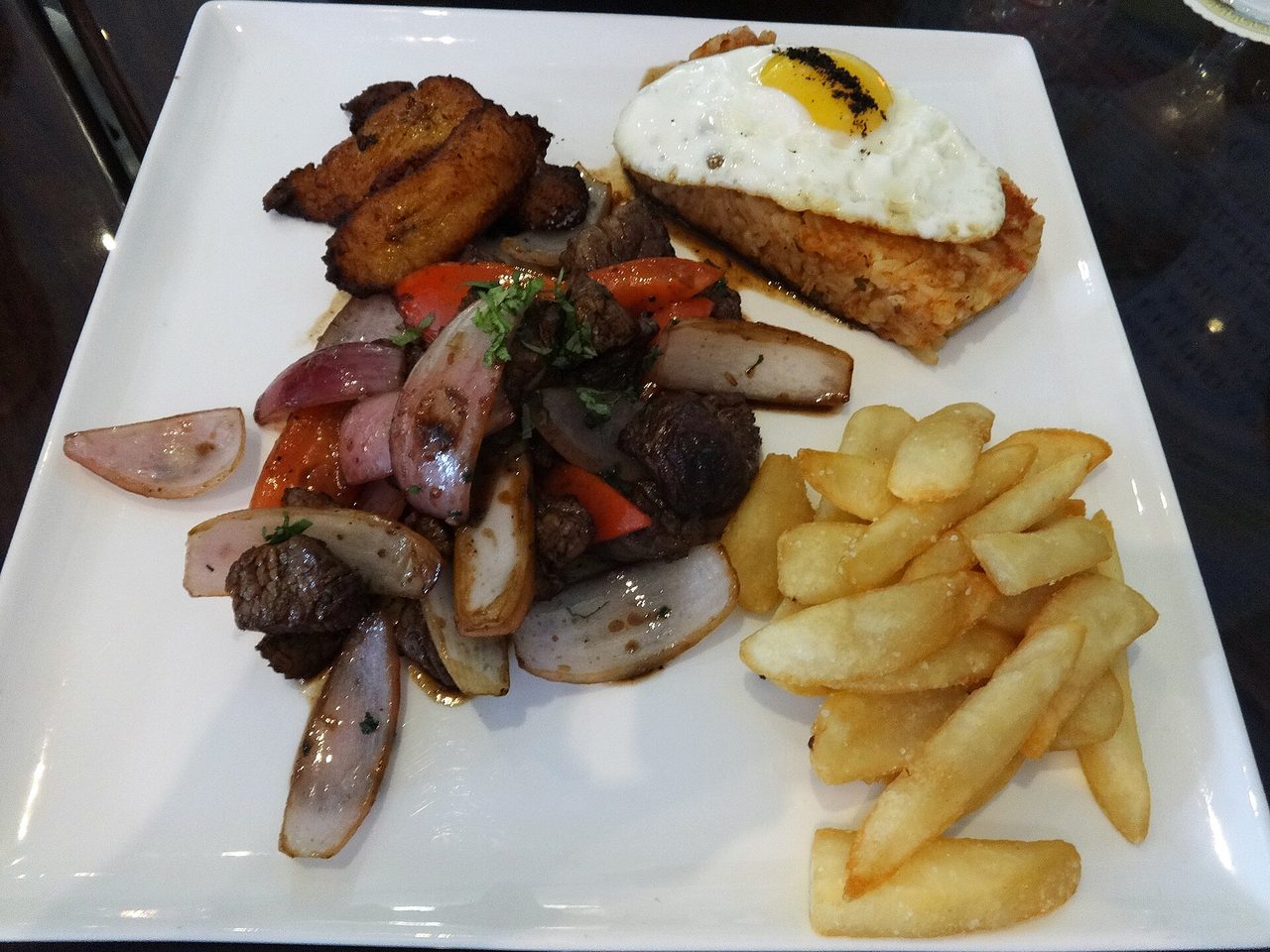
Food, at every level below fine dining. This is the single strongest financial argument for Peru. A menú del día at S/15 is a three-course lunch cooked to order. Ceviche at a neighbourhood cevichería in Lima at S/30–45 would be a $40 plate in any major Northern Hemisphere city. Anticuchos from a street grill are S/6–10. Even the mid-tier tourist restaurants deliver, because the underlying food culture is strong enough that it is hard to eat badly. The full range of what to actually order in Peru is worth studying before you go, and the Lima dining scene has genuinely good eating at S/40 a head, not just at S/700.
Long-distance buses. A Cruz del Sur or Oltursa cama seat — 160° or 180° recline, blanket, meal service, onboard toilet, GPS-monitored driving — costs S/120–200 for Lima to Cusco. That is a better seat than most European trains at a quarter of the fare. Yes, it takes 20 hours. But if you value the money more than the day, Peruvian long-distance buses are one of the best transport bargains anywhere, and the practical detail on which operators to trust is in the overview of getting between Peruvian cities. Note the safety caveat that runs through all of it: the cheapest operators are cheap for reasons.
Hostels and small guesthouses. $10–16 for a well-run dorm in a colonial building with hot water and a working kitchen is not a price that exists in most of the world any more. The $30–60 private-room tier is where Peru really shines — the neighbourhood-by-neighbourhood options in Cusco include courtyard guesthouses at prices that would buy a motel room elsewhere.
Guides. A licensed, knowledgeable Peruvian guide for a full day costs S/150–300 depending on language and site. In archaeological terms you are buying expertise that took years to acquire, and the difference between wandering Sacsayhuamán alone and walking it with someone who can read the masonry is enormous. This is the line item I would cut last.
Archaeological sites outside the Cusco circuit. Chán Chán, the Huáca del Sol y de la Luna, Kuelap, Caral, Chavín de Huántar — entry fees in the S/10–30 range, few crowds, and in several cases sites that would be national headline attractions in any other country. The whole northern circuit is priced like a domestic destination because that is mostly who visits, and the case for going north instead is at least half financial. The same is true of the wider list of Inca and pre-Inca sites across the country.
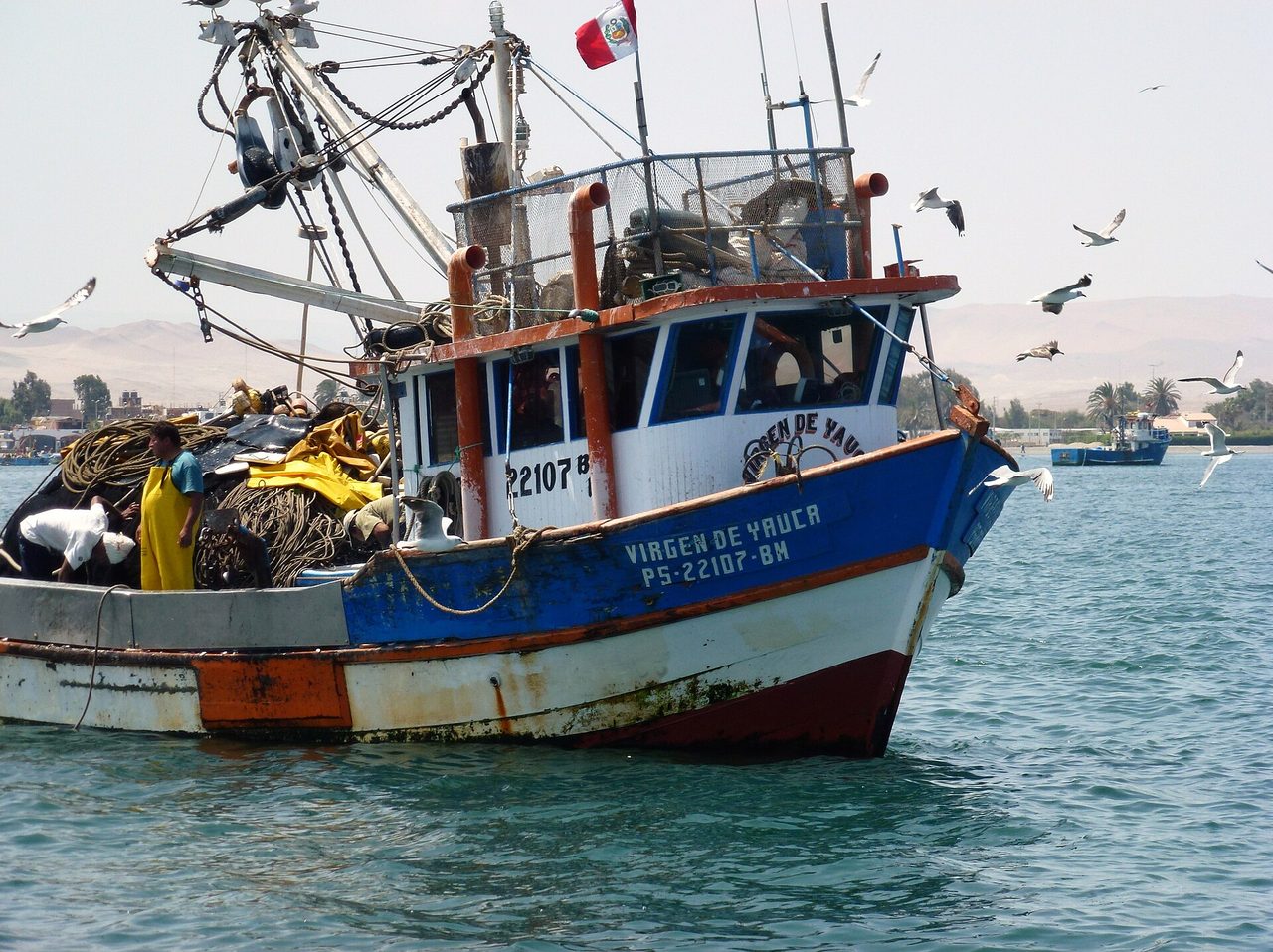
Coastal boat trips and small-scale wildlife. The Ballestas Islands boat from Paracas is S/50–80 plus the reserve fee for two hours among sea lions, Humboldt penguins and thousands of birds. Against a Galápagos day trip it is a rounding error. The southern coast run out of Lima is the cheapest interesting stretch of the country.
The Machu Picchu day, costed properly
Since one attraction distorts the whole budget, it deserves its own arithmetic. A standard independent visit from Cusco, done in the normal way, in 2026:
- Colectivo or taxi Cusco to Ollantaytambo: S/15–60 depending on how you travel
- Train Ollantaytambo–Aguas Calientes return: $120–190 for two legs at current dynamic pricing
- Consettur shuttle bus up and down: $24 return (the official foreign-adult fare; resellers quoting $35 are marking it up)
- Entry ticket: S/163, or S/211 if your circuit includes Huayna Picchu or Machu Picchu Mountain
- Guide, shared: S/60–120 per person
- A night in Aguas Calientes plus two meals, if you are not doing it in one brutal day: $60–120
Total, realistically: $260–420 per person for one site. That is the number that makes people ask whether Peru is expensive. There are ways to compress it — the walk along the tracks from Hidroeléctrica, hiking up instead of taking the bus, going in the low season — and the cheapest routes to Machu Picchu can get the figure closer to $150. But there is a floor, and the floor is high. The current ticket rules and circuit structure are covered in the ticket guide, and the fare bands on the various services in the train comparison. Prices at both move; check the official portals before you commit.
Worth saying plainly: whether that spend is justified is a separate question from whether it is large, and I have written elsewhere about whether Machu Picchu earns its price. My short answer is yes, once. The mistake is assuming it sets the price level for the whole country. It does not. You can spend the following fortnight at a quarter of the daily rate.
The Boleto Turístico trap
The Cusco tourist ticket is S/130 for the full BTG — ten days, sixteen sites — or S/70 for each of three partial circuits. The arithmetic catches people out: two partial tickets cost S/140, more than the full one. If you think you will use two circuits, buy the full ticket. Note also that the Maras salt pans are not on the boleto at all — that is a separate community-run cash entry, somewhere in the S/10–20 range depending on which source you believe, so bring small notes. Moray is on the boleto; the Maras and Moray day therefore involves two different payments at two different gates.
Three numbers and a verdict
Here are the three daily figures I would actually give someone, for in-country spending, excluding international flights and excluding the Machu Picchu day, which I have separated out because it distorts everything.
| Style | Per day | What that buys |
|---|---|---|
| Shoestring | $40–55 | Dorm bed, market and menú eating, public buses and colectivos, one paid activity every second or third day, occasional beer |
| Comfortable independent | $95–140 | Private ensuite room, three proper meals with a couple of good dinners, taxis without thinking about it, a guided activity most days, a domestic flight or two |
| Soft adventure / upper mid | $200–280 | Boutique hotels, private transfers, small-group tours, a serious restaurant meal every few days, flights instead of overnight buses |
For a two-week trip, adding one Machu Picchu day and a realistic amount of internal transport:
- Shoestring 14 days: roughly $560–770 daily spend, plus $150–250 for a budget Machu Picchu day, plus $80–150 of long-distance buses. Call it $800–1,150 in-country.
- Comfortable 14 days: roughly $1,330–1,960 daily spend, plus $300–420 for Machu Picchu, plus $150–350 of flights and transfers. Call it $1,800–2,700 in-country.
- Upper mid 14 days: $2,800–3,900 plus a Machu Picchu day at the comfortable end and a Sacred Valley or Amazon add-on. Call it $3,500–5,000 in-country.
Add $600–1,100 for a return international flight from Europe or North America. So the verdict: a fortnight in Peru done comfortably lands around $2,500–3,500 all-in from Europe, and the same fortnight done carefully lands around $1,500–2,000. For a country with this density of things to see, that is good value — but it is not backpacker-cheap, and anyone budgeting $1,000 for two weeks including flights is going to have a bad time. If you want the day-by-day version of what those numbers buy, the two-week route is the natural shape for a first trip.
What would change the answer
My verdict above assumes a first trip, high or shoulder season, doing the classic circuit. Four things move the number substantially.
Season. Travelling in the wet months rather than June to August cuts accommodation by 20–40% in Cusco, Arequipa and Puno, and takes the sting out of domestic airfares. Tour prices barely move; hotel prices move a lot. The trade-off is afternoon rain in the highlands and a meaningful chance of cloud over the citadel. There is a whole argument to be had about when Peru is cheapest to visit, and a slightly different one about the shoulder months, which I think are the actual sweet spot: April, May, September and October give you most of the low-season pricing and most of the dry-season weather.
Whether you trek. The four-day Inca Trail at $700–950 roughly doubles a shoestring fortnight’s budget on its own, and the breakdown of where that money goes explains why it cannot be much cheaper without underpaying the crew. Salkantay at $350–550 is the standard alternative. Trekking independently in the Cordillera Blanca costs a fraction of either.
Whether you fly internally. Every Lima–Cusco or Lima–Arequipa flight replaced by a night bus saves $50–120 and a hotel night. Every overnight bus replaced by a flight buys back a day. If your holiday is two weeks rather than two months, the flight is usually the right call and the budget should say so.
Whether you add the Amazon. A three-night lodge stay in Tambopata or Manu is the single biggest optional line item after Machu Picchu — flight plus lodge is rarely under $600 per person and often twice that. It is a genuinely different trip, but it is not a side excursion, and the Amazon planning guide should be read before you assume it slots in.
How to make Peru cheap without making it worse
Some savings cost you nothing. Others cost you the trip. In rough order of how much I would recommend them:
- Eat lunch as your main meal. The menú del día is the best-value food in South America and it is served at midday. Dinner is where restaurants make their margin.
- Take colectivos in the Sacred Valley. They leave constantly, cost a tenth of a tour, and drop you where you want. Combine with the boleto and you have built your own Sacred Valley day for S/40.
- Use the free layer. A great deal of Peru costs nothing — city walking, coastal paths, plazas, several churches, some of the best viewpoints. There is more of this than people expect, and a whole list of things worth doing that cost nothing.
- Book buses at the terminal, or on the operator’s own site. Aggregators add a margin. Cruz del Sur and Oltursa both sell directly.
- Stay a neighbourhood away from the centre. In Lima this means Barranco rather than the heart of Miraflores; in Cusco it means uphill from the plaza. Ten minutes of walking is worth 30% on a room.
- Do not cheap out on the Inca Trail operator, the bus company, or the altitude. These are the three places where saving money reliably ends badly. If the trek quote is $150 below everyone else, someone on the mountain is carrying the difference.
One more structural saving: consider whether you need the famous circuit at all. A trip built around Arequipa, Colca, Lake Titicaca and the north is a fraction of the cost of the Cusco–Machu Picchu axis and is not a consolation prize — there is a serious case for seeing Peru without Machu Picchu at all, and the budget maths is a large part of it.
Frequently asked questions
Is Peru cheap to travel compared to Southeast Asia?
No. Peru sits above Thailand, Vietnam and Indonesia on almost every line: accommodation, transport, and especially attraction entry. A comparable two-week trip in Vietnam would come in around half the price. Peru’s food is competitive on value, but nothing else is. If you have come from Asia, expect a step up.
How much cash should I carry in Peru?
Enough for two or three days of cash-only spending at a time — roughly S/200–400 — topped up at bank ATMs rather than the standalone machines in tourist areas, which charge more. Peruvian ATMs typically levy a withdrawal fee of S/12–25 on top of your own bank’s charge, so fewer, larger withdrawals cost less. Break large notes at supermarkets: nobody in a market can change a S/200. There is more detail on which Peruvian banks charge what at the ATM, and on declining the conversion offer at the card machine.
Is Cusco expensive compared to the rest of Peru?
Yes, modestly, and unevenly. Accommodation and restaurant prices in the historic centre run 20–40% above Arequipa or Trujillo, and anything on the Plaza de Armas runs higher again. But Cusco also has the best budget hostel infrastructure in the country and excellent cheap eating three streets from the square. It is expensive where tourists cluster and normal everywhere else — which is more or less the whole thesis of this article in miniature. The practical detail is in the guide to what is worth doing in Cusco.
Do I need to tip in Peru, and how much?
Tipping is real but modest. Around 10% in mid-range and tourist restaurants, often already added as servicio — check the bill before you double up. S/5–10 per person per day for a day-tour guide, half that for the driver. Trekking crews are the exception: tipping there is significant, expected and part of the economics, typically S/80–150 per trekker for a four-day trip, pooled. Taxis are not tipped. The full breakdown of who to tip in Peru and how much is worth reading before a trek, where the arithmetic gets serious.
Why is Machu Picchu so expensive when the rest of Peru is cheap?
Three reasons stacked. The site is a protected sanctuary with a hard visitor cap, so demand is rationed by price. The only practical access is a monopoly rail corridor and a single concessioned bus operator, neither of which faces competition. And the entry fee carries a conservation surcharge, added in May 2026, that is explicitly earmarked for maintaining the site. None of that makes it cheap, but it does explain why market forces have not pushed the price down — there is no market.
Can I do Peru on $50 a day?
The days themselves, yes, comfortably, if you are in dorms and eating locally. The trip, no — not if it includes Machu Picchu, because one day of that costs three to eight days of your budget. Plan a $50 daily rate plus separate one-off pots for the big-ticket items rather than trying to average them in. Blended daily budgets are how people run out of money in week two.
Is Peru expensive for tourists compared to what locals pay?
At heritage sites, yes, substantially and by design — Peruvians and Andean Community citizens pay roughly 40% of the foreign rate at Machu Picchu, and similar structures exist at regional sites. In restaurants, shops, buses and taxis with published prices, no: you pay what everyone pays. The exceptions are unmetered taxis and unmarked market stalls, where the price depends on how well you know the going rate. Learn three or four benchmark fares in your first day and the problem mostly disappears.
When is the cheapest month to go?
February, on almost every measure — and it is also the month the Inca Trail closes for maintenance and the highlands are wettest. November and March give you most of the discount with far better weather. If your dates are fixed by something else, the seasonal picture is laid out in the breakdown of Peru’s travel seasons.
The bottom line
Peru is not an expensive country. It is a cheap country with an expensive product bolted onto it, and the two are easy to confuse because almost everyone buys the product. Spend a fortnight eating menús, riding colectivos, sleeping in guesthouses and looking at ruins that charge S/15, and you will spend less than you would in Portugal. Add the train, the gate, the shuttle, a lodge and a four-day trek, and you will spend European money.
The useful skill is knowing which column any given decision sits in. Once you can see the two-column structure, Peru stops being an unpredictable budget and becomes an arithmetic problem — and a very manageable one. My own answer, after adding it all up: cheap to be in, expensive to tick off, and worth it either way, provided you go in with your eyes open about which of the two you are paying for.