Machu Picchu Cost Breakdown
Entry is S/163. Getting there and back from Cusco costs three to five times that. Four complete cost stacks, priced end to end, with the line items nobody lists.
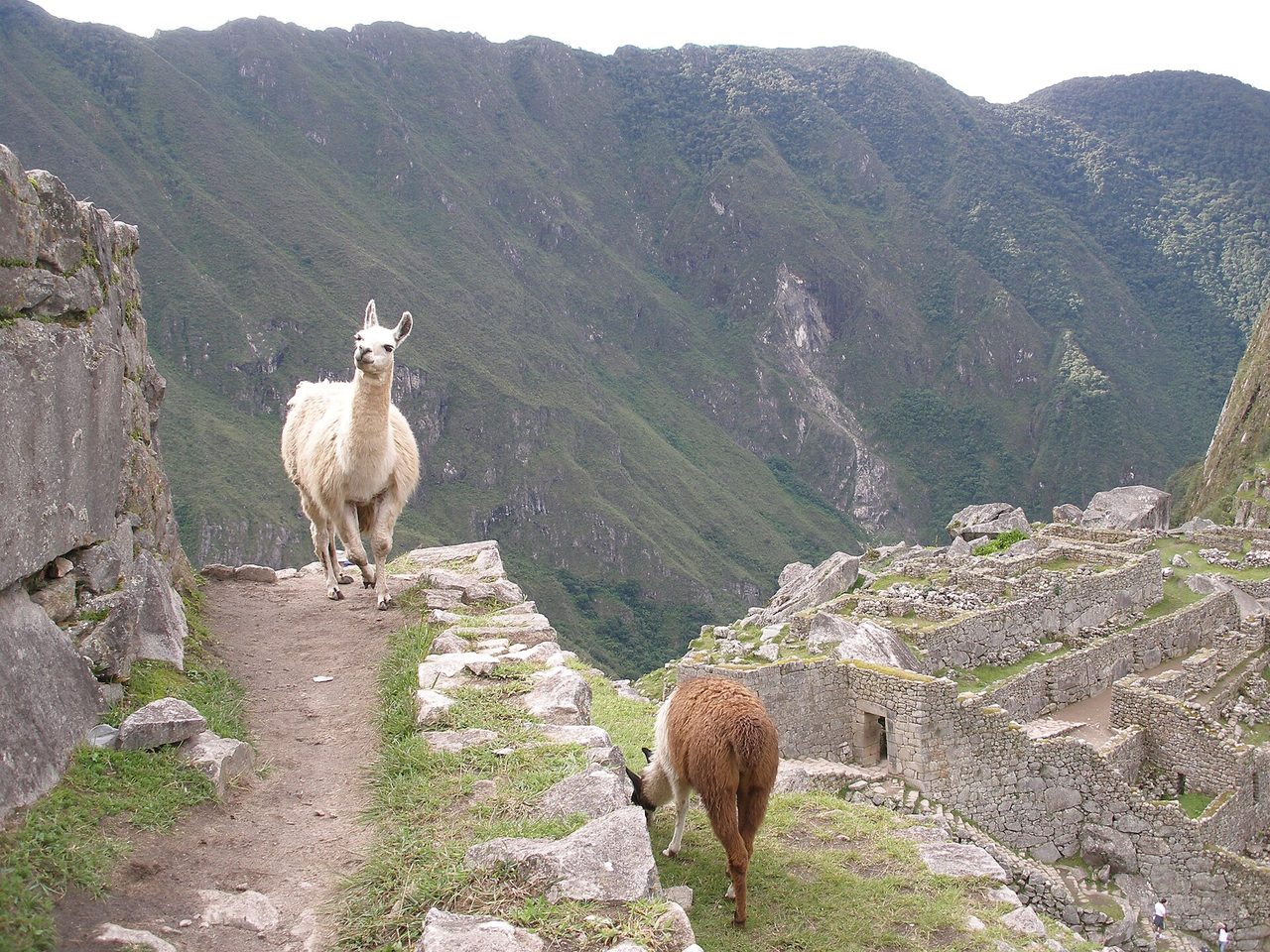
The ticket is the cheapest part. That is the single most useful thing I can tell you about the Machu Picchu cost, and it is the thing almost every page on the internet buries under a headline number. Entry for a foreign adult is S/163, roughly US$49. Getting yourself from Cusco to the gate and back again costs three to five times that, and nobody advertises it that way, because “Machu Picchu tickets from $49” converts better than “budget $320 for two days and expect to spend it.”
So this page does it the other way round. Below are four complete cost stacks, priced from Cusco to the gate and back, each with a bottom-line total per person. Then the line items on their own, so you can build your own version. Then the treks, which are not the luxury option people assume they are.
The real Machu Picchu cost at a glance
All figures are per person, from Cusco and back to Cusco, and they assume you are a foreign adult paying the standard foreign rate. Where I quote soles I have converted at S/3.35 to the dollar, which is roughly where the rate sat at the end of August 2026. It has bounced between about 3.25 and 3.67 over the past year, so treat dollar figures as approximate and soles figures as the real ones.
| Route | Nights | Entry ticket | Everything else | Total per person |
|---|---|---|---|---|
| Cheapest possible (Hidroeléctrica + walk) | 1 | US$49 | US$56–95 | US$105–145 |
| Standard independent (train, shuttle, shared guide) | 1 | US$49 | US$250–330 | US$300–380 |
| Comfortable (panoramic train, hotel, private guide) | 1 | US$63 | US$460–600 | US$520–660 |
| Guided day tour from Cusco | 0 | included | — | US$260–420 |
| Classic 4-day Inca Trail | 3 | included | — | US$700–1,000 |
| Salkantay trek, 4–5 days | 3–4 | included | — | US$350–650 |
Notice what happens between rows one and two. The entry fee does not change. The difference of roughly US$200 is entirely train, shuttle and the fact that you slept somewhere with a private bathroom. That is the shape of this whole problem.
The entry ticket: S/163, and why most of page one is wrong
On 1 May 2026 a SERNANP conservation surcharge came into force on top of an unchanged base ticket: S/11 extra for foreign visitors, S/5 for Peruvians and Andean Community nationals. It is a separate line item legally, but you pay it as one number at the checkout, and there is no version of the ticket that avoids it except an Inca Trail entry, which is exempt.
The result is that the widely republished figure of S/152 is now stale by more than a year, and a startling number of high-ranking pages still lead with it. If a site tells you a foreign adult pays S/152 or “about $40”, it has not been updated since April 2026. Do not build your budget on it.
| Ticket type | Before 1 May 2026 | Current | Approx. USD |
|---|---|---|---|
| Foreign adult, standard circuits | S/152 | S/163 | ~$49 |
| Foreign adult, circuit with Huayna Picchu or Machu Picchu Mountain | S/200 | S/211 | ~$63 |
| Foreign student or minor | S/77 | ~S/88 | ~$26 |
| Andean Community adult (Peru, Bolivia, Ecuador, Colombia) | S/64 | ~S/69 | ~$21 |
| Inca Trail entry (bundled into your permit) | — | surcharge does not apply | — |
Prices at this site have moved twice in three years and will move again. Buy from the Ministry of Culture portal at tuboleto.cultura.pe and check the price there on the day you book rather than trusting any figure on any blog, including this one. Dozens of resellers own domains with “machupicchu” in them and look official; they are agencies, and they add roughly $10–30 per ticket for the service of filling in a form for you. Our full walkthrough of how the ticket system works and how to buy direct covers the booking mechanics in detail.
What the circuits actually mean for your budget
Since 1 June 2024 the site has run on three circuits subdivided into ten routes. They are one-way and rangers enforce it, so you cannot buy the cheap route and then wander over to the postcard viewpoint. Entry is by hourly time slot from 06:00 to 16:00 with a 30-minute grace period, and you are inside for roughly two and a half to four hours depending on your route. The daily cap is 4,500, rising to 5,600 on designated peak dates: 1 January, 2–5 April, 19 June to 2 November, and 30–31 December.
Budget-wise the only decision that changes your ticket price is whether you add a mountain. Huayna Picchu and Machu Picchu Mountain cost the same S/211, which is a S/48 premium over the standard rate. Whether that is money well spent depends entirely on which one you pick and how you feel about exposure, and I have laid out the trade-offs in the comparison of the two mountain climbs. For most first-time visitors on a tight budget the answer is skip it. You are paying S/48 and two extra hours for a view of the site from above, having already seen it from the classic angle.
The student rate, and the ISIC trap
An ISIC card will not get you the Machu Picchu student rate. It used to, forgery got out of hand, and the rule now is a university photo ID with an expiry date printed on it — and it is checked at the gate, not just at the point of sale. If the ID expires before your visit date, or has no expiry at all, you will be sold a full-price ticket on the spot or turned away. Cards should be valid through your travel dates and, in practice, agencies want to see one that does not expire before 2028.
Do not over-apply this rule. COSITUC, which runs the Cusco Boleto Turístico covering Sacsayhuamán, Pisac, Ollantaytambo and the rest, still accepts ISIC for its 18–25 rate. Two different agencies, two different policies, and plenty of pages conflate them.
Stack one: the cheapest possible way to stand at Machu Picchu
This is the Hidroeléctrica route, and it is genuinely cheap rather than fake-cheap. You take a shared van from Cusco over the Abra Málaga pass and down into the cloud forest, get dropped at the hydroelectric plant, and walk about ten kilometres along the railway line to Aguas Calientes. It takes roughly two to three hours on the flat. Then you sleep in a hostel, walk up the mountain in the morning, and reverse the whole thing.
| Item | Cost | Notes |
|---|---|---|
| Cusco → Hidroeléctrica shared van | S/50–70 (US$15–21) | 6–7 hours. Departures from around 04:00. |
| Hidroeléctrica → Aguas Calientes on foot | Free | 10 km, 2–3 hours, mostly flat, follows the tracks. |
| Hostel dorm in Aguas Calientes | US$12–20 | Cheaper mid-week and out of season. |
| Food, two days, cheap menús | US$16–25 | Eat where the porters eat, not on the main drag. |
| Entry ticket | S/163 (US$49) | Standard circuit. |
| Walking up to the gate | Free | 1h20–1h45 of stone stairs, roughly 400 m of ascent. |
| Guide | US$0 | Skipped. See the honest caveat below. |
| Hidroeléctrica → Cusco van | S/50–70 (US$15–21) | Afternoon departure, arrive Cusco late. |
| Water, snacks, bag storage | US$5–8 | Fill your bottle at the hostel, not at the gate. |
| Total | US$105–145 per person | |
What you are paying for that saving is time and legs. The van day each way is long, the road down from Santa María is narrow and slow, and the whole thing runs to three days end to end if you count the travel. The 10 km rail walk is pleasant and the 400 m stair climb to the gate is not. It is about an hour and twenty minutes if you are fit and acclimatised, closer to an hour forty-five if you are not, and you will arrive at the ticket control sweating hard. There is a full treatment of the shoestring approach in the guide to doing Machu Picchu without spending much, and the route options are compared side by side in the overview of every way of reaching the site.
Honest caveat on skipping the guide: the regulations say you should have a licensed guide, and enforcement is uneven. Some time slots and gate staff insist, most do not. If you want to hedge, the guides waiting at the entrance will take you into a group for around US$10–15 a head once there are eight of you, which is a very different number from what an agency charges.
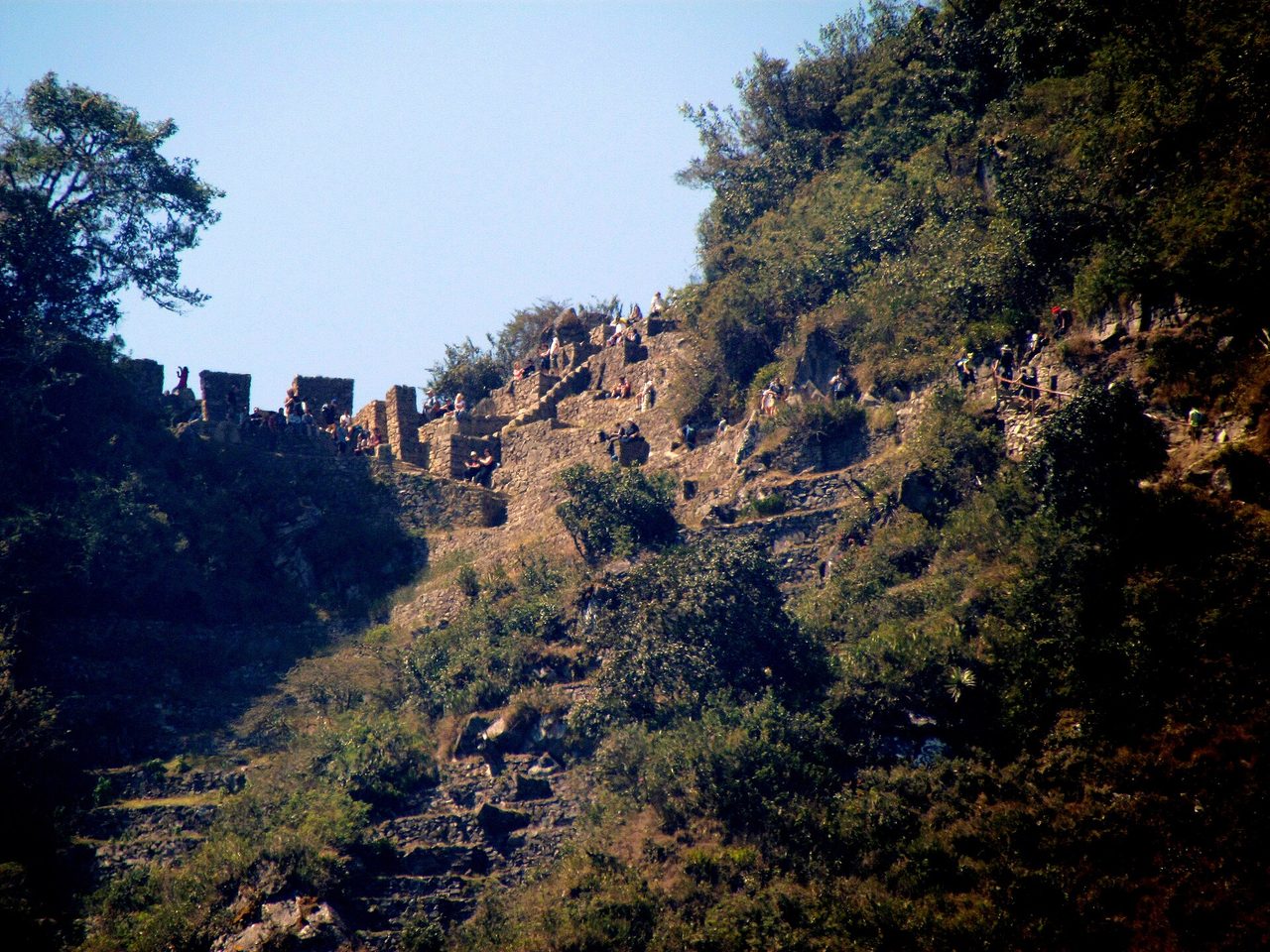
Stack two: standard independent by train
This is what most people actually do, and it is where the real money goes. Colectivo to Ollantaytambo, standard-class train, night in Aguas Calientes, shuttle bus both ways, a shared guide at the gate. The timings on the Ollantaytambo route matter to the total, because the cheapest trains are the ones leaving at the least convenient hours.
| Item | Cost | Notes |
|---|---|---|
| Cusco → Ollantaytambo colectivo | S/15–20 (US$5–6) | From Calle Pavitos. 1h45–2h. Leaves when full. |
| Train Ollantaytambo → Aguas Calientes | US$60–95 | PeruRail Expedition or Inca Rail Voyager. Dynamic pricing. |
| Hostel or 2-star hotel, Aguas Calientes | US$30–45 | Private double room, per person sharing. |
| Consettur shuttle, round trip | US$24 | US$12 per leg. This is the official fare. |
| Entry ticket | S/163 (US$49) | Standard circuit. |
| Shared guide at the gate | US$25–50 | Cheaper the bigger your group. Negotiate before you commit. |
| Train Aguas Calientes → Ollantaytambo | US$60–95 | Same class, same dynamic pricing. |
| Colectivo back to Cusco | S/15–20 (US$5–6) | Vans wait at the Ollantaytambo station car park. |
| Food, two days | US$30–45 | Aguas Calientes prices. See the markup section. |
| Total | US$300–380 per person | |
The train is between forty and fifty per cent of that total. If you want to attack one line item, attack that one. The various services and what you get for the upgrade are set out in the breakdown of the train classes and how to book them, and the logistics of the whole Cusco-to-gate chain are in the guide to getting from Cusco to Machu Picchu.
Stack three: comfortable
Panoramic train, a proper hotel, a guide you do not share with strangers, and a mountain permit. This is what a mid-range couple who booked it themselves ends up spending.
| Item | Cost | Notes |
|---|---|---|
| Private transfer Cusco → Ollantaytambo | US$35–45 | Per person, based on a S/250–300 taxi split two ways. |
| Vistadome or 360° train, each way | US$95–125 per leg | Panoramic roof windows, snack service. |
| 3–4 star hotel, Aguas Calientes | US$70–110 | Per person in a double. Rises hard June to September. |
| Consettur shuttle, round trip | US$24 | No premium version exists. |
| Entry with Huayna Picchu | S/211 (US$63) | Book months ahead. Only a few hundred permits a day. |
| Private guide, 2–3 hours | US$50–75 | Per person, based on a US$100–150 guide split two ways. |
| Food and drinks | US$55–80 | Restaurant meals rather than menús. |
| Total | US$520–660 per person | |
Is the panoramic train worth roughly US$70 more each way than Expedition? For the outbound leg in daylight, arguably yes, because the gorge below Ollantaytambo is the best part of the ride and the roof windows genuinely help. For the return in the dark, absolutely not. Booking Vistadome out and Expedition back is a sensible split that almost nobody thinks of.
Stack four: the guided day tour from Cusco
Agencies in Cusco sell a one-day Machu Picchu package for somewhere between US$260 and US$420 depending on train class and how hard you haggle. It includes transfer, train both ways, shuttle both ways, entry and a group guide. It is popular and I think it is usually poor value, for two reasons.
First, the arithmetic. Book those same components yourself and you are looking at roughly US$12 transfer, US$140 train return, US$24 shuttle, US$49 entry and US$30 guide, so about US$255 before food. A US$380 tour is charging you around US$125 to make five bookings. Some of that is real — they hold train inventory, they take the risk if the ticket does not clear — but it is a large margin for a fixed itinerary.
Second, the day. Pickup is usually between 03:30 and 04:30 to catch the first train from Ollantaytambo, you get roughly two hours inside the site on a fixed circuit with a group of sixteen, and you are back in Cusco somewhere between 21:00 and 23:00. Nineteen hours of transit for two hours of ruins. Add that you are doing it at 3,400 m on either end and the fatigue is real. If you only have one day, the arguments for and against are laid out in the piece on whether the day trip from Cusco is worth doing, and the case for giving the site more time in how many days to allow.
Where the tour does make sense: if you are short on time, travelling with people who will not enjoy problem-solving in Spanish at a train station, or visiting in peak season when doing it yourself means the trains you want are already gone.
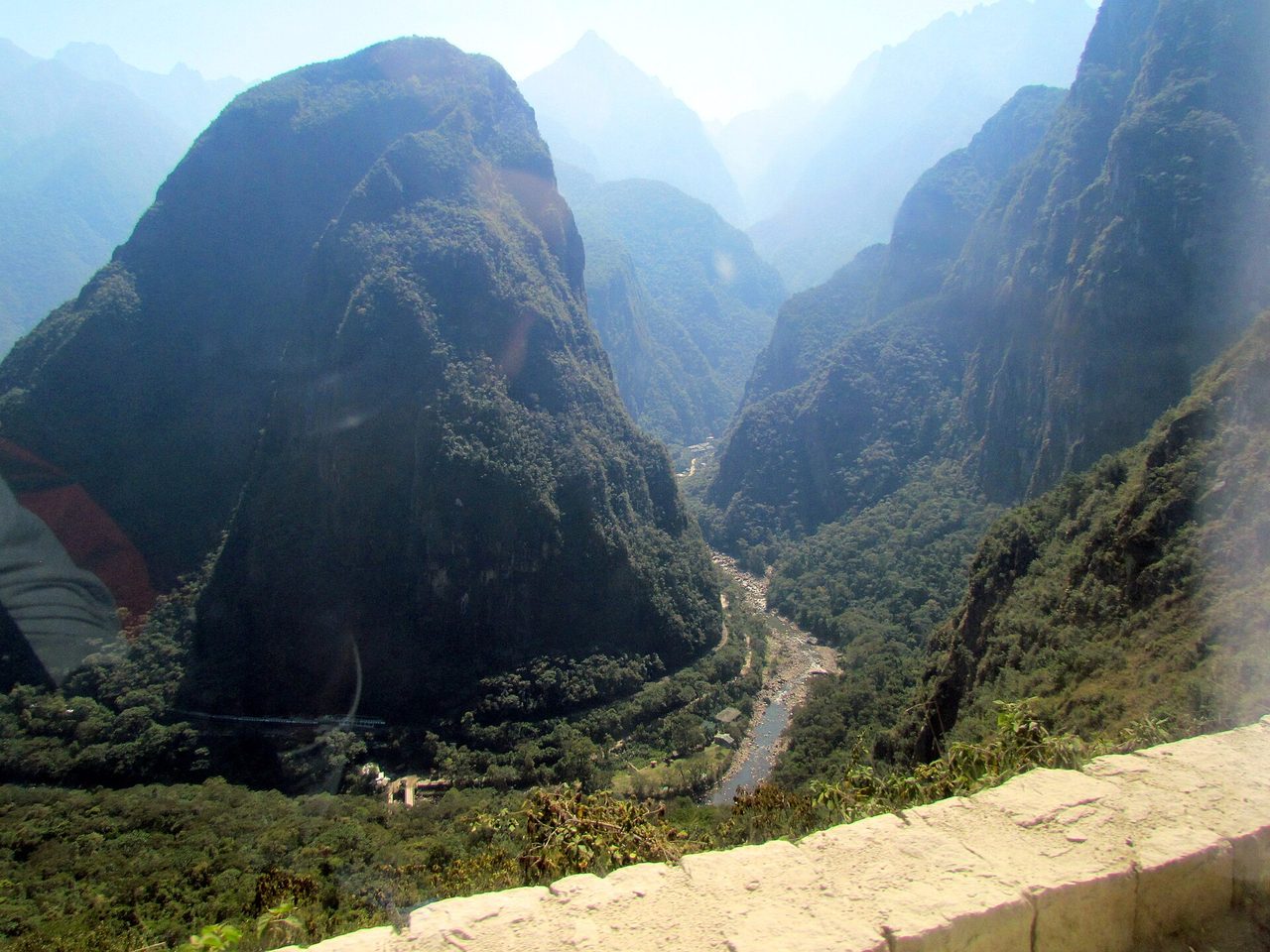
The line items, honestly
The train, which is the real expense
Two operators run the Ollantaytambo–Aguas Calientes line: PeruRail with Expedition, Vistadome, Vistadome Observatory and the Belmond Hiram Bingham, and Inca Rail with five tiers — Voyager, 360°, Prime, First Class and Private. Standard class on either operator now runs about US$60–95 per leg, and I want to be blunt that this is higher than the US$35–60 figure still quoted all over the internet, including on pages updated in 2026. Fares are dynamic. The 05:00 departure and the 21:50 return are the cheap ones; anything between 08:00 and 15:00 is priced for tour groups and costs accordingly.
Price your own date on the operators’ own sites before you believe any range, mine included. Two things that change the number materially: booking two or three months out rather than two weeks, and being willing to travel at unsociable hours. I have seen the same seat vary by US$40 across a single day’s timetable.
Luggage limits catch people out. PeruRail allows one backpack up to 8 kg (100 cm linear) or one carry-on up to 12 kg (115 cm); Inca Rail allows 8 kg and 118 cm. The frequently repeated “5 kg, 62 linear inches” is simply wrong. Anything bigger stays in Cusco or Ollantaytambo, and hotels in both towns will hold a bag for free if you are coming back to them.
The shuttle bus up the mountain
Consettur runs the only vehicles on the Hiram Bingham road. The official foreign adult fare is US$12 per leg and US$24 round trip, with a lower resident rate around US$15 return. Resellers routinely list US$35 round trip; that is a markup, not the official price. Buy at the Consettur office in Aguas Calientes or on the official portal.
Buses start around 05:30 and run every few minutes at peak. The queue on the main street starts forming before 05:00 in high season and can take forty minutes to clear, which is worth knowing if you have a 06:00 slot and a 30-minute grace period. Walking up instead saves US$12 and costs you an hour and a half of stairs, and if you do it in the dark you will need a head torch.
Cusco to Ollantaytambo
The colectivo vans from Calle Pavitos charge S/15–20 and leave when full, which in the early morning means every few minutes. A private taxi is S/80–120 for the car, or S/250–300 for a proper pre-booked transfer with hotel pickup. There is no reason to pay tour-agency prices for this leg unless you have a 05:00 train and no appetite for uncertainty. Ollantaytambo itself is a good place to spend the night before, and the case for it is made in the guide to the town and its ruins.
Guides
A shared guide picked up at the entrance runs US$25–50 per person depending on how many of you there are; a private guide is US$100–150 for the group for two to three hours. Agencies quote US$40–100 per person for the same service. If you want a guide, walk up to the group forming at the gate and split the cost. It is the single easiest saving on this page.
Is a guide worth it at all? Yes, more than at most sites, because the circuits are one-way and unsignposted in any useful way and you will otherwise walk past the Temple of the Sun without knowing what it is. Tips are expected on top: US$5–15 per person for a group guide, US$15–30 for a private one.
Aguas Calientes: beds and the restaurant markup
The town exists to sell you things at a captive-market price and makes no secret of it. Dorm beds are US$12–20, decent doubles US$60–90, and the smart hotels US$150–400. What surprises people is food. A set lunch menú that costs S/12–20 in Cusco costs S/35–50 here. A main course on the restaurant strip by the railway is S/45–70. A large beer is S/15–20. Everything arrives by train, which explains some of it, and the rest is that you have nowhere else to go.
Two practical dodges: buy snacks and water in Cusco or Ollantaytambo and carry them, and eat one street back from the railway line where the menús drop to S/25–30. The town itself, its hot springs and what there is to do in an afternoon are covered in the guide to Aguas Calientes.
The small costs nobody lists
- Bag storage at the gate. Packs over about 20 litres are not allowed inside. Lockers at the entrance are S/5–15.
- Toilets. S/2 at the entrance, and there are none inside the site. Once you are through the turnstile that is it for two to four hours.
- Hot springs in Aguas Calientes. Around S/20 for foreigners. Pleasant enough after the stairs, not a highlight.
- Walking poles. Only permitted with rubber tips, and only for older visitors or those with a demonstrated need. They will be confiscated at the gate otherwise.
- Passport. Your ticket is name-and-passport linked and checked. Bring the physical passport, not a photo.
- Water and food. Officially no food inside. In practice a snack in a pocket is fine; a picnic is not.
- ATM fees. Aguas Calientes ATMs charge S/18–25 per withdrawal on top of your bank’s fee and run out of cash. Draw money in Cusco.
- Tips. Guides, drivers, hotel staff. Budget US$15–30 across the two days.
None of these is large. Together they are US$25–45 that was not in your spreadsheet, which is roughly what people mean when they say Peru cost more than they expected. The broader picture of what a whole trip runs to is in the Peru trip cost breakdown, and there is more general spending advice in the collection of practical tips for travelling in Peru.
Treks: cheaper per day than you think
People assume the treks are the expensive option because the headline number is bigger. Divide by days and it stops being obvious.
| Route | Typical all-in price | Days | Per day | What it includes |
|---|---|---|---|---|
| Classic Inca Trail, 4 days | US$700–1,000 | 4 | US$175–250 | Permit, entry, porters, cook, all meals, camping, return train |
| Short Inca Trail, 2 days | US$450–600 | 2 | US$225–300 | Permit, entry, guide, one hotel night, trains |
| Salkantay, 4–5 days | US$350–650 | 4–5 | US$85–140 | Entry, guide, all meals, lodges or camping, transport, return train |
| Standard train visit | US$300–380 | 2 | US$150–190 | Entry, trains, shuttle, one night, shared guide |
Salkantay is the outlier and the answer to the question people are really asking. At around US$100–140 a day it is genuinely cheaper per day than the two-day train route, and everything is included, so your incidental spend collapses to tips and a beer at the end. If you have the days and the legs, it is the best value way to arrive at Machu Picchu. The trade-offs against the classic route are set out in the head-to-head on the Inca Trail versus Salkantay, and the route itself in the Salkantay trek guide.
The classic Inca Trail is not cheap per day and never will be, because the permit is capped, the porter wage floor is set by statute and a licensed operator carries real costs. The full itemisation of where that US$700–1,000 goes is in the Inca Trail cost breakdown, and the permit release timetable — which determines whether you get a date at all — is in the guide to how permits are released and sold. A word of warning about the cheapest quotes you will see: below about US$650 for four days, something is being cut, and historically the thing being cut is what the porters are paid and carry. Choosing among the reputable operators who run the trail properly is worth the extra hundred dollars.
The two-day version is a strange middle. It costs nearly as much per day as the four-day trail and gives you the Sun Gate arrival without the camping, which some people want and some consider the worst of both. The details are in the guide to the short Inca Trail.
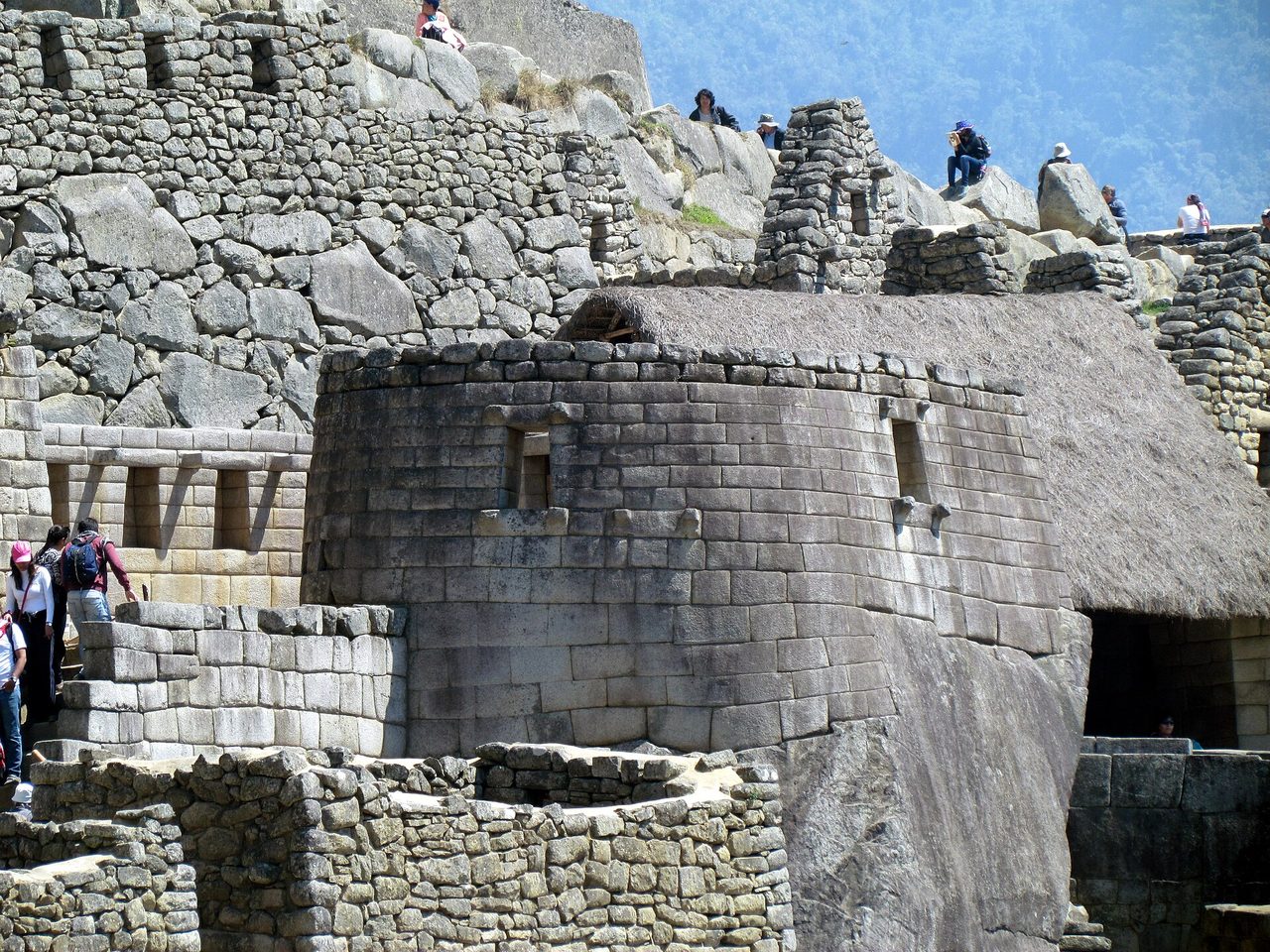
How to actually save money, ranked by how much effort it takes
Ordered by saving per unit of inconvenience, largest first.
- Travel in shoulder season. April–May and September–October. Hotels in Aguas Calientes fall by thirty to forty per cent, trains are cheaper because demand-based pricing works both ways, and you can still get the ticket slot you want. Saving on the standard stack: US$50–90. Cost to you: a slightly higher chance of cloud. The seasonal patterns are set out in when to visit Machu Picchu and, more broadly, in the guide to Peru’s shoulder months.
- Book the earliest or the latest train. The 05:00 out and the 21:50 back are consistently the cheapest departures of the day. Saving: US$40–80 on a return. Cost to you: an alarm at 03:45 and a late arrival back.
- Base yourself in Ollantaytambo rather than Cusco. Beds are cheaper, you are already at the station, you skip the pre-dawn transfer, and you sleep 600 m lower, which helps if you are still adjusting. Saving: US$15–30 plus a much better night. The options are in the guide to where to stay in the Sacred Valley.
- Skip the mountain add-on. S/48, plus two hours, plus the risk of booking a permit months out and getting a cloudy morning.
- Share a guide at the gate instead of buying one in advance. Saving: US$20–60 against agency pricing for identical service.
- Walk up instead of taking the shuttle. Saving: US$12 one way, US$24 both. Cost: 1h20–1h45 uphill on stone stairs, arriving hot. Going down on foot takes about fifty minutes and is much easier, so walking down and riding up is the sensible compromise.
- Buy your ticket direct from tuboleto.cultura.pe. Saving: US$10–30 in reseller commission. Cost: ten minutes with a Peruvian government website.
- Carry your own water and snacks in from Cusco. Saving: US$8–15. Cost: carrying them.
The savings that are not worth it
Some economies cost more than they save.
- Doing the whole thing as a day trip to avoid one hotel night. You save US$30–45 on a bed and pay for it with a nineteen-hour day and two hours at the site. The night in Aguas Calientes buys you the early slot and the chance of morning light.
- Taking the cheapest Hidroeléctrica van you can find. The road over Abra Málaga and down to Santa Teresa is not the road to save US$4 on. Book with an operator with a name and reviews.
- Turning up without a ticket and hoping. The cap is real and standard circuits sell out weeks ahead in high season. A same-day ticket in Aguas Calientes is a lottery you will usually lose, and losing it means you have spent the transport money for nothing.
- Skipping the guide to save US$30 on your only visit. If you are on the US$105 stack, fine. If you have spent US$300 to get there, US$30 for context on a one-way circuit you cannot re-walk is not where to economise.
- Flying into Cusco the same morning. Cusco is at 3,400 m and Machu Picchu at 2,430 m, and going straight from sea level to a 05:00 train is how people end up spending their day at the site feeling ill. The mechanics of that are in the guide to Cusco’s altitude and how to handle it.
- Booking a mystery agency in a Cusco street office because it is US$40 cheaper. They subcontract, and you find out at 04:00 whose van you are actually in.
Money, cards and the exchange rate
At the end of August 2026 the sol was trading at about S/3.35 to the US dollar, having ranged roughly between S/3.25 and S/3.67 over the previous twelve months. That is the rate I have used throughout. Check it on the day you build your budget, because a swing of ten per cent moves the entry ticket by five dollars and your whole trip by rather more.
Practical notes: the entry ticket portal charges in soles and takes international cards. Train operators quote and charge in dollars. Consettur quotes in dollars but takes soles. Small restaurants and colectivos are cash-only soles. Draw cash in Cusco, where ATM fees are lower and machines actually have money, and keep small notes — nobody in a colectivo can change a S/100 bill at 04:30.
So what should you actually budget?
If you want one number to put in a spreadsheet: US$320 per person for two days from Cusco, done independently by standard-class train with one night in Aguas Calientes, a shared guide and the shuttle both ways. Add US$60 if you are travelling June to September. Subtract US$200 if you are willing to take the Hidroeléctrica van and walk. Add US$200–300 if you want a panoramic train and a hotel with a view.
And be clear with yourself about what the money is buying. Whether the whole exercise justifies itself is a fair question, and I have argued both sides of it in the piece on whether Machu Picchu is worth the money. If the answer for you is no, Peru has an enormous amount of first-rank Inca architecture that costs a fraction of this — the ruins above Cusco, Choquequirao if you have the legs, the terraces in the valley. There is a whole itinerary built around that idea in the guide to visiting Peru without Machu Picchu, and plenty else to spend the money on in the round-up of what to do in Cusco itself.
Frequently asked questions
How much does Machu Picchu cost to enter in 2026?
S/163 for a foreign adult on a standard circuit, or S/211 if your circuit includes Huayna Picchu or Machu Picchu Mountain. That is about US$49 and US$63 at S/3.35. Foreign students and under-18s pay around S/88 and Andean Community adults around S/69. These figures took effect on 1 May 2026 when a conservation surcharge was added; any page still quoting S/152 is out of date.
Why do so many sites still say S/152?
Because the surcharge was added on top of an unchanged base fare, so the underlying S/152 ticket price never technically changed and content that copies the old number looks superficially correct. It is not what you pay. The total at checkout is S/163.
What is the cheapest way to get to Machu Picchu from Cusco?
Shared van to Hidroeléctrica, walk the ten kilometres of railway to Aguas Calientes, sleep in a hostel, walk up to the gate. All in, roughly US$105–145 including your entry ticket. It takes three days rather than two and involves about five hours of walking.
How much is the bus from Aguas Calientes up to Machu Picchu?
US$12 per leg and US$24 round trip for foreign visitors, run by Consettur under a government concession. If a website quotes US$35 return, that is a reseller’s markup. Buy from the official office in town.
Can you visit Machu Picchu without a guide?
The regulations say you should have a licensed guide and enforcement is inconsistent. Many people walk the circuits alone without being challenged. If you want one cheaply, join a group forming at the entrance rather than pre-booking through an agency.
Is the Inca Trail cheaper than taking the train?
Not per day, no. The classic four-day trail works out at US$175–250 a day against roughly US$150–190 for the standard two-day train visit. Salkantay is a different story: at US$85–140 a day, all inclusive, it genuinely undercuts the train route. Set against a normal baseline daily spend in Peru of $30–110 depending on how you travel, though, all of these are event costs rather than everyday ones.
How much money should I bring for two days at Machu Picchu?
If you have pre-paid your ticket and train, S/300–400 in cash covers food, the shuttle, tips, lockers and incidentals for two days with a margin. Bring it from Cusco. The ATMs in Aguas Calientes are expensive and unreliable.
Do Machu Picchu tickets sell out?
Yes. The daily cap is 4,500, rising to 5,600 on peak dates. Circuit 2 in particular, which contains the classic view, sells out weeks in advance from June to September. Book as soon as your dates are fixed, and note that tickets are name-linked and non-transferable, so a date change generally means buying again.
Is the expensive train worth it?
For the daylight leg, it is a defensible upgrade — the panoramic windows genuinely improve the ride through the gorge. For the return leg in the dark it is money for nothing. Book the good train one way and the cheap one back.
When is Machu Picchu cheapest to visit?
February, when the Inca Trail is closed for maintenance and the rains are at their heaviest, is the cheapest month for beds and trains but the worst for weather. The better trade-off is late April, early May or October, when prices have dropped but the odds of a clear morning are still good. There is a fuller treatment in the guide to the cheapest time to travel in Peru.
Are there hidden fees in the ticket?
Not in the ticket itself, but there are three places money leaks. Resellers add US$10–30 for booking on your behalf. Card issuers add foreign transaction fees on a soles-denominated charge. And agencies quoting “from” prices are quoting the cheapest train, the cheapest room and the shoulder season simultaneously, which is a combination almost nobody actually books.