2 Weeks in Peru: The 14-Day Itinerary
Fourteen days is where Peru stops being a Machu Picchu trip and becomes a country trip. Two full day-by-day routes, the altitude order that keeps you out of bed in Cusco, every leg with real hours and fares, and an itemised cost table.
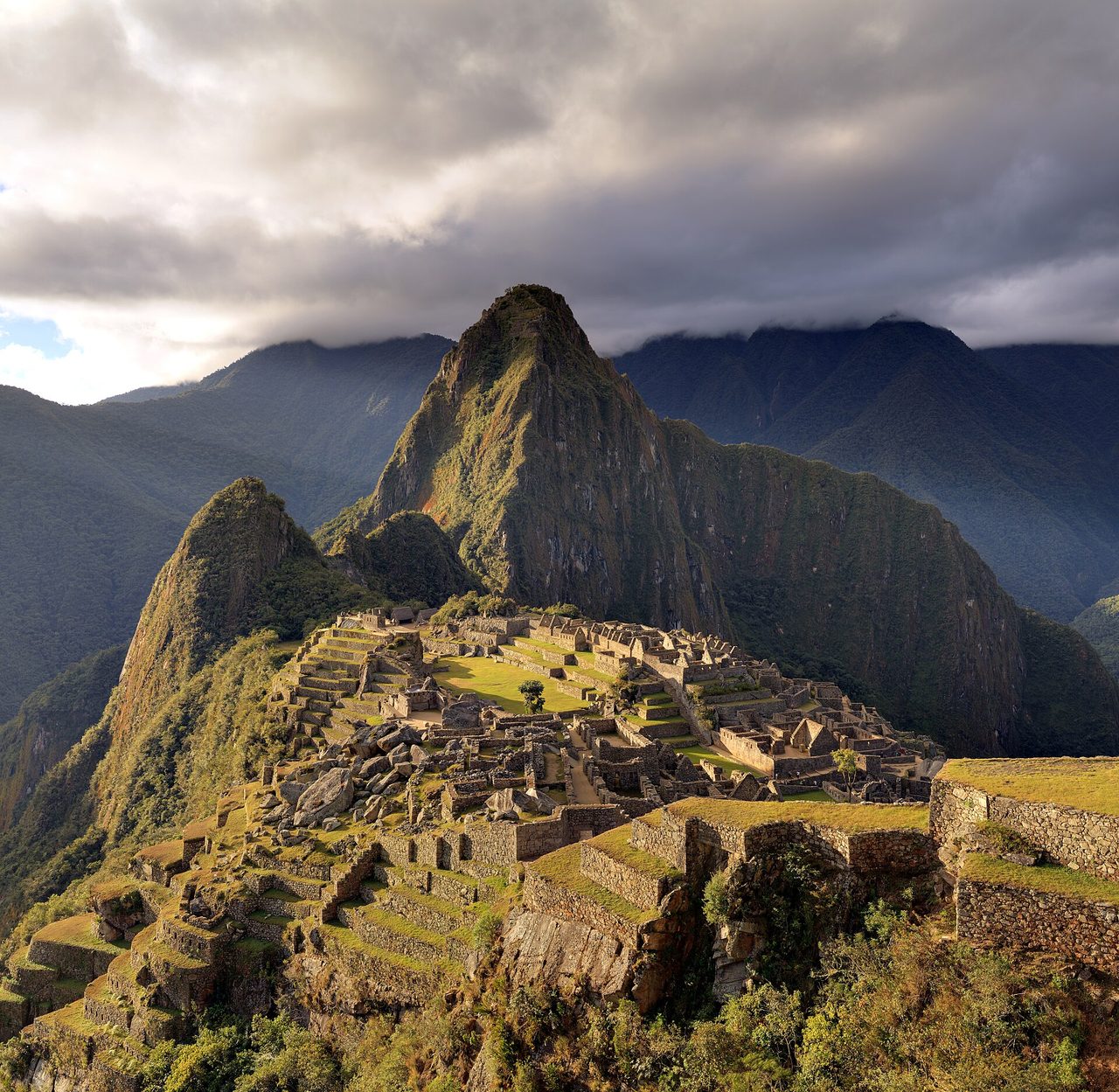
Fourteen days is the point where a 14 day Peru itinerary stops being a Machu Picchu trip with some padding and starts being a trip to Peru. That is not a small distinction. At seven days you are visiting one region. At ten you get the region plus one add-on. At fourteen you can finally do the whole classic southern circuit — Lima, the desert coast, Arequipa, Colca, Lake Titicaca, Cusco, Machu Picchu — and still have time to sit in a plaza doing nothing for an afternoon.
Two weeks is also the length at which most people ruin their own trip. It feels roomy, so they start adding. Amazon and Titicaca. Titicaca and the north. Colca and Huaraz. Then they land in Lima and discover they have booked nine internal transfers into fourteen days, three of them overnight, and that they will spend a full quarter of their holiday in transit at 4,000 metres with a headache.
So this guide does two things. It gives you a hard rule for how much moving a two-week trip can absorb, and then it gives you two complete day-by-day routes that obey it. Not one route with vague alternatives — two, because the readership genuinely splits between people who want desert and altiplano and people who want jungle, and pretending there is a single correct answer helps nobody.
What a 14 day Peru itinerary actually buys you
Peru is bigger than the map makes it look, and the Andes sit between everything you want to see. A journey that measures 300 km on a screen can be an eight-hour drive over a 4,900 m pass. That is why trip lengths cluster into steps rather than sliding smoothly.
| Trip length | What it realistically covers | What you sacrifice |
|---|---|---|
| 5–7 days | Cusco, the Sacred Valley, Machu Picchu. One region, done properly. | Everything else in the country. |
| 10 days | The Cusco core plus exactly one region: Amazon, Arequipa/Colca, or the coast. | The other two. Titicaca, in practice. |
| 14 days | The full southern circuit overland, or the Cusco core plus the Amazon plus a coastal tail. Room for the four-day Inca Trail. | Northern Peru entirely. Huaraz. Iquitos. |
| 21 days | All of the above plus the north coast, Chachapoyas, or a serious high trek. | Most of your annual leave. |
If you are still deciding between lengths rather than planning one, the overview of Peru routes and how many days each needs compares them side by side. What matters here is the specific thing fourteen days unlocks: the Gringo Trail as a continuous overland journey rather than a series of flights. Nobody with ten days can do that. The ten-day version of this trip is built around choosing one add-on and letting the others go, and the seven-day Cusco week does not leave the region at all. Two weeks is where the country opens up.
One caveat before we go further. Fourteen days means fourteen days on the ground in Peru. If your two weeks includes the flights from North America or Europe, you have about eleven or twelve usable days and you should be reading the ten-day plan instead. Long-haul arrivals into Lima land late at night and depart late at night, which quietly eats a day at each end if you are not careful.
The rule that keeps two weeks from becoming a bus schedule
Here it is, and it is the single most useful thing on this page: no more than one long overland leg per three days. A long leg is anything over about five hours door to door, or any overnight bus. Fourteen days therefore absorbs roughly four of them. Four. Not seven.
A one-hour domestic flight counts as half a leg, because the flight is short but the airport day is not — by the time you have done the taxi, the check-in, the delay and the ride into town at the other end, a Lima–Cusco hop has taken five hours of your waking life.
Now count the legs in the itineraries you have seen online. Here are the three that break the rule most often, and I have read all three on page one of Google:
- Lima → Cusco → Machu Picchu → Puno → Arequipa → Colca → Lima → Iquitos → Amazon → Lima. That is seven long legs plus four flights in fourteen days. You will see the inside of a lot of terminals. The Amazon portion, tacked on at the end after ten days at altitude, is where people get sick.
- Peru plus Bolivia in two weeks, ending at Uyuni. Popular, and it can be done, but it is a border crossing plus a La Paz transfer plus a three-day salt-flat tour bolted onto an already-full Peru trip. You end up with about four days in Peru. Give Bolivia its own trip.
- The classic south loop with Huaraz added. Huaraz is eight hours north of Lima by bus and needs four days minimum to acclimatise and hike. Adding it to a southern circuit means two extra long legs and a wasted acclimatisation cycle, because you will have already acclimatised in the south and then come down to sea level to start again.
Both routes below sit at three or four long legs. That is not an accident, it is the design constraint.
Route A: the classic south loop, overland
This is the trip most people picture when they imagine two weeks in Peru, and it is the one I would recommend to a first-timer with normal fitness and no particular jungle ambitions. You travel south and then climb, which sounds obvious and is exactly what almost every published itinerary gets backwards.
Days 1–2: Lima
Land, sleep in Miraflores or Barranco, and give the city two nights rather than one. Lima is not love at first sight — it is grey for eight months of the year, the traffic is genuinely hostile and the historic centre takes effort to reach — but it holds the country’s best food and its best pre-Columbian museum by a wide margin.
Day one is the malecón, Parque Kennedy and an early night, because you have probably just flown all night. Day two is the Centro Histórico in the morning (Plaza Mayor, the San Francisco catacombs), the Larco Museum in the afternoon, and cebiche at a proper cebichería at lunchtime rather than dinner, because that is when the fish is fresh and the good places close at four. There is a fuller run-through in the guide to what is actually worth doing in Lima, and if you only read one thing before you eat, make it the primer on Peruvian food and what to order where.
Altitude on days 1–2: about 150 m. Enjoy it. You will not be this low again for a week and a half.
Days 3–5: Paracas, Huacachina and Nazca
Day 3. Morning bus from Lima to Paracas, about 3 h 45 on the Panamericana. This is the easiest bus journey in Peru and a good introduction to how good Peruvian long-distance coaches are. Arrive early afternoon, walk the Paracas National Reserve or hire a bike, and watch the light go on the red cliffs.
Day 4. Ballestas Islands boat trip at 08:00 — two hours, sea lions, Humboldt penguins, a great deal of guano, and a good deal cheaper and less far than the Galápagos comparison people insist on making. Then a short hop of about an hour and a quarter inland to Huacachina, the dune-ringed oasis outside Ica. Buggy and sandboard at sunset. It is touristy and it is also genuinely one of the best two hours of the trip.
Day 5. This is the day you decide about Nazca. The overflight is roughly 30 minutes in a six-seater, costs around $90–120, and induces motion sickness in a fair proportion of passengers because the pilot banks hard both ways so each side gets a view. If you want it, take the two-hour bus down to Nazca in the morning and fly in the early afternoon when the light is better and the thermals are calmer. If you do not, spend the day in Ica’s bodegas doing a pisco tasting and take your overnight bus from Ica instead. The southern coast guide goes into which of these stops earns its day.
Either way, night of day 5 is the overnight bus to Arequipa: roughly 9–10 hours from Nazca, 11 from Ica. Book a 160-degree or fully flat seat with Cruz del Sur or Oltursa. This is one of only two overnights in the whole route and it is worth it, because it converts a dead travel day into a night’s sleep and drops you in Arequipa at breakfast.
Days 6–7: Arequipa
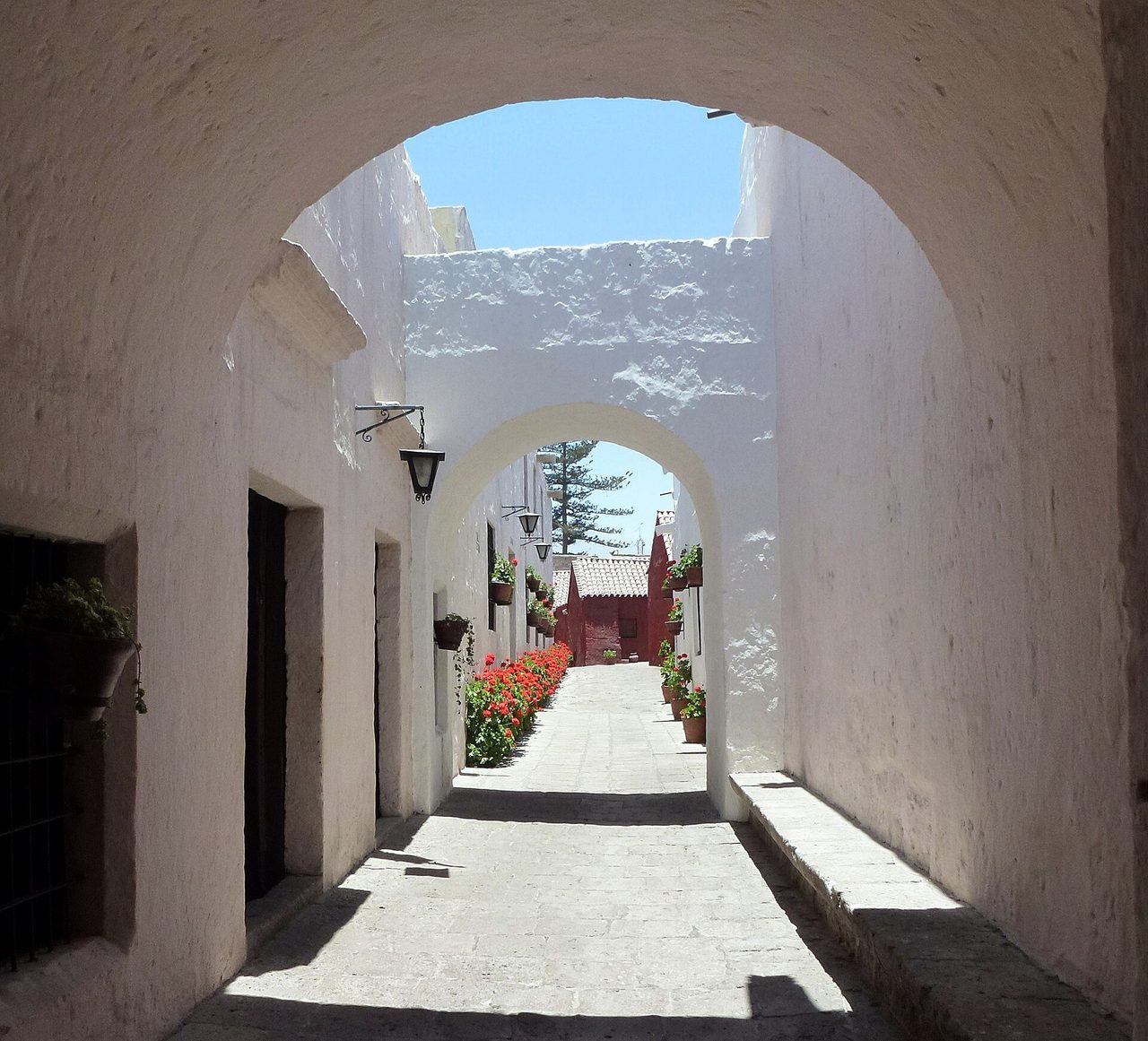
Arequipa sits at 2,335 m. You will feel it slightly on the stairs and not much else, which is exactly the point — this is your body starting work on the problem two full days before it matters.
Day 6 is deliberately gentle after the bus: Santa Catalina Monastery in the late afternoon when the light hits the ochre and cobalt walls, then the Plaza de Armas. Santa Catalina is one of the few paid sights in Peru I would call underpriced. Day 7 is the Museo Santuarios Andinos for Juanita, the Yanahuara mirador for the volcano view, and a long lunch of rocoto relleno in a picantería. There is more on how to spend time in Arequipa if you want to fill the gaps.
Do not book a Misti or Chachani climb here. Both are 5,800–6,000 m and will wreck the rest of your fortnight.
Days 8–9: Colca Canyon
Day 8. Arequipa to Chivay, about four hours by road. The route climbs through the Salinas y Aguada Blanca reserve, where you will see wild vicuña, and tops out at the Patapampa pass at roughly 4,910 m — higher than anywhere else on the trip except Rainbow Mountain, and higher than Everest Base Camp on the Nepal side. You stop for fifteen minutes, take a photo of the stone cairns and the volcano line-up, and feel your pulse in your ears. Then you descend to Chivay at 3,635 m and sleep. That brief spike followed by a lower sleeping altitude is textbook acclimatisation, and it happens for free as a by-product of the drive.
Afternoon at La Calera hot springs outside Chivay. Do it. You have been on buses.
Day 9. Very early start for Cruz del Cóndor, about an hour and a half down the canyon. Condors ride the morning thermals between roughly 08:00 and 10:00 and they are not guaranteed, though the odds in the dry season are good. The viewpoint is crowded and the birds do not care. After that, transfer to Puno, roughly six hours across the altiplano.
Note that the standard two-day Colca tour returns to Arequipa, which would cost you a day. What you want is the Colca-to-Puno transfer, which most Arequipa agencies sell and which nobody advertises well. Ask for it by name.
Days 10–11: Lake Titicaca and the road to Cusco
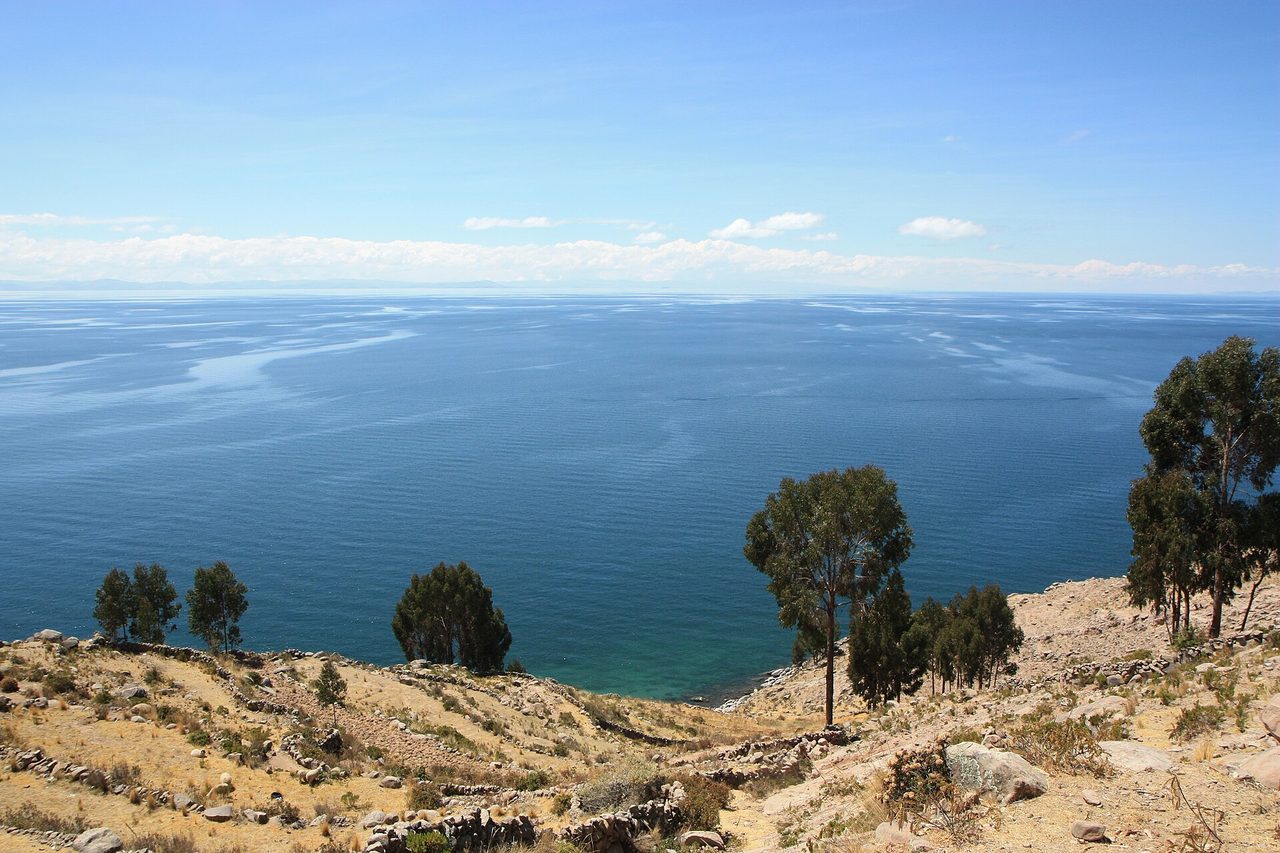
Day 10. Puno sits at 3,830 m, which surprises people, and a full day on the lake. The honest version: the Uros floating islands are a 45-minute stop that has become a fairly transactional handicraft sale, and Taquile, two and a half hours further out, is the part worth the boat ride. Its terraced hillsides, its walk up to the plaza and its genuinely UNESCO-listed weaving tradition are the reason to be here. Book a full-day tour that includes both rather than a half-day Uros-only trip. The Lake Titicaca guide covers the homestay option on Amantaní too, which is better than either if you have the extra night.
Day 11. Puno to Cusco on the tourist bus, and this is one of the two or three decisions that most improve a two-week trip. The direct bus does it in about seven hours and shows you nothing. The Ruta del Sol tourist services (Inka Express, Turismo Mer and others) take ten to eleven hours and stop at Pukará, the La Raya pass at about 4,320 m, the enormous Inca temple complex at Raqchi, and the painted church at Andahuaylillas. Guide, buffet lunch and oxygen on board, from around $50, plus roughly S/53 in site entries paid on the day.
You spend three extra hours and get four proper sites, several of which are among the better Inca ruins outside the Cusco region. There is no scenario in which the direct bus is the better buy.
Days 12–14: Cusco, the Sacred Valley and Machu Picchu
You arrive in Cusco at 3,400 m having slept two nights at 3,830 m. You will walk up to San Blas on your first evening without thinking about it, while the people who flew in from Lima that morning are lying down in the dark. This is the payoff, and it is described in more detail in the piece on how Cusco’s altitude actually affects visitors.
Day 12. Cusco city. Qorikancha, the cathedral, the San Pedro market, and Sacsayhuamán above the city in the late afternoon, which is when the stone goes gold and the tour groups have gone. Buy the Boleto Turístico General (S/130, ten days, sixteen sites) on your way into the first one; it covers Sacsayhuamán, the Sacred Valley sites and Moray, and you will use enough of it to justify the price. The wider list of things worth doing in Cusco has more if you build in an extra day.
Day 13. Sacred Valley, one-way, ending in Ollantaytambo. Pisac terraces and market in the morning, Moray or the Maras salt pans midday, Ollantaytambo fortress in the afternoon, then either sleep in Ollantaytambo or take the evening train down. The Sacred Valley route works far better as a linear day than as a loop back to Cusco, and it drops you 600 m lower, which helps you sleep.
Day 14. Machu Picchu. Train from Ollantaytambo to Aguas Calientes, roughly 1 h 30, then the Consettur shuttle up the switchbacks. Take a mid-morning entry slot rather than the 06:00, because the site is usually cloud-wrapped at dawn in the dry season and the crowd at the first gate is worse than at 09:00. Afternoon train back to Ollantaytambo, road transfer to Cusco, sleep, fly home.
The honest problem with Route A: day 14 is Machu Picchu and there is no slack behind it. If a train is cancelled, if there is a strike, if you get a stomach bug on day 13, you have no second attempt. Two fixes. Either fly home on day 15 rather than day 14, which is what I would do. Or cut the Nazca overflight from day 5, which pulls everything forward twenty-four hours and gives you a spare day in Cusco after Machu Picchu — useful for Humantay Lake or simply for sitting still.
Why the altitude profile is Route A’s best argument
This is the part almost nobody writes about properly, and it is the strongest reason to travel the loop in this direction.
The standard published two-week itinerary flies you Lima to Cusco on day three. That is sea level to 3,400 m in ninety minutes, with no intermediate step. Roughly half of arrivals get some degree of headache, nausea or insomnia from that, and the standard advice — take it easy for two days — means writing off two of your fourteen days lying in a hotel room drinking coca tea.
Route A does the opposite. It climbs in steps, and every step is something you wanted to do anyway.
| Night | Where you sleep | Sleeping altitude | Gain on previous night |
|---|---|---|---|
| 1–2 | Lima | ~150 m | — |
| 3 | Paracas | ~10 m | — |
| 4 | Huacachina | ~400 m | +390 m |
| 5 | Overnight bus | — | — |
| 6–7 | Arequipa | 2,335 m | +1,900 m |
| 8 | Chivay (Colca) | 3,635 m | +1,300 m, after a 4,910 m pass |
| 9–10 | Puno | 3,830 m | +195 m |
| 11–12 | Cusco | 3,400 m | −430 m |
| 13 | Ollantaytambo | 2,790 m | −610 m |
| 14 | Machu Picchu day | 2,430 m at the site | −360 m |
Three things fall out of that table that are worth saying out loud.
Puno is higher than Cusco. By 430 m. Almost everyone assumes the reverse, because Cusco has the reputation as the altitude city and Puno does not. It means that if you do Titicaca before Cusco, you arrive in Cusco going down, which is the easiest transition in Andean travel. If you do it the other way round, Puno hits you after you thought the hard part was over.
Machu Picchu is lower than Cusco. The site is at 2,430 m, nearly a kilometre below the city people acclimatise in. Every year travellers cancel Machu Picchu because they are struggling with the altitude in Cusco, without realising that the citadel itself is the low point of their entire Andean week. The climb up Huayna Picchu is steep and exposed, but it is not an altitude problem.
The 4,910 m pass on day 8 is a free acclimatisation stimulus. Going high briefly and sleeping low is the classic mountaineering pattern, and Route A does it for you on the way to Chivay without anyone planning it.
None of this makes altitude sickness impossible. It is partly genetic, fitness does not protect you, and a fit twenty-five-year-old can go down while their parents are fine. But a graded profile stacks the odds heavily in your favour, and it costs you nothing, because you were going to Arequipa anyway.
Route B: Cusco core, the Amazon, and one coastal add
Route A has no jungle in it. For a meaningful number of people that is a deal-breaker, and fair enough — the Peruvian Amazon is more accessible and better value than the Brazilian or Ecuadorian equivalents, and Tambopata in particular delivers wildlife on a two-night stay.
Route B trades the desert and the altiplano for rainforest. It has fewer long overland legs and more flights, and it costs more as a result.
Days 1–2: Lima
As Route A. Two nights, food, Larco, malecón.
Day 3: Fly to Cusco, take it easy
The 1 h 20 flight, and yes, this is the altitude jump Route A avoids. Mitigate it: land in the morning, do nothing strenuous, drink water, skip alcohol for 48 hours, and consider going straight down to the Sacred Valley for your first two nights instead of sleeping in Cusco. Urubamba at 2,870 m is 530 m lower and a much kinder first night. Guidance on where to base yourself around Cusco covers the valley-versus-city trade-off.
Days 4–5: Sacred Valley
Two full days rather than Route A’s one, because you need them for acclimatisation and because the valley rewards it. Pisac and Moray on day 4; Ollantaytambo, Chinchero weaving and the salt pans on day 5. Sleep in Ollantaytambo on night 5 so you are already at the station.
Day 6: Machu Picchu
Train, shuttle, site, back to Cusco. See the section below on tickets and circuits — this is the one booking that genuinely cannot be left late.
Days 7–8: Cusco
Now you are acclimatised and the city is fun rather than an endurance test. Day 7 for the city itself. Day 8 for one big day trip — Rainbow Mountain at 5,036 m if you want the altitude challenge and can accept that the colours are frequently muted and the crowds heavy, or one of the gentler day trips out of Cusco if you would rather not spend six hours in a minivan.
Days 9–11: Tambopata
Fly Cusco to Puerto Maldonado, about 55 minutes and often under $100. Then a boat up the Tambopata or Madre de Dios river to a lodge, which is 45 minutes to three hours depending how far in you go — and further in is meaningfully better for wildlife. Three nights is the minimum that justifies the transfers. Two nights means you arrive in the afternoon, do one night walk, one morning at a clay lick and leave.
What you realistically see: macaws and parrots at a clay lick at dawn, several monkey species, caiman by torchlight, capybara, giant river otters if you are lucky at an oxbow lake, and an enormous quantity of insects. What you almost certainly do not see: jaguar, tapir, anaconda. The guides to the Peruvian Amazon and to Peru’s wildlife set realistic expectations, which matters, because the marketing photos do not.
Puerto Maldonado over Iquitos for a two-week trip, every time. Iquitos is a separate flight from Lima, cannot be reached by road at all, and adds a full day in each direction.
Days 12–14: Lima and the coast
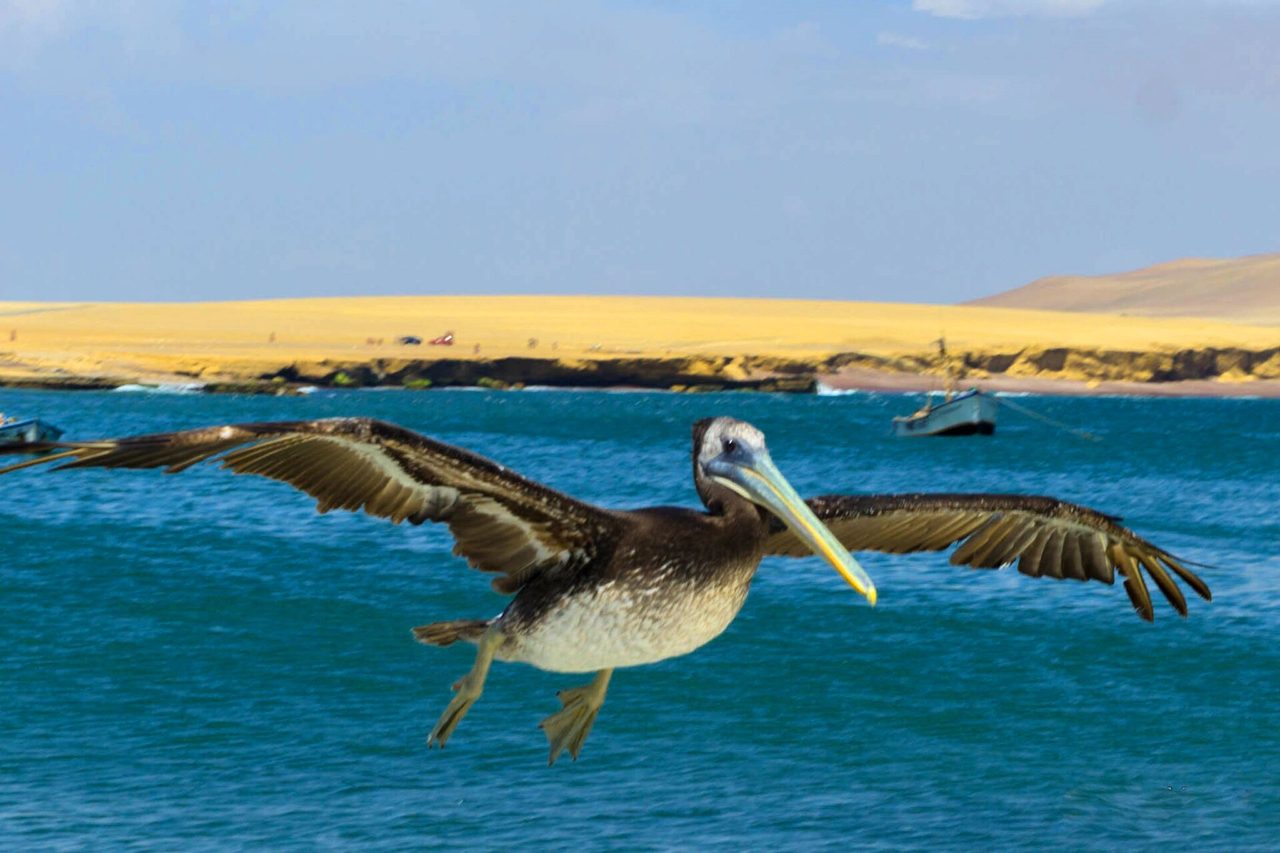
Day 12. Fly Puerto Maldonado to Lima (usually via Cusco, around 3–4 hours all in), then the afternoon bus to Paracas. It is a long day but a comfortable one.
Day 13. Ballestas Islands in the morning, the Paracas reserve in the middle of the day, bus back to Lima in the late afternoon.
Day 14. Lima. Barranco, the Larco if you missed it, a final long lunch, evening flight. If you would rather have dunes than sea lions, substitute Huacachina on day 13 — it is an hour further inland and a very different kind of day.
Route A or Route B?
| Route A — south loop | Route B — Cusco, Amazon, coast | |
|---|---|---|
| Long overland legs | 4 (one overnight) | 2 |
| Domestic flights | 0–1 | 3 |
| Altitude risk | Low. Graded climb. | Moderate. Flies to 3,400 m on day 3. |
| Highest point slept at | 3,830 m (Puno) | 3,400 m (Cusco) |
| Typical mid-range cost | ~$2,050 for 14 days | ~$2,600 for 14 days |
| Best for | First-timers, overland travellers, anyone worried about altitude, anyone who wants to feel they crossed a country | Wildlife travellers, families with teenagers, anyone with limited time tolerance for buses, anyone who has already done the altiplano |
| Not for | People who hate long bus journeys or who cannot face an overnight coach | People on a tight budget, or anyone prone to altitude sickness who cannot build in slack |
| Fits the Inca Trail? | Only with modifications (see below) | Not without dropping the Amazon |
If you are torn, ask yourself one question: would you rather see three ecosystems from a coach window or two ecosystems properly, from a boat? There is no wrong answer, but there is a wrong hybrid, which is trying to do both.
Every leg, with real hours, cost and a verdict
Prices are 2026 figures in USD for a foreign traveller booking a decent standard of service, and they move. Bus fares in particular swing 30–40% between low and high season and between booking a week out and booking on the day.
| Leg | Mode | Time | Cost | Verdict |
|---|---|---|---|---|
| Lima → Paracas | Bus (Cruz del Sur, Oltursa) | 3 h 15 – 3 h 45 | $14–30 | Yes. The easiest long-distance bus in Peru and there is no flight alternative. |
| Paracas → Huacachina/Ica | Bus or colectivo | 1 h 15 | $5–12 | Yes. Trivially short. |
| Ica → Nazca | Bus | 2 h | $8–15 | Only if you want the overflight. Otherwise skip and save the day. |
| Nazca → Arequipa | Overnight bus | 9–10 h | $38–55 | Yes. Pay for the 160-degree seat. Converts a lost day into a night’s sleep. |
| Ica → Arequipa | Overnight bus | ~11 h | $40–60 | The Nazca-skipping version. Same verdict. |
| Lima → Arequipa | Direct bus | 16–18 h | $45–60 | No. Eighteen hours to save $60 over the flight. Break it at the coast instead. |
| Lima → Arequipa | Flight | 1 h 35 | $45–110 | Yes, if you are skipping the coast entirely. |
| Arequipa → Chivay (Colca) | Tour van or bus | ~4 h, via a 4,910 m pass | $30–60 as part of a tour | Yes. The pass is worth the drive on its own. |
| Colca → Puno | Tourist transfer | ~6 h | $25–45 | Yes. Ask for it by name; agencies default to returning you to Arequipa. |
| Arequipa → Puno | Direct bus | 6–8 h | $18–30 | Fine if you are skipping Colca. Dull scenery for the first half. |
| Puno → Cusco | Tourist bus (Ruta del Sol) | 10–11 h, four stops | ~$50 + ~S/53 entries | Yes, emphatically. Four sites, a guide and lunch for three extra hours. |
| Puno → Cusco | Direct bus | ~7 h | $15–25 | No. You save three hours and lose the best transfer day of the trip. |
| Puno → Cusco | Andean Explorer / Titicaca train | ~10 h | $300+ | Only if the train itself is the point. It is a lovely thing and it is not good value as transport. |
| Cusco → Ollantaytambo | Colectivo or private car | 1 h 30 – 2 h | $5 colectivo, $30–50 private | Colectivo is fine and frequent. Private only if you have a train to catch. |
| Ollantaytambo → Aguas Calientes | Train (PeruRail / IncaRail) | 1 h 30 | $35–60 per leg, standard class | Yes. There is no road. Book the moment your entry ticket is confirmed. |
| Aguas Calientes → the gate | Consettur shuttle | 25–30 min | ~$24 return | Yes, unless you want the 1,700-step climb. Walking up takes 1 h 15 and costs you the morning. |
| Cusco → Puerto Maldonado | Flight | 55 min | $60–130 | Yes. The road exists and takes ten hours. |
| Lima → Cusco | Flight | 1 h 20 | $50–120 | Yes for Route B. Book with a Peruvian carrier for the domestic-fare pricing. |
Two general rules on Peruvian transport. First, buses are far better than the reputation — the top-tier operators run double-decker coaches with reclining seats, onboard toilets and cabin service, and you are safer on them than on the road generally. Second, flying only wins for journeys over about twelve hours or across the Andes; for anything under eight hours the bus is competitive door to door once you add airport time. The country-wide guide to getting around Peru breaks the operators down by route.
The four-day Inca Trail, and what it costs you
Two weeks is the first trip length where the classic four-day Inca Trail fits without deforming the whole itinerary, so it deserves a proper answer rather than a passing mention.
The constraints, in order of how likely they are to sink your plan:
- Permits. 500 people per day, and that number includes guides, porters and cooks — so roughly 200 trekker places. You cannot buy one independently; you book through a licensed operator who holds the permit against your passport number. Peak-season dates (May to September) go 4–6 months ahead and the popular start dates go earlier than that. If you are reading this three weeks before your trip, the answer is no.
- February. The trail closes for the whole month for maintenance. The site itself stays open, so you can still visit Machu Picchu by train.
- Cost. Around $500–650 with a budget operator, $650–900 mid-range, $900–1,500 for the premium outfits. That includes the permit, entry, porters, food and camping gear. Tipping the crew is expected on top and is not trivial.
- Fitness. The high point is Dead Woman’s Pass at 4,215 m on day two, and the day-three descent is thousands of uneven stone steps, which is harder on the knees than the climb is on the lungs.
What it displaces. Four days of trekking plus one recovery day is five of your fourteen. That is a third of the trip, and it is not compatible with Route A as written. If the Inca Trail is your priority, run this instead:
- Days 1–2: Lima
- Day 3: fly Lima → Arequipa
- Days 4–5: Arequipa, then Colca
- Day 6: Cruz del Cóndor, transfer to Puno
- Day 7: Lake Titicaca
- Day 8: Ruta del Sol bus to Cusco
- Days 9–10: Cusco and the Sacred Valley, trek briefing
- Days 11–14: the Inca Trail, arriving at Machu Picchu on the morning of day 14
You lose the coast and gain the trek, and critically you arrive at the trailhead having slept three nights above 3,400 m, including two at 3,830 m in Puno. That is a far better preparation than the standard version, where people fly into Cusco, spend two days acclimatising and then attempt a 4,215 m pass on day two of the hike.
If the permits are gone, they are gone, and the alternatives are genuinely good rather than consolation prizes — Salkantay is harder and higher and needs no permit, Lares is gentler and more cultural, and the round-up of the best treks in Peru compares them honestly. The full Inca Trail guide has the permit-release calendar and the operator questions worth asking.
Machu Picchu: the booking that cannot wait
Everything else on a two-week trip can be improvised. This cannot.
Entry is S/163 for a foreign adult on the standard circuits, and S/211 for the routes that include the Huayna Picchu or Machu Picchu Mountain climbs. Those figures went up on 1 May 2026 when SERNANP added a conservation surcharge on top of the base ticket, so any page still quoting S/152 is out of date. Prices and rules at Machu Picchu move more than anywhere else in Peru — check the official ticket portal before you pay.
The daily cap is 4,500 visitors, rising to 5,600 on peak dates (1 January; 2–5 April; 19 June to 2 November; 30–31 December). Since 1 June 2024 the site has run on three circuits split into ten routes, sold individually. They are one-way, they are enforced by rangers, and you cannot switch once you are inside. Entry is timed hourly from 06:00 to 16:00 with a 30-minute grace period, and you get 2.5 to 4 hours inside depending on the circuit.
Practical consequences. If you want the classic postcard view from the upper terraces, you need a Circuit 2 route — do not assume any ticket gives you it. If you want to climb, the comparison of Huayna Picchu and Machu Picchu Mountain is worth ten minutes before you choose, because they are very different climbs and the tickets are not interchangeable. And one small trap: the student rate at Machu Picchu no longer accepts ISIC cards — you need a university photo ID with an expiry date on it, checked at the gate. ISIC still works for the 18–25 rate on the Cusco Boleto Turístico, which is a different ticket run by a different body, so do not conflate the two.
The mechanics of booking, the circuit map and the release schedule are laid out in the Machu Picchu ticket guide, and the train side — which sells out separately and just as fast — in the guide to the trains to Aguas Calientes. If you are travelling cheaply, the overland route via Hidroeléctrica cuts the transport cost by roughly two thirds at the price of a long day and a two-hour walk along the tracks.
What two weeks in Peru costs
All figures in USD per person, for fourteen days on the ground, excluding international flights. Route A pricing, since it is the more common trip. Add roughly $400–600 for Route B, mostly in flights and lodge rates.
| Item | Budget | Mid-range | Comfort |
|---|---|---|---|
| Accommodation (13 nights) | $170 hostel dorms, $13/night |
$650 private rooms, $50/night |
$1,560 good hotels, $120/night |
| Food and drink | $250 menú del día, markets, $18/day |
$560 $40/day, one nice dinner a week |
$1,120 $80/day, proper restaurants |
| Intercity transport | $130 all bus, economy seats |
$230 bus, better seats, tourist bus to Cusco |
$420 flights where sensible, private transfers |
| Machu Picchu (entry, train, shuttle, guide) | $150 Hidroeléctrica route, S/163 entry, no guide |
$230 standard train both ways, shared guide |
$330 upper-class train, private guide |
| Tours and entries | $150 Ballestas, buggy, Colca, Titicaca, Boleto Turístico |
$280 as budget plus Nazca overflight |
$450 private and small-group versions |
| Domestic flights | $0 | $0–60 | $120 |
| Miscellaneous, SIM, laundry, tips | $60 | $120 | $200 |
| All-in total | ~$910 | ~$2,070 | ~$4,080 |
Sanity checks on those numbers. The budget column assumes dorms, market food, no overflight and the cheap route to Machu Picchu; it is achievable and I have watched people do it, but it is a fortnight of effort. The mid-range column is the one most readers will actually spend, and it is worth noting that Machu Picchu plus its transport is around 11% of it — a single site absorbing more than a tenth of a two-week budget. The comfort column is not luxury; luxury in Peru means the Belmond properties and the Hiram Bingham train, and that starts at roughly double again.
The full breakdown of what things cost across the country, including the items people forget, is in the guide to what a trip to Peru costs. If Machu Picchu is where your budget is straining, the cheap ways to reach the site are legitimate rather than miserable.
When to go, and what changes if you cannot go then
May to September is the dry season in the highlands and it is the right answer for both routes. Clear mornings at Machu Picchu, condors flying at Colca, and the Inca Trail open. It is also the crowded, expensive answer, and the shoulder weeks either side are where Cusco’s crowd and price curves look most forgiving.
April and October are the shoulder months and they are underrated. Green landscapes, thinner crowds, prices 20–30% below July, and rain that is usually an afternoon event rather than an all-day one. If your dates are flexible, this is where I would put a two-week trip.
December to March is the wet season. The coast is at its best — Lima is actually sunny, which it is not for the rest of the year — and the highlands are at their worst. Landslides close the train line most years for a few days at a time. February is the worst single month: heaviest rain and the Inca Trail shut. The seasonal detail is in the guides to the best time to visit Peru and specifically to timing a Machu Picchu visit.
One thing worth planning around rather than avoiding: Inti Raymi in Cusco on 24 June fills the city and doubles hotel prices for a week either side. If you want to see it, book six months out. If you do not, be somewhere else that week. The calendar of Peru’s major festivals shows what else lands in your dates.
What still does not fit in fourteen days
Being honest about the gaps is more useful than pretending there are none. Two weeks buys you the south. It buys you nothing at all north of Lima.
- Huaraz and the Cordillera Blanca. Eight hours from Lima, and Peru’s best mountain scenery by a distance — Laguna 69, Laguna Parón, the four-day Santa Cruz trek. It needs four days minimum and its own acclimatisation, which you cannot recycle from a southern trip.
- Iquitos and the deep Amazon. A separate flight from Lima, no road access, and worth four to five days if you go. Tambopata is the two-week compromise, and it is a good one, but it is not the same river.
- Kuelap and Chachapoyas. A cliff-top fortress older and arguably more dramatic than anything in the Cusco region, plus the Gocta waterfalls, in a part of Peru with almost no foreign visitors. Getting there is the problem: it is a flight to Jaén plus a long drive, and you would need three or four days.
- The north coast. Chan Chan, Huaca de la Luna, the Lord of Sipán tombs at Lambayeque, and Máncora’s beaches. Trujillo and Chiclayo are the base cities and each deserves two days.
- Choquequirao. Four days round trip on foot from Cachora for a site that gets perhaps thirty visitors a day. The cable car has been promised for a decade and has not arrived.
That list is essentially what a third week buys you. If you have twenty-one days, the natural extension is Route A plus the north, or Route A plus Huaraz. If you are choosing what to prioritise across a shorter trip, the ranked list of the best places to visit in Peru is a reasonable place to argue with yourself.
Frequently asked questions
Is 14 days enough for Peru?
For southern Peru, yes, comfortably, and it is the first length at which the classic circuit works as one continuous journey rather than a series of flights. For the whole country, no — you will not see the north, Huaraz or Iquitos. Peru is roughly twice the size of France and its internal geography is much slower.
Should I do Lake Titicaca or the Amazon in two weeks?
One, not both. Titicaca sits naturally on the overland route between Arequipa and Cusco and costs you almost nothing in extra transfers. The Amazon requires two flights and pulls you out of the Andes entirely. If you want both, you want three weeks. If you are forced to choose on wildlife grounds, the Amazon wins; on scenery and cultural interest, Titicaca is closer than people expect.
Is Puno really higher than Cusco?
Yes, by about 430 metres. Puno sits at 3,830 m and Cusco at 3,400 m. It is the single most useful piece of altitude trivia for planning a two-week trip, because it means arriving in Cusco from Puno is a descent, and arriving in Puno from Cusco is a climb you were not braced for.
How many long bus journeys will I actually do?
On Route A: one overnight (Nazca or Ica to Arequipa, 9–11 h), one six-hour transfer (Colca to Puno) and one ten-hour tourist bus (Puno to Cusco), plus several short hops. Three long days out of fourteen. On Route B: effectively one, plus three short flights.
Can I book the Inca Trail a month before I travel?
Almost certainly not for peak season. Permits release for the following year in roughly October and the popular dates go within weeks. Off-season dates in November or early December occasionally have late availability. If your dates are fixed and close, book Salkantay or Lares instead — neither needs a permit.
Do I need to book Machu Picchu tickets before I arrive in Peru?
Yes. Circuits sell out, the popular time slots go first, and the train has to be booked around the entry slot rather than the other way round. In high season, book both two to three months ahead. Turning up in Cusco hoping to sort it out in person works only in the wet season, and even then not reliably.
Is Lima worth two days or should I skip it?
Two days, and I say that as someone who did not enjoy the city on a first visit. The Larco Museum will change how you read every Inca site you see afterwards, and Lima’s food is genuinely the best reason to eat in South America. What it is not is beautiful, and if your priority is scenery you will not miss much by cutting it to one day and adding it to Arequipa.
What should I pack for the altitude range?
You will be at 10 m in Paracas and 4,910 m at Patapampa within five days, in the same trip. Layers, a proper warm mid-layer for Puno and Colca mornings, and a rain shell regardless of season. The specific list for the site itself is in the guide to what to wear at Machu Picchu, and the broader practicalities — cash, SIM cards, taxis, safety — are covered in the Peru travel tips round-up.
What if I only get 12 days, not 14?
Cut Nazca and one Lima day from Route A. That gets you to twelve without touching the altitude sequence, which is the part you must not compromise. Do not cut Arequipa to save time — it is doing acclimatisation work as well as sightseeing work, and removing it is how a two-week trip turns into a headache in Cusco. If you are down to ten days, restructure entirely around the Cusco core plus one region, and consider how long you really want in the city using the guide to how many days Cusco needs.
The short version
Two weeks in Peru works if you accept that it is one half of the country, sequence the altitude deliberately rather than accidentally, and resist adding a fourth region. Route A if you want the overland classic and the gentlest possible climb. Route B if you want rainforest. Book Machu Picchu and, if you want it, the Inca Trail, before you book anything else, because everything else can move and those cannot.
And build in one spare day somewhere. Trains get cancelled, roads get blocked, and stomachs revolt. The fortnight that has a day of slack in it is the fortnight that survives contact with reality.