5 Days in Peru: A Short Trip Itinerary
Five days in Peru is really about three and a half usable days once you count the flights. Here is the honest arithmetic, the altitude sequence that buys a day back, and a day-by-day plan for Cusco, the Sacred Valley and Machu Picchu.
Here is the sentence that no 5 day Peru itinerary on the internet seems willing to write down: five days in Peru is really about three and a half usable days. Not five. Three and a half. The other day and a half is spent in aircraft, in a Lima airport hotel you will not remember, and in a minivan climbing out of the Cusco basin.
I am not saying that to talk you out of the trip. I am saying it because every itinerary I read before my own short trip promised Lima and Cusco and the Sacred Valley and Machu Picchu and Rainbow Mountain, and the arithmetic simply does not close. If you plan against the fantasy version you will spend the whole trip behind schedule, at altitude, with a headache. If you plan against the real number you will have a genuinely good five days.
So let us do the arithmetic first, and then build the trip on top of it.
The five-day arithmetic, hour by hour
Peru sits a long way from almost everywhere, and the flight schedules into Lima are unhelpfully clustered. Most flights from Miami, New York and Los Angeles depart in the afternoon or evening and land at Jorge Chávez between roughly 21:00 and 01:00. A handful are proper red-eyes that land around 05:00. Either way, the day you arrive is not a day.
Then there is the connection. Jorge Chávez moved into its new terminal in mid-2025, and while it is a vastly better building than the old one, it is also a much bigger one. International arrivals clear immigration, collect bags, and re-check for the domestic leg. Three hours is the sensible minimum for an international-to-domestic connection there; four is comfortable in high season. If your international flight lands at 23:40, there is no domestic connection to make. You are sleeping in Lima whether you planned to or not.
Here is what a five-day trip actually contains once you account for all of it.
| Day | What happens | Hours in transit | Usable sightseeing time |
|---|---|---|---|
| Day 1 | Land Lima 21:00–01:00, transfer to an airport hotel, sleep | ~1 h ground | 0 |
| Day 2 | Early flight Lima–Cusco (1 h 20 in the air), transfer to the Sacred Valley (1.5–2 h) | ~5 h door to door | ~0.75 day |
| Day 3 | Sacred Valley, gentle | ~1.5 h local | 1 day |
| Day 4 | Machu Picchu | ~5 h train and bus | 1 day |
| Day 5 | Cusco morning, afternoon flight to Lima, overnight flight home | ~5 h door to door | ~0.75 day |
| Total usable | ~3.5 days | ||
Three and a half. That is the budget you are working with, and it is why the honest answer to “what can I see?” is much shorter than the brochures suggest. If that number makes you wince, the fix is not a cleverer plan — it is two more days. A seven-day route through the same region buys you roughly five and a half usable days, which is a completely different trip for two extra nights of hotel.
Why the first flight out of Lima matters so much
Cusco’s airport now operates from 04:00 to 02:00, and LATAM, Sky and JetSMART between them run something like 35 departures a day on the Lima route. The first ones leave before 05:00. Take one of them. Morning flights into Cusco are dramatically more reliable than afternoon ones, because the Andean weather that closes the airport tends to build through the day, and because a morning cancellation still leaves you options. An afternoon cancellation on a five-day trip is a lost day you cannot get back.
The flight itself is 1 h 15 to 1 h 30 and costs roughly $60–130 one way booked a month or two ahead, occasionally less on JetSMART. It is the single most schedule-critical booking of the whole trip. Details on how the domestic network hangs together are in our rundown of how to move around Peru without wasting days.
At five days it is Cusco and Machu Picchu. That is the whole trip.
I want to be blunt, because vagueness here costs people money. With three and a half usable days you get the Cusco region: the Sacred Valley, Machu Picchu, and Cusco city. You do not also get Lima, the Amazon, Arequipa, Colca or Titicaca. Not one of them. Here is the mechanism rather than just the assertion.
- Lima sightseeing. A half day in Miraflores and Barranco sounds harmless. But to get it you either arrive a day earlier (which means it is a six-day trip) or you skip the early Cusco flight and lose the afternoon in the Sacred Valley. Lima is a genuinely good city and worth a couple of days on its own terms — but it is a bad use of the scarcest resource you have.
- The Amazon. Puerto Maldonado is a 55-minute flight from Cusco, and lodges are a further one to three hours by boat. No lodge worth staying in sells a single night, because you would arrive in the afternoon and leave after breakfast, seeing nothing. Two nights minimum, which is your entire Machu Picchu allocation. Save the Peruvian rainforest for a trip with room in it.
- Arequipa and Colca. Arequipa is a 1 h 25 flight from Cusco, and Colca is a further 3–4 hours by road each way. Arequipa deserves two days by itself and Colca deserves two more.
- Lake Titicaca. Ten hours by bus from Cusco, or a flight to Juliaca plus a transfer. The islands are worth seeing, but Titicaca is a three-day proposition, not a bolt-on.
The general rule for Peru is that internal distances are much larger than the map suggests, and every hop costs you either a flight or most of a day on a bus. Our broader guide to structuring a Peru trip goes through what unlocks at seven, ten and fourteen days — two weeks is the first point at which the full southern circuit fits. At five, the answer is one region, done properly.
The altitude problem, and the sequence that solves it
This is where almost every five-day itinerary I have read is quietly irresponsible.
The standard, sensible advice for Cusco is to spend two days doing very little while your body adapts. Cusco sits at 3,399 m. That is high enough that a meaningful share of arrivals — the usual figure quoted is around a third — get headaches, nausea, poor sleep, or all three. Two days of doing nothing is excellent advice for a ten-day trip. On a five-day trip it consumes more than half your usable time. So what actually happens is that people ignore it, fly into 3,399 m from sea level, go straight out on a walking tour, and feel dreadful for the rest of the trip.
There is a better sequence, and it is the single most useful thing in this article: do not sleep in Cusco at the start. Go down.
| Place | Altitude | When to be there |
|---|---|---|
| Lima | Sea level | Night 1, unavoidable |
| Urubamba | 2,870 m | Nights 2 and 3 — sleep here |
| Ollantaytambo | 2,792 m | Alternative base, same idea |
| Aguas Calientes | 2,040 m | Pass through on day 4 |
| Machu Picchu | 2,430 m | Day 4 — lower than Cusco |
| Cusco | 3,399 m | Night 4, at the end, when adapted |
Look at that table for a second. Machu Picchu is nearly a kilometre lower than Cusco. The altitude problem in this region is not the ruins. It is the city you fly into. Yet the conventional itinerary parks you at the highest point on your first night, when you are least adapted, and sends you to the lowest point on day four, when you no longer need the relief.
Flipping it buys you back most of a day. You land at Cusco airport, get straight into a vehicle, and drive down to Urubamba or Ollantaytambo — a descent of about 550 to 600 metres in 90 minutes to two hours. You sleep at roughly 2,800 m, which is high but is a different order of unpleasant from 3,400 m. You spend day three in the valley, walking gently at valley-floor level. By the time you reach Cusco on the evening of day four, you have had three nights at altitude and the city is a pleasure rather than an ordeal. Our deeper dive into how Cusco’s altitude actually affects people covers the symptoms and the medication question in more detail, and the Sacred Valley guide has the specifics on where to base yourself.
The honest caveat
This sequence reduces the risk. It does not eliminate it. Altitude sickness is not strongly predictable from fitness, age or previous experience, and some people feel rough at 2,800 m regardless. What worries me about recommending it on a five-day trip is that there is no slack. On a ten-day trip, a bad first day is an inconvenience. Here, a bad day two means you spend day three in a hotel room and the trip loses a third of its content.
Mitigations that are worth the effort: drink far more water than feels necessary, skip alcohol entirely for the first two nights, eat lightly, and ask your doctor about acetazolamide before you leave rather than trying to source it in a Cusco pharmacy at 22:00. Coca tea is pleasant and mildly helpful and is not a substitute for any of the above.
The primary 5 day Peru itinerary, with real times
This is the version I would book. It assumes a US or European arrival into Lima on the evening of day one. Adjust the first day if you are coming from within South America and can land in the morning.
Day 1 — Land Lima, sleep, do nothing
21:00–01:00. Land at Jorge Chávez. Clear immigration. Take the hotel shuttle or a booked transfer to an airport hotel. There are several within a few minutes of the terminal and this is the one night of the trip where I would not economise — you want a short walk to check-in and a dark room, not a 50-minute run into Miraflores and back at 04:00.
Do not try to see Lima tonight. The drive to Miraflores is 45 to 70 minutes each way in normal traffic and you will be asleep on your feet.
Day 2 — Fly to Cusco, drop straight into the Sacred Valley
05:00. Alarm. Airport, domestic check-in, 06:30–07:30 departure.
08:00–09:00. Land in Cusco. Do not linger in the terminal and absolutely do not book a city tour for this afternoon. Pre-arrange a transfer to the valley; taxis exist but you do not want to negotiate one while breathing hard.
09:00–11:00. Drive to Urubamba or Ollantaytambo. The road climbs onto the Chinchero plateau first — briefly higher than Cusco, which is disconcerting — then drops steadily into the valley. Ask the driver to stop at the Chinchero viewpoint for ten minutes. That is enough for the morning.
11:00 onward. Check in. Eat something. Then do exactly one gentle thing: the Ollantaytambo village grid, which is the best-preserved Inca town plan anywhere and takes an hour on flat ground, or the terraces at Moray if you have energy. Do not climb the Ollantaytambo fortress today. It is 200-odd steep steps and you have all of tomorrow.
Evening. Early dinner, early night. You are running on four hours of sleep at 2,800 m.
Day 3 — The valley, at valley pace
A full day, and the only one with any flexibility in it. My preferred loop, west to east:
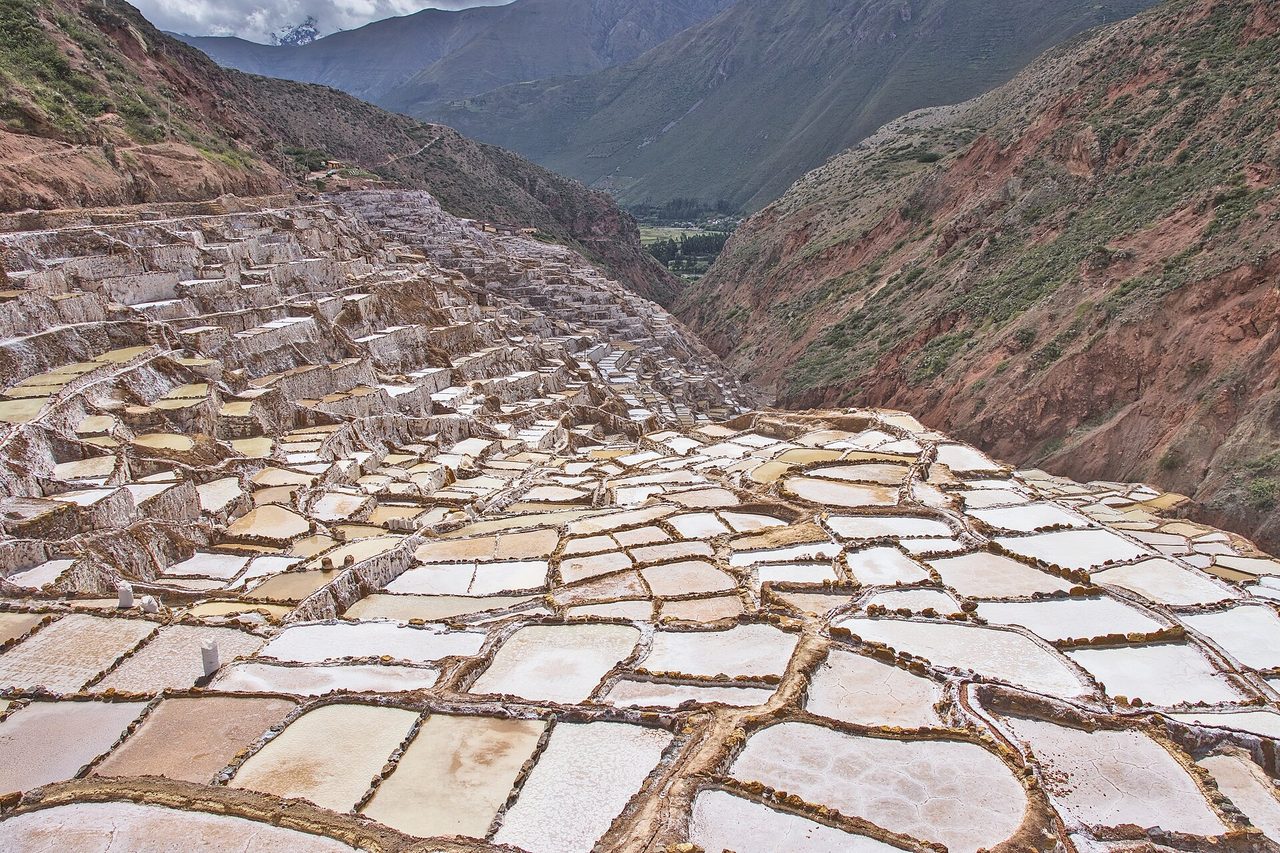
- 08:00 Maras salt pans. Thousands of shallow evaporation terraces stepping down a ravine, worked since before the Inca. Twenty minutes of walking, a lot of photographs, and it is at 3,380 m so keep it short.
- 10:00 Moray. Concentric agricultural terraces cut into a natural depression, with a measurable temperature gradient between the top ring and the bottom one. Genuinely strange.
- 12:30 Lunch in Urubamba. The valley has some of the best cooking in the country and this is where I would spend money on a meal rather than in Cusco. Our notes on what to actually order in Peru will save you from ordering the same three dishes all week.
- 14:30 Ollantaytambo fortress. Now you climb it. The terraces are the best surviving example of Inca military and ceremonial engineering outside Machu Picchu itself, and the unfinished Sun Temple at the top shows the stonework mid-process, which the finished sites cannot.
- 17:00. Back to the hotel. Pack a small day bag for tomorrow — you will leave the main luggage behind.
You will need the Boleto Turístico for Moray and Ollantaytambo. The partial circuit covering the valley sites is about S/70 and is easier than buying individually. If you would rather have a fuller menu of options for this day, the day trips available from the Cusco region lays them out with drive times.
Day 4 — Machu Picchu
The big one. Book this day, not day five — I will explain why in the buffer section.
05:30–06:30. Train from Ollantaytambo. The journey to Aguas Calientes is about 1 h 40. Sit on the left facing the direction of travel; the Urubamba gorge is on that side. Expedition and Voyager are the standard classes at roughly $51–75 one way; Vistadome and 360° add panoramic roof glass and a meal for $20–50 more, which on this specific stretch I think is worth it. The full comparison is in our breakdown of the train services and what the fare buys you.
08:10. Arrive Aguas Calientes. Walk to the Consettur bus queue. The shuttle up the switchbacks is about 30 minutes and roughly $24 return for foreign visitors; budget 30 to 45 minutes including the queue, which is long in the morning and long again at closing.
09:00–10:00 entry. Match your timed ticket. Since June 2024 the site runs on three circuits and ten defined routes, all one-way, and rangers enforce them — you cannot wander back for a shot you missed. Depending on the circuit you will spend 2.5 to 4 hours inside. Circuit 2 is the one with the classic terrace-and-citadel view most people are picturing; if you want it, do not let an agent sell you something else. Our guide to the ticket types and circuits is worth twenty minutes of reading before you buy, because the circuit choice is irreversible.
14:00–15:00. Bus down, late lunch in Aguas Calientes. The town is a strange, cramped, entirely tourism-built place wedged into a gorge, and I quite like it for that. There is more on what the town is actually like if you are considering a night there.
16:00–18:00. Train back to Ollantaytambo, then a pre-booked car to Cusco (about 1 h 45). Check in to a Cusco hotel around 21:00. Yes, it is a long day. This is what five days costs you.
If the logistics of the whole Cusco-to-citadel chain are what you are stuck on, the route-by-route comparison from Cusco covers every combination including the cheap Hidroeléctrica back road.
Day 5 — Cusco, properly acclimatised, then home
You have had three nights at altitude. Cusco is now enjoyable rather than punishing, which is the entire point of the sequence.
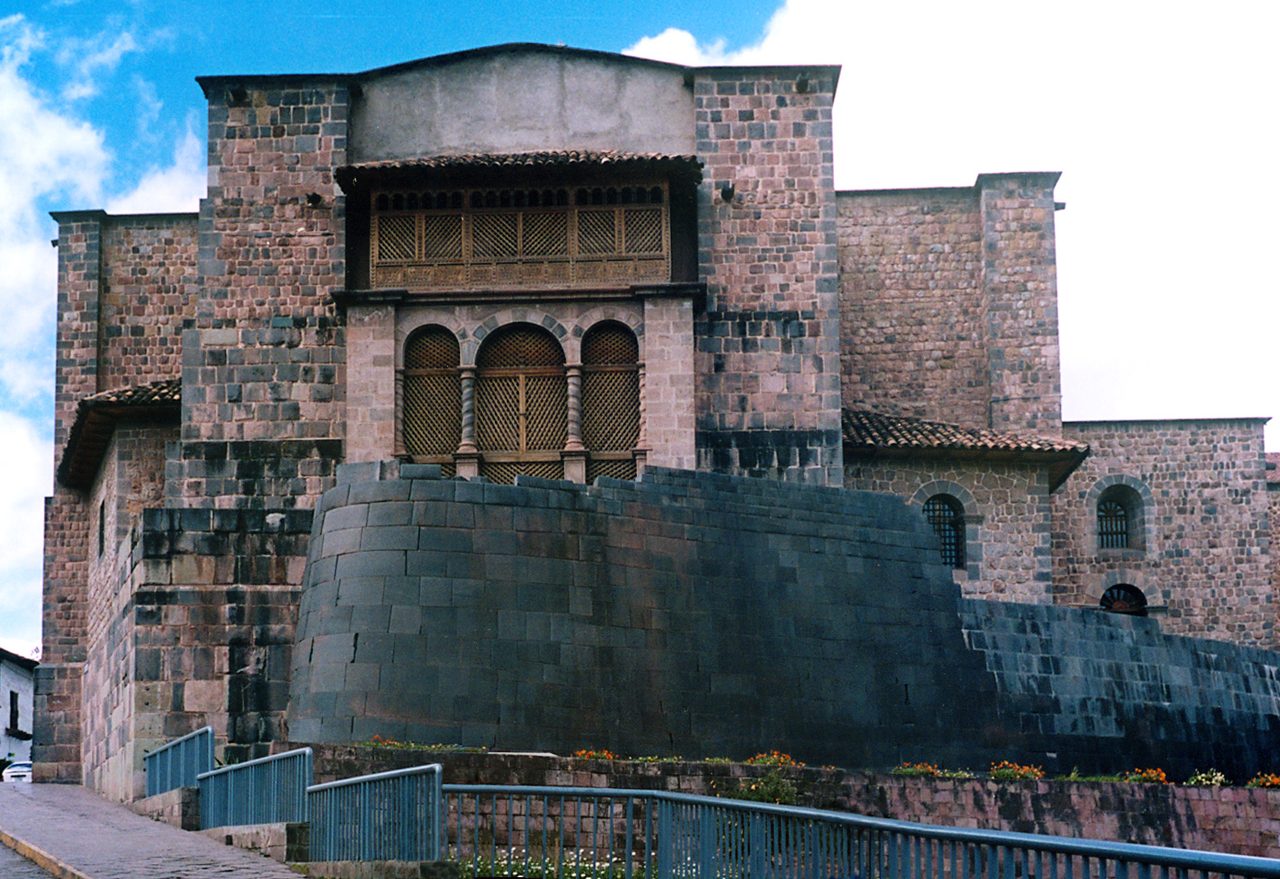
08:00–12:30. Cusco on foot. Qorikancha first — the Inca sun temple with a Dominican church built directly on top of it, which tells you the whole story of the conquest in one building. Then San Blas uphill, the Plaza de Armas, and the twelve-angled stone on Hatunrumiyoc. If you have the legs, Sacsayhuamán is a 30-minute walk above the city and the megalithic walls are more impressive in person than in any photograph. Our list of the things in Cusco actually worth your time will help you triage; you have half a day, not two.
13:00. Lunch, collect bags.
15:00–16:00. Fly to Lima. Connect to the overnight flight home. Give yourself at least three hours in Lima between the domestic arrival and the international departure.
Alternative A — no Cusco flight available
It happens: Cusco flights sell out in June and July, or the price triples, or your dates fall in a week where the schedule is thin. Rather than force it, there is a coherent five-day trip built out of Lima that does not involve the Andes at all.
- Day 1: Land, sleep near the airport.
- Day 2: Move to Miraflores or Barranco. Historic centre in the morning, Larco Museum in the afternoon, dinner somewhere serious. Lima has one of the best restaurant scenes on the continent and it is not hype.
- Day 3: Drive south to Paracas (3.5 h). Ballestas Islands boat trip, Paracas National Reserve in the afternoon. Sleep in Paracas or Huacachina.
- Day 4: Nazca Lines overflight from Pisco or Nazca, or dune buggies and sandboarding at Huacachina. Drive back to Lima.
- Day 5: Lima morning — Barranco, the coastal path, a food tour — then fly home.
This is a real trip, not a consolation prize, and it is the version I would pick for anyone who has already seen Machu Picchu. The southern coast route has the detail on distances and which of the coastal stops earn their place. What it is not is a substitute for the Andes: skipping Machu Picchu on a first trip to Peru is a decision you should make deliberately rather than by default, and the honest case for and against going is worth reading first.
Alternative B — the compressed version, for people already at altitude
If you are arriving from La Paz, Quito, Bogotá, or anywhere else where you have spent the last week above 2,500 m, the altitude constraint disappears and the trip changes shape completely. You can sleep in Cusco from night one and treat the Sacred Valley as a day trip.
- Day 1: Arrive Cusco (direct from La Paz or via Lima the same day). Afternoon: Qorikancha, Plaza de Armas, San Blas. Sleep in Cusco.
- Day 2: Sacred Valley day trip — Pisac market and ruins, lunch in Urubamba, Ollantaytambo fortress. Sleep in Ollantaytambo.
- Day 3: Machu Picchu. Sleep in Aguas Calientes.
- Day 4: Second Machu Picchu entry with a mountain add-on (Huayna Picchu or Machu Picchu Mountain), or the Sun Gate. Afternoon train back to Cusco.
- Day 5: One high-altitude add-on — Humantay Lake or Palcoyo — then a late flight out. This is the only version of a five-day trip where that is realistic.
The two-consecutive-entry version is the one I would actually spend the money on. A second morning with a mountain ticket is a genuinely different experience of the site, and the comparison between the two peaks matters more than people realise — they are not interchangeable. If you would rather use day five for a lake than a mountain, Humantay is the more forgiving of the high-altitude day trips.
What five days rules out, specifically
The classic Inca Trail. The four-day trek is four days. Add the Cusco arrival and the departure and you have a five-day trip in which you see a trail and nothing else — no valley, no Cusco, no acclimatisation before starting a hike that tops out at Dead Woman’s Pass at 4,215 m. Permits also sell out five to seven months ahead. The two-day short trail is the only version that fits, and it is a different proposition; our Inca Trail guide covers both, and the wider survey of Peruvian treks has alternatives that need less lead time.
Rainbow Mountain on top of Machu Picchu. Vinicunca means a 03:00 departure, three hours on the road, and a walk to 5,036 m. On a five-day trip you would be doing it either the day before or the day after Machu Picchu, both of which are already long days, and you would be doing it before you are properly adapted. Back to back, these two are brutal. Palcoyo is lower, quieter and far less punishing if you are determined — the trade-offs are laid out in our Rainbow Mountain guide.
Any meaningful Amazon time. Covered above, but worth repeating because tour operators do sell “Machu Picchu and the Amazon in 5 days” packages. What you get is one night in a lodge and roughly six waking hours in the rainforest, for the price of two flights. Wildlife does not perform on schedule; seeing anything in the Amazon is a numbers game that needs several days.
A second region of any kind. Colca, Titicaca, Huaraz, Chachapoyas, the whole north. Each needs a flight and at least two full days.
Build in a buffer, because five days has none
This is the section that will save someone’s trip.
Cusco is a high-altitude airport ringed by mountains, and flights get delayed or cancelled for weather with some regularity — most often in the December-to-March wet season, but it happens in any month. On a ten-day trip that is an annoying morning. On a five-day trip it can eat your Machu Picchu day, and Machu Picchu tickets are date-specific and non-refundable.
Book Machu Picchu for day three or four, never day five
If Machu Picchu is on your last day and the outbound Lima flight is delayed by a day, you have lost the trip’s entire reason. If it is on day four and something goes wrong on day two, you still have day three to shuffle into. Put the irreplaceable thing in the middle of the trip where it has slack on both sides. This is also why I put the Sacred Valley before Machu Picchu rather than after — the valley day is the one you can sacrifice without ruining anything.
What actually happens if you miss your timed entry
Entry is hourly from 06:00 to 16:00 and there is a 30-minute grace period on your slot. Turn up 20 minutes late and you will be let in. Turn up 90 minutes late and the ticket is dead, and there are no refunds and no transfers to another day. That grace window is smaller than one Consettur queue in high season, which is why I build in the 30 to 45 minutes for the bus rather than the advertised journey time.
The daily cap is 4,500 visitors, rising to 5,600 on peak dates — 1 January, 2–5 April, 19 June to 2 November, and 30–31 December. Outside those windows the site sells out earlier, not later, because the cap is lower. Buy through the official portal as soon as your flights are confirmed.
Trip insurance is not optional here
I am generally relaxed about travel insurance. Not on this trip. The fixed costs of a five-day Peru trip — international flights, domestic flights, train, entry ticket — are front-loaded and mostly non-refundable, and the whole structure is one weather event away from collapsing. Buy a policy that covers trip interruption and missed connections, and check that it covers activity at altitude, because some policies have an elevation ceiling that Cusco exceeds. A few more things I wish someone had told me before my first trip are collected in our practical Peru travel notes.
Book the earliest flight on both ends
Earliest Lima–Cusco on day two, and on day five take an afternoon Cusco–Lima flight with a long connection rather than a tight evening one. If the morning flight cancels, there are eight more before dinner. If the 19:00 flight cancels, there is nothing.
What five days in Peru costs
Per person, excluding international flights, in USD. These are realistic 2026 numbers rather than best-case ones.
| Item | Budget | Mid-range | Comfort |
|---|---|---|---|
| Lima–Cusco return flight | $80 | $130 | $200 |
| Night 1, Lima airport hotel | $40 | $90 | $160 |
| 3 nights, Sacred Valley and Cusco | $75 | $270 | $600 |
| Train, Ollantaytambo–Aguas Calientes return | $110 | $160 | $300 |
| Consettur shuttle, round trip | $24 | $24 | $24 |
| Machu Picchu entry (S/163) | $44 | $44 | $44 |
| Machu Picchu guide (shared / private) | $12 | $30 | $90 |
| Airport and valley transfers | $25 | $80 | $180 |
| Boleto Turístico Parcial (valley circuit) | $19 | $19 | $19 |
| Food and drink, 4 days | $60 | $140 | $320 |
| Contingency and tips | $20 | $50 | $120 |
| Total per person | ~$510 | ~$1,040 | ~$2,060 |
| Per day | ~$102 | ~$207 | ~$411 |
Why the per-day cost is higher than on a longer trip
Look at the fixed block: the Lima–Cusco flight, the train, the entry ticket, the bus and the guide come to roughly $270 at the budget end and $658 at the comfort end. Those numbers do not change if you stay ten days. On a five-day trip they land on five days; on a ten-day trip they land on ten. That alone drags the mid-range daily figure from around $150 on a longer trip up to $207 here, before you have bought a single extra meal.
Put differently: days six and seven of a Peru trip are the cheapest days you will buy, because the expensive parts are already paid for. That is the strongest financial argument for stretching to a week if you possibly can. Our full cost breakdown for Peru compares the daily figures across trip lengths, and if the train fare is what is hurting, doing Machu Picchu cheaply has the Hidroeléctrica route costed out.
When to go, if you only have five days
Trip length changes the seasonal calculus. On a two-week trip a few wet afternoons are noise. On a five-day trip, one clouded-out morning at Machu Picchu is the trip.
The dry season runs roughly May to September, with June to August the most reliable and also the most crowded and expensive. If your dates are flexible I would take late April to mid-May, or October, over the July peak: broadly dry, noticeably fewer people, lower prices, and the valley is green rather than brown. January and February are the wettest months and February is when the Inca Trail closes for maintenance; I would not plan a five-day trip then unless I had no choice. There is more nuance in our guides to timing a Machu Picchu visit and the seasons across the country.
One practical note on packing: the valley and the citadel span 2,000 to 3,400 m with a 15-degree swing between dawn and midday, and you will be doing it all with one small bag. The layering advice for Machu Picchu applies to the whole trip.
Frequently asked questions
Is 5 days enough for Peru?
It is enough for one region of Peru, done at a reasonable pace — realistically the Sacred Valley, Machu Picchu and Cusco. It is not enough for “Peru” in the sense of the country. If you can find two more days, take them; the marginal cost of days six and seven is far lower than days one to five.
Should I fly into Lima or straight to Cusco?
You will fly into Lima whether you want to or not — there are essentially no long-haul international flights into Cusco. The question is whether you connect the same day. If your international flight lands before about 17:00, connecting straight through saves you the Lima night and effectively adds half a day. Most travellers from North America and Europe land too late for that.
Can I do Machu Picchu as a day trip from Cusco instead of staying in the valley?
You can, and thousands of people do, but it is a 16-hour day starting around 04:00. On a five-day trip built around a Sacred Valley base you do not need to — Ollantaytambo is already the train station. The full day-trip-from-Cusco timing is there if your hotel situation forces it.
How many days should I spend at Machu Picchu itself?
One entry is enough for most people, and on a five-day trip it is all you have. Two entries on consecutive mornings — one on a standard circuit, one with a mountain ticket — is a real upgrade if you are on the compressed version of the itinerary. We go through the options in how long to give Machu Picchu.
How long do I need in Cusco city?
Half a day covers the essentials on foot: Qorikancha, the Plaza, San Blas, the twelve-angled stone. A full day adds Sacsayhuamán and a museum. Two days is where it starts to feel relaxed rather than rushed. Our piece on how many days Cusco really needs breaks it down by interest.
How far ahead do I need to book?
Machu Picchu tickets as soon as flights are confirmed — peak-date slots for the popular circuits go months ahead. Trains sell out 60 to 90 days out in high season, and around Inti Raymi in June even that can be tight. Domestic flights three to six weeks ahead for the best fares. Hotels last.
Do I need a tour, or can I do this independently?
Independently is straightforward and cheaper. The only pieces I would pre-book are the airport-to-valley transfer, the trains, the entry ticket and a guide at the citadel. Everything else can be arranged the day before. Where a tour earns its money is if you are travelling alone and want the Maras-Moray loop without hiring a car for the day.
What if I have already seen Machu Picchu?
Then five days opens up considerably. The southern coast route in Alternative A works well, as does two nights in the Amazon out of Puerto Maldonado plus a Lima day, or Arequipa and Colca. Our roundup of where else in Peru is worth the flight is the place to start.
Who should take five days anyway — and who should wait
I would take this trip in three situations.
You are already in South America. If you are in Bogotá, Santiago or La Paz, the arrival penalty mostly disappears — you land in Lima in the morning, or fly straight to Cusco, and your three and a half days become four and a half. If you have been at altitude already, the compressed itinerary above works and you can add a high day trip.
You are extending a layover or a work trip. Peru is a common stopover on South American routings, and if the alternative is going home on Wednesday, five days in the Sacred Valley is a good use of them. The trip stands up on its own. It just does not stand up as a survey of the country.
You have seen Machu Picchu and want one region. Five days is comfortable for Lima and the coast, or for Arequipa and Colca, or for a proper Amazon lodge stay. The constraint only bites when you try to do the classic circuit.
I would wait if this is your first trip to Peru, you are coming from North America or Europe, and you are treating it as the trip you will do once. In that case five days will leave you with a good day at Machu Picchu and a nagging sense that you saw a fragment. Seven days — the same route with a spare day in Cusco and a night in Aguas Calientes — is a different experience for maybe $250 more, and ten days lets you add a second region without any of it feeling forced.
But if five is what you have, take five. The version in this article is honest about what it is: three and a half days in one extraordinary valley, arranged so that the altitude works for you rather than against you. That is a real trip. It is just not the whole country, and anyone telling you otherwise is selling something.