Adventure Activities in Peru
Peru's adventure scene runs from a two-hour dune buggy ride at Huacachina to glaciated 6,000-metre peaks above Huaraz, and the sector is only loosely policed. Here are the real prices, the right seasons, and the questions worth asking before you hand over cash.
The country sells two completely different products under the heading of adventure activities in Peru. One is serious: glaciated 6,000-metre peaks, Class V water in a granite canyon you cannot reach by road, a left-hand point break you can ride for two kilometres without stopping. The other is a helmet, a wristband and a photograph. Both take your money. Only one of them changes your week.
The awkward part, and the reason this page reads differently from the tour-operator blogs, is that Peru’s adventure sector is regulated on paper and only patchily in practice. Rafting companies need a licence for the specific stretch of river they run; not all of them have one. Mountain guides can be certified to international standard; most of the people selling climbs in Huaraz are not. Dune buggy drivers at Huacachina are supposed to be licensed; ask around and you will find out how meaningful that is. People have died doing all three. That is not a reason to stay home. It is a reason to know which questions to ask before you hand over cash, which is what the second half of this guide is for.
How the main adventure activities in Peru compare
Prices below are what an independent traveller pays booking locally, in soles or dollars, in 2026. Everything moves, so treat these as a sense of scale rather than a quote. Anything booked from home through a big platform typically runs 30–60 per cent higher for the identical product.
| Activity | Where | Season | Rough price | Difficulty | Check before booking |
|---|---|---|---|---|---|
| Dune buggy + sandboarding | Huacachina, Ica | Year-round; go 4pm or 8am | S/70–100 group; US$100–195 private buggy | Easy, but not risk-free | Roll cage, four-point harnesses that actually latch, driver’s licence, operator registered with DIRCETUR |
| Surfing | Mancora, Chicama, Lima | North Nov–Mar; Chicama Apr–Oct | Lesson S/80–130; board hire S/40–60/day | Beginner to expert | Wetsuit thickness for the coast you’re on; water is 16–19°C south of Trujillo year-round |
| Tandem paragliding | Miraflores, Lima | Best Nov–Apr; flies most of the year | S/280–350 for 10–15 min | Passive | Pilot’s licence and reserve parachute; wind call is the pilot’s, not yours |
| Whitewater rafting (day) | Urubamba, Sacred Valley | May–Sep for the good sections | US$45–90 | Class II–IV | River-section licence, safety kayaker, helmet and PFD that fit you |
| Whitewater rafting (expedition) | Apurímac; Cotahuasi | Apurímac May–Nov; Cotahuasi Apr–May only | US$400–650 for 3–4 days; US$2,000+ Cotahuasi | Class IV–V, committing | Guide swiftwater and wilderness first-aid certs, satellite communication, evacuation plan |
| Mountain biking | Abra Málaga, Lares, Maras | Apr–Oct | US$109+ half day; US$130–180 singletrack | Easy road descent to expert singletrack | Hydraulic disc brakes, full-face helmet and pads for singletrack, support vehicle |
| Mountaineering | Cordillera Blanca, Huaraz | Mid-May to mid-Aug | US$350–550 for Pisco (3 days); US$1,200 for Ishinca + Tocllaraju | Hard, technical, high | AGMP carné number, UIAGM/IFMGA status, client-to-guide ratio of 1:1 or 2:1 on anything steep |
| Via ferrata and cliff sleeping | Sacred Valley near Pachar | Year-round | ~US$500–560 per person overnight | Moderate, exposed | Whether you can tolerate 400 m of exposure and no way down until morning |
| Zip-lining | Santa Teresa; Sacred Valley | Year-round | US$35–70 | Passive | Cable inspection dates, braking system, whether the guide clips you or you clip yourself |
| Kayaking | Lake Titicaca, 3,812 m | May–Sep, mornings only | US$35–70 half day | Easy paddling, hard air | Morning departure, spray decks, a motorised support boat |
| Nazca overflight | Nazca aerodrome; Pisco | Year-round; fly before 10am | US$70–110 from Nazca + ~S/30 tax; US$180–260 from Pisco | Passive, nauseating | Airline, aircraft age, whether the operator was one of the few re-authorised after 2010 |
Sandboarding and dune buggies at Huacachina
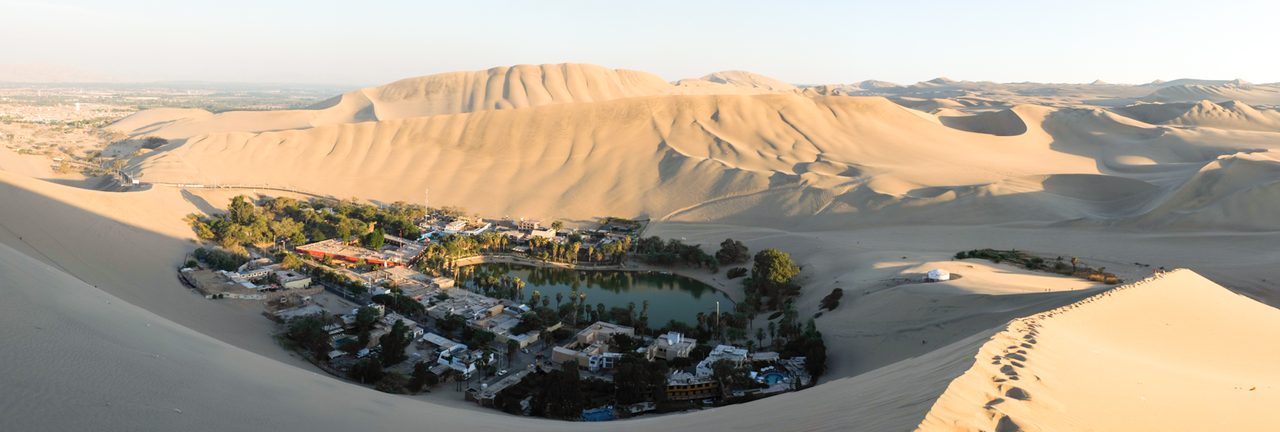
Huacachina is a lagoon with palm trees around it, about five hours south of Lima by bus, surrounded on all sides by dunes several hundred metres high. It is not a secret and it is not remotely authentic. It is also the single most fun two hours on the whole desert coast south of Lima, and I would rather do it twice than do a lot of things that cost five times as much.
The standard product is a two-hour buggy circuit with three or four sandboarding stops built in, sold from every hostel and street desk in Ica and Huacachina for roughly S/70–100, plus a couple of soles to enter the dune reserve. The buggy is the point. These are welded tube-frame machines with a big V8 up front, and the driver will launch them off dune crests at speeds that make the whole thing feel considerably less regulated than it looks in the brochure. Which, as it happens, is exactly right.
On the sandboarding: lie down. Nearly every injury at Huacachina comes from people trying to stand up, including confident snowboarders, because sand does not release an edge the way snow does and the run-outs are longer and faster than they look. Most operators wax the boards with candle stubs, which works fine. Go at 4pm for the light or at 8am to avoid everybody else. Midday is a hairdryer.
Two hours is enough. There is a small industry selling “full-day desert adventures” that add a winery stop and a lot of sitting around, and unless you want the pisco tasting, the short version is the better buy. If you have a spare day, Cerro Blanco near Nazca is a far bigger dune with a proper multi-hour hike to the top and a single enormous descent, and almost nobody does it.
Surfing: three coasts, three different trips
Peru has 2,400 km of coastline and one of the most consistent swell windows in the Pacific, and it is genuinely under-surfed given what is on offer. It splits into three.
Lima is where you learn. Makaha and Waikiki, at the bottom of the Miraflores cliffs, are gentle, forgiving, permanently crowded with schools, and about fifteen minutes from anywhere you might be staying. A lesson with board and wetsuit runs S/80–130 for around two hours. The water is cold, the sky is grey from May to October, and the beach is stones rather than sand. Punta Hermosa, an hour south, is the serious end of the Lima scene, and Pico Alto out there is a genuine big-wave spot that is nobody’s first surf trip. If you are stitching this into a city day, there is plenty else worth doing among the options around Lima once you have dried off.
Mancora and the far north is the warm-water trip. Water around 22–26°C, boardshorts, a long right point that works best on the northern swells from November to March, kitesurfing when the wind kills the surf, and a party scene that is either the reason you came or the reason you leave. It is a long way from everything else: 18 hours by bus from Lima or a flight to Talara or Piura. If you are going that far, look at what else is up there in the rest of Peru’s northern half, because the archaeology around Trujillo and Chiclayo is world-class and largely empty.
Chicama is the one surfers actually plan trips around. Officially Puerto Malabrigo, an hour or so north of Trujillo, it is a left-hand point break that peels for around 2.2 km on the commonly ridden section, with the full headland running to about 4 km. On a decent southern swell you can ride a single wave for two or three minutes, which is long enough that your legs give out before the wave does. Best from April to October. The water is cold and you will want a 3/2 wetsuit. There is a fleet of small boats and moto-taxis running surfers back to the top of the point for a few soles a lap, because paddling back is a twenty-minute job you will not want to do twice.
Paragliding over Lima’s cliffs
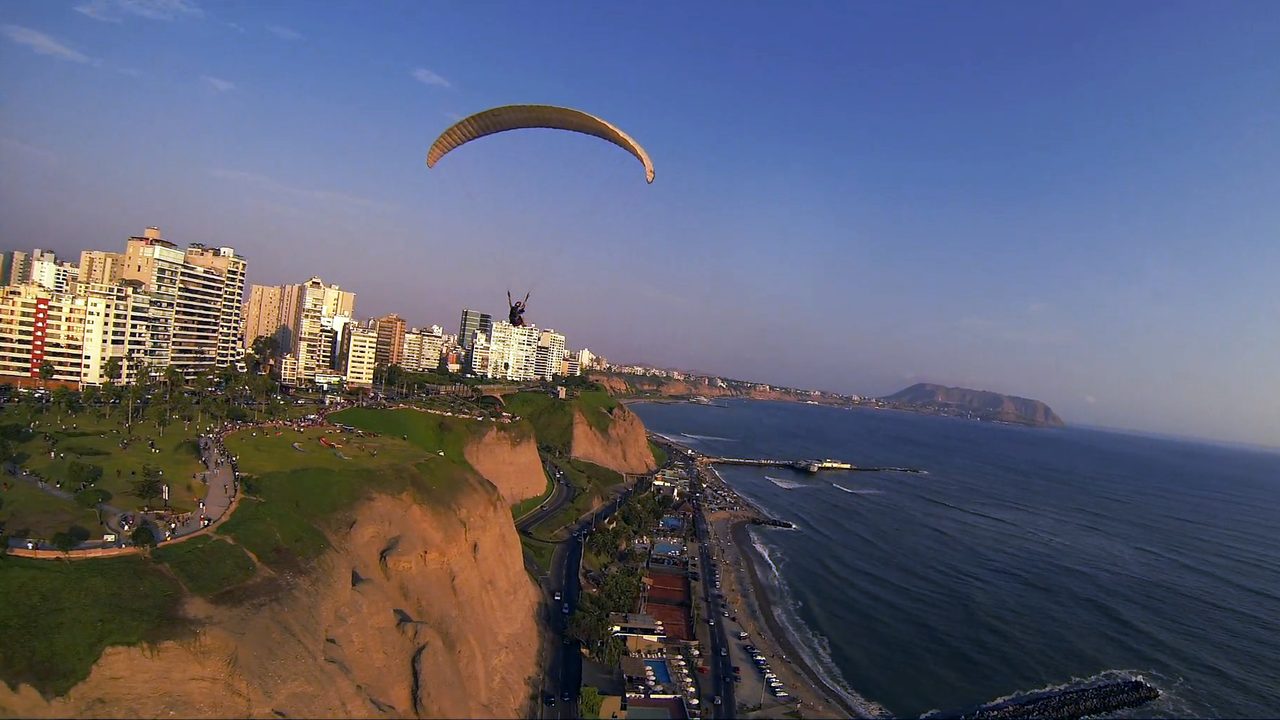
The tandem flights leave from the Parapuerto in Miraflores, on the cliff edge near Raimondi Park. You turn up with cash and a passport, there is no booking, and if the wind is not working they will tell you to come back tomorrow. Expect S/280–350 for ten to fifteen minutes, usually with a video thrown in.
Is it extreme? No. You are strapped to a pilot with a camera on a stick, drifting along a cliff line with the Pacific on one side and apartment blocks on the other. What it is, is a startlingly good way to understand Lima’s geography in a quarter of an hour, and per-minute it is one of the cheapest paraglide flights anywhere. Take it as a scenic flight rather than an adrenaline hit and you will not be disappointed.
The same sport exists more seriously elsewhere: Chinchero and the ridges above the Sacred Valley get thermal flights from April to October with proper altitude gain, and there are cross-country days out of Arequipa with the volcanoes as a backdrop. Both need better weather judgement than a Miraflores cliff soar and both cost more.
Whitewater rafting, from an afternoon to an expedition
Rafting in Peru covers an enormous range, and the gap between the ends of it is where people get hurt because they book the wrong one.
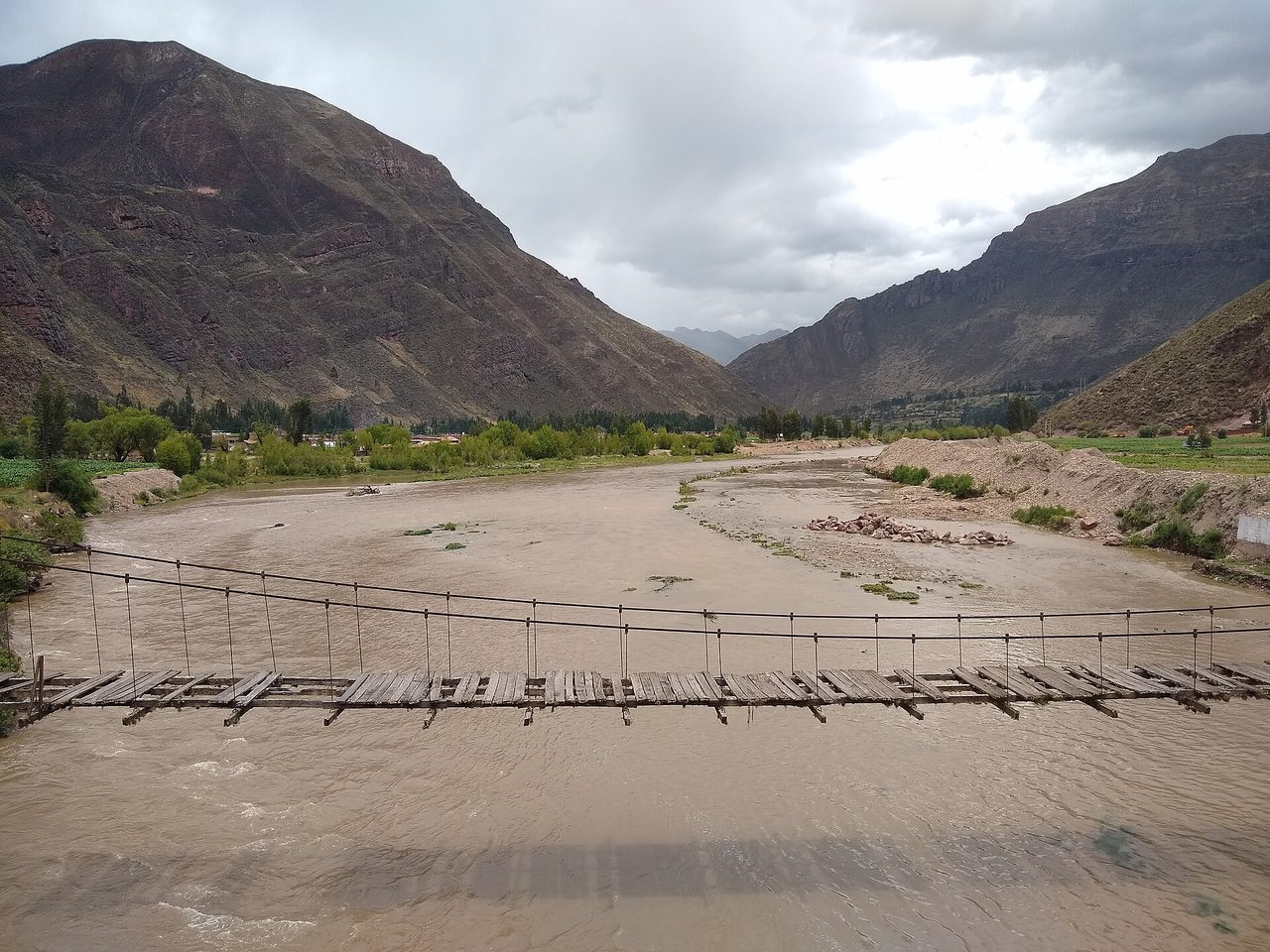
The Urubamba near Cusco is the day trip. The Chuquicahuana section upstream runs Class III–IV in the dry months and is the good one; the Cusipata and Ollantaytambo sections are milder Class II–III and suitable for anyone. US$45–90 including transfers, gear and lunch. One thing nobody in the sales office mentions: the stretch of river immediately downstream of Cusco receives the city’s outflow, and you do not want to swim in it. Ask precisely which section you are running and where the put-in is. If the answer is vague, book somewhere else. Rafting slots in neatly alongside the rest of the day trips run out of Cusco, most of which involve less swimming.
The Apurímac is the real thing. Three to four days through a granite canyon so deep and so roadless that the only way out is downstream, running Class IV with Class V sections depending on flow, camping on beaches, May to November only. Around US$400–650. It is one of the best multi-day river trips in South America and it is also the trip with the worst safety record in Peru. People have drowned on it. That is not an argument against going. It is an argument for going with the right company, and there are only a handful of outfits licensed for the Apurímac at all.
The Cotahuasi, out beyond Arequipa in the deepest canyon in the Americas, is a specialist expedition: a week and a half, a narrow April–May water window, portages, and a price north of US$2,000. Do not treat it as a step up from a day on the Urubamba. It is a different sport.
Mountain biking the Andes
Peru is quietly one of the best mountain-bike destinations on the continent and hardly anyone comes for it. The signature ride is Abra Málaga: a shuttle to the 4,316 m pass above Ollantaytambo, then a descent of 13 to 30 km depending on the route, dropping 1,500 to 2,500 vertical metres past glacier views, waterfalls and llamas into the warm end of the valley. The paved-road version is about US$109 for a half day and is genuinely accessible to anyone who can ride a bike. The singletrack version, which links old irrigation paths and Inca trails, is a proper technical day at US$130–180 and should not be booked casually.
The Lares descent is the other classic, 22 km from Abra de Lares at 4,461 m down to Calca through high grassland and terraced farmland. Maras and Moray by bike is the family option: rolling, low commitment, a good acclimatisation day.
Peru does not have Bolivia’s Death Road, but it does have the descent from Abra Málaga toward Santa María, which is the bike leg of the Inca Jungle route to Machu Picchu and is unpaved, steep and stacked with drop-offs. It is sold aggressively cheap in Cusco. That is precisely the problem. A lot of the budget operators put clients on bikes with worn brake pads, hand out half-shell helmets, and send them down a road with buses on it. If you want the Inca Jungle experience, and it is a good one, pay the difference for hydraulic disc brakes, a full-face helmet and a support vehicle, and know that it is only one of several routes into Machu Picchu.
Climbing and mountaineering in the Cordillera Blanca
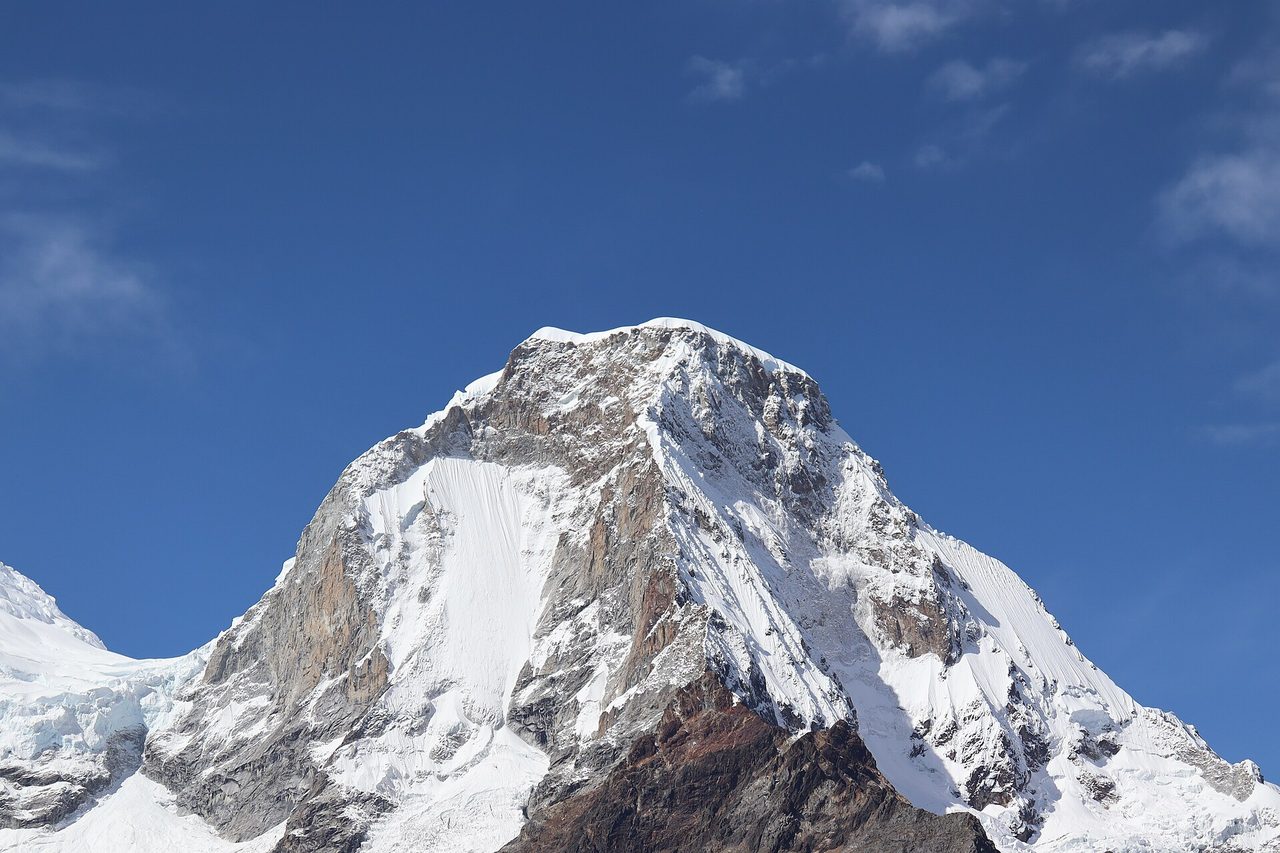
This is where Peru stops being a bucket-list destination and becomes a serious one. The Cordillera Blanca holds more than fifty peaks over 5,700 m in a range 180 km long, all reachable from Huaraz at 3,052 m, and the walk-ins are short by Himalayan standards. The season is tight: roughly mid-May to mid-August, with June and July the reliable window.
The ladder, roughly, goes like this. Nevado Mateo (5,150 m) and Urus Este (5,420 m) are introductory glacier days. Ishinca (5,530 m) and Pisco (5,752 m) are the standard first 5,000ers, non-technical but genuinely high, with Pisco offering one of the great summit panoramas anywhere. Tocllaraju (6,034 m) is the step up to a technical 6,000er with a steep summit headwall. Alpamayo (5,947 m) is the one people travel for, a fluted ice pyramid whose southwest face runs at 55 to 60 degrees for several hundred metres and which is not remotely a beginner objective despite what some agency windows imply. Huascarán Sur (6,768 m) is the highest point in Peru and a long, objectively hazardous slog.
Costs, small group: Pisco over three days around US$350–550 per person; a five-day Ishinca and Tocllaraju combination around US$1,200; Alpamayo typically US$1,500–2,500 over eight days or so. There is a Huascarán National Park entry fee on top, in the region of S/150–175 for a multi-day pass, and it changes. Private guiding runs roughly US$150–200 per day depending on the peak.
Two things have changed in the last decade and both matter. Glacial retreat has been severe here, which has widened bergschrunds, exposed loose rock on routes that used to be pure ice, and made some standard lines objectively more dangerous than the guidebook photo suggests. And the weather has become less predictable inside what used to be a dependable dry season. Neither is a reason not to climb. Both are reasons to take your guide’s call about turning around seriously.
Zip-lines, via ferrata and sleeping on a cliff
The Sacred Valley’s best-known attraction of this kind is a set of transparent capsules bolted to a cliff face about 400 m above the Urubamba, reached either by climbing a via ferrata up the wall or by a series of zip-lines. You sleep in the capsule, you eat dinner in the capsule, and you come down by zip-line in the morning. It costs roughly US$500–560 per person for the overnight package including transfers from Cusco and meals.
My honest reading: the via ferrata ascent is excellent and the capsules are a very expensive novelty. You are paying for a photograph and for the story. Also worth knowing before you commit: once you are up there you are up there, there is no walking down in the dark, and the toilet situation is a dry composting arrangement behind a curtain. If any of that bothers you, it will bother you a lot at 2am. If it does not, it is one of the more memorable nights available anywhere in the country, and it slots naturally into a couple of days spent working through the approach to Machu Picchu from the valley floor.
For pure zip-lining, the Cola de Mono circuit at Santa Teresa, on the back route into Aguas Calientes, is longer and higher than the Sacred Valley options: roughly 2,500 m across six cables with a section that runs 150 m above the canyon floor, for around US$35–55. Zip-lines are passive entertainment rather than sport, and I would not build a trip around one. As a two-hour add-on to a day you were spending in the area anyway, it is fine.
Kayaking on Lake Titicaca
Paddling a sea kayak out to the Uros floating islands at 3,812 m is harder than it sounds and better than it sounds. Harder because your lungs have roughly a third less oxygen to work with and paddling is an upper-body effort you will feel within ten minutes. Better because you arrive at the reed islands under your own power, in silence, ahead of the boat convoy, and the difference between that and stepping off a launch with forty other people is enormous.
Half-day trips run US$35–70 from Puno or from Llachón on the Capachica peninsula. Go in the morning without exception: the wind on Lake Titicaca reliably picks up after midday and the lake gets choppy and cold fast. Bring more sun protection than you think you need, because the combination of altitude and water reflection at that elevation burns people badly. And do not do this on your first day at altitude.
The southern coast question: sandboarding or the Nazca overflight?
Plenty of people passing down the coast have room for one, and the two are usually presented as equivalent. They are not.
The Nazca overflight is a 30 to 35 minute run over the geoglyphs in a small twin-engine aircraft that banks hard left and hard right over each figure so both sides of the cabin get a view. That is what causes the nausea, and the nausea is close to universal. Expect US$70–110 from Nazca’s own aerodrome plus about S/30 in airport tax, or US$180–260 for the longer flights from Pisco. The safety history is genuinely poor: fatal crashes in 2008, 2010 and again in February 2022. After the 2010 accident the aviation authority grounded most of the fleet and re-authorised only a small number of operators and aircraft, and standards did improve. It is not, in 2026, an unusually dangerous thing to do. It is also not nothing, and you should pick the airline on its record rather than on price.
My call: if you have a single slot and you want to enjoy yourself, Huacachina wins on fun per sol by a distance. If you have any interest in archaeology, the Lines are worth the queasiness, because there is genuinely no other way to see them; the roadside observation tower on the Panamericana shows you three figures at an oblique angle and is not a substitute. Do both if you can, and give yourself a day between them.
Safety and operator quality: the part nobody writes about
Here is the uncomfortable summary. Peru has decent regulations for adventure tourism and thin enforcement. The paperwork exists; whether the company standing in front of you holds it is a question you have to ask yourself, in person, before you pay. Nobody will be offended. The good operators expect these questions and answer them quickly, and the way a company reacts to being asked is itself the most useful signal you will get.
Rafting
Companies running commercial trips are required to hold a Certificado de Prestador de Servicios de Canotaje Turístico, and critically, that licence is issued for named rivers and named sections. A company licensed for the mild Cusipata run is not licensed to take you down Chuquicahuana. Ask which sections they hold. Ask whether a safety kayaker accompanies the trip, which should be non-negotiable on anything Class IV and up. Ask what first-aid and swiftwater rescue certifications the guides hold, and whether any of them are International Rafting Federation qualified. Check that the helmet and buoyancy aid they hand you actually fit before you get in the vehicle, and that there is a throw bag in the raft. On a multi-day expedition, ask what the satellite communication is and what the evacuation plan looks like from the middle of a canyon.
Mountain guides
The Asociación de Guías de Montaña del Perú (AGMP) is the national body, and it is a member of the international federation of mountain guide associations, the IFMGA (the same organisation you will see written as UIAGM or IVBV). A fully certified Peruvian high-mountain guide has been through a multi-year training and examination process and carries a carné with a number on it. There are not many of them. There are a great many more people in Huaraz selling climbs.
Ask for the guide’s name and carné number when you book, not on the morning of departure, and verify it. The Casa de Guías on Plaza Ginebra in Huaraz is the AGMP office and will confirm whether someone is on the register. Ask specifically who is guiding you, because agencies routinely advertise a certified name and send an aspirant or a strong porter. Ask about the client-to-guide ratio; on anything steep or crevassed, 2:1 is the sensible ceiling and 1:1 is better. And be suspicious of a quote that undercuts the field by 40 per cent, because the only variable cheap enough to cut is the guide.
Dune buggies, ATVs and anything with an engine
This is the least regulated corner of the lot. At Huacachina the buggies are supposed to be inspected and the drivers licensed; in practice the fleet varies enormously and some vehicles are older and more improvised than others. Look at the buggy before you get in. It should have a full roll cage, and the four-point harnesses should latch properly rather than being a lap belt someone has tied off. If the harness at your seat is broken, ask to move; if there is no seat with a working harness, walk away and book with someone else, of which there are dozens. Book through a hostel or an office with a physical address rather than from someone on the street, because if something goes wrong you need a company that still exists tomorrow.
Insurance, and the altitude problem
This is the single most commonly missed thing, and it is expensive to get wrong. A great many standard travel policies cap hiking cover at 3,000 or 4,000 m and exclude anything above 4,500 m outright. Look at what that excludes in Peru: Rainbow Mountain at 5,036 m, the Salkantay pass at 4,630 m, the Ausangate circuit, every summit in the Cordillera Blanca, most of the Huayhuash, and the higher passes on plenty of ordinary trekking itineraries. Several policies that do cover trekking to 6,000 m treat “mountaineering” with ropes, crampons or ice axes as a separate category requiring a paid rider.
Four questions to put to your insurer in writing before you go:
- What is the maximum altitude covered for trekking, and does that change if I am roped up or using crampons?
- Is search and rescue included, or only medical treatment once I have been recovered? Many policies exclude the rescue itself, which is the expensive part.
- Is whitewater rafting covered above Class III, and is it covered on multi-day expeditions?
- Are motorised off-road activities covered? Dune buggies and ATVs are excluded by a surprising number of policies.
Practical reality on the ground: helicopter evacuation in the Cordillera Blanca exists but is limited, and weather stops flights routinely. There is a small police high-mountain rescue unit based in the Callejón de Huaylas, and reputable guiding companies carry their own evacuation arrangements. Ask what yours are. This sits alongside the other practical things worth sorting before you fly, and it is the one people skip.
Fitting adventure into an actual trip
The single biggest planning error is stacking hard days at altitude in the first week. Cusco sits at about 3,400 m and Lake Titicaca higher still, and arriving from sea level to go rafting or biking on day two is how people end up with a headache that lasts their whole holiday. Give yourself two easy days in Cusco or, better, drop straight to the Sacred Valley at around 2,800 m and sleep lower while you adjust.
Geographically, these things do not cluster conveniently. Huacachina and Nazca sit on the coastal highway south of Lima. Huaraz is eight hours north of Lima and on the way to nothing else you are likely to want. Chicama is on the north coast. Cusco and the Sacred Valley are a flight away from all of it. Working out the hops honestly is the difference between a trip that flows and one that is mostly night buses, so it is worth reading up on how the buses and internal flights actually connect before you commit to a shape. A workable two-week route through the country can take in the coast, Cusco and one adventure hub, but not two hubs at opposite ends.
Seasons collide, too. The Cordillera Blanca climbing window and the Cusco dry season overlap neatly from May to August, which is also the busiest and most expensive time to be in Peru; the Chicama surf season sits inside the same months while the Mancora season is the opposite half of the year. If your dates are fixed, work out what the season actually gives you first and choose the activity to suit, rather than the other way around.
On budget: adventure days are the line item that quietly doubles a trip. Three US$100 activity days is US$300 on top of everything else, and the multi-day expeditions are a different order again. It is worth checking the numbers against a realistic view of what a Peru trip costs overall before you book four of them. Where you sleep matters less than you think for most of this, though Huaraz and Huacachina both reward being choosy, and the wider question of which bases are worth your nights is worth settling early.
What I would skip, and what is overrated
Not everything sold under this banner is worth your money.
The Nazca roadside observation tower is not a substitute for the flight and is a five-minute stop dressed up as an attraction. Horse riding in the Sacred Valley, unless you actually ride, is usually a slow walk in a line with a handler holding the rein. “Extreme” ATV tours to Maras and Moray are a shuttle bus with more dust and a helmet; the bike version is more fun and cheaper. Bungee jumping in Cusco is a short, expensive novelty with nothing Peruvian about it. And the cheapest Inca Jungle packages are cheap in exactly the places you would rather they were not.
Trekking deserves a word here because it is the biggest adventure category in the country and does not fit in this article. If walking for several days is what you are after, the permit-controlled classic route to Machu Picchu is only one of many options and not automatically the best one, and the alternatives around Huaraz, Ausangate and Choquequirao get a fraction of the traffic. That is a separate decision from everything above.
Questions people actually ask
What is the adventure capital of Peru?
Cusco has the most on offer within an hour’s drive, which makes it the practical answer for most travellers. Huaraz is the serious one: if you climb, ski-mountaineer or want multi-day high-altitude trekking, nothing else in the country is close — the country’s multi-day routes are compared separately. Huacachina is the fun one and takes half a day.
Can a complete beginner do this stuff?
Most of it, yes. Sandboarding, tandem paragliding, zip-lines, Class II–III rafting, the Maras bike ride and the Titicaca kayak all take beginners with no experience. What beginners cannot do is skip acclimatisation, and altitude is the actual limiting factor for far more people than technical difficulty. The things that genuinely require experience are Cordillera Blanca climbing above Pisco, multi-day Class IV+ rafting and technical singletrack.
Is white water rafting in Peru safe?
It is as safe as the company you pick, and the variance between companies is much wider than in North America or Europe. There have been fatalities on both the Urubamba and the Apurímac. A licensed operator running the correct section with a safety kayaker, certified guides and equipment that fits is a reasonable risk. A cut-price outfit running an unlicensed stretch is not, and from the street the two look identical.
Do I need a certified guide to climb in the Cordillera Blanca?
Legally you can climb independently, and experienced parties do. Practically, if you are not already competent on glaciers, crevasse rescue and steep snow, hire an AGMP-registered guide and verify the registration. The peaks are high, the glaciers have changed fast, and the rescue infrastructure is thinner than the mountains’ popularity would lead you to expect.
What should I wear and pack for a mixed adventure trip?
Layers, because you will be at 30°C on the coast and below freezing before dawn at altitude in the same fortnight. Proper sunglasses and high-factor sunscreen matter more at 4,500 m than anywhere you have been. A 3/2 wetsuit if you are surfing south of Trujillo. Old clothes for Huacachina, because sand gets into everything. The general layering approach that works at Machu Picchu works for most of the country.
Is there anything adventurous to do at Machu Picchu itself?
Two peaks inside the site can be climbed with a timed ticket: the steep, exposed staircase up Huayna Picchu and the longer, higher haul up Machu Picchu Mountain. They are hiking rather than climbing, but Huayna Picchu in particular is not for anyone unhappy with drops. The choice between the two summit hikes at the citadel comes down to fitness and how much you dislike exposure. Note that the circuits including either peak cost more: the general foreign adult entry currently sits at S/163, and circuits with Huayna Picchu or Machu Picchu Mountain at S/211, though these figures move and the official ticketing portal is the only place to trust on the day.
Is the Amazon an adventure destination or a wildlife one?
Mostly wildlife, with adventure trimmings. Canopy walkways, night boat trips and canoe paddles are the standard fare, and they are enjoyable but they are not adrenaline. Go to the Peruvian Amazon for the biodiversity and the strangeness of the place, not because you want a rush, and pick your lodge on its guiding rather than its pool.
Where does all this fit among everything else in Peru?
Adventure is one thread among several, and most people weave it into a trip that is also archaeological and, inevitably, culinary; the country’s food is a genuine reason to visit in its own right. If you are still assembling the shape of the trip, the wider survey of what there is to do across Peru is the place to start, and this page is what you come back to once you know you want the version with a helmet.