Best Things to Do in Cusco
A ranked take on Cusco, not a list of thirty attractions: what the Boleto Turístico really covers, which sites are safe on day one at 3,400 m, and the two things I would skip.
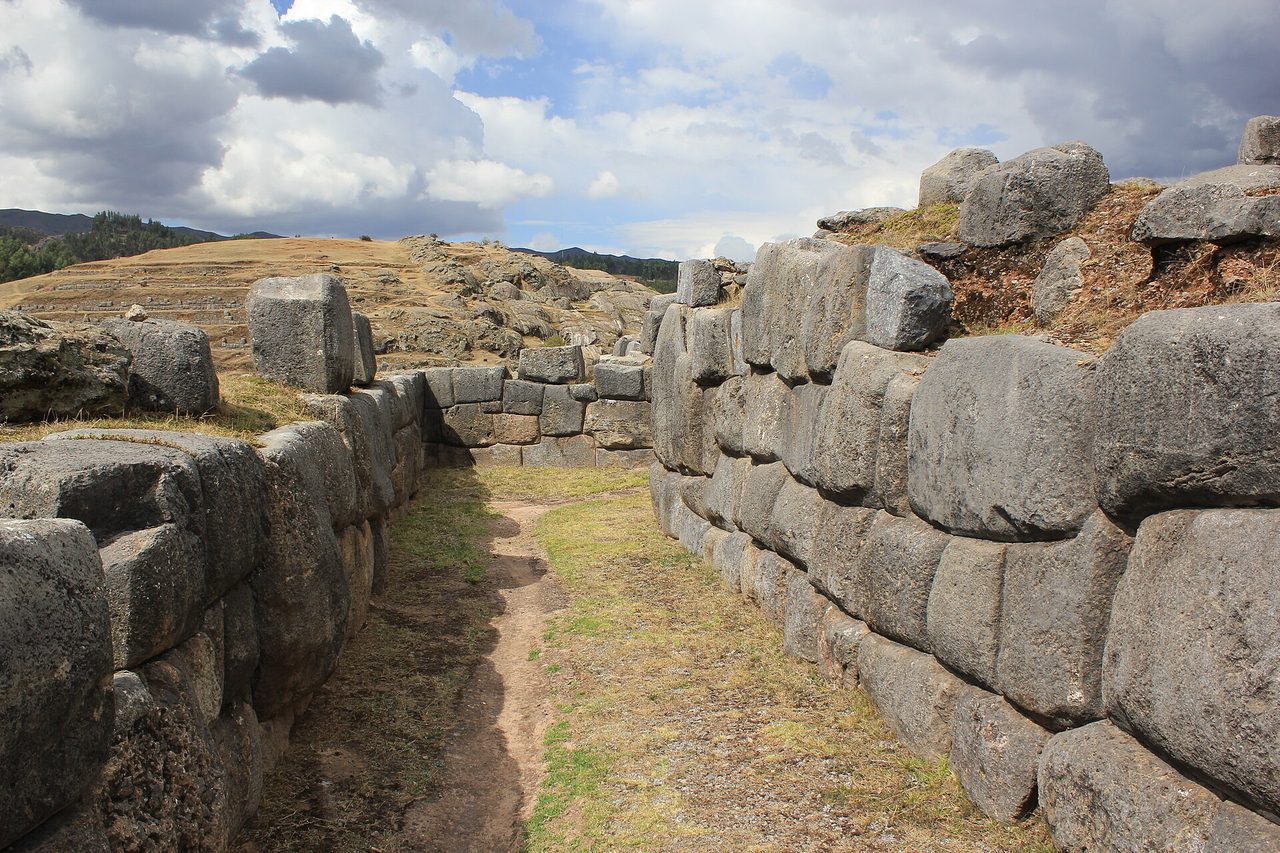
The single most useful thing I can tell you about Cusco is that the city will happily eat six days of your itinerary and hand you back four days of genuinely good memories and two days of standing in a queue to look at a stone. So this is not another list of thirty attractions. This is a ranked, opinionated run through the best things to do in Cusco, in the order I would actually do them, with the ones I would skip named out loud and the reasoning made explicit.
Two things shape that ranking more than anything else, and almost nobody writing about Cusco puts them first.
The first is the Boleto Turístico. Cusco does not sell individual tickets for most of its headline archaeological sites. If you want to walk into Sacsayhuamán, you buy a multi-site pass or you do not go in. Meanwhile three of the things travellers most expect to be on that pass — the Cathedral, the main Qorikancha temple, and San Pedro market — are not on it at all. Getting this wrong costs money and, worse, costs you a morning.
The second is altitude. Cusco sits at roughly 3,400 metres. Sacsayhuamán is another 300 metres above that. If you fly in from Lima at sea level and go straight uphill, you will spend day two in a dark room with a headache. The correct order of the list is not “most famous first”. It is “lowest first”. That constraint is the reason this guide is structured the way it is, and it is the main thing a category-sorted list of attractions cannot give you.
If you want the wide-angle version of the city — where to stay, where to eat, nightlife, the full sweep of day trips — the broader Cusco city guide covers all of it. What follows is the triage.
The short version: my ranking
If you only read one section, read this one. Sites are grouped by whether they earn their place, not by category.
Tier 1 — do these even on a short trip. Sacsayhuamán. Walking San Blas without a plan. Qorikancha. San Pedro market at 8am. The Museo de Arte Precolombino. The Cathedral, if colonial religious art interests you at all.
Tier 2 — good, but only if you have three days or more. The three small sites above the city (Q’enqo, Puka Pukara, Tambomachay) done as one loop and not as three separate outings. Cristo Blanco. The San Cristóbal viewpoint. The nightly folk dance show at the Centro Qosqo de Arte Nativo. Museo Machu Picchu Casa Concha. The Planetarium, on a clear night, if you actually like astronomy.
Tier 3 — skip unless it is raining and you have run out of ideas. The twelve-angled stone. The ChocoMuseo, which is a shop with a workshop attached. The Museo de Arte Popular and the Museo Municipal de Arte Contemporáneo, both of which are on the tourist ticket and both of which you will forget within a week. Any “Inca massage” sold to you by someone holding a laminated card in the Plaza de Armas.
Now the reasoning, starting with the ticket, because the ticket determines what the rest of your days can even contain.
The Boleto Turístico problem, solved
The Cusco Tourist Ticket — Boleto Turístico, sold by a regional body called COSITUC — is a combined admission pass. It exists because the region wanted to fund minor museums by attaching them to major ruins. The consequence for you is that several of the sites you have flown across the world to see have no gate price of their own.
What it costs and what it covers
There are two shapes of ticket.
The full ticket (Boleto Turístico General) costs S/130 for a foreign adult, roughly US$35, and is valid for 10 days across 16 sites. Students and under-18s pay around S/70 with acceptable photo ID. Children under 10 generally go free with a passport as proof of age.
The partial circuits cost S/70 each, again roughly US$19, and each covers one cluster of sites over a short window:
- Circuit I — valid 1 day. Sacsayhuamán, Q’enqo, Puka Pukara, Tambomachay. The four sites in the hills directly above the city.
- Circuit II — valid 2 days. The city museums (Museo de Arte Popular, Museo Histórico Regional, Museo Municipal de Arte Contemporáneo, the Qorikancha site museum, the Centro Qosqo de Arte Nativo dance show, the Pachacutec monument) plus Tipón and Pikillacta in the South Valley.
- Circuit III — valid 2 days. Pisac, Ollantaytambo, Chinchero and Moray. This is the Sacred Valley circuit.
Prices have been stable at S/130 and S/70 for several years, but COSITUC has revised them before and has been threatening an electronic ticket since 2022 without ever shipping one. Confirm the number at the counter on Avenida El Sol before you plan around it.
The trap: what the ticket does not include
This is where people lose money. The Boleto Turístico does not cover:
- Cusco Cathedral. It belongs to the Archdiocese, which runs its own separate religious circuit ticket. Nothing to do with COSITUC.
- The main Qorikancha temple and Santo Domingo convent. This one catches almost everybody, because there is a “Museo de Sitio del Qorikancha” on the tourist ticket. It is a small, dim, underground archaeology museum across the gardens. It is not the temple. The temple — the curved Inca masonry everyone photographs — is a separate paid entry.
- San Pedro market. Free to walk into, so nothing lost, but people genuinely ask.
- Machu Picchu, which is a completely separate national ticketing system. If that is on your list, the current pricing and circuit rules are covered in the guide to Machu Picchu entrance tickets.
- The best museums. Museo de Arte Precolombino, Museo Inka, Casa Concha and the Coca Museum are all independent. The museums that are on the ticket are, with one exception, the weakest in the city.
- The Maras salt pans (a separate S/10 at the gate) and Rainbow Mountain.
The other trap: sites you cannot pay for at the gate
Sacsayhuamán, Q’enqo, Puka Pukara, Tambomachay, Pisac, Ollantaytambo, Chinchero, Moray, Tipón and Pikillacta have no standalone admission. There is no S/20 door price. You either hold a valid boleto or you look at the walls from outside the fence.
You can buy the ticket at the gate of most included sites, which softens the blow, but only in cash, in soles. No cards, no dollars, no phone payments, at the sales office or the site entrances. Turning up at Sacsayhuamán with a Visa card and forty US dollars is a wasted taxi ride. Draw cash before you go up.
Where to buy it, and what to bring
The main COSITUC office is at Avenida El Sol 103, Galerías Turísticas, open roughly 08:00 to 18:00 daily; the DIRCETUR tourist information office on Calle Mantas, just off the Plaza de Armas, also sells it. Bring your passport — you need it to buy, and you may be asked for it again at site gates, particularly if you bought a discounted rate. Tickets are non-refundable and non-transferable, and validity starts the day you buy, not the day you first use it. Do not buy it three days early to save a queue.
The decision rule
Here is how I would actually choose, and it takes about ten seconds.
Buy the full S/130 ticket if you are spending four or more days based in Cusco and you intend to see both the ruins above the city and at least two Sacred Valley sites. Pisac plus Ollantaytambo plus Sacsayhuamán alone gets you past the value of two partial tickets, and the 10-day window means you can spread it across an acclimatisation-friendly schedule instead of cramming. Anyone doing a proper loop through the Sacred Valley towns and terraces is in this category.
Buy Circuit I (S/70) if you have two or three days in Cusco, you want Sacsayhuamán, and the Sacred Valley is either not happening or is happening on an organised tour where entries are already bundled. Be careful with the one-day validity: it means Sacsayhuamán and the other three sites all have to happen between one sunrise and one sunset.
Buy Circuit III (S/70) if you are based in the valley rather than the city, or you are doing the valley as a self-driven two-day trip and skipping the hill ruins.
Buy nothing if you have 48 hours in Cusco, you are here mainly as a staging post for Machu Picchu, and your interest in Inca stonework will be fully satisfied by the site itself. In that case you spend your money on the Cathedral, Qorikancha and the Museo de Arte Precolombino, walk San Blas for free, and put S/130 towards a better dinner. This is a completely defensible choice and no guide ever tells you so.
Do not buy Circuit II. It is the museum circuit, and with the exception of the nightly dance show at the Centro Qosqo de Arte Nativo, it is the weakest S/70 in the city. If Tipón and Pikillacta specifically interest you — and Tipón’s Inca water engineering genuinely is remarkable — you are better off getting the full ticket and treating the museums as a bonus.
Altitude first: why the order of this list matters
Cusco is at about 3,400 metres. Lima is at sea level. The flight between them takes 90 minutes. That is a faster ascent than any mountaineer would ever attempt deliberately, and your body notices.
What that feels like for most people is a dull frontal headache, breathlessness on stairs that would not register at home, poor sleep on the first night and a complete absence of appetite. It is not dangerous at Cusco’s elevation for the overwhelming majority of travellers. It is, however, extremely good at ruining a day you have paid for.
The practical consequence: your first day in Cusco should stay at or near plaza level. Not because sightseeing is forbidden, but because every metre you climb on day one is a metre your body has to pay for on day two.
Elevations, so you can plan properly
- Plaza de Armas and the historic centre: ~3,400 m
- San Blas, upper streets: ~3,450–3,500 m
- Sacsayhuamán: ~3,700 m
- Cristo Blanco: ~3,600 m
- Tambomachay: ~3,700 m
- Machu Picchu: 2,430 m — nearly a kilometre lower than Cusco
- Rainbow Mountain: ~5,200 m
That Machu Picchu figure surprises people constantly. The famous site is not the high-altitude part of your trip. Cusco is. So is the Sacred Valley bus ride that crosses a 3,700 m pass on the way to Pisac.
Day one: safe
Plaza de Armas. The Cathedral. The Iglesia de la Compañía next door. Qorikancha, which sits downhill from the plaza on Avenida El Sol. San Pedro market, ten flat-ish minutes west. The Museo de Arte Precolombino, two blocks north on level ground. A long coffee. Coca tea if you want it, though its effect is mild and mostly ritual.
Every one of those is within 400 metres of the plaza and involves no sustained climbing. That is a genuinely full, genuinely good day, and it is the reason the ranking below leads with the flat stuff.
Day one: not safe
Sacsayhuamán on foot. The San Cristóbal steps. Rainbow Mountain, which at 5,200 m is an aggressive undertaking even after a week of acclimatisation and which agencies will cheerfully sell you for tomorrow morning. Any trek. Any bicycle. Heavy drinking at altitude, which hits roughly twice as hard and dehydrates you exactly when you cannot afford it.
If you have come up from Lima or from the coast, give it 24 hours. If you have come from Puno or La Paz, you are already acclimatised and can ignore all of this. Practical altitude advice for the whole country sits in our Peru travel tips, and the counter-intuitive move — sleeping two nights in the Sacred Valley at 2,800 m before coming up to the city — is worth considering if your Peru itinerary has the flexibility.
Tier 1: the best things to do in Cusco
These six earn their place on any itinerary of two days or longer. They are ordered by when to do them, not by how famous they are.
1. San Pedro market, before 9am
Cost: free. On the Boleto? No, and it does not need to be. Time: 45–90 minutes. Altitude effort: none, it is flat and ten minutes west of the plaza.
I put this first because it is the best possible day-one activity: no climbing, no ticket, no queue, and it recalibrates your sense of what things cost before anyone in the Plaza de Armas gets a chance to quote you a tourist price.
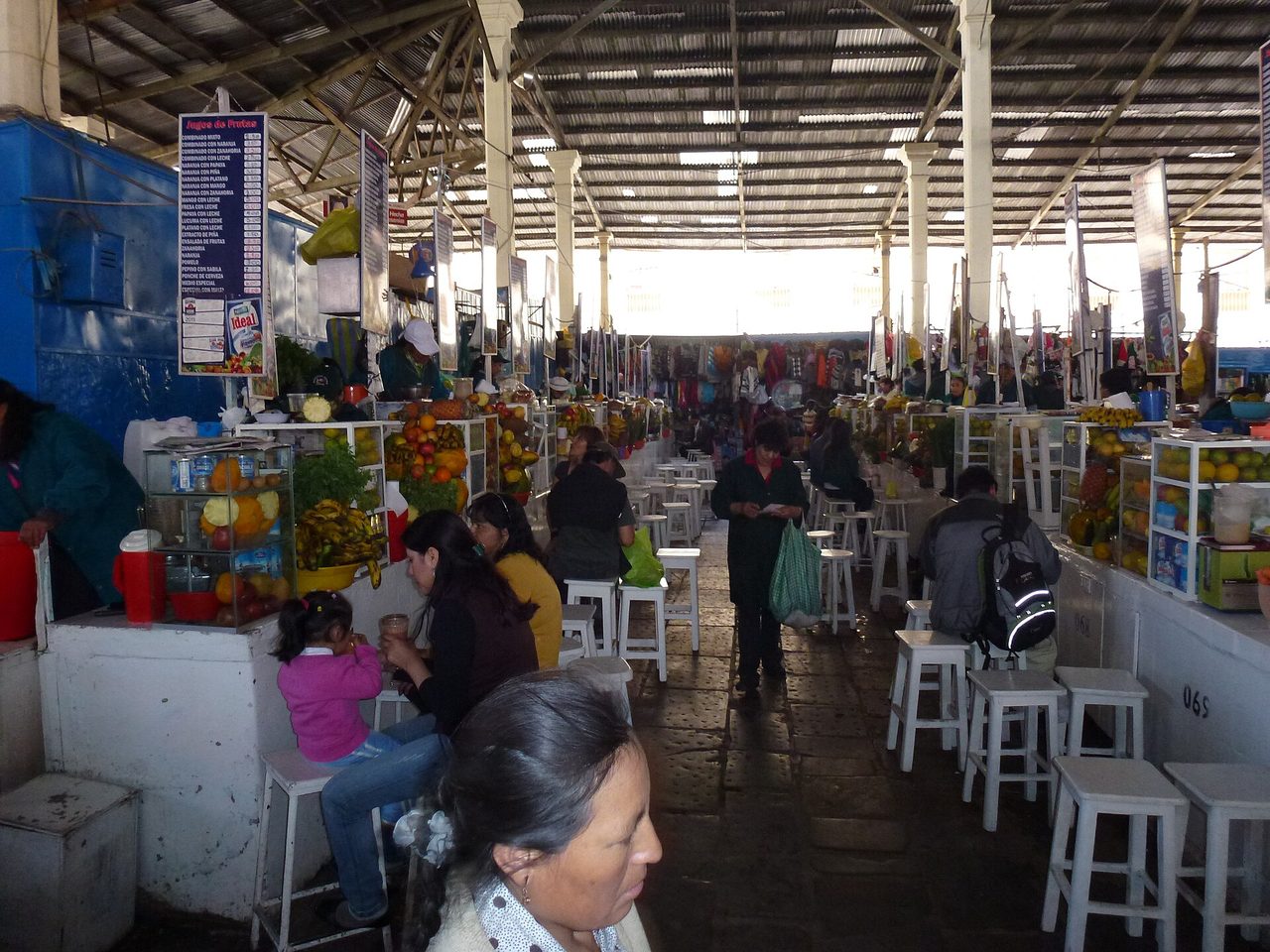
Mercado San Pedro opens early — roughly 06:30 or 07:00 — and runs to about 18:00, with a shorter Sunday. Go early. By 11am the tour groups arrive and the aisles turn into a shuffling queue. Before 9am it is still a working market: butchers laying out cuts, women stacking forty varieties of potato, the bread section smelling of anise.
The juice aisle is the thing. There are around a hundred numbered stalls, each with a laminated price board, each squeezing to order into a tall glass and topping it up from the blender for free when you finish. A large mixed juice runs somewhere in the region of S/8–12. Sit on the stool. Do not walk and drink.
Two honest notes. First, the covered food court at the back serves excellent, extremely cheap soup and mains, but it is a genuine gamble on a stomach that has been at altitude for eight hours. Give it until day two or three. Second, the alpaca-wool section at the market edge is mostly acrylic. If you want real alpaca, buy it in San Blas or from a certified textile centre, and expect to pay several times the market price for it. If you want to understand what you are eating before you order, our guide to Peruvian food and what to order where is worth ten minutes.
2. Qorikancha
Cost: around S/15 for adults, roughly S/8 for students with valid ID. Sources quote anywhere from S/15 to S/25, so carry a little more than you expect to spend. On the Boleto? No — and this is the single most common misunderstanding in Cusco. Time: 60–90 minutes. Altitude effort: minimal; it is downhill from the plaza.
Qorikancha was the Inca empire’s principal temple, walls reportedly sheathed in gold plate, and the Spanish built the Santo Domingo convent directly on top of it rather than knocking it down. What survives is the best-preserved Inca masonry in the city and, more interesting than the masonry itself, the clearest visible argument about what the conquest actually did: colonial arches sitting on trapezoidal Inca doorways, a curved Inca wall carrying a Dominican cloister.
Opening hours run roughly 08:30 or 09:00 to 17:30 Monday to Saturday. Sunday is genuinely unclear — some sources list a shortened afternoon opening, others say it closes entirely, and I have seen it reported both ways in the same year. Do not build a Sunday around it.
The confusion to avoid: the Museo de Sitio del Qorikancha, an underground museum in the gardens on the Avenida El Sol side, is on the tourist ticket. The temple is not. They are different buildings, roughly a hundred metres apart, and people routinely turn up with a boleto, get waved into the small museum, look at some ceramics, and leave thinking they have seen Qorikancha. They have not.
Worth it? Yes, comfortably. If you have any interest in how the Inca built — the seismic-resistant taper of the walls, the joints you cannot slide paper into — this is where you see it at close range without a two-hour bus ride. It pairs naturally with the wider story told across Peru’s major Inca sites.
3. Cusco Cathedral
Cost: expect S/25–40 for a foreign adult; students with a valid university card pay roughly half. On the Boleto? No. It sits on the Archdiocese’s separate religious circuit ticket. Time: 45–75 minutes. Altitude effort: none.
Be aware that the price here is genuinely inconsistent across sources. S/40 is the figure most commonly quoted for general admission; the Archdiocese also markets a combined religious circuit — Cathedral, San Blas church, the Archbishop’s Palace museum and San Cristóbal — at a lower per-site rate. Check the board at the door rather than trusting any published figure, including this one.
General visiting hours are roughly 10:00 to 18:00. Between about 06:00 and 10:00 the doors are open for worship and entry is free, but you are there as a congregant, not a tourist: no wandering, no photography, and areas are roped off.
What you are paying for: the Cusco School paintings, several hundred of them, produced by indigenous and mestizo artists trained in European technique who quietly inserted Andean content into Catholic subjects. The famous one is Marcos Zapata’s Last Supper, in which the dish on the table is a roasted guinea pig. There is also the Señor de los Temblores, a dark-skinned crucifix credited with stopping the aftershocks of the 1650 earthquake and still the focus of the city’s Holy Week procession. The silver main altar and the cedar choir stalls are genuinely fine objects.
Photography is prohibited inside, and it is enforced. Shorts and vest tops will get you turned away.
My honest verdict: this is the one Tier 1 entry I would drop if you have limited time and no interest in religious art. S/40 is a lot for a building you will move through in forty minutes if the paintings do not hold you. But if colonial art is your thing, it is the strongest single collection in the country outside Lima.
4. San Blas, on foot, without an itinerary
Cost: free. On the Boleto? Not applicable. Time: half a day if you let it. Altitude effort: moderate — steep cobbles and steps, day two rather than day one.
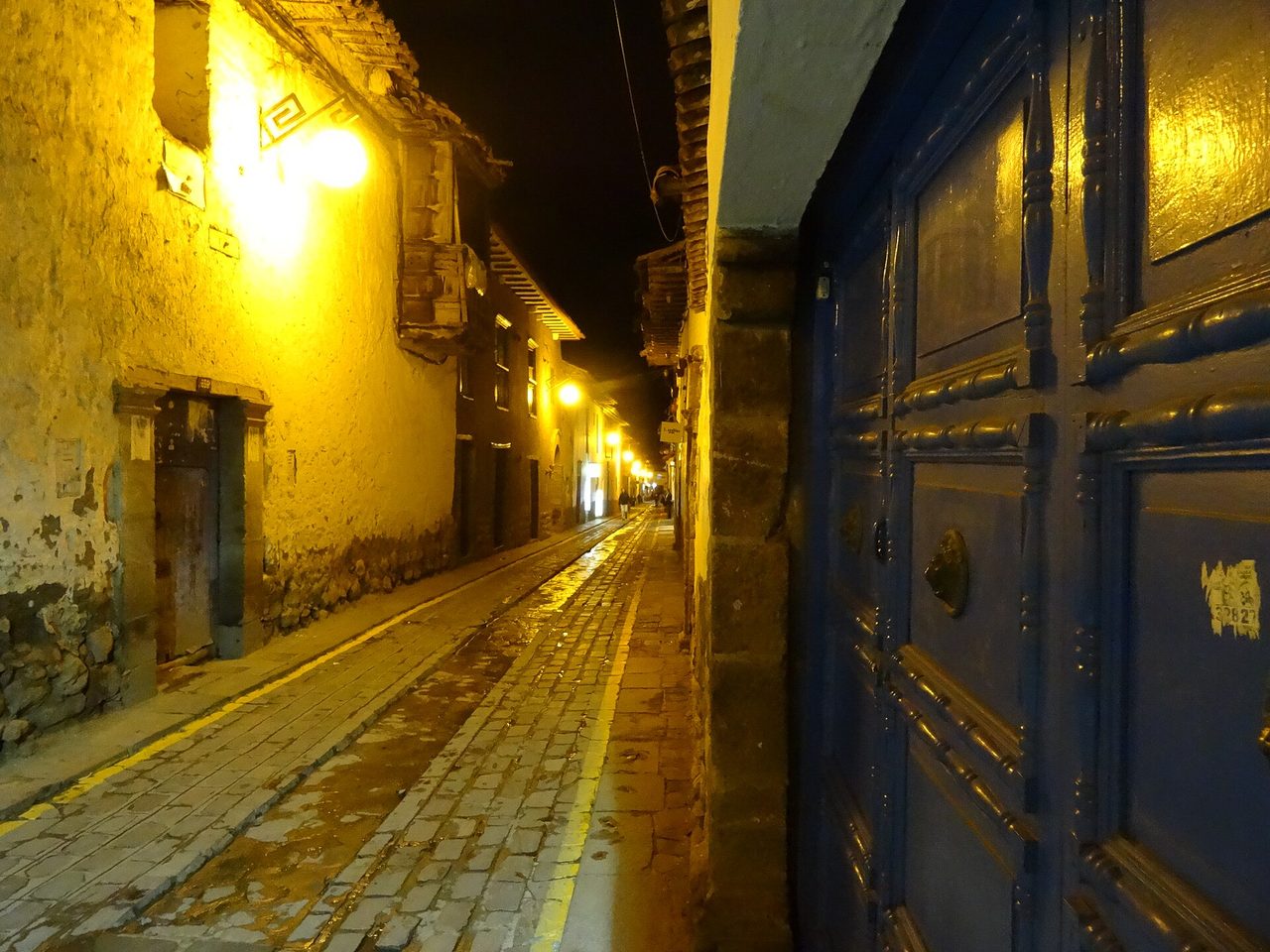
San Blas is the artisan quarter uphill and northeast of the plaza, and it is the part of Cusco I would go back for. Not because of any single sight, but because the street plan is Inca, the walls are frequently Inca at the base and colonial above, and the whole thing is small enough to get lost in for two hours without ever being lost.
Do not plan it. Walk up Cuesta de San Blas from Hatunrumiyoc, keep going until you hit the plazoleta, then pick lanes at random. Siete Borreguitos, Siete Angelitos and Carmen Alto are the ones people photograph. The Sapantiana aqueduct, a colonial-era arched structure tucked into a small park below San Blas, is a five-minute detour and almost always empty.
The Templo de San Blas on the plazoleta holds a carved cedar pulpit that art historians regard as one of the finest pieces of wood carving in the Americas. It carries a modest entry fee as part of the religious circuit. The workshops around the square are a mix of genuine artisans and resale shops; the tell is whether anyone is working in the back.
One practical warning: those cobbles are lethal in the rain, and the gradient is real. At 3,450 metres a five-minute climb will have you stopping to breathe, which is normal and not a sign of anything wrong. Schedule this for your second full day.
5. Museo de Arte Precolombino
Cost: around S/20 for foreign adults, roughly S/10 for foreign students. On the Boleto? No. Time: 60–90 minutes. Altitude effort: none.
If you are going to pay for exactly one museum in Cusco, pay for this one. The MAP sits in a colonial mansion on Plaza de las Nazarenas, two flat blocks from the cathedral, and it does something almost no other museum in Peru does: it presents pre-Columbian objects as art, in clean rooms, with proper lighting and short, well-written labels in English, rather than as an undifferentiated pile of pottery behind glass.
The collection is drawn from the Larco holdings in Lima and covers Nasca, Moche, Chimú, Huari and Inca work across a dozen rooms. It takes about an hour and you will remember it. Hours are generally around 09:00 to 16:00, though it has run later in high season — check on the day if you are cutting it fine.
The contrast with the museums that are on the tourist ticket is stark, and it is the clearest illustration of why the Boleto’s museum tier should not drive your decisions.
6. Sacsayhuamán
Cost: Boleto only — S/70 Circuit I or S/130 full. There is no individual ticket. On the Boleto? Yes, and only on the Boleto. Time: 2–3 hours including the walk up. Altitude effort: significant. ~3,700 m and a 250-metre climb from the plaza.
This is the best thing to do in Cusco and it is also the thing most likely to flatten you if you attempt it on day one.
The scale is the point. Three tiers of zigzag rampart built from limestone blocks fitted without mortar, the largest weighing in the region of 100 to 300 tonnes depending on whose estimate you take, moved and shaped with stone hammers and inclined planes. Roughly 80 per cent of the original structure was quarried by the Spanish to build colonial Cusco. What survives is the base course — the part too heavy to carry away.
The site opens at 07:00 and closes around 17:30. Go at opening. The organised city tours arrive between 09:00 and 10:00 and again at 14:00, and the difference between an empty rampart at 07:15 and the same rampart at 10:00 is the difference between a great morning and a queue for a photograph.
Getting there. Walking takes 25–35 minutes from the Plaza de Armas, up Calle Suecia or Pumacurco then Resbalosa. It is steep, and at this altitude that matters more than the distance suggests. A taxi is 10 minutes and should cost around S/10–15 — agree it before you get in, since nothing in Cusco is metered. Colectivos heading up the Pisac road will drop you for a couple of soles.
The clever move: take a taxi to Tambomachay, the furthest of the four Circuit I sites, and walk back downhill through Puka Pukara, Q’enqo and Cristo Blanco to Sacsayhuamán, then down into the city. That is roughly 8 km, all of it losing altitude, and it converts four separate underwhelming stops into one genuinely good half-day. Nobody sells this as a tour because there is nothing to sell.
Worth it? Unambiguously. Even after Machu Picchu, the masonry here is more impressive at close range than anything at the more famous site, and the story of what it once was — and who took it apart — is more legible on the ground. If Inca engineering is the reason you came to Peru, read the history behind the Inca sites before you go up; it changes what you notice.
Tier 2: good, if you have the days
Q’enqo, Puka Pukara and Tambomachay — the honest verdict
Cost: Boleto only. Time: 15–25 minutes each. Altitude effort: high — all three sit around 3,600–3,750 m.
I am going to be blunt, because every tour operator in Cusco sells these three as a headline and none of them will tell you this: individually, they are underwhelming.
Q’enqo is a carved limestone outcrop with zigzag channels cut into the rock, probably for ritual libations, and a small internal chamber with an altar. It is genuinely interesting for about fifteen minutes and it is the best of the three.
Puka Pukara is a modest terraced structure, most likely a checkpoint or waystation on the road into the city. It is small. You will be back at the road in a quarter of an hour.
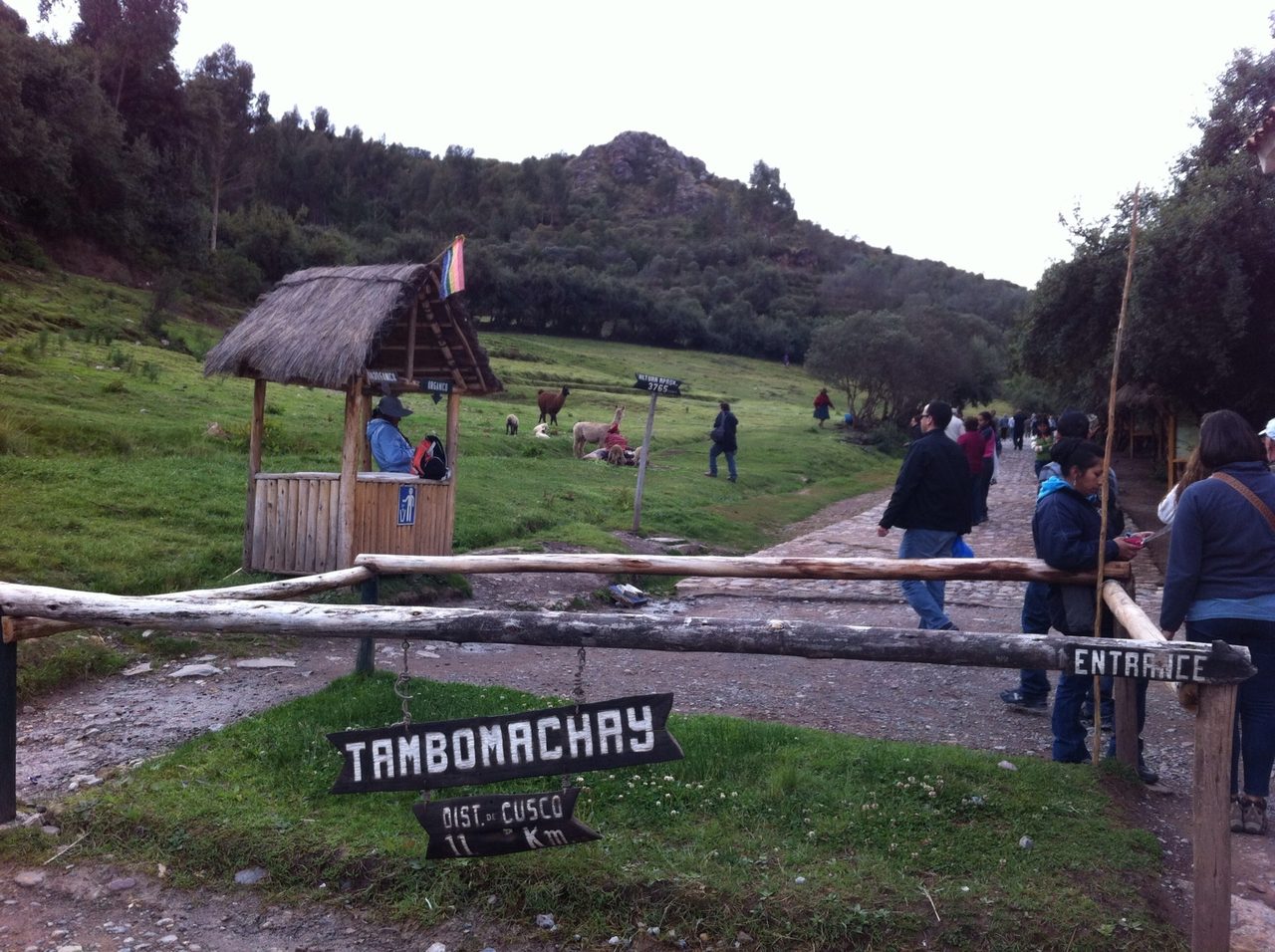
Tambomachay is a set of terraces and channels where spring water still runs through Inca stonework after five centuries, which is quietly impressive as a piece of hydraulic engineering. It is also four terraces and a queue. The site sign puts it at 11 km from Cusco and around 3,765 m.
Here is the thing: as three separate stops on a coach tour, punctuated by twenty-minute drives and a shopping stop at an alpaca showroom, they are a disappointing afternoon. Chained together as a downhill walk from Tambomachay to Sacsayhuamán, with the countryside and the views doing the heavy lifting between sites, they are excellent. Same sites, completely different day. The format is the problem, not the ruins.
Would I buy Circuit I purely for these three? No. I would buy it for Sacsayhuamán and treat these as included extras.
Cristo Blanco
Cost: free. On the Boleto? Not needed. Time: 20 minutes. Altitude effort: moderate if walking from Sacsayhuamán, high from the city.
An eight-metre white Christ figure on the hill above the city, given to Cusco by the Palestinian Arab community that settled here after the Second World War. As a statue it is unremarkable. As a viewpoint it is one of the best in the city, particularly in the hour before sunset when the terracotta roofs go orange and you can see the whole bowl of the valley.
It is a 5–10 minute walk from the Sacsayhuamán car park, which makes it free and effectively unavoidable if you are already up there. Do not make a special trip for it and do not pay for a tour that lists it as an attraction.
Evening safety note: the walking path down to the city after dark has a reputation for opportunistic robbery. Take a taxi down if you stay for sunset, and expect to pay S/15–20 for the ride because the driver knows you have no alternative.
The San Cristóbal and San Blas viewpoints
Cost: free (S/10 or so if you want the San Cristóbal bell tower). Time: 30–60 minutes. Altitude effort: moderate.
San Cristóbal is about 20 minutes uphill from the Plaza de Armas and gives you the classic postcard angle over the city. The Mirador de San Blas is closer and easier. Both are free, both are better in the late afternoon, and neither requires a ticket, a guide or a booking. If you are on a strict budget, these are the highest-value half-hours in Cusco.
Centro Qosqo de Arte Nativo
Cost: included on the Boleto (Circuit II and the full ticket). Time: one hour. Altitude effort: none.
A nightly folk dance and music performance at 19:00, running about an hour, on Avenida El Sol. It is the one item on the Boleto’s museum circuit that justifies its place, and if you have bought the full ticket you should absolutely use it — you have already paid. Costumes and choreography are regional and well presented. It is a performance for visitors, not a ceremony, and it does not pretend otherwise.
Museo Machu Picchu Casa Concha
Cost: around S/20. On the Boleto? No. Time: an hour. Altitude effort: none.
This houses the artefacts Hiram Bingham removed from Machu Picchu in 1911 and Yale returned to Peru a century later. Bones, ceramics, tools, and a clear-eyed account of the excavation and the long dispute over the material. If you are visiting Machu Picchu, an hour here beforehand will make the site itself far more legible — and it answers the question of what was actually found there better than anything you will hear from a guide on the mountain. Anyone weighing up the trip should also read our take on whether Machu Picchu lives up to the hype.
The Cusco Planetarium
Cost: varies sharply by operator — roughly S/50 to S/85 per person, sometimes bundled with hotel pickup. On the Boleto? No. Time: two to three hours including transfers. Altitude effort: low, but it is cold at night.
The Planetarium is outside the city and visits run only as guided evening sessions, typically departing from central Cusco around 17:00–19:00 depending on season. You get a talk on Andean cosmology — which is genuinely interesting, because the Inca read the dark spaces in the Milky Way as animal constellations rather than joining bright stars into shapes — then a dome projection, then telescope time if the sky is clear.
Two honest caveats. First, the price spread is wide and the cheaper listings and the expensive ones are not obviously buying you different things; shop around. Second, in the wet season, roughly November to March, cloud cover regularly cancels the telescope portion and you are left with the talk and the dome. If the sky is clouded over at 17:00, do not go. In the dry season, on a clear night, at this altitude, with almost no light pollution, it is one of the better night skies you will ever look at.
Bring a proper coat. Cusco nights drop close to freezing from May to August, and this is an outdoor activity dressed up as an indoor one.
Tier 3: what to skip
Nobody else will tell you this, so I will.
The twelve-angled stone
It is a stone. In a wall. On Calle Hatunrumiyoc, three minutes from the plaza.
It is, admittedly, a very good stone: a single block cut with twelve separate angles to interlock with its neighbours, dry-fitted so precisely that the joints are barely visible. As a demonstration of Inca stonemasonry it is remarkable. As a visitor experience it is a queue of fifteen people on a narrow pavement, a man in Inca fancy dress standing beside it waiting to be photographed for a tip, and forty seconds of looking.
Cost: free. Time: five minutes including the queue. Verdict: walk past it on the way to San Blas, which you will do anyway since it is on the same street, take your photo, and keep going. Do not build a plan around it and do not pay for a walking tour that treats it as a highlight. The same wall continues for another eighty metres with equally impressive stonework that has no queue at all.
The ChocoMuseo
Let us be accurate about what this is: it is a chocolate shop with a small free exhibition attached and a paid workshop out the back. Calling it a museum is marketing. The free part takes ten minutes and consists of information panels about cacao that you could read on a phone.
The bean-to-bar workshop is the actual product, runs about two hours, and costs in the region of US$33–34 per person, roughly S/120. You roast beans, grind them, make a cup of colonial-style drinking chocolate and mould some chocolates to take away. Children love it. Adults who have done a cooking class before will find it thin for the money.
Verdict: skip the “museum”, and only book the workshop if you are travelling with kids or it is raining and you have run out of options. If you want a genuinely good food experience in Cusco for similar money, book a market-to-table cooking class instead — you will learn more and eat better.
The tourist ticket’s weakest museums
The Museo de Arte Popular and the Museo Municipal de Arte Contemporáneo are both on the Boleto and both are, respectfully, filler. The Museo de Sitio del Qorikancha is small, dim and has been closed for stretches in recent years. The Monumento Pachacutec is a statue on a roundabout with a staircase inside it and a view; pleasant, not a destination.
None of these are scams. They are simply what the region attached to the ticket to justify its price. Visit them if you have the full boleto and a spare rainy hour. Do not buy Circuit II to see them.
The paid thing I would call a rip-off
Since I promised one: the “Inca massage” sold on the Plaza de Armas by touts with laminated cards.
The pitch is a quoted price — often S/30–50 for an hour, sometimes less — for a service delivered in an upstairs room you have not seen, by a practitioner whose training you cannot verify, arranged by someone working on commission. What is commonly reported: the advertised hour becomes forty minutes, the price quoted on the street becomes a different price at the counter, and the “full body massage with hot stones and sauna” on the card becomes a series of upsells once you are on the table.
Cusco has genuinely good, properly licensed spas, and they charge what a proper massage costs. If you want one, look up a place with a real address and real reviews, walk in during daylight, and agree the price and duration at the desk before you commit. The saving on the street version is not real and the downside is not worth it.
Cusco attractions compared
Everything above, in one table. “Altitude effort” is the thing to read if you are on your first or second day.
| Attraction | Cost / on the Boleto? | Time needed | Altitude effort | Verdict |
|---|---|---|---|---|
| San Pedro market | Free — not on ticket | 45–90 min | None (3,400 m, flat) | Best day-one activity in the city |
| Qorikancha temple | ~S/15–25 — not on ticket | 60–90 min | None (downhill) | Do it. The masonry is the best in the city centre |
| Cusco Cathedral | ~S/25–40 — not on ticket | 45–75 min | None | Worth it for the Cusco School paintings; skippable otherwise |
| San Blas quarter | Free — not applicable | 2–4 hours | Moderate — steep cobbles | The part of Cusco I would return for |
| Museo de Arte Precolombino | ~S/20 — not on ticket | 60–90 min | None | The one museum to pay for |
| Sacsayhuamán | Boleto only (S/70 or S/130) | 2–3 hours | High — 3,700 m, 250 m climb | The best thing to do in Cusco. Not on day one |
| Q’enqo | Boleto only | 15–20 min | High — ~3,600 m | Best of the three small sites. Walk it, don’t bus it |
| Puka Pukara | Boleto only | 15 min | High — ~3,700 m | Small. Included extra, not a destination |
| Tambomachay | Boleto only | 20–25 min | High — ~3,765 m | Start the downhill walk here |
| Cristo Blanco | Free — not needed | 20 min | Moderate from Sacsayhuamán | Great view, unremarkable statue. Don’t pay for it |
| San Cristóbal viewpoint | Free (~S/10 bell tower) | 30–60 min | Moderate — 20 min uphill | Best free half-hour in Cusco |
| Centro Qosqo de Arte Nativo | Included on the Boleto | 1 hour | None | Use it if you hold the full ticket |
| Casa Concha museum | ~S/20 — not on ticket | 1 hour | None | Do it before Machu Picchu, not after |
| Planetarium | ~S/50–85 — not on ticket | 2–3 hours | Low, but cold | Dry season and a clear sky only |
| Twelve-angled stone | Free | 5 min | None | A stone in a wall, with a queue. Walk past it |
| ChocoMuseo | Free entry; workshop ~US$33 | 10 min / 2 hours | None | A shop with a workshop attached. Kids and rain only |
| Plaza “Inca massage” | S/30–50 quoted, more paid | — | — | The rip-off. Use a licensed spa instead |
Free things in Cusco that are actually worth doing
Cusco is expensive by Peruvian standards and the ticketed sites add up fast. These cost nothing.
- Plaza de Armas at 07:00. Before the touts start and before the tour groups form, with the light hitting the cathedral front. Completely different square.
- San Pedro market, as above. Free to enter, and a juice is under S/12.
- The San Cristóbal and San Blas viewpoints, late afternoon.
- Calle Loreto and Calle Hatunrumiyoc. Two of the best-preserved Inca street walls anywhere, free, and much better appreciated by walking the full length than by queueing at the famous stone.
- The Sapantiana aqueduct, a short walk below San Blas and usually deserted.
- The Centro de Textiles Tradicionales del Cusco on Avenida El Sol. Free entry, working weavers on site, and an honest explanation of what real handwoven alpaca costs and why. Worth twenty minutes before you buy anything anywhere.
- Sunday morning in the plaza, when the flag ceremony and civic parade take over the square. No ticket, no schedule to check, and more genuinely local than most things you could pay for.
- The church of La Merced’s nave, which is free even though its convent museum is not.
If keeping costs down is a priority for the whole trip, our breakdown of what a Peru trip actually costs and the cheapest legitimate way to reach Machu Picchu are the two pages that will save you the most money.
Money, touts and pricing: what to expect on the ground
None of this is a reason to be nervous. Cusco is not a dangerous city for visitors. It is, however, a city where a large number of people make their living from short transactions with tourists, and knowing the going rate removes most of the friction.
Photos with llamas and alpacas
Women in traditional dress walk baby alpacas and llamas around the Plaza de Armas and the top of Cuesta de San Blas. Photographing them is a transaction, and the transaction should be agreed before the shutter.
What locals give is S/2–5 for a few photos. What visitors are frequently asked for afterwards is S/20–50, and the reported version of this that goes furthest is the “free” offer that becomes a demand for a substantial sum per frame once the photos exist.
The fix is simple: ask the price first, in soles, hold up the note you intend to give, and only then take the photograph. Have small change — nobody has change for a S/100 note and “I have no change” is how the price goes up. If you object on animal welfare grounds, which is a reasonable position, simply decline and walk on.
The massage touts
Covered above. They are not a physical threat and they are not aggressive; they are persistent. A firm “no, gracias” without breaking stride works. Making eye contact and smiling does not.
“Free” walking tours
The free walking tours that leave from the plaza are not free. The model is that the guide is paid entirely by tips, and the expectation at the end is on the order of S/20–40 per person. That is fine, and a good guide earns it, but budget for it rather than being surprised by the envelope at the end.
Two things to check before joining one. First, whether the route ends at a shop or a jewellery workshop, which is a commission arrangement rather than a tour. Second, whether the guide is licensed — official guides carry a MINCETUR credential, and Peru does require accreditation for guided visits at the major archaeological sites.
Taxis and getting around
No taxi in Cusco is metered. You agree the fare through the window before you open the door, in soles, and you do not get in until you have.
- Within the historic centre: S/8–12 for most trips.
- Up to Sacsayhuamán: S/10–15.
- Airport to the centre: the official counter inside arrivals charges roughly S/35–55. A street taxi from outside the terminal will start at S/25–30 and settle around S/15–25 if you negotiate. The counter is the low-stress option; the street is the cheap one.
- Bus terminal to the centre: around S/12.
- Ride-hailing: InDrive and Uber both operate in Cusco with varying coverage. InDrive lets you name your own fare, which removes the negotiation entirely and is usually a sol or two cheaper than a street cab. Coverage thins out at night and in the upper neighbourhoods.
The historic centre itself does not need transport. Almost everything in Tier 1 is within a fifteen-minute walk of the Plaza de Armas — it just happens to be fifteen minutes of cobbles at 3,400 m. For the longer legs between cities, our guide to travelling around Peru by bus, plane and train covers the options and the operators worth using.
Cash, cards and the small stuff
Carry soles in small denominations. The Boleto Turístico offices, site gates, market stalls, colectivos and most taxis are cash-only, and site gates specifically will not take cards or dollars. ATMs in the centre are plentiful but charge a fee per withdrawal on top of your bank’s, so draw larger amounts less often. Restaurants and hotels in the centre take cards without trouble.
The downhill ruins walk, step by step
I have referred to this route three times, so here it is properly. It is the single best half-day in Cusco, it costs nothing beyond your boleto and one taxi fare, and no agency sells it because there is no margin in it.
Start: take a taxi from the Plaza de Armas to Tambomachay, 11 km out on the Pisac road. Agree S/25–35 before you get in; it is a 20–25 minute drive. Aim to be at the gate for opening, around 07:00. Bring cash for the boleto if you do not already have one, plus water, sun cream and a warm layer for the first hour.
Tambomachay (~3,765 m, 20 minutes). Terraces, niches and spring water still running through Inca channels. Look at the water first, then the joints in the stonework, then leave.
Puka Pukara (~3,700 m, 15 minutes). Directly across the road, five minutes on foot. A terraced waystation with a good view back down the valley. Quick.
Puka Pukara to Q’enqo (about 4 km, 50–70 minutes). This is the stretch that makes the walk. You follow the road down through open country with the city appearing and disappearing below you. There is very little traffic before 09:00. If your legs give out, any colectivo heading downhill will stop for a couple of soles.
Q’enqo (~3,600 m, 20 minutes). A carved limestone outcrop with zigzag ritual channels and a chamber cut into the rock beneath. Go inside; most people do not.
Q’enqo to Cristo Blanco (about 1.5 km, 20 minutes). Easy, mostly flat, then a short rise.
Cristo Blanco (~3,600 m, 15 minutes). The view over the whole bowl of Cusco. Free.
Cristo Blanco to Sacsayhuamán (10 minutes downhill).
Sacsayhuamán (~3,700 m, 90 minutes to 2 hours). You should arrive somewhere between 09:30 and 10:30. That is not the emptiest possible hour, but it is far better than the standard tour timing and you have earned the arrival rather than being deposited at it. Walk the full length of the three ramparts, then up onto the flat parade ground and across to the rounded rock formations on the far side, where almost nobody goes and where local families come at the weekend to slide down the polished stone.
Sacsayhuamán to the Plaza de Armas (30 minutes, steeply downhill, via Resbalosa). Emerges near San Cristóbal, which puts you at the top of the old town for lunch.
Total: roughly 8 km, four archaeological sites, five to six hours door to door including stops, and a net descent of about 350 metres. Compare that with the standard afternoon coach tour, which covers the same four sites in four hours, in the wrong direction, at the busiest time of day, with a mandatory stop at an alpaca showroom. One taxi fare and a pair of shoes with grip buys you a substantially better day.
The one caveat: this is a lot of walking at altitude and it should not be attempted before your third day, or your second at the absolute earliest if you have arrived from somewhere already high.
What a day in Cusco actually costs
Useful for deciding whether the boleto makes sense, and for anyone planning the wider budget. These are 2026 ballpark figures for a mid-range independent traveller, in soles, with rough dollar equivalents at about S/3.7 to the dollar.
| Item | Typical cost | Notes |
|---|---|---|
| Menú del día lunch | S/15–30 (US$4–8) | Soup, main, drink. Off the plaza, not on it |
| Dinner, mid-range restaurant | S/45–90 (US$12–24) | Plaza-facing places charge a premium for the view |
| Large fruit juice, San Pedro | S/8–12 | Refill included |
| Coffee | S/8–15 | Cusco has a real coffee scene now |
| Taxi, centre | S/8–12 | Agree first, always |
| Boleto Turístico, full | S/130 (US$35) | 10 days, 16 sites |
| Boleto Turístico, partial circuit | S/70 (US$19) | 1–2 days depending on circuit |
| Qorikancha | ~S/15–25 | Separate ticket |
| Cathedral | ~S/25–40 | Separate ticket |
| Museum entry, independent | S/8–20 | MAP, Museo Inka, Casa Concha |
| Licensed guide at a site | S/40–80 per group | Hired at the gate, negotiable, worth it at Sacsayhuamán |
| “Free” walking tour tip | S/20–40 per person | Not optional in practice |
| Sacred Valley group day tour | S/60–120 plus entries | Entries are almost never included |
A realistic independent day in Cusco — two meals, a coffee, one taxi and one paid site — lands around S/110–160, or US$30–43, before accommodation. That figure roughly doubles if you take an organised day tour, and it is the reason the ticket maths matters: S/130 is a full day’s budget.
Guided or independent?
Cusco is one of the few places where I would pay for a guide selectively rather than never or always.
Worth guiding: Sacsayhuamán, because the site is largely unsignposted and 80 per cent of it is missing, so without someone explaining what you are looking at you are staring at a very large wall. Licensed guides wait at the entrance and charge S/40–80 for a group of any size — split between four people that is trivial. The Cathedral is similar; the paintings do not explain themselves.
Not worth guiding: San Blas, San Pedro market, the viewpoints, the twelve-angled stone, and the city walking tour in general. These are self-evident, and the walking tours are increasingly routed through commission shops.
Check the credential. Peru requires accredited guides at its major archaeological sites, and the man who approaches you in the plaza offering a private tour of Sacsayhuamán for S/20 is usually not one. Ask to see the MINCETUR card. A real guide will produce it without taking offence.
How to sequence it: 2, 3 and 4 day plans
The ranking above only pays off if you put it in the right order. These plans assume you arrive from sea level, which is the case for most people flying in from Lima.
Two days in Cusco
Buy nothing. No boleto.
Day 1 (flat). San Pedro market before 9am. Coffee. Qorikancha, about S/15. Lunch somewhere unambitious. Museo de Arte Precolombino in the afternoon, S/20. Plaza de Armas at dusk. Early night, plenty of water, no alcohol.
Day 2 (some climbing). Cathedral at opening if colonial art interests you, otherwise straight to San Blas via Hatunrumiyoc. Walk the quarter slowly. Lunch in San Blas. San Cristóbal viewpoint late afternoon. If you feel completely fine, taxi up to Sacsayhuamán and buy Circuit I at the gate — but only if you feel completely fine, and accept you are paying S/70 for one site.
Total site spend: about S/35, or S/105 if you add Sacsayhuamán. This is a good two days and you have not been ripped off once.
Three days
Buy Circuit I (S/70) on day two, or the full ticket if a Sacred Valley trip is happening later in the week.
Day 1. As above.
Day 2. Cathedral, San Blas, viewpoints, Casa Concha in the afternoon if it is wet. Early dinner.
Day 3. The downhill ruins walk. Taxi to Tambomachay for 08:00, walk down through Puka Pukara and Q’enqo to Cristo Blanco, then Sacsayhuamán by mid-morning before the tour buses, then down into the city on foot. You will be back for a late lunch having covered four archaeological sites and 8 km of countryside, mostly downhill, and you will have seen Sacsayhuamán at a civilised hour.
Four days or more
Buy the full S/130 ticket on arrival. Days 1–3 as above, then use days four onwards for the valley.
Day 4. Pisac in the morning — ruins first, market second, because the ruins empty out by 11am and the market does not. Chinchero in the afternoon if you have transport.
Day 5. Ollantaytambo and Moray. Ollantaytambo is the one Sacred Valley site I would not miss, and it doubles as the town you will leave from if you are taking the train onward.
That uses eight of the sixteen sites on the ticket, which is where the full boleto clearly beats two partials. And it puts you in the valley at 2,800 m for a couple of days, which is better acclimatisation for what comes next than staying high in the city.
Where Machu Picchu fits
Not on day one, and not on day two. Not because of the altitude at the site — Machu Picchu is at 2,430 m, nearly a kilometre lower than Cusco — but because the day is long, starts before dawn, and involves a train, a bus and a lot of steps, and you do not want to spend it recovering from your arrival.
Day three at the earliest, day four or five ideally. The logistics of doing it from the city are set out in our guide to the Machu Picchu day trip from Cusco, and if you are still deciding how long to allow, how many days you actually need for Machu Picchu covers the honest version. Trains no longer run from Poroy just outside the city; the practical departure points are Ollantaytambo and Urubamba, which the rail options and operators guide explains in detail.
Current entry is S/163 for a foreign adult, or S/211 for the circuits that include Huayna Picchu or Machu Picchu Mountain, following a conservation surcharge added in May 2026. Student and minor rates sit around S/88, and Andean Community adults pay roughly S/69. The daily cap is 4,500 visitors, rising to 5,600 on designated peak dates, and since June 2024 the site runs on three circuits and ten fixed routes, one-way and enforced by rangers. If you are choosing between the two summit add-ons, the comparison of Huayna Picchu and Machu Picchu Mountain is the deciding read. Prices and rules move — check the official portal before you book.
When to go, and what time of day
Season
The dry season runs roughly May to September: cold clear mornings, sun by mid-morning, night temperatures near freezing in June and July. This is when Cusco looks the way it does in photographs and it is also when it is busiest and most expensive.
The wet season is roughly November to March. It does not rain all day — the pattern is bright mornings and heavy afternoon showers — but the cobbles get slippery, the ruins get muddy, viewpoints get clouded out, and the Planetarium becomes a coin flip. February is the wettest month and is also when the Inca Trail closes for maintenance. April and October are the two shoulder months and are, in my view, the best value: mostly dry, noticeably quieter, lower prices.
The one date that overrides everything is 24 June, when Inti Raymi fills the city and Sacsayhuamán. It is spectacular and accommodation is booked out months in advance at inflated rates. Either plan for it deliberately or avoid the week entirely. Our month-by-month breakdown of the best time to visit Peru covers how the seasons differ between the highlands, the coast and the jungle, which matters if Cusco is one stop on a longer route.
Time of day
Cusco has a rhythm and working with it is the cheapest upgrade available.
- 06:30–09:00. The plaza is empty, San Pedro is a working market, and Sacsayhuamán has nobody on it. This is the best three hours of the day and almost every visitor sleeps through them.
- 09:30–12:00. Coach tours peak. Avoid Sacsayhuamán, the twelve-angled stone and the Cathedral in this window.
- 12:00–14:30. Lunch, and the quietest time inside the museums.
- 14:30–16:30. The second tour wave hits the ruins.
- 16:30–18:30. Golden hour. Viewpoints, San Blas, Cristo Blanco. Come down before it gets dark.
What to wear
Layers, and more of them than you expect. The temperature swing between 07:00 and 13:00 in the dry season is dramatic — near freezing at dawn, T-shirt weather by lunch, cold again by 18:00. Sun protection matters more than it feels like it should; UV at 3,400 m is brutal even when the air is cold, and a sunburn is a common first-day mistake. Shoes with grip, not fashion trainers, because the cobbles are polished and steep. If Machu Picchu is on the plan, our packing advice for Machu Picchu applies to Cusco too.
What to do with the days beyond the city
This guide is deliberately about Cusco itself, because most lists pad themselves with day trips that are really separate destinations. But three are worth naming, with honest time costs.
The Sacred Valley is the strongest addition and the one I would prioritise over anything else. Pisac and Ollantaytambo are more complete as sites than anything within the city limits, and the valley floor is a thousand metres lower, which helps you rather than hurts you.
Rainbow Mountain is a 5,200 m walk after a pre-dawn drive of three hours each way. It photographs extraordinarily well and it is genuinely hard, and a large number of people who buy it on day two of their trip do not make it to the top. Give it day four at the earliest. If you want serious walking in this region, the multi-day options in our rundown of Peru’s best treks are a better use of the same effort, and the classic route itself is covered in the Inca Trail guide.
Humantay Lake is a shorter version of the same bargain: long drive, steep hour-long climb, spectacular turquoise payoff. Same acclimatisation caveat.
Cusco also sits at a natural pivot in a longer route — south towards Arequipa and the Colca canyon, east to Lake Titicaca, or down into the Amazon lowlands at Puerto Maldonado, which is a 45-minute flight and an entirely different country climatically. Where the city fits in the national picture is set out in our overview of the places in Peru most worth your time.
Frequently asked questions
Is the Cusco Tourist Ticket worth it?
It depends entirely on how many days you have. At S/130 for 16 sites over 10 days, the full ticket works out at roughly S/8 a site and clearly pays for itself if you visit eight or more — which means combining the ruins above the city with at least two Sacred Valley sites. If you are in Cusco for 48 hours, it is poor value and you should pay individually for the Cathedral, Qorikancha and one museum instead. The partial circuits at S/70 each are worth it only for Circuit I (Sacsayhuamán) or Circuit III (Sacred Valley). Circuit II is the museum circuit and I would not buy it.
Can you visit Sacsayhuamán without the tourist ticket?
No. There is no individual entrance ticket for Sacsayhuamán, Q’enqo, Puka Pukara, Tambomachay, Pisac, Ollantaytambo, Chinchero or Moray. You must hold either the S/70 partial circuit or the S/130 full ticket. You can buy the ticket at the site gate, but only with cash in Peruvian soles — no cards, no dollars.
Is the Cusco Cathedral included in the Boleto Turístico?
No. The Cathedral is run by the Archdiocese of Cusco, entirely separately from COSITUC, and has its own admission — expect somewhere between S/25 and S/40 for a foreign adult. The Archdiocese also sells a combined religious circuit ticket covering the Cathedral, the San Blas church, the Archbishop’s Palace museum and San Cristóbal. Qorikancha’s main temple is not on the tourist ticket either, though the small site museum in its gardens is.
How many days do you need in Cusco?
Three full days is the minimum that lets you acclimatise properly and see the city without rushing. Four to five if you want the Sacred Valley as well. Two days is enough for the flat sights but forces an uncomfortable choice about Sacsayhuamán. Anyone including Machu Picchu should budget five to six days in the region in total.
What can you do on your first day at 3,400 metres?
Anything within a few hundred metres of the Plaza de Armas that does not involve sustained climbing: the plaza itself, the Cathedral, Qorikancha, San Pedro market, the Museo de Arte Precolombino, sitting in a café doing very little. Avoid Sacsayhuamán, the San Cristóbal steps, any trek, and alcohol. Drink far more water than feels necessary. Most people feel substantially better on the morning of day two.
What are the best free things to do in Cusco?
San Pedro market, the San Cristóbal and San Blas viewpoints, walking the Inca walls on Calle Loreto and Hatunrumiyoc, the Sapantiana aqueduct, the free textile centre on Avenida El Sol, Cristo Blanco if you are already at Sacsayhuamán, and the Plaza de Armas at seven in the morning. That is most of a good day without a ticket.
Are Q’enqo, Puka Pukara and Tambomachay worth visiting?
Individually, no — each takes 15 to 25 minutes and none of them will stay with you. Collectively, yes, if you walk between them downhill from Tambomachay to Sacsayhuamán instead of doing them as three coach stops. The walk is the attraction; the sites punctuate it.
How much should I pay for a photo with a llama?
Two to five soles for a few photos is what a local would give. Agree it before you take the picture, have the note in your hand, and never accept an offer described as free. Requests of S/20–50 after the fact are common and you are under no obligation to pay them.
How much is a taxi in Cusco?
Nothing is metered, so agree the fare first. S/8–12 for most trips inside the historic centre, S/10–15 up to Sacsayhuamán, and S/35–55 from the official counter at the airport (or S/15–25 for a negotiated street taxi outside the terminal). InDrive removes the haggling.
Is Cusco worth visiting if you are not going to Machu Picchu?
Yes, and it is a more interesting city than that question implies. Sacsayhuamán, Qorikancha, the Inca street walls and San Blas would justify three days on their own in any other country, and the Sacred Valley is a stronger cluster of archaeological sites than most visitors realise. Cusco is treated as a staging post because of what lies beyond it, not because the city lacks substance.
Is Cusco safe?
For ordinary travel, yes. The realistic risks are opportunistic — pickpocketing in crowded markets, phone snatching after dark, the walking path down from Cristo Blanco at night, and unlicensed taxis flagged on the street late. Standard precautions cover almost all of it: taxi rather than walk after dark, agree fares before getting in, keep your phone in your pocket in San Pedro, and use ATMs inside banks.
What should I skip in Cusco?
Queueing at the twelve-angled stone, the ChocoMuseo unless you are with children, the Museo de Arte Popular and the contemporary art museum, any massage bought from a tout on the plaza, and any tour that lists Cristo Blanco as an attraction rather than a stop. Also skip planning Rainbow Mountain for your second day — a 5,036 m hike on a body that arrived from sea level 36 hours earlier is a bad trade.
The one-paragraph version
Spend your first day flat: San Pedro market, Qorikancha, the Museo de Arte Precolombino. Spend your second climbing gently through San Blas to a viewpoint. Spend your third walking downhill from Tambomachay to Sacsayhuamán, which is both the best thing in Cusco and the thing most likely to floor you if you rush it. Buy the S/130 boleto only if the Sacred Valley is in your plans, Circuit I if it is not, and nothing at all if you are here for 48 hours. Pay separately for the Cathedral and Qorikancha, because the ticket does not cover them and half the internet will tell you otherwise. Agree every taxi fare and every llama photo before it happens. And get up early — at 07:00 you get the same city everyone else is paying a guide to show them at 10:00, without anybody else in it.
For the broader picture of what else the country holds once Cusco is behind you, our guides to what to do across Peru and where to base yourself region by region are the natural next reads — and if the queues here have put you off, the run-down of genuinely uncrowded places elsewhere in Peru is the antidote.