Lares Trek Guide: Routes, Altitude & What to Expect
There is no single Lares trek - operators run at least four different routes, and none of them walks to Machu Picchu. Real altitudes, real costs, honest advice on the village visits, and who should skip it.
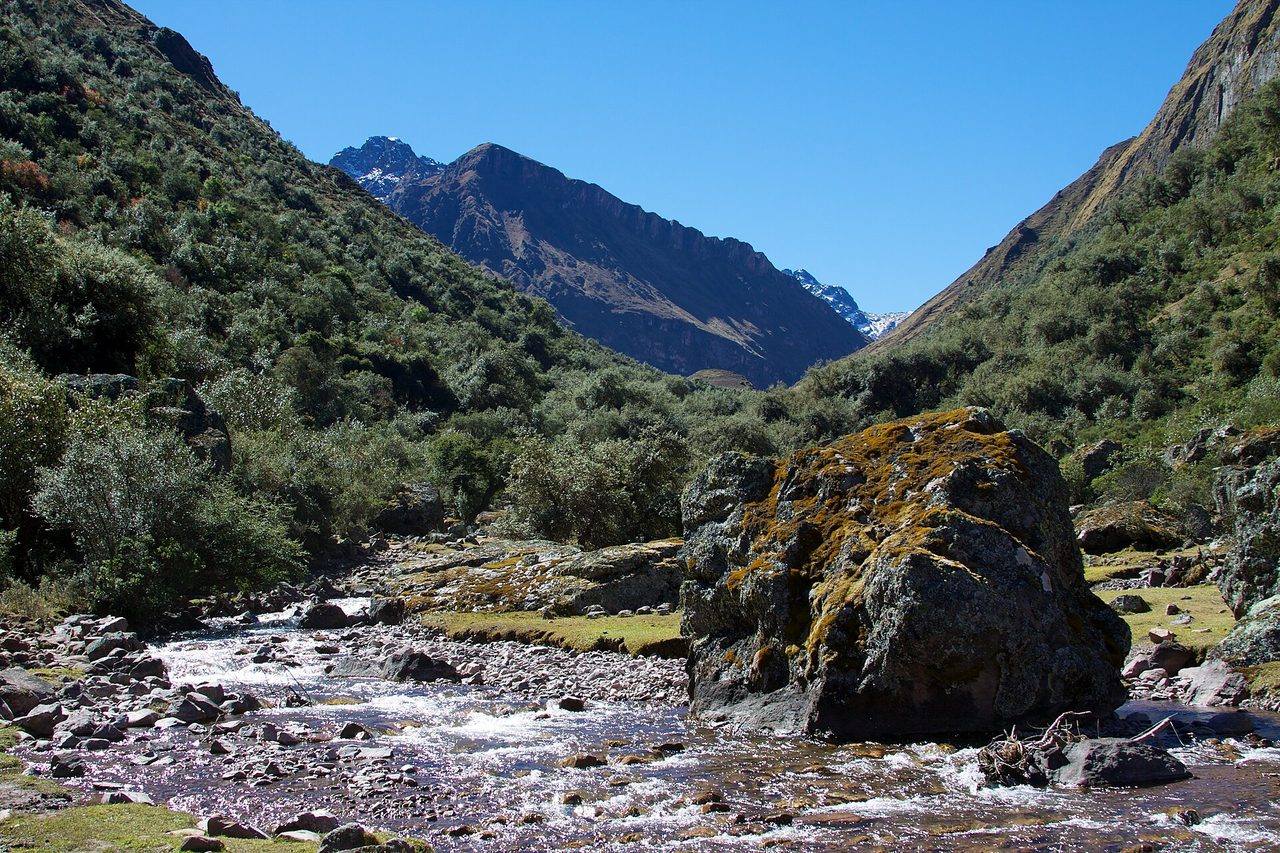
Two people can tell you they did the Lares trek and describe completely different weeks. One walked out of a hot-spring town at 3,200 m and camped beside a lake under a pass. The other started from a bridge in the Sacred Valley and spent the first night in a hamlet of thirty houses at nearly 4,000 m. Both are right. There is no single Lares trail, and that is the first thing almost every page selling this trek leaves out.
The second thing they leave out is blunter: the Lares trek does not reach Machu Picchu on foot. Not on any of its routes. You finish walking somewhere in the Patacancha or Urubamba valley, get into a van to Ollantaytambo, and take a train. If arriving at the citadel under your own steam matters to you, this is not the trek you want.
What you get instead is the thing the marketing does get right. Lares runs through working Quechua farming and weaving country between roughly 3,200 and 4,600 m — not through a corridor of ruins, and not past a tourist-facing village built for the purpose. People are there because they live there, cutting peat, moving alpacas between pastures, walking their children two hours to school. I have found it consistently more interesting than the archaeology-heavy alternatives, and consistently more uncomfortable, in ways this guide will not smooth over.
What the Lares trek actually is — and what it is not
The Lares valley sits north of the Sacred Valley, on the eastern side of the Urubamba range, about 40 miles (64 km) north of Cusco by road. Lares itself is a small town at roughly 3,200 m with a set of thermal pools that are the reason most Peruvians have heard of it at all. The trekking routes that carry its name run over the ridges between that valley and the Patacancha and Urubamba valleys to the south.
Three things define the experience, and they are worth stating plainly before you compare prices.
No permit. Unlike the classic four-day route to the Sun Gate, nothing about Lares is rationed. There is no government quota, no nominative ticket, no operator-only rule. That is the practical reason most people end up on this page: they discovered that the trail permits sell out months ahead and needed a plan B they could book from Cusco with two weeks’ notice, or two days’.
No ruins to speak of. You will pass stone corrals, terracing that may or may not be Inca, and the occasional chullpa-like structure your guide will describe generously. There is no Wiñay Wayna, no Runkurakay, no Sayacmarca. If you want architecture on the way, you want the Inca Trail, and if you want it on a bigger scale you want a separate trip to Peru’s major Inca sites rather than a trek that half-delivers it.
No walking finish at Machu Picchu. Every Lares itinerary ends with a road transfer and a train. Operators are not exactly lying when they sell a “Lares trek to Machu Picchu” — the package includes the citadel — but the phrasing does a lot of work. You visit Machu Picchu the way a day-tripper does, having spent the previous three days somewhere else entirely.
What Lares has that the alternatives do not is altitude, emptiness and people. You will go higher than anyone on the Inca Trail does. You will see, on a normal day in the dry season, perhaps two other trekking groups. And you will walk through settlements where the arrival of eight foreigners with a mule train is still a mildly interesting event rather than a scheduled one.
There is no single Lares trek: the routes compared
This is the part that matters when you are reading three operators’ websites and cannot work out why the numbers disagree. They are describing different walks. Below are the four families of route you will actually be sold, with the figures operators most commonly quote. Where sources differ — and on the passes they differ by up to 200 m — I have given the range rather than pretending to a precision nobody has.
| Route | Trekking days | Distance | Highest pass | Highest camp | What you actually see | Difficulty |
|---|---|---|---|---|---|---|
| Lares – Huacahuasi – Patacancha (sold as “Weaver’s Way”, by far the most common) | 3 | ~33 km / 20.5 mi | Ipsaycocha / Ipsayjasa, 4,450 m (quoted 4,400–4,600 m) | Ipsaycocha lake, ~4,100 m | Hot springs stop, two weaving villages (Huacahuasi and Patacancha), one big pass, a lake camp, alpaca pasture | Moderate; one hard morning |
| Quishuarani – Cuncani – Patacancha | 3 | ~39 km / 24 mi | Ipsaycocha 4,450 m, plus Huilquijasa ~4,200 m | Ipsaycocha lake, ~4,100 m | Two passes instead of one, the Chancachaca valley, same weaving villages at the end | Moderate to hard |
| Huaran – Cancha Cancha (Sacred Valley start; also sold as a standalone two-day hike) | 2–4 | ~21 km return for the short version; 40 km+ if continued to Lares | Pachacutec ~4,200 m (some operators quote up to 4,600 m on longer variants) | Cancha Cancha, ~3,900–3,950 m | A steep river-gorge climb from 2,885 m, then a genuinely remote herding settlement of around 50 families | Hard first day, big single ascent |
| Quishuarani or Huaran – Yanahuara / Lares loop | 4–6 | ~45 km / 28 mi and up | Three passes above 4,200 m | Varies, 3,750–4,100 m | The least-walked option; for people who have already seen Machu Picchu and want the valley for its own sake | Strenuous |
A fifth variant exists and is growing: the lodge-to-lodge version, where you sleep in purpose-built lodges (one of them a joint venture with the Huacahuasi community at around 3,835 m) instead of tents. It follows broadly the Weaver’s Way line and costs several times as much. It is the only version of Lares I would recommend to someone who genuinely cannot sleep in a tent at altitude, and I will come back to why the community stake in that particular lodge matters.
One more source of confusion. “Three-day Lares trek” and “four-day Lares trek” are used inconsistently. Some operators count only the walking days; others count the Machu Picchu day. A package advertised as three days may give you two days of walking and a citadel visit, while a four-day package gives you three walking days plus the citadel. Ask for the number of nights in a tent. That number does not lie.
The most common route, day by day
What follows is the Lares – Huacahuasi – Patacancha itinerary with two nights under canvas, which is what perhaps three-quarters of trekkers do. Times assume an average group moving at altitude, not a fast one.
Day 0: the day nobody puts in the itinerary
You need to already be acclimatised when the van picks you up. More on this below, but treat the two or three days before the trek as part of it. Cusco sits at 3,400 m and your first camp will be higher.
Day 1: Cusco to Huacahuasi — roughly 12 km, 5–6 hours walking
Pick-up in Cusco is usually between 05:00 and 06:00. The drive goes over the rim of the Cusco basin and down into the Sacred Valley of the Incas to Calca (2,928 m), where groups stop for breakfast and last-minute water and snacks — Calca is your final chance at a shop. From there it is another two to three hours north on a road that climbs, turns to dirt in places and loses phone signal for good.
Most itineraries stop at the Lares thermal baths here. Some do not, and the “three-day” compressed versions frequently skip them, so if the springs are part of why you booked, get it in writing.
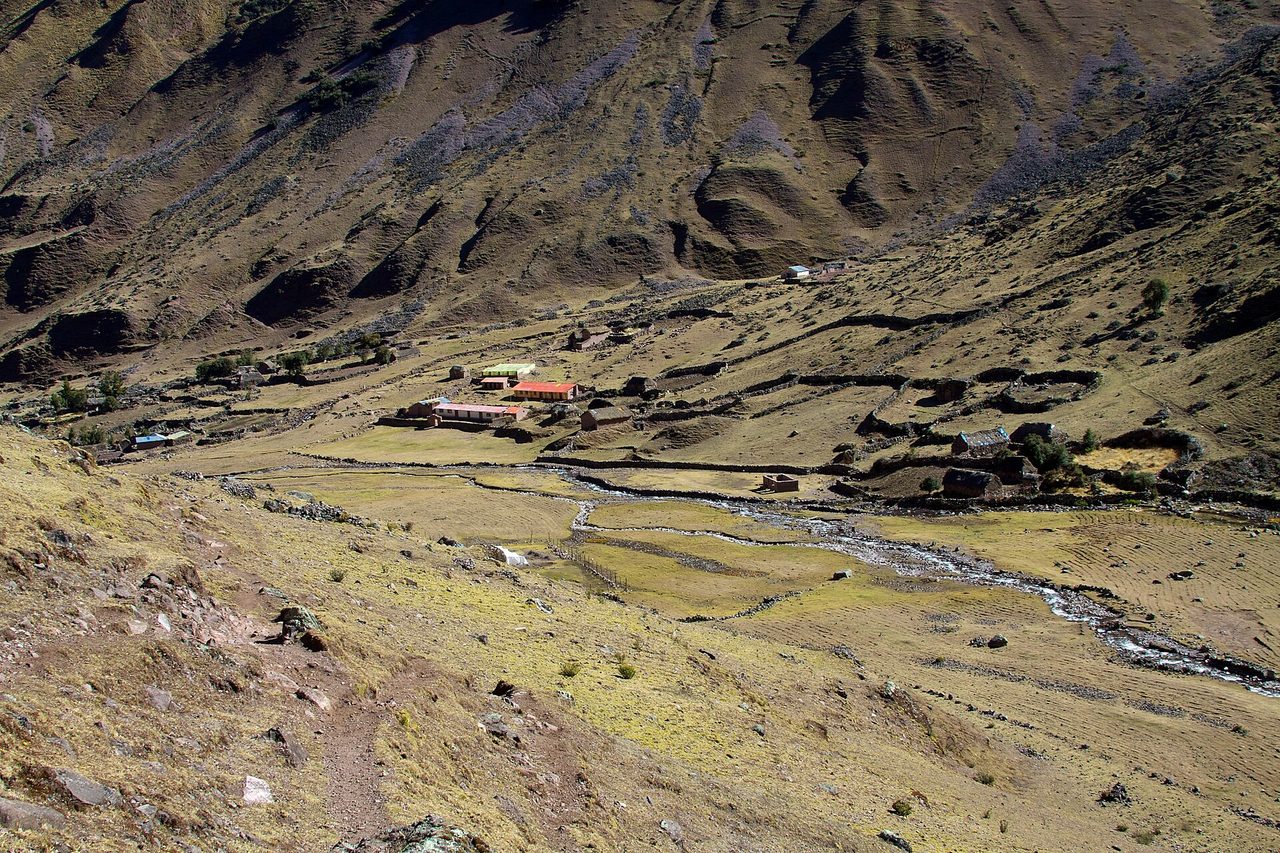
The walk starts in the early afternoon at around 3,300 m and follows the valley up through pasture and past stone corrals. It is a long, steady, unspectacular climb with the gradient rarely brutal. You will pass women spinning while they walk and children who will ask you, quite directly, for sweets. Camp is at Huacahuasi, roughly 3,750 m, in a broad valley bottom beside the village. Expect to be in your sleeping bag by 20:00 because there is nothing else to do and it is already cold.
Day 2: Huacahuasi to Ipsaycocha — roughly 9 km, 3–5 hours walking
The shortest day and the hardest. Mornings usually begin in the village, where the weaving takes place (the honest version of what that means is a section of its own below). Walking starts mid-morning with a sustained two-to-three-hour climb to the Ipsaycocha pass at about 4,450 m — higher than Dead Woman’s Pass on the Inca Trail, which tops out at 4,215 m.
This is where people find out how well they acclimatised. The pass itself is a saddle of loose rock and ichu grass with a cairn on it, snow peaks north and south, and wind that will take your hat. The descent to the Ipsaycocha lake camp takes a little over an hour. That camp is spectacular and it is the coldest night of the trek, sitting near 4,100 m in a bowl that traps the cold air after dark.
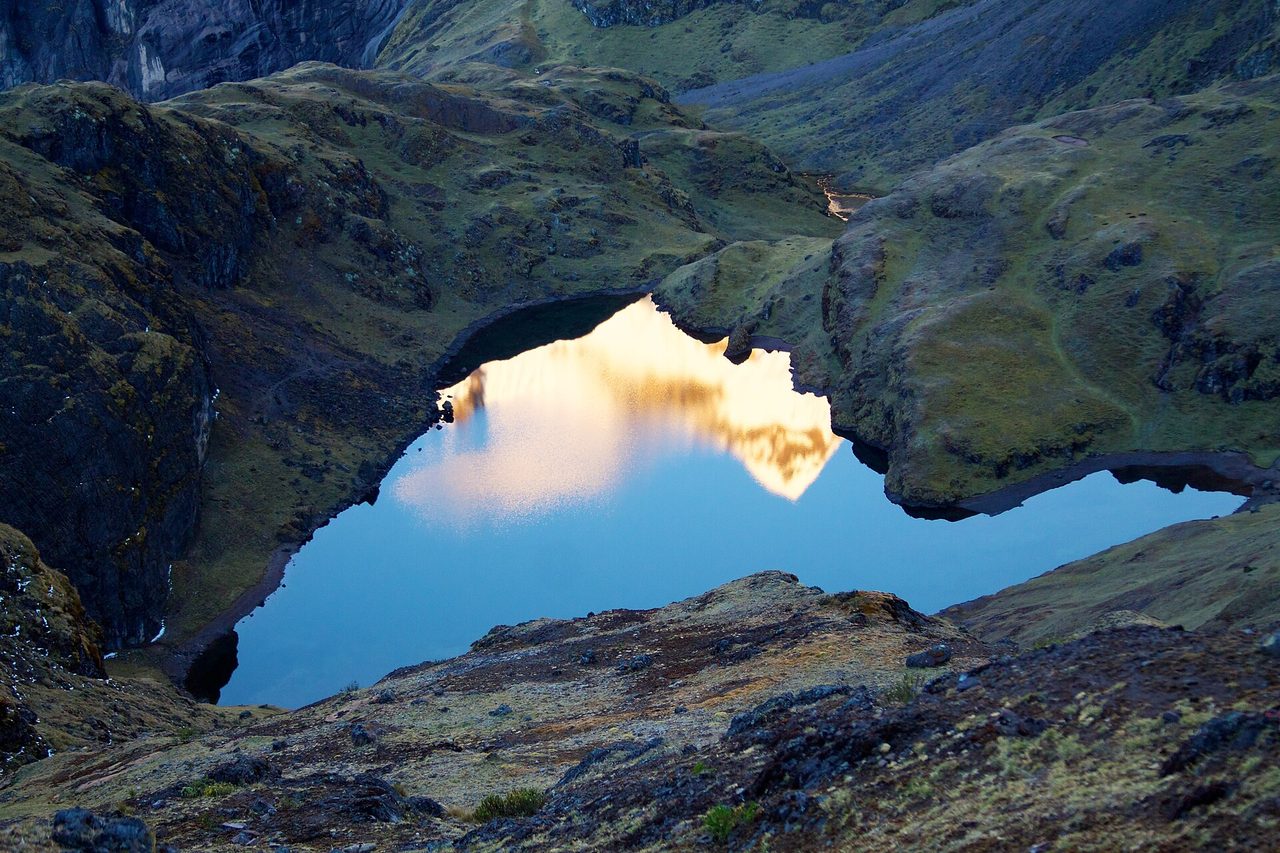
Day 3: Ipsaycocha to Patacancha and Ollantaytambo — roughly 12 km, 4–6 hours, nearly all descent
A long, knee-testing drop down the Patacancha valley. Two to three hours brings you to Patacancha (around 3,700 m), the second weaving community and noticeably more used to visitors than Huacahuasi. The trail continues down past Huilloc, another Quechua village where the red ponchos are the local marker, and finishes at a road head where transport is waiting.
From there it is a short drive to Ollantaytambo (2,792 m). Most groups then take the afternoon or evening train down the Urubamba to Aguas Calientes, arriving in the dark. Some budget operators instead drive the long way around to Hidroeléctrica and have you walk 10 km along the railway line, which turns a nine-hour day into a fourteen-hour one. Check which you are getting.
Day 4: Machu Picchu
Early bus up from the town below the ruins, a guided circuit of two to three hours, and an afternoon train back. Nothing about this day is Lares-specific, and the practicalities are the same as for anyone doing the citadel as a day trip. What is worth knowing is that entry is now on a fixed hourly slot between 06:00 and 16:00, the site runs three circuits and ten defined one-way routes, and the daily cap is 4,500 visitors rising to 5,600 on peak dates. Your operator picks your circuit when they buy the ticket, often months before you turn up, and you cannot change it at the gate. Ask which circuit you are on before you pay, because they are not equivalent — the difference between them is covered properly in our guide to choosing a Machu Picchu ticket.
Altitude is the real difficulty, not the distance
Thirty-three kilometres over three days is not a lot of walking. People get into trouble on Lares anyway, and the reason is straightforward: this trek is high from the first hour to the last.
Compare the profiles. The Inca Trail starts at 2,600 m, has one pass at 4,215 m, and its camps are between 3,000 and 3,600 m — you sleep lower than Cusco most nights. Lares does the opposite. Your camps at 3,750 m and roughly 4,100 m are both higher than Cusco, the pass is 200–400 m higher than Dead Woman’s, and there is no low day to recover in. Salkantay goes higher still at its pass but then drops hard into cloud forest, which is why people find its second half easy.
What this means in practice:
- Three full days in Cusco or the Sacred Valley before you start, minimum. Two is what most people budget and two is not enough for a trek that sleeps at 4,100 m. If your schedule is tight, sleep in the valley at 2,800–2,900 m and day-trip up, which is gentler than the reverse. Our piece on coping with the altitude in Cusco goes through the first 48 hours in detail.
- Use your acclimatisation days to go up and come back down. A walk to the glacial lake below Salkantay at 4,200 m or a morning at the painted ridge at over 5,000 m is a far better preparation than a rest day in a café, provided you sleep low afterwards. Several of the standard excursions out of Cusco work well for this.
- Acetazolamide is worth a conversation with your doctor before you fly. Coca tea is pleasant and is not a substitute.
- Know the line between discomfort and danger. A headache, poor sleep and no appetite at 4,100 m are normal. Vomiting, confusion, a persistent wet cough or breathlessness at rest are not, and the answer to all of them is to descend immediately. On Lares that is genuinely feasible — there is a road within a couple of hours of most points on the standard route, which is one of its underrated advantages over the Inca Trail.
Ask your operator directly whether they carry supplementary oxygen and a pulse oximeter, and what their evacuation plan is. On this trek those are not decorative questions.
The cultural question: what “visiting a weaving community” really means
Every operator sells Lares on cultural immersion. The range hiding behind that phrase is enormous, and pretending otherwise does nobody any favours — least of all the communities.
At the good end, there are genuine community enterprises. Weaving associations in the Lares and Patacancha valleys that own their own building, set their own prices, keep the money from sales, and receive a per-visitor fee negotiated with the operator. The Huacahuasi lodge is part-owned by the community it stands in. In these arrangements the demonstration is a working co-op showing you what it does, and if you buy a poncho the person who spent three months making it decides what it is worth.
At the other end — and it exists in the same valleys, sometimes in the same villages — a demonstration is a handful of women assembled at a roadside spot by an agency, in clothes brighter than what they wear the rest of the week, working through a fifteen-minute script for the fourth group that morning. Children are taught that foreigners hand out sweets and pens. Nobody is being defrauded exactly, but the money mostly stays with the agency, and the transaction is thinner than it looks.
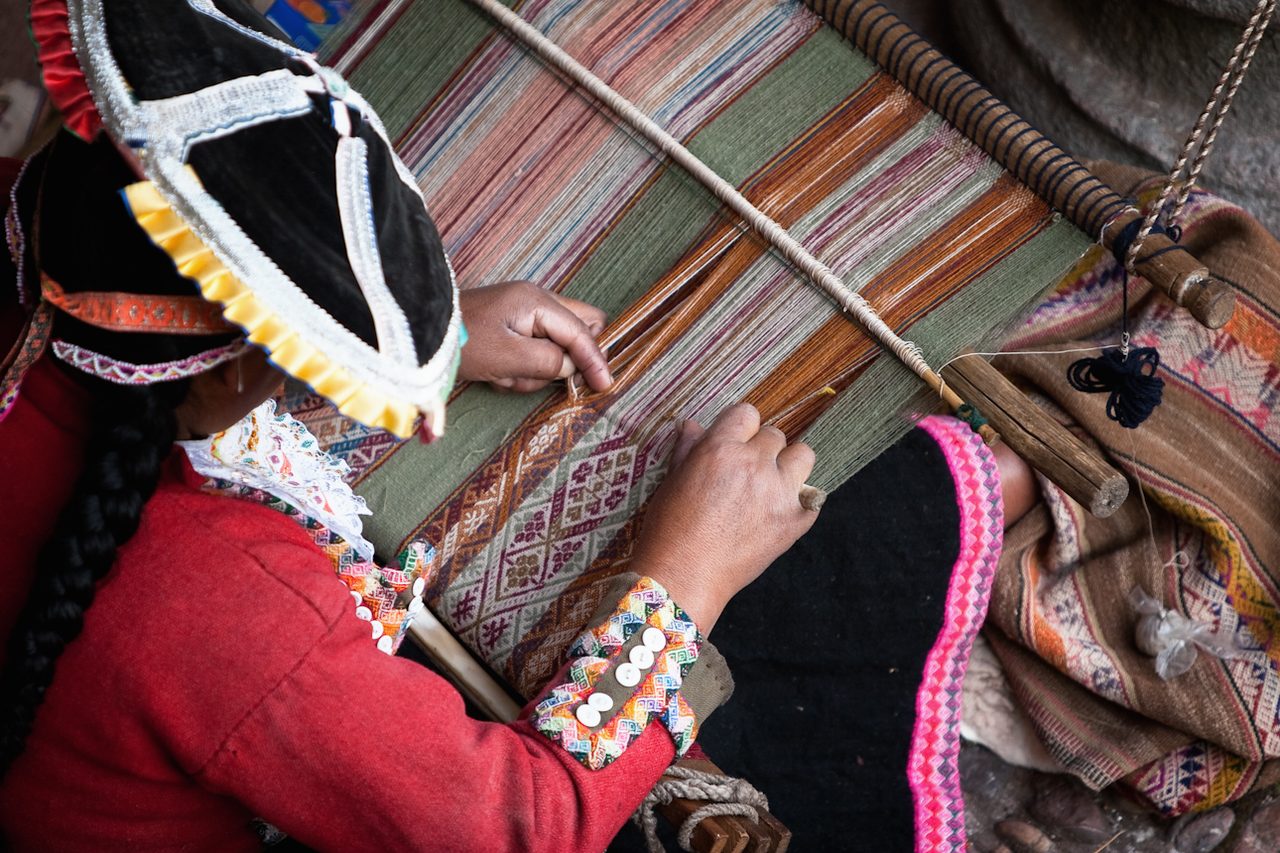
The uncomfortable part is that you often cannot tell which one you are in while you are standing in it. Both look like women weaving. So the work has to be done before you book.
The questions that actually separate operators
Send these by email and read what comes back. Vague answers are answers.
- “How much does the community receive per trekker, and who do you pay it to?” A good operator gives a figure and names an association or a community fund. A weak one talks about “supporting local families” without a number.
- “Is the homestay actually someone’s home, and does the household keep the accommodation fee?” Some “homestays” are a communal hall with mattresses, which is fine but is not what the word means. Some are real, and the family is paid directly. Both are defensible; being misled is not.
- “How many of your groups pass through that village per week in high season?” If the answer is daily, you are one of many, and you should adjust your expectations rather than your booking.
- “Are your guides from these valleys, and do they speak Quechua?” A Spanish-speaking Cusco guide can translate a landscape. Only a Quechua speaker can translate a conversation, and without one the “cultural” part of a cultural trek is a photo opportunity.
- “What is your policy on giving things to children?” The right answer is a clear no to sweets, money and pens handed out on the trail, and a redirection to the school or the community fund if you want to give. If an operator is still packing bags of candy for clients to distribute, that tells you what kind of relationship they have built.
- “Who are the horsemen and porters, where are they from, what do they earn, and are they insured?” On Lares the muleteers are usually from the valley itself, which is one of the better mechanisms by which trekking money reaches the communities. It only works if they are paid properly.
Two smaller things, on the ground. Ask before photographing anyone, every time, and accept a no without negotiating. And expect that a woman who agrees may then ask for a sol or two, or hold up a bracelet. That is not a scam. It is a person setting a price for something you wanted, which is exactly what the rest of the trip involves.
If any of this leaves you uneasy, take that seriously. There is a coherent position that says the whole format — foreigners walking through a poor community as scenery — is not fixable by paying more, and if that is your view, Salkantay and the Inca Trail cross far emptier ground and you should go there instead. What I would not do is book Lares and then treat the villages as a background.
The Lares hot springs, without the brochure language
Aguas Termales de Lares sits at about 3,250 m just outside the town. Six pools, five warm and one cold, fed by mineral water that runs somewhere between roughly 36°C and 44°C depending on which pool you get into and what the day has been doing. The water carries iron, magnesium and sulphur, which is why it is faintly yellow and why your silver jewellery will not thank you.
It is a municipal bath, not a spa. Concrete edges, a changing block, a small café, and on Sundays a lot of Peruvian families from Calca and Lares who have come for the day. Entry is usually in the region of S/15–20 for foreigners, though this is exactly the sort of local fee that changes without announcement. The cleanliness varies pool to pool and hour to hour; the hottest ones are the most used. Bring your own towel and flip-flops, because neither is reliably available.
Is it worth the stop? Yes, if you go in expecting a hot bath in a beautiful valley rather than a wellness experience. It is much better at the end of a trek than at the start, which is why routes that finish in Lares rather than beginning there are underrated. Groups typically get 45 minutes, which is enough.
Weather, and the month you should pick
Lares is high, exposed and treeless. There is no forest to break the wind and nothing to hold the day’s heat after sunset. The temperature swing between 14:00 and 04:00 is routinely 25 degrees. People underestimate this more than any other aspect of the trek, and the ones who suffer are usually the ones who packed for the Machu Picchu photograph rather than for a night at 4,100 m.
| Month | Conditions on the trail | Night temperature at camp | Verdict |
|---|---|---|---|
| January–February | Peak rain. Mud, low cloud, passes often invisible. Many operators do not run Lares at all | Around 2–7°C, rarely freezing | Avoid. February is also when the Inca Trail closes entirely |
| March | Rain easing but trails still heavy | 2–7°C | Poor, improving late in the month |
| April | Green, few groups, occasional afternoon storms | 0–5°C | Good and quiet. My favourite month here |
| May | The valley still green, skies clearing, nights sharpening | −2 to 3°C | Excellent |
| June–August | Dry, bright, hard blue skies. Grass burned yellow. Strong sun and strong wind on the passes | −1 to −5°C, colder in a bad snap | Peak season. Best conditions, coldest nights |
| September | Dry, warming, still reliable | −2 to 3°C | Excellent, and quieter than August |
| October | First storms return, landscape greening | 0–5°C | Good shoulder month |
| November–December | Rain increasingly likely, afternoon cloud on the passes | 2–7°C | A gamble; workable if you are flexible |
The pattern matches the rest of the southern highlands, which is set out in more detail in our breakdown of the Andean dry season and its counterpart on what the wet months actually look like. If you are still choosing dates for the whole trip, the wider picture is in our month-by-month guide to Cusco.
The sleeping bag question, answered properly
For June, July and August, take a bag with a comfort rating of about −10°C. Not a limit rating of −10°C, which is the number manufacturers print in the largest font and which describes the temperature at which a sleeping adult is curled up and miserable rather than comfortable. A three-season bag rated to −4 or −5°C is adequate for April, May, September and October, and marginal in midwinter.
Rental bags in Cusco cost around US$15–25 for the trek and range from decent to appalling. Unroll it in the shop, look for compressed dead patches in the fill, and ask for the rating in writing. Add a silk or fleece liner regardless, which is cheap, weighs nothing and buys several degrees. Also take a sleeping mat that is actually insulated — on frozen ground most of your heat leaves downwards, and a thin foam roll is the single most common reason people have a bad night on Lares. The rest of the clothing logic is the same layering problem covered in our notes on dressing for the Cusco highlands, with an extra thermal layer for the nights.
What the Lares trek costs
Prices below are per person for 2026, quoted as operators quote them, and every one of them moves. Group size is the biggest single variable: a private departure for two costs close to double the same trek run for eight.
| Trek | Days | Typical price | Usually includes | Reaches Machu Picchu on foot? |
|---|---|---|---|---|
| Lares, budget local operator | 3–4 | US$450–600 | Guide, cook, horses, tents, meals, transport, train, Machu Picchu entry | No |
| Lares, good local operator | 3–4 | US$600–750 | The above plus better tents and food, smaller groups, oxygen, insured staff | No |
| Lares, international agency | 4–6 | US$800–1,000+ | Hotels in Cusco either side, airport transfers, western-office support | No |
| Lares lodge-to-lodge | 4–6 | US$2,000–3,500+ | Beds, hot showers, hot tubs, private guiding | No |
| Classic Inca Trail | 4 | US$700–1,500 | Permit, entry, porters, camping, the Sun Gate arrival | Yes |
| Salkantay | 5 | US$450–900 | Camping or domes, the 4,600 m pass, cloud forest descent | Only the final stretch, on the railway from Hidroeléctrica |
Things that are sometimes bundled and sometimes not, and which turn a US$480 quote into a US$700 one:
- Machu Picchu entry. S/163 for a foreign adult on a standard circuit, S/211 for a circuit that includes Huayna Picchu or Machu Picchu Mountain. That price rose on 1 May 2026 from S/152 and S/200 respectively, via a conservation surcharge, so any quote still built on the old figure is out of date. The choice between the two summit add-ons is worth making deliberately rather than defaulting.
- Trains. Roughly US$35–60 per standard-class leg between Ollantaytambo and Aguas Calientes, more for the premium services. Many packages include only one direction.
- The shuttle bus up to the citadel. Around US$24 return.
- A horse for your duffel. Often included up to 5–7 kg; extra weight is charged.
- Tips. Budget US$40–70 per trekker for the crew across three days. Give it as a group, in soles, and split it in front of everyone.
- Sleeping bag and pole hire. US$15–25 each.
- The extra hotel night in Aguas Calientes if the package puts you there rather than pushing straight through.
Set against the rest of a trip, a Lares package is one of the cheaper ways to spend four days in the Cusco region, which our breakdown of what a Peru trip actually costs puts in context. It is not, however, the cheapest way to see Machu Picchu — that remains the do-it-yourself route with the cheap trains and no trek at all.
Who should not do the Lares trek
I would rather talk someone out of this than have them spend four days resenting it. Do not book Lares if:
- You want ruins along the way. There are effectively none. This is the single most common disappointment, and it is entirely avoidable by reading the itinerary properly. Take the Inca Trail.
- Arriving at Machu Picchu on foot is the point. You will arrive by bus from a hotel, like everyone else on the 06:00 slot. If walking in matters and permits are gone, the two-day Inca Trail variant reaches the Sun Gate and requires far fewer permits than the classic; ask operators about it before you settle for Lares.
- The ethics of village visits sit badly with you. Better to acknowledge that now than to spend day two with a camera you do not want to raise.
- You sleep badly at altitude. Two nights above 3,750 m, one of them near 4,100 m, with no low day. If Cusco already gave you a headache and a broken night, Lares will be worse, and the trek where you can descend into warm cloud forest by the middle of the week is Salkantay.
- You are chasing a physical challenge. Thirty-three kilometres over three days is not it. Choquequirao or the Ausangate circuit are.
- You are travelling in January or February. Go somewhere else in Peru entirely — the north coast and the Amazon are both better in those months, and there is plenty in the quieter parts of the country to fill the time.
Book Lares if you want high, open country, near-solitude, a real look at how people farm at 4,000 m, and a trek you can arrange from a café in Cusco on a Tuesday for a Friday departure.
Booking: how late can you leave it
Later than you think, with two caveats.
The trek itself has no quota. Three or four days’ notice is genuinely enough in April and October, and a week is usually enough even in July. What is not flexible is everything after the walking. Machu Picchu tickets for a specific date and hour do sell out in high season, and the popular morning slots go first; the mechanics are in our guide to reaching the site. Trains from Ollantaytambo also fill, particularly the convenient late-afternoon services.
The practical rule: book the Machu Picchu ticket and the trains first, then find a Lares departure that fits them. Any operator worth using will build the trek around your citadel slot rather than the other way round. If they insist the citadel slot is theirs to choose and refuse to tell you which circuit, that is a signal about how they run everything else.
Compare quotes on the things that cost money to provide: group size cap, tent quality, whether the guide is licensed and Quechua-speaking, whether staff are insured, whether oxygen is carried, what the food is. A US$150 gap between two operators is almost always one of those, and on a trek at this altitude the differences are not cosmetic. The wider question of which of Peru’s multi-day treks suits you is worth settling before you compare Lares operators at all.
Practical notes from the trail
- Cash. Bring S/300–500 in small notes. Nowhere in the valley takes cards, textiles are bought in cash, and change for a S/100 note does not exist above Calca.
- Water. Crews boil and filter, but carry a filter bottle or purification tablets as backup and two litres of capacity minimum. The dry air at 4,000 m dehydrates you faster than you notice.
- Sun. At this altitude with no shade, the UV is severe even at 12°C. High-factor sunscreen, a brimmed hat and lip balm are not optional, and sunglasses matter on bright days near the pass.
- Toilets. A tent over a hole at camp, and nothing between camps. Carry a pack-out bag for tissue.
- Dogs. Every settlement has them and they are working animals, not pets. Do not approach; walk on the far side of the trail and let your guide handle it.
- Food. Better than you expect. Trek cooks in Cusco are genuinely skilled and you will eat soup, trout, quinoa, stuffed peppers and a surprising cake. Declare dietary needs at booking, not at the trailhead — our overview of what Peruvians actually eat explains why vegetarian requests need advance warning in the highlands.
- Phone signal. Patchy on the passes, absent in the valleys. Download offline maps before you leave Cusco.
- Insurance. Make sure yours covers trekking above 4,500 m. A surprising number of standard policies stop at 4,000 m, which excludes the entire trek.
- Where to base yourself first. Sleeping in the Sacred Valley for a night or two before the trek is easier on your body than Cusco. Both options are weighed up in our guide to choosing a Cusco base.
Frequently asked questions
Is the Lares trek worth it?
If you want high, quiet country and contact with communities that are not there for tourism, yes, and it is the best value of the alternative treks. If your mental image is arriving at Machu Picchu on foot after four days among ruins, no — you will spend the trek waiting for something that never comes.
Does the Lares trek go to Machu Picchu?
Not on foot, on any route. Every version finishes at a road, transfers you to Ollantaytambo and puts you on a train. Packages then include the citadel the next morning. The various ways of covering that last leg are set out in our guide to getting from Cusco to Machu Picchu.
How hard is the Lares trek compared with the Inca Trail?
Easier underfoot and shorter, with far fewer of the stone staircases that wreck people’s knees on the Inca Trail. Harder in the air: the pass is higher, both camps are higher, and there is no low night. Fit people who acclimatised badly find Lares worse; average walkers who acclimatised properly find it comfortable.
Do you need a permit for the Lares trek?
No. There is no quota, no nominative ticket and no operator-only rule. That is the opposite of the classic Inca Trail, where 500 places a day — including guides, cooks and porters, leaving roughly 200 for trekkers — are sold months in advance, are non-transferable, and vanish entirely in February when the trail closes.
How high does the Lares trek go?
The standard route tops out at the Ipsaycocha pass, quoted between 4,400 and 4,600 m depending on the source, most commonly 4,450 m. Longer variants cross three passes above 4,200 m. Camps sit at roughly 3,750 m and 4,100 m — both above Cusco’s 3,400 m, and well above Machu Picchu at 2,430 m.
Can you do the Lares trek independently, without a guide?
Legally yes, and a handful of people do. Practically, the trails are herding paths that braid and disappear, signage does not exist, dogs are territorial, nobody you meet speaks English and few speak fluent Spanish, and if you get altitude sickness at 4,100 m you are on your own. The Huaran to Cancha Cancha section is the one exception most independent walkers manage, because it follows an obvious river gorge and is a straightforward out-and-back from the Sacred Valley.
How many days should I allow in total?
Seven, from landing in Cusco: three acclimatising, three trekking, one at Machu Picchu. Six is workable if you arrive already acclimatised from somewhere high. Five is asking for trouble. That sits naturally inside a fortnight in the country — see how it fits alongside Lima, Arequipa and the rest in our itinerary planner, and our note on how long Cusco itself deserves.
What is the weight limit for the duffel the horses carry?
Usually 5–7 kg including your sleeping bag, which is tighter than it sounds once a −10°C bag has taken 1.5–2 kg of it. Everything else goes in your daypack. You keep the duffel at camp only, so anything you want during the day — water, layers, sunscreen, camera — is on your back.
Is Lares a better alternative to the Inca Trail than Salkantay?
They solve different problems. Salkantay is the one for people who want a physical trek, a dramatic glacier pass and a descent through cloud forest, and it delivers you close enough to Machu Picchu to walk the final stretch. Lares is the one for people who want altitude, emptiness and human contact, and are content to take the train. Salkantay is busier than it was; Lares still is not. If you cannot decide, the honest tiebreaker is whether you would rather look at a mountain or talk to somebody — and if the classic route is still in the running, the Inca Trail versus Salkantay comparison works through that choice properly.
What is the best time of year to walk it?
May and September, in that order. Dry, clear, the nights not yet at their worst, and the trails emptier than in July. June to August gives the most reliable weather and the coldest nights. Avoid December to March. The same logic applies to the citadel at the end, which our guide to timing a Machu Picchu visit covers in more detail.
Will I actually see anything of Machu Picchu’s history on this trek?
Very little on the trail itself. The Lares valley was Inca territory and the terracing and roads you cross are part of that landscape, but the interpretation happens at the citadel on the final day. If the archaeology is what draws you, read up before you go — our account of what is known and disputed about the site will make that two-hour guided circuit considerably richer.
The short version
Lares is a high, cold, sparse and genuinely quiet trek through country where people are still doing the work. It has no permit, no queue, and no ruins. It does not walk to Machu Picchu, whatever the tour name says, and the routes sold under its name differ enough that you should ask precisely which valleys you will walk before you pay. Acclimatise for three days, take a warmer sleeping bag than you think you need, ask hard questions about who gets paid in the villages, and it is one of the better four days available in the Peruvian Andes. Skip the questions and it is a scenic walk with an awkward hour in the middle.