A Peru Itinerary Without Machu Picchu
The honest version: what skipping Machu Picchu actually saves you, who genuinely should, and a 14-day Peru route that never goes near Aguas Calientes.
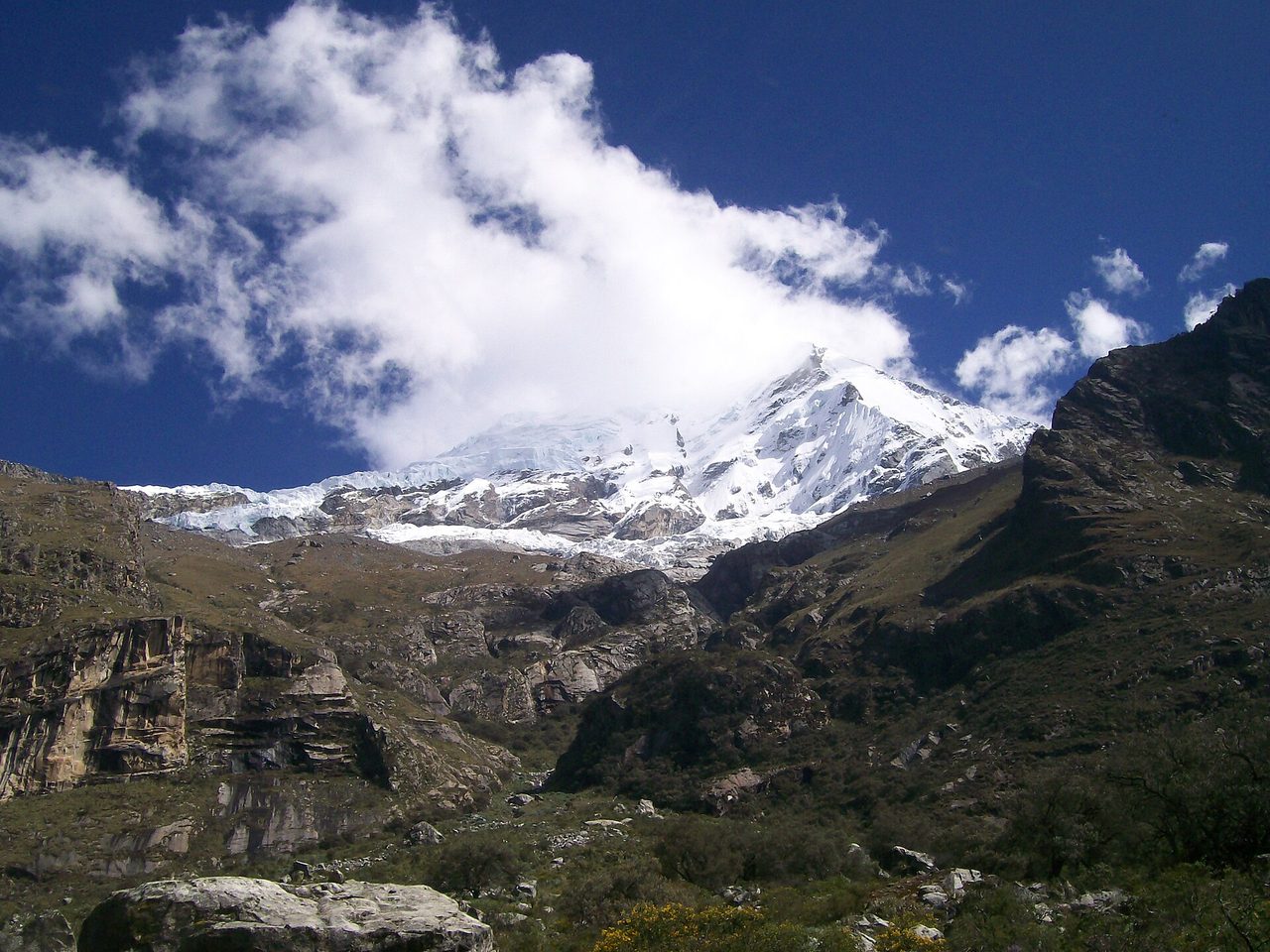
Every few weeks somebody asks me a version of the same question: is a trip to Peru without Machu Picchu a mistake? The people asking are rarely being contrarian. They have run the numbers and flinched, or their dates are sold out, or a knee is not what it was, or they went in 2011 and would rather see something new. Those are all different problems with different answers, and the internet mostly responds to every one of them with the same listicle of pretty places.
So let me be blunt up front, because it will save some of you three thousand words. If this is your first trip to Peru and you can afford it and you can walk a few hundred uneven stone steps, go to Machu Picchu. Skipping it to be interesting is a decision you will regret in about four years, usually while looking at somebody else’s photographs. I have argued the opposite case at length elsewhere and I still think the site earns its reputation despite the crowds.
But there is a real group of travellers for whom skipping it is the right call, and almost nobody writes for them honestly. This is that article. It has the arithmetic, a two-week route that never goes near Aguas Calientes, and an unsentimental account of what each alternative actually delivers and what it does not.
Why people search for Peru without Machu Picchu in the first place
Five reasons come up over and over. They are not equally good.
1. The cost, once you add it all up
This is the honest number-one reason, and the one the tour operators are least keen to itemise. The entrance ticket is the smallest part of it. A standard two-day trip from Cusco has at least seven separate line items, and the train is usually the biggest. I have broken the whole thing down below.
2. Tickets sold out for your dates
The daily cap is 4,500 visitors, rising to 5,600 on designated peak dates (1 January, 2–5 April, 19 June to 2 November, and 30–31 December). Since 1 June 2024 there have been three circuits split into ten fixed routes, each one-way and enforced by rangers who will turn you back if you try to walk against the flow. The practical consequence is that the popular routes for high-season mornings go weeks in advance, and a lot of people discover this after they have booked flights. If that is you, read how the ticket release system actually works before you give up, because cancellations and the less-loved circuits often free up.
3. Altitude and mobility
Here is the correction nobody makes: Machu Picchu sits at 2,430 m. Cusco is at 3,400 m. The citadel is a kilometre lower than the city you fly into, and Aguas Calientes is lower still at around 2,040 m. If you are worried about altitude in Cusco, the site itself is the easy part of that trip, not the hard part.
Mobility is a genuinely different question. The circuits involve a lot of stone steps of uneven height, few handrails, almost nowhere to sit, and no option to double back if you tire. There is no toilet inside the gate. If someone in your party can manage flat cobbles but not a couple of hours of stairs in the sun, that is a real reason to think again, and it is not solved by paying more.
4. Crowds and the feeling of being processed
Roughly 1.5 million people a year go through the gate. On a peak morning you will be walking a fixed loop, in a group, at somebody else’s pace, being asked to move along at the good viewpoints. Some people find that ruins it. I think that is a legitimate taste, though I would point out that the 6am entry in February is a very different experience from 11am in July, and switching your slot solves more than switching your destination.
5. Strikes and rail closures
This one is underrated and rarely mentioned. In September 2025, protests over the replacement of the long-standing Consettur shuttle concession led to the railway to Aguas Calientes being blocked with rocks and sections of track dug up. Around 1,400 tourists were evacuated on overnight trains and roughly 900 more were stranded. The dispute flared again in November. There is precedent going further back: the line was also cut by protests in early 2023 and in January 2024.
The structural problem is that Aguas Calientes has exactly one way in and out for visitors, and that single point of failure sits on top of a live local political argument about who gets the tourism money. If your trip is short, inflexible, or ends with a long-haul flight you cannot move, that risk is worth pricing. Nowhere else in Peru concentrates so much of your itinerary on one rail line.
Who should genuinely skip it, and who should not
I would rather give you a rule than a vibe. Here is the one I use when friends ask.
| Your situation | My honest answer |
|---|---|
| First trip to Peru, two weeks or more, budget has room | Go. Nothing else in the country does what it does, and you will not come back just for it. |
| First trip, but you have 7–9 days and $1,200 total | Borderline. Machu Picchu will eat a quarter of your budget and two of your days. It is defensible to skip, but consider trimming elsewhere first. |
| You have already been | Skip without hesitation. The second visit is markedly less interesting than a first visit to Choquequirao or Kuelap. |
| Sold out for your dates and you cannot move them | Skip and rebuild the trip properly rather than bolting on a bad-slot afternoon visit. |
| Serious mobility limits, or you cannot manage two hours of stairs | Skip the citadel. Ollantaytambo and Pisac have the same masonry with easier ground at the base. |
| You mainly want Inca archaeology | You can get 80% of that in the Cusco region for S/130. See below. |
| You want wilderness, wildlife, food, or the coast | Machu Picchu was never the right centrepiece for you anyway. |
| You are travelling with children under about eight | Skip or shorten. The logistics are punishing and small children are unmoved by terraces. |
The line I keep coming back to: skip it because of what you would rather do, not because of what you would rather avoid. Anti-tourism as a motive produces bad itineraries. If the only thing pulling you away is the crowds, look at the cheaper, quieter ways of doing it before you write it off. And if crowds are the problem across the whole trip rather than at one site, the better fix is picking quieter regions of Peru than dropping the famous one.
The arithmetic: what skipping Machu Picchu actually saves
Nobody on page one of Google does this properly, and two of the better-known guides quote the Cusco tourist ticket at a price it has not been for years. So here it is, per person, for a standard two-day trip from Cusco with one night at the bottom of the mountain. Soles converted at roughly S/3.7 to the dollar.
| Line item | Typical cost per person | Notes |
|---|---|---|
| Entry ticket, Llaqta circuit | S/163 (~$44) | S/211 if your route includes Huayna Picchu or Machu Picchu Mountain. Foreign student or minor around S/88, Andean Community adult around S/69. |
| Cusco to Ollantaytambo transfer | S/15–40 (~$4–11) | Shared colectivo at the low end, private car at the high end. |
| Train, both directions | $70–120 | Around $35–60 per standard-class leg. Panoramic services cost meaningfully more. |
| Shuttle bus up and down | ~$24 | Twenty-odd minutes of switchbacks each way. Walking up is free and takes 60–90 minutes of stairs. |
| One night in Aguas Calientes | $40–90 | The same money buys a considerably nicer room in Cusco. |
| Meals in Aguas Calientes | $25–40 | Captive market. Menu prices run well above Cusco for the same dish. |
| Guide | $15–25 shared, $40–70 private | Not legally compulsory on every route in practice, but you will get very little out of the site without one. |
| Realistic total | $220–320 | A couple should budget $450–650. Add a panoramic train and a private guide and one person clears $400. |
Prices move, and the entry fee moved recently: a SERNANP conservation surcharge added on 1 May 2026 pushed the foreign adult ticket from S/152 to S/163. Any page still quoting S/152 is out of date. Check the official ticket portal before you budget, and read up on how train pricing works by service class and departure time, because that is where most of the variance lives.
Two things worth noticing in that table. First, the entrance fee is under a fifth of the total. People who say “it’s only S/163” are pricing one line of eight. Second, more than half the cost is transport and one overnight in a town that exists only because the trains stop there. If you strip out the site and keep the region, most of that money simply evaporates.
What $250 buys you somewhere else in Peru
| Instead | Rough cost per person | What you get |
|---|---|---|
| Full Cusco Boleto Turístico | S/130 (~$35) | Sixteen sites over ten days, including Sacsayhuamán, Pisac, Ollantaytambo, Chinchero and Moray |
| Choquequirao, four-day guided trek | $250–400 | A larger Inca site than Machu Picchu, seen by fewer than twenty people a day |
| Colca Canyon, two days from Arequipa | $80–140 including the S/70 regional ticket | Condors at close range, terraced villages, hot springs |
| Nazca overflight plus Ballestas boat | $150–190 | Thirty minutes over the geoglyphs, plus sea lions and Humboldt penguins |
| Amazon lodge, three nights from Puerto Maldonado | $300–550 including flights from Cusco | Macaw clay lick, oxbow lake, night walks |
| Chachapoyas: Kuelap and Gocta, three days | $150–250 plus flights | A walled pre-Inca city on a ridge, and one of the tallest waterfalls in South America |
| Trujillo and Chiclayo archaeology, three days | $120–200 | Chan Chan, the Moche pyramids, and the Lord of Sipán tomb finds |
| Titicaca island homestay, two days | $60–110 | A night with a family on Amantaní, which is the part people remember |
You do not have to pick one. The point of the table is that the money released by one two-day Machu Picchu trip covers roughly three of those experiences, and a couple releases enough for four or five. That is the actual trade, and it is a much more interesting trade than “famous ruins versus less famous ruins”. If you are building the budget from scratch, my breakdown of what a Peru trip costs by travel style has the rest of the line items.
The alternatives, argued rather than listed
Each of these gets the same treatment: what it delivers that Machu Picchu does not, and what it does not deliver. The second half is the part the listicles skip.
Choquequirao: the one that comes closest, and costs you your calves
Choquequirao is the serious answer. It is a royal Inca complex on a spur above the Apurímac canyon at around 3,050 m, built in the same period and in recognisably the same architectural language as Machu Picchu, and roughly three times the mapped area. Only a minority of it has been cleared. The llama mosaics set into the terrace walls on the lower sector have no equivalent at Machu Picchu.
What it delivers: solitude that is genuinely hard to find at any famous site anywhere. Fewer than twenty people a day is normal. You can sit on a terrace at Choquequirao for an hour and see nobody. The entrance fee is a few tens of soles rather than S/163, and there is no ticket lottery, no circuit, no ranger moving you along.
What it does not deliver: ease, and this is not a small caveat. The classic route from Cachora is four to five days, and the shape of it is brutal: you descend around 1,500 m into a hot, dry canyon and climb the same amount out the other side, then repeat it in reverse on the way home. Most people who have done both rate it considerably harder than the Inca Trail. There is much less infrastructure, the water is warm, and the canyon floor gets genuinely hot in the middle of the day. It is also not photogenic in the same way — there is no single framed view that resolves the whole site, because the terrain does not allow one.
A cable car has been proposed for years, most recently as a public-private partnership costing something in the region of $260 million, with the stated aim of moving over a million visitors a year. Nothing is operating and nothing has been built. Do not plan around it. If it ever opens, the reason to go will have gone with it. For the wider picture on multi-day options, see how Peru’s treks compare on difficulty and scenery.
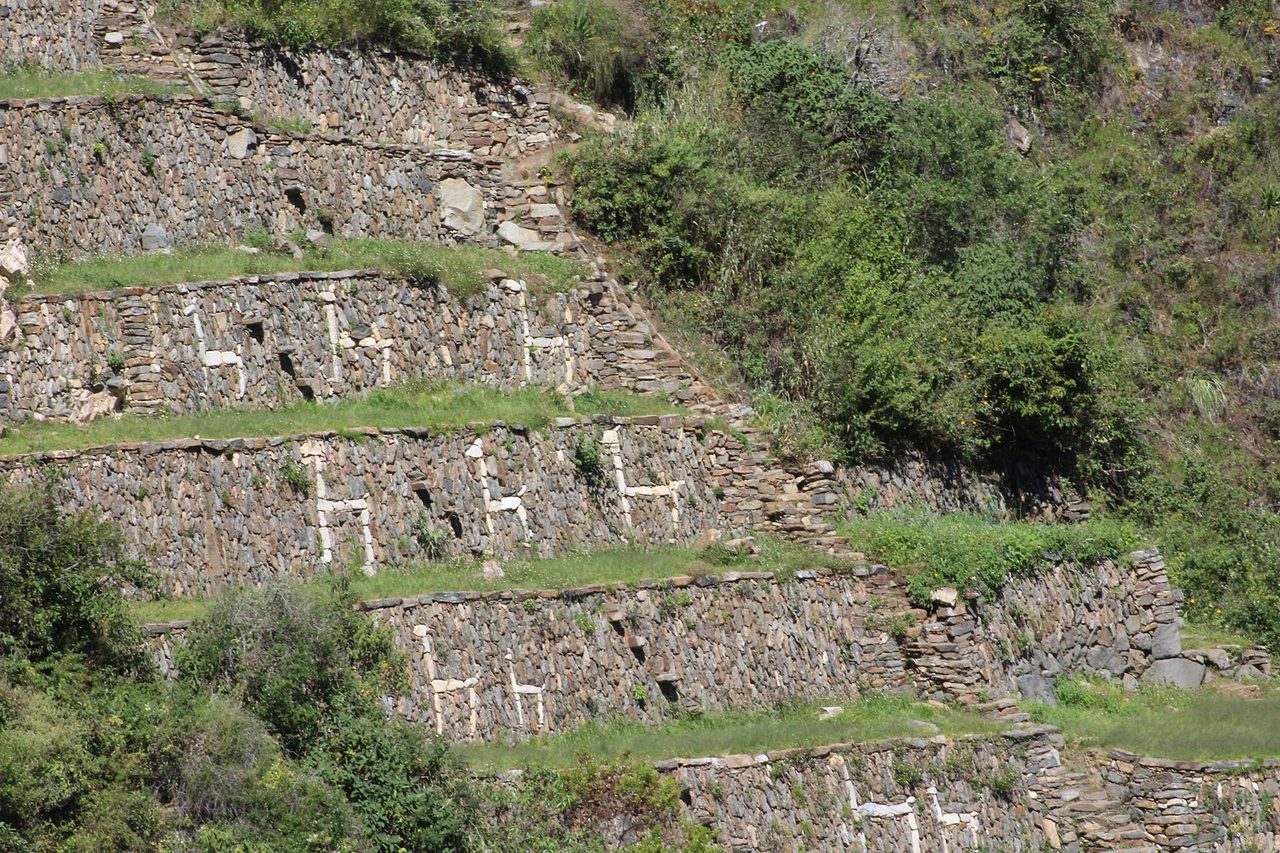
Kuelap and the Chachapoya north: a different civilisation entirely
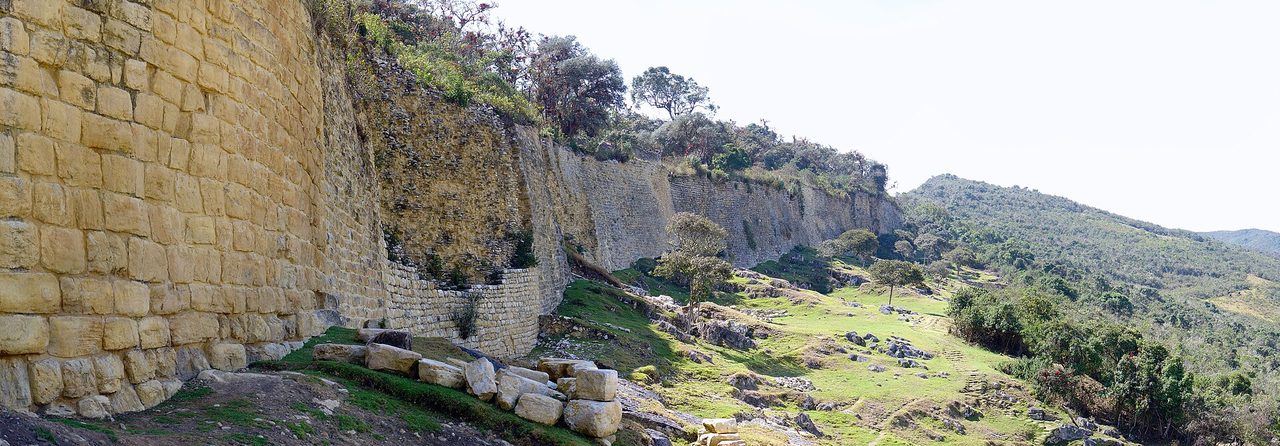
Kuelap is not an Inca site and calling it “the Machu Picchu of the north” does it a disservice. It is a Chachapoya walled settlement on a limestone ridge at roughly 3,000 m, with more than 500 round stone structures inside defensive walls that reach around 19 m in places, occupied from something like 400 BC until the Inca conquest in the fifteenth century. The masonry is circular, decorated with zigzag and rhomboid friezes, and it belongs to a culture the Inca absorbed relatively late and with difficulty.
What it delivers: a genuine sense of arriving somewhere that has not been optimised for you. Cloud forest, bromeliads on the walls, mist coming over the ridge. Nearby you get the Gocta waterfall, the sarcophagi at Karajía standing in a cliff niche, and the Leymebamba museum with its mummy collection. The whole northern circuit is quiet in a way the Sacred Valley has not been for twenty years.
What it does not deliver: convenience or certainty. A large section of the southern wall collapsed in 2022 and the site closed for most of 2023, reopening in 2024 with restoration work continuing into 2026. The cable car from Nuevo Tingo, about twenty minutes each way, is the practical way up, and it closes on Mondays and for an annual maintenance window in spring. Getting there means flying to Jaén and driving several hours, or a long bus from Chiclayo. Check the current access position before committing, and budget more days than the map suggests. I have written more about routing through the northern circuit and how the flights connect.
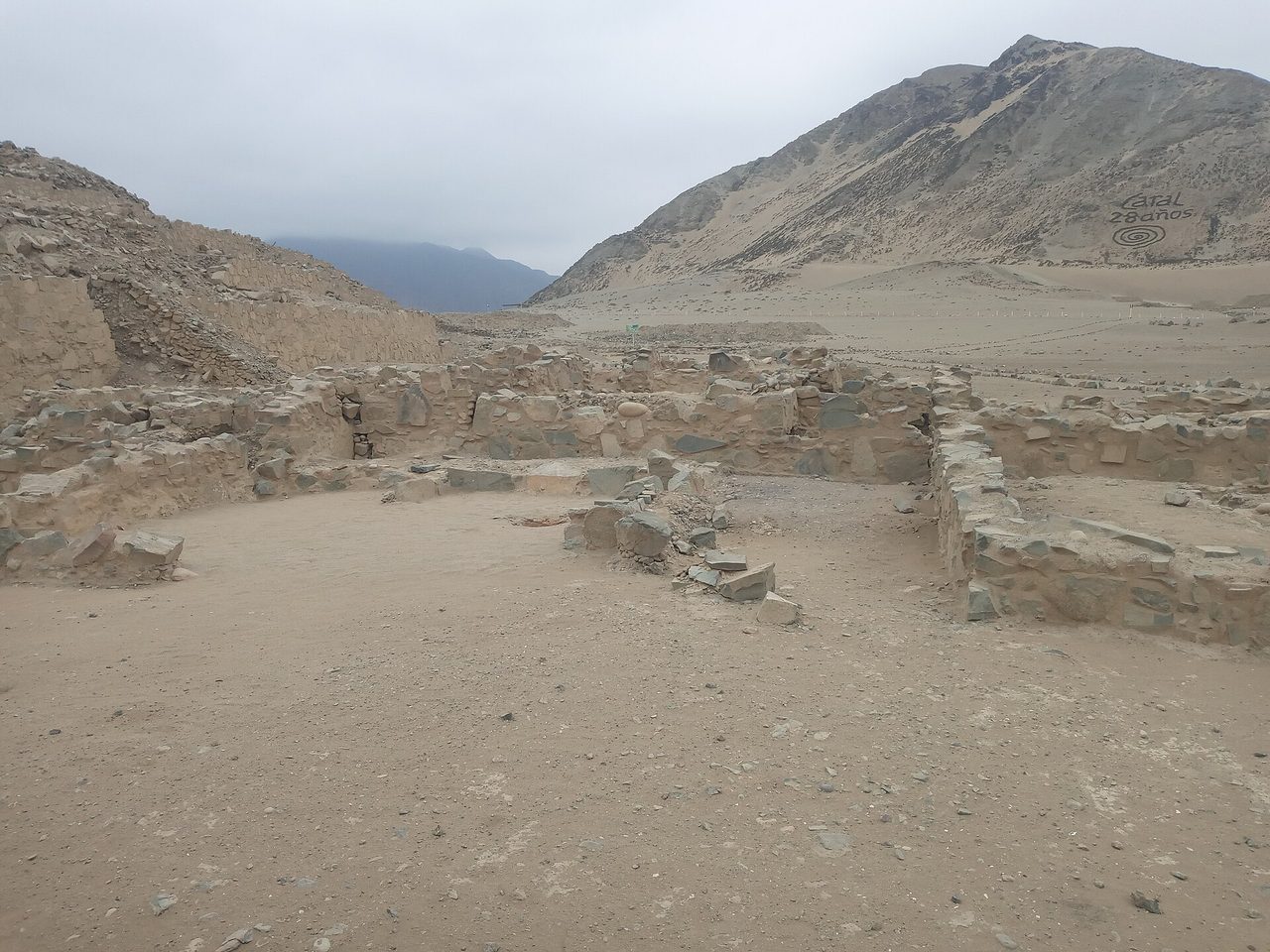
Caral: older than the Inca by four thousand years
This is the one that reframes the whole country for people. The Sacred City of Caral-Supe, in a desert valley about 180 km north of Lima, dates to around 3000 BC. That makes it roughly contemporary with the earliest Egyptian pyramids and about 1,500 years older than the Olmec, the first complex society in Mesoamerica. It is the oldest known centre of civilisation in the Americas, it covers some 626 hectares, and UNESCO listed it in 2009. Six large platform mounds and sunken circular plazas are still legible on the ground.
What it delivers: perspective. Standing on the edge of the main plaza, the thing to hold in your head is that the Inca empire, which people treat as ancient Peru, is closer in time to us than it is to the people who built this. No weapons have been found. The flutes made from condor and pelican bone are in the museum. If you have any interest at all in Peru’s thirteen World Heritage listings, Caral is the one that most changes how you read the others.
What it does not deliver: spectacle. Be honest with yourself. These are eroded earth-and-stone mounds in a hot, treeless valley, and without a good guide they read as low hills. There is no dramatic setting, no cloud forest, no photograph that will do anything for you. It is a long day trip from Lima on the Panamericana, three hours or so each way. Go for the idea, not the view, and take the guided visit that comes with the modest entrance fee.
Chan Chan and the Moche pyramids: the coast nobody bothers with
Chan Chan, outside Trujillo, is the largest adobe city in the Americas: the Chimú capital, home to somewhere between 40,000 and 60,000 people, with nine walled royal compounds covering about 20 square kilometres. UNESCO inscribed it in 1986 and simultaneously put it on the danger list, because rain and El Niño are steadily dissolving it. Half an hour away, the Huacas del Sol y de la Luna hold Moche polychrome friezes of a fanged deity, layered where each generation entombed the previous temple and built on top.
What it delivers: friezes and painted walls, which the Inca simply did not do. The Moche were figurative artists working in colour. Add the Tumbas Reales museum in Lambayeque, holding the contents of the Lord of Sipán’s tomb, and you have the richest pre-Columbian metalwork in South America. It is warm, low-altitude, flat, and cheap: individual site entries run around S/10–15.
What it does not deliver: atmosphere, mostly. Only one compound at Chan Chan is open and much of what you see there has been reconstructed. The surroundings are dusty and unglamorous, the modern city is functional rather than charming, and the reed-boat beach at Huanchaco is nice for a ceviche lunch and not much else. Two full days covers Trujillo and Chiclayo properly. It is the right choice for people who care about archaeology and the wrong one for people who care about landscape.
Inca ruins without Machu Picchu: the answer most searchers actually want
A large share of people asking this question do not want “an alternative destination”. They want Inca stonework, and they are willing to get it somewhere cheaper. That is a very easy request to satisfy, because the concentration of Inca architecture around Cusco is extraordinary and the single ticket that covers most of it costs S/130 for ten days and sixteen sites, with partial circuits at S/70.
- Sacsayhuamán — twenty minutes above Cusco, zigzag ramparts of limestone blocks weighing over 100 tonnes, cut and fitted without mortar. For sheer “how”, the walls above Cusco are more astonishing than anything at Machu Picchu. Go late afternoon.
- Ollantaytambo — the only place the Inca beat a Spanish cavalry charge, and a living town still laid out on its Inca street grid with the original water channels running. The six rose-porphyry monoliths on the Temple Hill were hauled from a quarry across the valley.
- Pisac — the best terracing in the region and, if you walk up from the town rather than taking a taxi to the upper gate, a genuinely good two-hour hike with almost nobody on it.
- Moray — concentric circular terraces with a measurable temperature gradient between the top and bottom rings. Nothing at Machu Picchu is as strange.
- Qorikancha — the Sun Temple in Cusco, with a Dominican convent built on top of walls the Spanish could not take apart. The clearest single lesson in the conquest anywhere in Peru.
- Tipón and Pikillacta — Inca hydraulic engineering and a pre-Inca Wari city in the South Valley, both on the same ticket, both almost empty.
Do those over three or four days and you will have seen more Inca masonry than someone who flew in for a Machu Picchu day trip and left. My longer survey of Inca sites across the country covers the ones outside the Cusco region too, and there is a shorter list of day trips within reach of the city if you want to keep one base.
Arequipa and Colca, Huaraz, Titicaca, the Amazon and the coast
Briefly, because these are destinations rather than substitutes.
Arequipa is the best-looking city in Peru, built in white volcanic sillar under three volcanoes, and the Santa Catalina convent is a walled city block of painted lanes that takes two hours and rewards every minute. Colca, four hours north, gives you condors at eye level from the Cruz del Cóndor viewpoint in the morning and terraced villages that have been farmed continuously for well over a thousand years. The regional ticket is S/70 and is checked. Downside: the standard two-day tour involves a 3am start and a pass at 4,900 m, which is not gentle.
Huaraz and the Cordillera Blanca is where I would send anyone who chose Peru for mountains rather than ruins. Laguna 69, the Santa Cruz trek, Huascarán at 6,768 m. It is the highest tropical mountain range in the world and it is barely on the standard circuit. Downside: it is genuinely high, the weather window is narrow (roughly May to September), and there is very little to do there in the rain.
Lake Titicaca is worth it if and only if you do a homestay on Amantaní or Taquile rather than the half-day Uros floating-island loop, which has become a fairly transparent performance. Two days and one night with a family is a completely different trip.
The Amazon lowlands are the strongest single argument that Peru is not a ruins destination. Tambopata from Puerto Maldonado is the easy access point, Manu is the serious one, and the Pacaya-Samiria reserve out of Iquitos is the flooded-forest option with pink river dolphins. Three nights minimum or do not bother. If you want a sense of what is realistically sightable, I have written about Peru’s wildlife by region and season.
The southern coast gives you the Nazca lines from a thirty-minute light aircraft (around $110–140, and take a motion sickness tablet, I am not joking), the Paracas reserve where red-sand desert cliffs drop into cold Pacific, and the Ballestas islands. Huacachina, the dune oasis, is a two-hour stop and a sandboard, not an overnight.
A 14-day Peru itinerary with no Machu Picchu in it
This is the southern circuit, minus the citadel, with the released time and money spent on things the standard route rushes. It assumes you land and leave from Lima. Everything is doable by public bus except the two flights noted.
| Day | Where | What you actually do |
|---|---|---|
| 1 | Lima | Arrive, stay in Miraflores or Barranco, walk the clifftop, eat ceviche for lunch not dinner |
| 2 | Lima | Larco Museum in the morning, Huaca Pucllana at midday, Barranco in the afternoon |
| 3 | Caral | Long day trip north on the Panamericana, guided visit, back to Lima by evening |
| 4 | Paracas | Bus down the coast (4 hrs), Ballestas boat in the afternoon, Paracas reserve at sunset |
| 5 | Nazca via Huacachina | Dune buggy and sandboard at Huacachina, then the Nazca overflight in the afternoon |
| 6 | Arequipa | Overnight bus arrives early; sleep, then Santa Catalina convent and the Plaza de Armas |
| 7 | Arequipa | Juanita at the Museo Santuarios Andinos, Yanahuara viewpoint, eat at a picantería |
| 8 | Colca | Transfer to Chivay over the 4,900 m pass, hot springs in the afternoon |
| 9 | Colca to Puno | Cruz del Cóndor at dawn, then the long transfer east to Puno |
| 10 | Lake Titicaca | Boat out, Taquile at midday, overnight homestay on Amantaní |
| 11 | Puno to Cusco | Return by boat, then the Ruta del Sol bus stopping at Raqchi, Andahuaylillas and La Raya |
| 12 | Cusco | Qorikancha, San Blas, the twelve-angled stone, buy the Boleto Turístico |
| 13 | Cusco ruins | Sacsayhuamán, Q’enqo, Puka Pukara and Tambomachay on foot or by taxi |
| 14 | Sacred Valley | Pisac in the morning, Moray and the Maras salt pans in the afternoon, fly out from Cusco |
Two useful swaps. If you want the trek, cut days 12 to 14 and add the four-day Choquequirao route from Cachora, which turns this into a 15-day trip. If you would rather have jungle than lake, cut Titicaca and fly Cusco to Puerto Maldonado for three nights at a Tambopata lodge. Compared with the standard two-week route, this version drops two full days of transit and roughly $250 per person, and adds Caral, a Titicaca overnight and a proper two days in Arequipa.
If you are still deciding on length, my notes on how many days Peru really needs apply just as much to a route without the citadel. And do read up on moving between regions by bus and plane before you assume the map distances mean anything.
Practical notes if you are committing to this
- Season matters more, not less. Without a single fixed date to build around, you have freedom, but the Cordillera Blanca and most treks are dry-season propositions (roughly May to September) while the coast is grey and cold in exactly those months. My guide to when to come, region by region spells out the conflict.
- Book almost nothing in advance. This is one of the real dividends. No permit lottery, no ticket release at midnight, no fixed circuit. Buses and lodges can be arranged a few days out, often cheaper locally than online.
- Carry cash in soles. Colca checkpoints, the Cusco tourist ticket offices and most northern sites take cash only. The Boleto Turístico cannot be bought online and requires ID.
- Student cards. ISIC is still accepted by COSITUC for the 18–25 rate on the Cusco Boleto Turístico. It is no longer accepted for the Machu Picchu student rate, where a university photo ID with an expiry date is now required. Since you are not going, this is one fewer thing to worry about.
- Eat properly. Skipping the citadel frees up two days and a few hundred dollars, and Peru is one of the best places in the world to spend them on lunch. Picanterías in Arequipa, cebicherías in Lima, and the markets everywhere. See what to order and where.
- You can still change your mind in Cusco. Slots do come free. If you get to the city and find you want it after all, look at same-week availability before assuming it is impossible, and read the options for getting there from Cusco, including the cheaper Hidroeléctrica van-and-walk route.
Frequently asked questions
Is Peru worth visiting if you skip Machu Picchu?
Yes, comfortably. Peru has thirteen UNESCO World Heritage sites, three distinct geographic zones, one of the world’s great cuisines and roughly 5,000 years of continuous urban civilisation. Machu Picchu is the most famous thing in it and nowhere near the only reason to go. That said, “worth visiting” and “the right choice for your specific first trip” are different questions, and I answered the second one at the top.
How much do you actually save by skipping Machu Picchu?
Around $220–320 per person for a standard two-day trip from Cusco, of which the S/163 entry ticket is under a fifth. The train and the night in Aguas Calientes are the expensive parts. A couple saves $450–650, which is roughly an Amazon lodge stay with the flights included.
What is the closest thing to Machu Picchu?
Choquequirao, without much argument. Same period, same architectural vocabulary, larger footprint, and about one two-hundredth of the visitors. The price is four to five hard days on foot with 1,500 m of descent and ascent each way. Kuelap is the closest thing that does not require a trek, but it is a different culture and a very long way north.
Can I see Inca ruins without going to Machu Picchu?
Easily. The S/130 Cusco Boleto Turístico covers sixteen sites over ten days including Sacsayhuamán, Pisac, Ollantaytambo, Chinchero and Moray, and Qorikancha in the city is sold separately for a few soles. Three or four days of that gives you more Inca stonework than a fly-in day trip to the citadel.
My dates are sold out. Is there any way in?
Sometimes. Cancellations return to the system, the less popular circuits and the afternoon slots hold availability longer, and a proportion of tickets are sold in person in Cusco rather than online. Do not buy from a stranger with a screenshot. If nothing frees up, rebuild the trip rather than accepting a bad slot at a bad hour, which is the version of the visit people are most likely to describe as disappointing.
Are the strikes and rail closures a real risk or just headlines?
Real, though intermittent. The railway to Aguas Calientes was blocked in September and again in November 2025 during the dispute over the shuttle bus concession, with around 1,400 people evacuated overnight and hundreds more stranded, and there were comparable disruptions in 2023 and January 2024. The risk is concentrated on that single rail corridor. Elsewhere in Peru, road strikes happen but you can usually route around them.
Which alternatives work if I cannot handle altitude?
The entire coast: Lima, Paracas, Nazca, Huacachina, Trujillo, Chiclayo and Caral are all near sea level. The Amazon lowlands sit around 200 m. Arequipa at 2,335 m is a gentler introduction than Cusco. Avoid Colca, Titicaca at 3,812 m, Huaraz and Cusco itself if altitude is a medical concern rather than a preference, and talk to a doctor about acetazolamide before you write off the highlands entirely.
How many days do I need for a Peru trip without Machu Picchu?
Ten as an absolute minimum for anything coherent, fourteen to be comfortable, three weeks if you want the north as well as the south. The paradox is that removing the citadel does not shorten the trip, because the things you replace it with are more spread out. What it changes is the pace: fewer fixed appointments and more days you can rearrange on the morning.
Will I regret it?
If you have already been, no. If you skipped it because of money, mobility or dates, almost certainly not, provided you spent the released budget rather than pocketing it. If you skipped it purely to avoid tourists on your only trip to Peru, then yes, probably, and I would rather tell you that now than have you find out later. Look at the full range of what the country offers and make the choice on what you are gaining, not on what you are refusing.