How to Choose an Inca Trail Tour Operator
Every page-one ranking of Inca Trail companies is paid for. Here is the screening method instead: how to verify a licence, what porter law actually says, and the ten questions to ask before you pay a deposit.
Search for the best inca trail tour operators and you will get roughly a dozen pages that all look like independent advice and none of which are. Almost every ranking on page one is written by a company that sells the trek, or by an affiliate site paid a commission on every booking it sends. The ordering of those lists is not a judgement about quality. It is a pricing decision. I am not going to add another one.
What I can do is show you how the trek is regulated, what the money actually buys, and how to run a fifteen-minute screening process that removes the genuinely bad companies from your shortlist. That is a duller product than a top ten. It is also the only version that survives contact with the trail.
Why I refuse to rank the best Inca Trail tour operators
This site takes no commission from any trekking company, which means I have nothing to gain from telling you that company X is better than company Y. It also means I have no way of verifying the claim. I have walked the route and I have talked to a lot of people who walked it with other outfits, and the honest summary is this: the same company can deliver a superb trek in May and a mediocre one in August, because the variable is which guide and which cook you drew, not which logo is on the duffel bag.
Rankings pretend otherwise because a ranking is a sellable asset. Review counts get gamed. Awards get bought. “Peru’s number one tour operator” appears in the page titles of at least four different companies simultaneously, which tells you exactly how much the phrase is worth. TripAdvisor placement rewards volume and recency of reviews, not porter wages.
So instead of a list, here is a method. Work through it and you will end up with two or three companies you can defend choosing, and you will know why you chose them. That is a better outcome than trusting a stranger’s ordering.
Every operator walks the same trail, on the same day, to the same campsites
This is the single most important thing to understand before you compare quotes, and it is the thing the ranking articles bury.
The Inca Trail is inside the Machu Picchu Historic Sanctuary, a protected area managed by SERNANP with the Ministry of Culture responsible for the archaeological remains. Access is rationed by a daily quota. The widely quoted figure is 500 people per day on the classic route, and that number includes guides, cooks and porters — so the actual number of paying trekkers who start each morning is closer to 200. The two-day version has its own smaller quota. Both numbers get restated confidently across the web without a source, so treat them as the right order of magnitude rather than gospel, and check the current allocation with your operator when you book. If you want the mechanics in detail, I have written them up separately in the guide to securing an Inca Trail permit and what the release calendar looks like.
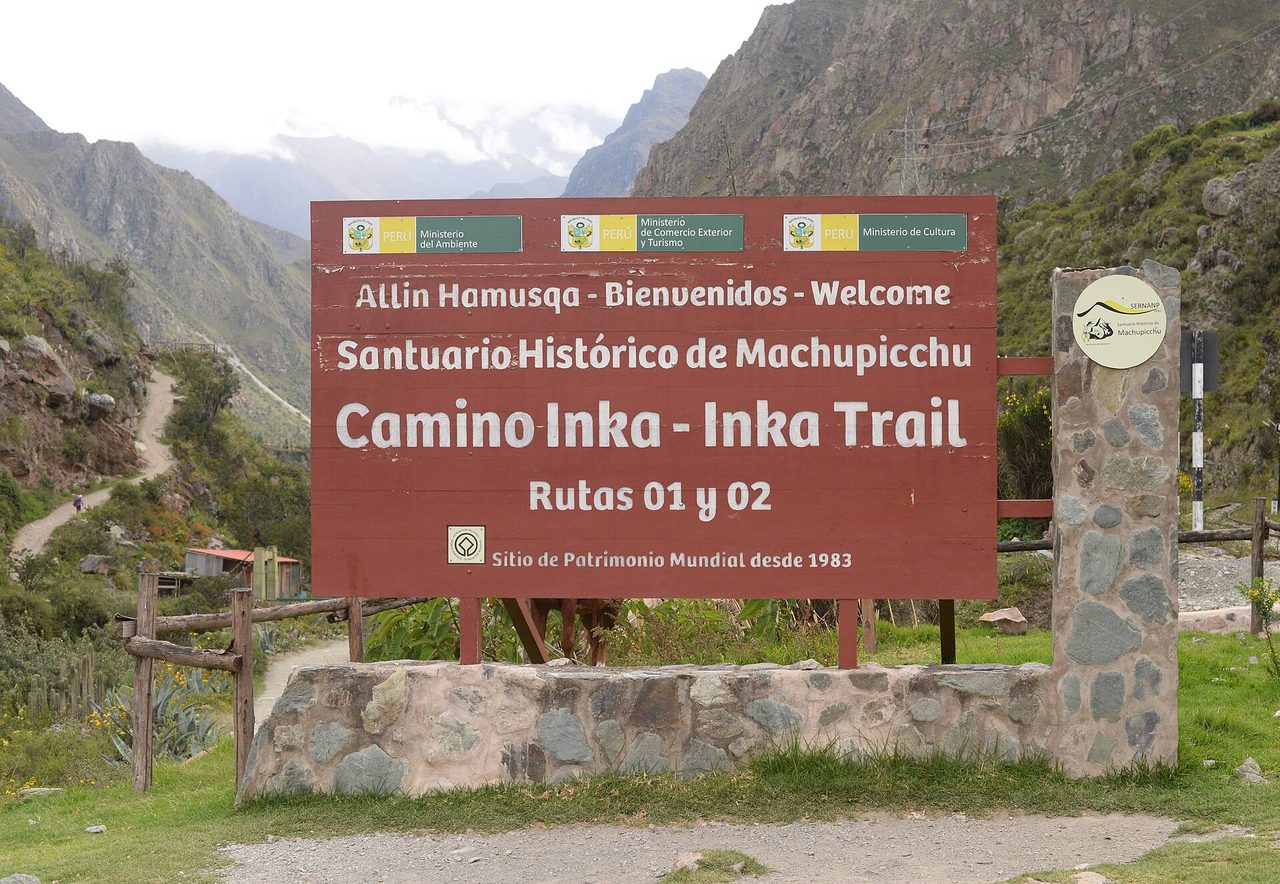
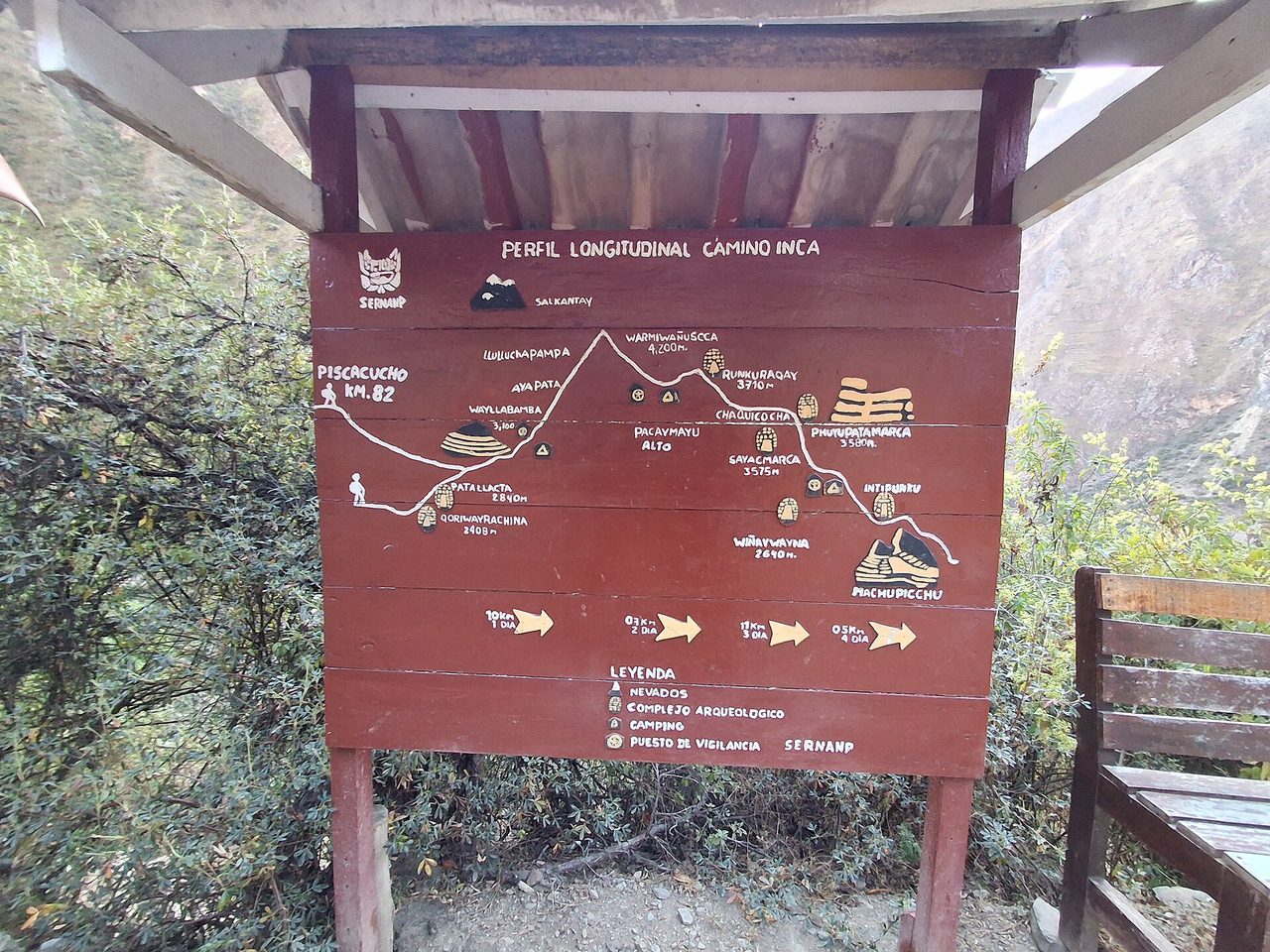
What follows from the quota is that nobody has a secret route. Every group starts at the same control point at Piscacucho, Km 82. Every group sleeps in a numbered campsite allocated by the authorities, not chosen by the company. Every group enters through the same Sun Gate on the fourth morning. There is no premium trail, no shortcut, no better viewpoint that only the expensive operator knows about. The route itself is fixed at 42-odd kilometres over Warmiwañusca at roughly 4,200 m and down through Runkuraqay, Sayacmarca and Phuyupatamarca.
So what is the several-hundred-dollar spread between the cheapest and the most expensive quote actually buying? Six things, in roughly descending order of how much they will affect your four days:
- The guide. Whether they are a licensed guide with real archaeological knowledge and wilderness first aid training, or a recent hire who narrates from memory and walks at the front all day.
- Group size. Eight people versus sixteen changes the pace, the mealtimes, the queue for the toilet tent and how much of the guide’s attention you get.
- Porter welfare. How many porters carry the camp, what they are paid, what they carry, and whether they are on a payroll at all.
- Food. A dedicated cook working out of a kitchen tent produces genuinely good food at 3,600 m. A cheap operation produces a lot of white rice.
- Equipment. The age of the tents, whether the sleeping mat is a foam roll or an inflatable, whether the sleeping bag is included or rented to you at the last minute.
- Safety kit. Bottled oxygen, a stocked first aid kit, a radio or satellite communicator, and a written evacuation plan.
You are buying labour conditions, food and competence. You are not buying access, because access is identical.
Step one: confirm the company is actually licensed
You cannot walk the Inca Trail independently. Self-guided hiking has been prohibited for more than two decades, permits are never sold to individuals, and the only legal way onto the trail is through a company that holds an authorisation to operate inside the sanctuary. That authorisation is renewed annually, which matters: a licence that was valid in 2024 tells you nothing about 2026.
There are four bodies whose names you will see, and it is worth knowing which does what, because a company that fudges the distinction is telling you something.
| Body | What it controls |
|---|---|
| MINCETUR | National tourism ministry. Maintains the public directory of registered tourism service providers, which is where you confirm the company legally exists as a travel agency. |
| DIRCETUR Cusco (also written GERCETUR) | The regional tourism directorate. Issues and holds the registration certificate for a Cusco travel agency and enforces rules on the ground. |
| SERNANP | Manages the protected area. Holds the tourism services contract that lets an agency buy Inca Trail permits, and registers porters and cooks. |
| Ministry of Culture / DDC Cusco | Guardian of the Inca road network and the archaeological sites. Runs the official ticketing system and accredits the guides. |
| SUNAFIL | Labour inspectorate. In theory audits operators for compliance with porter legislation. |
Here is what verification looks like in practice, and it takes about ten minutes:
- Get the RUC. Ask the company for its full registered business name and its RUC, Peru’s eleven-digit tax identification number. A legitimate agency hands this over without hesitation; it is printed on every invoice they issue. A company that treats the request as intrusive has answered your question.
- Check the RUC is active. Peru’s tax authority, SUNAT, has a free public RUC lookup. You are looking for status “activo” and a registered address that matches the office they claim.
- Search the MINCETUR directory. MINCETUR publishes an online directory of tourism service providers (consultasenlinea.mincetur.gob.pe). Search by business name or RUC. If the agency is not in there, it is trading informally and you should stop.
- Ask for the sanctuary authorisation. Authorised operators hold a code or resolution number for the current year. Ask for it in writing, and ask which year it covers. SERNANP publishes a list of authorised operators for the sanctuary; the Ministry of Culture office in Cusco will confirm an authorisation number over the phone.
- Check the guide, not just the company. Peruvian guides carry a carné as a Guía Oficial de Turismo or a licenciado en turismo. Ask what your guide holds and whether they are specifically accredited for the Inca Trail.
Counts of how many companies hold Inca Trail authorisation float around wildly — I have seen 120, 226 and 240 all published as fact for the same season, on operator blogs, none sourced. The exact figure does not matter to you. What matters is whether the specific company taking your money is on the current list.
Operators and resellers are not the same thing
A large share of the companies selling the Inca Trail to foreigners do not run it. They are resellers — endosadores, in the local term — who take your booking, take a margin, and hand you to a Cusco agency that owns the permit and supplies the guide, cook and porters. Big international adventure brands do this. So do a lot of slick English-language websites with a US or UK phone number.
Reselling is not fraud and it is not automatically bad. Some resellers pick good local partners and add real value in the form of a proper contract, financial protection and a phone number that answers in your time zone. But it changes what you are screening. If you research Company A’s porter policy for two hours and then Company B actually runs your trek, you have researched nothing.
So ask, in writing, one sentence: which company will hold my permit and operate the trek on the ground, and what is their RUC? Then run the checks above on that company. A seller who will not name the operator is telling you they do not want you to look. That is the answer, not an obstacle.
Porter welfare: what the law says, and why the law is not enough
Porter treatment is the most reliable proxy for everything else about a company, because it is the easiest cost to cut and the hardest for a customer to see. It is also the part of this subject where the published information is most often out of date.
The old Ley 27607, the porter law that most travel articles still cite, has been repealed. It was replaced by Ley 31614, the Nueva Ley del Trabajador Porteador, published on 11 November 2022, which was itself amended by Ley 32137 in October 2024. The current statute sets out, among other things:
- A load ceiling of 20 kg for men and 15 kg for women. That is the total carried, not a group-equipment allowance on top of personal kit.
- A minimum payment of 3% of a UIT per daily shift. The UIT — Peru’s tax reference unit — was set at S/5,500 for 2026, which puts the statutory floor at roughly S/165 a day, with a further 30% for a porter working as the cook. Note that the figure moves every January when the UIT is reset, and that the S/138 you will see quoted on several operator pages reflects an older UIT, not the current one.
- A maximum of 48 hours a week counted as worked time, with anything beyond it as overtime, and five days of rest before a new shift.
- Employer-paid SCTR (high-risk work insurance) and life insurance, EsSalud health cover, and enrolment in a pension system.
- Employer-provided food, adequate clothing, personal protective equipment, a lumbar support belt, sun protection and proper sheltered sleeping arrangements.
- A minimum working age of 18.
Loads are weighed at the Km 82 control point, and an operator caught over the limit is fined. That much works.
The uncomfortable part is enforcement of everything else. As of late August 2026 the executive branch had still not issued the implementing regulation for Ley 31614, more than three years past the 90-day deadline written into the law itself. Senator Ruth Luque raised this publicly after two porters died on 18 August 2026 — one at a camp in the Warmiwañusca sector of the Inca Trail, one on the Salkantay route near Abra Soyroccocha, the second reportedly of hypothermia — and stated that porters were still reporting loads of 35 to 40 kg. I am reporting what a legislator said and what regional press published; the circumstances of both deaths were under investigation at the time of writing.
Two things follow for you as a customer. First, the numbers above are a floor set by statute, not a description of what happens. Second, the difference between an operator that meets the floor and one that ignores it is largely invisible from a booking page, which is why you have to ask directly and in writing.
Be aware, too, that the figures differ by route. The 20 kg ceiling is enforced at the Inca Trail checkpoint because there is a checkpoint. On the Salkantay route, on the Lares valley trek and on the long approach to Choquequirao, loads move mostly by mule and horse and there is no scale at the trailhead. Do not assume a company’s Inca Trail compliance transfers to its other multi-day trekking programmes.
The questions to ask before you pay
Send these as a single email or WhatsApp message and keep the reply. You are testing two things at once: the content of the answers, and whether the company answers specifically or deflects. Vagueness is data.
- What is the maximum group size on my departure, and how many are booked so far? The regulatory ceiling is 16 trekkers, with a second guide required above eight. Plenty of companies cap voluntarily at eight or ten. “Small groups” is marketing; a number is an answer.
- How many porters will my group have, and how many of those carry personal duffels versus camp equipment? This gives you the porter-to-client ratio, which is the number that quietly determines what each man carries.
- Is a sleeping bag and inflatable mat included, or rented separately, and at what price? This is the most common way a headline price is made to look competitive. Get the rental cost in the same message.
- Is my permit secured, and what exactly happens if it is not? Ask for the specific remedy: full refund, transfer to an alternative trek, transfer to a different date. Get it in writing before you pay a deposit.
- Who is my guide, what languages, how many seasons on this route, and what emergency medical training do they hold? Wilderness First Responder or an equivalent certification is a meaningful answer. “All our guides are professional” is not.
- Is bottled oxygen carried, and what is in the first aid kit? Warmiwañusca sits above 4,200 m and altitude problems are the most likely reason your trek goes wrong.
- What is the evacuation plan from each of the three camps? There are no roads on the middle section. The honest answer involves horses or a stretcher and several hours. An operator who has thought about it will describe the specific route off; one who has not will say “we evacuate you”.
- How are your porters paid, and are they on the payroll? Ask for the daily figure. Compare it to the statutory floor above.
- Which company account do I pay into, and can I pay by card? The account name should match the registered business name from the MINCETUR directory.
- What is your written cancellation and date-change policy? It should arrive as a document, not a paragraph in a chat window.
The screening checklist
This is the table I would work through before sending a deposit anywhere. Print it, or paste it into a note and tick items off.
| Check | How to do it | What a bad answer looks like |
|---|---|---|
| The company legally exists | Ask for the registered name and RUC; confirm status is active on the SUNAT lookup | “We are fully licensed” with no number, or a RUC that returns a different business name |
| Registered as a travel agency | Search the MINCETUR directory of tourism service providers by name or RUC | No entry, or an entry registered to a different region or activity |
| Authorised for the sanctuary this year | Ask for the current-year authorisation code; cross-check the SERNANP list or call the Ministry of Culture office in Cusco | A screenshot of a certificate with no visible year, or a reference to an association membership instead of an authorisation |
| They operate rather than resell | Ask which company holds the permit and runs the trek on the ground | Refusal to name the operating company, or “we work with a network of partners” |
| Group size | Ask for the maximum and the current booking count on your date | “Usually small”, or a cap that turns out to be 16 |
| Porter pay and load policy | Ask for the daily rate in soles and the load per porter in kilograms | Deflection to a charity project or a photo gallery instead of numbers |
| Porter insurance | Ask whether porters have SCTR and life insurance, and whether they are on the payroll | “They are independent contractors” offered as a reason none of it applies |
| Sleeping bag and mat | Ask whether they are included or rented, and for the rental price | An answer that arrives only after you have paid the deposit |
| Guide credentials | Ask for the guide’s qualification, seasons on the route and first aid training | No name available until the briefing, and no training mentioned |
| Safety equipment | Ask specifically about bottled oxygen, first aid contents and communications | Oxygen described as available “on request” or at extra cost |
| Evacuation plan | Ask what happens if you cannot walk on day two | A generic promise with no mention of horses, porters carrying you, or the nearest road head |
| Payment route | Ask for the company bank account name and card options | An account in a person’s name, or crypto and Western Union only |
| Written terms | Ask for the cancellation and date-change policy as a document | Terms that exist only in chat messages, or that promise to refund the permit |
| Physical office | Look up the Cusco address; check it on a map and against the SUNAT record | WhatsApp and Instagram only, or an address that resolves to a residential block |
Red flags that should end the conversation
- No permit name and number supplied after payment. Once your permit is bought, the company can tell you it exists and give you the details. If a week passes after your deposit clears and you still have nothing, escalate immediately.
- A price far below the going floor. Permits, the train, the entrance, the bus and the food are fixed costs. When the total is 40% under everyone else, the saving is coming out of the porters or out of the food, or the trek is not going to happen.
- WhatsApp-only contact with no physical Cusco office. A number is not a company. Neither is an Instagram account with good drone footage.
- Pressure to pay the full amount by bank transfer, immediately. A deposit of roughly half to secure the permit is normal. Full prepayment by wire to an individual’s account, under time pressure, is not.
- Vague answers on group size. Every operator knows how many people are booked on a departure. If they will not tell you, it is because you would not like the number.
- A promise to refund the permit if you cancel. This is impossible. See below. An operator offering it is either lying or does not understand their own product, and neither is reassuring.
- Certification logos with no issuing body. Badges get copied. A real certification has a registry you can search.
What it should cost
Prices move, and every one of these numbers is a 2026 snapshot rather than a quote, but the shape of the market is stable enough to be useful. For the classic four-day, three-night group departure:
| Tier | Typical 2026 price per person | What changes |
|---|---|---|
| Below the floor | Under about US$500 | Treat as a warning rather than a bargain. Something in the cost stack is not being paid. |
| Budget group service | About US$550–700 | Groups toward 16, foam mats, sleeping bag rented, basic food, porters at or below the legal minimum |
| Mid-range | About US$700–950 | Groups of 8–12, inflatable mats, sleeping bag often included, experienced guide, decent cook. This is where most reputable Cusco operators sit. |
| Premium | About US$950–1,500 | Small groups, better tents, extra porters, sometimes a private toilet tent and an extra guide |
| Luxury and private | US$1,500–2,500+ | Private departure, glamping-style camp, dedicated staff. Same trail, same campsites. |
What is normally included: the permit, the combined entrance, transport from Cusco to Km 82, the return train from Aguas Calientes to Ollantaytambo and the transfer back to Cusco, a licensed guide, the porters carrying camp equipment, tents, and meals from lunch on day one. What is normally extra: the sleeping bag and mat if not included, a personal porter for your duffel, the bus down from the citadel, tips, the first and last lunch or dinner, and any add-on peak. Ask for the exclusions list specifically — it is where quotes stop being comparable. If you are building a wider budget, our breakdown of what a Peru trip actually costs puts the trek in context, and the guide to Machu Picchu ticket types explains where the trek ticket sits alongside the standard circuits.
One pricing detail worth knowing: Machu Picchu entry for foreign adults rose to S/163, or S/211 for the circuits that include Huayna Picchu or Machu Picchu Mountain, after the SERNANP conservation surcharge took effect on 1 May 2026. That surcharge does not apply to Inca Trail entries, so if an operator has quietly added it to your trek invoice, query it.
Tipping is part of the wage, and you should budget for it
Tips are not a bonus on the Inca Trail. They form a real and expected part of what the crew earns, which is uncomfortable but true, and it is another reason a suspiciously cheap trek is cheap. The conventions I have seen hold reasonably steady are roughly S/70–100 per porter from the group pot, S/100–150 per trekker toward the guide, and something between the two for the cook, collected and handed over on the final evening. Ask your operator what their teams typically receive so you arrive with the right cash in small notes. Soles, not dollars — changing money is a chore the porters should not have to do.
How to verify your permit is genuinely in your name
Do this before you book flights, and certainly before you fly.
Inca Trail permits are nominal. Each one carries a trekker’s full name, passport number, nationality, date of birth and sex, and it is registered in the government system at the moment of purchase. There is no anonymous slot that gets a name added later. So:
- Send your passport details exactly as printed, including every given name and any second surname. Send a photo of the passport data page so nothing is transcribed by ear.
- Ask for written confirmation of the permit once it is purchased — the names as registered, the entry date and the trek start point. Most operators can send a copy or a screenshot of the reservation.
- Check the spelling character by character. The name on the permit must match your passport. Rangers at Km 82 compare the two, and a mismatch is a problem you cannot solve at the checkpoint.
- If your passport number changes between booking and travel, tell your operator the day it changes and carry both the old and new passports. The registered number cannot simply be edited. If you know a renewal is due, renew before you book.
- Do not accept “it is confirmed” as an answer. Ask for the document. A company that has bought the permit has something to show you; a company that has taken your money and intends to buy it later does not.
If confirmation does not arrive within a week or two of your deposit clearing, chase it hard. This is the single point in the process where a bad operator’s problems become your problems, and the earlier you find out, the more options you have.
Cancellation and refunds: the part nobody wants to write down
Permits are non-transferable and non-refundable. Not “usually”, not “subject to a fee”. The permit is issued in your name by a government system, it cannot be sold on, given away, renamed or moved to another date, and the money is gone the moment it is bought. This is a state rule, not an operator policy, which is why an honest company cannot refund the permit portion however sympathetic your reason.
What a good operator can do is refund the unspent parts — the train, the hotel night, the transport — and be clear in advance about what proportion of your payment falls into which bucket. Ask for that split before you pay. It is also the reason travel insurance matters here more than on most trips: your policy, not your operator, is what covers a trek you cannot start.
Practical consequence: do not buy non-refundable international flights until the permit confirmation is in your hand. And if your dates are inflexible, book early. Permits for 2026 went on sale on 17 November 2025, staggered month by month over roughly a week, which is worth repeating because a widely copied claim that the release happens in the first week of October is simply wrong. The 2027 opening date was still not officially confirmed when I last checked, and the operator sites contradict each other about it — some say October 2026, some repeat the November date. Verify with the Ministry of Culture or a licensed operator rather than trusting a blog, including this one, on a date that moves.
If the permits for your dates are already gone
They will be, for July and August, if you start looking three months out. High-season slots disappear within days of release and sometimes within hours. Nobody can conjure extra permits, and an agency claiming it has “special access” to sold-out dates is either selling you a different trek under the same name or selling you nothing.
The realistic options are to shift your dates, take the two-day version that starts at Km 104 which has its own quota and often has space when the classic route does not, or switch to an alternative route. I have compared the classic trail against Salkantay in detail elsewhere; the short version is that Salkantay is higher, colder, more dramatic and permit-free, while the Inca Trail is the only route that walks the original stone road into the site through the Sun Gate. The trail also closes for the whole of February for maintenance, which catches people out every year — if February is your only window, plan around a train arrival instead and read up on the other ways of reaching the citadel.
How I would actually run the process
Putting it together, in order:
- Eight to ten months out. Fix your dates. Check when permits for your year go on sale and be ready on the day if you need July or August. Read up on when conditions are best at the citadel before you commit, because trail conditions and crowd levels move in opposite directions.
- Shortlist three companies. Ignore the ranking articles. Take names from people you know who have walked it, from long-form reviews that mention specifics rather than superlatives, and from the SERNANP authorised list.
- Run the licensing checks. RUC, SUNAT status, MINCETUR directory, current-year authorisation. This eliminates the worst outcomes in ten minutes each.
- Send the ten questions. All three companies, same message, same day. Compare the replies side by side. The differences will be obvious.
- Book, then verify the permit. Deposit, then written permit confirmation with names as registered. Only then buy flights.
- Plan the acclimatisation. This is the piece most people underweight. Arrive in Cusco at 3,400 m at least two full days before you start walking, ideally three, and read what altitude in Cusco does to people before you decide two nights is enough. Choose a base in Cusco that is not up a punishing hill.
- Pack for four seasons. Nights at Phuyupatamarca get near freezing and the afternoon sun at altitude is brutal. Our notes on what to wear on the trail and at the site cover the layering, and a broader set of practical Peru planning tips covers cash, altitude and transport.
- Sort the exit. Most packages include the return train from Aguas Calientes, but check the class and the departure time. If you are staying a night, get a feel for the town below the ruins first, and check what the train options are worth.
Who this method is not for
If you want somebody to just tell you which company to book, this article has failed you and I am not going to pretend otherwise. Some people genuinely do not want to run a due diligence process on a holiday, and that is a legitimate position. If that is you, book through a large international operator with a real complaints process and financial protection in your own country, accept that you are paying a substantial premium for that, and ask the one question that still matters: which Cusco company is actually running the trek.
The method is also overkill if you are doing a day visit rather than the trek. Choosing a company for a day trip to Machu Picchu from Cusco is a much lower-stakes decision, because the failure modes are a boring guide and a rushed schedule rather than four days in a bad camp. And it is irrelevant if you are still deciding whether the site belongs in your trip at all — that is a different question, covered in our honest take on whether Machu Picchu lives up to it.
Frequently asked questions
Can I hike the Inca Trail without a tour operator?
No. Permits are sold only to authorised agencies and a licensed guide is mandatory. Independent trekking on the route has been prohibited since 2001. Anyone offering to take you without an agency, or on somebody else’s permit, is offering you a way to be turned back at Km 82 with no refund.
How do I check that an Inca Trail company is licensed?
Ask for the registered business name and RUC, confirm the RUC is active with SUNAT, search the company in MINCETUR’s directory of tourism service providers, and ask for its current-year authorisation to operate inside the Machu Picchu sanctuary. If it fails any of the four, do not book. The whole process takes about ten minutes per company.
What is the difference between an Inca Trail operator and a reseller?
An operator buys the permit itself, employs the guide, cook and porters, and is responsible for you on the trail. A reseller sells the package and passes the booking to an operator. Resellers are legal and some are good, but you have the right to know which company will actually be running your trek, and to verify that company yourself.
How much weight are Inca Trail porters allowed to carry?
Ley 31614 sets the ceiling at 20 kg for men and 15 kg for women, and loads are weighed at the Km 82 control point. Pages quoting 25 kg or “55 lb” are out of date or wrong. Note that the limit is enforced where there is a checkpoint, which is why it is a weaker guarantee on alternative treks that carry loads by mule.
How much are Inca Trail porters paid?
The statutory minimum is 3% of a UIT per daily shift, plus 30% more for a porter working as cook, along with meals, equipment, high-risk work insurance and life cover. With the UIT set at S/5,500 for 2026 that works out at roughly S/165 a day. The figure changes each January when the UIT is reset, and the implementing regulation for the law was still pending as of August 2026, so treat the number as a legal floor rather than a description of practice.
Is a more expensive Inca Trail tour actually better?
Up to a point. Moving from the bottom of the market to the middle buys real things: a smaller group, better food, a better guide, and porters who are more likely to be paid and insured properly. Above roughly US$1,000 you are mostly buying comfort and exclusivity, not a different trail. The campsites, the route and the arrival are identical at every price, and so is the fixed government share of what you pay.
How far in advance should I book the Inca Trail?
Six to eight months for May through September, and be ready on the day permits are released if your dates are fixed. Outside the peak you can sometimes book three or four months ahead. The trail closes every February. If you are already inside three months for a high-season date, plan for an alternative route rather than hoping.
What happens if my operator does not secure my permit?
That depends entirely on what you agreed in writing before paying, which is why it is on the question list above. A serious company will offer a full refund or a place on an alternative trek. Without a written remedy you are relying on goodwill. Ask before the deposit, not after.
Do all Inca Trail operators use the same campsites?
Yes. Campsites on the route are allocated by the sanctuary authorities, not chosen by the company, and there are only a handful of them. What differs is the quality of the tent you sleep in, how early your porters arrive to claim a good pitch, and what comes out of the kitchen tent. The walking itself — the passes, the stairs and the long descents — is identical whoever you book with.
Should I book from home or wait and book in Cusco?
For the classic four-day route, book from home. Walking into a Cusco agency hoping for a last-minute permit works only in the quietest weeks of the rainy season, and the agencies most willing to promise you a slot on the spot are the ones you least want. Last-minute booking is realistic for day trips out of Cusco and for most alternative treks, not for this one.
Is a bigger, better-known company safer than a small local one?
Not inherently. Size buys process and a functioning office; it does not buy your specific guide’s competence, and the largest operators run the largest groups. A small Cusco agency with a current licence, a real office and clear answers on porter pay is a perfectly good choice. The screening questions matter more than the size of the company answering them.
What should I do if something goes wrong on the trek?
Raise it with your guide immediately and in plain terms, because most problems on the trail are fixable on the trail. Afterwards, Peru requires registered businesses to keep a Libro de Reclamaciones, a complaints book, and formal complaints can go to INDECOPI, the consumer protection agency. Keep your booking confirmation, the written answers to your pre-booking questions and any receipts — they are what turns a complaint into a claim.