Inca Trail vs Salkantay: Which Trek Is Better?
Salkantay is the harder trek, not the easy alternative, and only the Inca Trail walks you into Machu Picchu through the Sun Gate. Here is a straight verdict for each kind of traveller, with the numbers behind it.
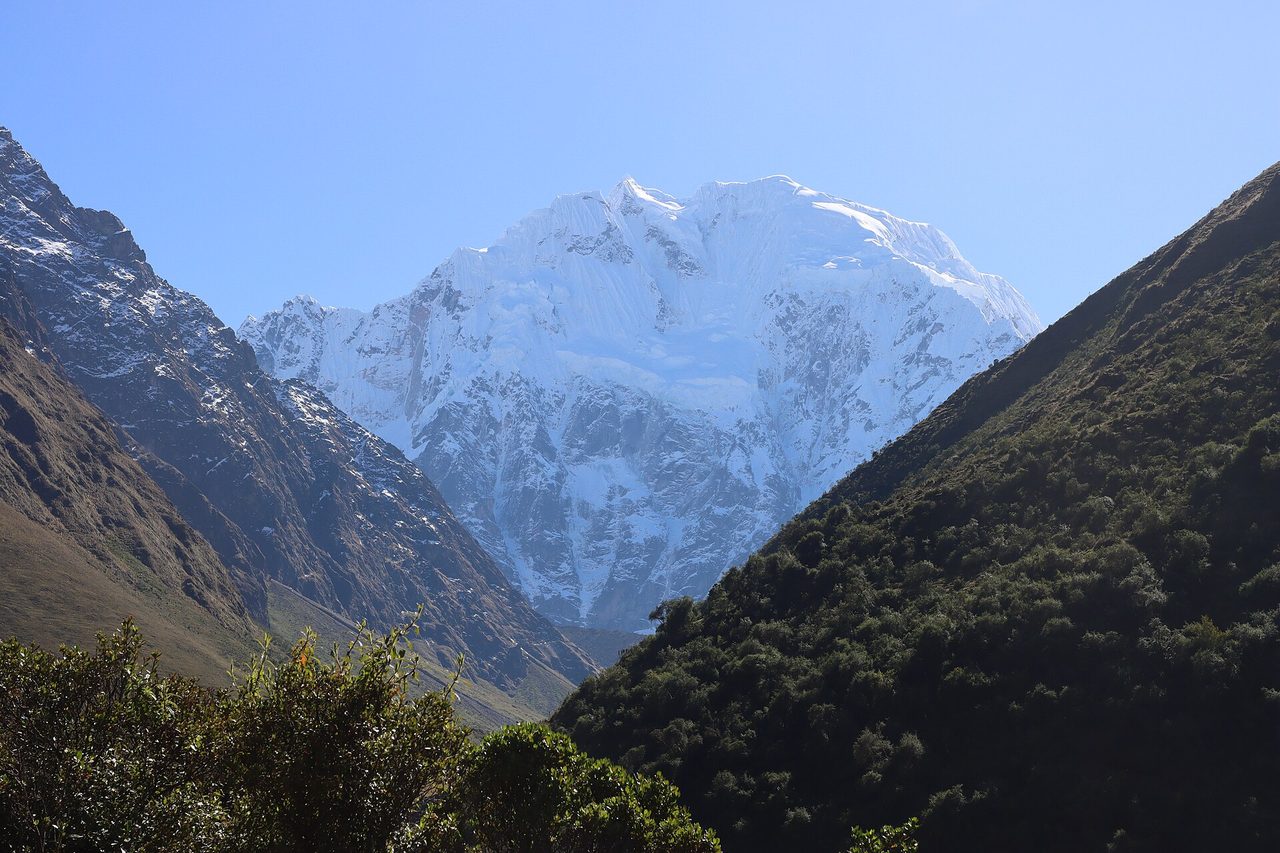
Here is the verdict before the argument. For a first-time visitor with fixed dates and enough notice to book, the Inca Trail is the better trek, and the whole Inca Trail vs Salkantay question turns on one fact that almost no comparison leads with: only the Inca Trail walks you into Machu Picchu on foot, through Inti Punku, the Sun Gate, before the first bus has climbed the switchbacks. Salkantay does not. Salkantay finishes in a town.
For a strong hiker who wants the mountain rather than the archaeology, Salkantay is the better trek, and it is the harder of the two by a clear margin — which is the second thing most comparisons get backwards. Salkantay is sold as the easy, flexible alternative for people who missed out on permits. It is not easy. Its high point is 415 metres above Dead Woman’s Pass, the days are longer, and the temperature swing from a frozen camp at 3,900 m to humid coffee country at 2,000 m is brutal on anyone who packed for one climate.
For someone booking six weeks out, the choice is made for you: Salkantay, or the two-day Short Inca Trail if a permit happens to be left. For someone on a genuinely tight budget, Salkantay, with a caveat about who is absorbing the discount that I will come back to. For someone travelling with a nervous or unfit partner, neither — take the train, and I will explain why that is not a cop-out.
Inca Trail vs Salkantay: the head-to-head numbers
This is the table I wish someone had put in front of me. Where operators and guidebooks disagree I have given the range rather than picking a flattering number, and I have said why the spread exists.
| Classic Inca Trail | Salkantay Trek | |
|---|---|---|
| Permit required | Yes. Government permit, nominative, bought through a licensed operator only | No permit. You still need a timed Machu Picchu ticket |
| Typical booking lead time | 6–10 months for May–August; 3–5 months for shoulder months | Days to weeks. Same-week departures are normal |
| Days | 4 days / 3 nights (also a 2-day version) | 5 days / 4 nights standard; a compressed 4-day version exists |
| Distance | 42–43 km | 60–74 km depending on how much of day 4 you walk rather than drive |
| Highest point | 4,215 m, Warmiwañusca (Dead Woman’s Pass) | 4,630 m, Salkantay Pass (some operators quote 4,650 m) |
| Total ascent | Roughly 2,000–2,300 m cumulative over four days | Roughly 2,500–3,000 m cumulative, spread over five |
| Biggest single descent | About 1,000 m on day 3 into the cloud forest | About 1,700 m on day 2, from the pass down to Chaullay |
| Highest sleeping altitude | Around 3,600 m (Pacaymayu, Chaquicocha or Phuyupatamarca, depending on operator) | Around 3,900 m at Soraypampa, on night one |
| Ruins passed on the trek | Patallacta, Runkurakay, Sayacmarca, Phuyupatamarca, Intipata, Wiñay Wayna, Inti Punku | Llactapata, and effectively nothing else |
| Arrival at Machu Picchu | On foot, through the Sun Gate, on the morning of day 4 | Bus or train from Hidroeléctrica to Aguas Calientes, then the standard bus or stair climb next morning |
| Group size | Operators typically cap at 16 trekkers, with a second guide above eight | Commonly 10–20; the cheapest operators run larger and merge groups |
| Cost range (2026) | Roughly US$700–1,500 per person | Roughly US$250–800 per person |
| Crowd levels | Capped, but everyone walks the same stages, so camps feel busy | Uncapped. Quieter on the trail, congested at Soraypampa and Humantay Lake |
| Last-minute booking | Effectively impossible in high season | Yes, routinely |
| Refunds and transfers | Permit is non-refundable and non-transferable. Wrong passport number, no trek | Operator’s own terms. Dates are usually movable, deposits often are not |
| Closed season | All of February, every year | Open year round, though February is wet and slippery |
The Sun Gate is not a detail, it is the whole product
Salkantay marketing has a habit of implying that both routes end at the same place. Technically true. Experientially it is the difference between arriving and being delivered.
On the Inca Trail, day 4 starts in the dark. You queue at the Wiñay Wayna checkpoint from around 04:30, walk an hour or so of undulating stone in head torches, climb the short flight of steep steps that everyone calls the Gringo Killer, and come over the lip at Inti Punku with the ruins laid out below you, empty, in the first light. You then walk down into them. Nobody scanned your bag at a turnstile first.
On Salkantay, day 4 ends when you reach Hidroeléctrica and either walk the three flat hours along the train tracks or, more often than operators admit, take the twenty-minute train. You sleep in a hostel in the small town below the ruins, get up at 04:00, queue for a bus with three hundred other people, and enter through the main gate exactly as a day-tripper does. Every Salkantay hiker I have spoken to who watched the Inca Trail groups come down from the Sun Gate has said some version of the same thing: no regrets, but that bit stung.
If you want to understand why that approach matters, it helps to know how the site was built and used. Inti Punku was the ceremonial entrance. Walking through it is the one thing at Machu Picchu that no amount of money buys you on the day.
One honest correction to the usual framing: the two-day Short Inca Trail also arrives through the Sun Gate. So the accurate statement is not “only the four-day trek” but “only an Inca Trail permit”. That matters if you are short on time, and I come back to it below.
Which trek for which traveller
A comparison that ends in “it depends on you” has done nothing. Here is the actual mapping.
| You are… | Book | Why |
|---|---|---|
| A first-timer with fixed dates, booking 10 months out | Classic Inca Trail | You have the one thing that is genuinely scarce: lead time. Spend it on the permit. The archaeology and the Sun Gate arrival are what you will actually remember |
| Booking 6 weeks out | Salkantay, or the Short Inca Trail if a permit exists | Classic permits for peak months are long gone. Check the short trail first — it is a separate allocation and sometimes has space |
| A strong hiker who wants to be tested | Salkantay | Higher pass, longer days, a 1,700 m descent that wrecks quadriceps. It is the harder trek and it is not close |
| Here for the archaeology | Classic Inca Trail | Five significant sites en route versus one. There is no substitute route |
| Travelling with a nervous or unfit partner | Neither — train, or the Short Inca Trail | A resentful partner at 4,200 m is worse than any view is good. The two-day trail gives them Wiñay Wayna and the Sun Gate with one moderate day |
| On a tight budget | Salkantay, chosen carefully | Genuinely half the price. But do not take the cheapest quote — see the section on who pays for that discount |
| Short on acclimatisation days | Classic Inca Trail | Its high point is 415 m lower and it sleeps lower. Salkantay puts you at 3,900 m on night one and 4,630 m on day two |
Salkantay is the harder trek. Say it out loud
The received wisdom is that Salkantay is what you do when you cannot get on the Inca Trail, as if it were the consolation option. On the ground it is the more demanding week, as the day-by-day breakdown of the five-day Salkantay route makes clear.
The Inca Trail’s difficulty is concentrated. Day 1 from Km 82 — roughly 2,700 m, near Piscacucho — is an easy river-valley walk. Day 2 is the hard one: about 1,200 m of climbing from Wayllabamba to Dead Woman’s Pass at 4,215 m, four hours or so, almost all of it on Inca stone steps of uneven height. It is a leg burner and an altitude test at once. Get over it and the trek relaxes. Day 3 is the long, beautiful one, mostly downhill through cloud forest. Day 4 is short.
Salkantay is relentless in a different way. Night one is at Soraypampa, around 3,900 m, higher than anywhere you sleep on the Inca Trail, usually on your first or second night out of a city that already sits at 3,400 m. Most itineraries add an afternoon side trip up to the glacial lake at around 4,200 m on day one, which is lovely and is also an extra 500 m of climbing before you have slept at altitude. Day 2 then takes you from 3,900 m over the pass at 4,630 m and down to roughly 2,900 m. That descent is where people get hurt. Poles are not optional.
Then there is the temperature range. The Inca Trail lives between about 2,400 m and 4,215 m. Salkantay runs from a pass that can be below freezing with wind to coffee farms at 2,000 m where you will be sweating in a t-shirt within hours. Packing for that is a real problem, and the kit list overlaps only partly with what you would normally bring for the ruins themselves.
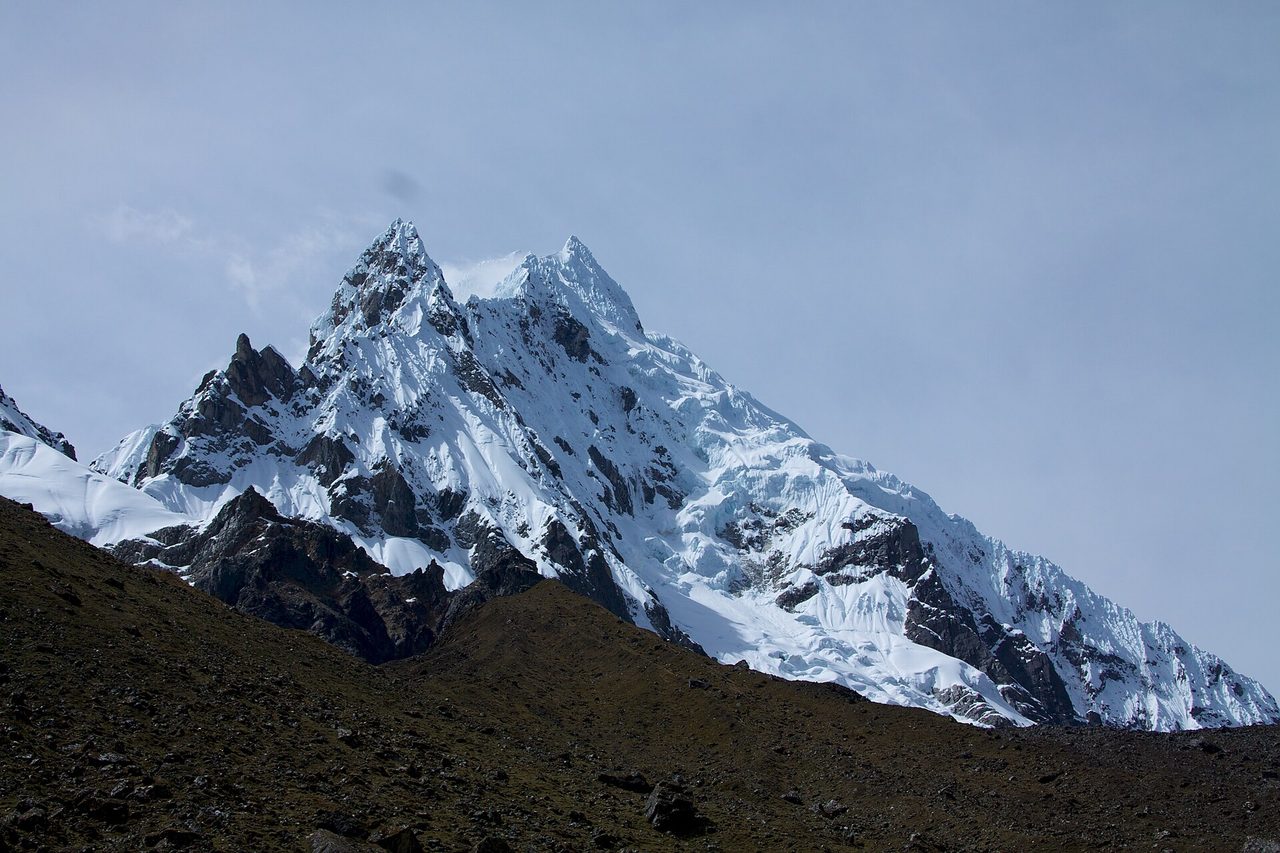
The ruins gap is unbridgeable
This is the part where Salkantay simply has no answer, and where the Inca Trail earns its price.
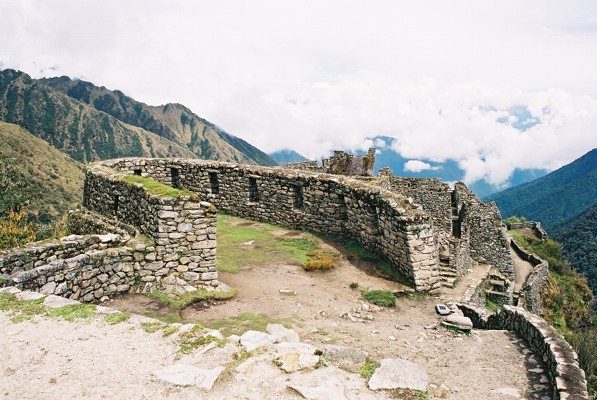
Walking the classic route you pass Patallacta, the terraced settlement visible across the river on day 1; Runkurakay, a small oval tambo perched between the first and second passes; Sayacmarca, a tight, vertiginous complex on a spur reached by a single staircase; Phuyupatamarca, the “town above the clouds” with its chain of ritual baths; Intipata’s terraces; and Wiñay Wayna, which is the most complete of them and which most people underrate because they arrive tired. Then Inti Punku. Seven encounters with Inca engineering in four days, on a paved road built for exactly this purpose.
Salkantay passes Llactapata, which is genuinely interesting — it gives you a distant, side-on view of Machu Picchu across the Aguas Calientes valley that Inca Trail hikers never get — and that is essentially the list. If you care about the wider network of Inca sites, or you have spent days working through the terraces and temples of the valley below Cusco, the contrast will land hard. Salkantay is a mountain walk that happens to end near an Inca city. The Inca Trail is an Inca road.
Permits: the constraint that decides most bookings
500 people per day may enter the classic four-day route, and that number includes guides, cooks and porters. In practice that leaves roughly 200 trekker places daily. Permits are nominative — issued against your name and passport number — non-transferable, and can only be bought by a licensed operator on your behalf. You cannot walk it independently. If you renew your passport between booking and trekking, tell your operator immediately; a mismatched number at the Km 82 checkpoint is a genuine, expensive problem.
Permits are also non-refundable. Not “refundable minus a fee” — the Ministry of Culture does not give the money back, whatever happened to you. Operators sometimes soften this out of goodwill, but the permit portion is gone. This is the single biggest practical argument for Salkantay if your dates are uncertain.
The 2026 permits were released on 17 November 2025 and rolled out month by month over about a week. The frequently repeated line that release happens in the first week of October is wrong. As of August 2026 the release date for 2027 has not been announced, so ignore any operator who tells you a precise date — register interest and let them book the moment the system opens. The full mechanics of how the permit system works are worth reading before you pay a deposit to anyone.
The trail also closes for the whole of February, every year, for maintenance and because the wet season makes the stone lethal. Machu Picchu itself stays open. If your trip is locked to February, the classic route is off the table and Salkantay or the train are your options.
Salkantay has no permit at all. You book a departure, you go. What you do still need is a timed entry ticket for the citadel itself, and in high season those sell out too — less dramatically than permits, but they do. Check that your Salkantay quote includes the entry ticket and which circuit it puts you on.
Cost, and who is paying for the cheap option
In 2026 a reputable four-day Inca Trail runs roughly US$700–1,500 per person. A five-day Salkantay runs roughly US$250–800. That gap is real and it is not marketing.
Most of the Inca Trail premium is structural rather than profit. The permit itself is a fixed government cost. The trail requires a licensed guide, and above eight trekkers a second one. It requires porters, who under Peruvian law must be insured, paid a regulated minimum and equipped. Everything you eat and sleep in is carried in and carried out, including waste. None of that scales down.
Salkantay avoids all of it. Mules and horses carry the loads. There is no permit. Sections of the route pass through villages with hostels and mountain domes, so an operator does not have to move a full camp. A well-run Salkantay at US$500–700 is a legitimately good deal.
A Salkantay at US$220 is not a deal, it is a transfer. Somebody is absorbing that difference and it is not the agency on the Plaza de Armas. It is the arriero on US$12 a day, the cook working from a fixed budget that shrinks when the group grows, the guide with twenty-two clients and no assistant, the mule carrying more than it should. It also usually means the entrance ticket, the return train and sometimes the Machu Picchu bus are excluded, so the headline price is not the price. When you are working out what a Peru trip actually costs, budget the trek at what it should cost and cut something else.
One more line item people forget on Salkantay: the return leg. The Consettur shuttle up to the ruins is about US$24 return, and a standard-class train seat from Aguas Calientes runs roughly US$35–60 per leg. Some Salkantay packages include them, plenty do not. The train pricing structure is its own small maze.
Porters and mules: the ethical difference nobody puts in the table
This is the comparison point I care most about, and I have never seen it in a competitor’s article.
Inca Trail porters are covered by Law 31614, in force since November 2022, which replaced the older 2001 statute. It sets a minimum wage for the work, requires accident insurance and proper cold-weather clothing and footwear, and caps the load. Sources vary on the exact ceiling — commonly quoted as 20 kg of client gear for men and 15 kg for women, and sometimes as 25 kg including the porter’s own kit — and the discrepancy is because different operators and different checkpoints count personal equipment differently. What is not in dispute is that the sacks are physically weighed at control points and a group that is over the limit does not pass. It is imperfect and it is enforced unevenly, but it exists.
Salkantay has nothing equivalent. The route uses horses and mules with arrieros, and it sits outside the protected-area regime that makes the Inca Trail weigh-in possible. Nobody weighs anything. Animal welfare varies from careful to grim, and you can see the difference from the trail. If this matters to you, ask a Salkantay operator directly how many kilos per animal, how often they are rested, what the arrieros are paid, and whether guides are on salary or per-departure. Reputable outfits answer immediately. The cheap ones change the subject.
On the Inca Trail, tip properly. The standard guidance in Cusco is somewhere around 60–100 soles per trekker per porter for a four-day group, pooled and handed over on the last night. It is a large part of what these men earn.
Scenery, wildlife and where each trek is genuinely better
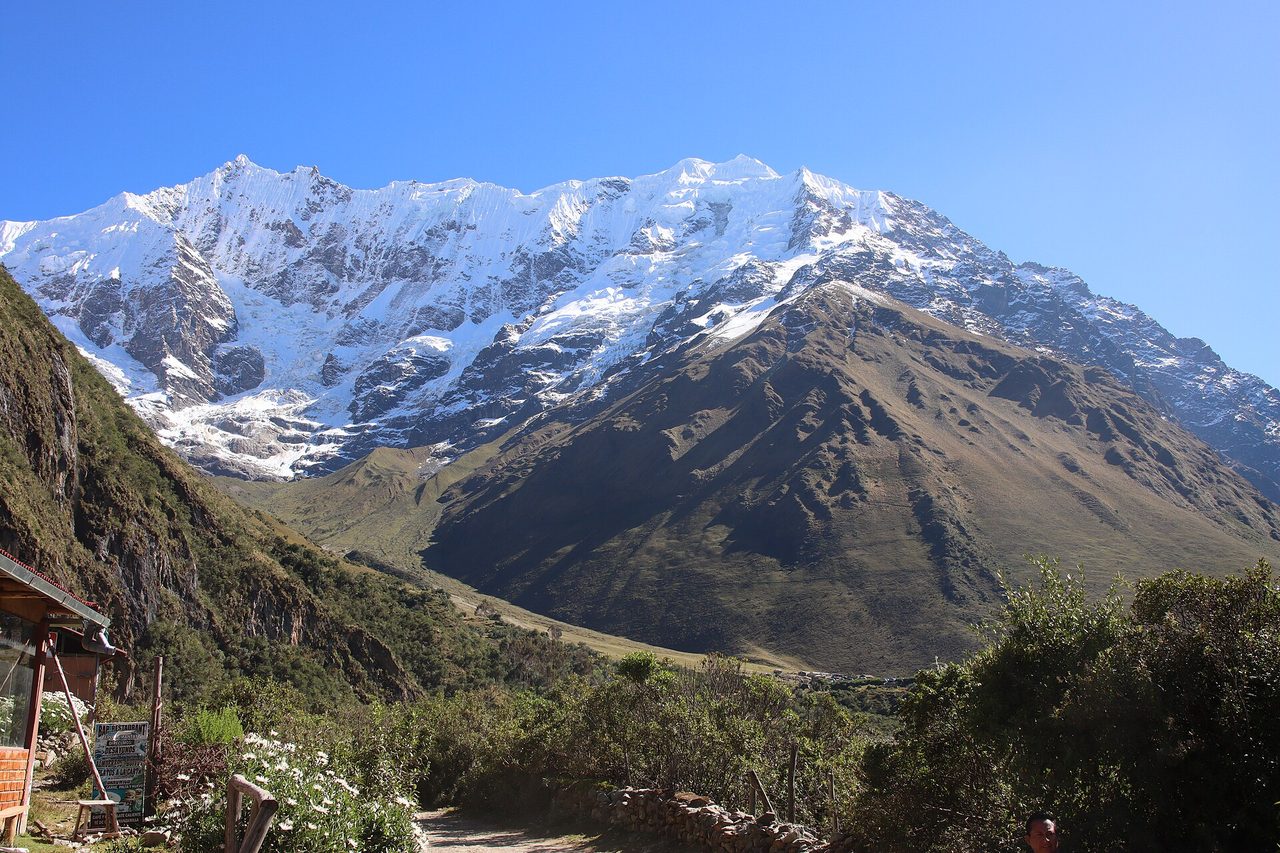
Salkantay wins the mountains outright. Nothing on the Inca Trail matches standing under 6,271 m of glaciated rock at the pass, or the colour of the lake below Humantay on a clear morning. The route also crosses far more life zones, and the day-three descent from high puna into cloud forest and then coffee country is the single best wildlife and scenery day on either trek: orchids, hummingbirds, tanagers, tree ferns, the smell changing hour by hour. It is spectacled bear country, though you will almost certainly not see one. If what lives in Peru’s different ecosystems is part of the appeal, that descent is a real argument.
The Inca Trail’s scenery is narrower and more curated. You are on a constructed road through a fairly consistent band of mountain and cloud forest, with the drama coming from what the Incas built into it rather than from the geology. The cloud-forest section on day 3 is lovely, but it is one afternoon, not two days.
Crowding is a wash, in opposite directions. The Inca Trail is capped, but because everyone walks the same four stages and camps in the same three places, camps are busy and the day-4 checkpoint queue is a genuine crush. Salkantay is uncapped but spread out, so you can walk for an hour alone — and then arrive at Soraypampa or the lake to find a car park and forty people. The often-repeated claim that only about 50 hikers a day do Salkantay is badly out of date; in July and August it is many times that.
Comfort, camps and the small stuff
Inca Trail nights are camping, all three of them, in tents your porters have pitched before you arrive. Good operators bring dining tents, hot water in the morning and portable toilets, which matter more than they sound. There are no showers. The camps are cold, sometimes properly cold at 3,600 m.
Salkantay accommodation is more varied and, at the upper end, more comfortable: sky domes with glass roofs at Soraypampa, dormitories and lodges lower down, hot springs at Santa Teresa, and a real hotel bed in Aguas Calientes on the last night. If sleeping badly under canvas is what worries you, that is a legitimate reason to choose Salkantay and nobody should sneer at it.
Both treks have a duffel weight limit for what the porters or mules carry, typically 7–8 kg including your sleeping bag and mat. You carry the rest. Plan for that; it is the number people misjudge.
Timing, weather and acclimatisation
Both routes follow the same seasonal logic as the rest of the southern highlands. May to September is the dry season and is when you want to be walking: cold clear nights, firm ground, reliable views. June to August is also when permits vanish first and prices peak. April and October are the sweet spot if you can be flexible — greener, quieter, with a real chance of rain. January to March is wet, and February takes the Inca Trail off the board entirely. There is more nuance in how the seasons play out at the ruins specifically, which is not identical to how they play out on the trail.
Acclimatisation is the thing people skimp on and then pay for. Cusco is 3,400 m. Do not fly in from Lima and start a trek within 48 hours, on either route, and especially not on Salkantay, which sleeps at 3,900 m on night one. Three nights at altitude before you start is the sensible minimum, four is better. That is not wasted time — it is the window for the day trips out of the city, or for a gentler warm-up walk. Building it in properly is one of the reasons a sensible route through the country puts Cusco in the middle rather than at the start.
Worth knowing: Machu Picchu is at 2,430 m, considerably lower than Cusco. Nobody gets altitude sick at the ruins. The risk is entirely on the passes.
When the answer is neither
Sometimes the correct advice is that both treks are the wrong purchase, and a comparison that will not say so is not being honest.
The two-day Short Inca Trail. Starts at Km 104 on the railway, climbs past Chachabamba and Wiñay Wayna, takes in Intipata, and arrives through the Sun Gate the same afternoon. It uses a separate permit allocation of a few hundred a day, so it is often available when the classic route sold out months ago. Roughly US$450–750 with a lot of variation depending on whether the train and entrance are included. It is one moderate walking day, and it delivers the two things the classic trek is really sold on. For anyone short of time, short of fitness, or short of notice, it is the most underrated option in Cusco. It is not linked here because I have not written it up yet.
Lares. Lower, easier, and the one people choose for the living culture rather than the ruins — weaving communities, hot springs, herds of alpaca. Two or three days, cheap, and it also finishes with a train. Choose it if you want the Andes at human scale rather than a summit.
Choquequirao. The serious one. Four to nine days, a punishing descent and re-ascent of the Apurimac canyon, and a site perhaps 40 per cent excavated with almost nobody there. If Machu Picchu’s crowds are what put you off, this is the antidote — and it is far harder than either trek in this comparison. Do not treat it as a warm-up.
Just take the train. If you have three days in Cusco, a bad knee, a nervous companion, or no interest in camping, take the train. You will see exactly the same ruins as every trekker, in the same light, having slept in a bed. There is no medal for arriving on foot. Every route to the site ends at the same gate, and the direct journey from Cusco is a good day out in its own right rather than a compromise. Plenty of people trek because they think they should, and spend four days wishing they had not.
If none of that lands, it is worth stepping back and looking at the full range of multi-day walks in the country. Ausangate, the Cordillera Huayhuash and Colca all beat both of these on landscape, and none of them ends at Machu Picchu.
How I would actually book it
If your dates are more than eight months out and you can commit: book the classic Inca Trail. Choose the operator on how they answer questions about porters, not on price. Expect to pay towards the upper half of the range for a company that treats its staff properly, and treat anything under about US$650 as a warning.
If you are inside four months for a June–August trip: check Short Inca Trail availability first, then book Salkantay with a mid-priced operator, and ask explicitly what is included — entrance ticket, circuit, bus, train class, whether day 4 walks or drives to Hidroeléctrica.
Either way, build in the acclimatisation days, book the citadel ticket for the day after you finish rather than the same afternoon if you can, and read up on how the site itself now works before you arrive. The circuit system means you cannot wander freely, and trekkers who assume otherwise are the ones you see arguing with a guard at 07:00.
Frequently asked questions
Is Salkantay really harder than the Inca Trail?
Yes. Higher pass (4,630 m against 4,215 m), more distance (60–74 km against 42–43 km), a higher first camp, a bigger single descent, and a wider temperature range. The Inca Trail has one genuinely brutal morning; Salkantay has two hard days and three long ones. The idea that Salkantay is the soft alternative comes from the fact that it is easier to book, not easier to walk.
Can I do the Salkantay trek without a guide?
Legally yes, unlike the Inca Trail. Practically, it is doable for experienced trekkers — the route is well trodden and there is food and lodging at intervals — but you carry everything, the pass is exposed, and you save less than you expect once you have paid for beds, meals and transport. Most people who go unguided do it to control the pace rather than to save money.
Do both treks include the Machu Picchu entrance ticket?
Inca Trail permits include entry. Salkantay packages should, but check — it is the most common exclusion in cheap quotes. Standalone foreign adult entry is currently S/163, or S/211 for a circuit including Huayna Picchu or Machu Picchu Mountain, after a SERNANP conservation surcharge was added on 1 May 2026. The surcharge does not apply to Inca Trail entries. Prices move, so confirm on the official portal before you pay.
Can I climb Huayna Picchu after either trek?
Yes, but it needs a specific ticket booked in advance and it is a separate circuit. Adding it after four or five days of walking is more punishing than people expect. If you are weighing it up, the two summit climbs differ more than the names suggest — one is short and steep, the other long and steady.
How far in advance do Inca Trail permits sell out?
For June, July and August, assume 6–10 months. Shoulder months go 3–5 months out. The 2026 allocation opened on 17 November 2025, staggered over roughly a week. The 2027 release date had not been announced as of August 2026 — be suspicious of any operator quoting one with confidence.
Which trek is better for photography?
Salkantay for landscape: glaciated peaks, the lake, the cloud-forest descent, and far more open sky. The Inca Trail for anything involving stonework, and for the one shot that only exists there — Machu Picchu from Inti Punku in early light, before the buses.
What happens if I get altitude sickness on the trek?
On the Inca Trail, evacuation means walking or being carried out to a road, which from the middle of the route is slow. On Salkantay, horses and access roads make extraction easier on most days. Neither is a substitute for acclimatising first. If a headache is not responding to fluids and rest by the second day at altitude, descend rather than push on.
Can I do both?
People do, usually on separate trips. Back to back is possible with a rest week between, but the sensible version is Salkantay now and the classic Inca Trail on a return visit when you have the lead time to book it properly.
Is either trek worth it if I have already decided to visit Machu Picchu?
The trek is a separate experience from the site, not an upgrade to it. If multi-day walking in the Andes appeals on its own terms, do one. If it does not, spend the money and the days on what there is to do around Cusco or on an extra region entirely. The honest case for and against the ruins themselves does not change based on how you arrived.