Best Time to Visit Cusco
Everyone says June to August. I disagree. Here is the month-by-month case for April and the late-September-to-early-November shoulder, with real temperatures, rainfall, prices and the festival dates that will wreck your budget.
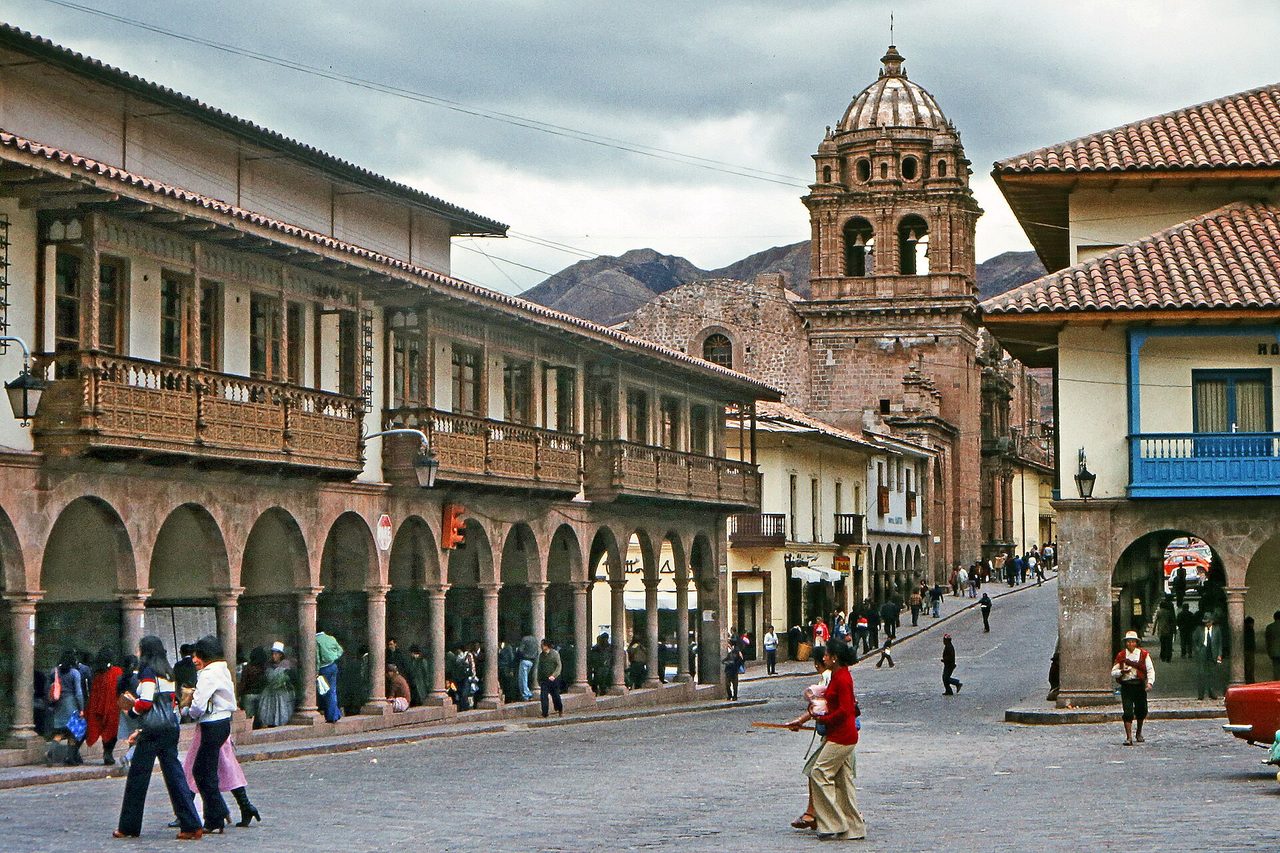
Ask ten tour companies about the best time to visit Cusco and ten of them will say the same four words: dry season, June to August. It is not wrong, exactly. It is just the answer to a different question. June to August is when Cusco has the most reliable weather. It is also when the city is at its most expensive, its most crowded and its coldest after dark. If what you want is the best trip rather than the best forecast, the numbers point somewhere else: April, and the stretch from late September through early November.
I have been in Cusco in the wet, in the dry, and in the awkward weeks in between. The shoulder months are the ones I keep going back for, and this guide is my attempt to explain why with actual figures rather than vibes — average highs and lows, rainfall in millimetres, what a hotel room costs, when the Inca Trail shuts, and which festivals will double your accommodation bill if you wander into them unprepared.
The short answer on the best time to visit Cusco
Cusco sits at roughly 3,400 m (11,150 ft) in the Peruvian Andes. That altitude, not the calendar, is the dominant fact about the place. It means the daytime temperature barely moves all year — every single month has an average high between 20 and 22 °C (68–72 °F). What changes month to month is not how warm the days are. It is how much it rains, how cold the nights get, and how many other people are standing where you want to stand.
Here is my ranking, and I will defend all of it below.
- Best overall: April, and late September to early November. Trails have dried out or not yet properly soaked, the hillsides are still green, prices have not gone vertical, and the ruins are noticeably emptier.
- Best weather, worst experience: June, July, August. Blue skies almost every day, and you will share them with everyone else on earth who read the same advice.
- Underrated: May. The rains have stopped, everything is still green, and the June price surge has not started. The only catch is that May nights are already cold.
- Fine if you understand the deal: December through March. Cheap, green, quiet, and wet in the afternoons rather than all day.
- The month with an asterisk: February. Wettest month and the Inca Trail is shut for the entire month.
If you only remember one thing, make it this: the difference between a good Cusco trip and a miserable one is far more likely to be how you handle the thin air at 3,400 metres than which month you booked. More on that below, because it is the single most under-covered thing on page one of Google for this topic.
Cusco weather month by month
These are 1991–2020 averages for the city itself. Two things to notice before you read the numbers. First, the max column is almost flat. Second, the min column swings by seven degrees, and the low point is right in the middle of the so-called best season.
| Month | Avg high | Avg low | Rain | Rain days | Crowds | Prices | Verdict |
|---|---|---|---|---|---|---|---|
| January | 20 °C / 68 °F | 8 °C / 47 °F | 160 mm | 19 | Low | Low | Wettest stretch begins. Green, cheap, mornings often usable. |
| February | 20 °C / 68 °F | 8 °C / 47 °F | 135 mm | 15 | Lowest | Lowest | Inca Trail closed all month. Cheapest rooms of the year. |
| March | 20 °C / 68 °F | 8 °C / 46 °F | 110 mm | 13 | Low | Low | Rains easing. Landscape at its greenest. Trail reopens 1 March. |
| April | 21 °C / 70 °F | 6 °C / 43 °F | 45 mm | 9 | Low–moderate | Moderate | My pick. Green hills, drying trails, no queues yet. |
| May | 21 °C / 70 °F | 4 °C / 39 °F | 9 mm | 2 | Moderate | Moderate | Effectively dry, still green, before the price spike. Cold nights start. |
| June | 21 °C / 69 °F | 2 °C / 36 °F | 2 mm | 1 | Very high | Very high | Peak everything. Festival month. Book six months out. |
| July | 20 °C / 69 °F | 1 °C / 34 °F | 4 mm | 1 | Highest | Highest | Driest and sunniest month. Also the coldest nights of the year. |
| August | 21 °C / 70 °F | 3 °C / 37 °F | 8 mm | 2 | Very high | Very high | Dry, dusty, windy in the afternoons. Still very busy. |
| September | 22 °C / 71 °F | 5 °C / 41 °F | 20 mm | 5 | High, then falling | Falling | Second half is one of the best fortnights of the year. |
| October | 22 °C / 71 °F | 7 °C / 45 °F | 45 mm | 9 | Moderate | Moderate | Warmer nights, occasional showers, thin crowds. Excellent value. |
| November | 22 °C / 72 °F | 8 °C / 46 °F | 80 mm | 13 | Low–moderate | Low | Warmest month on average. Rain returning but first half still good. |
| December | 21 °C / 70 °F | 8 °C / 46 °F | 120 mm | 16 | Low, spikes at Christmas | Low, spikes at Christmas | Properly wet again. Santurantikuy market on 24 December is worth a trip in itself. |
Sunshine tracks rainfall almost exactly. July averages about 8.5 hours of sun a day, January and February about 4.5. That is the practical difference between the seasons: not temperature, but light.
Why June to August is the best weather and the worst experience
I want to be fair to the dry season. From late May to early September the sky over Cusco is a deep, ridiculous blue for days on end. Rainfall in June and July averages 2 mm and 4 mm respectively, spread over a single rainy day each. If you have one shot at seeing the mountains without cloud, this is your window, and I would not tell anyone with fixed school holidays to feel bad about it.
The problem is everything else that comes attached.
The cold-night inversion that catches people out
Here is the part that genuinely surprises visitors. Peru’s dry season is the southern-hemisphere winter, and Cusco’s high altitude with dry, cloudless air means heat radiates straight out after sunset. July’s average overnight low is 1.2 °C (34 °F). On the colder nights of June, July and August the thermometer typically reaches about −1 to −2 °C, and the records go lower still — −6.3 °C in July 2006, −5.2 °C in August 1991.
So the dry season delivers pleasant 20 °C afternoons and sub-zero dawns on the same day. A twenty-degree daily swing is not something most travellers pack for. Compounding it, a lot of Cusco accommodation has no central heating at all. Colonial buildings with thick adobe walls hold cold beautifully, which is not the feature you want in July. If you are booking dry-season dates, treat a heater or a hot water bottle as a genuine selection criterion when you are working out which Cusco neighbourhood and hotel to choose, not a nice-to-have.
By contrast, wet-season nights sit around 8 °C. Cloud cover acts like a lid. December in Cusco is warmer at 3am than July is, by a margin of about seven degrees.
What peak season actually costs you
Money first. A mid-range Cusco double that goes for roughly US$30–70 a night in January or February commonly asks US$80–200 for the same room in late June. That is not a subtle seasonal adjustment. It is a doubling or worse, and it lands on top of higher flight prices into Lima and Cusco. Anyone building a realistic budget for a Peru trip should model the same itinerary in June and in October and look at the gap.
Then availability. Classic Inca Trail permits are capped at 500 people a day, and only about 200 of those are trekkers — the rest are guides, porters and cooks. June and July dates disappear within days of the permit release, sometimes within 48 hours for the most wanted departures. If your heart is set on the four-day trek to the Sun Gate in peak season, you are looking at booking six to eight months out, not two to three. Permits for the following year are normally released in early October; confirm the exact release date with an operator rather than assuming.
Then the site itself. Machu Picchu’s daily cap is 4,500, but it rises to 5,600 on designated peak dates, and one of those windows runs from 19 June to 2 November (the others are 1 January, 2–5 April, and 30–31 December). More tickets sold is good news if you are trying to get in at short notice and bad news for how the citadel feels once you are inside. The circuits have been one-way and ranger-enforced since June 2024, so you cannot loop back for a second look at anything. Understanding how the circuit and ticket system works matters more in peak season than at any other time, because the margin for error is smaller.
And the crush is not spread evenly. The single tightest week of the Cusco year is roughly 20–26 June, wrapped around Inti Raymi. Rooms sell out, prices spike beyond the normal peak, and the city centre becomes a parade route. It is a superb thing to witness. It is a terrible week to arrive without a plan.
The case for April
April is the most underrated month in the Cusco calendar and it is not close. Rainfall drops from March’s 110 mm to about 45 mm across nine days. The heavy season is over, but the hills have not yet turned brown. You get the green landscape of the wet season with something close to the walkability of the dry one.
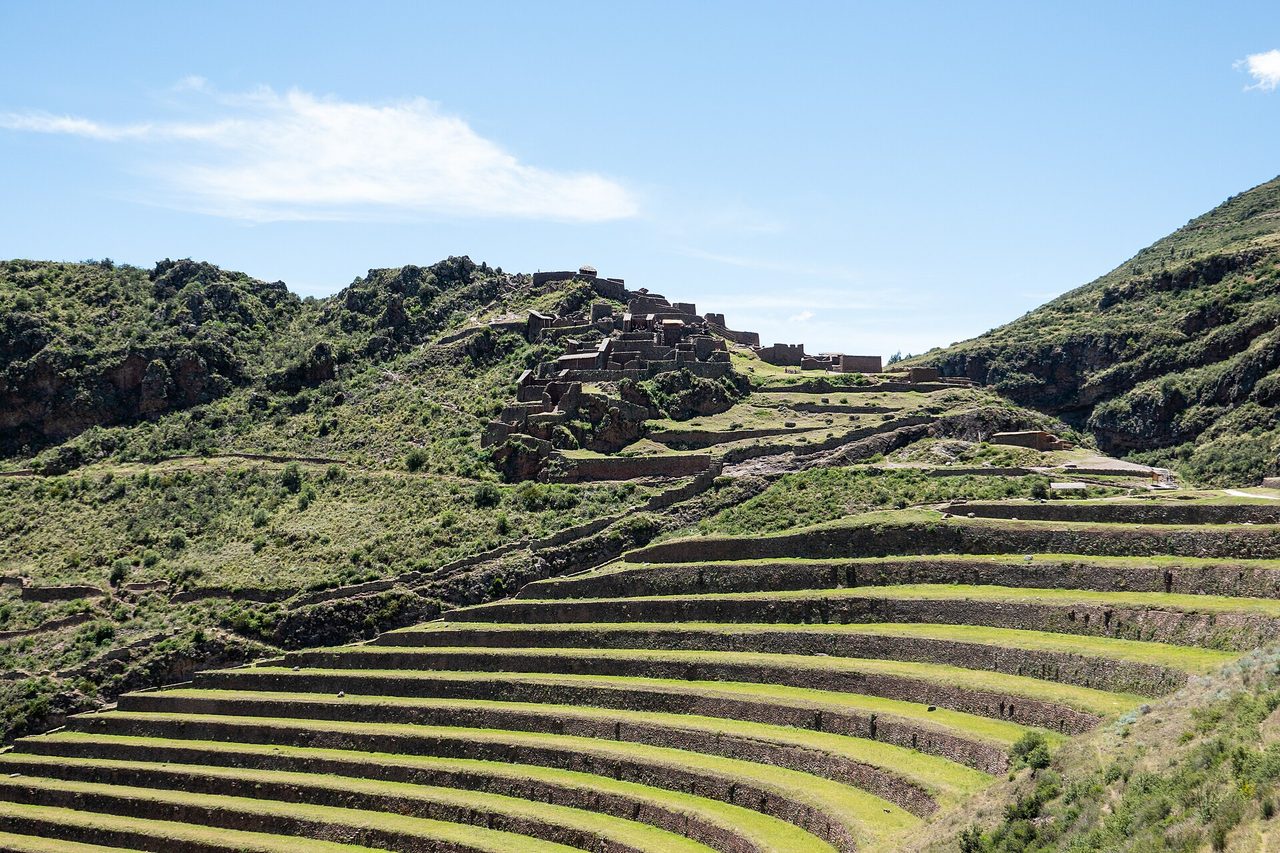
What that means on the ground: the terraces of the Sacred Valley are still vivid rather than straw-coloured, the streams are running, and the classic viewpoints are photographable without a queue behind you. If you are planning to work through Pisac, Ollantaytambo and the rest of the valley, April gives you the version of it that appears in the marketing photographs.
April nights average 6 °C, which is cold but not the punishing cold of July. Trails are drying, though early April can still be muddy on the higher passes. Prices sit in the middle of the range. The one thing to watch is Semana Santa: Easter week brings a domestic travel surge, and Cusco’s own Señor de los Temblores procession on Easter Monday fills the Plaza de Armas. Easter falls on 28 March in 2027, so most of April that year is clear of it.
April is also inside a Machu Picchu peak-cap window on 2–5 April, which tells you the authorities expect a surge over Easter. Plan around those four days rather than into them.
The case for late September to early November
The second sweet spot runs from about the third week of September to the first week of November. This is where I would send someone who wants dry-season conditions without dry-season conditions, if that makes sense.
September averages 20 mm of rain over five days — statistically almost as dry as August — but the crowds thin out sharply once the northern-hemisphere summer holidays end. October brings 45 mm over nine days, mostly as short afternoon showers, and the nights warm back up to an average low of 7 °C. November is the warmest month of the year on average, with the year’s highest average high at 22.2 °C, and the first half of it is often excellent before the rains settle in.
The economics are the real argument. Room rates have dropped back from the June peak. Inca Trail permits are frequently still available a couple of months out. Day tours run with smaller groups because operators are filling minibuses rather than turning people away. Half-day trips like the climb to the turquoise glacial lake at Humantay are transformed by having twenty people at the shore instead of two hundred.
The trade-off is honest and worth stating: you are accepting some chance of an afternoon soaking, and a shoulder-season October can occasionally behave like a wet-season October. That is the deal. In exchange you get a version of Cusco that still feels like a working Andean city rather than a queue.
Cusco rainy season: what it actually feels like
The phrase “rainy season” does more damage to Cusco tourism than any other three syllables in travel writing. People picture monsoon. What actually happens between November and March is this: mornings are frequently clear or partly clear, cloud builds through the middle of the day, and the rain arrives as a heavy burst in the afternoon or evening, often lasting an hour or two. All-day rain happens, but it is the exception, not the rule.
January, the wettest month, averages 160 mm across 19 days. That sounds relentless until you notice it works out to about 8 mm per rainy day, and that the sun still manages four and a half hours a day. The practical strategy is simply to front-load your day: ruins and viewpoints in the morning, markets, museums, churches and a long lunch in the afternoon. Cusco has enough indoor material to absorb a wet afternoon without effort, and the city’s food scene is genuinely one of the better reasons to be stuck inside anywhere in South America.
The upsides of the green season are real and they are consistently undersold:
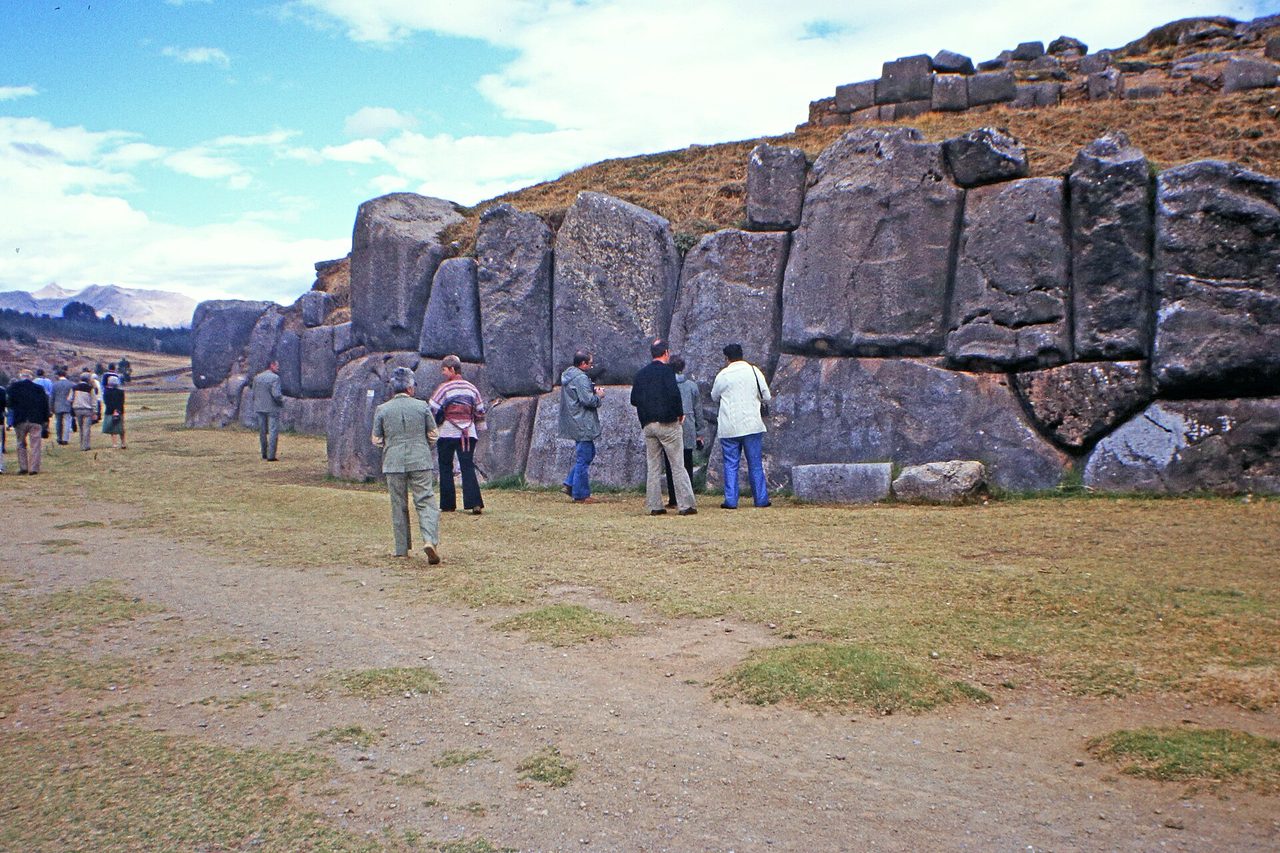
- Emptier ruins. Sacsayhuamán, Q’enqo and Tambomachay in February bear no resemblance to the same sites in July. You can stand at the great zigzag walls essentially alone, and the Cusco tourist ticket that covers all three sites costs exactly the same in February as in July.
- The landscape at full saturation. Everything is green. The terraces, the passes, the valley floor. Waterfalls exist that do not exist in August.
- Prices. Rooms at their lowest, tours discounted, restaurants happy to see you.
- Machu Picchu availability. Same-week tickets are often obtainable in the wet months, which is close to impossible in July. Entry is currently S/163 for a foreign adult, or S/211 for the circuits including Huayna Picchu or Machu Picchu Mountain, after the SERNANP conservation surcharge came in on 1 May 2026. Check the official portal before you book, because these figures move.
- Better light for photographs. Broken cloud over the Andes beats flat blue sky most days of the week.
Who should still avoid the rainy season
I am not going to pretend it suits everyone. Skip December to March if:
- You are here primarily to trek. Mud, leeches on the jungle sections of the Inca Jungle route, cloud sitting on the passes, and a real chance of seeing nothing at all from the top of a 4,600 m col. Weigh this carefully before committing to any of Peru’s multi-day mountain routes in those months.
- You have a single fixed day at Machu Picchu. A clouded-in citadel in February is a real possibility, and there is no rain check. If your schedule cannot absorb a bad day, buy yourself a spare one — the logic behind how many days to allow for Machu Picchu changes completely in the wet season.
- Landslide risk would ruin your trip. Heavy rain occasionally closes the rail line into Aguas Calientes for a day or two. It is uncommon, it is usually resolved quickly, but if you have an international flight two days later it is a genuine risk.
- You want Rainbow Mountain. Snow cover on the ridge in the wet months regularly hides the very stripes you came for. The Vinicunca day trip is a dry-season or shoulder-season activity, full stop.
February: the month with an asterisk
February deserves its own section because of one hard fact. The Inca Trail closes for the whole of February every year for maintenance and restoration — trail surface repairs, bridge work, drainage, campsite recovery. It closes on 1 February and reopens on 1 March. That applied in February 2026 and, on the same standing rule, applies to February 2027. No permits are issued for those dates, and that covers both the four-day classic route and the two-day KM104 short trail.
What does not close is almost everything else:
- Machu Picchu itself is open, 365 days a year.
- The trains to Aguas Calientes run as normal, weather permitting, at roughly US$35–60 per standard-class leg.
- The Consettur shuttle bus from town up to the entrance runs as normal, around US$24 round trip.
- Salkantay, Lares and the Inca Jungle route all stay open. They are wet and muddy in February, but they are open, and they are the standard workaround.
February is therefore the cheapest month to be in Cusco and the worst month to arrive assuming you will walk to Machu Picchu. If the trek is the point of your trip, pick another month. If Cusco and the citadel are the point, February gives you low prices, empty sites and a green valley, and you take the train or a road-and-hike route instead.
Festivals worth building a trip around
Cusco has more festivals than any other city in Peru, and a few of them are worth reorganising a trip for. They also have a direct effect on prices, so read this section as much for planning as for culture.
| Festival | When | What happens | Effect on prices |
|---|---|---|---|
| Carnaval | The days before Ash Wednesday (February or early March) | Water fights, foam, parades. Genuinely citywide and genuinely soaking. | Minimal. Low season absorbs it. |
| Señor de los Temblores | Easter Monday | The blackened Christ of the Earthquakes carried around the Plaza de Armas, showered in red ñucchu flowers. | Moderate; Semana Santa fills domestic rooms. |
| Q’oyllur Rit’i | The week before Corpus Christi (late May or early June) | A high-altitude pilgrimage to a glacier at around 4,700 m. UNESCO-listed. Not a spectator event; it is a serious ascent. | Low in the city, but guides and transport get scarce. |
| Corpus Christi | 60 days after Easter, always a Thursday. 4 June 2026; 27 May 2027. | Fifteen saints and virgins carried into the cathedral, then a full procession round the plaza. Locals eat chiriuchu in the square. | Noticeable. Start of the June squeeze. |
| Inti Raymi | 24 June, every year | The Inca festival of the sun, staged at Qorikancha, the Plaza de Armas and finally Sacsayhuamán. Hundreds of performers, ticketed grandstands. | Severe. The 20–26 June window is the most expensive week of the Cusco year. |
| Fiestas Patrias | 28–29 July | Peru’s national holiday. Peruvians travel, so domestic demand spikes. | High, on top of an already high month. |
| Santurantikuy | 24 December | One of the oldest craft markets in the Americas, filling the Plaza de Armas with nativity figures. | Christmas bump only. |
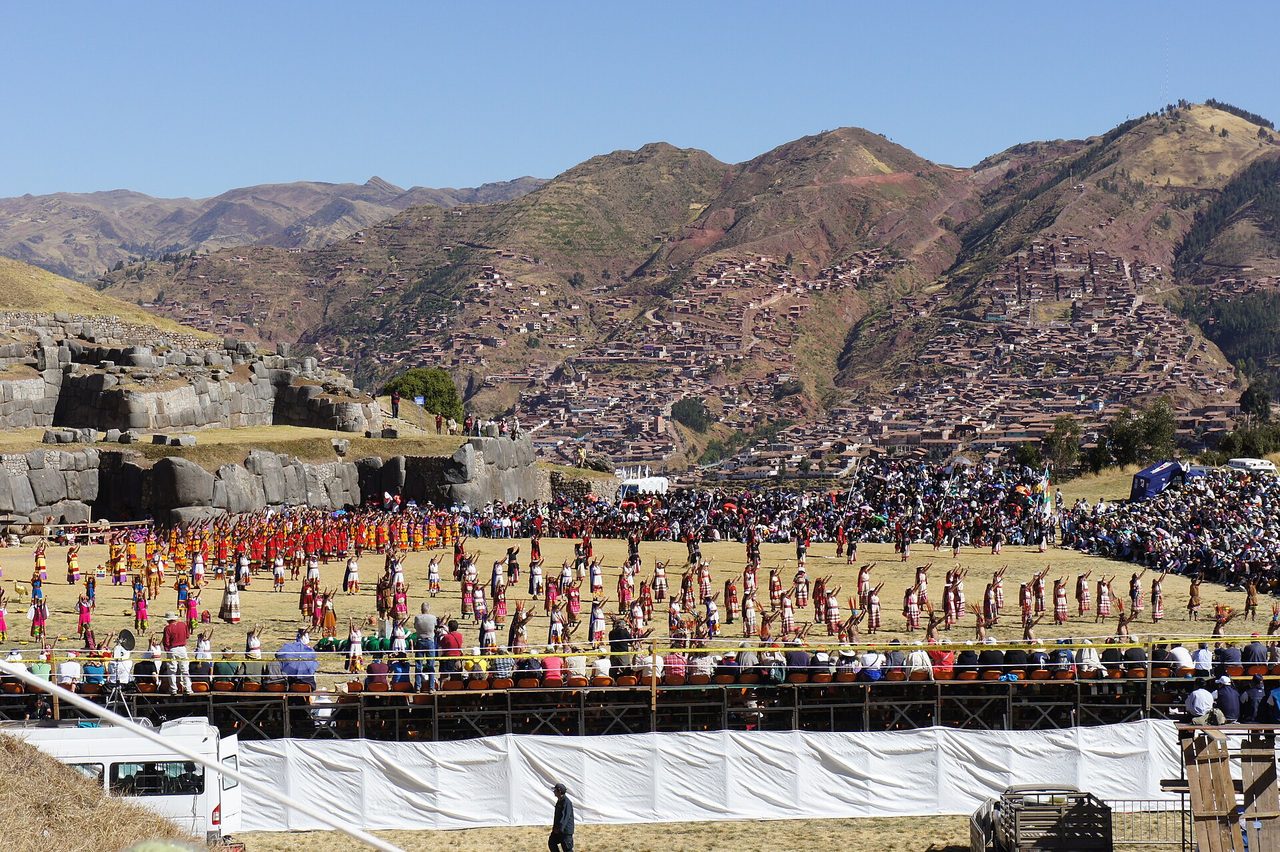
My honest read on Inti Raymi: it is a magnificent piece of theatre and an easy thing to over-plan around. If you happen to be there, go. If you are choosing dates from scratch and are not specifically a festival traveller, the last week of June is the single worst value week of the year in Cusco, and there are eleven other festivals across the Peruvian calendar that cost you nothing in room rates. Note also that Q’oyllur Rit’i and Corpus Christi both shift with Easter, so verify the year you are travelling rather than copying dates from an old article.
Altitude beats weather, and it is not close
This is the argument I most want to land, because every competing page on this topic buries it.
Whatever month you choose, the variable that will most determine how much you enjoy Cusco is not rainfall. It is how your body handles 3,400 m in the first 48 hours. Roughly half of arriving visitors feel some degree of altitude effect: headache, breathlessness on stairs, broken sleep, a flat appetite, mild nausea. It is common, it is usually mild, and it is almost entirely a function of how fast you ascend and what you do on day one — not of the season.
The practical consequence is that a trip in perfect July weather where you fly in from Lima at 10am and go straight to a Sacred Valley tour will be worse than a trip in rainy January where you arrive, walk slowly to your hotel, drink water, eat something light and do nothing much until the following afternoon. I have watched people write off Cusco entirely because they scheduled Rainbow Mountain for their second morning.
A few things that actually help, none of which cost anything:
- Give the first day to the city. Flat streets, short walks, an early night. Build the schedule around a realistic number of days in Cusco with slack at the front.
- Consider sleeping in the Sacred Valley first. Urubamba sits around 2,870 m and Ollantaytambo around 2,790 m, both meaningfully lower than the city. Many people find the reverse itinerary — valley first, Cusco later — far easier.
- Machu Picchu is at 2,430 m, nearly a kilometre lower than Cusco and noticeably warmer. It is not the altitude challenge people expect. Cusco is.
- Eat less than you think you want on day one, and drink more water than you think you need.
- Do not treat coca tea as a medical intervention. It is pleasant and mildly helpful. It is not acclimatisation.
If you are on a tight schedule, front-load the low-effort sights and push the hard ones back. Plenty of the standard day trips out of Cusco involve passes above 4,000 m, and doing those on day two is how a good trip goes wrong.
Best time for the city is not the best time for the treks
Competitors blur these two questions into one answer. They are not the same answer, and conflating them is how people end up in the wrong month.
| What you are here for | Best window | Avoid | Why |
|---|---|---|---|
| Cusco the city: plazas, San Blas, museums, food, markets | Almost any month; March to May and October to November are the sweet spots | Late June only if you dislike crowds | Rain is an afternoon inconvenience in a compact walkable city, not a trip-ender |
| Multi-day trekking (Inca Trail, Salkantay, Lares, Ausangate) | May to September, with April and October as decent bets | December to March, and all of February for the Inca Trail | Mud, cloud on the passes, river crossings, and nothing to see from the top |
| Machu Picchu on a fixed date | May to September for clear-sky odds | January and February if you have only one shot | Cloud, not rain, is what ruins the view. See the wider question of when to visit Machu Picchu |
| High-altitude day hikes (Rainbow Mountain, Humantay, Ausangate lagoons) | April to October | December to March | Snow hides the colours at Vinicunca; cloud hides everything else |
| Photography and empty ruins | Late September to early November, or February | June to August | Fewer people in frame, better cloud, softer light |
| Lowest possible cost | January to March | Mid-June to early August | Rooms can be half price or less; see doing Machu Picchu cheaply |
One more wrinkle if Cusco is part of a longer route. The Andean dry season is also the best time for the Amazon lowlands and the driest stretch on the desert coast, so a June to September trip stacks nicely if you are combining regions. If you are only doing the south, the shoulder logic holds. Work it out against the wider seasonal picture for the whole country before you lock in flights, and against a realistic route through Peru.
What to pack for the month you pick
Layers, always, but the emphasis shifts.
- June to August: a proper insulating layer and something warm to sleep in. A hat and gloves are not overkill for a 5am start. Days are T-shirt weather; do not be fooled at noon.
- December to March: a light waterproof shell with a hood beats an umbrella on windy streets, plus boots or shoes with real grip. Cusco’s stone pavements turn slick fast, and the steep lanes in San Blas are treacherous when wet.
- April, May, September to November: both of the above, in smaller quantities. This is the packing sweet spot as well as the weather one.
- Every month: high-factor sun cream and sunglasses. The UV at 3,400 m near the tropics is brutal even under cloud, and it is the single most common thing people underestimate. The same logic applies to what you wear at the citadel, which is lower, warmer and more humid than the city.
One admin note that catches students out: ISIC cards are no longer accepted for discounted rates at Peruvian sites. You need a university photo ID showing an expiry date. That is worth knowing before you arrive, along with the rest of the practical ground rules for travelling in Peru.
How I would choose, by traveller type
- First-timer with three weeks and no fixed dates: the second half of September or the first half of October. Best balance of weather, crowds and price in the year.
- Trekker who wants the Inca Trail: May or September. Dry enough, and permits are obtainable without booking a year ahead.
- Budget traveller: February. Accept the trail closure, take the train, spend the savings on more days.
- Photographer: April. Green everything, dramatic cloud, empty sites.
- Family with school-age children: you are probably locked into July or August. Book six months out, prioritise heated rooms, and build in two full acclimatisation days.
- Anyone who hates crowds more than they hate rain: late January through early March. You will have most of what there is to do in Cusco to yourself.
Frequently asked questions
What is the single best month to visit Cusco?
If I had to name one: October. Average high 22 °C, average low 7 °C, 45 mm of rain across nine mostly-afternoon showers, crowds well down from the peak, and prices back in the reasonable range. April is a close second if you weight green landscape over dry trails. July has the best weather statistics and the worst everything else.
Is Cusco cold at night?
Yes, and more so than most people expect. The dry-season months are the cold ones: July averages 1.2 °C overnight, and colder nights in June to August typically hit −1 to −2 °C. Wet-season nights sit around 8 °C. Because heating is not standard in Cusco hotels, a June night can feel colder indoors than out.
What months are the Cusco rainy season?
November to March, with December through February the heaviest. January is the wettest at about 160 mm over 19 days. The typical pattern is a clear or partly clear morning and a heavy burst in the afternoon rather than continuous rain. April and November are transition months and often behave better than their reputation.
Is the Inca Trail really closed for the whole of February?
Yes. It closes 1 February and reopens 1 March, every year, for maintenance and conservation. That covers the four-day classic route and the two-day KM104 trail. Salkantay, Lares and the Inca Jungle route stay open, as do the trains and Machu Picchu itself.
Is it worth visiting Cusco in the rainy season?
For the city and the citadel, yes, provided you accept afternoon rain and build in a spare day at Machu Picchu. You get half-price rooms, green hillsides and sites that are genuinely quiet. For multi-day trekking or Rainbow Mountain, no. Those are the activities where wet-season conditions actually take away the thing you came for.
How many days should I spend in Cusco before going to Machu Picchu?
Two full days in Cusco or the Sacred Valley before any strenuous day, and ideally before Machu Picchu as well. Not because the citadel is high — at 2,430 m it is lower than Cusco — but because a headache and no sleep will spoil it regardless of the weather. If you have flown in from sea level, plan the journey from Cusco down to Machu Picchu for day three at the earliest.
When do prices in Cusco drop?
Sharply after the first week of November, and they stay low until March. There is a smaller dip in late September and October. The steepest prices run from mid-June to early August, with the 20–26 June Inti Raymi window the most expensive of all.
Is Machu Picchu warmer than Cusco?
Yes, noticeably. Machu Picchu sits at 2,430 m against Cusco’s 3,400 m, in a more humid cloud-forest environment on the edge of the Amazon basin. Expect warmer days, much warmer nights and more insects. The town below the ruins is warmer still. Many people are surprised to be too hot at the citadel and freezing back in Cusco on the same day.
Which month has the fewest tourists in Cusco?
February, comfortably. It combines the wettest weather with the Inca Trail closure, so both the leisure and trekking markets thin out at once. If you want the honest verdict on whether Machu Picchu lives up to the hype, seeing it in February with a fraction of the usual crowd is the fairest test there is.
The bottom line
The dry season is not a lie, it is just an incomplete answer. June to August gives you the most reliable sky in exchange for the highest prices, the thickest crowds and nights that dip below freezing in a city where the heating is optional. April and the late-September-to-early-November stretch give you most of the weather, a far greener landscape, materially cheaper rooms and ruins you can actually stand still in.
And whichever month ends up on your ticket, spend the first 48 hours doing very little at 3,400 m. That decision will shape your trip more than the rainfall column ever will.