Best Day Trips from Cusco
Cusco's day trips are sorted by altitude gain and wake-up time, not by scenery, and most people book them in exactly the wrong order. Here is the full realistic set with real prices in soles, pickup times, drive hours and honest verdicts.
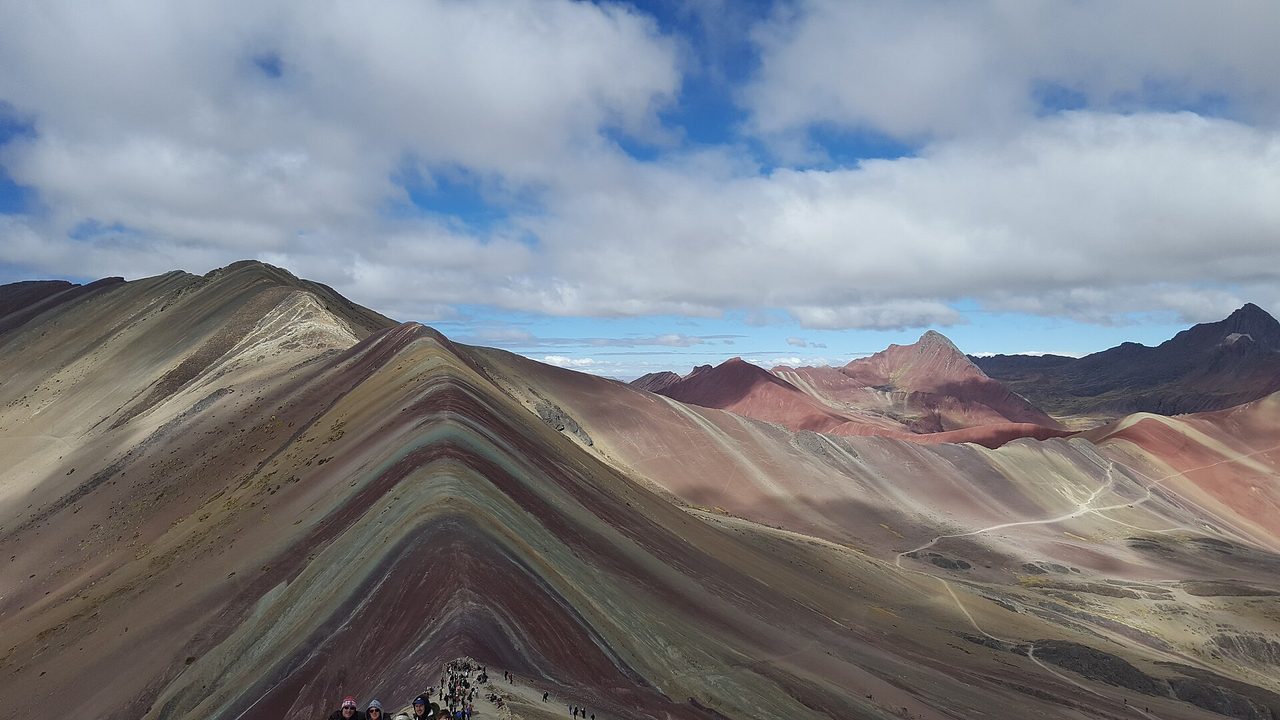
The alarm goes at 2:40am. By 3:15 you are in a minibus with eleven strangers, and for the next three hours you doze badly against a cold window while the driver grinds up over a 4,300 m pass in the dark. At around 7am you are handed a bread roll and a mug of coca tea in a tin-roofed shed, and by 9am you are walking uphill at 5,000 m, wondering why your legs have stopped answering. That is Rainbow Mountain, and it is the single most-booked of all the day trips from Cusco.
It is also, for most people, booked on completely the wrong day.
Almost every list you will read ranks these excursions by how good the photographs are. That is not how your body ranks them. Your body ranks them by two things: how much higher than Cusco you are going, and what time the van comes. Get that order wrong and you spend your third morning in Peru sitting on a rock at 5,036 m with a plastic oxygen mask on your face while your group walks on without you. I have watched it happen more than once, and the person it happens to is almost never the unfit one. It is usually the twenty-eight-year-old who runs marathons and flew in from sea level on Tuesday.
So this guide is organised the way I wish someone had organised it for me: by altitude gain and wake-up time first, scenery second. Everything else — real prices in soles, actual pickup windows, which of these you can do yourself for a tenth of the tour price, and the two I think most people should skip outright — follows from that. What is worth doing inside the city itself is ranked separately in our run-through of the best things to do in Cusco.
Why day trips from Cusco should be sorted by altitude, not scenery
Cusco sits at 3,400 m. That is already high enough that a meaningful share of arrivals feel rough for 24 to 48 hours: headache, poor sleep, no appetite, a heart rate that will not settle. Most people are functional by day three and genuinely fine by day four or five.
Now look at where the popular excursions actually go. Vinicunca, the Rainbow Mountain, tops out at 5,036 m. Palccoyo, sold everywhere as the “easy alternative”, is around 4,900 m at its highest viewpoint. Ausangate’s Seven Lakes route reaches roughly 4,800 m. Humantay Lake sits at 4,200 m. Those are not small steps up from 3,400 m. Vinicunca alone is a 1,600 m gain, done in a single morning, after a night of almost no sleep, on a stomach that has had one bread roll.
Meanwhile the trips people leave until last are the low ones. Ollantaytambo is at 2,790 m. Machu Picchu is 2,430 m — nearly a kilometre below Cusco, which is why so many travellers notice they suddenly feel wonderful the moment they get off the train. Almost nobody tells you that. The famous site is the easiest breathing you will do all week, and it is invariably scheduled for the end.
Flip it. Spend your first days low and near town, use the Sacred Valley as a genuine acclimatisation tool rather than a sightseeing box to tick, and save the 5,000 m mornings for the back half of your stay. It costs you nothing and it is the difference between enjoying the high days and enduring them. If you are still shaping the wider trip, this sequencing logic should feed straight into your route planning across the country, because it also decides whether you arrive in Cusco from Lima at sea level or from Puno at 3,800 m already acclimatised.
The altitude and wake-up table
This is the table I would have wanted on day one. Altitudes are the maximum point you actually stand on, not the town you drive through. “Gain” is measured against Cusco at 3,400 m. Costs are the realistic street price for a shared group tour booked in Cusco, in soles, and exclude entry fees unless noted. “Earliest sensible day” assumes you flew in from Lima and have done nothing to acclimatise beforehand.
| Trip | Max altitude | Gain vs Cusco | Pickup | Door to door | Group cost | Earliest sensible day |
|---|---|---|---|---|---|---|
| Sacsayhuamán ruins circuit | 3,700 m | +300 m | Walk out any time, or 8:30am | 3–5 hrs | Free on foot + S/70 ticket | Day 1 |
| South Valley: Tipón, Pikillacta, Andahuaylillas | 3,560 m | +160 m | 8:00am | 6–7 hrs | S/60–110 | Day 1 |
| Maras & Moray | 3,500 m | +100 m | 8:30am (half day) | 5–6 hrs | S/60–120 | Day 1–2 |
| Sacred Valley: Pisac, Chinchero, Ollantaytambo | 3,760 m (Chinchero) | +360 m | 7:00–8:00am | 10–12 hrs | S/70–130 | Day 2 |
| Machu Picchu, there and back in a day | 2,430 m | −970 m | 4:00–4:30am | 16–17 hrs | US$250–380 | Day 2 onwards |
| Palccoyo | 4,900 m | +1,500 m | 4:30–6:00am | 11–12 hrs | S/100–150 | Day 4 |
| Humantay Lake | 4,200 m | +800 m | 4:00–4:30am | 12–13 hrs | S/90–160 | Day 4 |
| Waqrapukara | 4,300 m | +900 m | 4:00–5:00am | 12–14 hrs | S/90–150 | Day 4–5 |
| Rainbow Mountain (Vinicunca) | 5,036 m | +1,636 m | 3:00–4:00am | 13–15 hrs | S/60–150 | Day 5 |
| Ausangate Seven Lakes | 4,800 m | +1,400 m | 4:00–4:30am | 14–16 hrs | S/120–200 | Day 5–6 |
Two patterns jump out once it is laid out like this. First, the four cheapest and shortest trips are also the four lowest — the ones you should be doing first anyway. Second, everything above 4,000 m demands a pickup before 5am, which means you are attempting the hardest physical thing of your trip on four or five hours of broken sleep. Those two facts are related, and no tour agency on Plaza de Armas is going to volunteer them. Your address matters here too: pickups run a loop and outlying hotels get collected first, which is one more argument for picking a central, flat place to sleep.
A sequence that works
If you have six full days in Cusco, this is the order I would use. Day one: nothing more ambitious than the city itself and the ruins on the hill above it. Day two: the South Valley or Maras and Moray, both low, both short. Day three: the full Sacred Valley run, sleeping in Ollantaytambo or Urubamba if you can rather than driving back up. Day four: Machu Picchu, which is a descent and therefore recovery. Day five: Humantay or Palccoyo. Day six: Vinicunca, if you still want it.
With four days, cut Vinicunca and Ausangate rather than trying to squeeze them in. With three, do the Sacred Valley, Machu Picchu and one low half-day, and accept that the high-altitude lakes are for the next trip. The wider practical groundwork for travelling in Peru matters more here than in most countries, because the mistakes are physiological rather than logistical.
The trips, in the order your body wants them
1. Sacsayhuamán and the ruins circuit above the city
The four sites strung along the road above Cusco — Sacsayhuamán, Q’enqo, Puka Pukara and Tambomachay — are the correct thing to do on your first or second morning, and hardly anyone treats them that way. Sacsayhuamán is about 3,700 m and a genuinely steep twenty-five-minute walk up from the Plaza de Armas, which is exactly the sort of controlled effort that helps you acclimatise.
Logistics. Entry is via the Boleto Turístico only; there is no single ticket for Sacsayhuamán alone. Circuit I costs S/70 for foreign adults, is valid one day, and covers all four sites. The classic way to do it is to take a Pisac-bound colectivo from Calle Puputi for S/5, tell the driver you want Tambomachay, then walk downhill through Puka Pukara, Q’enqo and Sacsayhuamán and finish in the city. That is roughly 8 km, all descending, and takes three to four hours with stops. A taxi to Tambomachay runs S/25–35.
The honest verdict. Sacsayhuamán is superb and the stonework is the best argument you will see for Inca engineering anywhere outside Ollantaytambo. Tambomachay and Puka Pukara are ten-minute stops that are pleasant rather than remarkable. The four-hour guided minibus tours sold around the plaza for S/70–90 give you about forty minutes at Sacsayhuamán and a lot of standing around, and I would not take one unless you specifically want a guide. Do it on foot. It is also the only one of these excursions that fits around a lie-in, and both this and the rest of what the city itself has to offer deserve a full unhurried day before you go anywhere high.
2. The South Valley: Tipón, Pikillacta and Andahuaylillas
This is the trip almost nobody takes, and the one I most often recommend. The South Valley runs southeast from Cusco toward Urcos, and it is lower than the city for most of its length. Tipón, at about 3,560 m, is an Inca water garden: a series of terraces fed by stone channels that still run, still perfectly level, five centuries later. Pikillacta is a pre-Inca Wari city of some 700 buildings laid out on a rigid grid, dated to roughly 600–1000 AD, and it is the only confirmed pre-Inca site of scale near Cusco.
Then there is the church of San Pedro Apóstol at Andahuaylillas, at 3,120 m, which people call the Sistine Chapel of the Andes. The exterior is a plain adobe box. Inside is a ceiling of painted and gilded coffering, murals by Luis de Riano, and a 1610 organ. It costs S/15 to enter and it is not on the Boleto Turístico. It is the single most surprising interior in the Cusco region and about one visitor in twenty gets there.
Logistics. Tipón and Pikillacta are on Boleto Turístico Circuit II (S/70, two days, also covers the city museums). Colectivos to Urcos leave from Avenida Huayruropata and cost S/3–5; ask for Tipón, then flag another van onward. Doing all three by public transport is a full day but entirely straightforward. Group tours run S/60–110 with an 8am pickup and get you back around 2pm. Drive time from Cusco to Tipón is 40 minutes, Tipón to Pikillacta another 25, Pikillacta to Andahuaylillas 20.
The honest verdict. Take this on day one or two instead of a second day wandering Cusco. It is low, it is short, the crowds are negligible, and Tipón has the best roast guinea pig in the region if you are working through the country’s regional cooking rather than eating alpaca burgers on the tourist strip.
3. Maras and Moray, plus the salt pans
Moray is the set of concentric circular terraces sunk into a natural depression on the Maras plateau at 3,500 m. The standing theory is agricultural experimentation: the temperature difference between the top ring and the floor of the deepest bowl can reach 15°C, which would let you trial crops across several climate zones in one place. Nobody can prove it, and the guides who state it as fact are overselling.
Salineras de Maras is about 6 km away by road: several thousand shallow evaporation ponds cut into a hillside, fed by a saline spring that has been running since before the Incas, still worked by families who each own individual pans.
Read this before you book. You can no longer walk down among the salt ponds. Access to the terraces themselves was closed to visitors in June 2019 after contamination of the salt — paper, plastic, cigarette ends — and it has not reopened. You view them from a walkway and an observation deck above. Plenty of tour listings still use photographs of people standing between the pans, and plenty of blog posts still tell you to walk down. They are out of date. The view from the platform is genuinely good; just know what you are buying.
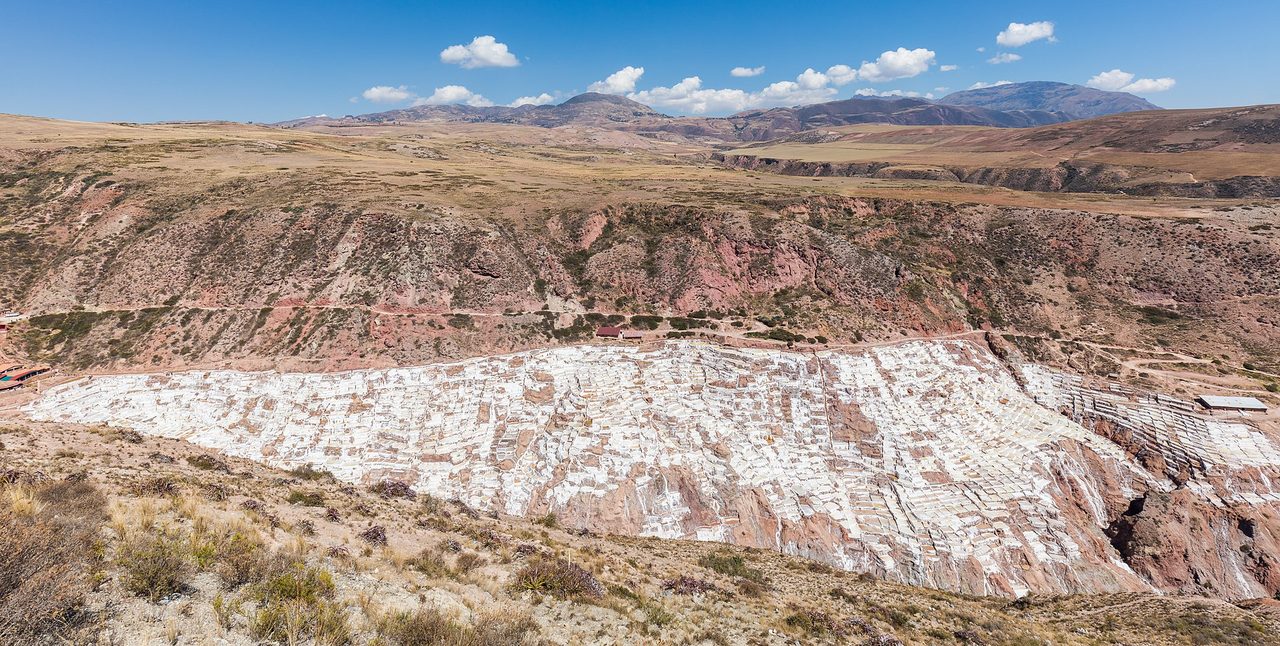
Logistics. Moray is on Boleto Turístico Circuit III (S/70, two days). The salt pans are privately managed and cost S/10 extra, cash only. Half-day tours are sold at S/60–120 with an 8:30am pickup, back by 2pm. The DIY route: colectivo from Calle Pavitos toward Urubamba, S/10–15, ask to be dropped at the Maras turn-off on the main road, then a shared taxi from the junction into Maras town for S/3–5, then negotiate a taxi to do Moray and the salt pans and return you to the highway for S/50–70 split between however many of you there are. Two people can do the whole day for roughly S/45–55 each including both entries. A tour is S/60–120 plus the same entries.
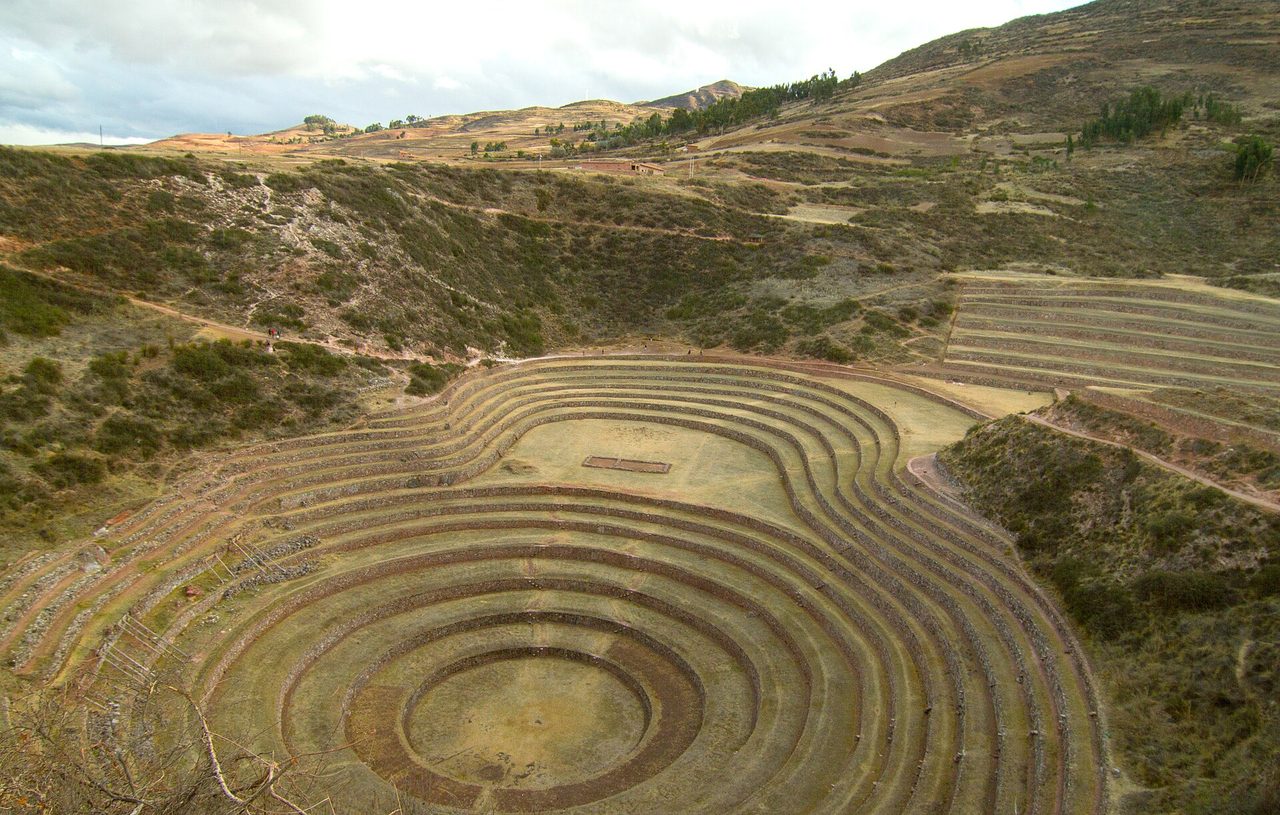
The honest verdict. This is the best value half-day near Cusco and the easiest to do independently. If you are travelling as a pair or more, the colectivo-and-taxi route costs less than a tour and gives you the salt pans in late afternoon light when the tour buses have gone. Doing it alone is more marginal, since you carry the whole taxi fare.
4. The Sacred Valley: Pisac, Chinchero, Ollantaytambo
The standard Sacred Valley day is Chinchero, then Moray or Urubamba for lunch, then Ollantaytambo, sometimes with Pisac bolted on at the start. It is sold everywhere for S/70–130 and it is the most heavily booked full-day tour in Cusco.
Pisac has two separate things: the market in the town, open daily from around 9am to 5pm and busiest on Sunday, and the ruins on the ridge above, which are the actual reason to come. The terracing and the cliff-face cemetery are among the finest Inca remains anywhere. Most tour groups get dropped at the upper car park, walk fifteen minutes and leave. If you go independently, walk up from the town — two hours, steep, and you see three-quarters of the site the buses never reach.
Chinchero at 3,760 m is the highest point of the day and the one that catches people out. It has a beautiful adobe church built directly on Inca foundations and a weaving cooperative that most tours stop at. The weaving demonstrations are real and the textiles are good, but the stop is also a sales pitch, and the group ones are timed to last exactly as long as it takes for people to buy something.
Ollantaytambo is the best of the three and gets the least time. The terraced fortress above the town is enormous, the streets below it are on the original Inca grid with the water channels still running down them, and it is the last living Inca town. It is also at 2,790 m, so it is a relief.
Logistics. All three are on Boleto Turístico Circuit III (S/70, valid two days) or the full S/130 ticket. Colectivos to Pisac go from Calle Puputi for S/5, taking 45–60 minutes. Colectivos to Urubamba and Ollantaytambo leave from Calle Pavitos for S/10–15, taking about 90 minutes to two hours, sometimes with a change in Urubamba — confirm with the driver before you get in. They leave when full, roughly every 10 to 20 minutes, with no timetable. Private taxi one way to Ollantaytambo is S/130–200.
The honest verdict. The group tour is decent value if your time is short, but it is a 10 to 12 hour day of which perhaps four hours are spent at sites. My preference is to break the valley over two days and sleep down there. Ollantaytambo and Urubamba are both 600 m lower than Cusco, which makes for a much better night’s sleep, and the trains for Machu Picchu leave from those two stations anyway. A slower approach to the valley between Cusco and Machu Picchu is the single upgrade I would make to most people’s Cusco week, and it changes where you base yourself across the region for the better.
5. Machu Picchu, there and back in one day
You can do it. I would rather you did not, and I will explain why in numbers rather than adjectives.
A Cusco-to-Cusco Machu Picchu day is 16 to 17 hours. Pickup is 4:00–4:30am for the road transfer to Ollantaytambo or Urubamba — trains no longer run from Poroy, which is out of service, so anything advertising a Cusco departure means a bus to the valley first. Train to Aguas Calientes is roughly 90 minutes to two hours. Then the Consettur shuttle up the switchbacks, about 30 minutes, and a queue that can run to an hour in high season. You get two to three hours on site, then the whole thing in reverse, and you are back in Cusco somewhere between 8 and 10pm.
The money. Entry is S/163 for foreign adults on the standard circuits, or S/211 on the circuits that include Huayna Picchu or Machu Picchu Mountain. Those figures replaced the old S/152 and S/200 on 1 May 2026 when SERNANP added a conservation surcharge on top of an unchanged base ticket; foreign students and minors moved to roughly S/88 and Andean Community adults to about S/69. Trains are US$35–60 per standard-class leg depending on operator and departure time. The shuttle bus is about US$24 return. An all-in packaged day tour from Cusco lands between US$250 and US$380 per person. It is comfortably the most expensive single day of a normal Peru trip.
The rules that trip people up. There are three circuits and ten routes, in force since 1 June 2024, all one-way and enforced by rangers — you cannot double back to the classic postcard viewpoint once you have passed it. The daily cap is 4,500, rising to 5,600 on designated peak dates: 1 January, 2–5 April, 19 June to 2 November, and 30–31 December. ISIC cards are no longer accepted for the student rate; you need a university photo ID showing an expiry date. Always check the official portal before you book, because these change.
If you are set on the single-day version, our dedicated walkthrough of the one-day run from Cusco covers the timings hour by hour. Before committing, it is worth reading the honest case for and against in whether the site lives up to the hype, and working out how much time the site actually warrants. The ticketing system deserves its own read too, because the circuit you buy determines what you are allowed to see: start with how the entry tickets and circuits work and, if you want to climb, the choice between the two peaks.
The honest verdict. Sleeping one night in the town below the ruins turns a brutal 17-hour day into two civilised half-days and gets you through the gate at 6am instead of 11am. It costs perhaps US$60 more. If money is the binding constraint rather than time, there are cheaper ways in via Hidroeléctrica that take longer but cut the cost by more than half, and the train options and classes are worth comparing properly before you pay for Vistadome you will sleep through.
6. Palccoyo, the lower-altitude rainbow mountain
Palccoyo is sold as the easy alternative to Vinicunca, and on the walking it genuinely is. Three striped ridges instead of one, a stone forest on the way, a viewpoint reached in about 40 minutes on a gentle path rather than a two-hour grind, and a fraction of the people. Where Vinicunca can see well over a thousand visitors on a high-season morning, Palccoyo often has a few dozen.
The catch nobody mentions. Palccoyo is not much lower. The high viewpoint is around 4,900 m against Vinicunca’s 5,036 m — a difference of about 130 m, which your lungs will not notice. What changes is the effort: you are not climbing 400 m of switchbacks to get there. The drive is also no shorter. Palccoyo is roughly 100 km south of Cusco near Checacupe, three to three and a half hours each way. So you spend six to seven hours in a vehicle for about ninety minutes of walking. That is the worst drive-to-activity ratio of anything on this list, and you should know it going in.
Logistics. Pickup 4:30 to 6am depending on operator, back around 5pm. Group tours S/100–150 including breakfast, lunch and guide. Entry fee S/10, cash, paid at the community gate. There is no realistic public transport option.
The honest verdict. If you want the coloured-mineral landscape without the 3am start and the crowd, take Palccoyo. If you are choosing it because you think the altitude is materially easier, you have been mis-sold. It is the walking that is easier, not the air.
7. Humantay Lake
Humantay is a glacial lake at 4,200 m below the Salkantay massif, and it is the best-looking single thing you can reach and return from in a day. The colour is a hard opaque turquoise that photographs badly compared to how it looks in person.
The day. Pickup 4:00 to 4:30am, roughly three hours to Mollepata for breakfast, then onward to the Soraypampa trailhead at about 3,900 m. The hike is 5 to 6.5 km round trip and gains about 300 m, which sounds trivial and is not — it is a relentless steep zigzag on loose ground, and it takes most people 60 to 90 minutes up and 45 down. Total day: 12 to 13 hours, of which six to six and a half are driving.
Logistics. Group tours S/90–160 with breakfast and buffet lunch. The community entry has crept up from S/10 to S/30 for foreigners; carry S/30 in small notes and do not assume your tour includes it. Horses are available at the trailhead for around S/80–100 return, and they take you to within a short climb of the lake rather than to the shore. Public transport is not practical: you can reach Mollepata but onward transfer and a same-day return are not reliable.
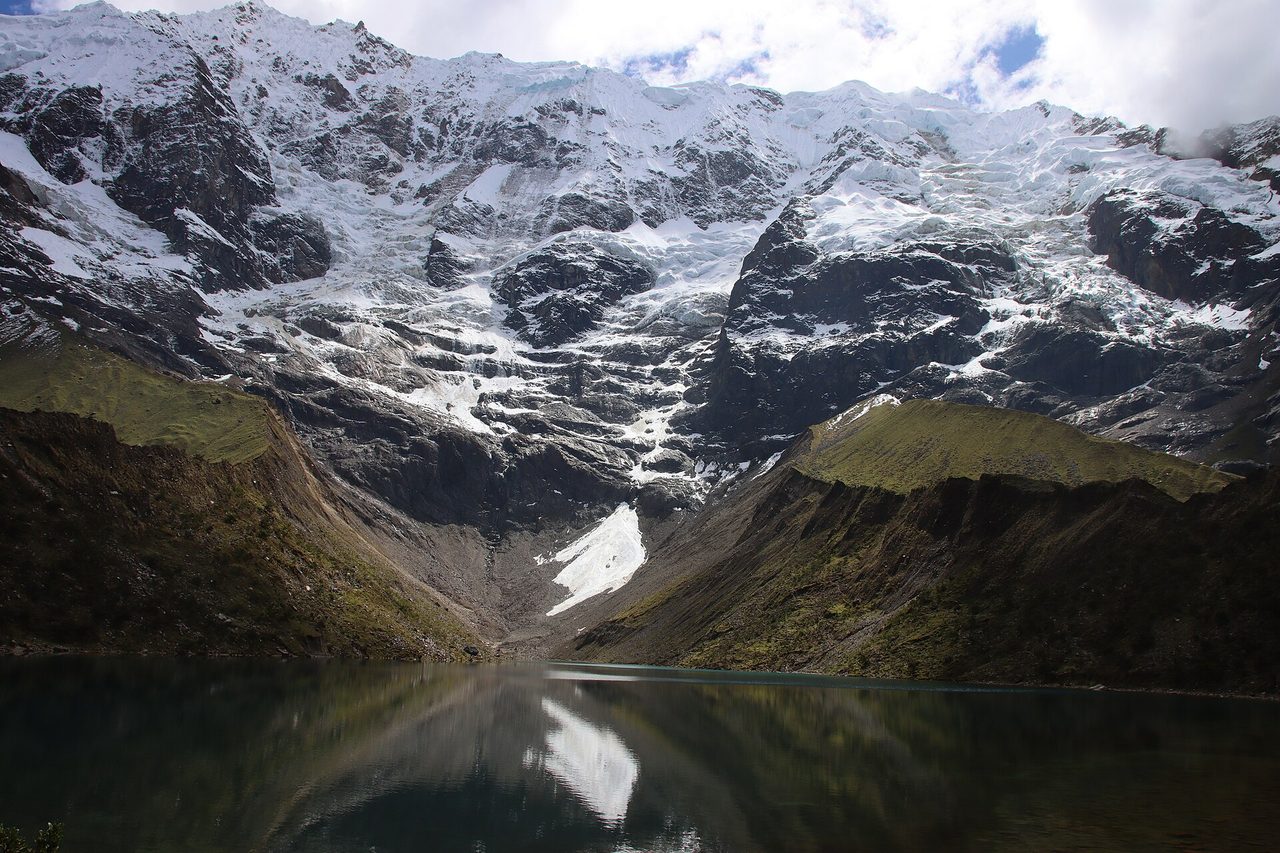
The honest verdict. This is the one I would keep if I could only keep one high-altitude day. It also doubles as a proper acclimatisation exercise if you are heading onto a multi-day trek in the Peruvian Andes afterwards, and it is day one of the Salkantay route anyway, so trekkers get it included. Do it before Vinicunca, not after.
8. Rainbow Mountain (Vinicunca)
Vinicunca reaches 5,036 m — some operators quote up to 5,200 m for the highest ridge you can walk to. It was under ice within living memory; the stripes emerged as the glacier retreated, and the road that opened in 2018 turned a seven-hour approach hike into a day trip. It went from unknown to one of Peru’s most photographed places in under a decade.
The day, honestly. Pickup between 3:00 and 4:00am. Roughly three hours by road to Cusipata or Pitumarca for breakfast, then another 45 minutes to an hour on a rough track to the trailhead at about 4,600 m. The walk is 6 to 7 km return with 400 m of gain, and takes 90 minutes to two and a half hours up depending on how the altitude treats you. You get 30 to 45 minutes at the top, often in a queue for the photograph. Back in Cusco between 5 and 7pm. Total: 13 to 15 hours, of which around seven are in a vehicle.
The altitude reality. This is where people get hurt. Agencies will tell you fitness is what matters. It is not — susceptibility to altitude is largely individual and unrelated to how fast you can run 10 km. On any given morning a visible minority of each group turns back or finishes on horseback, and the ones who struggle most are consistently those who arrived in Cusco 48 hours earlier. Reputable operators carry oxygen; ask before you book and treat a shrug as an answer. Horses are available from the trailhead at around S/100 return, negotiated in soles, cash, and they stop roughly ten to fifteen minutes below the summit ridge — you walk the last, steepest part regardless.
Logistics. Community entry is S/30 for foreigners, cash, in soles, paid at the gate. Group tours are sold on the street from S/60 and online from about US$25–40. Private transport with a driver and waiting time is around S/300 for the vehicle, which is competitive for four people and lets you arrive after the tour convoy has left.
The honest verdict. Do not do this in your first four days. If you have fewer than five nights in Cusco, or you are starting the classic four-day trail to Machu Picchu shortly afterwards, take Palccoyo instead and keep the sleep. Vinicunca is a genuine spectacle when the light is right and the sky is clear. It is also, on a bad day, seven hours of minibus and forty minutes on a crowded ridge in cloud.
9. Waqrapukara
Waqrapukara is an Inca fortress built onto a pair of rock horns above the Apurímac canyon, around 4,300 m, about 100 km southeast of Cusco. It gets a tiny fraction of Vinicunca’s traffic and it is the most dramatic Inca structure near Cusco that most visitors have never heard of.
Logistics. Pickup 4:00 to 5:00am, three and a half to four hours of driving including a rough final section. From the usual trailhead at Santa Lucía it is about an hour of climbing to the site; from the longer La Rinconada start at 4,045 m it is closer to three hours each way. Group tours S/90–150. Entry is S/10 and is not always collected. Total day 12 to 14 hours.
The honest verdict. Worth it if ruins are what you came for and you have already done the obvious ones. Not worth it as your only high day — Humantay gives you more for the same driving. It sits comfortably alongside the rest of the country’s major Inca sites and it will be a great deal busier in five years than it is now.
10. Ausangate Seven Lakes
Ausangate is the highest peak in the Cusco region and the most important apu, or mountain spirit, in local belief. The Seven Lakes route is a roughly 13 km circuit at up to 4,800 m taking about five hours on foot, ending at the hot springs in the village of Pacchanta.
Logistics. Pickup 4:00 to 4:30am, three and a half hours of driving each way. Community entry S/20; the Pacchanta hot springs are S/5 extra. Horses can be hired for around S/70. Group tours S/120–200 including meals. Total day 14 to 16 hours.
The honest verdict. This is the trip I would tell most people to skip, and I will be specific about why. You are spending seven hours in a vehicle and five hours walking above 4,600 m, in a fifteen-hour day, to compress what is properly a multi-day trek into something it was never designed to be. Nothing about it is dangerous if you are acclimatised, but the ratio is poor and by the time you reach the fifth lake most groups have stopped looking. If Ausangate appeals, give it the two to four days it deserves as a trek. As a day trip it is an endurance test with scenery attached.
Crowds, and the hour each site fills up
Almost every one of these places has a predictable daily rhythm, because almost every tour bus in Cusco runs to the same timetable. Knowing it is worth more than any “beat the crowds” advice you will read.
Vinicunca. The tour convoy leaves Cusco between 3 and 4am and reaches the trailhead around 7:30 to 8am, which puts the bulk of the day’s visitors on the summit ridge between 9:30 and 11am. High-season counts have run to a couple of thousand people a day. If you go by private vehicle and leave Cusco at 6am you arrive at the top around midday to find a fraction of that, at the cost of flatter light and a higher chance of afternoon cloud. There is no clean answer here, only a trade.
Sacred Valley. The full-day tours all hit Pisac between roughly 9 and 10am, Chinchero or Urubamba around midday, and Ollantaytambo between 2 and 4pm. Ollantaytambo is therefore calm in the morning and packed mid-afternoon, and Pisac is the reverse. Independent travellers should go to Ollantaytambo first thing and Pisac late.
Maras salt pans. Half-day tours arrive between 9:30 and 11:30am, then again with the afternoon quad-bike groups around 2 to 3pm. Between about 12:30 and 2pm, and after 4pm, the viewing platform is quiet and the light across the pans is better anyway.
Sacsayhuamán. Coach groups start arriving at 9am. Go at 7am when the gates open, or after 4pm, and you can have the main terraces almost to yourself for an hour.
Machu Picchu. The first shuttle buses from Aguas Calientes run from 5:30am, and day-trippers coming from Cusco reach the gate between 10:30am and noon, which is precisely the busiest window and the flattest light. That timing is baked into the day-trip format and it is the strongest structural argument for sleeping in the valley. The site cap is 4,500 a day, rising to 5,600 on peak dates, spread across ten one-way routes, so it feels less crushing than the raw number suggests.
If you are assembling a broader shortlist of the experiences worth building a trip around, the timing principle holds nationwide. The Peruvian tour day starts early and clusters tightly, and half an hour of deliberate mistiming buys more solitude than any amount of money.
Group tour, private car, or public transport: what each actually costs
Almost every guide to this subject either pushes tours or pushes independence. The truthful answer is that it depends entirely on which trip, and the gap between the two options is enormous in some cases and nonexistent in others.
Rainbow Mountain
There is no public transport. Your options are a group tour from S/60, a private vehicle at around S/300 for the car with waiting time, or a combination of a Cusipata-bound bus and a negotiated taxi that in practice costs about the same as the tour and gets you there later. This is the clearest case on the list where the tour wins on price. A S/60 street-booked tour undercuts anything you can assemble yourself, and the difference between S/60 and a S/150 “premium” tour is mostly group size, vehicle age and whether oxygen is on board.
Maras and Moray
The reverse. Two people doing it by colectivo and shared taxi spend roughly S/45–55 each including both entry fees. A group tour is S/60–120 plus the same S/70 circuit ticket and S/10 salt-pan fee. The independent route is not difficult: Pavitos colectivo toward Urubamba, out at the Maras junction, shared car into town, negotiate a driver for the loop. Budget three hours of actual moving time. This is where the real saving is, and it is also the trip on which tours waste the most time on unadvertised shopping stops.
The Sacred Valley
Roughly a wash on money, decisive on time. Two people using colectivos from Puputi and Pavitos will spend maybe S/40 each on transport across a full day, against S/70–130 for the tour, but the tour visits three sites in a sequence you cannot easily replicate by public transport in one day. If you only have one day, take the tour. If you have two, do it yourself and sleep in the valley. Understanding how buses and colectivos work across the country pays for itself here more than anywhere else in Peru.
Booking in Cusco versus booking online
Street prices in Cusco are consistently lower than the same tours on international booking platforms — often by 40 to 60 per cent for the identical minibus. The trade-off is that you are buying from an agency window with no recourse, and the cheapest operators subcontract to whoever has seats. If you book on the street, book a day or two ahead rather than the night before, ask specifically whether entry fees are included, and ask whether oxygen is carried. For a sense of how these day-trip costs sit inside a wider budget, our breakdown of what a Peru trip actually costs puts the numbers in context.
What each trip really costs, all in
Tour prices are only part of the picture. This is what a single traveller should actually expect to spend per person on each day, counting the entry fees that are collected in cash at the gate, and a rough lunch where it is not included. Boleto Turístico costs are shown as the share attributable to that trip, assuming you buy the S/130 general ticket and use it across several days.
| Trip | Group tour | Entry fees | Cheapest independent route | Realistic all-in |
|---|---|---|---|---|
| Sacsayhuamán circuit | S/70–90 | Boleto Circuit I S/70 | Colectivo S/5 + walk down | S/75–90 |
| South Valley | S/60–110 | Boleto Circuit II S/70 + church S/15 | Colectivos S/8–12 return | S/95–120 |
| Maras & Moray | S/60–120 | Boleto Circuit III S/70 + salt pans S/10 | Colectivo S/12 + shared taxi S/25–35 | S/115–135 alone, S/95–110 as a pair |
| Sacred Valley full day | S/70–130 | Boleto Circuit III S/70 | Colectivos S/25–35 all day | S/110–220 with lunch |
| Machu Picchu in a day | US$250–380 | Entry S/163 (S/211 with a peak) | Not realistic to beat by much in one day | US$250–400 |
| Palccoyo | S/100–150 | S/10 | No public transport | S/115–175 |
| Humantay Lake | S/90–160 | S/30 | No practical public transport | S/125–200 (add S/80–100 for a horse) |
| Waqrapukara | S/90–150 | S/10, not always collected | No public transport | S/105–175 |
| Rainbow Mountain | S/60–150 | S/30 (+S/20 Red Valley) | Private car S/300 split four ways | S/95–220 (add S/100 for a horse) |
| Ausangate Seven Lakes | S/120–200 | S/20 + S/5 hot springs | No public transport | S/150–250 |
A few things fall out of that. The four cheapest days are the four lowest ones, again. Machu Picchu costs more on its own than every other trip on the list combined. And on the trips where a horse is available, budgeting for one you may not need is cheaper than the alternative, which is discovering at 4,700 m that the only remaining animal has quadrupled in price because six people ahead of you already gave up.
What a S/60 to S/90 Rainbow Mountain tour actually includes
Since this is the tour more people buy than any other, it is worth being precise about what your money buys.
Included at the S/60–90 level: hotel pickup, return transport in a 15 to 19 seat minibus, a Spanish-and-English guide, breakfast, lunch, and usually the loan of walking poles.
Not included: the S/30 community entry fee at the gate, which is cash in soles and is the one thing people are caught out by. Also not included: horses, tips, snacks, water beyond the first bottle, and the S/1–2 bathroom charges along the road.
The breakfast reality. “Breakfast included” means a stop at a roadside dining hall in Cusipata or Pitumarca at around 6:30am, where three or four tour groups arrive at once and are served bread rolls, jam, scrambled egg if you are lucky, coca tea and instant coffee. It is fine. It is not a meal that will carry you up 400 m of vertical at 5,000 m four hours later. Bring something with actual calories in it. The lunch on the way back is usually better — soup, rice, chicken, sometimes a buffet — but it arrives at 3pm.
What the extra money buys at S/120–150. Smaller groups, often eight to twelve rather than eighteen; a newer vehicle; a guide who stays with the slower half of the group rather than walking ahead; oxygen carried as standard; and sometimes the Red Valley extension, which costs an extra S/20 at the gate and adds about 40 minutes. The Red Valley is, in my view, better than Vinicunca itself and far quieter. If you are going anyway, pay for it.
The ones I would skip
Every list I have read recommends all twelve or sixteen of its entries with the same enthusiasm. That is not useful. Here is where I would actually cut.
Ausangate Seven Lakes as a day trip. Covered above. Seven hours of driving, five hours of walking above 4,600 m, fifteen hours door to door. As a two- or four-day trek it is one of the finest walks in South America. Squeezed into a day it is a poor trade.
Any “VIP” Sacred Valley tour. These are sold at two to three times the standard price for a marginally better lunch, a slightly newer bus and the same four stops. You are still in a vehicle for six of the ten hours. The premium buys comfort in transit, not more time at the sites, which is the thing that is actually scarce.
Horseback tours around Sacsayhuamán. Four hours and S/200–350 for a slow circuit of sites you can walk to from the Plaza de Armas in twenty-five minutes. The horses are frequently thin. Skip.
Palccoyo, if your reason is altitude. Not a skip exactly, but a correction: choose it for the shorter walk and the absence of crowds, not because you think 4,900 m is meaningfully kinder than 5,036 m.
And one I would think hard about: the single-day Machu Picchu round trip. It is not a bad experience — the site is the site — but you are paying the most money of any day of your trip for the least time at the destination, and 12 of those 17 hours are transit. If you can find one extra night, find it.
When the weather closes in
The Cusco region has a pronounced wet season running roughly November to March, with January and February the heaviest. It does not rain all day — the pattern is clear mornings and afternoon downpours — but it changes several of these trips substantially, and no tour agency will mention it while selling you a ticket in February.
Vinicunca and Palccoyo. Both can be under snow. When they are, the coloured strata are simply not visible, and you have done a 3am start and a 5,000 m climb to look at a white hill. The access track from Pitumarca is unsurfaced and turns to deep mud; vehicles get stuck and days get abandoned. Operators run anyway, because they are selling seats. Look at recent photographs, not stock images, before you book in January or February.
Humantay. Cloud sits on the lake for much of the wet season and the turquoise goes flat grey. The trail becomes a mud chute on the descent.
Maras salt pans. The pans are harvested in the dry months, roughly May to October. In the wet season many are flooded with rainwater rather than brine and the crisp white geometry is gone. Moray next door is unaffected apart from mud.
Machu Picchu and the valley. Landslides periodically close the rail line to Aguas Calientes; February is the highest-risk month and the Inca Trail closes entirely for maintenance that month. The site itself stays open and is at its greenest, with genuinely thinner crowds.
The trips that hold up. The South Valley, Sacsayhuamán, Pisac and Ollantaytambo are all fine in the rain, all lower, all with something to duck into. If you are travelling between December and March, weight your days toward those and treat the high-altitude ones as opportunistic — book them a day ahead when you can see the forecast. Our guide to the seasons across the country covers the trade-offs region by region, and if Machu Picchu is the fixed point of the trip, the month you choose for the citadel should drive everything else.
The Boleto Turístico, decoded
This confuses everyone and the tour listings that quote “S/70 entry” five times without explaining it do not help.
- Boleto Turístico General: S/130 for foreign adults, valid 10 days, covers 16 sites. Worth it if you are doing the Sacred Valley plus the Sacsayhuamán circuit plus anything in the South Valley.
- Circuit I: S/70, valid 1 day. Sacsayhuamán, Q’enqo, Puka Pukara, Tambomachay.
- Circuit II: S/70, valid 2 days. The Cusco city museums plus Tipón and Pikillacta.
- Circuit III: S/70, valid 2 days. Pisac, Ollantaytambo, Chinchero, Moray.
What it does not cover: the Maras salt pans (S/10), the church at Andahuaylillas (S/15), Qorikancha in Cusco, the cathedral, Rainbow Mountain (S/30), Palccoyo (S/10), Humantay (S/30), Waqrapukara (S/10), Ausangate Seven Lakes (S/20), and Machu Picchu, which is an entirely separate national ticket. Every one of those community fees is cash, in soles, at the gate. Carry small notes; there are no card machines and no change for a S/100 bill at 4,700 m.
Do the arithmetic before you buy. Two partial circuits cost S/140, more than the full S/130 ticket. If you are doing both the Sacred Valley and the ruins above Cusco, buy the general ticket. Both Sacsayhuamán and the historic centre of Cusco fall inside the same UNESCO listing, which is worth knowing if you are working through Peru’s World Heritage sites systematically.
What to bring on any of these days
The same kit works for all of them, and the mistakes are consistent.
Layers, not a single warm coat. At 5am in a minibus it is near freezing; at 11am at 4,800 m in direct sun it is warm enough for a t-shirt; by 2pm it may be sleeting. Sun protection matters more than you think — SPF 50 and a hat, because UV at 4,500 m is brutal and the reflection off snow doubles it. Cash in small denominations, S/100–150 for a high-altitude day covering entry, bathrooms, snacks and a possible horse. Water: two litres, and buy it in Cusco, not at the trailhead where it triples. Coca leaves or sweets, which help marginally and are universal. A proper breakfast eaten before pickup, since the included one arrives three hours in. And boots with grip, not trainers — the descents on all of these are loose gravel or mud. Our notes on what to pack for the Andes apply almost unchanged to every trip on this page.
Frequently asked questions
What is the single best day trip from Cusco?
For most people, the Sacred Valley — it has the highest ratio of interesting things to hours spent, it is at a sensible altitude, and it works in any season. If you want one high-mountain day, Humantay Lake. If you want the one nobody else does, the South Valley.
How many days do I need in Cusco to fit these in?
Five full days lets you do the Sacred Valley, Machu Picchu, one low half-day and one high-altitude day comfortably. Three days means the valley, Machu Picchu and a half-day, and no 5,000 m mornings. Anything above six days and you can add Waqrapukara or the South Valley without rushing.
Can I really not walk down onto the Maras salt pans any more?
No. Access to the terraces was closed in June 2019 because of salt contamination and has not reopened. You view them from a walkway and observation deck. Photographs showing people standing among the ponds predate the closure.
Which is better, Vinicunca or Palccoyo?
Vinicunca is more dramatic and much busier, with a two-hour climb and a 3am start. Palccoyo is quieter with a 40-minute walk, but the drive is slightly longer and it is only about 130 m lower. Choose Palccoyo for the easier walking and the peace, not for the altitude.
How likely is altitude sickness on these trips?
Mild symptoms — headache, breathlessness, nausea — are common above 4,500 m among people who have been in Cusco less than three days, and uncommon among those who have been there five or more. The reliable prevention is time, not fitness. Ascend gradually, drink more water than feels necessary, skip alcohol the night before, and turn back if a headache does not respond to rest and fluids.
Do I need to book day tours in advance?
Not usually. Agencies in Cusco sell seats for the following morning up until about 8pm, and street prices beat online ones substantially. Book a day or two ahead in July and August. The exception is Machu Picchu, where entry tickets for popular circuits and dates sell out weeks or months ahead.
Are the S/60 Rainbow Mountain tours safe?
Generally yes, in the sense that the vehicles and guides are the same ones the pricier agencies subcontract to. What you lose is group size, vehicle quality and the certainty that oxygen is on board. Ask directly about oxygen and about the guide-to-guest ratio before you hand over cash.
Can I do these trips independently without Spanish?
The Sacred Valley, Pisac, Maras and Moray, the South Valley and the Sacsayhuamán circuit, yes — colectivo routes are well worn and drivers understand destination names. Rainbow Mountain, Humantay, Palccoyo, Waqrapukara and Ausangate, no, in the sense that there is no public transport to attempt in the first place.
Is Machu Picchu worth doing as a day trip at all?
Yes if it is that or nothing. The site is extraordinary and a rushed visit still beats no visit. But it is a 16 to 17 hour day costing US$250–380, of which you spend two to three hours at the ruins. One night in Aguas Calientes changes the whole experience for about US$60 more. Start with the routes and connections into the site before deciding.
What if I only have one full day near Cusco?
Do the Sacred Valley and skip Machu Picchu. That will read as heresy, but a single day gives you three major Inca sites, a market town, a manageable altitude and an actual sense of the region, rather than seventeen hours of transit for two hours at one site you will barely remember through the fatigue. Machu Picchu deserves better than being crammed in, and so do you.
Putting it together
The Cusco region rewards patience in a very literal, physiological way. The single change that improves almost everyone’s week is doing the low trips first and the high trips last, which costs nothing and requires only that you resist booking Rainbow Mountain on your second morning because the agency window says there are two seats left.
Beyond that: carry cash in small notes, verify entry fees at the point of booking rather than at the gate, and treat anything above 4,500 m in the wet season as a coin flip on visibility. Get those three right and the region delivers more variety in a week than almost anywhere else on the list of places worth reaching in Peru — agricultural laboratories, salt terraces older than the Incas, a painted ceiling in a mud-brick village church, and a striped mountain that was under ice when your parents were born.