What to Wear to Machu Picchu: The Packing List That Actually Works (2026)
What to wear to Machu Picchu, solved: the five-layer system, the shoe decision, the legal daypack, the full banned-items list and season-by-season capsule wardrobes - from many mornings on the mountain.
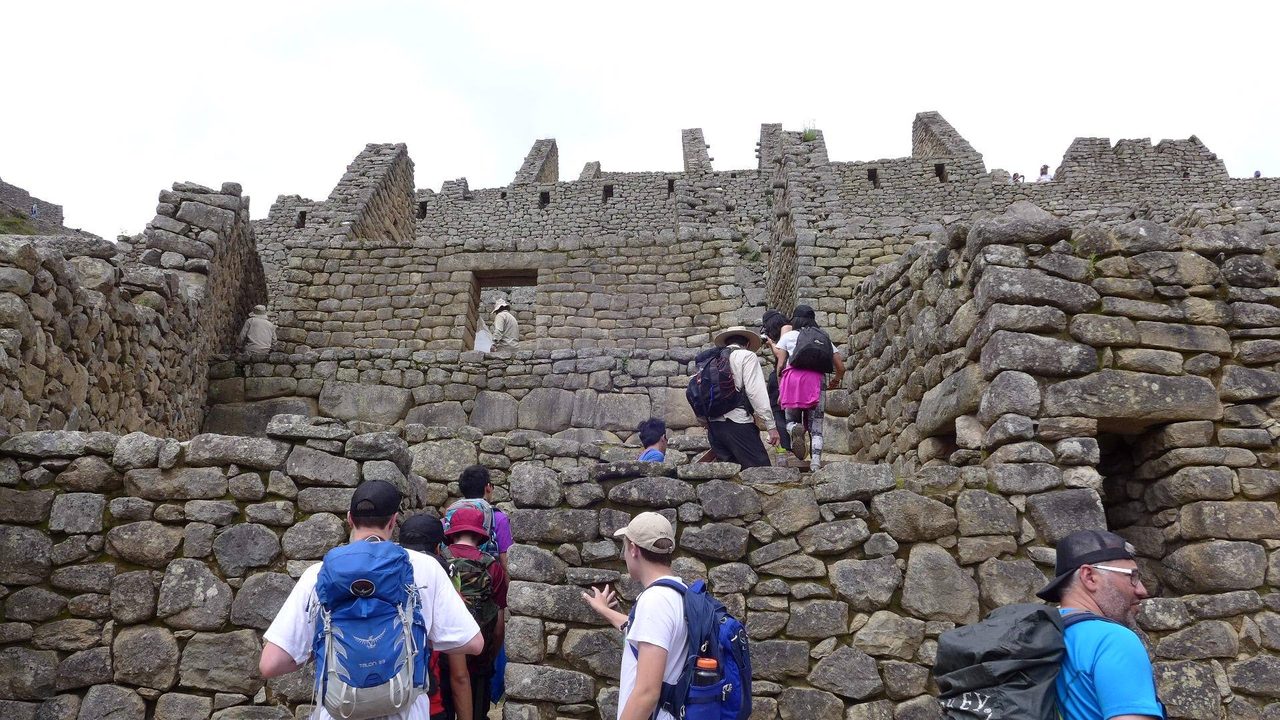
The best-dressed person I ever saw at Machu Picchu was a Quechua guide in his sixties wearing sturdy leather shoes, thin trousers, three unremarkable layers and a brimmed hat, carrying a small bag containing water, a poncho and mandarins. The worst-dressed was a man in brand-new hiking boots (blisters by the Guardian’s House), jeans (soaked by 9 a.m. drizzle, heavy till dusk), and a 60-liter backpack that the gate staff — politely, immovably — made him check into storage. Same mountain, same morning. The difference was that one of them understood what to wear to Machu Picchu is a solved problem, and the solution is smaller and simpler than the packing lists suggest.
The short version: dress in thin layers for a day that starts at 5°C and peaks around 20°C: t-shirt, warm mid-layer, waterproof shell. Wear broken-in shoes with real grip — trail runners beat boots for the standard circuits. Bring a daypack under 40×35×20 cm, sunscreen, DEET, hat, refillable bottle, passport and cash. Leave behind everything on the banned list — tripods, poles (with exceptions), umbrellas, drones, big bags — because the gate does check.
This guide covers exactly what to wear by season, the complete pack-and-ban lists with the reasoning, and the trek-day variations — the practical finale of our Machu Picchu guide.
The weather you’re actually dressing for
Machu Picchu sits at 2,430 m where the Andes meet cloud forest, which produces the meteorological personality of a moody teenager: a typical dry-season day runs near-freezing at the dawn bus queue, T-shirt-warm by 10, fierce UV all day, and a nonzero chance of a shower anyway. The rainy season (November–March) swaps colder dawns for warmer, wetter everything. Two facts drive every choice below: conditions change hourly, so adjustability beats any single garment; and you can’t pop back to the hotel — no re-entry means whatever you carry at 6 a.m. is your wardrobe till you leave. (Month-by-month weather math lives in the best time to visit guide.)
The temperature curve, hour by hour
Numbers make this easier than adjectives. The citadel sits at 2,430 m, nearly a kilometre below the thin air of Cusco, and Aguas Calientes sits lower still at around 2,040 m. That drop matters more than the map suggests: this is cloud forest, not high puna, so it runs warmer, wetter and stickier than anywhere else on a standard Cusco itinerary. If your mental model is the shivering, thin-aired cold of a 5,000 m day at Rainbow Mountain, recalibrate downward.
A dry-season day, hour by hour: 5–8°C in the 5:30 bus queue, and 0–5°C on a clear June or July morning, because clear skies are exactly what makes it cold. Around 10°C at the 06:00 gate, in shade, with the sun still behind the ridge. Fifteen or so by 08:00 once the light reaches the terraces. Twenty to twenty-five in direct sun by midday, feeling hotter because you are climbing stairs in it. Wet-season days compress that range: lows near 8–13°C, highs around 18–20°C, and humidity that makes 18°C feel like work.
Which gives the three layers their job descriptions. The base moves sweat off you, because you will sweat on those staircases even at 10°C, and a wet base layer is what turns 15°C into 5°C the moment you stop to listen to a guide. The mid holds the heat you generate rather than making heat of its own; it is for the queue and the first hour, and it should compress to nothing. The shell is a windbreak first and a raincoat second — the terraces are exposed and the ridge funnels air, and most people who feel cold up there are being stripped by wind, not by low temperature.
One rule falls out of that curve: dress to be slightly too cold walking to the bus. Comfortable standing still at 5:30 a.m. means uncomfortable by 07:15, with the mid-layer in your hand rather than your pack.
The layering system (five pieces, no gaps)
- Base: a breathable t-shirt or long-sleeve — synthetic or merino, not cotton. Long sleeves earn their keep doubly here: sun and midges both respect fabric more than any spray.
- Mid: a fleece or light down layer for the 5 a.m. queue, stuffed into the pack by mid-morning.
- Shell: a genuinely waterproof jacket, not “water-resistant” — cloud-forest drizzle is patient. This is the one item where quality shows. Umbrellas are banned, so the shell does everything.
- Legs: quick-dry hiking trousers or leggings. Jeans are the classic error — cold when wet, wet forever. Convertible zip-offs, fashion crimes though they be, are honestly ideal.
- Head: a brimmed hat plus sunglasses. The high-altitude sun burns through overcast; the SPF-50 goes on before the first bus, ears and neck included.
Shoes: the decision that makes or breaks the day
The citadel is 600-year-old granite: uneven, polished by millions of feet, and slick as soap when damp. You want broken-in shoes with aggressive tread — trail runners or light hikers are the sweet spot for the standard circuits. Full boots are fine if they’re old friends (never new ones; the stairs will find every hot spot), unnecessary unless you’re adding a summit hike, where ankle support and grip move from nice to genuinely valuable. Actively prohibited or foolish: heels (banned, erosion rules), flip-flops, smooth-soled fashion sneakers. If it can’t grip wet stone on a staircase with no railing, it stays in Cusco.
Trail runners, boots or approach shoes
Three real options, three different answers. Trail runners win for most people on the standard circuits: light, grippy, quick-draining and forgiving of six hours upright. Their weakness is a soft midsole on sharp rock, which the citadel does not have. Hiking boots buy a waterproof membrane and a stiffer platform, which matter if you are arriving off a trek or visiting in February; they cost you weight, heat and, if they are new, skin. Approach shoes — the sticky-rubber, climbing-adjacent category — are the specialist pick and quietly the best tool for polished wet stone, as they are for Peru’s more technical adventure days. They are also stiff, warm and overkill for a gentle Circuit 3 stroll.
Ankle support is the argument everyone has and almost nobody needs to. The circuits are staircases and graded paths, not scree or root-tangled trail, and there is very little of the sideways roll that boots exist to prevent. The exceptions are a heavy pack, which you will not be carrying, and an ankle with a history, which you might have. If yours has been sprained before, wear whatever you already trust.
What wet granite is actually like underfoot
Worse than you expect and better than the internet’s panic. Masonry walked on for six centuries develops a polish, and when the morning mist settles on it that polish behaves like wet ceramic tile: fine when your foot lands flat, treacherous when you edge, pivot or hurry. The failure mode is not a dramatic slide, it is a foot that skates two centimetres at the exact instant you commit your weight to it. Soft rubber holds; hard, glassy budget outsoles do not, whatever the tread pattern looks like in the photos. Test yours before you fly by standing on a wet, smooth surface at home and twisting. If it squeaks and grips, you are fine.
The daypack: small, legal, complete
The rule: bags over roughly 40×35×20 cm (about 20 L) don’t enter — there’s paid storage at the gate, and the staff enforce with cheerful finality. Inside your legal little bag:
- Passport (matching your ticket — checked at the gate) and the ticket itself, downloaded offline.
- Water in a refillable bottle — single-use plastics are banned; 1–1.5 L per person, refillable in Aguas Calientes.
- Sunscreen and DEET repellent — travel sizes; the Aguas Calientes midges are the region’s apex predator and ankles are their national dish.
- Cash in soles, coins included — bathroom (S/2, outside the gate, go first), coffee, tips, storage.
- Snacks, discreetly: officially food is prohibited; in practice a granola bar eaten quietly at a rest area harms no one and sustains everyone. Picnics, no. Wrappers, pack out.
- The stuffed mid-layer and shell from the system above, plus a small poncho in the wet months (worn, since umbrellas can’t come).
- Phone + battery pack. You will take four hundred photos; airplane mode saves the battery you forgot to charge.
The banned list, and the logic behind it
Machu Picchu’s prohibited-items list reads eccentric until you realize every entry is a scar from an actual incident. The gate checks bags; play it straight:
| Banned | Why / the workaround |
|---|---|
| Tripods, monopods, selfie sticks | Crowd flow and terrace edges. Handheld only — modern stabilization has you covered |
| Drones | Absolute, no permits for tourists, confiscation is real |
| Umbrellas | Sightline and wind hazards — hence the good rain shell |
| Walking poles | Exception: visibly needed (age/disability), rubber tips mandatory |
| Large backpacks (>~20 L) | Storage at the gate, a few soles |
| Food (officially), alcohol, tobacco | Discreet snacks tolerated; open picnics and beers are not |
| Single-use plastic bottles | Refillables welcome |
| Aerosols | Cream sunscreen, pump repellent |
| Speakers, instruments, costumes | The influencer clauses — yes, including the Inca outfit |
| Strollers | Baby carriers are fine and common |
| High heels | Erosion rules; also, mercy on your own ankles |
Banned-list anxiety is mostly misplaced: pack like a sensible day-hiker and you’ll never think about it again. The people unpacking their bags at the gate are almost always the ones who brought their whole trip with them — which the train’s own 5–7 kg limit should have prevented two hours earlier.
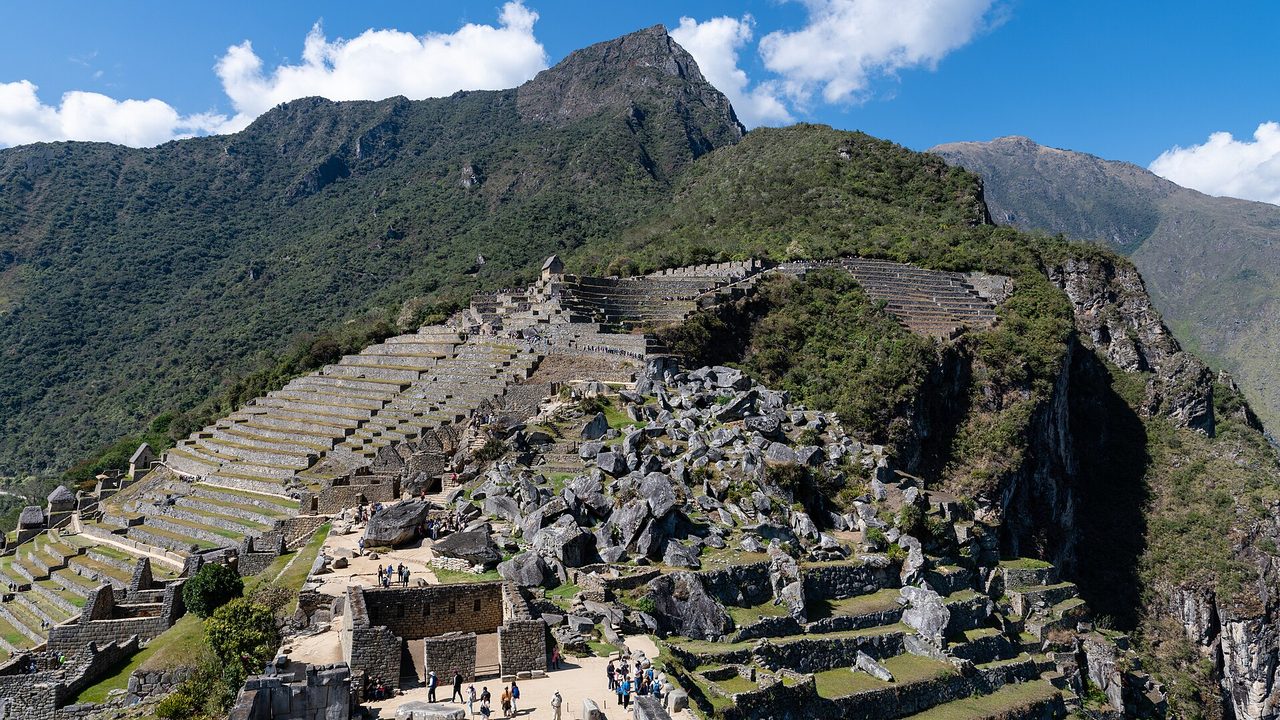
What actually happens at the gate
The table above is the theory. Here is the process, in the order you meet it.
You queue outside the entrance building. Staff check your ticket against your passport, which is why the passport is not optional and why the names have to match. Bags get looked at — occasionally measured against a frame, more often eyeballed by someone who has been eyeballing bags for a decade and is rarely wrong. The published ceiling is 40×35×20 cm. A 20–25 L daypack that is not stuffed will pass; a 30 L pack that is stuffed will not. Oversized bags go into the storage room beside the entrance, which is quick and costs pocket change — bring coins, because the window will not enjoy a S/100 note.
Then the details that catch people out:
- Poles are collected. They are permitted only for visitors who plainly need them, meaning older travellers and anyone with a mobility problem, and only with rubber tips. Metal tips do not enter under any circumstances. If you need poles and do not look the part, carry a doctor’s note; rubber tips sell for a few soles in Cusco’s outdoor shops.
- Tripods and monopods require authorisation you do not have. Permits exist, but they are issued for professional filming through the regional culture authority and SERNANP, not to visitors with a camera bag. Selfie sticks fall under the same rule. Drones are simply out, and confiscation is real.
- Umbrellas are refused — a sightline and eyeball hazard on narrow terraces, and useless in the wind that funnels up the valley anyway.
- Single-use plastic bottles are turned back, and nothing is sold inside. Fill a refillable bottle in town and treat it as the last water you will see for four hours.
- Food is prohibited inside, cutlery included. Eat before you go in — Aguas Calientes does a decent early breakfast, and the rest of the Peruvian kitchen is worth arriving hungry for later in the trip.
- There is no re-entry. One scan, one visit. The toilets are outside the gate and cost S/2, which turns the pre-entry bathroom stop from a suggestion into a scheduling decision.
Inside, the circuits run one way and rangers enforce it, so you cannot double back for the photo you missed. Budget two and a half to four hours depending on the route you booked, and dress for the whole of it: the gate is a one-way valve for your wardrobe as much as for your feet.
Where the rest of your luggage goes
The 20-litre rule at the gate is the last of three filters, not the first. The first is the train, which decides what can even reach Aguas Calientes.
PeruRail’s current published allowance on the Machu Picchu routes is one backpack up to 8 kg, or one carry-on up to 12 kg, with height plus width plus depth capped at 100 cm for the backpack and 115 cm for the case. Inca Rail runs a comparable one-item rule at around 8 kg. Lower figures still circulate everywhere — the old 5 kg line in particular — because the policy has been revised more than once, so check your operator’s luggage page in the week before you travel, this page included. An extra bag can be carried for roughly US$15 (carry-on) or US$25 (checked) if you arrange it at a sales office beforehand.
What happens to everything else is easier than the forums suggest, and mostly free:
- PeruRail stores bags free at Ollantaytambo (04:15–21:00) and at Machu Picchu station in Aguas Calientes (05:00–22:00), every day including holidays. For a fast in-and-out visit that is the entire answer.
- Your Cusco hotel will hold a suitcase for days, usually free and usually in a locked room. Worth confirming when you choose a base in Cusco if you are leaving anything you care about.
- Your Aguas Calientes hotel will hold your bag after checkout, which is what makes a second-morning entry work without dragging luggage up the hill.
- The gate storage room is the last resort, for the pack you were sure would pass.
Two structural notes. If you are doing the whole thing in one day from Cusco, carry nothing but the daypack from the moment you leave your room, because there is no window in that schedule to shed a bag. And if you are moving on afterwards rather than looping back, plan the Cusco to Machu Picchu leg in both directions before deciding where the suitcase sleeps — long-distance travel in Peru punishes anyone improvising with luggage at 22:00.
Dressing by season
Dry season (May–October)
The full five-layer system earns its keep: genuinely cold dawns (bring gloves if you run cold — June bus queues sit near freezing), brilliant hard sun by mid-morning, dusty trails. Sun protection is the day’s main job; the shell stays stuffed at the bottom, insurance only. This is also peak season for the summit hikes, where an extra half-liter of water and a brimmed hat matter more than any gear upgrade.
Rainy season (November–April)
Warmer, wetter, greener: skip the heavy mid-layer, double down on the shell, add a packable poncho that covers the daypack, and treat footwear grip as a safety item rather than a preference — wet granite stairs are the site’s one real hazard. A dry shirt in a zip-lock is the cheapest luxury in Peru at 11 a.m. when the sun returns and you’re steaming. Lens cloth for the camera; the mist is photogenic and persistent.
Shoulder months
April, May, October: pack for both regimes, which the five-layer system already does. These months’ famous trick is all four seasons before lunch — the travelers who look smug are the ones whose jacket is in the bag, not the hotel.
The wet-season rain kit, in priority order
November to March, get the order right and the rain becomes scenery. First, a genuinely waterproof shell with taped seams and a hood that stays put when you turn your head, long enough to cover your hips. Second, a cheap poncho worn over the shell and the daypack, which is what keeps the bag dry and what you drop over yourself in ninety seconds when the cloud arrives. Third, a dry bag or zip-lock for the phone, because cloud-forest rain does not so much fall as hang, and it finds pockets. Fourth, a spare shirt in a second zip-lock. Fifth, quick-dry trousers you have already tested in real rain rather than in a shop.
Note what is not on that list. An umbrella will not get past the gate, and even outside it, a valley that generates gusts up the terraces is the wrong place for one. The poncho does the umbrella’s job, costs S/5 in town, weighs nothing and covers your bag as well as your head — the one packing argument where the site rules and the physics agree. And the wet months are worth travelling in for other reasons, since Peru’s seasons run in opposite directions depending on which region you are in.
Capsule wardrobe by season
| Item | Dry season (May–Oct) | Rainy season (Nov–Apr) |
|---|---|---|
| Base layer | Long-sleeve synthetic/merino | Same, plus spare in zip-lock |
| Mid layer | Fleece or light down | Light fleece only |
| Shell | Packed as insurance | Worn, plus poncho over pack |
| Legs | Quick-dry trousers | Quick-dry, never jeans |
| Feet | Trail runners, wool socks | Max-grip tread, spare socks |
| Head | Brimmed hat + beanie for dawn | Brimmed hat (keeps rain off glasses) |
| Extras | Gloves Jun–Aug dawns | Lens cloth, dry bag for phone |
| Socks | One wool pair, worn | Worn pair plus a dry spare |
| Rain cover | Skip it | Poncho over the pack, S/5 in town |
| Neck | Buff for dust and sun | Buff for drizzle off the hood |
If you have booked Huayna Picchu or Machu Picchu Mountain
A summit ticket changes the kit list in four specific ways, and they are not the ways people assume.
Water doubles. Huayna Picchu is roughly an hour of continuous steep stairs to 2,693 m; Machu Picchu Mountain is a longer, more even grind to 3,082 m that takes most people ninety minutes up. Both are in full sun for long stretches and neither has water at any point. A litre and a half is a floor, not a target.
Hands matter. Huayna Picchu’s upper section is narrow, exposed and cabled in places, and you want both hands free and dry. Everything goes into the pack; nothing gets carried. That includes the phone, until you are standing still.
Grip beats support. Same polished granite as the citadel, steeper, and often damp until mid-morning because the peak holds cloud long after the terraces have dried. This is where sticky rubber earns more than a stiff ankle. If you own one pair of shoes you genuinely trust on wet rock, this is the day for them.
Layers come off and go back on fast. You climb hot, stand at the top cold in the wind, then descend into midday heat. A mid-layer that compresses to nothing is worth more here than on any other day in the region short of a proper trek.
Everything else is unchanged: brimmed hat, sunscreen before you start rather than at the top, and no poles — the summit trails fall under the citadel’s rule.
If you’re arriving on foot (trek-day variations)
Trekkers enter the citadel in whatever survived the trail, and that’s fine — nobody side-eyes an Inca Trail finisher’s mud. Notes worth having: your duffel/porter bag won’t be with you at the site, so summit-day layers must cover the visit too; poles that were legal on the trail are not legal inside (operators collect them at the Sun Gate or gate storage); and the one genuinely clever move is a clean-ish shirt saved in a dry bag for the final morning — ceremonial, morale-boosting, and kind to whoever sits beside you on the train back. Full trek packing lists are their own science, covered in the Inca Trail guide.
Salkantay, Lares and the alternative routes
Inca Trail finishers walk in through the Sun Gate in trail clothes and that is the end of the discussion. Everyone else arrives differently. Salkantay crosses a 4,630 m pass in genuine cold before dropping into cloud forest, so trekkers finish carrying gear for two climates and one usable outfit; most operators move the duffel to Aguas Calientes for you, but confirm that rather than assume it. The Lares routes usually end a day early and give you a hotel night before the citadel: a shower and a clean shirt. The jungle-trek variants arrive hot, wet, and smelling of the Santa Teresa road.
The common thread: on any trek route your citadel outfit is whatever survived the last mountain, so protect one set. Seal it in a dry bag at the start, do not touch it, and it will still be dry on day five. If you are still choosing between routes, the comparison of Peru’s trekking options covers what each one asks of your legs and your kit, and an acclimatisation day at Humantay Lake is a useful dress rehearsal for exactly this problem.
Where to buy what you forgot
Good news for the under-prepared: the supply chain has you surrounded. Cusco is the best gear town in South America — the streets around the Plaza de Armas stack genuine-brand outdoor shops (Cordillera, Tatoo) next to convincingly-branded knockoff stalls; a functional rain shell runs US$25–120 depending on which of those you choose, and the S/25 “alpaca” gloves and beanies of the San Pedro market are perfectly adequate dawn-queue armor. Ollantaytambo covers last-minute basics near the station. Aguas Calientes sells everything at a captive-market markup — ponchos, batteries, sunscreen, swimsuits for the hot springs — so it works as your safety net, not your plan. The one thing you genuinely cannot buy on short notice is broken-in shoes; that purchase belongs weeks before the flight.
Sun, altitude and the two-hour trap
A physiology note that changes packing behavior: at 2,400+ meters, UV exposure runs 30–40% harsher than sea level, and the cool morning air mutes every warning your skin normally sends. The classic Machu Picchu injury isn’t a turned ankle — it’s the sunburn acquired between 9 and 11 a.m. by someone who applied sunscreen once, at dawn, in the dark. Reapply at the top of the circuit; hit the ears, the part line, the backs of the hands (they lead every photo you’ll take). Hydration follows the same logic — the dry-season air pulls water out of you invisibly, and the first symptom is the 1 p.m. headache people misattribute to altitude. The bottle rule: finish a liter by the time you exit, whether thirsty or not. Neither tip weighs a gram; both outperform most of what’s sold as “altitude preparation.” (Actual altitude strategy — which is about Cusco, not the citadel — is covered in our Peru travel tips.)
Sandflies, and why your ankles will remember this
The insects are the most under-reported part of a visit. The culprits are not really mosquitoes, which thin out at this elevation, but biting midges — no-see-ums, the ones lumped locally under manta blanca — small enough to be invisible until they have finished. They work the grass terraces and the riverbanks in Aguas Calientes, they are busiest at dawn and dusk, which is precisely when you are standing in a queue, and their bites are silent at the time and ferocious two days later. People scratch them for a week. Some react hard enough to swell.
What works, in order. Fabric, because they cannot bite through a tight weave: long trousers with socks pulled over the cuff beat any spray ever made. Repellent on the sock line and ankles specifically, not just arms, reapplied after the morning’s sweat. Picaridin or DEET, in pump form, since aerosols are on the banned list. And not sitting on the grass, which is where most people acquire the bites they later blame on the trail. An oil-based repellent clings better than an alcohol-based one, which is why guides who have given up on the elegant brands carry something greasy.
Pack an antihistamine cream or a few tablets, because the treatment problem happens later, in a hotel room, at two in the morning. Small consolation: the same humid forest that manufactures the midges also produces the region’s more photogenic wildlife, including the cock-of-the-rock along the road below the site.
What NOT to bother bringing
- Hiking boots for a standard circuit (unless already yours and broken in). The trails are stairs, not scree.
- A big camera bag of lenses. One body, one versatile zoom; the tripod’s banned and the light does the work.
- Altitude pills for the site itself — at 2,430 m you’re lower than Cusco; if you’re acclimatized for the region, Machu Picchu is the easy day. (Sequencing advice: how many days for Machu Picchu.)
- Cash in dollars. Soles only up here; change is scarce, coins are king.
- The “just in case” kilo — extra shoes, books, laptops. The 20 L rule is a gift: it forces the pack you should have brought anyway.
Three packing mistakes with actual consequences
- New footwear. The single most common self-inflicted injury on the mountain isn’t altitude — it’s the blister farm planted by boots bought the week before. Whatever you wear must have twenty comfortable miles on it already.
- The cotton trap. A cotton hoodie soaked by 8 a.m. drizzle weighs a kilo and warms nothing for the rest of the day. Cloud forest humidity means nothing cotton fully dries, ever. Synthetics and wool or bust.
- Overpacking the daypack. Every extra kilo is carried up 600-year-old stairs at altitude, personally, by you. The gate’s 20-liter rule is secretly on your side — pack to two-thirds of it and thank yourself on Circuit 2’s climbs.
And one non-mistake to stop worrying about: appearance. The mountain photographs you against a wonder of the world; nobody, including the photos, cares that you wore the same trousers as yesterday. Comfort compounds hourly up there. Style doesn’t.
The complete checklist (screenshot this)
Wearing: breathable base (long sleeves ideal) • quick-dry trousers/leggings • broken-in grippy shoes • brimmed hat • sunglasses • sunscreen already applied.
In the ≤20 L pack: fleece/mid-layer • waterproof shell (+ poncho in wet months) • 1–1.5 L refillable water • passport + offline tickets • soles incl. coins • SPF 50 cream • DEET (pump) • discreet snacks • phone + battery pack • tiny first-aid (plasters, ibuprofen) • zip-lock with dry shirt (rainy season).
Left in Cusco/hotel: main luggage • poles (unless exempt, rubber-tipped) • tripod • drone • umbrella • laptop • regrets.
The pack list by category, with quantities
The list above is what to think about. This is what to count, for a standard one-night visit.
| Category | Item | Qty | Note |
|---|---|---|---|
| Worn | Long-sleeve base layer | 1 | Synthetic or merino, never cotton |
| Worn | Quick-dry trousers | 1 | Zip-offs earn their ugliness |
| Worn | Broken-in grippy shoes | 1 pr | Soft rubber outsole |
| Worn | Wool socks | 1 pr + 1 spare | Spare travels in a zip-lock |
| Worn | Brimmed hat, sunglasses | 1 each | The hat also sheds drizzle |
| In the pack | Fleece or light down | 1 | Must compress to nothing |
| In the pack | Waterproof shell | 1 | Taped seams, real hood |
| In the pack | Poncho (Nov–Apr) | 1 | Covers you and the bag |
| In the pack | Refillable bottle | 1–1.5 L | Double it for a summit ticket |
| Cold months | Beanie, liner gloves | 1 each | Jun–Aug dawn slots only |
| Documents | Passport, offline ticket | 1 each | Names must match |
| Money | Soles, notes and coins | ~S/100 | Toilets, storage, bus, tips |
| Sun and bugs | SPF 50 cream, lip balm | 1 each | Cream, never aerosol |
| Sun and bugs | Pump repellent | 1 travel size | Ankles first |
| Health | Plasters, ibuprofen, antihistamine | 1 small kit | Blisters and bites |
| Tech | Phone, battery pack, cable | 1 each | Airplane mode all day |
| Extras | Zip-lock bags | 2–3 | Shirt, phone, rubbish out |
Weighed honestly that is three or four kilos, most of it water, and it leaves room in a 20-litre pack. If yours will not close, the surplus is nearly always clothing brought for a temperature that will not happen. Anything missing is cheaper in Cusco than at home, which is worth folding into the overall cost of a Peru trip.
The morning-of routine (get dressed like you’ve done this before)
Lay it all out the night before in your Aguas Calientes room: clothes on the chair, pack loaded, tickets offline, bottle filled, sunscreen by the door. At 4:40 a.m. you dress in everything — base, mid, shell if drizzling, beanie — because the bus queue is the day’s coldest hour. First applications happen indoors: sunscreen (yes, in the dark; it needs twenty minutes anyway) and repellent at the sock line, because the midges commute earlier than you do. By the Guardian’s House the beanie’s in the bag; by 9 the fleece follows it; by 10 you’re the person in the sensible t-shirt watching someone carry their entire winter coat through the Temple of the Sun. The system’s whole trick is that undressing happens gradually, into a pack sized to receive it.
What the guides wear (copy their homework)
Watch the people who climb this mountain two hundred times a year: thin trousers, worn low-profile shoes with good rubber, a collared long-sleeve shirt, a proper brimmed hat, one warm layer, a small bag with water and a folded poncho. No boots, no gaiters, no forty-liter pack, nothing new. Guides dress for repetition, which is another word for what actually works. The tourists dressed most like the guides are, reliably, the most comfortable people on the circuit by noon — and the best-moving ones on wet stairs. When in doubt, dress like the man with the mandarins.
Beyond the citadel: the rest of the trip’s wardrobe
Machu Picchu day is one costume change in a bigger production, and the same duffel has to dress Cusco at 3,400 m (add real warmth for evenings — it drops near freezing in June/July), the Sacred Valley (the citadel outfit works verbatim), and the hot springs (swimsuit — the item most often forgotten and most gratefully re-purchased in town for S/25). If the Amazon or the coast is on your route, the packing problem changes completely — the country-wide version lives in Peru travel tips. The through-line for all of it: layers, quick-dry, one great rain shell. Peru rewards exactly one packing philosophy and it fits in a carry-on.
What to wear to Machu Picchu: FAQ
Are jeans really that bad?
They’re not banned, just self-punishing: heavy, cold when damp, dry by approximately never. In the bone-dry months you’ll survive; in any month with a cloud, the quick-dry trousers win the day by 9 a.m.
Do I need hiking boots for Machu Picchu?
For the standard circuits, no — grippy trail runners are the guide-community consensus. For Huayna Picchu or Machu Picchu Mountain, sturdier footwear starts earning its weight. For the multi-day treks, yes, and broken-in.
Can I bring a camera bag and a zoom lens?
Yes — cameras are welcome; it’s the support hardware (tripods, monopods, selfie sticks, drones) that’s banned. One body and one lens inside a compliant daypack passes without comment.
Is there a dress code?
No formal one beyond the banned items (heels, costumes) — but there is a courtesy code: this is a sanctuary and a working archaeological site. Sun dresses and shorts are common and fine; the flag-cape photo shoot and the wedding-dress drone session are how new rules get written.
What should kids wear?
Exactly the adult system, smaller: layers, grip, hat, and their own tiny pack with water and snacks (children’s patience correlates directly with blood sugar at altitude). Strollers can’t enter — a back carrier for under-4s transforms the day.
What about rain ponchos sold in Aguas Calientes?
The S/5 emergency ponchos are everywhere and genuinely useful as a second layer over the daypack. As your only rain plan they’re a flapping, tearing gamble — pack the real shell and let the poncho be backup.
Do I need to dress differently for a midday or afternoon slot?
Simpler, happily: skip the beanie and gloves, carry less mid-layer, double the water and sunscreen. Afternoon visitors dress for the day’s peak heat and the possibility of a building shower — the shell stays, everything else lightens. The dawn kit above is the maximal case; later slots subtract from it.
Can I wear shorts?
Absolutely — plenty of people do from 10 a.m. onward in the dry season. The trade-offs are sun (that UV again) and midges (who consider exposed calves an invitation). Zip-off trousers give you the choice at altitude, hour by hour, which is why guides quietly love them.
Gloves and a beanie — seriously?
June–August dawn queues sit at 0–5°C and you’ll stand in them for forty minutes. A featherweight beanie and liner gloves cost nothing in pack space and pay out every single peak-season morning. Off they come by 8:30, into the bag, no regrets.
How strictly is the bag size limit enforced?
Strictly enough that you should not test it. Some mornings a 25-litre pack is waved through; on a busy peak-season entry with a queue behind you, the same pack goes into storage. The dimensions to beat are 40×35×20 cm, and the practical version is that a soft daypack you have not overstuffed will be fine.
Can I bring trekking poles if I have knee problems?
Probably, with two conditions: rubber tips, and something to point at. The rule is written for older and mobility-impaired visitors and staff apply it by eye, so a doctor’s note is what settles a disagreement you would otherwise lose at 6 a.m. Metal tips are refused regardless of who is holding them.
Do I need the rain shell in the dry season?
Yes, and it costs almost nothing to carry. The site sits above a river gorge on three sides and manufactures its own cloud; June mornings routinely produce mist and a twenty-minute drizzle. A shell you never take out of the bag has cost you 250 grams.
Final thoughts
Packing for Machu Picchu rewards the same philosophy as visiting it: subtract until only the essential remains. The Incas ran this landscape in sandals and wool; you need slightly more, but only slightly — layers that flex with the mountain’s moods, shoes that respect wet stone, a small legal bag with water, sun cream and your passport, and the discipline to leave the rest below. Get the wardrobe right and it disappears from the day entirely — which is the whole point, because the day has better things for your attention. Now book the ticket, check the route, and go stand in the cold, correct dawn with the other well-dressed pilgrims.
Sources
- Machupicchu.gob.pe — official visitor regulations and prohibited items
- Ministry of Culture — entry rules and bag limits
- SENAMHI — regional climate data
- PeruRail — luggage allowances and free station storage
Photo credits
All images are used under their stated licenses; thank you to the photographers.
- Photo: DigiWikiWriter14 / CC BY-SA 4.0 via Wikimedia Commons — source
- Photo: Christoph Strässler / CC BY-SA 2.0 via Wikimedia Commons — source
About this guide: Written by the Peru Tourism Guide team — writers and trip-planners who have explored Peru’s Andes, coast and Amazon over many visits and put hundreds of travelers on the right train to Machu Picchu. We update this guide as site rules change.
Last updated: August 2026.