Best Time to Visit Machu Picchu: Month by Month (2026)
The best time to visit Machu Picchu, month by month: real weather patterns, crowd curves, booking lead times, festival dates and the shoulder-season sweet spots most visitors miss.
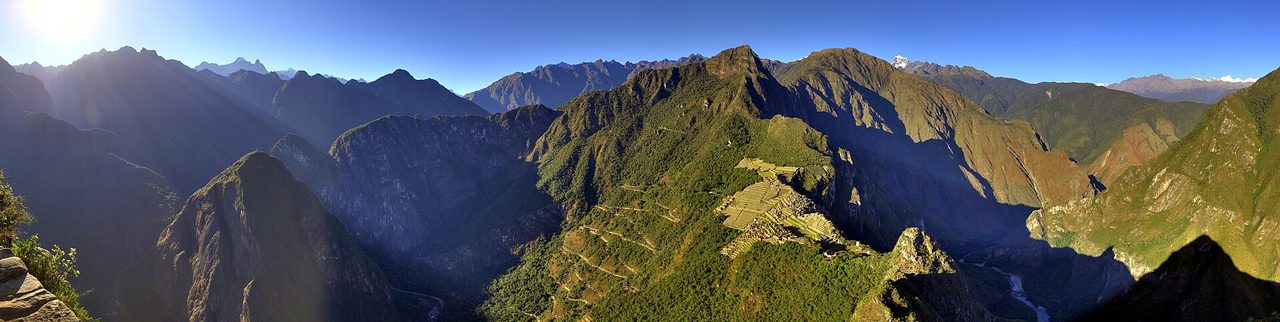
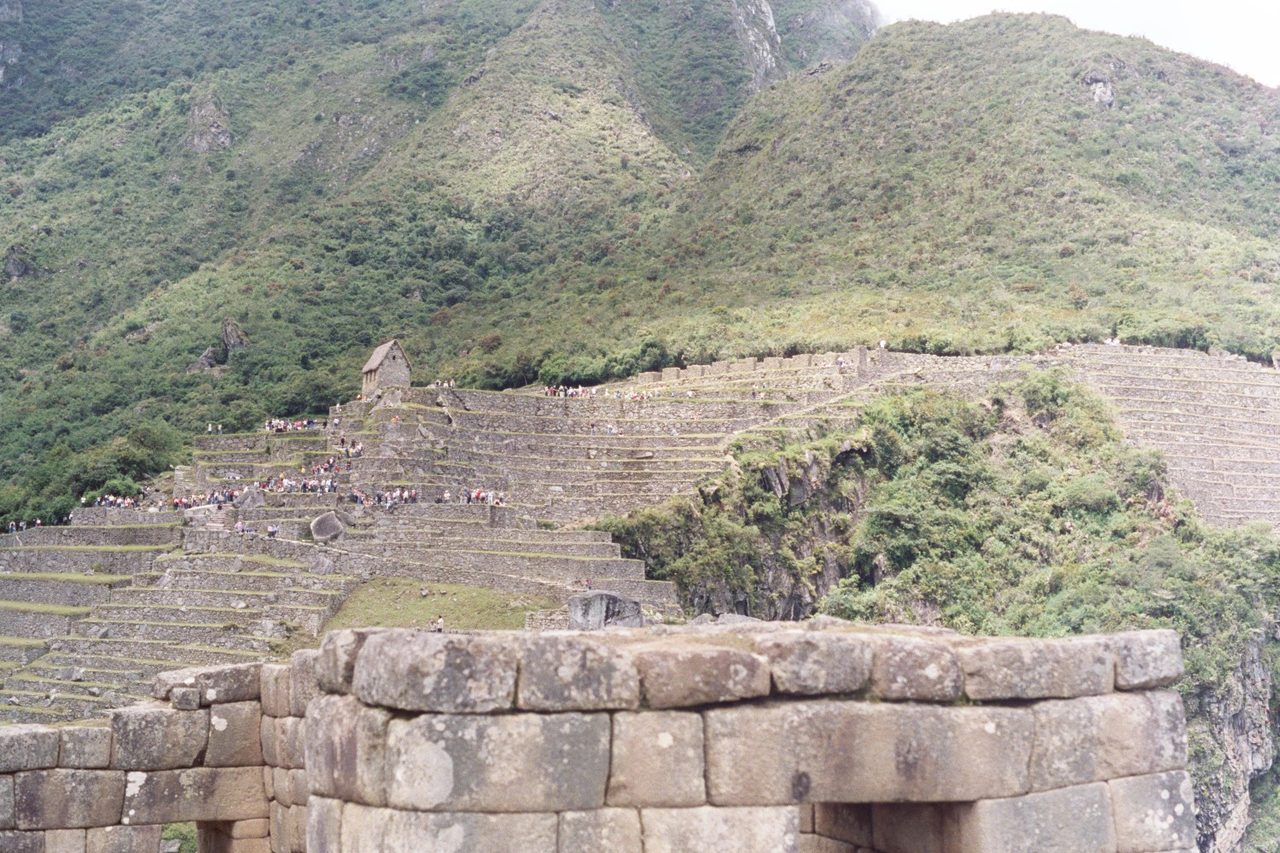
I’ve seen Machu Picchu in a February whiteout, when the citadel would vanish and reappear every ten minutes like a magic trick, and on a cloudless July morning when the light was perfect and I shared the Guardian’s House platform with what felt like a mid-sized music festival. Both were unforgettable. Neither was “better.” That’s the honest headline about the best time to visit Machu Picchu: you’re not choosing between good and bad, you’re choosing which trade-offs you can live with.
This guide breaks down the weather month by month, when the crowds actually peak (and the odd hours when they vanish), what the rainy season genuinely looks like on the ground, and how far ahead each season requires you to book. It’s the timing companion to our main Machu Picchu guide — and if you’re timing a whole Peru trip, zoom out with the best time to visit Peru guide, because the Amazon and the coast play by different rules.
The short version: the dry season runs May–October (clear skies, cold nights, big crowds, book months ahead); the rainy season runs November–April (green, moody, wetter afternoons, far fewer people). The sweet spots are late April–May and September–October — decent weather, manageable crowds. July and August are the most reliable and the most crowded. February is the wettest, and the Inca Trail closes for the month.
The two seasons, and what they actually mean up there
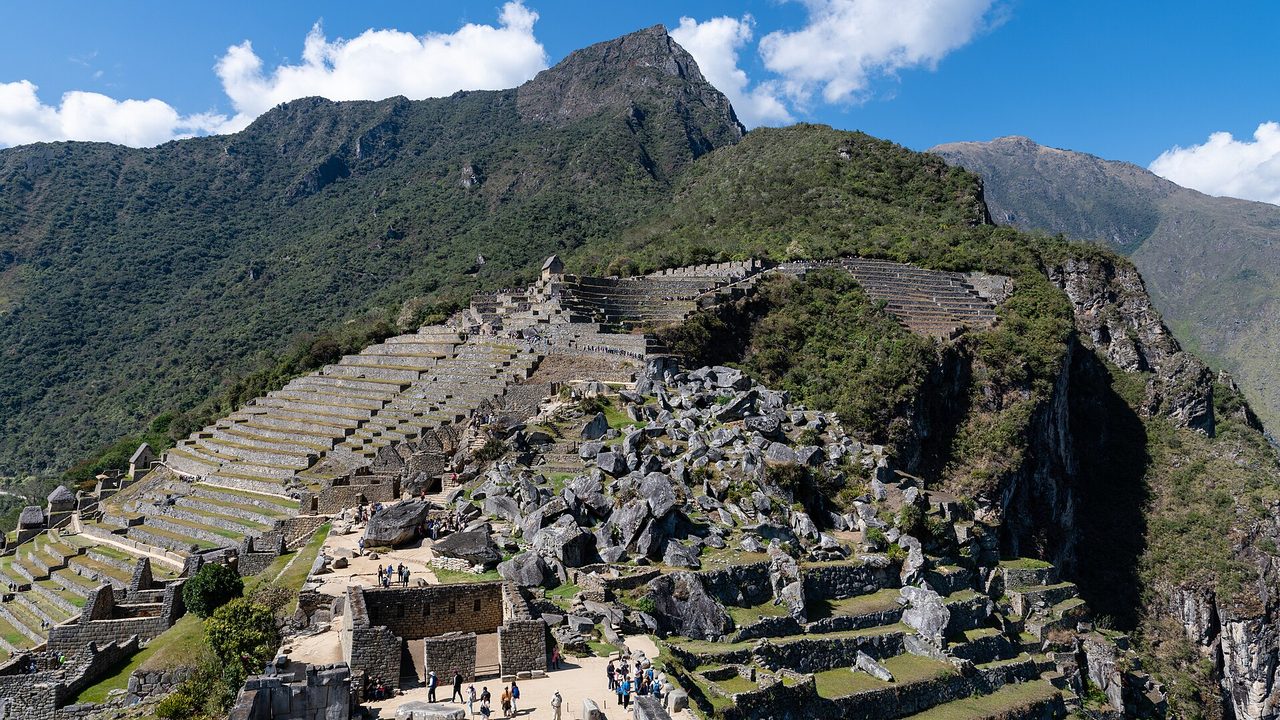
Machu Picchu sits at 2,430 m where the Andes tip over into cloud forest, so its weather is its own thing — warmer and more humid than Cusco, mistier than the Sacred Valley, and capable of producing four seasons before lunch in any month. Still, the pattern is real:
- Dry season (May–October): sunny mornings, 18–22°C afternoons, rain unlikely but never impossible. Nights and dawns are cold — you’ll wait for the first bus at 5 a.m. in 5°C and be in a t-shirt by ten. This is when the postcard-blue-sky photos happen.
- Rainy season (November–April): warm, green and dramatic. Mornings often start wrapped in mist that burns off mid-morning; rain tends to arrive as afternoon bursts rather than all-day soakings, except in the January–February peak when it can genuinely set in. The ruins are quieter, the terraces are impossibly green, and orchids bloom along the trails.
One myth to retire: the rainy season doesn’t mean you won’t see the ruins. It means you might wait an hour for the curtain to lift — and when it does, with cloud threading between the peaks, it beats any blue-sky day for atmosphere. The photographers I know deliberately go in the shoulder months for exactly this.
Machu Picchu month by month
| Month | Rain | Crowds | Verdict |
|---|---|---|---|
| January | Very high | Low | Wettest stretch begins; cheap and green; pack patience |
| February | Highest (180+ mm) | Lowest | Inca Trail closed; site open; the gamble month |
| March | High, easing | Low | Rains taper; landscape at its greenest |
| April | Moderate | Medium-low | Superb shoulder month; Easter week spikes |
| May | Low | Medium | Arguably the best month of the year |
| June | Very low | High | Dry and festive; Inti Raymi crowds late month |
| July | Very low | Highest | Most reliable sky, biggest crowds; Fiestas Patrias late July |
| August | Very low | Highest | As July; book everything 3–4 months out |
| September | Low | Medium | Crowds exhale; weather holds; lovely |
| October | Moderate | Medium | The other sweet spot; afternoon showers return |
| November | High | Low | Green season begins; good value, decent odds |
| December | High | Low, spikes at holidays | Misty mornings; Christmas/New Year surge |
December to March: the green season
This is Machu Picchu with the volume turned down. You can often buy tickets days ahead instead of months, hotels in Aguas Calientes discount heavily, and the site at 7 a.m. can feel almost private. The price is meteorological roulette: January and February are the wettest months, and while mornings frequently start dry, you should plan around rain rather than hope against it. Two hard rules for this window: build a buffer day in case of track or road disruptions (landslides do occasionally pause the trains), and remember the Inca Trail is closed every February for maintenance — the alternative treks run year-round.
April to May: the opening sweet spot
The rains fade, the crowds haven’t fully arrived, and the mountains are still green from the wet months — late April and May give you the best all-around combination of the year. May in particular threads the needle: dry-season reliability with shoulder-season breathing room. Watch one date trap: Easter week (Semana Santa) brings a genuine domestic-tourism surge, with 2026’s April 2–5 dates run at the elevated 5,600-visitor cap.
June to August: peak season, deservedly
If you need certainty — honeymoon, one-shot trip, photography mission — this is your window, and you’ll share it. These months bring the clearest skies and the coldest dawns, plus two crowd multipliers: Inti Raymi (June 24), when Cusco throws the Inca sun festival and the whole region fills, and Fiestas Patrias (July 28–29), Peru’s national holidays, when Peruvian travelers join the international wave. From June 19 the site runs at its expanded 5,600 daily cap through early November. Book Circuit 2 and any summit hike three to four months ahead, trains a month or more out, and hotels in Aguas Calientes early.
September to November: the long exhale
September might be the most underrated month on the calendar: dry-season weather patterns linger, the school-holiday crowds are gone, and booking pressure drops noticeably. October trades a few afternoon showers for even more space. By November the green season is underway — misty, quiet, and fine, provided your itinerary can flex an hour here and there.
Every month at Machu Picchu, in detail
January
The heart of the rains: warm (11–20°C), lush, and wet more days than not, usually in emphatic afternoon bursts. Mornings are your friend — book the earliest entry and you’ll often finish your circuit dry. Crowds are thin except for the first days of the month, when the New Year holiday wave lingers. The Inca Trail is open but muddy; Salkantay runs with dramatic, moody skies. Keep a buffer day for rail disruptions.
February
The wettest month and the quietest. The Inca Trail closes entirely for maintenance, hotel prices bottom out, and same-week tickets are routine. Some Februaries produce days of unbroken rain; others give you misty-then-brilliant mornings all month. If you go, stay two nights in Aguas Calientes so you can pick your weather window, and treat any clear morning like the gift it is.
March
The rains lose conviction through the month, and by late March the odds tilt back in your favor. Everything is outrageously green, the orchids are out along the Inca Trail (freshly reopened), and the site remains blessedly calm. One of my favorite value months: green-season prices, improving skies.
April
A proper shoulder month. Showers still happen but sunny stretches dominate, and the Sacred Valley looks its absolute best. The one asterisk is Easter: Semana Santa week books up like high season and runs at the expanded visitor cap, so either embrace the festival energy in Cusco or dodge that week entirely.
May
The dry season arrives and the crowds haven’t fully committed. Trails are dry, skies are mostly reliable, dawn is crisp rather than freezing, and the hills haven’t yet browned off. If your dates are free, start here and work outward. Book Circuit 2 a month or two ahead; it’s no longer a casual purchase.
June
Peak season proper. Rain is rare, dawns are cold, and Cusco spends the month partying toward Inti Raymi on June 24 — spectacular to witness, punishing for last-minute bookings. From June 19 the site runs at its 5,600 peak cap. Everything needs booking months out, and everything delivers: this is the classic, calendar-photo Machu Picchu.
July
Statistically the driest, clearest month — and the busiest, doubly so around Fiestas Patrias (July 28–29) when Peruvian holidaymakers surge. Expect pre-dawn bus queues and full trains. It’s still magnificent: go at 6 a.m. or after noon, and let the 10 a.m. wave crash without you.
August
July’s twin, with marginally softer domestic crowds after the first week. High-altitude sun is fierce; the grass has gone gold; the weather is as close to guaranteed as the Andes offer. Same drill: book far ahead, work the edges of the day.
September
The exhale. International school holidays end, permits and trains loosen, and the weather often holds beautifully through the month. Trekkers get dry trails without July’s permit knife-fight. For travelers who want dry-season odds with shoulder-season temperament, September is quietly the smart pick.
October
Warm days, returning afternoon showers, steadily thinning crowds. Early October still feels like dry season; by late month you’re packing the poncho again. The seasonal routes (Sun Gate 1C, Inca Bridge 1D, Great Cavern 3C, Huchuy Picchu 3D) close after October 15 — if one of those is on your list, go before mid-month.
November
The green season begins gently: showery afternoons, quiet mornings, prices sliding. It’s a fine month that nobody talks about — think March’s mirror image. Last-minute planners can assemble a whole trip in days.
December
Two different months in one: the first three weeks are quiet, misty and cheap; the Christmas–New Year fortnight spikes hard, with December 30–31 at the expanded cap. If you’re threading a holiday trip through Peru, book that fortnight like it’s July.
The month-by-month numbers, including the ones nobody publishes
Rain is “high” in February and “low” in July. What decides your morning is the set of numbers nobody prints: the dawn temperature at 2,430 m, the odds the citadel is inside a cloud, and what the month does to prices.
| Month | Rain | Day high | Night low | Crowds | Dawn cloud odds | Train & hotel prices |
|---|---|---|---|---|---|---|
| January | ~170 mm | 20°C | 12°C | Low | ~9 in 10 | Lowest of the year |
| February | ~185 mm | 20°C | 12°C | Lowest | ~9 in 10 | Lowest of the year |
| March | ~150 mm | 20°C | 11°C | Low | ~8 in 10 | Low |
| April | ~70 mm | 21°C | 9°C | Moderate; Easter spike | ~7 in 10 | Rising mid-month |
| May | ~30 mm | 21°C | 7°C | Moderate to high | ~6 in 10 | High from mid-month |
| June | ~15 mm | 19°C | 5°C | High | ~5 in 10 | Peaks near the 24th |
| July | ~15 mm | 19°C | 4°C | Highest | ~4 in 10 | Peak |
| August | ~25 mm | 20°C | 5°C | Highest | ~4 in 10 | Peak |
| September | ~50 mm | 21°C | 7°C | Moderate to high | ~5 in 10 | Easing |
| October | ~90 mm | 22°C | 9°C | Moderate, full cap | ~6 in 10 | Easing |
| November | ~105 mm | 22°C | 11°C | Low | ~7 in 10 | Low |
| December | ~145 mm | 21°C | 12°C | Low, spike from 22nd | ~8 in 10 | Low, then surge |
Treat the rain column as shape, not gospel. Aguas Calientes sits 400 m below the citadel in the gorge, where the cloud forest collects far more water, so published annual totals for “Machu Picchu” range from about 1,000 mm to over 1,800 mm depending on the station, and sources disagree over whether February or March is wettest. Rain days matter more: February is wet two days in three, July two or three days in the month.
Entry price ignores the calendar — S/163 for a foreign adult, S/211 with Huayna Picchu or Machu Picchu Mountain, in February exactly as in July. Everything else swings. Standard-class train legs run about $35–60 and the panoramic classes $95–135; they’re compared in the Machu Picchu train guide. Hotels move hardest: a mid-range Aguas Calientes room at $70–90 in February asks $130–150 in July. Over two weeks that swing is easily $500 a head, which our breakdown of what a Peru trip costs puts in context.
The best time, by what you actually care about
- For the classic clear-sky photo: June–August, first entry slot. Accept the crowds; beat them by being on the 5:30 a.m. bus.
- For the best overall experience: May, or September into early October. This is what I book for friends and family, every time.
- For trekking the Inca Trail: May, June or September — dry underfoot, permits marginally less savage than July–August. Book 4–6 months out regardless.
- For the lowest cost: November–March, when hotels discount, agencies deal, and last-minute tickets exist. Pair it with the budget playbook and the numbers get almost reasonable.
- For solitude and mood: February–March or November–early December. Bring a poncho and a flexible attitude; collect the misty photos nobody else has.
- For Huayna Picchu: dry season for grippy rock and open views — the climb in rain is a different, slipperier proposition. The comparison with Machu Picchu Mountain is in this guide.
April and October, minus the reputation
These two get sold as the twin sweet spots, usually in the same sentence. Both are good. They are not the same month.
April is a month of two halves, and the split is not on the 1st. Rainfall halves between March and April, but it falls away through the month, so the first fortnight is still wet-season weather and the second is the best-value stretch on the calendar: dry-ish skies, hills still green from three months of rain, prices that haven’t caught up. The Sacred Valley looks better in late April than at any other point in the year. Trails stay muddy, so the walking is worse than the sky suggests. Inca Trail permits are obtainable at two or three months out, which is true of no month from June to September. The asterisk is Easter, which moves: the elevated capacity block ran 2–5 April in 2026, but Easter Sunday falls in March in 2027 and the block goes with it.
October is not April in reverse. Three things separate them. It runs at the elevated 5,600 daily cap through to 2 November, so it is a full-capacity month wearing shoulder-season weather. The seasonal routes — Sun Gate, Inca Bridge, Great Cavern, Huchuy Picchu — shut after 15 October. And the ground is a different colour: five dry months have browned the hills off, and the green doesn’t return until the November rains. If your mental image of this place is emerald terraces, October will surprise you.
What you get in exchange is the best light of the year, a crowd thinning week by week, and prices softening from mid-month. It’s also the last comfortable window for Rainbow Mountain, above 5,000 m, which is a mud bath from December to March.
The February problem, in full
February is the month the industry hopes you’ll skip, and the advice about it is uselessly binary: either “don’t” or a breezy “the rain won’t bother you.” It’s a real trade with real terms, and you should see them written down.
What closes, and why. The Inca Trail shuts for the whole of February and reopens on 1 March. The scope catches people out: it’s the entire network, so the two-day version and the one-day Km 104 walk go with it. Nor is it weather caution. Crews spend the month repairing stone steps and drainage, rebuilding retaining walls and campsite terraces, replacing bridge timbers and pinning geomesh onto the slopes that slide. February is when the trail recovers from eleven months of traffic.
What stays open, and which of it is a good idea. Salkantay, Lares, the Cachicata quarry trail, the Inca Jungle route and Choquequirao all run, and Cusco agencies will sell you any of them with a straight face. Be selective. Salkantay in February is genuinely hard: a 4,600 m pass in sleet, then two days descending into cloud forest turned to grease. Lares and the quarry trail are the sensible choices — lower, shorter, both finishing near a train, and compared with the rest in our guide to Peru’s best multi-day treks.
Is the site itself still worth visiting? Yes. You get the emptiest citadel of the year, tickets days rather than months ahead, Circuit 2 on the date and hour you want, hotel rates 30–40% below July, terraces at their most absurdly green, and mist doing things no blue-sky day can match. You trade rain on two mornings in three, stone slick enough to make the Huayna Picchu stairs a different proposition, the seasonal routes closed, no train from Poroy, and a real chance of a disrupted travel day.
The February move almost nobody makes: buy two entries on consecutive mornings and stay two nights in Aguas Calientes. Two tickets at S/163 cost less than most airport transfers, and the odds of two washed-out mornings running are far lower than the odds of one. It costs a day, which our notes on how many days Machu Picchu deserves argue for anyway.
And while the Sacred Valley is at its quietest, Lake Titicaca is throwing the biggest party in the Andes: the Virgen de la Candelaria takes over Puno from 2 February for most of a fortnight.
Time of day matters as much as time of year
Here’s the thing the month-by-month tables never tell you: on any given day, the crowd curve swings harder than the seasonal one. The site opens at 6 a.m., the day-trip wave from Cusco lands between 9:30 and 11, and by 2 p.m. the place breathes again. Two strategies work in every season:
- Go first. Sleep in Aguas Calientes, catch the earliest buses, and you get 60–90 minutes of the site at its emptiest — plus the cloud-lifting show in the wetter months. This requires the overnight; the logistics are in the getting there guide.
- Go last. A 12–2 p.m. entry misses the tour-group core entirely. The light goes golden on the stone by mid-afternoon, and these slots stay bookable weeks after the mornings sell out. It’s the day-tripper’s secret — details in the day trip guide.
And a gentle expectation-setting note: “sunrise at Machu Picchu” is mostly a phrase from marketing copy. The sun clears the surrounding peaks well after opening in most months, and dawn mist is common year-round. What you actually get on an early entry is better: the site waking up, nearly empty, in shifting light. Take that deal.
The mist clock, season by season
The Urubamba gorge builds cloud overnight in every month, and it sits on the citadel at dawn far more often than the photographs suggest. What changes between seasons is not whether the mist is there but how long it stays.
- July and August: usually cleared between 08:00 and 09:00, sometimes earlier, occasionally not at all.
- May, June and September: reckon on 08:30–09:30, with the odd morning soft until ten.
- April and October: variable in the honest sense. Some mornings behave like June, some like December.
- November to March: it may lift at 08:00, close by 09:30, open again at eleven and repeat. Or simply sit there.
Which produces the most useful sentence in this guide: a 06:00 entry in July can absolutely mean photographing cloud. First light is not first view. Everyone optimises for the earliest slot, gets it, then spends ninety minutes staring at grey while the 09:00 arrivals walk into a clear panorama.
What each entry hour actually buys you
Tickets are sold in hourly windows from 06:00 to 16:00, with a 30-minute grace period and then a firm refusal at the gate. The shuttle up from Aguas Calientes takes 25–30 minutes, and its queue forms before five in high season.
| Entry hour | What it’s like | Best used for |
|---|---|---|
| 06:00 | Emptiest terraces, coldest air, highest mist odds in any season | Atmosphere, not panoramas |
| 07:00 | Still quiet; first shuttle wave inside; mist usually still working | Space over certainty |
| 08:00 | Cloud typically lifting in the dry season; site filling steadily | Best compromise, May–September |
| 09:00 | Clearest air of the morning and the day-trip wave, together | The classic photograph, with company |
| 10:00 | The busiest hour on the site, in every month | Nothing. Avoid if you can |
| 11:00 | Still heavy; light flat and overhead | Only if it’s what was left |
| 12:00 | Thinning as morning tickets time out; flat midday light | Wet season, dodging afternoon rain |
| 13:00 | Noticeably calmer; rain risk climbing Nov–Mar | Dry-season afternoons; warmest hour |
| 14:00 | Quiet returning, light beginning to warm | Strong all-round dry-season slot |
| 15:00 | Best light of the day, a fraction of the people | Photographers, dry season |
| 16:00 | Last entry, closing 17:30; emptiest hour on the calendar | Long evenings Nov–Feb; poor Jun–Jul, when the western ridge already shadows the terraces |
By season, then. If you want the postcard between May and September, book 08:00 or 09:00 rather than 06:00: you give up the empty terraces and buy the view, which is the opposite of the usual advice. If you care about light, take 14:00 or 15:00, remembering that in June and July the site drops into shadow well before the 17:30 close. In the wet season take 06:00 or 07:00, because rain here is an afternoon habit.
The 5,600 days: when the cap rises, and what it costs you
Machu Picchu admits 4,500 people a day for most of the year and 5,600 on a defined list of peak dates: 1 January, 2–5 April, the long block from 19 June to 2 November, and 30–31 December. That’s an extra 1,100 people, roughly a quarter more, on the same one-way routes. Plenty of guides quote the numbers. Almost none draw the conclusion.
The trade is straightforward once you see it. Peak-cap dates are the easiest days of the year to buy what you actually want: Circuit 2 survives longer after release, summit hikes stay available further out, your preferred hour still exists at checkout. But that capacity doesn’t spread evenly across the eleven entry hours. Demand concentrates in the morning and so does the allocation, so the 09:00 to 11:00 window absorbs most of the extra 1,100. An afternoon slot neutralises nearly all of it.
The bit nobody flags. The peak block runs to 2 November. Article after article sells October as the quiet shoulder month; October is a full-capacity month. The cap doesn’t drop back until 3 November, which quietly makes the first fortnight of November one of the best-value windows on the calendar: shoulder weather, low-season capacity, low-season prices.
So if your dates sit inside a peak block, stop worrying about the ticket and think about the hour. If they sit outside one, book earlier than the crowd descriptions suggest — there are 1,100 fewer tickets a day. Capacity rules move; confirm yours on the official portal.
How far ahead to book, by season
| Season | Entrance (Circuit 2) | Huayna Picchu | Trains | Inca Trail |
|---|---|---|---|---|
| Jun–Aug | 3–4 months | 4–6 months | 3–6 weeks | 5–6 months |
| Apr–May, Sep–Oct | 1–2 months | 2–3 months | 2–3 weeks | 3–4 months |
| Nov–Mar | Days–2 weeks | 2–4 weeks | Days | 1–2 months (closed Feb) |
The full sell-out mechanics — which routes vanish first and what to do about it — live in the tickets guide.
The dates that move everything: festivals, holidays and school terms
Weather sets the background; a handful of dates set the foreground. Miss one and you’ll pay double for a room in Cusco with no idea why.
Inti Raymi, 24 June. Cusco’s biggest day, and the reason the second half of June behaves like mid-July. City hotel rates double or better, the ticketed seating at Sacsayhuaman sells out months ahead, and the citadel stays busy for a fortnight either side. It’s covered properly in our guide to Peru’s festival calendar.
Corpus Christi in Cusco. Moveable, sixty days after Easter, which put it on 4 June in 2026. Fifteen saints carried through the Plaza de Armas, the whole region in town, every bed spoken for. English-language guides ignore it entirely.
Semana Santa. Also moveable, and the peak-capacity block moves with it. Holy Monday brings the Senor de los Temblores procession through Cusco and closes the centre for an afternoon. Plan around it — there’s plenty to fill a displaced day among the things worth doing in Cusco.
Fiestas Patrias, 28–29 July. The national holidays and the hardest domestic spike of the year, landing directly on top of the northern-hemisphere summer wave.
The school calendar, which nobody writes about. Peru’s 2026 school year ran 16 March to 18 December. State schools took a short break from 18 to 22 May and the mid-year holiday from 27 July to 7 August; private schools took theirs earlier, roughly 13–24 July. So the domestic wave doesn’t spike on the 28th and vanish — it runs about three weeks from mid-July, showing up where international visitors don’t look: intercity buses, standard-class train seats, mid-range Cusco hotels. The long summer holiday from January to mid-March is why January feels busier than its rainfall deserves.
One more for December planners: the 30th and 31st are peak-capacity days, making New Year an odd hybrid of wet-season weather and dry-season crowds. In these weeks, invert the booking order — beds first, trains second, ticket third. The good places to stay in Cusco go before the tickets.
What to pack for each season
Whatever the month: layers, sunscreen (the high-altitude sun is sneaky, especially through cloud), insect repellent (the Aguas Calientes midges are the region’s true villains), and rubber-tipped walking poles if you use them. Dry season, add a warm layer for the pre-dawn bus queue. Rainy season, add a proper rain jacket or poncho — umbrellas aren’t allowed inside — and shoes with real grip for the wet stone. The complete list, including what the gate will confiscate, is in what to wear to Machu Picchu.
Landslide and strike season: the timing risk nobody prices in
Here’s a timing factor that gets filed under bad luck rather than planning. The route in is a single railway threading a steep river gorge, and in the wet months that gorge drops rock and mud onto the track. Services between Ollantaytambo and Aguas Calientes suspend for 24 to 48 hours several times in a typical January to March, crews clear the line, everything resumes. The disruption clusters in exactly the months people choose for the low prices, which makes it a timing question. The ceiling on the risk is January 2010, when floods cut the line and the site closed for around two months.
Two things surprise people. It isn’t purely a wet-season problem: on 4 August 2026, in the driest part of the year, a fire near kilometre 107 put rock on the track and the Ollantaytambo leg was suspended for a day. And there’s a rule that catches out January-to-April bookings — PeruRail’s Poroy station outside Cusco doesn’t operate from 1 January to 30 April, so the Cusco departure becomes bimodal: coach from Wanchaq to Ollantaytambo, then the train. Your “train from Cusco” is a bus for half of it, on a road through the terrain that slides. Check the Cusco to Machu Picchu route options first.
Strikes behave differently. Regional paros block the Ollantaytambo road or the approach to Cusco airport a handful of times a year, usually with a couple of days’ notice, and they cluster around political events rather than seasons. The notes on getting around Peru overland are worth reading before you assume a connection holds.
The defence is boring and it works:
- Carry a buffer day, placed correctly. After your Machu Picchu date, before your international flight. A spare day at the start of the trip absorbs nothing.
- Never book the last train back on the day of a long-haul departure.
- Check your insurance covers delay and missed connections, not only medical treatment.
- Know the back door. The road via Santa Teresa to Hidroelectrica sometimes runs when the rail doesn’t.
Entry tickets are, as a rule, non-refundable and non-transferable; the Ministry has rescheduled on genuine force-majeure days, but treat that as a courtesy. And a spare buffer day isn’t wasted: it’s another day acclimatising, which the altitude in Cusco makes worthwhile anyway, or a day for one of the shorter trips out of Cusco — Humantay Lake among them.
A word on trek timing (it’s stricter than the site’s)
The citadel forgives bad weather; the trails are less generous. If your Machu Picchu plan involves arriving on foot, tighten the window: the classic Inca Trail is at its best May–September (and closed in February), while Salkantay’s 4,600 m pass is properly cold year-round and genuinely miserable in the January–February rains, when the descent turns to grease. The reverse is also true — trekkers get more from the shoulder months than site-only visitors do, because April and October mean quieter campsites and greener valleys for the same permits. If the trek is the point and the citadel is the finale, plan the dates around the trail and let Machu Picchu take care of itself: full seasonal notes are in the Inca Trail and treks guide.
Timing mistakes I keep seeing
- Booking February for a first-and-only visit. If the trip cannot flex or repeat, pay the crowd tax and go in the drier window. The green season is wonderful when you can shrug at a washed-out morning; brutal when you can’t.
- Forgetting the local holidays. Inti Raymi week, Fiestas Patrias and Semana Santa transform availability. Check the Peruvian calendar before picking “random” June or July dates.
- Optimizing the month and ignoring the hour. A 6 a.m. entry in busy July routinely beats an 10 a.m. entry in quiet November.
- Treating Cusco’s weather as Machu Picchu’s. The citadel is 1,000 m lower and noticeably warmer and wetter than Cusco — sunny in the city means nothing on the ridge, in either direction.
- No buffer day in the wet months. When the track floods, the difference between a story and a disaster is one spare day in your itinerary.
Best time to visit Machu Picchu: FAQ
What is the single best month to visit Machu Picchu?
If forced to pick one: May. Dry-season weather, green mountains left over from the rains, and crowds a clear notch below July’s. September is the runner-up for the same reasons in mirror image.
Does Machu Picchu ever close?
The citadel is open year-round, including the rainy season — only the Inca Trail closes, every February. Very occasionally, extreme weather or strikes pause the trains for a day; the site itself almost never shuts.
Is the rainy season worth it?
Genuinely yes, if your temperament and itinerary can absorb a soggy hour or a shifted plan. You trade certainty for solitude, greenery and drama. November, March and early December are the gentler entry points; January–February is the deep end.
How cold does it get?
Dawn in the dry season sits around 2–6°C, warming to 18–22°C by midday — hence the religion of layers. The rainy season is milder overnight (8–12°C) and humid all day.
When is Machu Picchu most crowded?
Late June through August, mid-morning (roughly 9:30–13:00), with extra spikes around Inti Raymi (June 24), Fiestas Patrias (July 28–29) and Easter. The same weeks at 6 a.m. or after 2 p.m. feel like a different site.
Is sunrise visible from Machu Picchu?
Rarely in the way people imagine — the sun rises behind high peaks and reaches the citadel later, and dawn mist is common. The June solstice is the exception, when the sun aligns through the Temple of the Sun’s window. Early entry is still worth it for the empty terraces, not the sunrise.
What’s the cheapest time to go?
November through March, excluding the Christmas–New Year spike. Hotels and tours discount 20–40%, and last-minute availability lets you wait for a good forecast.
Is June or July better?
Weather-wise they’re near-identical. June has Inti Raymi energy and slightly fewer foreign visitors early in the month; July has marginally steadier skies and the Fiestas Patrias surge at its end. If I’m choosing: the first two weeks of June or the middle two of July.
What about visiting during the June solstice?
June 21 (and the days around Inti Raymi on the 24th) is the one window where the astronomy of the site performs: at dawn the sun strikes precisely through the eastern window of the Temple of the Sun, exactly as its builders intended five centuries ago. It’s a moving thing to know is happening even if your circuit doesn’t reach that corner — and it’s also the single most oversubscribed week of the Machu Picchu year. Book like it’s the Olympics, or admire the alignment from the comfort of a quieter month.
Do strikes really affect visits?
A few times a year, regional strikes (paros) pause trains or block the Ollantaytambo road for a day, usually with a day or two of warning. They cluster in politically eventful months rather than seasons. The defense is the same as for weather: a buffer day, and a hotel that will re-time your plans without drama.
Is April or October the better shoulder month?
April, narrowly, and for structural reasons rather than weather. October runs at the elevated 5,600 cap through 2 November and its seasonal routes close after 15 October. Late April gives you green hills, obtainable permits and prices that haven’t turned.
Does the higher 5,600 cap really make the site feel busier?
Yes, but not evenly. The extra 1,100 tickets concentrate where demand does, which is the morning, so a peak-cap day at 10:00 is markedly heavier while the 15:00 slot barely notices. The upside is real: on peak-cap dates you can usually still get the circuit and hour you wanted.
What time should I enter for the best photographs?
In the dry season, 08:00 or 09:00 for the classic wide view once the mist has lifted, or 15:00 for raking side-light and a fraction of the crowd. In the wet season, 06:00 or 07:00, because your best odds of an open hour are early.
Will I actually see the ruins if I go in February?
Almost certainly, on at least one of two consecutive mornings, which is why I’d buy two entries rather than one. On a single February morning you’re looking at roughly a one-in-three chance of a washed-out visit; across two, the odds fall sharply.
Final thoughts
Machu Picchu doesn’t have a wrong month — it has wrong expectations. Go in July expecting solitude and you’ll be miserable; go in February expecting postcard skies, likewise. Match the season to what you’re actually optimizing for, book as early as that season demands, and rig the hour of day in your favor, and every version of this place delivers. Mist or blue sky, the first sight of those terraces from the Guardian’s House gets everyone the same way.
Sources
- Ministry of Culture — official tickets, capacity and peak-date calendar
- Machupicchu.gob.pe — official visitor information
- SENAMHI — Peru’s national weather service, historical climate data
- PeruRail — service notices, seasonal station changes and suspensions
- MINEDU — Peru’s official school-year calendar and holiday dates
Photo credits
All images are used under their stated licenses; thank you to the photographers.
- Photo: Martin St-Amant (S23678) / CC BY-SA 3.0 via Wikimedia Commons — source
- Photo: Joe Ross from Lansing, Michigan / CC BY-SA 2.0 via Wikimedia Commons — source
- Photo: Christoph Strässler / CC BY-SA 2.0 via Wikimedia Commons — source
About this guide: Written by the Peru Tourism Guide team — writers and trip-planners who have explored Peru’s Andes, coast and Amazon over many visits and put hundreds of travelers on the right train to Machu Picchu. We update this guide as conditions and rules change.
Last updated: August 2026.