Machu Picchu on a Budget: The Cheapest Way to Visit
You can stand in front of Machu Picchu for about $130 if you are willing to spend a day in a minibus and three hours walking beside a railway line. The whole thing costed out in 2026 soles, including the parts the tour sellers leave out.
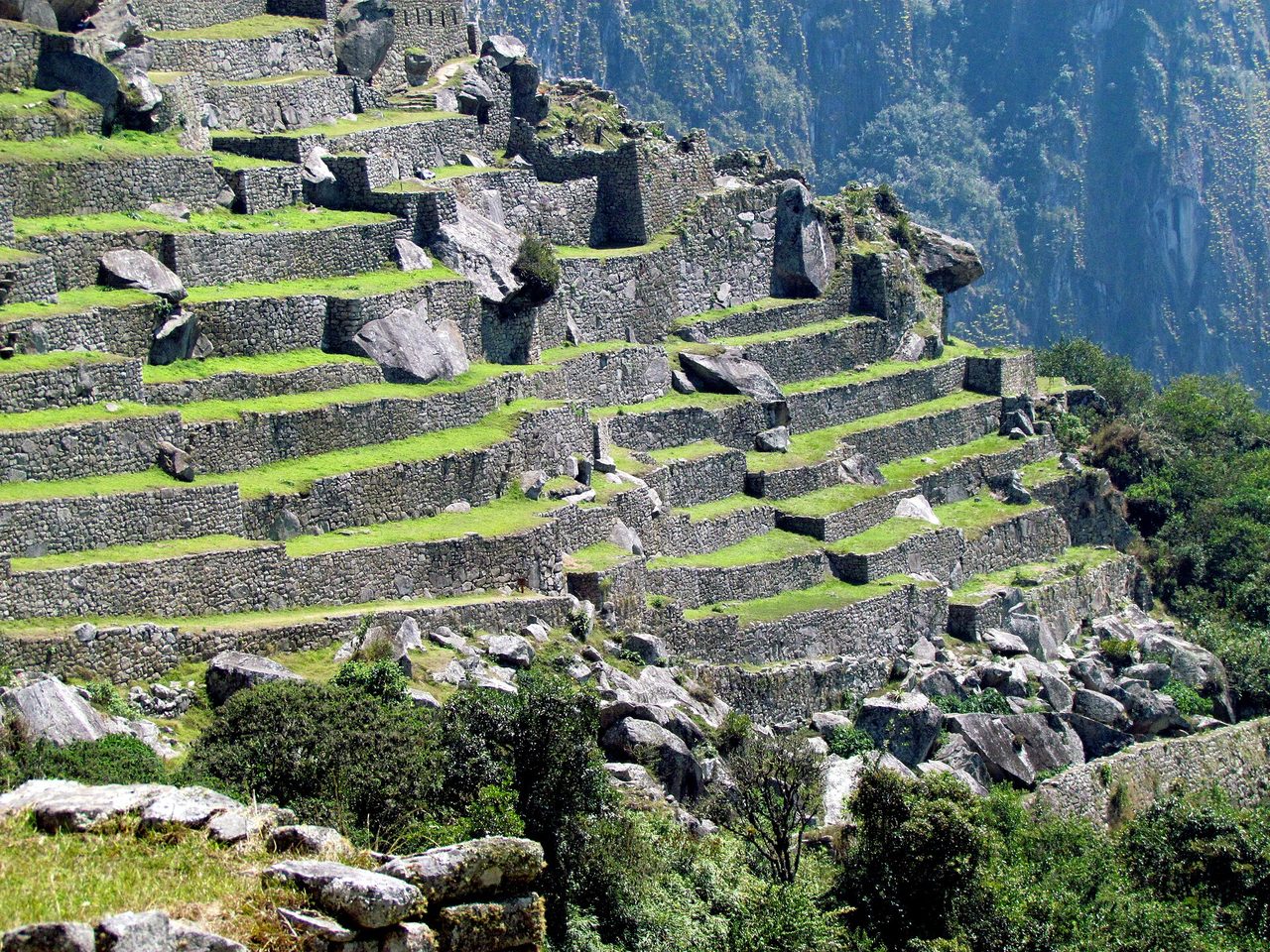
The difference between the cheapest possible trip and the standard one is roughly $400 a head, and almost none of that money goes to the ruins. Entry costs what it costs. What separates a $130 visit from a $550 one is a train, a shuttle bus and a hotel room — three things you are allowed to decline. Doing Machu Picchu on a budget is not about hunting for secret discounts, because there aren’t any. It is about deciding whether you would rather spend money or spend a day.
I have done this both ways, and the cheap version is a genuinely different trip. It takes longer, it hurts more, and you see a side of Cusco department that the train passengers never do. It is also, for a lot of people, more interesting. What follows is the whole thing costed out in 2026 soles and dollars: the Hidroeléctrica route hour by hour, walking up the bus road, sleeping and eating in Aguas Calientes without being fleeced, hiring a guide at the gate, which circuit gives the best value, and the four places where being cheap ends up costing you more. The full Machu Picchu planning guide covers the site itself in more depth; this one is purely about money.
What Machu Picchu on a budget actually costs in 2026
Here is the honest three-column version, per person, from Cusco, for the standard two-day trip: travel down one day, enter the site early the next morning, travel back. Every figure is 2026. I have used a rate of roughly S/3.6 to the dollar, which is where the sol has been sitting, but check it before you convert anything yourself.
| Line item | Cheapest | Mid-range | Comfortable |
|---|---|---|---|
| Entry ticket, foreign adult | S/163 | S/163 | S/211 (mountain circuit) |
| Cusco to Aguas Calientes | S/55–80 (van to Hidroeléctrica + walk) | S/130–220 (standard-class train from Ollantaytambo) | S/230–400 (panoramic train) |
| Return leg | S/55–80 | S/130–220 | S/230–400 |
| Up to the gate and back | S/0 (walk, about 90 minutes up) | $24 shuttle round trip | $24 shuttle round trip |
| One night in Aguas Calientes | S/30–45 (dorm) | S/110–200 | S/350+ |
| Guide | S/45–60 (shared group at the gate) | S/70–110 | S/250–500 private |
| Food, two days | S/45–70 | S/110–160 | S/250+ |
| All-in total | S/400–500 (~$110–140) | S/780–1,180 (~$215–330) | S/1,700–2,400 (~$470–670) |
Two things fall out of that table. The entry ticket is the smallest transport-adjacent line in the cheap column and the largest single item in it — at S/163 it is about a third of the whole shoestring budget. And the mid-range column is not mid-range because of comfort. It is mid-range because of the train, which is close to half of it. If you want a wider picture of how this sits inside a two- or three-week trip, our breakdown of what Peru costs day to day puts these numbers in context.
One more thing worth saying up front, because it kills a common fantasy: there is no version of this that is free, and there is no version under about $100 unless you sleep rough. Anyone quoting you $60 all-in has left out the entry ticket or is quoting Peruvian resident prices. The rest of the country is kinder on this front — there is a long list of genuinely free things to do in Peru, and Machu Picchu is simply not one of them.
The one price you cannot argue with
The entry ticket is fixed, non-negotiable and set by the state. There is no bulk rate, no last-minute markdown, no shopping around. Every agency and every reseller pays the same S/163 the Ministry of Culture charges you; if they quote less, they are quoting an old price or a category you don’t qualify for.
On 1 May 2026 the foreign adult price went from S/152 to S/163. The base ticket didn’t change — what was added is an S/11 conservation surcharge for the protected area, with Peruvian nationals paying an extra S/5. Circuits that include a mountain climb went from S/200 to S/211 on the same basis. It had been approved years earlier and deferred repeatedly, so treat any blog still quoting S/152 as out of date, which is most of them.
2026 entry prices in full
| Category | Standard routes | Mountain routes (1-A, 3-A, 3-C) |
|---|---|---|
| Foreign adult | S/163 | S/211 |
| Foreign student (enrolled, with university ID) | ~S/88 | ~S/136 |
| Foreign minor, 3–17 | ~S/88 | ~S/136 |
| Peruvian / Andean Community adult | ~S/69 | ~S/117 |
| Peruvian / Andean Community student or minor | ~S/37 | ~S/85 |
| Under 3 | Free | Free |
The student and minor rates were S/77 and the Andean Community adult rate S/64 before the surcharge, so add the S/11 or S/5 as applicable and you land near the figures above. Andean Community means Peru, Colombia, Ecuador and Bolivia, and you need the passport to prove it. Our guide to tickets and circuits goes route by route through what each one buys you.
Who actually gets a discount, and one 2026 trap
Three groups pay less: under-18s, enrolled students, and citizens or residents of the Andean Community. That is it. There is no senior rate, no group rate and no low-season rate.
The trap is the student discount. The ISIC card is no longer accepted — too many forgeries — and the ticket office now wants a photo ID card issued by the university or technical institute you actually attend, in plastic, with an expiry date on it and your name and the institution’s name printed on it. A paper letter won’t do. A laminated photocopy won’t do. And they check it at the gate, not just at purchase, so if the ID doesn’t survive scrutiny you have paid half price for a ticket you cannot use. If you’re not certain your card qualifies, buy the full-price ticket and save yourself the argument at 6am.
Families should note the minor rate applies from three to seventeen and knocks about S/75 off each child, which is the single biggest discount available to a foreign visitor. If you’re travelling with kids, that changes the maths on whether the shuttle bus is worth it too.
Every route to Machu Picchu, priced against the others
Once the ticket is paid for, the only remaining variable is how you physically get there and back. Nobody on page one of Google puts these side by side, so here they are. Figures are round-trip transport per person from Cusco, excluding the entry ticket, beds and food, in 2026.
| Route | Transport, round trip | Each way | Effort | Who it’s for |
|---|---|---|---|---|
| Hidroeléctrica, local transport leg by leg | ~$25–30 | 7 h road + 3 h walk | Moderate, plus patience | The genuine floor price. Backpackers with time and no fixed return date |
| Hidroeléctrica, direct tourist van | $32–42 | 6–7 h road + 3 h walk | Moderate | Most budget travellers. The default cheap option |
| Hybrid: van down, train out | ~$100–120 | 10 h in, 4 h out | Moderate one way, easy the other | Anyone who wants the saving without doing the hard day twice |
| Colectivo to Ollantaytambo + standard-class train | $150–250 | 4–5 h | Easy | Short trips, wet season, anyone with a flight to catch |
| Panoramic train both ways | $300–500 | 4–5 h | Easy | Comfort, big windows, and a lot of money for ninety minutes of glass |
| Salkantay trek, 5 days | $380–480 all-in | 5 days on foot | Hard | Cheap per day but not cheap. Buy it as a trek, not as transport |
| Classic Inca Trail, 4 days | $650–900 all-in | 4 days on foot | Hard, permits required | The bucket-list version. Nothing about it is budget |
| Organised day tour from Cusco | $250–380 | ~20 h in one day | Easy but punishing | People with exactly one spare day and no patience for logistics |
The gap between the top row and the fourth row is the entire argument of this article: around $150 per person, which for two people is most of a week’s budget elsewhere in Peru. The gap between the top row and the trek rows is a reminder that a cheap-sounding daily rate on a five-day trek is still a bigger cheque than the whole two-day budget trip.
The Hidroeléctrica route, hour by hour
This is the money-saving move, and it is the one most guides wave at without ever costing out. Instead of taking the train from Ollantaytambo, you go the long way round by road: Cusco over the Abra Málaga pass, down into the high jungle at Santa María, along to Santa Teresa, out to the Hidroeléctrica power station, and then you walk about 10 kilometres beside the railway line into Aguas Calientes. It replaces a $70–120 train leg with something between $8 and $22.
The trade is time and comfort. You are looking at six to seven hours in a minibus on switchbacks, then two and a half to three hours on your feet, and you do the same in reverse two days later. Call it nine to eleven hours door to door each way. Anyone who tells you it’s a scenic half-day is selling you a van seat.
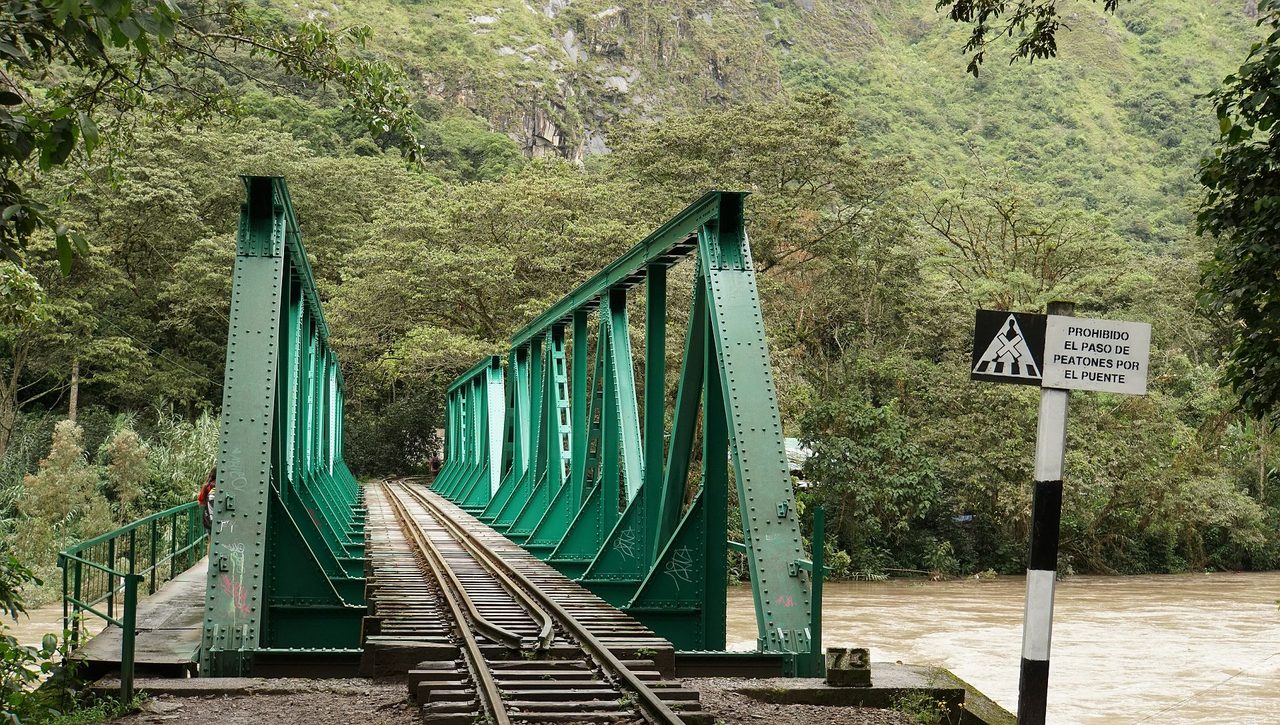
Two ways to book it, and what each costs
Option one: the direct tourist minivan. Dozens of small operators run a 15-seat van straight from Cusco to Hidroeléctrica and back. Expect $15–22 one way and $32–42 round trip in 2026, depending on whether you take the bare-bones service or one with legroom and wifi that mostly doesn’t work. Departures are usually around 06:30 from a pickup near Plaza Regocijo or the Plaza de Armas, arriving Hidroeléctrica about 13:30. The return van leaves Hidroeléctrica between 14:00 and 15:00 and gets into Cusco around 22:00. Agency offices cluster along Avenida El Sol and the streets off the Plaza de Armas.
Option two: local transport, leg by leg. Cheaper, slower, and more interesting. A local bus from the Terminal Antonio Lorena in Cusco to Santa María costs about S/25–30 and takes five hours. From Santa María a shared taxi to Santa Teresa is S/8–12 and takes an hour. From Santa Teresa out to Hidroeléctrica is another S/5 and half an hour. Total: around S/40–47, or $12–14, one way. That is genuinely half the price of the tourist van.
The catch with the leg-by-leg version is that nothing connects. Colectivos leave when they fill, not on a timetable, and if you arrive in Santa María at 2pm and the Santa Teresa cars have thinned out you are staying the night. Which is not a disaster — Santa Teresa is a friendly little town with the Cocalmayo hot springs nearby and beds at half Aguas Calientes prices — but you need to have decided in advance that you don’t mind. If you’ve got the hang of Peruvian shared transport elsewhere on your trip, this will feel familiar; our guide to buses, colectivos and internal flights covers how the system works.
A realistic timetable for the day
This is the direct-van version, which is what most people do. Adjust by an hour or two in either direction.
| Time | Where | What is happening |
|---|---|---|
| 06:30 | Cusco | Pickup near the centre. The van does a lap collecting people, so real departure is closer to 07:00. |
| 08:30 | Ollantaytambo | Breakfast stop. Last decent coffee and the last reliable ATM. |
| 09:30 | Abra Málaga, 4,316 m | The high point. Cold, often in cloud. If anyone is going to feel the altitude, it happens here. |
| 11:00 | Santa María, ~1,250 m | Three thousand metres of descent in ninety minutes. It goes from alpine to humid jungle. This is the stretch where people are sick. |
| 12:30 | Santa Teresa | Lunch stop, usually a set menu for S/15–20. Road narrows after here. |
| 13:30 | Hidroeléctrica, 1,890 m | End of the road, literally. Checkpoint, a few stalls selling water and fruit, and the start of the walk. |
| 14:00–16:45 | The tracks | Ten kilometres, flat, beside the railway. |
| 17:00 | Aguas Calientes, ~2,040 m | Arrival. Find your bed, eat, sleep. You have been travelling ten hours. |
Note the altitude line. Machu Picchu sits at 2,430 m, nearly a kilometre lower than Cusco’s 3,400 m, and this route drops you to 1,250 m in the middle. If you have been struggling in Cusco, going down helps. The one exception is the pass itself, which is higher than anywhere most travellers have been and is not a place you want to be having your first bad altitude day.
What the 10 km walk is actually like
Better than it sounds, and duller than it sounds, at the same time.
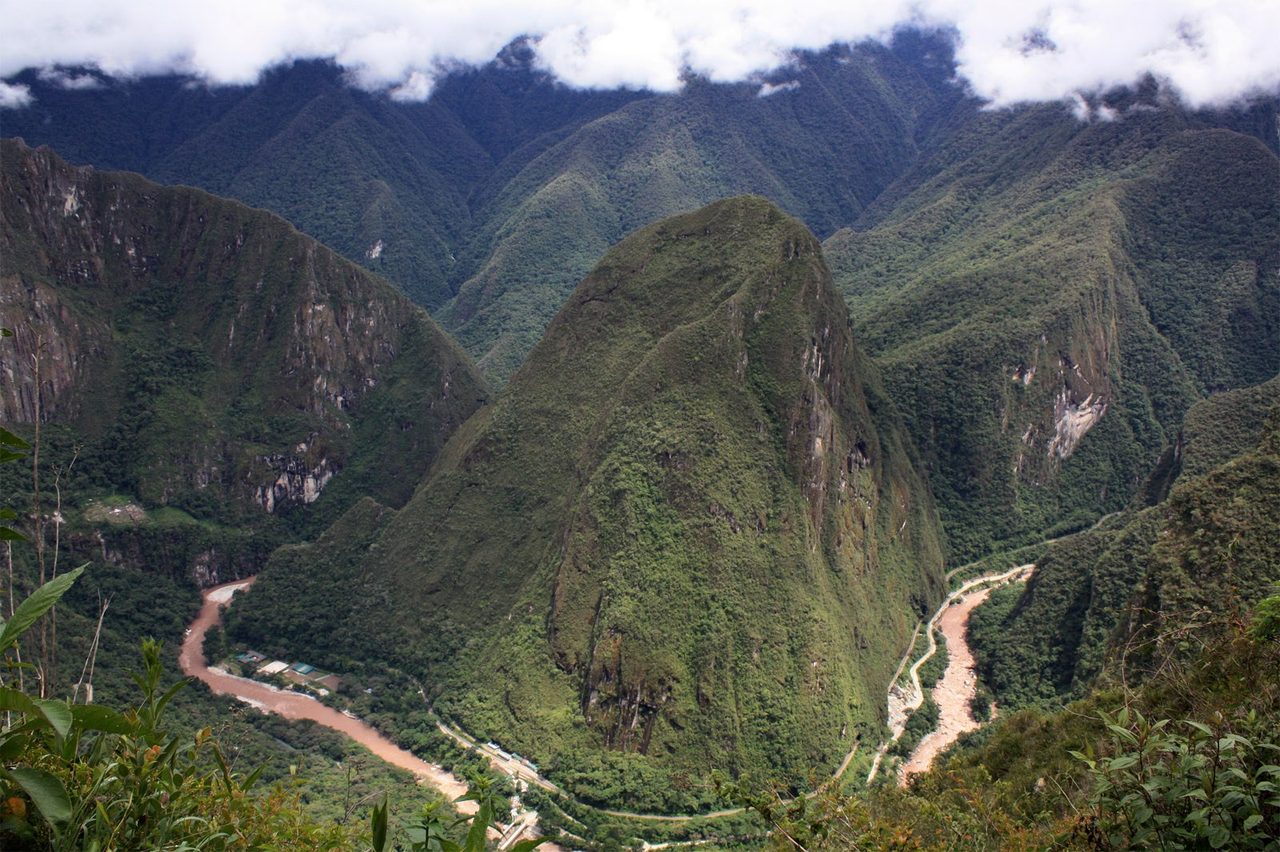
You start at the Hidroeléctrica checkpoint, climb a flight of steps to reach the line, and then walk. The first couple of kilometres run to a long bridge over the Urubamba. After that it is about seven kilometres of dead-straight railway through steep green valley, the river loud on your right, cloud forest going almost vertically up on both sides. There is a worn dirt path beside the sleepers for most of it, so you are not stepping tie to tie, though in places the path pinches out and you do end up on the ballast, which is tiring in a way flat ground shouldn’t be. Near the end you pass Mandor, where there are gardens and a waterfall a short detour off the line, then the path drops onto the road at the Puente Ruinas turnoff and runs the last few hundred metres into town.
Practical things nobody mentions:
- It is flat but it is not short. Two and a half hours is normal, three if you stop. There is essentially no elevation gain, which sounds easy until hour two on gravel with a pack.
- The checkpoint runs roughly 06:00 to 17:00 and passage is free. Start by early afternoon at the latest. There is no lighting anywhere on the route and finishing in the dark on a live railway is a genuinely bad idea.
- Trains have right of way and they are quiet coming round bends. Only a handful pass each day, they sound their horn, and everyone steps aside. Take your headphones out anyway, especially near the short tunnels.
- Vendors appear at intervals with water, fruit and biscuits at maybe twice Cusco prices. Cheaper than Aguas Calientes, so if you are running low, buy here.
- Take a daypack, not your whole bag. There is nowhere to leave luggage at Hidroeléctrica you would trust, so most people just carry everything — which is another argument for travelling light through this part of Peru.
- Trainers are fine. You do not need boots for this. You do want something with grip for the following morning if you’re walking up to the gate; our notes on what to actually wear at the site go into the footwear question properly.
Is it beautiful? In stretches, yes. It is also repetitive, and by kilometre seven most people have stopped taking photographs. The honest summary is that it is a pleasant, slightly monotonous walk that saves you around $100 and gives you a story. It is not a trek and it is not a substitute for one. If you want the walking to be the point, the Inca Trail and its permit system is a different proposition entirely, and considerably more expensive.
When the Hidroeléctrica route is a bad idea
This is the section the agencies leave out.
The corridor between Hidroeléctrica and Aguas Calientes is landslide country. In the wet season, roughly January to March, the slopes above the line shed rock and mud, and when they do they take the railway and the footpath with them. This is not theoretical. In January 2026 a debris flow at Mandor blocked the line and shut the route for several days. On 30 March 2026 a much bigger one at the same spot swept away around 400 metres of track along with the path beside it; the estimate was ten to fifteen days to rebuild, the municipality rigged improvised daytime-only crossings for pedestrians while it went on, and the route reopened on 6 April. Roughly three to four hundred travellers a day were using that path when it went.
The main Ollantaytambo line was unaffected both times, which tells you something important: the cheap route is also the fragile one. If you are travelling in January, February or March and you have a flight to catch, the Hidroeléctrica option carries a real risk of stranding you, and no cheap operator is going to compensate you for it. That is the season to pay for the train and stop pretending otherwise. Our guide to when to go to Machu Picchu gets into the month-by-month trade-offs, and the broader seasons across Peru piece explains why the wet months hit the Cusco region hardest.
Two other groups should skip it. Anyone with knee or back problems, because ten kilometres on uneven ballast twice plus a possible climb to the gate is a lot. And anyone on a genuinely tight schedule — if you have four days in Peru, spending twenty hours of them in a van to save $100 is a bad trade. Have a look at how many days the trip really needs before you commit.
The train from Hidroeléctrica, if your legs give out
There is a short train between Hidroeléctrica and Aguas Calientes, about 30 to 45 minutes, and it is the escape hatch if the walk goes wrong or the weather turns. Two catches. It runs only twice a day in each direction, so if you miss it you are walking anyway. And for foreign visitors it costs somewhere in the region of $35–46 one way, which is most of what you saved by not taking the Ollantaytambo train in the first place. There is a heavily subsidised local service at a fraction of that price, but it is restricted to residents of the region and you will not be sold a seat on it.
The other thing worth knowing is that Hidroeléctrica tickets are not reliably sold online or in Cusco — you generally buy them at the station in Aguas Calientes. Board without one and you are at the conductor’s mercy. Treat this train as an emergency option you pay for, not part of the budget plan. If you’re weighing up rail seriously, the full rundown of train classes and prices compares the operators properly.
Walking up instead of paying for the shuttle bus
From Aguas Calientes to the entrance gate is a 400-metre climb up a zigzagging dirt road. The shuttle does it in 25 to 30 minutes and charges foreign adults $12 one way, $24 round trip. Foreign children five to eleven pay $7 and $12. Peruvians pay $8 and $15. It is, per kilometre, one of the most expensive bus rides on earth, and it is the second-biggest saving available to you after the train.
You can walk it instead, free, and thousands of people do.
What the climb involves
From the centre of town you follow the road along the river for about two kilometres to the Puente Ruinas bridge — flat, twenty to thirty minutes. You cross, show your entry ticket and passport at the control point, and then the stone stairway begins. It is roughly 1,600 steps and 390 vertical metres, and it crosses the switchbacking bus road three times, so you get a fresh reminder every ten minutes of the people who paid.
Budget 60 to 90 minutes for the stairs on top of the walk out, so about an hour and a half to two hours from your bed to the gate. Coming down is 45 minutes to an hour and is harder on your knees than going up. The pedestrian control at Puente Ruinas opens at 05:00, so for the first 06:00 entry slot you want to leave town at 04:15 or 04:30, with a headtorch. Phone torches are not adequate on wet stone.
It is steep, humid and relentless, and you will arrive at the gate soaked in sweat. That’s the honest version. It is also completely straightforward — proper stone steps the whole way, well signed, no route-finding.
When paying for the shuttle is the right call
I walk up perhaps half the time, and the deciding factor is always what I’m doing once I’m inside.
If your ticket includes Huayna Picchu or Machu Picchu Mountain, take the bus up. Both climbs are serious, both are steeper than the approach, and arriving at the base of them with legs already emptied out turns a good morning into a grim one. The comparison between the two mountain hikes makes the case for how much they take out of you.
The compromise most people land on, and the one I’d recommend: bus up, walk down. It costs $12 instead of $24, it puts you at the gate fresh for your timed slot, and descending in the late morning with the site behind you is genuinely pleasant. You save half the money for maybe a fifth of the pain.
One warning that matters more than it should. Buy the shuttle ticket at the official booth in Aguas Calientes or from an official counter in Cusco. There are reseller websites with official-looking names charging around $35 round trip for the same seat that costs $24 at the window — an eleven-dollar tax on not knowing. The concession itself has been in flux since the long-standing operator’s contract expired in late 2025, and two companies have been running the road on a temporary basis while a new tender is sorted out; prices have held, but it is worth confirming at the booth rather than assuming.
Sleeping cheaply in Aguas Calientes
Aguas Calientes exists to sell things to people going to Machu Picchu, and it prices accordingly. It is also unavoidable if you want an early entry slot, so the goal is to spend one night there rather than two.
A dorm bed starts around S/28–35 ($8–10) and a basic private double runs S/60–110 ($17–30). Both are perfectly acceptable — the buildings are new-ish, the hot water is usually real, and you are there for six hours. There is also a municipal campsite, which is the genuine floor price if you are carrying a tent, though carrying a tent ten kilometres along a railway to save S/25 is a decision only you can make.
Three things that actually save money here:
- Book a walk-up outside July and August. Off-peak, turning up and asking at two or three places will beat the online rate, because the listed price includes the platform’s cut. In high season, book — the town genuinely fills.
- Sleep in Santa Teresa instead, if you’re doing the slow version. Beds there run around S/50 and the town is more pleasant. It only works if you have three days rather than two.
- Don’t pay for a room with a view. There is no view. The town is at the bottom of a gorge.
If you want a fuller picture of the town itself — the hot springs, the market, whether it’s worth an extra night — the Aguas Calientes guide covers it. For how accommodation prices compare across the rest of the country, our regional accommodation rundown is the reference point; Aguas Calientes is roughly double what the same room costs in Cusco.
Eating in Aguas Calientes without being robbed
There is no road to Aguas Calientes. Every tomato, every beer, every gas canister arrives by train, and the prices reflect it. A main course on the restaurant strip along Avenida Pachacutec runs S/40–80, and touts will stand outside trying to talk you in. That is roughly triple what the same plate costs in Cusco.
The fix is straightforward and everybody who lives there uses it.
Eat the menú del día. The workers’ restaurants on the streets between Avenida Pachacutec and the railway line do a set lunch — soup, a main, a drink, sometimes something sweet — for S/12–20. It is served roughly 12:00 to 14:30 and it sells out. It is not on the laminated tourist card outside; you have to ask, and the words are ¿hay menú del día? It is the same food, cooked by the same kitchens, at a quarter of the price. This is standard practice everywhere in Peru and one of the best things about eating in the country — our guide to Peruvian food explains how the set-lunch system works and what to order.
Use the market. The covered food section north of the tracks does anticuchos for S/5–8, choclo con queso for S/3–5, empanadas around S/3–4 and fresh juice for S/5–8. Upstairs there are full plates for S/8–10. This is the cheapest hot food in town by a distance.
Buy your drinks in a shop. A beer is S/15–25 on Pachacutec and S/8–10 in a corner tienda. Same beer.
Bring your breakfast and your site snacks from Cusco. There is no real supermarket in Aguas Calientes, only small shops near the station, and everything in them is marked up. Buy nuts, biscuits, a couple of pieces of fruit and a big bottle of water before you leave Cusco. There is a café and a snack bar just outside the Machu Picchu entrance charging what you would expect a monopoly at the gate of a wonder of the world to charge. The toilets are out there too, and are the only ones — there are none inside, and you get one re-entry.
Realistic food budget if you eat this way: S/45–70 for the two days. Eating only on Pachacutec: S/150–220.
Hiring a guide at the gate and splitting the cost
Whether a guide is compulsory is one of the murkiest questions about visiting Machu Picchu, and you will find confident answers in both directions. In practice, independent visitors with standard circuit tickets walk in unaccompanied every day and are not turned away. Rangers enforce the one-way circuit rules strictly; they do not, in my experience, enforce a guide requirement on standard tickets.
But you should hire one anyway, and here is the budget argument for it rather than the cultural one. Without a guide, you are walking a marked path past unlabelled stonework for two and a half hours. There is almost no interpretive signage. You paid S/163 to look at rocks whose significance you cannot read. A shared guide costs S/45–60 and roughly triples what you get for the ticket you have already bought. It is the highest-return money in this entire article.
How to do it cheaply:
- Hire at the gate, not online. Guides gather in the plaza outside the entrance. A shared group tour of about two hours costs $15–30 per person; the same guide booked through an agency website costs two or three times that.
- Assemble your own group. Six people splitting a private guide at S/250–350 pay S/40–60 each and get a much better tour than a group of sixteen. If you are travelling solo, ask around at your hostel the night before or simply approach other people in the queue — everyone is doing the same arithmetic.
- Ask to see the credential. Licensed guides carry a DIRCETUR card with their photo, licence number and certified languages. Anyone quoting $10 for a private tour is unlicensed and will give you a rushed forty minutes of half-remembered mysticism.
- Agree the circuit and the duration before you pay. “Two hours, circuit 2A” avoids the classic complaint that the tour ended before the interesting part.
If you genuinely cannot spare the S/50, read up beforehand instead — a couple of hours with the history of the site and what the buildings were for will get you a long way, and it’s free.
Which circuit gives you the most for S/163
Since June 2024 the site has run on three circuits divided into ten routes, all one-way, all enforced by rangers who will send you back if you try to double back. Entry is by hourly timed slot from 06:00 to 16:00 with a thirty-minute grace period, and you get between two and a half and four hours inside depending on which route you hold. You cannot switch routes on the day and you cannot buy a second one on the same ticket.
For a budget traveller this matters because the routes cost different amounts and deliver very different quantities of Machu Picchu.
| Route | Price (foreign adult) | What you get | Value verdict |
|---|---|---|---|
| 2-A Classic Designed | S/163 | Upper viewpoint plus most of the urban sector: temples, the Sacred Rock, the water channels | Best value overall. The postcard view and the ruins themselves in one ticket |
| 1-B Upper Terrace | S/163 | The terraces and the classic photo angle, less time among the buildings | Good if the view is what you came for; thin if you want the archaeology |
| 2-B Lower Terrace | S/163 | Urban sector from below, limited upper viewpoint | Fine, but you will wish you had 2-A |
| 3-B Royalty | S/163 | The shortest standard route, lower sector only | Weakest value at the same price. Avoid unless it’s all that’s left |
| 1-A with Machu Picchu Mountain | S/211 | Standard circuit plus a three-hour return climb to 3,082 m | Worth the extra S/48 if you are fit and it’s dry |
| 3-A with Huayna Picchu | S/211 | Lower circuit plus the famous peak behind the ruins | Sells out months ahead; the circuit underneath it is the weak one |
If you are optimising for money, buy 2-A and nothing else. It is the same price as the worst route and gives you roughly twice as much. If you want a mountain, the extra S/48 is defensible, but do not pair it with walking up from town.
Booking it all yourself, without a tour
Every package sold to you as a “budget Machu Picchu tour” is a markup on things you can book directly in about forty minutes. Here is the order.
- Entry ticket first, everything else after. Buy at the official Ministry of Culture portal, tuboleto.cultura.pe. You need passport details that match exactly. The daily cap is 4,500, rising to 5,600 on peak dates — 1 January, 2–5 April, 19 June to 2 November, and 30–31 December. In the June-to-November window, book two to three months ahead. Huayna Picchu goes further out than that.
- Then the van or the train. Only once you know your entry date. Booking transport first and then discovering your date is sold out is the most common self-inflicted wound in this whole process.
- Then the bed. One night in Aguas Calientes, or two if you are doing the slow route with a stop in Santa Teresa.
- Shuttle bus at the booth, on the day or the evening before. No advantage to buying early, and it’s cheaper than the resellers.
- Guide at the gate. Nothing to book.
One fallback worth knowing: about 1,000 tickets a day are sold in person in Aguas Calientes at the cultural centre, generally from mid-afternoon into the evening, and this has saved plenty of people who turned up without a booking. Do not rely on it. As of late July 2026 the authorities extended in-person sales to three days ahead during high season, which sounds helpful until you realise the flip side — you may be assigned a date three days out and be stuck paying for beds in the most expensive town in Peru while you wait. Turning up ticketless in July is not a budget strategy. It is a gamble with a S/200-a-day downside.
Bring cash. Card acceptance in Aguas Calientes is patchy and the ATMs charge more than anywhere else on your trip, which is one of several reasons our practical Peru travel tips harp on about carrying soles.
The costs nobody puts in the Machu Picchu budget
The $110–140 figure above is the trip itself. It is not what appears on your card statement, because six other things attach themselves to a Machu Picchu visit and none of them show up in the standard cost breakdowns.
- Two acclimatisation nights in Cusco first. Non-optional if you have flown in from sea level, and S/40–90 a night for a dorm or a basic private. You will not enjoy a 4,316 m pass on your second day at altitude. The site itself is only 2,430 m, so the acclimatising is for Cusco, not for Machu Picchu.
- Getting to Cusco at all. A Lima–Cusco flight booked a few weeks out is $50–120 return; the overnight bus is 21 hours and S/120–200. This is often larger than the entire Machu Picchu line item and people forget to count it.
- The Boletín Turístico del Cusco. Around S/130 for ten days, and it does not include Machu Picchu. Plenty of people buy it assuming it does. It covers the Sacred Valley ruins and several Cusco museums, so buy it if you are doing those and skip it if you aren’t.
- Cash and ATM fees. Aguas Calientes machines charge more than anywhere else on your trip and card acceptance is patchy. Withdraw what you need in Cusco, in one large withdrawal, and carry small notes.
- Water. A 1.5-litre bottle is about S/3 in Cusco, S/8–10 in Aguas Calientes and more at the gate. Fill up before you leave.
- The unadvertised service charge. Some restaurants on the tourist strip add around 20% to the bill without listing it on the menu. Ask before you order, and check the total before you pay.
None of these is large on its own. Together they are S/250–450, and if you have budgeted $130 for “Machu Picchu” and nothing for the rest, that is where the shock comes from. On the other side of the ledger, the roughly $150 a head you save by going the cheap way is not a rounding error — it is four or five nights in Arequipa, or a decent chunk of a jungle lodge stay if you carry on to the Peruvian Amazon. Money moved, not money lost. Our overview of what else is worth doing in Peru is a good way to decide where it should go instead.
Where being cheap becomes a false economy
I am all for the shoestring version. But there are four places where saving money reliably costs more than it saves.
Doing the whole thing in one day. There is a version where you leave Cusco at 4am, take the train, get three hours at the site and are back at midnight. Done on the train it is exhausting but viable, and our day-trip breakdown costs it out. Done via Hidroeléctrica it is not viable at all: you cannot cover the road, the walk, the site and the return inside a day. Anyone selling you a one-day Hidroeléctrica trip is selling you twenty hours of transport for ninety minutes of ruins.
Skipping the guide to save S/50. Covered above. It is the worst cut on the list.
Taking the cheap route in the wet season with a flight to catch. Two closures in the first three months of 2026 should be enough of an argument. The S/300 you save on the train is not worth a missed international flight.
Walking up before a mountain circuit. You paid S/211 for the mountain. Spending your legs on the approach to save $12 means you will either turn around halfway up or spend the summit sitting on a rock breathing hard. Take the bus.
There is a fifth, softer one: skipping Machu Picchu entirely on cost grounds and then regretting it. If the price is genuinely the obstacle, the cheap route brings the whole thing down to about $130, which is less than three nights in a mid-range Cusco hotel. Whether it earns that money is a separate question — we make the honest case both ways in our verdict on whether Machu Picchu is worth it.
Three budget itineraries that actually work
The two-day standard, about $110–140
Day 1: 06:30 van from Cusco. Arrive Hidroeléctrica 13:30. Walk to Aguas Calientes, arrive around 17:00. Dorm bed, menú at the market, asleep by nine.
Day 2: Up at 04:00, walk out to Puente Ruinas for the 05:00 opening, climb the stairs, 06:00 entry slot. Circuit 2-A with a shared guide. Out by 10:00, walk down, collect your bag, walk the tracks back to Hidroeléctrica for the 14:30 van. Cusco by 22:00.
Brutal but it works, and it is the version most backpackers do. The second day is fourteen hours of moving.
The three-day humane version, about $150–180
Day 1: Local transport as far as Santa Teresa. Cocalmayo hot springs in the afternoon, cheap bed in town.
Day 2: Short ride to Hidroeléctrica, walk in by midday, afternoon in Aguas Calientes doing nothing.
Day 3: Early entry, full morning at the site, walk out, evening van back.
Thirty or forty dollars more and a completely different mood. If you have the days, take this one. It also fits neatly into a wider loop through the region — see the Sacred Valley guide for what to add either side, and our suggested Peru itineraries for how it slots into two weeks.
The hybrid, about $180–220
Van down to Hidroeléctrica and walk in, then take the standard-class train out from Aguas Calientes to Ollantaytambo and a colectivo back to Cusco. You save the second ten-kilometre walk and the second six-hour road day on the leg where you are most tired, for around $60–80. For anyone over forty or carrying a full pack, this is the sweet spot and I recommend it more often than the pure version.
All three assume you are basing yourself in Cusco either side. Give yourself two nights there first to acclimatise before you go anywhere near a pass at 4,316 m — there is enough to do in Cusco to fill them without spending much, and for the wider route overview, every way of reaching Machu Picchu is compared side by side.
Frequently asked questions
What is the cheapest way to get to Machu Picchu?
Road to Hidroeléctrica, then walk the ten kilometres along the railway into Aguas Calientes. Booking the legs separately with local transport costs about S/40–47 each way; a direct tourist minivan is $15–22 each way. Compare that with $70–120 for a one-way standard-class train seat and you are saving roughly $100 to $180 on the round trip.
How much does it cost to visit Machu Picchu on a budget?
All-in from Cusco, two days, one night: about S/400–500, or $110–140 per person. That covers the S/163 entry ticket, road transport both ways, a dorm bed, food, and a shared guide, with no train and no shuttle bus. Add a child at the reduced entry rate and the marginal cost per extra person drops.
Can you visit Machu Picchu without a tour?
Yes, and most independent travellers do. You buy the entry ticket yourself at the official portal, arrange your own transport, book your own bed, and hire a guide at the gate if you want one. Nothing about the site requires an agency, and packages sold as budget tours are almost always a markup on components you can book directly.
Is the Hidroeléctrica route safe?
In daylight and in the dry season, yes. The path is well used, hundreds of people walk it daily, and the main hazards are trains, which announce themselves, and a couple of short tunnels. The real risk is seasonal: landslides in January to March have closed the corridor twice in 2026 alone, once destroying 400 metres of track and path. Walk in daylight, avoid the wet months if you have a deadline, and don’t start the walk after mid-afternoon.
How long is the walk from Hidroeléctrica to Aguas Calientes?
Around 10 kilometres, two and a half to three hours, essentially flat. You go from 1,890 m to about 2,040 m, so the elevation is negligible. Allow three hours if you stop for photographs or detour to the Mandor waterfall.
Can you walk up to Machu Picchu instead of taking the bus?
Yes, free, on a signed stone stairway of roughly 1,600 steps rising 390 metres. Allow 60 to 90 minutes on the stairs plus 20 to 30 minutes to reach the trailhead from town, so about an hour and a half to two hours in total. The Puente Ruinas control opens at 05:00 and you must show your entry ticket and passport there. Coming down takes 45 to 60 minutes.
How much is the bus from Aguas Calientes to Machu Picchu?
$12 one way and $24 round trip for foreign adults, $7 and $12 for foreign children aged five to eleven, less for Peruvians. Buy at the official booth in town or an official counter in Cusco. Reseller websites with official-sounding names charge around $35 round trip for the identical seat.
Do you need a guide to enter Machu Picchu?
The rules are ambiguous and enforcement at the gate is inconsistent; independent visitors on standard circuit tickets go in unaccompanied routinely. You should still hire one. A shared group at the gate costs $15–30 per person and transforms a walk past anonymous stonework into something you actually understand.
Is there a student discount for Machu Picchu?
Yes, roughly half price, but the ISIC card is no longer accepted. You need a plastic photo ID card issued by the university or technical institute you attend, showing your name, the institution and an expiry date. It is checked at the gate as well as at purchase. Under-18s get the same reduced rate with a passport.
Can you buy Machu Picchu tickets in Aguas Calientes?
About 1,000 a day are released for in-person sale at the cultural centre in town, generally from mid-afternoon into the evening. Since late July 2026 those sales can be for dates up to three days ahead in high season, which means you might get a ticket and still be waiting three expensive days for it. Treat it as a fallback, never a plan.
Which Machu Picchu circuit is the best value?
Route 2-A. It costs the same S/163 as the shortest routes and gives you both the classic upper viewpoint and most of the urban sector, which is the bit a guide can actually explain. Routes are one-way and enforced, so you cannot upgrade once you are inside.
What is the cheapest month to visit?
February, and I would not do it. Prices for beds and trains drop because the weather is bad, the Inca Trail closes for maintenance, and the Hidroeléctrica corridor is at its most landslide-prone. The best combination of low cost and workable conditions is late April, May, September or early October — outside the 19 June to 2 November peak-capacity window, with the rain mostly finished.
Is the train worth the money?
If you are short on time, yes. If you are short on money, no. The standard classes are comfortable and the ride along the Urubamba is genuinely good, but you are paying $70–120 per leg for ninety minutes of scenery that the road route gives you a rougher version of over seven hours. Where the train earns its price is the return leg, when you are tired — which is exactly what the hybrid itinerary above is for.
The bottom line
You can stand in front of Machu Picchu for about $130, and the only real currency you spend beyond that is time and effort. Two long travel days, ten kilometres of railway ballast twice, 1,600 steps in the dark, and a set lunch instead of a restaurant. What you cannot buy your way out of is the S/163 at the gate, and what you should not economise on is the guide.
The people I have seen regret the cheap route are the ones who chose it without understanding what they were choosing — who expected a scenic transfer and got a seven-hour switchback, or who booked it in February and lost two days to a landslide. Go in knowing. It is a good trip, and it is a considerably better story than the train.