Aguas Calientes: An Honest Guide to Machu Picchu Town (2026)
Aguas Calientes deserves better than a sprint to the bus stop. Where to stay and eat, the hot springs and hidden museum, dawn-bus strategy and the practical stuff nobody tells you about Machu Picchu's roadless little gateway town.
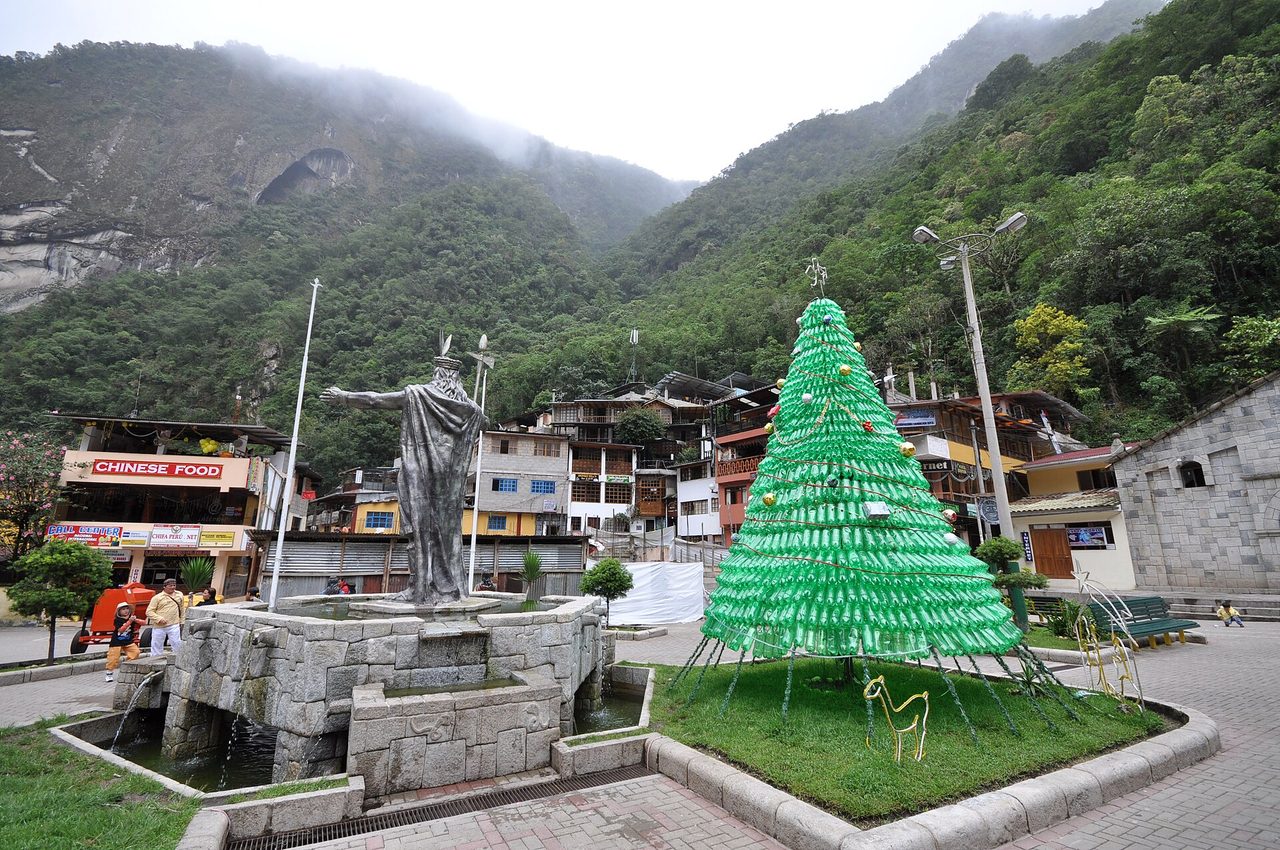
Aguas Calientes gets a rough deal from travel writers. “Tourist trap,” they sniff. “Purely functional.” And look — it’s true that this is a town with exactly one industry, where every third doorway wants to sell you a menu del día and a massage, ideally simultaneously. But I’ve spent more nights in Aguas Calientes than in any Peruvian town outside Cusco, entirely by choice. Because here’s what the sniffy takes miss: staying in this strange, roadless, river-roaring little place is the single biggest upgrade you can make to a Machu Picchu visit — and if you drop the comparison to charming Ollantaytambo and take it on its own terms, the town is actually kind of great.
The short version: Aguas Calientes (officially Machu Picchu Pueblo) is the town at the foot of Machu Picchu — the shuttle buses up to the ruins leave from here, and no road reaches it: you arrive by train or on foot. At 2,040 m it’s warmer and lower than Cusco, wedged photogenically into a jungle gorge. Stay one night to catch the dawn buses, soak in the hot springs, eat better than you expect, and ignore anyone who tells you to sprint through.
This guide covers the town properly — hotels by budget, where locals actually eat, the hot springs and the five other things to do, and the practical stuff (cash, midges, luggage) that makes or breaks a short stay. It’s part of our main Machu Picchu guide; how to arrive is covered in how to get to Machu Picchu.
Orientation: a town with no cars and one job
Aguas Calientes occupies a wedge of land where the Aguas Calientes stream crashes into the Urubamba River, hemmed by thousand-meter walls of green granite. There are no cars — none, save the Consettur shuttles that queue along the river road — so the whole town is pedestrian: steep stairways, a plaza with the obligatory church and Pachacutec statue, train tracks running straight through the middle like the world’s most scenic main street. You can walk end to end in fifteen minutes, uphill both ways, as the joke goes.
The geography that matters: the train station and artisan market sit at the east end; the shuttle bus stop lines the river road near the bridge; the plaza is mid-town up the hill; and the hot springs are a ten-minute walk up Avenida Pachacutec at the town’s top edge. Everything else — hotels, restaurants, the works — is stacked in between. The sound of the river is everywhere, all night. I find it wonderful; light sleepers should pack earplugs and choose rooms facing away from the water (a sentence that appears in no brochure).
Getting in and out (a two-minute recap)
No road reaches Aguas Calientes, which explains everything else about it. Your options: the train from Ollantaytambo (~1 h 50 min, from ~US$35 one way) or Poroy near Cusco (seasonal), run by PeruRail and Inca Rail — classes, stations and booking strategy are in the train guide; or on foot, either finishing the Inca Trail or Salkantay trek, or walking the flat 10–11 km along the tracks from Hidroeléctrica, the backpacker route. Trains hoot through the middle of town all day — the timetable is the town’s pulse, and hotel checkout conversations orbit around it. Whichever way you arrive, the moment of stepping out of the station into the market maze, river thundering somewhere below, is a proper little arrival scene — enjoy it, then walk uphill for cheaper everything.
The shuttle up the mountain, and the queue that decides your morning
This is the most under-documented thing about the town, so here it is properly. One company, Consettur, runs the road and nobody else is allowed on it. The foreigner fare is US$12 each way, US$24 return, payable in dollars or soles; nationals, children and licensed guides pay less, which is why the person in front of you is quoted a different number. The ride is eight kilometers of switchbacks in 25–30 minutes.
Tickets come from the Consettur office on Avenida Hermanos Ayar, at the bridge end of the river road, or online from the company’s own site. You cannot buy from the driver, and you cannot buy at the stop at five in the morning. Buy the evening before, and take your passport — the ticket carries your name and is checked against it at the door.
What the pre-dawn queue is actually like
The line forms on the river road below the stop and folds back on itself along the pavement. In June, July and August the first people are standing there by 4:15, there are several hundred by 5:00, and on bad mornings the tail reaches the bridge. It moves faster than it looks: buses go from 5:30, three or four at a time, every ten to fifteen minutes, so joining at 5:00 usually has you rolling by 5:40. That is still forty minutes standing in the dark, frequently in drizzle, which is why a rain shell and a thermos matter more here than they sound like they should.
The part nobody mentions: by 9:00 the queue has evaporated. With a 9:00 or 10:00 slot you walk down, wait ten minutes and get on. All the pre-dawn suffering buys one specific thing — the 6:00 and 7:00 entries, when the terraces are empty and the mist is still deciding what to do. If you did not get one of those, sleep in. Which slot you hold is fixed when you book; the mechanics are in our guide to Machu Picchu tickets and circuits.
Walking up instead: a real option, usually a mistake
You can walk it for nothing. The trail starts across the river at Puente Ruinas, itself a 25-minute walk from town, and climbs roughly 400 vertical meters of stone staircase, crossing the bus road several times. An hour to an hour and three-quarters is the honest range going up; about forty minutes coming down.
Going up before a full visit is the version I would talk most people out of. You arrive sweat-through at 2,430 m with two to four hours of Inca stairs still ahead of you, and you have saved twelve dollars. Going down afterwards is the good version: gravity, shade, no queue, half the fare back in your pocket. Buy a one-way up and keep the choice open.
Two things about the gate, since they catch people out. Bags are capped at 40 × 35 × 20 cm, with paid storage outside for anything larger and the last toilets you will see for hours (a couple of soles, cash). And you cannot re-enter on the same ticket.
Rainy season in the gorge
Worth its own note: Aguas Calientes in the November–March rains is a different, moodier town — waterfalls appear on the canyon walls overnight, the river goes cocoa-brown and properly loud, and everything smells of wet forest. It’s atmospheric as anything and mostly functions fine, but this is when track closures and shuttle-road landslides happen, so build slack around your train days and take the town’s disruption gossip seriously (hotel desks hear everything first). The consolation prizes are real: half-price rooms, empty springs, and dawn mist that makes the ruins look like they’re being invented in front of you. Full seasonal math in the best time to visit Peru guide.
Should you actually stay the night?
Yes. One night, minimum — here’s the case, compressed: the first shuttle buses leave at 5:30 a.m., and the only people on them slept here. That buys you Machu Picchu’s opening hour — the empty terraces, the mist show, the photos without strangers — before the day-trip wave arrives around 9:30. It also dissolves the fragility of the one-day schedule: a late train the afternoon before costs you nothing but a later dinner.
Two nights is the connoisseur’s play: arrive relaxed, dawn visit on the middle day with a summit hike (Huayna Picchu or Machu Picchu Mountain — both pair badly with same-day trains), hot springs after, leisurely morning train out. Whether that suits your trip length is the subject of how many days for Machu Picchu.
Where to stay, by honest budget
Rooms here cost 30–50% more than equivalent beds in Cusco — captive-market economics — but the range is wide and the top end is genuinely special.
- Splurge (US$400+): Inkaterra Machu Picchu Pueblo Hotel is the reason to blow the budget: whitewashed casitas scattered through twelve acres of private cloud forest, 200-odd orchid species on its trails, hummingbirds at breakfast, and a tea plantation out back. It feels like a nature lodge that happens to have a famous ruin upstairs. (The Belmond Sanctuary Lodge — the only hotel beside the entrance gate itself — is the other splurge, at prices that require sitting down first.)
- Comfortable (US$120–250): El MaPi by Inkaterra is the smart-modern pick with the best buffet breakfast in town (open early enough for dawn-bus people); Casa del Sol and Tierra Viva both deliver reliable rooms a stone’s throw from the bus stop.
- Budget (US$25–70): the hostel scene is big, cheerful and trek-adjacent — Supertramp and its neighbors up Pachacutec fill nightly with Salkantay finishers comparing blisters. Private rooms in family gu esthouses hover around US$40–60; check for hot water pressure and river-facing noise before committing.
Book dry-season weekends a month or more out; the town’s bed count is finite and the trains keep delivering. For the wider where-to-base question — Cusco vs Sacred Valley vs here — see where to stay in Peru.
The four zones, and what a bed costs in each
Nowhere here is far from anywhere, but the four zones behave differently and price differently.
- The station and market end. Flattest, most convenient, loudest — you roll off the train straight into it, which is worth something at 9 p.m. in the rain. Mid-range rooms run US$100–180 and the bus queue is two minutes away.
- The river road. The water is directly below the windows. Balconies, solid mid and upper-mid stock at US$120–250, and a permanent white-noise machine you did not ask for.
- Up Avenida Pachacútec toward the springs. Where the money runs out and the value begins. Dorms US$12–20, basic private doubles US$30–60, better family guesthouses US$60–90. Cheapest food, quietest nights, a stair climb every time you come home.
- The edges. The cloud-forest hotel on the southern fringe sits in its own grounds at roughly US$500–900, the riverside five-star nearer US$400–700, and the single hotel at the citadel gate is a four-figure proposition before you have eaten anything.
Rates swing 40–50% between February and July for the identical room, so a low-season quote tells you nothing about August, and much of the cheap stock has no lift and thirty steps up from the street. The same money buys more in the old city up the valley — those trade-offs are in our breakdown of Cusco’s neighborhoods — and the national averages sit in our Peru trip cost guide.
The noise problem, and how to dodge it
Two separate noises, and people conflate them. The river is constant, low and, to my ear, the best thing about sleeping here; in the January–March high water it crosses from pleasant into genuinely loud, and a river-view room in February is a decision rather than a bonus. The trains are the real problem. They run through the middle of town from around 5 a.m. until mid-evening and sound their horns at every crossing because they are obliged to. A room facing the tracks at the station end gets both at once.
What to ask for, in this order: a room on the far side from the water, an interior room (habitación interior — every front desk understands the request), an upper floor, or a place two streets uphill from the tracks. Nobody volunteers this; everybody answers honestly when asked. Pack earplugs regardless.
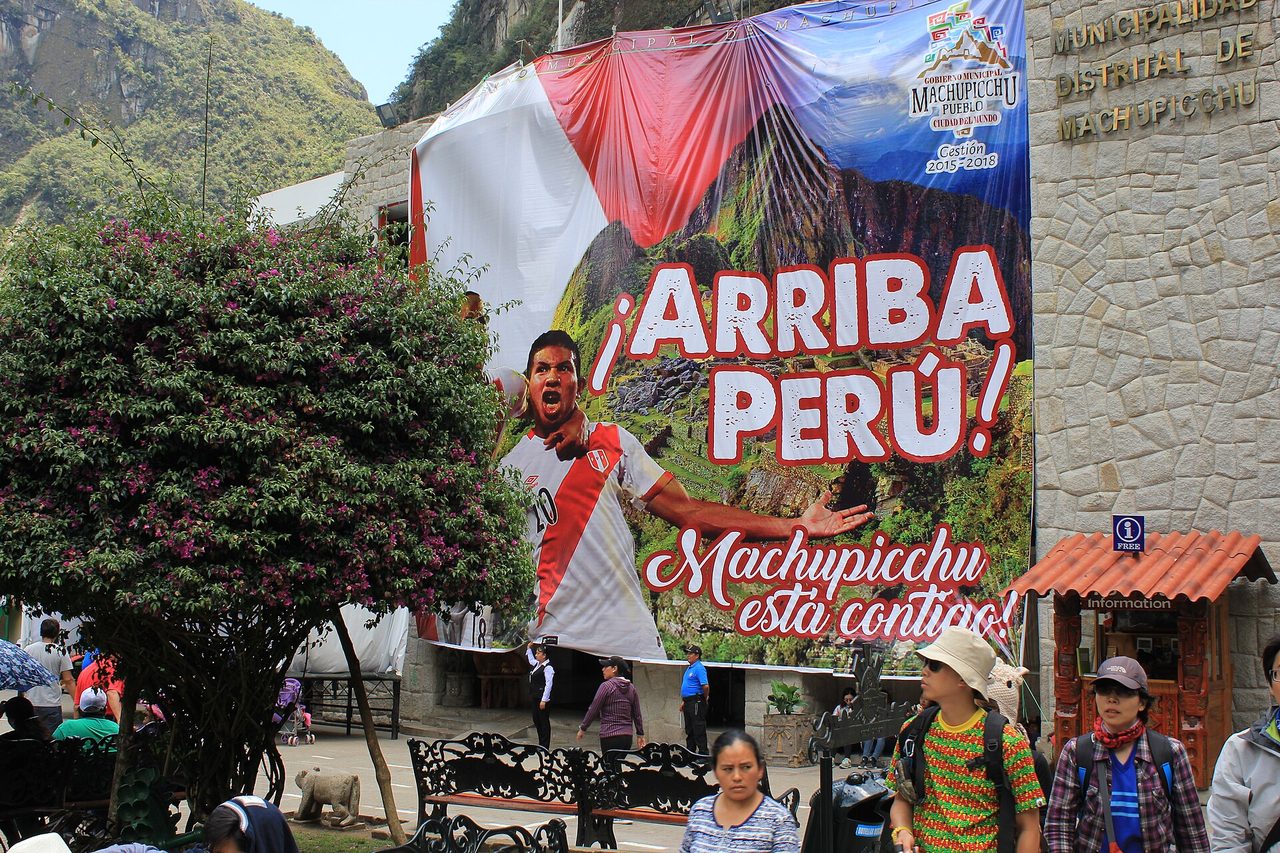
Eating well in a captive market
The dining scene divides into three tiers: the tout-fronted places on the plaza and station drag (fine, overpriced, aggressively laminated menus); a middle tier of genuinely good kitchens; and a couple of institutions. Rules of thumb first: anywhere with a person outside physically steering you in, walk on. Check whether the menu price includes the cubierto (cover charge) and 10% service — the “surprise extras” game is the town’s one real scam. And the good-value magic words are menu del día and trucha — river trout, farmed up-valley, fresh and everywhere.
- The institution: Indio Feliz, a French-Peruvian folly of a restaurant run by a Breton chef since the nineties, all wooden mermaids and nautical clutter, serving quinoa-crusted trout and a fixed menu that’s been the best mid-range meal in town for two decades. Book ahead in high season; it’s earned the hype.
- Craft beer and burgers: Mapacho, riverside, pours Cusqueña alternatives from Peru’s craft scene and does an alpaca burger that tastes twice its price. The balcony over the rapids is the town’s best hour of sitting still.
- Local and cheap: walk uphill past the hot-springs turnoff and the laminated English menus give way to S/15–20 set lunches where the shuttle drivers eat. The caldo de gallina at the mercado’s upstairs comedores (by the artisan market) is the town’s true dawn breakfast — hot, huge, and served from 5 a.m.
- Coffee: the cloud forest grows the stuff, and a few cafés near the plaza roast beans from down-valley Quillabamba. Have one proper cortado before the train; it beats anything on board.
Peruvian food deserves more of your attention than one captive-market town can show you — calibrate expectations here and save the pilgrimage meals for Cusco and Lima, as argued at length in our Peruvian food guide.
How the tout economy works, and what it costs you
Walk the length of Avenida Pachacútec at 7 p.m. and you will be intercepted eight or ten times. The system is worth understanding: the people with laminated menus are generally paid per head delivered, not by the kitchen’s reputation, and the offers escalate as you keep walking — a free pisco sour, then 20% off, then a free starter. That escalation is the tell. A restaurant that can discount 30% on the doorstep was never charging honestly to begin with.
What saying yes costs: a cubierto or cover charge of S/5–15 a head that appears only on the bill, 10% service on top, and drinks at two to three times what the same bottle costs one street uphill. None of it is illegal and most of it is disclosed somewhere in eight-point type. Photograph the board price of anything that matters, and ask for the bill itemized.
What food here actually costs
Rough bands, per person, at the time of writing:
- Market comedores, upstairs by the artisan market: S/12–20 for a full menú — soup, a main of trout, chicken or lomo, and a jug of chicha morada. Cash, handwritten Spanish boards, plastic tablecloths, and the best value in the district by some distance.
- Set lunch two streets uphill: S/18–30 for the same structure with tablecloths and a menu you can read.
- A good independent kitchen: mains S/35–55, a large Cusqueña S/12–18, a proper coffee S/8–15.
- The tourist drag: mains S/45–75, pisco sours S/25–35, and a bottle of water at S/6–8 that costs S/2 in Cusco.
- The town’s best-known restaurant, booked ahead: a fixed menu somewhere in the S/80–120 range with a drink. Worth it once.
The most reliable move is the one everybody skips: eat where the shuttle drivers, porters and guides eat. They are here every day on local wages, they have no patience for cover charges, and they cluster in the same two or three places uphill and in the mercado between 12:30 and 2 p.m. Follow the uniforms. To find out what Peruvian cooking can really do, save the appetite for the city — our list of where to eat in Cusco is where that money belongs.
Things to do (yes, there are some)
The hot springs
The town’s namesake: a terraced complex of thermal pools at the top of Avenida Pachacutec, open roughly 5 a.m. to 8 p.m., S/20 for foreigners. Managed expectations are everything — these are municipal soaking pools, 38–44°C, iron-tinted and unglamorous, with rentable towels and a bar passing beers to people in the water. After three days on the Salkantay or an afternoon on Machu Picchu’s stairs, they are also exactly what your legs are asking for. Go at dusk when the day-trippers have gone and steam rises against the dark canyon walls; skip it entirely if pool hygiene anxieties will outweigh the soak. Bring or rent a towel; swimwear is mandatory and sold cheaply nearby, a detail that has rescued many an unprepared trekker.
Museo de Sitio Manuel Chávez Ballón
The official site museum sits by the stone bridge at the base of the Machu Picchu road, a 25-minute riverside walk from town — and almost nobody goes, which is precisely the appeal. Two hundred and fifty excavated pieces (ceramics, bronze tools, the burial evidence that reshaped theories about who lived at the citadel), solid English signage, and the context that your circuit’s brisk pace can’t provide. Ideal on arrival afternoon, before the ruins; entry is a few soles and the botanical garden outside is free.
The mariposario and the waterfalls
Twenty-five minutes’ walk along the Hidroeléctrica tracks, the butterfly farm is a small volunteer-run conservation project hatching a rotating cast of the region’s 300-plus species — a genuinely charming half hour, and the walk itself (river, orchids, trains hooting past) is half the fun. A kilometer further, the Allcamayo waterfall drops through the cloud forest in photogenic tiers; wear shoes with grip and expect spray in the wet months.
Putucusi, with a caveat
The green sugarloaf directly across the river from town has a semi-official trail with vertiginous wooden ladders and a top-of-the-world view back at Machu Picchu. It’s also frequently closed after ladder damage, occasionally genuinely dangerous, and patrolled inconsistently. Ask locally about current conditions and don’t attempt it in rain or alone — the mountain has a history. For most people the sanctioned summits inside the ruins are the better ambition.
The artisan market
The maze between the station and the bridge is bigger than the town needs and better than its location suggests. Prices open high and negotiate down 20–40% with cheerful patience; the alpaca-blend throws and ceramics are decent value after a haggle. It’s also simply the warmest place to kill a train delay.
Mandor Gardens, the best walk nobody takes
Follow the tracks toward Hidroeléctrica past the butterfly farm and keep going. Forty-five minutes to an hour out of town, a hand-painted sign for Mandorpampa points inland, and a private reserve of orchids, ferns, tanagers and hummingbirds runs back to a waterfall of about thirty meters. Entry is around S/10 for foreigners and S/5 for Peruvians, cash, at a hut on the trail; it opens early, shuts mid-afternoon, and there is basic camping. Allow three to four hours round trip.
It is the one genuinely good half-day here and it is close to empty, because it photographs badly and no agency sells it. Take water, repellent and shoes with grip, watch for trains on the walk out, and go in the morning when the birds are working — this is proper cloud forest, and one of the easier places in the country to see the wildlife Peru is known for without booking anything.
Two hours to kill and no money to spend
The town has thirty-odd granite sculptures scattered through its streets and squares — condors, pumas, serpents, the odd Wiracocha — a sort of accidental open-air museum, and tracking them down is a decent way to spend a rainy hour. Add the riverside alameda below the market, the church on the plaza, the botanical garden outside the site museum at the bridge, and the trains, which are more entertaining to watch than they have any right to be. It is not much. It is more than the guidebooks credit, and it costs nothing — the same principle we apply nationally in our roundup of Peru’s best free experiences.
Aguas Calientes with kids, trekkers, or a tight budget
Three quick playbooks. With kids: the town works surprisingly well — car-free streets, the butterfly farm, trains to wave at, pizza everywhere; book the springs for late afternoon when the water’s been refreshed and the crowd is families, and choose a hotel below the plaza to minimize stair-hauling. Post-trek: your priorities are, in order: shower, springs, Mapacho’s balcony, twelve hours of sleep — and your operator has probably pre-arranged the hotel, so just confirm the checkout-to-train choreography. On a squeeze: sleep in a Pachacutec hostel dorm (US$12–18), eat menu del día uphill, walk up to the ruins instead of busing (save US$24), and picnic from the mercado — the full art of doing this mountain cheaply is in Machu Picchu on a budget.
The practical stuff nobody tells you
- Cash rules. There are ATMs; they empty on high-season weekends and charge with enthusiasm. Bring the soles you’ll need from Cusco — shuttle tickets, springs, market and menu del día are all cash-first territory.
- The midges are the true villains. Aguas Calientes’ biting flies draw blood at ankle height year-round, especially near the river at dawn and dusk. Repellent with DEET, socks over ankles — more useful advice than half this guide.
- Luggage storage is everywhere. Trains limit you to ~5–7 kg carry-on; every hotel stores big bags free for guests, and the station has paid storage. Leave the pack in Cusco anyway; the town is vertical and cobbled.
- Altitude, pleasantly, is a non-issue: at 2,040 m you’re a full 1,400 m below Cusco. People sleep better here; asthmatic travelers breathe easier. It’s a legitimately good place to schedule the trip’s recovery night.
- Weather is jungle-adjacent: warm days (18–26°C), rain possible any month and probable November–March, everything mildly damp forever. Quick-dry beats cotton; see what to wear to Machu Picchu.
- Safety is a bright spot: the pedestrian core is busy and benign at all hours — the standard-issue pickpocket caution around the market and station is about the extent of it.
Cash, cards and the infrastructure nobody documents
Everything in this town arrives by train, including the money, and that shapes more of your stay than any hotel choice does.
Money
There are roughly four cash machines: two attached to banks on the main river avenue, a savings-bank counter, and a standalone box near the plaza. Four, for a town that turns over thousands of visitors a day. They run dry from Friday afternoon in the June–August peak and around national holidays, and the standalone one charges the most — expect S/20–25 in local fees on top of whatever your own bank levies, with per-transaction caps often around S/400–700. Withdraw in Cusco. This is not a suggestion, it is the single most common preventable problem people have here.
Cards work in the hotels and in mid-range and upper restaurants, Visa and Mastercard reliably, American Express rarely. Effectively cash only: market stalls, the comedores, the springs, luggage lockers, porters, tips, most guesthouses, and anything sold from a hut on a trail. Terminals die whenever the connection does, which happens. Dollars are accepted at rates that quietly cost you five to eight percent. For a one-night stay, S/400–600 a head covers everything comfortably.
Everything else
- Laundry: several lavanderías on and just off the main uphill avenue, S/8–12 per kilo with a two- or three-kilo minimum. Drop before mid-morning for same-day, and ask for machine drying — in this air, dry is an ambition rather than a state.
- Pharmacies: two or three boticas near the plaza and on the main drag, open late, stocked with the obvious things — rehydration salts, blister dressings, altitude tablets, repellent that actually contains DEET.
- Medical: a public health post handles the ordinary stuff and there is a small private clinic. Understand the geography, though: anything serious means a train to Cusco, three and a half hours, no road, no ambulance. That is the argument for travel insurance in one sentence, and it belongs with the rest of our practical advice for travelers in Peru.
- Connectivity: 4G in town is fine on the main Peruvian networks, unreliable to absent along the tracks and up at the ruins. Hotel wi-fi is real and slow between 7 and 10 p.m. when the whole town is uploading. Download your tickets, maps and train confirmation before you leave Cusco.
- Left luggage: hotels hold bags free for guests before check-in and after checkout, which covers most people; paid counters near the station charge roughly S/5–15 a bag per day. Storage at the citadel gate is separate and also paid.
- Power and water: 220V, two-pin, short cuts during heavy rain. Hot water in cheap rooms is electric and shower-mounted, so pressure trades off against temperature.
Arriving late, leaving early
The two ends of a one-night stay are where the town is least helpful, and both are fixable if you know what is coming.
Late arrival. The last evening trains from Ollantaytambo land between roughly 9 and 10 p.m., and the town at that hour is thinner than you would like. Pizzerias and the bigger restaurants keep kitchens running until 10 or 10:30; the market comedores are long shut; the springs stop admitting around 7:30; and the Consettur window is closed, which means tomorrow’s bus tickets have to be bought online that night or in the queue at five. Give your hotel the train number when you book and they will hold the desk. Trekkers coming off the Salkantay or the classic route arrive later and hungrier still — if that is your evening, have your operator pre-book dinner, and see how the various finishes compare in our rundown of Peru’s best multi-day treks.
Early departure. For a 6:00 entry you are eating between 4:30 and 5:15 or not at all. The larger hotels open breakfast at 4:30–5:00 in season specifically for this, and it is a real reason to pay for one; smaller places will hand you a boxed breakfast if you ask at check-in the night before, usually without charging. Failing both, the mercado comedores light up around 5 a.m. for caldo, and a couple of bakeries on the hill open early for coffee and empanadas. Carry something in your bag as well, because nothing sold above the gate is priced for humans.
If the schedule is looking tight, the fix is usually the journey rather than the town — the routes for getting from Cusco to Machu Picchu have very different arrival times, and switching can buy back an entire evening.
Timing a perfect 24 hours
Arrive on an early-afternoon train. Drop bags, riverside lunch, museum-and-butterfly walk or straight to the springs as the light goes amber. Early dinner at Indio Feliz (book it), buy tomorrow’s shuttle tickets at the Consettur booth tonight, sleep to the river. Up at 4:40, caldo or hotel breakfast, in the bus line by 5:00, first wave up the switchbacks at 5:30, and you’re on the terraces when the gates open — the entire point of the exercise. Down by noon, celebratory trout, afternoon train out with the golden light in the gorge. That’s the town doing exactly what it was built to do, and doing it well. If your entry slot is midday instead, invert the plan: springs and museum in the morning, visit in the afternoon calm, second night or a late train out — timing options are in the best time to visit guide.
The honest case for not staying here
I have made the argument for the night. Here is the other side, because it is real for some people.
If your entry slot is midday or later, the dawn advantage evaporates and you are paying a captive-market premium for a bed you will use for eight hours. The same room standard in Ollantaytambo costs 30–40% less, sits beneath actual Inca terraces, feeds you better, and puts you 1 h 50 min from the platform here; the valley case is in our Sacred Valley guide, and stitching the legs together is straightforward once you know how transport works across Peru.
The other objections deserve stating plainly. The food ceiling is low: a good town for a solid dinner, a poor one for a memorable meal. Everything is damp, including your boots by morning. The midges are relentless. And on a tight budget the night plus dinner plus the shuttle is easily US$80–120 that would go further almost anywhere else in the country.
My verdict has not moved — with an early slot, stay. But if the sums are already stretched and you are quietly wondering whether the whole exercise justifies itself, that is a fair question, and we have taken it seriously in our honest look at whether Machu Picchu is worth it.
A short history of an accidental town
Aguas Calientes barely predates the tourism it serves. It began in the early twentieth century as a railway workers’ camp — a few shacks by kilometer 110 of the line to the Santa Ana plantations — and might have stayed that way if Hiram Bingham hadn’t been led up the hill in 1911. As the citadel’s fame compounded, the camp thickened into a village, the village into this vertical little boomtown, its census effectively set by the daily visitor cap up the mountain. There’s something honest about that: no colonial pretensions, no faux-Inca theming beyond the statue on the plaza — just a working town that grew in the exact shape of its single opportunity, stairs first. The full story of the mountain above it — who built it, why, and how it was “found” — is in our history of Machu Picchu.
Mistakes to skip
- Treating the town as a 40-minute transfer. The transfer mindset is how people end up sprinting past the best dawn of their trip.
- Arriving without cash or repellent. The two local currencies.
- Booking a river-view room for the romance without asking how loud the romance is. (Very. Gloriously. All night.)
- Buying tomorrow’s bus ticket tomorrow. The 5 a.m. ticket queue is the one line that can cost you sunrise.
- Eating every meal within sight of the plaza. Two streets uphill, the same sol buys twice the dinner.
Aguas Calientes FAQ
Is Aguas Calientes worth staying in, or should I day-trip?
Stay if you possibly can. The dawn access alone justifies it, and the town’s charms — springs, river, low-stakes wandering — are real if modest. The day trip exists for schedules that genuinely can’t spare the night.
How expensive is it?
Plan on Cusco prices plus a third: US$40–60 for a decent private double at the budget end, S/25–40 for a good casual meal, S/20 for the springs, US$24 for the shuttle. The premium is the price of roadlessness — everything you eat and sleep on arrived by train.
Can you walk from Aguas Calientes up to Machu Picchu?
Yes — a steep stone staircase climbs the 400 vertical meters in 45–90 minutes, free. It’s a respectable pre-breakfast workout; most people find walking down (about 40 minutes) the smarter direction. The first buses beat the earliest walkers to the gate, for what it’s worth.
Are the hot springs worth it?
After a trek or a long ruins day: absolutely, at dusk, beer in hand. As a destination spa experience: no. Calibrate accordingly and you’ll leave happy.
Is there anywhere to store luggage?
Your hotel (free), the train station (paid), and most agencies. Between train limits and stair-street geography, the correct amount of luggage in Aguas Calientes is one daypack.
Do I need to book restaurants?
Only Indio Feliz, and only in the June–August evenings. Everywhere else, the town’s rhythm does the booking for you: restaurants heave 6:30–8:30 when the trekkers land and empty by 9:30, because everyone’s alarm says 4:40.
What’s the deal with the town’s two names?
Officially rebranded Machu Picchu Pueblo to capture the association; everyone in Peru still says Aguas Calientes. Tickets, trains and maps use both interchangeably. Same place, same hot water.
How much cash should I bring?
For one night, plan S/400–600 per person and bring it from Cusco. That covers the shuttle, the springs, two meals, a market purchase and tips, with a margin for the machines being empty. If you still need entrance tickets, add S/163 for a standard adult foreigner ticket.
How early do I really need to join the bus queue?
For a 6:00 entry in high season, be in line by 5:00 and accept forty minutes of standing. For a 7:00 slot, 5:40 is fine. From 9:00 onward, walk down twenty minutes before you want to leave and you will get straight on. This is an early-slot, high-season phenomenon, not a permanent condition.
Can I buy Machu Picchu tickets in town?
There is a Ministry of Culture window on the main uphill avenue that releases a limited daily allocation, and in a quiet month you will get what you want. From June to August, assume you will not, and buy online well ahead. Take your passport either way — and note that ISIC cards are no longer accepted for the student rate at the gate, which now requires a university photo ID with an expiry date.
Is there laundry, and how long does it take?
Yes, several places, S/8–12 a kilo with a small minimum. Drop it before mid-morning and it comes back the same evening. In the wet months ask specifically for machine drying, or you will collect a bag of damp clothes and carry the smell of the gorge to Cusco.
Where does a night here fit into a two-week Peru trip?
Usually night nine or ten, once Cusco and the valley have done the acclimatization work and before the coast or the jungle. It is a fixed point that everything else bends around, because your entry hour is booked months ahead — which is why we build the schedule outward from it in our Peru itinerary guide.
Final thoughts
Every famous place has a town like this — the Zermatt, the Moab, the gateway that exists because the wonder next door needed somewhere to put the beds. Most travel writing treats gateway towns as a tax. I’ve come around to treating them as part of the ritual: the night in Aguas Calientes, river roaring, legs pleasantly wrecked, tomorrow’s tickets on the nightstand, is the anticipation chapter of the Machu Picchu story — and anticipation, done right, is half of travel. Stay the night. Take the first bus. You’ll see.
Sources
- Machupicchu.gob.pe — official visitor information
- Wikipedia — Aguas Calientes, Peru
- Ministry of Culture — museum and site tickets
- PeruRail — timetables and fares
- Inca Rail — timetables and fares
Photo credits
All images are used under their stated licenses; thank you to the photographers.
- Photo: Jorge Láscar from Australia / CC BY 2.0 via Wikimedia Commons — source
- Photo: Laslovarga / CC BY-SA 4.0 via Wikimedia Commons — source
- Photo: miguelote16 (public domain) via Wikimedia Commons — source
About this guide: Written by the Peru Tourism Guide team — writers and trip-planners who have explored Peru’s Andes, coast and Amazon over many visits and put hundreds of travelers on the right train to Machu Picchu. We update this guide as prices and openings change.
Last updated: August 2026.