Where to Stay in Peru: Areas, Hotels & Honest Advice (2026)
Where to stay in Peru, region by region - the right neighborhoods in Lima and Cusco, Sacred Valley bases, Machu Picchu logistics, jungle lodges and what each really costs.
I’ve slept in most of the beds Peru has to offer: a $14 dorm in Cusco where the walls were Inca stone, a Sacred Valley hacienda with horses outside the window, a jungle lodge with three walls and a mosquito net, and a reed hut on a floating island that a Uros family built by hand. Figuring out where to stay in Peru is really two questions stacked on top of each other — which towns you base yourself in, and which neighborhood or lodge you pick once you’re there. Get the first one right and the second is easy. This guide walks through both, region by region, with the honest version of what each place is like.
The short answer: base yourself in Miraflores or Barranco in Lima, sleep low in the Sacred Valley before Cusco, spend the night before Machu Picchu in Aguas Calientes or Ollantaytambo, and book an all-inclusive Amazon lodge rather than winging it. Budget $15–25 for dorms, $50–100 mid-range, $150+ for genuine luxury.
Where to stay in Peru at a glance
Most Peru trips follow a familiar spine — Lima, Cusco, the Sacred Valley, Machu Picchu, then one or two add-ons like the Amazon, Arequipa or Lake Titicaca. Here’s the cheat sheet I send friends when they ask where to stay in Peru, before we get into the why behind each pick.
| Destination | Stay here | Nights | Dorm / budget | Mid-range | Splurge |
|---|---|---|---|---|---|
| Lima | Miraflores (first visit) or Barranco (character) | 2–3 | $12–25 | $80–150 | $200–400 |
| Cusco | Centro Histórico or San Blas | 3–5 | $10–25 | $70–140 | $250–600+ |
| Sacred Valley | Ollantaytambo (logistics) or Urubamba (resorts) | 2–3 | $15–40 | $90–160 | $250–600 |
| Machu Picchu | Aguas Calientes, the night before | 1 | $15–35 | $60–120 | $400–2,000+ |
| Arequipa | Centro Histórico or Yanahuara | 2–3 | $10–25 | $60–110 | $150–350 |
| Lake Titicaca | Puno for logistics, an island homestay for the memory | 1–2 | $10–25 | $50–100 | $250–500 |
| Amazon | A lodge out of Puerto Maldonado or Iquitos | 3–4 | $60–100/night all-in | $150–250/night all-in | $400+/night all-in |
| Southern Coast | Huacachina for the dunes, Paracas for comfort | 1–2 | $10–20 | $60–120 | $150–300 |
| The North | Máncora beaches, Huaraz for trekking | 2–5 | $8–20 | $50–100 | $120–250 |
Prices are per night for a double room (or a dorm bed at the low end) in 2026, and they swing with the season — expect the top of each range from June to August and the bottom from December to March in the highlands. For how accommodation fits into your overall daily spend, my Peru trip cost guide breaks down full budgets by travel style.
How Peru accommodation actually works
Peru’s hotel scene is less standardized than Europe’s or North America’s, and the words on the sign don’t always mean what you’d guess. A few things worth knowing before you start clicking around booking sites.
“Hostal” does not mean hostel. A hostal is a small, family-run guesthouse — usually private rooms with bathrooms, often spotless, usually $20–40 a night. Some of my favorite stays in Peru were hostales that cost less than a dorm bed in a flashy “party hostel.” If you want bunks and a bar, look for the English word “hostel” or “backpackers” (my picks are in the best hostels in Peru guide). If you want a cheap private room, hostales are where the value lives.
Boutique hotels live inside old buildings. The signature Peru stay is a colonial casona — a 400-year-old mansion or monastery wrapped around a courtyard, converted into 10–40 rooms. Cusco and Arequipa are full of them, Lima’s Barranco has a wave of newer ones, and they’re the single best reason to spend $100+ a night here. I’ve collected my favorites in my guide to boutique hotels and eco-lodges in Peru.
Jungle lodges are packages, not hotels. In the Amazon you don’t book a room, you book a program: boat transfers, all meals, guided excursions and the bed come bundled, priced per person. A “cheap” lodge at $80 per person per night is actually decent value once you do that math. More on this in the Amazon section below.
Homestays are real and worth it. On Lake Titicaca’s islands and in some Sacred Valley and Colca villages, families host travelers for around $15–25 including dinner and breakfast. Rooms are basic — think thick blankets, a candle or a bare bulb, maybe no hot shower — but it’s the most memorable night you’ll spend in Peru. Book through community associations or established agencies so the money actually reaches the family.
What’s included shifts with price. Breakfast is nearly universal from about $30 a night upward, and usually means bread, jam, fruit, juice and decent coffee. Wi-Fi is free everywhere but often weak in the mountains and nonexistent in the jungle. Heating is the thing nobody warns you about: highland nights drop near freezing, most budget and mid-range places have no central heating, and a good hotel shows you the space heater and extra wool blankets without being asked. In Cusco, ask. Every time.
Lima: pick your neighborhood, not your hotel
Lima is enormous — ten million people spread along a fog-prone coastline — and the gap between staying in the right district and the wrong one is the gap between loving and hating the city. Almost every traveler should stay in one of three neighborhoods: Miraflores, Barranco or San Isidro. They sit next to each other along the clifftops, they’re the safest parts of the city by a wide margin, and they hold most of the restaurants that made Lima famous. My full Lima guide covers what to do once you’ve dropped your bags.
Miraflores: the default, for good reason
If it’s your first time, stay in Miraflores and don’t overthink it. This is the polished, tourist-ready face of Lima: parks full of joggers, the malecón boardwalk running along 80-meter cliffs above the Pacific, paragliders overhead, and more good restaurants per block than anywhere else in South America. It’s walkable, it’s well-lit at night, taxis and Ubers are everywhere, and you can fill two days without leaving it — which matters in a city where crossing town can take an hour.
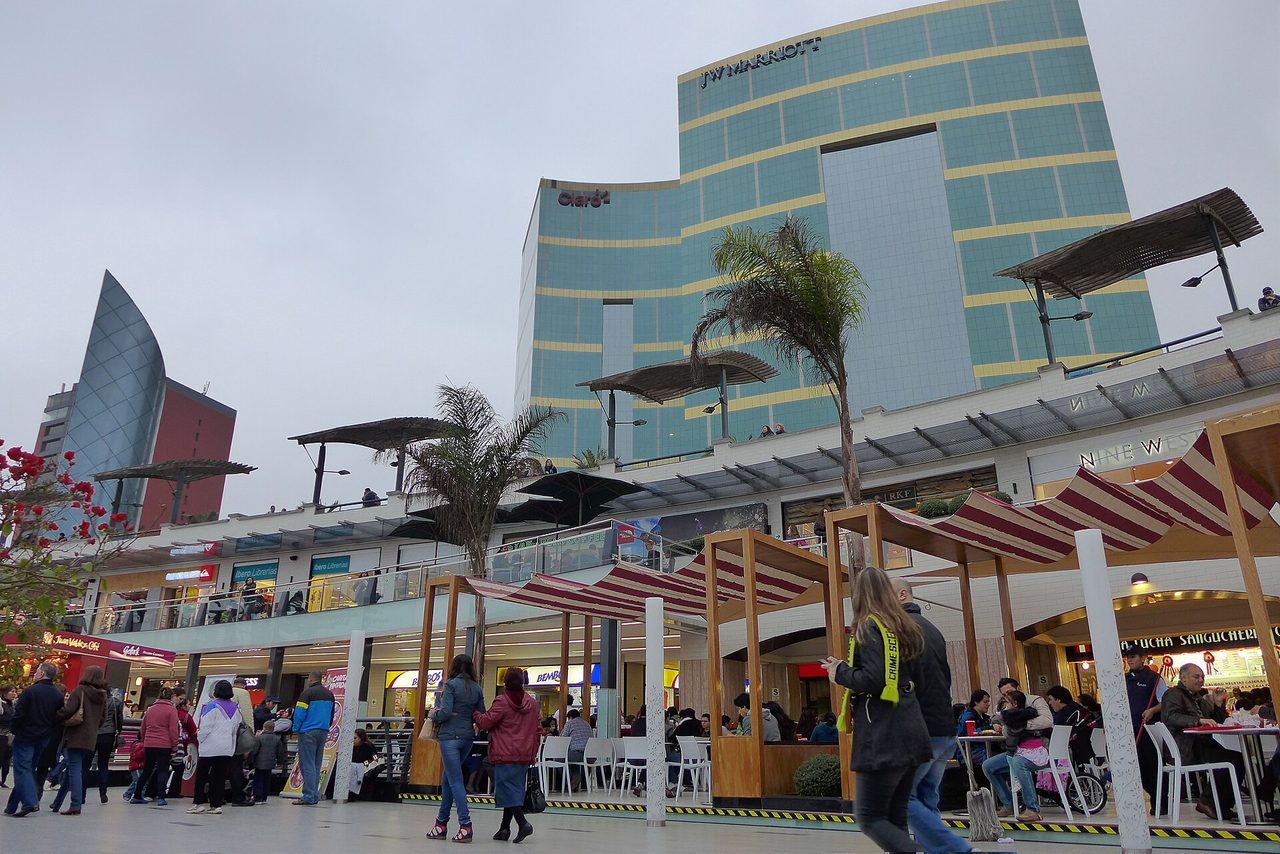
The hotel stock runs the full range: backpacker stalwarts like Pariwana and Selina’s old buildings around Kennedy Park, reliable mid-rangers in the $80–130 zone (the Peruvian chains Tierra Viva and Casa Andina are consistently good value), and the big glass luxury boxes — JW Marriott, Belmond Miraflores Park — perched on the clifftop with ocean views from about $250. A tip from repeated stays: rooms facing Avenida Larco or the Kennedy Park bar streets are noisy on weekends; ask for an interior or ocean-facing room.
Barranco: where I actually stay now
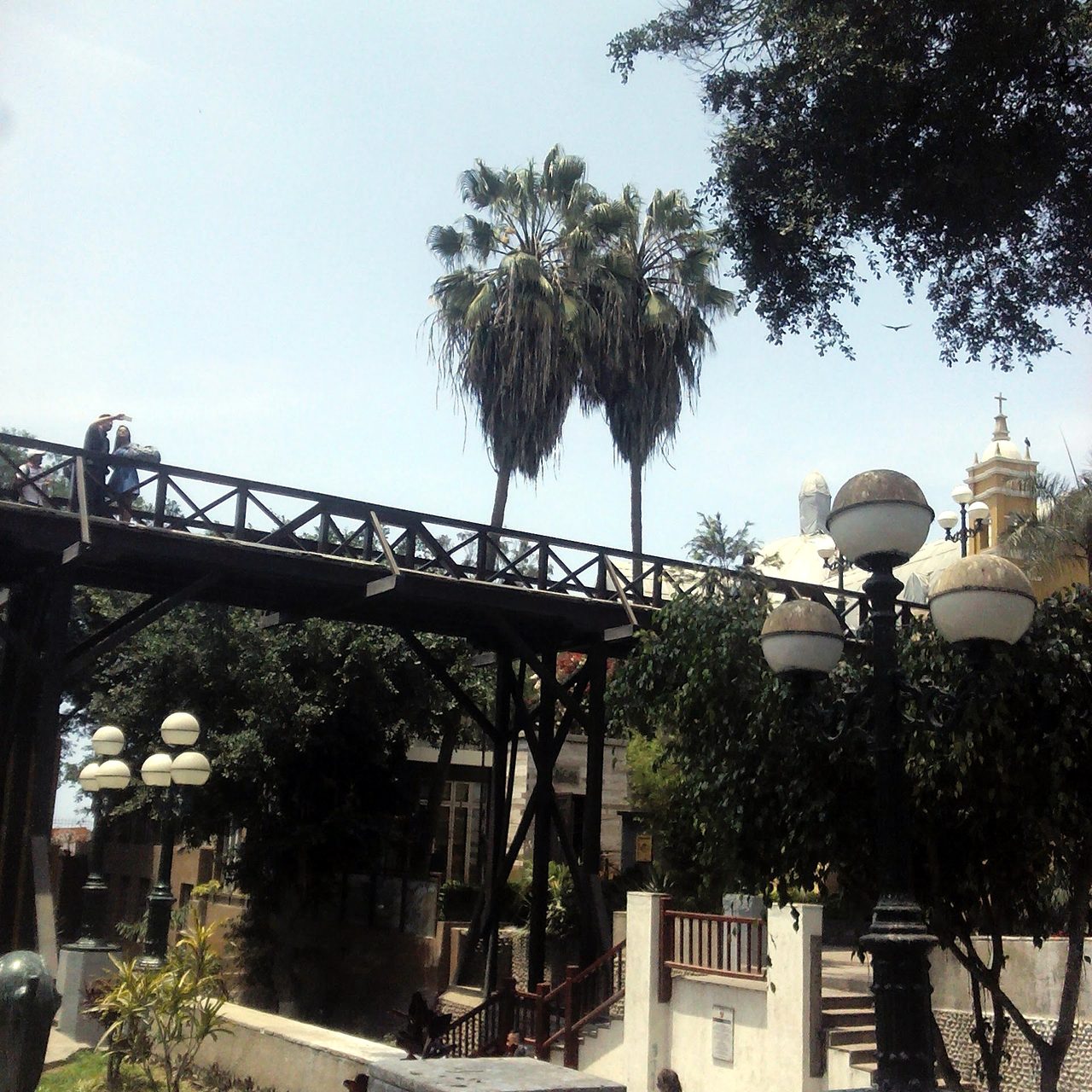
One ravine south of Miraflores, Barranco is Lima’s old seaside resort turned artists’ quarter — pastel mansions, street murals, the Bridge of Sighs, craft beer bars and two of the best museums in the city (MATE and Pedro de Osma). It’s smaller, quieter by day and livelier by night than Miraflores, and the accommodation skews characterful: boutique hotels in restored 1920s casonas, design-led B&Bs, and a couple of excellent hostels. Villa Barranco and Hotel B (the latter doubles as an art gallery, and their pisco bar is worth a visit even if you sleep elsewhere) are the standouts if you have $200+ to spend; below that there’s a healthy $60–120 boutique band that would cost double in Miraflores.
The trade-offs are real but minor: fewer big-hotel amenities, a 10–15 minute taxi to Miraflores, and some blocks between the two districts that you shouldn’t walk late at night. For couples and anyone on a second visit, it’s the clear pick — and it’s where I send people planning a Peru honeymoon with a night or two in Lima.
San Isidro and everywhere else
San Isidro is the financial district: leafy, immaculate, quiet, home to the Country Club Lima Hotel and most business chains. It’s arguably the safest district in the city and the rooms are often better value than equivalent Miraflores ones, but you’ll taxi to dinner most nights. Worth considering if Miraflores is booked out or you like calm.
The Centro Histórico — the colonial heart with the cathedral and the catacombs — is fascinating by day and not where you want to sleep. Hotels are cheap and the architecture is grand, but the streets empty after dark and petty crime is a genuine problem. Visit on a morning tour, sleep on the coast. And if you have an early flight or a long layover, the Costa del Sol Wyndham attached to the airport terminal is charmless and absolutely worth it; the airport sits in Callao, 45–90 traffic-dependent minutes from Miraflores, and there is nothing else nearby you’d want to stay in.
Cusco: charm, stairs and thin air
Cusco is where everyone stays the longest, and the city repays a careful choice. Two factors should drive it: noise and altitude. The center is loud — fiestas, fireworks at 6 a.m., brass bands that practice at night, dogs with opinions — and the whole city sits at 3,400 m, where every flight of stairs counts double. You will care about both more than you think. For acclimatization strategy (and why I’d sleep in the Sacred Valley first), see the next section; for everything to do here, my Cusco guide has you covered.
Centro Histórico: in the thick of it
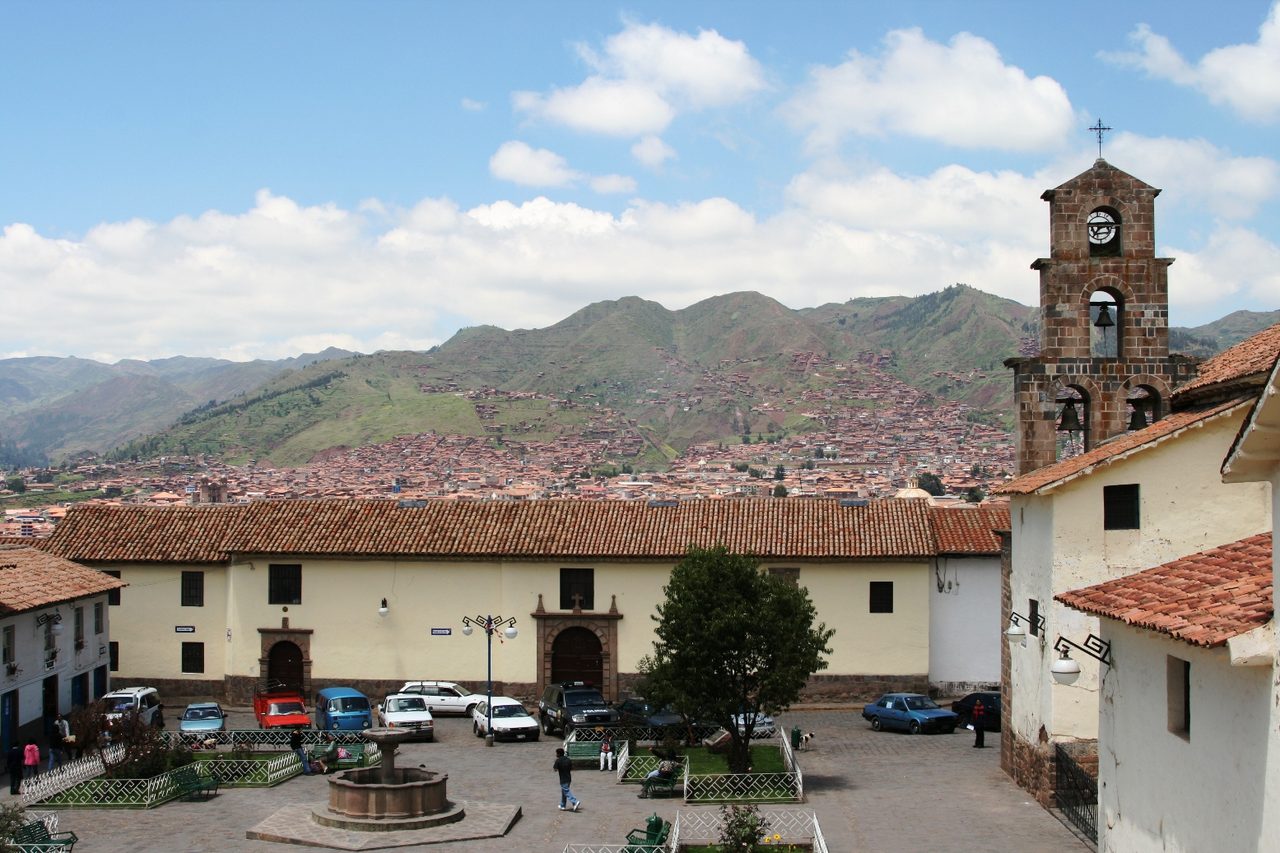
Within two or three blocks of the Plaza de Armas you’ll find the highest density of accommodation in Peru, from $10 party hostels (Pariwana and Wild Rover are the famous ones — choose accordingly, they are exactly what they sound like) through dependable mid-range picks ($70–140 for the likes of Tierra Viva, Casa Andina or a family-run casona with a sunny courtyard) up to the monastery hotels that are Cusco’s signature splurge. The Monasterio, a Belmond property in a 1592 seminary, and the Palacio Nazarenas next door (suites with piped oxygen, a heated outdoor pool that steams in the cold) are destinations in themselves; the Marriott and Palacio del Inka occupy similarly storied buildings for somewhat less. If those names make your card sweat, the JW-adjacent truth is that $150–250 in Cusco buys colonial grandeur that would cost $600 in Europe. I’ve ranked the heritage heavyweights in my guide to Peru’s best luxury hotels and the Belmond properties specifically.
Location notes from experience: anything directly on the Plaza de Armas or on Calle Procuradores hears the party until late. Calles Choquechaca, Pumacurco and San Agustín get you quiet within a five-minute walk of everything. And book a place that advertises heating or check the reviews for “cold” — Cusco nights sting from May through September.
San Blas: the pretty one, with a catch
San Blas is the whitewashed artists’ barrio climbing the hill northeast of the plaza: blue doors, workshops, vegetarian cafés, and the best views in the city from its upper lanes. The boutique guesthouses and small hotels here ($40–120) have more character per dollar than anywhere else in Cusco. The catch is the climb — at 3,400 m, the staircase up to your $60 view room is a workout you’ll repeat several times a day, and taxis can’t reach many of the upper alleys. I love it and stay here anyway; just pack light and book lower on the hill if knees or lungs are a concern.
Wanchaq and the local districts
South and east of the center, Wanchaq and lower Santiago are flat, residential, markedly cheaper and totally untouristed — useful for long stays, Spanish students and anyone on a tight budget who’d rather spend soles on food than a postcode. You give up walkability to the sights (15–20 minutes on foot or a 6-sol taxi) and atmospheric architecture, but $25 here buys what $45 buys beside the plaza. Avoid anything near the bus terminals; the blocks around them are sketchy at night and noisy always.
The Sacred Valley: sleep low, acclimatize smart
Here’s the move that separates well-planned Peru trips from miserable first weeks: when you fly into Cusco, don’t stay in Cusco. Go straight down into the Sacred Valley, which sits a full 500 meters lower (around 2,870 m in Urubamba versus Cusco’s 3,400 m), and spend your first two or three nights there while your body adjusts. The difference sounds trivial on paper and feels enormous at 2 a.m. when your heart isn’t pounding. You’ll sleep better, you’ll actually enjoy the markets and ruins — Pisac, Moray, the salt pans at Maras — and you’ll arrive back up in Cusco already half-acclimatized. The valley deserves the time anyway; my Sacred Valley guide makes the full case.
Ollantaytambo: the logistics genius
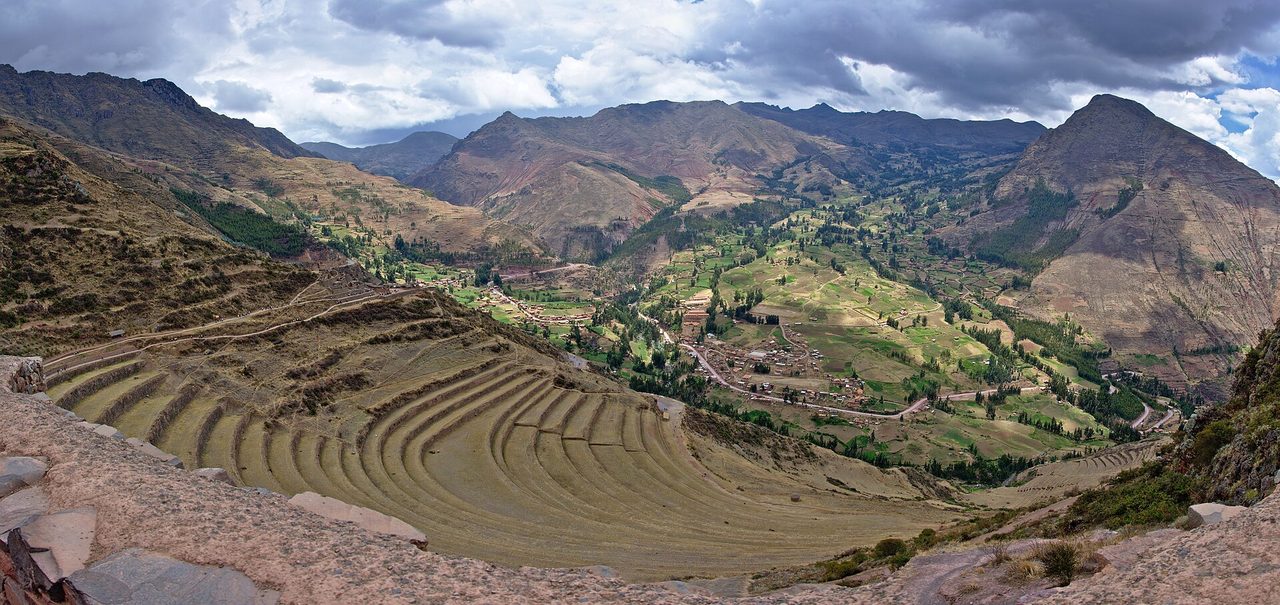
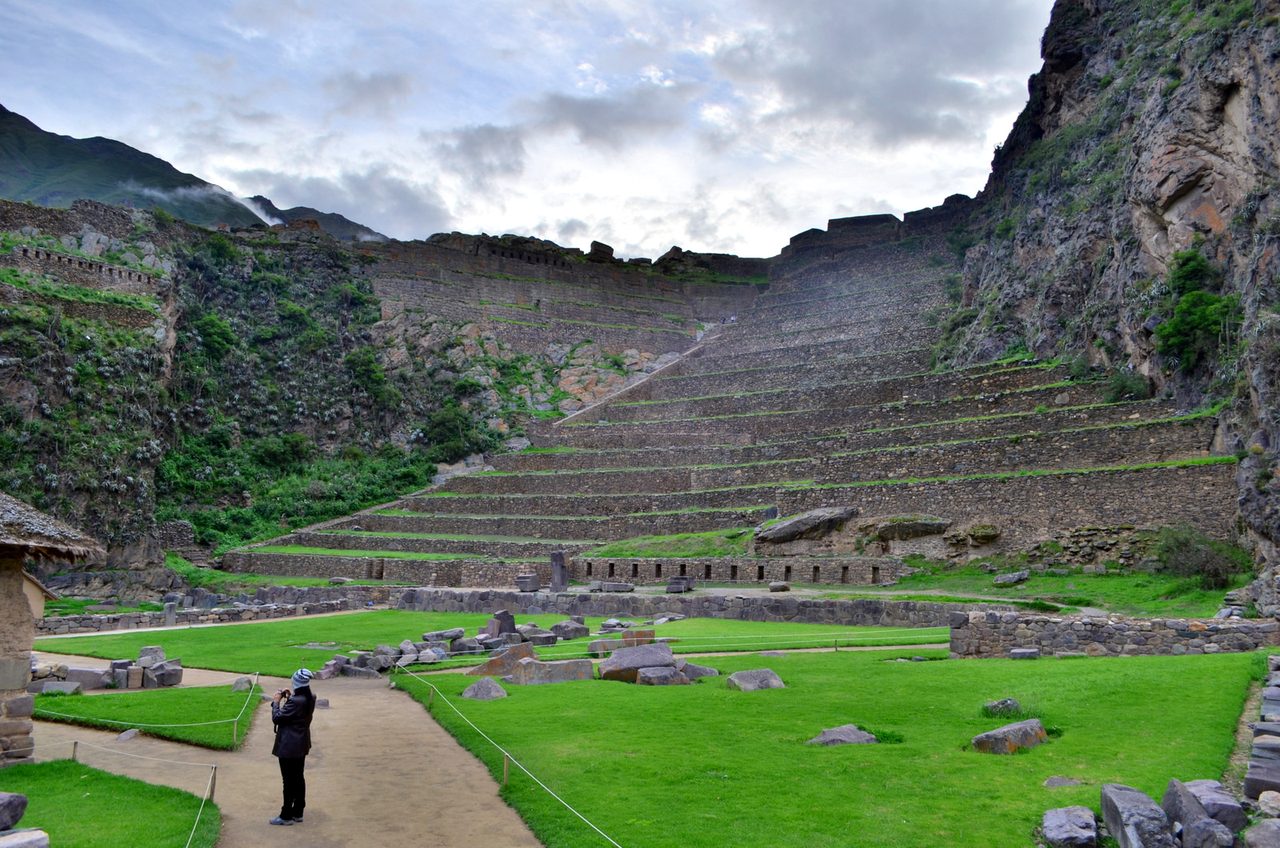
Ollantaytambo is a living Inca town — people still inhabit 500-year-old stone compounds threaded by water channels — with a spectacular fortress of terraces looming over the plaza, and it happens to be where most Machu Picchu trains depart. Staying here the night before your visit means you skip the 4:30 a.m. Cusco wake-up entirely and roll out of bed onto the platform. The accommodation is small-scale and friendly: hostales and guesthouses from $20–40, charming mid-rangers like El Albergue (literally on the train platform, with a farm-to-table restaurant worth a trip in itself) in the $90–150 band, and a couple of quiet upscale lodges on the edges of town. Evenings after the day-trippers leave are the magic hour. The town is tiny and goes to bed early — that’s a feature, not a bug.
Urubamba: where the resorts live
Urubamba town itself is a workaday transport hub with little to see, but the countryside around it hosts the valley’s luxury row: Tambo del Inka (a Luxury Collection resort with its own Machu Picchu train station), Belmond Rio Sagrado tumbling down to the river, explora’s all-inclusive adventure lodge, Sol y Luna’s casitas set in flower gardens, and a string of haciendas and wellness retreats in the $250–600 zone. If your Peru trip has one splurge window, this is where I’d spend it: warmer and lower than Cusco, mountain views from breakfast, horses and bikes and salt-pan hikes out the door. Mid-range travelers do well here too — $90–160 buys garden lodges and B&Bs that feel far more expensive.
Pisac: markets, ruins and yoga mats
At the Cusco end of the valley, Pisac draws a gentler crowd: its famous artisan market, the hilltop citadel above town, and a constellation of yoga retreats, healing centers and vegetarian cafés that have made it the valley’s spiritual-seeker capital. Guesthouses and small lodges run $25–90, with a few lovely boutique places like La Casa del Conde tucked into the hills. It’s the best Sacred Valley base if your priorities are markets and mellow rather than trains and treks — Machu Picchu logistics are easier from Ollantaytambo, 40 minutes further down the valley.
Machu Picchu: where to stay the night before
This decision generates more pre-trip anxiety than any other, so let me simplify it. You have three options for visiting Machu Picchu: sleep in Aguas Calientes (the town at the base), sleep in Ollantaytambo and take a morning train, or day-trip from Cusco. Here’s how they compare.
| Base | Wake-up for first entry | Cost | Best for | The catch |
|---|---|---|---|---|
| Aguas Calientes | ~4:30 a.m., walk to the bus line | $15 hostels to $1,000+ suites | First entry slots, Huayna Picchu permits, sunrise hopefuls | Touristy town, captive-market prices |
| Ollantaytambo | ~5:00 a.m. for early trains | $20–150 | Combining the valley with Machu Picchu; nicer evenings | Earliest trains arrive after first entry; book seats ahead |
| Cusco day trip | 3:30–4:00 a.m. | Your existing room | The time-crunched | A brutal 18-hour day; you’ll see the site tired |
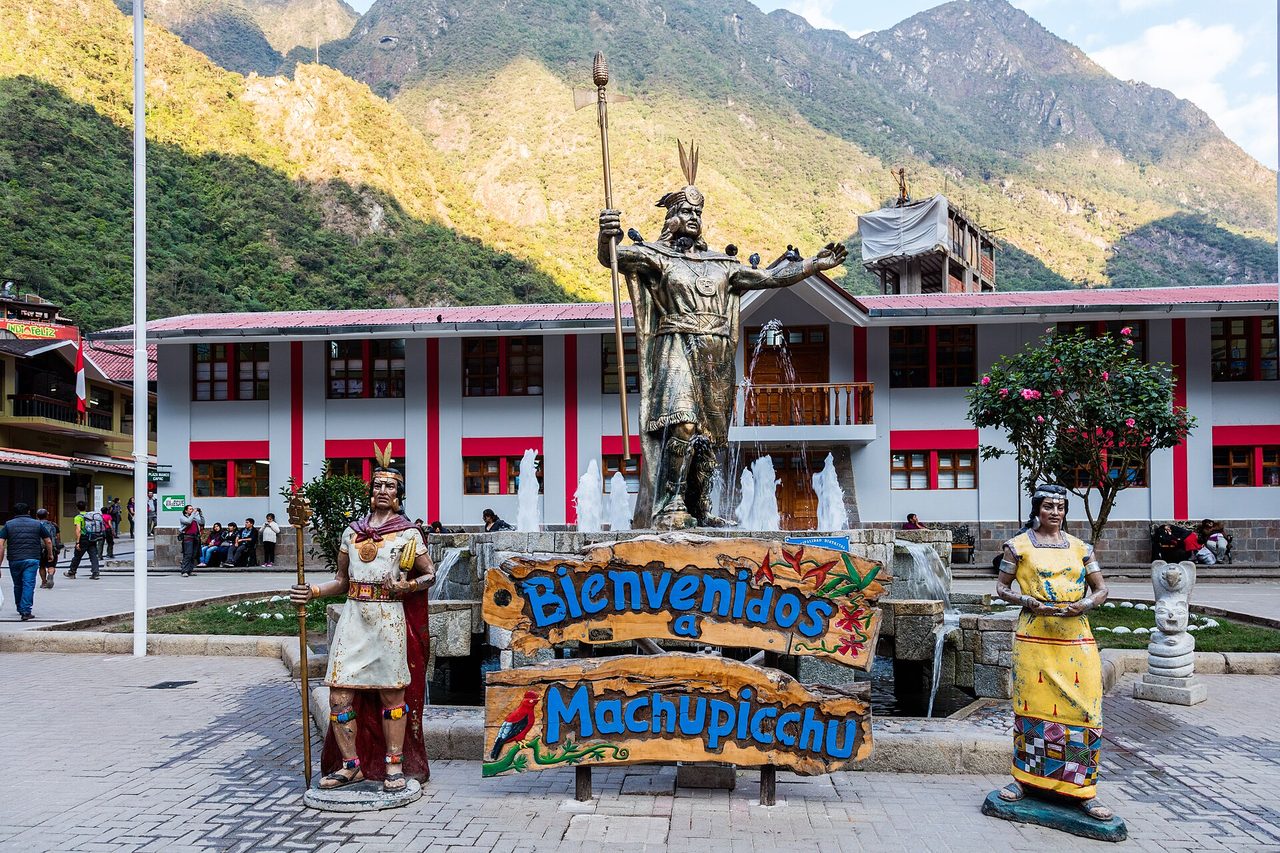
My honest recommendation for first-timers with a morning entry slot: spend the night before in Aguas Calientes. Yes, the town is a purpose-built tourist machine wedged in a gorge — but waking at 4:30 instead of 3:30, and being on the third bus up the hill while day-trippers are still on a train, is worth one night of inflated pizza prices. The hotel scene is extreme: hostels and basic hotels at $15–60 that are fine for one short night, solid mid-rangers like Casa del Sol or Tierra Viva at $80–150, Inkaterra’s gorgeous Machu Picchu Pueblo Hotel — a cloud-forest village of casitas with the country’s best hotel birdwatching — around $400–600, and the Sanctuary Lodge, the only hotel at the citadel gates themselves, now running roughly $2,000 a night, half board included. Is the Sanctuary Lodge worth it? If walking out of breakfast straight into the ruins at opening time is your dream and the price doesn’t sting, yes; everyone else will be just as happy 400 meters lower. I’ve broken down every tier in my Aguas Calientes hotel guide.
Two booking notes that save real money and pain. First, Aguas Calientes rooms in the June–August window genuinely sell out — book the same week you book entry tickets and trains, and double-check the cancellation terms because plans shift. Second, if you’re hiking in on the Inca Trail, your operator handles camps, and what you want afterwards is the cheapest clean bed in town and an early train out — don’t blow the budget on the night you’ll spend comatose.
Arequipa and Colca Canyon
Peru’s second city is built from white volcanic stone under a trio of volcanoes, the food rivals Lima’s, and at 2,335 m it’s dramatically easier on the body than Cusco — which is why a growing number of travelers route here first and acclimatize gently. It’s also, night for night, the best hotel value of any major Peruvian city. Everything to do here is in my Arequipa and Colca Canyon guide.
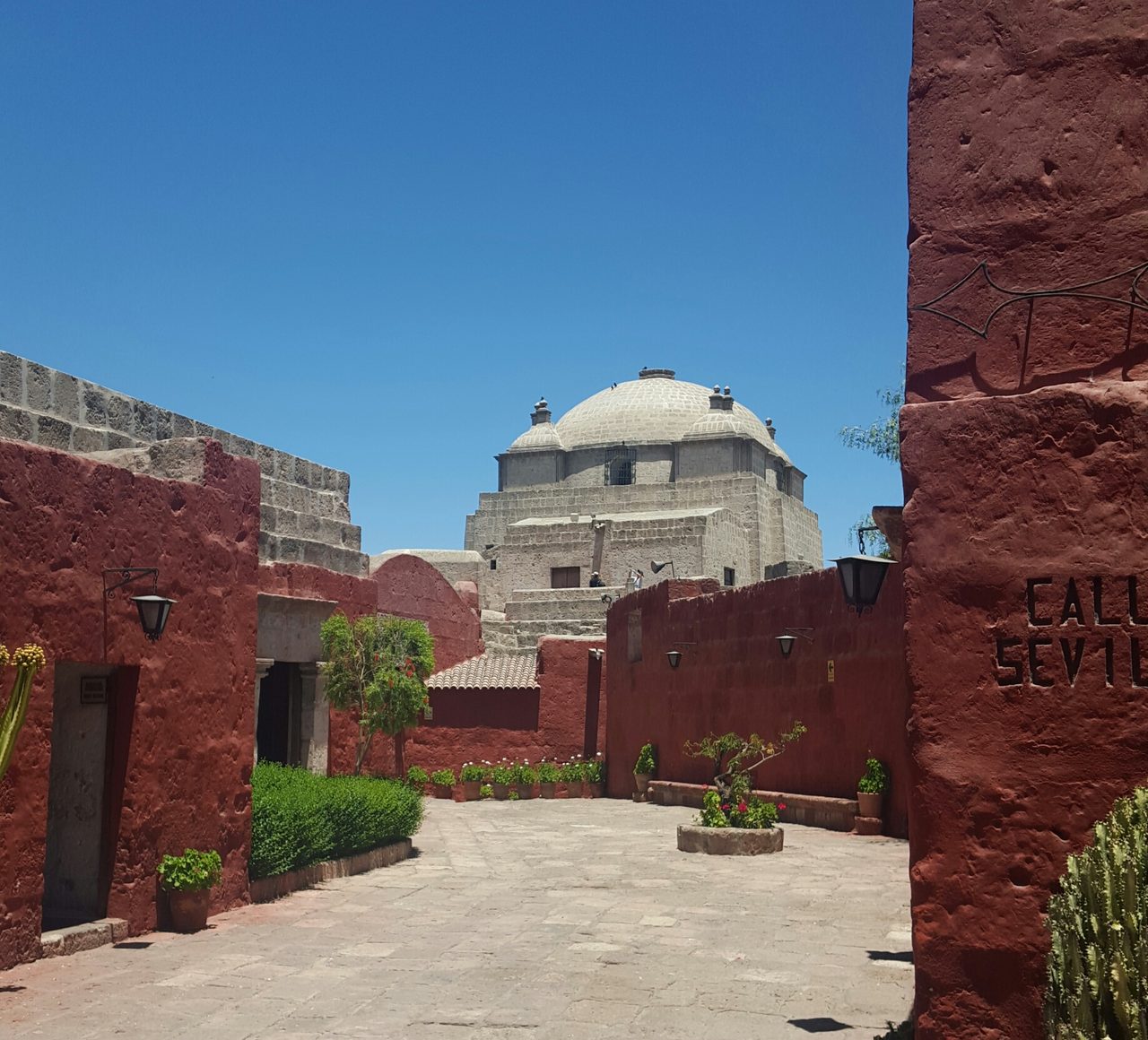
In the city, stay in the Centro Histórico within a few blocks of the Plaza de Armas or the Santa Catalina monastery: sillar-stone casonas with flowering courtyards run $60–110 at mid-range (Casa Andina’s Premium occupies the old mint, and CIRQA — a 16th-century inn reborn as a Relais & Châteaux property — is the standout splurge at $300+), while well-reviewed hostels charge $10–20. Across the river, Yanahuara and Cayma are quiet residential hills with volcano views and B&Bs at gentler prices, a 15-minute walk from the action. Rooftop terraces matter here — sunset on El Misti with a pisco sour is the city’s defining hotel amenity, so check for one before you book.
For Colca Canyon, the standard overnight loop sleeps in Chivay, the functional valley town with thermal baths, where hotels run $25–80 and the best beds belong to Colca Lodge, whose riverside hot-spring pools ($150–250) are the single best reason to upgrade in southern Peru. Belmond’s Las Casitas sits further upvalley with private plunge pools for considerably more. Trekkers descending into the canyon overnight in Sangalle (“the Oasis”) or Llahuar in rustic $10–20 lodges — cold beer, basic beds, stars you’ll remember. Cabanaconde, the village at the trailhead, has simple guesthouses and one great pizza-and-craft-beer hostel, Pachamama, if you want to start walking at dawn.
Lake Titicaca: Puno is the base, the islands are the point
Let me be straight about Puno: at 3,830 m it’s the highest place most travelers sleep in Peru, it’s cold every single night of the year, and the town itself is functional rather than beautiful. You stay here because it’s the gateway to the lake — the floating Uros islands, Taquile and Amantaní — all covered in my Lake Titicaca guide.
In town, cluster around the plaza and the Jirón Lima pedestrian street: hostels at $10–20, decent mid-range hotels at $50–90 (Casa Andina again, plus the quirky Tierra Viva above the port), all of which should be interrogated about heating before booking — I mean it, Puno cold is a different animal. Two grander options sit outside town: the GHL Lago Titicaca on its own peninsula, and Titilaka, an all-inclusive design lodge on a remote southern shore that’s one of the most special hotels in the country ($800+ all-in and worth every cent if it’s in reach).
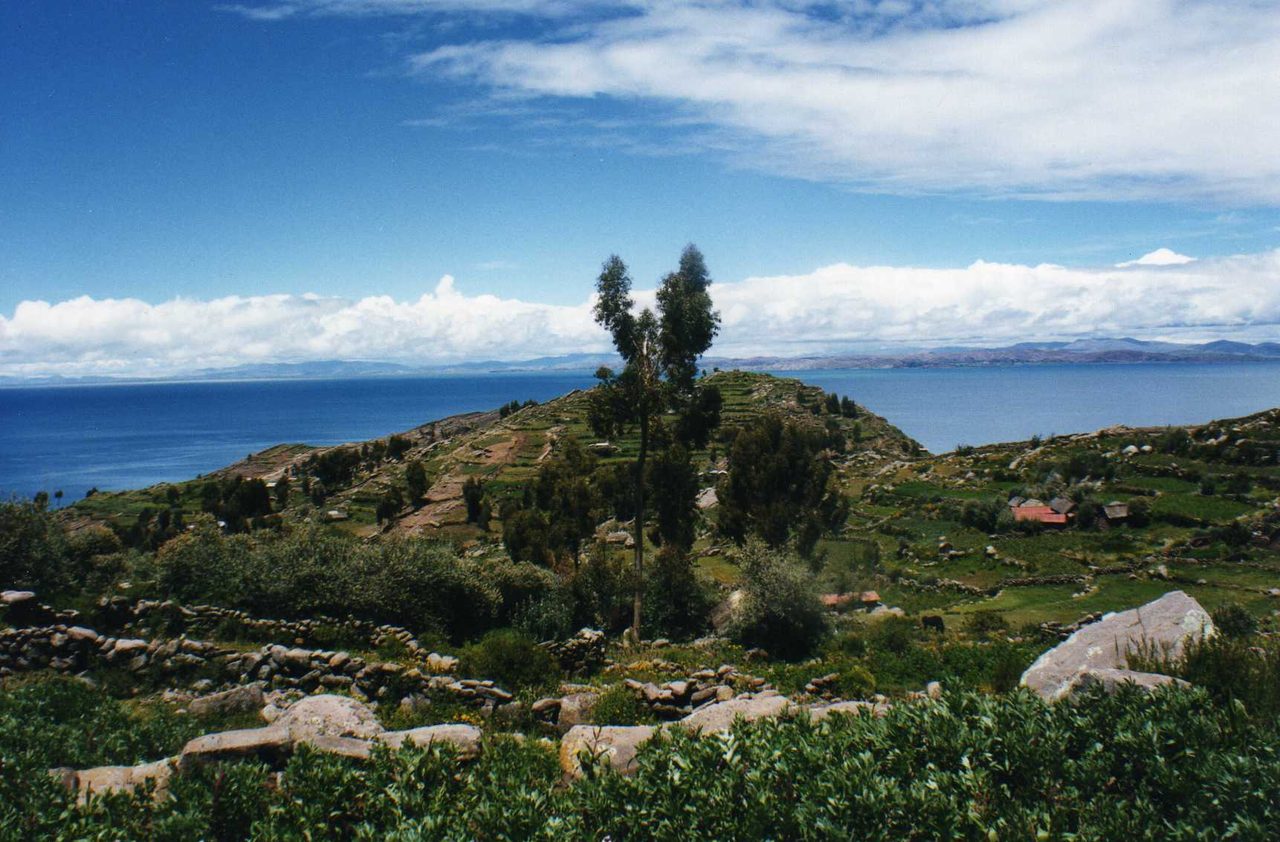
But the stay I push everyone toward is a night on Amantaní or Taquile island with a local family. You’ll eat quinoa soup in a kitchen warmed by the stove, maybe get roped into a dance in borrowed traditional dress, and wake to a sunrise over a sea-sized lake at 3,800 m. It costs $20–30 with meals, the rooms are clean and basic (bring a headlamp and your warmest layer), and ten years from now it’ll be the night you talk about — it tops my list of unique places to stay in Peru. Book through the island community associations or a reputable Puno agency rather than the cheapest dock-side tout, so the family hosting you sees the money.
The Amazon: you’re booking a lodge, not a room
Amazon accommodation runs on different rules. Lodges sell multi-day packages — typically 3 days/2 nights or 4/3 — that bundle river transfers, full board, rubber boots and guided excursions, priced per person. The real decision isn’t which room looks nicest; it’s which gateway, how deep, and which guide-to-guest ratio. My Peruvian Amazon guide goes deep on the wildlife math; here’s the accommodation version.
Puerto Maldonado (Tambopata) is the easy win for most itineraries: a 90-minute flight from Cusco, lodges 1–4 hours upriver. Rainforest Expeditions runs the classic ladder — Posada Amazonas (community co-owned, great first taste), Refugio Amazonas (family-friendly), and the Tambopata Research Center, eight hours upriver beside the world’s most famous macaw clay lick, where rooms have three walls and the fourth is the jungle. Inkaterra’s Reserva Amazonica near town adds canopy-walkway luxury. Budget $250–450 per person for a decent 3-day package, $700–1,200 for the deep-forest or luxury versions.
Iquitos (the northern Amazon) requires a flight via Lima but delivers the big-river spectacle: pink dolphins, flooded forest, and the Río Amazonas itself. Lodges range from backpacker-friendly operations a couple of hours out, through mid-range stalwarts, to the Treehouse Lodge’s canopy bungalows — plus the luxury river cruises (Delfin, Aqua) that float boutique hotels through the Pacaya-Samiria reserve for $1,000+ a night. As a rule: the further from Iquitos, the better the wildlife; anything under two hours away is more “jungle-themed hotel” than jungle.
One honest warning for budget travelers: the $40-a-night “lodges” sold on the Iquitos waterfront often mean caged animals, rushed groups and guides paid almost nothing. The mid-priced community-linked lodges are where ethics and experience line up. If a deal looks too cheap to be true in the Amazon, it is.
The Southern Coast: oasis nights and resort comfort
The desert coast south of Lima — Paracas, Huacachina, Nazca — usually gets strung together as one- or two-night stops on the way to or from Arequipa, and the accommodation choices are pleasingly simple. The full route is in my Southern Coast guide.
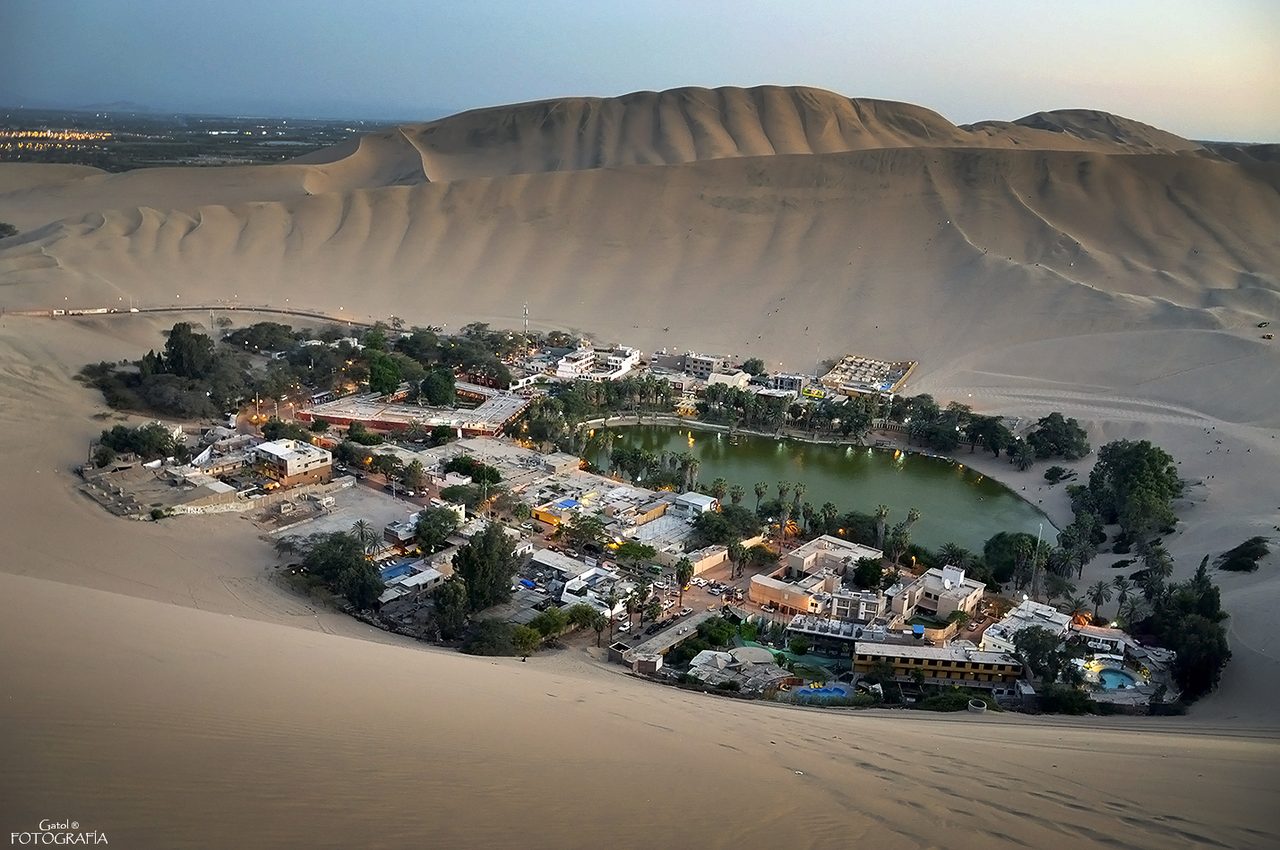
Huacachina is a palm-ringed lagoon completely encircled by giant dunes, five minutes from Ica — one of the strangest and most photogenic places you’ll ever sleep. It’s tiny (maybe 30 buildings) and splits neatly by traveler type: party hostels with pools and nightly sandboarding-and-buggy packages ($10–20 dorms — Wild Rover and Banana’s are the loud and less-loud poles), a few relaxed mid-range hotels ($60–120), and the grand old Hotel Mossone on the lagoon if you want faded elegance. Light sleepers should note the whole oasis runs on dune-buggy engines and pool parties until late; Ica’s city hotels are 10 minutes away and much quieter.
Paracas is the comfortable one: a proper resort strip — Hotel Paracas (Luxury Collection), Arennas, La Hacienda — with pools facing the bay from $150–300, plus a backpacker row in town at $10–25. It’s the best place on the coast to do nothing for a day between the Ballestas Islands boat trip and the national reserve. Nazca, frankly, is a one-night town built around the Lines overflight; the DM Hoteles and a handful of courtyard guesthouses ($30–80) do the job, and many travelers now skip the overnight entirely by flying from Pisco instead.
The North: beaches, treks and ruins without the crowds
Northern Peru gets a fraction of the south’s visitors, which keeps prices low and quality honest. Máncora is the beach scene — year-round sun, surf breaks and ceviche shacks, with party hostels (Loki del Mar, $8–15 dorms), beachfront mid-rangers ($50–100) and barefoot-luxury hideaways like KiChic and Arennas Máncora ($150–300) strung along the sand. Vichayito and Las Pocitas, just south, are the grown-up ends of the same beach. Huaraz serves the Cordillera Blanca trekking crowd with mountain-lodge guesthouses and trekker hostels ($8–40) — plus the Lazy Dog Inn and Llanganuco Mountain Lodge if you want trailhead views with your coffee. Trujillo and Chiclayo are workmanlike archaeology bases ($40–90 city hotels) for the Moche pyramids and the Lord of Sipán treasures, with Trujillo’s Casa Andina on the plaza the pick. And Chachapoyas, gateway to Kuélap and the Gocta waterfall, has lovely small casonas ($30–70) plus the remarkable Gocta Andes Lodge, whose pool faces the falls. I cover the whole region in my Northern Peru guide.
Booking strategy: timing, platforms and the questions to ask
Where to stay in Peru is half the puzzle; how and when you book is the other half, and it’s where most of the avoidable mistakes live. This is the system I’ve settled into after enough trips to have made all the errors personally.
Book far ahead for exactly three things: Aguas Calientes in high season, anywhere in Cusco during Inti Raymi week (late June, when the city sells out solid), and specific must-have hotels — the Sanctuary Lodge, Titilaka, the famous Amazon lodges, Colca Lodge’s hot-spring rooms. For those, three to six months isn’t paranoid. Everything else in Peru can be booked two to four weeks out even in the June–August peak, and in the November–March low season you can largely wing it outside Holy Week and the Christmas–New Year crunch. The best time to visit Peru guide maps the seasons in detail.
Use the platforms to find, then consider booking direct. Booking.com has the deepest Peru inventory and the loosest cancellation terms; Hostelworld owns the backpacker tier. But plenty of family-run hostales and boutique places knock 10–15% off — or throw in airport pickup — if you message them on WhatsApp and book direct, because the platforms take a hefty commission. I do my shortlisting on the big sites and my booking, increasingly, in a WhatsApp chat. Just keep written confirmation of dates and price.
Read recent reviews for four specific words: hot water, heating, noise, Wi-Fi. A 9.2 score means nothing if the boiler was replaced by prayer in 2024. Highland showers in budget places are sometimes electric — the infamous “Peruvian suicide shower” — which work fine but reward not touching anything metal mid-shampoo. Mid-range and up, this stops being a concern.
Know the tax quirk that confuses everyone: foreign tourists are exempt from Peru’s 18% IGV tax on lodging if the hotel records your passport and immigration stamp (or digital entry record). Listed prices sometimes include it, sometimes don’t — always check whether a rate is “con IGV” or “sin IGV” at anything mid-range and above, because 18% is the difference between a deal and a shrug. Bring your passport to check-in; a photo on your phone usually satisfies smaller places.
Airbnb works in the cities, with caveats. Lima and Cusco have big inventories, and for groups or week-plus stays an apartment in Miraflores or San Blas is great value. Outside the main cities, stick to hotels and hostales — support and standards get patchy. Wherever you book, the general safety rules from my Peru travel tips apply: use registered taxis or apps at night, keep valuables in the room safe, and treat ground-floor windows on the street with appropriate suspicion.
Cash still matters. Hostales, homestays and small-town hotels often want soles in hand and may not take cards at all, or add a 5% card surcharge. Hold back enough cash for your accommodation when heading anywhere smaller than Arequipa — ATMs in places like Cabanaconde or the Titicaca islands range from unreliable to nonexistent.
Matching your stays to your route
To make this concrete, here’s how accommodation slots into the classic two-week route from my Peru itinerary guide: two nights Miraflores or Barranco on arrival (eat well, see the coast, recover from the flight), fly to Cusco and taxi straight to the Sacred Valley for two or three nights in Ollantaytambo or Urubamba, one night Aguas Calientes for Machu Picchu, then three or four nights in Cusco proper now that the altitude is friendly, and finish with either three nights at a Tambopata lodge or the Arequipa–Colca–Titicaca overland arc with a night each in Arequipa, Chivay or Colca Lodge, and Puno or an island homestay. That’s eight or nine different beds in a fortnight — normal for Peru, and the reason packing cubes and a daypack-plus-duffel system beat a giant suitcase here. For how to connect all those bases, see getting around Peru.
If you’d rather unpack less, the two-base compromise works surprisingly well: a week split between the Sacred Valley and Cusco covers the highland highlights with day trips, plus a Lima bookend on each side. You give up the Amazon and the south, but you trade them for actually settling in somewhere — and Peru rewards slow travel more than its bucket-list reputation suggests. Whatever the route, eat ambitiously the whole way; Peruvian food is half the reason to come, and many of the hotels above (El Albergue, Hotel B, CIRQA) have restaurants that hold their own against the famous addresses.
FAQ: where to stay in Peru
Is it better to stay in Cusco or the Sacred Valley?
Both, in that order reversed: Sacred Valley first for two or three nights of gentle acclimatization at 2,800–2,900 m, then Cusco once your body has adjusted to altitude. If you must pick one base for the whole region, Cusco wins on restaurants, nightlife and tour logistics; the valley wins on scenery, quiet and sleep quality.
Where should I stay the night before Machu Picchu?
Aguas Calientes if you have a first-morning entry slot or a Huayna Picchu permit — being at the bus line by 5 a.m. matters. Ollantaytambo if you have a mid-morning slot and want a nicer town for the evening. Day-tripping from Cusco works but makes for a punishing 18-hour day.
What is the best area to stay in Lima?
Miraflores for first-timers: safe, walkable, oceanfront and packed with restaurants. Barranco for character, art and boutique hotels one neighborhood south. San Isidro for quiet, leafy business-district calm. Avoid sleeping in the Centro Histórico — visit it by day instead.
How much do hotels in Peru cost?
In 2026: dorm beds $10–25, private rooms in hostales $25–50, solid mid-range hotels $60–140, boutique and luxury from $150 up to $600 in Cusco and the Sacred Valley — and outliers like the Sanctuary Lodge at Machu Picchu around $2,000 a night. Amazon lodges price per person with meals and excursions included, from roughly $80 a night at the budget end.
How far in advance should I book accommodation in Peru?
Three to six months for Aguas Calientes in the June–August peak, Cusco during Inti Raymi (late June), and trophy hotels like Titilaka or the top Amazon lodges. Two to four weeks is plenty for everything else in high season; in the November–March low season you can book days ahead, except around Christmas and Easter.
Are hostels in Peru safe?
Broadly yes — Peru’s hostel scene is mature and well-run. Pick places with lockers and recent reviews, use them, and don’t leave electronics charging unattended in common rooms. Private rooms in hostales offer more security still, often for barely more money. Standard city rules about late-night walking apply regardless of where you sleep.
Do hotels in Peru have heating and air conditioning?
Often neither, and you should check. Highland hotels (Cusco, Puno, Colca) frequently lack central heating — look for mentions of heaters and ask for extra blankets; nights drop near freezing May through September. Air conditioning only really matters on the coast in summer (December–March) and in the jungle, where mid-range lodges and up usually have fans or AC in screened rooms.
Should I book hotels with altitude in mind?
Yes — it’s the most underrated factor in planning where to stay in Peru. Sleep your first highland nights as low as possible (Sacred Valley at ~2,870 m rather than Cusco at 3,400 m; Arequipa at 2,335 m before Puno at 3,830 m), go easy on day one, and choose hotels that offer oxygen and coca tea if you’re worried. Route design beats medication.
Final thoughts
Peru spoiled me for hotel variety: nowhere else have I gone from a monastery cell with a butler to a homestay bed under six wool blankets in the same week, and loved both without reservation. Pick your neighborhoods deliberately, sleep low before you sleep high, book the famous beds early and leave the rest loose — then spend the energy you saved on everything there is to do between check-ins. The beds are ready; Peru will handle the memories.