Peruvian Food: The Ultimate Guide to Peru’s Dishes & Drinks
A first-hand guide to Peruvian food — the must-try dishes, drinks and desserts, where to eat them, what they cost, and how to eat safely, from market ceviche to the world's best restaurant.
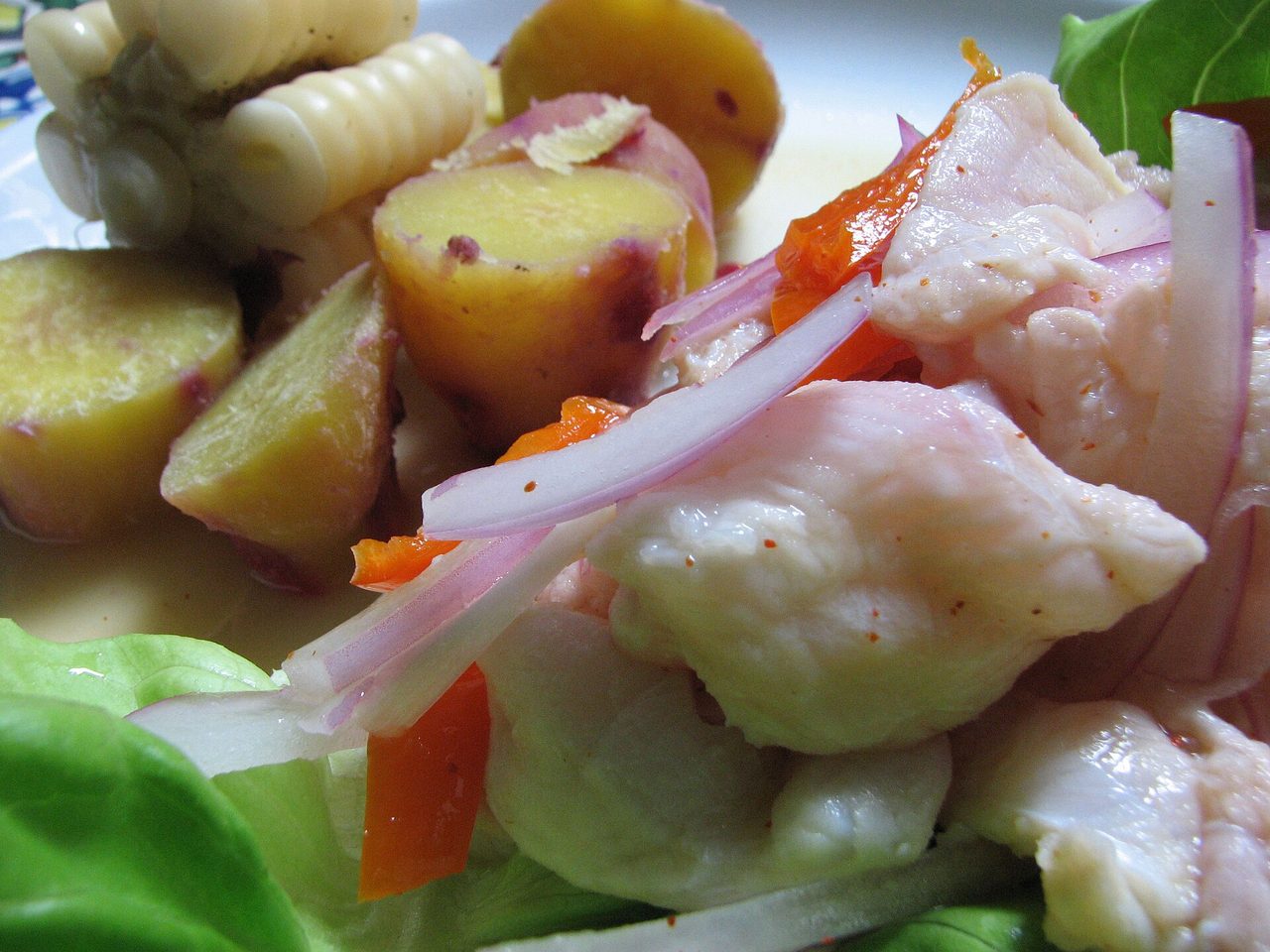
My love affair with Peruvian food didn’t begin at a white-tablecloth restaurant. It began with a plastic bowl of cebiche, eaten standing up at a market stall in the Surquillo neighborhood of Lima, handed to me by a woman who’d been slicing fish since six that morning. The lime was so bright it made my jaw ache in the best way; the chunks of corvina were cool and barely firm; there was a slick of something orange and electric called leche de tigre pooling at the bottom that I ended up drinking straight from the bowl. She watched me do it and laughed. “Ahora sí,” she said. Now you get it.
I’ve spent a good chunk of the last decade eating my way around Peru — coast, mountains, jungle — and I still think it’s the most exciting food country I’ve ever been to. This is the guide I wish someone had handed me on day one: what to eat, what to drink, where to find it, what it costs, how not to make yourself sick, and which dishes are genuinely worth crossing the city for. No filler, no listicle padding. Just the stuff that matters.
The short version: Peruvian food is a fusion of Indigenous Andean, Spanish, African, Chinese, and Japanese traditions, built on three wildly different landscapes — coast, Andes, and Amazon. The national dish is cebiche (fresh fish “cooked” in lime); the national drink is the pisco sour. It’s deeply varied, rarely very spicy, and ranges from $3 set lunches to the world’s No. 1 restaurant.
Peruvian food at a glance
If you skim nothing else, read this. These are the facts that shape every meal you’ll eat in Peru.
- National dish: cebiche (also spelled ceviche) — raw fish cured in fresh lime juice, with red onion, chili, sweet potato and corn.
- National drink: the pisco sour, made from Peru’s grape brandy, lime, egg white and bitters. The non-alcoholic icon is chicha morada, a purple-corn cooler.
- The big influences: Andean (potato, corn, chili), Spanish (rice, meat, frying), African, Chinese (called chifa), Italian, and Japanese (called Nikkei).
- Three food regions: the seafood-driven coast, the hearty potato-and-grain highlands, and the fruit-and-river-fish Amazon.
- Spice level: milder than people expect. Chilies (ají) bring flavor and color more than fire; the heat usually rides in a side salsa you control.
- Reputation: Peru has won the World Travel Awards’ “World’s Leading Culinary Destination” 13 years running, and Lima’s Maido was named the World’s Best Restaurant in 2025.
- What it costs: a set lunch (menú del día) runs roughly 12–25 soles (US$3–7); a great cevichería main, 35–70 soles; a tasting menu at a top Lima restaurant, US$150–300+.
- Best places to dig in: Lima first (the capital is the culinary heart), then Cusco, Arequipa, and the northern coast around Trujillo and Chiclayo.
Why Peruvian food is having a global moment
You can taste the confidence in Peruvian cooking right now, and it isn’t an accident. In June 2025, Maido — a Nikkei restaurant in Lima led by chef Mitsuharu “Micha” Tsumura — was crowned the World’s Best Restaurant on The World’s 50 Best Restaurants list. It wasn’t a fluke or a one-city wonder, either: Lima’s Kjolle placed 9th, Mérito 26th and Mayta 39th in the same ranking, and Central had already taken the global No. 1 spot back in 2023. Few cities on earth field that kind of depth.
Zoom out and the pattern is even clearer. Peru has been named the World’s Leading Culinary Destination at the World Travel Awards for thirteen straight years — an almost comical streak of dominance for a cuisine that, a generation ago, was barely known abroad. The American food critic Eric Asimov has described Peruvian cooking as one of the world’s most important cuisines and a textbook example of fusion done right. Chef Gastón Acurio, more than anyone, turned that pride into a movement, championing humble native ingredients on the world stage.
Here’s why I think it matters for you as a traveler: this is a place where the fine dining and the street food are pulling from the exact same well. The leche de tigre in a US$8 market cebiche and the one in a US$200 tasting menu come from the same culinary logic. You do not need a reservation three months out to eat brilliantly in Peru. You just need to know what you’re looking at — which is what the rest of this guide is for. (If a trip is taking shape, our Peru itinerary guide and things to do in Peru can help you slot the eating around the sightseeing.)
The roots of Peruvian cuisine: three regions, three worlds
The single most useful thing to understand about food in Peru is that it isn’t one cuisine — it’s three, stitched together by geography. The country drops from Pacific surf to 6,000-metre peaks to Amazon rainforest in the space of a few hundred kilometres, and what people eat changes completely as you go. Once you can place a dish in its region, the whole menu starts to make sense.
The coast: cebiche, citrus and the sea
The Peruvian coast is a desert that happens to sit beside one of the richest fishing grounds on the planet, where the cold Humboldt Current pushes up nutrient-dense water and an astonishing variety of fish. This is cebiche country, and the spiritual home of Peruvian food’s international fame. Coastal cooking leans on seafood, lime, red onion, and the fragrant yellow chili called ají amarillo. The north (Lambayeque, Piura) adds its own loche squash, goat, and fermented-corn chicha; the south brings river shrimp and the pisco vineyards. Lima, sitting on the central coast, is where all of it converges — more on the capital’s food scene in our Lima travel guide.
The Andean highlands: potatoes, grains and slow fire
Climb into the Andes and the food turns hearty, warming and ancient. This is the homeland of the potato — Peru grows more varieties than anywhere on earth — plus corn, quinoa, and a pantry of native tubers most travelers have never heard of. Highland cooking is built for altitude and cold: thick soups, slow-roasted meats, and dishes cooked underground on hot stones (pachamanca). It’s also where you’ll meet cuy (guinea pig), an Andean protein eaten since pre-Inca times. Cusco is the best base for highland eating — pair it with our Cusco travel guide and, if you’re heading deeper, the Sacred Valley. A quick, real tip: eat lighter your first day at altitude, and lean on soups and coca tea while you adjust.
The Amazon: river fish, jungle fruit and the new frontier
More than half of Peru is Amazon rainforest, and its kitchen is the country’s least-known and most exciting frontier. Think paiche (one of the world’s largest freshwater fish), juanes (rice and chicken steamed in bijao leaves), tacacho (mashed plantain), and a riot of fruit — lúcuma, camu camu, aguaje, cocona — that’s only now reaching coastal menus. If your route runs through Iquitos or Puerto Maldonado, our Peruvian Amazon guide covers how to get there and what to expect on the plate.
The fusion that defines modern Peruvian food
Peru’s great culinary trick is absorption. Wave after wave of immigrants arrived — some by choice, many not — and instead of staying separate, their food traditions fused with native Andean ingredients into something genuinely new. Two of those fusions are now cuisines in their own right.
Chifa: the Chinese-Peruvian kitchen
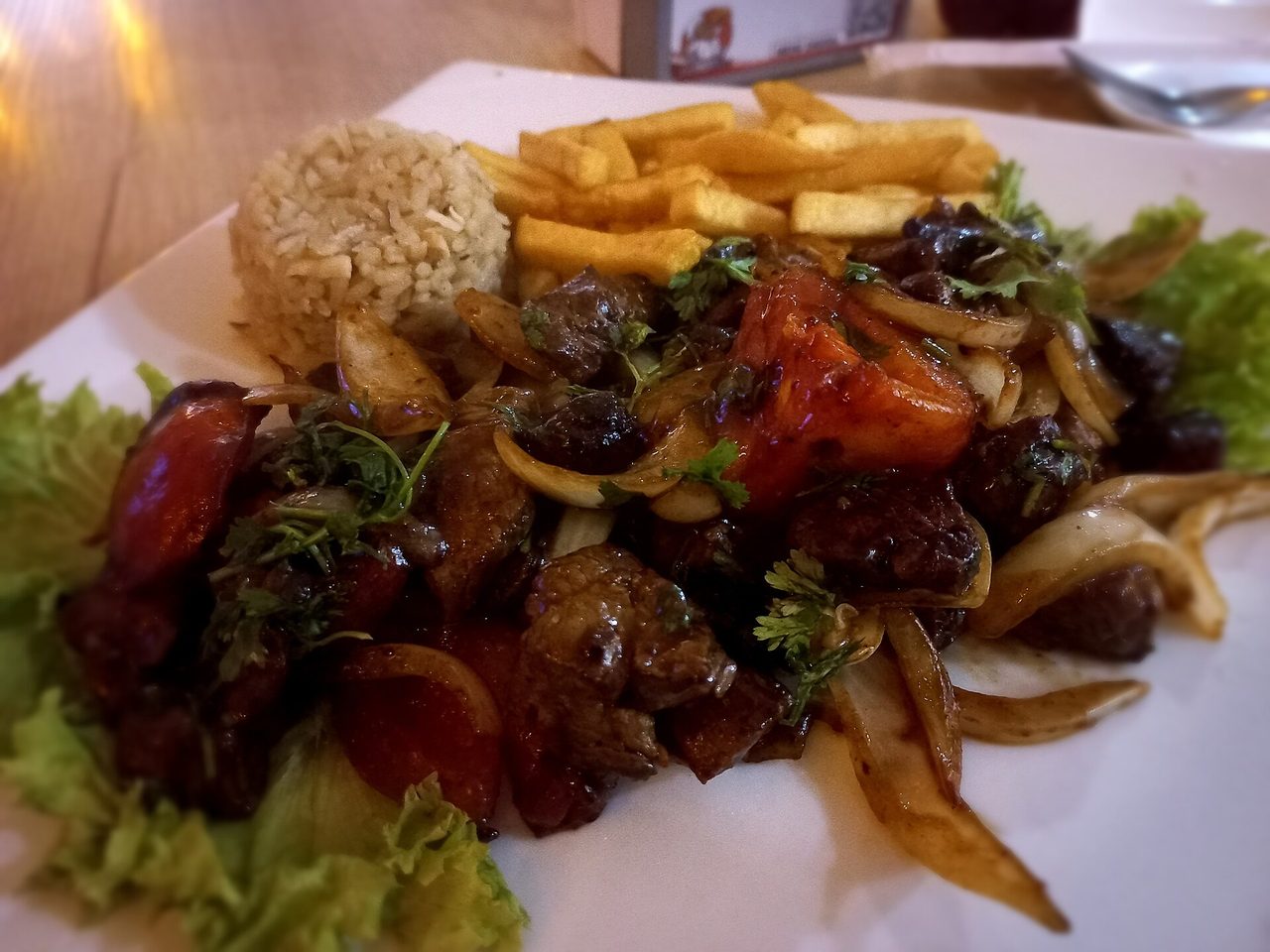
When Cantonese laborers came to Peru in the 19th century, they couldn’t always find their home ingredients, so they adapted — folding soy sauce, ginger and the wok into local produce. The result is chifa, a word that comes from the Mandarin chī fàn (“to eat rice”) and now means both the cuisine and the restaurant. Its gifts to the national table are enormous: lomo saltado, the beloved beef stir-fry, and arroz chaufa, Peruvian fried rice, are chifa to the core, and you’ll find a chifa joint on practically every city block.
Nikkei: the Japanese-Peruvian kitchen
Japanese immigrants brought a reverence for raw fish and precise knife work that met Peru’s lime, chili and incredible seafood head-on. That marriage is Nikkei, and it’s the style that just produced the world’s best restaurant. Its signature dish is tiradito — think cebiche’s sashimi cousin, fish sliced rather than cubed, dressed in a silky ají sauce without the onion. If you want to understand where Peruvian food is going, eat one good plate of tiradito.
Criollo, and everyone else at the table
Beyond the two big fusions sits comida criolla — the everyday Creole cooking of the coast that blends Spanish, African and Indigenous roots. African cooks gave Peru anticuchos (grilled skewers from cuts the wealthy discarded) and a genius for offal; the Spanish brought rice, wheat, pork, chicken and the love of frying; Italian immigrants left their mark on home cooking too. The point isn’t to memorize the family tree. It’s to taste, in a single bowl, four hundred years of history quietly getting along.
The essential Peruvian dishes you have to try
This is the heart of it. Below are the dishes I’d send any first-timer after, roughly in the order I’d eat them. Don’t try to do it all in one trip — but do work through as many as your stomach allows. For a deeper menu-by-menu rundown, our guide to traditional Peruvian dishes goes even further.
Cebiche — the one you came for
Peru’s national dish, and rightly so. Fresh raw fish is tossed with lime juice, salt, sliced red onion and chili (often ají limo), then served almost immediately with sweet potato, large-kernel choclo corn, and crunchy toasted cancha. The lime “cooks” the fish; the runoff, leche de tigre, is liquid gold (and a famous hangover cure). Eat it at lunch, never late at night — in Peru, cebiche is a daytime dish, because that’s when the fish is freshest. We have a whole guide to Peruvian cebiche if you want to go deep on styles and spots.
Lomo saltado — the gateway stir-fry
If cebiche doesn’t convert a skeptic, lomo saltado will. Strips of beef are seared hard in a screaming-hot wok with red onion, tomato and ají amarillo, splashed with soy sauce and vinegar, and — this is the joyful part — served with both French fries and white rice. It’s chifa fusion at its most comforting, and it’s everywhere, from market counters to bistros. Hard to do badly; sublime when done well.
Ají de gallina — Peru’s coziest plate
Shredded chicken in a velvety, faintly spicy sauce of ají amarillo, bread, milk, nuts and Parmesan, ladled over rice and boiled potato and finished with black olives and egg. It’s the dish Peruvians describe with that misty “my grandmother made this” look. Comfort food, full stop.
Pollo a la brasa — the national weeknight dinner
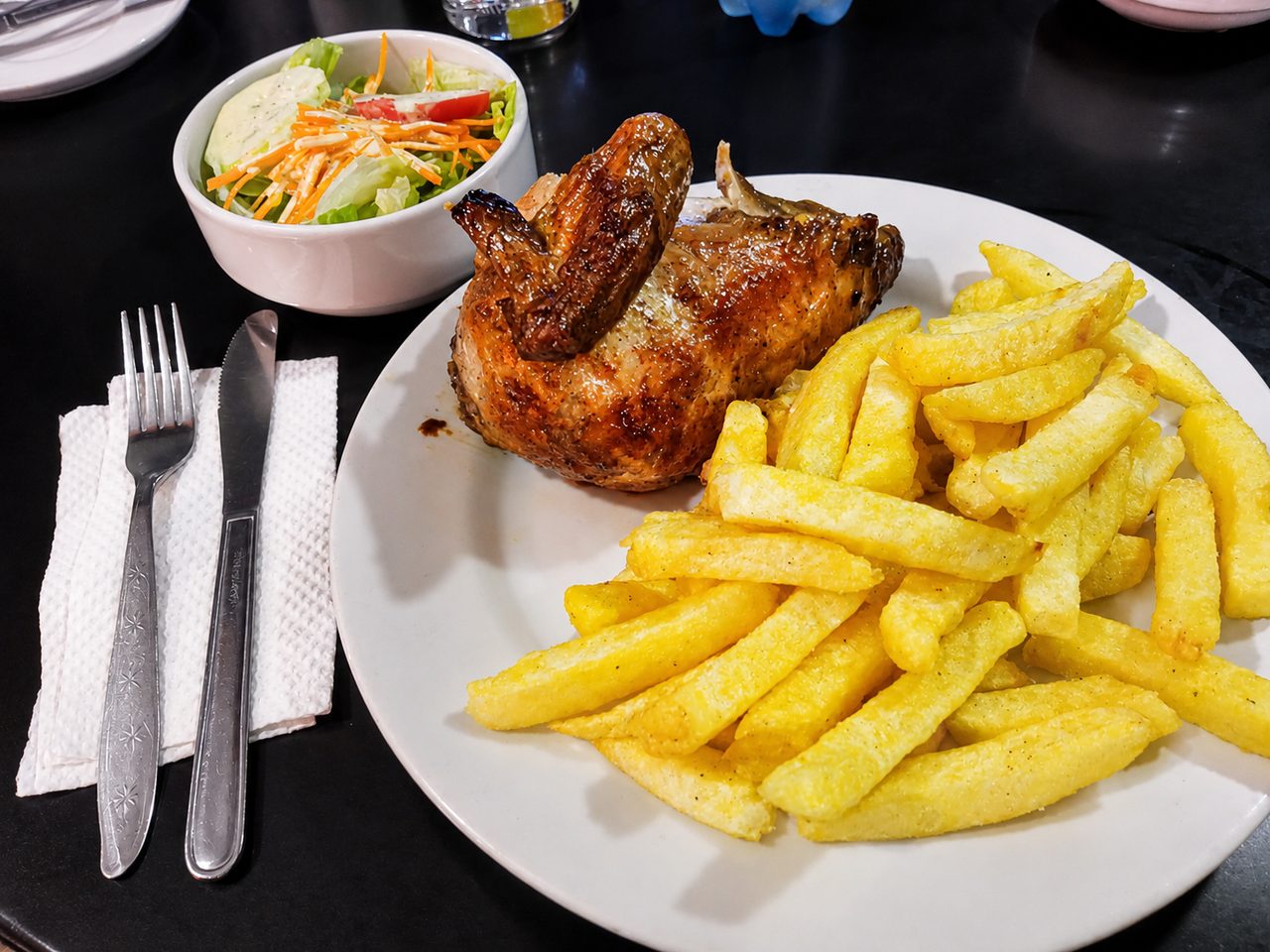
Marinated whole chicken, spit-roasted over hardwood until the skin lacquers and crisps, served with fries and a salad and an arsenal of sauces (that green huacatay-and-ají cream is the one to chase). By some measures it’s the single most-eaten restaurant dish in the country. A pollería on a Sunday night, families packed in, is one of the most quietly joyful food scenes in Peru.
Causa — the cold potato showstopper
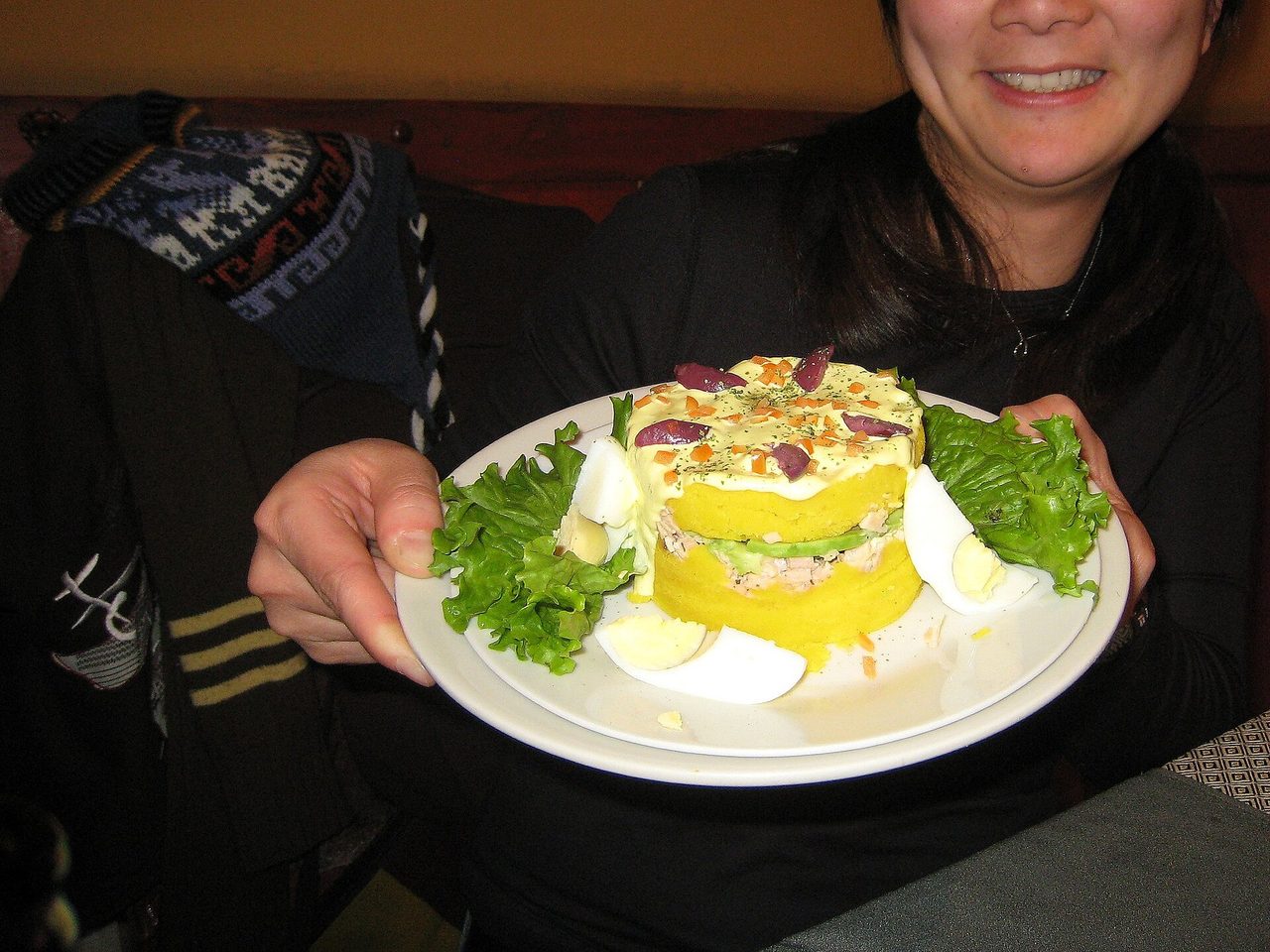
A chilled terrine of mashed yellow potato whipped with lime and ají amarillo, layered with avocado and a filling of tuna, chicken or seafood, then crowned with egg and olive. It’s proof that Peru can make even a humble potato look like haute cuisine — and it’s a great window into the country’s potato obsession.
Anticuchos — the smell of the Peruvian street
Skewers of marinated beef heart, grilled hot over coals and brushed with ají panca, served with potato and choclo. They taste far better than “beef heart” sounds — rich, smoky, a little chewy in the right way. This is the smell that drifts out of Peruvian street corners after dark, and one of the country’s great African-rooted contributions.
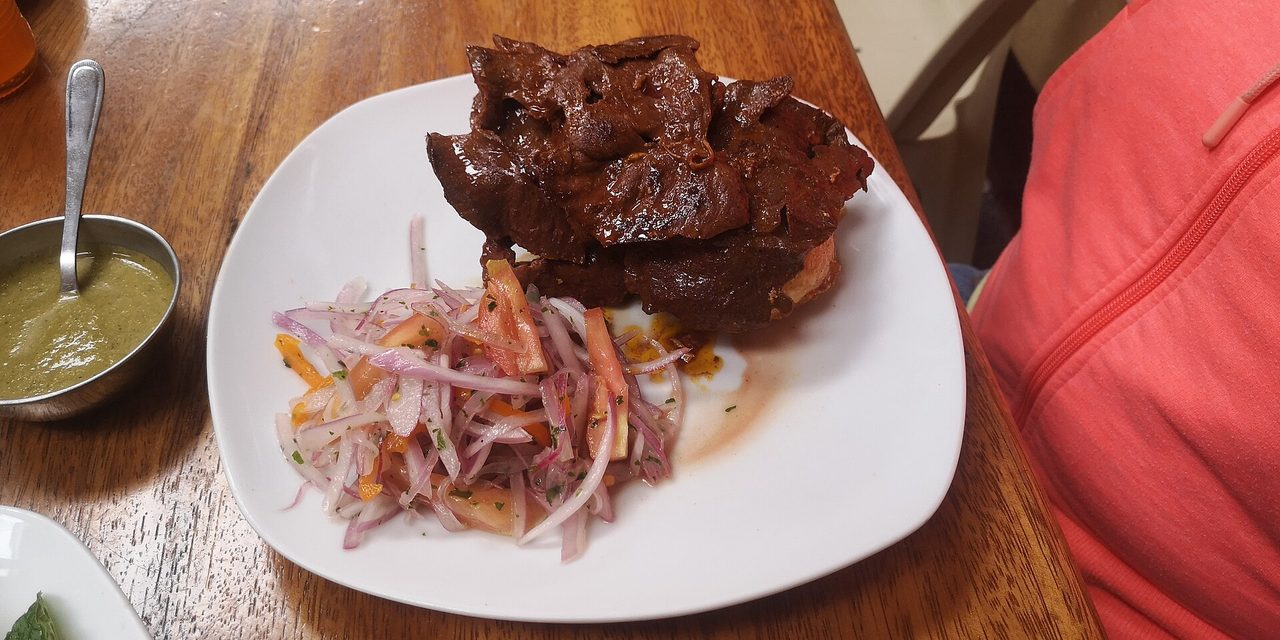
Rocoto relleno — Arequipa’s spicy pride
From the southern city of Arequipa: a fiery red rocoto pepper stuffed with spiced ground beef, olives and egg, capped with cheese and baked, usually alongside a potato gratin (pastel de papa). It’s one of the few classic dishes that actually brings the heat. Arequipa is Peru’s most distinctive regional kitchen — our Arequipa and Colca Canyon guide has more.
Pachamanca — a feast cooked in the earth
More ritual than recipe: meats and vegetables marinated in Andean herbs and cooked in a pit over fire-heated stones, sealed with earth and left to steam. You’ll mostly find it at countryside restaurants, special occasions and the big highland Peruvian festivals. If you get the chance to eat one, take it — it’s pre-Hispanic Peru on a plate.
Cuy — the dish travelers debate
Guinea pig, roasted or fried whole, is an Andean delicacy that long predates the Inca. It’s bony and rich, the skin the prize, and yes, it’s often served looking very much like what it is. You don’t have to order it — but it’s a genuine piece of living food heritage, not a tourist gimmick. We get into the how and where in our guide to cuy and Peru’s more adventurous foods.
And that’s only the headline acts. Keep an eye out for papa a la huancaína (potatoes in a creamy cheese-and-ají sauce), tacu tacu (refried beans and rice pressed into a savory pancake), arroz con pollo, seco de cordero (cilantro-braised lamb), aji de gallina‘s seafood cousin parihuela, and the chifa staple arroz chaufa.
A quick at-a-glance dish guide
Use this to decide what to order tonight. “Heat” is the typical built-in spice level — remember you usually control the rest with the salsa on the side.
| Dish | What it is | Region / best eaten in | Heat | Adventure level |
|---|---|---|---|---|
| Cebiche | Lime-cured raw fish with onion, sweet potato, corn | Coast (Lima, the north) | Mild–medium | Easy |
| Lomo saltado | Beef stir-fry with fries and rice | Nationwide (chifa roots) | Mild | Easy |
| Ají de gallina | Creamy chili-and-nut shredded chicken | Coast / Lima | Mild | Easy |
| Pollo a la brasa | Hardwood rotisserie chicken with sauces | Nationwide | Mild | Easy |
| Causa | Cold layered yellow-potato terrine | Coast / Lima | Mild | Easy |
| Anticuchos | Grilled beef-heart skewers | Nationwide street food | Mild–medium | Medium |
| Rocoto relleno | Stuffed spicy pepper, baked with cheese | Arequipa | Hot | Medium |
| Cuy | Roasted whole guinea pig | Andes (Cusco region) | Mild | Adventurous |
Peruvian street food: eat where the line is longest
Some of my best meals in Peru cost less than a coffee back home. Street and market food is where the country eats day to day, and it’s a joy — provided you use a little judgment (more on safety below). My rule is simple: follow the locals and the lines. A stall with a queue of office workers and a high turnover is almost always a safe, delicious bet.
What to look for: anticuchos sizzling over coals at dusk; emolientes, warm herbal tonics poured from gleaming carts on cold mornings; tamales and humitas (savory and sweet corn parcels) at breakfast; salchipapa (sausage and fries) as a guilty late-night snack; choclo con queso (corn with fresh cheese) in the highlands; and picarones, the squash-and-sweet-potato doughnuts, fried to order. For a proper deep dive, see our Peruvian street food guide, and if you’d rather learn from a local, a Peru food tour or cooking class is the single best food investment you can make early in a trip.
What to drink in Peru
The drinks deserve their own pilgrimage. Peru takes its beverages — alcoholic and not — as seriously as its plates.
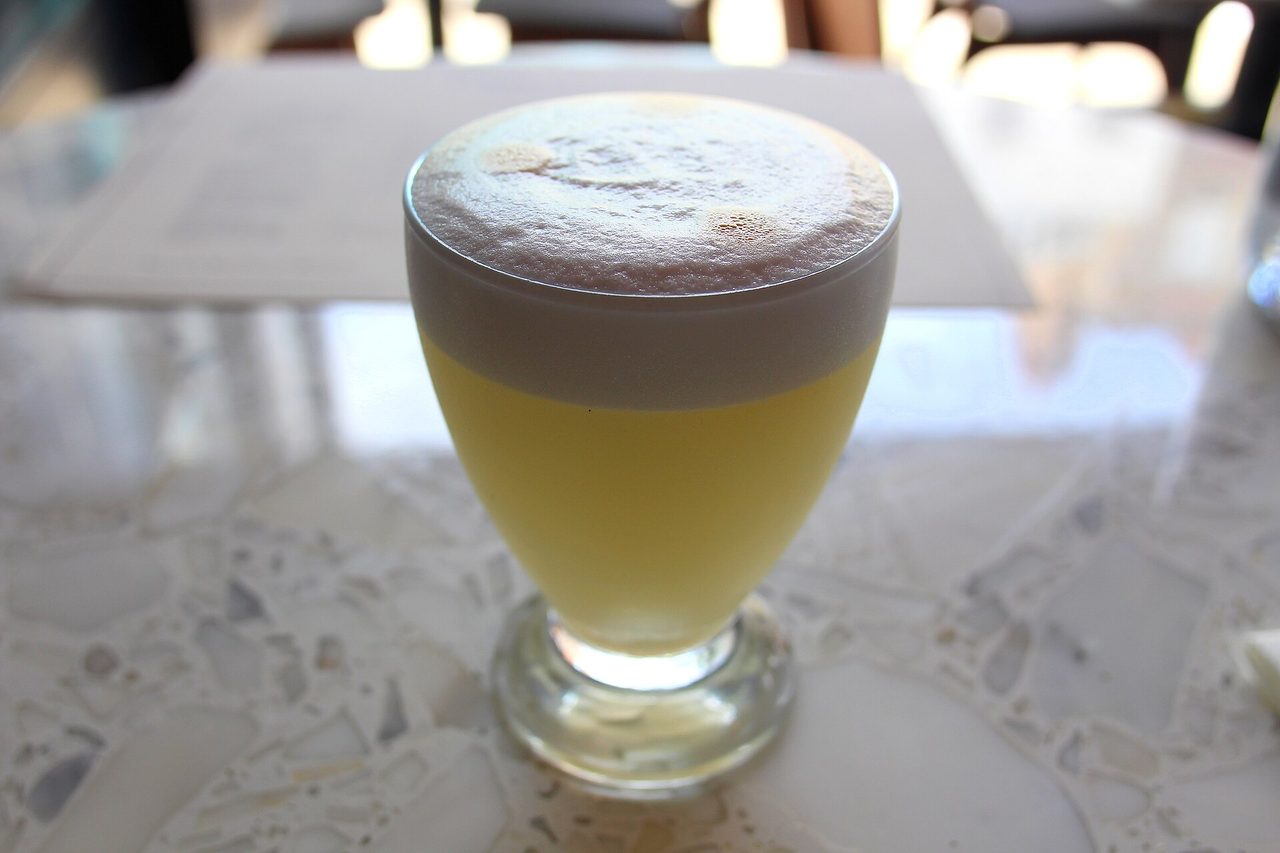
Pisco sour — the national cocktail
Pisco is Peru’s grape brandy, distilled in the desert valleys of the south, and the pisco sour is its masterpiece: pisco, fresh lime, simple syrup and egg white shaken to a froth, with a few drops of bitters on the foam. It’s so beloved it has its own national holiday (the first Saturday of February). Order one on your first night and don’t be surprised if it disappears faster than you planned — the citrus hides the strength. If pisco’s your thing, our guide to the pisco sour and Peruvian drinks covers the cocktail and its cousins, like the lighter, ginger-ale chilcano.
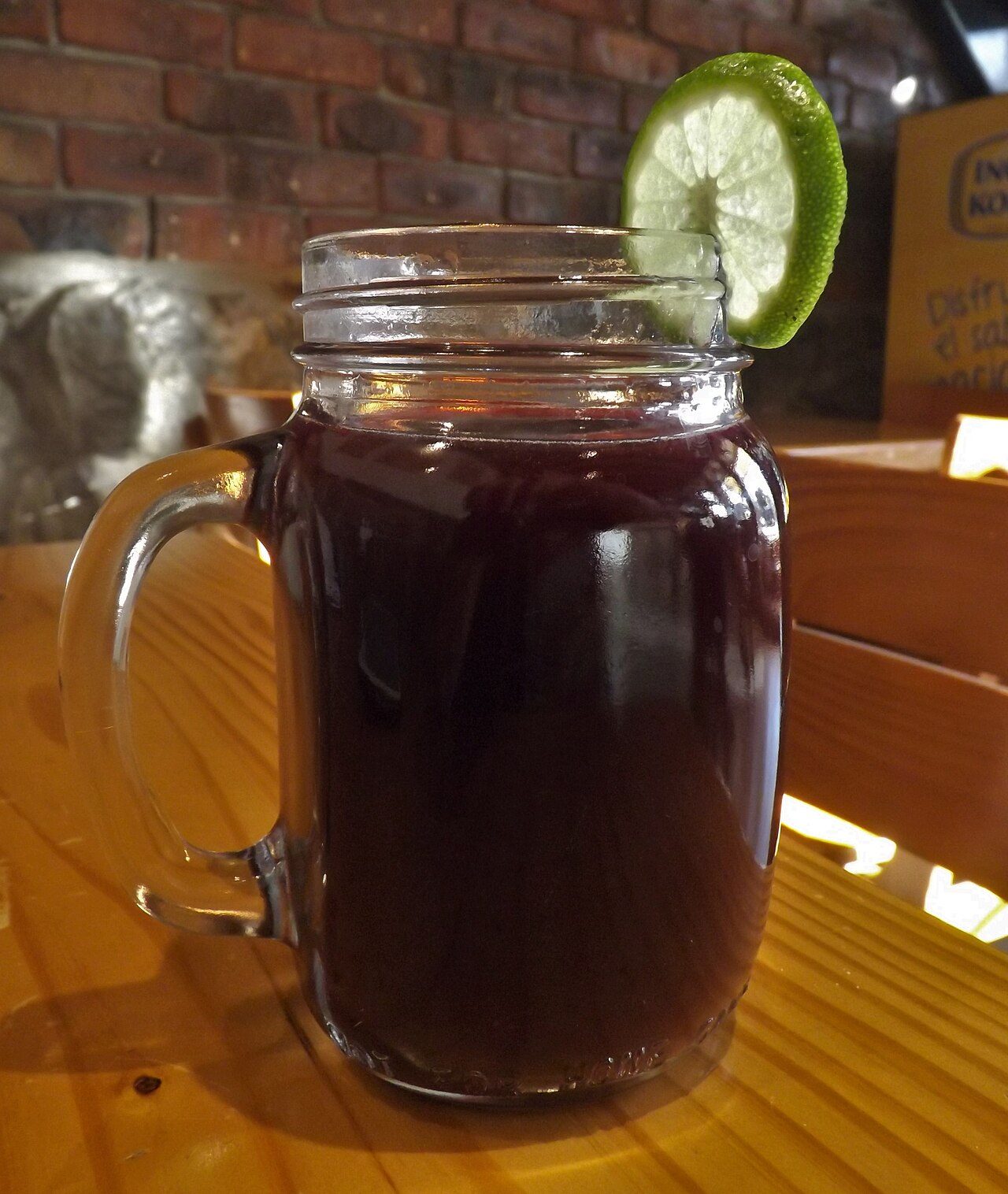
Chicha morada — the drink of purple corn
The non-alcoholic icon. Chicha morada is brewed from Peru’s deep-purple maize (maíz morado) simmered with pineapple, apple, cinnamon and clove, then sweetened and chilled. It’s grapey, spiced and ridiculously refreshing, and it pairs with almost everything — the default soft drink at any traditional table. Kids drink it, abuelas make it by the jug, and you’ll quickly understand why.
Inca Kola, and the rest of the fridge
Then there’s Inca Kola — a fluorescent-yellow, bubble-gum-sweet soda that locals call “el sabor del Perú” (the taste of Peru) and that famously outsells Coca-Cola on its home turf. Beyond it: chicha de jora, the ancient lightly fermented corn beer you’ll spot in the highlands (look for a red flag or balloon outside a house); cold Peruvian lagers like Cusqueña, Cristal and Pilsen Callao; mate de coca, the coca-leaf tea that genuinely helps with altitude; and emoliente, the herbal street tonic locals swear by. For altitude-eating and what to sip while you adjust, our Peru travel tips and health guide is worth a look.
Peruvian desserts and sweets
Save room. Peru’s sweets carry the same multicultural fingerprint as its savory food, and they punch well above their reputation.
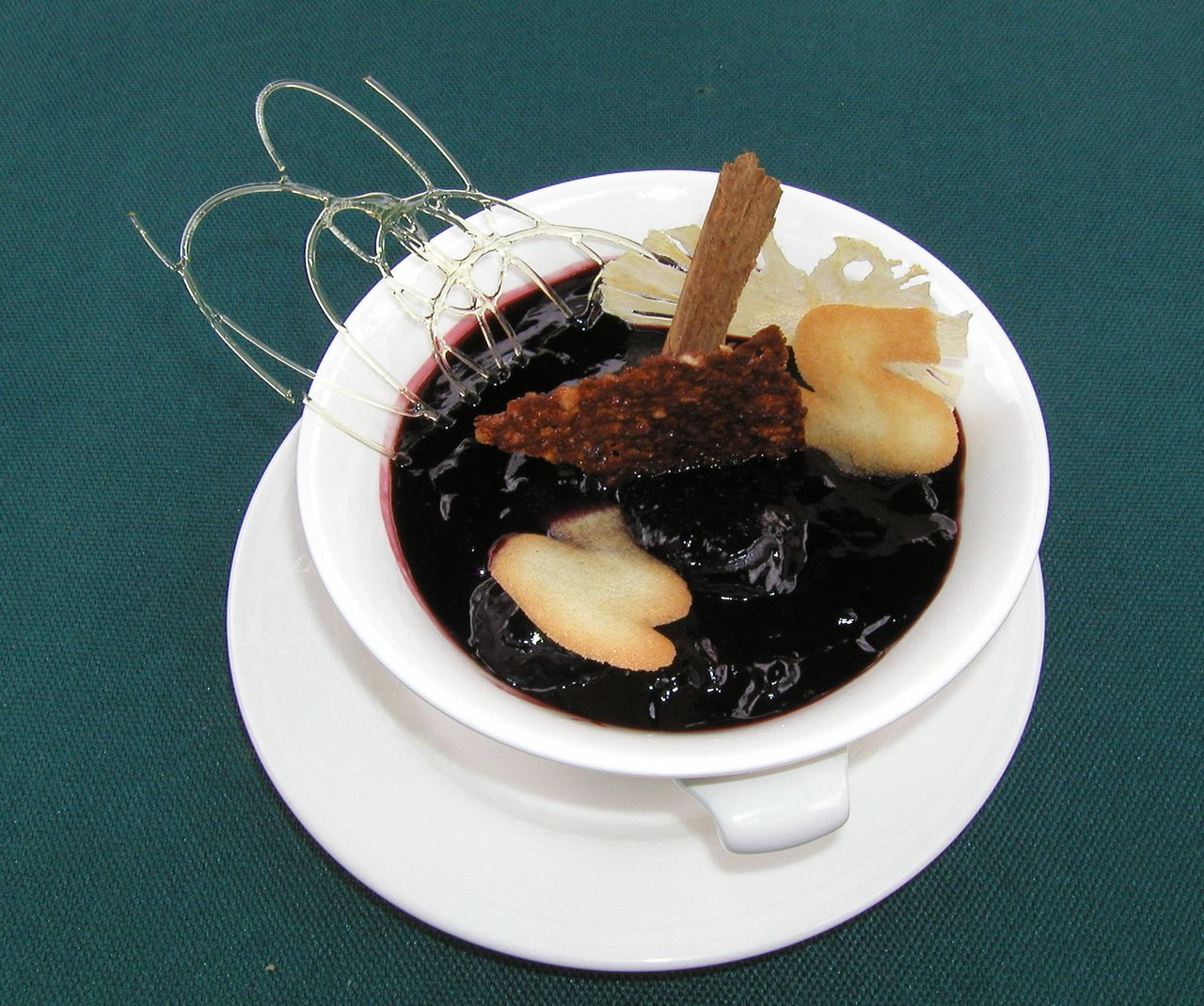
Start with mazamorra morada, a glossy purple-corn pudding spiced with cinnamon and clove and studded with dried fruit — often served, two-tone, beside a scoop of arroz con leche (the combo is nicknamed “clásico”). Then there’s suspiro a la limeña, a deceptively rich caramel manjar blanco topped with port-laced meringue; picarones, the airy squash-and-sweet-potato rings drizzled with chancaca syrup; and alfajores, shortbread sandwiches glued with dulce de leche and dusted in sugar. Around October’s Lord of Miracles procession in Lima, look for turrón de Doña Pepa, an anise-and-honey nougat baked just for the season. And keep an eye out for anything made with lúcuma — a native fruit with a maple-and-sweet-potato flavor that Peruvians put in ice cream and that is, in my opinion, the country’s most underrated dessert flavor. Our Peruvian desserts guide has the full sweet tour.
Peru’s potato superpower (and the rest of the pantry)
You can’t understand Peruvian food without understanding its ingredients, and it starts with the potato. The Andes are the potato’s ancestral home, and Peru grows thousands of native varieties in every color, size and texture imaginable — far more than anywhere else on earth. Over 99% of the world’s cultivated potatoes descend from a subspecies native to this region. Highland markets are a riot of them: inky-purple ones, knobbly yellow ones, and chuño — potatoes freeze-dried in the Andean night air, a preservation trick that’s centuries old.
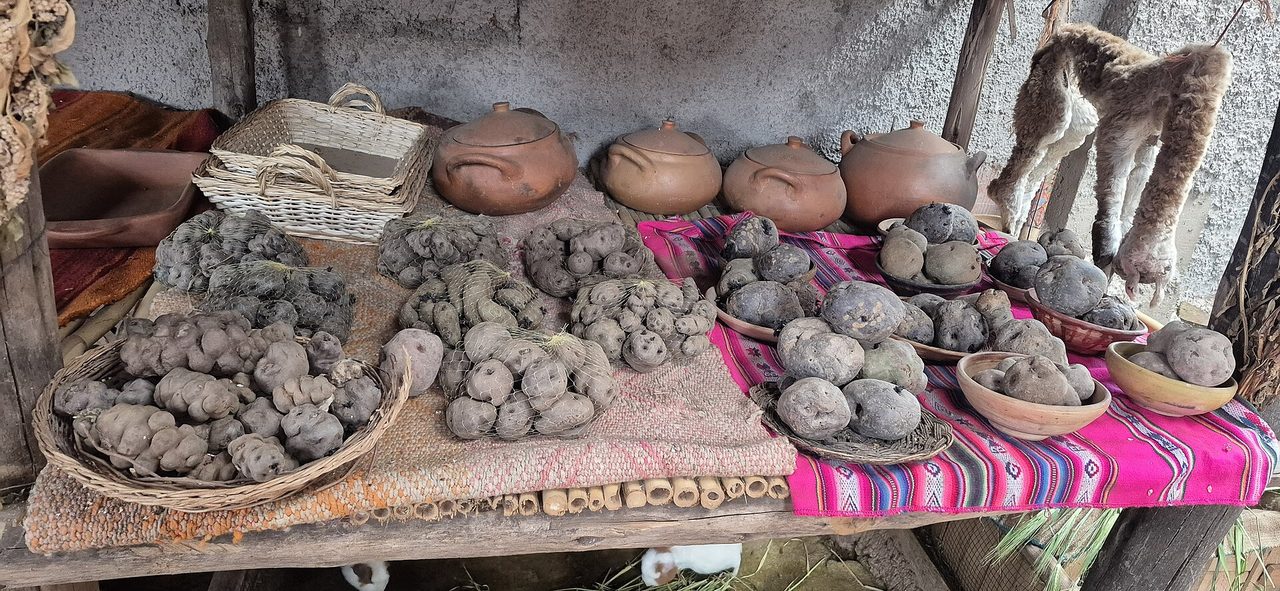
But the pantry runs much deeper. There are the chilies that flavor nearly everything — fruity ají amarillo, smoky ají panca, and the fierce rocoto. There’s corn in dozens of forms, from giant-kernelled choclo to the purple maize behind chicha morada. There’s quinoa and its cousins kiwicha and kañiwa; native tubers like oca, mashua and olluco; and a basket of fruits — lúcuma, chirimoya, camu camu, aguaje — you simply can’t get fresh anywhere else. This biodiversity is the real engine of Peruvian cuisine, and increasingly the thing that draws chefs from around the world to come and learn.
Where to eat: from the menú del día to the world’s best
One of the things I love about eating in Peru is how little correlation there is between price and joy. Here’s the full ladder, low to high, and all of it is worth your time.
Markets. Start here. Every Peruvian town has a mercado, and the food counters inside — cebiche, caldo, juices pressed to order — are some of the best, cheapest eating in the country. Lima’s Surquillo and Mercado No. 1 de Surquillo are classics; in Cusco, the San Pedro market is the move.
The menú del día. The traveler’s secret weapon. At lunch, small restaurants offer a fixed-price set menu — usually a soup or starter, a main, and a drink — for roughly 12–25 soles (US$3–7). It’s how locals eat midday, it’s fresh, and it’s the fastest way to taste home-style criollo cooking. Look for the chalkboard out front.
Cevicherías and pollerías. Specialist spots do one thing brilliantly. A cevichería is a lunchtime ritual (remember: cebiche is a daytime food); a pollería is the go-to for pollo a la brasa, busiest on weekend nights. Both are institutions.
Chifas. The Chinese-Peruvian restaurants are everywhere and ideal for a cheap, generous, crowd-pleasing dinner — arroz chaufa, lomo saltado, wonton soup. Reliable comfort, any night of the week.
Fine dining. At the top sits one of the most celebrated restaurant scenes on earth, almost all of it in Lima. Maido (Nikkei) holds the World’s No. 1 spot for 2025; Central (now No. 2) takes you on a journey through Peru’s ecosystems by altitude; Kjolle, Mayta and Mérito round out a remarkable bench. These book out weeks or months ahead, so reserve early if a tasting menu is on your list. Budgeting the whole trip? Our Peru trip cost guide breaks down what to set aside for food at every level.
Peruvian dining customs and etiquette
A few things that’ll make you feel less like a tourist and more like a guest:
- Lunch is the main event. The biggest meal is midday, often eaten leisurely between roughly 1 and 3 p.m. Dinner tends to be lighter and later. Plan your big cebiche and menú-del-día meals for lunch.
- Say “buen provecho.” It’s the local “bon appétit,” offered to your table and sometimes to strangers as you pass. A small, warm courtesy.
- Sharing is normal. Peruvians love to order several dishes for the table and pass them around. Lean into it — it’s the best way to taste widely.
- Tipping is modest. In sit-down restaurants, around 10% is customary and appreciated; check whether a “servicio” charge is already on the bill. At markets and menú-del-día spots, tipping isn’t expected.
- It’s mostly fork-and-knife. Even chicken and fries are often eaten with cutlery; a couple of dishes (anticuchos, some cebiche) invite fingers.
Is Peruvian food safe to eat?
Mostly yes — with common sense. Travelers’ stomach upsets in Peru usually come down to unfamiliar bacteria and water, not “bad” food, and a few habits prevent the large majority of trouble. Don’t drink the tap water (stick to bottled or properly filtered, and skip ice you’re unsure of). Eat at busy places with high turnover, where ingredients don’t sit around. With cebiche, the safest move is exactly what locals do: eat it at lunch, at a reputable, busy cevichería, when the fish is freshest. Ease into street food rather than diving into everything on day one, and let your gut adjust. We cover this in detail — including what to pack and how to handle altitude eating — in our guides to food safety in Peru and overall Peru travel tips.
One more, for plant-based travelers: Peru is more vegetarian-friendly than its meat-and-fish reputation suggests — the Andean larder of potatoes, corn, beans, quinoa and avocado is a gift — but you’ll want to know the right phrases and dishes. Our vegetarian and vegan in Peru guide has you covered.
A few honest tips for eating your way through Peru
The hard-won stuff, after a lot of meals:
- Eat cebiche at lunch, full stop. If a place is selling “fresh” cebiche at 9 p.m., that fish has had a long day. Lunchtime, busy spot, no regrets.
- Order the menú del día at least every other day. It’s cheap, it’s local, and it quietly teaches you more about everyday Peruvian food than any tasting menu.
- Pace the altitude. In Cusco, Puno or the highlands, go easy your first day — lighter food, lots of water and coca tea, save the big roast for day two.
- Ask “¿pica?” (“Is it spicy?”) if heat worries you — and keep the side salsa separate so you control it.
- Book the famous tables early, but don’t over-index on them. A US$5 market cebiche and a US$200 tasting menu are both, in their way, the real Peru.
- Take a cooking class or food tour in your first day or two. It pays for itself in everything you order afterward.
Peruvian coffee, chocolate and the morning ritual
Peru quietly grows some of the best coffee and cacao in the Americas, and it’s only recently started keeping the good stuff at home. For years the finest beans were exported and locals drank instant; today a wave of specialty cafes in Lima, Cusco and Arequipa is brewing single-origin Peruvian coffee from regions like Cajamarca, Cusco and the high jungle of Villa Rica. If you care about your morning cup, seek out a proper cafe rather than the hotel buffet. The same goes for chocolate: Peru’s Amazonian cacao is prized by makers worldwide, and bean-to-bar shops and chocolate museums in Cusco and Lima let you taste why. Our Peruvian coffee and chocolate guide points you to the regions and the cups worth chasing.
A quick regional eating map
If you’re trying to decide where your stomach should travel, here’s the short version. Lima is the headquarters of it all — cebiche, Nikkei, chifa, and the country’s best restaurants in one city. Cusco and the Sacred Valley are your highland classroom: alpaca, cuy, trout, hearty soups, and the gateway to Machu Picchu. Arequipa is the spice-and-stew capital, home of rocoto relleno and the atmospheric picantería tradition. The northern coast (Trujillo, Chiclayo) is, to many Peruvians, the true soul of cebiche and criollo cooking. And Lake Titicaca and Puno add their own trout and quinoa dishes — see our Lake Titicaca guide if your route runs that far south. Wherever you land, the local market is the fastest way in.
Peruvian food FAQ
What is Peru’s national dish?
Cebiche (ceviche) — fresh raw fish cured in lime juice with red onion, chili, sweet potato and corn. It’s so central to the culture that Peru celebrates a national Cebiche Day every June 28. Pollo a la brasa is often called the most-eaten restaurant dish, but cebiche holds the title of national dish.
What is the most famous Peruvian food?
Internationally, cebiche and lomo saltado are the two best-known Peruvian dishes, followed closely by ají de gallina and pollo a la brasa. If you only had time for a handful, those four give you the clearest picture of what Peruvian food is about.
Is Peruvian food spicy?
Less than most people expect. Peruvian cooking uses chilies (ají) constantly, but mainly for flavor and color rather than raw heat, and the fiery element is often a side salsa you add yourself. A few dishes — rocoto relleno from Arequipa, for instance — do bring real heat. If you’re sensitive, just ask “¿pica?” (“is it spicy?”) before ordering.
What do Peruvians eat for breakfast?
Breakfast is usually simple: bread (pan) with butter, cheese, ham, avocado (palta) or jam, plus coffee or fresh juice. Regional touches abound — tamales and humitas on the coast, quinoa or oat drinks and bread with cheese in the highlands, fruit in the Amazon. Heartier sandwiches like pan con chicharrón (fried pork) are a weekend treat.
What is Peru’s national drink?
The pisco sour, made from pisco (Peruvian grape brandy), lime, syrup, egg white and bitters. The signature non-alcoholic drink is chicha morada, made from purple corn, and the quirky national soda is the bright-yellow Inca Kola.
Is Peruvian food healthy?
A lot of it is genuinely nutritious — cebiche is lean protein and citrus, and the Andean pantry of quinoa, beans, potatoes and vegetables is excellent. That said, plenty of beloved dishes come with rice and potato or fries, and the desserts are rich, so it balances out like any real cuisine. Eat widely and you’ll do fine.
Why is Peruvian food so good?
Three reasons stacked on top of each other: extraordinary biodiversity (three climates, thousands of native ingredients), centuries of immigration that fused Indigenous, Spanish, African, Chinese and Japanese cooking, and a recent generation of chefs who turned that heritage into world-class restaurants. The result is depth you can taste at every price point.
Can vegetarians eat well in Peru?
Yes, with a little know-how. The native larder — potatoes, corn, beans, quinoa, avocado, squash — is a vegetarian’s dream, and big cities have dedicated veggie and vegan spots. Outside them, you’ll want a few key phrases and dishes in your back pocket; see our vegetarian and vegan in Peru guide.
Is it safe to eat cebiche and street food in Peru?
Generally yes, if you’re sensible. Eat cebiche at lunch from a busy, reputable cevichería; choose street stalls with long local lines and fast turnover; avoid tap water and uncertain ice; and ease into new foods rather than overwhelming your stomach on day one. Our food safety guide covers it fully.
What food should I not miss in Peru?
If your trip is short: a proper lunchtime cebiche, one lomo saltado, a pollo a la brasa dinner, a pisco sour, and one sweet (mazamorra morada or picarones). If you have the appetite and the time, add tiradito, ají de gallina, anticuchos from a street grill, and — if you’re game — cuy in the highlands.
Final thoughts
Peruvian food rewards curiosity more than money. The most memorable thing you eat in Peru might be a tasting menu at a world-ranked restaurant, but it’s just as likely to be a bowl of cebiche eaten standing up at a market, or a plate of anticuchos from a cart on a cold night, handed over with a “buen provecho.” Go hungry, follow the lines, ask questions, and say yes more than you say no. The country will feed you better than you expect — and then it’ll make you homesick for it.
When you’re ready to build the trip around all this eating, start with our things to do in Peru overview and our day-by-day Peru itineraries, then time it right with the best time to visit Peru.
Sources
- Peruvian cuisine — Wikipedia (history, regional ingredients, chifa and Nikkei, potato diversity)
- The World’s 50 Best Restaurants 2025 — Maido named No. 1
- World Travel Awards 2025 — Peru, World’s Leading Culinary Destination (13th year)